Multipoint Lock Faceplate Size Guide: Prevent Door-Preparation and Installation Errors
A Multipoint Lock Faceplate Size Guide helps buyers avoid a common problem: the lock is correct on paper, but the door preparation does not match the faceplate. That mismatch can delay installation, damage aluminum profiles1, and increase rework costs. I use this guide to help procurement teams confirm the right faceplate before production.
A multipoint lock faceplate should be selected according to the door profile groove, lock body design, and installation method. Common faceplate styles include flat faceplates and U-shaped faceplates, with typical widths such as 20 mm, 22 mm, and 24 mm.2 Buyers should confirm dimensions with drawings, samples, and supplier inspection before bulk orders.
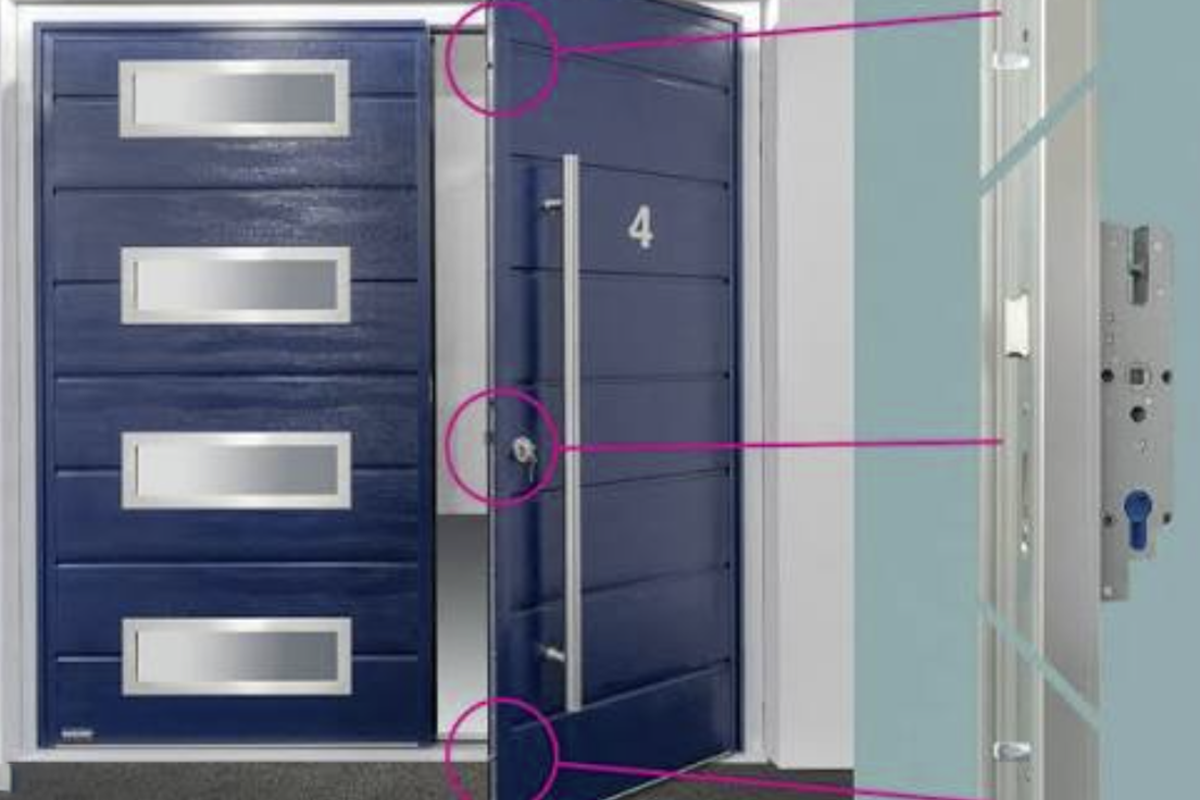
The faceplate looks like a simple strip of metal, but it affects the entire installation result. If the width, shape, screw position, or groove fit is wrong, the lock may not sit flush. So I always treat the faceplate as a key specification, not a minor accessory.
Why Does This Multipoint Lock Faceplate Size Guide Matter for Door Preparation?
Door preparation errors often start with small assumptions. A buyer may confirm the lock height, backset, and cylinder hole, but skip the faceplate profile. That creates risk because aluminum door systems use different groove structures3, and each groove needs a compatible faceplate style.
A Multipoint Lock Faceplate Size Guide matters because it connects the lock specification with the actual door profile. The guide helps buyers confirm whether the project needs a flat faceplate or U-shaped faceplate, and whether the width should be 20 mm, 22 mm, 24 mm, or another custom size.
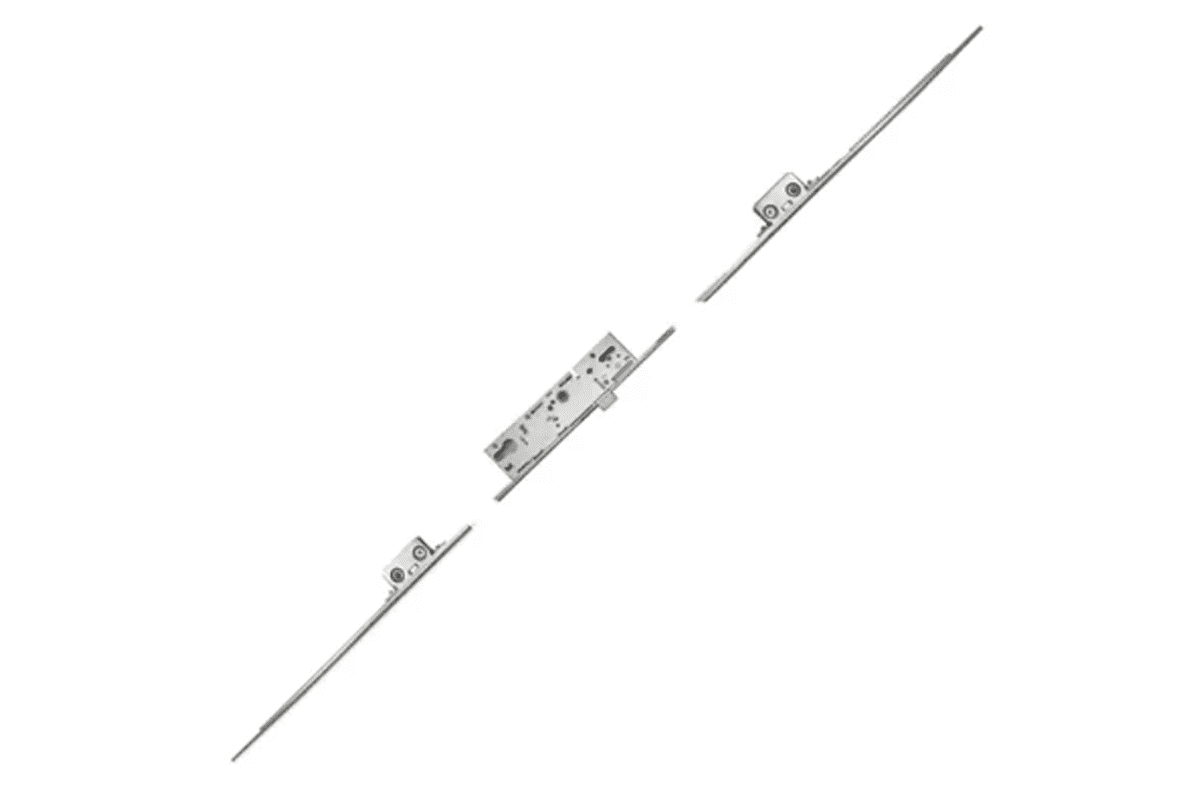
The faceplate controls the lock-to-profile interface
The faceplate is the visible metal plate fixed along the lock edge. On a multipoint lock, it supports the locking points, keeps the lock aligned, and covers the prepared groove. It also affects how smoothly the bolts, hooks, rollers, or latch engage with the frame keeps.
In aluminum door systems, the profile groove is not universal. I have seen two door factories order the same lock function but require different faceplate designs because their aluminum extrusion profiles were different. One needed a flat faceplate, while the other needed a U-shaped faceplate to sit correctly in the channel.
Common problems caused by the wrong faceplate
When buyers skip faceplate confirmation, these problems can appear:
- The lock does not sit flush with the door edge.
- The faceplate is too wide for the aluminum groove.
- The faceplate is too narrow, leaving a visible gap.
- The U-shaped faceplate does not wrap the profile correctly.
- Screw holes do not align with reinforced areas.
- The installer must grind or modify the door, which affects finish quality.
- The locking points rub against the frame keeps because the lock position shifts.
These issues are rarely solved cleanly on site. In most cases, the installer must rework the door, replace the lock, or accept a poor appearance. For B2B buyers, that means higher labor cost and possible claims from the project owner.
Why procurement teams should care
A multipoint lock is not only a hardware item. It is part of a door system. So procurement teams should evaluate the lock in relation to:
| Evaluation Item | Why It Matters |
|---|---|
| Door profile groove | Determines flat or U-shaped faceplate requirement |
| Faceplate width | Common options include 20 mm, 22 mm, and 24 mm |
| Faceplate thickness | Affects flush installation and durability |
| Locking point layout | Must match frame keep positions |
| Surface finish | Should match handle, hinge, and door design |
| Certification documents | Should be verified for the intended application |
In our factory work at SDH Hardware, I prefer to ask for the door profile drawing before confirming a multipoint lock order. This simple step prevents many avoidable mistakes. It also helps our engineering team recommend a faceplate that matches the aluminum profile instead of guessing from a photo.
My practical rule is simple: I never confirm a multipoint lock only by product name. I confirm it by drawing, groove, faceplate shape, and faceplate width.
How Do Flat Faceplates and U-Shaped Faceplates Differ?
A buyer can feel confused when two locks have the same function but different faceplate shapes. The problem becomes more serious when the door factory prepares the profile for one style but receives the other. That mistake can stop production immediately.
Flat faceplates and U-shaped faceplates differ in how they fit the door profile. A flat faceplate sits on a flat prepared surface or groove. A U-shaped faceplate wraps into a channel-style profile.4 The correct choice depends on the aluminum profile groove, not only on the lock model.
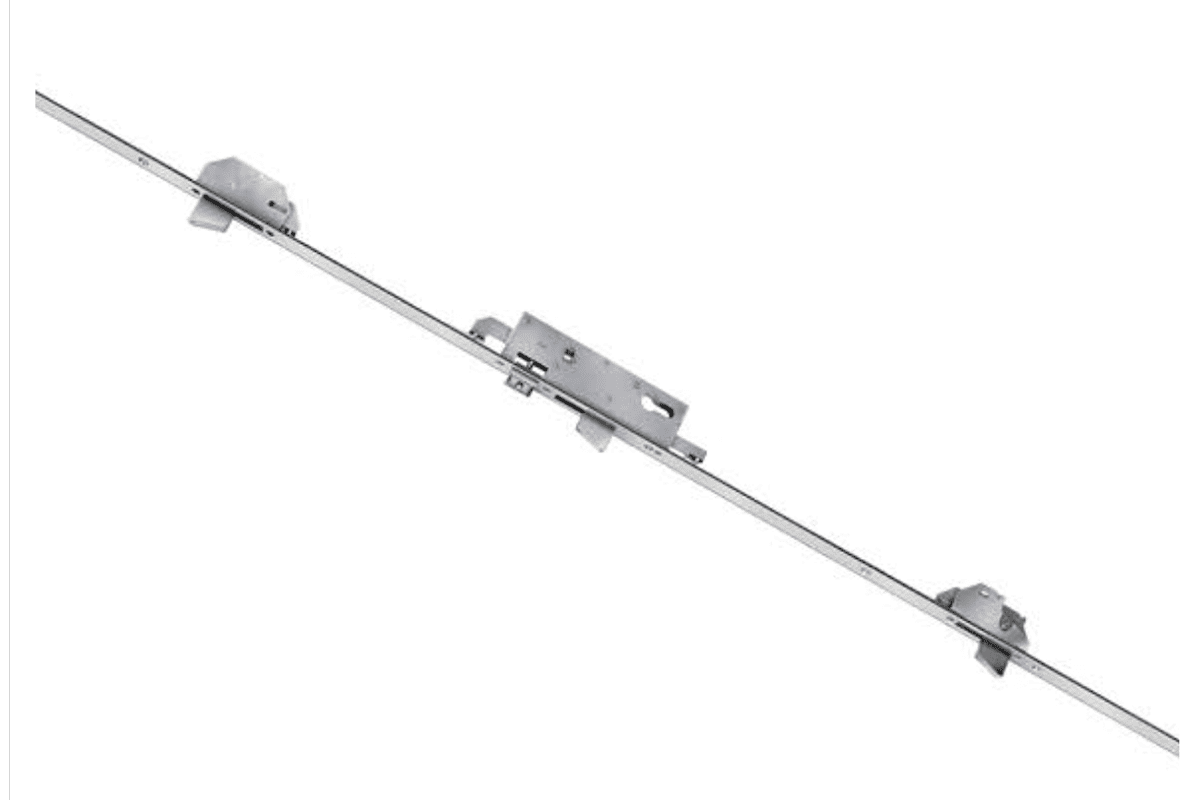
Flat faceplates
A flat faceplate has a simple flat strip design. It usually fits doors where the lock edge preparation provides a flat seat. This type is common in many aluminum and PVC door applications5, but the exact size still depends on the profile system.
Flat faceplates are often easier to understand from drawings because the key measurement is the visible width. Common widths include:
- 20 mm
- 22 mm
- 24 mm
- Other project-specific widths
However, buyers should not select a flat faceplate only because the width seems close. The groove depth, screw position, and lock case location still need confirmation.
U-shaped faceplates
A U-shaped faceplate has bent edges or a channel-style form. It is designed to match certain aluminum profile grooves. In Chinese factory communication, buyers may hear this described as U型面板, while a flat faceplate may be described as 平面板.
This design can provide a cleaner fit when the aluminum profile has a recessed channel. But the U shape must match the groove dimensions. If the legs of the U are too deep, too shallow, too narrow, or too wide, the lock will not seat correctly.
Flat vs. U-shaped faceplate comparison
| Feature | Flat Faceplate | U-Shaped Faceplate |
|---|---|---|
| Chinese term | 平面板 | U型面板 |
| Main shape | Straight flat strip | Channel or wrapped profile |
| Typical width | 20, 22, 24 mm and custom | 20, 22, 24 mm and custom |
| Best use | Flat lock edge preparation | Aluminum profiles with matching groove |
| Main risk | Width mismatch or visible gap | Channel mismatch or poor seating |
| Buyer action | Confirm width and screw layout | Confirm groove shape and U dimensions |
How I usually explain it to buyers
I often explain the difference with a simple installation question:
Does the lock faceplate sit on top of the profile, or does it sit inside and wrap the profile groove?
If it sits on a flat surface, the project may need a flat faceplate. If it needs to fit into a shaped aluminum channel, the project may need a U-shaped faceplate. The final decision should always be based on technical drawings or physical samples.
Details buyers should not overlook
Even when the faceplate type is correct, these details still matter:
Edge radius or corner shape
Some faceplates have square edges. Others have slightly rounded edges. This can affect appearance and fit.Screw hole spacing
Screw locations must match the lock structure and door reinforcement.Surface treatment
Stainless steel, plated, painted, or other finishes should match project requirements.Locking point cutouts
Hooks, rollers, bolts, or latches must move freely through the faceplate openings.Tolerance control
Small dimensional variation can become visible when the profile groove is narrow.
At SDH Hardware, our production and inspection process pays attention to these details because they directly affect installation quality. Still, for any application-specific decision, I recommend that buyers confirm the final specification with their door system engineer or qualified technical team.
Which Multipoint Lock Faceplate Size Guide Measurements Should Buyers Confirm?
A lock drawing can look complete while still missing critical installation information. That gap creates pressure during mass production because the door is already cut, the profile is already prepared, and the wrong faceplate cannot be adjusted without cost.
A Multipoint Lock Faceplate Size Guide should confirm faceplate style, width, thickness, length, screw hole spacing, locking point positions, and compatibility with the aluminum profile groove. Buyers should compare supplier drawings with their door profile drawings before approving samples or starting bulk production.
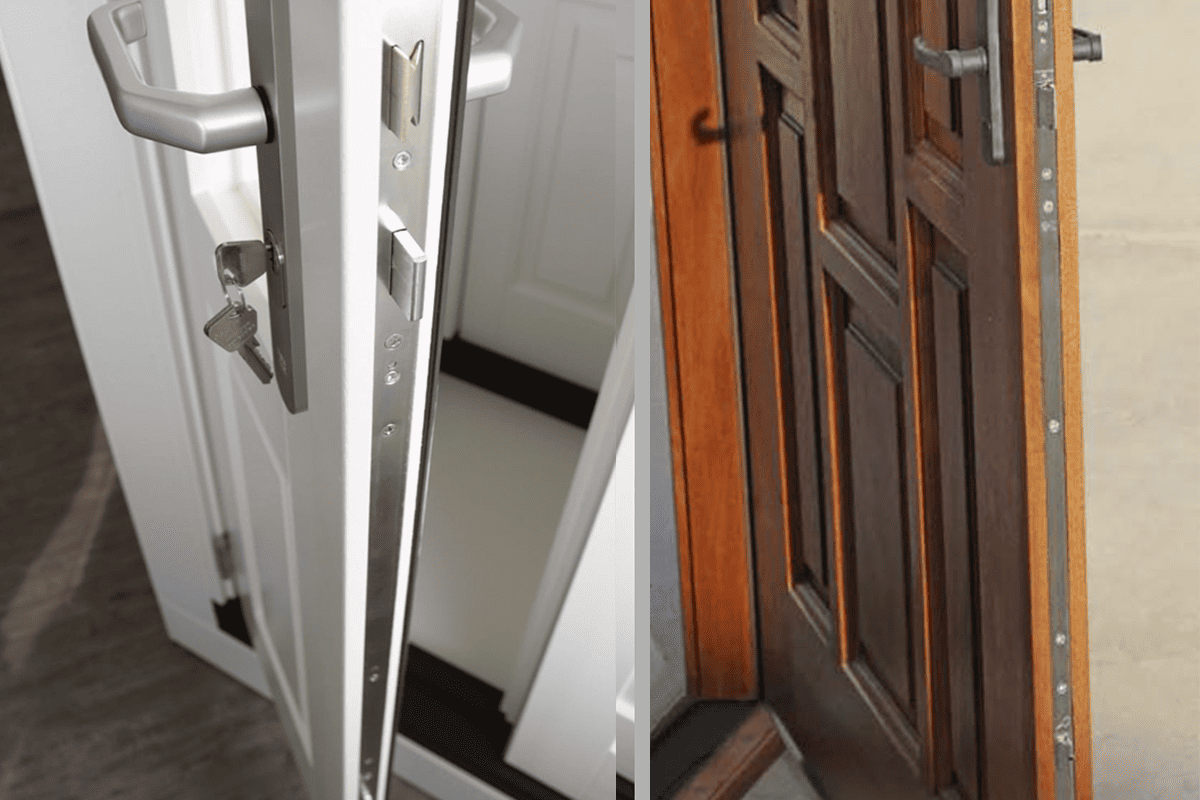
Key measurements to confirm
The most important faceplate measurements include:
| Measurement | What to Check | Why It Matters |
|---|---|---|
| Faceplate type | Flat or U-shaped | Must match profile groove |
| Faceplate width | 20, 22, 24 mm, or custom | Controls fit and appearance |
| Faceplate thickness | Usually project-dependent | Affects flush installation |
| Overall length | Full faceplate length | Must match door height and lock points |
| Screw hole positions | Distance between holes | Supports stable fixing |
| Locking point positions | Hook, roller, bolt, latch locations | Must match frame keeps |
| Backset and center distance6 | Lock body dimensions | Affects handle and cylinder holes |
| Finish | Stainless steel, plated, painted, etc. | Affects corrosion resistance and design match |
Width: 20 mm, 22 mm, and 24 mm
The additional requirement is important: multipoint lock faceplates include flat and U-shaped styles, and widths include 20 mm, 22 mm, 24 mm, and other sizes. Buyers need to select the correct faceplate according to the aluminum profile groove.
This sounds simple, but it is often where errors happen. A 22 mm faceplate may look close to a 24 mm faceplate in photos. But in an aluminum profile groove, a 2 mm difference can decide whether the lock fits cleanly or not.7
How to verify the correct width
I recommend a step-by-step confirmation method:
Request the aluminum profile drawing
The groove width, depth, and shape should be visible.Check the existing lock sample if available
The old lock faceplate can provide useful reference dimensions.Compare the supplier lock drawing
The drawing should show faceplate width, thickness, length, and screw holes.Confirm flat or U-shaped style
Do not assume the shape from the lock model name.Order samples before mass production8
Sample fitting is especially important for new door systems.Record the approved specification
The approved width and faceplate style should appear on the purchase order or technical file.
Sample approval checklist
Before bulk production, I suggest using a simple checklist like this:
- [ ] The faceplate style is confirmed as flat or U-shaped.
- [ ] The faceplate width is confirmed, such as 20 mm, 22 mm, or 24 mm.
- [ ] The aluminum profile groove drawing has been reviewed.
- [ ] The lock body dimensions match the door preparation.
- [ ] The handle and cylinder positions match the drawing.
- [ ] The locking points align with the frame keeps.
- [ ] The finish sample is approved.
- [ ] The packaging and labeling requirements are confirmed.
- [ ] Certification documents, if required, are requested for verification.
- [ ] The buyer’s technical team approves the sample installation.
Why drawings matter more than photos
Photos are useful for quick discussion. But photos can distort scale, shape, and depth. A U-shaped faceplate may look like a flat faceplate from the wrong angle. A 20 mm faceplate may look like 22 mm if the photo has no reference ruler.
For that reason, I prefer technical drawings with clear dimensions. In our SDH Hardware process, detailed product drawings can be provided upon order confirmation, and buyers can use those drawings for internal approval. This is especially useful for door factories, hardware brands, and wholesalers who need repeatable sourcing.
Manufacturing tolerance and quality control
Faceplate size also connects with manufacturing tolerance. A reliable supplier should control:
- Material thickness
- Straightness of long faceplates
- Hole position accuracy
- Surface finish consistency
- Locking point cutout accuracy
- Burr control after punching or machining
These points may seem small, but they affect the installer’s experience. A burr around a screw hole can scratch the finish. A slight bend in a long faceplate can create uneven gaps. A misplaced cutout can make a locking hook rub against the edge.
At SDH Hardware, I can speak from our business context: we operate independent production lines and use quality control steps from raw material screening to finished product inspection. Buyers should still verify samples, inspection reports, and certification documents for their own market and project requirements.
How Should Buyers Evaluate a Multipoint Lock Supplier Before Bulk Orders?
A correct faceplate size solves only one part of the procurement risk. The next problem is supplier consistency. A sample may fit well, but bulk order quality must match the approved sample across hundreds or thousands of locks.
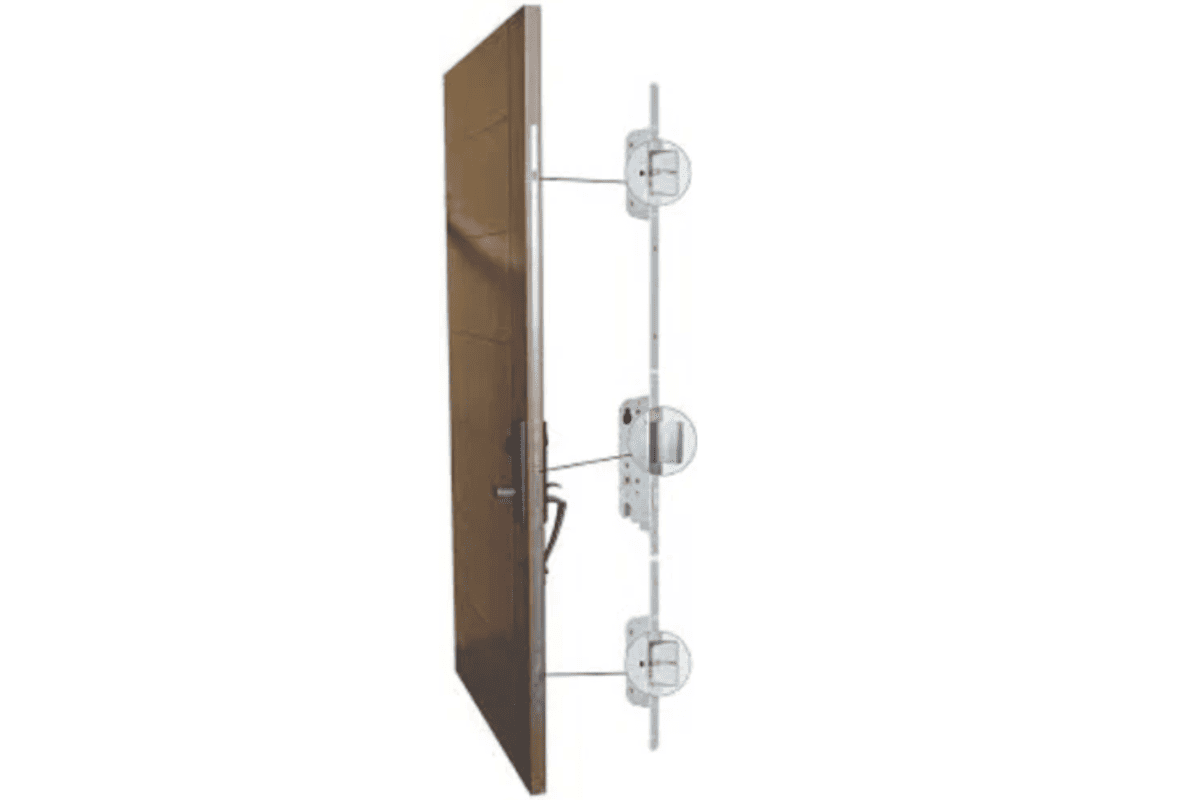
A Multipoint Lock Faceplate Size Guide should be used together with supplier evaluation. Buyers should review manufacturing capability, drawing control, sample approval, inspection process, customization support, certification documents, and export experience before placing bulk multipoint lock orders.
What I look for in a supplier
When I evaluate a multipoint lock supplier, I do not only look at the unit price. I look at the supplier’s ability to repeat the same specification. For architectural door hardware, repeatability is often more valuable than a small price reduction.
Key supplier evaluation points include:
| Supplier Factor | What Buyers Should Ask |
|---|---|
| Production capability | Does the supplier have stable in-house manufacturing? |
| Technical support | Can the supplier read door profile drawings? |
| Customization | Can the supplier adjust faceplate width, finish, or accessories? |
| Quality control | What inspections are done before shipment? |
| Product range | Can the supplier support locks, handles, hinges, cylinders, and accessories? |
| Documentation | Are CE or fire-rated certificates9 available for verification where applicable? |
| Export experience | Does the supplier understand regional market standards? |
Factory-direct supply and customization
For B2B buyers, factory-direct supply can reduce communication layers. It can also help when a project needs adjusted dimensions, surface treatment, special packaging, or private branding.
At SDH Hardware, our business model includes ODM and OEM orders, customer stamping or laser logos, custom color packaging, product drawings upon order confirmation, and inspection service after production. This matters for hardware brand enterprises and wholesalers because they often need more than a standard catalog item.
For multipoint lock faceplates, customization may include:
- Faceplate width changes
- Flat or U-shaped faceplate selection
- Surface finish adjustment
- Locking point layout changes
- Accessory configuration
- Packaging and labeling
- Brand logo application
- Project-specific drawings
However, customization should be controlled carefully. I always recommend that buyers approve a sample before mass production. Custom changes should be documented in drawings, not only in chat messages.
Quality control questions to ask
Before placing a bulk order, buyers can ask practical questions:
- How do you inspect faceplate width and straightness?
- Do you check screw hole positions against drawings?
- Can you provide pre-shipment inspection photos or reports?
- How do you control surface scratches during packing?
- Can you keep the approved sample as a production reference?
- What happens if the bulk product differs from the approved sample?
These questions are simple, but they show whether the supplier has a real quality process.
Certification and project requirements
Many buyers ask about CE certification or fire-rated certification. These documents can be important, especially in Europe, the Middle East, and commercial projects. But buyers should treat certifications as documents to verify, not as marketing claims to accept automatically.
I recommend that buyers:
- Request the certificate copy.
- Check the product model scope.
- Confirm the standard and test report relationship.
- Verify whether the certificate applies to the intended door assembly.
- Consult a qualified professional for fire-rated or regulated applications.
SDH Hardware states that core products comply with EU standard specifications and are available with authoritative CE certification and fire-rated certification. Still, the buyer should verify the documentation for each project because certification relevance can depend on product configuration, door type, and local regulations.
Why one-stop sourcing can reduce mismatch
Multipoint locks rarely work alone. They connect with lever handles, cylinders, hinges, keeps, and door accessories. If these items come from unrelated suppliers, compatibility issues can appear.
A one-stop architectural hardware supplier can help buyers align10:
- Euro mortise locks
- Stainless steel lever handles
- Butt hinges
- Concealed door hinges
- Euro brass cylinders
- Door accessories
- Multipoint lock components
This approach can reduce mismatch between finishes, packaging, technical drawings, and delivery schedules. It is especially useful for door manufacturers and bulk wholesalers who need complete hardware sets for repeat orders.
How Can Buyers Prevent Installation Errors During Production?
Installation errors often appear too late. The doors are already fabricated, the hardware has arrived, and the project schedule is tight. At that point, even a small faceplate mismatch becomes expensive because the team must decide between rework, replacement, or delay.
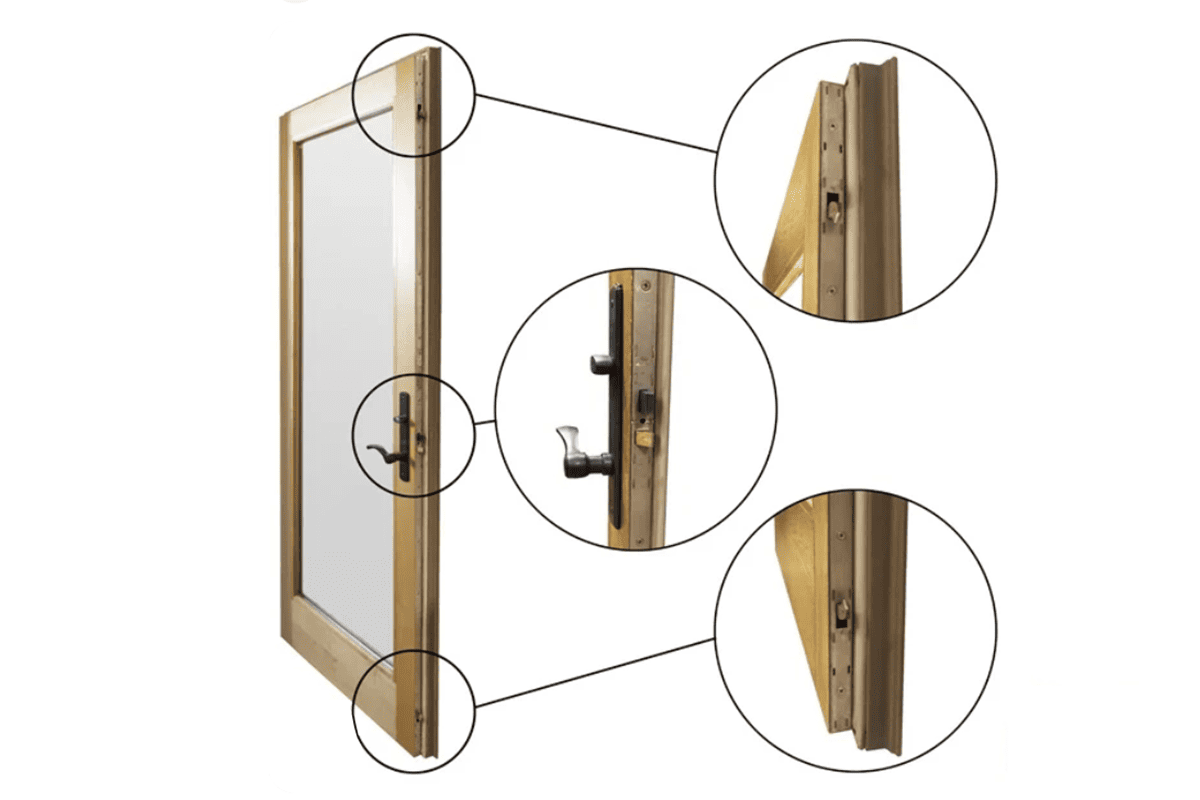
Buyers can prevent installation errors by confirming the faceplate with drawings, testing samples on the real aluminum profile, recording approved dimensions, and inspecting bulk goods before shipment. The best control point is before door preparation, not after the lock arrives on site.
Build a confirmation process before cutting doors
Door preparation should not begin until the lock specification is frozen. This is especially important for multipoint locks because several points must align at the same time.
I suggest this process:
Confirm door profile system
The aluminum profile groove decides the faceplate style.Confirm lock model and function
The project may need hooks, rollers, bolts, latch, or deadbolt functions.Confirm faceplate type
The faceplate should be flat or U-shaped according to the groove.Confirm faceplate width
The width may be 20 mm, 22 mm, 24 mm, or custom.Confirm handle and cylinder positions
These positions must match drilling templates.Fit the sample lock into the real profile
The best test is physical installation.Approve the final drawing
The drawing should become the production reference.Inspect bulk goods before shipment
Inspection should compare goods with the approved sample.
Common installation error scenarios
| Error Scenario | Likely Cause | Prevention Method |
|---|---|---|
| Faceplate does not enter groove | Wrong width or U-shape | Check profile drawing and sample fit |
| Visible gap on door edge | Faceplate too narrow | Confirm groove width and faceplate width |
| Lock sits proud | Groove depth mismatch | Check faceplate thickness and profile depth |
| Hooks rub against keeps | Locking point offset | Confirm locking point layout |
| Screw does not hold well | Poor screw position | Check reinforcement and hole spacing |
| Finish damage during install | Burrs or rough handling | Inspect edges and packing method |
Why sample testing is worth the time
Some buyers want to skip samples to save time. I understand the pressure, especially when a project is urgent. But a sample test can prevent a much larger delay later.
Conclusion
A Multipoint Lock Faceplate Size Guide helps buyers prevent avoidable door-preparation and installation errors. The most important point is simple: flat faceplates and U-shaped faceplates are not interchangeable, and widths such as 20 mm, 22 mm, and 24 mm must match the aluminum profile groove. I recommend confirming drawings, testing samples, and verifying supplier quality before bulk orders. If you need factory-direct support for multipoint locks, Euro mortise locks, handles, hinges, cylinders, or complete door hardware sets, contact SDH Hardware for project-based evaluation and OEM/ODM sourcing support.
"FGIA: Advancing the Fenestration and Glazing Industry", https://fgiaonline.org/. Industry guidance from fenestration bodies (e.g., AAMA/FGIA) cautions against improper field modifications to aluminum profiles and stresses correct hardware preparation to avoid structural or cosmetic damage; this contextual guidance supports the risk cited. Evidence role: general_support; source type: institution. Supports: That aluminum fenestration profiles can be compromised by improper hardware preparation or field modification, underscoring the risk of profile damage when components do not match.. Scope note: Guidelines generally address proper preparation and avoidance of field modification rather than documenting specific damage cases from faceplate-width mismatches. ↩
"EN 15685:2024 - Multipoint Locks and Locking Plates ...", https://standards.iteh.ai/catalog/standards/cen/ea3cf6df-bfe2-4e5b-b567-fc62ba2c61d2/en-15685-2024?srsltid=AYCX9vLJ0HAMe45Gfrh4SZhcq1Bg6LMZEQqDP9xTSkLpdo2F3nPMUfxL. A recognized standard for multipoint locks, such as CEN EN 15685 (Building hardware—Multipoint locks), sets out dimensional and interface requirements for lock forends/faceplates, supporting the practice of selecting and verifying faceplate widths as part of specification; however, the standard does not enumerate commercial ‘typical’ widths like 20, 22, or 24 mm. Evidence role: general_support; source type: institution. Supports: That multipoint locks are specified and tested with defined forend/faceplate dimensions and formats, justifying the need to confirm faceplate width among standard options.. Scope note: The standard supports the need to define and verify faceplate dimensions but may not explicitly list the specific width options cited. ↩
"Aluminum Extrusion Key Design Considerations", https://aec.org/key-design-considerations. Aluminium industry design manuals and standards note the wide variability of extrusion cross-sections and channels across systems, which implies differences in grooves relevant to hardware fit. Evidence role: general_support; source type: institution. Supports: That aluminum profile systems present varied channel/groove geometries depending on the extrusion design and manufacturer, necessitating matching hardware interfaces.. Scope note: Such manuals describe variability in general terms and may not specifically reference multipoint lock faceplates. ↩
"EN 15685:2024 - Multipoint Locks and Locking Plates ...", https://standards.iteh.ai/catalog/standards/cen/ea3cf6df-bfe2-4e5b-b567-fc62ba2c61d2/en-15685-2024?srsltid=AYCX9vJQUe53a2BdC2I9Ja3RiQjbm6-E0T2_uZ4a8nvZuR6wz0De3xvE. Standards and professional references for multipoint locks describe forend/faceplate forms and their dimensional interfaces to the door edge, supporting the distinction between faceplates that sit on a flat surface versus those formed to nest into a channel. Evidence role: general_support; source type: institution. Supports: That multipoint lock standards and professional glossaries distinguish faceplate (forend) forms and require compatibility with profile geometry.. Scope note: Standards typically define dimensional interfaces and performance but may not explicitly label ‘U-shaped’ as a formal category. ↩
"Three-point locking", https://en.wikipedia.org/wiki/Three-point_locking. Encyclopedic overviews of multipoint locking systems note their widespread use, particularly on uPVC doors and other fabricated door types, lending general support to the stated application context. Evidence role: general_support; source type: encyclopedia. Supports: That multipoint locking systems are widely used on uPVC and other door types in common practice.. Scope note: Encyclopedia entries provide broad usage context and may not specifically classify faceplate form factors by door material. ↩
"Lockset", https://en.wikipedia.org/wiki/Lockset. Reference glossaries and encyclopedic entries on door lock terminology define backset and centres (center distance) as key dimensions used to position cylinders and handles relative to the lock case. Evidence role: definition; source type: encyclopedia. Supports: That ‘backset’ and ‘center distance’ (centres) are standard lock dimensions determining hardware hole locations.. Scope note: General definitions confirm terminology but do not tie the terms to any one manufacturer’s drawing convention. ↩
"5400-Knob-Wood-Door-Template.pdf", https://www.tmhardware.com/files/attachments/6437/5400-Knob-Wood-Door-Template.pdf?srsltid=AYCX9vJBXXf9hVXvGQCPMOsKIHUuACY8pOQBLcJIQiIxAEJQGMz7FF6p. ANSI/BHMA A115 series door preparation standards specify tight tolerances for hardware preps (on the order of fractions of an inch), illustrating that small dimensional differences materially affect fit and function. Evidence role: general_support; source type: institution. Supports: That door hardware preparations are governed by tight tolerances, so small dimensional deviations can lead to poor fit.. Scope note: These standards address cylindrical and mortise preparations; they illustrate tolerance sensitivity rather than specifying a 2 mm threshold for multipoint faceplates. ↩
"First article inspection", https://en.wikipedia.org/wiki/First_article_inspection. Quality management bodies (e.g., ASQ) describe first-article/sample approval as a standard practice to validate dimensions and fit before mass production, supporting the recommendation to test samples on actual profiles. Evidence role: expert_consensus; source type: institution. Supports: That first-article inspection or sample approval is a recognized quality practice to verify conformance before full production.. Scope note: Quality frameworks endorse the practice broadly; they do not address multipoint lock faceplates specifically. ↩
"What is EN 1634-1 and why does it matter for fire doors?", https://metacon-next.com/en/knowledge-base/what-is-en-1634-1-and-why-does-it-matter-for-fire-doors/. EN 1634-1 (Fire resistance tests for door and shutter assemblies) evaluates performance of complete assemblies, which supports the practice of verifying that any claimed certification applies to the specific doorset and configuration under consideration. Evidence role: general_support; source type: institution. Supports: That fire performance certification relates to tested door assemblies and must be verified for the specific product configuration and intended application.. Scope note: The cited standard concerns fire testing of assemblies and does not itself constitute a market ‘certificate’; applicability must be confirmed case by case. ↩
"Supplier consolidation guide for better control and savings", https://business.amazon.com/en/blog/supplier-consolidation. Procurement guidance from professional institutes (e.g., CIPS) notes that consolidating suppliers and integrating sourcing can reduce interface issues and improve specification alignment across related items. Evidence role: expert_consensus; source type: institution. Supports: That supplier consolidation/integration can improve compatibility, communication, and coordination across related components.. Scope note: These sources discuss general procurement strategy rather than controlled trials showing reduced mismatches in door hardware specifically. ↩