George Bernard Shaw said, “England and America are two countries separated by the same language.” England and the United States do not only have language in common, there are many interoperable industry standards.
Let me first introduce you to two associations in the building door hardware industry.
- DHI (Door and Hardware Institute®) American Door and Hardware Institute. Composed of professionals involved in the door, hardware and security industries, it provides education, advocacy, certification and facilitation. Leading the industry in the development of building codes and standards, its consultants certified AHC, DHC, EHC, etc. is the authority of the North American door and hardware industry certification.
- GAI (Guildof Architectural Ironmonger) The British Guild of Architectural Ironmongers. Association professionally dedicated to promoting the development of the entire architectural hardware industry, architectural hardware dealers, wholesalers and manufacturers, GAI is also an association for comprehensive professional education in architectural hardware in Europe, which aims to set specifications for the hardware industry and has also become one of the bases for the development of hardware standards in other European countries. Its consultant certification DipGAI is the authoritative certification for the architectural hardware industry in Europe.
The Guild of Architectural Ironmongers (GAI) is the UK counterpart of the DHI and is the central organization for standard setting in the hardware industry in the UK and Europe.
I. Hardware Standard-setting bodies.
In the United States, the major standard-setting bodies are ANSI (American National Standards Institute), BHMA (Building Hardware Manufacturers Association), UL (Underwriters Laboratories) and NFPA (National Fire Protection Association). In the UK and Europe, similar standards designating bodies include BSI (British Standards Institute) and CEN (European Committee for Standardization). In the UK, GAI currently participates in 24 BSI committees and drafts standards in several key areas including doors, hardware, accessibility, personal safety, fire protection and BIM (Building Information Management). GAI has been involved in the development of many European hardware standards from the beginning and represents the European industry standard in hardware, environmental, product claims and electric doors. Understanding lock cylinder types and the differences between a cylinder door mechanism and a locking cylinder is essential for specifiers working across both markets.
II. Product standards and life safety regulations.
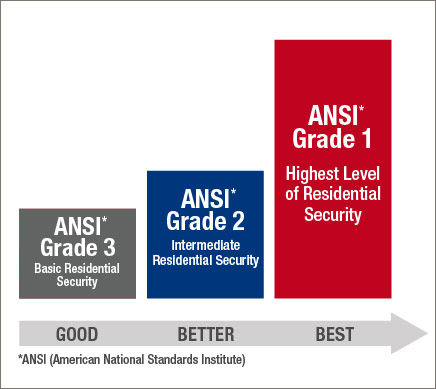
The ANSI/BHMA standards define different hardware product classes. Class 1 is the highest class and testing criteria include life testing, strength testing, operational testing, material evaluation testing and finish testing, as well as product dimensional criteria.
As with the American standards, almost all European architectural hardware standards have a grading format and they follow a common format to help users understand them. Each product is classified under several performance headings that are usually the same for all products. A classification code of six digits or more on all products details the product performance level of that product. The classification system, when applied to all architectural hardware products, allows them to be fully standardized in the hardware program. For example, a common level of corrosion resistance, an application category, a door quality. BS EN 1935, for example, uses an eight-digit coding system to classify door hinges. The code indicates a single-axis hinge for medium load situations, tested 200,000 times, for doors weighing 60KG, fire door applications, high corrosion resistance, for security doors, and a hinge class of 10.
When specifying replacement cylinder lock options, it is important to understand the lock cylinder barrels used in different systems. Products such as a brass lock cylinder are common in both markets, though dimensional standards differ. In Europe, a five lever mortice lock remains a benchmark for residential security, while panic door lock devices fall under EN 1125 or EN 179. Flush bolt lock systems and door lock floor bolt mechanisms are also classified within the same grading structure.
Similar to the United States, the British BS standard is purely for the United Kingdom, while EN is the broader European standard, so it is common to see the British standard written as BS EN and the German standard written as DIN EN.
In the UK and Europe, as in the US, manufacturers must have their products independently tested. Those that pass receive mandatory certification and carry a conformity mark (e.g., CE, UKCA, or UKNI) depending on the destination market. When placed on the market, they must also be marked as compliant with Form 2 provisions.
III. Fire regulations and fire test standards.
US Life Safety Codes (can be used with building codes or alone)
- NFPA 101 – Life Safety Code
- NFPA 80 – Standard for Fire Doors and Other Opening Protectives
- NFPA 252 – Standard Methods of Fire Tests of Door Assemblies
UK Corresponding Standards (design fire safety, commercial & residential management)
- BS 9999 – Code of practice for fire safety in the design, management and use of buildings
- BS 9991 – Fire safety in the design, management and use of residential buildings
- Note: GAI actively participated in the revision of both BS 9999 and BS 9991, with wide impact in the UK.
US Fire Door Rating Test Standards
- UL 10C – Positive Pressure Fire Test of Door Assemblies
- UL 10B – Fire Tests of Door Assemblies (neutral or negative pressure)
- NFPA 252 – Standard Methods of Fire Tests of Door Assemblies
UK / European Equivalent Test Standards
- BS 476 (UK)
- EN 1634‑1 & EN 1634‑2 (Europe)
- Note: These differ significantly from each other and even more from their US counterparts.
CE / UKCA / UKNI Marking RequirementCE/UKCA/UKNI
For a hardware product to carry the relevant mark (CE, UKCA or UKNI), it must have been successfully fire tested to EN 1634‑1 on the door — not only to BS 476‑22 for the UK and Irish markets.
IV. Accessibility Hardware.
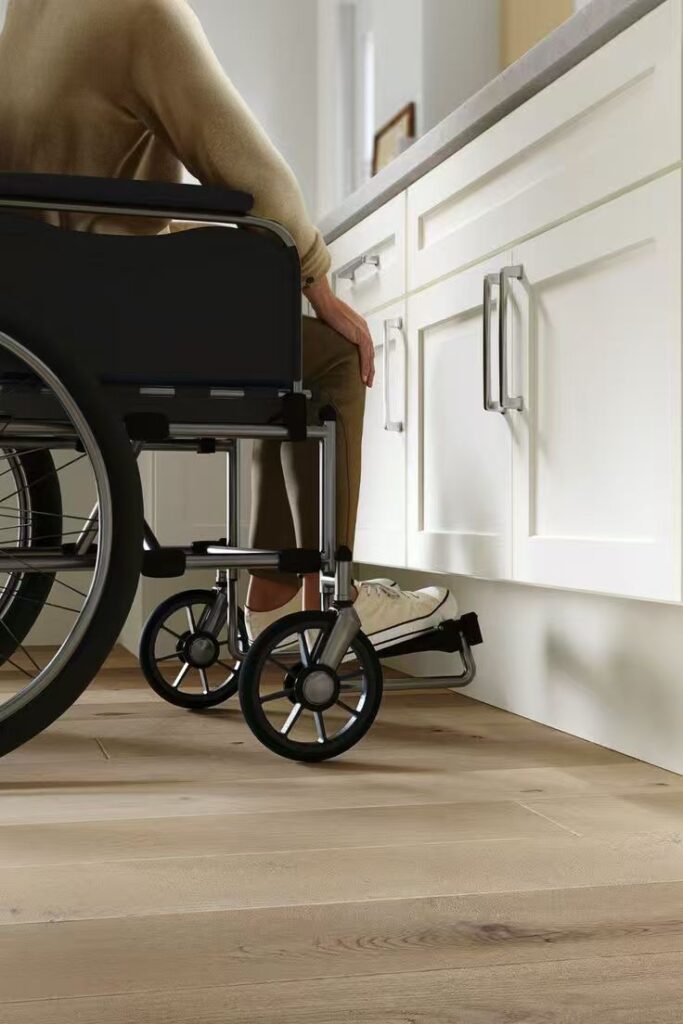
Accessible buildings, barrier-free facilities must fully serve people with different degrees of physical disability defects and normal activities decline (such as people with disabilities, the elderly), to create a modern living environment full of love and care, to effectively protect human safety, convenience and comfort. For example, it is easy for people with disabilities to open doors and pass through without taking more time and effort than able-bodied people. Accessibility is a very important theme in both the UK and the US, and is evident in the standards and legislation of both countries.
   Extended Knowledge:In the UK, the equivalent of the Americans with Disabilities Act (ADA) is the Equality Act (EA), which was implemented in England, Wales and Scotland in October 2010. Under this act, all human rights legislation covering various types of discrimination (DDA, SD Act, RDA) is included. Northern Ireland retained the Disability Discrimination Act (DDA), the first law in the UK to protect people with disabilities from all forms of discrimination, which was implemented in 1995.
   In the United States, standards are used to meet the requirements of the ADA. Two commonly used standards for accessibility in the United States for new and existing buildings are ICC A117.1 Accessible and Usable Buildings and Facilities and the ADA Standards for Accessible Design. Similarly, there are two highly influential British Standards in the UK: BS 8300-1 2018 Code for the External Environment and BS 8300-2 2018 Building Code, which are broad standards that address many aspects of construction but specifically refer to various types of hardware and signage and their applications.GAI is a long-standing member of the drafting groups and committees for these BSI standards, thus ensuring representation on key issues, such as door opening strength, fixed height and operation of door handles and clear opening widths.
   After Brexit, BSI will remain part of CEN and European standards will continue to be used in the UK alongside BS standards. Northern Ireland remains the "Northern Single Market" and for this reason GAI has published a guide to hardware standards and conformity marks for Northern Ireland.