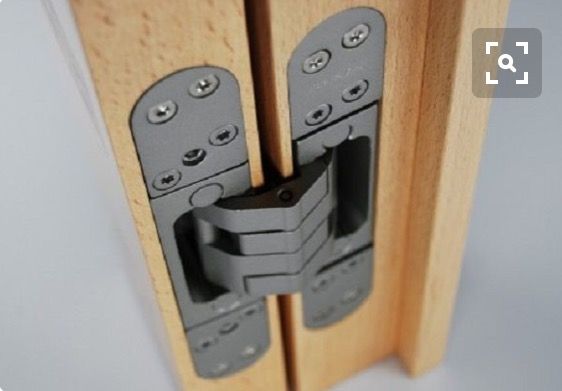
With the growing popularity of 3D adjustable concealed hinges, more advanced functions have been developed for modern door systems. One of the most practical innovations is the self-closing concealed hinge.
Doors equipped with self-closing concealed hinges no longer require an additional door closer. The spring or hydraulic mechanism integrated into the hinge automatically closes the door and, in some models, can even hold the door at a 90-degree position.
This article introduces the main types of self-closing concealed hinges and explains how to choose the right one for your project.
In most cases, each door requires two or three concealed hinges, with one hinge equipped with the self-closing mechanism.
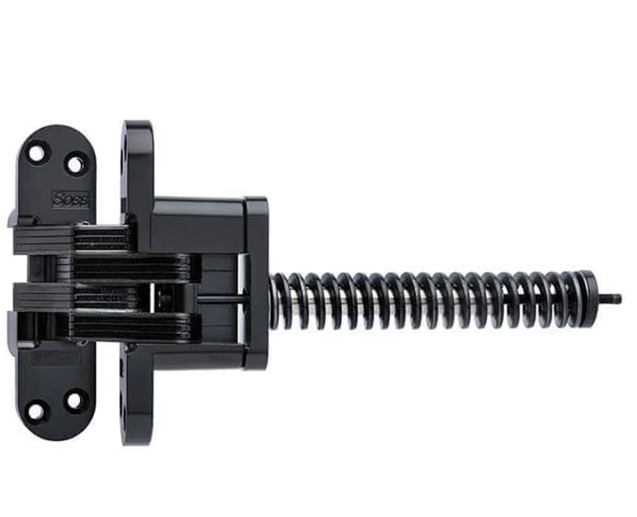
Spring-Type Self-Closing Concealed Hinge
Spring self-closing concealed hinges are commonly used for doors weighing 60 kg or less.
Their main advantages are:
- Lower cost
- Maintenance-free operation
- Simple structure
However, spring-type hinges also have some limitations. The closing force is relatively weak, and the spring performance may decrease over time, resulting in reduced closing efficiency after long-term use.
For lightweight interior doors and budget-sensitive projects, spring self-closing hinges are still a practical option.
Concealed Hinge with External Hydraulic Mechanism
This is currently the most widely used self-closing solution.
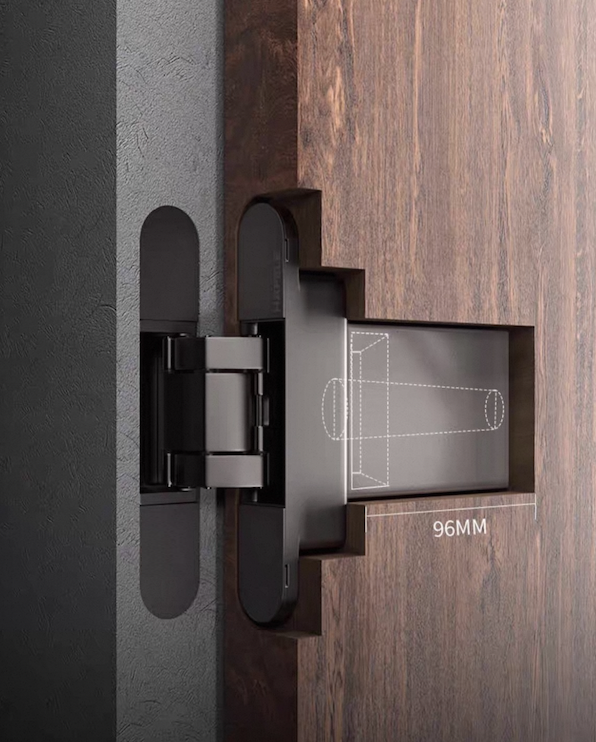
The hydraulic device is mounted on the back side of the hinge, usually in the form of a rectangular module filled with hydraulic oil. Compared with spring systems, hydraulic self-closing hinges provide:
- Stronger and smoother closing force
- Better long-term performance
- Lower force attenuation over time
- Improved user experience
Because of the additional hydraulic module, installation requires a deeper mortise in the door and frame to accommodate the mechanism.
Although the cost is higher, this type is ideal for high-end residential projects, commercial buildings, and heavy doors where reliable self-closing performance is required.
Self-Closing Concealed Hinge with Integrated Hydraulic Arm
When selecting a self-closing concealed hinge, you should consider the following factors:
- Door weight
- Door material
- Installation space
- Closing force requirements
- Budget
- Frequency of use
For lightweight interior doors, spring hinges may be sufficient. For commercial or heavy-duty applications, hydraulic self-closing hinges are generally the better choice.
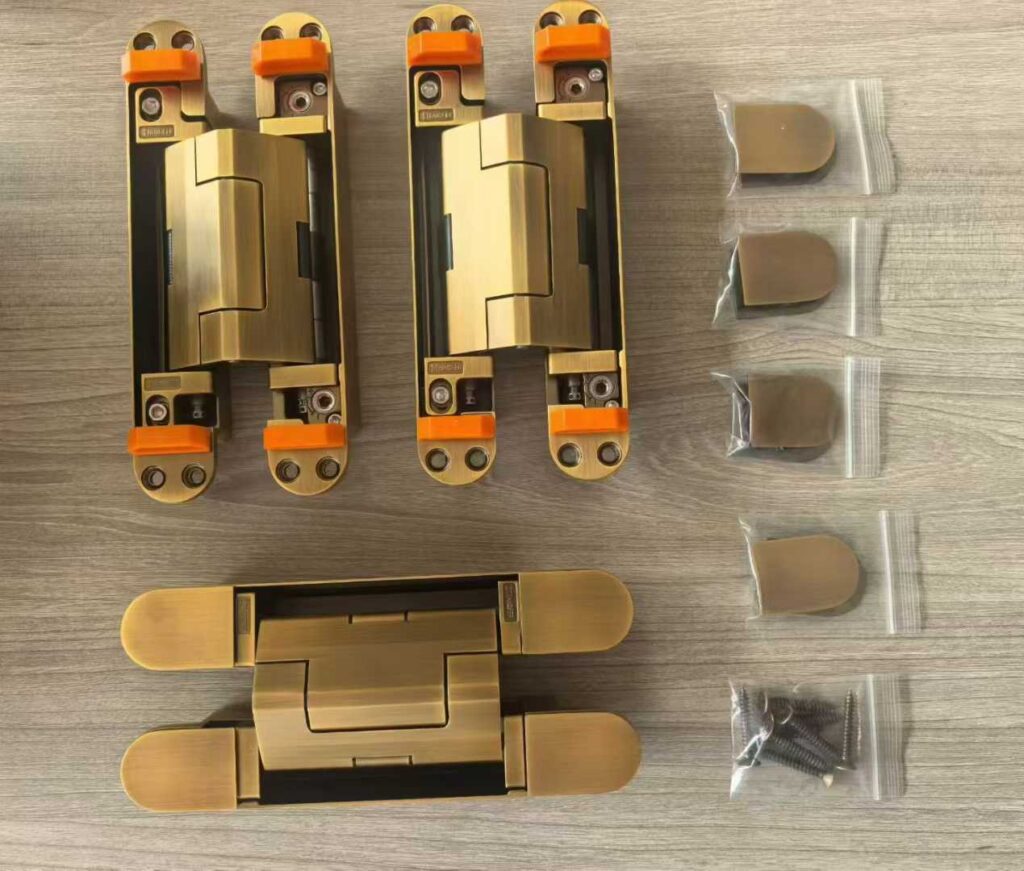
If your project uses aluminum frames or narrow solid wood frames, integrated hydraulic arm hinges can simplify installation while maintaining a clean appearance.
Conclusion
Self-closing concealed hinges combine functionality, aesthetics, and convenience in one solution. As modern door systems continue to evolve, they are becoming increasingly popular in both residential and commercial applications.
Would you consider using self-closing concealed hinges in your next project? We are happy to provide professional recommendations and help you choose the most suitable solution for your doors.