I see many Indian hinge buyers lose time on brand names, then face load failure, finish mismatch, import delays, and unclear compliance.
I treat the best door hinge in India as a selection decision, not a simple brand ranking. I match hinge type, door weight, material, finish, certification, BIS import needs, target price, and supplier stability before I place a bulk order.
I work with door hardware buyers who compare Indian suppliers, international brands, and Chinese factories at the same time. I see the same problem again and again. A hinge looks simple, but the wrong hinge can damage a door project fast.1
I will not rank brands without proof. I will use names like Häfele, DORMA, GEZE, Ozone, Dorset, and VIFI only as market reference points. I will focus on how I choose European-standard hinges for the Indian market, because that is where many real purchase decisions happen.
What Makes a Door Hinge “Best” for the Indian Market?
I often see buyers ask for the best hinge, but the real issue is that the door, the load, and the market standard are not clear.
The best door hinge for India is the hinge that fits the door weight, door material, opening frequency, finish demand, compliance need, and price band. I check these points before I compare brands or factories.
I Start With the Door, Not the Hinge
I always begin with the door. A light interior wooden door does not need the same hinge as a heavy fire-rated door. A premium concealed door does not need the same hinge as a basic residential door. This sounds simple, but I have seen many buyers start with price first. That can create a hidden cost later.
In India, I see buyers use European-style specifications more often for modern projects, brand product lines, and export-style door systems. This means I must check size, thickness, screw hole position, load grade, finish, and certificate needs. A hinge that looks correct in a photo can still fail in assembly if the hole position or thickness is not stable.
| Check Point | What I Confirm | Why I Confirm It |
|---|---|---|
| Door weight | Light, medium, or heavy | I avoid sagging and noise |
| Door material | Wood, steel, aluminum, fire door | I match strength and screw holding |
| Opening use | Home, hotel, office, project | I estimate wear level |
| Hinge size | Length, width, thickness | I match the frame and leaf |
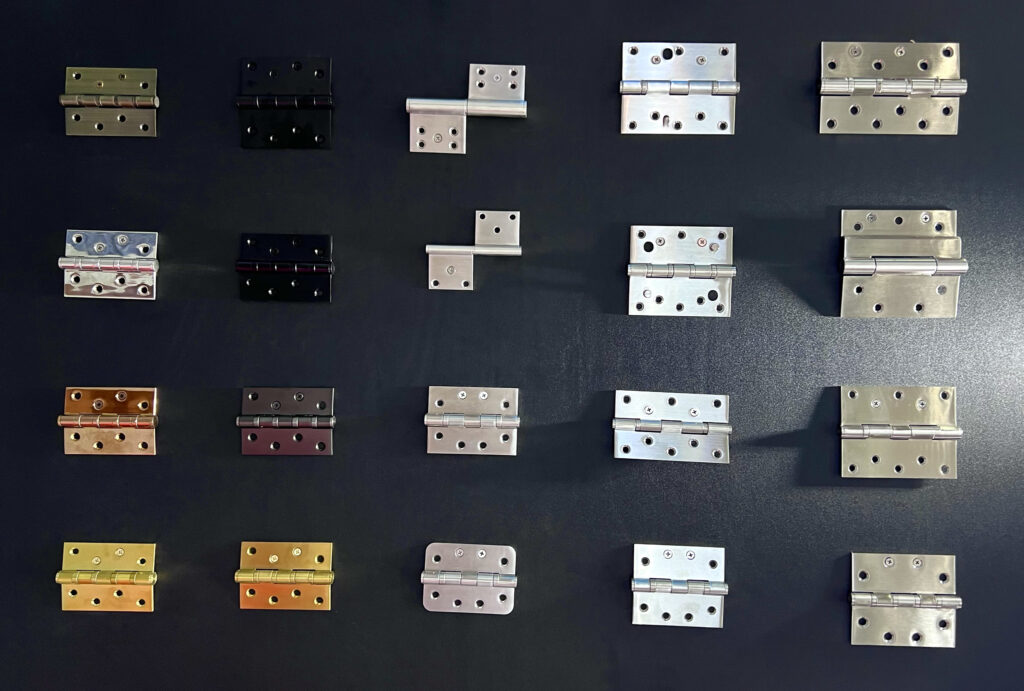
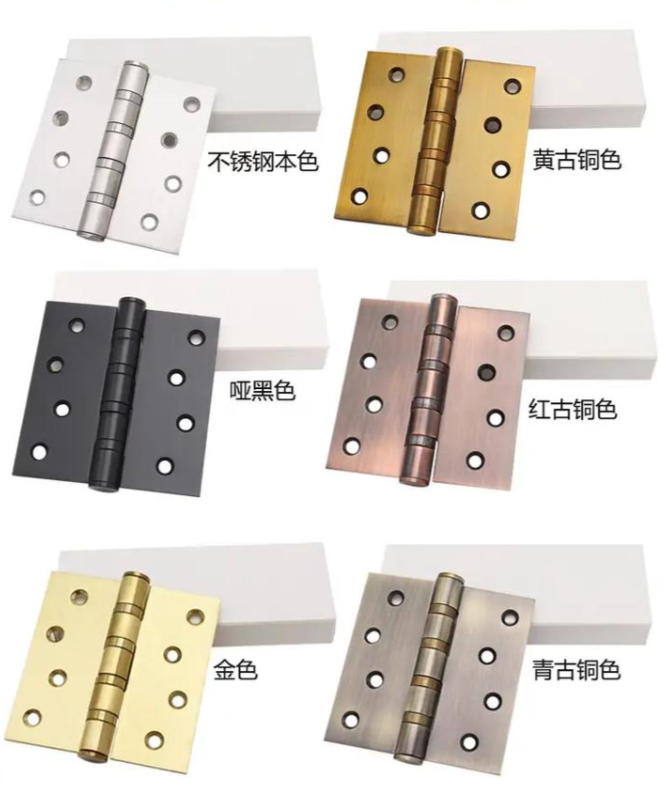
| Finish | SS, satin, matte, PVD, black | I keep the batch appearance stable |
| Compliance | CE, fire-rated, BIS check | I reduce import and project risk |
I also look at climate and site conditions. Some Indian regions have high humidity, dust, or strong coastal exposure.2 I need better material and better surface control in those cases. I do not choose a hinge only by catalog size. I choose it by the real door and the real use.
Which European-Standard Hinge Types Are Common in India?
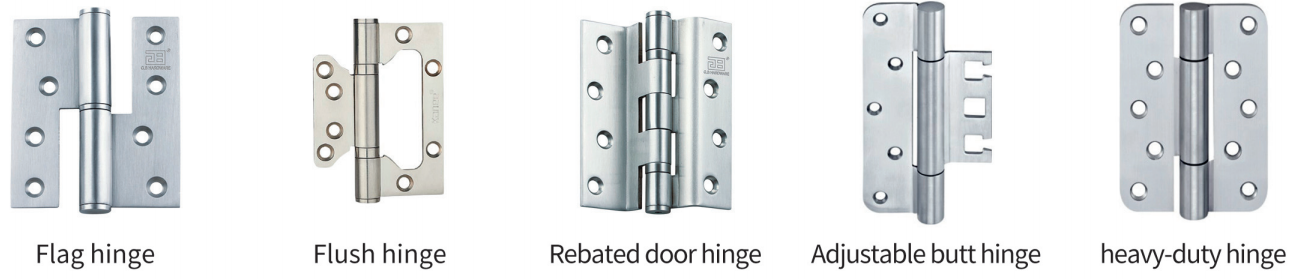
I see Indian buyers compare butt hinges, concealed hinges, flush hinges, spring hinges, and heavy-duty hinges under European-style specifications.
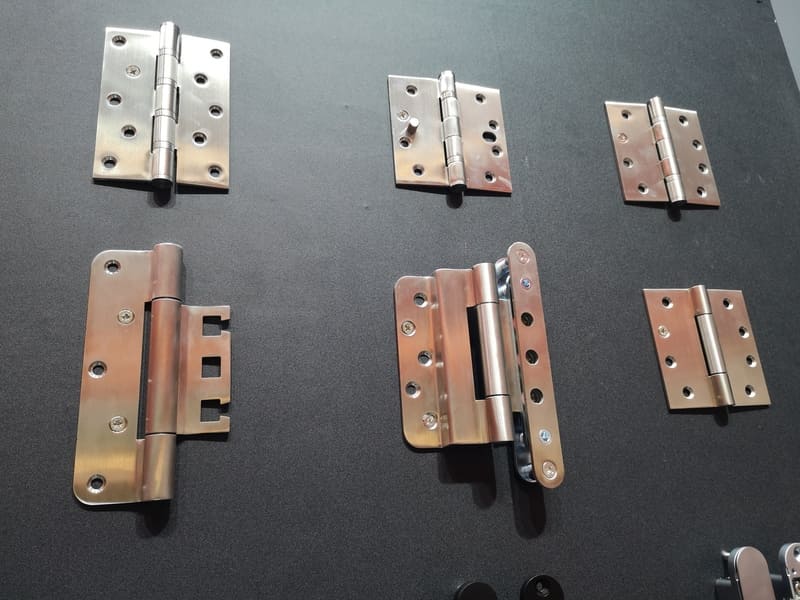
I use butt hinges for common doors, concealed hinges for invisible premium doors, flush hinges for lighter simple doors, spring hinges for self-closing use, and heavy-duty hinges for higher-load project doors.
I Match Hinge Type to Use Case
I do not treat every hinge as the same product. The hinge type decides the installation method, door look, load capacity, and service life. In my experience, many procurement mistakes come from using a light hinge where a stronger hinge is needed, or using a decorative hinge where a tested project hinge is needed.
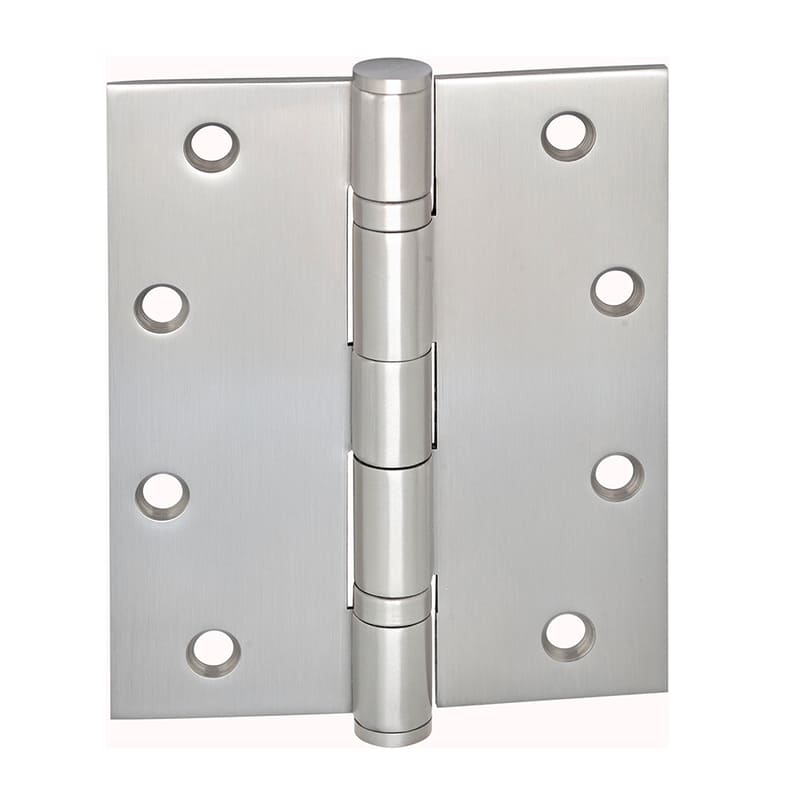
Butt hinges are still common because they are simple, familiar, and easy to install.3 Concealed hinges are growing because many modern Indian doors need a clean and invisible appearance.4 Flush hinges are useful for lighter applications, but I do not use them where load and long service life are the main concerns. Spring hinges are chosen when self-closing is needed.5 Heavy-duty hinges are used for heavier doors, commercial doors, and higher-frequency opening.6
| Hinge Type | Where I Use It | Main Benefit | Main Risk If Chosen Wrong |
|---|---|---|---|
| Butt hinge | Common wood or metal doors | Stable and easy to source | Wrong thickness causes sagging |
| Concealed hinge | Premium invisible doors | Clean design and hidden look | Poor tolerance affects alignment |
| Flush hinge | Light simple doors | Easy installation | Not ideal for heavy doors |
| Spring hinge | Self-closing doors | Built-in closing action | Spring force may be wrong |
| Heavy-duty hinge | Project or high-load doors | Better load support | Higher cost and stricter fitting |
I also check whether the Indian buyer needs European-style packaging, branding, or private label supply. This matters for wholesalers and brand operators. A hinge is not only a metal part. It is also a finished product that must be sold, installed, and trusted by the end customer.
Should I Choose International, Indian, or Chinese Hinge Suppliers?
I see Indian buyers compare all three options because each supply route has a different mix of price, brand value, lead time, and control.
I compare international brands, Indian suppliers, and Chinese factories by specification, consistency, certificate support, price, delivery, and after-sales response. I do not assume one country or one brand is always best.
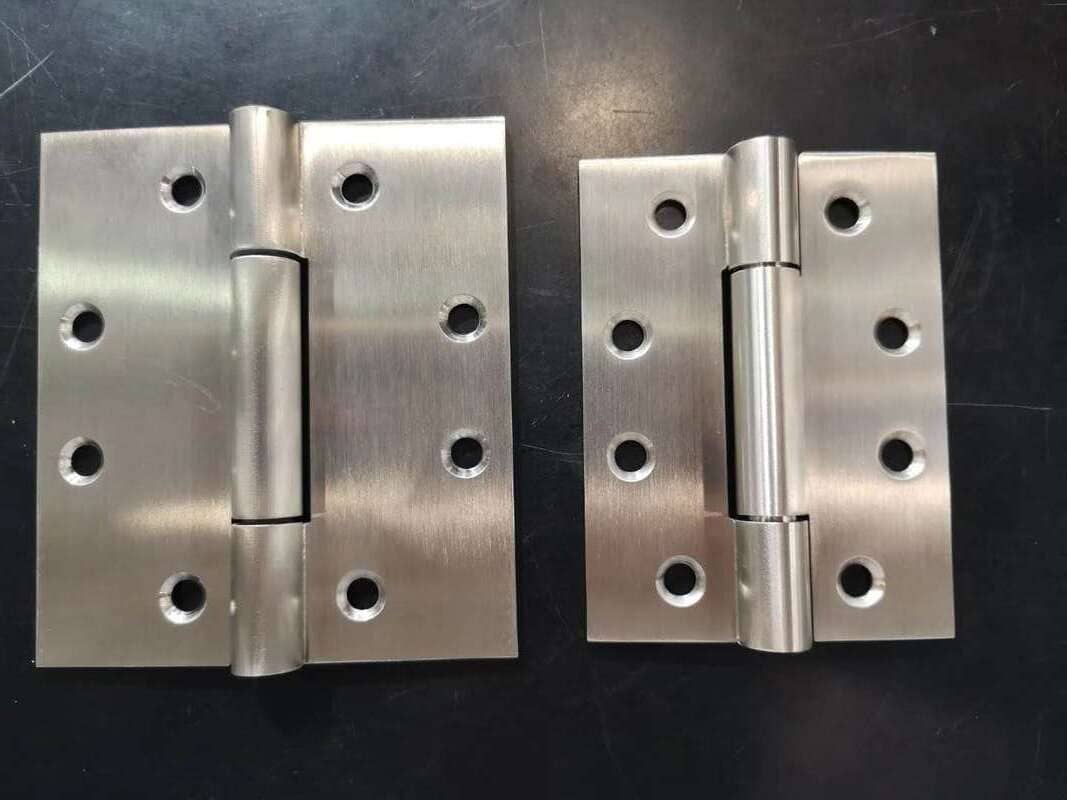
I Compare Suppliers Without Blind Trust
I have seen buyers use international names like Häfele, DORMA, and GEZE as reference points for quality level, project expectation, and market position. I have also seen Indian names like Ozone, Dorset, and VIFI used as familiar local references. I do not call any of them the best without evidence. I treat them as points in the market that help me understand buyer expectations.
India has many local hinge producers and hardware distributors. Some supply good products. Some supply inconsistent products. The same is true for China. Some factories have strong process control. Some only compete by low price. I never make the decision based only on the country. I check the actual supplier.
| Supplier Route | What I Like | What I Check Carefully |
|---|---|---|
| International brand | Strong market image and system support | Price, lead time, project fit |
| Indian supplier | Local access and easier communication | Batch consistency and test proof |
| Chinese factory | Cost, capacity, finish options, customization | QC system, certificate support, BIS import needs |
As a manufacturer, I pay close attention to sample-to-bulk stability. A sample can look perfect because it was prepared by hand. A bulk order tests the real factory. I check whether the factory can control raw material, stamping or machining, hole position, polishing, plating, assembly, packing, and inspection. This is where the real quality gap appears.
Why Is BIS Certification Important for Hinges Imported From China to India?
I treat BIS as a serious checkpoint because import compliance can affect shipment release, project timing, and buyer risk.
For China-to-India hinge imports, I check the latest BIS scope, HS code, product category, and enforcement status before shipment.7 I do not rely on old information because requirements may change.
I Treat Compliance as Part of Cost
I have learned that a cheap hinge can become expensive if import paperwork is wrong. For Indian buyers importing from China, BIS certification may be a key issue depending on the product scope and current enforcement rules. I am not an Indian legal authority, so I always ask the importer, customs broker, and certification consultant to verify the latest requirement before order confirmation.
I also check whether the hinge needs CE, fire-rated certification, or other project documents. Some Indian projects follow international specifications. Some buyers use certificates to support brand sales. Some buyers need documents for tenders. I ask about this before production, not after the goods are ready.
| Compliance Item | What I Confirm | Why It Matters |
|---|---|---|
| BIS scope | Whether the hinge is covered | I reduce import risk |
| HS code8 | Correct customs classification | I avoid wrong declaration |
| CE certificate9 | European-standard market support | I support project and brand sales |
| Fire-rated certificate10 | Fire door or project need | I protect safety and approval |
| Test report match | Product and report consistency | I avoid document mismatch |
I also connect compliance with factory control. A certificate is not useful if the bulk product is different from the tested sample. I check material grade, thickness, bearing design, screws, finish, and packaging label. I keep the product data stable, because changing details after certification can create risk.
What Quality Details Should I Check Before Bulk Hinge Orders?
I always inspect more than the surface because a bright finish does not prove hinge strength, fit, or long-term stability.
Before I place a bulk hinge order, I check material grade, thickness, tolerance, knuckle fit, hole position, screw quality, finish consistency, salt-spray need11, packaging, and sample-to-bulk control.

I Look at the Small Details First
When I inspect hinges, I do not stop at the first impression. A hinge can look good in a photo but still have weak thickness, loose pin fit, poor screw holes, or unstable finish. I check these details because Indian wholesalers and door factories often buy in bulk. One small defect can become a large claim when the quantity is high.
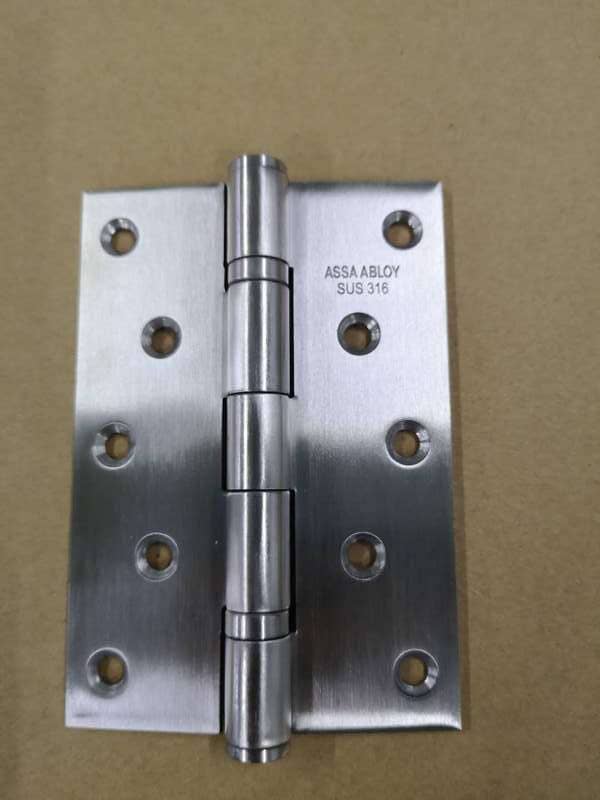
Material is the first point. Stainless steel, zinc alloy, brass, and iron each have different use cases. For many European-standard hinges, stainless steel is common because it has strength and corrosion resistance.12 Thickness is also important. A small reduction can lower cost, but it can also lower load capacity.
| Quality Detail | What I Inspect | What Can Go Wrong |
|---|---|---|
| Material | Grade and real composition | Rust, bending, weak life |
| Thickness | Actual measured thickness | Door sagging and deformation |
| Hole position | Size and spacing | Installation failure |
| Pin and knuckle | Fit and rotation | Noise and loose movement |
| Finish | Color and surface match | Batch mismatch |
| Screws | Size, material, head type | Weak fixing |
| Packing | Inner box and carton strength | Damage in transport |
I also ask for pre-shipment photos, random inspection, and clear QC records. I prefer to check a sealed sample against bulk goods. I have seen problems when a supplier changes material, screw type, or finish process after sample approval. I try to make every detail written in the purchase order.
How Should I Balance Price, Finish, and Delivery for India?
I do not chase the lowest price because I know that low price often hides thinner material, weaker finish, or unstable delivery.
I balance hinge price by checking the full cost: product quality, finish consistency, certification, packaging, freight, import duty, claim risk, and repeat order stability.
I Calculate the Real Cost, Not Only the Unit Price
Indian buyers are usually very price-sensitive, and I understand this well. Door factories, wholesalers, and brand operators all need margin. Still, I have seen the lowest-price hinge create more cost later. The hinge may rust, the finish may vary, the screw may strip, or the delivery may miss the selling season.
I look at price bands by use case. Basic butt hinges can be price-driven. Premium concealed hinges need tighter tolerance and better testing. Fire-rated or heavy-duty hinges need stronger material and more formal documents. I do not compare these products as if they are the same.
| Cost Factor | Why I Count It | My Practical View |
|---|---|---|
| Unit price | It affects margin | I compare only same specification |
| Finish stability | It affects shelf appeal | I require batch color control |
| Certification | It affects import and project use | I confirm before production |
| Packaging | It affects damage rate | I define carton strength |
| Delivery time | It affects sales and project schedule | I confirm capacity and lead time |
| Claim risk | It affects hidden cost | I choose stable suppliers |
I also ask the factory about production capacity. A supplier may make a good sample but fail to supply repeat orders. For Indian wholesalers and brand operators, repeatability is very important. The customer expects the same hinge finish, same screw pack, same carton mark, and same installation result month after month.
What Inquiry Checklist Do I Use Before I Source Hinges for India?
I use a fixed inquiry checklist because it helps me avoid unclear offers, wrong samples, and slow supplier replies.
My hinge inquiry checklist includes hinge type, door weight, door material, size, thickness, finish, quantity, BIS need, certificate need, target price, packaging, delivery schedule, and brand or OEM request.
I Make the Inquiry Clear Before I Ask for Price
I have received many hinge inquiries that only say, “Send best price.” I cannot quote correctly from that sentence. I need the door type, hinge type, size, material, finish, and quantity. If I do not get these details, I may quote the wrong product. That wastes time for both sides.
For Indian buyers, I also ask about BIS and import requirements early. If the hinge is imported from China, I want the buyer to verify the latest BIS scope, HS code, and local enforcement. This step should happen before the order, not after production. I also ask whether the buyer needs CE, fire-rated certificates, or test reports.
| Inquiry Item | What I Ask For | Example |
|---|---|---|
| Hinge type | Butt, concealed, flush, spring, heavy-duty | Concealed hinge |
| Door weight | Weight per door leaf | 45 kg |
| Door material | Wood, steel, aluminum, fire door | Solid wood |
| Size and thickness | Length, width, gauge | 100 x 75 x 3 mm |
| Finish | SS, satin, black, PVD, antique | Satin stainless steel |
| Quantity | Order volume and repeat plan | 10,000 pairs |
| Compliance | BIS, CE, fire-rated | BIS check needed |
| Target price | Expected price band | Project price |
| Delivery | Needed shipment date | 35 days |
| Packaging | Bulk, color box, private label | Brand box |
I also ask for the sales channel. A project supplier may need certificates and stable delivery. A wholesaler may need strong packaging and fast-moving sizes. A door factory may need exact screw hole position and easy assembly. A brand operator may need a clean finish, private label packing, and stable repeat supply. The best hinge changes when the business model changes.
Conclusion
I choose the best door hinge in India by matching specification, compliance, quality control, price, and supplier stability before I trust any brand name.
"Understanding BS EN 1935:2002 single-axis hinge grades", https://uk.sfs.com/resources/article/understanding-bs-en-1935. Standards such as EN 1935 classify single-axis hinges by test door mass and durability (number of cycles), indicating that hinges must be selected to match door weight and use to avoid premature performance failures like sagging. Evidence role: expert_consensus; source type: institution. Supports: That hinge standards classify performance by door mass and usage cycles, implying that underspecified hinges risk premature failure (e.g., sagging or loosening).. Scope note: The standard defines performance classes but does not document individual project failure cases. ↩
"Atmospheric Corrosion of Different Steel Types in Urban and Marine ...", https://pmc.ncbi.nlm.nih.gov/articles/PMC11679332/. ISO 9223 describes how atmospheric corrosivity increases in marine/coastal environments with chloride deposition and high humidity, which supports selecting more corrosion-resistant materials and finishes for hardware used in such conditions. Evidence role: mechanism; source type: encyclopedia. Supports: That coastal/marine and high-humidity atmospheres are classified as higher-corrosivity environments due to chloride deposition and moisture.. Scope note: This provides general corrosion context and not India-specific regional measurements. ↩
"Hinge - Wikipedia", https://en.wikipedia.org/wiki/Hinge. Reference descriptions identify the butt hinge as a common door hinge consisting of two rectangular leaves mortised into the door and frame, a configuration that lends itself to straightforward installation. Evidence role: definition; source type: encyclopedia. Supports: That butt hinges are a common hinge form for doors and are installed by mortising the leaves into door and frame.. Scope note: General descriptions establish commonness but do not quantify usage by market or region. ↩
"Hidden Hinges for High-End Residential Applications", https://www.soss.com/hidden-hinges-for-doors/. Technical summaries describe invisible (concealed) hinges as hardware that is hidden from view when the door is closed, producing an uninterrupted, clean appearance. Evidence role: definition; source type: encyclopedia. Supports: That concealed (invisible) hinges are hidden when the door is closed and are used for a clean architectural look.. Scope note: The functional description is supported; no source is provided for adoption trends in India. ↩
"Hinge - Wikipedia", https://en.wikipedia.org/wiki/Hinge. Reference materials define spring hinges as hinges incorporating a spring so that the door returns to a closed position, providing self-closing action. Evidence role: definition; source type: encyclopedia. Supports: That a spring hinge contains a spring mechanism that returns the door to a closed position.. ↩
"Understanding BS EN 1935:2002 single-axis hinge grades", https://uk.sfs.com/resources/article/understanding-bs-en-1935. EN 1935 specifies performance classes for single-axis hinges based on test mass and durability (cycle testing), supporting the use of higher-class (heavy-duty) hinges for heavier and more frequently operated doors. Evidence role: expert_consensus; source type: institution. Supports: That hinge standards classify by door mass and durability (cycles), indicating which hinges are suitable for heavier doors and high-frequency operation.. Scope note: This establishes classification principles but does not specify exact hinge models for given doors. ↩
"Products under Compulsory Certification - Bureau of Indian Standards", https://www.bis.gov.in/product-certification/products-under-compulsory-certification/?lang=en. Government guidance on BIS product certification and Quality Control Orders explains that only notified products require BIS marking for manufacture or import, and that the notified scopes are updated over time; importers should confirm whether their goods are currently covered. Evidence role: general_support; source type: government. Supports: That India mandates BIS certification only for products specified in notified Quality Control Orders and that notifications are periodically updated, affecting import compliance.. Scope note: This explains the regulatory framework but does not state whether door hinges are presently notified. ↩
"Harmonized System (HS) Codes - International Trade Administration", https://www.trade.gov/harmonized-system-hs-codes. The World Customs Organization describes the Harmonized System as the international basis for customs product classification used to apply tariffs and regulatory measures; correct HS classification is therefore necessary for customs declarations. Evidence role: historical_context; source type: institution. Supports: That the Harmonized System is the international nomenclature used by customs to classify traded products, which determines tariffs and regulatory measures, making accurate classification necessary.. Scope note: National implementations add local subheadings and rules, so specific classifications and consequences vary by country. ↩
"Decoding Hinge Markings: A Simple Guide - Phoenix Hinges", https://phoenix-hinges.com/blogs/hinge-hub/decoding-hinge-markings?srsltid=AfmBOoqhjMhMEqPZ8IzmBTcRBbcEueqhDDSf5xRAVXRUtR_b5_V5Tglk. European Commission guidance on the Construction Products Regulation (EU) No 305/2011 states that construction products covered by a harmonized standard must carry CE marking to show conformity for the EEA market; single-axis hinges are covered by EN 1935. Evidence role: historical_context; source type: government. Supports: That under Regulation (EU) No 305/2011 (CPR), construction products within the scope of a harmonized standard (e.g., EN 1935 for single-axis hinges) bear CE marking to demonstrate conformity for placement on the EEA market.. Scope note: CE marking is jurisdiction-specific and may not be required outside the EU/EEA. ↩
"Fire Door Hardware: What You Need to Know", https://ukfiredoortraining.com/2024/07/18/fire-door-hardware-what-you-need-to-know/. Authoritative summaries of fire door practice note that doors and their hardware must be tested and certified as an assembly to fire test standards (such as EN 1634‑1 or UL 10C/NFPA 80), so hinges on fire doors must be appropriately rated. Evidence role: expert_consensus; source type: encyclopedia. Supports: That fire door assemblies and their hardware (including hinges) must be tested and certified to relevant fire test standards (e.g., EN 1634-1 in Europe or UL 10C/NFPA 80 in North America).. Scope note: Acceptable standards and certificate requirements vary by jurisdiction and project specification. ↩
"Salt spray test - Wikipedia", https://en.wikipedia.org/wiki/Salt_spray_test. Standards such as ASTM B117 and ISO 9227 define neutral salt spray testing, which is widely used as an accelerated, comparative method for assessing the corrosion resistance of surface finishes on hardware. Evidence role: definition; source type: encyclopedia. Supports: That neutral salt spray tests (e.g., ASTM B117/ISO 9227) are standard accelerated methods for comparing corrosion resistance of coatings and finishes.. Scope note: Salt spray performance does not always correlate directly with real-world service life; it is best interpreted comparatively. ↩
"Stainless steel - Wikipedia", https://en.wikipedia.org/wiki/Stainless_steel. Materials references explain that stainless steels achieve corrosion resistance through chromium-induced passive films and possess sufficient strength for structural hardware, which underpins their frequent use in hinges. Evidence role: mechanism; source type: encyclopedia. Supports: That stainless steel provides notable corrosion resistance (due to chromium) and adequate mechanical strength for hardware applications such as hinges.. Scope note: This supports suitability by properties; it does not quantify prevalence in any specific standard or market. ↩