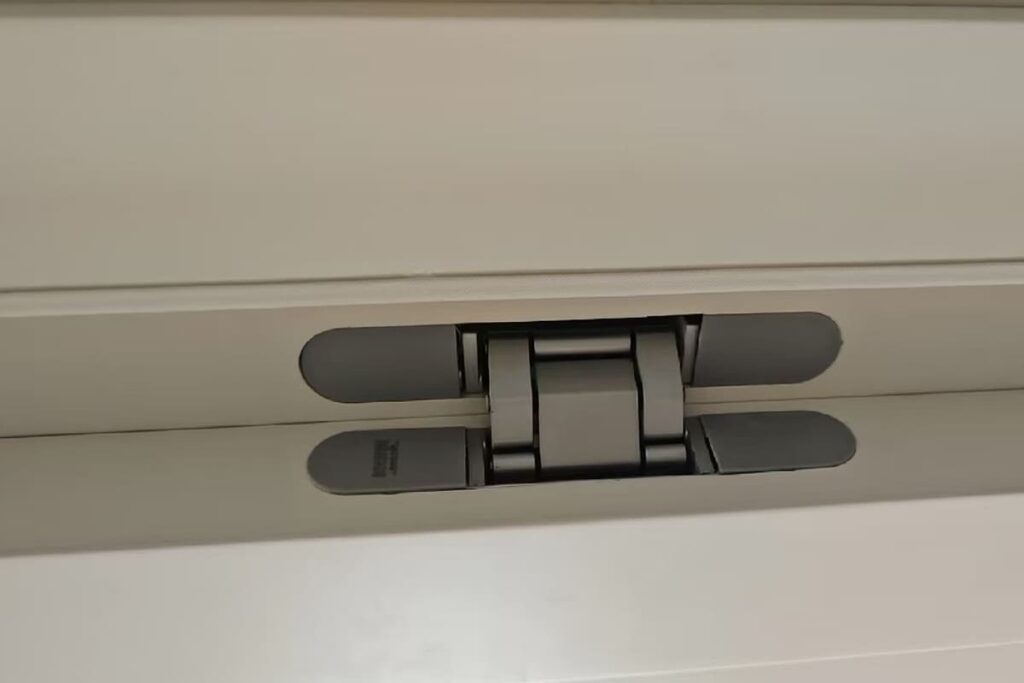
A wrong hinge choice can damage a door. It can also delay a batch order.1 I start installation by checking the system, not by drilling.
To install soft closing concealed hinges, I first confirm the hinge model, door thickness, door weight, frame structure, fixing conditions, and the supplier drawing. Then I machine the door and frame according to that exact drawing, mount the hinge, adjust the gaps, and test the soft-closing and positioning function.
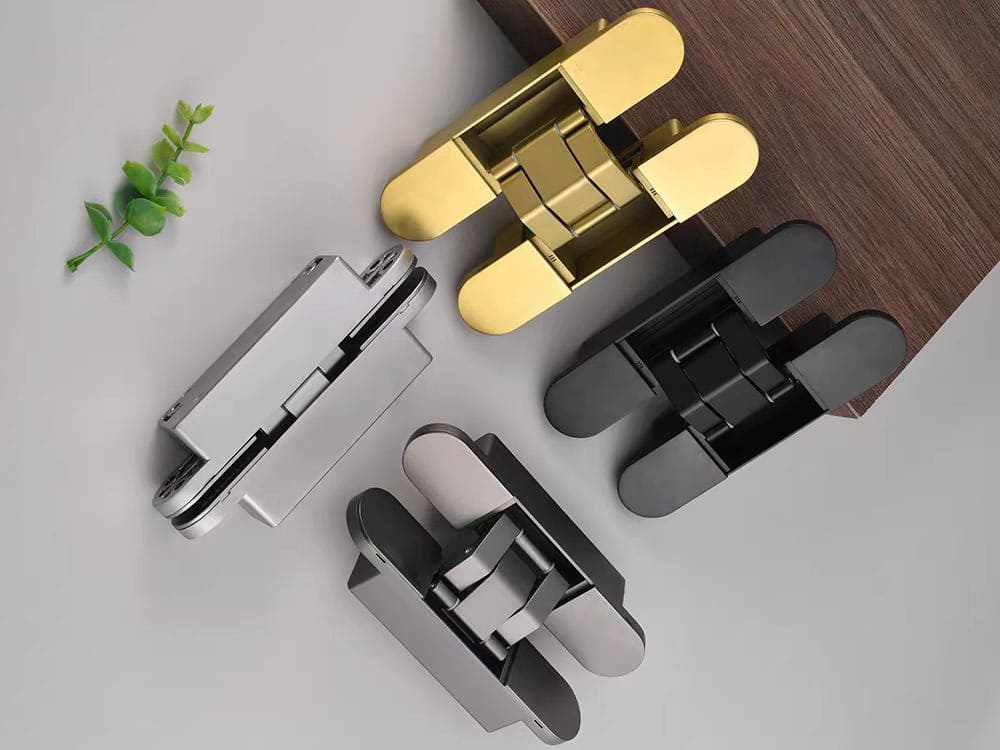
I have answered many installation questions from buyers, door factories, and hardware brand teams. Most problems do not start when the hinge is screwed in. They start earlier, when the hinge model does not match the door, the routing is made from a guessed template, or the adjustment is expected to fix a basic selection mistake. So I treat installation as a full decision process. If I check the hinge model, door condition, machining drawing, and adjustment range before production, the real installation becomes much safer.
What should I confirm before drilling?
A drill can make a fast mistake. I have seen one wrong pocket create rework, delay, and surface damage on good door panels.
I confirm the hinge model before drilling. I check door thickness, door weight, frame structure, opening angle, fixing surface, and the exact technical drawing.2 I do not use one universal hole size because each concealed hinge model can have different routing and screw positions.
I start with the hinge drawing
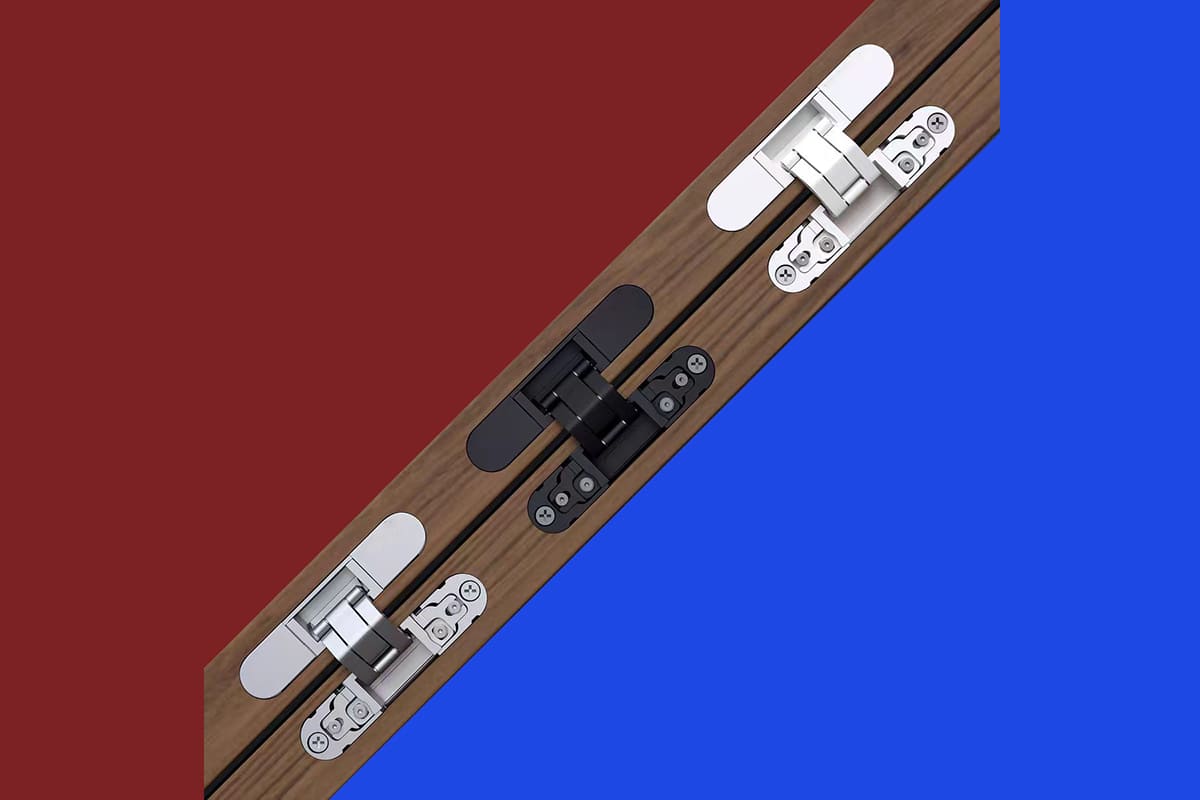
When I talk with buyers, I always ask for the door information before I discuss machining. A soft closing concealed hinge is hidden inside the door and frame. This means the pocket depth, pocket length, body shape, screw location, and fixing strength all matter. If one point is wrong, the hinge may still fit into the hole, but the door may not close well.
I check the door and frame together
I do not look at the door leaf only. I also check the frame type, the frame material, the rebate design, and the screw fixing area. A strong hinge needs a strong fixing base.3
| Check item | Why I check it | What can go wrong |
|---|---|---|
| Door thickness | It decides if the hinge body can fit | The hinge may break through the door edge |
| Door weight | It decides load suitability | The door may sag after use |
| Frame structure | It affects fixing strength | Screws may not hold well |
| Hinge drawing | It guides routing and screws | The pocket may not match the hinge |
| Opening demand | It affects function choice | The door may not reach the needed angle |
I treat this step as part of installation. If I skip it, the later steps become a repair job, not an installation job.
How do I match the hinge model to the door and frame?
A soft closing hinge cannot work well if the door is too heavy, too thin, or fixed into a weak frame.4 Selection controls installation quality.
I match the hinge model by checking load capacity, door thickness range, frame type, fixing condition, opening angle, and soft-closing function. I also confirm if the hinge supports left-right universal use, stay-open use beyond 90°, and 90° positioning when the project needs it.
I do not separate selection from installation
Many buyers ask me if a hinge is “easy to install.” I usually answer with another question. I ask what door it will be installed on. Easy installation does not come from the hinge alone. It comes from a correct match between the hinge and the door system.
I check function and structure
Some soft closing concealed hinges support opening beyond 90° and can stay open at a certain angle. Some designs also offer 90° positioning.5 These functions are useful for door factories and project doors, but they only help when the hinge is selected correctly.
| Model factor | Installation meaning | Buyer value |
|---|---|---|
| Load capacity | The hinge supports the door weight | Less sagging risk |
| Door thickness range | The hinge body fits the door edge | Less door leaf damage |
| Left-right universal use | One model can serve both directions | Lower inventory pressure |
| 90° positioning | The door can stop at a useful angle | Better user experience |
| Wide opening design | The door can open beyond 90° | Better access and function |
| Adjustment range | Gaps can be corrected after mounting | Faster alignment work |
I never tell a buyer that one hinge can fit every door. I confirm the actual door first. This protects the buyer, the factory, and the final user.
How should I machine the door and frame pockets?
Poor routing can ruin a good hinge. The hinge may be correct, but the door can still bind, rub, or fail to close smoothly.
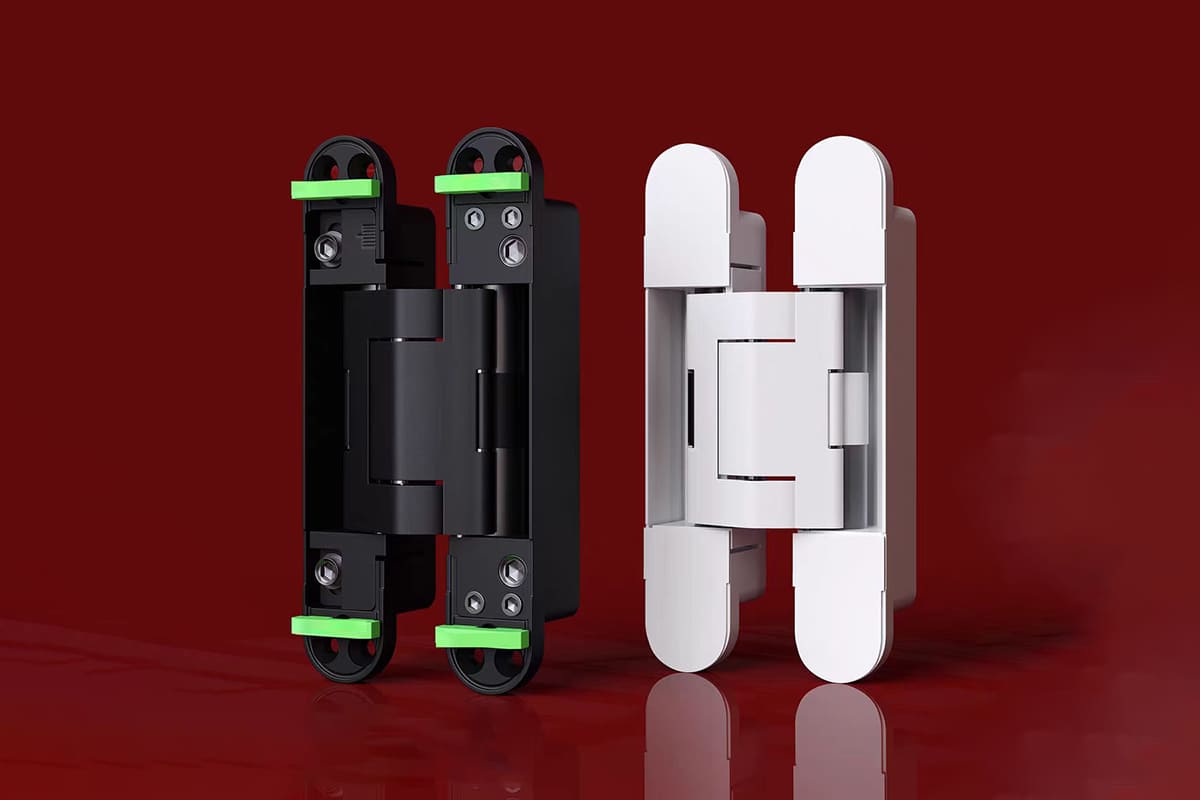
I machine the door and frame pockets strictly according to the exact hinge drawing. The routing size, pocket depth, screw positions, and body clearance depend on the specific hinge model. I avoid fixed universal templates unless they are made for that exact model.
I use the drawing as the rule
A concealed hinge sits inside a routed pocket. The pocket must hold the hinge body straight and stable. If the routing is too tight, the hinge may be forced into position. If it is too loose, the hinge may shift under load. If the depth is wrong, the door gap and closing line will suffer.6
I avoid guessed dimensions
I see this issue often in pre-sales talks. A buyer may ask for a “standard concealed hinge hole size.” I do not give one answer because this can create damage. Different hinge models have different arm shapes, body sizes, fixing plates, and screw holes.
| Machining point | I check | Risk if ignored |
|---|---|---|
| Pocket length | It must match hinge body length | Hinge cannot sit flat |
| Pocket depth | It must match body thickness | Door may rub or show gaps |
| Screw position | It must match the hinge plate | Screws may split the edge |
| Edge distance | It must protect door strength | Door edge may crack |
| Frame pocket | It must align with door pocket | Door may twist or bind |
For batch production, I suggest the factory confirms one sample door first.7 I prefer a sample check before mass routing. This step can save many panels from rework.
How do I mount the hinge after machining?
A clean pocket still needs careful mounting. If I tighten screws in a careless way, I can pull the hinge out of line.
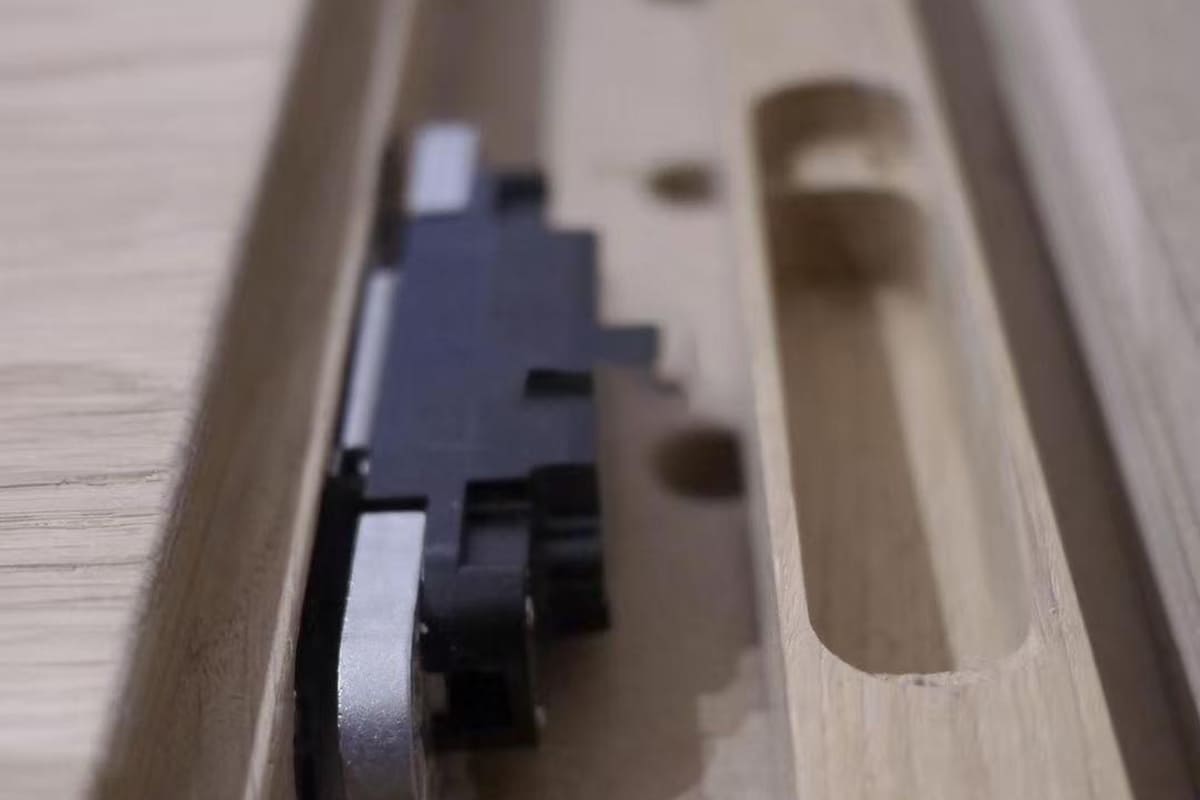
I mount the hinge by placing the hinge bodies into the machined door and frame pockets, checking flat contact, fixing screws gradually, and confirming that the door moves without rubbing. I follow the exact hinge drawing and do not force the hinge into a misrouted pocket.
I check the fit before final tightening
When I install a concealed hinge, I first place the hinge into the pocket without forcing it. The hinge should sit flat. The screw holes should line up with the prepared positions. If the hinge rocks or sits high, I stop and check the routing. I do not use screw pressure to solve a bad pocket.
I mount with the door system in mind
A soft closing concealed hinge has moving parts and internal damping parts.8 The hinge must stay aligned so the door can close in a smooth path. If the door is pulled out of line at the hinge position, the soft closing function may feel weak, harsh, or uneven.
| Mounting action | My purpose | Good result |
|---|---|---|
| Place hinge first | I check body fit | No stress on the hinge |
| Align screw holes | I avoid side pressure | Better fixing strength |
| Tighten screws step by step | I keep the hinge straight | Less twist |
| Test swing before final check | I find rubbing early | Easier correction |
| Check door gap | I prepare for adjustment | Cleaner final alignment |
I also remind buyers that screw quality and fixing material matter. A good hinge still needs a stable screw base. This is important for door factories that use different door core materials.
How do I use adjustment after installation?
Adjustment is useful, but it is not magic. It can correct gaps, but it cannot fix a wrong hinge model or poor machining.
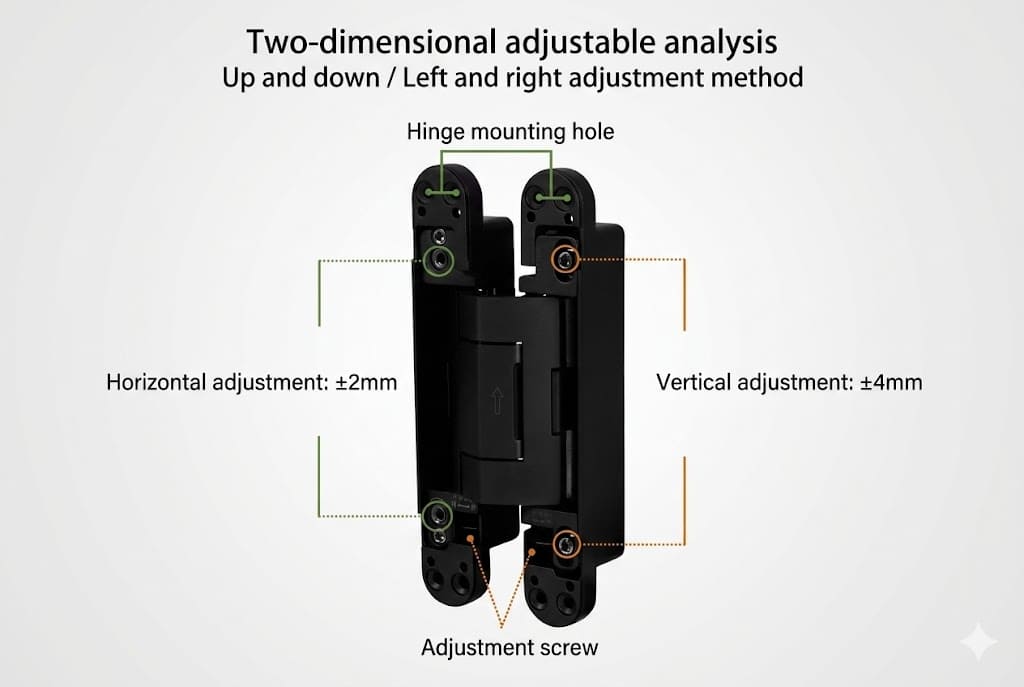
I use vertical and horizontal adjustment to align the door gap, correct small position errors, and improve the closing line. Adjustment cannot solve insufficient load capacity, unsuitable door thickness, weak frame fixing, large routing errors, or the wrong hinge model.
I adjust after the hinge is properly fixed
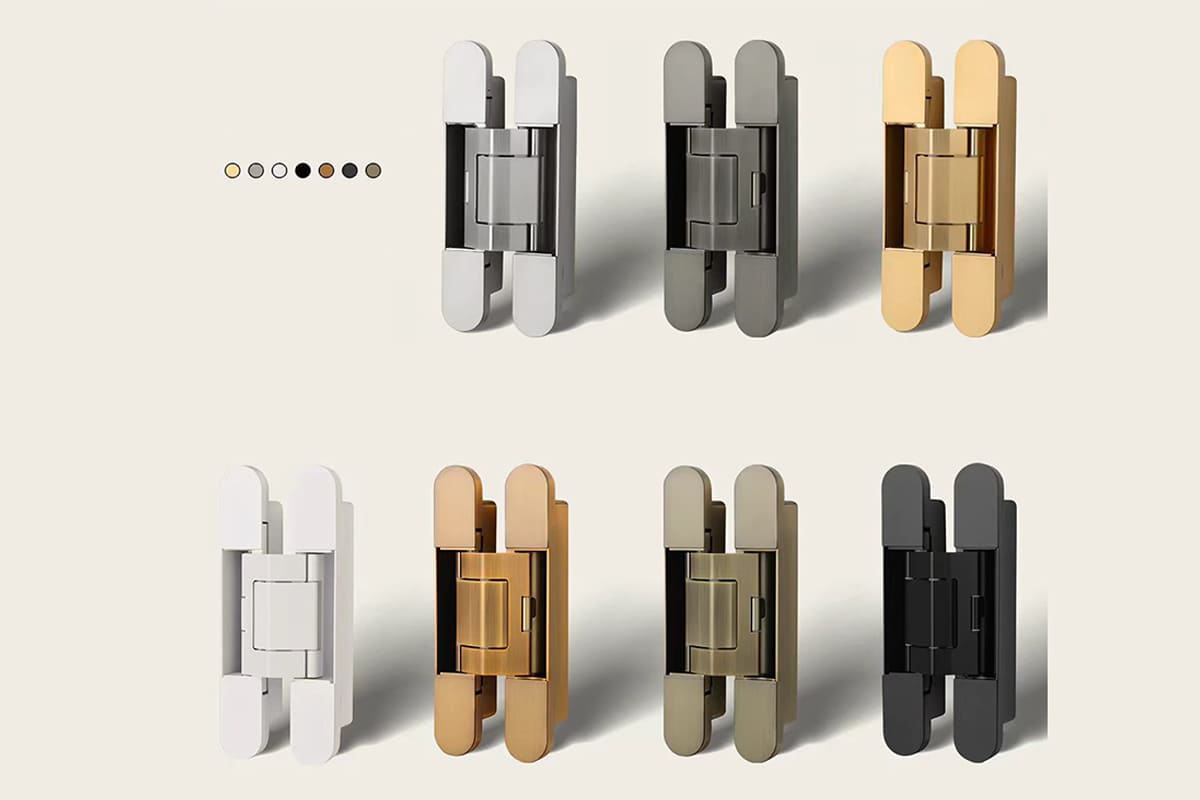
Many soft closing concealed hinges allow up and down adjustment and left and right adjustment. This helps the installer set a clean gap between the door and frame. It also helps when small production tolerance appears in batch assembly.
I keep adjustment within its real role
I do not use adjustment as a way to cover every mistake. If the door is too heavy for the hinge, the door may sag again. If the routing pocket is wrong, the hinge body may not sit correctly. If the frame fixing point is weak, the screws may move under use.
| Adjustment type | What I use it for | What it cannot fix |
|---|---|---|
| Up and down | Door height and top gap | Wrong load selection |
| Left and right | Side gap and closing line | Bad frame structure |
| In and out, if available | Door flush position | Deep routing error |
| Screw tightening | Final stability | Weak door core |
| Function test | Soft close and swing check | Wrong hinge model |
I suggest buyers ask the supplier for clear adjustment instructions for the exact model. This is very important for brand product managers. Their customers may install the same hinge many times, so clear adjustment steps reduce complaints and rework.
What soft-closing and positioning functions should I test?
A hinge may look installed, but the function still needs testing. Soft closing, swing angle, and positioning must match the door use.
I test whether the door opens smoothly, closes softly, stays stable beyond 90° if designed for it, and holds 90° positioning if the model supports that function. I also check whether the door returns without impact, rubbing, or sudden pressure on the panel.
I check movement, not only appearance
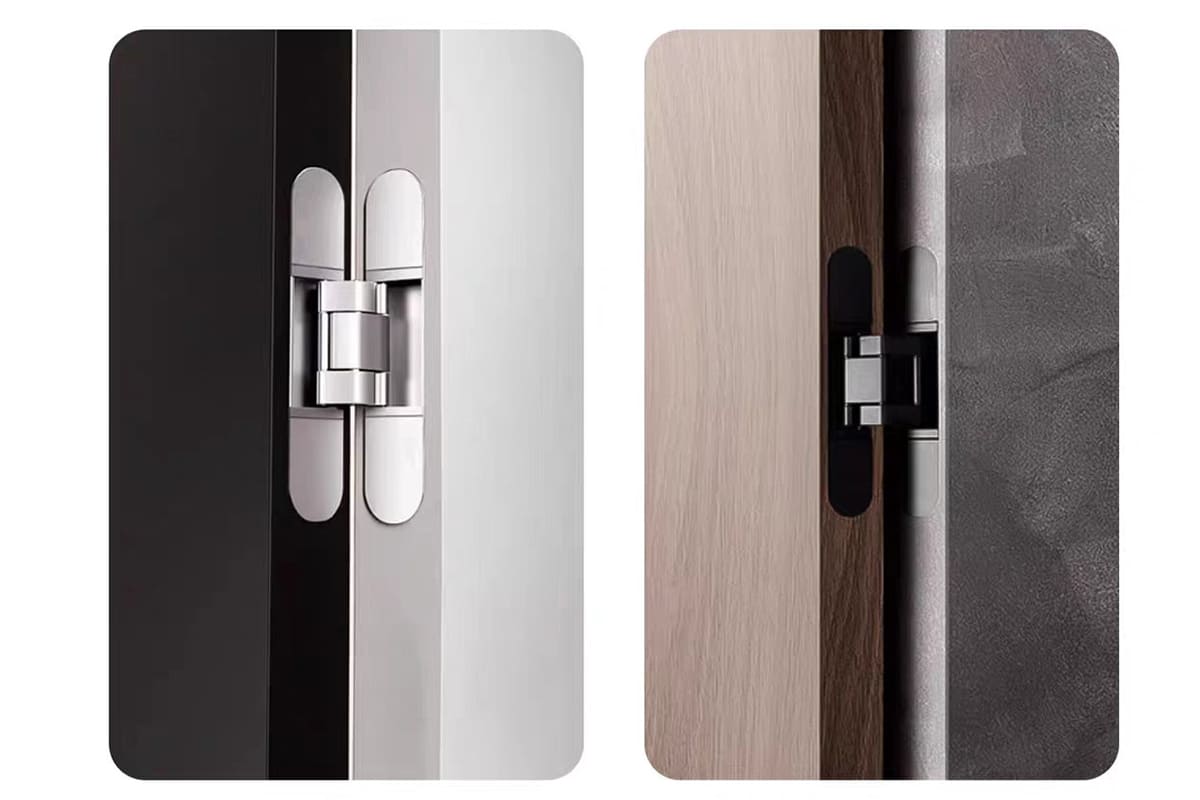
After installation, I do not stop at visual alignment. I open and close the door several times. I feel whether the door moves in a stable path. I listen for rubbing. I watch the gap near the frame. I also check if the soft closing action starts at the correct part of the closing movement.
I connect function with project value
For B2B buyers, these details matter. A door factory wants fewer returns. A brand product manager wants stable user feedback. A wholesaler wants a product that installers can understand. A soft-closing concealed hinge can reduce pressure impact on the door panel when it works correctly.9 It can also make the door feel more controlled.
| Function to test | What I look for | Why it matters |
|---|---|---|
| Soft closing | Smooth final closing | Less impact on the door |
| Opening angle | Door reaches required angle | Better use in projects |
| Stay-open function | Door stays open if designed | More convenience |
| 90° positioning | Door holds at 90° if supported | Clear stopping point |
| Gap stability | Door does not rub | Better appearance and use |
I always remind buyers that these functions depend on the exact model. If the project needs a specific stop-position function, I confirm it before production, not after installation.
What does easy installation mean for B2B buyers?
Easy installation is not only fast screwing. In batch orders, it means less risk, less rework, and more stable door performance.
For B2B buyers, easy installation means correct model matching, clear drawings, left-right universal use when available, practical adjustment, stable load support, less door damage, fewer inventory issues, and lower rework risk during repeated assembly.
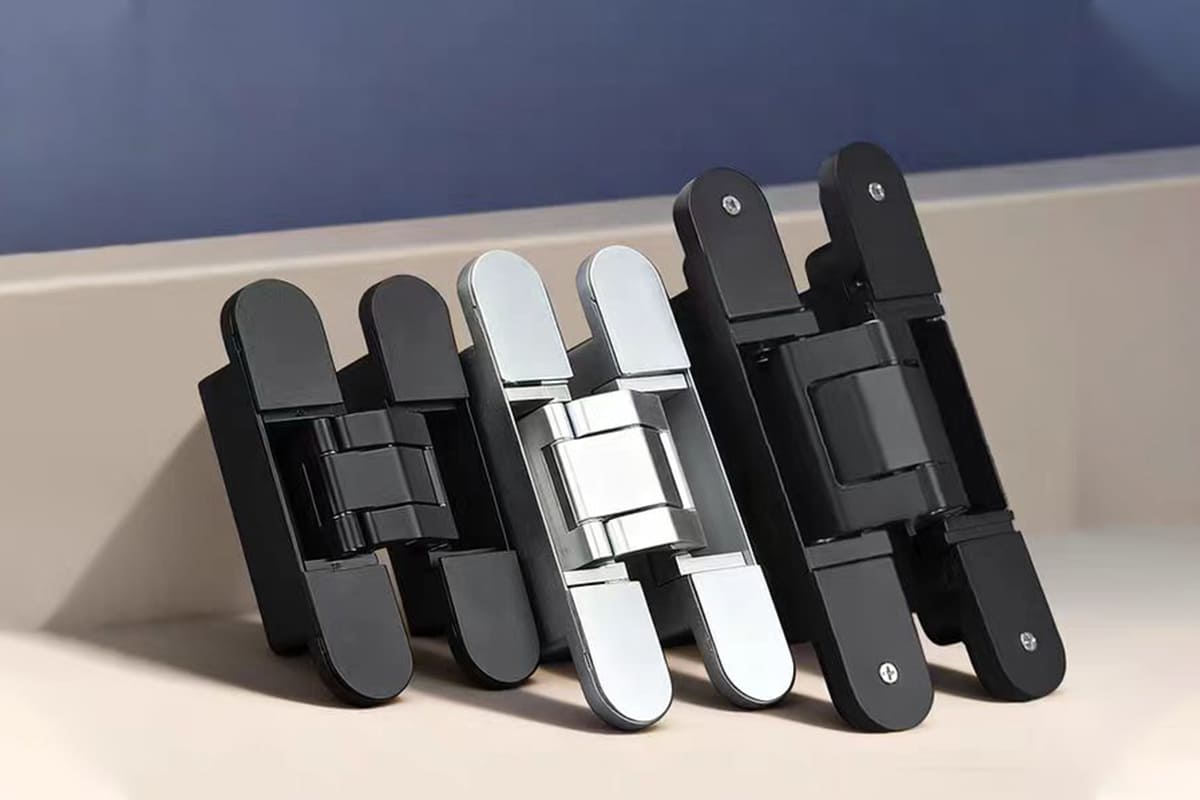
I define easy installation in factory terms
When I speak with buyers, I try to move the discussion away from a simple “easy or not easy” question. A hinge is easy to install when the factory can repeat the process with low risk. The routing must be clear. The screw positions must be clear. The adjustment must be practical. The hinge must match the door load.
I also think about supply and after-sales
A left-right universal hinge can reduce inventory pressure because the buyer does not need to separate left opening and right opening models in the same way. A strong load design can reduce sagging risk when it matches the door weight. Good soft closing can reduce impact on the door panel. Clear supplier support can reduce confusion during sample testing and batch assembly.
| B2B concern | Installation meaning | Business result |
|---|---|---|
| Batch routing | Same drawing used again and again | Less production error |
| Universal use | One item fits left and right use if designed | Simpler stock control |
| Adjustment range | Small gaps can be corrected | Faster assembly |
| Load match | Hinge supports the door properly | Fewer performance issues |
| Supplier support | Drawing and model advice are clear | Lower communication cost |
| Sample confirmation | Problems found before mass work | Lower rework risk |
This is why I treat soft closing concealed hinge installation as a system decision. A good product helps, but the correct model, correct machining, and correct support make the installation reliable.
Conclusion
I install soft closing concealed hinges by confirming the model first, machining by the exact drawing, adjusting within limits, and testing real door function.
"The Cost of Rework in Construction & Strategies to Avoid It", https://www.dustyrobotics.com/articles/cost-of-rework-in-construction. Studies of construction and manufacturing rework identify incorrect specifications, design changes, and installation errors as common causes of material waste and schedule disruption; this supports the general risk described here, although it is contextual rather than hinge-specific. Evidence role: general_support; source type: paper. Supports: component-selection and installation errors can lead to rework, material damage, and schedule impacts in production or construction workflows.. Scope note: The source may support rework and delay mechanisms generally rather than documenting concealed-hinge batch orders directly. ↩
"[PDF] SECTION 087111 - DOOR HARDWARE (SCHEDULED ... - USC FPM", https://fpm.usc.edu/wp-content/uploads/2021/11/087102-USC-HSC-door-hardware-Guide-Specification_1.pdf. Institutional door-hardware guidance commonly treats hinge selection and installation as dependent on door size, weight, frame construction, and manufacturer instructions; this supports the need to verify these factors before machining or drilling. Evidence role: expert_consensus; source type: institution. Supports: door-hardware selection and installation should be based on door size, weight, frame conditions, and manufacturer or technical documentation.. Scope note: The source may address door-hardware practice broadly and not every listed soft-closing concealed-hinge variable individually. ↩
"Screw withdrawal : a means to evaluate densities of in-situ wood ...", https://research.fs.usda.gov/treesearch/9112. The USDA Forest Products Laboratory reports that screw withdrawal resistance in wood is affected by factors such as wood density, screw dimensions, and penetration depth, supporting the claim that hinge strength depends on the fixing base as well as the hinge. Evidence role: mechanism; source type: government. Supports: screw withdrawal and fastener holding strength depend on the properties of the base material and fastening conditions.. ↩
"Ultimate Guide to Choosing the Best Door Hinge for Your Needs", http://swdsi.org/blog/guide-to-choosing-the-best-door-hinge/. Door-hardware selection guidance links hinge performance to door size, weight, thickness, and frame or anchorage conditions, supporting the statement that a soft-closing hinge may perform poorly when these conditions are outside its design range. Evidence role: expert_consensus; source type: institution. Supports: hinge selection must account for door weight, dimensions, and supporting frame or fixing conditions.. Scope note: The source may address hinge selection generally rather than soft-closing concealed hinges specifically. ↩
"[PDF] Self-Closing Hinge - ScholarWorks", https://scholarworks.boisestate.edu/cgi/viewcontent.cgi?article=1003&context=bsu_patents. Patent and technical literature for concealed-hinge mechanisms describes designs incorporating damping, detent, or stop-position features, supporting the existence of hinges with stay-open or 90-degree positioning functions. Evidence role: case_reference; source type: other. Supports: hinge designs can include mechanisms for soft closing, wide opening, detent positioning, or holding at defined angular positions.. Scope note: Patent literature demonstrates technical feasibility and design examples, not prevalence or performance of any specific commercial model. ↩
"How to install mortised hinges correctly? - Facebook", https://www.facebook.com/groups/woodworkingforbeginner/posts/3440136836140917/. Educational woodworking and door-installation references explain that hinge mortise depth and fit determine whether the hinge sits flush and the door aligns correctly, supporting the stated risks of tight, loose, or incorrectly deep routing. Evidence role: mechanism; source type: education. Supports: the fit and depth of a hinge mortise affect hinge seating, door alignment, and movement under load.. Scope note: Such sources may discuss conventional mortised hinges, so the support is contextual for concealed-hinge pocket machining. ↩
"What is a First Article Inspection Report and why is it important?", https://www.ideagen.com/thought-leadership/blog/first-article-inspection-report. Quality-management guidance on first-article inspection describes verifying an initial unit against specifications before continuing production, supporting the use of a sample door check before mass routing. Evidence role: expert_consensus; source type: institution. Supports: first-article or sample inspection is a recognized quality-control method for verifying processes before production runs.. Scope note: The evidence supports the quality-control method generally rather than testing concealed-hinge routing specifically. ↩
"Soft Close Cabinet Damper - Amazon.com", https://www.amazon.com/soft-close-cabinet-damper/s?k=soft+close+cabinet+damper. Technical literature on soft-closing hinge mechanisms describes the use of damping elements, such as hydraulic or friction dampers, to control the final closing motion, supporting the statement that these hinges include moving and damping components. Evidence role: mechanism; source type: paper. Supports: soft-closing hinge systems rely on mechanical movement and damping mechanisms to slow closing motion.. Scope note: The source may discuss representative hinge or damper designs rather than the exact model discussed in the article. ↩
"Joints with angle dependent damping can help to reduce impact ...", https://pmc.ncbi.nlm.nih.gov/articles/PMC12325609/. Mechanical-engineering literature on damping shows that dampers dissipate kinetic energy and reduce impact severity during motion, supporting the claim that a properly functioning soft-closing hinge can reduce closing impact on the door panel. Evidence role: mechanism; source type: paper. Supports: damping mechanisms reduce motion speed and impact forces during closing, which can reduce stress on the door panel.. Scope note: The source may establish the damping principle generally rather than measure impact reduction for the specific hinge model. ↩