What are door knobs made out of?
A wrong door knob material can look fine at first, then fail in use, damage your brand, and create after-sales cost.
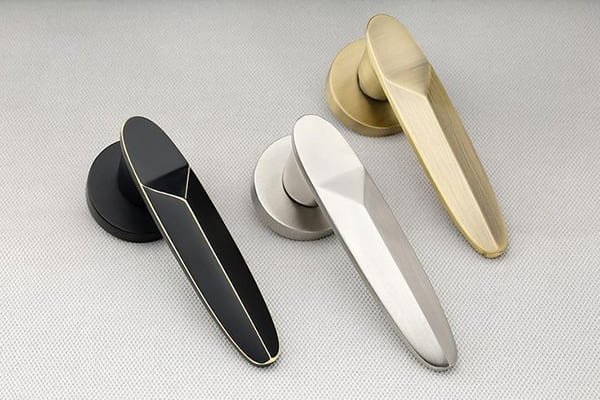
Door knobs are commonly made from stainless steel, brass, zinc alloy, aluminum alloy, nylon, wood, ceramic, and mixed materials. I do not choose by material name alone. I match the material with usage frequency, environment, target market, finish demand, budget, and batch consistency risk.
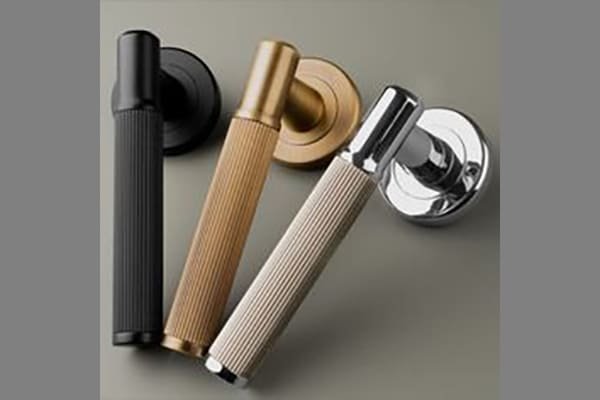
I have seen two door knobs look almost the same on a sample table, but perform very differently after installation. One keeps its finish and structure. The other gets loose, scratched, or spotted. This is why I always ask one more question before I quote or confirm a sample: where will this knob be used, and who will complain if it fails?
Which common materials are used for door knobs?
Many buyers start with price, then find out later that the material does not fit the door, the market, or the end user.
Door knobs can be made from stainless steel, brass, zinc alloy, aluminum alloy, nylon, wood, ceramic, and combined structures.1 I treat each material as a solution for a certain use, not as a simple good-or-bad choice.
Main material options
In my factory work, I often explain door knob materials by use case first. A high-traffic apartment door has different needs from a hotel bathroom door. A European-style premium handle set has different needs from a cost-focused interior door set. The material affects weight, strength, surface finish, corrosion resistance, production cost, and the feeling in the hand.2 It also affects how stable the product will be in a large order.
| Material | Common strength | Common concern | Better fit |
|---|---|---|---|
| Stainless steel | Strong, stable, rust resistant | Higher cost for solid parts | Humid areas, public use, durable projects |
| Brass | Premium feel, good corrosion resistance | Higher price | High-end markets, classic styles |
| Zinc alloy | Easy casting, many finishes, cost-effective | Weaker structure than stainless steel | Interior doors, decorative series |
| Aluminum alloy | Light, easy to process | Softer, easier to scratch | Minimalist designs |
| Nylon | Low cost, many colors | Shorter service life | Schools, hospitals, utility rooms |
| Wood | Warm natural look | Needs moisture protection | Decorative indoor rooms |
| Ceramic | Smooth texture, easy cleaning | Fragile | Low-use interior rooms |
I do not stop at this table when I advise a buyer. I check the door type, spindle structure, screw position, rose design, and surface treatment plan. A material choice becomes safe only when the whole product structure supports it.
Why is stainless steel often a safe choice for durable door knobs?
A buyer may save money on a weaker knob, but a heavy-use project can turn that saving into repair work very fast.
Stainless steel is often a safe choice when durability, corrosion resistance, and long-term stability matter. I use it for humid areas, high-traffic projects, and buyers who need stable performance across repeated bulk orders.
Where stainless steel works best
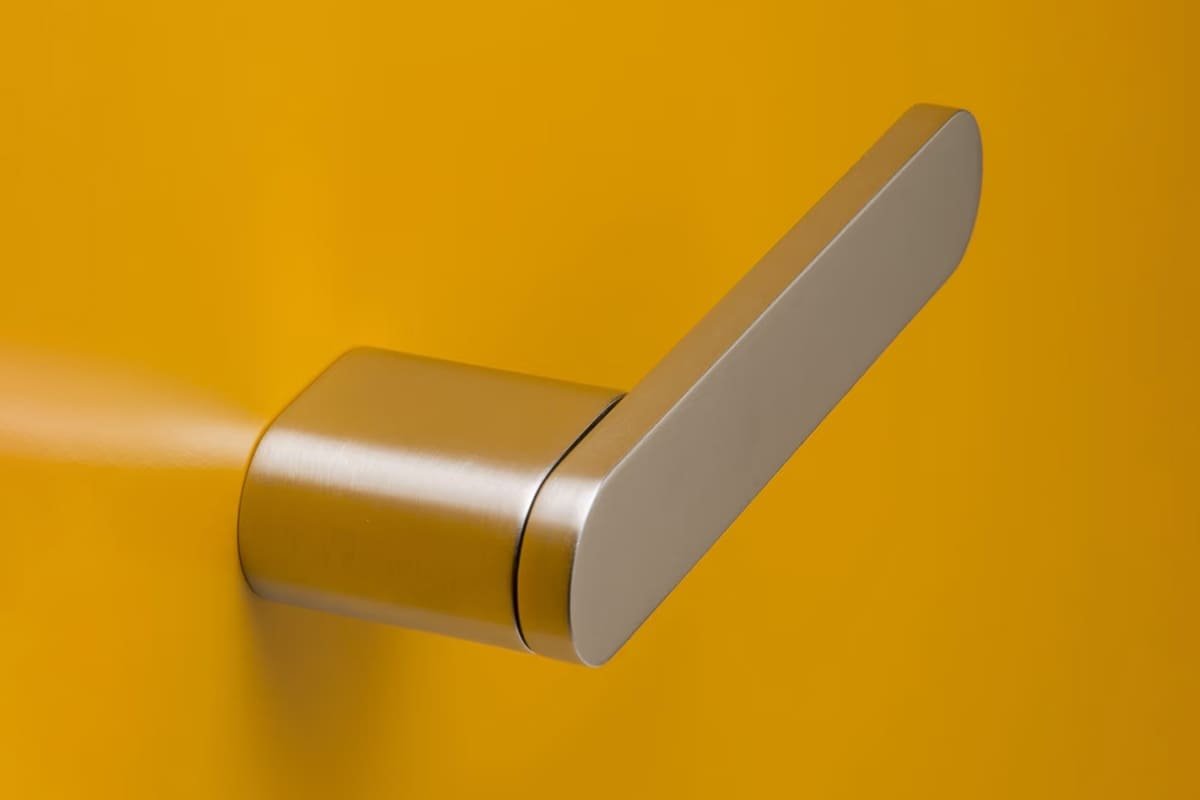
I often recommend stainless steel when the buyer tells me the door knobs will be used in apartments, public buildings, offices, hotels, or coastal and humid regions. Stainless steel has good resistance to rust and corrosion in many normal conditions.3 It also handles impact better than many softer materials.4 It is easy to clean, and it can keep a simple modern look for a long time.
| Point I check | Why it matters for buyers |
|---|---|
| Grade and thickness | They affect strength, cost, and long-term stability |
| Solid or hollow structure | Solid parts feel premium, but cost more |
| Surface finish | Brushed stainless steel, black, and antique colors need stable control |
| Door environment | Humidity and cleaning chemicals may affect finish life |
| Batch quantity | Large orders need consistent color and surface texture |
Stainless steel is not always the cheapest option. It is also not the only durable material. Still, I see it as a practical choice when the buyer wants to reduce performance risk. I pay close attention to surface treatment. Brushed stainless steel can look simple, but poor brushing direction or uneven polishing can make a batch look mixed. Black finishes and antique bronze finishes need even more control. I always ask buyers to approve a physical sample, not only a photo, because photos hide small color differences.
How do brass and zinc alloy compare for door knobs?
Brass and zinc alloy can both look attractive, but choosing the wrong one can create a price mismatch or performance gap.
Brass usually fits premium and durable product lines, while zinc alloy fits cost-effective and design-rich interior door knobs. I compare them by market position, structure, finish, and expected service environment.
Brass for premium positioning
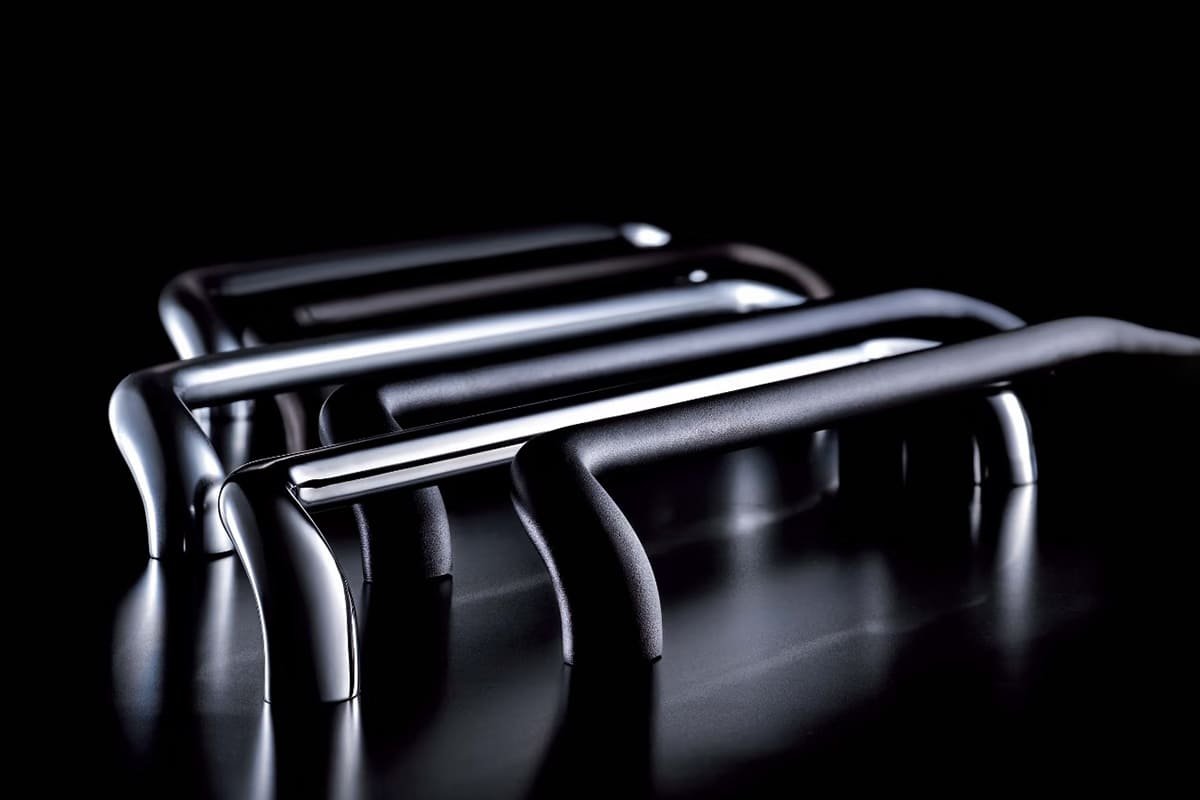
I see brass used often when a buyer wants a high-end feel, a classic European look, or a heavier product image. Brass has good corrosion resistance in many normal indoor uses.5 It also carries a strong premium impression in many markets. Some buyers like brass because it supports elegant finishes and traditional shapes. The main concern is cost. Brass material price is usually higher6, so the final product must match a market that can accept the price.
Zinc alloy for flexible design
Zinc alloy is different. It is easy to cast into complex shapes.7 It supports many surface finishes and colors. I often see it used for decorative interior door knobs, brand product lines, and price-sensitive markets. It gives buyers more design freedom at a lower cost.
| Comparison point | Brass | Zinc alloy |
|---|---|---|
| Market image | Premium, classic, higher-end | Flexible, decorative, cost-effective |
| Shape complexity | Good, but usually costlier | Very good for casting details |
| Strength | Generally stronger than zinc alloy | Enough for many interior uses |
| Finish options | Premium finishes | Wide color and plating options |
| Main risk | High cost | Lower rust resistance and strength than stainless steel8 |
I do not tell every buyer to choose brass. I also do not tell every buyer to choose zinc alloy. I ask what the product must do. If the knob must support a luxury brand image, brass may be worth the cost. If the knob is for an interior door program with many colors and shapes, zinc alloy can be a smart choice. The key is to not sell zinc alloy as if it were stainless steel or brass. That creates wrong expectations.
When should I consider aluminum alloy, nylon, wood, or ceramic door knobs?
Special materials can make a product look different, but they can also bring hidden limits in strength, service life, or installation use.
I consider aluminum alloy, nylon, wood, and ceramic when the project has a special design, color, weight, or function need. I use them carefully because each one has clear limits.
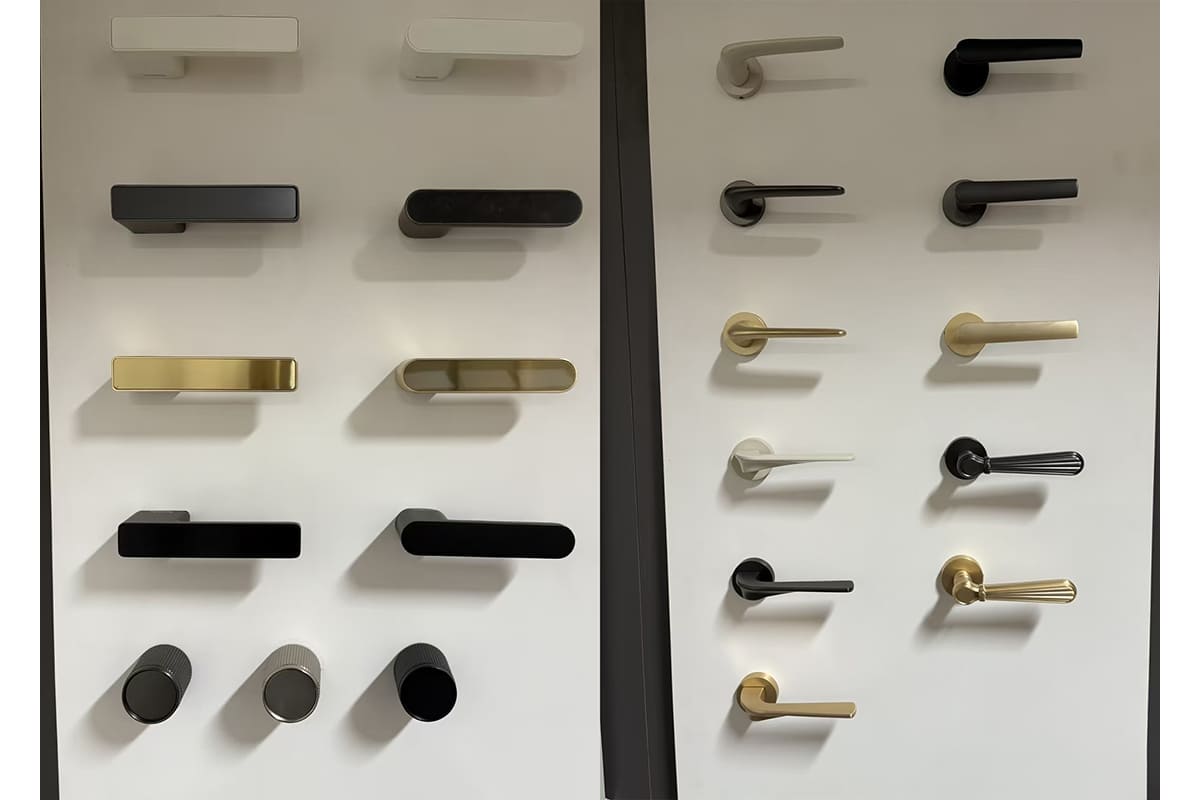
Aluminum alloy, nylon, wood, and ceramic use cases
Aluminum alloy is light and easy to process. I see it in minimalist designs and modern interior hardware. It can look clean and simple. But it is softer than stainless steel.9 It can scratch or deform more easily if the structure is weak or the environment is rough.
Nylon is useful in functional spaces. I have seen buyers ask for nylon knobs for classrooms, hospitals, service rooms, or simple public areas. It can be made in many colors, and the cost can be low. But I do not treat nylon as a premium durability material. Its long-term service life depends on structure, usage, and environment.10
Wood gives a warm feeling. It can work well in decorative indoor rooms. But wood needs moisture-proof treatment. If the control is weak, it may crack, swell, or change color.11
Ceramic feels smooth and clean. It can create a nice decorative effect. But ceramic is fragile. I avoid it for heavy-use doors.
| Material | Best reason to choose it | Main risk I watch |
|---|---|---|
| Aluminum alloy | Light, modern, easy to shape | Scratches and deformation |
| Nylon | Low cost, color options | Durability and aging |
| Wood | Natural and warm design | Moisture and cracking |
| Ceramic | Smooth and decorative | Breakage under impact |
I usually place these materials in lower-frequency or special-purpose projects. I also check the internal metal parts, fixing screws, spindle connection, and rose base. A ceramic knob may look beautiful, but the inner fixing system still decides whether it can stay stable on the door.
A sample can look good in a showroom, but a large order can fail if the inside, finish, or batch process is not controlled.
The biggest risk is not only the material name. I check wall thickness, internal structure, surface treatment, corrosion resistance, scratch resistance, sample consistency, and mass-production stability before I confirm a bulk door knob order.
What I check before bulk production
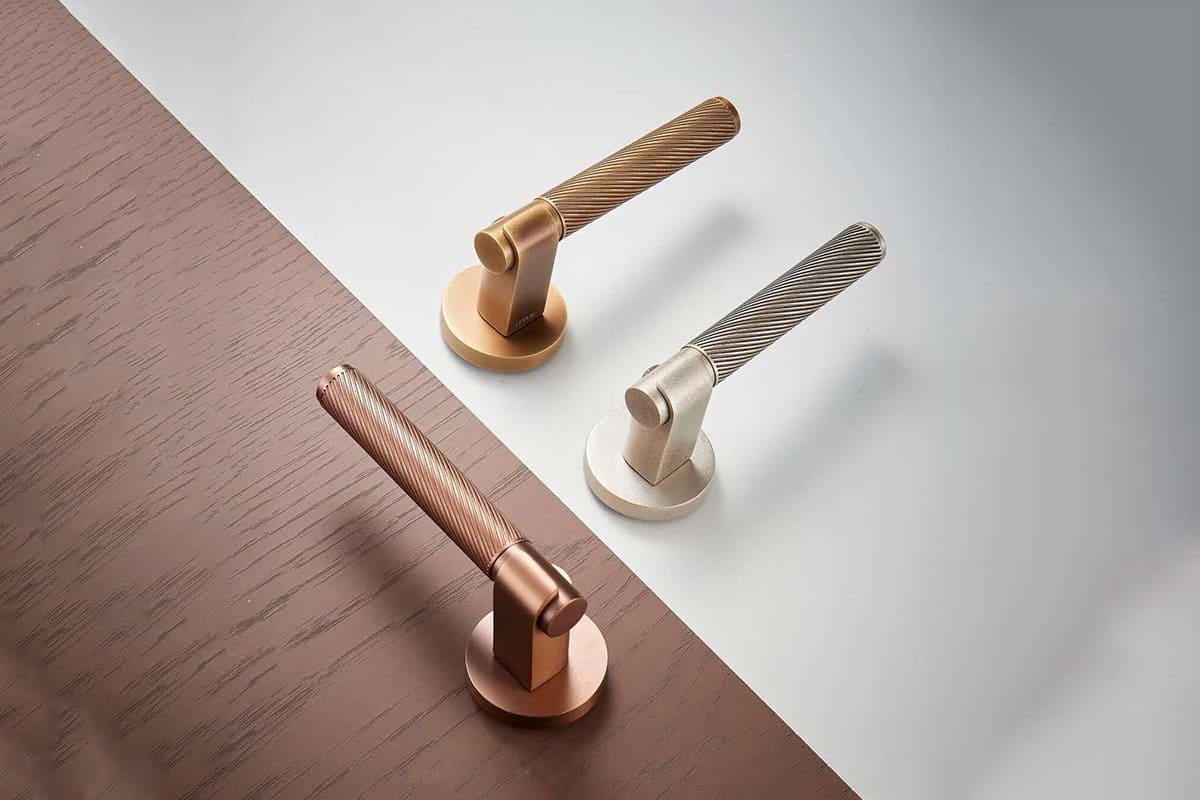
In buyer meetings, I often place two similar knobs side by side. They may have the same color and shape. But one has a stronger inner structure, better wall thickness, cleaner thread, smoother operation, and more stable finish. The other only looks similar. This is where procurement risk begins.
| Risk area | What can go wrong | What I ask buyers to confirm |
|---|---|---|
| Material thickness | Knob feels weak or deforms | Cut sample or weight check |
| Internal structure | Loosening after use | Assembly test and spindle fit |
| Surface treatment | Color change or peeling | Finish sample and process record |
| Corrosion resistance | Spots in humid markets | Test requirement or use condition |
| Scratch resistance | Marks during transport or use | Packaging and finish standard |
| Batch consistency | Mixed colors in one order | Golden sample and QC limit |
I always treat the approved sample as the control point. I do not rely only on drawings or catalog photos. A buyer should keep a golden sample and confirm clear limits for color, surface texture, size, weight, and packaging. For large orders, I also suggest pre-production samples before full production starts. This step is simple, but it prevents many problems. A door factory does not want to stop assembly because the knob hole, screw, spindle, or finish does not match. A wholesaler does not want complaints from different stores because one shipment has uneven color. A brand buyer does not want the market to see unstable quality under one brand name.
How should I choose the right door knob material for a B2B order?
If I choose only by price or appearance, I may win the quotation and lose the customer after installation.
I choose the right door knob material by matching it with usage frequency, environment, target price, finish demand, door type, certification needs, and batch quality control. I also confirm samples before mass production.
My practical selection method
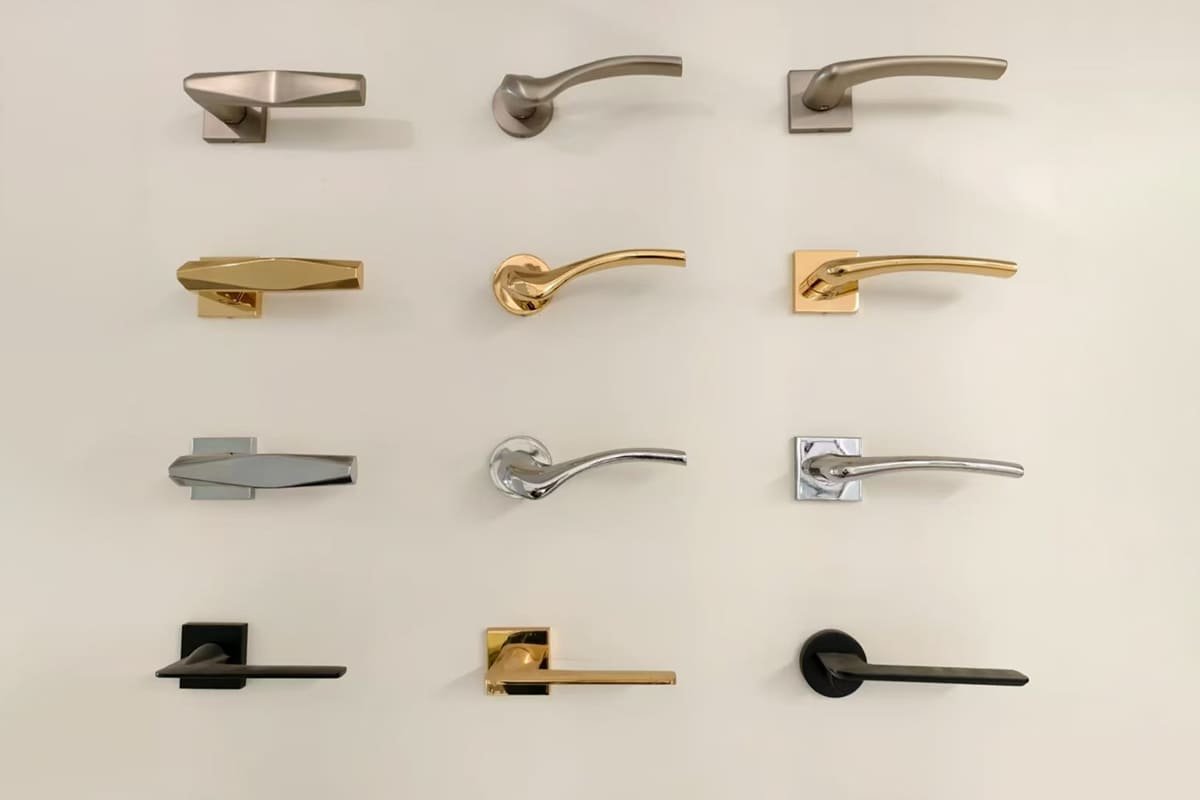
When a buyer asks me what door knobs are made out of, I first answer with material options. Then I move to the real sourcing question. I ask where the product will be sold, what type of door it will fit, how often the door will be used, what finish the market prefers, and what price range the buyer must keep. These answers are more useful than a material list.
| Buyer question | My practical answer |
|---|---|
| Is this for high traffic? | I look first at stainless steel or other stronger structures |
| Is this for a premium line? | I consider brass or solid stainless steel |
| Is this for interior decorative doors? | I consider zinc alloy, aluminum, wood, or ceramic by style |
| Is cost the main issue? | I compare zinc alloy, nylon, and simpler structures |
| Is the area humid? | I avoid weak finishes and check corrosion risk carefully |
| Is color consistency important? | I set a golden sample and clear QC standard |
I also remind buyers that certification or fire-related claims must be checked with real test documents when the project requires them. A material alone does not prove compliance.12 The complete hardware set, lock body, latch, screws, and door assembly may all affect project approval. I prefer to say less and verify more. This builds trust with serious buyers. It also protects both sides when the order moves from sample to container shipment.
Conclusion
Door knobs use many materials. I choose by real use, finish risk, cost, and batch stability, not by material name alone.
"Door handle", https://en.wikipedia.org/wiki/Door_handle. A neutral reference on door-handle construction identifies metals such as brass and stainless steel, along with decorative nonmetal materials, as established options for door hardware. Evidence role: general_support; source type: encyclopedia. Supports: Door knobs and related door handles are made from multiple metals and decorative nonmetal materials.. Scope note: Such a source would support the general material range for door hardware, but may not verify every listed material or their frequency of use in current B2B production. ↩
"Introduction and Overview of Design Considerations and ...", https://dl.asminternational.org/handbooks/edited-volume/49/chapter/603478/Introduction-and-Overview-of-Design-Considerations. Materials-selection guidance in engineering design explains that choosing a material determines mechanical performance, environmental resistance, manufacturability, surface characteristics, and cost trade-offs. Evidence role: mechanism; source type: education. Supports: Material choice affects product properties such as strength, corrosion resistance, surface finish, manufacturability, and cost.. Scope note: The evidence would be general to engineered products and hardware components, not specific proof of each effect for every door knob design. ↩
"Revealing the Corrosion Resistance of 316 L Stainless Steel by an ...", https://pmc.ncbi.nlm.nih.gov/articles/PMC9920300/. Metallurgical references explain that stainless steels contain chromium that forms a passive oxide film, giving the alloy corrosion resistance in many ordinary environments. Evidence role: mechanism; source type: education. Supports: Stainless steel resists corrosion because chromium forms a passive oxide layer on the metal surface.. Scope note: The degree of corrosion resistance depends on stainless grade, exposure conditions, surface finish, and chemicals present. ↩
"[PDF] mechanical properties of metals and alloys", https://nvlpubs.nist.gov/nistpubs/Legacy/circ/nbscircular447.pdf. Published material property data show that common stainless steels generally have higher hardness and yield strength than many aluminum alloys, zinc die-casting alloys, and plastics used in light-duty components. Evidence role: general_support; source type: research. Supports: Stainless steel grades commonly used in hardware have higher strength or hardness than many softer alloys and polymers.. Scope note: Material property tables support the general comparison, but actual impact performance also depends on knob geometry, wall thickness, heat treatment, and assembly design. ↩
"Atmospheric corrosion of Cu, Zn, and Cu–Zn alloys protected by self ...", https://www.sciencedirect.com/science/article/pii/S0039602815003490. Technical references on copper alloys describe brass as having useful corrosion resistance in atmospheric and many indoor service conditions, which helps explain its use in architectural hardware. Evidence role: general_support; source type: institution. Supports: Brass, a copper-zinc alloy, is recognized for corrosion resistance suitable for many indoor and architectural applications.. Scope note: The support is contextual; corrosion performance varies with brass composition, humidity, pollutants, cleaning agents, and protective finishes. ↩
"Statistical Compendium | U.S. Geological Survey - USGS", https://www.usgs.gov/centers/national-minerals-information-center/statistical-compendium. Government mineral commodity statistics and exchange price data show copper, the principal component of brass, trading at substantially higher unit prices than zinc and aluminum, supporting the view that brass hardware often carries higher material cost. Evidence role: statistic; source type: government. Supports: Copper-based brass typically reflects higher raw-material cost than zinc- or aluminum-based alternatives because copper prices are generally higher than zinc and aluminum prices.. Scope note: Raw-material prices do not by themselves determine finished door knob price, which also depends on alloy grade, machining, casting, finishing, labor, and order volume. ↩
"The Processes and Advantages of Zinc Die Casting - IQS Directory", https://www.iqsdirectory.com/articles/die-casting/zinc-die-castings.html. Technical sources on zinc die casting note that zinc alloys can be cast into intricate shapes with fine detail and close dimensional control, supporting their use in decorative hardware components. Evidence role: mechanism; source type: institution. Supports: Zinc alloys are widely used in die casting because they can reproduce intricate shapes with good dimensional detail.. Scope note: This supports zinc alloy castability in general; whether a particular knob is durable depends on alloy selection, part thickness, and design. ↩
"Zinc Alloy vs Stainless Steel: The Differences & Benefits", https://www.patriotfoundry.com/news/zinc-alloy-vs-stainless-steel/. Comparative material property data indicate that stainless steels generally provide higher strength and corrosion resistance than common zinc die-casting alloys, which supports caution when substituting zinc alloy for stainless steel in demanding uses. Evidence role: general_support; source type: research. Supports: Stainless steel generally offers higher corrosion resistance and mechanical strength than common zinc casting alloys used in decorative hardware.. Scope note: The comparison is general; some zinc alloys with protective coatings may perform adequately indoors, and stainless performance varies by grade and environment. ↩
"[PDF] mechanical properties of metals and alloys", https://nvlpubs.nist.gov/nistpubs/Legacy/circ/nbscircular447.pdf. Published material property tables show that many aluminum alloys have lower hardness values than common stainless steels, supporting the statement that aluminum hardware is generally more prone to scratching or deformation under comparable conditions. Evidence role: general_support; source type: research. Supports: Typical aluminum alloys have lower hardness than common stainless steels used in hardware applications.. Scope note: Specific results depend on alloy grade, temper, surface coating, and component geometry. ↩
"What are the aging mechanisms in Nylon 6 exposed to UV ...", https://eureka.patsnap.com/report-what-are-the-aging-mechanisms-in-nylon-6-exposed-to-uv-radiation. Polymer durability studies report that nylon properties are affected by moisture absorption, temperature, ultraviolet exposure, mechanical loading, and wear, explaining why service life depends on structure, use, and environment. Evidence role: mechanism; source type: paper. Supports: Nylon performance can change with moisture, temperature, UV exposure, load, and wear conditions, affecting long-term service life.. Scope note: The evidence would describe nylon behavior as a material; it would not predict the lifetime of a specific door knob without product testing. ↩
"Dimensional Changes in Wood", https://extension.okstate.edu/fact-sheets/dimensional-changes-in-wood. Wood science references explain that wood is hygroscopic and changes dimensions with moisture content, which can lead to swelling, shrinkage, cracking, and visual changes when protection or processing is inadequate. Evidence role: mechanism; source type: government. Supports: Wood absorbs and releases moisture, which can cause dimensional change, swelling, shrinkage, cracking, and appearance changes.. Scope note: This supports general wood behavior; actual performance depends on species, drying, coating, joinery, and indoor humidity. ↩
"[DOC] 081173", https://online2.ogs.ny.gov/dnc/masterspec24/docs/Division08Openings/081173.0SlidingMetalFireDoors.docx. Fire-door and building-code guidance requires listed or tested doors, frames, and hardware assemblies for rated applications, supporting the point that material selection alone does not establish compliance. Evidence role: expert_consensus; source type: institution. Supports: Certification and fire-performance claims generally require testing or listing of the relevant component or assembly, not inference from one material.. Scope note: The exact requirement depends on jurisdiction, project specification, door rating, and the certification scheme being applied. ↩