Door Hardware Fittings Enhancing Interior Decor?
I often see a beautiful door lose value because the handle, hinge, lock, and cylinder do not match. The problem looks small, but the damage feels large.
Door hardware fittings enhance interior decor when they work as one matched system. I select handles, hinges, mortise locks, cylinders, finishes, sizes, and accessories together, so the door looks complete, moves well, and keeps the same appearance across bulk orders.
I have worked with many door factories, hardware brands, and wholesalers who first ask about one handle model. Then the discussion moves to hinge finish, lock body size, cylinder color, screw type, packaging, and batch color control. This is where the real decoration value starts. A door hardware set does not improve interior decor only because one part looks nice in a photo. It improves decor when every visible and partly hidden part supports the same product image. If I ignore that system, the sample may look good, but the showroom door, project door, or retail set may look uneven.
Why Should I Treat Door Hardware As A Complete Visual System?
I have seen buyers choose a nice lever handle first, then discover the hinge, lock, and cylinder weaken the final door image.
Door hardware should be treated as a complete visual system because each part affects finish, proportion, door movement, and user feel.1 I match lever handles, hinges, locks, cylinders, strike plates, and accessories together before bulk production to keep the door design clear and consistent.
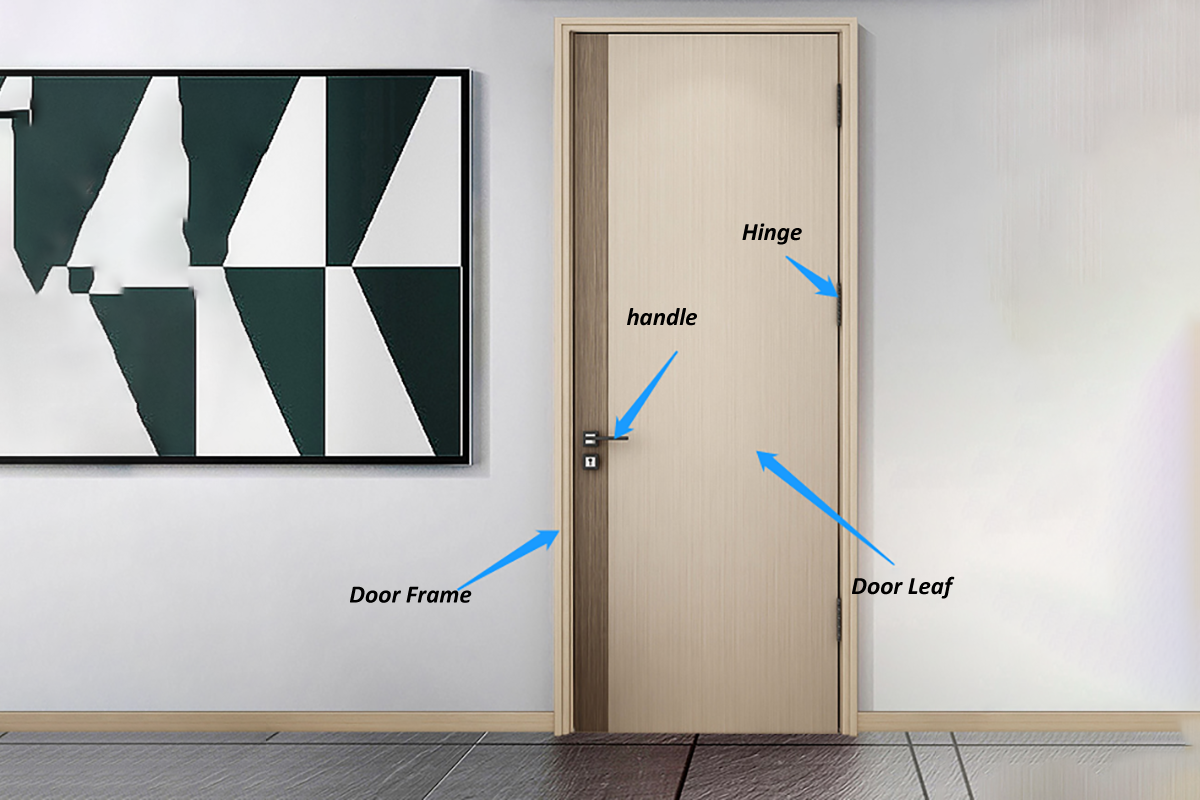
I do not see door hardware as loose parts. I see it as a small system on the door leaf and frame. The handle gives the first touch. The hinge controls the door line and movement. The mortise lock affects closing feel and lock position.2 The cylinder affects the front view of the lock area. The strike plate and screws also affect the final impression when the customer checks details.
When I discuss a new door model with a customer, I usually ask about door thickness, door material, door surface color, edge design, lock type, and target market. These questions may sound simple. They decide whether the hardware will look like one set or like mixed spare parts.
| Hardware part | Decor role I check | Risk if I ignore it |
|---|---|---|
| Lever handle | Main visual and touch point | Good handle still looks wrong if size or finish does not match |
| Butt hinge or concealed hinge | Door line, gap, movement, hidden quality | Door may look uneven or feel cheap when opened |
| Mortise lock | Closing feel and handle position | Door may feel loose or not match local use habit |
| Lock cylinder | Front view and security area | Color mismatch can break the clean design |
| Strike plate and screws | Small detail near frame | Wrong finish can make the door look unfinished |
I have learned that buyers do not only buy hardware. They buy a stable door image that can be repeated in every carton and every order.
How Does Surface Finish Change The Decorative Value Of Door Hardware?
I often meet buyers who like one sample finish, but they worry that the next batch will not look the same.
Surface finish changes decorative value because color, texture, gloss, and touch decide the first impression.3 I also need stable material and production control, because a beautiful finish has value only when it stays consistent across bulk production and repeated use.
I pay close attention to finish because it is the part that customers see before they test anything. Satin nickel, black, gold, chrome, bronze, and stainless steel finishes can all support a good door style. But the name of the finish is not enough. Two factories may both say “black,” yet one black may be deep and even, while another may be gray, thin, or easy to mark.4
In my production and supply work, I often compare samples under normal light and bright light. I check whether the handle, hinge, cylinder, face plate, and screws look close enough when they are installed on one door. I also care about the base material because finish stability depends on the part under the surface5.
| Finish factor | What I check in real orders | Why it matters for decor |
|---|---|---|
| Color tone | I compare sample and batch goods | One door set should not show several colors |
| Gloss level | I check shine on different parts | Uneven gloss makes the set look mixed |
| Texture | I check brushing, coating, and surface marks | Texture affects the quality feeling |
| Edge coverage | I check corners and small holes | Weak coverage looks cheap after installation |
| Batch record | I keep reference samples when needed | Repeat orders need similar appearance |
A finish is not only decoration. It is also trust. If a buyer’s customer sees color difference on a showroom door, the buyer may question the whole supply chain.
Why Should I Not Focus Only On The Door Handle?
I know why many buyers start with the handle. It is easy to see, easy to compare, and easy to show in a catalog.
I should not focus only on the door handle because hinges, locks, cylinders, and small fittings also affect alignment, movement, closing sound, and the complete door image6. A good handle cannot hide poor matching in the rest of the hardware set.7
I once had a customer who selected a strong lever handle design for a new interior door range. The handle sample looked good. The problem appeared later. The hinge finish was not close to the handle finish. The cylinder front looked slightly different. The lock face plate had another texture. Each part was acceptable alone. Together, they looked unplanned.
This is a common mistake in procurement. The handle receives most of the attention because it is the main selling point. But the door user opens the door, closes the door, locks the door, and sees the side edge. The user notices the whole experience, even if they do not use technical words.
| Buyer focus | What I add to the discussion | Result I want |
|---|---|---|
| Handle shape | I check lock case and spindle fit | Smooth operation and correct position |
| Handle finish | I match hinge, cylinder, and face plate | One clean visual line |
| Handle price | I review full-set cost | Better total value, not only lower handle cost |
| Handle sample | I prepare set matching when possible | Easier approval for door factory or brand |
| Handle packaging | I confirm accessories and screws | Fewer missing parts and fewer complaints |
I do not say the handle is unimportant. I say the handle is the start, not the whole answer. The hidden and secondary parts protect the quality feeling that the handle creates.
How Can Early Product Matching Reduce B2B Procurement Risk?
I often see mismatch problems appear after sampling, when the buyer is already close to ordering and time is tight.
Early product matching reduces procurement risk because I can confirm size, finish, material, accessories, and use requirements before mass production.8 This lowers the chance of inconsistent door sets, delayed orders, extra replacement cost, and complaints from downstream customers.
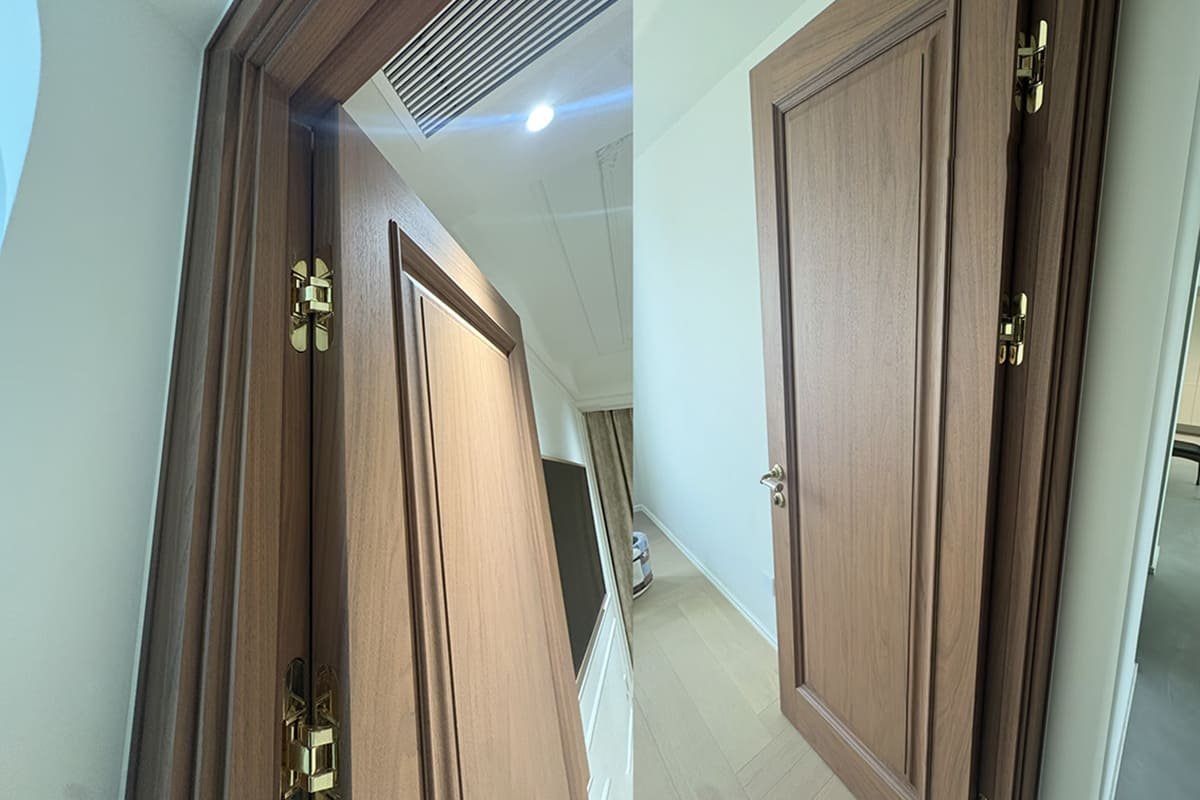
In B2B door hardware orders, decoration is not only about style. It also connects to order risk. A door factory may need thousands of sets for one door series. A wholesaler may sell the same item across several markets. A hardware brand may need the same finish in repeat orders. If the finish changes, if the screws do not match, or if the lock body is not suitable, the problem becomes larger than one sample.9
I prefer to discuss matching at the early development stage. I ask for the door design, installation habit, target finish, door thickness, cylinder type, hinge type, and lock standard. I also ask whether the buyer needs a standard set or a customized set.
| Early matching item | Question I ask | Risk I reduce |
|---|---|---|
| Door thickness | What thickness will the hardware fit? | Wrong spindle, screw, or lock size |
| Door color | What finish should the hardware support? | Poor visual match |
| Market habit | Which lock and cylinder type is common? | Hard sales or wrong user experience |
| Batch volume | How many sets and repeat orders? | Finish and stock planning risk |
| Accessory list | What should each set include? | Missing parts during assembly |
I have seen that early matching also helps price control. The buyer can compare full-set value, not separate low prices. A cheap part can become expensive if it creates returns, rework, or brand complaints.
What Should I Check Before I Confirm A Door Hardware Set?
I never like to approve a door hardware set only from a catalog photo, because many problems hide in small details.
Before I confirm a door hardware set, I check finish match, material suitability, size compatibility, function, accessories, packaging, and batch control. I also compare the hardware with the real door sample when possible, because the final effect depends on installation.
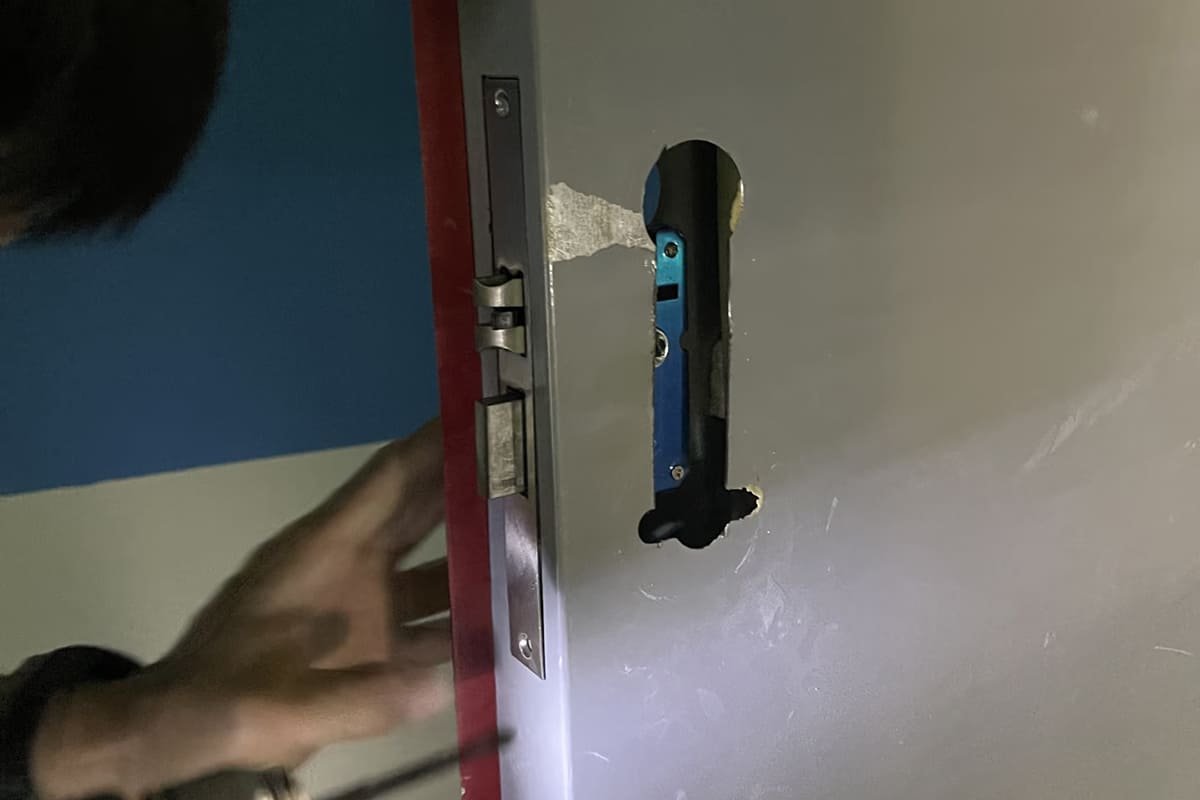
My usual check is practical. I first look at the visual match. The handle, hinge, lock face plate, cylinder, strike plate, and screws should not fight each other. Then I check specifications. The lock body must fit the door preparation. The spindle must suit the handle and door thickness. The hinge must carry the door as required by the door maker.10 The cylinder length must match the door and escutcheon design.11
I also check the buyer’s business need. A door factory may need easy assembly. A brand operator may need a stable finish for repeat sales. A wholesaler may need simple packaging and clear labels. Each buyer has a different risk point.
| Check point | My practical method | Why I check it |
|---|---|---|
| Finish match | I compare all parts together | The door set should look unified |
| Size fit | I confirm drawings or samples | Wrong size causes assembly delay |
| Function feel | I test opening, closing, and locking | Good decor also needs good use |
| Accessory completeness | I check screws, spindle, keys, plates | Missing parts create complaints |
| Packaging | I check labels and set grouping | Bulk orders need easy handling |
| Repeat consistency | I keep approved sample references | Future orders should stay close |
I do not try to make the most complex checklist. I try to catch the details that create real trouble in bulk supply. A good door hardware set should be easy for the buyer to approve, easy for the factory to assemble, and easy for the end customer to accept.
How Do Door Hardware Fittings Support A Stronger Door Brand Image?
I have seen a door brand look more reliable when its hardware details stay consistent across its showroom, catalog, and delivered goods.
Door hardware fittings support a stronger door brand image by making the door feel complete, controlled, and repeatable.12 I help protect that image when I keep finish, proportion, function, and accessory matching stable from sample approval to bulk delivery.
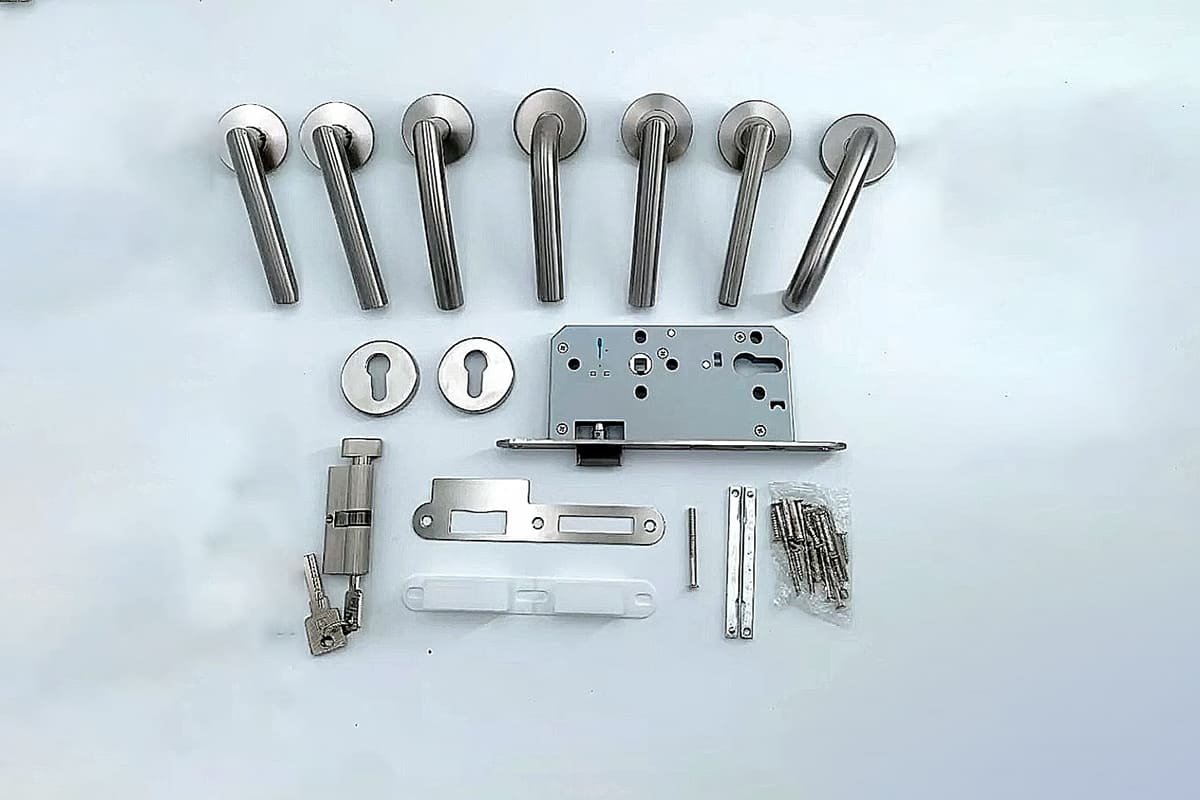
A door brand does not build trust from one single part. It builds trust from repeated details. When the customer sees the door in a showroom, the handle finish should match the hinge and cylinder. When the customer opens the door, the movement should feel smooth. When the installer opens the carton, the accessories should be complete. When the next order arrives, the finish should stay close to the approved sample.
This matters to door factories, wholesalers, and hardware brands. Their customers may not know the factory process behind the hardware. They only see the final door and judge the brand from that result.
| Brand detail | What the customer sees | What I control as a manufacturer |
|---|---|---|
| Unified finish | The door looks planned | Finish reference and batch comparison |
| Proper proportion | Hardware fits the door style | Model, size, and specification matching |
| Stable function | Door feels reliable | Lock, hinge, handle, and cylinder fit |
| Complete set | Installation feels professional | Accessory control and packaging |
| Repeat orders | Brand image stays steady | Production record and sample control |
I do not claim that hardware alone decides interior decor. The door design, wall color, furniture, lighting, and project style all matter. But I know from many order discussions that hardware can lift or weaken the final door image. It is small in size, but it appears at the exact point where people look, touch, and judge quality.
Conclusion
I enhance interior decor best when I treat door hardware as one matched, stable, and repeatable system, not as separate parts chosen at the end.
"Influence of door handles design in effort perception - PubMed", https://pubmed.ncbi.nlm.nih.gov/22317464/. Studies in product design and perceived quality indicate that visual coherence, proportion, surface appearance, and tactile interaction contribute jointly to users’ evaluations of a product, providing contextual support for treating door hardware as an integrated design system. Evidence role: general_support; source type: paper. Supports: Research or standards should support that coordinated product components influence both visual coherence and user experience.. Scope note: This evidence would support the broader design mechanism rather than directly testing complete door hardware sets. ↩
"[PDF] SECTION 08 71 00 DOOR HARDWARE - Nash County", https://www.nashcountync.gov/DocumentCenter/View/13355. Architectural hardware standards classify hinges and locksets by their load, durability, and operating functions, supporting the view that hinges govern door support and movement while mortise locks determine latch and lock engagement at the door edge. Evidence role: mechanism; source type: institution. Supports: A technical standard or institutional guide should explain the functional roles of hinges and mortise locks in door support, motion, latching, and lock positioning.. ↩
"Perception and Appreciation of Tactile Objects: The Role of Visual ...", https://pmc.ncbi.nlm.nih.gov/articles/PMC10019098/. Research on material perception and product aesthetics finds that color, gloss, texture, and tactile properties shape perceived quality and aesthetic appraisal, offering support for the claim that hardware finish affects decorative value. Evidence role: mechanism; source type: paper. Supports: Research should show that visual and tactile surface properties influence perceived quality or aesthetic evaluation.. Scope note: The evidence is likely contextual and may concern products generally rather than door hardware specifically. ↩
"Color difference - Wikipedia", https://en.wikipedia.org/wiki/Color_difference. Color measurement standards using color-difference metrics such as CIE ΔE demonstrate that nominally similar colors can differ perceptibly, supporting the need to verify finish names against measured or approved color samples. Evidence role: general_support; source type: institution. Supports: A color science standard or institutional source should support that color appearance varies measurably and that tolerances are needed for industrial matching.. Scope note: Such standards establish color-variation principles, not a specific comparison of black door-hardware finishes. ↩
"Adhesion of Coating - an overview", https://www.sciencedirect.com/topics/materials-science/adhesion-of-coating. Coating and electroplating literature shows that substrate composition and surface preparation influence adhesion, corrosion resistance, and finish uniformity, supporting the claim that finish stability depends on the material beneath the visible surface. Evidence role: mechanism; source type: paper. Supports: Materials or coating literature should support that substrate material and preparation affect coating adhesion, durability, and appearance consistency.. ↩
"SECTION 08 71 00 DOOR HARDWARE", https://www.nashcountync.gov/DocumentCenter/View/13355. Technical hardware standards describe hinges, locks, and cylinders as components affecting door operation and alignment, while product-sound research shows that operating sounds can influence perceived quality, together supporting the claim that secondary fittings affect both function and impression. Evidence role: mechanism; source type: research. Supports: Sources should support that hardware components influence door operation and that operating sound can affect perceived quality.. Scope note: This combines evidence from hardware standards and general sound-quality research rather than a single door-hardware-specific study. ↩
"The Impact of Visual Elements of Packaging Design on Purchase ...", https://pmc.ncbi.nlm.nih.gov/articles/PMC11851823/. Product-design research on visual coherence and gestalt perception indicates that inconsistent components can reduce overall perceived quality even when a focal element is attractive, providing contextual support for the importance of matching the entire hardware set. Evidence role: general_support; source type: paper. Supports: Research should support that consistency among product components affects overall perceived quality and design evaluation.. Scope note: This supports the general design principle rather than empirically proving the effect for door handles alone. ↩
"[PDF] Reducing the Costs of Poor Quality: A Manufacturing Case Study", https://scholarworks.waldenu.edu/context/dissertations/article/6608/viewcontent/Faciane_waldenu_0543D_20845.pdf. Research on early supplier involvement and quality planning in new product development finds that clarifying specifications and component requirements before production can reduce rework, delays, and supply risk, supporting the article’s argument for early hardware matching. Evidence role: expert_consensus; source type: paper. Supports: Supply-chain or new product development literature should support that early supplier involvement and early requirements confirmation reduce downstream risk, rework, and delays.. Scope note: The evidence is general to procurement and manufacturing rather than limited to door hardware. ↩
"Cost of Non-Conformance in Lean Six Sigma. Everything to ...", https://www.6sigma.us/six-sigma-in-focus/cost-of-non-conformance/. Quality management guidance on nonconforming outputs recognizes that defects discovered after production or delivery can lead to rework, replacement, delays, and customer dissatisfaction, supporting the claim that mismatches in bulk hardware orders can exceed the scale of a single sample issue. Evidence role: general_support; source type: institution. Supports: Quality management sources should support that nonconforming components can cause rework, delays, returns, and customer complaints when discovered after production begins.. Scope note: The source would support the quality-management mechanism rather than quantify the risk for this specific product category. ↩
"Understanding BS EN 1935:2002 single-axis hinge grades", https://uk.sfs.com/resources/article/understanding-bs-en-1935. Hinge standards such as EN 1935 and ANSI/BHMA A156.1 classify hinges by criteria including door mass, durability, and service conditions, supporting the requirement that hinges be selected to carry the intended door. Evidence role: definition; source type: institution. Supports: A hinge standard should show that hinges are classified by load, durability, and intended door use, making correct selection necessary.. ↩
"Euro Cylinder Sizes Explained: 30/30, 35/45, 40/40 and More - welock", https://www.welock.com/blogs/news/euro-cylinder-sizes-explained?srsltid=AfmBOopkjesY7aVrQ3kb-KyxZE3tE1H3iRmx1WDvriF7t0q14jli6jG-. Cylinder lock standards and installation guidance specify dimensional compatibility between the cylinder, door thickness, and protective furniture, supporting the claim that cylinder length must match the door and escutcheon design. Evidence role: mechanism; source type: institution. Supports: A lock cylinder standard or neutral technical guide should explain that cylinder dimensions must align with the door thickness and surrounding fittings.. Scope note: Some standards classify cylinder performance more than installation practice, so an installation guide may be needed for direct dimensional examples. ↩
"Role of Extrinsic Cues in the Formation of Quality Perceptions - PMC", https://pmc.ncbi.nlm.nih.gov/articles/PMC9359923/. Branding and product-design research shows that consistent physical cues across customer touchpoints contribute to perceived quality and brand reliability, providing contextual support for the claim that stable door-hardware details can strengthen a door brand image. Evidence role: general_support; source type: paper. Supports: Marketing or design research should support that consistent product cues and touchpoints influence perceived quality and brand image.. Scope note: The evidence would likely address brand perception in general product contexts rather than door brands specifically. ↩