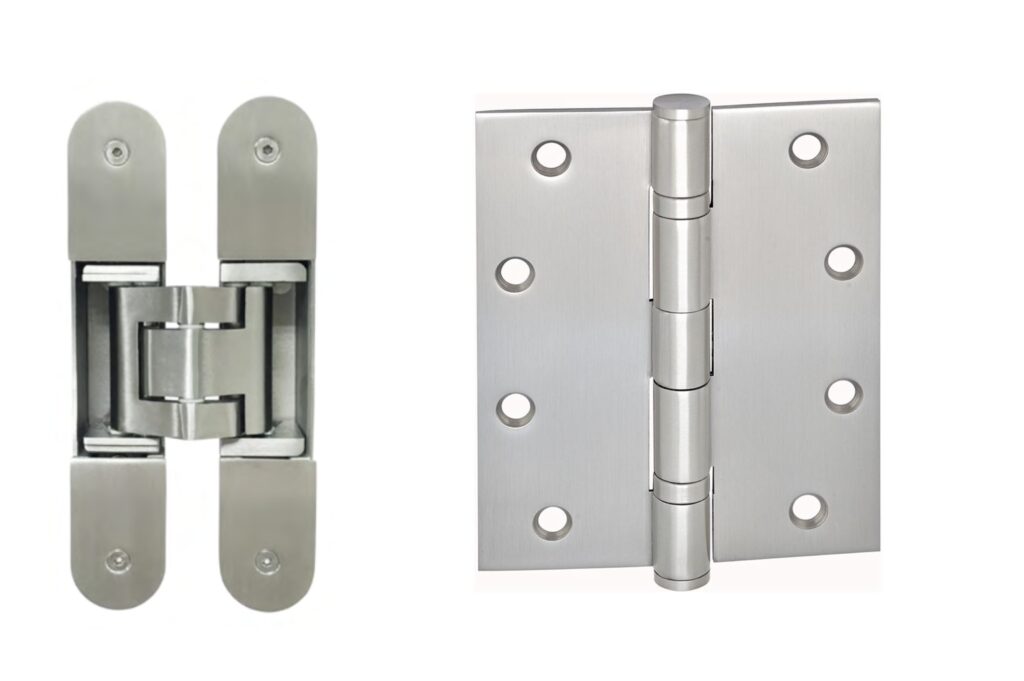
Concealed Hinges vs. Butt Hinges for Commercial Fire Door Applications: Which Should You Choose?
Concealed hinges vs. butt hinges is a common decision point when buyers specify commercial fire door hardware. The problem is that many projects compare only appearance or unit price. That creates risk when door weight, installation accuracy, maintenance, and certification scope are ignored. I usually guide buyers to evaluate the hinge as part of the full door system.
For commercial fire door applications, concealed hinges may suit projects that require a cleaner door appearance and hidden hardware, while butt hinges often remain practical for durability, easy inspection, simpler replacement, and cost control. The right choice depends on door weight, opening frequency, frame structure, installation method, maintenance plan, and verified fire-rated certification scope.
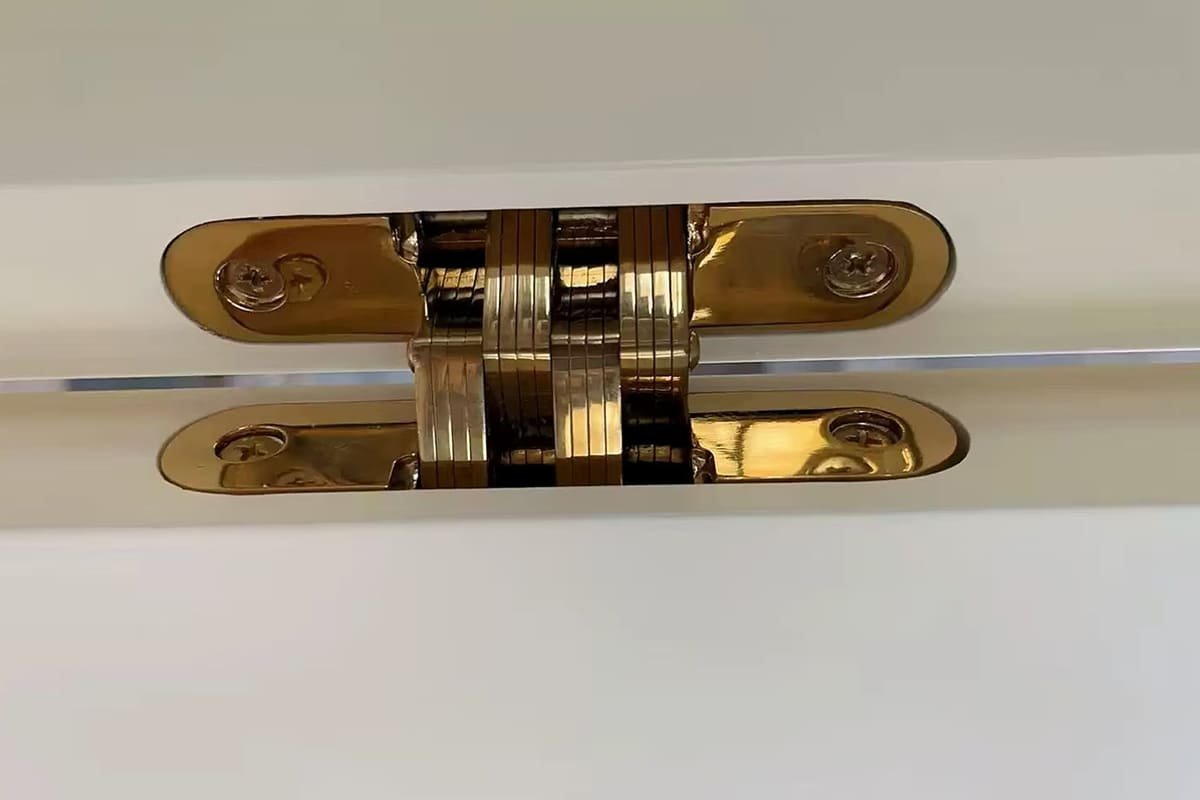
I have seen buyers request concealed hinges as a “premium upgrade” without checking whether the door and frame are prepared for them. I have also seen butt hinges rejected too quickly because they look traditional. In practice, the better question is not “Which hinge is better?” It is “Which hinge fits this fire door project?”
Why Does Concealed Hinges vs. Butt Hinges Matter for Commercial Fire Doors?
Choosing concealed hinges vs. butt hinges may look simple at the quotation stage. The problem starts later, when installation gaps, sagging, certification questions, or maintenance complaints appear. If the hinge type does not match the door system, even a good hinge can become a procurement problem.
The comparison matters because commercial fire doors must balance function, safety documentation, durability, installation accuracy, and lifecycle cost1. Concealed hinges offer hidden appearance and design value, while butt hinges offer proven practicality, easy service, and broad project familiarity. Buyers should evaluate both options against the complete door assembly.
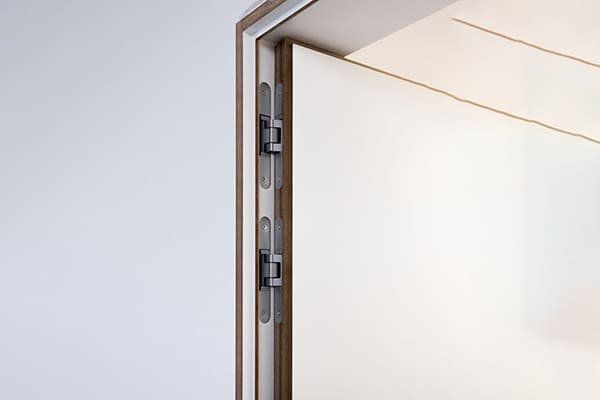
The hinge is not just a visible accessory
In commercial fire door projects, the hinge connects several technical and commercial factors:
- Door leaf weight
- Door height and width
- Door core and edge structure
- Frame material and reinforcement
- Opening frequency
- Closer force
- Fire-rated certificate scope
- Installation tolerance
- After-sales maintenance plan
- Target cost and market positioning
I often explain to buyers that a hinge is small in size but large in responsibility. It supports door movement, alignment, and repeated operation. If the hinge selection is wrong, the after-sales cost can exceed the original hardware saving.2
The real buyer decision
Here is a simple way I frame concealed hinges vs. butt hinges during project discussion:
| Decision Factor | Concealed Hinges | Butt Hinges |
|---|---|---|
| Appearance | Hidden when door is closed | Visible on door edge |
| Installation | Requires precise routing and alignment | Easier and more familiar |
| Inspection | Less visible, may need more detailed checking | Easy visual inspection |
| Replacement | Often more model-specific | Usually simpler to replace |
| Cost control | Often higher product and preparation cost | Often more economical |
| Fire-door use | Must match tested assembly and certificate scope | Must match tested assembly and certificate scope |
| Best fit | Design-driven projects with suitable structure | High-frequency, service-focused commercial use |
The table is not a universal rule. Product models, material grades, dimensions, bearing structures, and certificates vary by supplier. However, it helps buyers avoid a narrow “hidden equals better” or “visible equals cheaper” mindset.
A practical example from project communication
In one commercial project discussion, a buyer wanted to replace visible hinges with concealed hinges because the hotel corridor design looked cleaner. That request made sense from an aesthetic view. But the door factory also needed to confirm:
- Whether the door leaf edge could be machined accurately.
- Whether the steel frame had enough reinforcement.
- Whether the hinge model had suitable load data.
- Whether the fire-rated documentation covered the intended door type.
- Whether installers had experience with concealed hinge adjustment.
That conversation changed the decision from “Can we use concealed hinges?” to “Can the full door system support concealed hinges without increasing risk?” This is the right direction for procurement.
My practical view: concealed hinges vs. butt hinges is not a style choice only. It is a system-fit choice.
When Should Buyers Choose Concealed Hinges for Commercial Fire Door Applications?
Concealed hinges can be attractive when commercial doors need a clean, modern appearance. The problem is that hidden hardware often requires higher machining precision. If buyers choose concealed hinges only for design reasons, they may face installation delays, adjustment issues, or unclear certification matching.
Buyers should consider concealed hinges when the project values hidden hardware, controlled visual design, and suitable door-frame preparation. They are best used when the door structure, hinge model, load capacity, opening angle, installer skill, and fire-rated documentation can all be verified before bulk procurement.
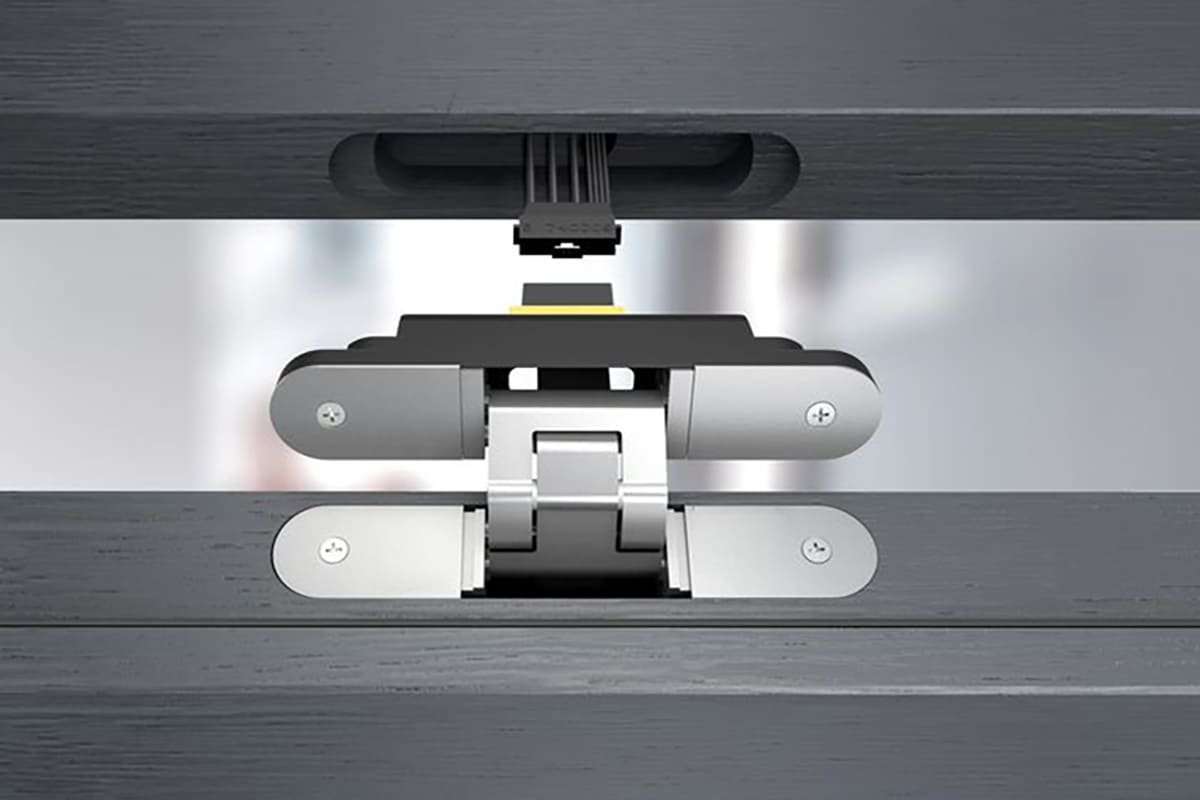
Where concealed hinges add value
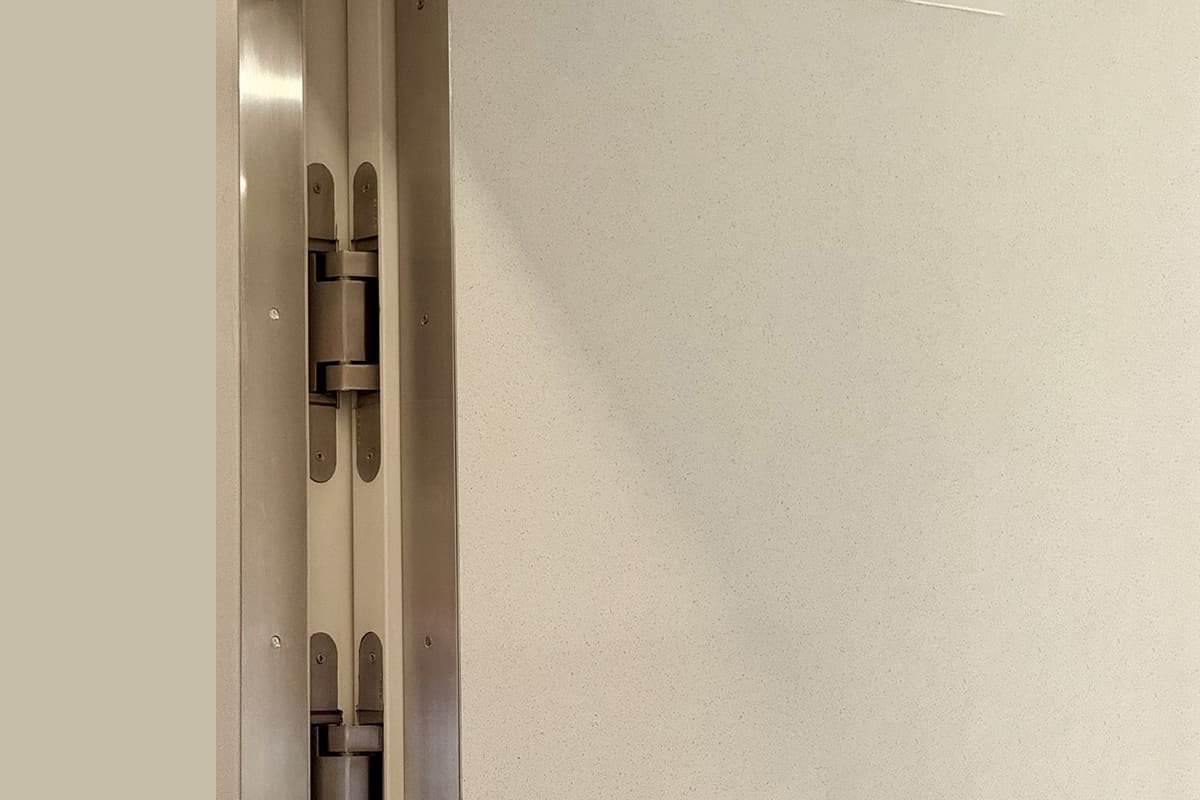
Concealed hinges mainly solve appearance and space-use needs. When the door is closed, the hinge body is hidden inside the door and frame. This gives the opening a cleaner look. For some commercial spaces, that matters.
Common application motivations include:
- Hotel guest room corridors
- High-end office interiors
- Modern apartment projects
- Design-led commercial buildings
- Projects with minimalist door specifications
- Doors where visible hardware exposure should be reduced
Some concealed hinge designs also support wide opening angles, depending on the model and installation structure. However, buyers should verify actual opening angle data from the product drawing or test report. I do not recommend assuming a fixed degree, because different concealed hinge structures perform differently.
Key checks before choosing concealed hinges
Concealed hinges require more planning than many buyers expect. Before a buyer confirms them for commercial fire doors, I suggest checking these points:
Door leaf weight and size
The hinge quantity and model must match the actual door weight and dimensions. Buyers should not rely on a general load number without confirming the product specification.Door and frame machining accuracy
Concealed hinges usually need precise mortising or routing.3 Small dimensional errors can affect alignment.4Frame reinforcement
The frame must support the hinge body and fixing screws.5 Weak reinforcement can create movement over time.Installer experience
Installation is more sensitive than with standard butt hinges. Adjustment time should be included in the project schedule.Maintenance access
Buyers should understand how the hinge can be adjusted, inspected, or replaced after installation.Certificate scope
Fire-rated suitability must be checked against the complete door assembly, not just the hinge material.
Concealed hinges are not a simple premium upgrade
Many buyers treat concealed hinges as a higher-end substitute for butt hinges. I understand why. The hidden look feels more modern. But in procurement, a premium appearance does not automatically mean lower risk.
A concealed hinge may be a good choice if:
- The project design requires hidden hardware.
- The door factory can process the door edge accurately.
- The frame design supports the hinge pocket.
- The hardware supplier can provide model-specific technical data.
- The fire-rated documents match the intended assembly.
- The buyer accepts higher preparation and installation requirements.
A concealed hinge may create problems if:
- The door structure is not designed for it.
- The installer is unfamiliar with adjustment.
- The buyer wants a quick replacement using local generic parts.
- The fire certificate does not cover the same door type or installation method.
- The project is highly cost-sensitive and service speed is more important than appearance.
From my manufacturing experience, concealed hinges are best discussed early in the design stage. They should not be added at the last minute after door production drawings are already fixed.
When Do Butt Hinges Make More Sense for Commercial Fire Doors?
Butt hinges may look conventional, so some buyers underestimate them. The problem is that commercial fire doors often need high opening frequency, fast inspection, and easy replacement. In those situations, choosing a visually hidden hinge may not create real value.
Butt hinges often make more sense when the project prioritizes durability, serviceability, installation speed, broad installer familiarity, and cost control. They remain practical for many commercial fire doors because they are easy to inspect, easier to replace, and widely understood by door factories and maintenance teams.
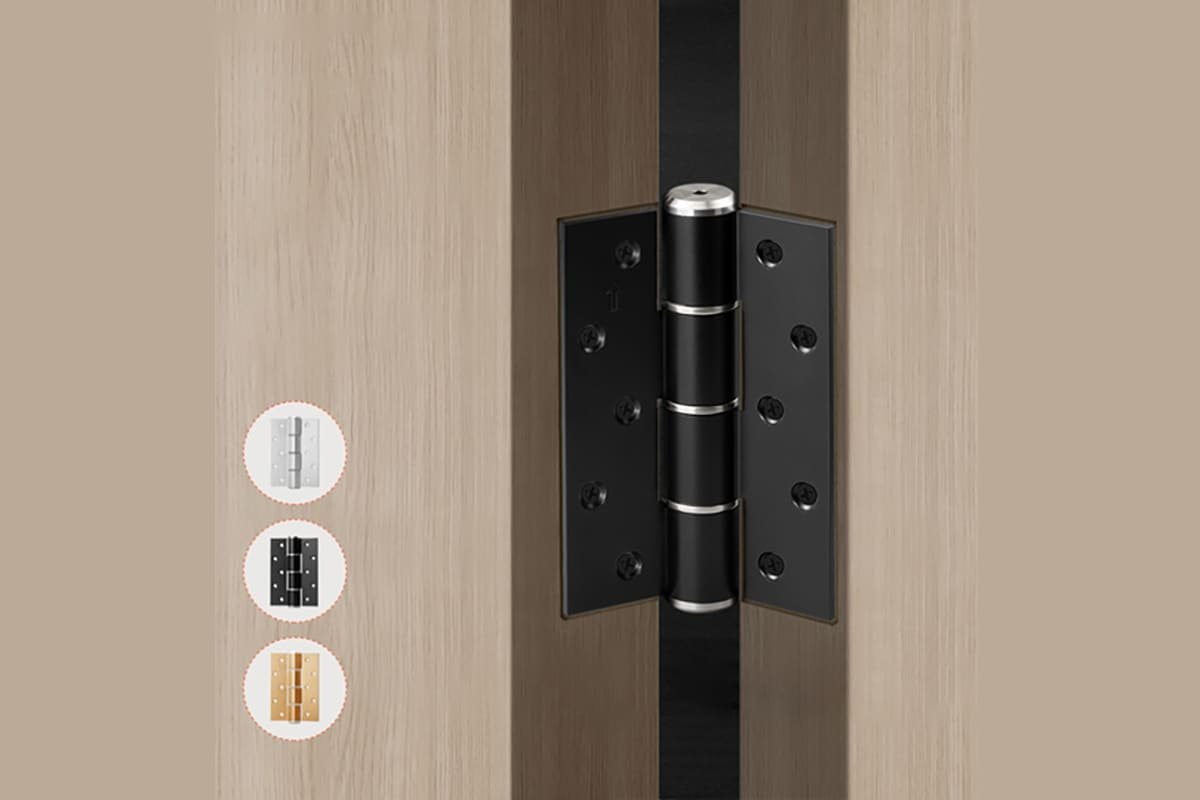
Why butt hinges remain widely used
Butt hinges have a simple structure and a long history in door hardware.6 They are visible, but they are also easy to understand. For commercial procurement, that is a major advantage.
Many door factories, contractors, and maintenance teams already know how to install and service butt hinges. This reduces uncertainty. In bulk projects, reducing uncertainty is often more valuable than improving appearance.
Butt hinges are common in:
- Steel fire doors
- Wooden fire doors
- Commercial entrance doors
- Service doors
- Corridor doors
- Utility room doors
- Institutional buildings
- Wholesale hardware programs
Commercial benefits of butt hinges
For buyers, butt hinges offer several practical benefits:
| Buyer Concern | Why Butt Hinges May Help |
|---|---|
| Fast installation | Installers are usually familiar with the structure |
| Easy inspection | The hinge is visible and simple to check |
| Replacement planning | Matching sizes and screw positions may be easier |
| Cost control | Product and processing costs are often competitive |
| High-use environments | Maintenance teams can monitor wear more easily |
| Stock management | Wholesalers can carry standard sizes and finishes |
These benefits do not mean butt hinges are always better. A poor-quality butt hinge can fail just like any poor-quality hardware. Buyers still need to check material, thickness, bearing design, screw quality, finish consistency, and certification documents.
What buyers should verify in butt hinges
When I discuss butt hinges with door hardware buyers, I usually focus on manufacturing consistency. A hinge may look simple, but small differences can affect long-term performance.
Important checks include:
- Leaf thickness and material grade
- Knuckle forming accuracy
- Pin fit and movement smoothness
- Bearing or washer structure, if applicable
- Hole position consistency
- Screw compatibility
- Surface finish uniformity
- Salt spray or corrosion test data, when required
- Fire-rated certificate scope, when used on fire doors
- Packaging strength for export shipping
For bulk orders, consistency matters as much as a single sample. A sample may look good, but the buyer needs stable production quality across cartons, pallets, and repeat shipments.
Butt hinges and high-frequency commercial use
In commercial buildings, doors may open many times per day.7 For example, corridor doors, service doors, and public access doors face repeated use from staff, guests, tenants, or facility workers. The hinge must handle not only static load but also repeated movement, closer force, and impact from daily operation.
This is why I often ask buyers three questions:
- How heavy is the real door leaf after all accessories are installed?
- How often will the door open each day?
- Who will maintain the door after handover?
If the project needs simple maintenance and fast replacement, butt hinges can be a strong choice. If the project requires a hidden look and the structure supports it, concealed hinges can also work. The correct answer depends on project priorities.
That is the central point of concealed hinges vs. butt hinges: the better hinge is the one that matches the full use condition.
How Should Concealed Hinges vs. Butt Hinges Be Evaluated for Fire-Rated Certification?
Fire-rated hardware documents can confuse buyers. The problem is that some suppliers present a hinge certificate as if it guarantees the complete door rating. That can create serious compliance risk. A hinge contributes to fire door performance, but it does not independently define the full assembly.
Buyers should evaluate concealed hinges vs. butt hinges for fire-rated use by checking whether the hinge model, material, door type, frame structure, installation method, and complete fire door assembly match the certificate scope. A qualified professional or testing authority should review project-specific compliance requirements.
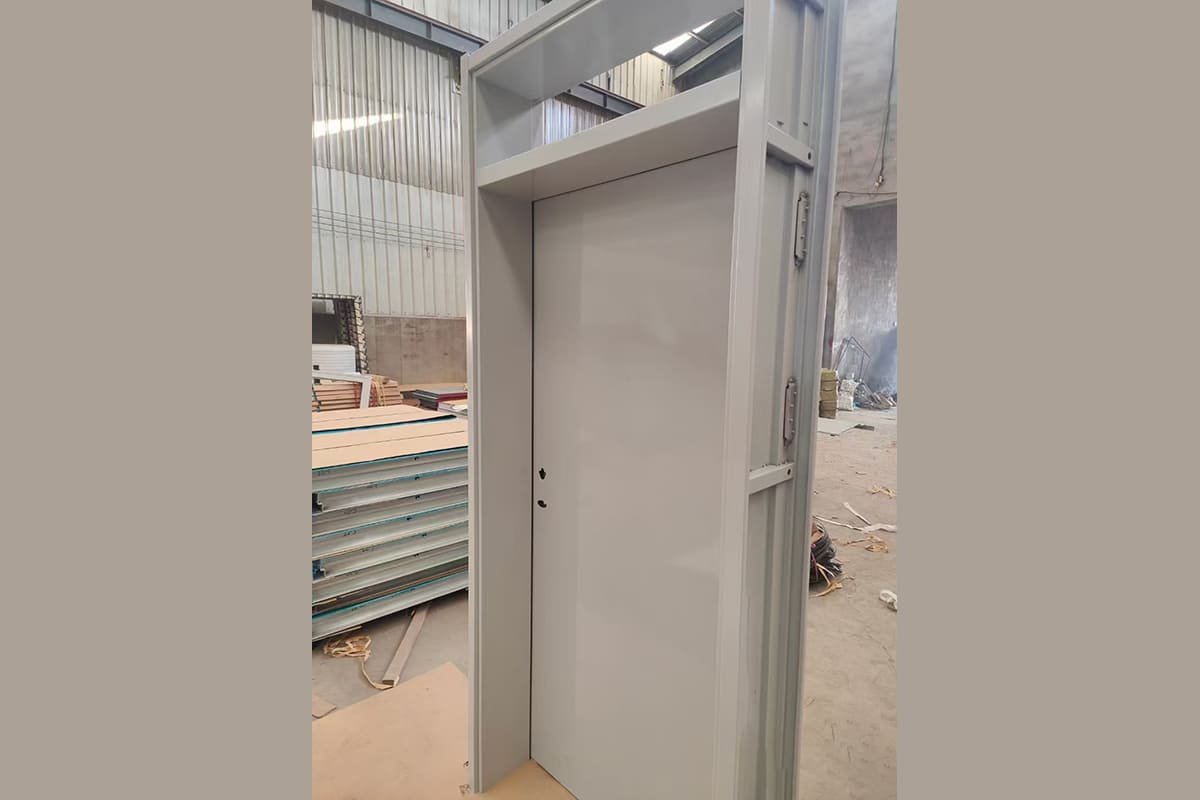
Fire rating belongs to the door system
A commercial fire door is a system. It may include:
- Door leaf
- Door frame
- Hinges
- Lock or latch
- Door closer
- Intumescent seals
- Drop seal, when required
- Glass or louver, if applicable
- Installation method
- Wall structure
- Gap control
The hinge is only one part of this system. A stainless steel hinge or CE-marked product does not automatically make the full door fire-rated.8 The complete assembly must meet the relevant test and certification scope.9
This point is very important for buyers who import hardware for different markets. A certificate may be valid for one door type, one test standard, or one installation configuration.10 It may not apply to another market or another door design.
Documents buyers should request
When evaluating concealed hinges vs. butt hinges for commercial fire doors, buyers should request and verify documents before placing bulk orders.
Useful documents may include:
| Document | What Buyers Should Check |
|---|---|
| Product drawing | Size, screw holes, installation depth, tolerances |
| Material specification | Stainless steel grade, steel grade, brass or zinc alloy details |
| Test report | Tested model, test standard, sample configuration11 |
| Fire-rated certificate | Scope, validity, door type, duration, laboratory details |
| CE documentation | Applicable standard and declared performance |
| Installation instruction | Required routing, screw type, frame preparation |
| Factory quality control record | Batch inspection, finish control, dimensional checks |
Buyers should treat certificates as documents to verify, not as marketing decoration. If the certificate does not clearly identify the same hinge model or application condition, the buyer should ask for clarification.
Questions to ask suppliers
I recommend asking suppliers these questions:
- Does the certificate cover this exact hinge model?
- What door type was tested: timber, steel, or another structure?
- Was the hinge tested with a specific door leaf weight or size?
- Does the certificate include the same installation method?
- Does the project require CE, fire-rated certification, or both?
- Can the supplier provide installation drawings for the door factory?
- Can the supplier support sample testing before mass order?
These questions help buyers avoid one of the most common mistakes: assuming that a general fire-rated claim applies to every application.
Why professional review matters
As a manufacturer, I can provide product drawings, samples, production data, and available certification documents. However, I do not position myself as the final code authority for every country or project. Commercial fire door requirements depend on local regulations, project specifications, and complete assembly design.
For important projects, buyers should involve:
- Door system engineers
- Fire door certification bodies
- Local code consultants
- Testing laboratories
- Qualified project inspectors
This approach protects all parties. The buyer reduces compliance risk. The door factory avoids redesign. The hardware supplier provides suitable documentation. The end project receives a better-controlled solution.
How Can Buyers Reduce Procurement Risk When Comparing Concealed Hinges vs. Butt Hinges?
Procurement risk often appears after the order is placed. The problem is that hinge decisions are sometimes made from catalog photos or basic quotations. If buyers do not confirm samples, drawings, finishes, certificates, and packing details, small issues can become expensive after shipment.
Buyers can reduce risk by comparing concealed hinges vs. butt hinges through a structured evaluation process: confirm door conditions, request model-specific data, test samples, verify fire-rated documentation, inspect finish consistency, and align supplier capacity with delivery schedules before mass production.
A practical procurement checklist
When I support buyers for commercial door hardware orders, I prefer a step-by-step confirmation process. It keeps the discussion clear and prevents assumptions.
1. Confirm the door data
Buyers should prepare:
- Door material
- Door leaf weight
- Door height and width
- Frame material
- Opening direction
- Expected opening frequency
- Required hinge quantity
- Required finish
- Fire-rated requirement
- Market or project standard
Without this data, the supplier can only give a general recommendation.
2. Confirm the hinge model
Buyers should compare:
| Item | Why It Matters |
|---|---|
| Hinge size | Must match door and frame design |
| Load data | Must match actual door weight and hinge quantity |
| Opening angle | Must match space and project use |
| Screw type | Affects fixing strength |
| Adjustment method | Important for concealed hinges |
| Finish | Must match lock, handle, and other hardware |
| Certificate scope | Must match fire door application |
Specific load capacities or angles should always be verified against the actual product model. A number from one supplier’s catalog should not be applied to another hinge design.
3. Test samples before bulk order
Sample testing is not only about seeing the product. It is about checking whether the product works with the buyer’s door system.
For concealed hinges, sample testing should include:
- Routing accuracy
- Door closing alignment
- Frame clearance
- Adjustment range
- Screw holding performance
- Opening angle
- Installer feedback
For butt hinges, sample testing should include:
- Leaf flatness
- Pin movement
- Screw hole alignment
- Finish quality
- Door swing smoothness
- Noise during operation
- Door sag after repeated opening, if testing is available
Finish consistency and batch control
Commercial buyers often focus on mechanical performance, but finish consistency also matters. A door hardware brand or wholesaler may receive complaints if hinges, lever handles, locks, and cylinders do not match visually.
At SDH Hardware, our manufacturing work includes surface finish control for bulk orders. Still, I always recommend confirming acceptable finish range with physical samples before mass production. Photos can be misleading because lighting changes the appearance of stainless steel, PVD, satin, antique, or painted finishes.
Buyers should define:
- Approved sample standard
- Finish name and code
- Gloss level, if applicable
- Salt spray requirement, if applicable
- Packaging method to avoid scratches
- Inspection method before shipment
Supplier selection matters as much as hinge type
The discussion of concealed hinges vs. butt hinges should not stop at product selection. Supplier capability affects the final result.
A strong supplier should support:
- Stable factory production
- Clear drawings
- ODM customization when needed
- Consistent finish control
- Batch inspection
- Export packaging
- Document support
- Communication during sampling and production
For door factories, hardware brands, and wholesalers, this support can reduce total procurement cost. A cheaper hinge may become expensive if it causes rework, delays, or after-sales replacement.
My practical advice is simple: compare total project risk, not only unit price. A hinge that fits the door system, comes with clear documents, and can be produced consistently is usually the better commercial choice.
Frequently Asked Questions
Are concealed hinges better than butt hinges for fire doors?
Concealed hinges are not automatically better than butt hinges for fire doors. They offer hidden appearance and design value, but they require suitable door and frame preparation. Fire-rated use must be verified through the complete door assembly and certificate scope, not appearance or hinge material alone.
Can butt hinges be used on commercial fire doors?
Yes, butt hinges are widely used on many commercial fire doors when they match the door design, load requirement, installation method, and certification scope. Buyers should verify product specifications, material, screw fixing, hinge quantity, and fire-rated documents before confirming bulk orders.
Does a fire-rated hinge make the whole door fire-rated?
No. A fire-rated hinge does not independently make the whole door fire-rated. Fire performance depends on the complete door assembly, including door leaf, frame, seals, lock, closer, installation gaps, and tested configuration. Buyers should verify the certificate scope with qualified professionals.
How many hinges should a commercial fire door use?
The required hinge quantity depends on door height, weight, width, usage frequency, hinge model, and project standard.12 Buyers should not rely on a generic rule only. They should confirm the door data and verify the supplier’s recommendation against product test data and applicable project requirements.
What should I check before replacing butt hinges with concealed hinges?
Before replacing butt hinges with concealed hinges, check door edge structure, frame reinforcement, routing accuracy, load capacity, opening angle, installer skill, maintenance access, and fire-rated certificate scope. A concealed hinge conversion should be reviewed as a door system change, not just a hardware swap.
Conclusion
Concealed hinges vs. butt hinges should be evaluated through project fit, not appearance alone. Concealed hinges can support clean design when the door and frame structure are prepared correctly. Butt hinges remain practical for many commercial fire doors because they are simple to install, inspect, and replace. In both cases, buyers should verify specifications, samples, finish consistency, and fire-rated certification scope. If you need support selecting or customizing commercial door hinges, I invite you to contact SDH Hardware for drawings, samples, and bulk supply consultation.
"Fire Doors and NFPA 80 FAQs", https://www.nfpa.org/news-blogs-and-articles/blogs/2025/04/11/fire-doors-faqs. Fire-door standards and listing guidance describe fire doors as assemblies whose performance depends on listed components, installation, inspection, and maintenance, supporting the need to evaluate hinge selection beyond appearance or first cost. Evidence role: expert_consensus; source type: institution. Supports: Fire-door performance and compliance are evaluated as part of an installed and maintained assembly, including hardware and documentation, rather than as isolated appearance choices.. ↩
"Life-Cycle Cost Analysis for Buildings Is Easier Than You Thought, page 01", https://www.fs.usda.gov/t-d/pubs/htmlpubs/htm08732839/page01.htm. Life-cycle cost research on building components shows that purchase price is only one part of total economic performance and that maintenance and replacement costs can outweigh initial savings; this supports the cost logic contextually rather than proving hinge-specific after-sales costs in every project. Evidence role: general_support; source type: paper. Supports: Life-cycle cost studies show that maintenance, repair, replacement, and downtime can make low initial-cost choices more expensive over the service life of building components.. Scope note: Contextual support only; the source would not directly quantify concealed-hinge or butt-hinge after-sales costs for this article's specific projects. ↩
"Architectural Woodwork Standards, 2nd Edition", https://woodworkinstitute.com/wp-content/uploads/2018/04/2ndEdAWS_SmBkMrkd_141001.pdf. Architectural hardware and woodwork guidance describes concealed hinges as requiring accurately prepared mortises or routed pockets in the door and frame, which explains why their installation is more tolerance-sensitive than surface-mounted hardware. Evidence role: mechanism; source type: institution. Supports: Concealed hinges require recesses or pockets in the door and frame, making dimensional accuracy important for correct alignment and operation.. ↩
"Mind the Gap | NFPA Journal", https://www.nfpa.org/news-blogs-and-articles/nfpa-journal/2019/01/02/mind-the-gap. Fire-door installation standards specify limited clearances and alignment requirements for door assemblies, supporting the claim that small dimensional errors in preparation can affect door fit and operation. Evidence role: mechanism; source type: institution. Supports: Fire-door and door-frame installation standards specify tight clearances and alignment tolerances, indicating that small dimensional deviations can affect fit and operation.. ↩
"Hardware Reinforcing on Steel Doors & Frames | SDI", https://steeldoor.org/ansi-250-6/. Door and frame technical standards describe hinge reinforcement and proper fastener attachment as necessary for transferring door loads into the frame, supporting the need to verify frame capacity when selecting hinges. Evidence role: mechanism; source type: institution. Supports: Door-frame standards and technical guidance require appropriate hinge reinforcement and fastener attachment so loads are transferred from the door leaf through the hinge into the frame.. ↩
"Hinge", https://en.wikipedia.org/wiki/Hinge. Reference works on hinges identify the butt hinge as a long-established door-hardware form consisting of two leaves joined around a pin, providing historical context for its continued use in conventional door assemblies. Evidence role: historical_context; source type: encyclopedia. Supports: Butt hinges are a traditional hinge type used in doors, with a simple two-leaf construction joined by a pin or knuckle.. ↩
"087100 – DOOR HARDWARE - Facilities and Campus Services", https://fcs.cornell.edu/087100-door-hardware. ANSI/BHMA hinge performance standards use cycle testing to classify hinge durability, supporting the practical relevance of repeated door operation in commercial hardware selection; the standard contextualizes frequency but does not state a universal number of openings per day for every building. Evidence role: general_support; source type: institution. Supports: Commercial hinge standards evaluate hinges through cycle testing, reflecting the expectation that building doors may undergo repeated operation over their service life.. Scope note: Contextual support only; cycle-test standards do not directly measure the daily opening frequency of the specific door types named in the article. ↩
"CE marking", https://en.wikipedia.org/wiki/CE_marking. European Commission guidance explains that CE marking indicates product conformity with applicable EU legislation, not a general guarantee of performance for an assembled system; combined with fire-door listing principles, this supports the claim that hinge material or CE marking alone does not make a complete door fire-rated. Evidence role: definition; source type: government. Supports: CE marking indicates conformity with applicable EU requirements for a product, while fire resistance of a door depends on the tested assembly and declared performance under the relevant standard.. Scope note: Contextual support only; CE-marking guidance explains the meaning of the mark generally and must be paired with a fire-door assembly source for the fire-rating conclusion. ↩
"NFPA 80 Fire Door Requirements: Code Guide", https://www.cdfdistributors.com/blog/post/nfpa-80-fire-door-requirements. Fire-door standards and listing programs define rated fire doors as assemblies tested or listed under specified configurations, supporting the requirement that the complete assembly—not an isolated hinge—match the applicable certification scope. Evidence role: definition; source type: institution. Supports: Fire-door ratings apply to tested or listed assemblies, including the door, frame, hardware, seals, and installation conditions within the applicable scope.. ↩
"Doors, Windows and Related Hardware Application Guide", https://www.ul.com/thecodeauthority/knowledge/ul-fire-rated-doors-guide. Fire-door certification and field-of-application guidance ties ratings to specified tested configurations, standards, and approved variations, supporting the warning that a certificate may not apply to a different door type or installation method. Evidence role: expert_consensus; source type: institution. Supports: Fire-door test reports and certificates are tied to tested specimens, standards, ratings, and approved fields of application, which may not transfer to different configurations.. ↩
"ISO/IEC 17025:2017, Section 7.8 - Reporting of Results", https://www.nist.gov/document/sop-1-calibration-certificate-eval-app-b-c-20190506pdf. ISO/IEC 17025 reporting requirements state that test reports should identify the tested item, the method used, and information needed to interpret the results, supporting the article's emphasis on checking the tested model, standard, and sample configuration. Evidence role: general_support; source type: institution. Supports: Accredited laboratory test-report standards require identification of the item tested, methods used, and information necessary to interpret the results.. ↩
"How Many Spring Hinges for a Fire Door Per NFPA 80 Requirements", https://watersonusa.com/solutions/how-many-spring-hinges-for-a-fire-door. Door-hardware standards and fire-door installation guidance relate hinge selection and quantity to door dimensions, weight, rating, and service duty, supporting the claim that hinge count must be verified against the specific door and project requirements. Evidence role: expert_consensus; source type: institution. Supports: Door-hardware and fire-door guidance determines hinge selection and quantity by factors such as door size, weight, rating, and expected duty, rather than by a single universal rule.. ↩