How Can I Choose the Right Cylinder Lock for a Fire Door?
A cylinder lock for a fire door can look simple on a quotation sheet, but the wrong choice can create serious procurement problems. If the cylinder length, mortise lock body, door thickness, handle set, or certificate scope does not match the actual door, the full lockset may fail project review1. I usually treat this as a complete fire-door hardware configuration decision, not a single-cylinder purchase.
To choose the right cylinder lock for a fire door, confirm the fire door requirements first, then match the cylinder with the mortise lock body, door thickness, handle set, opening dimensions, material, finish, and applicable fire test documentation. The safest procurement method is to verify the full tested hardware combination before placing a bulk order.
Many buyers first ask me about price, material, or cylinder length. Those points matter, but they come later. The more important question is whether the complete lockset matches the fire door, the target market, and the documentation required by the project.
Why Is a Cylinder Lock for a Fire Door a Full Lockset Decision?
A cylinder lock for a fire door is often treated like a small replaceable component. That thinking creates risk. If the cylinder fits the key system but does not match the lock body, door preparation, handle set, or certificate scope, the door factory may face rework, delayed shipment, or rejected inspection.
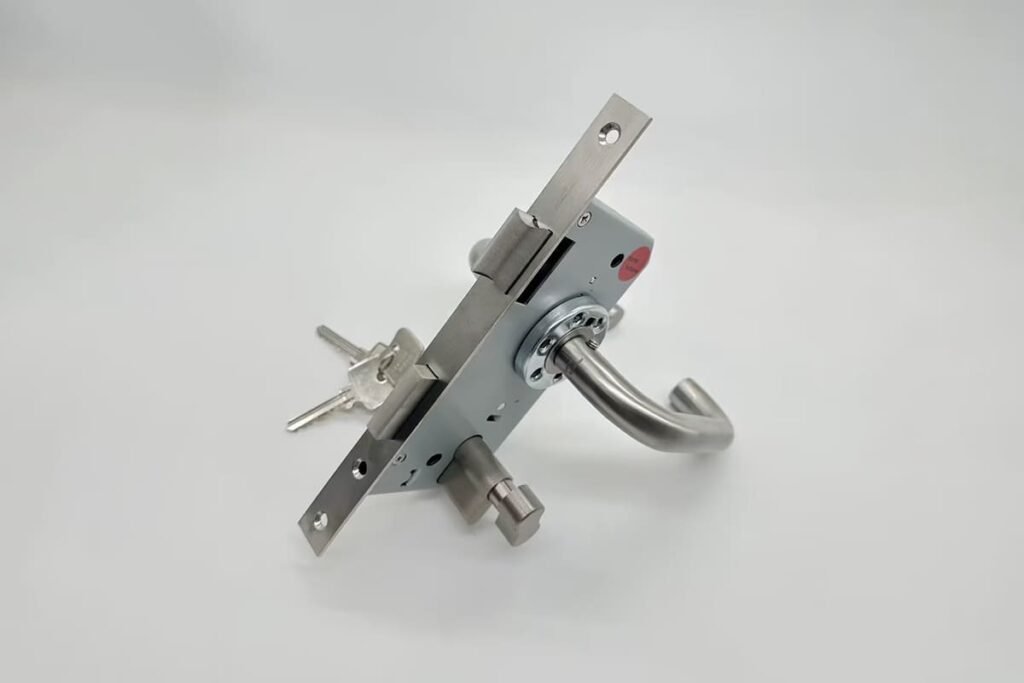
A cylinder lock for a fire door should be selected as part of a full fire-door lockset. The buyer should confirm the cylinder, mortise lock body, spindle, lever handle, escutcheon or plate, door thickness, and fire-rating documentation together before approving production or bulk procurement.
The cylinder is only one part of the tested assembly
In normal door hardware procurement, a buyer may compare cylinders by:
- Cylinder length
- Brass grade
- Key type
- Finish
- Pin quantity
- Price
- Packaging
Those are valid commercial points. However, fire doors add another layer. The lockset must support the function of a fire-rated door assembly2. That means the hardware selection must align with door construction, lock preparation, latch performance, hardware compatibility, and project documentation.
From my factory-side experience, many buyer conversations start like this:
“Please quote a 70 mm euro profile cylinder for a fire door.”
My first response is usually not a price. I ask for the door thickness, mortise lock model, backset, center distance, handle type, required certificate, target market, and whether the cylinder must be supplied with a specific key system. I ask these questions because a 70 mm cylinder may be right for one door and wrong for another.
Key parts that must match
A practical fire door lock configuration usually includes several connected parts:
| Component | What the buyer should confirm | Why it matters |
|---|---|---|
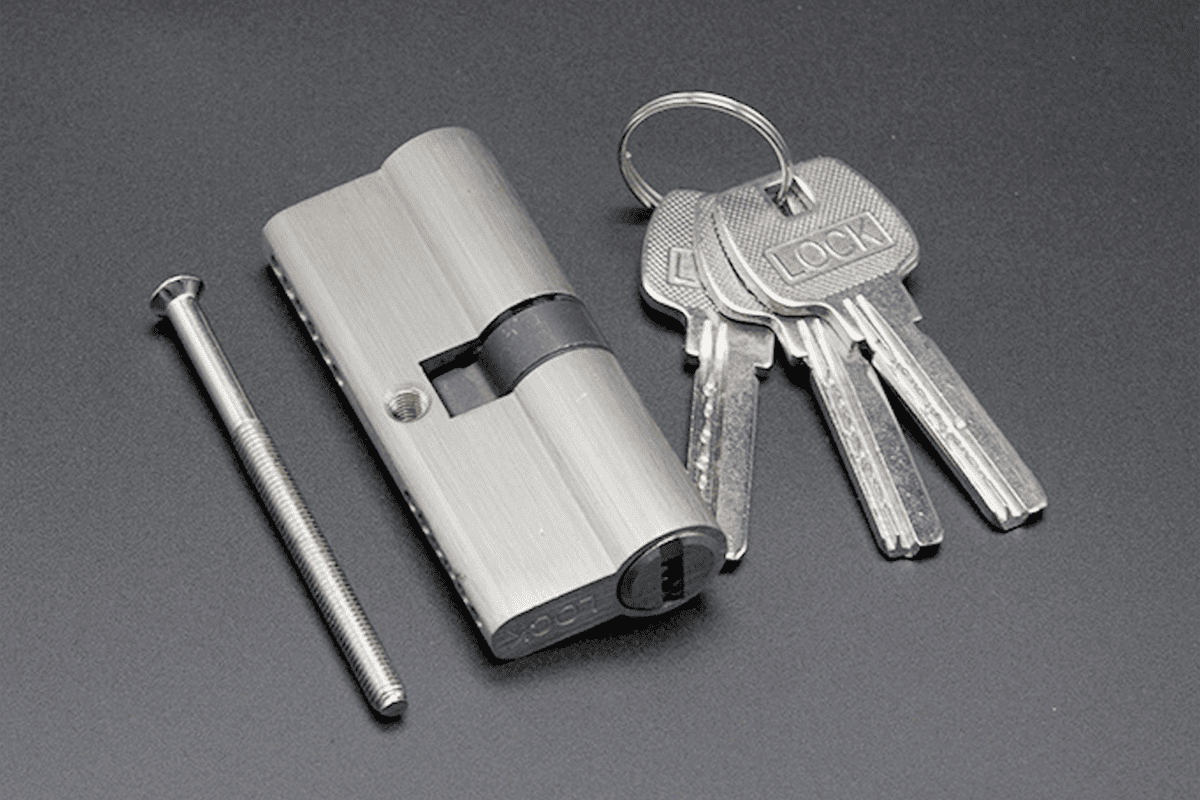
| Cylinder | Length, profile, key type, cam type, finish | It must fit the lock body and door thickness |
| Mortise lock body | Backset, center distance, forend size, latch/deadbolt function | It must match the door preparation |
| Lever handle | Spindle size, spring support, plate or rose type | It must work smoothly with the lock body |
| Door thickness | Actual finished thickness, including panels or cladding | It affects cylinder length and fixing screws |
| Fire documentation | Certificate scope, tested hardware combination, standard reference | It supports project compliance review |
| Finish | Satin stainless steel, PVD, powder coating, etc. | It must match bulk order appearance requirements |
Why this matters in procurement
For door factory buyers, the biggest risk is not always buying a poor-quality cylinder. The bigger risk is buying a cylinder that looks acceptable but does not match the real fire door application.
Common problems include:
Cylinder too short
The key cannot operate smoothly, or the escutcheon does not sit correctly.Cylinder too long
The cylinder projects too far from the door surface, which can affect appearance and security expectations.Wrong cam type
The cylinder does not operate the mortise lock correctly.Wrong lock body dimensions
The door factory must modify the door opening, which increases cost and delays production.Certificate mismatch
The certificate may not cover the specific door type, hardware combination, or rating required by the project3.
My practical rule
I use one simple rule when supporting buyers:
Do not approve the cylinder until the full door lock configuration is confirmed.
This rule saves time. It also reduces disputes between the door factory, hardware supplier, project contractor, and inspection team. A cylinder lock for a fire door must be evaluated as part of a working system.
What Fire Door Requirements Should I Confirm Before Selecting a Cylinder Lock for a Fire Door?
A cylinder lock for a fire door cannot be selected correctly if the door requirements are unclear. If the buyer only confirms the cylinder length and finish, the supplier may quote a product that looks correct but fails during assembly, testing review, or project acceptance.
Before selecting a cylinder lock for a fire door, confirm the door type, fire-rating requirement, door thickness, opening direction, mortise lock dimensions, handle configuration, required standards, and target market. The certificate scope should be checked against the actual door and hardware combination.
Start with the door, not the cylinder
The first step is to understand the fire door itself. In bulk procurement, I usually ask the buyer to send a drawing, specification sheet, or sample door preparation photo. A clear drawing is better than a long message because it reduces misunderstanding.
The buyer should confirm:
- Door material: steel, timber, composite, or other construction
- Door thickness: finished thickness after coating or facing
- Door leaf type: single leaf or double leaf
- Opening direction: left hand, right hand, inward, or outward
- Lock preparation: cut-out size, forend recess, spindle hole, cylinder hole
- Project market: Europe, Middle East, Southeast Asia, or other region
- Required documentation: CE, fire test report, declaration, or project-specific approval
Fire-rating requirements are project-specific
A certificate is not universal. A lock body or cylinder-related lockset may have supporting fire test documentation, but the buyer still needs to check the scope.
For example, documentation may depend on:
| Check point | Buyer question |
|---|---|
| Tested door type | Was the hardware tested on timber, steel, or another door type? |
| Test standard | Does the document reference the standard required by the project? |
| Hardware combination | Was the lock tested with the same lock body, latch, handle, and cylinder type? |
| Rating duration | Does the tested duration match the project requirement? |
| Door configuration | Was it tested on single leaf or double leaf doors? |
| Installation detail | Are intumescent kits, fixing methods, or special accessories required? |
For European-standard fire door locksets, buyers may see references to mechanical and fire performance documents, such as EN12209 for mechanically operated locks and EN1634 fire resistance testing, when applicable. However, I never recommend assuming compliance from the standard name alone. The buyer should review the actual document and confirm that the tested configuration matches the intended use.
Door thickness affects cylinder length
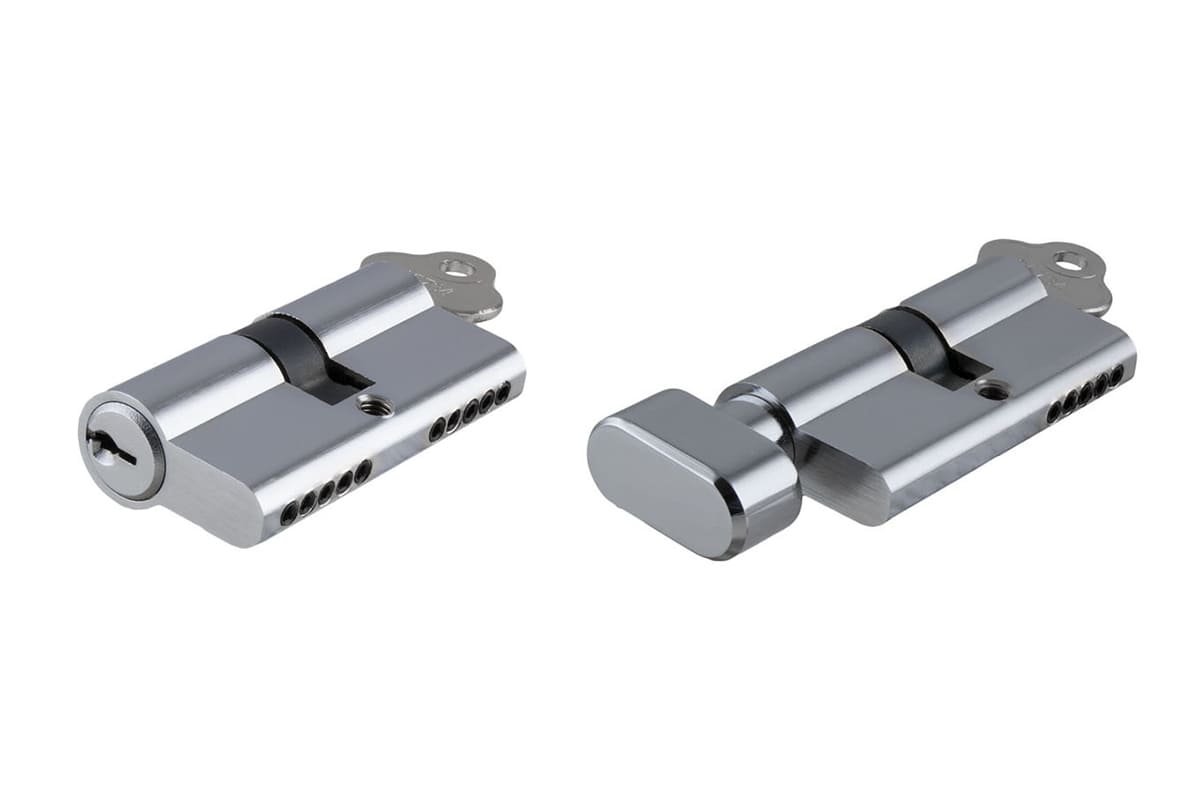
Cylinder length is one of the most common buyer questions. A euro profile cylinder is often described by two side measurements4, such as 30/30 mm, 35/35 mm, 40/40 mm, or other combinations. However, the correct length depends on the full door build-up.
The buyer should consider:
- Finished door thickness
- Lock position in the door leaf
- Escutcheon or plate thickness
- Cylinder projection requirement
- Symmetrical or asymmetrical door design
- Thumbturn or double-key function
A simple example:
| Door condition | Possible cylinder consideration |
|---|---|
| 45 mm door with thin escutcheons | Shorter cylinder may be suitable |
| 55 mm door with thick handle plates | Longer cylinder may be needed |
| Door with offset lock position | Asymmetrical cylinder may be required |
| Door requiring inside thumbturn | Key/thumbturn cylinder may be considered if allowed by project rules |
These examples are general. The actual choice must be confirmed by drawing or sample.
Target market also matters
Different markets may ask for different documentation, finishes, packaging, and lock functions. A wholesaler in the Middle East may focus on durable finish, cost control, and stock flexibility. A European door factory may focus heavily on test documents, dimensional consistency, and standard lockset compatibility. A Southeast Asian project supplier may need balanced cost, corrosion resistance, and fast delivery.
When I support a buyer, I try to clarify the market first. That helps me avoid recommending a cylinder that is commercially attractive but unsuitable for the buyer’s approval process.
How Should I Match the Cylinder Lock for a Fire Door With a European Mortise Lock?
A cylinder lock for a fire door must match the mortise lock body before it can function correctly. If the backset, center distance, follower, forend, cylinder cam, or fixing position is wrong, the door factory may need to adjust the door preparation or replace the hardware.
To match a cylinder lock for a fire door with a European mortise lock, confirm the lock body standard, backset, center distance, forend size, spindle follower, cylinder profile, cam operation, door thickness, and handle set. A common European configuration is 55 mm backset and 72 mm center distance5, but buyers must verify actual drawings.
Common European mortise lock dimensions
In many European-style door hardware projects, buyers ask about a mortise lock with:
- 55 mm backset
- 72 mm center distance
- Euro profile cylinder hole
- Lever handle operation
- Latch and deadbolt function
- Stainless steel or plated forend
This configuration is common, but it is not automatic. The door factory still needs to confirm the exact lock body model and door preparation.
Important dimensions to check
| Dimension | Meaning | Why it matters |
|---|---|---|
| Backset | Distance from forend to handle/cylinder center line | It must match the door cut-out |
| Center distance | Distance between handle spindle and cylinder center | It must match handle plate or escutcheon |
| Forend size | Length and width of visible lock front plate | It must fit the door edge recess |
| Case depth | Total lock body depth inside the door | It must fit inside the door stile |
| Follower size | Spindle hole size, often 8 mm in many applications | It must match the handle spindle |
| Cylinder profile | Euro profile, oval, or other type | It must match the lock body |
| Cam position | Operating cam design and rotation | It must engage the lock mechanism |
Why lock body documentation matters
For fire door procurement, the mortise lock body is often more important than buyers first expect. The lock body controls latch engagement, deadbolt operation, handle movement, and the interface with the cylinder.
If the lock is used for a fire door project, the buyer should ask whether the lock body has relevant mechanical and fire performance documentation for the intended use. For European-style projects, references may include EN12209 mechanical testing or EN1634 fire testing, but only when the specific product has supporting reports or certificates.
I always suggest that buyers request documents early, not after mass production. If the project requires document review, late certificate checks can stop the shipment even when the products are already finished.
Handle set compatibility
The cylinder and mortise lock must also work with the handle set. Many procurement mistakes happen because the lock body and cylinder are confirmed, but the handle plate is not.
The buyer should check:
- Plate or rose design
- Cylinder hole position
- Screw fixing distance
- Spindle size
- Lever return spring requirement
- Escutcheon thickness
- Finish matching
- Fire-door suitability of handle components, where required
A door may use a long plate handle with a 72 mm center distance. Another door may use separate lever roses and cylinder escutcheons. These two designs may need different fixing methods and different cylinder length calculations.
Bulk production needs dimensional consistency
Door factories usually care about repeatability. If a buyer orders 5,000 locksets, small dimensional differences can create assembly problems.
I recommend confirming these points before mass order:
Pre-production sample approval
The buyer should assemble the sample on the real door or a test panel.Drawing confirmation
The supplier and buyer should approve the same technical drawing.Tolerance control
Critical dimensions should be checked during production.Finish standard sample
The supplier should keep a signed finish sample for comparison.Packaging and labeling plan
Bulk locksets should be easy for the door factory to identify during assembly.
A cylinder lock for a fire door may be small, but it affects the full installation workflow. A clear matching process prevents expensive errors.
Which Materials and Finishes Work Best for a Cylinder Lock for a Fire Door?
A cylinder lock for a fire door should be selected with the installation environment in mind. If the buyer chooses only by price, the product may perform poorly in humid, coastal, or high-use conditions. If the buyer over-specifies material, the project may lose price competitiveness.
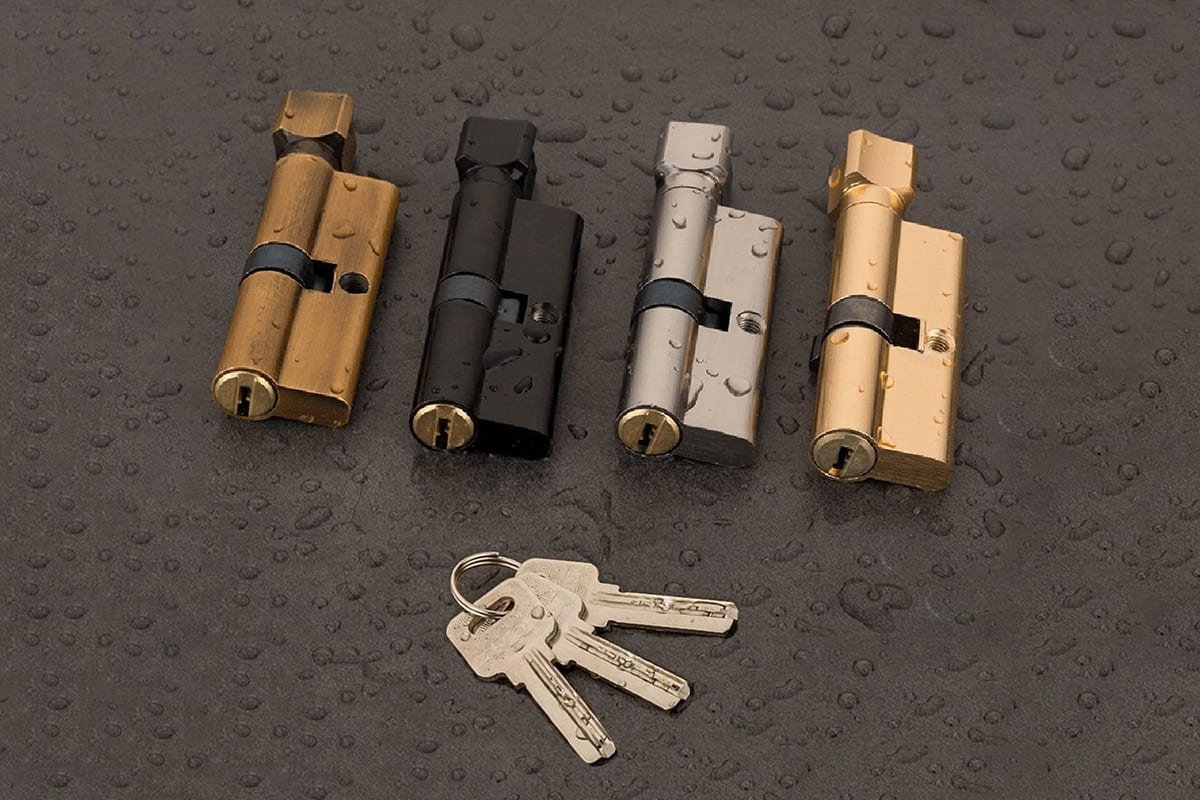
For a cylinder lock for a fire door, brass cylinders are common6, while visible hardware and lock components may use stainless steel finishes. Stainless steel 304 is widely used for regular environments7, while stainless steel 316 should be considered for coastal, humid, or more corrosive applications8.
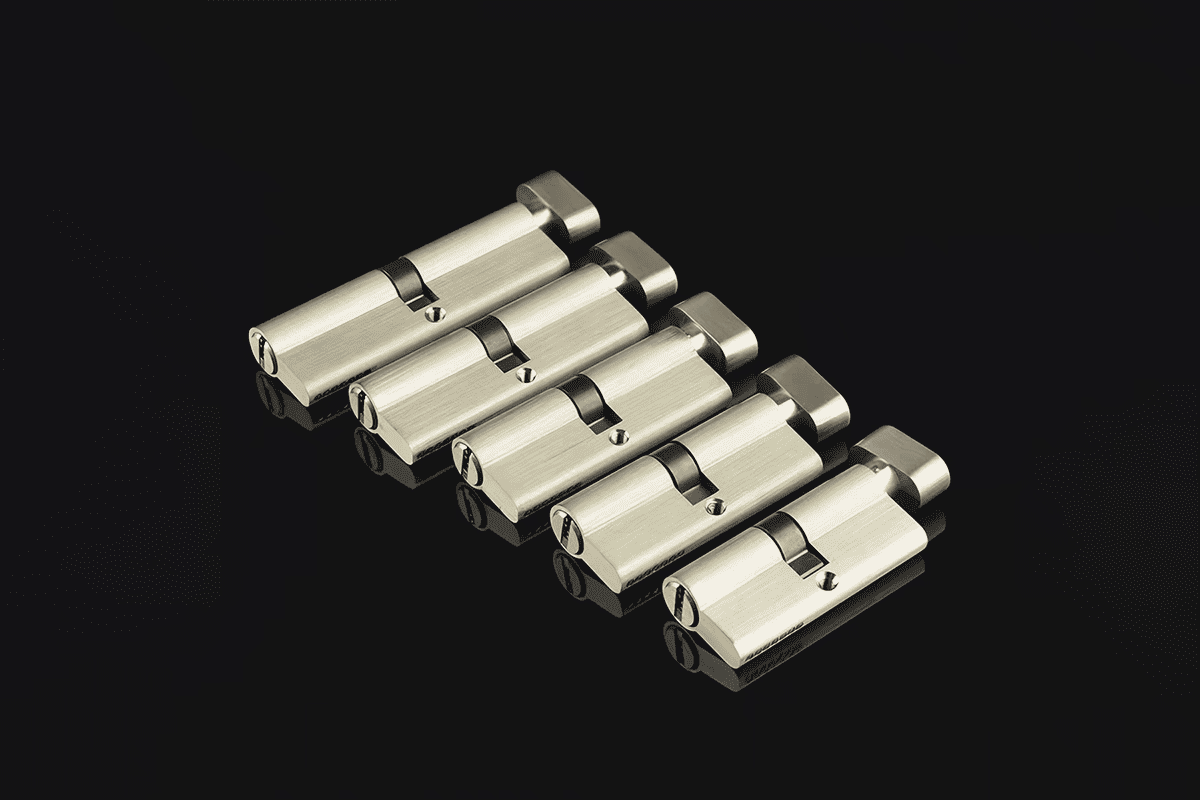
Material selection should follow the environment
Material choice is not only a technical decision. It is also a procurement strategy. Buyers need to balance performance, appearance, market demand, and price.
Common material considerations include:
| Material or finish | Typical use | Buyer consideration |
|---|---|---|
| Brass cylinder body | Euro profile cylinders and key systems | Good machinability and common market acceptance |
| Stainless steel 304 | Lever handles, plates, forends, visible parts | Suitable for many indoor and regular commercial uses |
| Stainless steel 316 | Coastal, humid, or corrosive environments | Better corrosion resistance than 304 in harsher conditions |
| Zinc alloy components | Some handle or accessory designs | Cost-effective, but must match project requirements |
| PVD finish | Decorative or higher wear expectations | Needs finish sample and durability confirmation |
| Satin stainless steel | Common architectural appearance | Requires batch consistency control |
304 vs 316 stainless steel
I often receive this question:
“Should I choose stainless steel 304 or 316?”
My answer depends on the market and installation site.
Stainless steel 304 is a common choice for many regular applications. It is widely used in architectural hardware because it offers a good balance of appearance, corrosion resistance, and cost.
Stainless steel 316 should be considered when the project is near the sea, exposed to high humidity, or located in a more corrosive environment. It usually costs more, but it can reduce corrosion complaints in demanding conditions.
A simple comparison:
| Item | Stainless steel 304 | Stainless steel 316 |
|---|---|---|
| Cost | Lower than 316 | Higher than 304 |
| Corrosion resistance | Good for regular environments | Better for coastal or humid environments |
| Common use | Interior doors, commercial projects, general markets | Coastal projects, hotels near the sea, humid regions |
| Procurement note | Good cost-performance balance | Use when environment justifies added cost |
Finish consistency matters in bulk orders
For wholesalers and door factories, finish consistency is often as important as the base material. If one shipment has different shades of satin stainless steel or PVD color, the customer may reject the visible hardware even if the lock works correctly.
I recommend controlling finish through:
- Signed color samples
- Surface roughness expectations
- Batch inspection under consistent lighting
- Packaging protection to avoid scratches
- Clear acceptance criteria for visible defects
- Separate approval for replacement or repeat orders
At SDH Hardware, our factory-side quality control focuses strongly on surface finish consistency because door manufacturers often assemble locksets in batches. A small color difference can become obvious when multiple doors are installed in the same corridor.
Do not ignore key system requirements
The cylinder material and finish matter, but the keying system also affects buyer satisfaction. Before ordering, buyers should confirm:
- Keyed different or keyed alike
- Master key system requirement
- Construction key requirement
- Number of keys per cylinder
- Key blank control
- Packaging by door number or project zone
For project supply, labeling can be as important as production. A correctly made cylinder can still cause site problems if the keys are mixed during delivery.
Fire door use still controls the decision
Material selection should never override fire-door requirements. A buyer should not choose a cylinder only because it is 316 stainless steel, heavy, or expensive. The full lockset still needs to match the door, lock body, and documentation requirements.
The right material is the one that fits the environment and the approved hardware configuration.
How Should Buyers Verify Certificates Before Bulk Ordering a Cylinder Lock for a Fire Door?
A cylinder lock for a fire door may be supplied with certificates or related documents, but buyers should never assume that one certificate covers every door. If the scope is misunderstood, the project may fail document review even when the product quality is stable.
Buyers should verify certificates by checking the standard, product model, tested door type, hardware combination, fire-rating duration, installation conditions, certificate validity, and issuing body. The certificate should match the actual cylinder, lock body, handle set, and fire door application before bulk ordering.
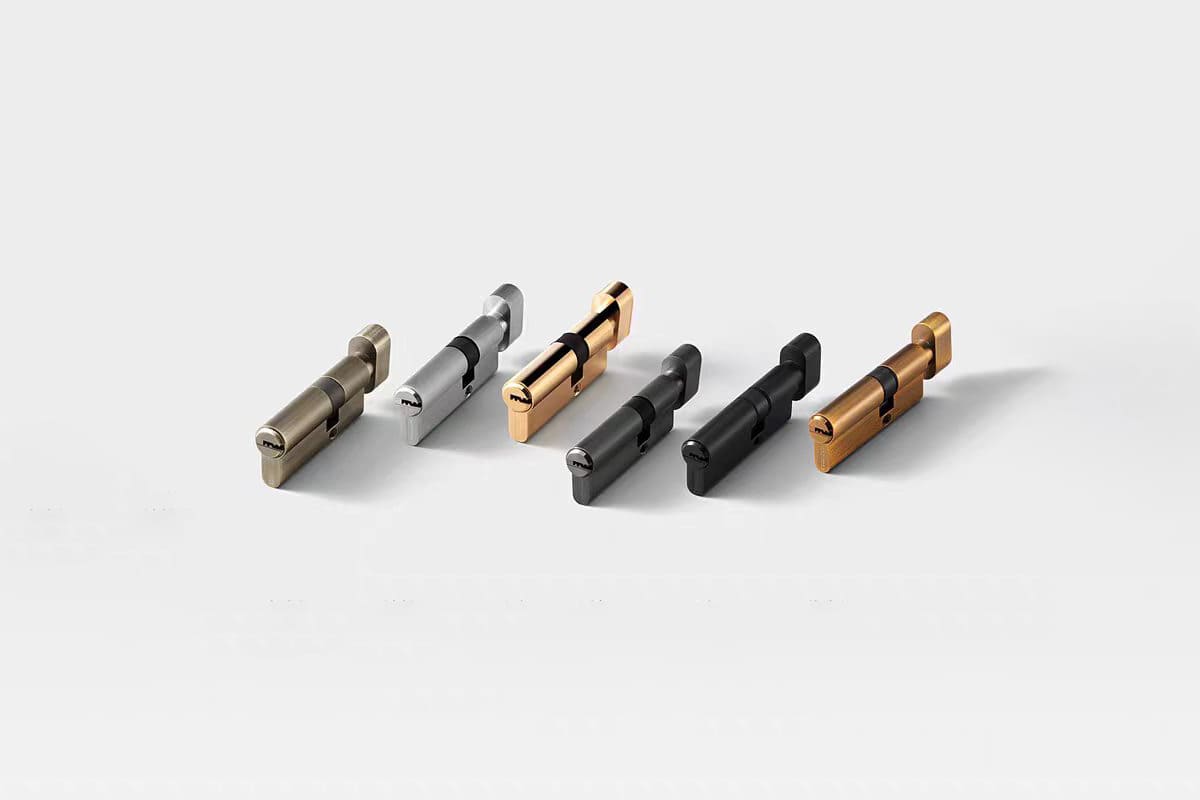
Certificate scope is the key issue
Certificates are documents with boundaries. They may apply only to a specific product, door type, test condition, or hardware combination. That is why I ask buyers to share the project requirement before I recommend a lock configuration.
A certificate check should include:
| Document item | What to verify |
|---|---|
| Product model | Does the model match the quoted lock or lockset? |
| Standard reference | Does it match the project or market requirement? |
| Fire test scope | Does it cover the required door type and rating? |
| Hardware combination | Are the lock body, latch, cylinder, and handle covered? |
| Installation details | Are special fixings, intumescent materials, or limits listed? |
| Validity | Is the certificate current and traceable? |
| Issuer | Is the issuing body acceptable to the project reviewer? |
CE and fire-rated documents should be reviewed carefully
Many global buyers ask for CE certification and fire-rated certification9. These documents can be important for market access and project approval. However, buyers should review them carefully instead of treating them as a simple checkbox.
The buyer should ask:
- Does the document show the exact product family?
- Does the product label match the certificate?
- Does the fire test report include the relevant lock body?
- Does the certificate apply to the door type used in the project?
- Does the required rating match the project specification?
- Are there installation limits that the door factory must follow?
If any answer is unclear, the buyer should ask the supplier for clarification. For application-specific decisions, the buyer should also consult the project’s qualified fire-door professional, certification reviewer, or local authority where required.
Avoid these procurement mistakes
I have seen several common mistakes in fire door hardware buying:
Buying only from a catalog photo
A photo does not confirm dimensions or certificate scope.Assuming all fire-rated locks are interchangeable
Different lock bodies and door types may have different test coverage.Confirming price before confirming documents
A low price is not useful if the product cannot pass project review.Ignoring installation accessories
Some configurations may require specific fixings or protective materials10.Ordering bulk quantity before sample assembly
The buyer should test fit the hardware before mass production.
A practical certificate review workflow
I suggest a simple workflow for professional buyers:
Collect the project specification
Include door type, required rating, market, and standards.Confirm the lockset configuration
Include cylinder, mortise lock body, handle, accessories, and finish.Request technical drawings
Check all key dimensions against the door preparation.Request certificates and reports
Review product model, scope, and test details.Assemble samples
Test the hardware on the real door or approved sample.Get written approval
Confirm drawings, samples, documents, and packaging before production.Inspect before shipment
Check dimensions, finish, operation, labeling, and document copies.
This process is not complicated, but it requires discipline. It protects the buyer, supplier, and final project.
Supplier selection also matters
A qualified supplier should not only quote quickly. The supplier should ask technical questions and help the buyer avoid mismatches.
When evaluating a supplier, buyers should look for:
- Factory production experience
- Stable mortise lock and cylinder manufacturing capability
- Clear technical drawings
- Batch quality control
- Finish consistency management
- ODM customization support
- Valid documents available for review
- Experience with target markets
- Practical communication before bulk order
Conclusion
Choosing the right cylinder lock for a fire door means checking the complete lockset, not only the cylinder price, material, or length. I recommend confirming the door thickness, mortise lock dimensions, handle set, cylinder profile, finish, environment, and certificate scope before bulk ordering. This process reduces assembly errors, document risks, and after-sales disputes. If you need support matching cylinders, euro standard mortise locks, lever handles, and fire-door hardware documentation for bulk supply, you can contact SDH Hardware for a practical configuration review.
"Fire Doors and NFPA 80 FAQs", https://www.nfpa.org/news-blogs-and-articles/blogs/2025/04/11/fire-doors-faqs. Institutional guidance on fire-door assemblies states that doors, frames, glazing, and hardware are evaluated as components of a rated assembly, supporting the view that lockset compatibility and certification scope can affect approval; the source provides general compliance context rather than evidence about a particular project review. Evidence role: general_support; source type: institution. Supports: Fire-door hardware is assessed as part of a complete assembly, and deviations from tested or listed components can affect acceptance.. Scope note: Contextual support; it does not prove that every mismatch will lead to rejection. ↩
"Important Tips for Specifying Fire Door Assemblies", https://steeldoor.org/tips-for-specifying-fire-door-assemblies/. Fire-door standards and guidance describe latching and other hardware as functional components of a fire-door assembly, supporting the claim that a lockset must be selected for its role in maintaining the assembly’s rated performance. Evidence role: mechanism; source type: institution. Supports: Fire-door hardware, including latching and locking components, contributes to the operation of a rated fire-door assembly.. Scope note: The support is about fire-door assemblies generally, not about one specific cylinder model. ↩
"Doors, Windows and Related Hardware Application Guide", https://www.ul.com/thecodeauthority/knowledge/ul-fire-rated-doors-guide. Guidance on fire-door testing and certification explains that fire-resistance evidence is tied to the tested door construction, hardware, installation conditions, and rating duration, supporting the claim that a certificate may not apply universally. Evidence role: general_support; source type: institution. Supports: Fire-resistance test reports and certification documents define the tested specimen, configuration, and applicable scope.. Scope note: Contextual support; applicability still depends on the exact certificate and assessment report. ↩
"What Is the Difference Between a 30/30 and 35/35 Euro ...", https://akada-hardware.com/what-is-the-difference-between-a-30-30-and-35-35-euro-cylinder-and-which-size-do-i-need/. Technical guidance for profile cylinders describes cylinder length as a pair of side measurements, supporting the article’s statement that euro profile cylinders are commonly specified by two dimensions. Evidence role: definition; source type: institution. Supports: Euro profile cylinder sizing is commonly expressed using measurements from the fixing screw or cam area to each cylinder end.. Scope note: The source should be used for the measurement convention, not as proof that the listed example sizes are suitable for any particular fire door. ↩
"55mm Backset / 72mm PZ CE Door Sash Lock Euro Profile ...", https://www.ebay.com/itm/Mortise-Lock-55mm-Backset-72mm-PZ-CE-Door-Sash-Lock-Euro-Profile-Case-/223326671630?_ul=IN. European lock specification references and standards-derived product dimension tables identify 72 mm handle-to-cylinder spacing and 55 mm backset as common mortise-lock dimensions, supporting the article’s dimensional example. Evidence role: general_support; source type: institution. Supports: European mortise lock specifications commonly include 72 mm handle-to-cylinder spacing and standard backset options including 55 mm.. Scope note: The evidence supports common usage, not universal compatibility across all European fire-door projects. ↩
"Which Brass Alloy Is Used in Lock Cylinder?", https://www.keymanlock.com/which-brass-alloy-is-used-in-lock-cylinder.html. Materials and lock-hardware references describe brass as a common lock-cylinder material, with properties such as machinability and corrosion resistance that support its widespread use in cylinder bodies. Evidence role: general_support; source type: research. Supports: Brass is a commonly used material for lock cylinders because of its machinability and corrosion resistance.. Scope note: The evidence supports general material use, not the fire performance of a specific brass cylinder. ↩
"SAE 304 stainless steel", https://en.wikipedia.org/wiki/SAE_304_stainless_steel. Stainless-steel industry and materials references identify grade 304 as a widely used general-purpose stainless steel with corrosion resistance suitable for many ordinary environments, supporting the article’s material-selection claim. Evidence role: general_support; source type: institution. Supports: Grade 304 stainless steel is widely used as a general-purpose stainless steel with corrosion resistance suitable for many normal environments.. Scope note: The support is general materials guidance and does not address a specific hardware finish or site exposure. ↩
"Marine grade stainless", https://en.wikipedia.org/wiki/Marine_grade_stainless. Materials references explain that molybdenum-bearing grade 316 stainless steel has greater resistance to chloride-induced corrosion than grade 304, supporting its use as a consideration for coastal or more corrosive environments. Evidence role: mechanism; source type: institution. Supports: Grade 316 stainless steel has improved resistance to chloride-related corrosion compared with 304, making it relevant for coastal or corrosive exposure.. Scope note: The source supports relative corrosion resistance, not a guarantee of corrosion-free performance in every installation. ↩
"Frequently asked questions", https://single-market-economy.ec.europa.eu/sectors/construction/construction-products-regulation-cpr/frequently-asked-questions_en. European Commission guidance on CE marking under the Construction Products Regulation explains that covered construction products require declared performance and CE marking for placement on the EU market, supporting the article’s discussion of documentation in procurement. Evidence role: historical_context; source type: government. Supports: EU CE marking and construction-product documentation may be required where a construction product is covered by applicable EU rules and harmonised standards.. Scope note: The regulatory relevance depends on the product category, applicable harmonised standard, and target market. ↩
"Intumescent Lock Protection", https://www.firesealsdirect.co.uk/fire-door-hardware/intumescent-lock-protection/?srsltid=AfmBOorFPXovRB_ulDspWq4uIfJM0bJUYQrKPACS2ORE-VKOWYlQ--Qv. Fire-door installation guidance notes that ironmongery may require specified fixings and intumescent protection where these formed part of the tested or assessed construction, supporting the article’s statement about installation accessories. Evidence role: mechanism; source type: institution. Supports: Certain fire-door hardware installations require specified fixings or intumescent protection to maintain the tested fire performance.. Scope note: The evidence is conditional; required accessories depend on the tested assembly and installation instructions. ↩