The History of Hinges and Their Uses: What Should Door Hardware Buyers Know?
The history of hinges can look like decorative trivia, but buyers face a practical problem: a poor hinge choice can make a good door feel cheap. That problem grows when bulk orders, finishes, and installation needs do not match. I use hinge history as a simple lens for better supplier and product decisions.
The history of hinges shows how simple rotating connectors evolved into application-specific door hardware. Modern hinges are selected by door weight, door material, installation method, traffic level, appearance, closing control, maintenance needs, finish consistency, and procurement risk1. For B2B buyers, hinge history is useful because it explains why one hinge type cannot fit every door2.
When I speak with door factories and hardware wholesalers, I rarely start with “which hinge is cheapest?” I usually start with the door. The door explains the hinge. That is why the past matters: every major hinge development answered a real installation or performance problem.
How Does the History of Hinges Explain Modern Door Hardware Selection?
Many buyers see hinges as basic metal parts. That creates a problem. If the hinge is treated as interchangeable, the door may sag, squeak, close poorly, or look inconsistent with the product line. The history of hinges gives buyers a better way to match function with application.
The history of hinges explains modern selection because hinge designs changed to solve practical door problems: rotation, load support, smooth movement, cleaner appearance, faster installation, self-closing, removability, and reduced maintenance. A buyer should read hinge history as a map of functional needs, not as a long list of dates.
From simple rotation to controlled performance
Early hinge-like devices were mainly about one idea: allowing a panel to rotate around a fixed point3. Over time, that simple function became more demanding. Doors became heavier. Buildings became more specialized. Buyers expected better finishes. Installers needed faster fitting. End users wanted quiet, smooth, and stable operation.
I do not present myself as an archaeology expert, so I treat ancient origin claims carefully. Some sources discuss early pivot systems, early metal hinges, and historical examples from ancient civilizations.4 Before publishing specific dates or origin claims, I would verify them with reliable historical references. For hardware procurement, however, the exact date is less important than the functional pattern.
The pattern is clear:
- Pivot-style connectors answered the basic need for rotation.
- Forged and cast metal hinges improved strength and durability.
- Butt hinges and flat hinges became practical for common swing doors.
- Ball bearing hinges improved smoothness and load distribution.
- Concealed hinges supported cleaner door appearance and premium design.
- Spring hinges and self-closing hinges added closing control.
- Lift-off and maintenance-friendly hinges improved service access.
Why this matters for B2B buyers
In factory-side discussions, I often hear buyers ask:
- “Can this hinge support this door weight?”
- “Will the finish stay consistent across a full container order?”
- “Is this suitable for wooden doors, metal doors, or fire-rated doors?”
- “Can my installers fit it easily?”
- “Should my brand sell standard hinges, ball bearing hinges, concealed hinges, or spring hinges?”
These are not small questions. They affect after-sales claims, project reputation, product positioning, and repeat orders.
| Selection factor | Why it matters | Common hinge direction |
|---|---|---|
| Door weight | Prevents sagging and poor swing | Heavier-gauge butt hinge or ball bearing hinge |
| Door style | Protects appearance and fit | Concealed hinge for minimalist designs |
| Traffic level | Reduces wear and noise complaints | Ball bearing hinge or durable commercial hinge |
| Closing control | Supports safety and convenience | Spring hinge or hydraulic self-closing hinge |
| Maintenance access | Reduces service time | Lift-off hinge or removable design |
| Finish requirement | Keeps batch appearance consistent | Verified supplier finish control |
The key lesson is simple. The history of hinges shows that hinge types exist because doors are different. A light residential wooden door, a high-traffic hotel room door, a premium flush door, and a utility access door should not automatically use the same hinge.
What Are the Main Stages in the History of Hinges and Their Uses?
A timeline can become boring if it does not help a buyer choose. The problem is that many articles list old hinge facts without connecting them to modern door hardware. The history of hinges becomes useful only when each stage explains a current use.
The main stages in hinge development move from basic pivot movement to metal strength, standardized door installation, smoother rotation, hidden appearance, and controlled closing. Each stage remains visible in modern architectural door hardware, from standard butt hinges to ball bearing hinges, concealed hinges, and self-closing hinge systems.
Stage 1: Pivot movement
The earliest hinge concept was not about branding, finish, or certification. It was about movement. A door, gate, or panel needed to rotate around a point. Pivot-style solutions solved that basic need.
In modern door hardware, the same principle remains. Even when a hinge looks advanced, its purpose begins with controlled rotation.
Stage 2: Stronger metal construction
As metalworking developed, hinges became stronger, more durable, and more standardized.5 This helped doors carry more weight and survive repeated use.
For buyers, this stage explains why material and thickness still matter. Stainless steel, steel, brass, and zinc alloy components each have different uses depending on the product category, market expectation, and cost target.6
Stage 3: Standardized butt and flat hinges
Butt hinges became widely used because they are practical. They are familiar to installers, suitable for many swing doors, and easy to include in door production planning.
In B2B procurement, butt hinges remain important because they support:
- High-volume door manufacturing
- Standard packaging and inventory
- Multiple surface finishes
- Cost-sensitive project requirements
- Simple replacement in many markets
Stage 4: Smoother movement with bearings
Ball bearing hinges answered a common problem: friction. When doors are heavier or used frequently, plain knuckle movement may not be enough. Ball bearings can help the hinge operate more smoothly and reduce wear, depending on hinge size, material, installation accuracy, and door load.7
I avoid saying “ball bearing is always better.” That is not how real procurement works. A simple hinge may be enough for a light door in a cost-sensitive market. A ball bearing hinge is often selected when the buyer wants a smoother feel, stronger product positioning, or better suitability for higher-use doors.
Stage 5: Cleaner appearance and concealed installation
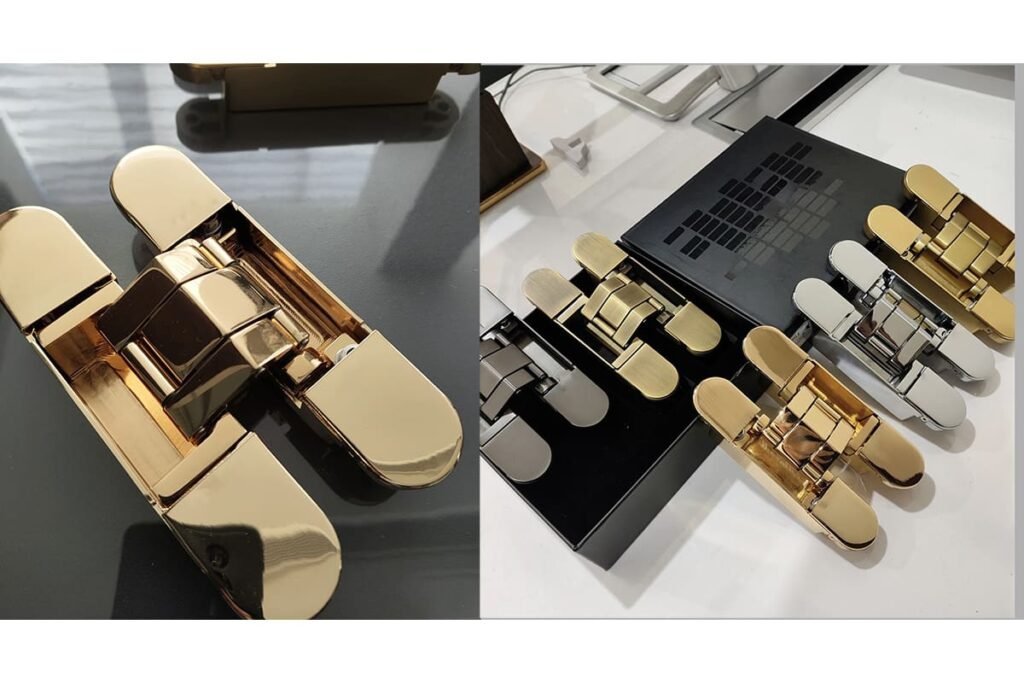
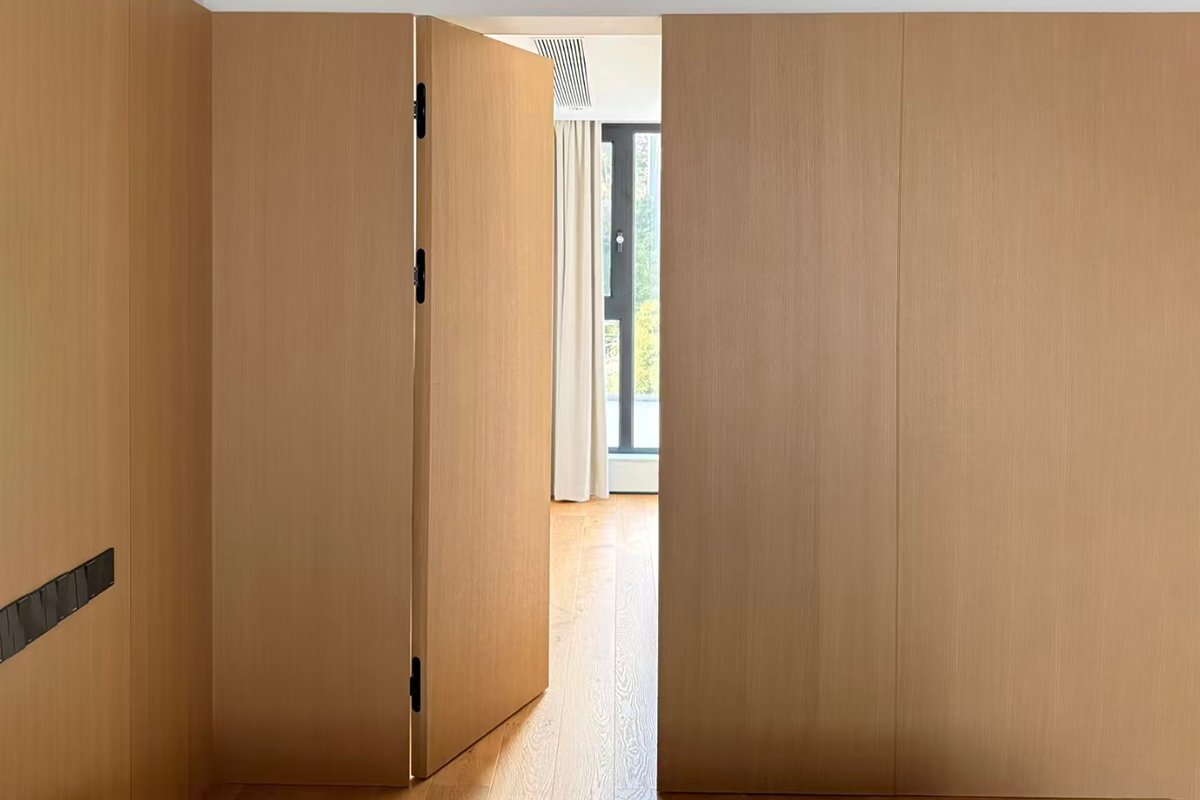
Concealed hinges developed because some doors need a cleaner look. In premium interiors, visible hinge barrels may not match the design. Concealed door hinges help create a minimalist appearance when the door, frame, and installation method support that design.
This choice is not only aesthetic. It affects:
- Door and frame machining
- Installation skill
- Adjustment requirements
- Cost positioning
- Packaging protection
- After-sales explanation
Stage 6: Closing control and special functions
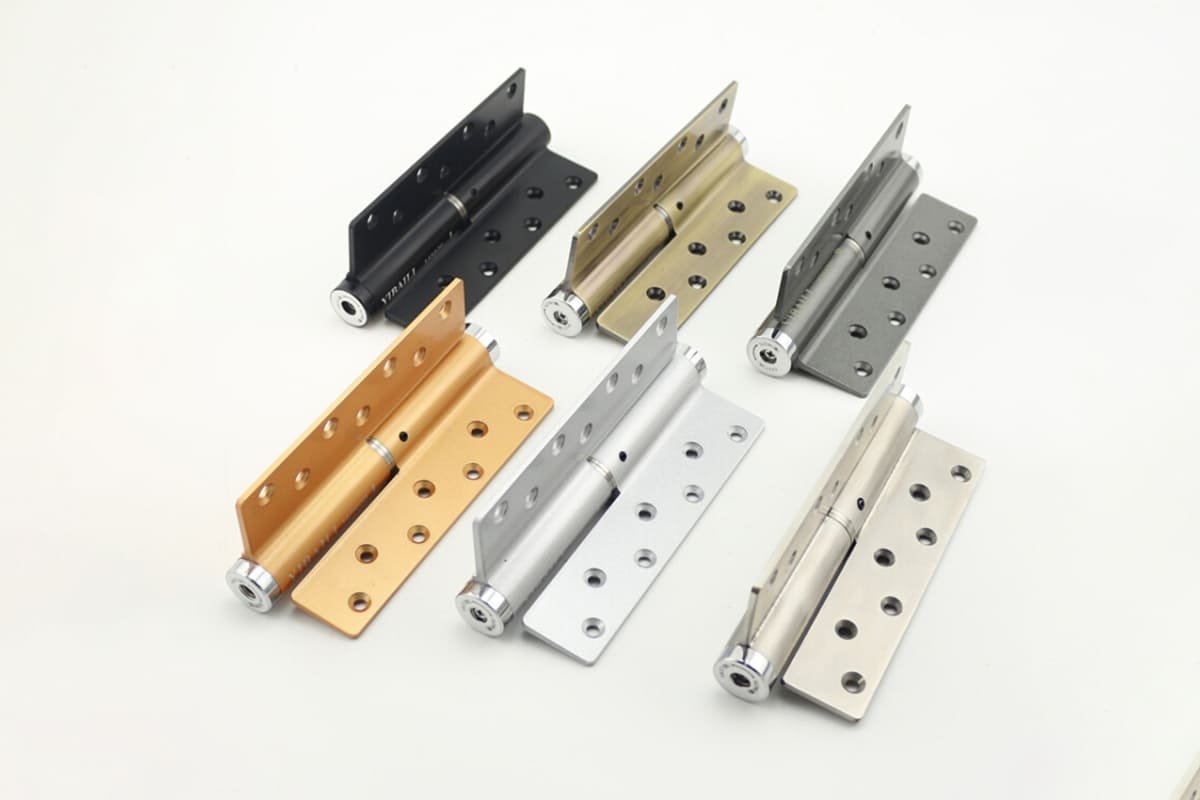
Spring hinges, hydraulic self-closing hinges, lift-off hinges, and oil-free hinges show how hinge design moved beyond rotation. Some doors need controlled closing. Some need easy removal. Some environments need cleaner operation and lower visible lubrication.
This is the modern procurement lesson: hinges are now function-specific components, not generic accessories.
Which Modern Hinge Uses Come Directly from the History of Hinges?
A buyer may know product names but still choose poorly. That is the risk. A product list does not explain application logic. The history of hinges helps buyers understand why each modern hinge type exists and where it is commonly used.
Modern hinge uses come from specific performance needs. Standard butt hinges support common swing doors. Ball bearing hinges improve smoothness for heavier or higher-use doors. Concealed hinges support minimalist appearance. Spring and self-closing hinges control closing. Lift-off hinges improve maintenance access. Oil-free hinges support cleaner-use environments.
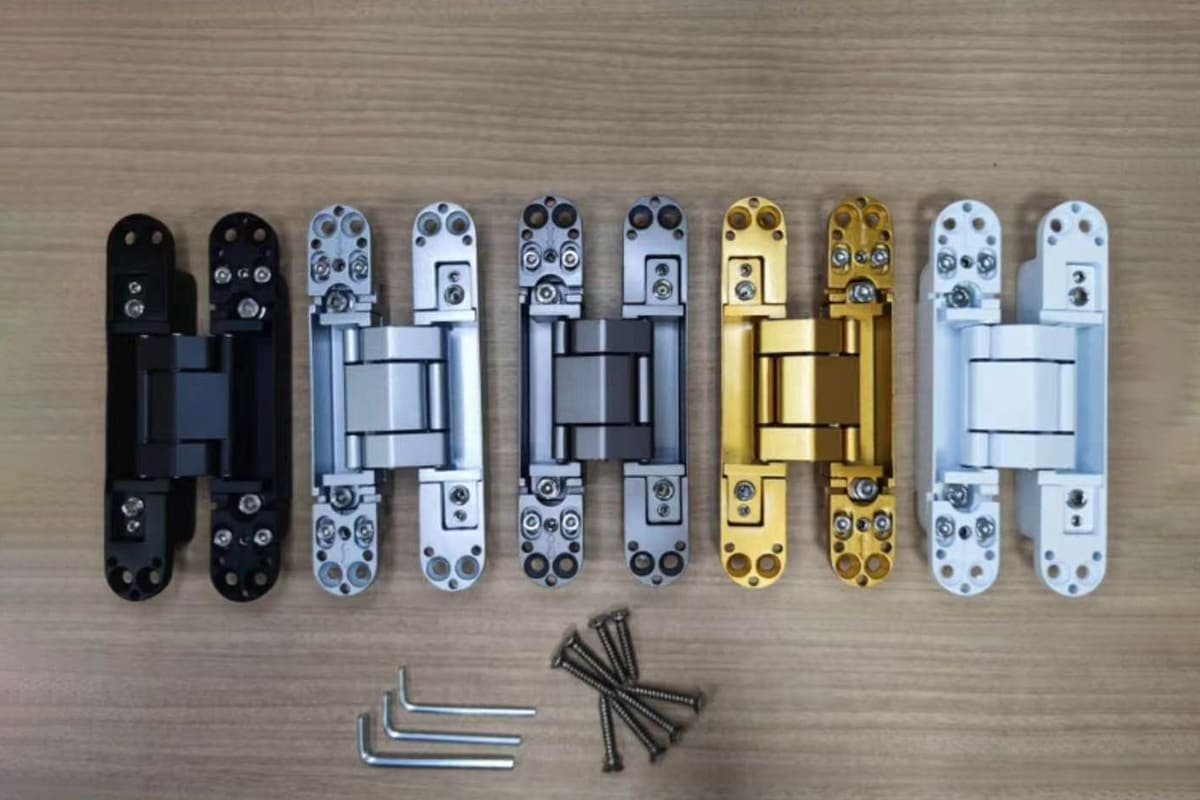
Common architectural hinge types and application logic
Below is a practical classification that I use when discussing product-line planning with door factories and wholesalers.
| Hinge type | Common use | Main buyer reason | Procurement caution |
|---|---|---|---|
| Standard butt hinge | Basic wooden or metal swing doors | Cost-effective and familiar | Check thickness, pin, screw holes, and finish |
| Ball bearing hinge | Interior wooden doors, heavier doors, high-use doors | Smoother operation and better feel | Match size and load to door specification |
| Concealed hinge | Premium flush or minimalist doors | Hidden appearance and design value | Requires accurate machining and installation |
| Spring hinge | Doors needing automatic return | Simple self-closing function | Check closing force and local requirements |
| Hydraulic self-closing hinge | Controlled closing applications | Softer, more controlled movement | Application testing is important |
| Lift-off hinge | Doors needing frequent removal | Easier service and access | Confirm hand direction and clearance |
| Oil-free hinge | Cleaner environments | Lower visible lubrication needs | Verify material and operating conditions |
Standard butt hinges
Standard butt hinges are still widely used because they solve the basic door swing problem well. They are especially important for door factories that need predictable installation and stable sourcing.
Buyers should check:
- Leaf thickness
- Hinge size
- Pin design
- Screw hole pattern
- Surface finish
- Packaging method
- Salt spray or corrosion-related documentation, if required by the market
The history of hinges shows why butt hinges stayed relevant. They are simple, efficient, and adaptable.
Ball bearing hinges
Ball bearing hinges are often selected when the buyer wants smoother door movement. In many markets, they also help position a door set as higher quality. A hardware brand may include both standard and ball bearing options to serve different price levels.
However, buyers should avoid oversimplifying. Smooth performance depends on several factors:
- Door weight and height
- Hinge size and quantity
- Material and bearing quality
- Frame alignment
- Installation accuracy
- Frequency of use
A poor installation can make even a good hinge perform badly.
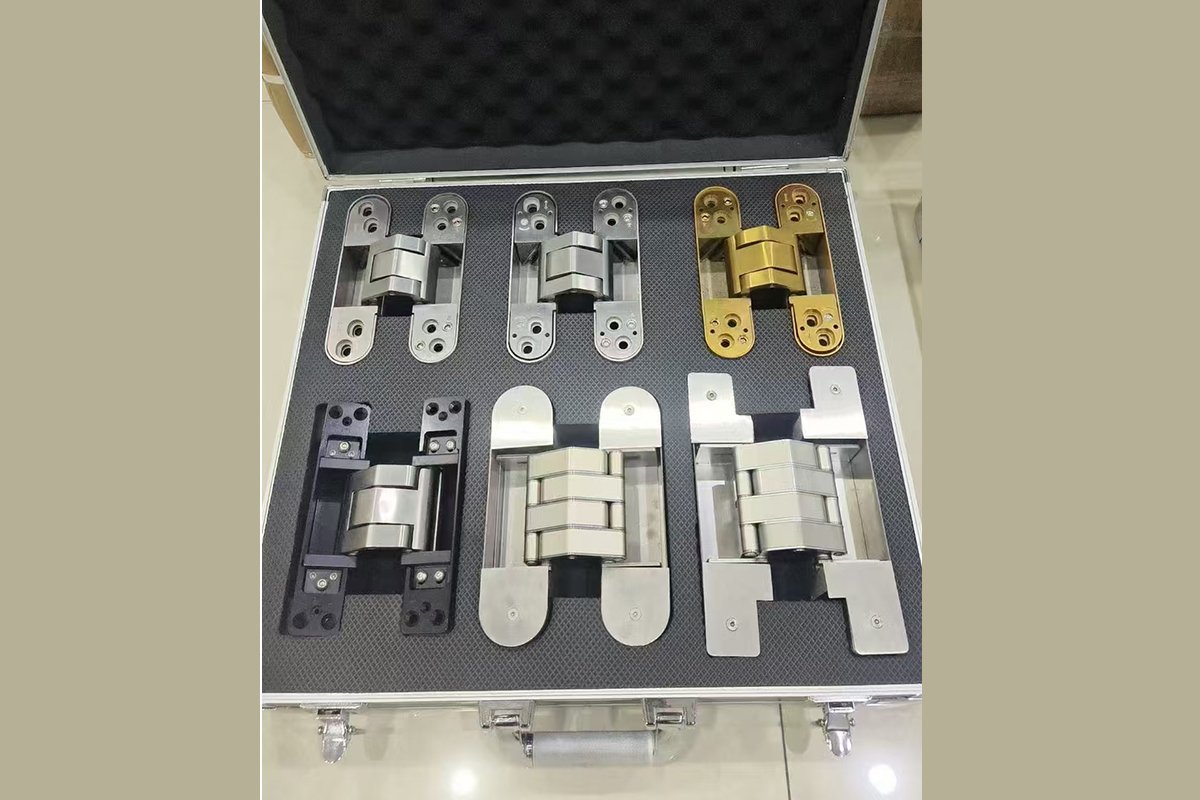
Concealed hinges
Concealed hinges are popular in premium projects because they hide the hardware when the door is closed. They support clean interior design and modern architectural style.
But they require more planning than standard hinges. Door factories need to confirm:
- Milling depth
- Door thickness
- Frame structure
- Adjustment range
- Opening angle
- Load capacity guidance from the supplier
- Finish or visible cover requirements
This is where supplier communication matters. I have seen buyers select a concealed hinge based only on appearance, then discover that the door structure cannot accept it easily. That creates cost and delivery pressure.
Spring and self-closing hinges
Spring hinges and hydraulic self-closing hinges answer a different need: closing control. They are commonly used where a door should return to a closed position, depending on the application and local requirements.
For fire-rated doors or regulated building applications, I recommend qualified professional evaluation. Buyers should verify certificates, test reports, and local code suitability before making project claims. A hinge alone does not make a complete fire-door assembly compliant.8
How Should Buyers Use the History of Hinges to Avoid Procurement Mistakes?
Price pressure is real. I understand it because bulk hardware buyers must protect margins. The problem appears when price becomes the only standard. The history of hinges shows that each hinge type developed for a reason, so wrong substitution can increase total cost.
Buyers should use hinge history as a procurement checklist. They should define the door type, door weight, installation method, usage frequency, appearance requirement, closing function, maintenance need, finish standard, certification documents, and supplier consistency before comparing prices. This reduces mismatch, after-sales claims, and weak product positioning.
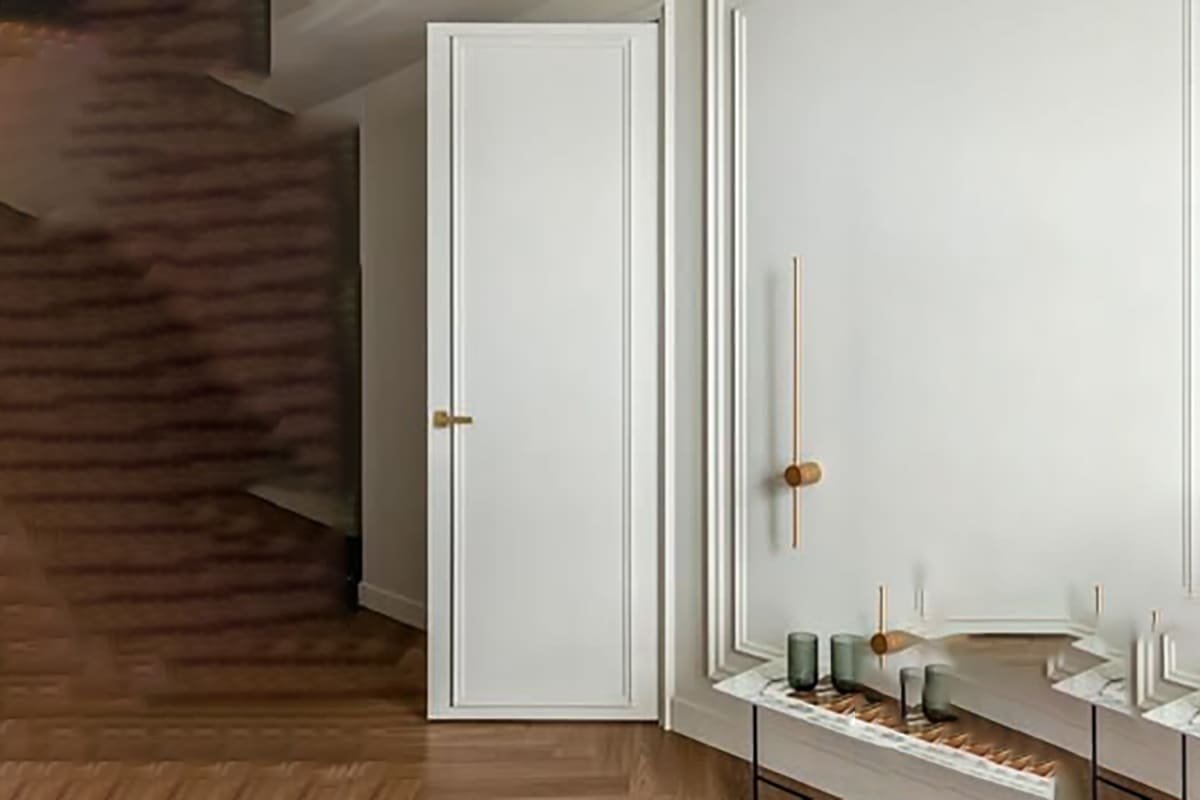
Mistake 1: Treating all hinges as interchangeable
This is the most common mistake. A hinge may look similar in a photo, but its performance can differ through:
- Material grade
- Leaf thickness
- Pin diameter
- Bearing design
- Hole accuracy
- Finish process
- Packaging protection
- Batch consistency
For a wholesaler, inconsistent finish may lead to customer complaints. For a door factory, hole position deviation can slow assembly. For a brand operator, poor smoothness can weaken the product story.
Mistake 2: Ignoring the door structure
A hinge is part of a system. The door leaf, frame, screws, installation method, and site conditions all affect performance.
Before confirming a hinge, buyers should ask:
- Is the door wooden, steel, aluminum, or composite?
- What is the door height, width, and thickness?
- What is the estimated door weight?
- How many hinges are required per door?
- Is the door used in a low-traffic or high-traffic area?
- Does the door need self-closing?
- Is a visible hinge acceptable?
- Is easy removal required?
These questions sound basic, but they prevent expensive mistakes.
Mistake 3: Overlooking finish consistency
In bulk orders, finish consistency is not a cosmetic detail. It affects the whole product line. If hinges, lever handles, mortise locks, and cylinders have mismatched finishes, the final door set looks unprofessional.
As a manufacturer, I pay close attention to finish control because buyers often compare hardware as a complete series. Common finish considerations include:
| Finish factor | Why buyers should check it |
|---|---|
| Color tone | Keeps hinges consistent with handles and locks |
| Surface texture | Affects perceived quality |
| Batch variation | Reduces complaints in bulk orders |
| Packaging protection | Prevents scratches during shipping |
| Market preference | Supports regional sales positioning |
Mistake 4: Not verifying documents
For markets that require CE documents, fire-rated documentation, or other compliance materials, buyers should verify the actual certificate scope, validity, product model coverage, and issuing body9. I recommend treating documents as procurement evidence that must be checked, not as marketing decoration.
For fire-door applications, buyers should be especially careful. The hinge must be considered as part of the complete door assembly and local regulation environment. Professional evaluation is important.
Mistake 5: Building a weak product line
A good hardware product line usually includes more than one hinge category. This does not mean a buyer needs every type. It means the selection should match the market.
A practical hinge product line may include:
- Standard butt hinges for cost-effective door sets
- Ball bearing hinges for smoother operation and stronger value positioning
- Concealed hinges for premium minimalist doors
- Spring hinges for simple self-closing needs
- Hydraulic self-closing hinges for controlled closing applications
- Lift-off hinges for service-friendly applications
The right mix depends on the buyer’s customers, door types, price range, and regional standards.
What Specifications Matter Most When Comparing Hinge Suppliers?
A supplier can show a good sample, but bulk supply is the real test. The problem is that buyers may approve a hinge based on appearance alone. That can lead to unstable quality, finish variation, weak packaging, or delivery problems when orders increase.
The most important hinge supplier specifications include material, size, thickness, load guidance, bearing or pin structure, finish standard, screw hole accuracy, packaging method, inspection process, certification documents, customization capability, and delivery stability. Buyers should compare both product specification and factory control ability.
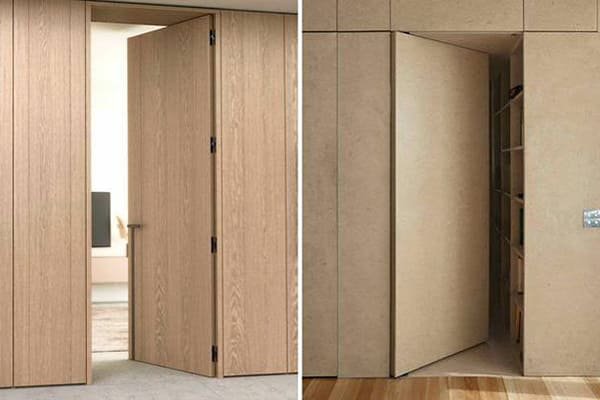
Product specifications to confirm
When I discuss hinge specifications with door factories, I prefer a clear technical sheet. It reduces misunderstanding and protects both sides.
Key items include:
| Specification | What to confirm |
|---|---|
| Hinge size | Height, width, opening width, and thickness |
| Material | Stainless steel, steel, brass, zinc alloy, or other material |
| Pin structure | Fixed pin, loose pin, lift-off, or security pin |
| Bearing design | Plain bearing or ball bearing |
| Hole pattern | Quantity, position, countersink, and screw type |
| Finish | SS, PSS, SSS, AB, AC, PVD, powder coating, or custom finish |
| Door application | Wooden door, metal door, fire-rated assembly, or special door |
| Packaging | Inner box, polybag, screws, carton strength, pallet method |
| Documents | Test reports or certificates, if required and applicable |
Factory-side controls to evaluate
A hinge supplier is not only a seller. For B2B buyers, the supplier should control production and consistency. That is especially important for repeat orders.
Useful evaluation points include:
- Raw material inspection
- Stamping or machining control
- Polishing consistency
- Plating or surface treatment control
- Assembly inspection
- Opening and closing feel inspection
- Visual finish inspection
- Carton labeling and packing control
- Batch traceability
- Delivery schedule management
At SDH Hardware, my perspective comes from factory-side work with architectural door hardware such as butt hinges, concealed hinges, mortise locks, lever handles, and lock cylinders. I still advise buyers to verify product samples, inspection standards, and certificates before placing large orders. A responsible supplier should welcome that process.
Customization and regional needs
Different markets often ask for different hinge details. Middle East buyers may focus heavily on durable finishes and competitive bulk pricing. European buyers may ask more about documentation, standard dimensions, and compliance evidence. Southeast Asian buyers may need cost-effective product lines with stable supply.
Customization may include:
- Surface finish
- Hinge size
- Thickness
- Screw configuration
- Packaging design
- Brand marking
- Accessory combination
- Product-line matching with locks and handles
The history of hinges teaches one final supplier lesson: as hinge uses became more specialized, supplier selection became more important. A buyer needs a partner that understands both product function and bulk supply risk.
Frequently Asked Questions
What is the main purpose of a hinge?
A hinge allows a door, panel, or gate to rotate around a fixed axis while staying attached to a frame or support. In architectural door hardware, the hinge also helps manage load, alignment, smoothness, appearance, closing behavior, and long-term service performance.
Are ball bearing hinges always better than standard butt hinges?
Ball bearing hinges are often selected for smoother movement and higher-use doors, but they are not always necessary. The best choice depends on door weight, usage frequency, budget, installation quality, and market positioning. A standard butt hinge can be suitable for many basic swing doors.
When should buyers choose concealed hinges?
Buyers often choose concealed hinges for premium doors, flush doors, and minimalist interiors where visible hinge barrels are not desired. They should confirm door thickness, frame structure, milling accuracy, load guidance, opening angle, and installer capability before selecting this type.
Can hinges be used on fire-rated doors?
Some hinges may be used in fire-rated door assemblies, depending on tested systems, certificates, local regulations, and application details. Buyers should verify valid documents and consult qualified professionals. A hinge alone does not make a complete door assembly fire-rated or code-compliant.
What should wholesalers check before buying hinges in bulk?
Wholesalers should check material, size, finish consistency, packaging, screw quality, supplier inspection process, certification documents if required, and sample-to-bulk consistency. They should also match hinge types to their market segments, such as standard, ball bearing, concealed, spring, or self-closing hinges.
Conclusion
The history of hinges is useful because it explains why modern hinges became specialized. A buyer should ask: What door type is this hinge for? How heavy is the door? What installation method is required? Is smoothness, self-closing, concealed appearance, hygiene, removability, or cost the priority? What finish and bulk consistency are needed? Does the product line need standard butt hinges, ball bearing hinges, concealed hinges, spring hinges, or self-closing hinges? If you are planning a door hardware line or bulk hinge order, I recommend starting with these questions before comparing prices.
"SECTION 087111 - DOOR HARDWARE (SCHEDULED BY ...", https://fpm.usc.edu/wp-content/uploads/2021/11/087102-USC-HSC-door-hardware-Guide-Specification_1.pdf. Standards for architectural hinges, including BS EN 1935 and ANSI/BHMA hinge specifications, classify hinges by application-related criteria such as use category, durability, door mass, fire suitability, corrosion resistance, and security, supporting the article's claim that hinge selection is multi-factorial. Evidence role: expert_consensus; source type: institution. Supports: Hinge standards and architectural hardware guidance classify hinges by factors such as use category, door mass, durability, fire performance, corrosion resistance, and security.. Scope note: These standards support the technical selection factors but do not directly evaluate procurement risk or supplier consistency. ↩
"How to Choose a Commercial Door Hinge | McKinney", https://www.mckinneyhinge.com/en/resource-library/knowledge-center/blog/blog-post.aehdynamic-how-to-choose-a-commercial-door-hinge-633c8974d5c7b1003db5d8e9_mckinney. Recognized architectural hardware standards grade hinges by performance variables such as door mass, durability, use category, and environmental resistance, indicating that hinge suitability varies by door application rather than being universal. Evidence role: general_support; source type: institution. Supports: Recognized hinge standards define different hinge classes and grades for different door masses, frequencies of use, and performance requirements.. ↩
"Hinge", https://en.wikipedia.org/wiki/Hinge. Encyclopedic definitions describe a hinge as a mechanical bearing that connects two solid objects while permitting rotation about a fixed axis, supporting the article's description of the hinge's basic function. Evidence role: definition; source type: encyclopedia. Supports: A hinge is a mechanical bearing that connects two objects and permits limited rotation between them.. ↩
"Hinge - Wikipedia", https://en.wikipedia.org/wiki/Hinge. Historical and archaeological accounts of ancient door construction describe pivot-based door supports and early metal fittings, providing context for the article's claim that hinge-like systems predate modern architectural hardware. Evidence role: historical_context; source type: education. Supports: Historical or archaeological sources document early door pivots, pivot stones, or metal hinge-like fittings in ancient building contexts.. Scope note: Such sources may document early rotating door supports without proving a single origin date or a continuous development path to modern hinges. ↩
"Even a door hinge became art in the 19th century. ...", https://www.facebook.com/archpng/posts/even-a-door-hinge-became-art-in-the-19th-centurythis-brass-hinge-patented-in-188/975743008286110/. Historical studies of architectural ironmongery and metalworking show that forged, cast, and industrially produced metal hardware improved strength and repeatability compared with earlier handmade or nonmetal solutions, supporting the article's discussion of stronger and more standardized hinges. Evidence role: historical_context; source type: education. Supports: The development of forging, casting, and later industrial production enabled stronger and more repeatable metal hardware components.. Scope note: The support is contextual because it concerns metal hardware development generally and may not quantify hinge strength changes specifically. ↩
"Brass vs. Zinc Alloy vs. Stainless Steel: Hardware Compared", https://www.selvane.co/fr/blogs/knowledge/brass-vs-zinc-alloy-vs-stainless-steel-hardware-compared?srsltid=AfmBOopQFv-jGM7XDOJ6kLGBjnYHxPb9bDjZZHwb3F-qGnCOETKR_d2b. Engineering material references distinguish stainless steel, carbon steel, brass, and zinc alloys by properties such as corrosion resistance, strength, machinability, and surface appearance, supporting the article's claim that material choice affects hinge suitability. Evidence role: general_support; source type: education. Supports: Stainless steel, carbon steel, brass, and zinc alloys differ in corrosion resistance, strength, machinability, appearance, and cost-related manufacturing characteristics.. Scope note: The source supports material-property differences but may not directly address regional market expectations or pricing strategy. ↩
"Rolling Element Bearing - an overview", https://www.sciencedirect.com/topics/materials-science/rolling-element-bearing. Tribology research on rolling-element bearings shows that rolling contact can reduce friction and wear compared with sliding contact, while load, alignment, material, and lubrication conditions affect service life; this supports the article's qualified claim about ball bearing hinge performance. Evidence role: mechanism; source type: paper. Supports: Rolling contact can reduce friction and wear relative to sliding contact, while load, alignment, and material conditions influence service performance.. Scope note: The evidence supports the mechanical principle generally and does not prove performance for every commercial hinge model. ↩
"Decoded: NFPA 80 Requirements for Hinges, Pivots, and Continuous ...", https://idighardware.com/2016/07/decoded-nfpa-80-requirements-for-hinges/. Fire-door standards such as NFPA 80 treat hinges as hardware components within a fire-door assembly and require appropriate listing, installation, and maintenance of the complete assembly, supporting the article's statement that a hinge alone does not establish compliance. Evidence role: expert_consensus; source type: institution. Supports: Fire-door standards treat hinges and other hardware as components of a listed or tested door assembly, with compliance depending on the assembly and installation.. ↩
"Conformity Assessment of Medical Devices - PMC - NIH", https://pmc.ncbi.nlm.nih.gov/articles/PMC12821529/. European Commission conformity-assessment guidance explains that CE marking and related certificates or declarations apply to defined products, standards, assessment procedures, and notified bodies, supporting the article's instruction to verify certificate scope, validity, model coverage, and issuing authority. Evidence role: general_support; source type: government. Supports: Official conformity-assessment guidance links compliance documentation to specific products, standards, scope, notified bodies, and validity conditions.. Scope note: The support is strongest for CE-marked or regulated products and may not apply identically to all voluntary test reports or non-European markets. ↩