Door Hinge Corner Radius: How Do Buyers Choose the Right Fit?
Door hinge corner radius looks like a small detail, but it can create big fitting problems when buyers choose by hinge size or product photo alone. A mismatch can delay production, trigger replacement discussions, and add rework cost. I treat this detail as a procurement-risk parameter, not only an appearance choice.
Door hinge corner radius is the rounded corner specification on a hinge leaf, such as 1/4 inch, 5/8 inch, or R10. Buyers should match it with the door and frame mortise, old hinge sample, regional standard, and full hinge drawing before bulk ordering. The right radius improves fit and reduces rework risk.
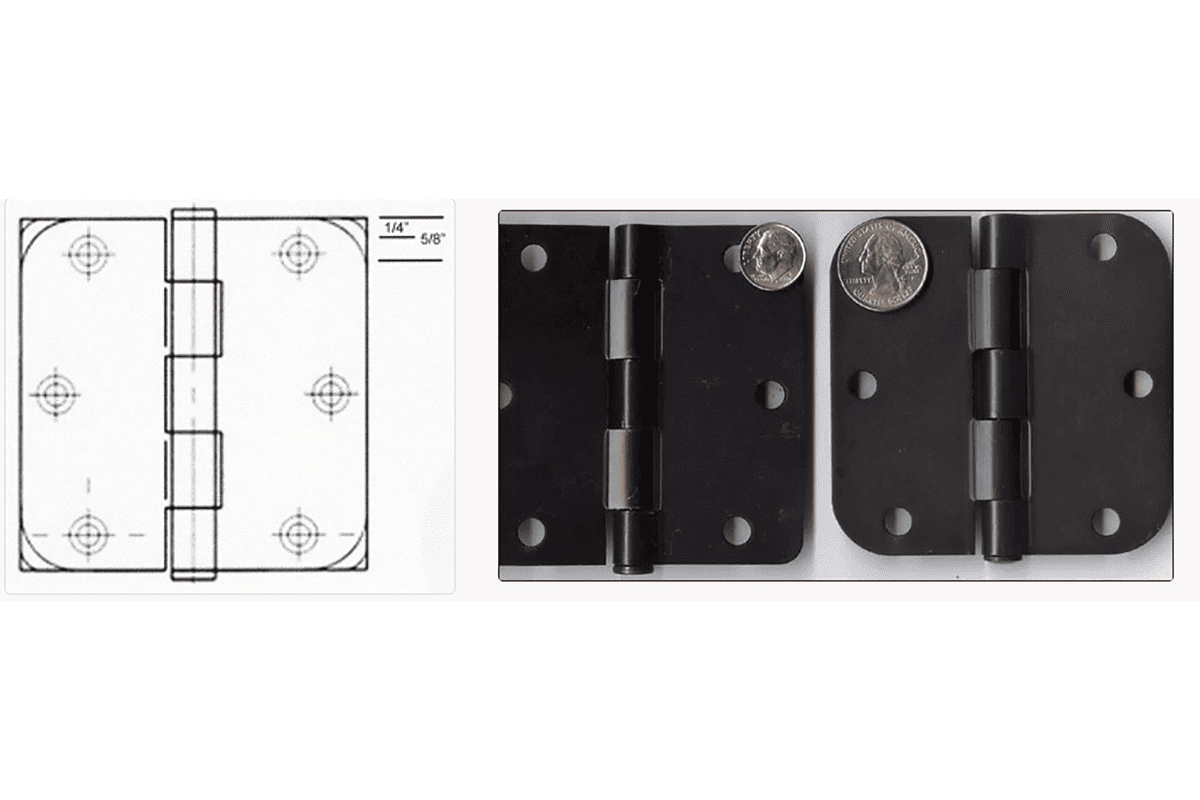
In my daily work with door factories, hardware brands, and importers, I often see radius confirmation happen late. That is risky. A hinge can have the correct length, width, finish, and screw holes, yet still fail to sit correctly if the corner radius does not match the prepared mortise.
What Is Door Hinge Corner Radius?
Door hinge corner radius can seem like a minor shape description, so buyers may skip it during early quotation. That creates confusion later. When the sample, drawing, and production door preparation do not match, even a standard hinge can become a special problem.
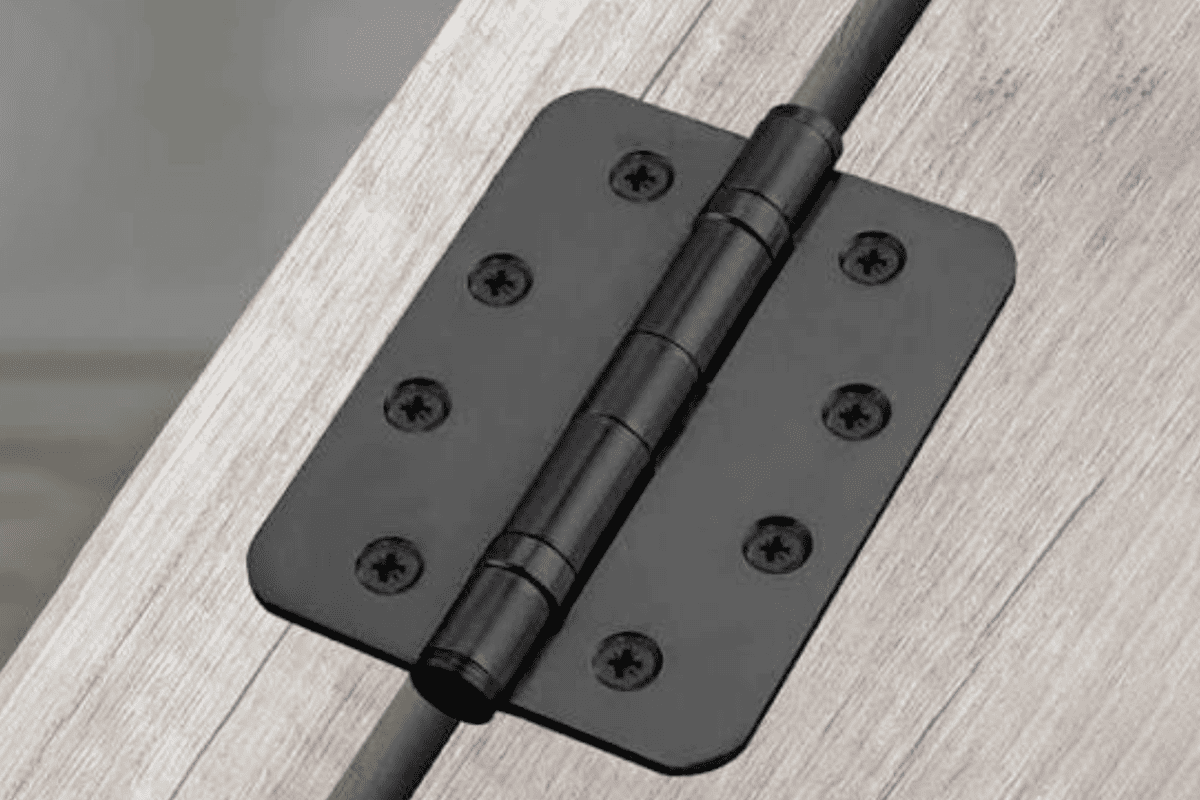
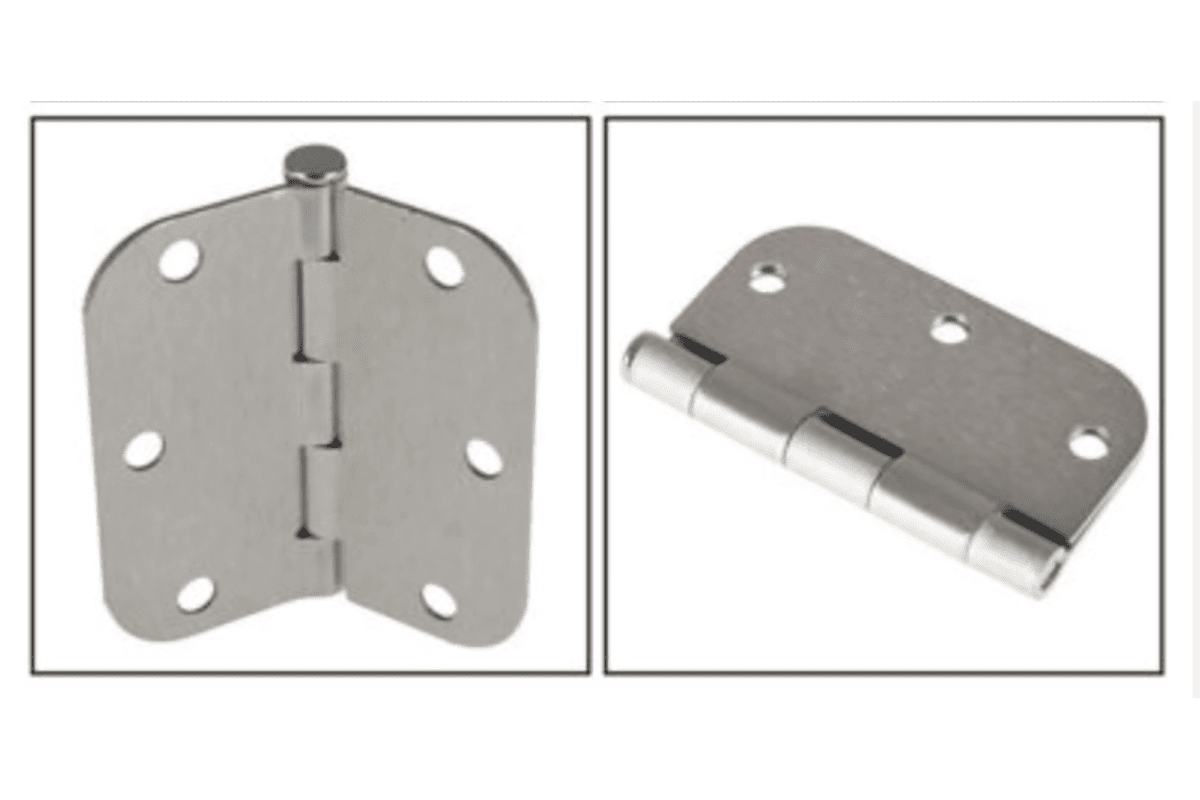
Door hinge corner radius means the curved corner size on the outer edge of a hinge leaf. A round-corner hinge has four arc-shaped corners, unlike a square-corner hinge with 90-degree corners. This radius must match the mortise corner shape in the door and frame for clean installation.
The basic definition
A door hinge has two main leaves. Each leaf has an outside shape. That shape can be:
- Square corner: four sharp 90-degree corners.
- Round corner: four rounded corners formed as arcs.
- Special corner shape: custom tooling or non-standard shapes for certain projects.
The door hinge corner radius describes the size of the arc at the rounded corner.1 It does not describe the hinge thickness, load rating, knuckle size, pin type, finish, or fire performance. It is a geometry parameter.
In practice, I often explain it this way:
If the hinge leaf is the “key,” the mortise is the “keyhole.” The radius is part of the key shape.
A round-corner hinge is common for wooden doors and door frames. It can also appear in fire-rated doors, steel doors, or cabinet doors, but only when the full hinge specification matches the application. Buyers should not assume that a rounded hinge is automatically suitable for every door type.
Why the radius is not only aesthetic
Many buyers first notice the corner radius because of appearance. Round corners can create a softer visual effect. They also reduce sharp-corner contact points during handling. However, the larger value is usually in fit and machining.
A door or frame mortise may be cut by a router or CNC machine. These tools naturally cut rounded internal corners because the cutting tool rotates.2 If the prepared mortise has a rounded corner, a round-corner hinge can sit into it more easily. If the hinge has square corners, the mortise corners may need additional manual trimming to become 90 degrees.
This does not mean round-corner hinges are always better. It means the selected hinge must match the preparation method and the project standard.
What buyers should confirm
Before I treat a hinge inquiry as ready for quotation, I prefer to confirm these items:
| Item to Confirm | Why It Matters |
|---|---|
| Hinge length and width | Ensures the leaf fits the door and frame layout |
| Hinge thickness | Affects flush fit and mortise depth |
| Corner radius | Matches the mortise corner shape |
| Screw hole position | Prevents drilling mismatch |
| Material and finish | Supports project appearance and market expectation |
| Application | Wooden door, steel door, fire-rated door, cabinet, or other use |
| Certification documents | CE or fire-rated documents should be verified when required |
In my experience at SDH Hardware, many mismatch discussions start because the buyer sends only a photo and says, “same as this.” A product photo can hide the corner detail, especially when the hinge is photographed from the front. A measured drawing, physical sample, or clear close-up photo with a ruler is safer.
Which Door Hinge Corner Radius Options Are Common?
Door hinge corner radius options vary by market, and this creates confusion for importers and hardware brands. A buyer may receive a North American drawing, a European sample, and an Asian supplier catalog at the same time. The values can look similar, but they are not identical.
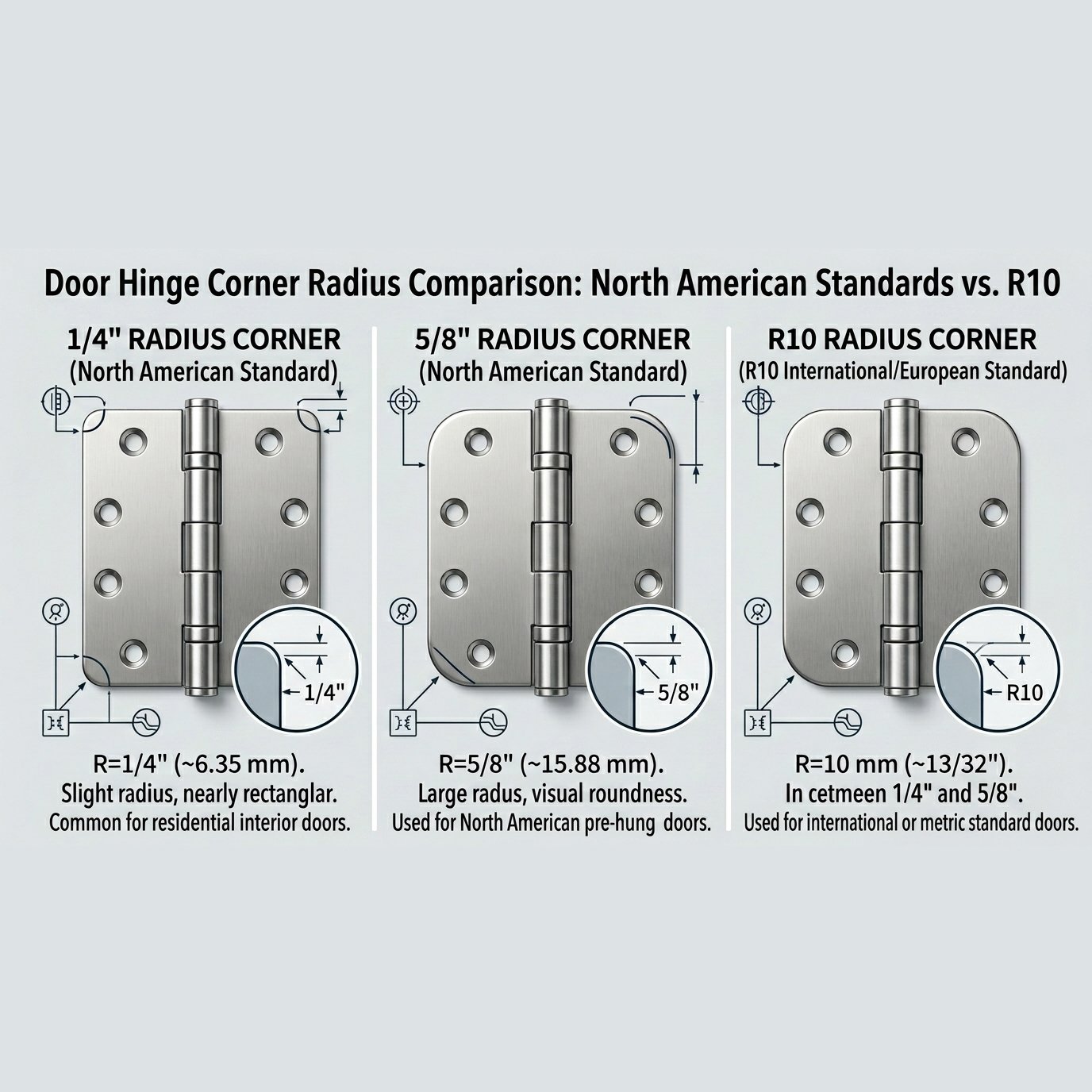
The most common round-corner hinge radius options include 1/4 inch radius, 5/8 inch radius, and R10.3 The 1/4 inch and 5/8 inch specifications are common in North American-style hinges. R10 means a 10 mm radius4 and is often seen in European-standard hinge specifications.
Common radius specifications
The three options buyers most often ask me about are:
- 1/4 inch radius
- 5/8 inch radius
- R10 radius
They are not interchangeable. Their approximate sizes are:
| Radius Type | Approximate Metric Value | Common Market Reference | Buyer Note |
|---|---|---|---|
| [1/4 inch | 6.35 mm](https://www.nist.gov/pml/owm/si-units-length)%%%FOOTNOTE_REF_5%%% | North America | Smaller rounded corner |
| R10 | 10 mm | Europe and metric specifications | Between 1/4 inch and 5/8 inch |
| 5/8 inch | 15.875 mm | North America | Larger rounded corner |
R10 is not the same as 1/4 inch or 5/8 inch. It sits between them. This matters because a mortise cut for one radius may not accept another radius cleanly.
Square corner vs round corner
Buyers also need to separate corner type from hinge size. A 4" x 3" hinge can be square-corner or round-corner.6 A 4" x 4" hinge can also be produced with different radius options. The hinge size tells only the leaf length and open width. It does not confirm the corner shape.
Here is a simple comparison:
| Feature | Square-Corner Hinge | Round-Corner Hinge |
|---|---|---|
| Corner shape | 90-degree corners | Arc-shaped corners |
| Mortise requirement | Square mortise corners | Rounded mortise corners |
| Routing efficiency | May need corner chiseling | Often matches router-cut corners |
| Visual style | Traditional, sharp profile | Softer edge appearance |
| Risk if wrong | Leaf cannot seat fully | Gaps or corner interference may occur |
I do not recommend choosing between square and round only by design preference. The door and frame preparation should drive the decision first.
Regional standards and buyer expectations
Market expectations often influence hinge selection. For example:
- North American markets may ask for 1/4 inch or 5/8 inch round corner hinges.
- European-standard projects may specify metric hinge dimensions and R10 corners.
- Middle East projects may follow mixed specifications depending on the door factory, consultant, or imported door design.
- Southeast Asia markets may request either metric or inch-based items depending on brand history and project requirements.
At SDH Hardware, I often ask buyers where the hinge will be sold or installed. This is not just a sales question. It helps confirm whether the product should follow inch-based or metric standards.
Why “close enough” is not safe
A small difference on paper can become a clear problem in production. For example, the difference between 1/4 inch and R10 is about 3.65 mm. The difference between R10 and 5/8 inch is about 5.875 mm. In a single sample, someone may try to force or adjust the fit. In a bulk order, that difference can affect hundreds or thousands of doors.
A buyer should avoid these assumptions:
- “The hinge size is correct, so the radius must be fine.”
- “The photo looks rounded, so it should match.”
- “R10 and 1/4 inch are almost the same.”
- “The installer can adjust it later.”
- “The supplier will know the radius from the market.”
I prefer a stricter approach. I ask for the old hinge sample, the mortise drawing, or a measured photo before confirming production. This simple step reduces avoidable risk.
Why Does Door Hinge Corner Radius Affect Fit and Routing?
Door hinge corner radius affects how the hinge leaf enters the prepared mortise. If the shape does not match, the hinge may not sit flush. That can create gaps, alignment concerns, extra trimming, or re-confirmation between the buyer, door factory, and supplier.
Door hinge corner radius affects fit because the hinge corner must match the door and frame mortise corner. It affects routing because router-cut mortises naturally have rounded internal corners. A matching round-corner hinge can reduce extra trimming, while a mismatched radius can create interference or visible gaps.
The mortise is the real reference point
I often tell buyers that the hinge drawing is only half of the story. The mortise drawing is the other half. A hinge must match the prepared recess on the door and frame.
The key fit points include:
- Leaf length
- Leaf width
- Leaf thickness
- Corner radius
- Screw hole layout
- Knuckle clearance
- Door gap requirement
- Frame preparation
If the corner radius is too large for the mortise, the hinge corner may hit the mortise wall.7 If the radius is too small, the hinge may leave visible corner space or fail to cover the routed shape cleanly. Both cases can create quality complaints.
Routing logic in simple terms
Most CNC routers and hand routers use a rotating bit. The bit has a diameter, so it cuts rounded inside corners. This is basic machining logic. A round-corner hinge can match that rounded cut more naturally when the radius is planned correctly.
A square-corner hinge may require additional work to make the mortise corners square.8 In woodworking, that can involve manual trimming. In factory production, that can mean extra labor or another process step. I do not claim this applies to every site or every door material, but it is a common reason buyers choose round-corner hinges for routed wooden doors.
Practical example from buyer inquiries
In one common inquiry pattern, a buyer sends a hinge photo and asks for the same size and finish. The first quotation looks simple. Then I ask for the corner radius. The buyer replies, “It is round corner.” That answer is still not enough.
I then ask:
- Is it 1/4 inch, 5/8 inch, or R10?
- Do you have an old hinge sample?
- Can you send a close-up corner photo with a ruler?
- Can you share the door mortise drawing?
- Is the order for replacement, new production, or project supply?
This process may feel detailed, but it prevents bigger delays later. If I skip the question, the buyer may approve a sample that looks correct from a distance but fails during assembly.
How radius mismatch appears in production
A mismatch may create several visible or operational issues:
| Mismatch Type | Possible Result | Procurement Impact |
|---|---|---|
| Radius too large | Hinge corner hits mortise corner | Extra trimming or rejection |
| Radius too small | Visible gap around corners | Appearance complaint |
| Square hinge in round mortise | Sharp corner interference | Manual corner cutting may be needed |
| Round hinge in square mortise | May fit but leave different corner appearance | Buyer approval required |
| Wrong regional radius | Sample fails against old door preparation | Replacement or revised order |
In bulk procurement, this can become expensive. If a buyer orders 20,000 hinges with the wrong radius, the issue is not only the hinge price. The real cost may include sorting, rework labor, delayed door shipment, new samples, air freight, and customer dissatisfaction.9
Radius does not replace other performance checks
I also need to make one point clear. The door hinge corner radius does not decide hinge strength, cycle durability, or fire performance by itself.10 Those depend on the full hinge design, material, thickness, pin structure, bearings if any, and tested assembly.
For fire-rated doors, buyers should verify the complete fire-rated documentation and application scope.11 A round corner does not make a hinge fire-rated. A CE document or fire-rated certificate should be checked as a project document, not assumed from the hinge shape.
How Should Buyers Confirm Door Hinge Corner Radius Before Bulk Orders?
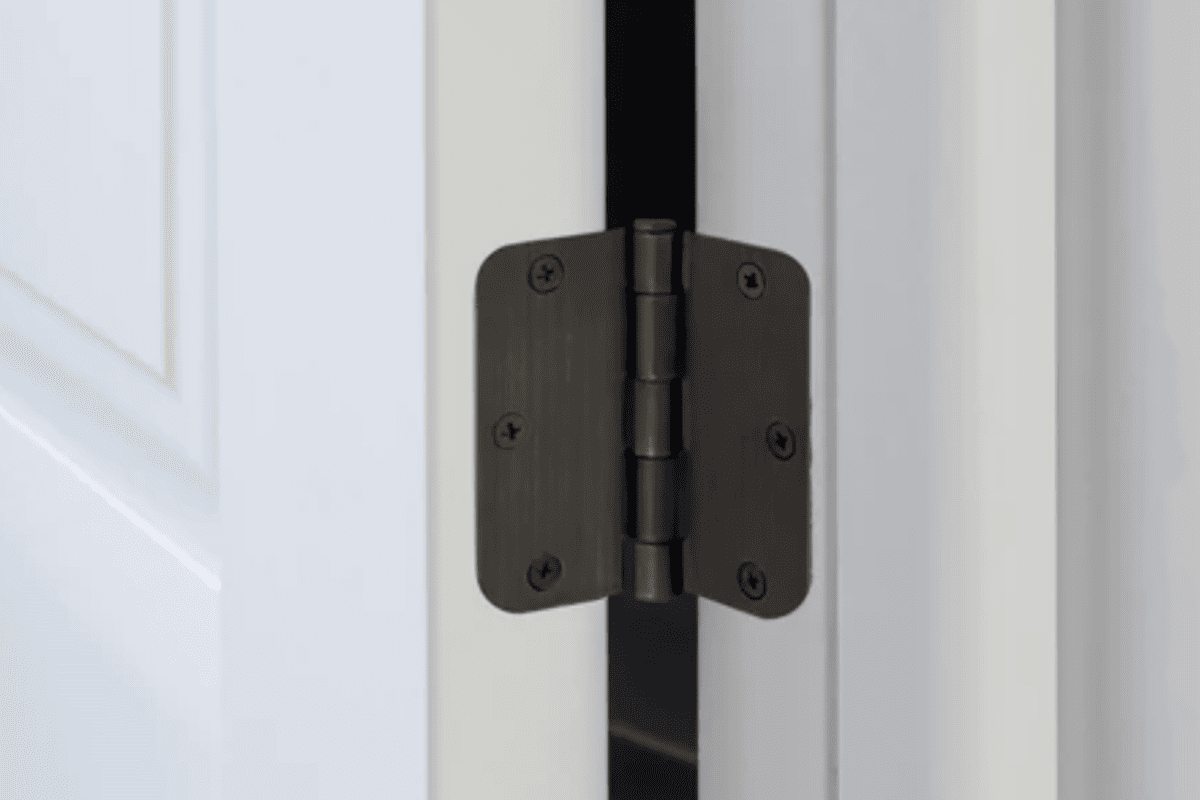
Door hinge corner radius should be confirmed before sample approval and before mass production. If buyers leave it open, the supplier may follow a default catalog option. That default may not match the old hinge, the door factory tooling, or the target market standard.
Buyers should confirm door hinge corner radius by comparing the old hinge sample, measured corner photo, door and frame mortise drawing, and supplier product drawing. They should also check hinge size, thickness, hole position, finish, packaging, and compliance documents before approving a bulk order.
My preferred confirmation workflow
When I support a buyer at the pre-sales stage, I prefer a simple but disciplined process. It avoids vague descriptions like “normal radius” or “standard round corner.”
Step 1: Confirm the application
The buyer should first define the use case:
- Wooden door
- Steel door
- Fire-rated door
- Interior residential door
- Commercial door
- Cabinet door
- Replacement hinge for existing doors
- New production for a door factory
The application does not determine the radius alone, but it affects the full specification.
Step 2: Confirm the target market
The buyer should tell the supplier the target market. A hinge for Europe may follow a different expectation from a hinge for North America. The Middle East market may use European-style doors in one project and American-style products in another.
Step 3: Send the old sample or measured evidence
The best evidence is a physical old hinge sample. If that is not possible, I ask for:
- A front photo
- A side photo
- A close-up corner photo
- A ruler or caliper in the photo
- Screw hole measurement
- Leaf thickness measurement
- Overall length and width
A clear photo with scale is much better than a catalog image.
Step 4: Match the mortise drawing
The door and frame mortise drawing should show the recess shape and dimensions. If the mortise is already fixed, the hinge must match it. If the door factory is still developing the door, the hinge and mortise can be designed together.
Step 5: Approve the supplier drawing
Before mass production, the buyer should approve a drawing that includes:
| Drawing Item | Should It Be Confirmed? |
|---|---|
| Hinge size | Yes |
| Leaf thickness | Yes |
| Corner radius | Yes |
| Screw hole diameter | Yes |
| Screw hole position | Yes |
| Knuckle diameter | Yes |
| Pin type | Yes |
| Material grade | Yes |
| Finish code | Yes |
| Packaging | Yes |
This drawing becomes the common reference for both buyer and supplier.
Sample approval is not just visual approval
A sample should be checked against the real door or a test mortise.12 A visual sample on a table may look correct, but it does not prove fit. I recommend that buyers test the sample in the actual door preparation when possible.
For bulk wholesale and brand orders, the buyer should also confirm finish consistency. A hinge with the correct radius but inconsistent finish can still fail inspection. At SDH Hardware, I see buyers care strongly about surface uniformity, especially for stainless steel hinges, PVD finishes, black finishes, satin nickel, and polished finishes.
Procurement checklist for buyers
Before issuing a purchase order, I suggest this checklist:
- [ ] I confirmed whether the hinge is square corner or round corner.
- [ ] I confirmed the exact radius: 1/4 inch, 5/8 inch, R10, or custom.
- [ ] I checked the old hinge sample or measured photo.
- [ ] I checked the door and frame mortise drawing.
- [ ] I confirmed hinge length, width, and thickness.
- [ ] I confirmed screw hole positions.
- [ ] I confirmed material and finish.
- [ ] I requested valid CE or fire-rated documents if required.
- [ ] I approved the supplier drawing.
- [ ] I tested the sample before bulk production.
This checklist may look basic, but it prevents many avoidable disputes. In my experience, professional buyers appreciate clear confirmation because it protects both sides.
Can Door Hinge Corner Radius Affect Procurement Risk?
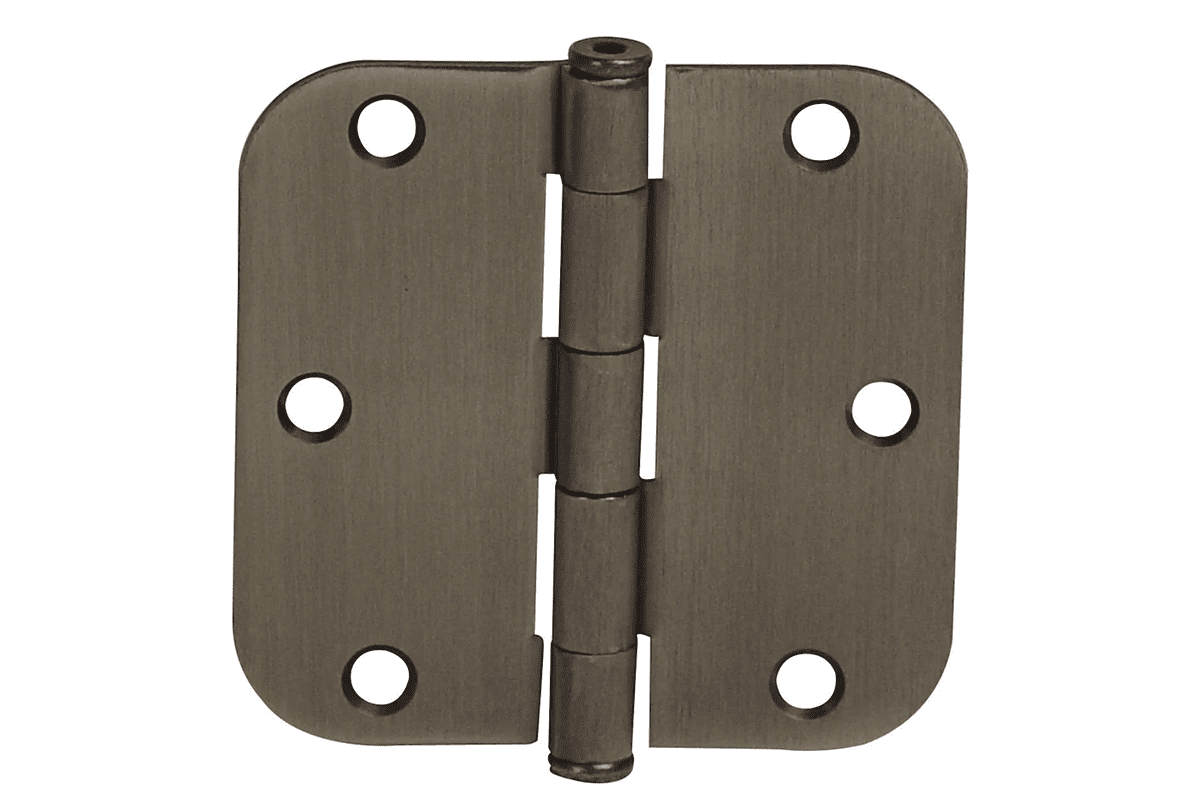
Door hinge corner radius can directly affect procurement risk in bulk orders. A small mismatch can lead to fitting complaints, production delays, rework, replacement requests, and extra communication. The risk is higher when buyers source replacement hinges or mix regional standards.
Door hinge corner radius affects procurement risk because it controls compatibility with the prepared mortise and previous hinge standard. In bulk purchasing, a wrong radius can multiply into large-scale fitting problems, even when the hinge size, finish, and material appear correct on the purchase order.
Why small differences become large problems
A single hinge mismatch is an inconvenience. A container order mismatch is a supply chain problem. Door factories, hardware brands, and wholesalers usually buy hinges in batches. A small specification mistake can repeat across every carton.
The cost may include:
- Rework labor at the door factory
- Production line delays
- Extra inspection time
- Replacement shipment
- Discount or claim negotiation
- Project delivery risk
- Brand reputation damage
- Inventory that cannot be sold in the target market
The hinge itself may be low in unit cost compared with the finished door. However, a hinge mismatch can block the finished door from shipping. That is why I treat the radius as a risk-control item.
Common procurement scenarios
Replacement orders
Replacement orders carry high risk because the door and frame are already prepared. The new hinge must match the old hinge closely. Buyers should send the old hinge sample whenever possible.
Door factory production
Door factories need repeatable installation. If the mortise tooling is designed for R10, the hinge should match R10 unless the factory changes tooling. A different radius may slow assembly or require process changes.
Hardware brand inventory
Brand owners must avoid stocking the wrong standard for their market. A North American-style package with a European R10 hinge may confuse distributors. A clear SKU system helps prevent this.
Project supply
Project orders often include compliance requirements. Buyers should verify complete product specifications and certificates. The corner radius should match the approved door schedule and hardware submittal.
SKU control and supplier communication
For hardware brands and wholesalers, I recommend adding the radius into the SKU description. For example:
| Weak SKU Description | Stronger SKU Description |
|---|---|
| 4x3 SS hinge | 4x3 SS hinge, 2.5 mm, R10, satin finish |
| Round corner hinge | 3.5x3.5 hinge, 5/8" radius, US finish |
| Fire door hinge | Fire-rated hinge, approved spec, R10, document verified |
This reduces confusion between sales, purchasing, warehouse, and supplier teams.
How I handle radius confirmation as a supplier
As a manufacturer, I do not want buyers to rely only on our catalog images. I prefer to provide drawings and confirm samples. If a buyer asks for a common hinge, I still ask about the corner radius when the order involves existing doors, bulk production, or specific regional standards.
At SDH Hardware, our work includes mortise locks, concealed hinges, butt hinges, lever handles, and cylinders. Across these product lines, I see one pattern: small specification details create the largest procurement disputes when they are not confirmed early.
For hinges, the corner radius is one of those details. It should be included in:
- RFQ documents
- Product drawings
- Sample approval forms
- Purchase orders
- Inspection standards
- Packaging labels when needed
Supplier selection points
When choosing a hinge supplier, buyers should check whether the supplier can support specification control, not only low price. I suggest evaluating:
Drawing capability
The supplier should provide clear product drawings with radius values.Sample confirmation process
The supplier should support pre-production samples.Manufacturing consistency
The supplier should control size, finish, hole position, and shape across batches.Customization capability
The supplier should advise whether a requested radius needs existing tooling or custom production.Document support
The supplier should provide CE or fire-rated documents when required, and buyers should verify the document scope.Communication quality
The supplier should ask the right questions before production, not after a complaint.
A good supplier does not simply accept “round corner” as a complete specification. A good supplier asks, “Which radius?”
Frequently Asked Questions
Is door hinge corner radius the same as hinge size?
No. Door hinge corner radius describes the rounded corner arc on the hinge leaf. Hinge size describes the leaf length and open width, such as 4" x 3". Buyers must confirm both because hinges with the same size can have different corner radius options.
Is R10 the same as 1/4 inch radius?
No. R10 means a 10 mm radius. A 1/4 inch radius is about 6.35 mm. They may look similar in photos, but they are not the same in fit. Buyers should confirm the mortise drawing before replacing one with the other.
Are round-corner hinges better than square-corner hinges?
Round-corner hinges are not universally better. They are useful when the door or frame mortise is routed with rounded corners, and they can provide a softer appearance. Square-corner hinges are still correct when the door preparation and project specification require square corners.
Can I choose a hinge corner radius from a product photo?
I do not recommend it. Product photos can hide small radius differences. Buyers should use a physical sample, measured photo, product drawing, or mortise drawing. This is especially important for bulk orders, replacement projects, and regional standard matching.
Does door hinge corner radius affect fire rating?
Door hinge corner radius alone does not determine fire rating. Fire performance depends on the tested hinge assembly, material, dimensions, and certification scope. Buyers should request and verify valid fire-rated documents for the exact hinge specification and intended application.
Conclusion
Door hinge corner radius is a small specification with a large impact on fit, routing efficiency, and procurement control. Buyers should not choose round-corner hinges by picture or size alone. They should confirm the old sample, mortise drawing, regional standard, radius value, hole position, finish, and compliance documents before bulk production. If you need consistent round-corner hinges for door manufacturing, brand supply, or wholesale projects, I can help review your hinge drawings and match the correct specification before production.
"Door Hinges: What Is Hinge Radius and Why Does It Matter?", https://monroeengineering.com/blog/door-hinges-what-is-hinge-radius-and-why-does-it-matter/. An architectural-hardware terminology source defines round-corner hinge geometry by reference to the radius of the hinge-leaf corner. Evidence role: definition; source type: institution. Supports: A hardware standard or institutional glossary should support that hinge corner radius refers to the rounded arc dimension on a hinge leaf.. ↩
"How do you deal with sharp corners in CNC machining? Designing with ...", https://www.hubs.com/knowledge-base/sharp-corners-in-cnc-machining/. Machining references explain that rotating cutters have a finite tool radius and therefore leave rounded internal corners in pockets or mortises. Evidence role: mechanism; source type: education. Supports: A machining or manufacturing education source should explain that rotating cutters leave internal corner radii.. ↩
"1/4 vs 5/8 Radius Hinge: How to Match Your Door Mortise", https://watersonusa.com/solutions/1-4-vs-5-8-radius-hinge. Architectural-hardware references commonly list 1/4-inch and 5/8-inch round-corner hinge radii, while metric specifications may express comparable geometry as an R-value; this supports the article’s examples but may not prove worldwide market frequency. Evidence role: general_support; source type: institution. Supports: A neutral source should show that these radius values are commonly used or recognized in door-hinge specifications.. Scope note: Contextual support only; it may document recognized options without quantifying global prevalence. ↩
"Engineering drawing abbreviations and symbols - Wikipedia", https://en.wikipedia.org/wiki/Engineering_drawing_abbreviations_and_symbols. Engineering-drawing conventions use the prefix “R” to denote radius, so “R10” specifies a 10 mm radius when dimensions are given in millimetres. Evidence role: definition; source type: education. Supports: A drafting or engineering-drawing reference should confirm that the prefix R before a number denotes radius.. ↩
"SI Units – Length", https://www.nist.gov/pml/owm/si-units-length. The inch is defined as exactly 25.4 millimetres, which gives 6.35 millimetres for a one-quarter-inch radius. Evidence role: statistic; source type: government. Supports: A government measurement reference should support that one inch is defined as 25.4 mm, from which 1/4 inch equals 6.35 mm.. ↩
"The Basics of Door Hinges | SECLOCK", https://www.seclock.com/education/entry/the-basics-of-door-hinges. Architectural-hardware specifications treat hinge dimensions and corner configuration as separate descriptive features, supporting the point that a given hinge size may be supplied with different corner forms. Evidence role: general_support; source type: institution. Supports: A hardware specification source should show that hinge size and corner configuration are separately identified characteristics.. Scope note: Contextual support; a source may illustrate the separation of attributes without listing every possible 4 x 3 hinge variant. ↩
"Engineering fit - Wikipedia", https://en.wikipedia.org/wiki/Engineering_fit. Fit-up principles for mortised hardware show that incompatible part and recess geometry can create contact interference, supporting the claim that an oversized hinge radius may prevent the hinge from seating in the mortise. Evidence role: mechanism; source type: education. Supports: A technical or installation reference should support that mismatched radii can cause interference between the hinge leaf and mortise.. Scope note: Contextual support; a general fit or installation source may explain the mechanism without testing this exact hinge-radius scenario. ↩
"Perfect Mortises for Round Corner Hinges",
. Woodworking installation guidance notes that router-cut hinge mortises leave rounded corners and that square-corner hinges may require the corners to be squared with additional cutting. Evidence role: mechanism; source type: education. Supports: A woodworking or construction source should support that router-cut hinge mortises often need corner chiseling for square-corner hinges.. ↩"[PDF] Reducing the Costs of Poor Quality: A Manufacturing Case Study", https://scholarworks.waldenu.edu/cgi/viewcontent.cgi?article=6608&context=dissertations. Research on the cost of poor quality documents that manufacturing defects and specification errors can generate indirect costs such as rework, inspection, schedule disruption, logistics expense, and customer dissatisfaction. Evidence role: general_support; source type: research. Supports: Research on cost of poor quality should support that defects and specification errors create rework, inspection, delay, logistics, and customer-related costs.. Scope note: Contextual support; such research supports the cost categories generally rather than quantifying this specific hinge-radius scenario. ↩
"A156.1 - 2025 Butts and Hinges", https://buildershardware.com/ANSI-BHMA-Standards/Hardware-Highlights/A1561-2025-Butts-and-Hinges. Door-hardware and fire-door standards evaluate hinges through complete product or assembly performance requirements, such as load, cycling, materials, and listing scope, rather than by corner radius alone. Evidence role: expert_consensus; source type: institution. Supports: Hardware and fire-door standards should show that hinge performance is evaluated through complete product or assembly testing rather than corner shape alone.. ↩
"NFPA 80 Fire Door Hinge Requirements", https://watersonusa.ai/knowledge/standards/nfpa-80-fire-doors/. Fire-door standards require hardware used on rated assemblies to be listed or otherwise approved for the intended application, so documentation should be checked against the exact hinge and assembly scope. Evidence role: expert_consensus; source type: institution. Supports: A fire-door authority should support that fire-door hardware must be listed or approved for the relevant application and used within its listing scope.. ↩
"First Article Inspection: Considerations", https://adcinc1.com/first-article-inspection-considerations/. First-article inspection guidance supports verifying a sample against specified dimensional and functional requirements before production release, which is consistent with testing a hinge in the actual or representative mortise. Evidence role: general_support; source type: institution. Supports: A quality-control or first-article inspection source should support checking samples against functional requirements before production approval.. Scope note: Contextual support; general first-article guidance may not mention door hinges specifically. ↩