What Are the Different Types of Commercial Door Hardware?
Commercial door hardware can look simple on a quotation sheet, but one missing or mismatched item can create installation delays, compliance questions, and after-sales complaints. Buyers often focus on price first, then discover that locks, cylinders, hinges, handles, and accessories must work as one tested door system. A better approach starts with function, standards, and compatibility.
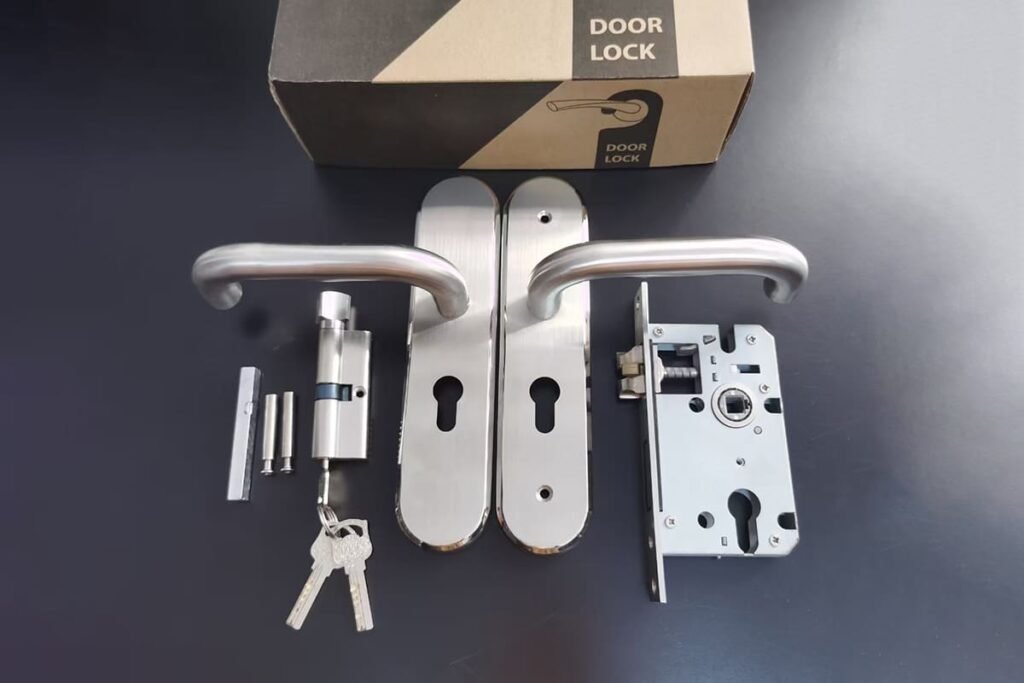
Commercial door hardware includes locking hardware, cylinders, hinges, handles, door closers, pull handles, flush bolts, door stops, bathroom indicators, peepholes, magnetic holders, and related accessories.1 Buyers should classify these products by their role in the door system, EN standard reference, durability requirement, fire-rating need, corrosion environment, and compatibility with the complete door set.
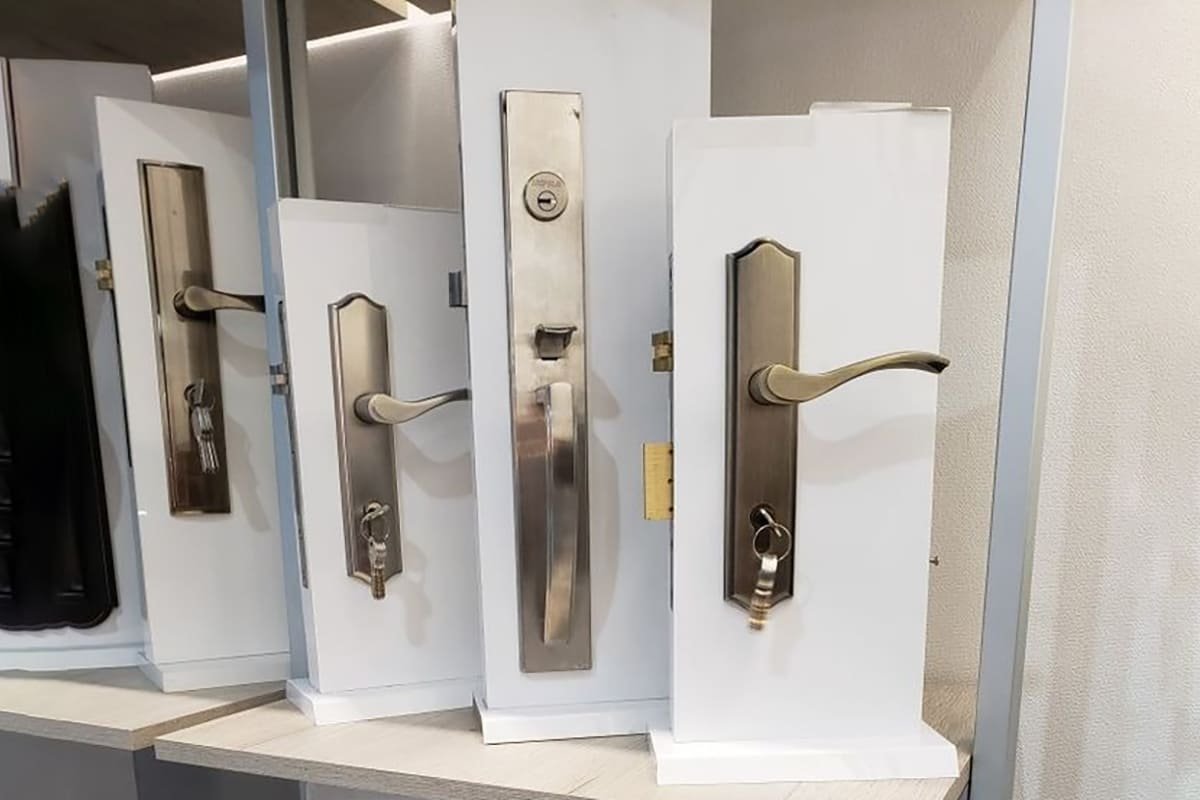
I have seen many buyers treat hardware as a list of separate items. That approach can work for simple retail orders, but it is risky for commercial projects. In this guide, I will explain the main types of hardware and the selection points I usually check before production or sourcing.
What Commercial Door Hardware Categories Belong in a Complete Door Set?
A door set fails when one part is ignored. A strong lock cannot compensate for weak hinges. A certified hinge cannot solve an incompatible handle spindle. So, the first problem is not choosing products. The first problem is understanding the complete commercial door hardware system.
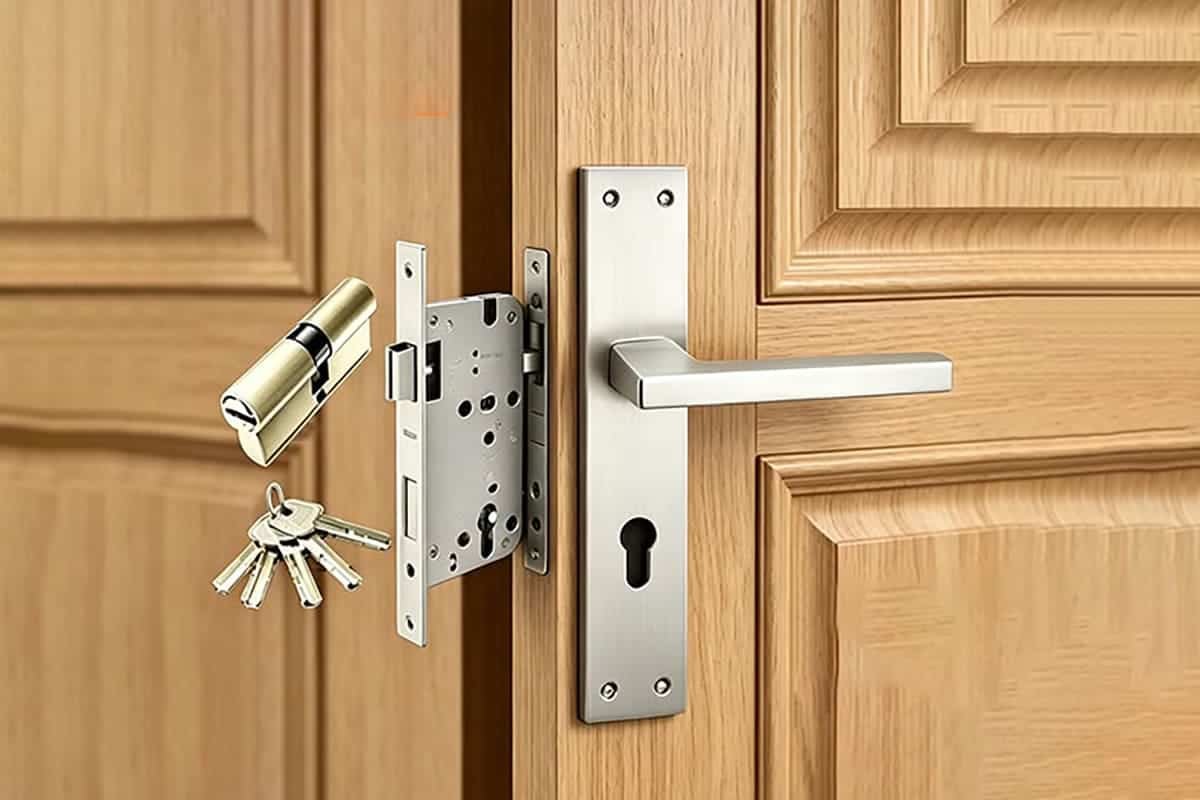
A complete commercial door hardware set usually includes locking hardware, cylinders, load-bearing hinges, operation hardware, closing devices, security fittings, and small accessories. Each category has a different function, applicable EN reference, and selection risk. Buyers should evaluate the full door opening before confirming specifications.
The main hardware groups
In Euro-standard projects, I usually divide commercial door hardware into six working groups:
| Hardware group | Typical products | Main function | Common selection risk |
|---|---|---|---|
| Locking hardware | Mortise locks, magnetic locks, bathroom locks, classroom locks | Controls latching and locking | Wrong backset, center distance, latch direction, or fire suitability |
| Cylinder hardware | Double cylinders, single cylinders, thumb-turn cylinders, half cylinders | Controls key access | Wrong profile, cam type, security level, or key system |
| Load-bearing hardware | Butt hinges, ball-bearing hinges, concealed hinges | Supports door weight and movement | Wrong load grade, size, material, or fire-rating assumption |
| Operation hardware | Lever handles, pull handles, push plates | Allows daily use | Poor spindle fit, weak spring support, unsuitable finish |
| Control hardware | Door closers, magnetic holders, coordinators | Controls closing and hold-open function | Wrong closer power size, usage frequency, or fire-door compatibility |
| Accessories | Door stops, flush bolts, indicators, peepholes, escutcheons | Completes function and usability | Treated as minor, then causes site issues |
Why category thinking matters
Commercial doors are not all the same. A hotel room door, school classroom door, hospital corridor door, warehouse fire door, and office glass entrance each require different hardware. That is why I never recommend choosing only by product name.
For example:
- A bathroom lock may need an emergency release and indicator.
- A fire-rated timber door may require tested hinges, lock body, closer, and intumescent details.
- A high-traffic office door may need a stronger lever handle spring, better latch durability, and corrosion-resistant finish.
- A metal door in a coastal market may need upgraded stainless steel or a verified corrosion resistance grade.
EN standards are selection references, not assumptions
For Euro-standard commercial door hardware, buyers often ask about EN standards. These references are helpful, but they must be tied to the exact product model and certificate.
Common references include:
- EN 12209 for mechanically operated locks and latches
- EN 1303 for cylinders
- EN 1935 for single-axis hinges
- EN 1906 for lever handles and knob furniture
- EN 1154 for controlled door closing devices
- EN 1155 for electrically powered hold-open devices
- EN 1670 for corrosion resistance
- EN 1634 for fire resistance testing of door and shutter assemblies2
I treat certificates as documents to verify, not marketing words to repeat.
A product may be CE-marked or fire-tested for one model, one configuration, one door type, or one installation condition.3 Buyers should request test reports, classification documents, and matching product drawings when the project requires formal compliance.
How Should Commercial Door Hardware Locks and Cylinders Be Selected?
Locking hardware creates the most confusion because many buyers combine the lock body and cylinder into one item. That creates problems. The lock body controls latch function. The cylinder controls key access. If these parts do not match, the door may install poorly or fail in daily use.
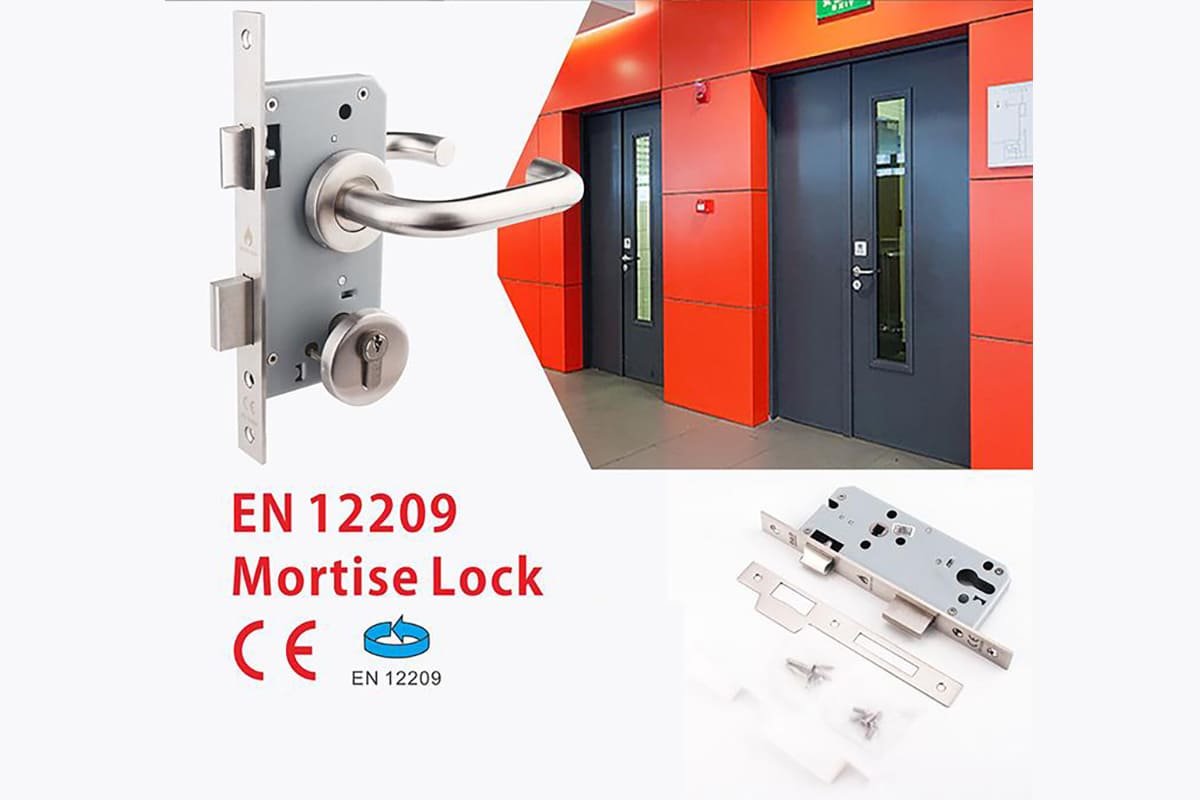
Commercial door hardware locks should be selected by door function, lock case dimensions, latch and deadbolt design, durability grade, fire-door requirement, and cylinder compatibility. Cylinders should be selected separately by profile, security level, key system, cam type, and EN 1303 documentation where required.
Lock bodies: the functional core
In my factory conversations with buyers, lock body selection often starts with two numbers: backset and center distance. That is useful, but it is not enough. The function must come first.
Common Euro mortise lock body types include:
Standard sash locks
These combine latch and deadbolt. They are common for office, apartment, and general commercial doors.Passage locks
These allow latch operation without key locking. They suit internal non-secure doors.Bathroom locks
These usually work with a thumb-turn, indicator, or emergency release.Classroom locks
These may use key control from one side, depending on market practice and project specification.Magnetic latch locks
These provide a clean appearance and quiet closing. Buyers must check door preparation and strike alignment carefully.Double-latch or anti-card locks
These can improve latch security for certain door types, but they must match the use case.
Key lock body checkpoints
| Checkpoint | Why it matters |
|---|---|
| Backset | Determines handle and key position from door edge |
| Center distance | Controls spacing between spindle and cylinder |
| Forend size | Must match door routing or metal door preparation |
| Latch direction | Must suit left-hand or right-hand doors, unless reversible |
| Deadbolt throw | Affects security and strike box compatibility |
| Spindle size | Must match lever handle set |
| Fire test status | Must be verified for fire-rated door use |
| Durability grade | Should match traffic level |
Relevant lock standards
For mechanical lock bodies, EN 12209 is one of the key references in Europe. It classifies locks by categories such as durability, door mass, fire suitability, safety, corrosion resistance, security, and field of door application.4
However, I always tell buyers one important point: do not assume every mortise lock has the same classification. A stainless steel lock body, a magnetic lock, and a bathroom lock may have different testing records. A supplier should provide documents for the actual model being quoted.
Cylinders: the access control component
Euro profile cylinders should be specified separately. Common types include:
- Double cylinders: key operation from both sides
- Single cylinders: key operation from one side only
- Thumb-turn cylinders: key outside and thumb-turn inside
- Half cylinders: common for cabinets, shutters, and specific hardware systems
- Bathroom cylinders or turn-release sets: used with privacy locks
The common reference for Euro cylinders is EN 1303. This standard covers performance areas such as durability, key-related security, attack resistance, corrosion resistance, and temperature resistance.5 Again, the exact grade depends on the tested cylinder model.
Practical sourcing example
A buyer once sent me a door schedule with only “lock + cylinder” written beside 800 doors. I asked for door thickness, fire rating, function, handle type, cylinder length, and keying plan. The buyer first thought I was making the order complicated. Later, they found that three door types needed different cylinder lengths and two areas required thumb-turn cylinders for egress convenience.
That is the real value of detailed commercial door hardware planning. It reduces rework before production starts.
Which Commercial Door Hardware Supports Door Weight and Movement?
A door that sags, rubs, or closes badly often points back to hinge selection. The problem becomes worse in high-traffic buildings. If buyers choose hinges only by size or finish, they may miss door weight, opening frequency, fire requirement, and corrosion exposure.
Commercial door hardware for door weight and movement includes butt hinges, ball-bearing hinges, concealed hinges, pivots, and sometimes special support fittings. Buyers should select these items by door mass, door dimensions, usage category, installation material, corrosion environment, and verified fire-door compatibility.
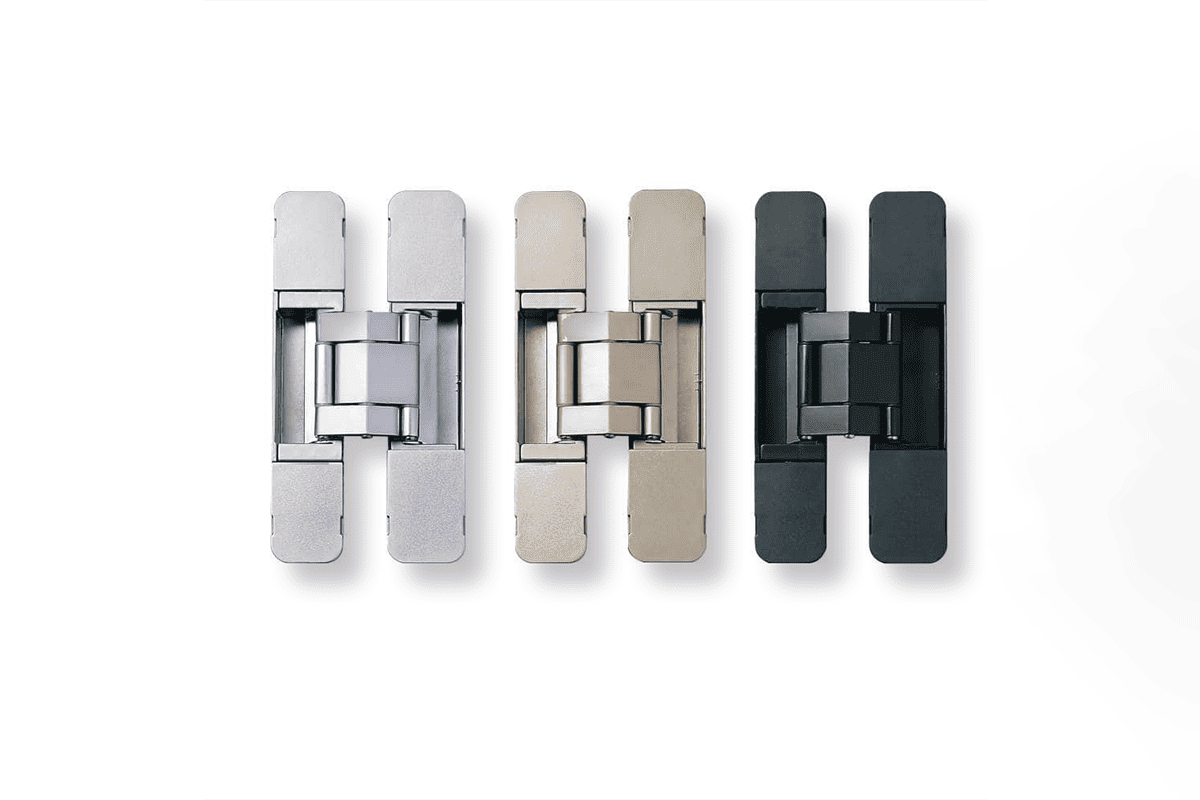
Butt hinges and ball-bearing hinges
Butt hinges remain one of the most common commercial door hardware products. They are simple, familiar, and suitable for many timber and metal doors. For heavier or higher-frequency doors, ball-bearing butt hinges usually provide smoother movement and better wear resistance than plain bearing hinges.6
Typical selection factors include:
- Door height and width
- Door thickness
- Door weight
- Number of hinges per leaf
- Hinge size and thickness
- Screw pattern and screw quality
- Material, such as stainless steel, steel, or brass
- Finish, such as satin stainless steel, PVD, or powder coating
- Corrosion environment
- Fire-rating requirement
Concealed hinges and 3D adjustable hinges
Concealed hinges are often used where the door design needs a clean look. 3D adjustable concealed hinges allow adjustment in several directions after installation. This can help installers correct small alignment differences.
However, concealed hinges are not automatically better for every project. They require accurate door preparation. They also need correct load capacity. If a heavy door uses a concealed hinge below the required load level, the door may drop over time.
EN 1935 as a hinge reference
For single-axis hinges, EN 1935 is the common European reference.7 It classifies hinges by performance categories such as:
- Category of use
- Durability
- Test door mass
- Fire resistance suitability
- Safety
- Corrosion resistance
- Security
- Hinge grade
The load grade matters, but buyers should not treat higher numbers as a universal answer. A project should match hinge grade to door weight, door size, opening frequency, and door construction.
Fire-rated hinge selection
For fire-rated doors, hinges become part of the tested assembly. EN 1634 fire testing may apply to the door set, and the hardware should match the tested configuration or the project’s accepted evidence.
Buyers should check:
- The hinge model on the fire test report
- The door material and thickness in the tested assembly
- The number of hinges used in the test
- The fixing method
- Any required intumescent pads or protection
- The fire duration claimed by the document
I avoid saying that a hinge is “fire-rated” without checking which model, which test, and which door application. That caution protects both the buyer and the manufacturer.
Corrosion and market environment
In the Middle East, Europe, and Southeast Asia, corrosion conditions can vary widely. Coastal cities, humid hotels, and exterior service doors may need better corrosion resistance than dry interior office doors.8
A stainless steel hinge may still vary by grade, thickness, pin design, and finish. A painted steel hinge may work for one project but fail quickly in another. That is why I like to confirm the installation environment before quoting.
Why Do Operation Hardware and Accessories Matter in Commercial Door Hardware?
Many buyers call handles and accessories “small hardware.” That phrase can be dangerous. Users touch handles every day. Installers rely on accessories for proper fitting. A weak spring, wrong spindle, missing stop, or poor indicator can create complaints even when the lock and hinge are correct.
Commercial door hardware operation products include lever handles, pull handles, push plates, escutcheons, roses, door stops, flush bolts, bathroom indicators, peepholes, and protection plates. These items affect usability, durability, safety, installation quality, and customer satisfaction, so buyers should specify them carefully.
Lever handles
Lever handles are among the most visible parts of a commercial door set. They also receive constant force. A good-looking handle can still perform badly if the internal spring, spindle fit, fixing screws, or material thickness is weak.
The main reference for lever furniture is EN 1906.9 This standard includes categories such as:
- Frequency of use
- Durability
- Door mass
- Fire resistance suitability
- Safety
- Corrosion resistance
- Security
- Type of operation
Buyers should confirm whether the handle is suitable for the lock case, spindle size, rose or plate format, and door thickness.
Pull handles and push plates
Pull handles are common for entrance doors, glass doors, commercial washrooms, public corridors, and office spaces. Their selection depends on:
- Length and diameter
- Fixing method
- Back-to-back or single-sided installation
- Door material
- Pulling force
- Finish durability
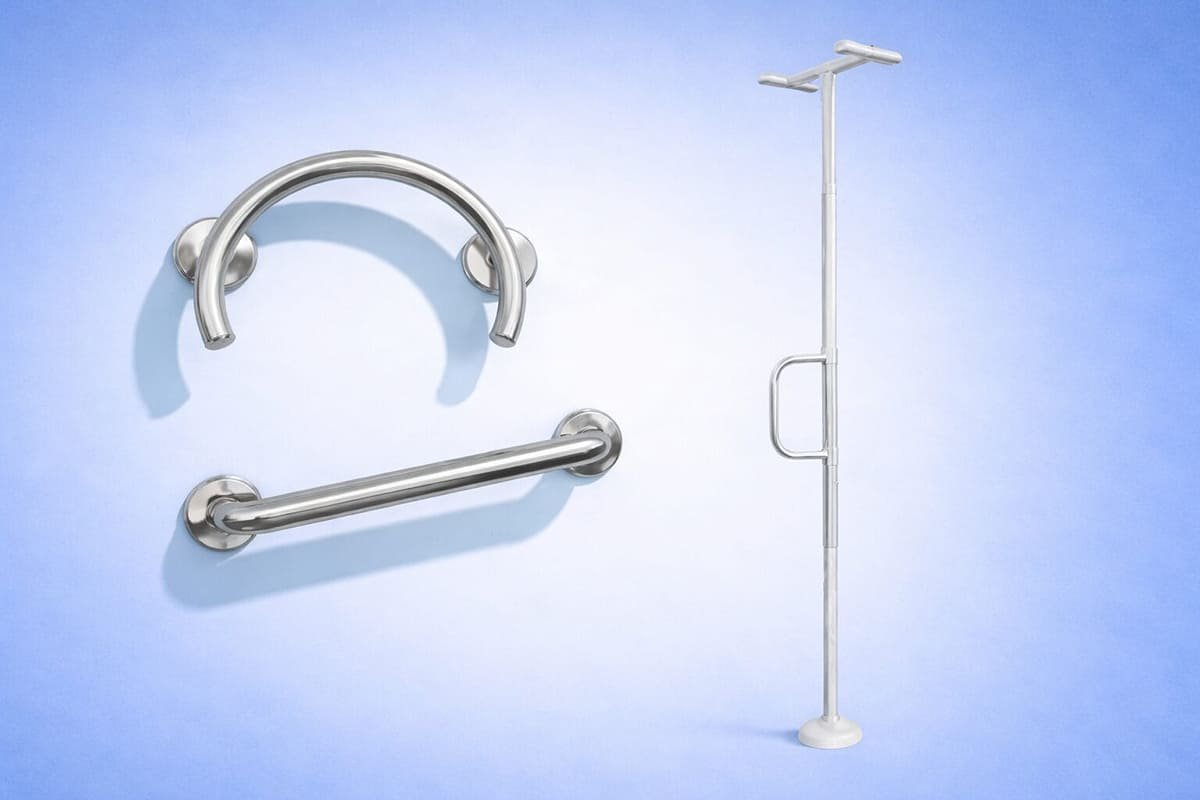
- Accessibility requirements in the target market
Push plates and kick plates protect doors in high-use areas. They are especially useful in hospitals, schools, kitchens, and service corridors. They may seem simple, but wrong thickness or poor edge finishing can create installation and safety issues.
Door stops and wall protection
Door stops are cheap compared with locks and hinges, but they prevent expensive damage. A missing stop can cause lever handles to hit walls. It can also damage closers, hinges, or door edges.
Common options include:
- Floor-mounted door stops
- Wall-mounted door stops
- Magnetic door stops
- Rubber buffer stops
- Concealed or decorative stops
The best choice depends on floor material, cleaning method, opening angle, and door weight.
Flush bolts and inactive leaves
For double-leaf doors, flush bolts secure the inactive leaf. Buyers should check bolt length, rod material, strike plate design, and installation type. Fire-rated double doors may have additional requirements, and these should be verified through project documents or test evidence.
Indicators, emergency releases, and privacy fittings
Bathroom and privacy doors often need indicators. Commercial projects may also need emergency release functions. Hotels, offices, schools, and public buildings can have different expectations.
A privacy set should be checked for:
- Clear red/green indication
- Smooth thumb-turn action
- Emergency coin release or tool release
- Compatibility with bathroom lock body
- Door thickness range
- Finish match with lever handles
Peepholes and viewers
Peepholes are common in apartment, hotel, and security doors. Selection depends on door thickness, viewing angle, fire requirement, and finish. For fire-rated entrance doors, buyers should verify whether the viewer has suitable test evidence for the intended door assembly.
Accessories can affect after-sales risk
I have handled projects where the main lock and hinge were correct, but the complaint came from a loose rose, wrong screw pack, or missing strike plate. These problems are small on paper, but they are serious on site.
For bulk buyers, I recommend creating a hardware packing checklist:
- Lock body
- Strike plate and box
- Screws
- Cylinder fixing screw
- Lever handle set
- Spindle
- Allen key
- Escutcheons or roses
- Hinges and screws
- Door stop
- Flush bolt if needed
- Indicator if needed
- Installation drawing
This simple checklist prevents many shipment and installation disputes.
How Should Buyers Evaluate Commercial Door Hardware Closers and Control Devices?
A door closer is often noticed only when it fails. If the door slams, does not latch, or becomes too hard to open, users complain quickly. Door control devices must match traffic level, door width, door weight, fire requirements, and opening conditions.
Commercial door hardware closers and control devices include overhead closers, concealed closers, floor springs, coordinators, and magnetic hold-open devices. Buyers should evaluate closing force, durability, installation position, backcheck, delayed action, fire-door suitability, and EN 1154 or EN 1155 documentation where applicable.
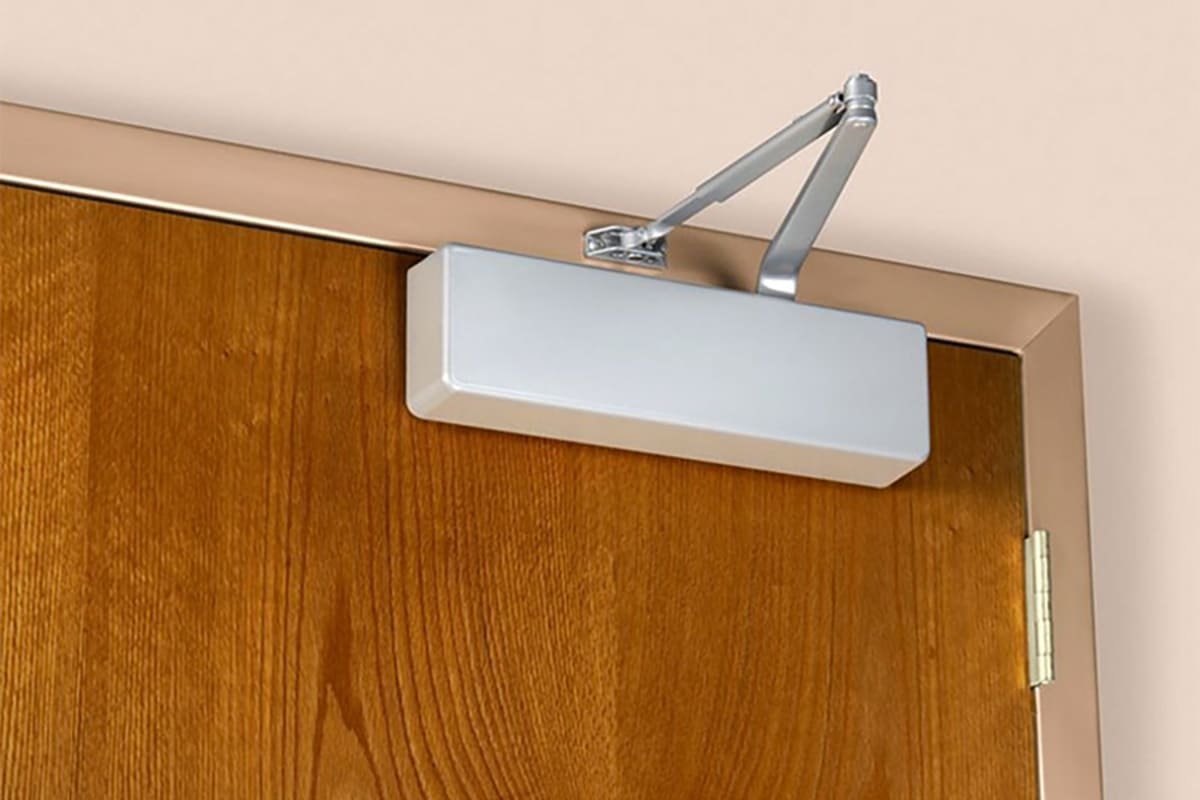
Door closers
Door closers control the closing speed and latching action. In commercial buildings, they support safety, energy control, privacy, and fire compartment performance.
Common types include:
| Closer type | Typical use | Key selection point |
|---|---|---|
| Surface-mounted closer | Offices, corridors, schools | Power size, arm type, traffic level |
| Concealed closer | Design-focused interiors | Door preparation and maintenance access |
| Floor spring | Glass and entrance doors | Door weight, hold-open angle, floor condition |
| Cam-action closer | Accessibility-sensitive projects | Opening force and smooth movement |
| Heavy-duty closer | High-traffic public areas | Durability and strong fixing |
The common European reference is EN 1154 for controlled door closing devices.10 Buyers should check the classification and make sure the closer suits the actual door size and application.
Fire-door considerations
On fire-rated doors, the closer plays a critical role because the door must close reliably. A hold-open function may require special control, such as an electromagnetic device connected to a fire alarm system.11
For hold-open devices, EN 1155 is often relevant. However, the final acceptance depends on the project specification, local code, and tested door assembly. I always recommend qualified professional evaluation for fire-door applications.
Power size is not a simple “bigger is better” decision
A stronger closer may close a door more firmly, but it can also make the door harder to open.12 That can create accessibility problems or user dissatisfaction. A weaker closer may feel comfortable, but it may fail to latch the door against seals, air pressure, or stack effect.
Buyers should consider:
- Door width
- Door weight
- Interior or exterior use
- Wind exposure
- Latch resistance
- Seal pressure
- Traffic frequency
- Required opening angle
- User group, such as children, elderly people, or public users
Coordinators for double doors
Double-leaf fire doors often require correct closing sequence. A coordinator helps the inactive leaf close before the active leaf. Without it, the latch may not engage properly.
This is another example of why commercial door hardware must be treated as a system. A lock, closer, flush bolt, and coordinator may all depend on each other.
How Should Buyers Evaluate Commercial Door Hardware Suppliers and Standards?
A product list is not enough for serious procurement. Buyers also need drawings, certificates, test reports, packing details, production control, and after-sales support. Without these, a low unit price can become expensive when installation problems appear.
Buyers should evaluate commercial door hardware suppliers by product range, manufacturing control, standard documentation, customization ability, inspection process, export experience, and compatibility support. The best supplier is not always the cheapest one. The best supplier helps buyers reduce technical, quality, and delivery risk.
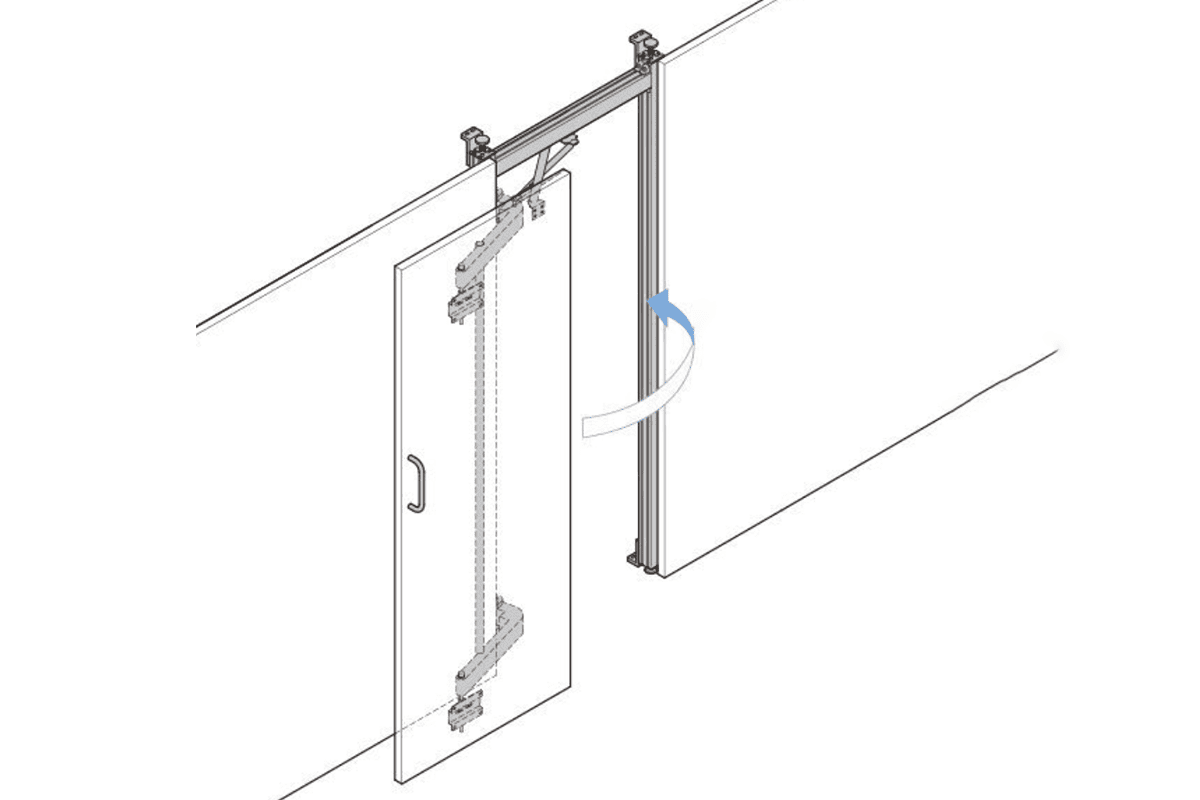
What I check before accepting a project
As a China-based manufacturer, I prefer to clarify technical details before quoting large orders. It saves time for both sides. My usual checklist includes:
Door type
Timber, steel, aluminum, glass, fire-rated, acoustic, or security door.Door size and weight
Hinges, closers, and fixing systems depend on this information.Door thickness
This affects lock forend, cylinder length, handle fixing, peephole length, and bolt length.Market standard
Euro-standard hardware may need EN references, CE documents, or fire test reports.Function by room type
Office, classroom, hotel room, bathroom, corridor, emergency exit, or service room.Finish requirement
Stainless steel, satin nickel, black, PVD, brass, antique, or custom coating.Corrosion environment
Interior dry use, humid use, coastal use, or chemical cleaning exposure.Branding and packaging
OEM logo, laser marking, stamping, color box, carton mark, and installation guide.
Documentation buyers should request
For commercial door hardware procurement, I suggest requesting documents before confirming production:
- Product drawings
- Material specifications
- Finish samples or color references
- Test reports for relevant models
- CE documents where applicable
- Fire test or classification reports where required
- Installation instructions
- Packing list
- Inspection checklist
- Sample approval record
Conclusion
Commercial door hardware should be understood as a complete door system, not a simple list of parts. Locks, cylinders, hinges, handles, closers, and accessories each affect performance, compliance, durability, and user experience. Buyers should match every item to the door type, EN reference, fire-rating need, corrosion environment, and project requirements. If you are sourcing Euro-standard hardware for door production, wholesale, or brand supply, I can help review your hardware list and prepare a compatible factory-direct solution.
"SECTION 087111 - DOOR HARDWARE (SCHEDULED BY ...", https://fpm.usc.edu/wp-content/uploads/2021/11/087102-USC-HSC-door-hardware-Guide-Specification_1.pdf. An architectural hardware reference supports that commercial door hardware is a system of components used on door openings, including locking devices, hinges, operating trim, closers, stops, viewers, and related accessories; the source is definitional and does not establish the requirements for any specific project. Evidence role: definition; source type: institution. Supports: An architectural hardware reference should support that door hardware commonly includes locking devices, hinges, operating trim, closers, stops, viewers, and other accessories used on door openings.. Scope note: The support is contextual because product categories vary by specification practice and jurisdiction. ↩
"What Should I Know About EN Standard Fire Door Hardware ...", https://sdhhardware.com/2026/08/14/what-should-i-know-about-en-standard-fire-door-hardware-regulations/. Documentation for EN 1634 supports that the standard series specifies fire resistance and smoke-control testing methods for door and shutter assemblies. Evidence role: definition; source type: institution. Supports: A standards source should confirm that EN 1634 covers fire resistance testing for doors, shutters, and related assemblies.. ↩
"EN 16034", https://en.wikipedia.org/wiki/EN_16034. EU construction-product guidance supports that CE marking and declared performance are tied to a product’s intended use and assessed characteristics, while fire-test evidence is generally interpreted in relation to the tested or classified assembly; this supports the need to verify the exact model and configuration rather than treating a mark as universal proof. Evidence role: general_support; source type: government. Supports: An EU construction-products source or fire-door classification guidance should support that declared performance and test evidence are linked to defined products, intended uses, and configurations.. Scope note: The support is contextual because CE-marking rules and extended-application rules differ by product standard and market. ↩
"EN 12209:2003 - 64_e_stf", https://sdhhardware.com/wp-content/uploads/2022/12/Euro-profile-mortise-lock-standard-EN12209.pdf. Documentation for EN 12209 supports that the standard classifies mechanically operated locks and latches across performance attributes such as durability, door mass, fire or smoke door suitability, safety, corrosion resistance, security, and field of application. Evidence role: definition; source type: institution. Supports: A standards body or standards-summary source should confirm the classification fields used by EN 12209 for mechanically operated locks and latches.. ↩
"BS EN1303 for Euro profile lock cylinder - SDH hardware", https://sdhhardware.com/2022/12/02/bs-en1303-euro-profile-lock-cylinder/. Documentation for EN 1303 supports that cylinders for locks are classified by performance characteristics including durability, key-related security, attack resistance, corrosion resistance, and temperature resistance. Evidence role: definition; source type: institution. Supports: A standards source should confirm that EN 1303 classifies cylinders for locks using durability, security, attack resistance, corrosion, and temperature-related performance categories.. ↩
"Towards eliminating friction and wear in plain bearings ... - PMC", https://pmc.ncbi.nlm.nih.gov/articles/PMC10576080/. Tribology literature comparing rolling-element and plain sliding bearings supports the mechanism that rolling contacts can reduce friction and wear under appropriate load, alignment, and lubrication conditions; this provides contextual support for the smoother operation expected from ball-bearing hinges but does not directly test every commercial hinge design. Evidence role: mechanism; source type: paper. Supports: A tribology or mechanical-engineering source should support the general mechanism that rolling-element contacts can reduce sliding friction and wear compared with plain sliding contacts under suitable conditions.. Scope note: The support is contextual because hinge performance also depends on material, load, lubrication, installation quality, and duty cycle. ↩
"Euro butt hinge- BS EN 1935 - SDH hardware", https://sdhhardware.com/2022/12/20/euro-butt-hinge-bs-en-1935/. Documentation for EN 1935 supports that the standard applies to single-axis hinges for building hardware and provides a classification system for their performance. Evidence role: definition; source type: institution. Supports: A standards source should confirm that EN 1935 applies to single-axis hinges and classifies their performance for building hardware applications.. ↩
"Marine Atmospheric Corrosion of Carbon Steel: A Review - PMC - NIH", https://pmc.ncbi.nlm.nih.gov/articles/PMC5506973/. Atmospheric corrosion guidance such as ISO 9223 supports that humidity, chlorides, and exterior exposure are key factors in environmental corrosivity, providing a basis for specifying higher corrosion resistance in coastal or humid locations than in dry interior spaces. Evidence role: mechanism; source type: institution. Supports: A corrosion standard or institutional corrosion source should support that humidity, chloride exposure, and exterior atmospheric conditions increase corrosion risk and affect material or coating selection.. Scope note: The support is contextual because the exact hardware grade still depends on local exposure, cleaning chemicals, material composition, and coating performance. ↩
"Top 10 stainless steel BS EN 1906 CE marked fire-rated door ...", https://sdhhardware.com/2022/11/30/fire-rated-door-handle-suppliers-and-manufacturers/. Documentation for EN 1906 supports that the standard applies to lever handles and knob furniture for building hardware and sets out performance classification requirements. Evidence role: definition; source type: institution. Supports: A standards source should confirm that EN 1906 applies to lever handles and knob furniture and classifies their performance.. ↩
"Architectural Hardware EN Standards", https://sdhhardware.com/2025/02/13/architectural-hardware-en-standards/. Documentation for EN 1154 supports that the standard applies to controlled door closing devices and specifies performance classification for such products. Evidence role: definition; source type: institution. Supports: A standards source should confirm that EN 1154 applies to controlled door closing devices and classifies their performance.. ↩
"Door Hold Open Devices - Facilities and Operations", https://fo.umich.edu/fosg/door-hold-open-devices/. Fire-door hardware guidance and standards for electrically powered hold-open devices support that hold-open functions on fire doors are typically required to release automatically upon fire detection or alarm activation; the exact acceptable arrangement depends on the applicable code and approved door assembly. Evidence role: general_support; source type: institution. Supports: A fire-safety standard or institutional guidance should support that hold-open devices on fire doors must release automatically under fire-alarm or detection conditions.. Scope note: The support is contextual because local fire codes and project approvals determine the precise control method. ↩
"Chapter 4: Entrances, Doors, and Gates", https://www.access-board.gov/ada/guides/chapter-4-entrances-doors-and-gates/. Accessibility guidance on door opening force supports that excessive resistance at a door can impede use, and door-closer power or adjustment can contribute to that resistance; this supports the stated trade-off but does not determine the correct closer size for a specific opening. Evidence role: mechanism; source type: government. Supports: An accessibility standard or technical guidance should support that door opening force is regulated or considered for accessibility and can be affected by closer settings or power.. Scope note: The support is contextual because opening force also depends on seals, hinges, air pressure, latch resistance, and local accessibility requirements. ↩