Heavy-Duty Hinges vs Standard Hinges: What Makes the Difference?
Heavy-duty hinges become important when a door is too heavy, too wide, or too frequently used for ordinary hardware. Many buyers only compare size and price, but that can hide the real risk. A hinge that looks strong may still sag, deform, or fail if its structure, material, shaft, welding, and test grade are not suitable.
Heavy-duty hinges differ from standard hinges because they are designed and manufactured to support higher door weight, higher opening cycles, and tougher installation conditions1. The difference comes from tested load grade, leaf thickness, shaft diameter, material strength, CNC machining accuracy, welding quality, and verified certification evidence—not simply from being larger or more expensive.
I often explain this to door factory buyers during product selection. The best hinge choice is not only a catalog decision. It is a combined evaluation of the door weight, hinge type, hinge grade, material, processing method, installation environment, and the supplier’s test documents.
Why do heavy-duty hinges need more than extra size?
A heavy door creates stress that a normal hinge may not show during a quick visual check. The problem starts when buyers assume that a thicker-looking hinge is enough. The risk grows after installation, because sagging, loose rotation, and frame damage usually appear over time.
Heavy-duty hinges need more than extra size because load capacity is created by the whole hinge system. The leaf, shaft, bearing structure, material, welding, machining accuracy, and tested grade all affect performance2. A larger hinge can still perform poorly if the pin, axis, or material is not engineered for heavy-use doors.
Size is only one part of strength
I have seen buyers compare two hinges by placing them side by side on a table. One hinge is slightly bigger, so they believe it must be stronger. That approach is understandable, but it is incomplete. A hinge works as a rotating load-bearing component. It must carry vertical load, resist twisting force, and maintain smooth movement through many opening cycles.
For door hardware procurement, I usually suggest looking at seven practical factors:
- Door weight and width
- Number of hinges per door
- Leaf thickness
- Shaft or pin diameter
- Material grade
- Processing quality
- Verified test standard or certificate
A hinge leaf may look wide, but a weak shaft can become the failure point. A shaft may look large, but poor axis control can cause uneven rotation. A strong material may still fail if welding between the leaf and shaft is inconsistent.
The main comparison points
| Evaluation point | Standard hinges | Heavy-duty hinges |
|---|---|---|
| Typical application | Light to medium doors | Heavy doors, high-use doors, project doors |
| Main design concern | Basic swing function | Load, cycle life, stability, safety |
| Leaf thickness | Often lighter | Often thicker, depending on design |
| Shaft diameter | Usually smaller | Usually larger or more precisely machined |
| Processing method | Basic forming and assembly | CNC machining, controlled welding, tighter inspection |
| Test evidence | May be limited | Should include verified grade or test report |
| Buyer risk if mismatched | Noise, looseness | Door sagging, hardware failure, safety issue |
Why “same appearance” can be misleading
A hinge can have the same external length and width as another hinge, but the internal strength can be different. This is common in architectural hardware. Small changes in steel thickness, shaft tolerance, knuckle alignment, bearing fit, and welding method can change long-term performance.
That is why I avoid saying, “This hinge is heavy-duty because it is bigger.” I prefer a more reliable statement:
A heavy-duty hinge should be proven by design, material, manufacturing process, and test evidence.
For B2B buyers, this matters because a failed hinge does not only create a replacement cost. It can also create project complaints, installation delays, warranty claims, and brand damage. A door factory may save a small amount on hardware, but lose much more if the door leaf drops after repeated use.
When should buyers choose heavy-duty hinges over standard hinges?
A buyer may face pressure to reduce cost, especially when many doors are involved in one project. The problem is that hinge cost is small compared with the total door system. If the hinge is under-specified, the whole door can become unreliable.
Buyers should choose heavy-duty hinges when the door weight, door size, traffic level, fire-rating requirement, or project risk is beyond normal hinge conditions. As a practical reference, doors above around 120 kg3 should move from “standard hinge” thinking to a full heavy-duty door hardware evaluation.
Door weight is the first warning sign
In many factory discussions, door weight is the fastest way to identify risk. A light interior wooden door may work well with standard butt hinges. A heavy solid-core door, steel door, fire-rated door, or oversized entrance door needs more careful calculation.
For doors above around 120 kg, I normally recommend that buyers stop asking only, “What hinge size do I need?” The better question is:
What tested hinge design can safely support this door weight under the actual installation conditions?
This is where EN 1935 becomes relevant. EN 1935 is a European standard for single-axis hinges used on doors and windows.4 In hinge procurement, Grade 14 is often used as a key reference for high-load hinge applications. However, buyers should not assume that every large hinge meets Grade 14. They should verify the test report, product code, loading conditions, and installation details.
Application conditions also matter
A 100 kg door in a private room and a 100 kg door in a hotel corridor do not create the same hinge demand. The hotel door may open thousands of times more often.5 It may also face higher impact, closer force, and user abuse.
Common situations that may require heavy-duty evaluation include:
- Fire-rated doors
- Acoustic doors
- Steel security doors
- Oversized timber doors
- Hotel, hospital, school, and commercial doors
- Doors with automatic closers
- Doors in high-traffic public areas
- Wide doors with higher leverage force
A practical buyer checklist
| Question | Why it matters |
|---|---|
| What is the exact door weight? | Load capacity must match real door data. |
| What is the door width and height? | Wider doors create more leverage on the hinge.6 |
| How many hinges will be installed? | Load distribution depends on hinge quantity and placement. |
| Is the door fire-rated? | Hardware may need fire-rated certification evidence. |
| Is a door closer used? | Closers add dynamic force during operation.7 |
| What standard is required? | EN 1935 grade, CE documents, or project specifications may apply. |
| What substrate is used? | Steel frame, timber frame, and aluminum frame behave differently. |
Why I separate product selection from final engineering approval
As a manufacturer, I can explain hinge structure, production method, and test data. Still, final application-specific decisions should be reviewed by the door system designer, project engineer, or qualified professional. The same hinge may perform differently depending on screw fixing, frame strength, installation accuracy, and door closer adjustment.
This is especially important when a supplier claims a load capacity such as 160 kg. That number should be connected to a verified test report, certificate, or grade document. It should not be treated as a universal promise for every door in every installation.
How do heavy-duty hinges create higher load capacity in butt hinge designs?
Butt hinges may look simple, so buyers sometimes underestimate the manufacturing behind them. The problem is that small production differences can affect load performance. If the hinge shaft is inaccurate or the welding is weak, the door may lose alignment under long-term use.
Heavy-duty hinges create higher load capacity in butt hinge designs through thicker leaves, larger shaft diameter, stronger materials, CNC-machined shaft control, accurate axis alignment, and reliable welding between the hinge leaf and shaft. Laser welding can improve strength and consistency when it is properly controlled and inspected.8

The shaft is not a minor detail
In a butt hinge, the shaft or pin is one of the most important parts. It carries rotational load and helps keep the hinge axis stable. If the shaft diameter is too small, or if the pin is not accurately processed, the hinge may develop play. That play can become door sagging over time.
In our factory work, I pay close attention to CNC-machined shafts for higher-load hinge designs. CNC processing helps control9:
- Pin diameter tolerance
- Straightness
- Surface finish
- Fit between pin and knuckle
- Rotational consistency
- Axis alignment
A small tolerance difference may not look serious during a sample inspection. However, it can become important after the door opens and closes thousands of times.
Laser welding improves consistency when controlled well
For some heavy-duty butt hinge designs, the connection between the hinge leaf and shaft area is critical. Laser welding can help create a cleaner and more consistent joint than less controlled welding methods. It can also reduce deformation when the process is properly set.
That said, welding quality should not be judged only by appearance. Buyers should ask suppliers how they inspect welding strength and consistency. A good quality control process may include:
- Raw material inspection
- Dimensional checking before welding
- Welding parameter control
- Post-welding visual inspection
- Axis alignment checking
- Opening and closing function test
- Finished product inspection
- Batch record traceability
At SDH Hardware, our production background includes in-house manufacturing, material selection, machining, welding, and finished product inspection. I mention this not as a substitute for buyer verification, but to explain why factory process matters in hinge evaluation.
American-standard and European-standard hinge differences
One practical comparison comes from American-standard hinges and European-standard hinges. In some similar-size products, American-standard hinges may carry more because they may use thicker leaves and larger shaft diameters. For example, one design may use a 3.5 mm leaf, while a similar European-style hinge may use a 3.0 mm leaf.
This does not mean every American-standard hinge is stronger. It means buyers should compare actual specifications, not only nominal size.
| Feature | Possible European-style hinge | Possible American-style hinge | Buyer note |
|---|---|---|---|
| Leaf thickness | 3.0 mm | 3.5 mm | Thicker leaves can improve stiffness. |
| Shaft diameter | Smaller | Larger | Larger shafts can improve load stability. |
| External size | Similar | Similar | Same size does not prove same strength. |
| Test grade | Product-dependent | Product-dependent | Always verify test reports. |
Why installation still matters
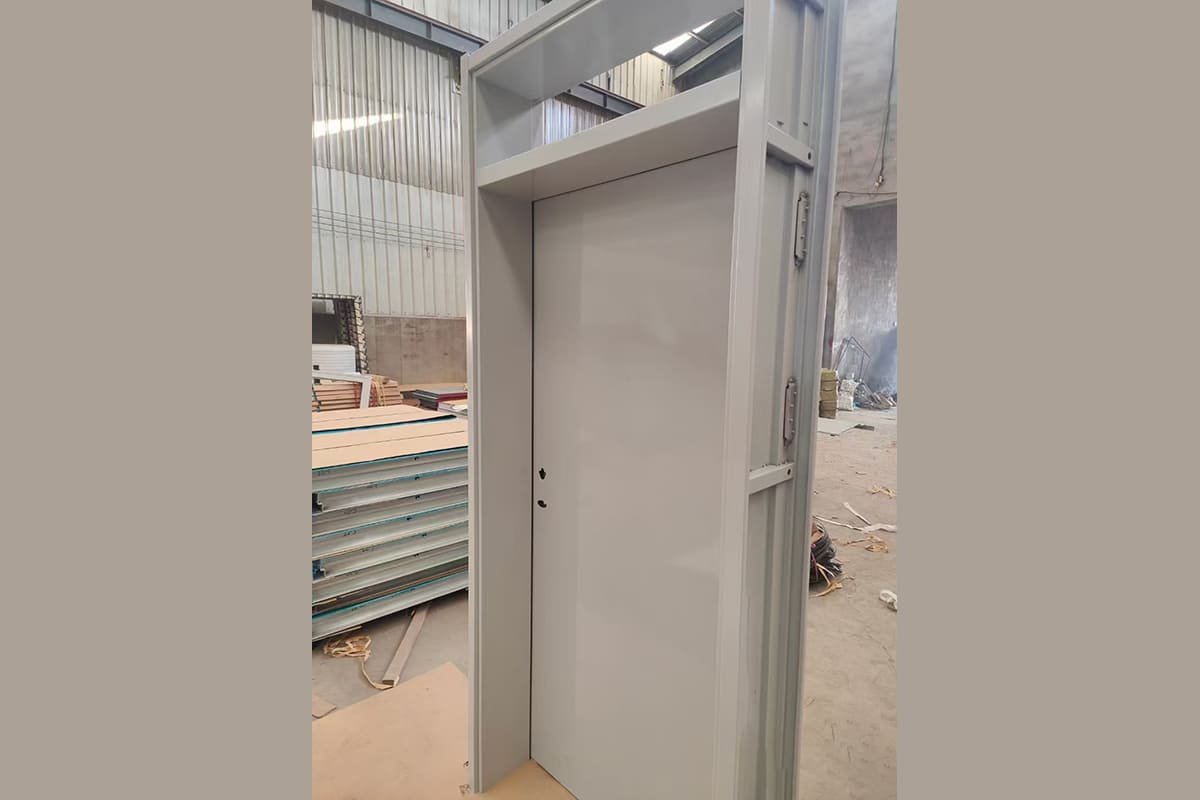
Even a well-made hinge can fail if it is installed incorrectly. Screws must match the frame material. Reinforcement plates may be needed for steel doors. Hinge spacing must follow the door design. The door closer must be adjusted correctly.
So, I see load capacity as a chain. The hinge is one link. The door leaf, frame, fasteners, reinforcement, closer, and installer are the other links. A strong hinge cannot compensate for a weak frame or poor fixing method.
How do heavy-duty hinges compare with stronger concealed hinges?
Concealed hinges create a different problem for buyers. They look modern and clean, but their internal structure is less visible. A buyer may assume that two concealed hinges with the same outer size have the same load performance. That assumption can lead to a costly mismatch.
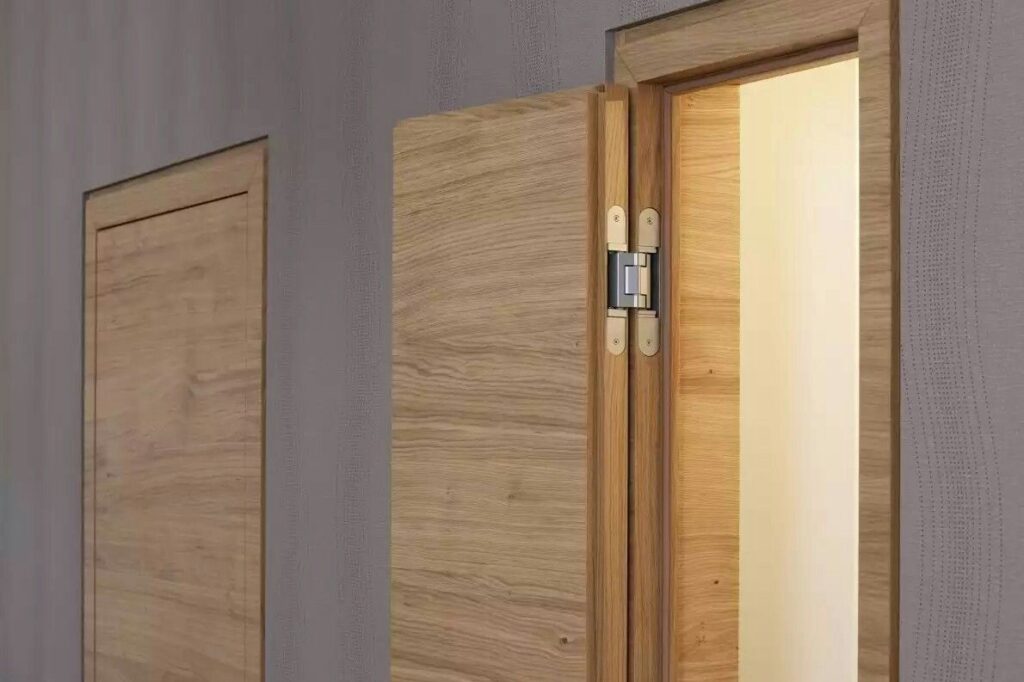
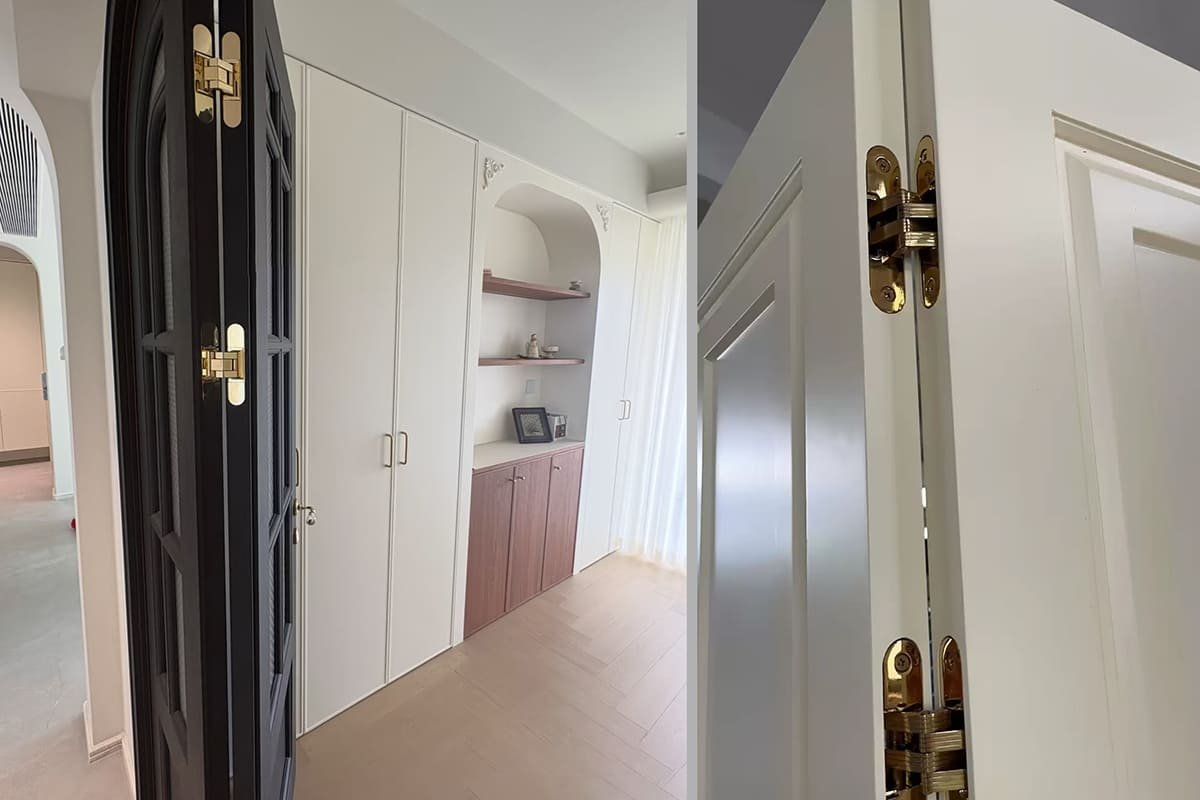
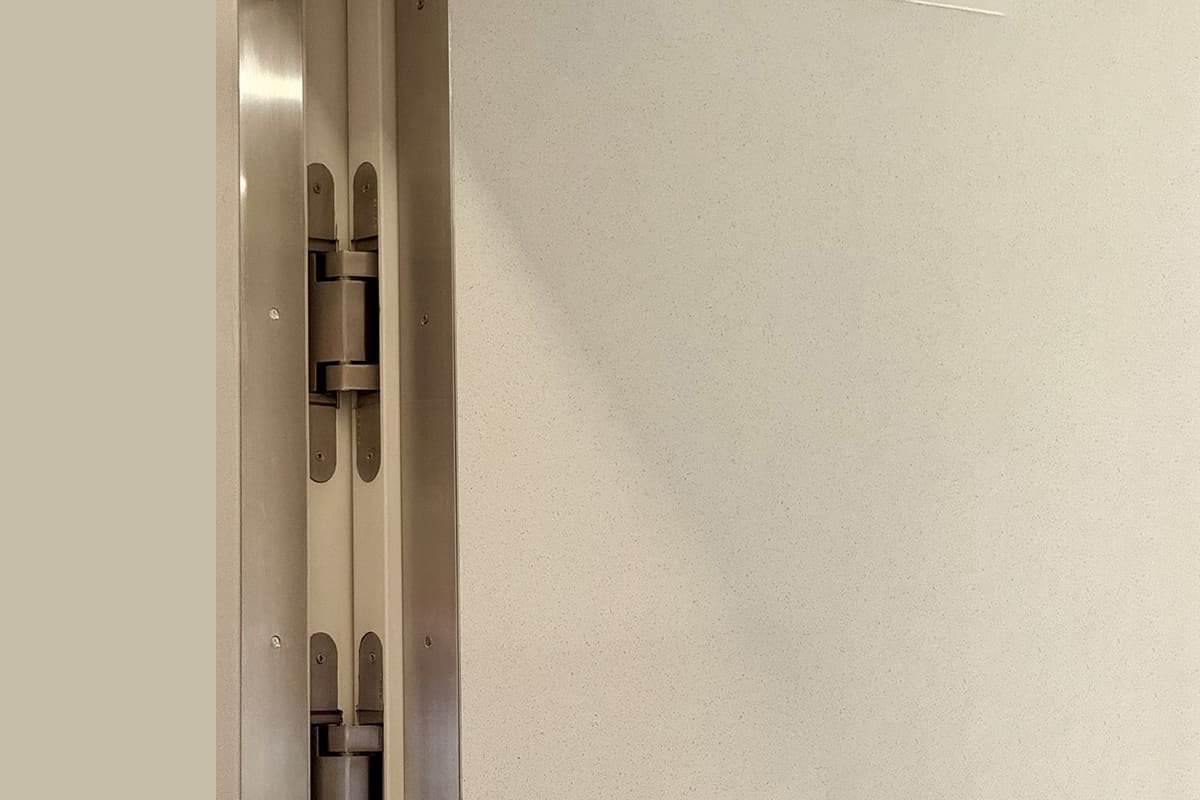
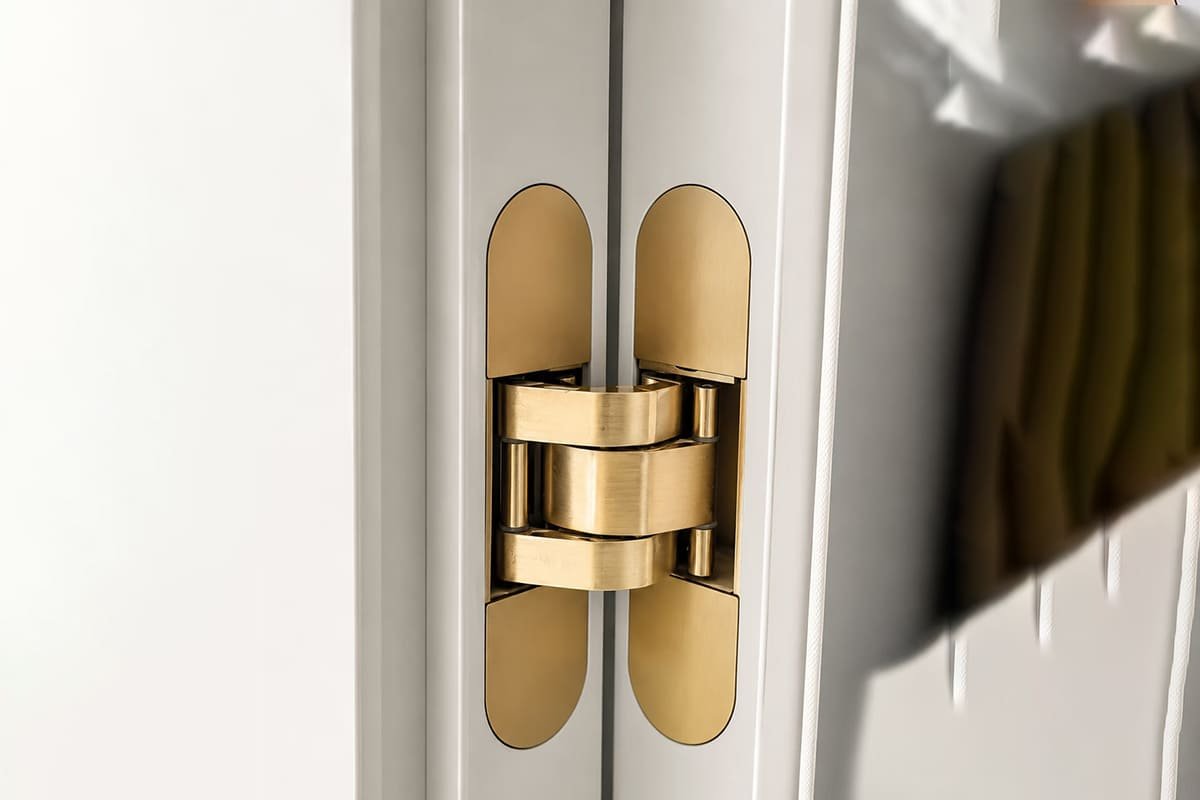
Heavy-duty hinges and stronger concealed hinges improve load capacity in different ways. Butt hinges often rely on larger size, thicker leaves, stronger shafts, and welding quality. Concealed hinges may increase strength within the same external size by changing material, such as upgrading from zinc alloy to stainless steel.
Same size does not mean same strength
Concealed hinges are a useful example of why external size can be misleading. Two concealed hinge bodies may fit the same routing pocket. They may appear equal in a catalog drawing. However, one may use zinc alloy, while another uses stainless steel. The stainless steel version can offer better strength and durability in suitable designs.10
This is important for door manufacturers because concealed hinges are often selected early in the door design stage. The routing size, frame preparation, and adjustment range may already be fixed. If the buyer later discovers that the selected hinge is not strong enough, changing the hinge can affect the whole door production plan.
Butt hinges and concealed hinges solve load differently
| Factor | Heavy-duty butt hinges | Strong concealed hinges |
|---|---|---|
| Visible appearance | Visible on door edge | Hidden when door is closed |
| Main strength path | Leaf, knuckle, shaft, welding | Internal arms, body material, pivot structure |
| Common upgrade method | Thicker leaf, larger shaft, CNC pin, welding | Stronger body material, internal mechanism upgrade |
| Installation concern | Screw fixing and frame reinforcement | Accurate routing and adjustment |
| Buyer risk | Sagging from weak shaft or leaf | Hidden internal wear or body deformation |
| Best evaluation method | Spec sheet + test report + sample inspection | Material check + test report + installation trial |
Material upgrades in concealed hinges
For concealed hinge designs, load improvement may come from material change rather than visible dimension change. A stainless steel concealed hinge can provide stronger mechanical properties than a zinc alloy version, depending on design and test conditions.
However, I avoid saying that stainless steel is always better for every application. A properly engineered zinc alloy concealed hinge may work well for lighter doors. A stainless steel version may be more suitable when the project requires higher load resistance, better durability, or stronger performance in demanding door systems.
Buyers should ask suppliers for:
- Material declaration
- Technical drawing
- Load test report
- Cycle test result
- Installation instructions
- Recommended door weight range
- Fire-rated evidence if required
Why concealed hinge evaluation needs installation trials
Concealed hinges depend heavily on routing precision. If the pocket is too loose, the hinge body may shift. If the pocket is too tight, adjustment may become difficult. If the frame is weak, the hinge cannot transfer load properly.
For door factories, I recommend testing concealed hinges on a real door sample before mass production. The trial should check:
- Door alignment after installation
- Opening and closing smoothness
- Adjustment range
- Gap consistency
- Screw holding strength
- Door sag after repeated operation
- Compatibility with door closer, seal, and frame
A concealed hinge is not only a hardware item. It is part of the door machining plan. This is why supplier technical drawings and sample confirmation are so important before order confirmation.
What supplier evidence should buyers verify before ordering heavy-duty hinges?
Many suppliers can describe a hinge as strong. The problem is that marketing words do not carry a door. Buyers need evidence that connects the product design to tested performance. Without documents, the procurement team may not be able to defend the selection later.
Buyers should verify heavy-duty hinges by checking technical drawings, material specifications, leaf thickness, shaft diameter, welding or processing method, test reports, CE documents, fire-rated certification if needed, and inspection records. For EN 1935 Grade 14 or high-load claims, the exact product model and report details should match the supplied hinge.
Certification should match the exact product
A common procurement mistake is accepting a general certificate without checking whether it applies to the exact hinge model. A certificate or report should be traceable. It should show the tested product, size, material, grade, and standard. If a supplier claims EN 1935 Grade 14, buyers should ask for the supporting document and compare it with the ordered item.
For fire-rated doors, the same principle applies. Fire-rated certification is not a decorative document. It must be relevant to the door set, hinge type, installation method, and market requirement.11 Buyers should verify the document with their project consultant or certification authority when needed.
What I would ask a supplier
When I evaluate a hinge for a heavy door project, I prefer direct technical questions:
- What is the leaf thickness?
- What is the shaft diameter?
- What material is used for the leaf, shaft, and internal parts?
- Is the shaft CNC-machined?
- Is the hinge leaf and shaft area welded? If yes, what welding process is used?
- What inspection method checks axis alignment?
- What standard was used for testing?
- Does the test report match this exact size and model?
- What door weight and usage condition does the supplier recommend?
- What installation method is required?
These questions help separate real manufacturing capability from catalog claims.
Supplier evaluation table
| Evidence type | What buyers should check | Why it matters |
|---|---|---|
| Technical drawing | Size, hole position, tolerances | Confirms door and frame compatibility |
| Material specification | Steel, stainless steel, zinc alloy, brass | Affects strength, corrosion resistance, and cost |
| Leaf thickness | Actual measured thickness | Influences stiffness and load resistance |
| Shaft diameter | Actual pin size and tolerance | Influences rotation stability |
| Process description | CNC machining, laser welding, surface treatment | Shows how consistency is controlled |
| Test report | Standard, grade, model, date, lab details | Supports load and cycle claims |
| CE document | Scope and product match | Helps with EU market compliance |
| Fire-rated certificate | Door set relevance and rating | Needed for fire door projects |
| QC record | Batch inspection and finished product checks | Reduces mass production risk |
Factory capability matters for ODM and OEM buyers
Door factories and hardware brands often need more than a standard item. They may need a different surface treatment, logo stamping, laser marking, packaging, screw set, or project-specific configuration. This is where factory-direct supply can reduce communication gaps.
At SDH Hardware, our business context includes over 10 years of architectural door hardware production experience, independent factory operations, and a portfolio covering mortise locks, lever handles, butt hinges, concealed hinges, cylinders, and door accessories. Our products are available with CE and fire-rated certification documents for relevant items, which buyers should verify according to their project and market requirements.
I believe the best B2B supplier is not only the one with the lowest unit price. The better supplier helps buyers reduce project risk by providing:
- Clear drawings
- Consistent production
- Material transparency
- Test evidence
- Inspection service after order completion
- ODM/OEM communication
- Packaging and branding support
- One-stop door hardware matching
The cost of wrong hinge selection
A hinge failure can create several hidden costs:
- Replacement hardware
- Re-installation labor
- Door repair or frame repair
- Project delay
- Customer complaint
- Warranty claim
- Brand reputation damage
For wholesalers and door manufacturers, these costs can be much higher than the price difference between standard and heavy-duty hardware. That is why I always recommend judging hinge value by total project reliability, not only by purchase price.
Frequently Asked Questions
Are heavy-duty hinges always bigger than standard hinges?
No. Heavy-duty hinges are not always bigger. Some designs improve performance through better material, larger shaft diameter, thicker leaves, CNC machining, welding quality, or tested grade. Concealed hinges are a good example because the same external size can have different strength when the material changes.
What door weight requires heavy-duty hinges?
There is no universal number for every project. As a practical reference, doors above around 120 kg should be evaluated as heavy-duty door applications. Buyers should check hinge grade, test reports, door width, number of hinges, frame strength, and installation method before final selection.
Does EN 1935 Grade 14 mean a hinge can carry 160 kg?
EN 1935 Grade 14 is an important high-load reference, but buyers should verify the exact test report. Any 160 kg capacity claim should be tied to the tested product design, installation conditions, and certification evidence. It should not be assumed for all hinges of similar size.
Are stainless steel concealed hinges stronger than zinc alloy concealed hinges?
Stainless steel concealed hinges can offer higher strength than zinc alloy versions in suitable designs, but the final answer depends on the product structure and test data. Buyers should compare material specifications, load test reports, routing requirements, and recommended application conditions.
What should I check before ordering heavy-duty butt hinges?
You should check leaf thickness, shaft diameter, material, CNC shaft processing, welding method, axis accuracy, surface treatment, test report, CE or fire-rated documents if required, and installation instructions. You should also confirm that the report matches the exact hinge model you plan to buy.
Conclusion
Heavy-duty hinges are different from standard hinges because they are engineered for higher load, stronger structure, better processing control, and verified performance. Buyers should evaluate door weight, hinge grade, shaft diameter, leaf thickness, material, welding quality, CNC machining accuracy, and certification evidence before ordering. If you are sourcing hinges for heavy doors, fire-rated doors, or project door systems, I recommend asking for drawings, samples, and test documents early. Contact SDH Hardware to discuss factory-direct butt hinge and concealed hinge options for your market or project requirements.
"BS EN 1935:2002 – Single Axis Hinges", https://www.hoppe.com/in-en/contacts-service/standards/bs-en-1935/. Building-hardware hinge standards such as EN 1935 and ANSI/BHMA A156.1 classify hinges by tested performance characteristics, including durability cycles and load-related criteria, supporting the distinction between ordinary and heavy-duty hinge applications. Evidence role: definition; source type: institution. Supports: A hinge standard classifies hinges by performance factors such as durability, door mass, and usage category.. Scope note: This supports the classification framework, not the performance of any specific hinge model. ↩
"design, fabrication, and testing of mechanical hinges with ...", https://digitalcommons.calpoly.edu/cgi/viewcontent.cgi?params=/context/theses/article/4047/&path_info=Design__Fabrication__and_Testing_of_Mechanical_Hinges_with_Snap_Fit_Locking_Mechanisms_in_Rigid_Origami_Structures.pdf. Mechanical analyses of hinged joints show that load transfer depends on component geometry, material strength, pin or bearing contact, alignment, and connection quality, which supports evaluating a hinge as an integrated load-bearing assembly rather than by visible size alone. Evidence role: mechanism; source type: research. Supports: Hinge performance is influenced by geometry, material properties, pin or bearing design, manufacturing accuracy, and tested configuration.. Scope note: The source would provide general engineering support and may not address architectural door hinges specifically. ↩
"BS EN 1935:2002 – Single Axis Hinges", https://www.hoppe.com/in-en/contacts-service/standards/bs-en-1935/. EN 1935 hinge classifications include test door-mass categories at and above approximately 120 kg, providing standards-based context for treating doors in this range as requiring higher-duty hinge evaluation. Evidence role: general_support; source type: institution. Supports: Hinge grading systems include door-mass categories around 120 kg and above, making 120 kg a reasonable point for more rigorous evaluation.. Scope note: The standard provides classification context; it does not make 120 kg a universal engineering cutoff for all door systems. ↩
"BS EN 1935:2002 – Single Axis Hinges", https://www.hoppe.com/in-en/contacts-service/standards/bs-en-1935/. EN 1935, titled for building hardware single-axis hinges, specifies requirements and test methods for hinges used on doors and windows, confirming the standard’s scope. Evidence role: definition; source type: institution. Supports: EN 1935 is the European standard for building hardware single-axis hinges used on doors and windows.. ↩
"Operating Room Traffic, Door Opening and Closing", https://pubmed.ncbi.nlm.nih.gov/41527873/. Research and hardware standards on door-use categories distinguish high-traffic commercial openings from low-frequency private openings, supporting the premise that a hotel corridor door can accumulate many more operating cycles than a private-room door. Evidence role: general_support; source type: research. Supports: High-traffic commercial doors are subject to substantially greater operational cycling than low-use residential or private-room doors.. Scope note: The source would support the use-category difference; exact cycle counts vary by building, occupancy, and door location. ↩
"28.18 -- Open door to demonstration preparation area", https://web.physics.ucsb.edu/~lecturedemonstrations/Composer/Pages/28.18.html. In elementary statics, moment is calculated as force multiplied by perpendicular distance from the pivot, so a wider door increases the hinge-side moment for a given door weight or applied force. Evidence role: mechanism; source type: education. Supports: Torque or moment increases with the perpendicular distance between the force and pivot, explaining why wider doors impose greater leverage on hinges.. ↩
"087100 – DOOR HARDWARE - Facilities and Campus Services", https://fcs.cornell.edu/087100-door-hardware. Door closers operate by applying a controlled closing moment to the door, so their adjustment and resistance forces can contribute additional dynamic loading to the door, hinges, and frame during operation. Evidence role: mechanism; source type: education. Supports: Door closers apply controlled forces or moments to the door, which can add operational loads to hinges and fixings.. Scope note: The magnitude of the added load depends on closer type, adjustment, door size, and installation. ↩
"A Literature Review on Effect of Laser Welding Parameters ...", https://www.academia.edu/6841194/A_Literature_Review_on_Effect_of_Laser_Welding_Parameters_on_Mechanical_Properties_and_Microstructure. Studies of laser beam welding report that concentrated heat input and controlled process parameters can improve weld precision, repeatability, and distortion control, supporting its potential value for consistent hinge joints. Evidence role: mechanism; source type: paper. Supports: Laser welding can offer precise heat input, repeatability, and low distortion, which may improve joint consistency when process parameters are controlled.. Scope note: The evidence is process-level; it does not prove that any particular hinge weld is strong without product-specific testing and inspection. ↩
"Computer numerical control", https://en.wikipedia.org/wiki/Computer_numerical_control. Manufacturing-engineering references describe CNC machining as a computer-controlled process capable of repeatable dimensional accuracy and controlled surface finish, supporting its use for precision hinge shafts and mating parts. Evidence role: mechanism; source type: education. Supports: CNC machining is used to achieve controlled dimensions, repeatability, and surface finish in manufactured components.. Scope note: This supports the general capability of CNC machining; actual hinge quality still depends on machine condition, tooling, inspection, and process control. ↩
"Zinc Alloy vs Stainless Steel: The Differences & Benefits", https://www.patriotfoundry.com/news/zinc-alloy-vs-stainless-steel/. Materials data show that stainless steels commonly provide high strength and corrosion resistance compared with many zinc casting alloys, supporting the possibility of improved durability in a properly designed stainless steel concealed hinge. Evidence role: general_support; source type: research. Supports: Stainless steels often have mechanical and corrosion-resistance properties that can exceed those of common zinc alloys, depending on alloy grade and design.. Scope note: Material properties alone do not determine hinge capacity; geometry, casting or machining quality, pivots, fasteners, and testing remain decisive. ↩
"Doors, Windows and Related Hardware Application Guide", https://www.ul.com/thecodeauthority/knowledge/ul-fire-rated-doors-guide. Fire-door regulations and standards treat the door, frame, hardware, and installation as an assembly, so hinge certification is relevant only when it matches the tested or listed configuration and applicable code requirements. Evidence role: expert_consensus; source type: government. Supports: Fire door compliance is assessed at the assembly or listed-component level and depends on approved hardware and installation conditions.. Scope note: Specific compliance obligations vary by country, listing body, building code, and project specification. ↩