
Pull Handles With Mounting Plates: What Should You Know?
Pull handles with mounting plates can look simple, but a wrong specification can create drilling mismatches, unstable installation, and avoidable after-sales issues. If a buyer selects only by appearance, small details can become costly. I recommend checking installation fit, material, finish, and mounting configuration before confirming samples or bulk orders.
Pull handles with mounting plates should be selected by center distance, overall length, tube diameter, stainless steel grade, finish, and one-side or two-side installation method. The mounting plate is not only decorative. It can help cover existing holes, support installation, and keep the handle visually consistent with the door hardware series.
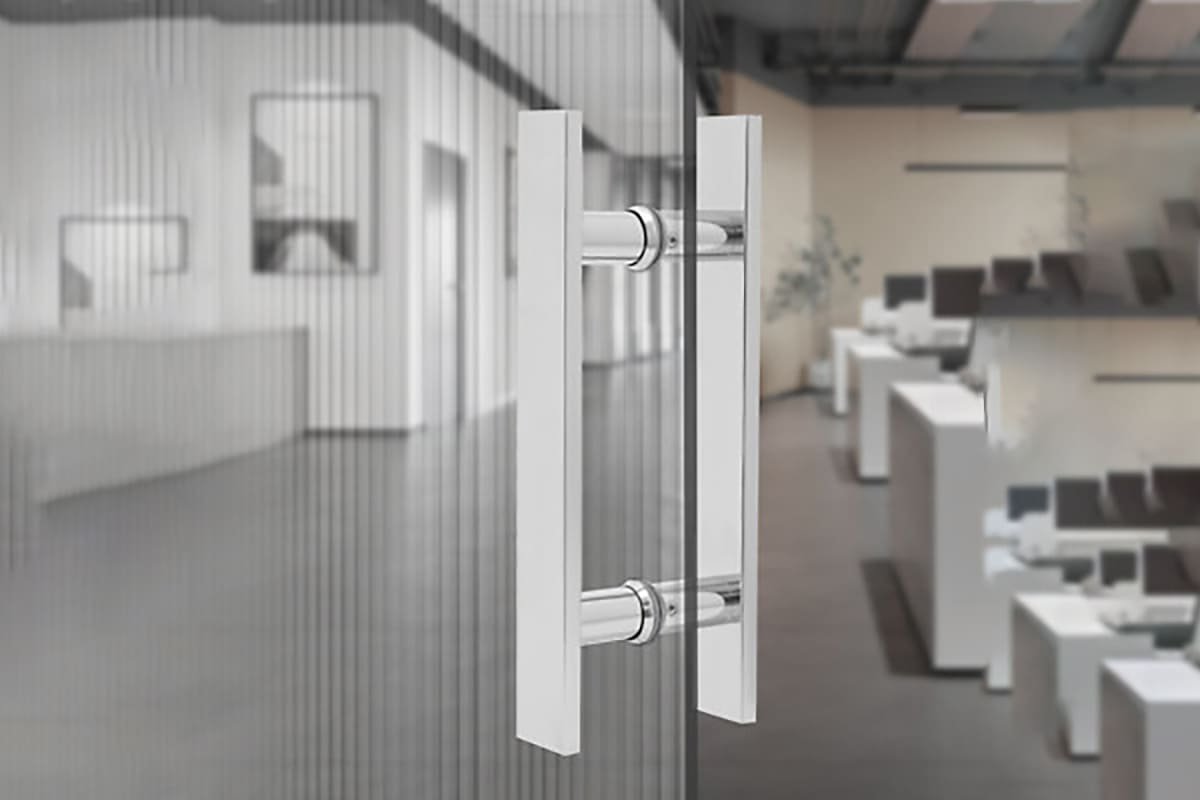
In my factory-side work with door manufacturers and hardware buyers, I see that most problems come from unclear specifications before quotation. A pull handle may look correct in a catalog, but the door, drilling position, and use environment decide whether it will work well.
How Should You Choose the Size of Pull Handles With Mounting Plates?
Size mistakes are one of the fastest ways to turn a simple handle order into a difficult replacement problem. If the center distance does not match the door drilling, the installer may need rework. That delay affects both project timing and customer confidence.
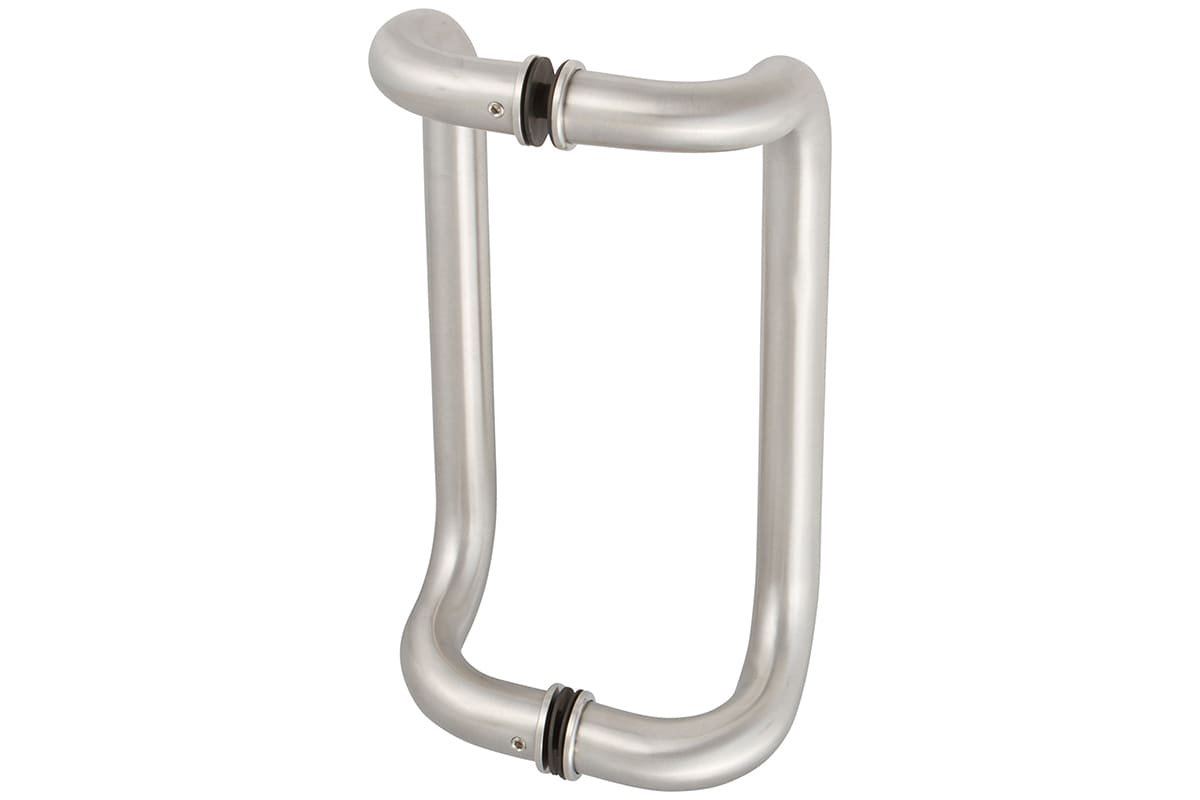
The size of pull handles with mounting plates should start with the center-to-center distance between the two fixing points1. This measurement helps confirm the handle’s overall length, drilling compatibility, and replacement suitability. Buyers should also check plate length, plate width, handle projection, and door thickness before sampling.
Why center distance comes first
The center distance is the measurement between the two main mounting screw centers. I always ask buyers to confirm this dimension early because it controls the installation match more than the visible length does.
A handle can have a similar overall appearance but still use a different center distance. That difference matters when the door is already drilled. It matters even more for replacement jobs, where the new handle should cover old holes and align with existing fixing points.
For B2B buyers, this one number can reduce many problems:
- It helps the factory check whether an existing model fits.
- It helps the buyer compare samples from different suppliers.
- It reduces wrong drilling during door production.
- It supports consistent product line planning.
- It helps avoid visible unused holes on replacement doors.
How overall length relates to center distance
Overall length is still important, but it should not be checked alone. The same overall length may have different fixing positions. Also, two handles with the same center distance may have different end extensions, depending on the design.
For example, a buyer may ask for a 300 mm pull handle. That request is useful, but it is not complete. I would still need to confirm whether the center distance is 200 mm, 224 mm, or another value. I would also check whether the mounting plate is long enough to support the installation and cover the required area.
| Specification | What it controls | Why buyers should confirm it |
|---|---|---|
| Center distance | Screw hole alignment | It decides drilling match and replacement fit |
| Overall handle length | Visual proportion and grip range | It affects design balance on the door |
| Plate length | Coverage and appearance | It can cover holes or marks from old hardware |
| Plate width | Visual weight and installation area | It should suit the door style and fixing space |
| Projection | Hand clearance from door surface2 | It affects comfort and practical use |
| Door thickness | Fixing accessory choice | It affects screw length and installation method |
Replacement orders need extra care
Replacement work often has less flexibility than new door production. The old drilling pattern already exists. The new pull handle with a mounting plate must either match the holes or cover the old marks properly.
I usually suggest that buyers provide:
- A photo of the existing door and handle.
- A drawing or measurement of the center distance.
- The old handle’s overall length and plate size.
- Door thickness and door material.
- Required finish and installation side.
This information helps a manufacturer prepare a more accurate quotation. It also helps avoid the common situation where a handle looks correct in the picture but fails during installation.
New door production allows better coordination
New door production gives buyers more freedom. Door factories can design the drilling pattern around the selected handle. However, the specification still needs to be fixed before mass production starts.
For door manufacturers, I recommend setting the pull handle dimensions together with the door leaf design, lock position, hinge side, and packaging plan. This approach keeps the hardware series consistent and reduces line-side confusion.
My practical view is simple: a pull handle size is not only a catalog dimension. It is an installation instruction.
Why Does Tube Diameter Matter for Pull Handles With Mounting Plates?
Tube diameter may look like a small detail, but it changes grip feel, product appearance, and series matching. If a buyer ignores it, the handle may feel too light, look inconsistent, or fail to match other door hardware in the same project.
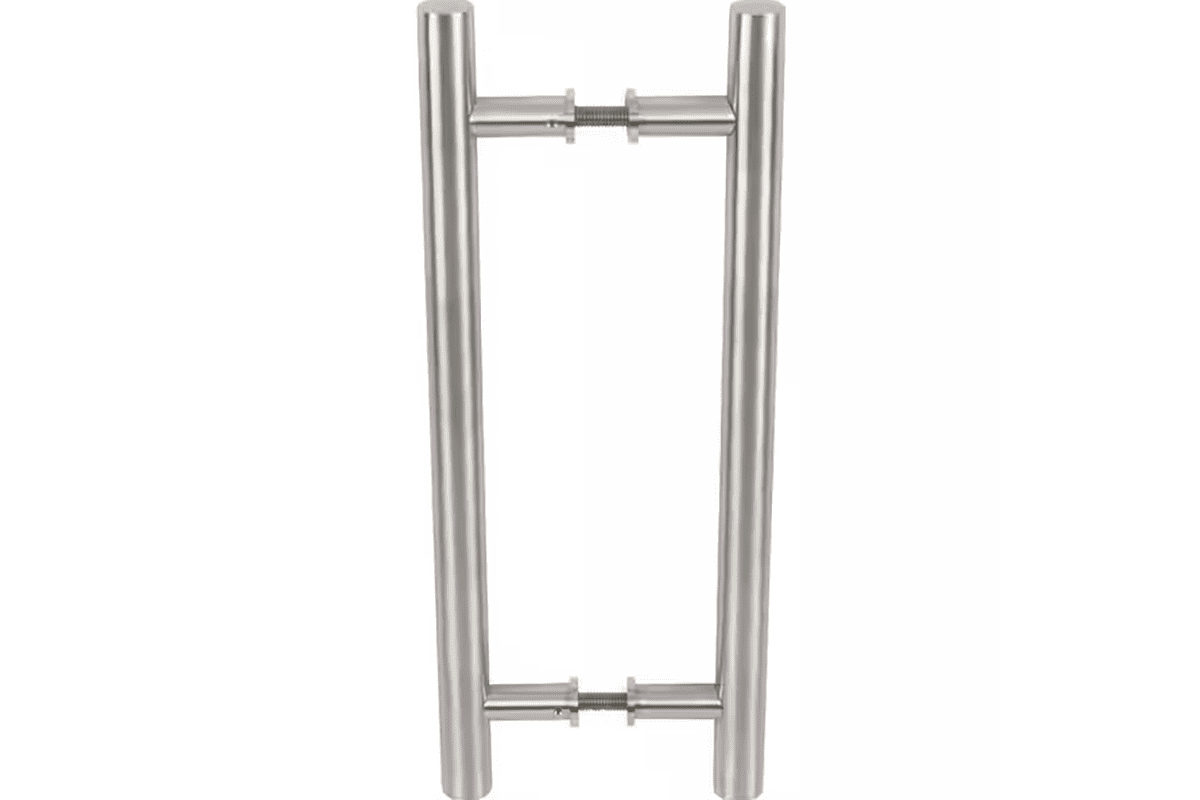
For round tube pull handles with mounting plates, tube diameter is a practical specification. Common options such as 19 mm and 21 mm affect hand comfort, visual strength, and product matching. Buyers should confirm tube diameter together with center distance, handle length, and mounting plate size.
Tube diameter affects grip feel3
A pull handle is touched every day. That makes grip comfort important. A 19 mm round tube usually gives a lighter visual effect and a slimmer grip. A 21 mm tube often feels more substantial in the hand and may suit larger doors or stronger hardware designs.
The best choice depends on the door type, target market, and product positioning. For example, a light interior door series may use a slimmer pull handle. A commercial entrance or heavier interior system may need a stronger visual proportion.
Tube diameter affects appearance
The tube diameter changes how the handle looks from both the front and side. This effect becomes clear when multiple hardware items are installed on the same door series.
A 19 mm tube can look neat and minimal. A 21 mm tube can look more robust. Neither option is automatically better. The right choice depends on the intended design.
For hardware brands and wholesalers, product line consistency is especially important. If one order uses 19 mm and the next uses 21 mm without planning, the difference may create inventory confusion or customer complaints.
| Tube diameter | Common impression | Suitable buying consideration |
|---|---|---|
| 19 mm | Slim, simple, lighter appearance | Good for many interior doors and minimal designs |
| 21 mm | Stronger, fuller, more substantial | Good when buyers want a heavier visual effect |
| Custom diameter | Project-specific appearance | Needs drawing confirmation and sample review |
Tube diameter affects series matching
Many B2B buyers do not buy only one handle. They source lever handles, hinges, cylinders, door accessories, and pull handles as part of a full door hardware package. In that case, the pull handle should match the broader series.
A mismatch may be obvious when products are installed together. For example, a very slim pull handle may look weak beside a large stainless steel lever handle. A very thick tube may look too heavy on a narrow door.
At SDH Hardware, I often discuss this point with buyers before sampling. I prefer to review the whole hardware direction, not just one SKU. This makes the final product line easier to sell and easier to repeat.
Wall thickness and manufacturing quality should also be reviewed
Tube diameter is not the only technical detail. Buyers should also ask about the manufacturing method, wall thickness where relevant, welding or joining details, plate thickness, and finishing quality. These details influence the handle’s stability and long-term appearance.
I avoid making universal claims because different applications need different evaluation. However, procurement teams can still build a clear supplier checklist:
- Does the supplier provide a drawing before order confirmation?
- Does the drawing show tube diameter and center distance?
- Does the mounting plate size match the door design?
- Does the supplier confirm the fixing method?
- Does the sample feel consistent with the intended product level?
- Does the finish match other stainless steel hardware in the series?
Samples help buyers avoid subjective mistakes
Catalog photos are useful, but they cannot fully show grip feel. I recommend ordering samples when the diameter, finish, or plate proportion is new to your product line.
A sample helps the buyer compare:
- Grip comfort.
- Surface finish.
- Plate coverage.
- Door proportion.
- Packaging and labeling.
- Compatibility with other hardware items.
For volume orders, this small step can prevent a large batch from being produced with the wrong visual or functional specification.
Which Stainless Steel and Finish Should You Select for Pull Handles With Mounting Plates?
A beautiful finish can attract attention, but the wrong material or surface choice can create long-term problems. Humidity, cleaning habits, door location, and market expectations all affect performance.4 Buyers should not treat stainless steel grades and finishes as interchangeable.
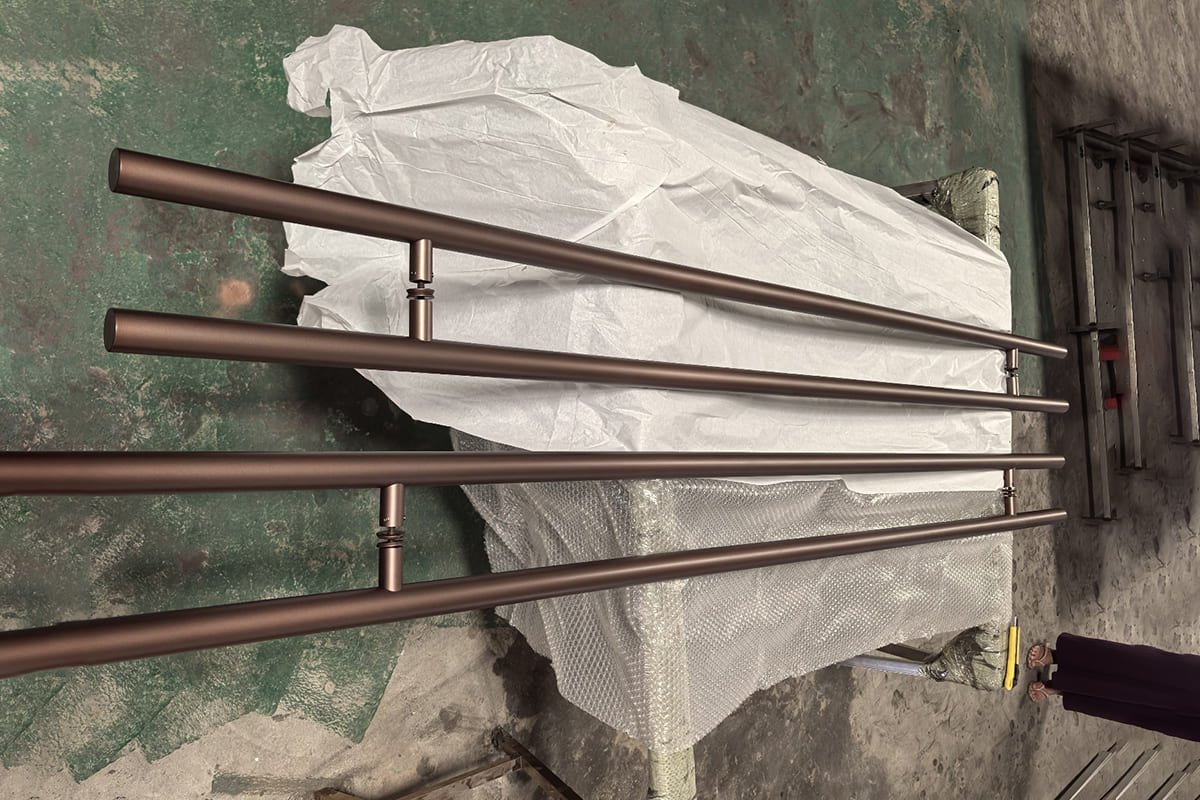
The stainless steel and finish for pull handles with mounting plates should match the use environment and design requirement. 304 stainless steel is common for many applications, while 316 stainless steel is more suitable for very humid or corrosion-prone environments. Finish choice should also support batch consistency and long-term appearance.
304 stainless steel is a common practical choice
304 stainless steel is widely used in architectural door hardware.5 It offers a good balance of appearance, corrosion resistance, workability, and cost for many indoor and general applications.
For many door manufacturers and wholesalers, 304 stainless steel is a familiar specification. It can be used for standard product lines, private label programs, and many interior door hardware packages. However, the real suitability still depends on the project environment.
A buyer should consider:
- Indoor or outdoor use.
- Humidity level.
- Cleaning chemical exposure.
- Coastal or non-coastal location.
- Expected service life.
- Market standard and customer preference.
316 stainless steel is better for harsher environments6
316 stainless steel is often selected when the environment is more corrosion-prone. It is commonly considered for coastal areas, very humid regions, or locations with stronger exposure risks. It usually costs more than 304 stainless steel, so buyers should choose it for a clear reason.
I do not recommend saying that 304 and 316 are the same. They are not interchangeable in every environment. If a project has specific corrosion risks, the buyer should request professional evaluation and confirm the correct stainless steel grade before ordering.
| Material grade | Common buying reason | Important note |
|---|---|---|
| 304 stainless steel | General hardware use, balanced cost and performance | Buyers should still check the actual environment |
| 316 stainless steel | More humid or corrosion-prone conditions | Buyers should confirm need and cost impact |
| Other materials | Project-specific design or budget needs | Buyers should verify suitability before approval |
Finish selection affects more than style
Surface finish is often discussed as a design choice. That is true, but it is not the full story. Finish also affects batch matching, perceived quality, cleaning appearance, and product line consistency.7
Common stainless steel finish directions may include:
- Satin brushed finish for a clean, modern look.
- Polished finish for a brighter appearance.
- Matt black finish for contemporary interior designs.
- PVD-style color finishes for decorative hardware lines, depending on supplier capability and specification.
For B2B buyers, I suggest confirming finish samples under normal lighting. A finish can look different under showroom light, warehouse light, and installation-site light.8 If the buyer is ordering handles, hinges, locks, and accessories together, finish consistency becomes even more important.
Batch consistency matters in volume orders
When buyers order in bulk, the finish must remain stable across the batch. A small color difference may not matter for one sample. It can become a problem when hundreds or thousands of pieces are installed in the same project or distributed to brand customers.
I recommend that buyers confirm:
- The finish name and code.
- The approved sample.
- The expected gloss or brushing direction.
- The packaging protection method.
- The inspection standard after production.
- The acceptable range for minor visual variation.
At SDH Hardware, I see finish confirmation as part of procurement risk control. It is not only a design decision. It is also a quality control checkpoint.
Finish and material should be confirmed before quotation
Material grade and finish affect cost. They also affect production planning and lead time. If a buyer asks for a quotation without confirming these details, the price may not be comparable between suppliers.
For example, one supplier may quote 304 stainless steel in satin finish. Another may quote 201 stainless steel or a different finish process. The prices may look different, but the products are not equivalent.
A clear quotation request should include:
- Product drawing or reference photo.
- Center distance.
- Overall length.
- Tube diameter.
- Plate size.
- Stainless steel grade.
- Finish requirement.
- Installation method.
- Order quantity.
- Packaging and branding needs.
This approach helps buyers compare factory quotations fairly. It also helps the supplier recommend practical adjustments when needed.
How Should One-Side or Two-Side Installation Be Confirmed for Pull Handles With Mounting Plates?
Installation configuration is easy to overlook because many handles look similar in photos. However, one-side and two-side installation are not the same. If a buyer confirms this too late, the fixing accessories and door preparation may not match.
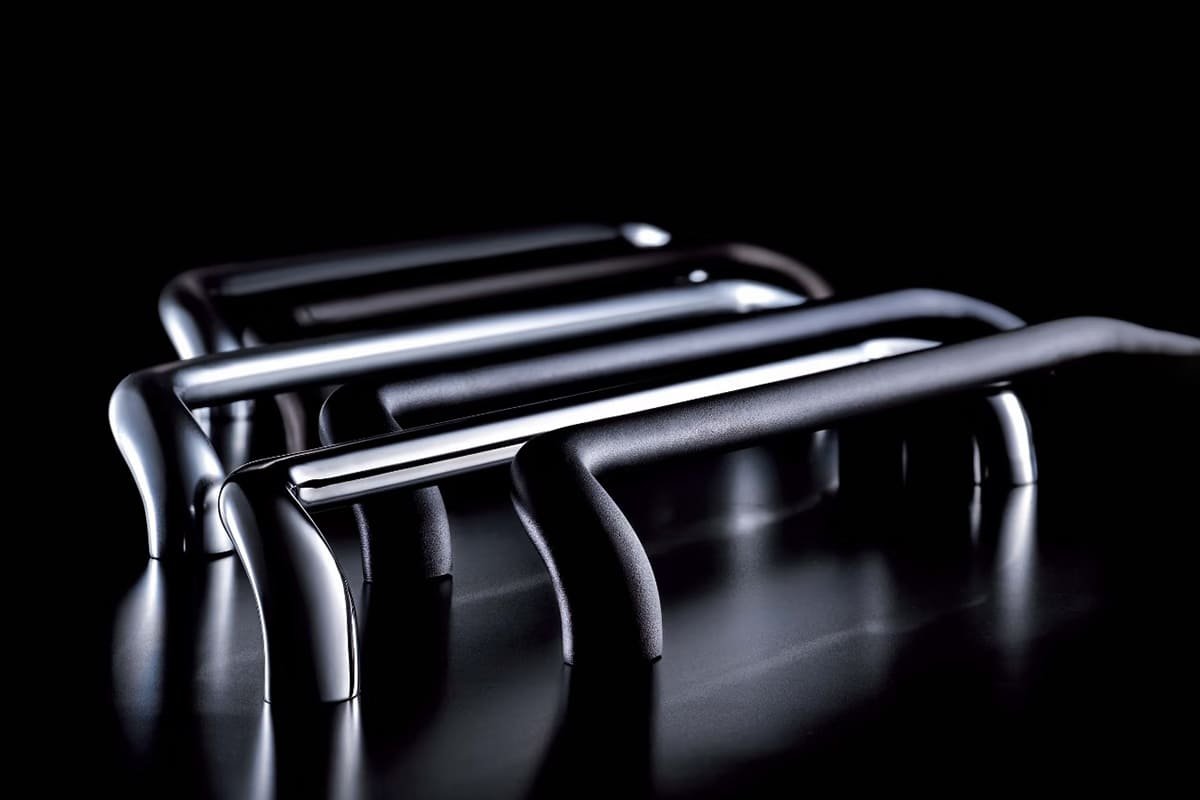
One-side or two-side installation for pull handles with mounting plates must be confirmed before ordering. The choice affects fixing method, accessory configuration, door drilling, and installation preparation. Buyers should tell the supplier whether the handle is required on one face only or as a back-to-back pair.
One-side installation
One-side installation means the pull handle is installed on only one face of the door. This may be used when the other side uses different hardware, has a different function, or does not need a matching pull handle.
The fixing method may differ depending on the door material and handle design. The supplier needs to know this before preparing accessories. A simple photo is not enough. The buyer should confirm the door thickness, door material, and required fixing style.
Two-side installation
Two-side installation usually means a pair of handles is installed back-to-back on both faces of the door. This configuration needs correct alignment through the door and suitable connecting accessories.
For door manufacturers, two-side installation should be coordinated with production drilling. If the holes are not aligned correctly, the handles may not sit straight. The mounting plates may also fail to cover the expected area.
| Installation type | What buyers should confirm | Why it matters |
|---|---|---|
| One-side installation | Door material, fixing method, screw type, door thickness | It affects accessory selection and holding method |
| Two-side installation | Back-to-back set, through fixing, alignment, door thickness | It affects drilling and paired handle assembly |
| Replacement installation | Existing holes, old plate marks, center distance | It affects coverage and installation success |
Mounting plates support installation and coverage
A mounting plate should not be treated as only a decorative part. It can support the fixing area, provide a clean visual base, and help cover previous holes or marks. Its size, thickness, and shape should match the door and installation method.
For example, a wider plate may be useful when the door surface needs more coverage. A narrow plate may suit a minimal door design. A longer plate may help cover an old drilling area during replacement. The correct answer depends on the actual door.
Door thickness should be part of the order information
Door thickness affects the screws, bolts, and connection accessories.9 This is especially important for two-side installation. If the fixing set is too short, the handle cannot install properly. If the fixing set is unsuitable, the installation may be weak or visually poor.
I recommend that buyers provide door thickness as a standard detail in every inquiry. It is a small measurement, but it prevents many issues.
Procurement checklist before confirming installation
Before placing an order for pull handles with mounting plates, buyers should confirm the following points with the supplier:
- Is the handle for one-side or two-side installation?
- What is the door thickness?
- What is the door material?
- What is the center distance?
- What is the mounting plate size?
- What fixing accessories are included?
- Is the installation for a new door or replacement door?
- Are drawings available before order confirmation?
- Will the sample use the same fixing method as the bulk order?
- Does the packaging separate accessories clearly?
This checklist is simple, but it protects both buyer and supplier. It also helps installation teams receive the correct parts on site.
How Can B2B Buyers Evaluate a Supplier for Pull Handles With Mounting Plates?
Supplier selection can be more difficult than product selection. A catalog may show many models, but B2B buyers need repeatable quality, stable communication, clear drawings, and reliable inspection. Without these, a good sample may still become a weak bulk order.
B2B buyers should evaluate suppliers for pull handles with mounting plates by checking manufacturing capability, drawing support, customization options, material confirmation, finish consistency, inspection process, and export experience. A qualified supplier should help confirm specifications before quotation, sampling, and mass production.
Factory capability matters
For architectural hardware, factory capability affects quality control and customization flexibility. A trading-only supplier may still be useful in some cases, but a manufacturer can often provide faster technical confirmation and better product development support.
At SDH Hardware, we operate as a China-based architectural door hardware manufacturer with more than 10 years of specialized production experience. Our team works with standardized and customized door hardware products, including pull handles, mortise locks, lever handles, hinges, cylinders, and accessories.
I mention this because supplier evaluation should look beyond price. Buyers should understand whether the supplier can support:
- ODM or OEM development.
- Custom size and finish requests.
- Product drawings after order confirmation.
- Logo stamping or laser marking.
- Custom packaging design.
- Finished product inspection.
- Full-category door hardware sourcing.
Drawing confirmation reduces misunderstandings
A product drawing is one of the most useful procurement documents. It turns a photo into measurable specifications.10 It also gives both sides a shared reference before production.
For pull handles with mounting plates, the drawing should show:
| Drawing item | Why it matters |
|---|---|
| Overall length | It controls visual proportion |
| Center distance | It controls drilling match |
| Tube diameter | It controls grip and appearance |
| Plate length and width | It controls coverage and design |
| Projection | It controls hand clearance |
| Material grade | It controls specification and cost |
| Finish | It controls visual result |
| Fixing method | It controls installation preparation |
If the buyer needs a custom product, drawing confirmation becomes even more important. I suggest that buyers avoid approving production based only on a catalog photo or short description.
Certifications should be verified as documents
Some architectural hardware products may require CE documentation or fire-rated certification11, depending on the product type, market, and project requirement. Buyers should verify certification documents directly with the supplier and check whether the documents apply to the exact product and intended application12.
I do not recommend assuming that one certificate covers every model or every installation condition. Application-specific decisions should be reviewed by qualified professionals when project compliance is required.
Inspection should be discussed before shipment
Inspection should not be an afterthought. Buyers should ask the supplier how products are checked after production. For pull handles, inspection may include visual finish review, dimension checks, accessory confirmation, packaging review, and sample comparison.
Conclusion
Pull handles with mounting plates should be selected by installation fit and use environment first, not by appearance alone. Buyers should confirm center distance, overall length, tube diameter, stainless steel grade, finish, mounting plate size, and one-side or two-side installation before quotation or sampling. If you need factory-direct support for standard or customized architectural door hardware, I welcome you to contact SDH Hardware for specification review, product matching, and OEM/ODM sourcing support.
"Architecture - Wikipedia", https://en.wikipedia.org/wiki/Architecture. BHMA/ANSI builders-hardware specifications treat pulls as dimensioned products with defined mounting information, supporting the use of center-to-center fixing distance as a key installation specification. Evidence role: general_support; source type: institution. Supports: A builders-hardware standard or institutional technical reference should show that door pulls are specified with mounting-center dimensions and related installation measurements.. Scope note: This would support the specification practice generally, not verify the dimensions of any particular handle model. ↩
"Chapter 4: Entrances, Doors, and Gates", https://www.access-board.gov/ada/guides/chapter-4-entrances-doors-and-gates/. Accessible-design guidance for doors treats hardware location, operability, and clearance as factors in usable door operation, supporting the relevance of handle projection and hand clearance. Evidence role: general_support; source type: government. Supports: An accessibility standard should support the general principle that door hardware dimensions and clearances affect whether users can operate the door hardware comfortably and accessibly.. Scope note: Accessibility standards may not prescribe the exact projection needed for this specific pull-handle design. ↩
"Optimal cylindrical handle diameter for grip force tasks", https://stacks.cdc.gov/view/cdc/197408/cdc_197408_DS1.pdf. Ergonomics studies of cylindrical handles report that handle diameter affects grip force and comfort, supporting the claim that tube diameter changes the feel of a pull handle. Evidence role: mechanism; source type: paper. Supports: A peer-reviewed ergonomics study should show that handle diameter influences grip force, comfort, or perceived usability.. Scope note: Most studies evaluate generic handles or tools, so the evidence is transferable but not specific to stainless-steel door pulls with mounting plates. ↩
"Corrosion of Borated Stainless Steel in Water and Humid Air.", https://www.nrc.gov/docs/ML1129/ML112920913.pdf. Materials-science guidance notes that stainless-steel corrosion and staining are affected by moisture, chlorides, and cleaning chemicals, supporting the article’s emphasis on environment and maintenance conditions. Evidence role: mechanism; source type: education. Supports: A university or materials-science source should explain that moisture, chlorides, and cleaning chemicals can influence stainless-steel corrosion and appearance.. Scope note: The source would address stainless steel broadly rather than this exact pull-handle construction. ↩
"Technical Literature Summary", https://ptacts.uspto.gov/ptacts/public-informations/petitions/1473577/download-documents?artifactId=nKw0Fxfrb5ube_YrlP3_SUgcitsYFppc0q8aXjSjeIdlJ-g0QXliMvc. Stainless-steel industry references identify Type 304 as a widely used austenitic stainless steel for architectural and general hardware applications, supporting its characterization as a common practical choice. Evidence role: general_support; source type: institution. Supports: A stainless-steel industry or architectural materials reference should identify 304 stainless steel as a common austenitic grade used in architectural and hardware applications.. Scope note: The source would support general material prevalence, not prove suitability for every door environment. ↩
"Studies on the Cooperative Influence of Cr and Mo on ... - PMC", https://pmc.ncbi.nlm.nih.gov/articles/PMC10707140/. Materials references explain that the molybdenum content of Type 316 stainless steel improves resistance to chloride-induced pitting and crevice corrosion, supporting its use in more corrosive environments. Evidence role: mechanism; source type: institution. Supports: A stainless-steel or molybdenum institute source should explain that molybdenum-bearing 316 stainless steel improves resistance to pitting and crevice corrosion in chloride environments.. Scope note: This supports relative corrosion resistance but does not replace project-specific corrosion assessment. ↩
"Influence of surface finish on the cleanability of stainless steel", https://pubmed.ncbi.nlm.nih.gov/11510656/. Surface-engineering research shows that stainless-steel finish and roughness influence cleanability, corrosion behavior, and visual appearance, supporting the practical importance of finish selection. Evidence role: mechanism; source type: paper. Supports: Research on stainless-steel surface roughness and finishing should support that finish influences cleanability, corrosion behavior, and visual appearance.. Scope note: The evidence supports the material mechanism and appearance factors, but it may not directly measure batch matching in door-hardware production. ↩
"Color rendering of light sources", https://www.nist.gov/pml/sensor-science/optical-radiation/color-rendering-light-sources. Color-science references on illuminants and metamerism show that a surface’s perceived color and appearance can vary under different light sources, supporting finish review under realistic lighting. Evidence role: mechanism; source type: institution. Supports: A color-science source should explain that perceived color and appearance depend on illuminant conditions and observer context.. Scope note: This supports the visual-perception mechanism generally, not a measured difference for a specific stainless-steel finish. ↩
"Fastener Design Manual", https://ntrs.nasa.gov/api/citations/19900009424/downloads/19900009424.pdf. Engineering fastener guidance defines grip length and thread engagement in relation to the thickness of the materials being joined, supporting the claim that door thickness affects screw and connector selection. Evidence role: mechanism; source type: government. Supports: A government or engineering fastener manual should explain that fastener length and grip are selected according to the thickness of the joined materials.. Scope note: The source would explain the fastening principle generally rather than provide a door-handle-specific installation schedule. ↩
"Dimensioning and Tolerancing", https://engineering.tcnj.edu/wp-content/uploads/sites/194/2012/02/dimensioning_and_tolerancing.pdf. Technical product documentation standards define engineering drawings as formal means of communicating product geometry, dimensions, tolerances, and related specifications, supporting their use in procurement confirmation. Evidence role: definition; source type: institution. Supports: A technical product documentation standard should define engineering drawings as documents that communicate dimensions, tolerances, and other product requirements.. Scope note: The source explains the function of drawings generally rather than studying pull-handle purchasing outcomes. ↩
"Regulation (EU) No. 305/2011", https://en.wikipedia.org/wiki/Regulation_(EU)_No._305/2011. EU construction-products guidance explains that products covered by harmonised specifications require CE marking and performance documentation for declared intended uses, supporting the need to verify CE documentation for relevant architectural hardware. Evidence role: general_support; source type: government. Supports: An official EU or national government source should explain that construction products covered by harmonised standards require CE marking and performance documentation for their intended use.. Scope note: The source would establish the regulatory framework, while the exact requirement depends on the specific product and market. ↩
"CE marking and Declaration of Performance and Conformity", https://single-market-economy.ec.europa.eu/sectors/construction/construction-products-regulation-cpr/ce-marking-and-declaration-performance-and-conformity_en. Construction-products regulatory guidance links declarations of performance and CE documentation to identified product types, declared characteristics, and intended uses, supporting verification against the exact product and application. Evidence role: definition; source type: government. Supports: Official construction-products guidance should state that performance declarations and CE documentation identify product type, declared performance, and intended use.. Scope note: This supports the compliance principle generally; project-specific legal conclusions require review of the applicable standard, certificate scope, and jurisdiction. ↩