Quality Inspection Checklist for Commercial Door Hinge Suppliers: What Should Buyers Check?
Commercial door hinge suppliers can look reliable from a polished sample, but real bulk purchasing is harder. A sample may pass a quick visual check while later shipments fail on compliance, fire-door suitability, finish consistency, or delivery timing. I use this checklist to help buyers evaluate supplier quality before a purchase becomes a costly problem.
A quality inspection checklist for commercial door hinge suppliers should cover market compliance, fire-door suitability, material and finish quality, mass-production consistency, customization ability, delivery stability, and export service capability. Buyers should verify certificates, inspect samples and bulk goods, confirm local market fit, and evaluate whether the supplier can support scalable B2B purchasing.
A strong hinge inspection process does not start with “Does it look good?” It starts with “Can this supplier support my market, my project, and my customers consistently?” Below, I break the checklist into practical supplier-evaluation areas that I often see international buyers overlook.
How Should Commercial Door Hinge Suppliers Prove Market Compliance?
Market compliance is easy to underestimate. A hinge may look strong, move smoothly, and have a clean finish, but it can still be unsuitable for a regulated market1. If buyers skip document checks, they may face rejected shipments, project delays, or customer complaints after installation.
Commercial door hinge suppliers should prove market compliance through verifiable standards, test reports, certificates, product drawings, and clear technical documentation. For Europe, buyers should check relevant EN 19352 requirements where applicable. For the U.S., buyers should verify ANSI/BHMA compliance where required. Supplier claims should always be supported by documents.
Dive Deeper: Start With Compliance Before Appearance
In real B2B hinge sourcing, I often see buyers start with surface finish, packaging, or unit price. Those points matter, but they should not be the first checkpoint. For commercial projects, especially in Europe, the U.S., the Middle East, and Southeast Asia, compliance can decide whether a product is usable at all.
For European markets, EN 1935 is commonly used for single-axis hinges. Buyers should understand that EN 1935 is not just a logo or a marketing phrase. It uses a classification system covering factors such as:
- Category of use
- Durability
- Test door mass
- Fire and smoke door suitability
- Safety
- Corrosion resistance
- Security
- Hinge grade3
For U.S. projects, buyers may need to review ANSI/BHMA A156.14 or other applicable project requirements. The exact requirement depends on the door type, building use, and specification documents. I always suggest that project buyers consult qualified professionals when the hinge is used in regulated buildings, public facilities, or fire-door assemblies.
A practical compliance checklist should include:
| Inspection Item | What Buyers Should Request | Why It Matters |
|---|---|---|
| Applicable standard | EN 1935, ANSI/BHMA, or local project standard | Confirms market suitability |
| Test report | Third-party or recognized lab document where required5 | Supports supplier claims |
| Certificate validity | Date, product model, issuing body, scope | Prevents expired or unrelated documents |
| Product marking | Model, size, material, grade where applicable | Helps traceability |
| Technical drawing | Dimensions, hole positions, thickness, knuckle structure | Avoids installation mismatch |
| Material declaration | Stainless steel, steel, brass, or other material details | Supports performance evaluation |
I also recommend checking whether the certificate actually matches the hinge model being purchased. A supplier may have a certificate for one hinge series, but the buyer may be sourcing another size, thickness, material, or bearing type. That difference can matter.
From my factory-side experience at SDH Hardware, document review works best when it is connected to physical inspection. Buyers should not treat certificates as decoration. They should check whether the delivered product matches the tested or declared product. This is especially important for brand owners and wholesalers who resell hinges under their own packaging.
A good supplier should answer compliance questions clearly. If the sales team only says “No problem, we have CE” without providing model-specific supporting documents, the buyer should slow down and verify further.
Why Must Commercial Door Hinge Suppliers Separate Ordinary Hinges From Fire-Door Hinges?
Fire-door hardware is a high-risk category. A normal commercial hinge may work well on a standard internal door, but that does not make it suitable for a fire-rated door. If buyers mix ordinary hinges with fire-door applications, they may create serious safety, legal, and project acceptance problems.
Commercial door hinge suppliers must separate ordinary hinges from fire-door hinges because fire-door use requires suitable tested products and supporting fire-rated documents. Buyers should request fire test reports, certificates, and application details before purchasing. A standard hinge should never be assumed suitable for fire doors without verified evidence.
Dive Deeper: Fire-Door Suitability Needs Specific Evidence
A fire door is not just a heavy door. It is part of a tested door assembly.6 The hinge, lock, closer, seal, door leaf, and frame all work together.7 That is why buyers should be careful when evaluating commercial door hinge suppliers for fire-rated projects.
I have seen cases where buyers ask, “Is this hinge strong enough for a fire door?” Strength is only one part of the question. The better question is:
“Has this hinge been tested or certified for the required fire-door application, and does the document cover the model, material, size, and configuration I want to buy?”
Buyers should check at least these points:
Fire-rated certificate or test report
The document should identify the hinge model or relevant hinge series.Application scope
The certificate should indicate whether the hinge is suitable for timber doors, steel doors, single doors, double doors, or other configurations where applicable.Fire rating duration
The required rating may vary by market and project, such as 30, 60, 90, or 120 minutes8. Buyers should verify the actual project requirement.Material and structure
Stainless steel, steel, bearing type, thickness, and pin structure can influence suitability.Installation quantity
Fire-door sets may require a specific number of hinges per door leaf9, depending on door height, weight, and test scope.Compatibility with other hardware
Hinges should be evaluated together with door closers, locks, seals, and frames for project-specific decisions.
Here is a simple comparison:
| Item | Ordinary Commercial Hinge | Fire-Door Hinge |
|---|---|---|
| Main purpose | General door operation | Fire-rated door assembly support |
| Documentation | Basic specifications, drawings, general compliance | Fire test report or fire-rated certificate |
| Risk level | Moderate | High |
| Buyer action | Inspect function and fit | Verify fire rating and application scope |
| Supplier requirement | Stable production | Stable production plus fire-door documentation |
For door factories and project purchasers, this distinction is essential. If a supplier offers one hinge for all uses, the buyer should ask more questions. A professional supplier should understand that fire-door hinges require stricter document control and clearer application guidance.
At SDH Hardware, I treat fire-rated product communication differently from ordinary hardware discussions. I prefer to review the door type, market, project expectation, and certification requirement before confirming whether a hinge option is suitable. Buyers should use the same cautious approach when evaluating any supplier.
What Product Details Should Commercial Door Hinge Suppliers Pass During Inspection?
Product details can make or break customer satisfaction. A hinge that appears acceptable in a showroom may fail in real installation because the hole position is wrong, the finish does not match the local trend, or the product range does not fit the buyer’s target market.
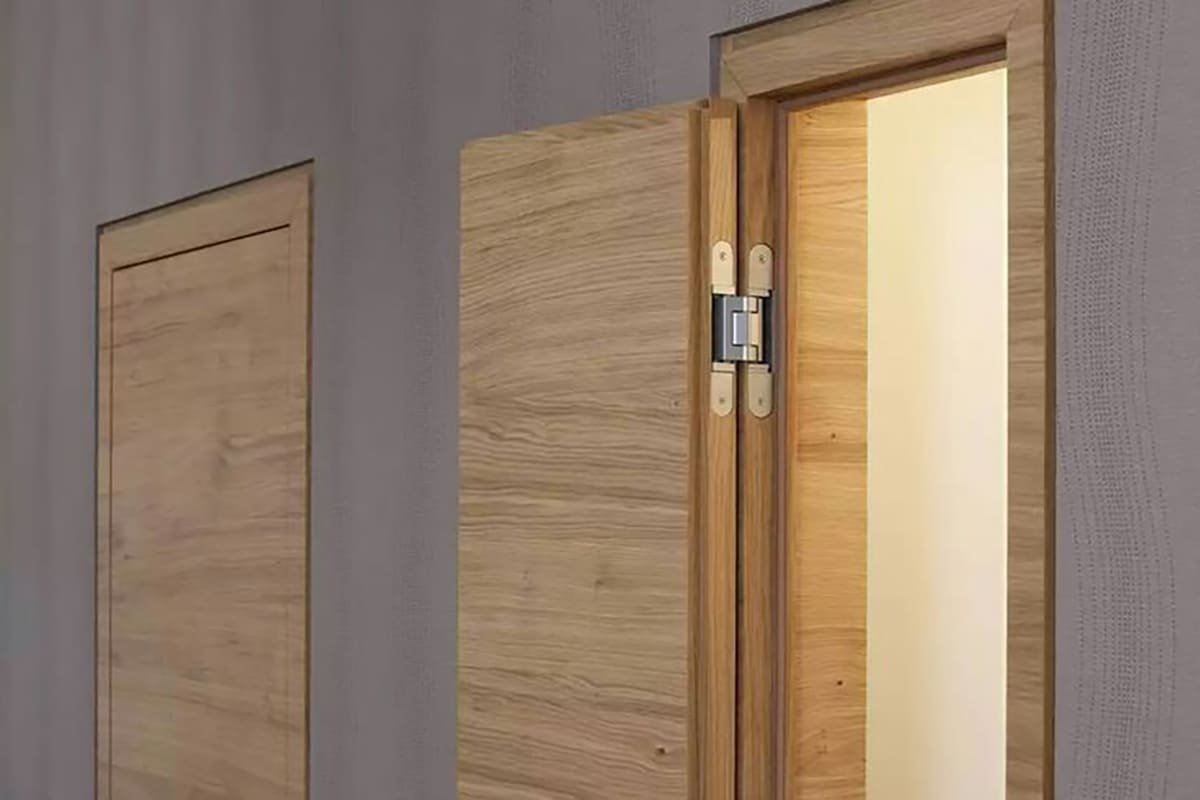
Commercial door hinge suppliers should pass inspection for material, dimensions, thickness, bearing structure, finish, screw compatibility, load suitability, packaging, and model range. Buyers should also check whether the supplier’s hinge options match the local market’s mainstream demand, price level, and quality expectations.
Dive Deeper: Inspect Market Fit, Not Only Physical Quality
A product can be technically acceptable and still be commercially wrong. I see this often in export hardware sourcing. A hinge may be well-made, but the size, finish, price level, or packaging may not match what the buyer’s market usually accepts.
For example, a European buyer may need hinges aligned with specific door weights, EN-style documentation, stainless steel finishes, and fire-rated options. A Middle East wholesaler may care more about finish variety, fast-moving sizes, packaging strength, and competitive price tiers. A Southeast Asian door factory may need stable dimensions, screw compatibility, and mixed-container supply with locks and handles.
A useful product inspection checklist should include both technical inspection and market inspection.
Physical Inspection Points
Buyers should check:
- Material: stainless steel, steel, brass, or other specified material
- Leaf thickness: measured with calipers, not guessed visually
- Open and close movement: smooth rotation without excessive friction
- Pin and bearing structure: fixed pin, loose pin, ball bearing, or washer type
- Countersunk holes: clean machining and correct screw seating
- Flatness: hinge leaves should sit flat against the door and frame
- Surface finish: no obvious scratches, stains, peeling, burrs, or color variation
- Edge treatment: no sharp edges that affect handling or installation
- Screw set: correct quantity, size, finish, and head type
- Packaging: protective enough for export transportation
Market Fit Inspection Points
Buyers should also ask:
- Does the supplier offer the mainstream sizes for my market?
- Does the supplier provide different quality grades for different channels?
- Does the price match my positioning as a brand, wholesaler, or door factory?
- Can the supplier support stainless steel, satin, polished, black, PVD, or other finishes?
- Can one supplier support hinges, locks, handles, cylinders, and accessories together?
- Does the packaging fit retail, project, or bulk distribution needs?
Here is a practical evaluation table:
| Evaluation Area | Low-Risk Supplier Behavior | High-Risk Supplier Behavior |
|---|---|---|
| Model range | Offers multiple sizes and grades | Only pushes one standard model |
| Finish control | Provides samples and finish references | Cannot maintain color consistency |
| Price positioning | Explains cost differences clearly | Competes only by reducing thickness |
| Drawings | Provides technical drawings before order | Confirms only by photos |
| Packaging | Offers export-safe packaging options | Uses weak cartons for heavy hinges |
| Market advice | Recommends models by region | Does not understand target market |
For bulk wholesalers, price competitiveness is important. However, the cheapest hinge may create higher hidden costs through returns, finish complaints, and lost customers. I prefer to compare the total purchasing value10, not just the unit price.
A strong supplier should help buyers choose the right hinge series for the local market. That is different from simply selling whatever is in stock. In my experience, better supplier discussions include product grade, expected door weight, market finish preference, packaging style, and target price range before a quotation is finalized.
How Can Buyers Check Mass-Order Capability From Commercial Door Hinge Suppliers?
A beautiful sample does not guarantee a stable container order. Many problems appear only after mass production starts. If buyers do not evaluate production capacity, quality control, and delivery planning, they may receive inconsistent goods or miss project deadlines.
Buyers can check mass-order capability from commercial door hinge suppliers by reviewing factory production lines, quality control procedures, inspection records, testing equipment, lead times, raw material control, packaging systems, and export shipment experience. Trial orders and pre-shipment inspections also help confirm whether sample quality can be repeated.
Dive Deeper: Bulk Quality Depends on Process Control
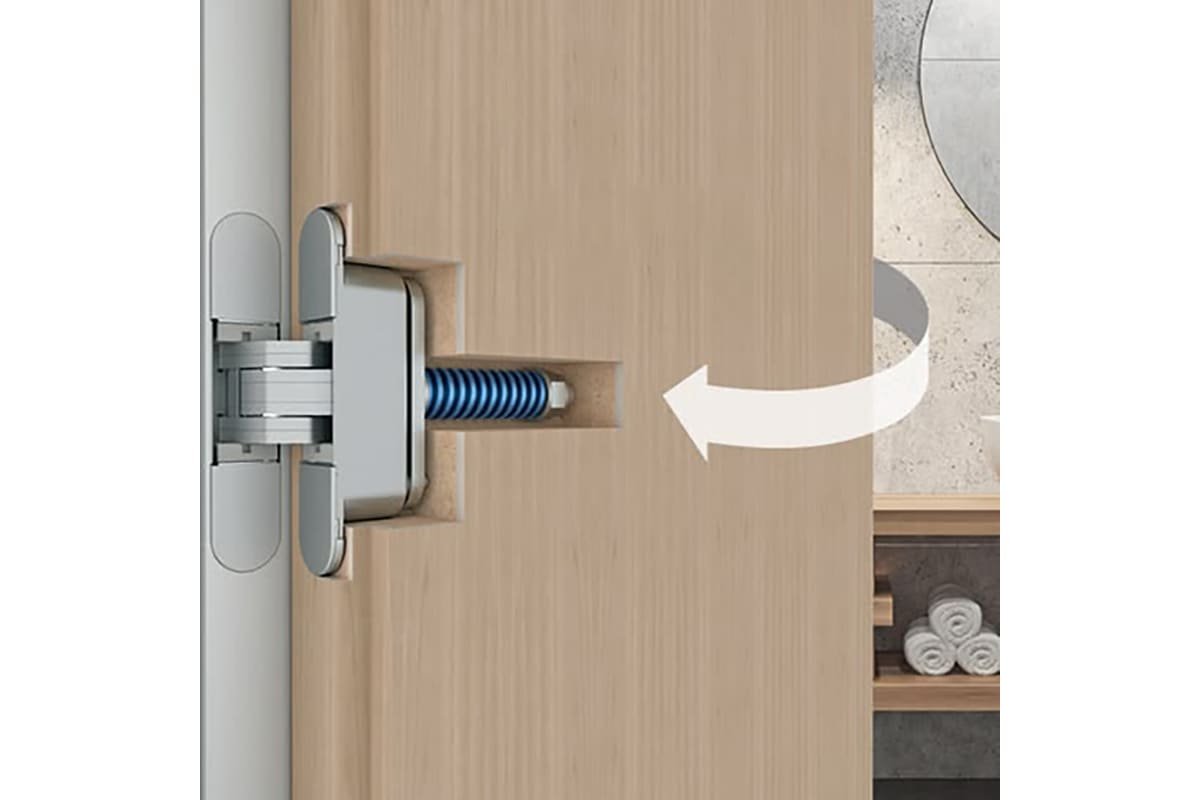
Mass-order quality is a process issue. It is not only a worker skill issue. A supplier needs stable raw material sourcing, controlled machining, consistent polishing, finish management, assembly checks, and outgoing inspection. If any step is weak, the final shipment may vary from carton to carton.
When I look at supplier-side quality control, I pay attention to three stages:
1. Incoming Material Inspection
The supplier should check raw materials before production. For hinges, this may include:
- Material grade confirmation
- Sheet or coil thickness measurement
- Surface condition
- Hardness or strength-related checks where applicable
- Supplier batch traceability
If the raw material varies, the finished hinge will vary. This affects thickness, strength, finish quality, and long-term performance.
2. In-Process Production Control
During manufacturing, suppliers should monitor:
- Cutting accuracy
- Stamping or forming consistency
- Hole position tolerance
- Countersink quality
- Knuckle alignment
- Pin fitting
- Bearing or washer installation
- Polishing uniformity
- Plating or finishing control
A hinge with poor knuckle alignment may still open and close during a quick sample test. However, it may create door sagging, noise, or uneven gaps after installation.
3. Finished Product and Outgoing Inspection
Before shipment, buyers should expect checks such as:
- Random sampling inspection
- Quantity verification
- Dimension measurement
- Visual appearance review
- Function testing
- Screw and accessory check
- Label and carton inspection
- Packaging drop-resistance consideration for export transport11
A basic sampling plan may follow common inspection practice such as AQL-based inspection12, although the exact level should match the buyer’s risk tolerance and product importance. For high-risk projects, buyers may request stricter sampling or third-party inspection.
Here is a buyer-friendly mass-order checklist:
| Checkpoint | What to Ask the Supplier | Buyer Benefit |
|---|---|---|
| Monthly capacity | “How many sets can you produce per month?” | Confirms supply capability |
| Lead time | “What is the realistic production time after deposit?” | Prevents schedule surprises |
| QC records | “Can you provide inspection photos or reports?” | Improves transparency |
| Urgent order ability | “Can you support urgent orders when needed?” | Helps project deadlines |
| Consistency control | “How do you keep samples and bulk goods aligned?” | Reduces quality variation |
| Export experience | “Which markets do you regularly ship to?” | Reduces logistics risk |
At SDH Hardware, our work includes production inspection and outgoing quality control for export orders. I mention this because I have learned one practical lesson: buyers should not wait until the shipment is finished to discuss inspection standards. The best time to confirm requirements is before production starts.
Buyers should send clear specifications, approved samples, drawings, packaging requirements, logo instructions, and inspection criteria before the order is confirmed. This helps the supplier build quality into the order instead of trying to repair problems at the end.
What Customization And Service Capabilities Should Commercial Door Hinge Suppliers Offer?
Standard hinges are useful, but many B2B buyers need more than standard products. Door factories may need special hole positions. Hardware brands may need logo marking and packaging. Project purchasers may need a finish that matches the full door hardware set.
Commercial door hinge suppliers should offer customization for specifications, finishes, packaging, logo marking, drawings, accessories, and OEM/ODM development where feasible. They should also provide professional communication, export document support, and market-based product recommendations. Service quality is part of supplier quality in international purchasing.
Dive Deeper: Supplier Quality Includes Communication
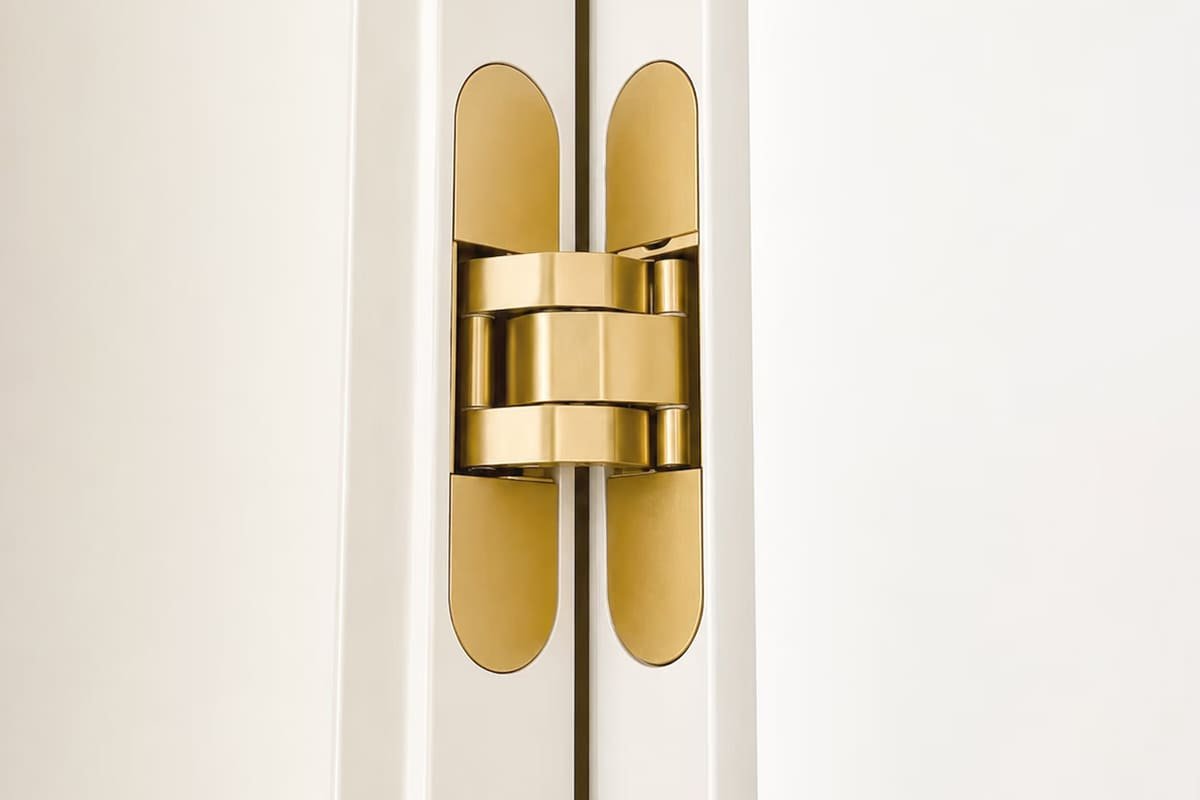
Customization ability separates basic traders from stronger manufacturing partners. For international buyers, the supplier is not only a product source. The supplier is also part of the buyer’s product development, quality control, and customer service chain.
A commercial hinge supplier should be able to discuss practical customization areas such as:
- Size adjustment
- Leaf thickness
- Hole position
- Bearing structure
- Pin type
- Material selection
- Surface treatment
- Logo stamping or laser marking
- Retail or bulk packaging
- Carton labeling
- Accessory configuration
- Technical drawings
- Mixed hardware set sourcing
Customization should not be treated casually. If a buyer changes the hole position or thickness, the supplier should review tooling, tolerance, production cost, and delivery time. If a buyer requests a special finish, the supplier should confirm sample approval, finish standard, color difference tolerance, and corrosion-resistance expectation.
Why Sales and Export Service Matter
I also believe buyers should inspect the sales team. This may sound unusual, but it matters a lot in international B2B hardware sourcing.
A responsible sales person should:
Understand the product
The sales person should know hinge size, material, finish, bearing structure, and application differences.Understand the buyer’s local market
A good supplier can recommend suitable models for Europe, the Middle East, Southeast Asia, or the U.S. instead of sending the same catalog to everyone.Communicate clearly in English
Spoken and written English both matter when confirming drawings, samples, claims, and delivery schedules.Understand export procedures
The team should handle packing lists, invoices, shipping marks, HS code discussions, and coordination with forwarders.Respond with solutions
A strong supplier should not only say yes or no. The supplier should explain options, trade-offs, and risks.
Here is a practical service evaluation table:
| Service Area | What Good Support Looks Like |
|---|---|
| Quotation | Clear price, MOQ, lead time, material, finish, packaging |
| Drawing support | Technical drawings after order confirmation or before tooling |
| Sample process | Sample cost, timing, finish confirmation, approval record |
| OEM/ODM | Feasibility review, tooling discussion, project timeline |
| Packaging | Custom color boxes, logos, labels, export cartons |
| Inspection | Finished product inspection service after completion |
| Communication | Professional, timely, product-aware replies |
SDH Hardware works with door factories, hardware brands, and wholesalers, so I understand why this service layer matters. A buyer may lose more money from unclear communication than from a small price difference. If the supplier misunderstands the finish, logo, screw type, or carton mark, the order can become difficult to sell even when the hinge itself is functional.
Buyers should therefore evaluate commercial door hinge suppliers as long-term partners, not only as quotation providers. A good supplier should help reduce decision risk, support local market fit, and keep the order process controlled from sample to shipment.
Frequently Asked Questions
What is the most important item in a commercial door hinge inspection checklist?
The most important item is market suitability. Buyers should first confirm applicable standards, certificates, drawings, and project requirements. Appearance and dimensions matter, but they come after verifying whether the hinge is acceptable for the target market and intended door application.
Can ordinary commercial hinges be used on fire-rated doors?
Ordinary commercial hinges should not be used on fire-rated doors unless suitable fire-rated documents verify the application. Fire-door hardware must match the required fire rating, door type, and project specification. Buyers should request certificates or test reports and seek qualified professional guidance when needed.
How can I know if a hinge supplier can handle bulk orders?
Buyers should check production capacity, lead time, QC procedures, inspection records, testing equipment, packaging control, and export experience. A trial order or pre-shipment inspection can also show whether the supplier can repeat sample quality in mass production.
Should I choose the cheapest commercial door hinge supplier?
The cheapest supplier is not always the best choice. Buyers should compare total value, including compliance, material stability, finish quality, packaging, delivery reliability, customization support, and after-sales communication. A lower unit price can become expensive if it causes returns or project delays.
What documents should I request before placing a hinge order?
Buyers should request product drawings, specifications, material details, finish references, certificates where applicable, fire-rated documents for fire-door use, packing details, and inspection standards. The documents should match the exact hinge model, size, material, and application being purchased.
Conclusion
A quality inspection checklist for commercial door hinge suppliers should go far beyond appearance checks. Buyers should verify compliance, separate fire-door hinges from ordinary hinges, inspect product details, evaluate mass-order stability, and review customization and export service capability. From my manufacturer-side experience, the best sourcing decisions come from checking both the product and the supplier system behind it. If you need factory-direct support for commercial hinges, OEM/ODM hardware development, or complete door hardware sourcing, SDH Hardware can help you evaluate the right solution for your market.
"Regulation (EU) No. 305/2011", https://en.wikipedia.org/wiki/Regulation_(EU)_No._305/2011. European Commission guidance on the Construction Products Regulation explains that construction products placed on the EU market require declared performance and conformity with applicable technical specifications; this supports the distinction between visual acceptability and regulatory suitability, although it addresses construction products broadly rather than commercial hinges alone. Evidence role: general_support; source type: government. Supports: Regulated markets may require construction products to have declared performance, conformity assessment, or documentation beyond visual product quality.. Scope note: Contextual support; the source would support the general compliance principle rather than every hinge application or national project requirement. ↩
"Understanding BS EN 1935:2002 single-axis hinge grades", https://uk.sfs.com/resources/article/understanding-bs-en-1935. BS EN 1935 is identified by standards bodies as the standard for building hardware single-axis hinges, specifying requirements and test methods for that hinge category. Evidence role: definition; source type: institution. Supports: EN 1935 is the European standard for building hardware single-axis hinges and specifies requirements and test methods.. ↩
"Understanding BS EN 1935:2002 single-axis hinge grades", https://uk.sfs.com/resources/article/understanding-bs-en-1935. Summaries of BS EN 1935 describe an eight-part classification for single-axis hinges covering category of use, durability, test door mass, fire and smoke door suitability, safety, corrosion resistance, security, and hinge grade. Evidence role: definition; source type: institution. Supports: EN 1935 classifies single-axis hinges using categories that include use, durability, door mass, fire or smoke suitability, safety, corrosion resistance, security, and hinge grade.. ↩
"A156.1 - 2025 Butts and Hinges", https://buildershardware.com/ANSI-BHMA-Standards/Hardware-Highlights/A1561-2025-Butts-and-Hinges. The Builders Hardware Manufacturers Association identifies ANSI/BHMA A156.1 as the standard covering butts and hinges, supporting its relevance when U.S. project specifications require hinge performance standards. Evidence role: definition; source type: institution. Supports: ANSI/BHMA A156.1 is a recognized U.S. builders hardware standard for butts and hinges.. ↩
"Key Facts: ISO Accreditation", http://www.fsis.usda.gov/science-data/laboratories-procedures/accredited-laboratory-program/key-facts-iso-accreditation. ISO/IEC 17025 defines general requirements for the competence of testing and calibration laboratories, supporting the use of qualified laboratory reports as evidence for product-test claims, although it does not by itself verify any specific hinge model. Evidence role: expert_consensus; source type: institution. Supports: Accredited testing laboratories are assessed for competence to perform specified tests and issue test results.. Scope note: Contextual support; laboratory accreditation supports confidence in testing competence but does not prove that a supplier’s certificate matches the purchased product. ↩
"Fire Doors and NFPA 80 FAQs", https://www.nfpa.org/news-blogs-and-articles/blogs/2025/04/11/fire-doors-faqs. NFPA guidance defines fire door assemblies as systems that include the door, frame, hardware, and related components, supporting the article’s statement that fire-door suitability is an assembly issue rather than merely a question of door weight. Evidence role: definition; source type: institution. Supports: Fire doors are treated in fire-protection standards as assemblies that include the door, frame, and hardware components.. ↩
"Important Tips for Specifying Fire Door Assemblies", https://steeldoor.org/tips-for-specifying-fire-door-assemblies/. Fire-protection guidance from organizations such as NFPA and UL describes fire doors as assemblies whose listed performance depends on compatible doors, frames, hinges, latching hardware, closers, and seals; this supports the mechanism described, although project-specific approval still depends on the tested listing and local code. Evidence role: mechanism; source type: institution. Supports: Fire-door assemblies rely on compatible components, including frames and hardware, to maintain the tested fire-resistance function.. Scope note: Contextual support; the source would explain assembly interdependence but not certify any particular hinge combination. ↩
"All You Need to Know for Fire Rated Door Assemblies", https://safti.com/articles/fire-rated-doors-standards-testing-and-glazing-requirements/. Government fire-safety and building-regulation guidance commonly expresses fire-door performance in minute-based ratings such as 30, 60, 90, and 120 minutes, supporting the article’s statement that required duration varies by market and project. Evidence role: definition; source type: government. Supports: Building regulations and fire-safety guidance use minute-based fire-resistance ratings for doors, including ratings in the range cited by the article.. ↩
"Fire Doors and NFPA 80 FAQs", https://www.nfpa.org/news-blogs-and-articles/blogs/2025/04/11/fire-doors-faqs. NFPA 80 and related fire-door installation guidance require fire-door assemblies and hardware to be installed in accordance with their listings and approved instructions, supporting the need to verify hinge quantity for the specific door leaf, although the exact number is determined by the applicable listing or project specification. Evidence role: general_support; source type: institution. Supports: Fire-door hardware installation requirements can depend on the listed assembly, the door size and weight, and manufacturer or standard requirements.. Scope note: Contextual support; the source establishes the need to follow listings and installation requirements but may not give one universal hinge count. ↩
"Analyzing Costs Using Total Cost of Ownership", https://psep.smeal.psu.edu/short-courses/supply-chain-accelerator/advanced-procurement-analyzing-costs-using-total-cost-of-ownership. Procurement scholarship on total cost of ownership treats purchase price as one element among quality, logistics, service, and failure-related costs, supporting the article’s focus on total purchasing value rather than unit price alone, although it provides a general purchasing framework rather than hinge-specific cost data. Evidence role: general_support; source type: education. Supports: Procurement literature treats purchase price as only one component of total cost, alongside quality, logistics, service, and failure-related costs.. Scope note: Contextual support; the source would support the procurement principle but not quantify hidden costs for commercial hinges specifically. ↩
"Standard Test Method for Drop Test of Loaded Containers ...", https://www.astm.org/d5276-19.html. Packaging standards such as ASTM D5276 and ISO 2248 specify drop or vertical-impact tests for loaded transport packages, supporting the article’s inclusion of drop-resistance considerations for export packaging, although the appropriate test level depends on package weight, route, and buyer requirements. Evidence role: general_support; source type: institution. Supports: Transport-packaging standards include drop or vertical-impact tests for filled packages, supporting drop-resistance checks for export shipments.. Scope note: Contextual support; the standards support the inspection concept but do not define a single pass criterion for all hinge shipments. ↩
"ISO 2859-1", https://chemistry.unt.edu/~tgolden/courses/iso2859-1.pdf. ISO 2859-1 sets out sampling procedures for inspection by attributes indexed by acceptable quality limit, supporting the article’s reference to AQL-based inspection as a recognized bulk-inspection method. Evidence role: definition; source type: institution. Supports: AQL is an established framework for sampling inspection by attributes in lot inspection.. ↩