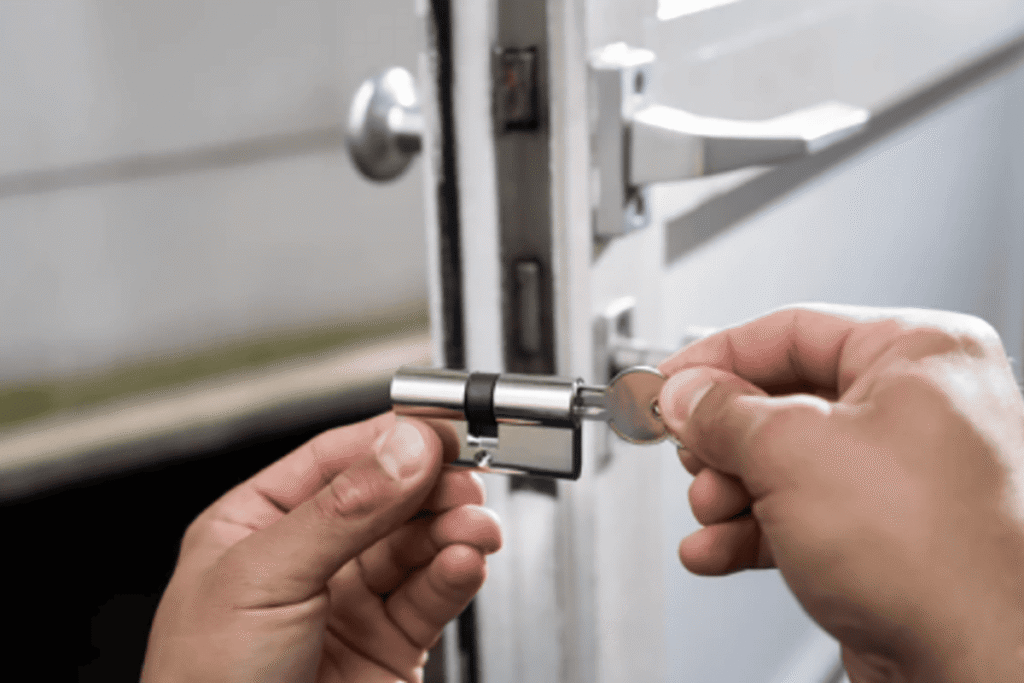
Understanding Cylinder Security Standards, Tests and Certifications?
Cylinder security standards can feel simple on a datasheet, but they often become confusing when a buyer must match performance claims with real doors, locks, keys, and market requirements. If I only look at a certificate name, I may miss dimensional compatibility, optional anti-attack features, or model-specific test scope. A better approach is to connect standards, tests, construction, and supplier documentation before ordering.
Cylinder security standards help buyers evaluate whether a Euro profile cylinder has suitable durability, key security, corrosion resistance, fire-related performance, and attack resistance for a specific market or project. EN1303 focuses on tested cylinder performance, while DIN18252 relates to Euro profile dimensional compatibility.1 Buyers should verify the exact model, configuration, and certificate scope before making claims.
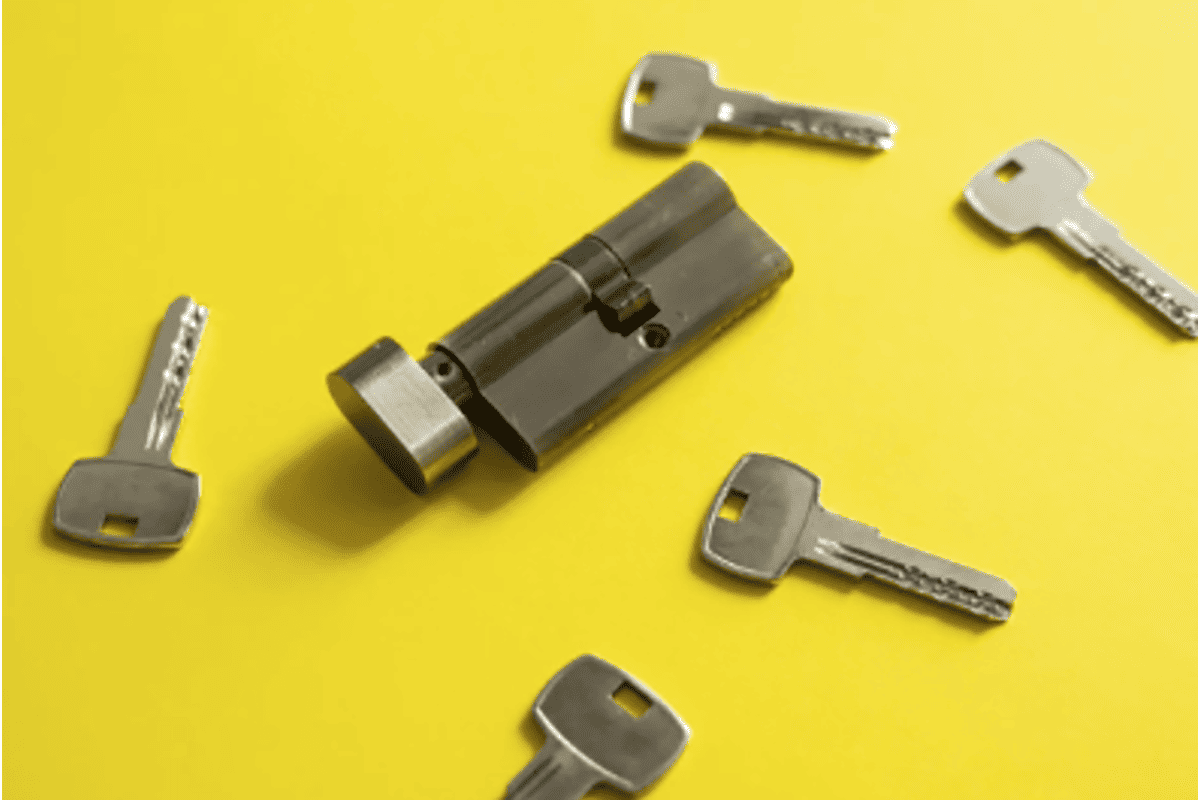
When B2B customers ask me for an “EN1303 cylinder,” I usually do not stop at the standard name. I also check the cylinder length, door thickness, lock position, key system, pin construction, required options, and whether the documents cover the exact product version.
What Do Cylinder Security Standards Actually Measure?
Cylinder security standards can look like a simple pass-or-fail label, but that view creates risk for importers and hardware brands. A cylinder may be suitable for one sales channel but not another. A buyer needs to understand what is tested, what is optional, and what still depends on the door application.
Cylinder security standards measure specific performance areas such as operating durability, key-related security, corrosion resistance, fire-related suitability, and resistance to physical attack.2 They do not automatically prove that every cylinder is “high security.” The final suitability depends on the tested model, installed lockset, door type, market regulations, and selected security configuration.
Standards Are Evaluation Tools, Not Marketing Slogans
In factory-side discussions, I see one common misunderstanding: a buyer asks for a “standard cylinder,” but the project actually needs several different answers. The buyer may need:
- A Euro profile shape for a European mortise lock
- A specific cylinder length, such as 30/30, 35/35, 40/40, or an asymmetric size
- A required EN1303 classification
- A specific key security level
- Optional anti-drill pins or anti-pick pins
- Fire-rated documentation for a door assembly
- Custom branding, packaging, or key bow design
These are related, but they are not the same thing.
For example, EN1303 is widely used for cylinders in building hardware. It classifies performance according to defined test categories. However, the exact grade must be checked against the current official standard and valid test report. I avoid saying that “EN1303 means high security” because EN1303 includes multiple classifications, and not every certified cylinder has the same attack resistance grade or key-related security grade.3
Practical Test Areas Buyers Usually Care About
Most B2B buyers focus on the following practical points:
| Buyer Concern | What It Usually Relates To | Why It Matters |
|---|---|---|
| Smooth operation over time | Durability testing | Important for apartments, hotels, offices, and high-traffic doors |
| Key uniqueness | Key-related security and mutual opening risk | Important for brand reputation and access control confidence |
| Resistance to corrosion | Corrosion and temperature testing | Important for humid, coastal, or outdoor-adjacent markets |
| Fire door use | Fire-related classification and door assembly approval | Important for regulated projects |
| Physical attack resistance | Drill, pick, pull, bump, or torque-related testing depending on standard scope | Important for higher-risk locations |
| Fit with lock body | DIN18252 / Euro profile compatibility and cylinder length | Important for installation success |
At SDH Hardware, we manufacture Euro profile brass cylinders and regularly explain these differences to door factories, importers, and wholesalers. One reference point we often discuss is 50,000-cycle durability testing4 for cylinder operation. However, I always recommend that buyers verify the exact EN1303 grade wording and classification against current test reports before printing claims on packaging or catalogs.
A standard tells you how a product was evaluated. It does not replace project-specific product selection.
Why This Matters in Procurement
For procurement teams, unclear standard claims can create three problems:
Compliance risk
A buyer may promote a cylinder as suitable for a market without holding documents for the exact model.Installation risk
A cylinder may have good performance data but the wrong length for the door thickness.Customer complaint risk
A cylinder may work mechanically, but the customer may expect additional anti-attack features that were not included.
A good sourcing process checks both the paper and the product. That is the safest way to use cylinder security standards in a commercial decision.
How Do Cylinder Security Standards Relate to EN1303 Testing?
Cylinder security standards often lead buyers directly to EN1303, but the name alone is not enough. If I do not check the classification details, I may compare two cylinders as equal when they actually have different durability, key security, corrosion, or attack resistance results.
EN1303 is a European standard used to classify lock cylinders by defined performance categories.5 It may cover areas such as durability, key-related security, corrosion resistance, fire-related performance, and attack resistance. Buyers should confirm the exact grade sequence, issue date, tested model, and included options before relying on EN1303 claims.
EN1303 Is a Classification System
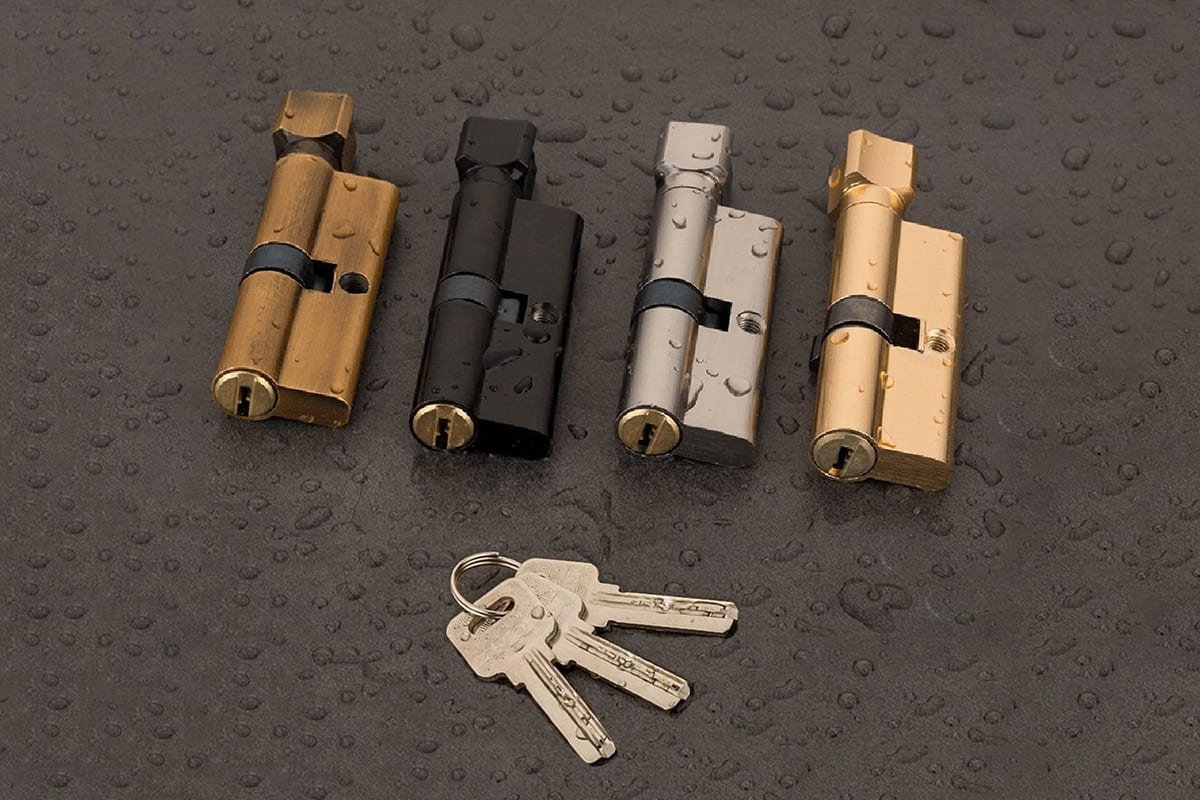
EN1303 is not just a certificate title. It is a structured classification system. Different cylinders can be tested and classified differently under the same general standard. This is why I prefer to ask for the classification code and the test report scope, not only the certificate cover page.
Depending on the version of the standard and the report format, EN1303 classification may include categories related to:
- Category of use6
- Durability
- Door mass or related application classification
- Fire resistance suitability
- Safety
- Corrosion and temperature resistance
- Key-related security
- Attack resistance
The exact category names and grade values should be verified against the current official EN1303 document or the valid laboratory report. I am a manufacturer, not a certification laboratory, so I do not treat memory or old catalog references as final authority.
Practical EN1303 Points for Buyers
For Euro brass cylinders, several test points are especially important in procurement.
1. Durability Cycles
Durability testing shows how many operating cycles the cylinder can withstand under defined test conditions. In many EN1303 references, durability grades are commonly associated with cycle counts such as 25,000, 50,000, or 100,000 cycles. Buyers should verify the exact grade definitions in the current standard.
From our factory perspective, 50,000-cycle durability testing is a practical reference point that many B2B customers understand. It helps buyers judge whether the cylinder is suitable for normal residential or commercial distribution. However, a high-traffic project may require a different durability expectation.
2. Key-Related Security
Key-related security concerns the key system, number of effective differs, and mutual opening risk.7 In simple words, buyers want to know how likely it is that one key could operate another cylinder unintentionally.
This area matters for:
- Hardware brands selling under their own label
- Wholesalers supplying many buildings in the same region
- Door factories using repeated cylinder orders
- Project distributors who need controlled key plans
A 6-pin cylinder construction and a well-designed key profile can support higher key combination potential. Still, I avoid saying that 6 pins automatically equal a specific EN1303 key security grade. The grade must come from testing and verified documentation.
3. Attack Resistance
Attack resistance may involve different physical methods depending on the test scope. Buyers often ask about drilling, picking, snapping, pulling, bumping, or torque attacks. Some of these may be covered by specific standards, national requirements, product designs, or optional upgrades.
That is why the exact configuration matters. A standard cylinder without anti-drill pins should not be promoted the same way as a tested model that includes hardened anti-drill elements.
What I Ask Before Confirming an EN1303 Cylinder
When a customer requests an EN1303 cylinder, I usually ask:
- Which market will the cylinder be sold in?
- Which EN1303 classification is required?
- Is the buyer asking for a certificate, test report, or declaration?
- Does the required document need to show the exact length and key type?
- Are anti-drill or anti-pick options required?
- Is the cylinder for normal doors, fire doors, or project doors?
- Does the buyer need private branding or neutral packaging?
These questions reduce misunderstandings. They also help the buyer promote the product accurately after import.
Why Is DIN18252 Compatibility Separate From Cylinder Security Standards?
Cylinder security standards tell buyers how a cylinder performs, but they do not automatically confirm that the cylinder fits the door. A buyer can choose a tested cylinder and still face installation complaints if the size, cam position, or profile compatibility does not match the lock body.
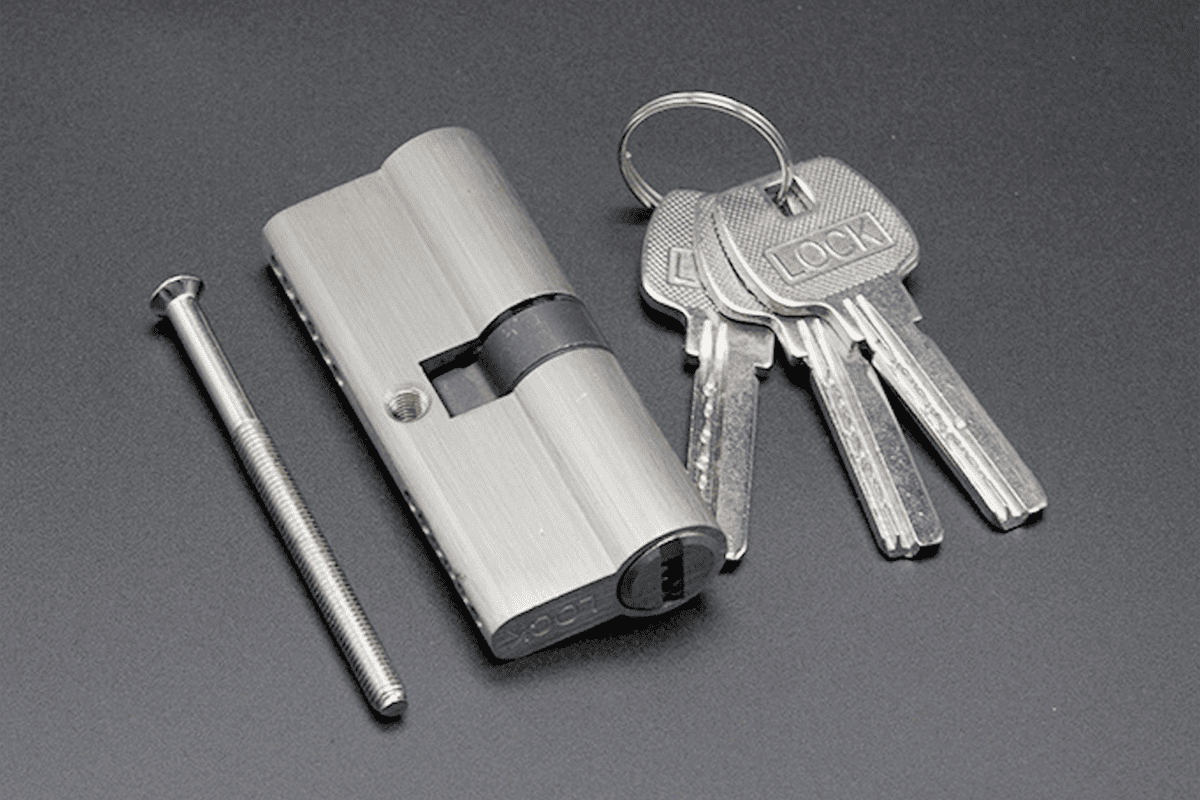
DIN18252 compatibility relates mainly to Euro profile cylinder dimensions and lock compatibility, while EN1303 relates to tested cylinder performance.8 Buyers should confirm cylinder length, door thickness, lock installation position, and whether a symmetrical or asymmetrical cylinder is needed. Dimensional fit and security performance must be checked separately.
Euro Profile Shape Is Only the Starting Point
DIN18252 is often discussed when buyers need Euro profile cylinders for European-style mortise locks. The Euro profile shape is familiar in many markets, including Europe, the Middle East, and Southeast Asia. However, the profile shape does not answer every installation question.
A cylinder must match the door and lock in several ways:
- Overall length
- Inside length
- Outside length
- Door thickness
- Escutcheon or handle plate thickness
- Lock case position
- Cam type and cam movement
- Thumbturn or double key configuration
- Symmetrical or asymmetrical design
For example, a 30/30 cylinder has equal sides. A 35/45 cylinder is asymmetrical. If the lock body is not centered in the door thickness, an equal-length cylinder may protrude too far on one side. That can create both appearance and security concerns.
Common Euro Cylinder Length Questions
B2B buyers often ask which length should be stocked. The answer depends on the customer base. Wholesalers may carry common sizes, while door factories usually need exact project matching.
| Cylinder Size Example | Type | Common Use Consideration |
|---|---|---|
| 30/30 mm | Symmetrical | Common stock size for centered installations |
| 35/35 mm | Symmetrical | Used for slightly thicker door/trim combinations |
| 30/40 mm | Asymmetrical | Used when one side needs extra projection |
| 35/45 mm | Asymmetrical | Common where door thickness or trim is uneven |
| 40/50 mm | Asymmetrical | Used for thicker doors or special hardware sets |
These examples are for procurement discussion only. The final choice should be confirmed by measuring the door, lock, and trim.
How I Check Fit Before Production
When I support a buyer, I usually ask for a lock drawing, door thickness, and trim details. If the customer is a door factory, I prefer to check the full hardware combination. That includes the mortise lock, lever handle or escutcheon, cylinder, screws, and strike plate.
A practical checklist looks like this:
Confirm the mortise lock type
The lock must accept a Euro profile cylinder.Confirm the door thickness
The cylinder should not be too short or too long.Measure trim thickness on both sides
Handle plates and escutcheons affect exposed cylinder length.Check lock center position
The cylinder may need asymmetrical sizing.Confirm key operation direction
Some projects require special cam or thumbturn settings.Confirm market preference
Some markets prefer double key cylinders, while others prefer key/thumbturn cylinders.
Why Fit Affects Security Perception
A poorly sized cylinder can create security concerns even if the product has good test results. If the outside part protrudes too much, it may become easier to grip or attack.9 If the cylinder sits too deep, the key may be hard to insert or turn. If the cam does not match the lock, the door may not operate correctly.
This is why I separate DIN18252 dimensional compatibility from EN1303 performance classification. They work together, but they answer different questions.
Which Construction Details Matter in Cylinder Security Standards?
Cylinder security standards provide formal evaluation, but construction details explain how a cylinder is designed to perform. If I ignore the body material, key type, pin structure, and optional security parts, I cannot make a fair comparison between two products that look similar in photos.
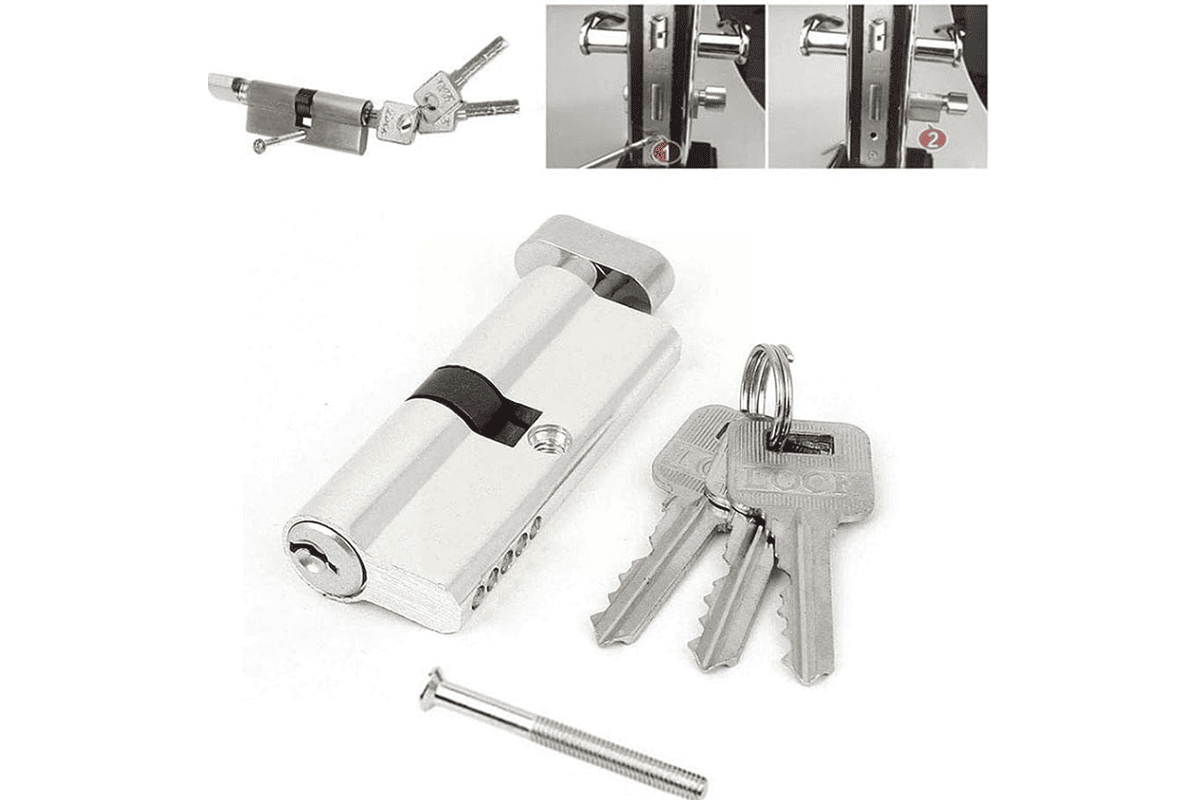
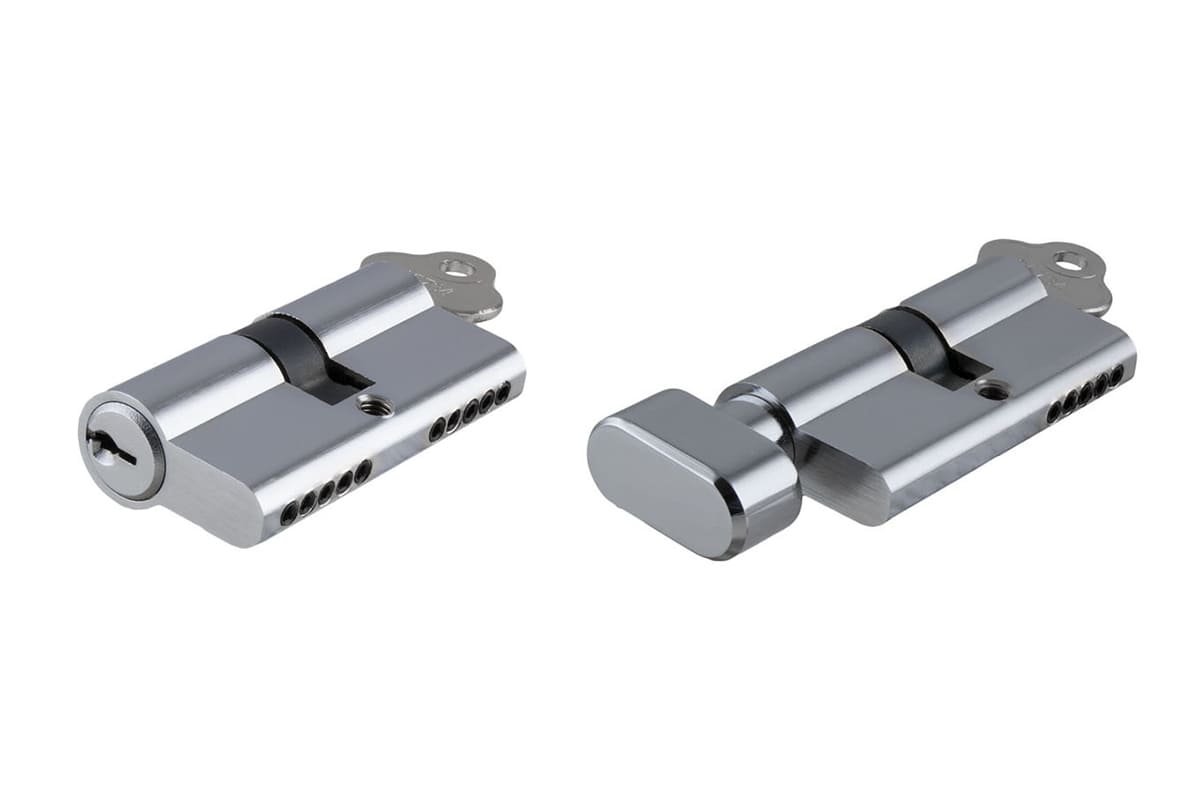
Cylinder construction details such as a solid brass body, brass keys, reversible dimple key design, 6-pin structure, anti-drill pins, and anti-pick pins can influence durability, convenience, and security potential. However, these features are design factors. They should not be treated as automatic proof of a specific security grade without testing.
Material Structure: Brass Body and Brass Keys
Many Euro profile cylinders use brass because it offers good machinability, corrosion behavior, and dimensional stability for precision components.10 At SDH Hardware, Euro brass cylinders are part of our core architectural hardware range, and we manufacture them for B2B customers who need consistent supply and customizable configurations.
A solid brass body can support stable machining and long-term function. Brass keys can also offer good user feel and practical durability. However, material alone does not define the complete security level. A brass cylinder still needs proper machining accuracy, spring quality, pin quality, plug alignment, surface finishing, and inspection.
Key Type: Reversible Double-Sided Dimple Keys
A reversible dimple key is convenient because the user can insert it in either direction.11 This feature is attractive in retail and project markets because it reduces user frustration. It can also support more complex key coding than very basic key systems, depending on the pin layout and key design.
Common buyer benefits include:
- Easier daily use
- More modern product appearance
- Better perceived value for branded packaging
- Potential for higher key combination planning
- Suitability for residential and light commercial markets
Still, I describe this as key system design potential, not guaranteed high security. The verified grade depends on the tested model and standard classification.
Pin Construction: 6-Pin Cylinders
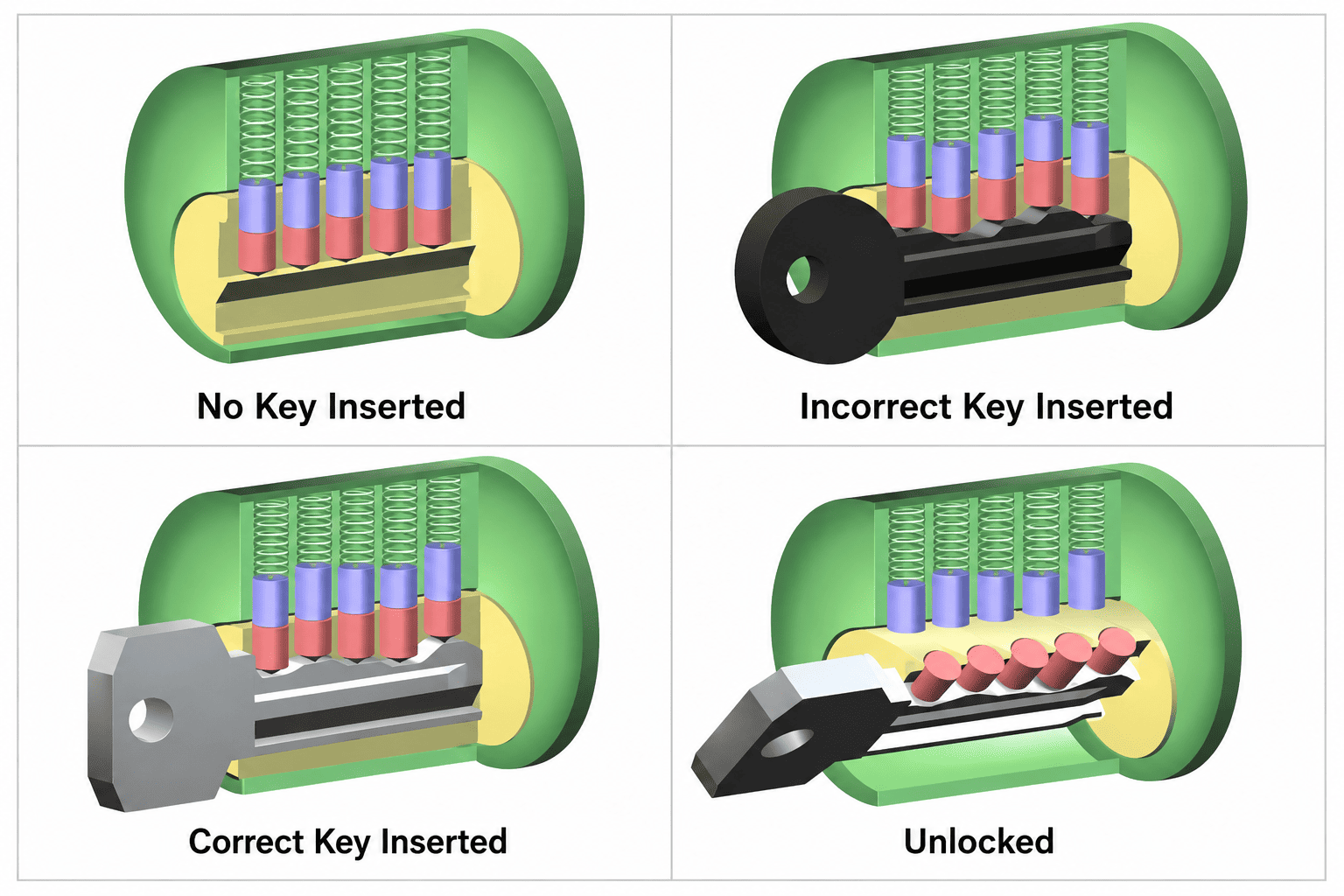
A 6-pin construction is a common upgrade compared with simpler designs. More pins can increase the potential number of key combinations when combined with proper key bitting and manufacturing control.12 This matters for wholesalers and hardware brands because repeated key combinations can damage customer confidence.
When buyers ask about mutual opening rate, I explain the concept carefully. The concern is whether one key might open another cylinder unintentionally. The exact definition, test method, and acceptable level should be verified according to the applicable standard, customer specification, or test report.
A 6-pin design may help, but several factors still matter:
- Pin tolerance
- Key cutting accuracy
- Key profile control
- Number of effective differs
- Production batch management
- Master key requirements, if any
Optional Anti-Attack Features
Anti-drill pins and anti-pick pins are important options, but they must be discussed correctly.
| Feature | Purpose | Buyer Should Confirm |
|---|---|---|
| Anti-drill pins | Help resist drilling attacks on plug or body areas | Material, position, quantity, and whether tested model includes them |
| Anti-pick pins | Make manipulation more difficult | Pin design, configuration, and verified test relevance |
| Reinforced components | Improve resistance in selected attack scenarios | Scope of testing and compatibility with cylinder model |
| Special key profile | Improves key control and duplication management | Availability, exclusivity, and market requirements |
These upgrades matter in markets where anti-attack performance is a selling point. They are also relevant for doors in apartment entrances, offices, storage areas, and public-facing buildings.
However, I do not say that adding an anti-drill pin makes a cylinder “attack proof.” No professional supplier should use phrases such as “impossible to open” or “maximum security” without qualification. The correct wording is test-based: the product has selected features, and the buyer should verify whether the exact configuration was included in the test report or certificate.
How Should Buyers Verify Cylinder Security Standards Before Ordering?
Cylinder security standards are useful only when the buyer verifies the documents, product configuration, and supplier capability together. If the certificate covers one model but the purchase order specifies another, the buyer may face compliance gaps, customer disputes, or marketing claim problems.
Buyers should verify cylinder security standards by checking the exact certificate or test report, matching it to the ordered model, confirming EN1303 classification, separating DIN18252 dimensional fit, reviewing optional anti-attack features, and inspecting production quality. Professional evaluation is recommended for regulated or project-specific applications.
Document Verification Comes First
The first step is to ask for the right documents. A certificate cover page may not be enough. I recommend that buyers request:
- Valid certificate copy, if available
- Test report or classification page
- Product model reference
- Standard version or issue date
- Testing laboratory information
- Photos or drawings of the tested product
- Details of included options
- Fire-rated documentation, if required
- Declaration or compliance statement, if applicable
For fire-rated projects, buyers should be even more careful. Fire performance often depends on the complete door assembly, not only one component. A cylinder may be part of a fire-rated hardware package, but the final door approval should be evaluated by qualified professionals or local authorities.
Match Documents to the Ordered Configuration
This is where many mistakes happen. A buyer may see a document for a cylinder family and assume it applies to every length, key type, and option. That assumption may be wrong.
Before ordering, check whether the document covers:
- The exact cylinder model
- The selected length range
- Double key or thumbturn version
- Key type
- Pin quantity
- Anti-drill or anti-pick options
- Finish
- Fire-related use, if required
If a buyer plans to promote anti-drill performance, the tested cylinder should include the anti-drill configuration. If a buyer plans to promote EN1303 key security, the exact key system should be covered by the test data.
Evaluate the Supplier, Not Only the Sample
A good sample is important, but repeatable production matters more in B2B sourcing. SDH Hardware operates independent production lines and provides factory-direct supply for standardized and customized architectural door hardware. In practice, buyers usually evaluate us through drawings, samples, inspection reports, packaging requirements, and order consistency.
A supplier evaluation should include:
Factory experience
I prefer suppliers with specialized cylinder and door hardware production experience.Quality control process
Buyers should check raw material screening, production supervision, and finished product inspection.Testing equipment
Function testing and dimensional inspection help reduce batch problems.Customization control
Logo stamping, laser marking, finishes, and packaging should not affect function.Documentation support
The supplier should provide drawings, specifications, and inspection documents upon order confirmation.Export experience
Familiarity with Europe, the Middle East, and Southeast Asia helps reduce communication gaps.
Conclusion
Cylinder security standards are most useful when buyers connect them with real product details. EN1303 helps evaluate tested performance, while DIN18252 helps confirm Euro profile dimensional compatibility. Construction choices such as brass body, reversible dimple keys, 6-pin design, anti-drill pins, and anti-pick pins should be reviewed as configuration factors, not broad security guarantees. If you are sourcing Euro brass cylinders for a brand, door factory, or wholesale program, I can help you confirm specifications, drawings, customization options, inspection points, and available documentation before production.
"EN 1303 Cylinder Classification Explained: How to Read the ...", https://www.dirock.com/Guide-to-EN-1303-2015-Cylinders-for-Locks-Coding-System-id44113496.html. A standards body description of EN 1303 and DIN 18252 supports the distinction between cylinder performance classification and profile-cylinder dimensional requirements; the source establishes standard scope rather than verifying any specific product. Evidence role: definition; source type: institution. Supports: An institutional standards source should define EN 1303 as a performance/classification standard for lock cylinders and DIN 18252 as a dimensional standard for profile cylinders.. Scope note: Contextual support only; it does not prove that a particular cylinder complies with either standard. ↩
"Standards - BS EN 1303", https://www.aldridgesecurity.co.uk/standards-bs-en-1303. Institutional summaries of EN 1303 describe cylinder classification across durability, key-related security, corrosion and temperature resistance, fire-related suitability, and attack-resistance categories; this supports the general list of measured areas but not the grade of any individual model. Evidence role: general_support; source type: institution. Supports: A standards or certification source should show that EN 1303 classifies cylinders across durability, key-related security, corrosion/temperature, fire-related suitability, and attack resistance categories.. Scope note: The source would support the category list, not the performance of the article author's products. ↩
"BS EN 1303 – Cylinders", https://www.hoppe.com/in-en/contacts-service/standards/bs-en-1303/. Descriptions of EN 1303 classification codes indicate that cylinders are graded in separate categories, including key-related security and attack resistance, supporting the statement that a shared standard reference does not imply identical security grades. Evidence role: definition; source type: institution. Supports: A standards source should explain that EN 1303 uses a classification code with grade values for categories such as key-related security and attack resistance.. Scope note: The source clarifies classification structure but does not compare two specific cylinders. ↩
"Standards - BS EN 1303", https://www.aldridgesecurity.co.uk/standards-bs-en-1303. Standards-related descriptions of EN 1303 durability testing identify operating-cycle counts, including 50,000 cycles in commonly cited grading references, as a basis for cylinder durability classification; this supports the cycle-count reference but not suitability for a particular traffic level. Evidence role: general_support; source type: institution. Supports: A standards-related source should show that EN 1303 durability classifications include cycle-count testing and that 50,000 cycles appears as a referenced durability level.. Scope note: The source supports the existence of the test reference, not the durability of any untested batch. ↩
"Standards - BS EN 1303", https://www.aldridgesecurity.co.uk/standards-bs-en-1303. Institutional descriptions of EN 1303 identify it as the European standard specifying requirements, test methods, and classification for cylinders for locks, directly supporting the definition used here. Evidence role: definition; source type: institution. Supports: An institutional source should identify EN 1303 as a European standard for cylinders for locks and state that it specifies requirements, test methods, and classification.. ↩
"Guide to EN 1303:2015 - Cylinders for Locks Coding System", https://www.dirock.com/Guide-to-EN-1303-2015-Cylinders-for-Locks-Coding-System-id44113496.html. Standards summaries of EN 1303 classification codes include a use classification field among the cylinder performance categories, supporting the article’s reference to category-of-use classification. Evidence role: definition; source type: institution. Supports: A standards summary should show that EN 1303 classification codes include a category of use or equivalent use classification field.. Scope note: Category labels may differ by edition or summary source, so the official standard remains the controlling reference. ↩
"BS EN 1303 – Cylinders", https://www.hoppe.com/in-en/contacts-service/standards/bs-en-1303/. Technical locksmithing and standards-based sources describe key-related security in terms of effective differs and the probability of unintended key operation, supporting the article’s explanation of mutual opening risk. Evidence role: definition; source type: education. Supports: A neutral educational or standards source should define effective differs and explain their relationship to key-related security and unintended key interchange.. Scope note: This supports the concept generally and does not calculate the mutual-opening rate of any specific key system. ↩
"Europrofile DIN Cylinders - abloy", https://www.assaabloy.com/nz/en/solutions/products/keying-systems-and-cylinders/abloy-cylinders/europrofile-din-cylinders. Standards descriptions distinguish DIN 18252 profile-cylinder dimensional requirements from EN 1303 requirements, test methods, and performance classification for lock cylinders, supporting the article’s procurement distinction. Evidence role: definition; source type: institution. Supports: Standards descriptions should identify DIN 18252 as addressing profile cylinders and dimensions and EN 1303 as addressing cylinder requirements, tests, and classification.. Scope note: The source supports the standards distinction but does not confirm fit for any individual lock body. ↩
"What Size Euro Cylinder Do I Need? Measuring Guide", https://lockerfella.co.uk/euro-cylinder-size/. Police and burglary-prevention guidance commonly advises that Euro cylinders should be flush or minimally protruding from the door furniture because excessive projection can provide an attack purchase point, supporting the installation-security warning. Evidence role: general_support; source type: government. Supports: A police or government burglary-prevention source should advise that Euro cylinders should sit flush or have minimal projection to reduce attack opportunities.. Scope note: Such guidance is practical risk guidance and may not quantify attack resistance under laboratory conditions. ↩
"Precision Brass Machining", https://www.spex1.com/materials/precision-brass-machining. Materials engineering references describe brasses as alloys with good machinability and generally favorable corrosion behavior for precision components, supporting the material rationale for their use in cylinder bodies. Evidence role: general_support; source type: research. Supports: A materials engineering source should describe brass as machinable, corrosion-resistant in many environments, and suitable for precision components.. Scope note: Material properties vary by brass alloy, environment, and finishing process, so the source does not prove performance of every brass cylinder. ↩
"Are there any high-quality locks with rotational symmetry ...", https://www.reddit.com/r/lockpicking/comments/dv2e59/are_there_any_highquality_locks_with_rotational/. Locksmithing educational sources define reversible keys as keys that can be inserted in either orientation, supporting the article’s usability explanation for reversible dimple-key cylinders. Evidence role: definition; source type: education. Supports: A locksmithing education source should explain that reversible keys are designed to operate regardless of which side faces up during insertion.. Scope note: The source supports the feature definition, not any claim of higher security. ↩
"13 Things", https://webhelper.brown.edu/joukowsky/courses/13things/7641.html. Educational explanations of pin-tumbler lock combinatorics show that additional pin positions can increase possible key differs when supported by suitable bitting depths and tolerances, supporting the mechanism described here. Evidence role: mechanism; source type: education. Supports: An educational technical source should explain how pin-tumbler locks generate key combinations from pin positions, depths, and bitting rules.. Scope note: The support is mathematical and design-based; actual security also depends on tolerances, keyway control, and production quality. ↩