
How Do Fire Door Locks Achieve Fire Protection?
Fire door locks are often misunderstood as the part that “makes” a door fire-rated. That mistake can lead to wrong purchasing, failed inspections, and project delays. In practice, I look at the lock as one part of a tested fire door assembly, where metal stability, intumescent sealing, installation, and certification scope all matter.
Fire door locks achieve fire protection by helping the door assembly maintain integrity during a fire. Their steel lock bodies resist high temperatures, while intumescent sleeves or pads expand around routed cut-outs to reduce flame, hot gas, and smoke leakage. The actual fire rating depends on the tested door leaf, frame, hinges, lock, and installation method.1
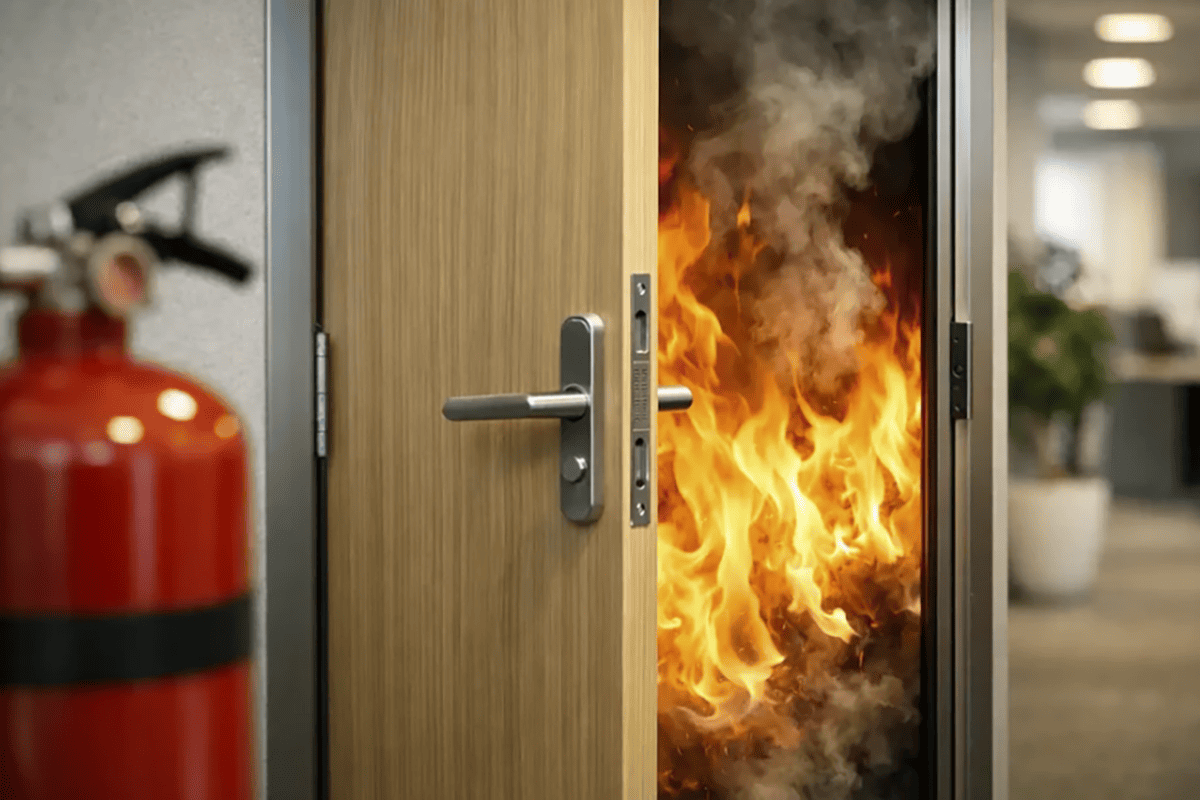
I often explain this to buyers who compare locks only by appearance or weight. A fire-rated mortise lock is not just a stronger standard lock. It must work with the door, frame, hinges, and accessories under a verified test configuration.
What Makes Fire Door Locks Different From Standard Mortise Locks?
Standard locks can work well in daily use, but fire conditions create a much harsher problem. Heat can distort metal, weaken routed door areas, and create leakage paths. Fire door locks are designed to reduce these risks within a tested door set, not as isolated fireproof objects.
Fire door locks differ from standard mortise locks because they use stable metal construction, compatible latch and case designs, and fire-rated accessory protection. In typical applications, stainless steel and steel components help the lock remain mechanically stable, while the final rating still depends on the complete certified door assembly.
The lock body must remain mechanically stable
In our factory work, I often start the discussion with materials because buyers can understand that quickly. Many fire-rated mortise lock bodies use stainless steel, iron, or steel components. These materials have melting points around 1,400°C or higher2, depending on the alloy and grade.
That matters because fire resistance tests such as EN 1634 may expose the door assembly to temperatures approaching around 1,000°C3 during the test period. Buyers should always check the exact test report, because the temperature curve and performance result belong to the tested assembly.
However, the basic point is clear:
A qualified fire-rated lock should not simply melt, collapse, or lose its basic mechanical position during the relevant fire test.
This does not mean the lock remains beautiful or reusable after a fire. Fire testing is not a cosmetic test. The goal is usually to check whether the door assembly can maintain integrity, and sometimes insulation4, for a defined period under controlled conditions.
Fire-rated lock design is about controlled failure risk
A standard mortise lock may use thinner materials, different internal structures, or decorative parts that are not evaluated for fire door use. A fire-rated lock is usually selected with the following concerns in mind:
- Lock case strength under heat exposure
- Latch bolt engagement with the strike plate
- Compatibility with the door leaf material
- Routing size and position
- Spindle, follower, and forend stability
- Use of intumescent sleeves or pads
- Documented fire test scope
Here is a simple procurement comparison:
| Evaluation Point | Standard Mortise Lock | Fire-Rated Mortise Lock |
|---|---|---|
| Daily locking function | Yes | Yes |
| Fire test configuration | Usually not verified | Should be verified |
| Intumescent protection | Usually absent | Often required |
| Use in certified fire doors | Not assumed | Depends on report scope |
| Material stability focus | Moderate | Higher |
| Buyer document review | Basic specs | Test report, certificate, installation details |
The lock does not work alone
This is where I see many buyers make a costly mistake. They ask, “Is this a 120-minute lock?” I understand the shortcut, but the safer question is:
“Has this lock been tested in a door assembly that matches my project?”
A lock may be used in a configuration for a 120-minute wooden fire door or a 240-minute steel fire door, depending on the tested system. But the rating belongs to the door assembly, not the lock by itself.
That assembly can include:
- Door leaf
- Door frame
- Hinges
- Mortise lock
- Strike plate
- Intumescent material
- Door closer
- Seals
- Installation screws and positions
As a manufacturer, we can provide technical drawings, product specifications, material details, and available certification documents for buyers to review. But for application-specific fire compliance, buyers should verify the EN 1634 test report, CE-related documentation, and local code requirements with qualified professionals or certification bodies.
Why Do Fire Door Locks Need Intumescent Sleeves?
A fire door can fail at weak points, not only through the flat door surface. Mortise locks require cut-outs in the door leaf, and those routed cavities can become paths for flame, hot gas, or smoke.5 This is why fire door locks often need intumescent protection.
Fire door locks need intumescent sleeves because the lock pocket creates a vulnerable opening inside the door leaf. When exposed to high heat, intumescent material expands and helps seal gaps around the lock case6, reducing leakage through routed areas and supporting the fire integrity of the tested door assembly.
Routed cut-outs are small but important
When we produce or supply mortise locks, I pay close attention to the installation drawings. The lock may look compact, but the door manufacturer must create a pocket inside the door leaf. That pocket removes part of the door material.
For a normal interior door, this is usually only a woodworking or metalworking issue. For a fire door, it becomes a fire integrity issue.
A routed lock area can create risks such as:
- Reduced door core thickness around the lock case
- Small gaps between the lock and door material
- Heat transfer through metal components
- Smoke leakage around the forend and strike area
- Flame penetration if the cavity is not protected
This is why fire-rated hardware is not only about “strong metal.” Strong metal may survive heat, but the cut-out around it may still become a weak point.
How intumescent sleeves work
Intumescent material is designed to react when exposed to high temperature. It expands rapidly and fills nearby gaps. Around mortise locks, it is often supplied as a sleeve, wrap, or pad.
The purpose is not decorative. It is functional.
When exposed to fire-test heat, the intumescent sleeve can:
- Expand around the lock case
- Seal the routed cavity
- Reduce hot gas movement
- Help block flame paths
- Support the tested fire integrity of the door set
The exact expansion rate, thickness, and application method depend on the material and test configuration. Buyers should not assume that any intumescent pad will work with any lock.7 The safest approach is to follow the tested installation method.
Lock and hinge areas both need attention
In many fire door projects, the mortise lock is not the only routed hardware area. Hinges also require recesses. Concealed hinges may require even deeper cut-outs. These areas can also need intumescent protection.8
| Hardware Area | Common Cut-Out Risk | Typical Fire-Rated Protection |
|---|---|---|
| Mortise lock case | Deep pocket inside door leaf | Intumescent lock sleeve |
| Strike plate | Frame recess and latch opening | Intumescent pad or frame protection |
| Butt hinges | Hinge blade recess | Intumescent hinge pads |
| Concealed hinges | Large routed cavity | Tested hinge kit and intumescent protection |
| Door closer accessories | Screw holes and fixing points | Verified installation method |
I sometimes tell customers to think of fire protection like water leakage. A large wall may be strong, but water finds the small gap. Fire and smoke behave differently, but the buying logic is similar. Small gaps matter.
What buyers should ask suppliers
Before ordering fire door locks, I recommend asking direct questions:
- Does the lock require an intumescent sleeve?
- Is the sleeve included or ordered separately?
- What door type was tested: wooden, steel, or composite?
- What fire rating was achieved in the tested assembly?
- Does the test report show this lock model or a covered product family?
- Are installation drawings available?
- Are the required screws, strike plates, and accessories specified?
At SDH Hardware, we often help B2B buyers match lock bodies, strike plates, hinges, and intumescent accessories to their sourcing plan. Still, I always advise buyers to confirm the certification scope before they commit to a project specification.
How Are Fire Door Locks Evaluated in a Fire Door Assembly?
It is risky to evaluate fire door locks as stand-alone metal boxes. A lock may look solid on a desk but perform differently inside a door exposed to heat, pressure, and structural movement. Fire testing evaluates the door assembly, so the hardware must match the tested configuration.
Fire door locks are evaluated as part of a complete fire door assembly under standards such as EN 1634. The test examines whether the door leaf, frame, hinges, lock, seals, and installation details can resist flame and hot gas passage for the claimed rating period within the certified scope.

Fire testing is system testing
When a buyer asks for a CE or fire-rated certificate, I usually ask about the door type first. That may seem indirect, but it is necessary. A fire-rated lock cannot be properly evaluated without knowing the assembly.
A complete fire door assembly may include:
- Door leaf material: timber, steel, composite, or mineral core
- Door thickness: for example, 45 mm, 50 mm, 54 mm, or other project sizes
- Frame material: timber frame, steel frame, or aluminum system
- Hinge type: butt hinge, concealed hinge, spring hinge, or special hinge
- Lock type: sash lock, dead lock, bathroom lock, panic lock, or special function lock
- Sealing system: perimeter seals, smoke seals, drop seals, or intumescent strips
- Installation position: lock height, hinge spacing, screw pattern, and clearances
Each detail can affect performance. This is why a test report is more useful than a simple marketing claim.
What EN 1634 generally checks
EN 1634 is a European fire resistance test standard used for doors, shutters, and openable windows.9 In simplified buying terms, the test checks whether the assembly can maintain required performance during fire exposure.
Buyers commonly review results related to:
| Performance Term | What It Generally Means | Why It Matters |
|---|---|---|
| Integrity | Resistance to flame and hot gas passage | Helps prevent fire spread |
| Insulation | Limits temperature rise on the unexposed side | Protects escape routes and adjacent areas |
| Radiation | Controls heat radiation in some classifications | Supports safety distance evaluation |
| Duration | Time achieved under test conditions | Defines rating scope |
The exact classification and rules should be read from the actual test report or classification document. I avoid giving universal claims because different markets and projects may require different documentation.
The lock must match the tested evidence
A common procurement issue is substitution. A buyer may have a tested door with one lock, but later wants to replace it with a cheaper or slightly different model. This can create compliance risk.
Even small changes may matter, such as:
- Lock case dimensions
- Forend size and thickness
- Latch bolt material
- Deadbolt projection
- Strike plate design
- Screw type and length
- Intumescent sleeve thickness
- Door leaf routing depth
In many projects, substitution is only acceptable if the certification scope allows it. Sometimes an extended application report or engineering assessment is required.10 Buyers should confirm this before mass production.
Factory-side quality control also matters
Fire performance depends on the tested design, but manufacturing consistency supports reliable supply. In our own production and inspection work, I see quality control as a buyer’s second layer of risk management.
For fire-rated mortise locks, useful factory checks may include:
- Incoming material inspection
- Lock case thickness check
- Forend flatness check
- Latch and deadbolt movement test
- Follower strength and spindle fit test
- Surface treatment inspection
- Screw and accessory matching
- Packaging and label verification
- Batch inspection before shipment
These checks do not replace fire testing. They help ensure the supplied product matches the approved specification.
For importers and hardware brands, I recommend keeping a clear technical file. It should include drawings, bill of materials, certification documents, inspection records, and installation instructions. This makes communication easier with door factories, contractors, and local approval bodies.
How Should Buyers Select Fire Door Locks for Wooden or Steel Doors?
Buying fire door locks only by size, price, or surface finish can create serious problems later. Wooden and steel doors behave differently under heat, and their certified hardware configurations may not be interchangeable.11 A careful buyer checks the door type, rating target, and certification documents first.
Buyers should select fire door locks by matching the lock to the tested door assembly. They should confirm door material, required rating, lock function, intumescent protection, installation drawings, and certification scope. A lock used for a wooden fire door may not automatically qualify for a steel fire door.

Start with the door project, not the lock catalog
I like catalogs, but I do not start fire-rated selection from a catalog page. I start from the project requirement.
A buyer should define:
- Target market: Europe, Middle East, Southeast Asia, or another region
- Door type: wooden fire door, steel fire door, or another construction
- Required rating: for example, 30, 60, 90, 120, or 240 minutes, if specified
- Applicable standard: such as EN 1634 or local fire code requirements
- Lock function: passage, privacy, sash lock, dead lock, panic function, or access control
- Hardware set: hinges, cylinder, lever handle, closer, seals, and accessories
- Certification evidence: test report, classification report, CE-related documentation, or local approval
Only after those points are clear should the buyer compare models.
Wooden fire doors and steel fire doors have different risks
Wooden fire doors often rely on engineered cores, perimeter seals, and protected hardware pockets. The lock cut-out must be controlled because excessive routing can weaken the door leaf.
Steel fire doors have different behavior. Steel does not burn like timber, but heat transfer, deformation, frame movement, and hardware compatibility still matter.12 The lock and strike area must remain aligned enough to support the door’s integrity during the test period.
Here is a practical comparison:
| Selection Factor | Wooden Fire Door | Steel Fire Door |
|---|---|---|
| Main concern around lock | Routed core weakness | Heat transfer and deformation |
| Intumescent use | Common around lock pocket | May still be required by test scope |
| Lock fixing | Screws into timber/core structure | Screws or fixing points into steel structure |
| Certification risk | Over-routing or wrong sleeve | Wrong lock case or strike configuration |
| Buyer action | Check routing drawings | Check lock/frame compatibility |
A lock may commonly appear in fire-rated wooden door applications or steel door applications, but the buyer should not assume cross-compatibility. The tested document decides the safe claim.
Check the lock function carefully
Not every project needs the same lock function. A hotel room, hospital corridor, apartment entrance, school classroom, and warehouse fire door may all require different hardware.
Common lock choices include:
- Euro mortise sash locks for lever handle and cylinder operation
- Dead locks for cylinder-operated locking without latch function
- Bathroom locks for privacy applications where allowed
- Panic or emergency escape locks for exit routes
- Access-control compatible locks for controlled areas
The lock function must not conflict with fire safety and escape requirements. For escape doors, buyers should also review panic exit standards and local regulations. A fire door that cannot support safe evacuation may fail the practical purpose of the project.
Verify documents before bulk orders
For B2B buyers, documentation is not paperwork after the sale. It is part of product selection.
Before placing a bulk order, I recommend requesting:
- Product technical drawing
- Lock material specification
- Door preparation drawing
- Intumescent sleeve specification
- Fire test report or classification document
- CE-related certificate, if applicable
- Installation instructions
- Inspection plan or quality checklist
- Packaging and labeling confirmation
At SDH Hardware, we manufacture and supply Euro mortise locks, stainless steel lever handles, butt hinges, concealed door hinges, Euro brass cylinders, and door accessories. We support OEM and ODM orders, custom finishes, customer logos, and project packaging. For fire-rated projects, we prefer early technical discussion because it helps avoid mismatched hardware and certification problems later.
Frequently Asked Questions
Do fire door locks give a door its fire rating?
No. Fire door locks do not give the whole door its rating alone. The fire rating belongs to the tested fire door assembly, including the door leaf, frame, lock, hinges, seals, intumescent protection, and installation method. Buyers should verify the relevant test report.
Are stainless steel locks automatically fire-rated?
No. Stainless steel has good high-temperature stability, but material alone does not make a lock fire-rated. The lock must be evaluated within a tested configuration. Buyers should check whether the specific model, installation method, and door type are covered by valid certification documents.
Why is intumescent material used around mortise locks?
Intumescent material expands under high heat and helps seal gaps around the mortise lock pocket. This reduces the risk of flame, smoke, and hot gas passing through routed cut-outs. The required type and thickness should match the tested fire door assembly.
Can the same fire-rated lock be used on wooden and steel fire doors?
Not always. A lock used in a wooden fire door test may not automatically qualify for a steel fire door. Door material, frame type, routing method, strike plate, screws, and intumescent protection can all affect certification scope. Buyers should confirm the report before substitution.
What documents should importers request before ordering fire-rated locks?
Importers should request technical drawings, material specifications, installation instructions, fire test or classification reports, CE-related documents when applicable, and details of required intumescent accessories. They should also confirm whether the lock model matches the intended door type and rating requirement.
Conclusion
Fire door locks achieve fire protection by supporting the integrity of a complete tested door assembly. Their steel structure helps resist fire-test heat, while intumescent sleeves protect vulnerable routed cut-outs around the lock and related hardware. Still, the rating depends on the door leaf, frame, hinges, seals, installation, and certification scope. If you are selecting fire-rated mortise locks for a B2B project, contact SDH Hardware with your door type, target rating, and market requirements so we can help you review suitable hardware options and documents.
"Important Tips for Specifying Fire Door Assemblies", https://steeldoor.org/tips-for-specifying-fire-door-assemblies/. Authoritative fire-door guidance and test standards describe fire resistance ratings as properties of tested doorsets or door assemblies rather than isolated lock hardware. Evidence role: expert_consensus; source type: institution. Supports: Fire-door ratings are assigned to tested door assemblies or doorsets, including the leaf, frame, hardware, seals, and installation conditions.. Scope note: This supports the general certification principle; the exact approved configuration must still be verified in the specific test or classification report. ↩
"Untitled", https://www.energy.gov/documents/engineering-toolbox-2015-soil-and-rock-bulking-or-swell-factors. Materials-reference data list melting temperatures for iron and common steel or stainless-steel grades in the approximate range of 1,370–1,530°C, depending on alloy composition. Evidence role: statistic; source type: education. Supports: Common steels and stainless steels have melting ranges broadly around or above 1,400°C, while exact values vary by composition.. Scope note: The source would support the approximate material-property range, not the fire rating of any particular lock. ↩
"What is EN 1634-1 and why does it matter for fire doors?", https://metacon-next.com/en/knowledge-base/what-is-en-1634-1-and-why-does-it-matter-for-fire-doors/. The standard fire-resistance furnace curve used in door testing rises with time and reaches temperatures near 1,000°C during extended exposures, providing context for the article’s approximate temperature statement. Evidence role: statistic; source type: institution. Supports: Standard fire-resistance testing uses a prescribed time-temperature curve that reaches temperatures close to 1,000°C during longer test durations.. Scope note: The precise furnace temperature depends on the test duration and curve specified in the applicable standard. ↩
"Understanding E, EW, and EI Fire Door Classifications", https://ebdsteeldoors.com/news/understanding-e-ew-and-ei-fire-door-classifications/. European fire-resistance classification guidance defines integrity as resistance to flame or hot-gas passage and insulation as limitation of temperature rise on the unexposed side. Evidence role: definition; source type: institution. Supports: Integrity and insulation are recognized performance criteria in fire-resistance testing and classification of doorsets.. Scope note: This supports the terminology; specific performance classes must be taken from the relevant classification report. ↩
"National Guard Products (NGP) HP90-MORT Mortise Prep ...", https://www.trudoor.com/products/ngp-national-guard-hp90-mort-mortise-hardware-prep-filler?srsltid=AU7gw4Xd4jTEeFOoMXZIwnJNBhowoUWInPTkeHodHpzxrAbLH5FKtipw. Fire-door research and technical guidance identify hardware preparations and penetrations as potential weak points in a doorset’s fire-resistance performance when they are not protected or tested as part of the assembly. Evidence role: mechanism; source type: research. Supports: Openings, recesses, and hardware preparations in a fire door can affect integrity by creating paths for heat, flame, or smoke unless protected.. Scope note: This supports the general mechanism; actual failure risk depends on the door construction, hardware geometry, and tested protection system. ↩
"Intumescent Materials for Fire Stopping", https://www.promat.com/en-us/industry/technologies/intumescent-fire-stopping/. Studies of intumescent fire-protection materials describe heat-triggered expansion and char formation as mechanisms that can reduce heat, flame, and gas transfer through gaps. Evidence role: mechanism; source type: paper. Supports: Intumescent materials expand when heated and can form a char or barrier that helps close gaps and restrict fire or hot-gas movement.. Scope note: The source would support the material mechanism generally; it would not prove that any particular sleeve works with any particular lock. ↩
"What Components Does a Fire Door Need?", https://www.rawlinspaints.com/blog/what-components-does-a-fire-door-need-how-fire-door-components-work-together-to-protect-a-building/?srsltid=AU7gw4VWIg7OCqRQd-UmNkU67nv6XWxQcejfqApf7A-T4QvdszumLE98. Fire-door certification guidance treats hardware, intumescent protection, and installation details as part of the approved doorset configuration, so substitution of an untested pad or lock may fall outside the certified scope. Evidence role: expert_consensus; source type: institution. Supports: Fire-door hardware and intumescent accessories must be used according to the tested or approved assembly configuration.. Scope note: This is contextual support for the compliance principle; interchangeability can only be determined from the relevant test evidence or approved field of application. ↩
"Flexifire Intumescent Hinge Pads - Square - 0.8mm - Pack of 6", https://www.fireandacousticseals.co.uk/product/flexifire-pack-of-6-graphite-square-hinge-pads-100-x-30-x-0-8mm/?srsltid=AU7gw4VqZNdnrytOFhVB04v5vCb-jr4PFBHo3zIJm45isAS80KAf78oe. Fire-door installation guidance commonly identifies hinge recesses and other hardware preparations as locations where intumescent protection may be required by the tested doorset specification. Evidence role: general_support; source type: institution. Supports: Fire-rated door installations may require intumescent hinge pads or other protection at hinge recesses, depending on the tested assembly.. Scope note: The need for hinge pads is not universal and depends on the door design, hinge type, and certification evidence. ↩
"EN 1634-3:2004 - Smoke Control Test for Door and Shutter ...", https://standards.iteh.ai/catalog/standards/cen/05d5afb8-c5ba-40a8-a5c5-944c8ab89aa2/en-1634-3-2004?srsltid=AU7gw4XybB3iUXrcpITK8nyQfp4F1-Evco6UwMM5l15UYj9ArFVZPV9t. Standards-body descriptions of EN 1634 identify it as the European test standard series for assessing fire resistance and smoke control of doors, shutters, and openable windows. Evidence role: definition; source type: institution. Supports: EN 1634 covers fire-resistance and smoke-control testing for doors, shutters, and openable windows.. Scope note: This supports the scope of the standard series; detailed test procedures require access to the standard text. ↩
"EXAP assessments, Extended application for fire resistant ...", https://chemollifire.com/en/testing/exap-assessments-extended-application-for-fire-resistant-doors-en-15269/. Field-of-application and extended-application guidance for fire-resisting doorsets treats hardware substitutions as changes that must be justified within the approved evidence base or by an accepted assessment. Evidence role: general_support; source type: institution. Supports: Changes to fire-door hardware may need to be covered by direct or extended field-of-application evidence, or by an accepted assessment process.. Scope note: The source supports the general compliance process; acceptability of a specific substitution depends on the jurisdiction and certification body. ↩
"Can Fire Door Hardware Be Used Interchangeably Across ...", https://soteriadoors.co.nz/fire-door-hardware-compatibility/. Fire-engineering literature and doorset certification guidance indicate that door material, construction, frame type, and hardware configuration influence fire-resistance performance, limiting automatic transfer of evidence between timber and steel doorsets. Evidence role: general_support; source type: research. Supports: Timber and steel doors respond differently to fire exposure, and fire-door certification is tied to the tested assembly configuration.. Scope note: This supports the general distinction; a specific lock may be accepted on both door types if the certification evidence expressly covers both. ↩
"Influence of mechanical strength on the characteristics ... - PMC", https://pmc.ncbi.nlm.nih.gov/articles/PMC12615804/. Fire-engineering studies of steel building components show that elevated temperatures increase heat transfer and can reduce stiffness or cause thermal deformation, mechanisms relevant to steel doorsets and their hardware alignment. Evidence role: mechanism; source type: paper. Supports: Steel components can conduct heat and deform under fire exposure, which can affect door and frame performance.. Scope note: This is contextual support from steel behavior under fire; the performance of a specific steel door must be confirmed by doorset testing. ↩