The Lifespan of Door Hardware: What Factors Influence Durability?
The lifespan of door hardware becomes costly when buyers judge it by a simple “how many years” claim. Failures lead to complaints, replacements, and project delays. I recommend evaluating durability through two measurable dimensions: mechanical life and surface corrosion resistance, then matching both to the door’s usage frequency and environment.
The lifespan of door hardware depends mainly on mechanical durability and surface protection. Mechanical life is influenced by product structure, load, cycle-test grade, and usage frequency.1 Surface life depends on material, finish, corrosion resistance, and environment.2 Buyers should select hardware by relevant standards, traffic level, and exposure conditions instead of relying on one universal lifespan number.
In my work with architectural door hardware, I have seen one pattern often: the product itself may be suitable, but the grade is wrong for the door. The real question is not “Is this durable?” The better question is “Is this grade suitable for this application?”
How Should Buyers Evaluate the Lifespan of Door Hardware?
Door hardware buyers often face vague durability claims. A supplier may say a lock, hinge, or handle is “long-lasting,” but that does not help with procurement risk. I suggest breaking the lifespan of door hardware into measurable parts before comparing products.
The lifespan of door hardware should be evaluated through two dimensions: mechanical life and surface life. Mechanical life relates to cycles, load, product structure, and grade. Surface life relates to corrosion resistance, material, finish, and environment. Both dimensions must match the door type, traffic level, and project location.
Mechanical life and surface life are not the same
I usually explain door hardware durability with a simple split:
Mechanical life
This refers to how long the product can continue to function under repeated operation. It applies to locks, cylinders, hinges, lever handles, panic hardware, and other moving components.Surface life
This refers to how long the visible and protective surface can resist rust, discoloration, peeling, pitting, or corrosion. It matters for stainless steel handles, brass cylinders, plated finishes, powder coating, and exposed accessories.
A product can perform well mechanically but still fail visually because of corrosion. A product can also look acceptable but perform poorly because the internal structure, spring, latch, or hinge bearing cannot handle the usage frequency.
Why vague “years of life” can mislead buyers
I avoid giving one universal number for the lifespan of door hardware because real-world use changes the result. A mortise lock installed on a hotel room door has a different working condition from a lock used on a school corridor door. A hinge used on a lightweight residential door faces different stress from one used on a heavy fire-rated commercial door.
The following table shows why a simple year estimate is not enough:
| Factor | Low-risk condition | Higher-risk condition | Buyer evaluation point |
|---|---|---|---|
| Usage frequency | Private apartment door | School, hospital, hotel, office entrance | Select higher durability grade |
| Door weight | Light interior door | Heavy timber, steel, or fire door | Check hinge/load capacity |
| Environment | Dry indoor space | Coastal, basement, humid, industrial area | Check corrosion grade |
| Product type | Simple accessory | Lock, cylinder, hinge, closer | Use relevant product standard |
| Maintenance | Regular cleaning and adjustment | No maintenance plan | Consider service access and spare parts |
Standards help buyers compare claims
For Euro-standard architectural hardware, I recommend using product-specific standards as selection references. These standards are not marketing slogans. They help buyers compare durability under defined test conditions.
Common examples include:
- EN 12209 for mechanically operated locks and latches
- EN 1303 for lock cylinders
- EN 1935 for single-axis hinges
- EN 1670 for corrosion resistance of building hardware
At SDH Hardware, I treat these standards as practical manufacturing and quality-control references. Buyers should still verify exact grade wording, test reports, certificate validity, and product scope before procurement. CE marking or fire-rated documents are important, but they should not be treated as a total lifespan guarantee for every environment.
My practical rule: I first define the door application, then I select the mechanical grade and surface protection. I do not start with a vague promise of “many years.”
What Mechanical Factors Influence the Lifespan of Door Hardware?
Mechanical failure creates serious project complaints. A latch that sticks, a hinge that sags, or a cylinder that jams can disrupt daily operation. To control this risk, I evaluate the lifespan of door hardware by product category, structure, load, test cycles, and usage frequency.
Mechanical durability depends on the hardware type, internal structure, door load, operating cycles, and installation quality. Buyers should compare products against relevant standards such as EN 12209 for locks, EN 1303 for cylinders, and EN 1935 for hinges, then match the durability grade to the door’s expected traffic level.
Different products need different durability logic
I do not evaluate every product in the same way. A lever handle, a mortise lock, a cylinder, and a hinge fail for different reasons.
For example:
- A Euro mortise lock may fail because of latch wear, spring fatigue, poor case alignment, or repeated force.
- A Euro profile cylinder may fail because of key wear, plug tolerance issues, pin wear, or contamination.
- A butt hinge may fail because of overload, poor knuckle alignment, weak pin structure, or insufficient bearing support.
- A lever handle may loosen because of weak return springs, poor fixing screws, or unsuitable spindle fit.
- A concealed hinge may require close attention to door weight, adjustment range, and installation precision.
This is why I prefer product-specific evaluation. A single durability statement cannot cover all door hardware categories.
Relevant standards give measurable references
For B2B procurement, standards help buyers ask better questions. They also help factories define test plans and quality-control checkpoints.
| Product category | Common reference standard | What buyers should check |
|---|---|---|
| Mortise locks and latches | EN 12209 | Durability grade, latch performance, lock function, fire-door suitability when relevant |
| Euro profile cylinders | EN 1303 | Durability, key-related security, corrosion resistance, attack resistance if required |
| Single-axis hinges | EN 1935 | Door mass, test cycles, hinge grade, fire-door suitability when relevant |
| General building hardware corrosion | EN 1670 | Neutral salt spray corrosion grade under defined test conditions |
I use the word “reference” deliberately. Standards define test conditions, classifications, and performance criteria. They do not automatically predict exact service years in every building. A public hospital entrance and a private office door can both use “certified” hardware, yet they may require different grades.
Usage frequency changes the required grade
Traffic level is one of the strongest influences on the lifespan of door hardware.3 In my experience, many failures happen because the buyer selected a product that was acceptable for light use but installed it in a high-frequency location.
A simple project classification can help:
| Door location | Typical traffic | Recommended buying focus |
|---|---|---|
| Private residential bedroom | Low | Standard mechanical grade and suitable finish |
| Apartment entrance | Medium | Better lock and hinge grade, stable surface treatment |
| Hotel room | Medium to high | Reliable lock cycle performance and finish consistency |
| School corridor | High | High durability grade, strong hinges, easy maintenance |
| Public entrance | Very high | Heavy-duty hardware, corrosion protection, professional evaluation |
Installation also affects mechanical life
Even a well-made product can fail early if installation is poor.4 I have seen hinges blamed for sagging when the real issue was screw fixing, frame strength, or wrong hinge quantity. I have also seen mortise locks damaged because the door cut-out was not aligned with the strike plate.
Buyers should control these installation points:
- Door weight and hinge capacity must match.
- Lock body and strike plate alignment must be accurate.
- Cylinder length must fit the door thickness and escutcheon.
- Handle spindle and fixing screws must be compatible.
- Fire-rated doors must use hardware evaluated for the relevant fire-door assembly.
For application-specific decisions, I recommend a qualified professional evaluation. This is especially important for fire-rated doors, escape routes, high-traffic buildings, and heavy commercial door sets.
How Does Surface Protection Change the Lifespan of Door Hardware?
Surface failure can damage brand reputation even when the hardware still works. Rust marks, plating defects, and finish discoloration are visible to end users. The lifespan of door hardware therefore depends strongly on corrosion resistance, especially in coastal, humid, or chemically exposed environments.
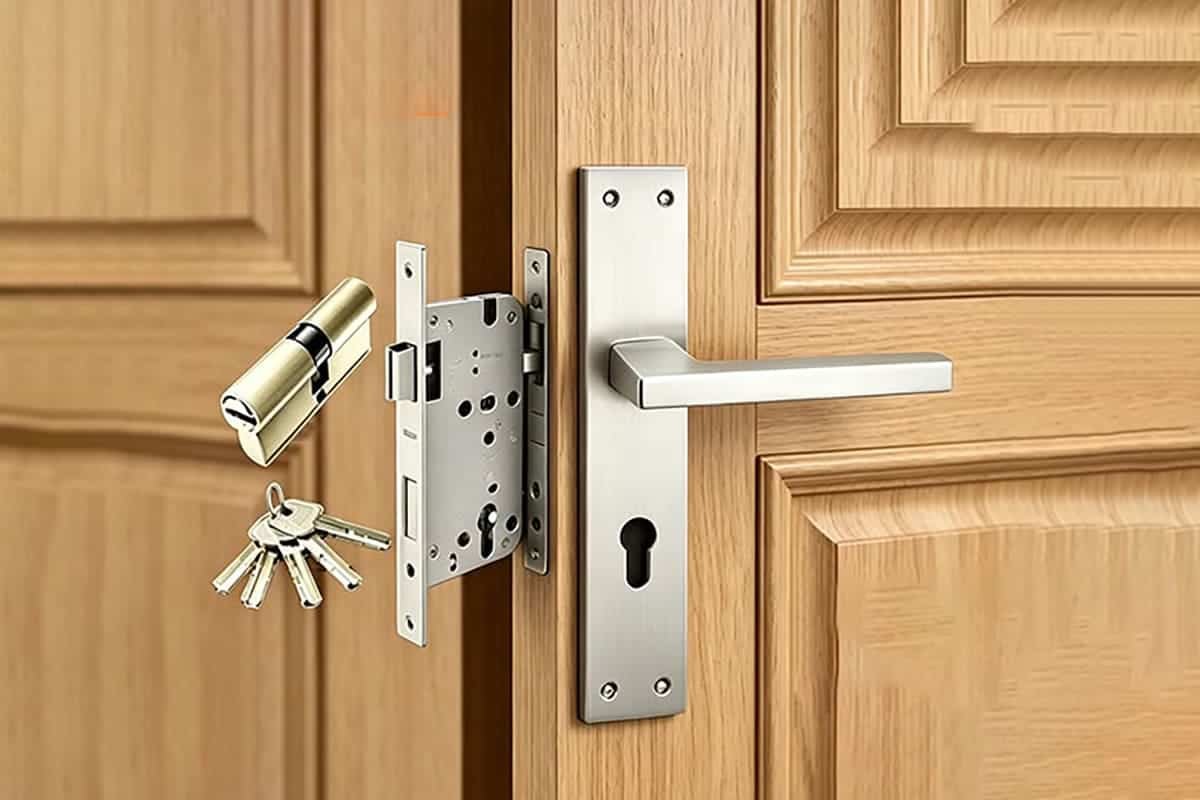
Surface protection affects door hardware lifespan by resisting corrosion, oxidation, staining, and finish breakdown. Buyers should evaluate base material, finish process, passivation, plating quality, and EN 1670 corrosion performance. Coastal or humid projects may need 316 stainless steel or enhanced surface treatments rather than standard indoor finishes.
Material choice is only the starting point
Many buyers ask me, “Is stainless steel enough?” My answer is usually: it depends on the grade, finish, and environment. Stainless steel is not one single material. Different stainless grades perform differently in corrosive conditions.
Common material and finish considerations include:
- 304 stainless steel: widely used for many indoor and general applications.
- 316 stainless steel: often preferred for coastal, humid, or more corrosive environments because of improved corrosion resistance.5
- Brass: common for cylinders and premium fittings, often combined with plating or protective finishes.
- Zinc alloy or aluminum alloy: may be suitable for specific accessories, depending on design and finish.
- Electroplating: can improve appearance and protection when process control is stable.
- Passivation: can improve stainless steel corrosion resistance by supporting the protective oxide layer.6
- Powder coating or PVD-type finishes: may be considered for appearance and performance, depending on project requirements.
The key point is simple: material alone does not define the lifespan of door hardware. Surface process and environment matter just as much.
EN 1670 helps compare corrosion resistance
For European-style building hardware, EN 1670 is commonly used as a corrosion resistance reference. It uses neutral salt spray testing under defined conditions.7 Buyers can use corrosion grades as a practical comparison point, but they should verify the latest standard details and test report scope before publication or procurement.
Here is a simplified procurement view:
| Environment | Corrosion risk | Suggested evaluation |
|---|---|---|
| Dry indoor office | Low | Standard finish may be acceptable |
| Residential bathroom area | Medium | Better plating, stainless steel, or coated finish |
| Humid basement | Medium to high | Improved corrosion grade and maintenance plan |
| Coastal hotel or villa | High | 316 stainless steel or enhanced treatment may be needed |
| Industrial or chemical area | Very high | Project-specific professional evaluation is recommended |
Surface durability also depends on cleaning and maintenance
Real use can be harsher than laboratory testing. Cleaning chemicals, salt air, hand sweat, dust, and moisture can all shorten surface life.8 In some markets, I have seen hardware installed near the sea develop staining much faster than similar hardware installed inland.
Buyers should ask suppliers practical questions:
- What base material is used?
- What surface treatment is applied?
- Is there a neutral salt spray test report?
- Which product and finish does the report cover?
- Does the finish match the project environment?
- What cleaning method is recommended?
- Are samples available for local evaluation?
These questions are especially important for importers and hardware brands. A finish that performs well in one country may not perform the same way in another region with higher humidity, salt exposure, or cleaning chemical use.
Appearance consistency matters for brands
For brand enterprises and bulk wholesalers, surface life is not only about corrosion. It is also about batch consistency. Customers expect handles, hinges, lock faceplates, cylinders, and accessories to match in color and texture.
At SDH Hardware, I pay attention to surface treatment selection because a complete door hardware series should look consistent across categories. This matters for hotel projects, apartment developments, and branded retail channels.
Procurement teams should request:
- Approved color samples
- Finish codes
- Batch inspection photos
- Packaging protection requirements
- Surface inspection criteria
- AQL or agreed inspection method
- Replacement policy for visible defects
A durable finish should protect the product and support the customer’s brand image. Both goals matter in B2B supply.
How Should Buyers Match Door Hardware Durability to Projects?
A durable product can still be the wrong product. If buyers choose by price alone, they may under-specify high-traffic doors or over-specify low-risk applications. I believe the lifespan of door hardware improves when buyers match grade, structure, and finish to the project.
Buyers should match door hardware durability by defining door type, traffic level, door weight, fire-rating needs, security level, and environmental exposure. The correct product grade should satisfy the application instead of simply offering the lowest price or the highest specification without purpose.
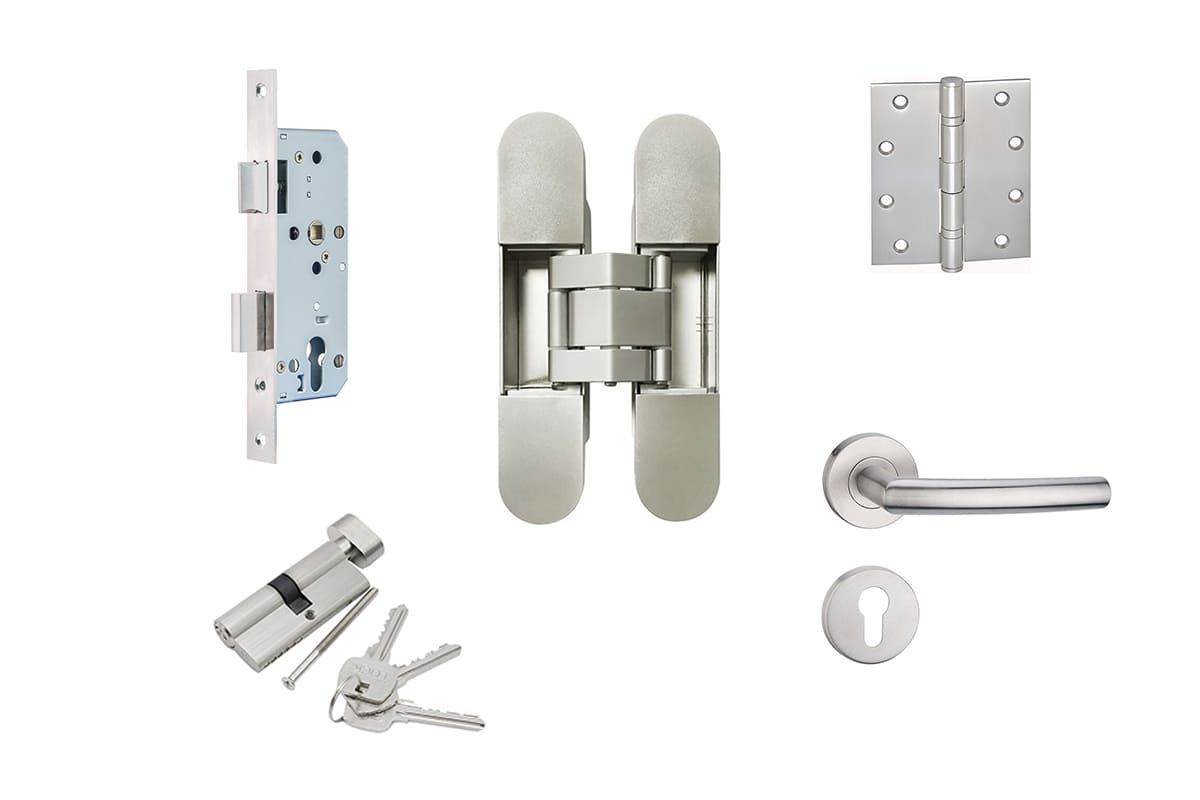
Start with the door schedule
A door schedule is one of the best tools for hardware selection. It connects each door position with function, size, weight, rating, and usage. I recommend using the door schedule before finalizing locks, hinges, cylinders, handles, and accessories.
A basic hardware selection checklist can include:
- Door location: interior, exterior, public area, private room.
- Door material: wood, steel, aluminum, fire-rated composite.
- Door weight and size: important for hinges and closers.
- Traffic frequency: low, medium, high, or very high.
- Security requirement: standard, controlled access, or higher security.
- Fire-rating requirement: applicable or not applicable.
- Environment: dry, humid, coastal, basement, industrial.
- Finish requirement: satin stainless, polished brass, black, PVD-style, painted, or custom.
- Branding requirement: logo stamping, laser marking, packaging, drawings.
- Inspection requirement: pre-shipment inspection, function test, surface check.
This process reduces guesswork. It also helps suppliers recommend the right grade.
Match product grade to usage level
The right question is not, “Is this hardware durable?” The right question is, “Is this grade suitable for this door and frequency of use?”
| Project type | Typical need | Procurement priority |
|---|---|---|
| Residential interior | Normal function and appearance | Cost-effective hardware with suitable finish |
| Apartment entrance | Better security and stable operation | Reliable locks, cylinders, hinges, and handles |
| Hotel rooms | Repeated daily use and consistent finish | Cycle performance, finish consistency, packaging |
| Schools and hospitals | High traffic and abuse risk | Heavy-duty grade, easy replacement, strong QC |
| Coastal resorts | Corrosion risk and appearance demand | 316 stainless steel or enhanced corrosion protection |
| Fire-rated commercial doors | Safety and compliance | Verified fire-rated hardware documents and professional review |
Do not treat certification as a complete lifespan promise
CE marking, fire-rated certification, and test reports are important documents. I encourage buyers to verify them carefully. However, these documents should not be treated as a universal guarantee for the entire lifespan of door hardware.
A fire-rated lock may be evaluated for fire-door use under specific conditions, but that does not mean its finish will resist coastal corrosion. A cylinder may pass relevant tests, but it still needs correct installation and a suitable key management system. A hinge may meet a load classification, but it still needs the right quantity, screws, and frame support.
Buyers should verify:
- Certificate holder
- Product model
- Test standard
- Grade or classification
- Date and validity
- Laboratory or notified body details
- Scope of application
- Connection to the exact item being purchased
For large projects, I recommend that buyers involve architects, door manufacturers, fire consultants, or qualified hardware specialists. This protects both the buyer and the supplier.
Factory capability affects consistency
The lifespan of door hardware is influenced not only by design but also by manufacturing control. As a manufacturer, I pay attention to repeatability. A good sample is not enough. Bulk orders must maintain the same quality level.
Important factory evaluation points include:
- Raw material screening
- In-house production capability
- Machining precision
- Assembly control
- Function testing
- Surface inspection
- Cycle testing or internal durability checks
- Packaging protection
- Final inspection before shipment
At SDH Hardware, I work from a factory-direct model with ODM and OEM support. I see this as valuable for door manufacturers, hardware brands, importers, and wholesalers because durability requirements often vary by market. Some buyers need custom finishes. Some need special accessories. Some need branded packaging and product drawings after order confirmation.
A strong supplier should help buyers translate project requirements into practical product specifications.
Frequently Asked Questions
What is the average lifespan of door hardware?
There is no reliable universal average for all door hardware. The lifespan depends on mechanical durability, surface corrosion resistance, usage frequency, installation quality, and environment. Buyers should evaluate the product category and relevant standard grade instead of relying on one general year estimate.
Which standards help evaluate door hardware durability?
Common European references include EN 12209 for locks and latches, EN 1303 for cylinders, EN 1935 for hinges, and EN 1670 for corrosion resistance. Buyers should verify the exact standard version, test report scope, product model, and grade before using the documents for procurement decisions.
Does stainless steel door hardware last longer?
Stainless steel can improve durability, but it is not always enough. The grade, finish, passivation, cleaning method, and environment all matter. Coastal or humid projects may require 316 stainless steel or enhanced surface treatment rather than standard stainless steel hardware.
How can importers reduce door hardware failure complaints?
Importers can reduce complaints by matching hardware grade to traffic level, checking corrosion resistance for the target market, verifying certificates and test reports, approving samples, and requiring final inspection before shipment. Clear specifications reduce the risk of wrong product selection.
Is CE certification a guarantee of door hardware lifespan?
CE certification is not a total lifespan guarantee.9 It indicates that a product meets applicable declared requirements under defined conditions. Buyers should still check durability grade, corrosion resistance, installation conditions, fire-rated scope when relevant, and project-specific suitability.
Conclusion
The lifespan of door hardware should be judged through mechanical durability and surface corrosion resistance, not through one vague year-based promise. Locks, cylinders, hinges, handles, and accessories all need the right grade for the door’s traffic level, load, environment, and compliance needs. I recommend verifying standards, test reports, certificates, materials, finishes, and factory quality-control processes before placing bulk orders. If you need Euro-standard architectural door hardware for OEM, ODM, or project supply, contact SDH Hardware to discuss suitable specifications for your market.
"087100 – DOOR HARDWARE - Facilities and Campus Services", https://fcs.cornell.edu/087100-door-hardware. Door-hardware performance standards classify products by defined mechanical tests such as operating cycles, loading, and product-specific functional requirements, supporting the use of cycle grade, load, structure, and usage frequency as durability variables; these tests provide comparable laboratory benchmarks rather than exact predictions of service life in a particular building. Evidence role: general_support; source type: institution. Supports: A standards or institutional source should support that mechanical durability of door hardware is assessed through defined cycle testing, grades, loading conditions, and product construction requirements.. Scope note: The support is contextual because standards classify performance under test conditions, not actual years of service. ↩
"Special Issue: “Surface Engineering and Coating ... - PMC", https://pmc.ncbi.nlm.nih.gov/articles/PMC9029968/. Materials-corrosion references describe corrosion performance as a function of alloy composition, surface condition or coating, and the surrounding environment, supporting the article’s distinction between mechanical service life and surface life; such sources explain the mechanism generally rather than testing the specific door-hardware products discussed here. Evidence role: mechanism; source type: education. Supports: A university or materials-engineering source should explain that corrosion and surface degradation depend on alloy composition, surface condition or coating, and environmental exposure.. Scope note: The support is general corrosion science and does not directly measure the article’s specific hardware items. ↩
"DURABILITY BY DESIGN", https://www.huduser.gov/portal/publications/durability_by_design.pdf. Durability frameworks for door hardware use operating cycles and grades to represent expected intensity of use, supporting the view that traffic level is a major factor in hardware selection; this evidence supports the mechanism of wear from repeated use rather than ranking traffic level against every other possible failure factor. Evidence role: general_support; source type: research. Supports: A research or institutional source should support that repeated operating cycles and intensity of use are central factors in durability evaluation for door hardware.. Scope note: The source may support use-frequency as an important factor without proving it is always the single strongest influence. ↩
"6 Mistakes Homeowners Make When Installing Door ...", https://www.bergerhardwareinc.com/6-mistakes-homeowners-make-when-installing-door-hardware. Door and fire-door inspection guidance treats correct installation, alignment, fastening, and maintenance of hardware as necessary for intended operation, supporting the claim that poor installation can contribute to premature functional problems; such guidance establishes installation dependence but may not quantify failure rates for ordinary non-fire doors. Evidence role: mechanism; source type: institution. Supports: An institutional standard or inspection guide should support that door hardware must be installed and maintained correctly for proper operation, alignment, and safety performance.. Scope note: The evidence is strongest for regulated or inspected door assemblies and may be less direct for all residential hardware. ↩
"Corrosion Behavior of Sensitized AISI 304 Stainless Steel in ...", https://pmc.ncbi.nlm.nih.gov/articles/PMC9740934/. Materials references describe type 316 stainless steel as having greater resistance to chloride-related corrosion than type 304, largely because of its molybdenum content, which supports its common use in marine or coastal environments; actual performance still depends on finish, design, maintenance, and severity of exposure. Evidence role: mechanism; source type: education. Supports: A materials-science source should support that 316 stainless steel, due largely to molybdenum content, generally has better resistance to chloride-containing environments than 304 stainless steel.. Scope note: The source supports the material-property rationale but not the performance of every finished door-hardware product. ↩
"Evaluation of Passive Films on 17-7PH and 410 Stainless ...", https://pmc.ncbi.nlm.nih.gov/articles/PMC11356734/. Passivation of stainless steel is described as a treatment that removes surface contaminants and promotes a protective chromium-rich oxide film, supporting improved resistance to corrosion; its effectiveness depends on alloy type, surface condition, treatment quality, and exposure environment. Evidence role: mechanism; source type: government. Supports: A government or standards-related source should explain that passivation removes surface contamination and supports formation of a protective chromium-rich oxide film on stainless steel.. Scope note: The support explains the mechanism and conditions but does not guarantee performance for a specific product or finish. ↩
"Salt spray test", https://en.wikipedia.org/wiki/Salt_spray_test. EN 1670 classifies corrosion resistance for building hardware using defined neutral salt spray exposure conditions, supporting the article’s description of corrosion grades as comparative laboratory measures; salt spray results do not directly reproduce all real coastal, industrial, or cleaning-chemical exposures. Evidence role: definition; source type: institution. Supports: A standards body or standards catalogue should confirm that EN 1670 concerns corrosion resistance for building hardware and uses neutral salt spray exposure for classification.. Scope note: Salt spray testing is an accelerated comparative method and is not a complete simulation of all real environments. ↩
"Marine Atmospheric Corrosion of Carbon Steel: A Review - PMC", https://pmc.ncbi.nlm.nih.gov/articles/PMC5506973/. Corrosion and coating-degradation studies show that chlorides, moisture, human-sweat constituents, particulates, and some cleaning chemicals can accelerate metal corrosion or finish breakdown, supporting the article’s warning about environmental exposure; the evidence is general to metals and coatings and may vary by alloy, coating system, and maintenance practice. Evidence role: mechanism; source type: paper. Supports: A corrosion or coatings paper should support that chlorides, moisture, sweat constituents, particulates, and chemical cleaners can accelerate corrosion or coating degradation on metals.. Scope note: The evidence may not test the exact hardware finishes or cleaning products used in every project. ↩
"Compliance FAQs: CE Marking", https://www.nist.gov/standardsgov/compliance-faqs-ce-marking. European Commission guidance explains that CE marking indicates a product’s conformity with applicable EU legal requirements and permits market access within the relevant framework; it is not a general warranty of quality, durability, or service life under all installation and environmental conditions. Evidence role: definition; source type: government. Supports: An EU government or European Commission source should support that CE marking indicates conformity with applicable EU requirements, not a general quality or lifespan guarantee.. ↩