Spring VS Non-Spring Door Handles: Which One Suits Your Needs?
Spring VS non-spring door handles can create confusion when buyers compare price, function, durability, and user experience. A wrong choice may increase complaints, maintenance work, or sourcing risk. I usually guide buyers to start with the door’s usage frequency, handle weight, safety needs, and budget before choosing either structure.
Spring VS non-spring door handles differ mainly in return function. A spring door handle automatically returns to its original position after use, while a non-spring handle does not reset by itself.1 Spring handles suit frequent-use doors and heavier handles. Non-spring handles suit simpler, lighter, or low-frequency applications where cost control matters.
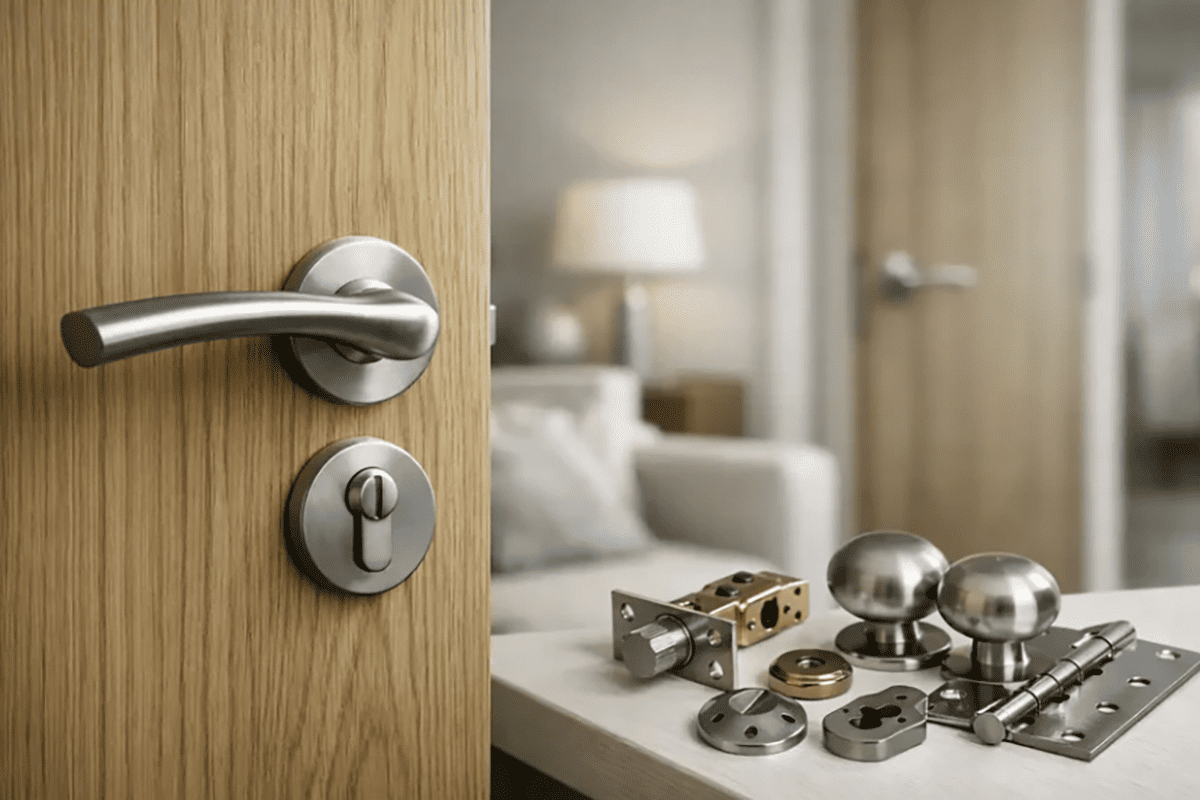
I manufacture and supply both types at SDH Hardware, so I do not see this as a “better or worse” decision. I see it as a procurement decision. The right answer depends on the door environment, product structure, target market, and after-sales tolerance.
What Is the Basic Difference in Spring VS Non-Spring Door Handles?
Many buyers first compare spring VS non-spring door handles by price. That is understandable, but price alone can hide important functional differences. If the handle does not return properly, the lock may feel poor, even when the visible finish looks attractive.
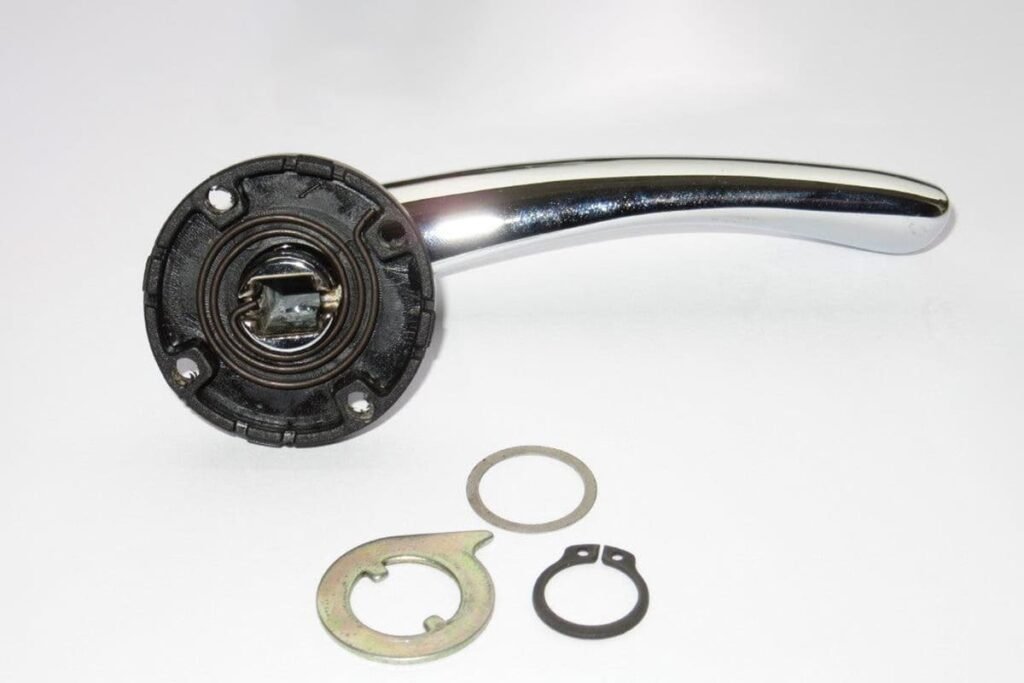
A spring door handle includes a return mechanism that helps the lever go back to its original horizontal position after operation.2 A non-spring door handle has a simpler structure and does not automatically return by itself. The key difference is automatic reset versus manual or latch-dependent return.
How the two structures work
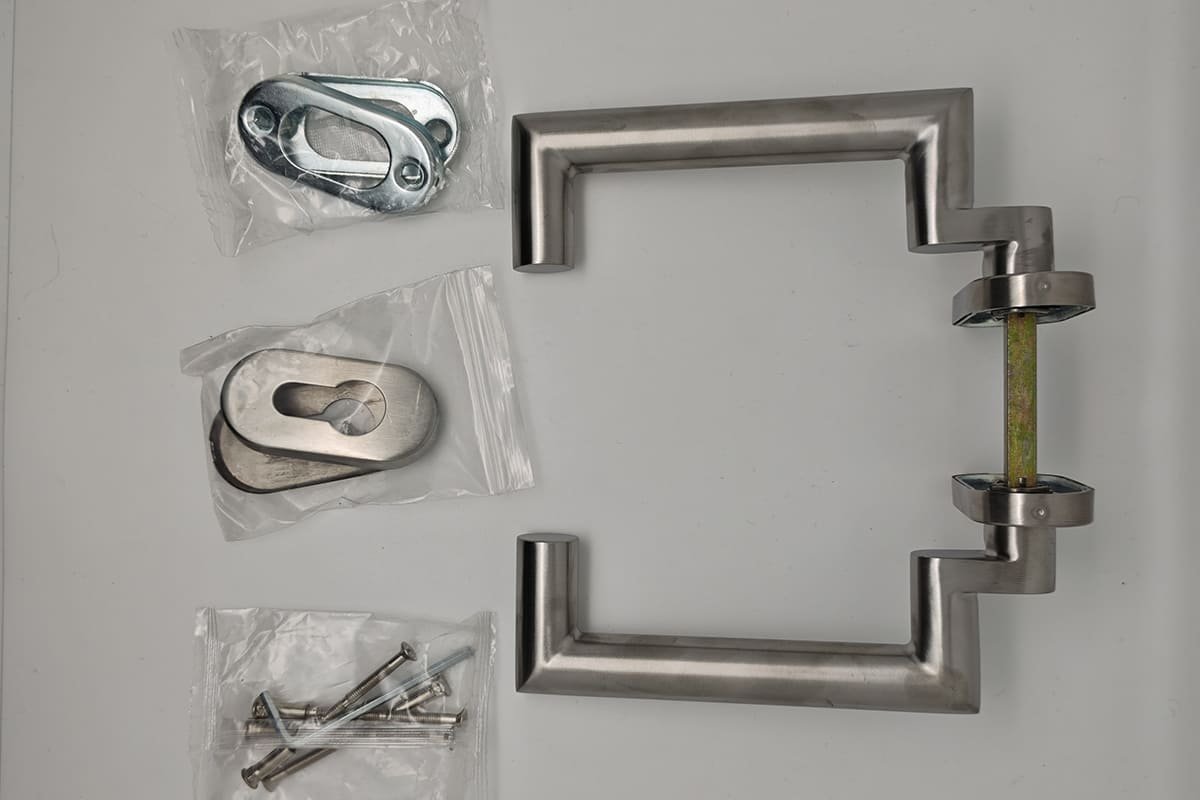
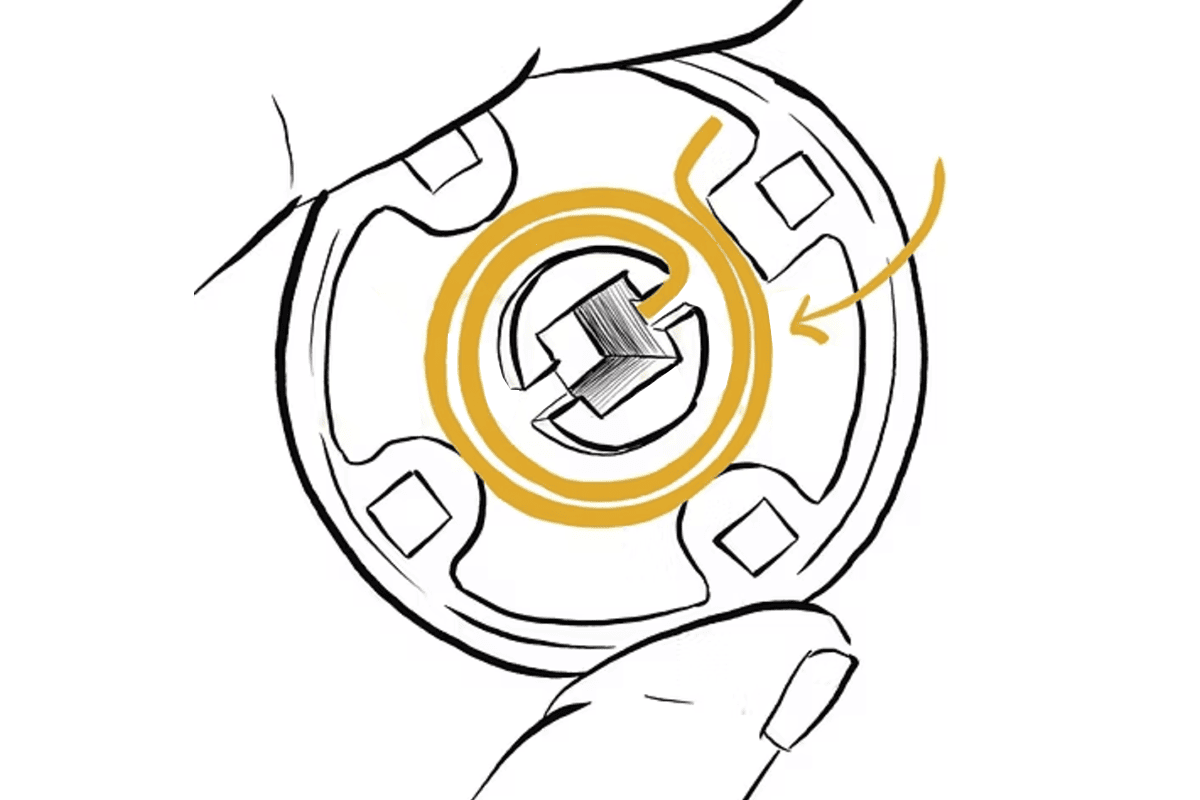
In simple terms, a spring handle uses an internal spring mechanism to support the lever movement. After a user presses or pulls the handle, the spring helps the handle return to its original position. This creates a cleaner operating feel and reduces the chance that the handle remains hanging downward.
A non-spring handle has no built-in return spring. The lever may depend more on the lock body, latch structure, spindle fit, installation quality, or user movement.3 This makes the structure simpler. It can also reduce spring-related failure points. However, it does not offer the same automatic reset experience.
From my production and order communication experience, buyers often misunderstand this point. Some assume that a non-spring handle means poor quality. That is not correct. A non-spring handle can be a suitable product when the door has low usage frequency, the handle is light, and the buyer wants a cost-effective solution.
Basic comparison table
| Item | Spring Door Handle | Non-Spring Door Handle |
|---|---|---|
| Return function | Automatically returns | Does not automatically return |
| Structure | More complex | Simpler |
| User experience | More convenient | More basic |
| Common use | Frequent-use doors, public areas, heavier handles | Low-frequency doors, lighter handles, cost-sensitive projects |
| Maintenance concern | Spring mechanism may need attention over time | Fewer spring-related issues |
| Cost level | Usually higher | Usually lower |
Why this difference matters for buyers
For door factories, hardware brands, importers, and wholesalers, the handle is not only a metal part. It affects the final door experience. If the lever drops, feels loose, or does not reset cleanly, the end user may blame the complete door set.
I usually suggest buyers ask three early questions:
- How often will the door be used each day?
- How heavy is the handle material and design?
- What level of user experience does the market expect?
A hotel room, office entrance, school door, apartment door, and storage room may all require different choices. The same handle structure cannot serve every project equally well.
The practical goal is not to choose the most expensive handle. The goal is to choose the structure that matches the real door application.
When Should Buyers Choose Spring VS Non-Spring Door Handles?
Choosing spring VS non-spring door handles becomes easier when buyers focus on usage frequency. A handle used many times per day needs stable return and better operating comfort.4 A handle used only occasionally may not need the same mechanism or cost level.
Buyers should choose spring handles for high-frequency doors, heavier handles, and applications where automatic reset improves safety and convenience. Buyers can choose non-spring handles for low-frequency doors, lighter handles, and projects where simple operation and lower cost are acceptable.
High-frequency use usually favors spring handles
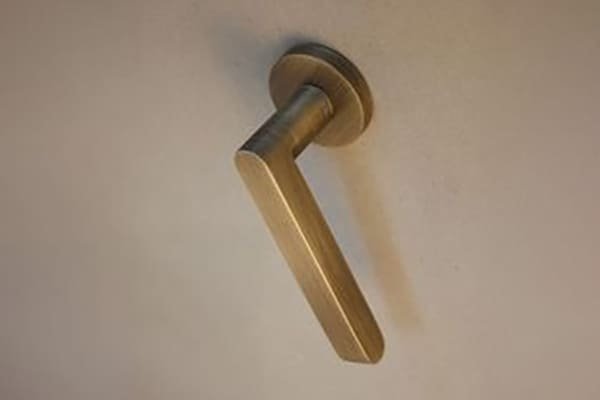
In commercial and public environments, people often open and close doors without paying attention to the handle position. A spring handle helps the lever return after each operation. This improves the feeling of order and can reduce complaints about a “loose” or “drooping” handle.
Common high-frequency applications include:
- Office doors
- School doors
- Hospital or clinic doors
- Hotel public-area doors
- Retail shop doors
- Shared residential entrances
- Project doors with frequent daily access
In these cases, convenience matters. The handle should feel predictable every time. If a buyer sources handles for a hardware brand or door factory, consistent user experience also protects the brand reputation.
Low-frequency use may allow non-spring handles
Non-spring handles can work well when the door is not opened often. Examples may include:
- Storage rooms
- Utility rooms
- Certain internal residential doors
- Light-duty private rooms
- Budget-sensitive furniture or interior door applications
In these cases, a simpler structure may be enough. The buyer can control cost without over-specifying the product. This is especially important for bulk wholesalers who supply different market levels.
Application-based selection guide
| Door Application | Suggested Option | Reason |
|---|---|---|
| Office corridor door | Spring handle | Frequent use and better reset |
| Storage room door | Non-spring handle may be enough | Low use frequency |
| Hotel room door | Spring handle often preferred | User comfort and brand expectation |
| Light internal residential door | Depends on handle weight and budget | Medium requirement |
| Heavy stainless steel lever set | Spring handle usually recommended | Better support for handle return |
| Cost-sensitive low-use project | Non-spring handle may be practical | Simpler and lower cost |
Why frequency is the key variable
I often see buyers focus heavily on material, finish, or unit price. These are important, but the number of daily operations can be more important for structure selection. A door handle used five times a day faces a different operating situation than one used hundreds of times a day.5
If buyers ignore frequency, two problems may appear:
- Over-buying: The buyer pays for a spring function that the application does not really need.
- Under-buying: The buyer chooses a simple structure for a demanding door, which may increase after-sales complaints.
A balanced procurement decision should match product grade with real usage. I recommend that buyers create different specifications for different door categories instead of using one handle type for every project.
How Do Handle Material and Weight Affect Spring VS Non-Spring Door Handles?
Spring VS non-spring door handles are not only about mechanism. Handle material and weight also influence performance. A heavy lever can place more demand on the return system.6 If the structure does not support the handle well, the lever may feel unstable over time.
Heavier metal handles, such as many stainless steel or zinc alloy lever handles, generally benefit from a spring mechanism because the spring supports return movement and daily stability. Lighter handles may be more suitable for non-spring structures when the usage frequency and project requirements are modest.

Why handle weight changes the decision
A door handle is a moving part. The heavier the lever, the more important the return force becomes. A spring mechanism can help the handle return to its original position after operation. This is especially relevant when the product uses dense materials or a long lever design.7
At SDH Hardware, our product range includes stainless steel lever handles, Euro mortise locks, butt hinges, concealed door hinges, Euro brass cylinders, and other architectural hardware. In handle selection, I pay close attention to the relationship between:
- Lever length
- Handle body weight
- Rosette or plate structure
- Spindle fit
- Lock body compatibility
- Spring return performance
- Target door environment
A beautiful heavy handle may look premium, but it still needs the right internal support.
Common material considerations
| Handle Material | Typical Buyer Concern | Spring Need |
|---|---|---|
| Stainless steel | Strength, corrosion resistance, modern appearance | Often recommended for heavier lever designs |
| Zinc alloy | Flexible shaping, decorative designs, weight | Often recommended when the handle is heavy |
| Aluminum alloy | Lighter weight, cost control | Depends on design and usage |
| Brass | Premium appearance, solid feel | Often depends on lever weight and project grade |
| Plastic or very light handles | Basic function, low cost | Non-spring may be acceptable in some applications |
Design also matters
Material alone does not decide everything. A short stainless steel handle may behave differently from a long, thick zinc alloy handle. A thin lever may place less load on the mechanism than a large decorative model.
Buyers should evaluate:
- Total lever weight
- Lever length and balance
- Backplate or rose design
- Lock body spring strength
- Door usage frequency
- Expected user experience
If a buyer sends me a drawing or sample, I usually check the product structure together with the intended application. This helps avoid mismatch between the handle and the door system.
Practical sourcing advice
For heavier handles, I normally suggest that buyers do not remove the spring mechanism only to save cost. The unit price may look better at first, but after-sales risk may increase if the handle does not return well in daily use.
For lighter handles used in low-traffic spaces, a non-spring structure can be reasonable. The buyer should still confirm spindle size, lock compatibility, finish quality, and packaging requirements before placing a bulk order.
How Should Buyers Compare Cost, Maintenance, and After-Sales Risk?
Many buyers treat spring VS non-spring door handles as a simple price comparison. That can lead to a weak sourcing decision. A cheaper handle can still be correct, but only when the lower cost matches the door use, user expectation, and maintenance plan.
Spring handles usually cost more because they include a return mechanism and may require more precise structure control.8 Non-spring handles are usually simpler and lower in cost. However, buyers should compare total value, including user experience, maintenance tolerance, safety expectations, and after-sales risk.
The real cost is not only the purchase price
In B2B hardware sourcing, unit price is important. I understand this very well because many importers and wholesalers compete in price-sensitive markets. However, the lowest unit price does not always create the lowest total cost.9
The real cost may include:
- Purchase price
- Inspection cost
- Installation adjustment
- Customer complaints
- Replacement parts
- Brand reputation risk
- Warranty handling
- Delayed project delivery
A spring handle may cost more at purchase, but it may provide better convenience and reset function for frequent-use doors. A non-spring handle may save money, but it should be placed in the correct application.
Maintenance comparison
| Factor | Spring Handle | Non-Spring Handle |
|---|---|---|
| Initial cost | Usually higher | Usually lower |
| Structure complexity | Higher | Lower |
| Return function | Better automatic reset | No automatic reset |
| Spring-related maintenance | Possible over time | Not applicable |
| User convenience | Higher | More basic |
| Best fit | Frequent use, heavy handles, higher user expectation | Low use, light handles, cost-sensitive projects |
After-sales risk by application
After-sales risk increases when the handle structure does not match the door environment. For example, if a non-spring handle is installed on a high-traffic office door, users may notice the missing reset function quickly. The buyer may receive complaints even if the handle is technically made according to the order.
On the other hand, if a spring handle is installed on a low-use storage door, the buyer may have paid for a function that adds little value. That is not a quality problem, but it may reduce price competitiveness.
What I suggest buyers include in their specification
Before confirming an order, buyers should define:
- Door type: wooden, metal, fire-rated, interior, exterior, or project-specific.
- Usage level: low, medium, or high frequency.
- Handle material: stainless steel, zinc alloy, aluminum, brass, or other.
- Return requirement: automatic return required or not required.
- Lock compatibility: mortise lock type, spindle size, and latch behavior.
- Finish requirement: satin, polished, PVD, powder coating, or custom surface.
- Certification documents: CE or fire-rated documents where applicable and required.
For fire-rated or regulated applications, I always advise buyers to verify certification documents and confirm suitability with qualified professionals.10 Door hardware works as part of a complete door system, so application-specific evaluation matters.11
What Should You Check Before Ordering Spring VS Non-Spring Door Handles from a Supplier?
Ordering spring VS non-spring door handles from a supplier requires more than choosing a catalog photo. If the buyer does not confirm function, material, finish, packaging, and inspection details, the final shipment may not match the project or market expectation.
Before ordering, buyers should check the handle structure, return function, material weight, lock compatibility, finish quality, test and inspection process, certification documents, packaging, customization options, and supplier manufacturing capability. These checks reduce sourcing risk and improve consistency across bulk orders.
Supplier capability matters
As a manufacturer, I believe supplier evaluation should go beyond price. A reliable supplier should understand both product structure and buyer application. The supplier should also explain when a spring mechanism is useful and when a simpler non-spring structure may be enough.
At SDH Hardware, we operate as a China-based architectural door hardware manufacturer with independent factory production. Our product portfolio covers more than 3,000 hardware articles, including Euro mortise locks, stainless steel lever handles, butt hinges, concealed hinges, Euro brass cylinders, and door accessories. This broad category experience helps me view handles as part of a complete door hardware system.
Procurement checklist for buyers
| Checkpoint | What Buyers Should Confirm |
|---|---|
| Handle type | Spring or non-spring structure |
| Return function | Whether automatic reset is required |
| Material | Stainless steel, zinc alloy, brass, aluminum, or other |
| Weight | Whether the lever needs spring support |
| Lock compatibility | Mortise lock, spindle, latch, and door thickness |
| Surface finish | Color, texture, corrosion expectations, sample approval |
| Certification documents | CE or fire-rated documents where applicable |
| Customization | Logo, packaging, drawings, accessories |
| Inspection | Finished product inspection before shipment |
| Order model | OEM, ODM, standard article, or custom development |
Quality control questions to ask
Buyers can ask suppliers direct questions such as:
- Does this handle include an internal spring mechanism?
- Is the spring suitable for the handle weight?
- Can the supplier provide product drawings after order confirmation?
- Can the supplier support logo stamping or laser marking?
- What surface treatment options are available?
- Can the supplier provide inspection before shipment?
- Are CE or fire-rated documents available for the relevant products?
- Are the documents valid for the exact model and application?
These questions are practical. They help buyers avoid unclear assumptions.
Why communication before production is important
Many problems in bulk orders come from unclear expectations. A buyer may say “standard handle,” but different markets define “standard” differently. A Middle East wholesaler, European hardware brand, and Southeast Asian door factory may focus on different finishes, spindle sizes, packaging formats, and certifications.
I prefer to confirm key details before production, especially for OEM and ODM orders. This includes drawings, surface samples, accessories, packaging artwork, logo method, and inspection standards. Clear communication reduces misunderstanding and supports smoother delivery.
For buyers sourcing complete door hardware sets, one-stop coordination can also help. A handle should match the mortise lock, cylinder, hinge, and door accessory package. When the complete system is considered together, product selection becomes more stable.
Frequently Asked Questions
Are spring door handles always better than non-spring door handles?
No. Spring door handles offer automatic return and better convenience, but they are not always necessary. Non-spring handles can be suitable for low-frequency doors, lighter handles, and cost-sensitive projects. The better choice depends on usage frequency, handle weight, safety needs, and buyer expectations.
Do non-spring door handles mean low quality?
No. A non-spring door handle is not automatically low quality. It is a simpler structure without automatic return. It can be appropriate when the application does not require frequent use or heavy handle support. Buyers should judge it by application fit, material, finish, and manufacturing quality.
Why do heavier handles often need a spring mechanism?
Heavier handles, such as many stainless steel or zinc alloy lever designs, need stronger support to return to the original position. A spring mechanism helps improve reset function and daily operating stability. Buyers should still confirm the exact handle design, weight, and lock compatibility with the supplier.
Are spring handles more expensive to maintain?
Spring handles may involve higher maintenance risk than non-spring handles because they include a return mechanism.12 However, they also provide better convenience and reset performance. Buyers should compare the added cost against user experience, usage frequency, and potential after-sales complaints.
What should I ask a supplier before ordering door handles in bulk?
You should ask whether the handle is spring or non-spring, what material it uses, whether it matches your lock body, what finish options are available, and whether inspection and certification documents can be provided. You should also confirm packaging, logo, drawings, and customization needs before production.
Conclusion
Spring VS non-spring door handles should be selected by application, not by habit or price alone. Spring handles suit frequent-use doors, heavier lever designs, and projects that need automatic reset and better user experience. Non-spring handles can suit lighter, simpler, or low-frequency applications where cost control matters. If you are sourcing door handles for a project, brand, or wholesale market, contact SDH Hardware to review your handle structure, material, finish, and order requirements before production.
"BS EN 1906 – Lever Handle and Knob Furniture", https://www.hoppe.com/gb-en/contacts-service/standards/bs-en-1906/. Door-hardware standards and architectural ironmongery references distinguish sprung lever furniture, which incorporates a return mechanism, from unsprung furniture, which does not provide the same integral self-return function; this supports the functional distinction but does not verify any particular supplier’s product. Evidence role: definition; source type: institution. Supports: A door-hardware standard or technical reference should support the distinction between sprung/self-returning lever furniture and unsprung/non-self-returning lever furniture.. Scope note: Contextual support for the category distinction, not proof of the construction of any specific handle model. ↩
""Design of a Suspension Lever Mechanism in Biomedical ...", https://pmc.ncbi.nlm.nih.gov/articles/PMC9352879/. Mechanical engineering references describe return springs as elastic elements that store energy during movement and exert a restoring force toward the original position, supporting the explanation of how a sprung lever handle returns after operation. Evidence role: mechanism; source type: education. Supports: An engineering or technical source should explain that return springs store elastic energy during actuation and use it to move a lever back toward its rest position.. ↩
"Sprung vs Unsprung Door Handles: What's the Difference?", https://www.doorfurnituredirect.co.uk/pages/sprung-vs-unsprung-door-handles-whats-the-difference?srsltid=AU7gw4VdHKE_3FxSqznMyDItzUquG_-84BgeCpWurAen0U6MBbdaOcoN. Architectural hardware installation references describe lever operation as dependent on the interaction of the handle, spindle, latch or lock body, and installation alignment, supporting the claim that an unsprung handle may rely on the wider door hardware assembly for return behavior. Evidence role: mechanism; source type: institution. Supports: A neutral hardware or installation source should support that lever operation and return can be affected by latch springs, spindle alignment, lock body design, and installation quality.. Scope note: Contextual support for component interaction, not a universal rule for every non-spring handle design. ↩
"BS EN 1906 – Lever Handle and Knob Furniture", https://www.hoppe.com/gb-en/contacts-service/standards/bs-en-1906/. Lever-handle standards such as EN 1906 and ANSI/BHMA hardware standards classify products by use category and durability-cycle performance, supporting the article’s position that frequent-use doors require more stable operating performance. Evidence role: expert_consensus; source type: institution. Supports: Door-hardware standards should support that lever furniture is classified by category of use and durability, including cycle testing for different use conditions.. Scope note: Standards support the relevance of use frequency and durability, but they may not specifically evaluate subjective comfort. ↩
"Cyclic Fatigue - an overview", https://www.sciencedirect.com/topics/engineering/cyclic-fatigue. Research on cyclic loading and mechanical wear shows that repeated operation can contribute to fatigue, loosening, and surface wear in moving components, supporting the distinction between low-frequency and high-frequency handle applications. Evidence role: mechanism; source type: paper. Supports: A paper or technical source should support that repeated cycles contribute to wear and fatigue in mechanical components.. Scope note: General mechanical evidence; it does not quantify failure rates for the specific door handles discussed in the article. ↩
"Torque (Moment)", https://www.grc.nasa.gov/www/k-12/airplane/torque.html. Basic mechanics references explain that torque depends on force and lever-arm distance, supporting the claim that a heavier lever can impose greater demand on a spring or return mechanism. Evidence role: mechanism; source type: education. Supports: A mechanics source should support that lever weight and lever-arm length affect torque and therefore the restoring force needed to return a lever.. ↩
"Lever", https://en.wikipedia.org/wiki/Lever. Materials references identify substantial density differences among common handle materials, and mechanics references show that longer lever arms increase torque for a given force, supporting the article’s explanation that dense materials and long lever designs can affect return-system demand. Evidence role: mechanism; source type: education. Supports: A source should support that material density affects mass and that lever length affects torque, both of which can influence return-system load.. Scope note: This supports the physical principle, not a specific threshold at which a spring mechanism becomes necessary. ↩
"Analyzing Product Lifecycle Costs for a Better ...", http://utw10945.utweb.utexas.edu/Manuscripts/2012/2012-12-Lindemann.pdf. Manufacturing-cost research identifies component count, assembly complexity, and tolerance requirements as cost drivers, providing contextual support for the claim that a sprung handle can cost more than a simpler non-spring structure. Evidence role: general_support; source type: paper. Supports: Manufacturing-cost literature should support that additional components, assembly steps, and tighter tolerances can increase production cost.. Scope note: Contextual manufacturing evidence; it does not establish a universal price difference for every door-handle market. ↩
"Life‑Cycle Costing in Public Procurement in Hungary", https://www.oecd.org/en/publications/life-cycle-costing-in-public-procurement-in-hungary_8d90f627-en.html. Public-procurement guidance on total cost of ownership and life-cycle costing states that purchase price is only one element of cost, supporting the article’s claim that the lowest unit price may not produce the lowest overall cost. Evidence role: expert_consensus; source type: government. Supports: A government or public-procurement source should support considering lifecycle or total ownership costs rather than purchase price alone.. ↩
"Fire Doors and NFPA 80 FAQs", https://www.nfpa.org/news-blogs-and-articles/blogs/2025/04/11/fire-doors-faqs. Fire-door standards and certification guidance require hardware used on rated door assemblies to be appropriate for the labeled assembly and inspected or verified according to applicable requirements, supporting the article’s advice to check certification documents and professional suitability. Evidence role: expert_consensus; source type: institution. Supports: A fire-door standard or certification body should support that fire-door hardware must be suitable, listed, labeled, or documented for the relevant assembly and application.. Scope note: Requirements vary by jurisdiction, door rating, and certification scheme. ↩
"087100 – DOOR HARDWARE - Facilities and Campus Services", https://fcs.cornell.edu/087100-door-hardware. Door-assembly and fire-door standards treat hardware as part of an integrated doorset or assembly, supporting the article’s statement that application-specific evaluation matters for hardware selection. Evidence role: expert_consensus; source type: institution. Supports: A standard or institutional source should support that door hardware is evaluated in relation to the complete door assembly and use case.. Scope note: Most directly applicable to regulated, fire-rated, security, or accessibility-related doors; ordinary interior doors may involve fewer formal requirements. ↩
"Draft paper for Topic: Mechanical Reliability", https://users.ece.cmu.edu/~koopman/des_s99/mechanical/. Studies of mechanical springs under cyclic loading show that springs can experience fatigue and performance degradation over repeated use, supporting the article’s statement that sprung handles may introduce maintenance considerations absent from handles without that mechanism. Evidence role: mechanism; source type: paper. Supports: A reliability or fatigue source should support that springs and additional moving parts can be subject to wear or fatigue over repeated cycles.. Scope note: General evidence about spring fatigue; actual maintenance risk depends on design, materials, manufacturing quality, and duty cycle. ↩