Automatic vs Manual Multipoint Door Locks: How Should Door Factories Choose the Operating Logic?
Multipoint door locks can create confusion when a door factory must choose between automatic and manual operation. The problem is that both options look similar in a product list, but they behave differently after installation. If the wrong logic is selected, the door may miss its real performance priority. The solution is to evaluate user behavior, sealing needs, and door application together.
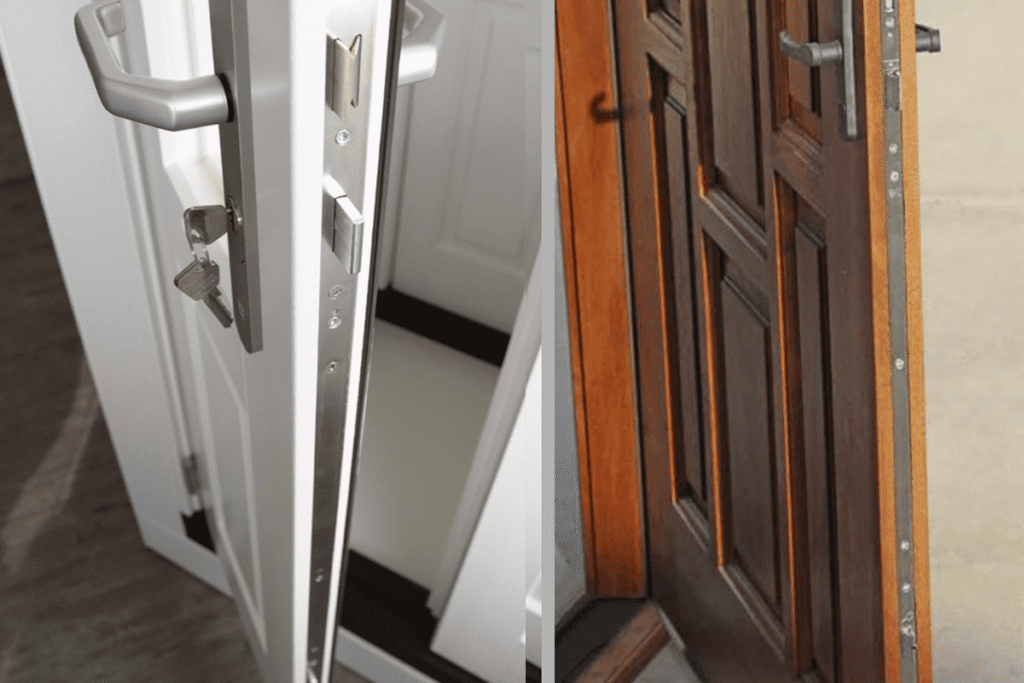
Automatic vs manual multipoint door locks should be chosen by operating logic, not by assuming one is always better. Automatic multipoint locks engage locking points when the door closes1, reducing “closed but not locked” risk. Manual multipoint locks require handle lifting or key turning2, but they can pull the door leaf tighter against the frame for better compression and sealing.3
In my factory-side work with door hardware configurations, I often see buyers focus first on price, lock body size, or faceplate length. Those details matter, but they come after the bigger question: What should the door do best when a real user closes it?
What Is the Operating Logic of Multipoint Door Locks?
Door factories often compare multipoint door locks by appearance, dimensions, or the number of locking points. That approach can miss the real difference. The main issue is not only how many hooks, rollers, or bolts the lock has. The main issue is when and how those locking points engage.
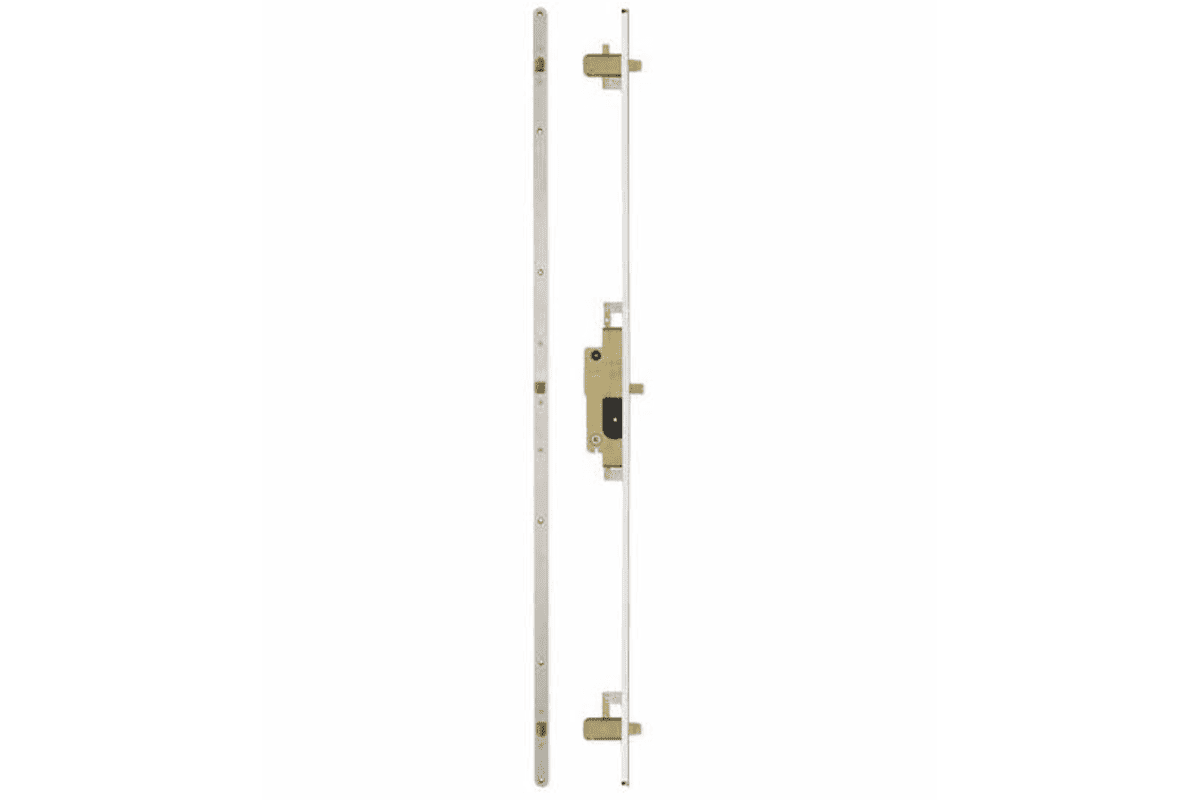
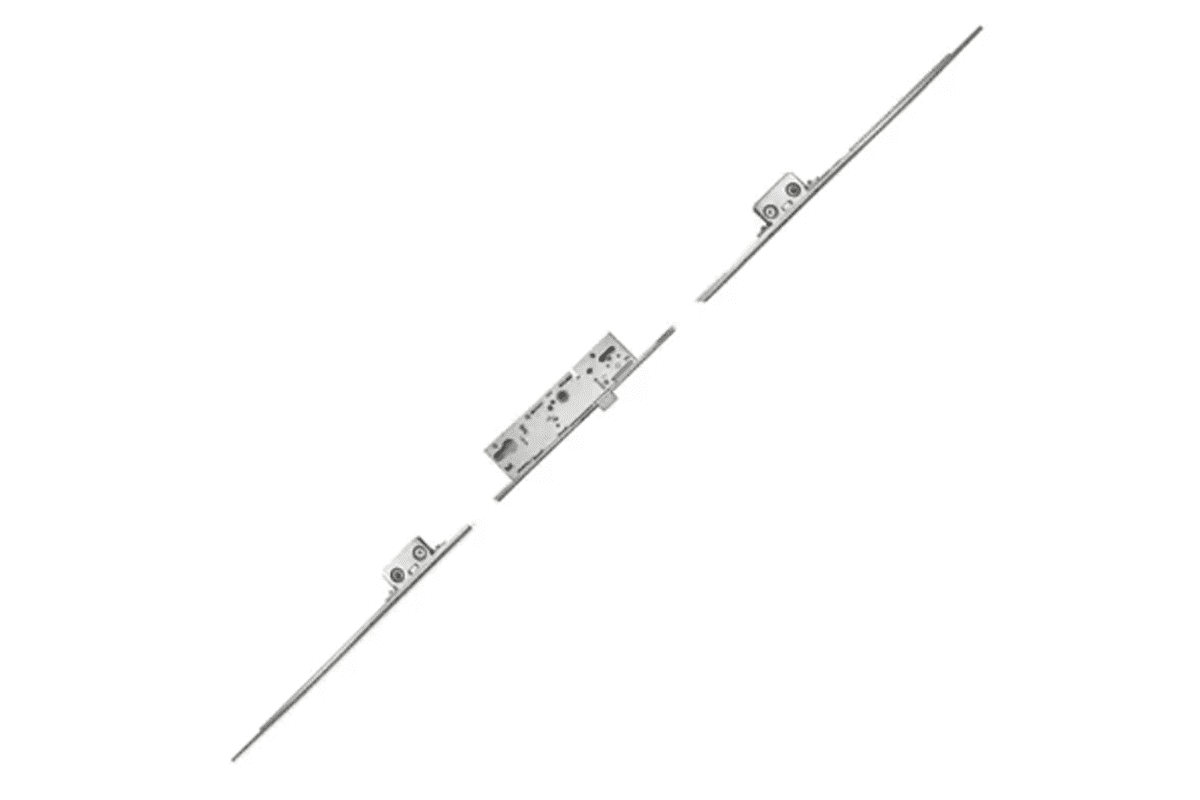
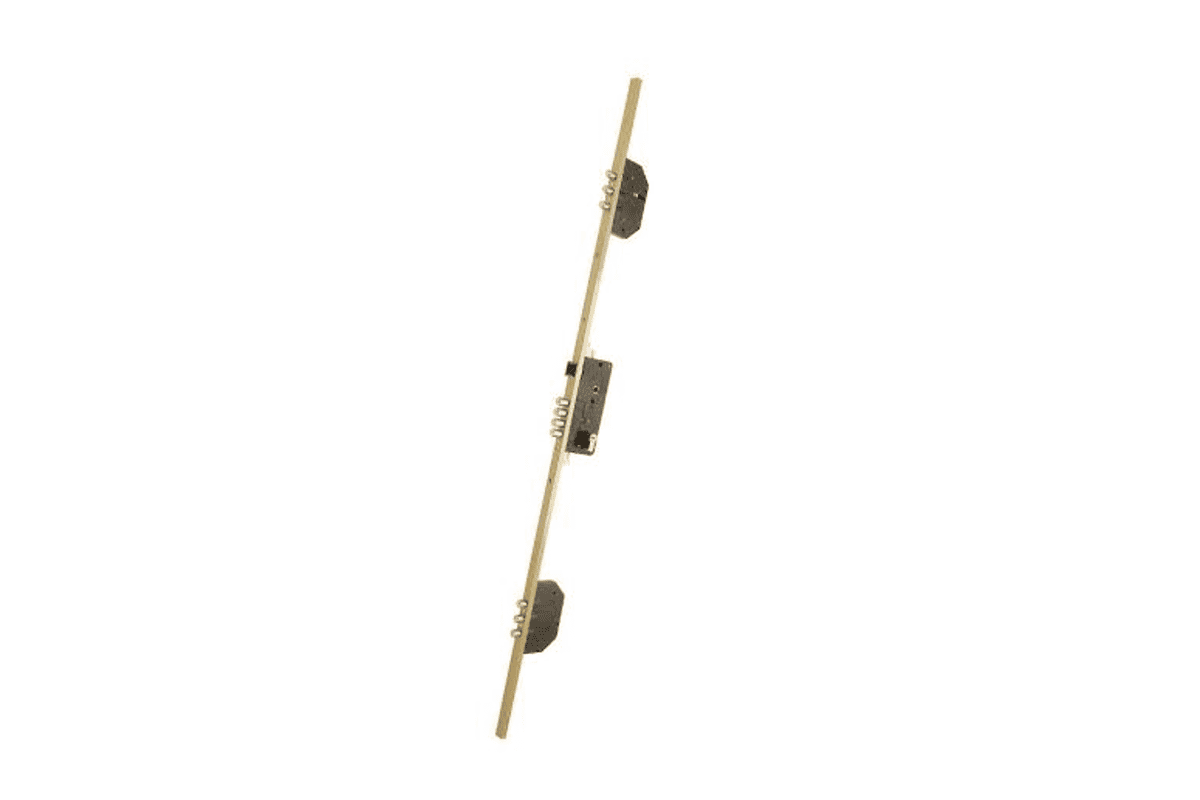
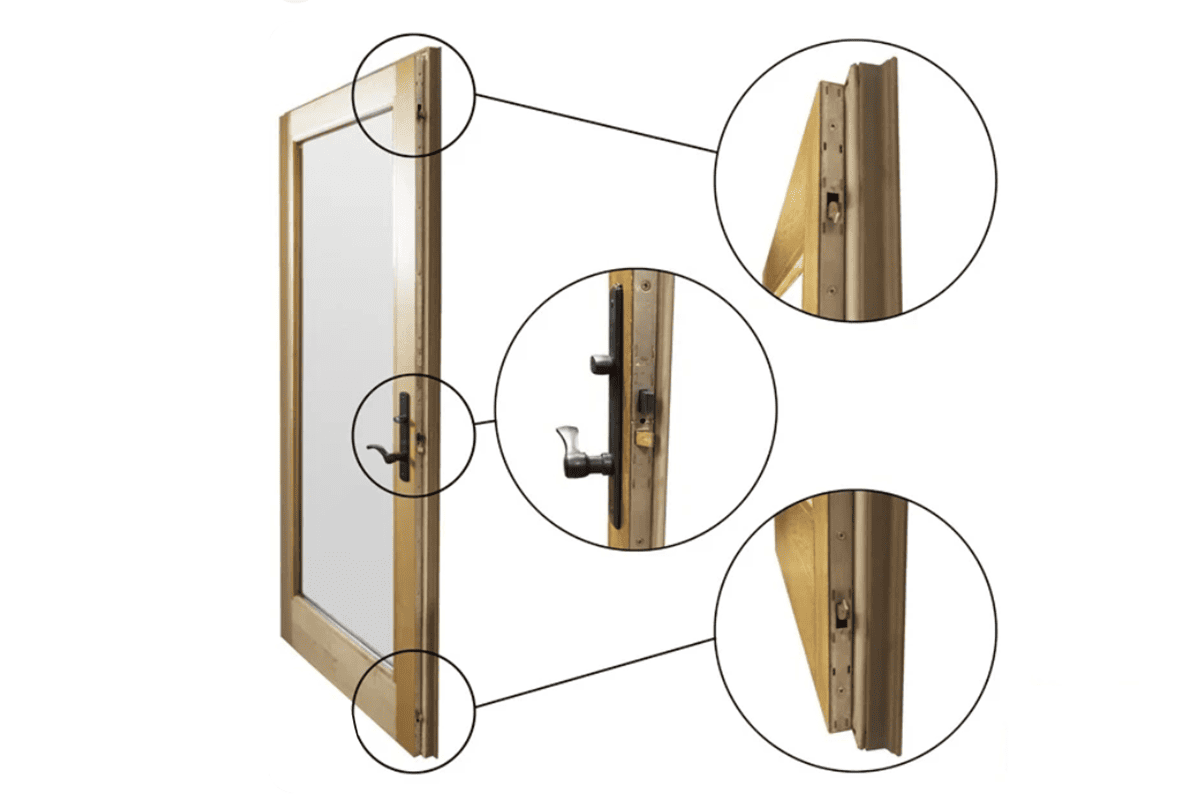
Multipoint door locks use one central mechanism to control several locking points along the door edge.4 In an automatic lock, the locking points engage when the door closes. In a manual lock, the locking points usually engage only after the user lifts the handle or turns the key, depending on the lock design and configuration.
Automatic operation: security behavior comes first
With an automatic multipoint lock, the door closing action triggers the locking points. In many configurations, latches, hooks, deadbolts, or auxiliary bolts extend after the door leaf reaches the frame and the trigger is activated. The user does not need to lift the handle to start the locking action.
This operating logic matters because users do not always behave as product managers expect. A person may close the door and assume the door is secure. In a busy residential project, hotel apartment, office, or rental property, that behavior is common. Automatic locking reduces dependence on the user remembering an extra step.5
However, the buyer should still verify the exact mechanism. Not all automatic locks behave in the same way. Some designs require key turning for full deadlocking after automatic engagement. Some focus on latch engagement. Some include different combinations of hooks, bolts, or rollers.
A door factory should ask suppliers:
- Which locking points engage automatically?
- Does the key add an extra locking stage?
- Does the handle operate from both sides or one side?
- What happens if the door is misaligned?
- What strike plate tolerance is required?
Manual operation: compression behavior comes first
With a manual multipoint lock, the user normally closes the door first. Then the user lifts the handle or turns the key to engage the locking points. This action can drive hooks, rollers, mushrooms, or bolts into the keeps. In many door systems, that movement can help pull the door leaf toward the frame.
This is why manual multipoint door locks should not be treated as outdated. Their value is mechanical control. When configured properly with the door profile, hinges, gasket, and keeps, manual locking can help compress the sealing strip. This can support better air sealing, water resistance, and sound insulation behavior, depending on the full door system.
Here is a simple comparison for procurement teams:
| Selection Point | Automatic Multipoint Lock | Manual Multipoint Lock |
|---|---|---|
| Main operating logic | Locks engage when door closes | Locks engage after user action |
| Main advantage | Reduces forgotten locking | Supports mechanical compression |
| User dependence | Lower | Higher |
| Sealing compression | Depends on design and adjustment | Often stronger when handle/key pulls the leaf |
| Best fit | Security behavior priority | Sealing, acoustic, and compression priority |
| Procurement risk | Needs careful trigger and alignment review | Needs clear user instruction and ergonomic review |
When I review customer drawings, I usually start with this table mentally. It helps me avoid a common mistake: treating automatic and manual locks as two quality levels. They are better understood as two different operating philosophies.
Why Do Automatic Multipoint Door Locks Reduce “Closed But Not Locked” Risk?
Many end users do not understand the difference between a closed door and a locked door. That creates a practical risk for door factories and brand owners. If users close the door without lifting the handle or turning the key, a manual system may remain only latched, while the user believes the door is locked.
Automatic multipoint door locks reduce this behavioral risk because the locking points engage when the door closes. This operating logic is useful when the door product must improve everyday security behavior without relying fully on user memory. The benefit is not magic; it comes from reducing one manual step.
The buyer problem: real users skip steps
In product meetings, I often hear a simple assumption: “The user will lock the door properly.” In real projects, that assumption can fail. Users may be carrying bags, managing children, leaving in a rush, or sharing doors with guests and tenants. They may close the door and walk away.
That is where automatic operation has a strong procurement argument. It makes the locking sequence more consistent. The door closing motion becomes part of the security behavior.
This can be important for:
- Apartment entrance doors
- Hotel apartment doors
- Rental housing doors
- Staff accommodation doors
- Shared residential buildings
- Doors used by many non-technical users
The point is not that automatic locks create universal security performance. A buyer should still verify the lock design, material, testing documents, installation quality, and applicable standards. But automatic logic can reduce one clear behavioral weakness: forgetting to lock after closing6.
Key questions for automatic lock evaluation
Door factories should not choose automatic multipoint door locks only because the word “automatic” sounds premium. They should evaluate the complete operation.
I recommend asking the supplier these questions before confirming a model:
What triggers automatic engagement?
The trigger design affects installation tolerance and long-term operation.Which locking points extend automatically?
Some products may not engage every point in the same way.Is key turning still needed for full security?
Some locks offer automatic engagement plus a key-controlled deadlocking function.What is the required door-to-frame clearance?
A narrow tolerance may require better factory control and site installation.How does the lock behave under door sag or frame movement?
Heavy doors and changing site conditions can affect smooth engagement.What certifications or test reports are available?
Buyers should request and verify CE documents, fire-rated reports, or other market-specific documents where relevant.
Automatic does not remove the need for good door engineering
Automatic locking can reduce user error, but it cannot compensate for poor door design. A multipoint mechanism still depends on the full door set.
The following parts must work together:
- Lock body and faceplate
- Hooks, bolts, rollers, or latch points
- Strike plates and keeps
- Door profile or timber structure
- Hinges and door alignment
- Sealing strip position
- Door closer, if used
- Installation tolerance
If the door leaf twists or the frame is not square, automatic engagement may feel stiff or inconsistent.7 If the keeps are not positioned accurately, the lock can wear faster. If the sealing strip creates too much resistance, the door may not close smoothly enough to trigger the locking points.
From the factory side, I see this most often when a customer changes the gasket, hinge, or profile but keeps the same lock specification. The lock is blamed later, but the real problem is system mismatch. That is why I always recommend sample testing with the complete door structure before mass production.
Automatic operation is strongest when the project priority is consistent locking behavior, and the door system has enough manufacturing and installation control to support reliable engagement.
Why Can Manual Multipoint Door Locks Improve Sealing and Sound Insulation?
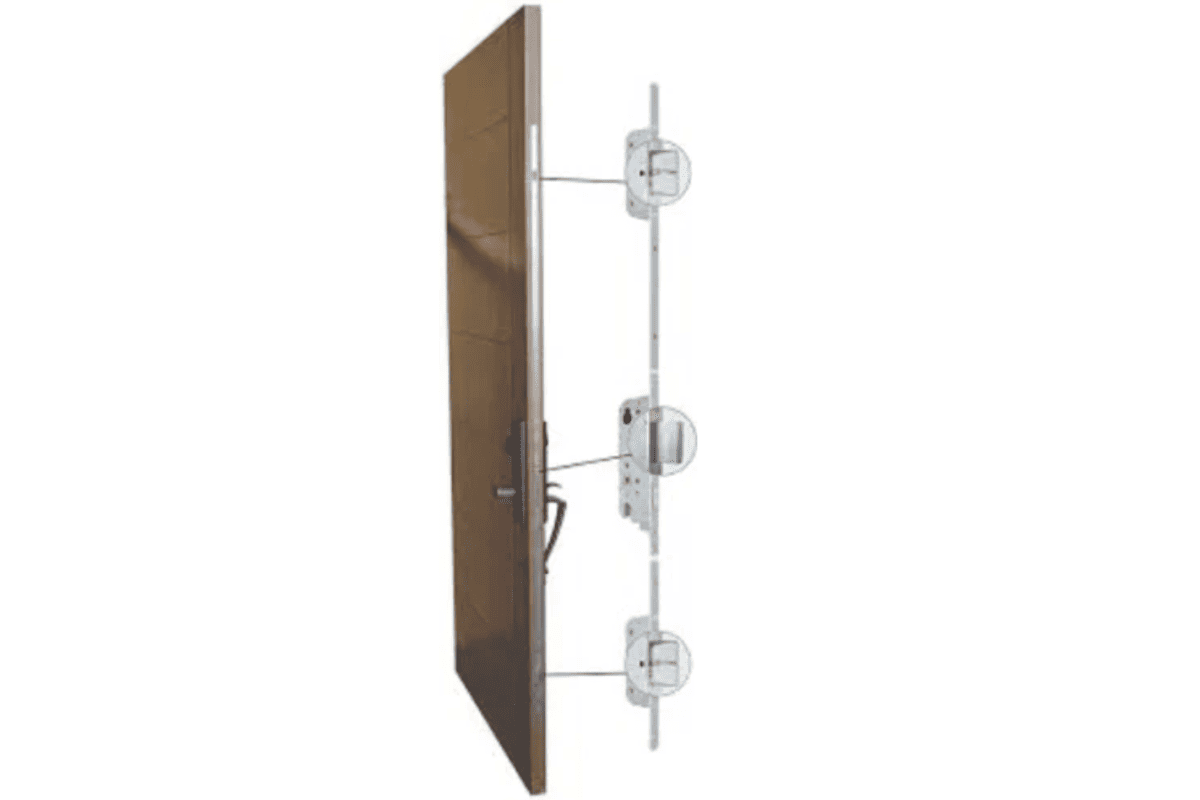
Manual multipoint door locks are sometimes judged unfairly because they require user action. That view misses their main strength. When a user lifts the handle or turns the key, the locking points can draw the door leaf toward the frame and press the gasket more tightly.
Manual multipoint door locks can improve sealing and sound insulation because their operating action creates mechanical compression. Hooks, rollers, or locking points can pull the sash or leaf against the frame. This can support better gasket contact, which may help air tightness and acoustic comfort when the full door system is designed correctly.8
Compression is a door system issue
Manual locking works well when the door needs active compression. This is common in projects where comfort and sealing matter. The lock does not create acoustic performance alone, but it can help the door maintain firm contact with the sealing strip.
For example, a door may need to resist:
- Air leakage
- Corridor noise
- External street noise
- Light smoke movement in certain assemblies
- Dust movement
- Temperature exchange
- Rattling caused by loose closing
I avoid making universal claims here because acoustic ratings, smoke performance, fire resistance, and weather performance require system testing.9 A lock supplier cannot honestly promise those outcomes from a lock alone. Still, from a configuration perspective, manual multipoint locks can be a good match when the design goal includes stronger gasket compression.
How manual locking creates pull-in force
A manual multipoint lock often uses the handle lift or key turn to move several locking components. Depending on the design, these components may include:
- Hooks that rotate into keeps and pull the leaf inward
- Rollers that move into adjustable keeps and compress the seal
- Mushroom cams that engage with frame keeps
- Deadbolts that secure the central position
- Top and bottom extension points that stabilize tall doors
This action can do more than secure the door. It can reduce movement between the leaf and frame. That reduction matters for door factories building higher-comfort products.
Here is a practical comparison:
| Door Performance Priority | Why Manual Operation May Help |
|---|---|
| Acoustic comfort | Better gasket compression can reduce vibration and gaps |
| Air sealing | Locking points can press the leaf closer to the seal |
| Door stability | Multiple engaged points reduce free movement |
| Premium closing feel | Handle lift gives users a controlled locking action |
| Adjustable performance | Keeps can often be fine-tuned during assembly |
The trade-off: users must complete the action
The advantage of manual operation depends on the user actually lifting the handle or turning the key. If the user does not perform the action, the door may remain only closed or latched. This is why manual multipoint door locks are not ideal for every project.
Door factories should consider the end-user environment:
- Will the user understand the handle-lift action?
- Will the project include clear instructions?
- Is the door used by the same person daily?
- Is the door part of a premium product where users expect active locking?
- Is sealing more important than reducing forgotten locking?
In my experience, manual systems often work well for doors sold with clear user education or in markets where handle-lift locking is already familiar. They can also be suitable for entrance doors where the buyer values a tight, stable closing feel.
Procurement details that affect manual lock performance
Manual operation is not automatically good sealing. The hardware configuration must be correct. A door factory should check:
Locking point type
Hooks usually provide stronger pull-in behavior than simple bolts, but the final result depends on the full design.Keep adjustability
Adjustable keeps help the factory fine-tune compression during assembly and after installation.Handle force
If lifting the handle feels too heavy, users may avoid locking properly.10Gasket hardness
A very hard sealing strip can make locking difficult.11Hinge capacity
Poor hinge alignment can increase friction and reduce compression consistency.Door height and weight
Taller and heavier doors may need more carefully positioned locking points.
Manual locks are strongest when procurement teams evaluate them as part of the complete door performance package, not as isolated metal components.
How Should Door Factories Choose Between Automatic and Manual Multipoint Door Locks?
Door factories often ask which type is better. I think that question is too simple. The better question is: Which operating logic supports the door’s main selling point and user environment? A lock that fits one product line may be wrong for another.
Door factories should choose between automatic and manual multipoint door locks by matching the lock logic to the product priority. If the priority is reducing forgotten locking, automatic operation is usually more suitable. If the priority is sealing, acoustic comfort, and frame compression, manual operation may be more suitable.
Start with the door’s main promise
Every door product has a primary promise. Some doors are promoted as safer and easier for everyday users. Some doors are promoted as quieter, tighter, and more stable. The lock should support that promise.
A simple selection model can help:
| Door Product Priority | Recommended Direction | Reason |
|---|---|---|
| Reduce forgotten locking | Automatic multipoint lock | Locking points engage when the door closes |
| Improve sealing compression | Manual multipoint lock | User action can pull the leaf toward the frame |
| Serve rental or shared users | Automatic multipoint lock | Less dependence on user training |
| Serve premium acoustic doors | Manual multipoint lock | Better match for active gasket compression |
| Minimize user steps | Automatic multipoint lock | Easier daily operation |
| Support familiar handle-lift markets | Manual multipoint lock | Users already understand the action |
This table is not a universal rule. It is a procurement starting point. The final choice should consider testing, market standards, door profile, installation quality, and the buyer’s own product positioning.
Consider the market and user habits
Markets differ. In some regions, users expect to lift the handle to engage a multipoint lock. In other regions, users expect the door to lock more automatically. A door factory selling to Europe, the Middle East, or Southeast Asia should not assume one user habit applies everywhere.
For OEM and ODM orders, I usually ask customers about:
- Target country or region
- Door material and profile
- Door height and weight
- Expected user behavior
- Required handle type
- Cylinder type and key function
- Fire-rated or CE documentation needs
- Packaging and instruction requirements
- After-sales installation environment
This conversation often changes the lock recommendation. For example, a door brand may first request an automatic lock because it sounds advanced. After discussing acoustic positioning, gasket design, and handle-lift market habits, the same buyer may decide that a manual configuration is more aligned with the product line.
Evaluate manufacturing control
Automatic and manual locks both require quality manufacturing. However, they create different control points for the door factory.
For automatic multipoint door locks, the door factory should pay close attention to:
- Trigger position accuracy
- Door closing force
- Strike plate alignment
- Frame tolerance
- Consistent reveal gap
- Long-term door sag risk
For manual multipoint door locks, the door factory should pay close attention to:
- Handle lift smoothness
- Locking point pull-in action
- Keep adjustability
- Gasket compression balance
- User effort
- Instruction clarity
At SDH Hardware, our factory-side process focuses on raw material screening, production supervision, and finished product inspection. I still advise buyers to verify all required documents and to conduct door-set testing for their own application. A lock can be produced correctly, but the door assembly still needs validation.
Build a sample before confirming mass production
For B2B door factories, I strongly recommend a physical sample stage. Drawings and catalog photos cannot show the full operating feel.
A good sample review should include:
Closing test
The door should close naturally without excessive force.Locking test
The locking points should engage smoothly.Handle force test
The handle should not feel too heavy for the target user.Compression check
The gasket contact should be even around the frame.Repeat operation check
The lock should operate consistently after repeated cycles.Installation tolerance review
The factory should understand how much adjustment is available.Document verification
CE certificates, fire-rated documents, or market-required test reports should be checked directly.
This process prevents many expensive mistakes. It also helps procurement teams compare suppliers based on real performance, not only unit price.
What Supplier Details Matter When Buying Multipoint Door Locks?
A good lock choice can still fail if the supplier cannot support stable production and correct configuration. Door factories need more than a catalog. They need a supplier that understands operating logic, door structure, testing documents, and repeatable manufacturing.
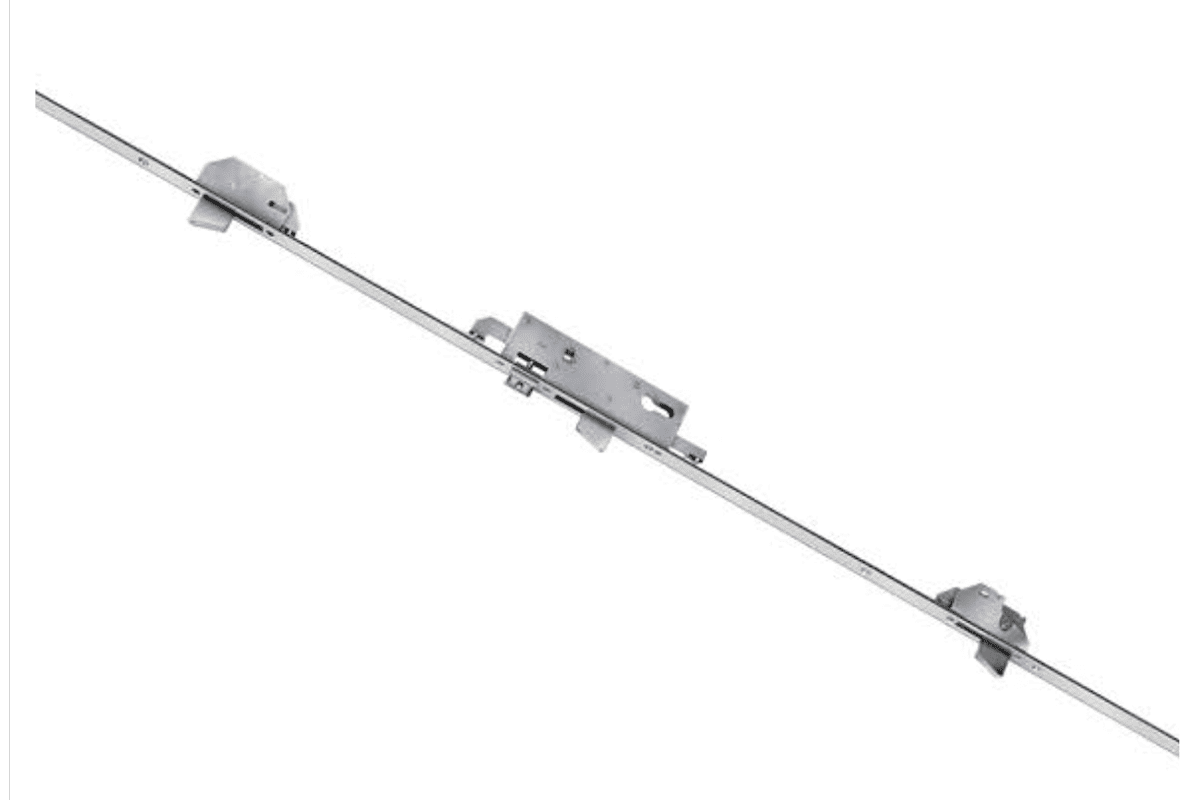
When buying multipoint door locks, door factories should evaluate the supplier’s production capability, configuration support, quality control process, document availability, and customization options. The best supplier is not only the cheapest source. The best supplier helps the buyer match lock operation to door performance and market requirements.
Supplier evaluation should be practical
In architectural door hardware procurement, I prefer practical questions over broad claims. A supplier may say a lock is “high quality,” but the buyer needs to know what that means in production.
A door factory should check:
Material specification
Buyers should confirm steel grade, stainless steel parts, zinc alloy parts, brass cylinder options, and surface treatment requirements.Dimensional consistency
Faceplate width, backset, center distance, lock body depth, and locking point positions must match the door profile.Available configurations
Automatic, manual, hook type, roller type, latch function, cylinder function, handle direction, and extension pieces may vary.Testing support
The supplier should provide available test documents, but the buyer should verify relevance to the exact product and application.Customization ability
OEM and ODM buyers may need logo stamping, laser branding, packaging design, drawings, or special surface finishes.Inspection process
Finished product inspection should be documented before shipment.
Why factory-side experience matters
Multipoint door locks are not simple trading items for many door factories. They are functional components that affect the finished door’s selling points. A supplier with factory-side experience can often identify configuration risks earlier.
For example, I have seen projects where the buyer selected a longer lock body because it looked stronger. Later, the lock conflicted with the internal door reinforcement. I have also seen buyers request stronger gasket compression but choose a locking point design that did not create enough pull-in action. These are not rare problems. They happen when procurement is separated from product engineering.
A factory-side supplier can help review:
| Review Area | Why It Matters |
|---|---|
| Door profile compatibility | Prevents lock body and reinforcement conflict |
| Locking point position | Supports correct engagement with frame keeps |
| Handle operation | Affects user comfort and correct locking |
| Cylinder function | Affects security logic and market expectations |
| Surface finish | Affects appearance and corrosion resistance needs |
| Packaging | Supports wholesale and brand distribution |
| Drawings | Reduces installation and production errors |
Keep certification claims controlled and verified
For technical B2B products, certification language should be handled carefully. A supplier may provide CE documents, fire-rated documents, or other reports, but the buyer should confirm:
- The certificate applies to the exact product model.
- The tested configuration matches the ordered configuration.
- The document is valid for the target market.
- The door assembly requirements are understood.
- The project consultant or qualified professional accepts the documentation.
This is especially important for fire-rated doors and regulated construction projects. A lock may be part of a certified system, but the full door set, frame, seals, hinges, closer, and installation method may also affect compliance.12 Buyers should involve qualified professionals for application-specific decisions.
Conclusion
Choosing between automatic and manual multipoint door locks is really a choice between two operating logics. Automatic operation helps reduce the risk that users close the door but forget to lock it. Manual operation can support stronger compression for sealing and sound comfort when the door system is designed for that purpose. I recommend that door factories define the product priority first, then verify drawings, samples, documents, and installation tolerance. If you need factory-side support for OEM or ODM lock configuration, SDH Hardware can help review the options for your door program.
"Multi-Point Locking", https://www.adamsrite.com/en/about/articles/multi-point-locking. An institutional technical guide describes automatic multipoint locking as a configuration in which locking elements engage on door closure, supporting the article’s distinction between automatic and manual operating logic. Evidence role: definition; source type: institution. Supports: The source should describe automatic multipoint locking as a mechanism in which locking elements engage when the door is closed or when a trigger is activated by closing.. Scope note: Automatic lock designs vary, so the source would support the category description rather than every model. ↩
"Multipoint Door Lock | Key-operated ...", https://www.strongholdsecuritydoors.co.uk/post/multipoint-door-lock. An institutional home-security or architectural-hardware source explains that many multipoint locks require a lever-lift or key-turn action to engage the locking points, supporting the article’s description of manual operation. Evidence role: definition; source type: institution. Supports: The source should explain that many multipoint locking systems require a lever-lift or key-turn action to engage their locking points.. Scope note: The support is categorical; individual manual lock mechanisms can differ by manufacturer and configuration. ↩
"Add Weatherstrip to Windows and Doors", https://basc.pnnl.gov/diy-guides/add-weatherstrip-windows-and-doors. Research on door seals and envelope leakage shows that gasket compression and reduction of perimeter gaps are associated with improved sealing performance, providing contextual support for the article’s explanation of manual pull-in action. Evidence role: mechanism; source type: paper. Supports: The source should support the general principle that improved gasket compression and reduced gaps improve door sealing performance.. Scope note: Such research supports the sealing mechanism generally and does not prove that every manual multipoint lock will improve sealing in a specific door assembly. ↩
"Three-point locking", https://en.wikipedia.org/wiki/Three-point_locking. An encyclopedic or architectural-hardware reference defines a multipoint lock as a door lock that secures a door at several points, supporting the article’s description of the basic mechanism. Evidence role: definition; source type: encyclopedia. Supports: The source should define a multipoint lock as a door-locking system that secures the door at multiple points through one lock or mechanism.. ↩
"Investigating the role of cognitive load on prospective memory ...", https://pmc.ncbi.nlm.nih.gov/articles/PMC13023208/. Human-factors research on prospective memory and automation indicates that removing or automating a required step can reduce reliance on users remembering to perform that step, supporting the article’s reasoning about automatic locking. Evidence role: mechanism; source type: paper. Supports: The source should support the human-factors principle that automating or cueing a required step can reduce prospective-memory failures.. Scope note: The evidence would support the cognitive mechanism, not a measured reduction in forgotten locking for the specific lock models discussed. ↩
"Failing to Forget: Prospective Memory Commission Errors Can ...", https://pmc.ncbi.nlm.nih.gov/articles/PMC3598897/. Research on prospective-memory failures describes how people may omit intended routine actions, and security statistics on unlocked entries can contextualize why post-closing locking behavior matters. Evidence role: general_support; source type: paper. Supports: The source should support that people can omit intended routine actions, or that unlocked doors are a documented home-security issue.. Scope note: This would contextualize the risk rather than directly quantify forgotten locking among multipoint-lock users. ↩
"SDI 122-21", https://steeldoor.org/sdi-122/. Door-installation guidance from an educational or institutional source explains that misaligned doors, out-of-square frames, or incorrectly positioned strikes can cause latch or lock binding, supporting the article’s warning about inconsistent automatic engagement. Evidence role: mechanism; source type: education. Supports: The source should explain that door misalignment, out-of-square frames, or strike misplacement can cause latch or lock binding.. Scope note: The source would support the installation mechanism generally, not diagnose every automatic multipoint lock failure. ↩
"Experimental study on the effects of low pressure and acoustic ...", https://pmc.ncbi.nlm.nih.gov/articles/PMC12335551/. Building-acoustics and envelope-performance research shows that perimeter gaps and inadequate sealing can increase air leakage and reduce airborne sound insulation, supporting the article’s statement that improved gasket contact may aid air tightness and acoustic comfort. Evidence role: mechanism; source type: paper. Supports: The source should support that gaps and poor perimeter sealing can increase air leakage and reduce sound insulation performance.. Scope note: The support is system-level and contextual; actual performance depends on tested door construction, seals, frame, and installation. ↩
"Sound insulation dataset of 30 wooden and 8 concrete floors ...", https://pmc.ncbi.nlm.nih.gov/articles/PMC10365936/. International and European test standards assess door or doorset performance for sound insulation, fire or smoke resistance, air permeability, and water tightness at the assembly level, supporting the article’s caution that these outcomes require system testing. Evidence role: expert_consensus; source type: institution. Supports: The source should identify recognized standards that test door or doorset performance for acoustics, smoke/fire resistance, air permeability, or water tightness.. Scope note: The standards establish how performance is verified; they do not show that any particular lock or door described in the article has passed those tests. ↩
"Chapter 4: Entrances, Doors, and Gates", https://www.access-board.gov/ada/guides/chapter-4-entrances-doors-and-gates/. Government accessibility guidance limits or constrains the force and manipulation required for door hardware, supporting the article’s concern that excessive handle effort can impair proper use. Evidence role: general_support; source type: government. Supports: The source should support that door hardware should be operable with limited force or without difficult manipulation for usability and accessibility.. Scope note: Accessibility standards support the usability concern, but they do not directly measure avoidance of manual multipoint locking in the target market. ↩
"How Much Compression Do Rubber Gaskets Require?", https://www.elastoproxy.com/how-much-compression-do-rubber-gaskets-require/. Materials research on elastomer seals shows that hardness and compression-load characteristics influence the force required to compress a gasket, supporting the article’s explanation that a hard sealing strip can increase locking effort. Evidence role: mechanism; source type: paper. Supports: The source should support that elastomer hardness and compression-load characteristics affect the force needed to compress a seal.. Scope note: The evidence supports the material principle, while actual locking difficulty also depends on lock geometry, keep adjustment, hinges, and installation. ↩
"Doors, Windows and Related Hardware Application Guide", https://www.ul.com/thecodeauthority/knowledge/ul-fire-rated-doors-guide. Government or code guidance on fire-door assemblies states that compliance depends on the tested or approved doorset configuration, including hardware, frame, seals, closing devices, and installation, supporting the article’s warning against treating the lock as the sole compliance element. Evidence role: expert_consensus; source type: government. Supports: The source should support that fire-door or regulated doorset compliance is assessed with reference to the complete assembly, including hardware, frame, seals, closer, and installation conditions.. Scope note: The source would establish the compliance principle, not the compliance status of any specific lock or door program. ↩