Multipoint Locks for Aluminum, uPVC and Timber Doors: What Interface Differences Matter?
Multipoint locks can look similar in a catalog, but the wrong interface can slow production, damage sealing, and create avoidable rework. I often see buyers compare only length, backset, and locking points. The better solution is to check the faceplate profile, corner shape, and door machining method first.
Multipoint locks for aluminum, uPVC, and timber doors differ mainly by installation interface. Aluminum and uPVC doors commonly use U-profile faceplates with square outer corners for pre-machined profile slots.1 Timber doors usually use flat faceplates with rounded corners, often R10 in European-style specifications, because routed timber recesses are easier to machine cleanly.2
This article focuses on the practical details that affect sampling, production, and supplier selection. I will not overcomplicate the topic with internal lock mechanics. Instead, I will explain how door factories and B2B buyers can match the lock faceplate to the door system before ordering.
What Are Multipoint Locks and Why Does the Interface Matter?
A buyer may select a lock by security level or overall size, then discover that the lock does not sit correctly in the door edge. That problem becomes costly when samples fail or production workers must modify every door. The interface matters because it controls fit, sealing, and installation speed.3
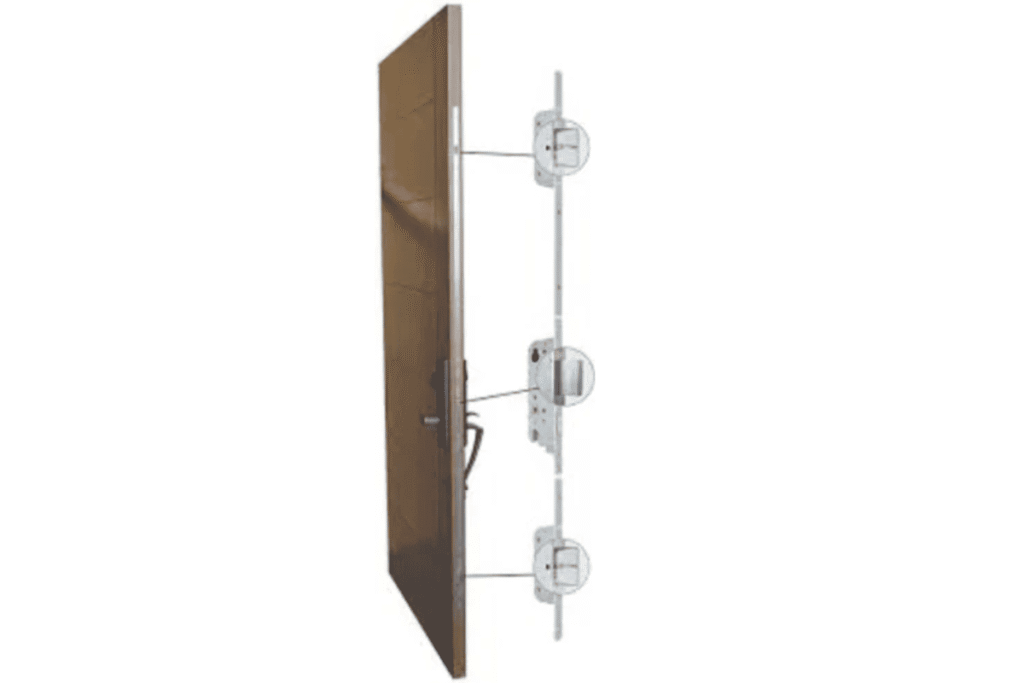
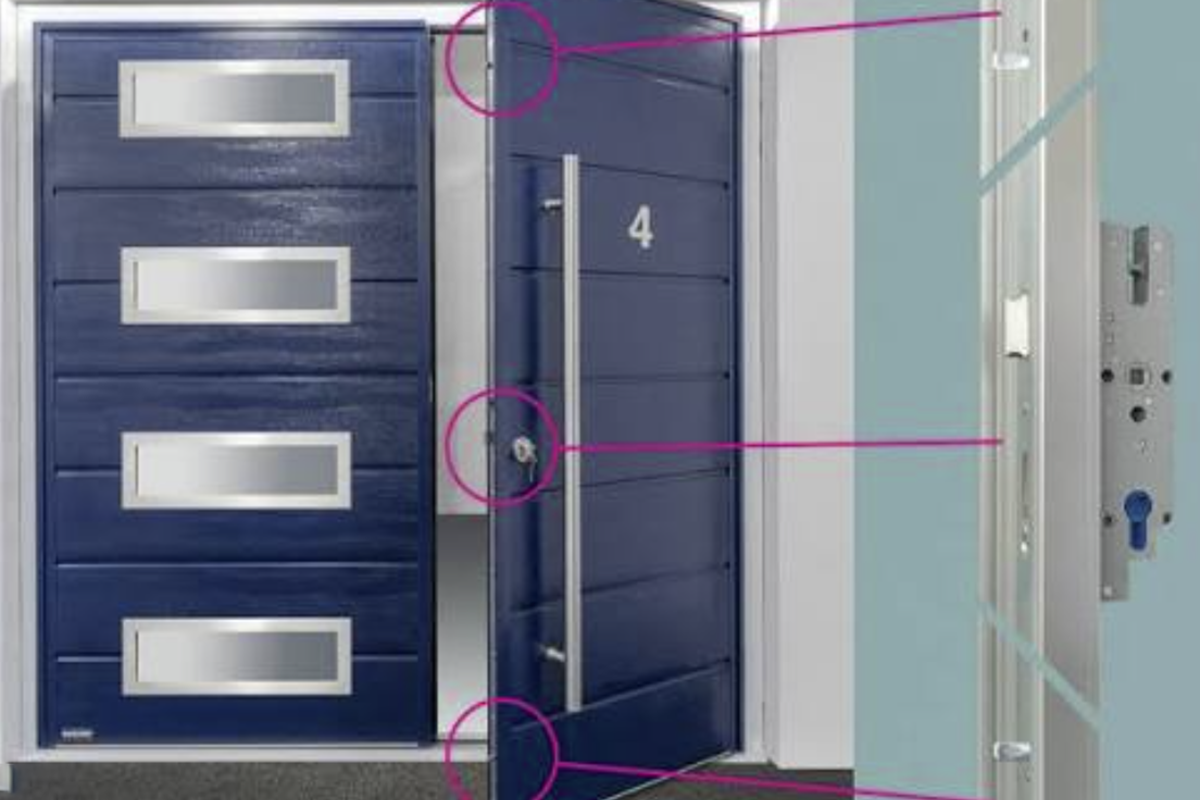
Multipoint locks are long lock systems installed along the door edge, with locking points positioned at upper, middle, and lower areas.4 Their interface matters because the faceplate must match the door material, profile groove, corner shape, and machining process. A correct match improves installation efficiency and reduces rework.
The basic product definition
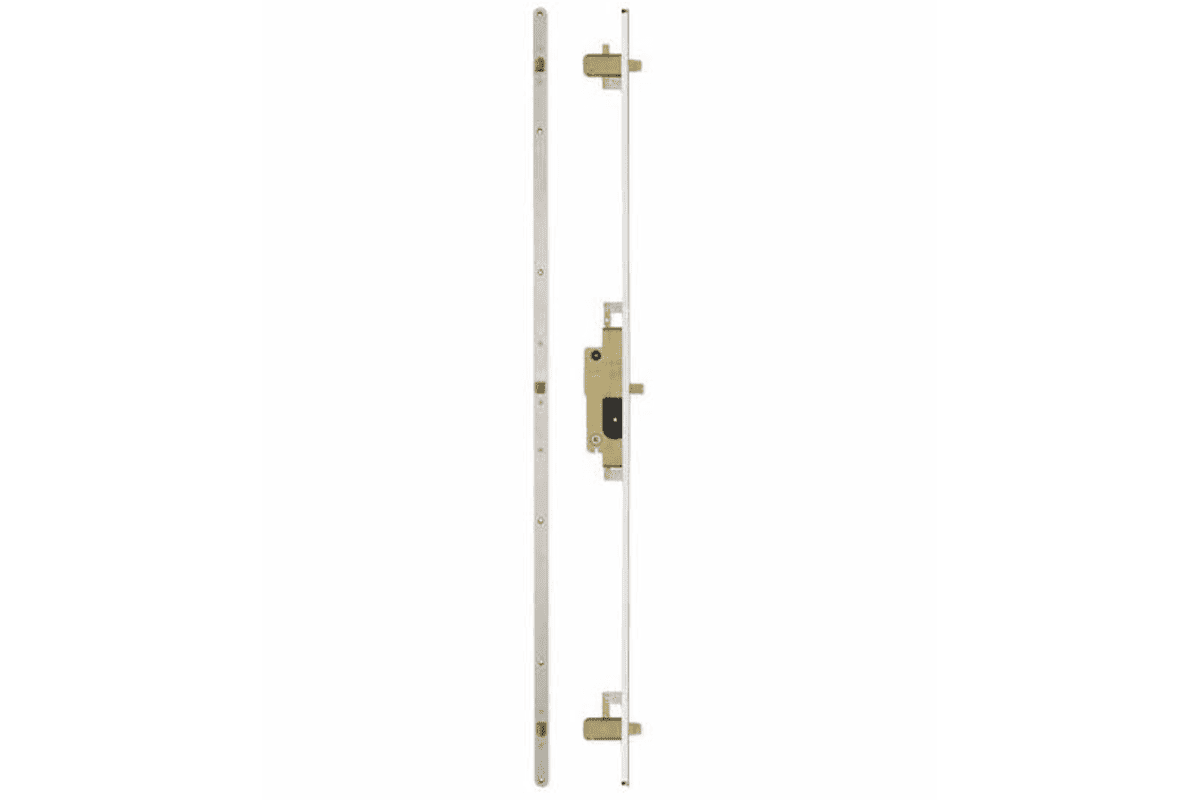
A multipoint lock is not just a larger version of a single-point lock. It is a complete locking strip with several engagement positions along the height of the door. In many door systems, the center gearbox connects to a handle, cylinder, hook, roller, shoot bolt, latch, or other locking elements.
In factory discussions, I usually separate the lock into three evaluation areas:
Functional configuration
This includes latch type, hook type, roller cams, deadbolt style, gearbox dimensions, and handle height.Dimensional specification
This includes lock length, backset, center distance, faceplate width, fixing hole positions, and locking point positions.Installation interface
This includes faceplate profile, corner shape, door edge groove, screw position, and compatibility with aluminum, uPVC, or timber machining.
The third area is often underestimated. However, it decides whether the product can be installed efficiently on the production line.
Why the faceplate is the key detail
The faceplate is the visible long metal strip that runs along the door edge. It holds the locking points and provides the mounting interface between the lock body and the door. When the faceplate profile does not match the prepared groove, several problems may appear:
- The lock may sit proud of the door edge.
- The door may not close smoothly.
- The gasket compression may become uneven.
- The installer may need extra routing, filing, or chiseling.
- The production line may slow down.
- Finished doors may show inconsistent hardware alignment.
From my manufacturing experience, buyers often ask whether one lock can be used for different door materials. The answer is: sometimes the internal function may be similar, but the interface is not automatically interchangeable.
A simple comparison
| Door type | Common faceplate profile | Common corner shape | Main machining logic |
|---|---|---|---|
| Aluminum door | U-profile faceplate | Square outer corners | Matches prepared square groove in aluminum profile |
| uPVC door | U-profile faceplate | Square outer corners | Matches profile slot and supports clean sealing |
| Timber door | Flat faceplate | Rounded outer corners, often R10 in European-style specs | Matches routed recess and reduces hand chiseling |
This table is a starting point, not a universal rule. Different profile systems and regional specifications can vary. Still, it reflects a practical pattern I see when supporting door manufacturers and hardware buyers.
How Do Multipoint Locks for Aluminum Doors Use U-Profile Faceplates?
Aluminum door buyers may choose the right lock function but overlook the edge profile. That mistake can cause the faceplate to clash with the aluminum groove. The result is poor seating, difficult fastening, or wasted sample time. A U-profile faceplate usually solves this interface problem.
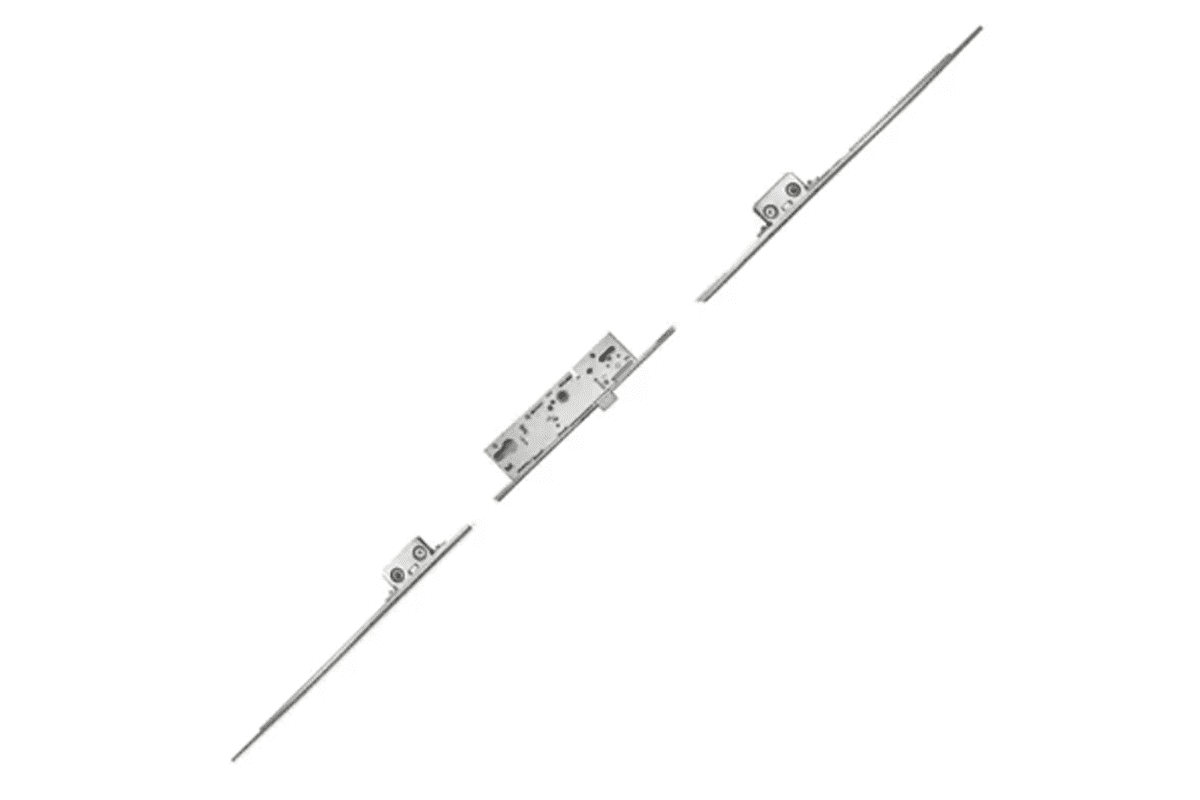
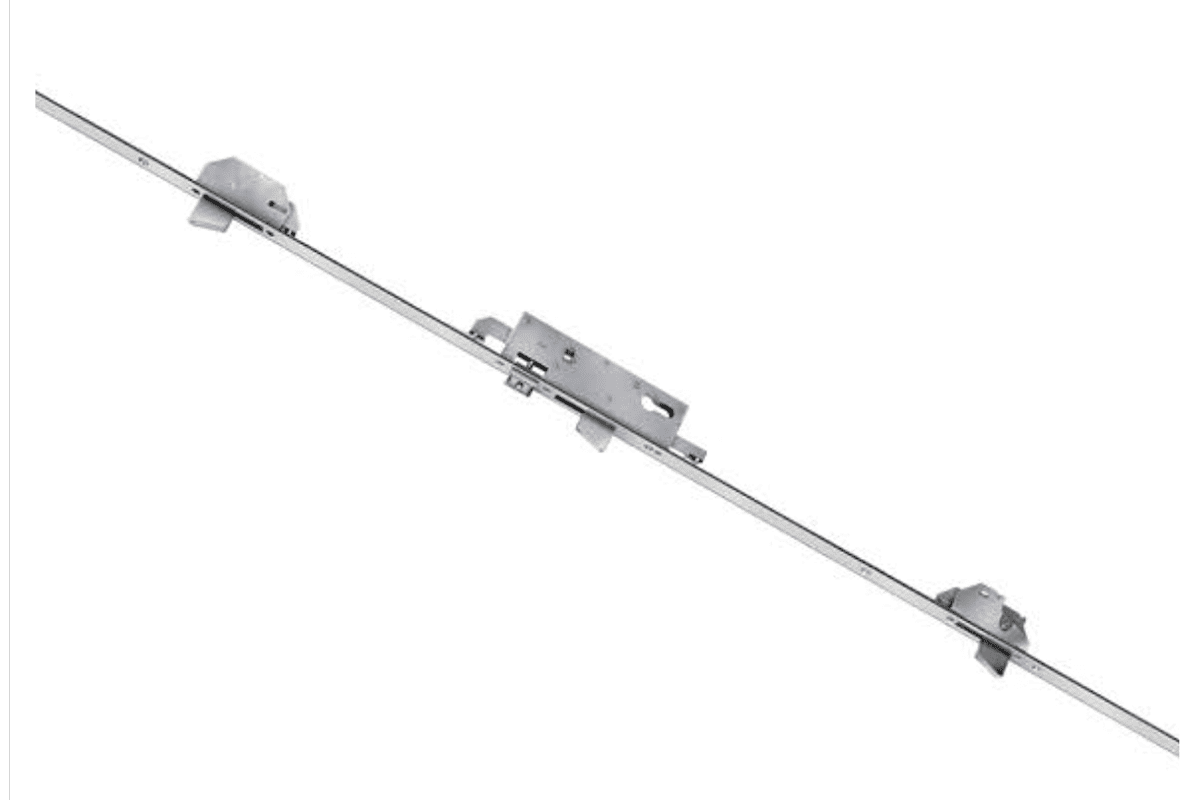
Multipoint locks for aluminum doors commonly use a U-profile faceplate with folded edges and square outer corners. This design fits pre-machined square slots in aluminum profiles. The U shape helps the lock sit neatly in the door edge and supports a cleaner interface between hardware and profile.
What a U-profile faceplate means
A U-profile faceplate has edges folded upward, creating a shallow channel shape when viewed from the end. The lock strip does not simply lie flat against the door edge. Instead, the shaped faceplate fits into a corresponding groove in the aluminum profile.
This matters because aluminum doors are usually built from engineered profiles. The door edge is not a solid block like timber. It may include chambers, reinforcement areas, gasket lines, thermal breaks, and hardware grooves.5 The lock interface must respect that profile structure.
In practical production, aluminum door manufacturers often prepare the profile with square slots or channels. The faceplate then drops into the machined area with limited extra finishing.
Why square outer corners are common
Square corners make sense in aluminum because the profile or machining process can be prepared for clean square geometry. When the lock has square outer corners, it can match the machined slot directly.
A mismatch creates visible and functional issues. For example:
- A rounded faceplate may leave small gaps in a square slot.
- A flat faceplate may not sit correctly in a U-channel.
- A non-matching width may interfere with gasket compression.
- Wrong fixing hole positions may weaken fastening.
I have seen sample orders delayed because the buyer sent only the lock length and backset, but not the profile groove drawing. The lock itself was acceptable, but the interface did not match the door system. That is why I always prefer to confirm door profile drawings, faceplate section drawings, and sample photos before finalizing.
Key aluminum door checks
Before ordering multipoint locks for aluminum doors, I recommend checking the following:
Faceplate width
Common widths vary by system. The lock supplier should confirm exact millimeters.Faceplate profile
The buyer should confirm whether the door requires U-profile, flat, or another special profile.Corner shape
Square corners are common, but the buyer should verify the prepared groove.Backset and gearbox size
These must match the handle position and profile depth.Locking point type
Hooks, rollers, and bolts must match the frame keepers.Surface treatment
Corrosion resistance should match the market and project environment.
Aluminum interface evaluation table
| Evaluation item | Why I check it | Risk if ignored |
|---|---|---|
| U-profile depth | Confirms seating in the profile groove | Faceplate may stand proud |
| Square corner geometry | Matches machined slot shape | Gaps or fitting interference |
| Fixing holes | Aligns with profile reinforcement areas | Weak screw holding |
| Keeper alignment | Ensures locking points engage correctly | Poor closing or security issue |
| Gasket clearance | Protects sealing performance | Air or water leakage risk |
For B2B procurement, this is not just a technical detail. It affects production speed and repeatability. If a door factory installs hundreds or thousands of doors, even a small interface mismatch can add significant labor cost.
How Are uPVC Door Multipoint Locks Similar and Different?
uPVC door systems can look close to aluminum systems from a hardware perspective, so buyers sometimes assume the same lock interface will work. That assumption can be risky. The material, reinforcement, profile chamber, and sealing design still need careful review before sampling.
uPVC door multipoint locks also commonly use U-profile faceplates with square outer corners. Like aluminum systems, uPVC profiles can be prepared with matching square slots. However, buyers still need to verify faceplate width, gearbox depth, reinforcement position, and locking point alignment with the frame keeps.
Why uPVC often uses a similar U-profile logic
uPVC doors are profile-based systems. The door sash usually includes multiple chambers, steel reinforcement, gasket lines, and dedicated hardware channels.6 Because of this structure, the faceplate often needs to sit into a prepared area instead of being mounted like a flat strip on timber.
That is why U-profile faceplates are common. The folded edges help the lock align with the profile channel. Square corners also work well when the profile is designed with a matching slot.
However, “similar” does not mean “identical.” Aluminum and uPVC doors may both use U-profile faceplates, but they can differ in:
- Faceplate width
- Faceplate depth
- Screw hole position
- Backset
- Gearbox case thickness
- Locking point spacing
- Keeper style
- Corrosion resistance requirements
- Handle height standards by market
Reinforcement makes the difference
In many uPVC doors, steel reinforcement is installed inside the profile.7 The lock screws and gearbox position must be compatible with this reinforcement. If the fixing screws land in weak areas, the installed lock may feel unstable. If the gearbox interferes with the chamber structure, the door factory may need extra modification.
When I review uPVC lock inquiries, I like to see:
A cross-section drawing of the profile, a lock routing drawing, and a photo of the current installed sample.
These three items help reduce misunderstanding. They also help the supplier identify whether an existing standard lock can work or whether an adjusted specification is needed.
uPVC door buyer checklist
| Item to confirm | Practical question |
|---|---|
| Faceplate type | Does the profile require U-profile or another form? |
| Corner shape | Are the profile slots prepared for square outer corners? |
| Backset | Does the gearbox fit the sash depth? |
| Locking points | Do hooks, rollers, or bolts match the frame keepers? |
| Screw positions | Do screws align with reinforcement or suitable fixing zones? |
| Handle height | Does the lock match the door factory’s production standard? |
Sealing and adjustment matter
uPVC doors often depend heavily on gasket compression and sash-frame alignment.8 The lock does more than hold the door closed. It helps pull the sash into the correct position when the locking points engage.9
If the faceplate is not seated correctly, the locking points may not align with the keeps. Then the installer may compensate by adjusting the keeps too far, increasing handle force, or creating uneven sealing. In mild cases, the door simply feels rough. In serious cases, the door may fail performance expectations.
For procurement teams, the safest approach is to evaluate uPVC door multipoint locks as part of the whole system. The lock, keeps, profile, reinforcement, gaskets, and handle set should be checked together. This is especially important when preparing OEM or ODM orders for different markets.
Why Do Timber Door Multipoint Locks Usually Use Flat Faceplates and Rounded Corners?
Timber door buyers face a different installation problem. The door edge is usually machined by routing, not by inserting hardware into an extruded profile channel. If the lock faceplate has square corners, workers may need extra hand chiseling. That adds time and can reduce consistency.
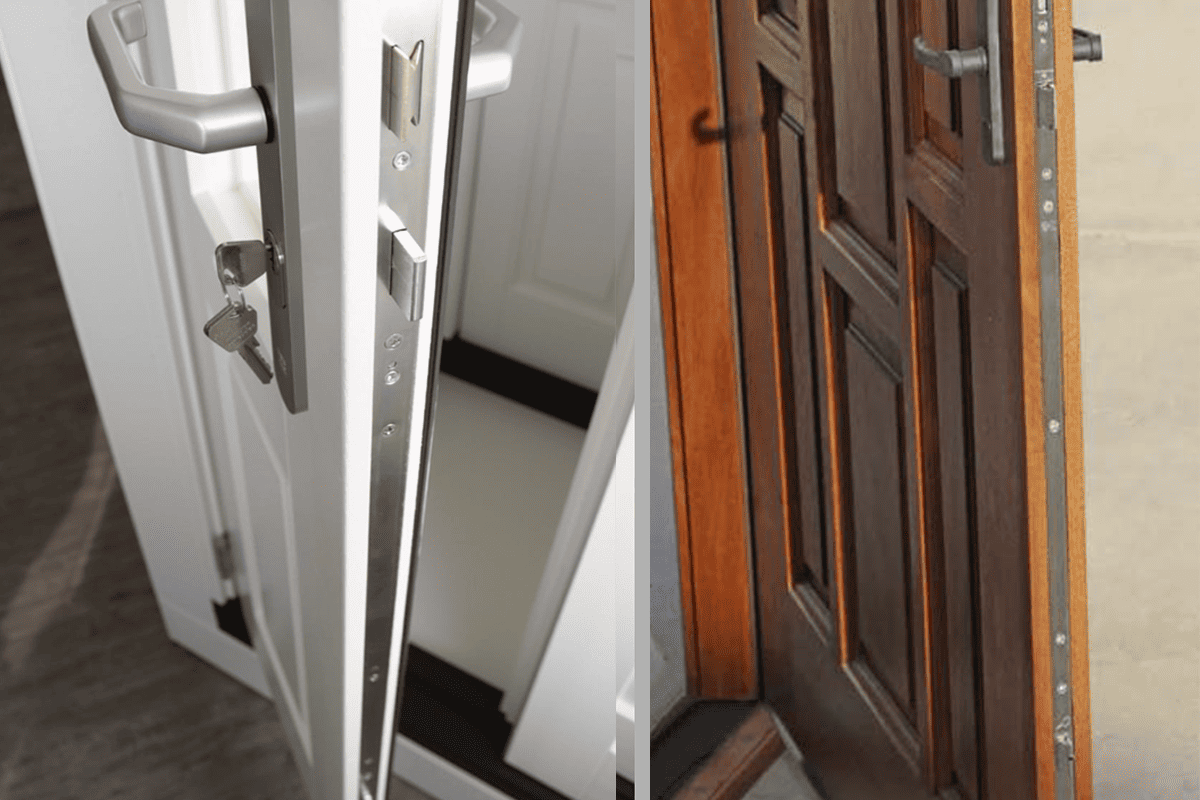
Timber door multipoint locks usually use flat faceplates with rounded outer corners. In European-style specifications, R10 rounded corners are common. The practical reason is machining efficiency: a router naturally creates rounded recesses, while clean square-corner recesses require additional manual finishing.
Why flat faceplates suit timber doors
A timber door edge is typically solid or engineered wood. The lock recess is cut into the door edge by routing or mortising. A flat faceplate can sit flush in this routed recess. The goal is simple: the faceplate should be level with the door edge, with clean margins and secure fixing.
Unlike aluminum or uPVC systems, timber doors do not usually need a folded U-profile faceplate to fit into an extruded channel. The installer or door factory prepares the recess directly in the wood. That makes a flat strip more practical in many timber applications.
Why rounded corners save labor
Routers cut with rotating tools. A round cutter naturally leaves rounded internal corners.10 If the lock faceplate also has rounded outer corners, the faceplate can fit the routed recess with less manual work.
If the lock has square corners, the recess must often be squared manually with a chisel.11 That may sound minor, but it matters in production.
For one door, the extra work may take only a few minutes. For a batch of 500 doors, those minutes become real labor cost. More importantly, hand finishing can create variation from worker to worker.
R10 as a common pattern, not a universal rule
In European-style timber door specifications, R10 rounded corners are common. This means the corner radius is around 10 mm. However, I would not describe R10 as a universal requirement for every timber door. Some projects, factories, or regions may use different radii or special faceplate designs.
The responsible approach is to confirm the buyer’s machining standard before production.
Timber door comparison: rounded vs square corners
| Faceplate corner type | Installation effect | Best-fit situation |
|---|---|---|
| Rounded corners | Matches router-cut recess more easily | Timber door production with routed machining |
| Square corners | Requires sharper recess corners | Aluminum/uPVC profile slots or manually finished timber |
| Custom corner radius | Matches special routing tools | Project-specific or factory-specific timber standards |
Practical advice for timber lock selection
When buyers ask me to configure timber door multipoint locks, I usually request:
- Door thickness
- Lock faceplate width
- Required corner radius
- Backset
- Center distance
- Handle height
- Locking point type
- Fire-rated or project documentation requirements, if applicable
- Surface finish requirements
- Current machining drawing or existing sample
If a project requires fire-rated performance or CE-related documentation, buyers should verify the specific certificates, test reports, scope, and product model coverage. I can provide available documents from the factory side, but project approval should always follow the buyer’s local code requirements and qualified professional review.
The main lesson is clear. Timber locks should be selected around the machining workflow. A rounded flat faceplate is not just a visual preference. It helps the door factory reduce extra chiseling, improve consistency, and speed up production.
How Should Buyers Specify Multipoint Locks Before Sampling or Bulk Orders?
A poor specification can make even a good supplier deliver the wrong lock. Buyers may send a general product photo, but photos alone rarely show the full interface. The better approach is to define the lock by door system, faceplate profile, corner shape, and machining data.
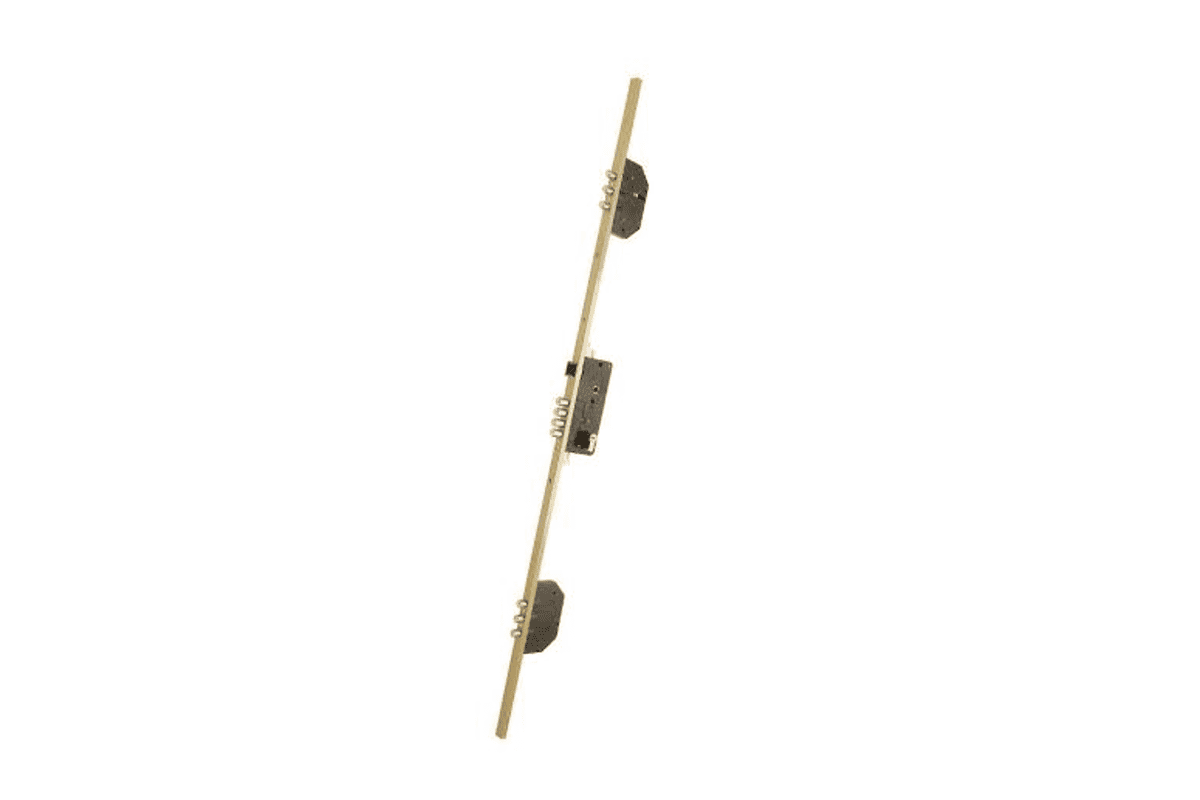
Buyers should specify multipoint locks by confirming door material, faceplate profile, corner shape, faceplate width, backset, gearbox size, locking point layout, keeper design, and machining drawings. For aluminum and uPVC, profile groove details are critical. For timber, routed recess dimensions and corner radius are especially important.
Start with the door system, not only the lock
I prefer to begin every multipoint lock inquiry with one basic question:
What door system will this lock be installed into?
The answer changes the next questions. Aluminum, uPVC, and timber doors have different interface logic. Even within one material category, profile systems can vary. A lock that works well for one aluminum profile may not fit another without changes.
Minimum information buyers should provide
For efficient sampling, I suggest buyers prepare the following information:
Door type
Aluminum, uPVC, timber, steel, composite, or another system.Door profile or edge drawing
This helps confirm the installation groove and depth.Faceplate drawing
The supplier needs width, thickness, profile shape, and corner detail.Lock length
Overall faceplate length and cutting requirements should be clear.Backset
This affects the gearbox position and handle placement.Center distance
This is important for handle and cylinder compatibility.Locking point configuration
Hooks, rollers, bolts, latch, deadbolt, or combined design.Keeper requirements
Frame keeps must match the lock points and frame material.Surface finish
Zinc plating, stainless steel, powder coating, or other finishes should match the market.Testing or certification documents
Buyers should request and verify applicable documents for the exact product model and intended use.
A practical specification table
| Specification field | Aluminum door | uPVC door | Timber door |
|---|---|---|---|
| Faceplate profile | Often U-profile | Often U-profile | Often flat |
| Corner shape | Often square | Often square | Often rounded |
| Machining focus | Profile groove | Profile slot and reinforcement | Routed recess |
| Key risk | Profile mismatch | Reinforcement or keeper mismatch | Extra chiseling and inconsistent recess |
| Best document to share | Profile section drawing | Profile and reinforcement drawing | Routing drawing |
Supplier evaluation questions
When choosing a supplier, buyers should not only ask for price. They should also ask whether the supplier can support configuration and verification. In my experience, strong door hardware suppliers can discuss interface details before production.
Useful questions include:
- Can you provide a faceplate section drawing?
- Can you match U-profile or flat faceplate requirements?
- Can you produce square or rounded outer corners?
- Can you support OEM or ODM specifications?
- Can you supply matching keeps and accessories?
- Can you inspect finished products before shipment?
- Can you provide available CE or fire-rated documents for buyer verification?
- Can you adjust surface treatment, packaging, and logo marking?
At SDH Hardware, I position this as a factory-direct B2B process. I usually want to reduce risk before sampling, not after mass production starts. With more than 3,000 architectural hardware articles in our broader product range, I have learned that product matching is often more important than product appearance in a catalog.
Frequently Asked Questions
Are multipoint locks for aluminum, uPVC, and timber doors interchangeable?
They are not automatically interchangeable. Some internal functions may be similar, but the faceplate profile, corner shape, backset, gearbox size, and machining interface can differ. Buyers should verify drawings and samples before using one lock across different door systems.
Why do aluminum and uPVC doors often use U-profile faceplates?
Aluminum and uPVC doors are usually profile-based systems. A U-profile faceplate can fit into a prepared groove or slot in the door edge. This supports cleaner installation, better alignment, and more consistent sealing when the profile is designed for that interface.
Why are rounded corners common on timber door multipoint locks?
Rounded corners match routed recesses more easily. A router naturally leaves rounded internal corners in timber. If the faceplate also has rounded corners, installers can reduce extra chiseling and improve production efficiency. R10 is common in European-style timber specifications, but it is not universal.
What information should I send before requesting samples?
I recommend sending the door type, profile or routing drawing, faceplate width, faceplate profile, corner shape, backset, center distance, lock length, locking point layout, and keeper requirements. Photos of the existing lock and door edge also help prevent misunderstanding.
Should I verify certificates for project use?
Yes. Buyers should verify CE certificates, fire-rated documents, test reports, and their scope for the exact product model and intended application.12 Local regulations and project requirements may differ, so qualified professional evaluation is recommended for application-specific decisions.
Conclusion
Multipoint locks for aluminum, uPVC, and timber doors should be selected by interface compatibility, not by door material alone. Aluminum and uPVC systems commonly need U-profile faceplates with square outer corners for prepared profile slots. Timber doors usually benefit from flat faceplates with rounded corners because routing is faster and cleaner. If you need factory-direct support for OEM or ODM door hardware projects, I can help review drawings, samples, and specifications before production. Contact SDH Hardware to discuss the right lock configuration for your door system.
"GU SECURY multipoint locks for all door systems", https://www.g-u.com/en-en/products/door-technology/gu-secury-multipoint-locks. A technical reference on profile-based door systems supports that aluminum and PVC-U door hardware is commonly coordinated with prepared profile grooves and shaped locking rails; this supports the general interface pattern but does not prove that every aluminum or uPVC door uses a U-profile faceplate. Evidence role: general_support; source type: institution. Supports: A neutral fenestration or architectural hardware source should support that profile-based aluminum and uPVC door systems often use shaped faceplates or rails designed to sit in prepared profile grooves.. Scope note: Contextual support only, because faceplate geometry varies by profile system, region, and manufacturer. ↩
"Is there a tool to help chisel a rounded edge for a door ...", https://www.reddit.com/r/Carpentry/comments/f8a7nh/is_there_a_tool_to_help_chisel_a_rounded_edge_for/. A woodworking or door-hardware technical source supports that routed timber recesses commonly have rounded internal ends, making rounded lock faceplates easier to seat cleanly; references to R10 support a common specification pattern rather than a universal timber-door requirement. Evidence role: mechanism; source type: institution. Supports: A technical source should support that routed timber recesses have rounded ends matching router-cutter geometry and that rounded faceplate corners reduce additional finishing.. Scope note: Contextual support only, especially for the R10 dimension, which may vary by project and market. ↩
"Test Façade Gasket Continuity & Compression Post-Install", https://quollnet.com/chk/construction/test-facade-gasket-continuity-compression-after-installation. Research and technical guidance on fenestration installation indicate that component alignment and seal compression affect door or window fit and air- or water-control performance; this supports the mechanism but does not quantify the installation-speed effect for multipoint locks specifically. Evidence role: mechanism; source type: research. Supports: A building-envelope or fenestration source should support that alignment, tolerances, and weatherseal compression affect door performance and installation quality.. Scope note: Contextual support only, because installation speed may depend on factory process, tooling, and worker training. ↩
"Three-point locking", https://en.wikipedia.org/wiki/Three-point_locking. A general reference on multipoint locking defines the device as a lock that secures a door at multiple points along the door edge or frame, supporting the article’s distinction from a single-point lock. Evidence role: definition; source type: encyclopedia. Supports: A general reference should define a multipoint lock as a door lock that secures at more than one point along the door or frame.. ↩
"Thermal-Break Aluminum Windows: Complete Technical Guide", https://arcview.ca/knowledge/thermal-break-aluminum-windows-technical-guide. Fenestration technical guidance describes aluminum door and window profiles as engineered sections that may incorporate thermal breaks, gasket seats, cavities, and hardware channels; this supports the profile-structure context rather than any single lock model. Evidence role: general_support; source type: institution. Supports: A fenestration technical guide should support that aluminum door and window profiles can include thermal breaks, gasket channels, chambers, and hardware accommodations.. Scope note: Contextual support only, because exact profile features depend on the aluminum system design. ↩
"Metal-Plastic (uPVC) Entry Door System", https://pdf.lowes.com/productdocuments/e4b1c2d4-f796-487f-b5a3-86bdde183ed5/91814560.pdf. Institutional guidance on PVC-U fenestration profiles supports that door and window sashes commonly use multi-chamber extrusions, reinforcement, and gasket systems; this supports the general construction context, not the geometry of every proprietary profile. Evidence role: general_support; source type: institution. Supports: An institutional source should support that PVC-U door and window profiles commonly use multi-chamber sections with reinforcement and gasket systems.. Scope note: Contextual support only, because reinforcement and channel layout vary by system. ↩
"Steel-Reinforced uPVC Profiles Explained - Glassterr", https://glassterr.com/steel-reinforced-upvc-profiles.html. Technical guidance on PVC-U door construction notes that metal reinforcement may be installed within profiles to improve stiffness and provide secure fixing zones, supporting the article’s statement about internal reinforcement. Evidence role: general_support; source type: institution. Supports: A PVC-U fenestration source should support that steel or metal reinforcement is commonly placed inside PVC-U profiles to improve stiffness and fixing strength.. Scope note: Contextual support only, because reinforcement use and position depend on profile design and performance requirements. ↩
"Add Weatherstrip to Windows and Doors", https://basc.pnnl.gov/diy-guides/add-weatherstrip-windows-and-doors. Fenestration performance literature supports that weatherseal compression and sash-to-frame alignment are key variables in air and water leakage control, providing a technical basis for the article’s discussion of uPVC door adjustment. Evidence role: mechanism; source type: research. Supports: A fenestration performance source should support that gasket compression and frame-sash alignment influence air and water sealing.. Scope note: Contextual support only, because the source may address fenestration sealing generally rather than uPVC multipoint-lock systems specifically. ↩
"Multi-Point Locking", https://jada.com/features/multi-point. Technical descriptions of multipoint locking systems support that distributed locking points can draw the sash toward the frame and improve engagement with seals; this supports the mechanism but does not prove performance for every lock-and-keeper combination. Evidence role: mechanism; source type: institution. Supports: A technical source should support that multipoint locking points, cams, rollers, hooks, or keeps can draw a door sash toward the frame and improve compression.. Scope note: Contextual support only, because the effect depends on the specific locking-point design, adjustment, and keep placement. ↩
"CNC Router | Mechanical Engineering at University of Delaware", https://me.udel.edu/academics/design-studio/equipment/cnc-router/. Woodworking instructional sources explain that router bits cut with a circular profile, leaving an internal radius at the ends or corners of routed recesses, supporting the machining reason for rounded faceplate corners. Evidence role: mechanism; source type: education. Supports: A woodworking education source should support that cylindrical router bits cut with a radius and therefore leave rounded internal corners.. ↩
"4-H WOOD WORKINcLsxitts", https://ir.library.oregonstate.edu/downloads/t148fh28f. Woodworking guidance on routed mortises notes that rounded router-cut corners are commonly squared by hand with a chisel when square-corner hardware must fit, supporting the article’s labor-efficiency claim. Evidence role: mechanism; source type: education. Supports: A woodworking or carpentry source should support that routed recesses with rounded corners are squared with chisels when square hardware corners are required.. ↩
"CE marking", https://en.wikipedia.org/wiki/CE_marking. Official CE marking and construction-products guidance indicates that declarations, test evidence, and certificates apply to defined products, performance characteristics, and intended uses, supporting the need to verify documentation scope for the exact lock or door assembly. Evidence role: general_support; source type: government. Supports: An official regulatory source should support that CE marking and construction-product documentation are tied to declared performance, intended use, and product scope.. Scope note: Contextual support only, because applicable certification requirements differ by jurisdiction, product category, and project specification. ↩