
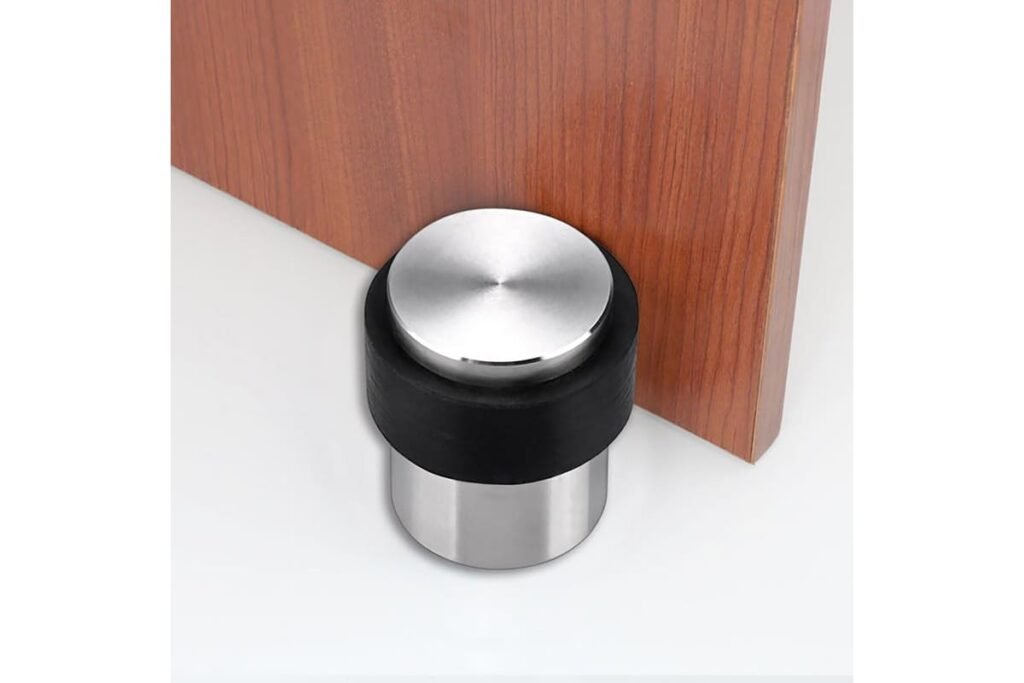
How To Select Durable Door Stops That Withstand Constant Use in Commercial Spaces?
Durable door stops are not just about stainless steel. The real problem is premature failures from weak structures, poor anchoring, and mismatched bumpers. Those issues escalate in commercial spaces with heavy doors and constant traffic. The solution is a system choice: match structure, anchors, and buffer design to the scenario, not just the material label.
Durable door stops for commercial spaces must be specified as a system: robust base and mounting geometry, substrate-matched anchoring with defined pull-out and shear targets, and a replaceable bumper material matched by Shore A hardness1 to door mass and closer grade. Geometry and hold-open features follow scenario needs and code compliance.
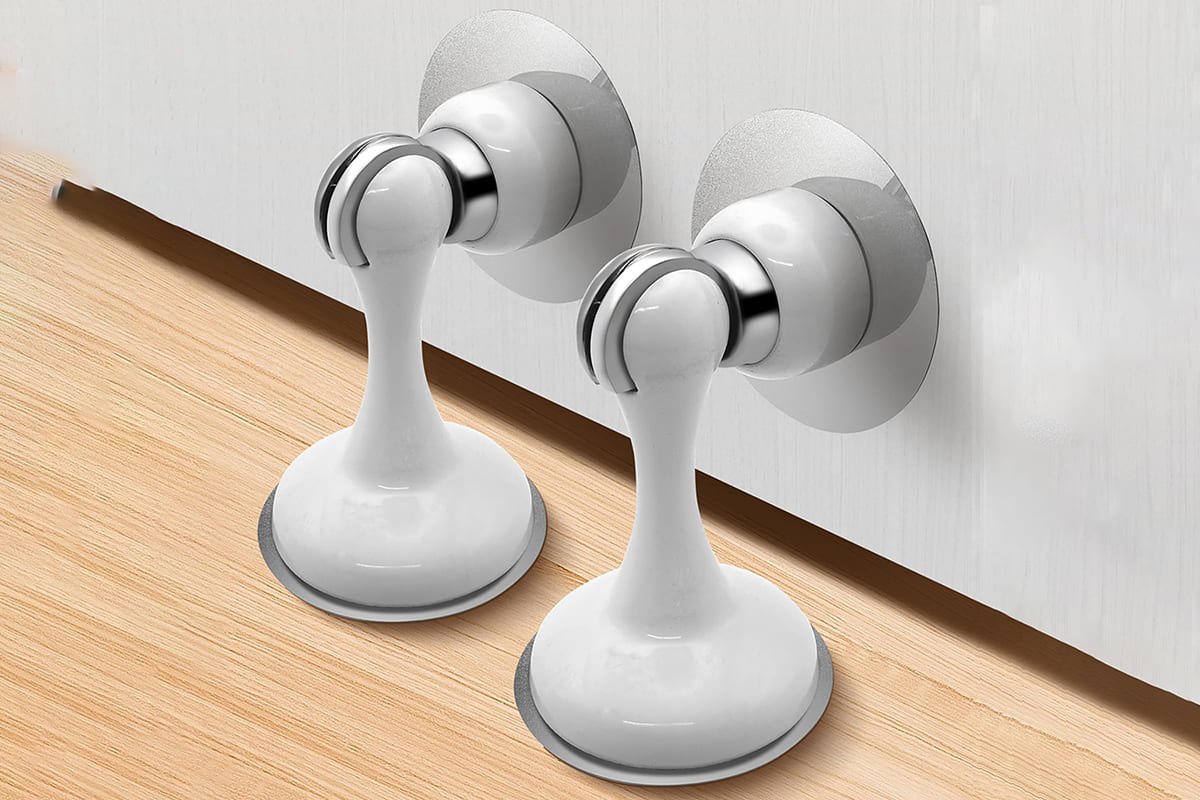
If you want real longevity, you must define the mechanical limits, not just the finish. I will show how I evaluate structure, anchoring, bumpers, geometry, and optional magnet hold-open based on returns I have diagnosed and test data I work with weekly.
Why do structure and anchoring set the lifespan of durable door stops?
You can buy “solid stainless” and still get pull-outs and cracked tiles. The problem begins at the base: thin plates, small screws, and generic plugs. It gets worse when anchors do not match the substrate. The fix is to specify geometry, thickness, anchor type, and minimum capacities up front.
A door stop’s structure and anchoring define its lifespan ceiling. Specify base thickness, wide-footprint plates, screw diameter/grade, and anchors that match the substrate with verified pull-out and shear performance2. Hemispherical or cylindrical geometry must sit on a stable base backed by anchors that bite into the structure, not just finish layers.
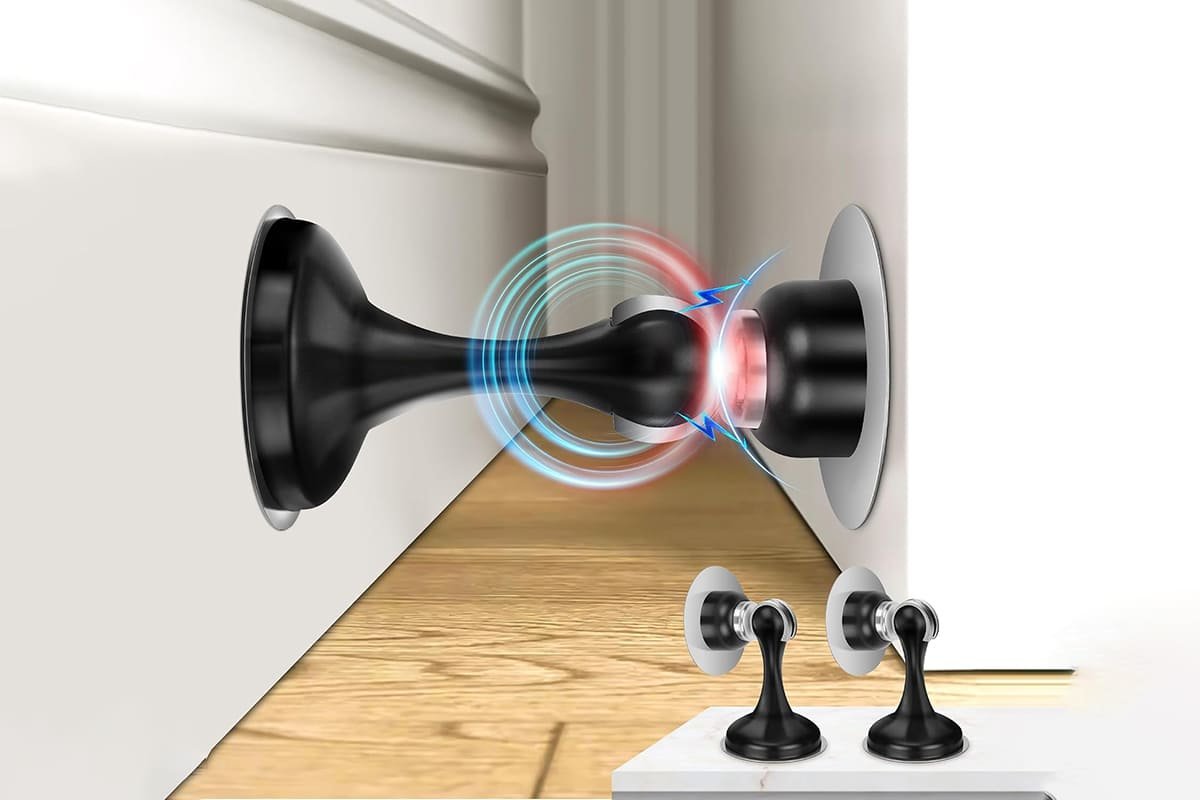
Dive deeper: base, geometry, and anchors that hold under constant use
I have inspected dozens of failures where the “hardware” looked fine, yet the stop pulled out. The common denominator was poor anchoring or a thin base.
- Thin bases flex and loosen fasteners under cyclic impact.
- Small screws (e.g., ≤ M4 / #8) struggle with shear on heavy doors.
- Anchors placed only in tile or gypsum tear out quickly.
Focus on the following:
- Target a base thickness ≥ 4–6 mm for floor stops; ≥ 3–4 mm for wall plates.
- Prefer a wide-footprint base (≥ 50–70 mm diameter/width) to spread load.
- For cylindrical wall stops, use oval/rectangular plates with two or more fixing points.
Screw and anchor selection
- Use stainless or zinc-nickel fasteners with known grades (e.g., 304/316 SS screws or 8.8 carbon steel where corrosion allows).
- Match anchors to substrate:
- Tile-over-concrete: drill through tile into concrete; use through-bolts with washers/nuts where accessible or chemical anchors for high pull-out. Avoid relying on tile adhesive.
- Solid concrete: expansion or chemical anchors sized to design loads.
- Gypsum/hollow walls: use steel toggle bolts with large backing plates—or move to floor-mounted stops.
- Metal substrates: self-drilling screws into adequate thickness or rivet nuts (nutserts) with backing washers.
Capacity targets (define and verify per project)
- Establish anchor pull-out targets ≥ 1.5–2.5 kN for moderate doors and ≥ 3.0–4.0 kN for heavy doors or high-traffic zones.
- Set shear targets ≥ 1.5 kN (moderate) to ≥ 3.0 kN (heavy).
- Confirm with anchor manufacturer data for your substrate and thickness. Verify in the field with proof tests where critical.
Real failures I see
- Tile-only anchors: the tile shears, the stop tilts, and the fastener walks out within weeks.
- Gypsum tear-out: a single plastic plug in drywall lasts days under a strong closer.
- Over-tightened screws on thin plates: the plate deforms, losing preload; fasteners back out.
Remember: corrosion tests (e.g., NSS salt spray4) validate finish durability, not anchoring strength. Use salt spray hours to match environment, but rely on pull-out/shear data for safety and longevity.
Hemisphere vs cylinder: which geometry lasts longer for durable door stops?
Flat or sharp edges focus impact and scuff finishes. Hemispheres deflect glancing blows and reduce trip hazards; cylinders provide a defined stop angle and larger impact area. The wrong geometry can drive fatigue into the anchors. The goal is to match shape to door behavior and traffic patterns.
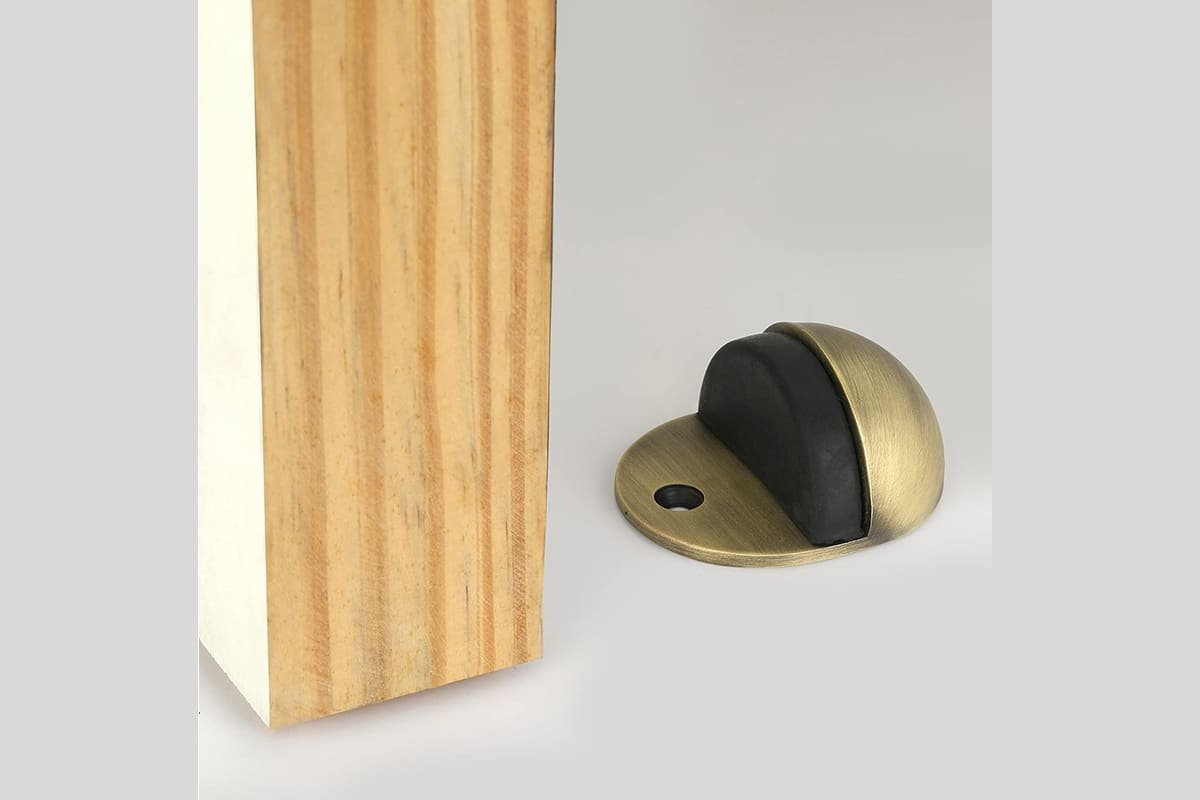
Both hemisphere and cylinder geometries can be durable, if supported by a wide base and correct anchors. Hemispherical stops reduce snagging and hazards in corridors.5 Cylindrical stops deliver a crisp stop angle and broader contact zone. Choose the shape that manages impact path and trip risk in your space.
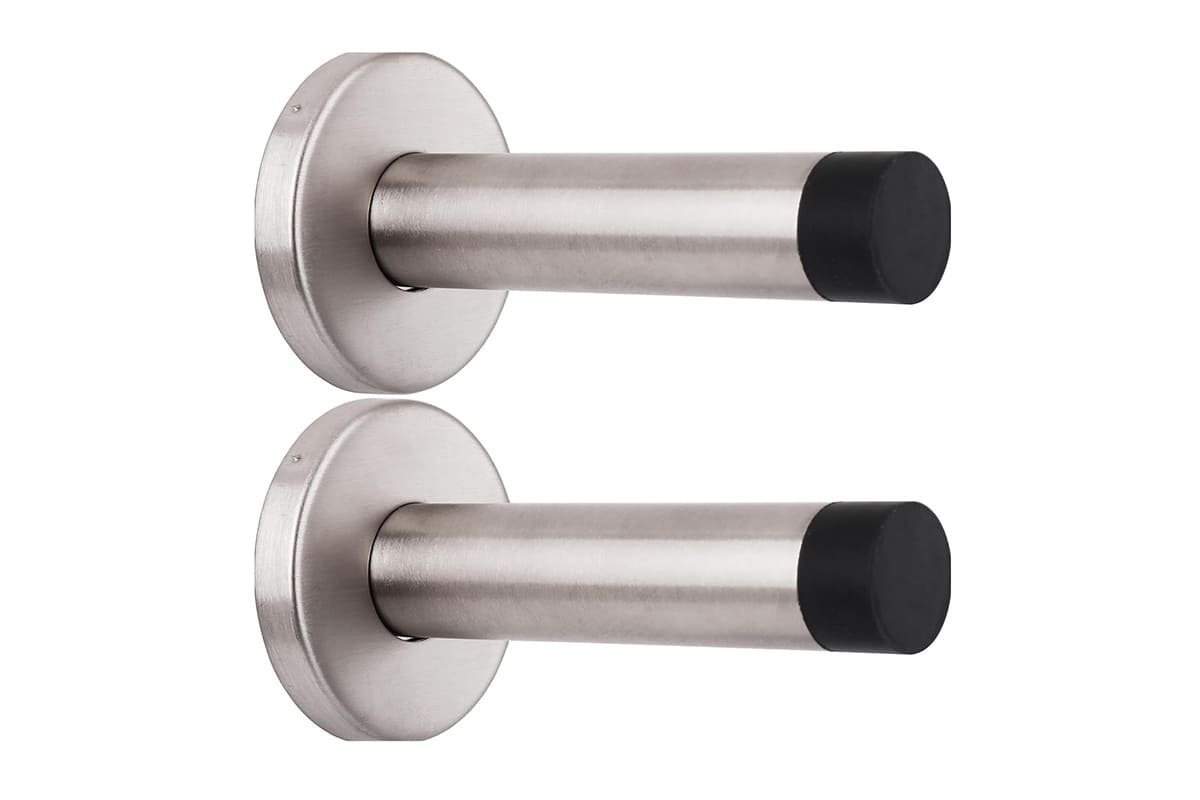
Dive deeper: choosing stop geometry by door mass, angle, and traffic
I look at three things first: the intended open angle, who and what passes the stop, and the door’s closer power.
Intended stop angle
- Cylindrical stops help hold a precise stop at 90° or 105°, especially on wall-mounted versions aligned to the hinge geometry.
- Hemispherical stops allow a smoother contact that is more forgiving to small misalignments.
Traffic and hazards
- Hemispheres for corridors with carts, trolleys, and wheelchairs: lower profile, fewer catches, reduced trip risk.
- Cylinders for back-of-house/service areas where the clear visual stop is valuable and floor polishing machines do not snag.
Contact area and bumper pairing
- Cylinders distribute force over a larger face6, which can help with heavier doors if the bumper hardness is tuned.
- Hemispheres present varying contact angles; they reduce peak stress on the door edge and bumper when paired correctly.
Typical pairings I specify
- Hospital corridor, automatic cleaning machines: low-profile hemispherical floor stop with wide base and replaceable TPU bumper.
- Retail storefront, wind-prone entrance: robust cylindrical floor stop with a thicker base plate and medium-hard bumper to prevent rebound.
Comparison table (verify per project):
| Geometry | Best for | Trip/Snag Risk | Stop Angle Definition | Notes |
|---|---|---|---|---|
| Hemispherical | Corridors, care environments | Lowest | Moderate | Softens contact; pair with medium-soft bumper for quiet impact |
| Cylindrical | Entrances, service doors | Moderate | Highest | Wider contact area; keep profile modest to lower trip risk |
Geometry does not fix weak anchoring. A perfect cylinder on a thin base will still fail. Start with structure, then shape.
How should I choose bumper material, hardness, and replaceability for durable door stops?
Cracked bumpers and permanent compression set are common in heavy-use spaces. The problem is vague “soft” or “hard” labels. The solution is to specify compounds (rubber or TPU), Shore A hardness ranges, and easy field replacement.
Choose bumper compounds by Shore A hardness and recovery, and require replaceability. Softer bumpers reduce peak impact but may take a compression set; harder bumpers last longer but transmit more shock to anchors.7 Select a hardness range by door mass and closer grade, and balance noise, rebound, and anchor load.
Dive deeper: material science, fatigue, and practical ranges
From my returns log:
- Hard rubber (>90A) on heavy doors transmitted shocks that loosened anchors in four months.
- Very soft bumpers (<60A) on busy retail doors flattened (compression set), then scuffed doors.
What works consistently is to spec a range with replaceability.
Compounds
- Rubber (EPDM/NBR): proven, good damping, stable across temps. Typical Shore A: 60–85.
- TPU: higher cut/tear resistance, better chemical resistance for healthcare cleaning.8 Typical Shore A: 70–95.
Shore A guidance (verify with your door closer grade and door mass)
- Light interior door with Size 2–3 closer or spring hinge: 60–70A (quiet, adequate rebound control).
- Standard commercial door with Size 3–4 closer: 70–80A (balance of damping and durability).
- Heavy door or Size 5 closer, frequent trolley impacts: 80–90A TPU (resists cutting/tearing), but ensure anchors have capacity because peak force will rise.
Replaceability
- Insist on threaded or press-fit replaceable bumpers with stocked spares.
- Replaceable parts extend service life and lower total cost. I often include a spare bumper in the handover kit for hospitals.
Noise and rebound
- Softer bumpers reduce noise; they can increase door rebound if too soft.
- Hard bumpers increase noise; they can reduce rebound but stress anchors. A slight hemispherical contact reduces the shock.
Testing and verification
- Hardness: verify per ASTM D2240 (or equivalent) Shore A durometer.
- Fatigue: look for cycle/impact test data from the supplier. In our lab, we cycle impacts at representative energies to compare compounds. These are comparative, not code certifications—use them to rank options, not to override field realities.
Example target spec language (customize per project):
- Bumper: TPU, Shore A 78–82, replaceable, chemical-resistant to quats/bleach.
- Impact durability: internal comparative impact cycle test, >100,000 cycles without cracking (report available on request).
How do substrates and anchors influence durable door stops in real installs?
I see more failures from substrate mismatch than any other cause. The wrong anchors in tile or gypsum will pull out, no matter how “heavy-duty” the stop looks. The fix is to identify the substrate stack, thickness, and access for through-bolting before choosing the stop type.
Durable door stops depend on anchors matched to the substrate and thickness. For tile-over-concrete, anchor into concrete via through-bolt or chemical anchors. For gypsum or hollow walls, use backing plates or shift to floor stops. Set pull-out and shear targets, and verify anchor ratings for the specific substrate.
Dive deeper: substrate-by-substrate guidance, targets, and constraints
Concrete slab (floor-mounted)
- Use expansion or chemical anchors sized to the door’s energy.
- Targets: pull-out ≥ 3.0 kN and shear ≥ 2.0–3.0 kN for heavy doors/entrances.
- Installation: maintain drill diameter/tolerance; clean holes for chemical anchors; respect cure times9.
Tile over concrete (floor-mounted)
- Drill through tile into structural concrete. Avoid shallow plastic plugs in tile.
- Consider studs or sleeves that bypass brittle tile edges.
- Use a compressible washer to protect tile; torque carefully to avoid cracking.
Solid masonry wall (wall-mounted)
- Use sleeve anchors or chemical anchors with a multi-point plate.
- Avoid edge distances < 60 mm to reduce spalling; follow anchor supplier edge-distance charts.
Gypsum/hollow wall (wall-mounted)
- Standard plastic plugs will fail.10 Use steel toggles with large backing plates, or better, move to a floor-mounted stop.
- Where allowed, add a hidden steel backing plate behind the board during build-out.
Steel/metal substrates
- Use rivet nuts (M6/M8) with serrated flanges or weld nuts.
- For thin sheet, increase bearing area with a larger base plate.
Wood subfloors
- Through-bolt where accessible; otherwise, use lag screws into solid blocking.
- Pre-drill and avoid splitting; check moisture content to protect finishes.
Table: anchor recommendations (verify per project)
| Substrate | Recommended anchor | Notes |
|---|---|---|
| Concrete | Chemical anchor or heavy-duty expansion | Set pull-out/shear targets ≥ 3.0 kN where heavy |
| Tile-over-concrete | Through-bolt or chemical into concrete | Never rely on tile only; use compressible washers |
| Masonry | Sleeve or chemical anchor | Respect edge distances; multi-point plates |
| Gypsum/hollow | Toggle bolts + backing plate or floor stop | Floor stop often safer and more durable |
| Steel | Rivet nuts or weld nuts | Increase base plate area for thin sheet |
| Wood | Through-bolt or lag into blocking | Verify substrate thickness and condition |
Practical checks I insist on before purchase:
- Substrate stack-up and thickness confirmed.
- Drill/anchor method accepted by the GC and facility.
- Torque values and installation instructions included in submittal.
- Field pull-tests where high risk (entrances, wind-prone).
When are magnetic door stops appropriate, and what about fire doors?
Magnetic door stops feel convenient, but many passive magnets cannot overcome a strong closer or wind. Worse, passive hold-open can violate code on fire-rated or egress doors. The fix is to size magnet force to the closer and use electromagnetic hold-open tied to the fire alarm where required.
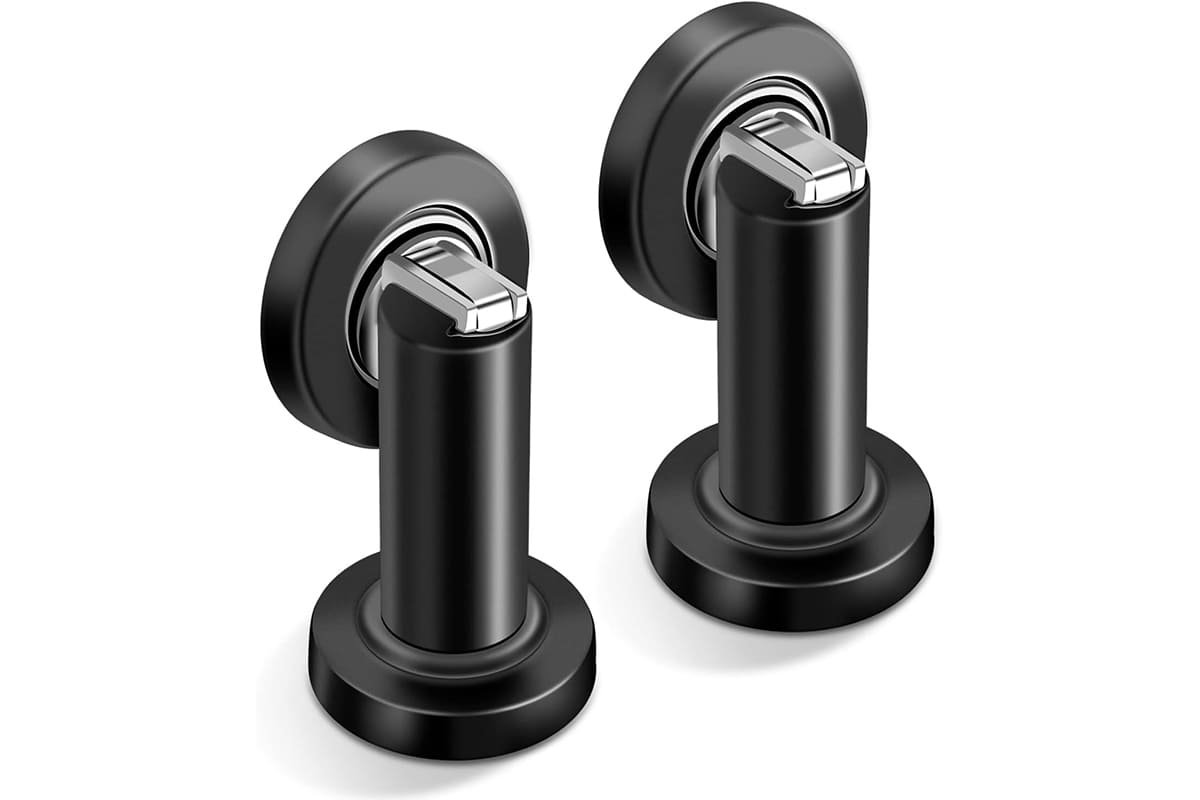
Use magnetic door stops when hold-open is needed on non-fire-rated doors and when magnet holding force exceeds closer and wind forces. For fire-rated or egress doors, do not use passive magnets; specify code-compliant electromagnetic hold-open devices integrated with the alarm system for automatic release11.
Dive deeper: holding force, alignment, and compliance
Holding force vs closer grade
- Door closers (e.g., EN 1154 sizes 2–5) create restoring torque.12 The magnet must exceed the resultant at the hold-open angle, plus margin for wind loads at entrances.
- As a simple screening rule I use:
- Size 2–3 interior: ≥ 15–25 N holding force
- Size 3–4 or modest drafts: ≥ 30–50 N
- Size 5 or wind-prone: often ≥ 60–80 N or better—field test recommended
- Verify with the magnet supplier’s data and test on-site. Alignment matters: misaligned magnets shed force quickly.
Alignment and release
- Choose adjustable magnetic stops that allow fine alignment after install.
- Ensure easy release under normal pull; too strong can feel unsafe for users with limited strength.
Code considerations
- Fire-rated/egress doors: passive magnetic hold-open is typically non-compliant. Use electromagnetic hold-open devices wired to the building system so doors release on alarm or power loss. Confirm with local AHJ.
- Document compliance in submittals: device type, wiring, fail-safe behavior.
Durability details
- Keep magnets sealed against dust and moisture, especially in hospitals/retail entrances.
- Provide cable protection and tamper-resistant fixings for electromagnetic units.
If you must have hold-open on a door that sometimes faces wind gusts, I prototype on-site with different magnet strengths. I carry two strengths to field-test before we finalize the order.
What specification checklist ensures durable door stops under constant use?
Vague specs lead to mismatches and callbacks. I solve this by using a concise checklist that captures door energy, traffic, substrate, anchors, bumper hardness, and any hold-open or compliance needs.
A durable door stops specification should include door mass/closer grade, traffic/impact level, substrate and thickness, fastening method with target pull-out/shear values, bumper material and Shore A range with replaceability, geometry choice, corrosion resistance, and, if needed, magnetic hold-open details with code compliance.
Dive deeper: a procurement-ready template you can copy
Here is the selection and verification list I use with door factories, contractors, and facility managers:
Door energy inputs
- Door leaf weight and width.
- Closer grade (e.g., EN size 3/4/5) and opening angle.
- Expected wind/draft exposure (none/modest/high).
Traffic and equipment
- People flow: low/medium/high.
- Equipment impacts: carts, trolleys, cleaning machines (frequency per day).
- Noise sensitivity (healthcare, hospitality).
Stop type and geometry
- Type: floor-mounted, wall-mounted, or overhead stop.
- Geometry: hemispherical (low-profile) or cylindrical (defined stop angle).
- Target stop angle and rebound control.
Substrate and fastening
- Substrate stack and thickness (e.g., 10 mm tile over 150 mm concrete).
- Anchor type (expansion/chemical/through-bolt/toggle).
- Target capacities: pull-out __ kN; shear __ kN (verified with anchor supplier).
- Plate/base: thickness __ mm; footprint ≥ __ mm; number of fixings __.
Bumper and replaceability
- Material: rubber/TPU.
- Hardness: Shore A __–__ (durometer test).
- Replaceable bumper required (yes/no), spare count per site __.
Hold-open (if required)
- Magnet type: passive or electromagnetic.
- Rated holding force __ N vs closer grade __ and wind exposure __.
- For fire-rated/egress: electromagnetic hold-open integrated with alarm (documentation attached).
Corrosion resistance
- Material/finish: 304/316 SS or plated alloy (specify).
- Salt spray (neutral) test target: __ hours (for environment class; document scope—appearance only).
Documentation and verification
- Installation instructions with torque and drilling templates.
- Test reports available: hardness, salt spray, comparative impact/cycle (internal/third-party).
- Field test or mock-up required at high-risk locations (yes/no).
Example scenario mapping:
Hospitals/care
- Low-profile hemispherical floor stop, wide base, chemical anchors into concrete.
- TPU bumper Shore A 75–80, sealed fasteners, replaceable bumper, confirm cleaning machine clearance.
Malls/retail
- Heavy-duty floor stop or reinforced wall stop with large base plate.
- Rubber or TPU Shore A 80–85 for frequent trolley hits.
- Geometry avoids trip hazards; anchors set to ≥ 3.0 kN pull-out.
I maintain photo records of tile-only pull-outs, gypsum tear-outs, and high-closer-force bumper cracks to train installers and procurement teams. Those cases always trace back to missing fields in the checklist above.
Frequently Asked Questions
Are stainless steel door stops always the most durable?
Not necessarily. Stainless steel resists corrosion, but durability in commercial spaces depends more on base thickness, anchoring capacity, and the bumper’s hardness and replaceability. A thin stainless stop with weak anchors will fail faster than a properly anchored alloy stop with the right bumper.
What Shore A hardness should I specify for heavy commercial doors?
For heavy doors with Size 4–5 closers, I typically specify 80–90A, often TPU for cut/tear resistance. However, higher hardness increases shock to anchors. Pair the hardness with a wide base and high-capacity anchors. Verify on-site if wind loads are significant.
Can I use magnetic door stops on fire-rated doors?
Use caution. Passive magnetic hold-open is typically non-compliant on fire-rated or egress doors. For those doors, specify electromagnetic hold-open devices integrated with the fire alarm so the door releases automatically on alarm or power loss. Confirm with the local authority having jurisdiction.
Why do door stops pull out of tile floors?
Because the anchor only bites the tile or thin adhesive layer. Always drill through tile into the structural concrete and use through-bolts or chemical anchors. Add a compressible washer to protect tile edges and set realistic pull-out and shear targets for the anchors.
Should I choose floor-mounted or wall-mounted stops?
Choose based on substrate strength, traffic, and cleaning. Floor-mounted stops into concrete with wide bases are robust for high traffic. Wall-mounted stops are fine on solid substrates with multi-point plates. Avoid wall mounts on gypsum without backing; use floor stops instead.
Conclusion
To truly select durable door stops, treat them as a system: structure, anchoring, and bumpers matched to the scenario. The right base thickness, substrate-matched anchors with verified pull-out and shear, and a replaceable bumper with appropriate Shore A hardness will outlast any “material-only” promise. If you want help turning your requirements into a spec and submittal set, contact SDH Hardware for samples, verified test data, and project-tailored options. We design, manufacture, and customize at factory-direct scale for door makers, brands, and wholesalers.
"INTERNATIONAL STANDARD ISO 48-4", https://ptacts.uspto.gov/ptacts/public-informations/petitions/1557674/download-documents?artifactId=DZ5-5KAIINlYJeTGT8pmoJ2wOiGtAZOVRP9c_XSS_cDiaPTpi-i6s2g. ASTM D2240 and related elastomer-hardness standards define Shore A durometer testing, supporting the use of Shore A values to specify door-stop bumper hardness. Evidence role: definition; source type: institution. Supports: Shore A durometer hardness is a standardized method for measuring indentation hardness of rubber and elastomeric materials.. Scope note: The standard defines the measurement method but does not prescribe optimal hardness values for door stops. ↩
"An Experimental and FE Modeling Investigation of the Pull-Out ...", https://pmc.ncbi.nlm.nih.gov/articles/PMC12526074/. Anchor-design standards and evaluation criteria characterize fasteners by tensile pull-out and shear resistance in defined substrates, supporting the need to verify these capacities rather than relying on the door stop material alone. Evidence role: general_support; source type: institution. Supports: Mechanical anchors are evaluated using substrate-specific tensile pull-out and shear resistance, and these values are used in anchor design.. Scope note: This would support the general engineering principle for anchors, not the article's specific kilonewton targets for door stops. ↩
"Bending of plates", https://en.wikipedia.org/wiki/Bending_of_plates. Mechanical-design references explain that plate thickness and contact area influence bending stiffness and bearing stress in bolted joints, providing a mechanical basis for specifying wider and thicker door-stop bases. Evidence role: mechanism; source type: education. Supports: Increasing plate thickness and bearing area changes stiffness and distributes load over a larger contact area in bolted assemblies.. Scope note: The source would be a general mechanics reference and would not directly test door stops in commercial buildings. ↩
"Salt spray test", https://en.wikipedia.org/wiki/Salt_spray_test. Standard neutral salt spray methods such as ASTM B117 and ISO 9227 describe controlled corrosive exposure for evaluating materials and coatings, which supports treating salt-spray hours as corrosion evidence rather than proof of anchor strength. Evidence role: definition; source type: institution. Supports: Neutral salt spray tests are standardized corrosion-exposure methods for materials and coatings.. Scope note: This supports the test scope and limitation, not any particular door-stop finish rating. ↩
"Chapter 3: Protruding objects", https://www.access-board.gov/ada/guides/chapter-3-protruding-objects/. Accessibility guidance on circulation paths and protruding objects supports the concern that hardware profile and projection can affect snagging or trip risk in corridors. Evidence role: general_support; source type: government. Supports: Accessibility and building-safety guidance addresses protruding objects and hazards in circulation routes.. Scope note: Such guidance typically addresses protrusions and clear routes broadly rather than comparing hemispherical and cylindrical door stops directly. ↩
"Contact mechanics", https://en.wikipedia.org/wiki/Contact_mechanics. Contact-mechanics references show that contact stress depends on load, material properties, geometry, and contact area, providing a mechanical rationale for considering the impact face of a cylindrical stop. Evidence role: mechanism; source type: education. Supports: For a given load, contact pressure depends on the area and shape of contact, with larger contact areas generally lowering localized stress.. Scope note: The evidence would be contextual and may not quantify stresses for a specific door-stop design. ↩
"Mechanical Design Handbook - for Elastomers", https://ntrs.nasa.gov/api/citations/19810017924/downloads/19810017924.pdf. Studies of elastomer mechanics report that hardness, damping, and compression set affect energy absorption and recovery under load, supporting the article's discussion of bumper hardness tradeoffs. Evidence role: mechanism; source type: paper. Supports: Elastomer hardness, damping behavior, and compression set are related to impact energy absorption and recovery under repeated loading.. Scope note: The literature may address elastomers generally rather than door-stop bumpers specifically. ↩
"How the reactive additives influence the physico-chemical ...", https://pmc.ncbi.nlm.nih.gov/articles/PMC12820368/. Polymer-materials literature describes thermoplastic polyurethane as an elastomer family with high abrasion and tear resistance and formulation-dependent chemical resistance, supporting its use as a durable bumper material. Evidence role: general_support; source type: paper. Supports: Thermoplastic polyurethane elastomers are known for tear resistance and resistance to some oils, chemicals, and abrasion, depending on formulation.. Scope note: Chemical resistance varies by TPU formulation and cleaning agent, so the source would not prove compatibility with every healthcare disinfectant. ↩
"Bonded Anchors in Concrete Under Sustained Loading", https://scholarworks.umass.edu/server/api/core/bitstreams/1814ed6e-edd8-4453-8e8c-36133763fa37/content. Adhesive-anchor design and qualification guidance identifies hole cleaning and curing conditions as installation variables that affect bond strength, supporting the article's requirement to clean holes and observe cure times. Evidence role: mechanism; source type: institution. Supports: Adhesive anchor installation procedures require hole cleaning and adequate curing because these factors affect bond performance.. Scope note: The guidance supports adhesive-anchor installation generally and does not set door-stop-specific load targets. ↩
"Pull-through Tests on OSB and Gypsum Board", https://jscholarship.library.jhu.edu/items/6fc72aad-62f3-429d-a824-6c09465674bf. Research and technical data on gypsum-board fasteners show that pull-out capacity varies by anchor type and backing, with simple plastic anchors providing limited resistance compared with toggles or backed connections. Evidence role: general_support; source type: research. Supports: Fastener pull-out capacity in gypsum board depends strongly on anchor type and backing, with simple plastic anchors generally having limited load capacity.. Scope note: The evidence would support relative anchor capacity, not guarantee failure in every individual installation. ↩
"Door Hold Open Devices - Facilities and Operations", https://fo.umich.edu/fosg/door-hold-open-devices/. Fire-door and life-safety codes such as NFPA 80 and NFPA 101 require fire doors to close reliably and regulate hold-open devices so that they release automatically under specified alarm or detection conditions. Evidence role: expert_consensus; source type: institution. Supports: Fire-door standards require fire doors to close and, where held open, to release automatically under fire-alarm or detection conditions.. Scope note: Code requirements vary by jurisdiction and door classification, so local authority review remains necessary. ↩
"Explanation of the Coding System for Fire Door Closers in ...", https://www.firesafe.org.uk/explanation-of-the-coding-system-for-fire-door-closers-in-bs-en-1154-1997/. EN 1154 classifies controlled door-closing devices by power size and associated closing performance, supporting the article's use of closer size as an input when assessing magnetic holding force. Evidence role: definition; source type: institution. Supports: EN 1154 classifies controlled door-closing devices by power size, including closing force or moment requirements.. Scope note: The standard supports the classification concept but does not provide the article's specific magnetic-force screening values. ↩
