
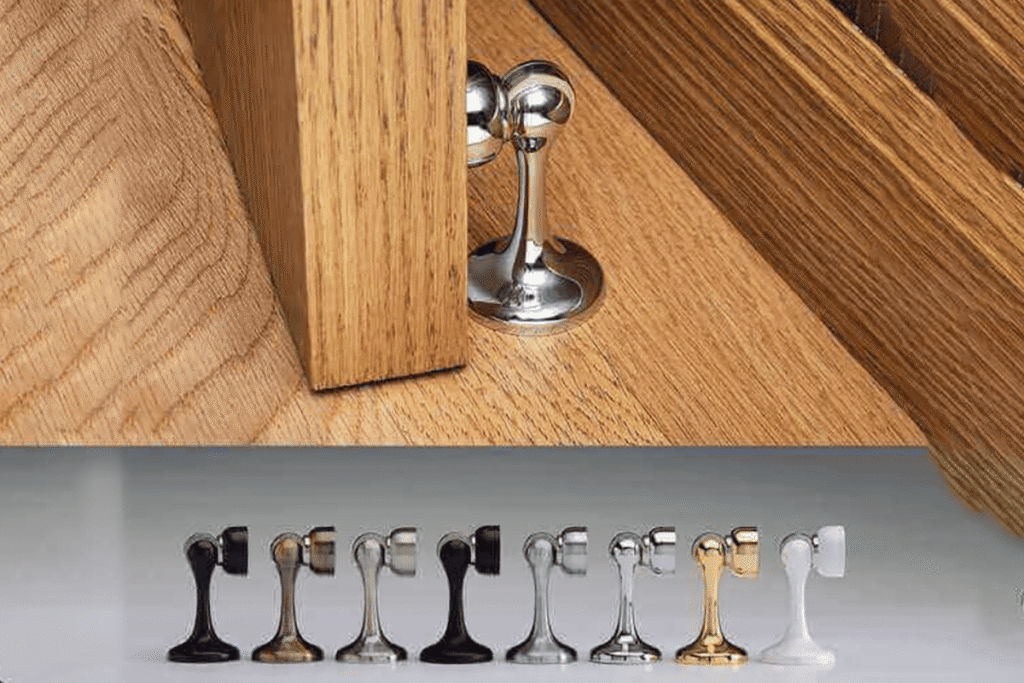
Why Use Magnetic Door Stops in Commercial Projects?
Magnetic door stops help commercial projects prevent wind-driven door slamming, but many buyers still treat them as small, low-risk accessories. I see this mistake often in hardware package discussions. The result can be noise, wall damage, handle impact, and after-sales complaints. A properly selected magnetic stop gives a simple, practical solution.
Commercial projects use magnetic door stops to hold doors open when wind, corridor pressure, or airflow may push them shut. They reduce sudden impact, collision damage, and noise during daily operation. They do not replace door closers or hinges1, but they help protect doors, walls, frames, handles, and nearby finishes.
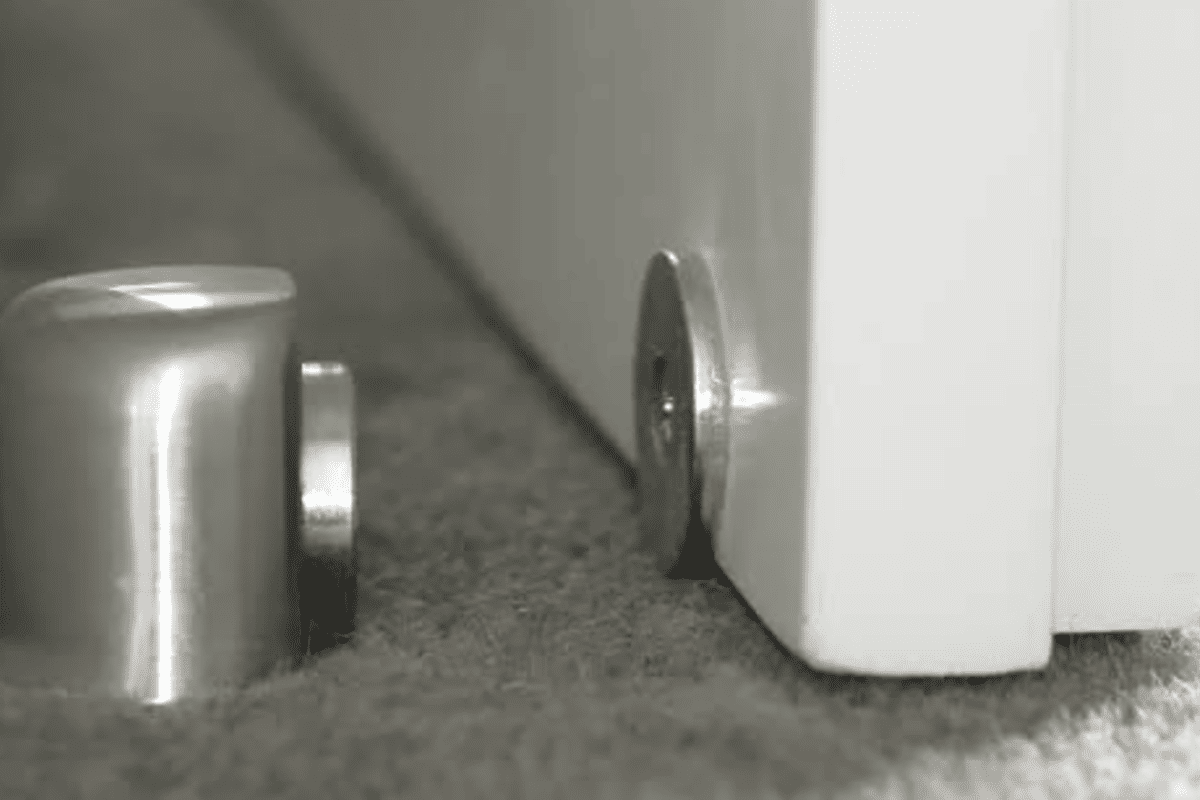
I write this from the perspective of a door hardware manufacturer that supports customer selection, sampling, and bulk orders. In real projects, the main question is not whether the accessory looks nice. The better question is whether it holds reliably under actual site conditions.
How Do Magnetic Door Stops Prevent Wind-Driven Door Slamming?
A door that suddenly slams shut can create more problems than buyers expect. I have seen customers focus on locks, handles, and hinges first, then add stops at the end. That approach can miss a simple risk: wind or airflow can turn a normal door into a noisy impact point.
Magnetic door stops prevent wind-driven slamming by holding the door in an open position after the door contacts the stop. The magnet and receiving plate create holding force, which resists light to moderate airflow and helps stop sudden closing movement before the door hits the frame, wall, handle, or nearby surface.
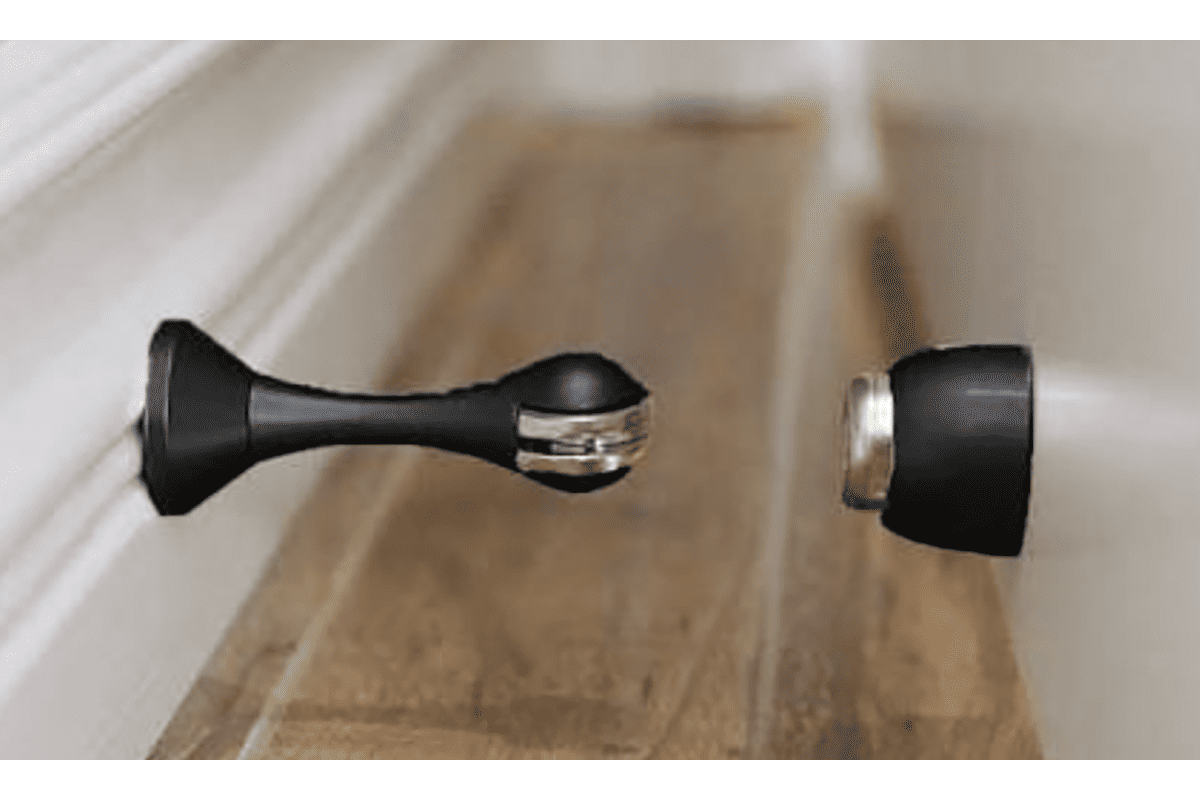
The core function is simple
A magnetic door stop usually includes two main parts:
- A magnetic holder, fixed to the wall, floor, or skirting area
- A strike plate or metal receiver, fixed to the door
When the door opens to the stop position, the receiver connects with the magnet. This connection helps keep the door open until someone pulls the door away.
I like to explain it to buyers in plain language:
A magnetic door stop is not a door-control system. It is a holding accessory that helps keep an opened door from being pushed shut by wind or airflow.
That distinction matters because commercial buyers sometimes expect too much from a small accessory. If the site has heavy wind pressure, a very heavy door, or frequent forced movement, the project may need a broader door hardware solution. The magnetic stop still helps, but the selection must match the application.
Where wind-driven slamming happens most often
In commercial buildings, door slamming is often caused by pressure differences rather than outdoor wind alone.2 I usually ask buyers to check these conditions before confirming samples:
- Long corridors with airflow movement
- Entrances near open windows or ventilation points
- Stairwell doors affected by pressure changes
- Balcony, terrace, or service-area doors exposed to wind
- High-traffic doors that remain open during loading or movement
- Interior partition doors near HVAC outlets
The problem becomes worse when the door opens freely and has no stable holding point. A person may leave the door open for ventilation, cleaning, access, or movement of goods. Then airflow pushes it back. The door can slam into the frame, hit the handle against a wall, or create a loud sound that affects users.
How buyers should think about holding force
The magnetic holding force must suit the door and the environment. I do not recommend choosing only by appearance or by the lowest unit price. A stop that works on a light residential door may fail on a heavier commercial door.
| Evaluation point | Why it matters | What I suggest checking |
|---|---|---|
| Door weight | Heavier doors require stronger holding force | Ask for sample testing on a similar door |
| Door size | Taller or wider doors create more leverage3 | Check the door leaf dimensions |
| Airflow level | Strong airflow can overcome weak magnets4 | Review site exposure and corridor pressure |
| Opening angle | Poor angle reduces magnetic contact | Confirm the actual installation position |
| Fixing surface | Weak substrate reduces stability | Check wall, floor, or skirting material |
| Usage frequency | Frequent impact tests durability | Request batch quality and material details |
Why this small accessory affects the full hardware package
In my work with door factories and hardware brands, I often see magnetic door stops included as part of a complete commercial door hardware package. They may sit beside hinges, lever handles, mortise locks, cylinders, and accessories. Even though the stop is small, its failure is easy to notice.
If it does not hold the door, the user hears the slam. If the fixing becomes loose, maintenance staff see the problem. If the surface finish rusts or peels, the buyer sees a quality issue in the whole package.
That is why I treat magnetic door stops as functional accessories, not decoration. The best result comes from matching the stop to the door condition, then checking the sample before bulk purchasing.
Why Do Magnetic Door Stops Reduce Collision Damage and Noise?
A slamming door does not only make a loud sound. It can damage the wall, frame, handle, lock area, or nearby furniture.5 I have handled enough hardware discussions to know that buyers care about after-sales complaints. A small collision problem can become a repeated maintenance cost.
Magnetic door stops reduce collision damage and noise6 by controlling the final open position of the door and holding it there. They help prevent the door leaf, handle, or lever from striking walls or adjacent surfaces. They also reduce sudden closing impact caused by airflow, which lowers noise during daily use.
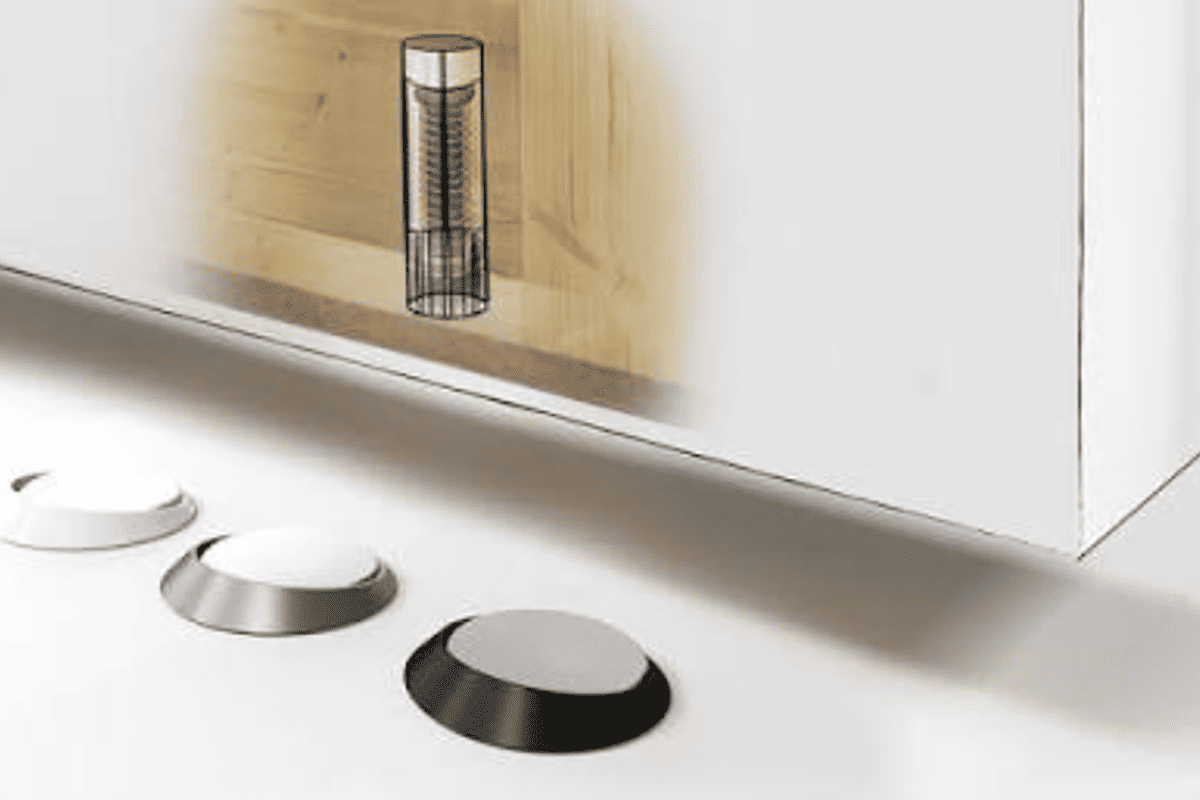
Collision damage is often predictable
In many commercial projects, door damage happens in repeated patterns. The door opens too far. The handle hits the wall. The door swings back with airflow. The latch side strikes the frame. People may not notice the first impact, but the marks become visible over time.
I usually ask buyers to look for these risk points:
- Lever handle impact marks on painted walls
- Dents near the door opening arc
- Loose handles caused by repeated shock
- Frame paint chipping from sudden closing
- Cracked tiles or skirting near floor-mounted stops
- Noise complaints in offices, schools, hotels, or clinics
A magnetic stop helps because it creates a defined open position. It also adds a holding function. A normal non-magnetic stop may block the door from hitting the wall, but it does not hold the door open7. In airflow conditions, that difference matters.
Noise reduction matters in commercial user experience
Noise is not always part of the technical specification, but it strongly affects the user experience.8 A slamming door in an office corridor, hotel room area, hospital service zone, or school building can feel low quality. The building user may not know which accessory failed. They only know the door is noisy.
For commercial project buyers, that creates three problems:
- User dissatisfaction increases.
- Maintenance requests become more frequent.
- The hardware supplier may receive complaints, even if the door itself caused part of the issue.
I do not present magnetic door stops as a complete acoustic solution. They are not soundproofing products. However, they can reduce one common source of sudden noise: door movement caused by wind, pressure, or careless opening.
Magnetic stops versus basic stops
The difference between a magnetic stop and a basic mechanical stop is practical. Both can limit door travel. Only the magnetic version helps hold the door in place.
| Stop type | Main function | Best use case | Limitation |
|---|---|---|---|
| Basic wall stop | Prevents handle or door from hitting wall | Simple impact protection | Does not hold the door open |
| Basic floor stop | Limits door travel at floor level | Heavy-use areas with strong fixing surface | Can become trip concern if poorly placed9 |
| Magnetic wall stop | Stops and holds door open | Doors affected by airflow or corridor pressure | Needs correct alignment and magnet strength |
| Magnetic floor stop | Stops and holds door open from lower position | Doors with suitable floor fixing and clear swing path | Needs strong substrate and proper placement |
Small impacts can damage more expensive hardware
A door handle, lock case, cylinder, or hinge may cost much more than the stop itself. Repeated impact can loosen screws, stress the spindle area, or mark the finish. In bulk commercial projects, this matters because the same problem may repeat across many rooms or units.
For example, if a hotel corridor has 200 doors and the stop selection is weak, the issue is not one failed accessory. The issue becomes a batch-level after-sales risk. Buyers may face replacement labor, complaint handling, and reputation pressure.
That is why I recommend evaluating magnetic door stops together with the full door hardware set. The stop should match the lever handle projection, the door opening angle, the wall surface, and the usage environment. This approach helps buyers reduce avoidable collision and noise problems before installation.
What Quality Factors Matter Most for Magnetic Door Stops?
A magnetic stop looks simple, so buyers sometimes judge it by shape, finish, and price only. I understand that pressure. Commercial projects often need cost control. However, if the magnet is weak or the fixing is unstable, the accessory will fail under real use.
The most important quality factors for magnetic door stops are magnetic holding force, fixing strength, material durability, surface treatment, and batch consistency. Buyers should check whether the stop can hold the intended door under site airflow, remain firmly installed, resist wear, and maintain the same performance across bulk orders.
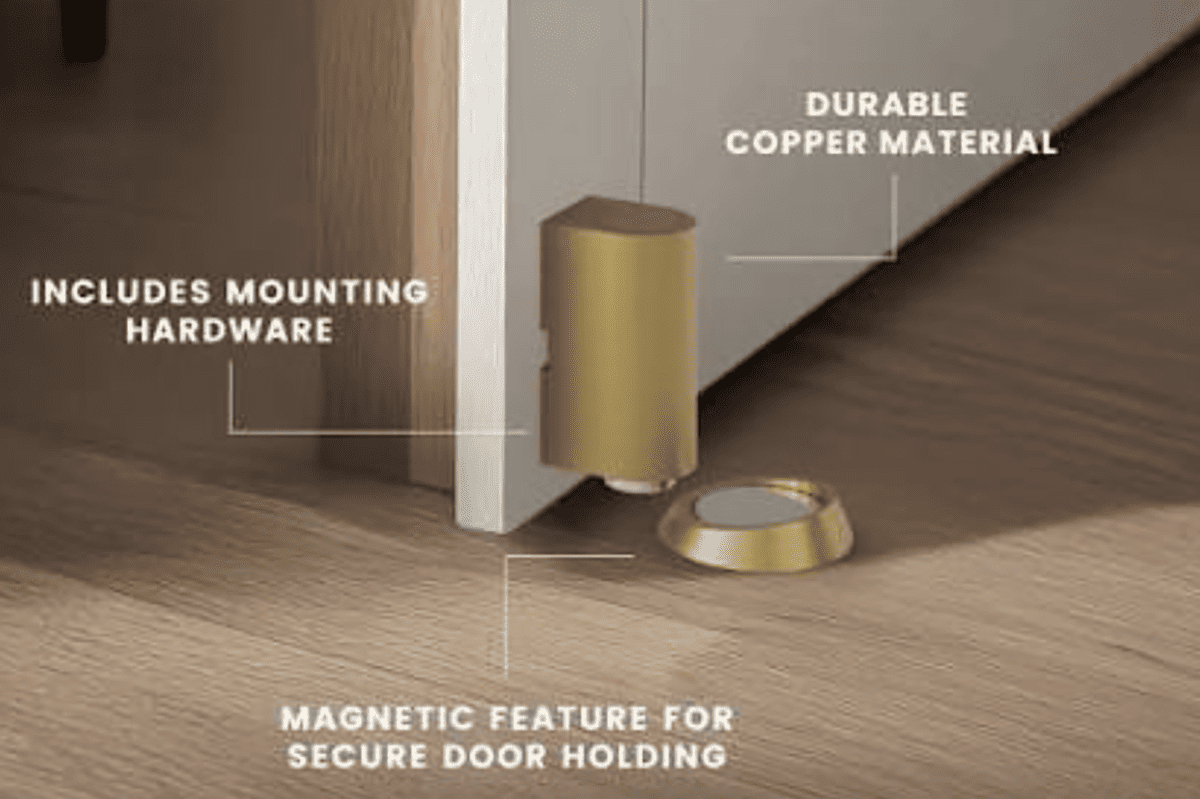
Magnetic holding force
The magnet is the heart of the product. If the holding force is too weak, the door will separate from the stop when airflow pushes it. If the door is heavy or the opening angle creates poor contact, the problem becomes worse.
I suggest asking suppliers practical questions:
- What type of magnet does the product use?
- What is the expected holding strength?
- Has the supplier tested it with similar door sizes?
- Does the holding force remain consistent across the batch?
- Can the supplier provide samples before bulk order?
I prefer sample testing because it reveals issues that catalog photos cannot show. A buyer can install the sample on a similar door, open the door to the real angle, and test whether airflow or normal use causes separation.
Fixing strength
A strong magnet will not help if the base becomes loose. Fixing quality depends on the screw, anchor, mounting surface, and base design. In commercial use, the stop may receive repeated force when the door opens against it. Weak fixing can create wobbling, noise, or complete detachment.
Buyers should check:
Wall or floor material
Concrete, brick, wood, gypsum board, and tile behave differently.Screw and anchor quality
Low-quality fixing parts can fail before the magnetic part fails.Base thickness and design
A thin or poorly supported base can deform over time.Installation accuracy
Poor alignment reduces contact and increases stress.
Material durability
Many magnetic door stops are made from stainless steel, zinc alloy, brass, or other metal combinations. Each material has a place, but the environment matters. A humid coastal project, a high-traffic public building, and a dry interior office may not need the same specification.
| Material or finish point | Why buyers should care | Practical note |
|---|---|---|
| Stainless steel body | Resists corrosion better in many environments10 | Grade and finish still matter |
| Zinc alloy body | Often cost-effective for interior use | Surface treatment quality is important |
| Brass components | Can provide good durability and appearance | Cost may be higher |
| Rubber buffer | Reduces hard contact noise | Rubber quality affects long-term performance |
| Plated finish | Supports design requirements | Poor plating may peel or discolor |
| Powder-coated finish | Offers color options | Adhesion and thickness should be checked11 |
Surface treatment and appearance consistency
I do not like vague claims such as “high quality finish” without inspection details. For bulk orders, buyers should check color consistency, plating coverage, scratches, burrs, and corrosion resistance expectations. A small accessory with poor finish can make the full hardware package look inconsistent.
For brand customers, this becomes more important because the door stop may carry the same packaging, logo, and quality promise as the main hardware. If a customer buys lever handles, locks, cylinders, hinges, and stops together, the finish consistency should be controlled across the set.
Batch consistency in B2B orders
One sample can look good. A 10,000-piece order is a different test. At SDH Hardware, we support customers with sampling, customization, inspection, and factory-direct production because batch consistency matters in commercial supply.
For magnetic door stops, I suggest buyers verify:
- Sample approval before mass production
- Confirmed material and finish specification
- Packaging method to prevent scratches
- Random inspection after production
- Functional checks for magnetic holding
- Screw and accessory completeness
- Logo, color box, or labeling requirements if needed
This level of attention may seem detailed for a small item. However, commercial buyers know that small accessories can create large service issues when they fail repeatedly.
How Should Buyers Select Magnetic Door Stops for Commercial Projects?
Selecting the wrong stop usually happens when buyers ignore the site condition. I have seen specifications copied from one project to another without checking door weight, wind exposure, opening angle, or mounting surface. That shortcut can lead to weak holding, poor alignment, or damaged finishes.
Buyers should select magnetic door stops by matching the product to door weight, door opening angle, wind or airflow exposure, mounting position, installation surface, and expected usage frequency. A sample should be tested under similar conditions before bulk order, especially for commercial projects with heavy doors or strong airflow.
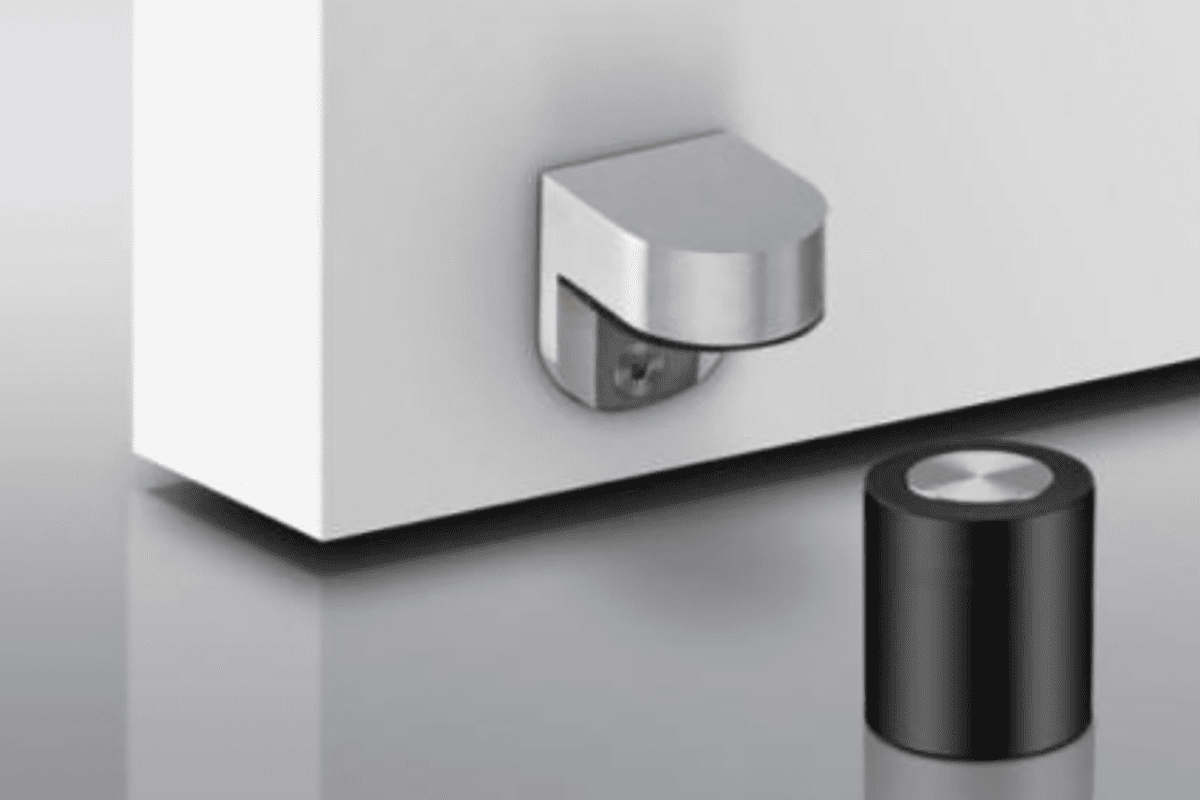
Start with the door condition
The door itself determines much of the requirement. A light interior timber door does not behave like a heavy metal or fire-rated door assembly. I avoid making universal recommendations without knowing the door details.
A buyer should collect these details first:
- Door material
- Door weight
- Door width and height
- Door thickness
- Door opening direction
- Door opening angle
- Handle projection
- Expected user traffic
- Nearby wall, glass, furniture, or equipment
The door opening angle is especially important. The magnet and receiver must meet cleanly. If the angle is wrong, the parts may touch only on one edge. That reduces holding force and increases wear.
Check the site airflow
The main reason to use magnetic door stops in many commercial projects is wind-driven or airflow-driven slamming. So the airflow condition should be checked early.
I usually divide site exposure into three levels:
| Site condition | Example | Selection approach |
|---|---|---|
| Low airflow | Standard interior office door | Standard magnetic stop may be enough |
| Medium airflow | Corridor near HVAC or open windows | Stronger magnet and firm fixing should be checked |
| High airflow | Exterior-adjacent door or service area | Sample testing is strongly recommended; other door-control hardware may also be needed |
A magnetic stop can help hold a door open, but it should not be treated as a full solution for extreme pressure or safety-critical door control. If the door is part of a specific fire, smoke, access control, or life-safety system, the project team should review the full door assembly requirements with qualified professionals and verify relevant documents.
Choose wall-mounted or floor-mounted position
Both wall-mounted and floor-mounted magnetic door stops can work well. The better choice depends on the site.
Wall-mounted magnetic stops are often used when the wall is strong enough and the contact point matches the door. They can reduce floor obstruction and are easy for users to understand.
Floor-mounted magnetic stops can work when the door bottom area provides the best contact point, or when wall positioning is not suitable. However, the installation position must avoid creating a trip point or cleaning problem.
| Mounting type | Advantages | What I check |
|---|---|---|
| Wall-mounted | Keeps floor clearer; protects handle area | Wall strength, handle height, door contact angle |
| Floor-mounted | Can provide strong base fixing; useful where wall is unsuitable | Floor material, traffic path, cleaning needs |
| Skirting-mounted | Can be discreet and practical | Skirting strength and alignment |
| Door-mounted receiver | Common in magnetic systems | Screw grip and receiver position |
Match finish and configuration to the hardware package
Commercial buyers often need one-stop sourcing. They may want lever handles, mortise locks, cylinders, hinges, and door accessories in coordinated finishes. Magnetic door stops should fit that package.
Common finish concerns include:
- Satin stainless steel appearance
- Polished chrome appearance
- Black finish for modern projects
- Brass-tone finish for hotel or premium interiors
- Custom finish matching brand requirements
At SDH Hardware, we often support customer branding, packaging, surface treatment options, and accessory configuration for B2B orders. I always recommend confirming finish samples under real lighting because catalog photos can be misleading.
Use a practical selection checklist
I suggest this simple process for importers, hardware brands, door factories, and project buyers:
Confirm the door type and size.
Identify why the stop is needed.
In many cases, the reason is wind-driven slamming.Check the door opening angle.
Select wall, floor, or skirting mounting.
Confirm magnetic holding requirement.
Check fixing surface and anchors.
Review material and surface finish.
Request samples before bulk order.
Test the sample in a similar condition.
Confirm inspection standards for mass production.
This process keeps the decision simple but responsible. It helps buyers avoid treating the stop as a generic low-cost accessory. It also reduces the risk of after-sales complaints after installation.
When Are Magnetic Door Stops Not Enough by Themselves?
A magnetic stop is useful, but it has limits. I prefer to be clear about those limits because overpromising creates project problems later. If buyers expect one small accessory to solve every door movement issue, they may choose the wrong hardware combination.
Magnetic door stops are not enough by themselves when the door faces extreme wind pressure, requires controlled closing, belongs to a regulated door assembly, or needs safety-specific performance. In those cases, buyers should evaluate the full door hardware system, including hinges, closers, coordinators, latches, and project-specific requirements.
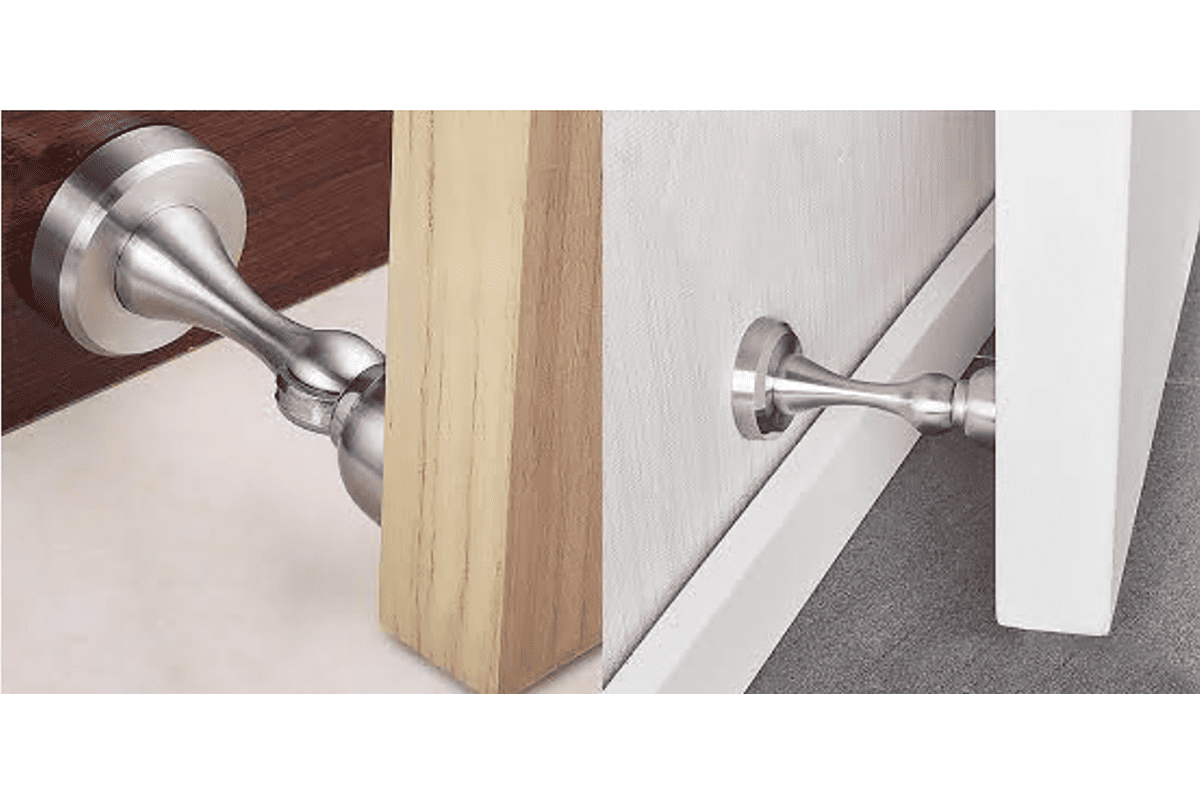
They do not replace door closers
A door closer controls closing movement. A magnetic stop holds an opened door at a set position. These are different functions.
I sometimes see buyers ask whether a stronger magnetic stop can replace a closer. I do not recommend thinking that way. If a door must close automatically, latch reliably, or meet a project-specific requirement, a closer or other door-control hardware may be needed. A magnetic stop can work alongside those components only when the project design allows it.
They do not solve poor hinge or alignment problems
If the door is sagging, rubbing, or misaligned, the stop may not contact correctly. The magnet may connect unevenly. The receiver may hit at an angle. The screws may take abnormal force.
Before blaming the stop, buyers should check:
- Hinge alignment
- Door leaf flatness
- Frame squareness
- Floor level
- Door clearance
- Handle projection
- Stop contact point
A well-made magnetic stop cannot compensate for a badly installed door assembly. Good performance depends on both product quality and installation quality.
They may not hold under extreme airflow
Magnetic holding force has a limit. Strong wind, pressure differences, or repeated force may pull the door away from the magnet. A stronger magnet may help, but only up to a point. The fixing surface must also withstand the extra force.
For high-risk areas, I suggest project teams perform site-specific evaluation. If needed, they should involve a qualified door hardware consultant, architect, contractor, or safety professional. This is especially important for doors related to fire compartments, emergency routes, access control, or special building operation requirements.
They should be evaluated as part of the full hardware schedule
Commercial door hardware works as a system. A stop interacts with the door, handle, hinges, frame, wall, floor, and user behavior. I recommend reviewing magnetic stops during the hardware schedule stage rather than adding them at the last minute.
A basic review should include:
- Door type and opening direction
- Lever handle projection
- Wall or floor contact point
- Door closer presence, if any
- Hinge type and swing behavior
- User traffic and cleaning method
- Finish and corrosion expectations
- Packaging and spare part needs
This approach keeps the specification practical. It also helps buyers avoid unnecessary replacements after installation.
Conclusion
Magnetic door stops are useful in commercial projects because they help hold doors open when wind, corridor pressure, or airflow may slam them shut. They reduce collision damage, protect nearby finishes, and lower sudden noise during daily use. I recommend buyers focus on magnetic force, fixing strength, material durability, mounting position, and batch consistency instead of price alone. If you need factory-direct support for commercial door hardware accessories, SDH Hardware can help with selection, sampling, customization, and bulk order supply.
"Door closer", https://en.wikipedia.org/wiki/Door_closer. Standard reference descriptions distinguish door closers, which control the closing movement of a door, from door stops or holders, which limit travel or hold doors open; this supports the statement that magnetic stops do not replace closers or hinges. Evidence role: definition; source type: encyclopedia. Supports: Authoritative definitions that a door closer controls the closing motion of a door, whereas a door stop/holder limits travel or holds a door open, showing that magnetic stops are not substitutes for closers or hinges.. Scope note: Definitions confirm distinct functions but do not address specific project constraints. ↩
"Stack effect", https://en.wikipedia.org/wiki/Stack_effect. Building science sources describe how stack effect and mechanical pressurization create pressure differentials across interior doors, which can lead to unexpected door movement and slamming, supporting the claim that indoor pressure—not just outdoor wind—can be a primary cause in commercial buildings. Evidence role: mechanism; source type: education. Supports: Building science explanations of stack effect and HVAC-driven pressurization that create pressure differentials across doors, which can drive unintended door movement and slamming.. Scope note: Such sources explain the mechanism but typically do not quantify how often this cause dominates in all buildings. ↩
"Lever", https://en.wikipedia.org/wiki/Lever. Educational physics sources explain that torque equals force times lever arm distance; therefore, larger door dimensions increase the moment for a given force, supporting the leverage claim. Evidence role: mechanism; source type: education. Supports: Introductory physics explanations that torque increases with the lever arm length, implying wider/taller doors generate greater moments for the same force.. Scope note: This is a general mechanical principle and does not quantify specific door cases. ↩
"The Effect of Door Opening on Positive Pressure and ...", https://pubmed.ncbi.nlm.nih.gov/29419726/. Technical studies measuring door forces under pressure differentials show that airflow-induced pressures can generate substantial forces on doors, supporting the claim that weak magnetic holding forces may be overcome by strong airflow. Evidence role: mechanism; source type: research. Supports: Studies or technical notes that quantify how pressure differentials across doors produce opening/closing forces, implying that insufficient holding force can be overcome by airflow.. Scope note: Such studies quantify door forces but typically do not evaluate specific magnetic stop products. ↩
"Doorstop", https://en.wikipedia.org/wiki/Doorstop. Descriptive references explain that door stops prevent doors from striking adjacent walls and finishes, corroborating that uncontrolled impacts can damage walls, frames, and hardware. Evidence role: general_support; source type: encyclopedia. Supports: General descriptions that door stops are used to prevent damage from doors striking walls and adjacent surfaces.. Scope note: This is a general rationale and does not document a specific incident or quantified damage rate. ↩
"Doorstop", https://en.wikipedia.org/wiki/Doorstop. Reference descriptions note that door stops prevent doors from striking adjacent surfaces and that door holders keep doors open, which together support the mechanism by which magnetic stops can reduce collision damage and sudden impact noise. Evidence role: mechanism; source type: encyclopedia. Supports: General references that door stops limit travel to prevent impact damage and that door holders hold doors open, implying reduced collisions and sudden impact noise.. Scope note: These descriptions are generic and do not quantify noise reduction in specific installations. ↩
"Barn door tracker", https://en.wikipedia.org/wiki/Barn_door_tracker. Reference material differentiates basic door stops, which limit motion to prevent impact, from hold-open devices that keep doors open, supporting the statement that a simple non-magnetic stop does not hold a door open. Evidence role: definition; source type: encyclopedia. Supports: Definitions showing that basic door stops limit travel to prevent impact, while hold-open devices (door holders) are distinct components intended to keep a door open.. Scope note: Some specialized non-magnetic mechanical holders exist, so the distinction applies to typical wall/floor stops. ↩
"Guidelines for community noise", https://www.who.int/publications/i/item/a68672. Institutional guidelines on environmental noise report that indoor noise contributes to annoyance and reduced occupant comfort, supporting the assertion that noise strongly affects user experience in buildings. Evidence role: expert_consensus; source type: institution. Supports: Guidelines and reviews documenting that environmental noise contributes to annoyance, reduced comfort, and other adverse effects for building occupants.. Scope note: Guidelines address noise broadly and do not single out door slamming as the only source. ↩
"1910.22 - General requirements.", http://www.osha.gov/laws-regs/regulations/standardnumber/1910/1910.22. Occupational safety guidance identifies obstacles and protrusions in walking areas as trip hazards, supporting the caution that poorly placed floor-mounted stops can create tripping concerns. Evidence role: general_support; source type: government. Supports: Workplace safety guidance noting that floor-level obstacles and protrusions in walking areas create trip hazards.. Scope note: Safety guidance is general and does not discuss door stops specifically. ↩
"Stainless steel", https://en.wikipedia.org/wiki/Stainless_steel. Materials references attribute the corrosion resistance of stainless steel to its passive chromium oxide layer, which supports the statement that stainless steel bodies resist corrosion better in many environments. Evidence role: expert_consensus; source type: encyclopedia. Supports: General materials references explaining that stainless steel forms a passive chromium oxide layer that improves corrosion resistance relative to many carbon steels and zinc alloys.. Scope note: Corrosion resistance varies by alloy grade and environment; the statement is comparative and general. ↩
"Powder coating", https://en.wikipedia.org/wiki/Powder_coating. Technical overviews of powder coating describe film thickness control and adhesion testing as standard quality considerations, supporting the advice to verify adhesion and thickness. Evidence role: general_support; source type: encyclopedia. Supports: Descriptions of powder coating that note typical film thickness ranges and the use of adhesion tests as standard quality checks.. Scope note: References may mention general practice rather than specifying project-specific tolerances. ↩
