
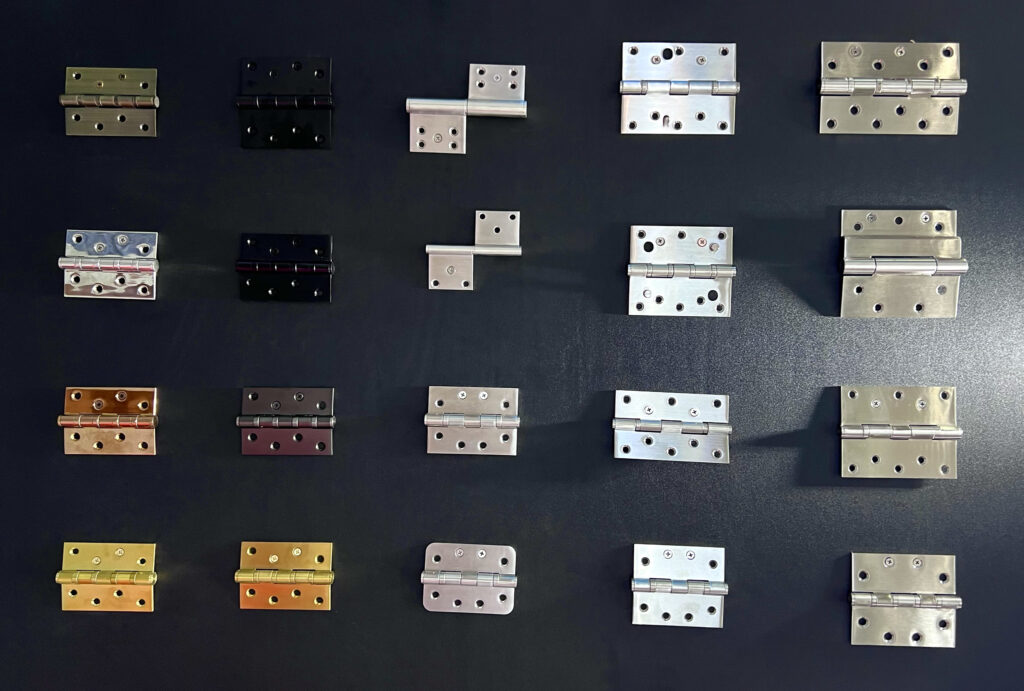
What Causes Heavy Duty Stainless Steel Hinges to Fail in Industrial Door Applications
Heavy duty stainless steel hinges fail when buyers treat them as simple accessories instead of load-bearing mechanical components1. A weak hinge can create door sagging2, safety risks, production delays, and warranty disputes. The solution is to evaluate hinge design, material grade, installation conditions, supplier quality control, and maintenance before placing bulk orders.
Heavy duty stainless steel hinges usually fail because of incorrect load selection3, poor installation alignment, unsuitable stainless steel grade, weak pin or bearing design, inadequate corrosion protection, or missing maintenance. In industrial door applications, buyers should verify load capacity, cycle performance, material certificates, production consistency, and application fit before confirming a supplier.
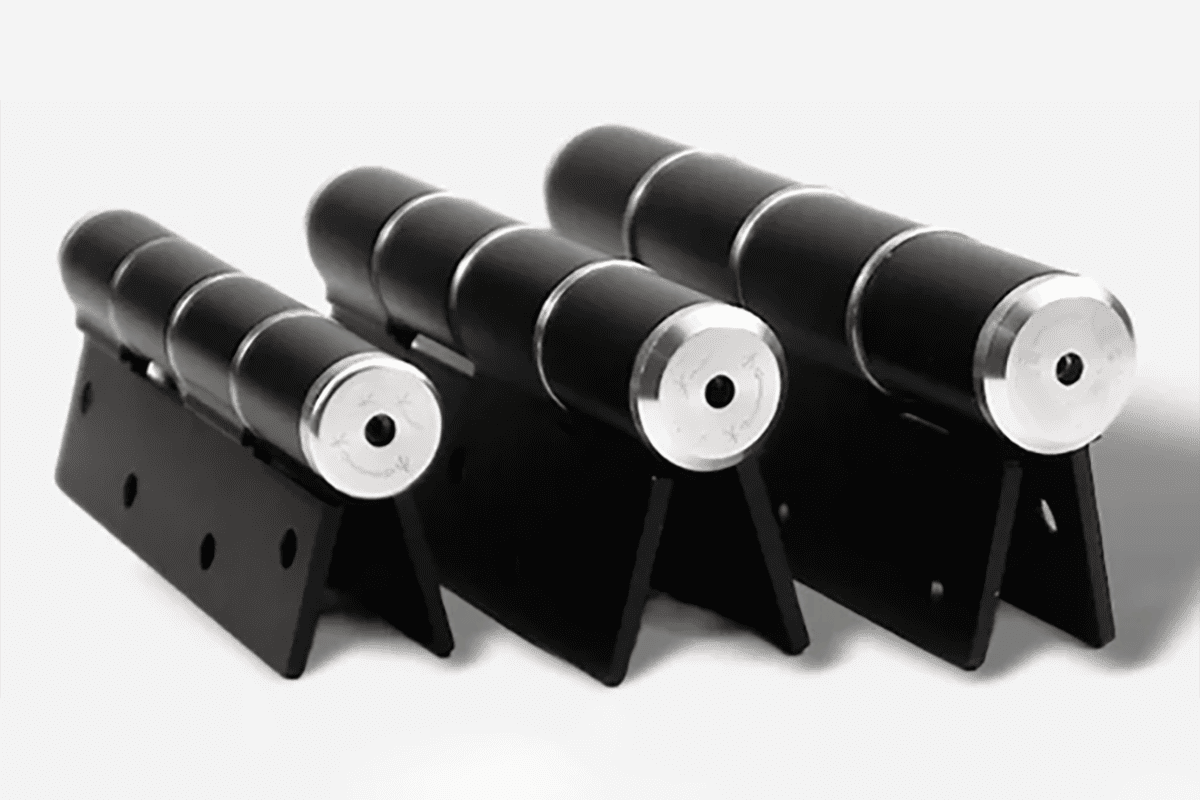
Many failures look sudden on site, but most start much earlier. I usually see the root cause hidden in specification sheets, production drawings, installation tolerances, or supplier quality checks. So, the best evaluation is not only about price. It is about risk control.
Why Do Heavy Duty Stainless Steel Hinges Fail Before Expected Service Life?
Industrial buyers often expect heavy duty stainless steel hinges to last for years because the word “stainless” suggests strength and durability. That expectation can become a problem when the hinge is used beyond its real mechanical design. Early failure usually means the hinge was not matched to the door, environment, or usage frequency.
Heavy duty stainless steel hinges fail early when the door weight, opening frequency, frame alignment, pin strength, bearing structure, or corrosion environment exceeds the hinge design. A hinge may look strong, but service life depends on tested load capacity, material consistency, installation accuracy, and routine inspection.
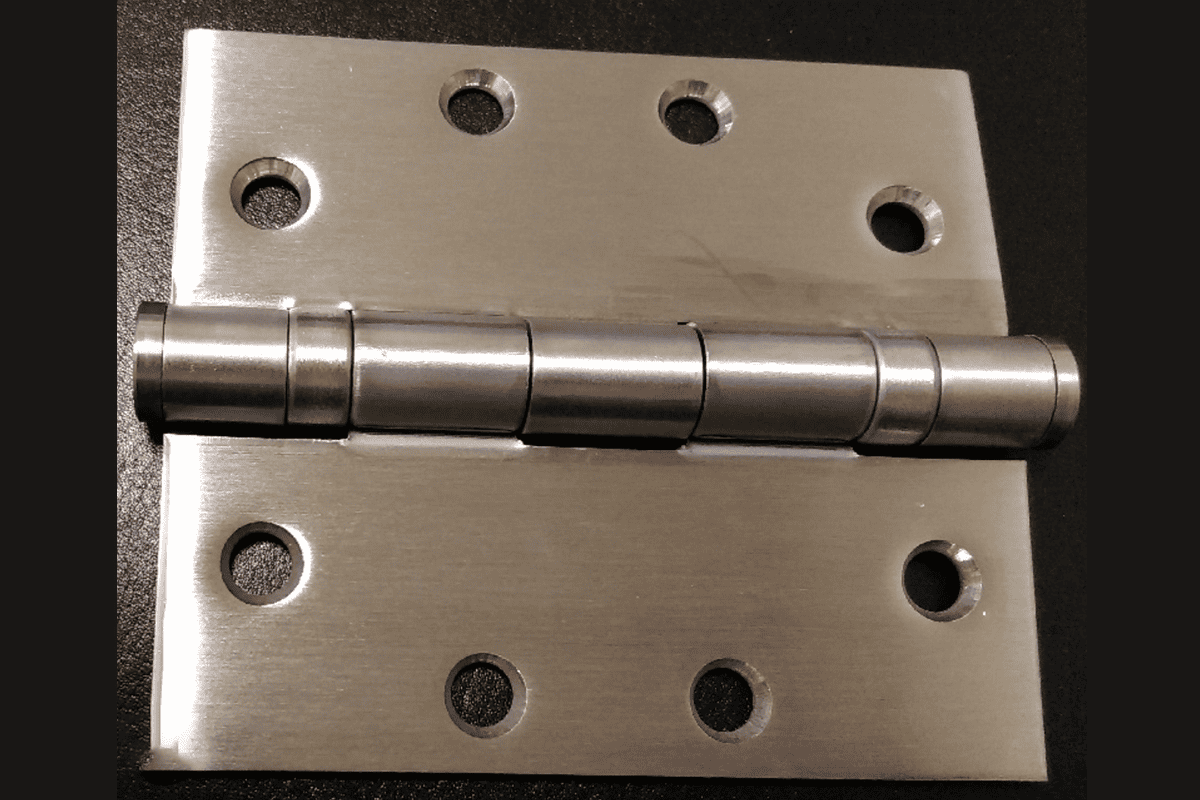
The hinge is a moving load-bearing component
A hinge is not just a connector between a door leaf and a frame. It carries static load, absorbs dynamic impact, and guides repeated movement. In industrial buildings, one door may be opened hundreds or thousands of times per week4. That movement creates stress on:
- The hinge leaf
- The pin
- The knuckle
- The screws or welding points
- The frame reinforcement
- The door leaf structure
When I explain this to B2B buyers, I often compare a hinge to a small machine part. A machine part needs the right material, tolerance, lubrication, and installation. A hinge needs the same level of thinking, especially for factories, warehouses, hospitals, schools, hotels, and public infrastructure.
Common early failure symptoms
Early hinge failure can appear in several ways. Buyers should ask installers and project teams to report these symptoms before the problem becomes serious.
| Failure symptom | Possible cause | Buyer concern |
|---|---|---|
| Door sagging | Incorrect load rating or frame weakness | Safety and operation risk |
| Squeaking noise | Lack of lubrication or poor pin surface | Maintenance issue |
| Loose screws | Weak fastening or vibration | Installation quality risk |
| Cracked hinge leaf | Thin material or overstress | Product design issue |
| Rust marks | Wrong stainless grade or surface contamination | Material suitability issue |
| Stiff opening | Misalignment or bearing problem | User experience issue |
Door weight is only one part of the calculation
Many buyers only ask, “How many kilograms can this hinge carry?” That question is important, but it is incomplete. A door weighing 100 kg in a clean indoor corridor is very different from a 100 kg industrial door in a humid warehouse with frequent forklift traffic and strong air pressure.
A better evaluation should include:
- Door weight
- Door height and width
- Number of hinges per door
- Opening frequency
- Indoor or outdoor exposure
- Fire door or non-fire door requirement
- Frame material and reinforcement
- Installation method
- Expected service life
- Maintenance conditions
For example, a tall and wide door creates more leverage than a short door with the same weight. That leverage increases stress on the top hinge. In many failure cases, the top hinge shows damage first5 because it carries high pulling force.
Industrial use creates harsher conditions
Industrial door applications are rarely gentle. Doors may face:
- Dust
- Moisture
- Cleaning chemicals
- Temperature changes
- Vibration
- Impact from carts or equipment
- Strong air movement
- High traffic from workers
That is why heavy duty stainless steel hinges need more than a good-looking finish. They need suitable structure, controlled production, and practical application matching. Stainless steel can improve corrosion resistance, but it does not remove the need for proper design and installation.
In my experience, buyers who share detailed application information receive better hinge recommendations than buyers who only request the lowest quotation.
Early failure is usually a system problem
A hinge can fail because of the hinge itself. However, it can also fail because the door system is poorly matched. The best procurement decision reviews the full set:
- Hinge specification
- Door construction
- Frame strength
- Fasteners
- Installation tolerance
- Site environment
- Maintenance plan
This system view helps buyers reduce complaints, protect their brand, and avoid repeated replacement costs.
How Can Buyers Evaluate Load Capacity in Heavy Duty Stainless Steel Hinges?
A hinge that looks thick may still fail if the load path, pin design, or installation method is weak. Buyers can feel pressure to approve samples quickly, but industrial doors need more careful evaluation. The cost of one failed hinge can be much higher than the price difference between two hinge models.
Buyers should evaluate load capacity by checking door weight, hinge quantity, hinge leaf thickness, pin diameter, knuckle design, bearing structure, fixing method, test reports, and safety margin. Heavy duty stainless steel hinges should be selected with application-specific data, not only catalog dimensions or visual appearance.
Load capacity should include a safety margin
A catalog load rating is useful, but buyers should avoid choosing a hinge that only just meets the door weight. Industrial doors face dynamic forces during opening and closing. Wind pressure, user force, door closers, and impact can increase stress.
A practical procurement approach is to build in a safety margin. The exact margin depends on the project and should be reviewed by a qualified door or structural professional when safety-critical doors are involved. Still, buyers can use a simple screening method during supplier comparison.
| Evaluation factor | Low-risk condition | Higher-risk condition |
|---|---|---|
| Door weight | Light to medium | Heavy industrial door |
| Usage frequency | Occasional | High-cycle public or factory use |
| Environment | Clean indoor | Outdoor, humid, coastal, chemical |
| Door width | Narrow | Wide leaf with higher leverage |
| Closing force | Light closer | Strong closer or slam risk |
| Maintenance | Regular | Irregular or unknown |
If several conditions fall into the higher-risk column, the buyer should avoid borderline hinge specifications.
Hinge quantity affects performance
A common industrial door may use three hinges, but some heavy or tall doors require four or more. The number of hinges affects load distribution, but the distribution is not always equal. The top hinge often carries more tension, while the lower hinges help support and align the door.
Buyers should ask suppliers:
- What door size and weight is the hinge designed for?
- Is the load rating based on two, three, or four hinges?
- Was the test performed with screws, welding, or another fixing method?
- What cycle test data is available?
- Is the hinge suitable for door closers?
- Is the hinge suitable for fire-rated assemblies, if required?
Pin and bearing design matter
The hinge pin is a critical part. A weak pin can bend, wear, or loosen. For heavy duty stainless steel hinges, buyers should review the pin diameter, pin material, retention method, and bearing type.
Common hinge movement designs include:
- Plain bearing structure: Simple and economical, but it may wear faster under heavy use.
- Washer-assisted structure: Better movement than a plain structure in some cases.
- Ball bearing structure: Often preferred for smoother operation and higher-frequency use.6
- Concealed or special structure: May be selected for design or security needs, but it requires careful fit evaluation.
No structure is automatically best for every project. The correct choice depends on door weight, frequency, security need, environmental exposure, and budget.
Fasteners can be the weak point
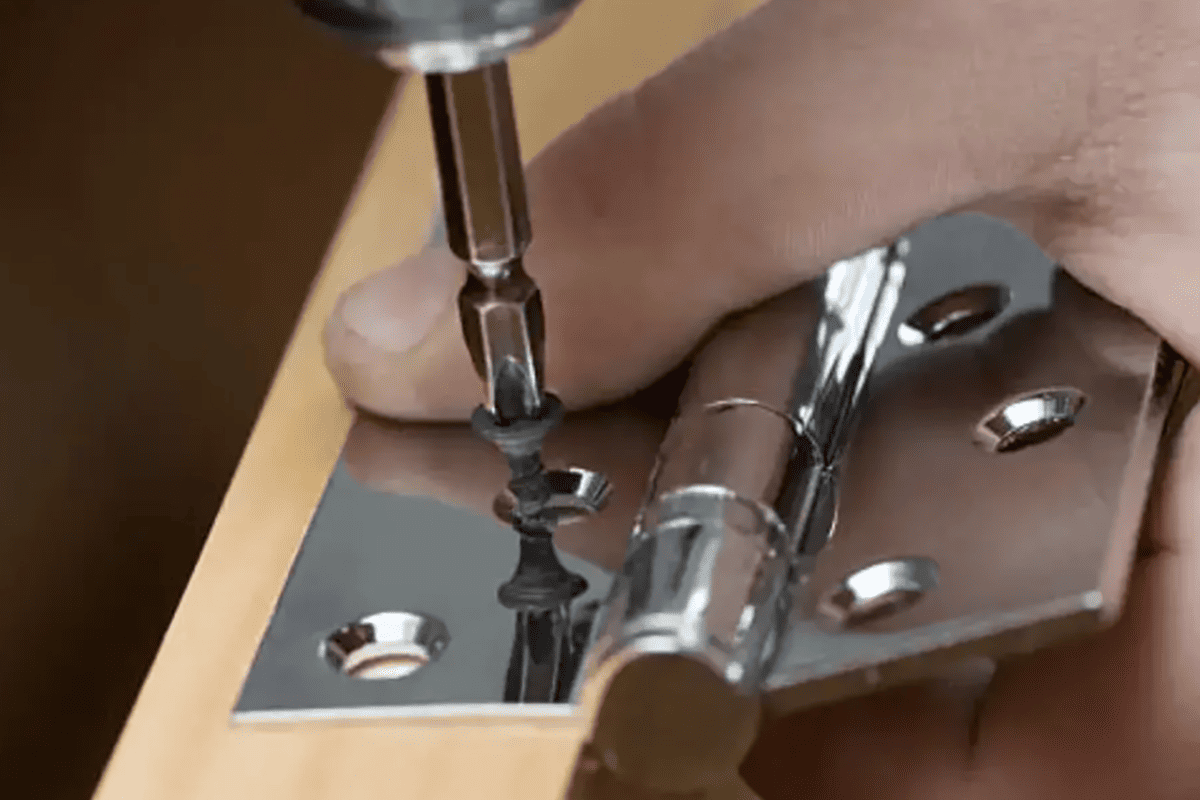
Even strong heavy duty stainless steel hinges can fail when fasteners are undersized or installed into weak frames. A stainless steel hinge fixed with poor screws into a thin frame may loosen quickly7. The buyer should not only check the hinge body.
Important fastening questions include:
- Are screws included?
- What grade and size are the screws?
- Is the frame reinforced?
- Are fixing holes countersunk correctly?
- Is welding required?
- Is the installation method consistent with test conditions?
I have seen buyers focus heavily on hinge thickness while ignoring screw quality. That creates a risk because the load transfers through the fixing points. A hinge is only as reliable as its connection to the door and frame.
Testing documents should be verified
For industrial projects, buyers may request CE documents, fire-rated certification, cycle test reports, salt spray test information8, or internal QC records. These documents should be treated as verification materials, not marketing decoration.
At SDH Hardware, we manufacture architectural hardware and follow full-process quality control from material screening to finished product inspection. However, I always recommend that buyers verify certification scope, product model coverage, test standard, date, and issuing body before relying on any document for a project. For regulated applications, qualified professional evaluation is necessary.
What Role Do Material Grade, Finish, and Corrosion Resistance Play in Heavy Duty Stainless Steel Hinges Failure?
Many buyers believe stainless steel cannot rust. That belief creates procurement mistakes, especially for coastal, industrial, or humid environments. Stainless steel improves corrosion resistance, but its performance depends on alloy grade, surface treatment, contamination control, cleaning routine, and exposure conditions.
Material grade, finish quality, and corrosion resistance affect heavy duty stainless steel hinges because corrosion can weaken movement, stain surfaces, increase friction, and reduce service life. Buyers should match stainless steel grade and surface finish to the environment, then verify material certificates and surface inspection standards.
Stainless steel is a material category, not one product
“Stainless steel” describes a family of alloys. Different grades perform differently. In architectural door hardware, buyers commonly compare stainless steel options such as 201, 304, and 316, depending on market expectations and environmental requirements.
| Stainless steel grade | General characteristics | Typical buyer consideration |
|---|---|---|
| 201 | More economical, lower nickel content | Budget-sensitive indoor use |
| 304 | Common balance of corrosion resistance and cost | Standard commercial use |
| 316 | Better corrosion resistance, especially against chlorides9 | Coastal or harsher environments |
This table is a general procurement guide, not a substitute for technical evaluation. Buyers should confirm the actual material grade with the supplier and request supporting documents when needed.
Corrosion can start from the surface
Corrosion does not always mean the stainless steel base material is wrong. Sometimes surface contamination causes rust marks. Iron particles from tools, grinding dust, or poor storage can contaminate stainless steel.10 In humid conditions, those particles can show rust and create complaints.
Good manufacturing and handling practices matter. Buyers should ask suppliers about:
- Raw material inspection
- Surface cleaning process
- Polishing or brushing control
- Storage environment
- Packaging protection
- Salt spray or corrosion testing method, if applicable
- Final visual inspection standard
As a manufacturer, I pay close attention to this because a hinge may leave the factory looking perfect. Poor packaging or storage can still damage the surface before installation.
Finish is not only about appearance
Surface finish affects cleaning, friction, corrosion behavior, and market positioning. Buyers sometimes treat finish as a color choice, but it is also a process decision. This point is familiar to me because we also supply stainless steel lever handles, where B2B customers often confuse color names with finish processes.
For example:
- Satin stainless steel describes a stainless steel appearance and surface texture.
- Polished stainless steel describes a reflective mechanical finish.
- Powder coating is a coating process that can create many colors.
- PVD coating is a vacuum coating process often used for premium decorative finishes.
- Matt black is an appearance. It may come from different processes, including coating or electrophoresis.
- Black PVD is a specific process and performance category, not just a color name.
This distinction also matters for hinges when buyers require visible architectural hardware. A black hinge used in a high-traffic industrial door should not be evaluated only by color. Buyers should ask what process creates the black surface and what wear expectations are realistic.
Powder coating, stainless finish, and PVD have different roles
Powder coating can be cost-effective and flexible for custom colors. It is useful for decorative matching and budget-sensitive projects. However, buyers should be cautious when specifying it for high-frequency public use or heavy-abrasion areas because adhesion and wear resistance are generally less robust than stainless steel surface finishes or high-performance PVD processes.
Stainless steel finishes are widely used because they balance:
- Corrosion resistance
- Cleanability
- Durability
- Neutral appearance
- Commercial acceptance
PVD vacuum coating can be positioned as a higher-performance decorative finish. It is often more wear-resistant and scratch-resistant than many conventional decorative coatings11, and it is less likely to fade under normal use. Still, no finish should be described as permanently scratch-proof or fade-proof. Real performance depends on base material, process control, use conditions, and maintenance.
Environmental matching prevents many failures
The environment should drive material selection. For example:
- A clean interior warehouse may use a standard stainless grade and finish.
- A food processing facility may need stronger corrosion resistance and cleanability.
- A coastal hotel service door may require higher corrosion resistance.12
- A chemical plant may need project-specific professional material review.
For industrial door applications, buyers should treat corrosion resistance as part of failure prevention. Rust, pitting, or surface damage can increase friction and reduce smooth operation. Over time, that can stress the hinge and fasteners.
How Should Buyers Audit Suppliers for Heavy Duty Stainless Steel Hinges?
A buyer may receive similar-looking hinge samples from several factories. The prices may vary widely, and every supplier may claim strong quality. Without a structured audit, it is hard to separate a reliable manufacturer from a trader or a factory with inconsistent process control.
Buyers should audit suppliers by reviewing factory capability, material sourcing, production process, inspection equipment, test records, certification documents, packaging standards, customization ability, and complaint handling. Heavy duty stainless steel hinges require consistent manufacturing control, not only attractive samples or low unit prices.
A good sample does not guarantee stable bulk quality
Samples can be carefully selected. Bulk production needs stable control. This is especially important for door factories, hardware brands, and wholesalers because they must protect their own customer relationships.
When I discuss orders with overseas buyers, I always encourage them to look beyond the sample. A supplier should explain how the same quality will be repeated in mass production. That means the buyer should check process control, not only appearance.
Key supplier audit points
A practical supplier audit can include the following areas:
| Audit area | What to check | Why it matters |
|---|---|---|
| Factory ownership | Independent production or outsourced supply | Controls stability and accountability |
| Material control | Stainless steel grade verification | Prevents wrong material use |
| Tooling and dies | Consistent dimensions | Supports fit and repeatability |
| Surface process | Brushing, polishing, coating, cleaning | Affects appearance and corrosion |
| Assembly control | Pin, bearing, washer, riveting | Affects movement and durability |
| Testing equipment | Load, cycle, salt spray, dimension checks | Supports quality evidence |
| Inspection records | Incoming, in-process, final QC | Reduces batch variation |
| Packaging | Protection during transport | Prevents scratches and rust marks |
| After-sales process | Complaint tracking and corrective action | Protects long-term supply |
Buyers should verify documents carefully
Many industrial projects require documents. These may include:
- CE certification
- Fire-rated certification
- Material certificate
- Test report
- Factory inspection report
- Product drawing
- Installation guide
- Packaging specification
At SDH Hardware, our core architectural hardware products are produced to EU standard specifications and are available with authoritative CE and fire-rated certification where applicable. Still, a responsible buyer should verify whether the certificate covers the exact product model, size, material, and intended application. A certificate for one hinge type should not automatically be assumed to cover every hinge in a catalog.
Production quality control should be full-process
For heavy duty stainless steel hinges, quality control should start before assembly. It should include raw material, stamping or machining, surface treatment, assembly, and final inspection.
A basic full-process QC framework may include:
Raw material screening
- Confirm stainless steel grade.
- Check sheet or component dimensions.
- Review supplier material documents.
Production supervision
- Monitor cutting, stamping, machining, drilling, and forming.
- Control hinge leaf thickness.
- Check hole position and countersink accuracy.
- Ensure knuckle alignment.
Assembly inspection
- Check pin fit.
- Confirm bearing or washer placement.
- Test opening movement.
- Inspect looseness or abnormal sound.
Finished product inspection
- Review surface finish.
- Check dimensions against drawings.
- Test function.
- Confirm packaging protection.
- Prepare inspection records when required.
Conclusion
Heavy duty stainless steel hinges fail when product selection, installation, environment, supplier control, and maintenance do not match the real door application. Buyers should check load capacity, stainless steel grade, surface finish, pin and bearing design, certification scope, and factory quality control before confirming orders. At SDH Hardware, I support B2B buyers with factory-direct architectural door hardware, OEM/ODM options, and practical specification guidance. If you are sourcing hinges, locks, handles, or complete door hardware sets, contact us to discuss your project requirements.
"Hinge", https://en.wikipedia.org/wiki/Hinge. An authoritative overview describes a hinge as a mechanical bearing that connects two solid objects and permits rotation, supporting the characterization of hinges as load-bearing mechanical components. Evidence role: definition; source type: encyclopedia. Supports: That a hinge is a mechanical bearing connecting two objects and allowing rotation, implying a load-bearing function.. Scope note: The source provides a general definition and does not address specific heavy-duty industrial hinge designs. ↩
"SDI 122-21", https://steeldoor.org/sdi-122/. Technical guidance from door and frame standards organizations explains that insufficient hinge capacity or reinforcement can result in door misalignment and sagging, which can compromise safe operation. Evidence role: mechanism; source type: institution. Supports: That improper hinge selection or reinforcement can lead to door misalignment/sagging, affecting safe operation.. Scope note: Guidance documents reflect industry consensus and practice rather than controlled experimental data. ↩
"Understanding BS EN 1935:2002 single-axis hinge grades", https://uk.sfs.com/resources/article/understanding-bs-en-1935. Hinge performance standards specify requirements for load capacity, durability testing, and corrosion resistance, indicating expert consensus that misloading, misalignment/bearing wear, and corrosion are central factors influencing hinge failure. Evidence role: expert_consensus; source type: institution. Supports: That hinge standards emphasize load capacity, durability (cycle testing), and corrosion resistance as key performance areas tied to failure prevention.. Scope note: Standards set performance criteria but do not provide field failure statistics or rank causes by frequency. ↩
"Understanding BS EN 1935:2002 single-axis hinge grades", https://uk.sfs.com/resources/article/understanding-bs-en-1935. Durability provisions in hinge standards require hinges to withstand large numbers of operating cycles to simulate heavy-use conditions, supporting the premise that industrial and public doors see frequent operation. Evidence role: statistic; source type: institution. Supports: That recognized hinge standards require very high numbers of opening/closing cycles to represent heavy-use environments.. Scope note: Standards specify total test cycles but do not translate them into site-specific weekly usage rates. ↩
"Is it true that one hinge bears most of the load on a typical 3 ...", https://diy.stackexchange.com/questions/185490/is-it-true-that-one-hinge-bears-most-of-the-load-on-a-typical-3-hinge-door. Door hardware technical literature explains that the moment from door weight and height results in greater tensile and shear forces at the top hinge than at lower hinges, which can lead to earlier wear or damage at the top location. Evidence role: mechanism; source type: institution. Supports: That door weight and the resulting moment impose greater forces on the top hinge compared with lower hinges.. Scope note: Actual load distribution depends on hinge spacing, door geometry, and installation details. ↩
"5 Immediate Benefits of Buying Bulk Bearing Hinges", https://www.finsburyhardware.com/blogs/tips/5-immediate-benefits-of-buying-bulk-bearing-hinges?srsltid=AYCX9vJstqKftZCribucJz7vhpvUwgniIQkQngwbH1NnfnI_hcMt7dA8. Professional hardware references describe ball-bearing hinges as reducing knuckle friction and improving smoothness and durability for high-frequency applications compared with plain-bearing designs. Evidence role: expert_consensus; source type: institution. Supports: That ball-bearing hinges reduce friction at the knuckle and are recommended for high-frequency or heavy-duty applications.. Scope note: Selection depends on specific door weight, closer forces, and maintenance conditions. ↩
"Hardware Reinforcing on Steel Doors & Frames | SDI", https://steeldoor.org/ansi-250-6/. Standards and technical bulletins for steel doors specify hinge reinforcement and appropriate fasteners to prevent pull-out and loosening, indicating that undersized screws or weak frames elevate the risk of connection failure. Evidence role: mechanism; source type: institution. Supports: That standards call for appropriate hinge reinforcement and fasteners to prevent loosening and pull-out at the attachment points.. Scope note: Prescriptive requirements vary by door/frame type and do not quantify the time to loosening in service. ↩
"Salt spray test", https://en.wikipedia.org/wiki/Salt_spray_test. International standards such as ISO 9227 and ASTM B117 define neutral salt spray testing as a widely used method for comparing corrosion resistance of metallic components and coatings, which is often referenced in hardware qualification. Evidence role: definition; source type: institution. Supports: That neutral salt spray testing is a standardized method for comparative assessment of corrosion resistance.. Scope note: Salt spray tests are comparative and may not predict exact service life in specific environments. ↩
"Marine grade stainless", https://en.wikipedia.org/wiki/Marine_grade_stainless. Materials references describe 316 stainless steel as molybdenum-bearing and more resistant to chloride-induced corrosion than 304, supporting its use in harsher, chloride-rich environments. Evidence role: mechanism; source type: encyclopedia. Supports: That 316 stainless steel, containing molybdenum, exhibits improved resistance to chloride-induced corrosion compared with 304.. Scope note: Actual performance depends on composition tolerances, surface finish, and service conditions. ↩
"Guide to the Selection and Use of High Performance ...", https://www.nrc.gov/docs/ML0334/ML033490048.pdf. Technical guidance for stainless steel explains that free iron contamination from tooling or airborne particles can break down the passive film and produce surface rust staining, which can be mitigated by proper cleaning or passivation. Evidence role: mechanism; source type: institution. Supports: That free iron contamination can disrupt the passive film on stainless steel, leading to rust staining unless properly removed.. Scope note: The guidance is general to stainless steel and not specific to hinge components. ↩
"PVD for Decorative Applications: A Review - PMC - NIH", https://pmc.ncbi.nlm.nih.gov/articles/PMC10381906/. Peer-reviewed reviews of PVD coatings report high hardness and abrasion resistance relative to many conventional decorative coating systems, supporting their use where improved wear resistance is required. Evidence role: mechanism; source type: research. Supports: That PVD coatings generally exhibit high hardness and abrasion resistance compared with many conventional decorative finishes.. Scope note: Comparative performance depends on substrate, specific PVD process, and coating formulation. ↩
"Guide to the Selection and Use of High Performance ...", https://www.nrc.gov/docs/ML0334/ML033490048.pdf. Industry guidance on stainless steel selection recommends molybdenum-bearing grades (e.g., 316) for coastal or marine exposure to mitigate chloride-induced corrosion, supporting the need for higher corrosion resistance in such locations. Evidence role: expert_consensus; source type: institution. Supports: That stainless steel guidance recommends grades such as 316 in marine/coastal environments due to chloride exposure.. Scope note: Local factors like shelter, cleaning frequency, and airborne pollutants influence final grade suitability. ↩
