
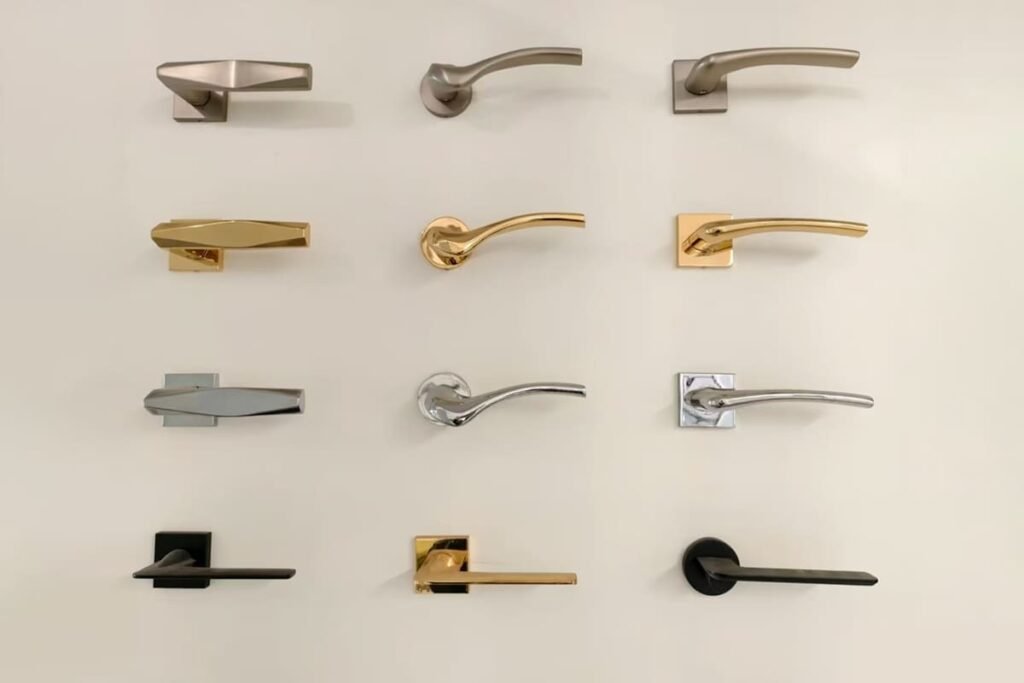
Surface finishes for door handles: powder coating, stainless steel, PVD, and more
Surface finishes for door handles are not just about color; they are risk-management choices tied to environment, base material, and warranty targets. Many returns I see come from mismatched combinations. The right finish strategy prevents corrosion, fading, and premature wear, while keeping procurement costs under control.
The best surface finishes for door handles depend on where the hardware will live, what base material you’re finishing, and how long you need it to look and function like new. Start with environment (indoor/coastal/outdoor UV), match the base (zinc/304/316/brass), and specify tests and warranty conditions. Powder coating, stainless 316, and PVD each fit different risk profiles.
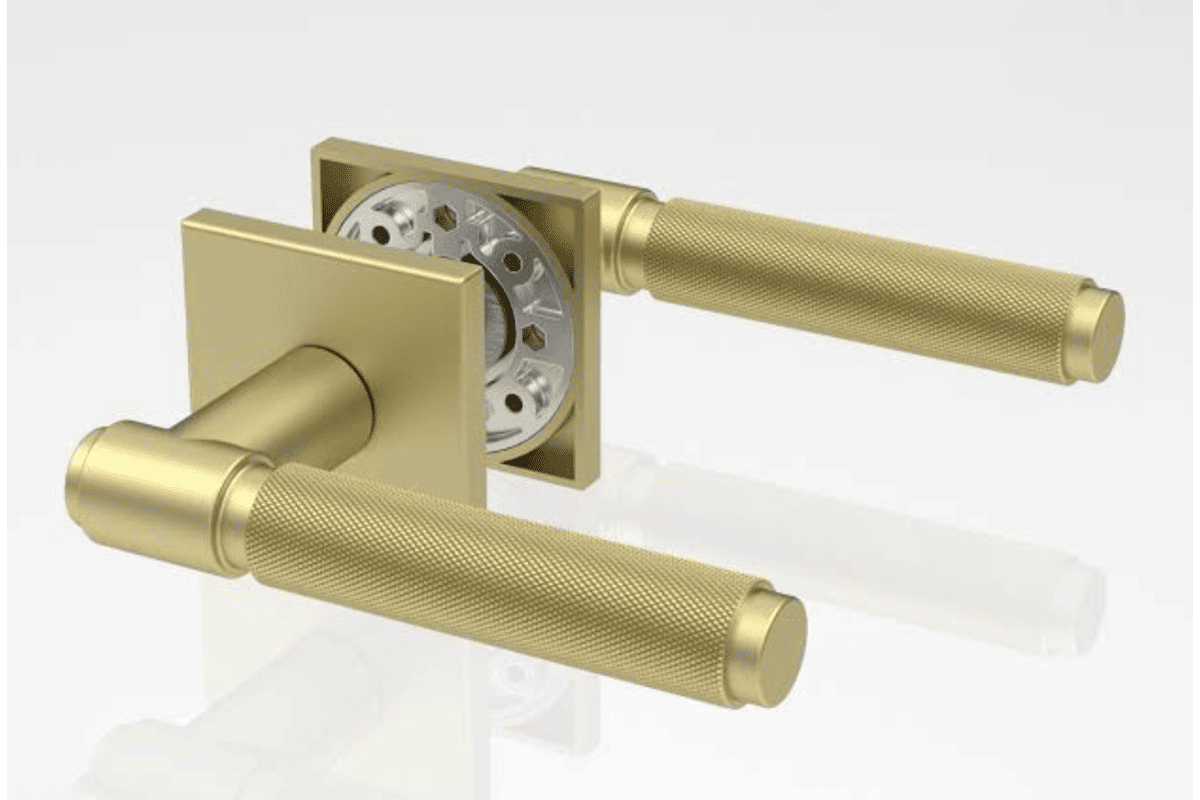
Most buyers start with a mood board and end up firefighting corrosion claims. I want you to flip that. Below, I’ll map the main finish systems to real-world risks, show the tests that actually control those risks, and give you “use when / avoid when” rules you can drop into your specification.
How should I choose surface finishes for door handles for real-world environments?
We all want attractive hardware. The problem is that salt, humidity, UV, and handling wear do not care about color. The risk is premature corrosion and fading. The solution is to choose surface finishes for door handles by asking three intake questions that map directly to risk and warranty.
The fastest way to choose surface finishes for door handles is to run a three‑question intake: 1) What is the environment exposure (indoor dry, coastal/poolside, outdoor UV)? 2) What is the base material (zinc alloy, 304 stainless, 316 stainless, brass)? 3) What is the target lifetime/warranty? Those answers drive the finish system, test method, and maintenance plan.
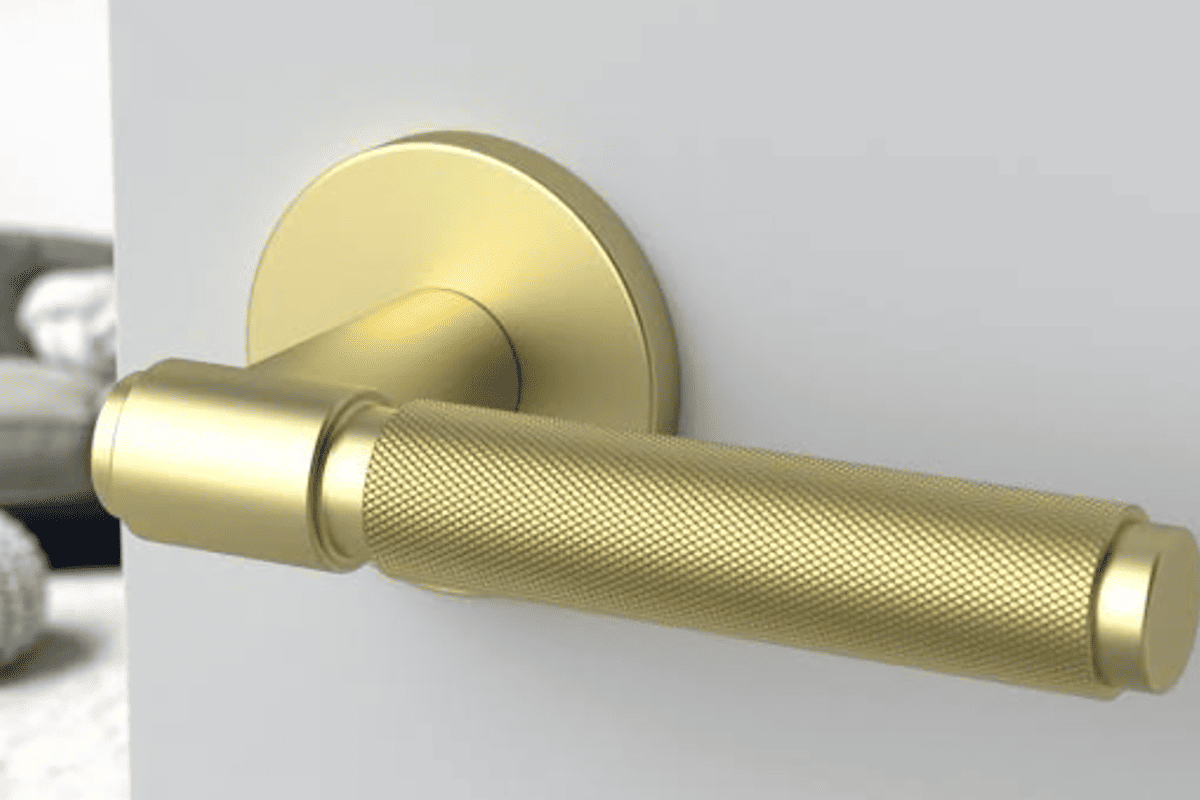
The 3-question intake that prevents finish failures
- Environment exposure:
- Indoor dry, climate‑controlled
- Outdoor, urban inland
- Coastal or poolside (chlorides)
- High UV exposure (sun‑drenched facades)
- Base material constraints:
- Zinc alloy (Zamak) for cost-sensitive builds
- Stainless 304 vs 316 (chloride resistance differs)
- Brass (decorative heritage, heavy, machinable)
- Target lifetime/warranty:
- 3–5 years typical residential/volume projects
- 5–10 years premium/hospitality
- Named maintenance conditions (wipe-down, rinse schedule)
Once you have these, treat finishes as systems:
- Powder coating is a polymer film applied over a pre-treated surface.1 It can be robust indoors if you specify proper pre-treatment and film build.
- Stainless is the base metal; corrosion resistance depends on the grade and the environment. 316 has better chloride resistance than 304 due to molybdenum content.2
- PVD is a vacuum-deposited coating applied on a base (often stainless).3 Durability depends on base grade, coating stack, and process controls. Avoid absolute promises.
A simple mapping I use with procurement teams:
| Scenario | Base | Finish system | Tests to name in spec | Maintenance | Use when | Avoid when |
|---|---|---|---|---|---|---|
| Indoor dry, cost-sensitive | Zinc alloy | High-quality powder coating, proper pre-treatment, 70–100 μm film | ISO 2409 adhesion, ISO 9227 NSS on test coupons with acceptance criteria, ISO 2813 gloss/color ΔE control | Damp wipe as needed | Volume apartments, offices | High-touch with abrasive cleaners |
| Coastal/poolside | 316 stainless | Brushed base metal or PVD dark tone | ASTM G85 (modified salt fog) or ISO 9227 with defined endpoints; surface roughness control | Freshwater rinse schedule | Resorts, seafront | Budget-only projects |
| Outdoor UV, inland | 304 stainless or zinc+UV-stable powder (polyester) | Brushed 304 or architectural-grade polyester powder | UV exposure test (ISO 16474-3)4, neutral salt spray with acceptance criteria | Mild detergent cleaning | Urban exteriors | Near chlorides |
Use when / avoid when:
- Use powder coat indoors when cost matters and you can control pre-treatment and film thickness. Avoid it on coastal exterior handles without strict process and UV criteria.
- Use 316 stainless near chlorides. Avoid 304 in seafront environments unless you accept higher maintenance.
- Use PVD on stainless for premium looks and added wear resistance. Avoid promising scratch-proof performance.
I learned these boundaries the hard way when a coastal hotel chose 304 brushed to save costs; returns started within 18 months with tea staining around grip zones.
Are powder coating surface finishes for door handles a good choice indoors?
Powder coating has a reputation problem because weak pre-treatment and thin films fail early. The risk is poor adhesion and color variation. The solution is to treat powder as a system: specify pre-treatment, film build, color tolerances, and verification tests.
Powder coating surface finishes for door handles are an excellent indoor, cost-efficient choice if you require proper pre-treatment (phosphating or zirconating), a 70–100 μm film build5, and adhesion/color QA. They are not a default for coastal exteriors unless you also specify UV-stable chemistry and robust corrosion testing with named methods.
How to make powder coating work, not fail
- Pre-treatment first:
- Clean/degrease → rinse → phosphating or zirconating conversion coating → deionized water rinse → dry
- Verify: conductivity of final rinse, titration records, and bath change logs
- Film build:
- Target 70–100 μm on grip areas; measure with dry film thickness gauge (per ISO 2808)
- Balance sharp edges to avoid low build
- Coating chemistry:
- Indoor: epoxy-polyester hybrids or polyester for better UV resistance if sunlight may hit
- Outdoor: architectural-grade polyester only, if you must deploy outdoors
- QA checkpoints:
- Adhesion: cross-cut per ISO 2409 (or ASTM D3359) on production parts
- Impact resistance: ASTM D2794 (document method and acceptance)
- Color consistency: ΔE tolerance against master panel (state instrument and illuminant)
- Corrosion screening: ISO 9227 NSS on coated coupons from the same line and pre-treatment, with acceptance criteria (e.g., no blistering, no red rust on scribed areas up to a defined creep)
Use when:
- Indoor dry environments where a 3–5 year warranty is targeted
- Color-critical series where batch-to-batch control is managed
- Zinc alloy bases where powder can mask minor casting micro-porosity after proper sealing
Avoid when:
- Coastal/poolside unless you accept intensive maintenance or upgrade to high-spec polyester plus sealed pre-treatment and stricter testing
- Projects that will use abrasive cleaners; specify cleaning agents in the maintenance document to protect the warranty
What I see in returns: 1) thin film on edges causing early wear, 2) inadequate pre-treatment resulting in underfilm corrosion from hand oils and cleaners, and 3) visible color shift between batches without a color standard. These disappear when procurement teams include pre-treatment records, film thickness ranges, and ΔE tolerances in the PO.
When should I specify stainless steel surface finishes for door handles (304 vs 316)?
“Stainless” sounds safe, but grade selection underestimates chloride attack. The risk is tea staining or pitting where 304 meets salt or pool chemicals. The solution is to specify 316 for chlorides, define surface finish, and set realistic cleaning expectations.
Specify stainless steel surface finishes for door handles based on chloride exposure. Use 316 stainless with brushed or bead-blasted finishes for coastal and poolside projects. Use 304 stainless for inland exteriors and interiors. Always define surface roughness and maintenance; smoother finishes resist tea staining better.6
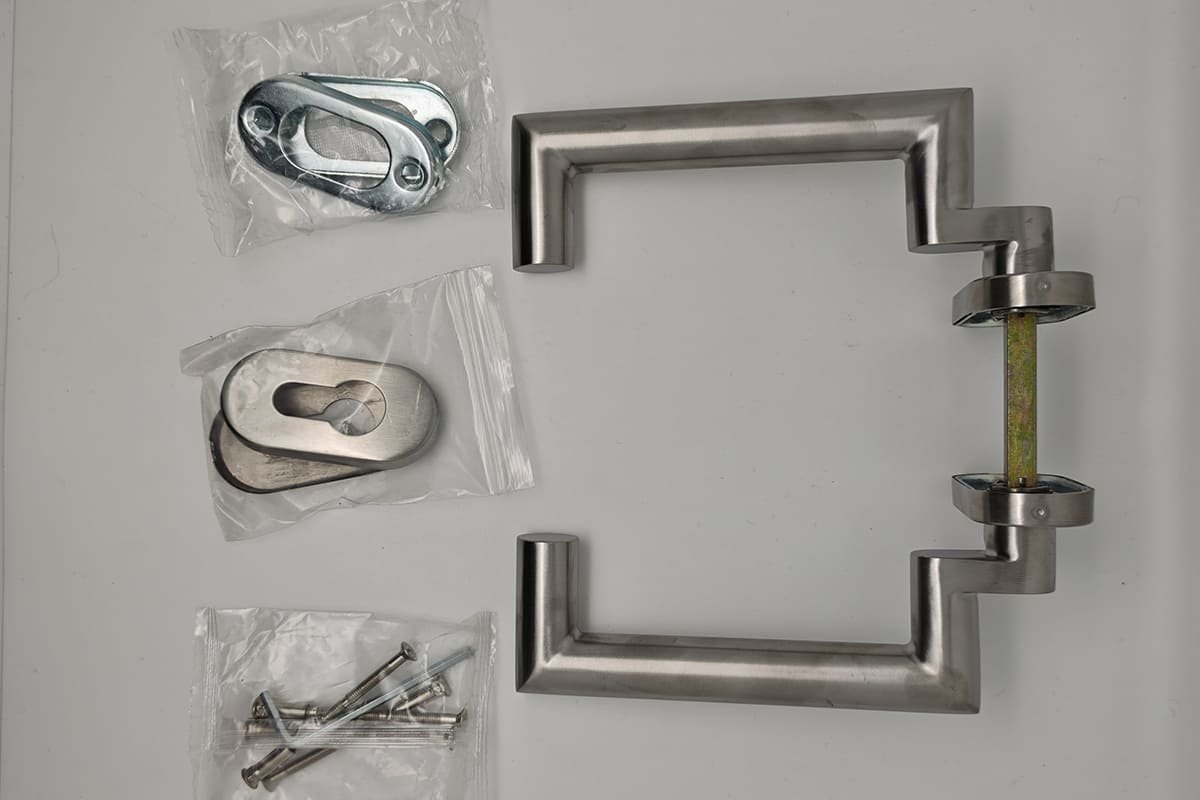
304 vs 316: where each grade wins
316 stainless:
- Contains molybdenum, increasing resistance to chlorides and reducing pitting
- Best near seaspray zones, coastal balconies, and pool decks
- Finish choice: brushed (e.g., 320–400 grit) or bead-blasted; avoid deep crevices that trap salts
- Maintenance: freshwater rinse schedule (weekly near direct exposure), mild detergent wipe
304 stainless:
- Robust in urban inland settings and interiors
- Cost-effective for exterior doors away from chlorides
- Finish choice: brushed or satin; mirror-polish can improve corrosion resistance but shows fingerprints
Verification and spec tips:
- State grade explicitly on drawings and POs (e.g., “Handle grip and rose: AISI 316”)
- Define surface finish parameters: roughness (Ra), grit, and directionality
- Reference appropriate corrosion tests by method, not just hours:
- ISO 9227 (NSS) for general screening on steel samples
- ASTM G85 (A1 acetic acid salt fog) used by some buyers to screen chloride sensitivity; match the test to the base and environment
- Do not conflate salt spray hours with field life; use them to compare process consistency, not to predict years in service7
- Set maintenance conditions in the warranty terms: freshwater rinse frequency, acceptable cleaners, and inspection intervals
Use when:
- You need 5–10-year appearance performance with defined maintenance in coastal or heavy-use public spaces (316)
- You want a low-maintenance exterior handle inland (304)
Avoid when:
- You cannot control maintenance near chlorides; in those cases, be cautious about any metallic surface and set conservative warranty terms
The most common claim I see is “stainless rusted” with photos of tea staining on 304 installed on ocean-facing facades. The fix is not a better polish alone; it is 316 plus rinse maintenance.
PVD can be misunderstood as a material. The risk is overpromising scratch or fade resistance regardless of base. The solution is to treat PVD as a coating system on stainless, specify the stack and color, and verify adhesion and corrosion performance.
PVD is a vacuum-deposited coating applied over stainless (often 304 or 316) that enhances color options and wear resistance for surface finishes for door handles. It is ideal for premium hospitality and coastal projects when paired with 316. Do not promise “never scratches.” Specify color, coating stack, and tests.
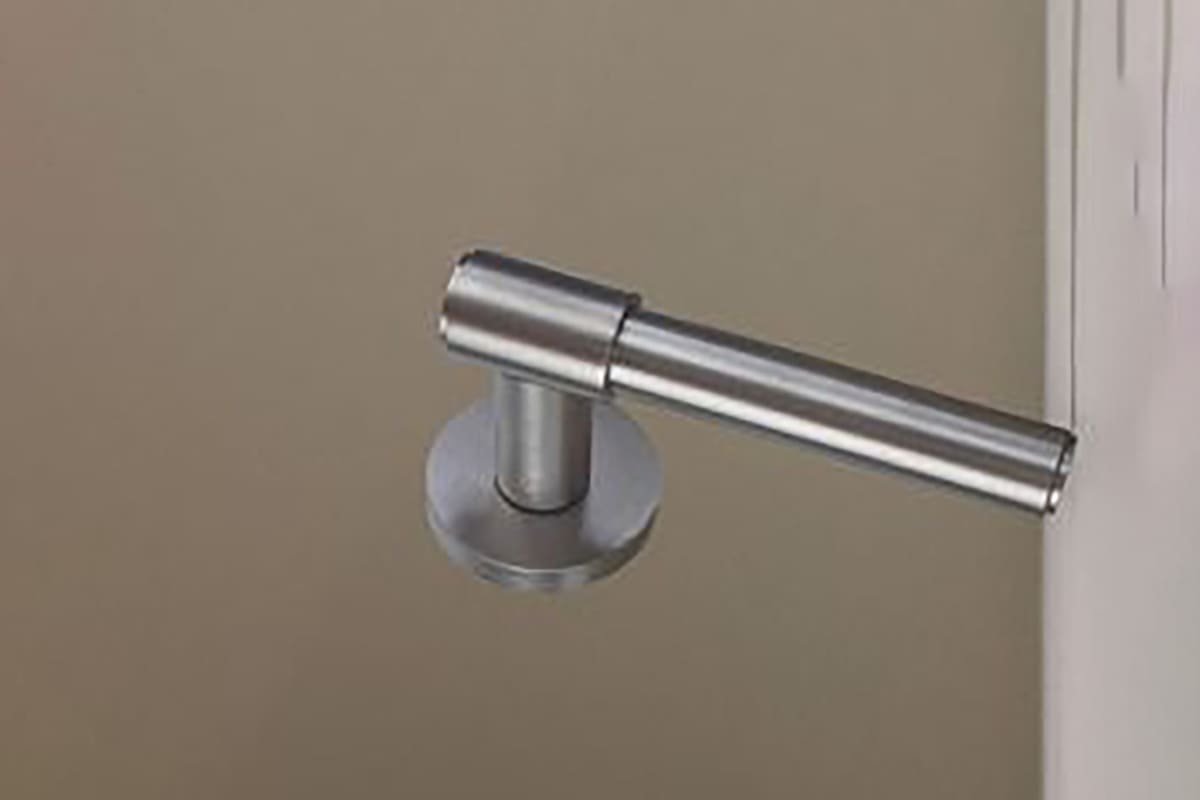
Making PVD a reliable premium finish
- Base first:
- Prefer 316 stainless for coastal/poolside; 304 can be used inland
- Surface prep: mirror or fine brushed before coating; cleanliness is critical
- Coating stack:
- Adhesion layer (e.g., chromium) + functional ceramic layer (e.g., TiN for gold, ZrN for champagne, TiCN/DLC for dark tones)
- Typical thickness is sub-micron to a few microns; document target and process repeatability8
- Color control:
- Define a master panel for each tone; record ΔE tolerances and gloss where applicable
- Tests to specify:
- Adhesion: Rockwell indentation or scratch test method (state method and acceptance)
- Corrosion screening: ISO 9227 on coated stainless coupons with acceptance criteria focused on pinhole/pore-related attack at scribe
- Wear/abrasion: a specified rub test or Taber abrasion method with defined load and cycles, if relevant to your use case
- UV stability: accelerated exposure referencing ISO 16474-3 for dark organic topcoats if used; note that many PVD ceramic colors are inherently stable, but mirrored substrates can show underlayer defects if the base corrodes
- Maintenance:
- Mild detergent only; no chloride cleaners or scouring pads
- For seafront hotels, schedule a freshwater rinse routine—PVD does not stop salt deposition on crevices
Use when:
- You need consistent premium tones (black, bronze, champagne) with stronger wear resistance than electroplated finishes9
- Coastal or poolside projects where 316 + PVD + maintenance will support a 5–10-year appearance target
Avoid when:
- The base is zinc alloy; PVD on zinc is atypical for handle grips and can pose adhesion challenges
- You must guarantee performance regardless of cleaning chemicals; PVD coatings can be damaged by harsh agents
Anecdotally, our dark PVD projects on 316 stainless in coastal resorts hold up well when the maintenance team sticks to a weekly freshwater rinse. Failures I’ve seen came from abrasive bathroom cleaners and missed rinse schedules facing the sea.
How do electroplated surface finishes for door handles compare to powder and PVD?
Electroplating offers beautiful metallic aesthetics on zinc alloy or brass. The risk is porosity and underfilm corrosion if the base or process is weak. The solution is to specify the plating stack, seal porosity, and name the right test for the base metal.
Electroplated surface finishes for door handles deliver crisp metallic looks on cost-effective bases, but they are sensitive to base quality and porosity.10 Specify multi-layer nickel plus chrome for corrosion resistance, define thicknesses, and use relevant tests (e.g., CASS for copper alloys) with clear acceptance criteria.
Plating stacks that perform
Common stacks:
- On zinc alloy (Zamak):
- Copper strike → semi-bright nickel → bright nickel → micro-porous nickel (optional) → chromium
- On brass:
- Nickel (multi-layer) → chromium, or nickel → PVD in select cases
Key controls:
- Base preparation:
- Polish to remove casting marks; seal micro-porosity where possible
- Cleanliness: activation and rinsing controls are critical
- Thickness:
- Define nickel and chrome thickness individually (use XRF for verification)
- Corrosion testing:
- For plated brass: CASS (ASTM B368) is often a relevant accelerated test11; always name the method and acceptance (e.g., no red corrosion, no blistering, limited creep from scribe)
- For zinc alloy: neutral salt spray per ISO 9227 (NSS) with acceptance criteria can be used on test panels; match to your warranty expectation and environment
- Aesthetics:
- Color tone and gloss control against master standards; manage micro-porous nickel for better corrosion resistance12 at the cost of slightly different reflectance
Use when:
- You want metallic chrome or satin nickel aesthetics for indoor applications on zinc or brass
- You target a 3–5-year indoor warranty with proper cleaning guidance
Avoid when:
- Coastal exterior applications; pore corrosion can undercut plating in chloride-rich environments
- Projects with aggressive cleaners; nickel/chrome layers can suffer under harsh chemicals
Most of the premature plating claims I handle trace back to two roots: porosity in the base plus thin nickel stacks, and cleaners with chloride bleaches in bathrooms. Both vanish when the stack and cleaners are written into the spec and the user guide.
How should I write specs, tests, and warranties for surface finishes for door handles?
Specs often say “color: black; finish: PVD/powder” and stop. The risk is disputes when corrosion or fading appears. The solution is to write finish as a system: base grade, finish process, verification tests with methods, acceptance criteria, and maintenance-linked warranty.
Write surface finishes for door handles specifications that tie appearance to performance: name the base grade (e.g., 316), the finish system (e.g., PVD dark bronze with defined stack), the test methods (e.g., ISO 9227, ISO 2409), the acceptance criteria, and the warranty term with maintenance conditions. This prevents ambiguous expectations.

The finish spec and warranty checklist
Include the following in your documents:
- Base material:
- “Handle lever and rose: 316 stainless steel” (or zinc alloy, or brass)
- If mixed: list which components use which base
- Finish system details:
- Powder: pre-treatment type, film build range (μm), chemistry (e.g., polyester), color code, gloss range
- PVD: base grade, color family (e.g., TiCN bronze), master color panel ID, coating stack description
- Electroplating: plating layers and minimum thicknesses, color tone
- Verification tests with conditions:
- Corrosion: name method (ISO 9227 NSS or ASTM G85 variant, CASS for copper alloys), sample type (coupons vs parts), acceptance (no blistering, creep at scribe ≤ X mm, no red rust)
- Adhesion: ISO 2409 or ASTM D3359 class rating
- Color: ΔE tolerance vs master (define instrument and illuminant)
- UV: ISO 16474-3 if relevant
- Warranty and maintenance:
- Warranty term (e.g., 5 years appearance for inland exterior; 3 years for coastal with maintenance)
- Maintenance conditions: freshwater rinse frequency for coastal installs; approved cleaners; inspection logs
- Exclusions: abrasive pads, chloride cleaners, unwashed seafront exposure
Sample clause you can adapt:
Base: AISI 316 stainless steel. Finish: PVD dark bronze, coating stack per supplier spec with master panel SDH‑PVD‑DBZ‑01. Verification: ISO 9227 (NSS), 35°C on coated stainless coupons; no blistering; no red corrosion; creep from scribe ≤ 2 mm after defined exposure. Adhesion: ISO 2409, classification 0–1. Warranty: 5 years on appearance subject to monthly freshwater rinse and non-chloride cleaning.
Tie each clause to your risk environment. If you lack internal lab capacity, ask your supplier to provide third‑party lab reports that match your exact method and acceptance, and verify the report references your ordered stack and base.
What does supplier capability mean for surface finishes for door handles?
Many failures are process, not product. The risk is buying a “finish name” without process depth. The solution is to audit supplier capability: in‑house lines, pre-treatment controls, testing equipment, and documentation.
Supplier capability for surface finishes for door handles means more than catalog pages. Look for in-house finishing or controlled sub-suppliers, documented pre-treatment, film thickness and adhesion checks, salt spray testing to named standards, and traceable batch records. Evaluate their ability to customize to your environment and warranty target.
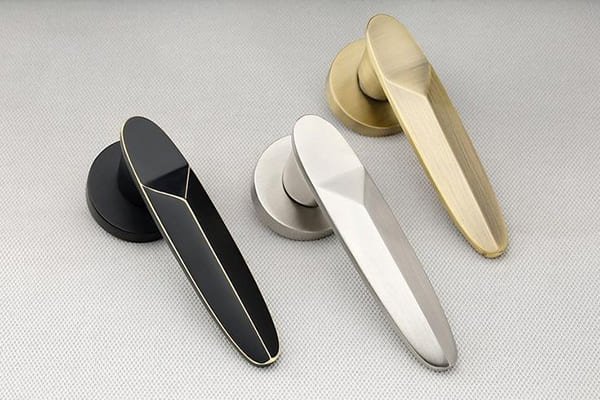
How I evaluate a finishing partner
- Process control:
- Can they describe their pre-treatment step-by-step and show bath maintenance logs?
- Do they measure film thickness on each batch and record it?
- What is their fixture design to ensure even coverage on complex handle shapes?
- Testing capability:
- Do they have access to ISO 9227 chambers, adhesion test kits, and color measurement?
- Can they run ASTM G85 variants or CASS when your base/finish needs it?
- Will they produce test coupons from the same line and base as your production?
- Documentation:
- Batch traveler with base material heat numbers, finish process parameters, test results
- Master color panel management and ΔE records
- Traceable corrective actions on any non-conformances
- Customization and services:
- Ability to match regional standards and provide CE and fire-rated documentation for the full hardware set (buyers should verify certificates)
- Willingness to co-develop specs for your environment and warranty term
At SDH Hardware, we run independent, complete production lines with advanced testing machines covering function research and final product testing. For key accounts, we regularly share pre-treatment audit snapshots, film thickness histograms, and adhesion classifications with shipments. That transparency reduces disputes and speeds approvals.
Use when:
- You need supplier-backed verification for bids and warranties
- You plan to scale a finish across product families and want batch color consistency
Avoid when:
- The supplier cannot name test methods, only “salt spray hours” without conditions
- The supplier treats PVD, powder, or plating as a color, not a system
Frequently Asked Questions
Is PVD better than electroplating for door handles?
It depends on your environment and warranty target. PVD on 304/316 stainless offers stronger wear resistance and premium colors, making it a good fit for hospitality and coastal projects. Electroplated nickel-chrome on zinc or brass delivers classic metallic looks for indoor applications at lower cost. Always specify tests and base.
Can I use 304 stainless near the coast?
You can, but you should expect tea staining and higher maintenance. For coastal or poolside installations, 316 stainless is the safer choice due to better chloride resistance. If you must use 304, set a more frequent rinse schedule and conservative warranty terms, and consider protective finishes.
How do I verify powder coating quality before mass orders?
Ask for pre-treatment details, target film thickness, and test results: ISO 2409 adhesion on parts, ISO 9227 NSS on line-matched coupons with clear acceptance criteria, and color ΔE versus your master panel. Inspect edge coverage and run a small pilot before full rollout to confirm adhesion and color stability.
What corrosion test should I put in my spec?
Name a method matched to your base and environment. For general screening, ISO 9227 (NSS) is common. For copper alloys/brass plating, CASS (ASTM B368) is relevant. Some projects use ASTM G85 variants to simulate acidic or chloride conditions. Pair the method with acceptance criteria; avoid “hours only.”
How do I avoid color mismatch across batches?
Use master color panels with defined ΔE tolerances, specify gloss range, and require spectrophotometer measurements under a standard illuminant. For PVD, lock down the color family and process parameters. For powder, state the exact powder code and lot control. Approve a pilot lot before mass production.
Conclusion
Choosing surface finishes for door handles is about managing environment, base material, and warranty targets—not just picking a color. Powder coating can be excellent indoors with the right pre-treatment and film build. Stainless 316 and PVD shine near chlorides with defined maintenance. Electroplating suits indoor metallic aesthetics. If you want help turning this logic into a testable spec, contact SDH Hardware for sample kits, method-based test reports, and finish recommendations tailored to your project.
"Powder Coat Applications Final Report - epa nepis", https://nepis.epa.gov/Exe/ZyPURL.cgi?Dockey=P10120TC.TXT. Technical coating references describe powder coating as a polymer coating deposited onto a prepared substrate, with surface pretreatment commonly used to improve adhesion and corrosion resistance; this is a process-level statement rather than proof of any single installation’s durability. Evidence role: definition; source type: institution. Supports: A coating reference should define powder coating as a polymer coating process and describe pretreatment as part of the coating system.. Scope note: The support is general to powder coating processes and not specific to door handles. ↩
"Bibliography of literature on underground corrosion of ...", https://nvlpubs.nist.gov/nistpubs/Legacy/IR/nbsir81-2408.pdf. Materials references identify molybdenum in type 316 stainless steel as a factor that improves resistance to chloride-induced pitting relative to type 304, although this does not by itself guarantee corrosion-free service in all marine exposures. Evidence role: mechanism; source type: research. Supports: A neutral materials source should explain that molybdenum-bearing austenitic stainless steels such as 316 have improved resistance to chloride pitting compared with 304.. Scope note: The source will support the general metallurgical mechanism, not the performance of a specific door-handle product. ↩
"IN-SPACE FABRICATION OF THIN-FILM STRUCTURES ...", https://ntrs.nasa.gov/api/citations/19720009888/downloads/19720009888.pdf. Reference sources define physical vapor deposition as a vacuum-based method for depositing thin films onto a substrate, supporting the article’s distinction between PVD as a coating process and the underlying base material. Evidence role: definition; source type: encyclopedia. Supports: A neutral reference should define physical vapor deposition as a vacuum process for depositing thin films on a substrate.. ↩
"ISO 16474-3:2021 - Fluorescent UV lamps", https://www.iso.org/standard/76034.html. ISO 16474-3 specifies laboratory exposure using fluorescent UV lamps for assessing light-exposure effects on materials such as coatings, supporting its use as an accelerated UV screening reference rather than a direct measure of outdoor service life. Evidence role: definition; source type: institution. Supports: A standards source should describe ISO 16474-3 as specifying exposure to fluorescent UV lamps for laboratory light exposure testing.. Scope note: The method supports accelerated comparison and does not by itself establish field durability. ↩
"Surface Pretreatment Based On Dilute Hexafluorozirconic ...", https://www.waru.edu/sites/default/files/Migrated/CopDocuments/Surface%20Pretreatment%20Based%20On%20Dilute%20Hexafluorozirconic%20Acid.pdf. Powder-coating technical specifications commonly require substrate pretreatment and controlled dry-film thickness to achieve adhesion and corrosion resistance; the cited 70–100 μm range should be treated as a practical specification target rather than a universal requirement. Evidence role: general_support; source type: institution. Supports: A powder-coating specification or technical standard should support the use of conversion pretreatments and controlled dry-film thickness ranges for durable coating performance.. Scope note: Available standards may address architectural or industrial powder coating generally, not door handles specifically. ↩
"Understanding Corrosion - Chapter 4: Tea staining", https://worldstainless.org/media/press-releases/understanding-corrosion-chapter-4-tea-staining/. Stainless-steel corrosion guidance associates rougher surface finishes with increased retention of contaminants and greater tea-staining risk, while smoother finishes can reduce that susceptibility under comparable exposure conditions. Evidence role: mechanism; source type: institution. Supports: A stainless-steel technical source should explain that smoother surfaces reduce sites where salts and contaminants accumulate, lowering the likelihood of tea staining.. Scope note: This supports the surface-finish mechanism generally, not a quantified failure rate for door handles. ↩
"Standard Practice for Operating Salt Spray (Fog) Apparatus", https://store.astm.org/b0117-25.html. Corrosion-testing guidance treats neutral salt spray testing as an accelerated comparative method rather than a direct predictor of outdoor service life, so reported exposure hours should be interpreted as quality-control evidence rather than warranty duration. Evidence role: expert_consensus; source type: institution. Supports: A corrosion-testing authority should state that salt spray tests are accelerated comparative tests and are not reliable direct predictors of real-world service life.. Scope note: The support applies to accelerated corrosion testing generally and may not address door hardware specifically. ↩
"PVD for Decorative Applications: A Review - PMC - NIH", https://pmc.ncbi.nlm.nih.gov/articles/PMC10381906/. Materials-science literature commonly characterizes PVD films as thin coatings with thicknesses ranging from sub-micrometre values to several micrometres, supporting the article’s process-parameter framing rather than establishing an optimal thickness for door handles. Evidence role: general_support; source type: paper. Supports: A peer-reviewed coating paper should report typical thickness ranges for PVD thin films or coatings.. Scope note: The source is likely to address PVD coatings broadly rather than door-handle-specific decorative stacks. ↩
"PVD for Decorative Applications: A Review - PMC - NIH", https://pmc.ncbi.nlm.nih.gov/articles/PMC10381906/. Comparative coating studies report that certain PVD hard coatings can exhibit higher hardness and wear resistance than conventional decorative electroplated layers, although results depend on substrate, coating composition, thickness, and test method. Evidence role: general_support; source type: paper. Supports: A comparative coatings study should show that selected PVD coatings can have higher hardness or wear resistance than some electroplated decorative coatings.. Scope note: The evidence is contextual because it may not test the exact door-handle coating stack discussed in the article. ↩
"Electroplating and corrosion behavior of tin-zinc alloy - ADS", https://ui.adsabs.harvard.edu/abs/2002PhDT.......139W/abstract. Electroplating studies link substrate defects and coating porosity with pathways for localized corrosion and coating degradation, supporting the article’s caution that plated finishes depend strongly on base-metal preparation and coating quality. Evidence role: mechanism; source type: paper. Supports: A surface-engineering paper should show that porosity and substrate defects can compromise electroplated coating integrity and corrosion resistance.. Scope note: The evidence is general to electroplated systems and may not test door-handle geometries. ↩
"B368 Standard Test Method for Copper-Accelerated Acetic ...", https://store.astm.org/b0368-21.html. ASTM B368 defines the copper-accelerated acetic acid salt spray method, commonly cited for accelerated corrosion evaluation of nickel-chromium and related plated finishes; the test remains comparative and does not directly predict years of service. Evidence role: definition; source type: institution. Supports: A standards reference should identify ASTM B368 as the copper-accelerated acetic acid salt spray test used for corrosion testing of plated coatings or related metallic finishes.. Scope note: The standard supports test identity and general relevance, not a specific acceptance criterion. ↩
"Meeting high performance decorative chromium plating ...", https://www.academia.edu/10652091/Meeting_high_performance_decorative_chromium_plating_specifications_using_trivalent_chrome_plating_systems. Surface-finishing literature describes microporous nickel in decorative nickel-chromium systems as a means of distributing corrosion sites and improving corrosion performance, although effectiveness depends on coating thickness, pore density, and substrate preparation. Evidence role: mechanism; source type: paper. Supports: A plating study should explain how microporous nickel/chromium systems distribute corrosion current and improve corrosion resistance compared with less controlled pore structures.. Scope note: The support is technical and process-specific, not a guarantee for all plated door handles. ↩
