
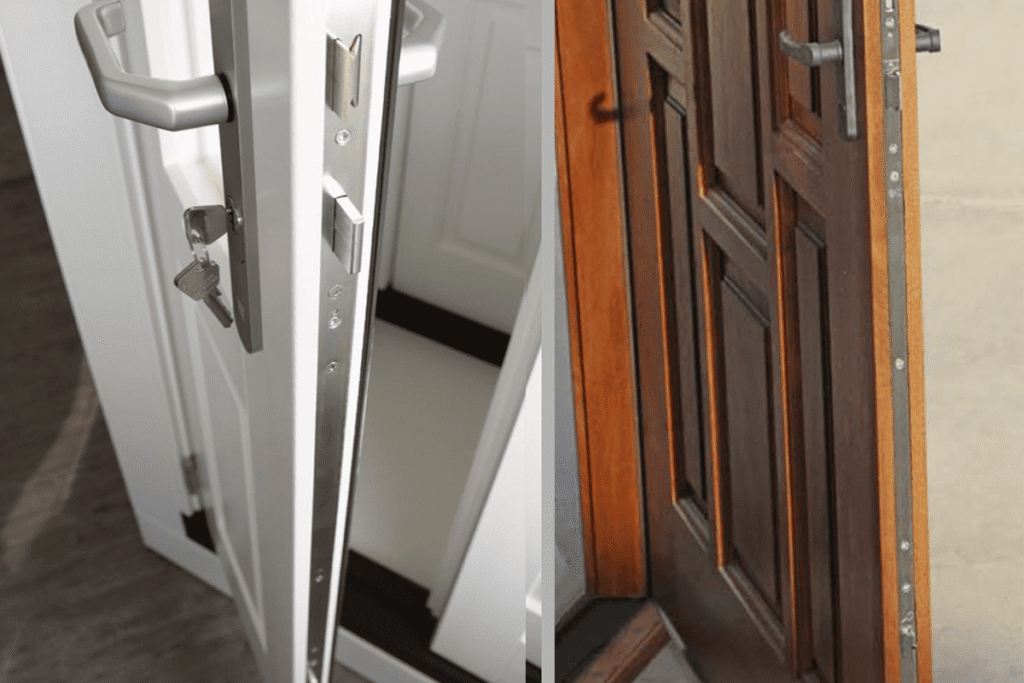
3 Point Locking System Guide: Automatic, Lift-to-Lock and Key-Operated Functions
A 3 point locking system can look simple on a drawing, but the wrong function can create daily complaints, installation delays, and poor user acceptance. Buyers often compare only the number of locking points. I recommend starting with the locking behavior, because the best solution must match the door type, user habit, and security requirement.
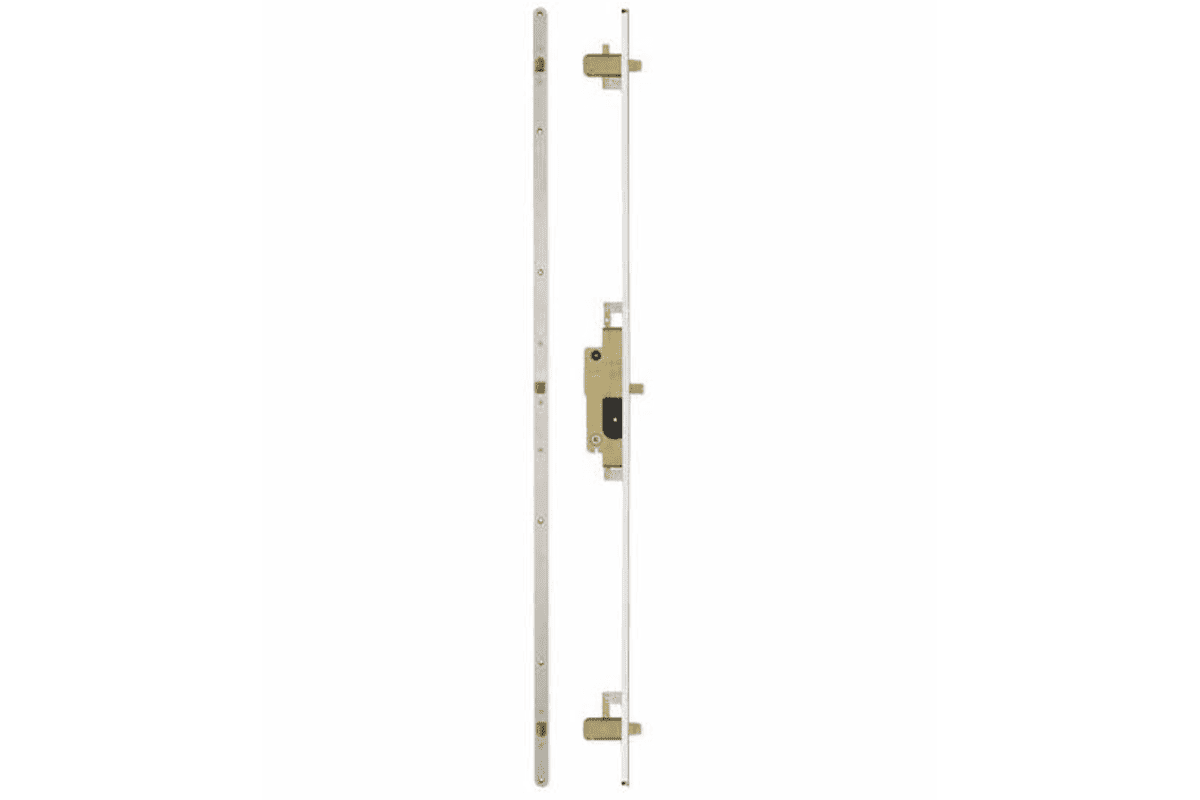
A 3 point locking system secures a door at three positions, usually the center, top, and bottom.1 Automatic types engage when the door closes, lift-to-lock types engage when the handle is lifted, and key-operated types engage only by turning the key. The right choice depends on convenience, access control, door structure, and market habits.
Many importers ask me which function is “best.” I usually answer with another question: who will operate the door every day, and will they lock it correctly every time? That question often leads to a better specification than a simple price or feature comparison.
What Is a 3 Point Locking System and How Does It Work?
A single-point lock can leave a tall door less stable under pressure, weather movement, or repeated daily use.2 This can create concerns for door factories and project buyers. A 3 point locking system solves part of this problem by connecting several locking positions through one lock body and operating mechanism.
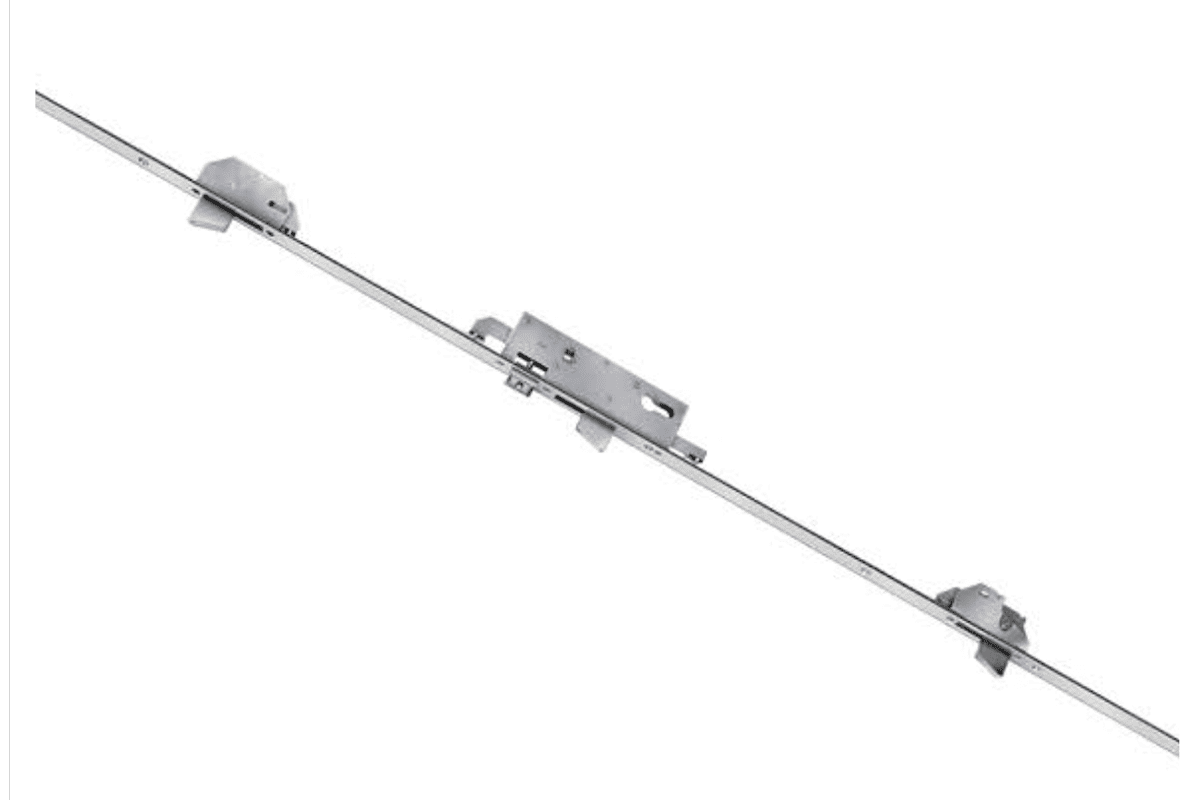
A 3 point locking system locks the door at three points, commonly at the central lock case plus upper and lower locking points. These points may be bolts, hooks, rollers, or shoot bolts.3 The operating method depends on the function: automatic engagement, handle lifting, or key operation.
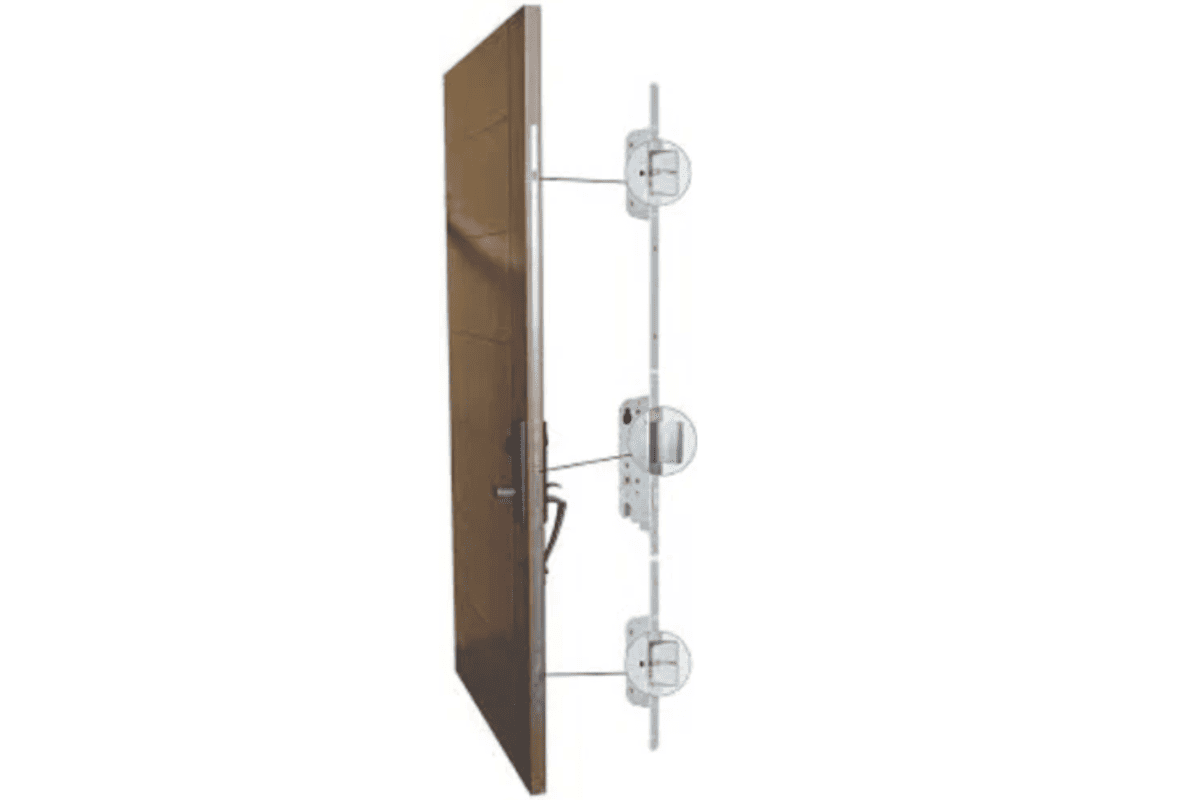
A 3 point locking system is not only “one lock with three bolts.” It is a coordinated locking mechanism. The center lock case, rods, extensions, strikers, cylinder, handles, and door preparation must all work together.
In my experience with door factories and hardware brands, many early inquiries start with a short message like, “Please quote 3 point lock.” That is never enough information. I usually need to confirm the door profile, door material, opening direction, backset, center distance, faceplate size, locking type, and market requirement before I can suggest a reliable configuration.
Main components buyers should check
A typical multipoint door lock includes several key parts:
- Main lock case: The central mechanism that controls latch and deadlocking.
- Upper and lower locking points: These secure the top and bottom areas.
- Connecting rods or gear system: These transfer movement from the lock case.
- Faceplate: The long metal plate visible on the door edge.
- Strikers or keeps: These receive the locking bolts on the frame.
- Cylinder: This controls key authority and deadlocking.
- Handle set: This may operate the latch only or also engage the locking points.
The important detail is not only the number of locking positions. Buyers should ask how those positions move.
Common locking point styles
Different projects may require different bolt designs. I often see these common options:
| Locking Point Type | Typical Use | Buyer Evaluation Point |
|---|---|---|
| Round bolts | Residential and commercial doors | Smooth extension and frame alignment |
| Hook bolts | Doors needing stronger pull-in effect | Compatibility with keep design |
| Roller cams | Sealing and compression adjustment | Useful for gasketed doors |
| Shoot bolts | Top and bottom engagement | Requires accurate door preparation |
| Mixed points | Higher functional flexibility | More careful installation needed |
A 3 point locking system can improve door compression, frame engagement, and perceived security. However, it does not automatically guarantee the same security level in every application. Door material, frame strength, cylinder quality, hinge quality, installation accuracy, and user behavior all matter.4
I always remind buyers that a good lock installed on a weak frame will not perform like the same lock installed on a properly reinforced door set.
For procurement teams, the practical decision starts with these questions:
- Will the user remember to operate the lock correctly?
- Does the door need automatic engagement after closing?
- Should the key control all locking points?
- Is the market familiar with handle lifting?
- Can the door factory prepare the profile accurately?
- Can the supplier provide drawings, samples, and inspection support?
These questions are more useful than asking whether one function is universally superior. A good 3 point locking system is the one that fits the door and the users.
How Does an Automatic 3 Point Locking System Work?
Some doors are often closed but not properly locked. This creates risk in apartments, offices, warehouse back doors, and shared access areas. An automatic 3 point locking system helps reduce that problem because the locking points engage when the door closes, without requiring the user to lift the handle.
An automatic 3 point locking system extends its locking points when the door is pulled or pushed shut.5 A trigger, latch, or release mechanism activates the upper and lower bolts. The key can usually be turned afterward to deadlock the mechanism and increase security control.
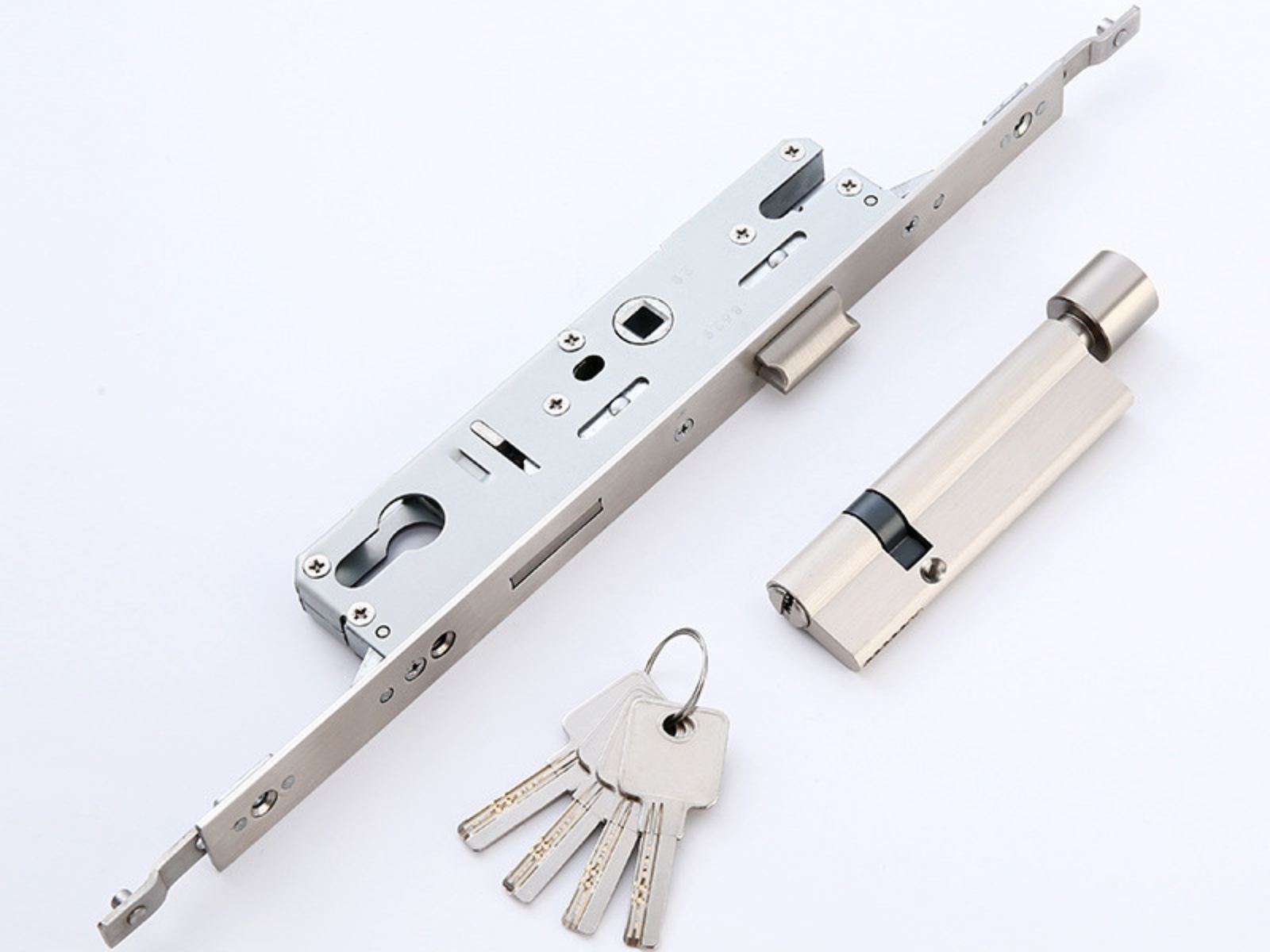
Automatic locking is popular when convenience matters. The user does not need to remember a second handle movement. For many projects, this is the main advantage.
I have discussed this function many times with importers supplying apartment doors and office doors. Their concern is usually simple: residents or staff close the door but forget to lock it. An automatic mechanism can help because the door engages the locking points immediately after closing.
How automatic locking usually operates
The exact design depends on the lock model, but the basic sequence is normally:
- The user closes the door.
- The trigger or latch contacts the frame keep.
- The internal mechanism releases the locking points.
- The upper, center, and lower points engage.
- The user may turn the key to deadlock the system.
This means automatic locking is not necessarily “keyless security.” The key still has an important role. In many systems, the automatic action provides engagement, while the key provides additional deadlocking or control.
Where automatic systems often fit
An automatic 3 point locking system can be suitable for:
- Apartment entrance doors
- Office doors
- Warehouse rear doors
- Staff access doors
- Doors where users need quick closing
- Projects where forgotten locking is a concern
However, automatic operation also requires careful evaluation. The door and frame must be aligned well. If the door sags, warps, or the striker position is wrong, automatic engagement may become unreliable.6 The closing force must also be acceptable for the end user.7
| Evaluation Item | Why It Matters |
|---|---|
| Door alignment | Poor alignment can stop automatic bolt release |
| Frame keep accuracy | The trigger must contact correctly |
| Closing force | Users may complain if the door is hard to close |
| Cylinder function | Key deadlocking behavior must be clear |
| Maintenance access | Projects need service-friendly components |
Procurement notes for automatic locking
I do not advise buyers to choose automatic locking only because it sounds advanced. I advise them to test it with the real door construction. A sample test on the buyer’s door profile is much more useful than a lock sample tested only by hand.
Door factories should check:
- Whether the lock fits the door thickness
- Whether the faceplate and gearbox match the profile
- Whether the keeps can be installed accurately
- Whether gasket pressure affects closing
- Whether the user can open the door smoothly from inside and outside
- Whether local market expectations support automatic locking behavior
Automatic systems can improve convenience. They can also reduce the chance of unlocked closed doors. Still, they should not be described as always safer than other functions. A poorly installed automatic lock can perform worse than a correctly installed lift-to-lock system.
For B2B buyers, the best next step is usually sample confirmation with drawings. I prefer to confirm dimensions before production, because small differences in center distance, backset, or faceplate width can create installation issues later.
When Should Buyers Choose a Lift-to-Lock 3 Point Locking System?
Some users prefer direct control. They want to feel the locking points engage before turning the key. A lift-to-lock 3 point locking system fits this habit well, but it can fail in practice if users do not understand that the handle must be lifted before key deadlocking.
A lift-to-lock 3 point locking system engages its upper and lower locking points when the user lifts the handle upward.8 After lifting, the user turns the key to deadlock the mechanism. This function is common in many European-style doors, shops, villas, and residential entrance applications.
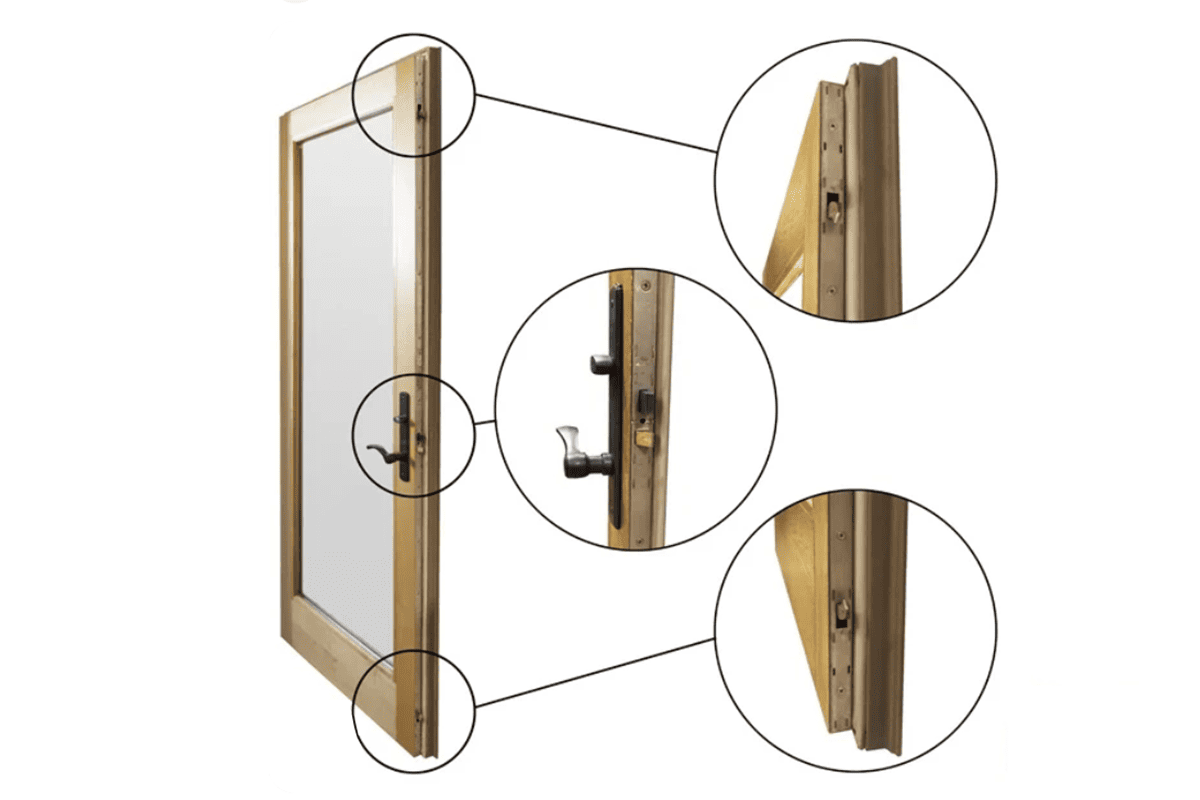
Lift-to-lock is one of the most familiar configurations in Europe.9 Many door manufacturers and hardware brands choose it because it offers a clear mechanical operation and works well with common lever handle habits.
In my daily quotation discussions, lift-to-lock often appears when buyers mention villas, shops, and European market doors. The operation is easy to explain: close the door, lift the handle, turn the key. This sequence is simple when users are trained or already familiar with it.
How lift-to-lock operation works
The normal operation is:
- The user closes the door.
- The user lifts the handle upward.
- The lifting movement extends all three locking points.
- The user turns the key to deadlock the lock.
- To open, the user unlocks by key and presses the handle down.
This gives the user a strong sense of mechanical engagement. The handle movement is not only for the latch. It also operates the multipoint locking mechanism.
Why many buyers choose lift-to-lock
Lift-to-lock systems are popular because they balance control, cost, familiarity, and mechanical simplicity. They are often suitable for:
- Shops
- Villas
- Residential entrance doors
- System doors in European markets
- Doors where users expect handle lifting
- Projects where visual or tactile confirmation matters
The main risk is user behavior. If the user closes the door but does not lift the handle, the full locking points may not engage.10 The door may be only latched, not fully locked. That is why market habit matters so much.
| Advantage | Limitation |
|---|---|
| Familiar in many European markets | Requires user action |
| Clear mechanical feedback | Incorrect use may leave lock unengaged |
| Works with many standard door designs | Needs handle and gearbox compatibility |
| Easy to explain to trained users | May not suit high-traffic shared doors |
| Good balance for many residential projects | Needs proper installation alignment |
Door factory evaluation points
Before selecting a lift-to-lock 3 point locking system, I suggest checking the full door set. The handle must have the correct strength and spindle compatibility. The lock case must match the required backset and center distance. The frame keeps must support smooth bolt movement.
Buyers should also confirm:
- Handle rotation angle
- Spring strength and return feeling
- Cylinder cam compatibility
- Deadbolt throw
- Faceplate length and width
- Upper and lower extension dimensions
- Keep plate adjustment range
Lift-to-lock systems often provide a good balance for door factories because the function is widely understood. However, the buyer should not assume every market accepts the same operation. In some regions, users may not know they must lift the handle. In that case, the importer may face after-sales complaints that are not caused by product defects.
I usually recommend adding clear user instructions for new markets. This can be done through packaging inserts, installation guides, or door manufacturer handover documents. A correct product still needs correct operation.
For procurement, lift-to-lock is a strong option when the project values mechanical control, market familiarity, and clear locking feedback.
Where Does a Key-Operated 3 Point Locking System Fit Best?
Some doors need stricter key authority. In these cases, convenience may be less important than controlled access. A key-operated 3 point locking system can fit this requirement because the handle does not engage the full locking points. The key controls the locking action.
A key-operated 3 point locking system extends and retracts all three locking points only when the key cylinder is turned. The handle normally controls the latch only. This function suits finance rooms, controlled internal doors, restricted areas, and applications where key permission must control locking.
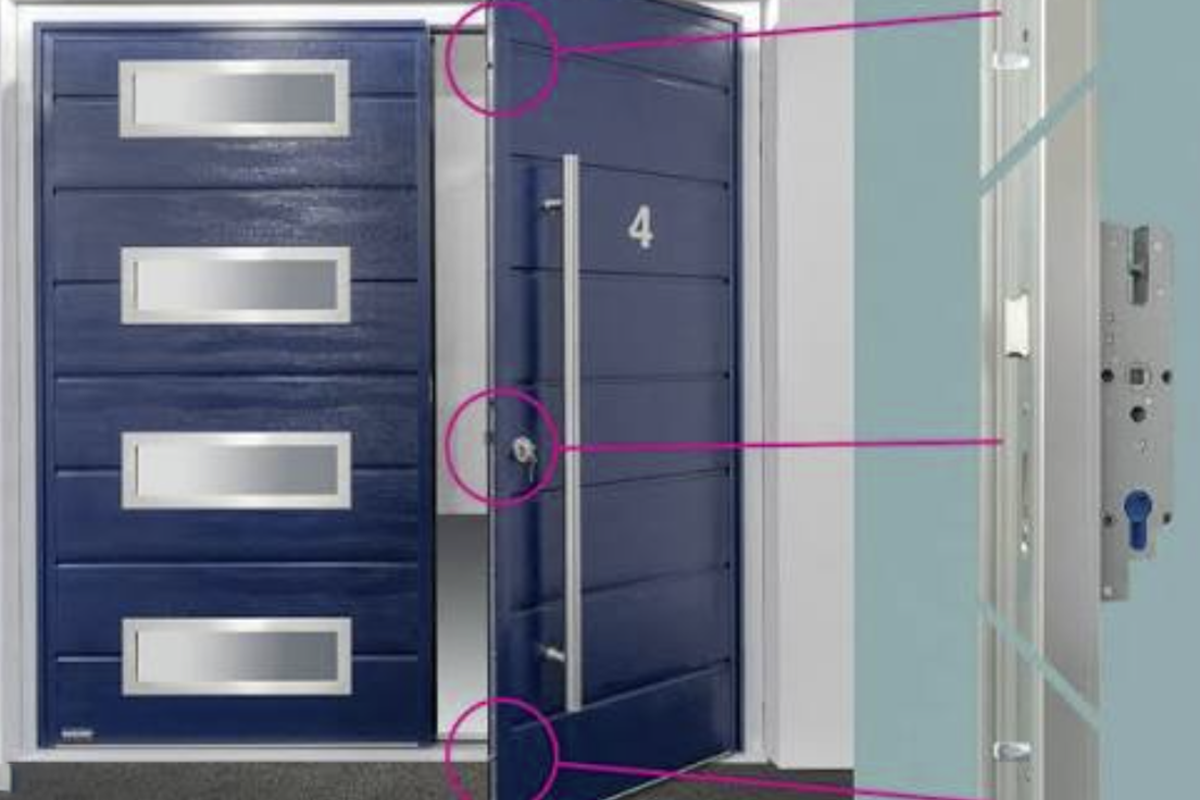
This function is sometimes misunderstood. Buyers may think key-operated means “more secure” in every case. I do not present it that way. I explain it as a different control logic. The key, not the handle or closing action, decides when the locking points move.
How key-operated locking works
The operation is usually:
- The handle retracts the latch for normal opening.
- The door closes with latch engagement.
- The user turns the key.
- The key movement drives the locking points.
- The same key action retracts the locking points before opening.
This creates a stricter habit. Only a person with the key can extend or retract the full locking mechanism. That can be useful for rooms where access must be controlled by authorized users.
Suitable applications
A key-operated 3 point locking system may be suitable for:
- Finance rooms
- Archive rooms
- Controlled internal doors
- Restricted staff areas
- Utility rooms with limited access
- Doors where handle-operated locking is not desired
This function can also make sense when the buyer wants to reduce accidental locking engagement. Since the locking points move only by key, the system depends less on handle lifting habits.
| Selection Factor | Key-Operated Function Impact |
|---|---|
| Access control | Strong key authority |
| Daily convenience | Lower than automatic operation |
| User training | Users must lock by key every time |
| Maintenance | Cylinder and gearbox quality are important |
| Application fit | Best for controlled or restricted doors |
Important buyer cautions
A key-operated system should not be selected only because it sounds stricter. If users are expected to lock and unlock the door many times per day, the key operation may become inconvenient. The cylinder and key system must also be evaluated carefully because they carry more operating responsibility.11
Door factories should confirm:
- Whether the key torque is acceptable
- Whether the cylinder quality fits the project level
- Whether the gearbox operates smoothly after installation
- Whether the door structure can support all locking points
- Whether the end user accepts key-only full locking
- Whether emergency exit or building code requirements apply
For certain applications, a key-operated 3 point locking system can be the right choice. For other applications, it may create slow operation or user frustration.
I once had a buyer ask for key-operated locks for all apartment doors because they believed key control was always safer. After discussing the user scenario, they realized tenants might not lock the door every time if the operation felt inconvenient. In that case, automatic or lift-to-lock functions were more realistic options depending on the market.
This is why I always return to the same selection principle: the lock must match how people actually behave. A function that is technically strong but rarely used correctly is not the best specification.
How Should Door Factories Compare 3 Point Locking System Suppliers?
A well-designed lock can still cause problems if the supplier cannot support drawings, samples, quality checks, and stable production. Procurement teams may focus on unit price first. I understand that pressure, but I believe a 3 point locking system supplier should be evaluated through function, manufacturing control, and project support.
Door factories should compare 3 point locking system suppliers by checking product drawings, sample performance, material consistency, surface treatment, test documentation, certificate availability, packaging, inspection process, and customization capability. Buyers should verify CE or fire-rated documents when required and conduct application-specific evaluation before mass orders.
Supplier selection is part of product performance. A multipoint lock has more coordination points than a simple latch lock. So, small production variations can create bigger installation problems.
At SDH Hardware, we often support B2B customers during the inquiry, sampling, and order confirmation stages. I usually treat this stage as a technical matching process rather than a simple quotation. The buyer needs a lock that fits the door, the market, and the production process.
What to confirm before ordering
Door factories and importers should prepare technical details before requesting prices. This saves time and reduces errors.
Useful information includes:
- Door material: steel, aluminum, wood, composite, or system door profile
- Door thickness
- Lock backset
- Center distance
- Faceplate width and length
- Handle direction and opening direction
- Cylinder type and length
- Required locking function
- Surface finish
- Packaging and branding requirement
- Target market standard
- Estimated order quantity
If the project requires certification, buyers should ask for documents and verify whether they apply to the exact product configuration. Certification documents can be important in procurement, but they should not be treated as a universal guarantee for every door set or installation condition.12
Manufacturing quality control points
A 3 point locking system depends on stable manufacturing. Buyers should look beyond the visible faceplate.
| Quality Area | What Buyers Should Check |
|---|---|
| Raw material | Steel grade, stainless steel option, brass cylinder material |
| Stamping and machining | Dimensional consistency and burr control |
| Gear movement | Smooth operation without abnormal friction |
| Surface treatment | Finish consistency and corrosion resistance expectation |
| Assembly | Stable spring, latch, bolt, and rod coordination |
| Final inspection | Function test, appearance check, packaging check |
| Documentation | Drawings, installation guide, inspection support |
For OEM and ODM projects, buyers should also confirm whether the supplier can adjust specifications. This may include:
- Custom faceplate dimensions
- Special surface treatments
- Different locking point combinations
- Customer logo stamping or laser marking
- Custom color packaging
- Project-based drawings
- Accessory configuration changes
Why supplier communication matters
A supplier that understands the difference between automatic, lift-to-lock, and key-operated functions can help buyers avoid wrong specifications. This matters because many product issues begin before production. They begin when the buyer and supplier use the same term but mean different functions.
For example, one buyer may say “automatic lock” and mean auto-latching only. Another buyer may mean full automatic multipoint engagement. A clear supplier will confirm the operation sequence before quoting.
I recommend asking suppliers these practical questions:
- Can you explain the exact locking sequence?
- Can you provide a technical drawing before sample confirmation?
- Can you match the lock to my door profile?
- Can you support OEM packaging and logo requirements?
- What inspection steps do you use before shipment?
- Can you provide CE or fire-rated documents if required for verification?
- Can you advise which function fits my target market?
SDH Hardware manufactures architectural door hardware in China with independent factory operations and more than 10 years of production experience. We supply Euro mortise locks, stainless steel lever handles, butt hinges, concealed hinges, Euro brass cylinders, and door accessories. For multipoint locks, I prefer to start with technical confirmation because function matching is more important than simply quoting the cheapest model.
Frequently Asked Questions
Is an automatic 3 point locking system always better than lift-to-lock?
No. An automatic 3 point locking system is better when users need convenient engagement after closing. Lift-to-lock can be better when users expect handle-operated locking and want direct mechanical feedback. The right choice depends on door type, market habit, installation quality, and user behavior.
What is the main difference between lift-to-lock and key-operated functions?
Lift-to-lock systems extend the locking points when the user lifts the handle, then the key deadlocks the mechanism. Key-operated systems extend and retract the locking points only by turning the key. The handle usually controls only the latch in key-operated designs.
Can a 3 point locking system be used on fire-rated doors?
It may be possible, but buyers should verify the exact certification documents for the lock, door set, and application. Fire-rated performance depends on the complete tested assembly, not only one hardware item. I recommend professional evaluation for project-specific fire door requirements.
What information should I send before requesting a quotation?
You should send the door material, door thickness, backset, center distance, faceplate size, opening direction, locking function, cylinder requirement, finish, target market, and estimated quantity. Drawings or photos are very helpful. Better technical details usually lead to faster and more accurate quotations.
Why does user behavior matter when choosing a multipoint lock?
User behavior matters because the lock only performs correctly when people operate it as designed. A lift-to-lock system may stay only latched if users forget to lift the handle. A key-operated system may remain unlocked if users avoid using the key. Function choice should match real habits.
Conclusion
A 3 point locking system should be selected by operating behavior, not only by the number of locking points. Automatic locking supports convenience, lift-to-lock supports familiar handle-operated control, and key-operated locking supports stricter key authority. Each function has the right place. For door factories, brands, and importers, I recommend confirming the door structure, market habit, access-control need, and supplier support before ordering. If you need help matching a 3 point locking system to your door project, SDH Hardware can review your specifications and support OEM or ODM supply.
"What Is a Multipoint Locking System and Why It Matters for ...", https://grandentrydoors.com/blog/what-is-a-multipoint-locking-system-and-why-it-matters-for-exterior-doors/?srsltid=AYCX9vIyx4WZaMdb-XXTapvq7cM20yWhjZlMZ5lK33T5dx_iJXKLMLGp. A building-security or standards source defines multipoint locking as a door-locking arrangement that secures the leaf at several positions rather than only at the central latch, which supports the description of a three-point system as using central, upper, and lower locking locations. Evidence role: definition; source type: institution. Supports: A neutral building-security or standards-oriented source should confirm that multipoint door locks secure a door at multiple locations, commonly including central, upper, and lower locking points.. Scope note: The source may describe multipoint locking generally rather than this article's exact product configuration. ↩
"Chapter 4: Entrances, Doors, and Gates", https://www.access-board.gov/ada/guides/chapter-4-entrances-doors-and-gates/. Building-envelope and door-hardware literature notes that multiple locking or compression points distribute restraint along the height of a door leaf, providing contextual support for the claim that a tall door may be less stable when restrained only at one central point. Evidence role: mechanism; source type: research. Supports: A source should explain that distributing locking engagement across a door can improve resistance to movement, pressure, or deflection compared with relying on one central locking point.. Scope note: This would be contextual mechanical support, not proof that every single-point lock performs poorly in every installation. ↩
"Multipoint Lock Systems For Sale", https://www.allaboutdoors.com/Products/door-parts/Multipoint-Locks?srsltid=AYCX9vKCnGfY1w3YUMYuN1S0e7SNPWoqf4z5rXuk-jfV4ygvXK2C4UYJ. Technical door-hardware references describe multipoint locks as using varied engagement devices, including hook bolts, rollers or cams, and shoot bolts, supporting the article's classification of common locking-point styles. Evidence role: definition; source type: institution. Supports: A technical door-hardware source should identify common multipoint locking-point designs such as hooks, rollers, deadbolts, or shoot bolts.. Scope note: Terminology can vary by market and manufacturer, so the source may not use precisely the same naming set. ↩
"SECTION 087111 - DOOR HARDWARE (SCHEDULED BY ...", https://fpm.usc.edu/wp-content/uploads/2021/11/087102-USC-HSC-door-hardware-Guide-Specification_1.pdf. Public safety guidance on door security treats the lock, cylinder, frame, hinges, installation, and user operation as interacting parts of a door assembly, supporting the claim that a multipoint lock alone does not determine security performance. Evidence role: expert_consensus; source type: government. Supports: A public safety or building-security source should explain that door security depends on the lock, cylinder, frame, hinges, installation, and user practices rather than a lock alone.. Scope note: Such guidance supports the principle at an assembly level and may not test the exact three-point systems discussed in the article. ↩
"Multi-Point Locking", https://www.adamsrite.com/en/about/articles/multi-point-locking. Technical descriptions of automatic multipoint locks state that closing the door can trigger the projection of additional locking elements, supporting the article's explanation of automatic engagement on closing. Evidence role: mechanism; source type: other. Supports: A technical manual, patent description, or standards-oriented hardware reference should confirm that automatic multipoint locks can project locking elements after the door closes.. Scope note: Automatic multipoint designs vary, so the source may support the general mechanism rather than every model's exact sequence. ↩
"Door knob doesn't line up with strike plate on frame : r/DIY", https://www.reddit.com/r/DIY/comments/18pi4iq/door_knob_doesnt_line_up_with_strike_plate_on/. Door-inspection guidance identifies leaf alignment and correct strike engagement as necessary for reliable latching, supporting the article's statement that sagging, warping, or misplaced keeps can make automatic engagement unreliable. Evidence role: mechanism; source type: institution. Supports: A door-inspection or hardware source should explain that misalignment between the door leaf, latch or bolts, and strike/keep can impair proper latching or locking.. Scope note: The source may address latching and fire-door inspection generally rather than automatic three-point locks specifically. ↩
"Chapter 4: Entrances, Doors, and Gates", https://www.access-board.gov/ada/guides/chapter-4-entrances-doors-and-gates/. Accessibility guidance treats door operating force as a usability and compliance consideration, providing support for evaluating whether the closing or operating force of an automatic locking door is acceptable to users. Evidence role: general_support; source type: government. Supports: An accessibility or building-code source should show that door operating force is a recognized usability and compliance factor.. Scope note: Accessibility rules usually specify opening force or door operation limits and may not directly evaluate multipoint-lock closing force. ↩
"Multipoint door lock: how it works, lift handle and cylinder", https://www.1control.eu/blog/en/multipoint-door-lock. Door-hardware guidance describes lift-lever multipoint locks as systems in which raising the handle throws the additional locking points before the cylinder is used to secure the mechanism, supporting the article's description of lift-to-lock operation. Evidence role: mechanism; source type: institution. Supports: A door-hardware or security source should confirm that some multipoint locks require lifting the lever to throw the locking points before key locking.. Scope note: The source may describe common residential multipoint locks and may not cover all commercial or regional variants. ↩
"Lift-to-lock hardware is common in European made doors. ...", https://www.instagram.com/reel/DCawcJwqE8Y/?hl=en. European and UK door-security guidance commonly describes multipoint locks operated by lifting the handle before turning the key, providing contextual support for the article's statement that lift-to-lock operation is familiar in European-style doors. Evidence role: historical_context; source type: institution. Supports: A European security, housing, or door-hardware institution should indicate that lift-handle multipoint locks are common or familiar in European-style residential doors.. Scope note: This would support familiarity in documented European contexts, not quantify prevalence across every European country. ↩
"Multipoint Door Handles: Types, Sizes & Lift-to-Lock ...", https://www.suffolklatchcompany.com/blogs/news/understanding-multipoint-door-hardware?srsltid=AYCX9vI4FnS-rW_dQ9YUMR8M4MjA7bkICVUBRgwO9Cqud5VjMtG8lmTC. User guidance for lift-handle multipoint locks states that the handle must be raised to engage the locking points before key locking, supporting the article's warning that a closed door may remain only latched if the user omits this step. Evidence role: mechanism; source type: institution. Supports: A user-safety or door-hardware source should explain that some multipoint locks require lifting the handle to engage the locking points before the key can secure the door.. Scope note: The source applies to lift-handle multipoint mechanisms and not to automatic or key-driven variants. ↩
"EN 1303:2026 - Cylinders and Master-Key-Systems for ...", https://standards.iteh.ai/catalog/standards/cen/bff2e636-92e6-474b-a6e0-fa3f5c0ce3ec/en-1303-2026?srsltid=AYCX9vJGZ88r6gRf56Dqn6J_mQmEQgHs2dCKxLSsqfaHU7xAUtTF4NsR. Cylinder-lock standards such as EN 1303 classify cylinders by characteristics including durability, key-related security, and attack resistance, supporting the article's emphasis on evaluating the cylinder and key system in key-operated configurations. Evidence role: expert_consensus; source type: institution. Supports: A standards source should show that lock cylinders are evaluated for durability, key-related security, and attack resistance, supporting careful cylinder selection.. Scope note: A cylinder standard supports the importance of cylinder performance generally; it does not by itself prove suitability for a specific multipoint lock installation. ↩
"Important Tips for Specifying Fire Door Assemblies", https://steeldoor.org/tips-for-specifying-fire-door-assemblies/. Certification and conformity-assessment guidance treats approvals as limited to the product scope, intended use, tested configuration, and installation conditions stated in the documentation, supporting the article's caution that certificates are not universal guarantees. Evidence role: general_support; source type: institution. Supports: A certification, conformity-assessment, or fire-door source should explain that certificates have a defined scope and apply only to specified products, assemblies, uses, or installation conditions.. Scope note: The supporting source may address certification scope generally rather than multipoint locks specifically. ↩
