
Aluminum Door Hinges vs Stainless Steel Hinges: Material Selection Based on Engineering Performance
Aluminum door hinges vs stainless steel hinges is a decision that can affect door sagging, fire-rated compliance, after-sales risk, and project cost. Many buyers compare only the material name or unit price. That can lead to over-specification or failure. I prefer to evaluate hinge material through door weight, structure, usage frequency, and project requirements.
Aluminum door hinges vs stainless steel hinges should be selected by engineering conditions, not by a simple “better or worse” ranking. Stainless steel hinges are usually safer for heavy-duty and fire-rated doors, while aluminum alloy hinges can work well in suitable concealed hinge structures, aluminum profile doors, and controlled lower-load applications.
In our factory work at SDH Hardware, I see this choice from the production side, the inspection side, and the supplier-selection side. The best hinge material is the one that matches the door system, verified load requirement, certification need, and acceptable risk level.
Why is Aluminum Door Hinges vs Stainless Steel Hinges an engineering decision?
A hinge looks simple, but it carries repeated load every day. If buyers choose only by catalog appearance or price, small differences can become serious after installation. Door dropping, frame friction, screw loosening, and compliance disputes all start from the same problem: the hinge was not selected as an engineered component.
Aluminum door hinges vs stainless steel hinges is an engineering decision because hinge performance depends on door weight, hinge geometry, alloy grade, pin design, bearing structure, screw fixing, fire-rating requirements, and usage frequency1. The material matters, but it works together with structure and application conditions.

Material name is only the starting point
In procurement meetings, I often hear one simple question: “Is stainless steel stronger than aluminum?” The short answer is usually yes, if we compare common stainless steel with common aluminum alloy under similar dimensions2. But hinge selection is not a pure material science exam. A hinge is a mechanical assembly, and the final performance comes from several linked factors.
For example, a thin stainless steel hinge with weak knuckles and poor pin alignment may not perform better than a well-designed aluminum alloy concealed hinge in a suitable door system. At the same time, a decorative aluminum hinge should never be treated as a replacement for a tested stainless steel fire-rated hinge on a heavy project door.
I normally break the decision into five questions:
What is the actual door weight?
A 40 kg interior door and a 120 kg fire-rated door should not share the same selection logic.3How many hinges will carry the door?
Three hinges, four hinges, or concealed multi-axis hinges distribute load differently.What is the door material and frame system?
Timber doors, steel doors, aluminum profile doors, and fire-rated composite doors create different fixing conditions.What is the usage frequency?
A hotel room door, apartment entrance door, hospital corridor door, and warehouse door do not face the same cycle demand.Is fire-rated certification required?
If the project requires fire-rated performance, buyers should verify the relevant test documents, scope, and product configuration.
Typical performance factors buyers should compare
| Evaluation factor | Why it matters | Stainless steel hinge tendency | Aluminum alloy hinge tendency |
|---|---|---|---|
| Load-bearing strength | Prevents sagging and deformation | Strong choice for heavy doors | Depends heavily on alloy grade and structure |
| Fire-rated use | Requires verified tested configuration | Commonly preferred for fire doors | Must be verified case by case |
| Corrosion resistance | Affects outdoor or humid use | Good, especially with proper grade | Good in many profile systems with proper finish |
| Weight | Affects door system balance | Heavier | Lighter |
| Cost control | Affects project budget | Usually higher | Often cost-effective in suitable designs |
| Appearance matching | Important for aluminum systems | May need finish matching | Often integrates well with aluminum profiles |
The failure risk is not theoretical
From a factory-side view, hinge failure risk often appears in predictable ways:
- Door sagging after repeated opening and closing
- Pin wear or looseness in lower-quality hinge structures
- Knuckle deformation under excessive load
- Screw pull-out when the hinge is stronger than the fixing substrate
- Finish damage from poor surface treatment or mismatched environment
- Compliance rejection when fire-rated documents do not match the supplied hinge
This is why I avoid saying one material is always superior. Stainless steel gives a stronger safety margin in many demanding applications, but aluminum alloy can be the right solution when the hinge is engineered for the door system.
My practical rule is simple: I do not select hinges by material name first. I select by door condition first, then confirm material, structure, certification, and supplier process.
When do stainless steel hinges make more sense for heavy or fire-rated doors?
Heavy doors create a clear problem for buyers. If the hinge cannot hold shape under long-term load, the door may drop, rub, or fail inspection. The risk becomes higher when the door also needs fire-rated compliance. In these cases, saving a small amount on hinge material can create much larger project risk.
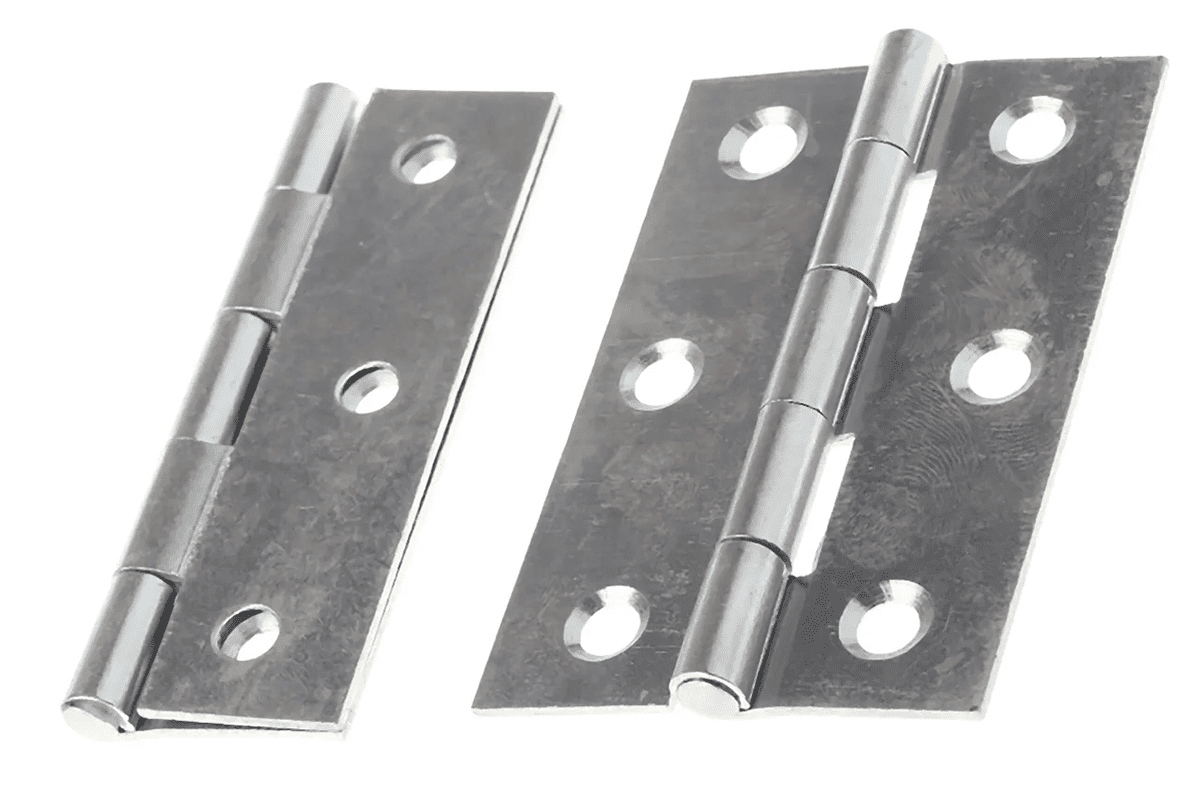
Stainless steel hinges usually make more sense for heavy or fire-rated doors because the selection priority shifts toward strength, dimensional stability, durability, verified certification, and long-term load performance. Buyers should confirm the exact hinge model, grade, thickness, fire-rating scope, and test documentation before approval.
Why heavy doors change the selection logic
A light interior door may forgive a marginal hinge choice. A heavy fire-rated door usually will not. The hinge must hold the door leaf in alignment while resisting repeated stress at the knuckle, pin, screw area, and mounting plate. Once the door begins to sag, the lock alignment, closer function, smoke seal, and latch engagement can also be affected.4
In our architectural hardware production and inspection work, I treat heavy-duty stainless steel hinges as a safer baseline for projects such as:
- Fire-rated timber doors
- Steel security doors
- Apartment entrance doors
- Hotel corridor doors
- Public building doors
- Commercial doors with door closers
- High-frequency doors in schools, hospitals, or office buildings
This does not mean every stainless steel hinge is automatically suitable. Buyers still need to check the detailed specification.
What buyers should verify on stainless steel hinges
| Item to verify | Why it matters |
|---|---|
| Stainless steel grade | Common options include 201, 304, and 316; environment and project requirements matter5 |
| Leaf thickness | Thicker leaves usually improve rigidity, but structure still matters |
| Hinge size | Height, width, and knuckle design affect load distribution |
| Pin design | Fixed pin, removable pin, ball bearing, or washer structure changes performance |
| Bearing structure | Ball bearing hinges can improve smoothness for heavier doors6 |
| Screw specification | The fixing screw must match the door and frame material7 |
| Fire-rated certificate | The certificate should match the exact hinge configuration and intended use |
| Production consistency | Batch quality matters as much as sample quality |
Fire-rated doors require document control
For fire-rated doors, I advise buyers to separate “material preference” from “compliance evidence.” Stainless steel is often preferred because of its strength and stability in demanding conditions.8 However, the real procurement question is whether the specific hinge model has suitable documentation for the intended door assembly.
Buyers should ask suppliers for:
- Fire-rated test reports or certification documents
- Model numbers and drawings linked to the certificate
- Material and thickness confirmation
- Installation instructions
- Scope of application
- Batch traceability or inspection records when required
At SDH Hardware, we can provide CE and fire-rated certification documents for relevant product lines, but I always suggest buyers verify that the documents match their market, door assembly, and project requirements. A fire-rated certificate is not just a marketing asset. It is a technical document that must fit the actual use.9
Stainless steel is not only about strength
Stainless steel hinges also offer other procurement advantages. They are familiar to many door manufacturers, inspectors, contractors, and brand buyers. This reduces approval friction. For high-risk projects, familiarity can be valuable.
Still, over-specification can happen. If a lightweight aluminum profile cabinet door uses an expensive heavy-duty stainless steel hinge without need, the buyer may increase cost, weight, and aesthetic mismatch. That is why I frame stainless steel as the safer choice for heavy and fire-rated doors, not as the universal answer for every door.
When can aluminum door hinges perform well in the right structure?
Aluminum alloy often suffers from a simple label: “weaker than stainless steel.” That statement can mislead buyers. If the hinge is poorly designed, aluminum alloy may deform. But if the alloy grade, hinge structure, and door system are aligned, aluminum can deliver reliable performance in the correct application.
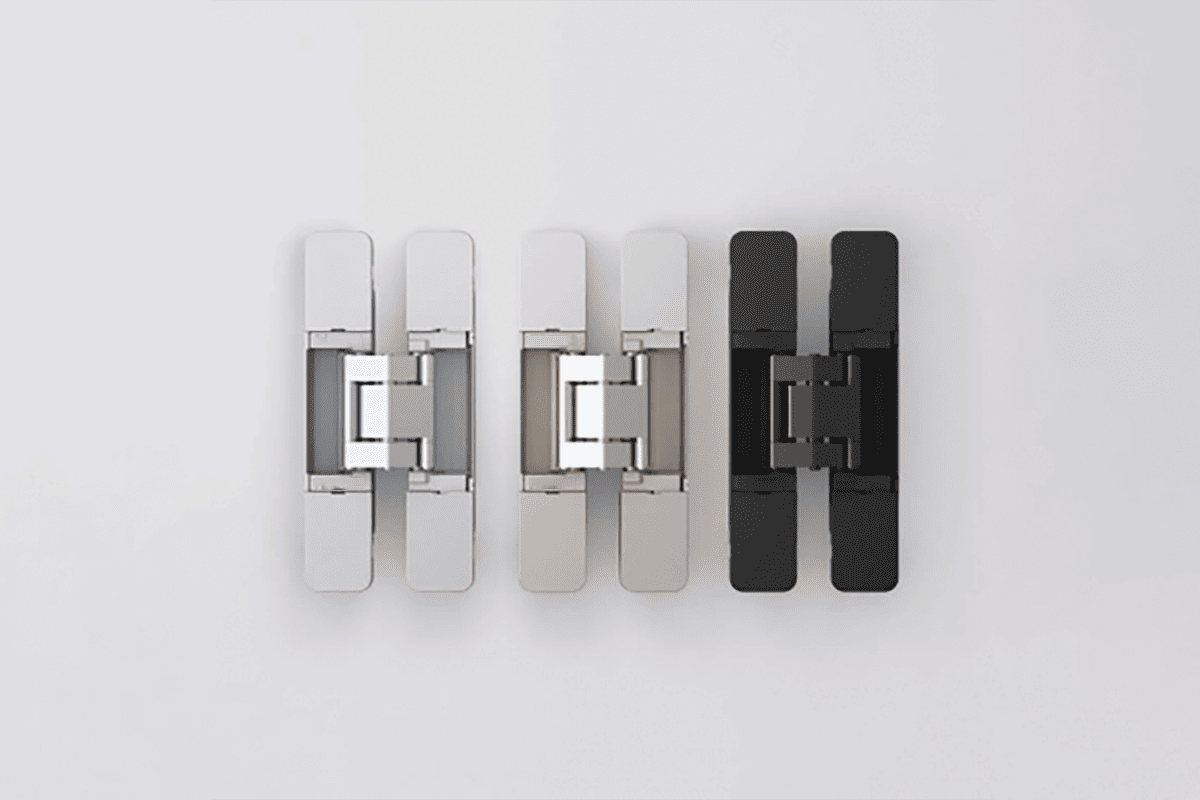
Aluminum door hinges can perform well when the alloy grade, hinge geometry, wall thickness, pivot structure, fixing method, surface treatment, and door weight are properly matched. They are common in aluminum profile doors, selected concealed hinge designs, and controlled lower-load applications where cost, weight, and appearance matter.
Aluminum alloy is not one material
One common procurement mistake is treating all aluminum alloy as the same. In reality, different grades and tempers behave differently10. A low-strength casting and a higher-strength 7-series aluminum alloy component should not be placed in the same category.
In some concealed hinge designs, 7-series aluminum alloy arms11 can be used in load-bearing applications, including designs rated by the supplier for 100 kg and above. Buyers should not treat that number as universal. The actual rating depends on the complete hinge design, test method, fixing condition, door size, and number of hinges used. The supplier should provide technical documents, drawings, and test references for verification.
Common aluminum hinge application scenarios
| Application scenario | Why aluminum may fit | Buyer caution |
|---|---|---|
| Aluminum profile doors | Material and finish match the door system | Check profile compatibility and fixing strength |
| Interior lightweight doors | Cost and weight can be optimized | Confirm door weight and usage frequency |
| Concealed hinges with engineered arms | Structure may provide strong load path | Verify alloy grade and tested load capacity |
| Lower-load concealed hinges | Cost-performance can be attractive | Avoid using on heavy or high-risk doors |
| Decorative or partition doors | Appearance and light weight matter | Do not use where fire-rating is required unless verified |
Concealed hinges change the material discussion
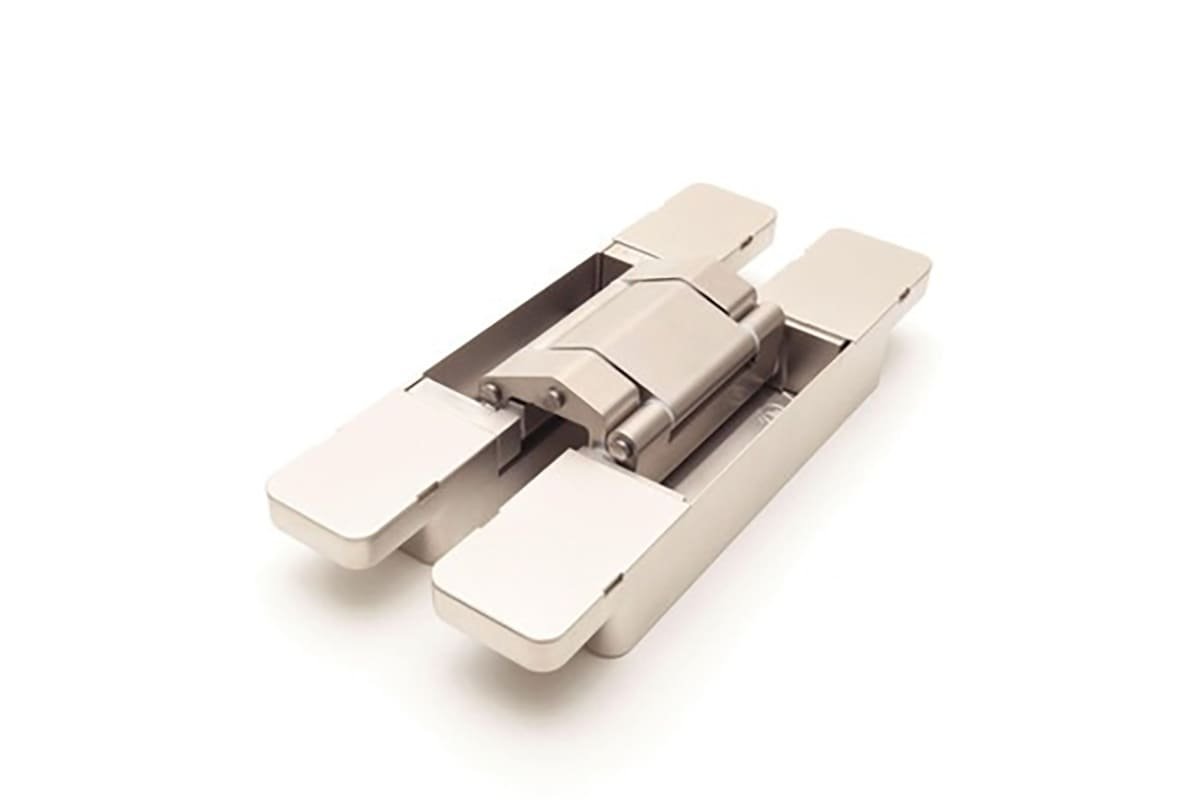
Concealed hinges are not the same as traditional butt hinges. Their load path can include arms, bodies, pivots, sliding parts, fixing plates, and adjustment screws. Because of that, one component may be aluminum alloy while another may be steel or stainless steel. The performance comes from the full assembly.
For example, a concealed hinge may use:
- Aluminum alloy body for cost and machining efficiency
- 7-series aluminum alloy arms for higher load-bearing requirements
- Steel or stainless steel pins for wear resistance
- Zinc alloy or steel adjustment components
- Surface treatment matched to interior design requirements
This mixed-material approach is not automatically good or bad. It is a design choice. Buyers should ask what each component does and why that material was selected.
Lower-load aluminum concealed hinges can be reasonable
Some lower-load concealed hinges use aluminum alloy bodies to reduce cost. I do not view this as wrong. In fact, it can be a sensible cost-performance decision when the application is controlled.
The key is to define the control conditions:
- Door weight stays within the supplier’s verified rating
- Door height and width do not create excessive leverage
- Usage frequency is moderate
- Installation quality is reliable
- The door is not fire-rated unless documents confirm suitability
- The buyer accepts the positioning as an interior or lower-risk product
This matters for importers and brand buyers. If your market has multiple product tiers, aluminum alloy concealed hinges may support a competitive mid-range line. But if the same hinge is later sold into high-frequency commercial doors, after-sales problems may appear.
Aluminum profile doors are a special case
Aluminum profile doors often use aluminum alloy hinges because the hinge material fits the door system. The reasons are practical:
- The hinge can match the profile finish
- The lower weight supports smooth operation
- The fixing design can integrate with the profile
- The appearance remains consistent
- The product positioning supports system-based supply
This is not a universal recommendation for all doors. It is a scenario-fit decision. If the door is large, exposed to high traffic, or required to meet fire-rated standards, buyers should move back to engineering verification.
How should buyers compare Aluminum Door Hinges vs Stainless Steel Hinges with suppliers?
Procurement teams often receive attractive catalogs and sample boxes. The challenge is that samples may look similar while performance differs greatly. Without a structured comparison, buyers may choose a hinge that passes visual inspection but fails in the actual door system.
Buyers should compare aluminum door hinges vs stainless steel hinges by using a supplier checklist covering door weight, application type, hinge structure, material grade, load rating, certification documents, factory inspection process, customization ability, and after-sales risk. The best supplier can explain both the product and its limits.
Start with the door, not the hinge
When a buyer asks me for hinge recommendations, I normally request basic project information before quoting. This saves time and prevents wrong selection. A good supplier should be willing to ask technical questions, not only offer the cheapest item.
Useful information includes:
Door type
Timber, steel, aluminum profile, fire-rated, acoustic, entrance, interior, or commercial.Door weight
Use actual or estimated weight. If possible, include door height and width.Opening frequency
Residential, hotel, school, hospital, office, retail, or industrial use.Required certificates
CE, fire-rated, market-specific compliance, or project-specific documentation.Finish requirement
Satin stainless steel, polished stainless steel, black, bronze, anodized, powder coated, or custom color.Branding and packaging needs
OEM logo, laser marking, stamping, color box, carton label, or full private-label supply.Target market and price level
Europe, Middle East, Southeast Asia, or another region may require different expectations.
Supplier comparison table
| Supplier evaluation point | Why it matters | What I suggest buyers request |
|---|---|---|
| Factory ownership | Reduces communication gaps | Factory profile, production photos, process list |
| Product range | Supports one-stop sourcing | Hinge, lock, handle, cylinder, and accessory catalog |
| Material control | Prevents hidden downgrading | Material declaration or incoming inspection process |
| Testing ability | Supports engineering selection | Load, cycle, function, and frame detection capability |
| Certification support | Helps project approval | CE/fire-rated documents for relevant products |
| Customization ability | Supports brand differentiation | Drawings, samples, logo, finish, packaging options |
| Final inspection | Reduces shipment risk | Inspection report after order completion |
| Technical honesty | Prevents misuse | Clear statement of product limits |
Factory-side quality control matters
At SDH Hardware, our production experience shapes how I evaluate hinge quality. We manufacture and supply architectural door hardware, including stainless steel hinges, concealed hinges, locks, handles, cylinders, and accessories. Our process focuses on raw material screening, production supervision, and finished product inspection.
For hinge buyers, I suggest paying attention to these quality points:
- Leaf flatness on stainless steel butt hinges
- Pin alignment and rotation smoothness
- Knuckle consistency and gap control
- Surface finish uniformity
- Screw hole accuracy
- Opening angle for concealed hinges
- Adjustment function where applicable
- Packaging protection for long-distance export
- Batch consistency between approval sample and mass production
A hinge can look acceptable in a photo but fail because of poor tolerance control. This is especially important for OEM and ODM buyers who need repeat orders. A brand cannot rebuild trust easily after a shipment creates installation complaints.
Avoid three procurement traps
Trap 1: Choosing stainless steel only because it sounds premium
Stainless steel is often the right choice for heavy-duty and fire-rated doors. But if the door system is lightweight aluminum profile, a suitable aluminum hinge may provide better appearance and system fit.
Trap 2: Choosing aluminum only because it reduces cost
Cost reduction is valid only when the door weight, usage, and risk level are aligned. A lower-cost hinge used in the wrong application can become expensive after installation.
Trap 3: Accepting certificates without checking scope
A certificate should match the exact product, material, size, configuration, and intended application.12 Buyers should verify documents with qualified professionals when project compliance is critical.
A practical selection matrix
| Door condition | Preferred direction | Reason |
|---|---|---|
| Heavy fire-rated door | Stainless steel hinge with verified fire-rated documents | Strength, stability, and compliance priority |
| Heavy non-fire-rated commercial door | Heavy-duty stainless steel or verified engineered concealed hinge | Load and cycle risk remain high |
| Aluminum profile door | Aluminum alloy hinge or system-specific hinge | Appearance and profile compatibility |
| Interior lightweight door | Aluminum alloy or stainless steel depending on product tier | Cost-performance balance |
| Premium concealed door system | Engineered concealed hinge, material verified by structure | Assembly design matters more than material name |
| High-humidity environment | Stainless steel grade selection or protected aluminum finish | Corrosion environment must be reviewed |
This matrix is not a replacement for project engineering. It is a procurement starting point. For application-specific decisions, especially fire-rated doors or public buildings, I recommend qualified technical evaluation.
Frequently Asked Questions
Are stainless steel hinges always better than aluminum door hinges?
No. Stainless steel hinges are usually safer for heavy-duty, high-frequency, and fire-rated doors, but aluminum door hinges can be suitable for aluminum profile doors, controlled interior applications, and engineered concealed hinge structures. The correct choice depends on door weight, certification needs, hinge design, and installation conditions.
Can aluminum alloy hinges be used for heavy doors?
Some engineered concealed hinges use higher-grade aluminum alloy components, such as 7-series aluminum alloy arms, in load-bearing designs. However, buyers should verify the complete hinge rating, structure, test method, fixing condition, and door size. Aluminum alloy should not be assumed suitable for heavy doors without technical proof.
Which hinge material is better for fire-rated doors?
Stainless steel hinges are generally the safer engineering choice for heavy fire-rated doors. Buyers should still verify the exact fire-rated certificate, model number, material specification, installation method, and scope of application. Fire-rated performance belongs to the tested door assembly, not only the material name.
Why do aluminum profile doors often use aluminum hinges?
Aluminum profile doors often use aluminum alloy hinges because the hinge can match the door system, finish, weight, and fixing structure. This is a scenario-fit choice. Buyers still need to check door size, load, usage frequency, and whether any fire-rated or project-specific documents are required.
What should I ask a hinge supplier before placing an OEM order?
You should ask for door weight recommendations, material grade, drawings, load or function test references, certification documents, finish options, packaging details, inspection process, and sample confirmation. For OEM orders, you should also confirm logo method, batch consistency, lead time, and after-sales responsibility.
Conclusion
Aluminum door hinges vs stainless steel hinges is not a simple contest between two materials. It is a selection process based on door weight, fire-rated requirements, hinge structure, alloy grade, usage frequency, cost position, and failure risk. Stainless steel is usually safer for heavy and fire-rated doors, while aluminum alloy can be effective in the right engineered structure or aluminum profile system. If you are sourcing hinges for a door project or hardware brand, contact SDH Hardware for factory-direct hinge selection, OEM/ODM support, and document-based product evaluation.
"Heavy vs Standard Weight Hinges: Commercial Spec Guide", https://www.doorwaysplus.com/blog/our-blog-1/heavy-weight-vs-standard-weight-hinges-the-specification-decision-that-gets-made-too-late-on-commercial-projects-205?srsltid=AYCX9vLYdBRe_vcxi-e6RMcdDoFBm_vxeHzAc7zw4gYI7uHYJRY-ZieJ. A door-hardware standard or technical guide describes hinge performance as a function of graded service conditions, including door mass, frequency of operation, hinge construction, and intended application. Evidence role: general_support; source type: institution. Supports: A neutral standard or technical reference should show that hinge selection and grading consider load, frequency of use, dimensions, bearings, and application conditions.. Scope note: Such sources support the general engineering approach, but they may not compare aluminum and stainless steel hinges directly. ↩
"Stainless Steel vs. Aluminum", https://www.unifiedalloys.com/blog/stainless-steel-vs-aluminum/. Representative materials-property data show that common stainless steels often have higher tensile and yield strengths than widely used aluminum alloys of comparable section size. Evidence role: general_support; source type: research. Supports: A materials database or engineering reference should provide representative tensile or yield strengths for common stainless steels and common aluminum alloys.. Scope note: This supports a general material comparison only; actual hinge capacity also depends on geometry, heat treatment, fasteners, and testing. ↩
"What Hinges Can Be Used on Fire-Rated Doors?", https://www.hingeoutlet.com/blogs/news/fire-door-hinges-what-hinges-can-be-used-on-fire-rated-doors?srsltid=AYCX9vJnFj-zunVKhsjtdt24dQpdRu-hzCLZLoiKf3VFoZNbv5BDwsXe. Hinge classification standards such as EN 1935 classify single-axis hinges by criteria including door mass, durability, and suitability for fire or smoke doors, supporting different selection logic for light interior doors and heavy fire-rated doors. Evidence role: general_support; source type: institution. Supports: A hinge or door-hardware standard should show that hinges are classified by door mass, durability, and suitability for fire or smoke doors.. Scope note: The source would support the principle of different selection criteria, not the article’s specific 40 kg and 120 kg examples as universal thresholds. ↩
"Top 5 Common Mistakes When Installing Commercial Fire ...", https://www.easterslock.com/top-5-common-mistakes-when-installing-commercial-fire-doors-and-how-to-avoid-them/. Fire-door inspection guidance treats alignment, self-closing action, latch engagement, and seal condition as related functional requirements, indicating that door misalignment can compromise multiple parts of the door assembly. Evidence role: mechanism; source type: institution. Supports: A fire-door inspection or maintenance source should explain that door alignment, latching, closer operation, and smoke seals are interdependent functional elements.. Scope note: This supports the mechanism in fire-door assemblies; effects on non-fire doors may vary by design. ↩
"What's the Difference? Type 304, 201 and 316 Stainless ...", https://indmetalstrap.com/whats-the-difference-type-304-201-and-316-stainless-steel-banding/. Stainless steel grade references distinguish 201, 304, and 316 by composition and corrosion resistance, with 316 generally offering improved resistance in chloride-containing environments because of molybdenum addition. Evidence role: general_support; source type: institution. Supports: A stainless steel industry or educational source should compare grade composition and corrosion resistance, especially the greater chloride resistance of 316 compared with 304.. Scope note: Grade data support material selection, but hinge performance also depends on manufacturing quality and installation environment. ↩
"The Superiority of Ball Bearing Door Hinges: An In-Depth ...", https://www.finsburyhardware.com/blogs/tips/the-superiority-of-ball-bearing-door-hinges-an-in-depth-analysis?srsltid=AYCX9vJqEXaDFfggLiEdnIE17vGBpc7EPOveIoTMgn3oCig_uLrzpuas. Mechanical-engineering references explain that rolling-element bearings reduce friction by replacing sliding contact with rolling contact, supporting the use of ball-bearing hinge designs to improve rotational smoothness under load. Evidence role: mechanism; source type: education. Supports: A mechanical-engineering source should explain that rolling-element bearings reduce friction compared with sliding contact, which can support smoother rotation under load.. Scope note: This supports the mechanical principle; actual smoothness depends on hinge design, lubrication, alignment, and manufacturing tolerances. ↩
"Biomechanical evaluation of the pullout strength of cervical ...", https://pubmed.ncbi.nlm.nih.gov/16306839/. Fastener-engineering literature shows that screw withdrawal and pull-out capacity depend on the screw geometry, embedment, and substrate material, supporting the need to match hinge screws to the door and frame construction. Evidence role: mechanism; source type: research. Supports: A structural or fastener-engineering source should show that screw holding capacity depends on screw type, embedment, and substrate material.. Scope note: The source would support the fastening principle; project-specific capacity still requires the actual door, frame, and screw specification. ↩
"Stainless steel", https://en.wikipedia.org/wiki/Stainless_steel. Materials-engineering references describe stainless steels as corrosion-resistant iron alloys with useful strength and durability characteristics, which helps explain their common use in demanding architectural hardware. Evidence role: general_support; source type: education. Supports: A university or materials reference should explain stainless steel’s strength, corrosion resistance, and dimensional stability characteristics relevant to demanding hardware.. Scope note: This is contextual support for material suitability, not proof that every stainless steel hinge is appropriate for every heavy or fire-rated door. ↩
"Doors, Windows and Related Hardware Application Guide", https://www.ul.com/thecodeauthority/knowledge/ul-fire-rated-doors-guide. Fire-door standards and certification schemes require hardware to be used within the scope of the listed or tested fire-door assembly, so a certificate is technical evidence tied to specific configurations and conditions of use. Evidence role: expert_consensus; source type: institution. Supports: A fire-safety standard or certification body should state that fire-door components must be listed, labeled, or used within the conditions of the tested assembly.. Scope note: Requirements differ by jurisdiction and certification scheme, so buyers still need to verify the applicable local standard. ↩
"Predicting the Yield Strength of Aluminum Alloys Based on ...", https://scholarsarchive.byu.edu/cgi/viewcontent.cgi?article=11977&context=etd. Aluminum alloy references identify both alloy designation and temper as determinants of mechanical properties, meaning different grades and heat-treatment states can behave substantially differently in service. Evidence role: definition; source type: institution. Supports: An aluminum standards or educational source should explain that alloy series and temper designations indicate differences in processing and mechanical properties.. Scope note: This supports the general materials distinction, not the suitability of any specific aluminum hinge model. ↩
"7000 Series High Strength Aluminum Alloys", https://www.aircraftaluminium.com/a/7000-series-high-strength-aluminum-alloys.html. Materials references describe 7xxx-series aluminum alloys as among the highest-strength aluminum alloy families, commonly used where high strength-to-weight performance is required. Evidence role: general_support; source type: education. Supports: A materials source should describe 7xxx aluminum alloys, especially 7075-type alloys, as high-strength aluminum alloys used in structural applications.. Scope note: This is contextual support for material capability and does not prove that a particular concealed hinge with 7-series aluminum arms is rated for a specific door weight. ↩
"General Use Products: Certification and Testing", https://www.cpsc.gov/Business--Manufacturing/Testing-Certification/General-Use-Products-Certification-and-Testing. Construction-product compliance frameworks generally tie declarations or certificates to defined product types, performance characteristics, and intended uses, supporting verification that documents match the exact hinge configuration being supplied. Evidence role: expert_consensus; source type: government. Supports: A regulatory or certification source should indicate that product declarations, listings, or certificates apply to defined product types, configurations, and intended uses.. Scope note: The specific documentary requirements vary by market, standard, and certification body. ↩
