
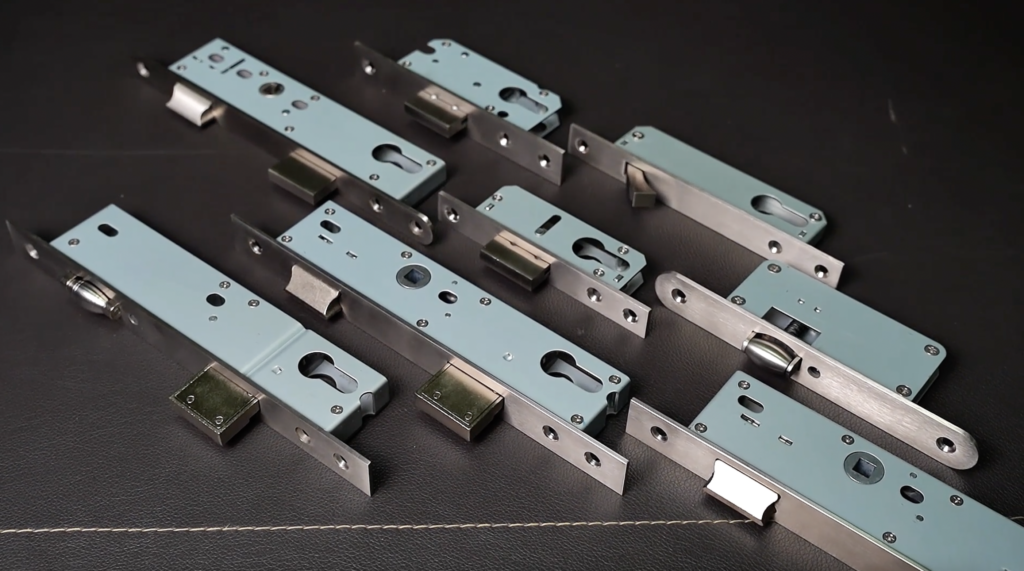
The Ultimate Guide to Choosing Mortise Lock Bodies for Aluminum Doors
Mortise lock bodies for aluminum doors can look simple in a catalog, but the wrong choice can create wrong holes, poor closing feel, handle mismatch, or full on-site rework. I have seen buyers focus on the common size first, then discover the aluminum profile cannot accept it. A better method starts with the door scenario, then verifies the profile space.
To choose mortise lock bodies for aluminum doors, I first define the door’s usage scenario, such as indoor use, two-way opening, bathroom privacy, high-frequency operation, cold-region sealing, or higher security. Then I verify the aluminum profile’s internal cavity, backset1, lock body width, thickness, forend width, and latch structure before confirming samples or bulk orders.
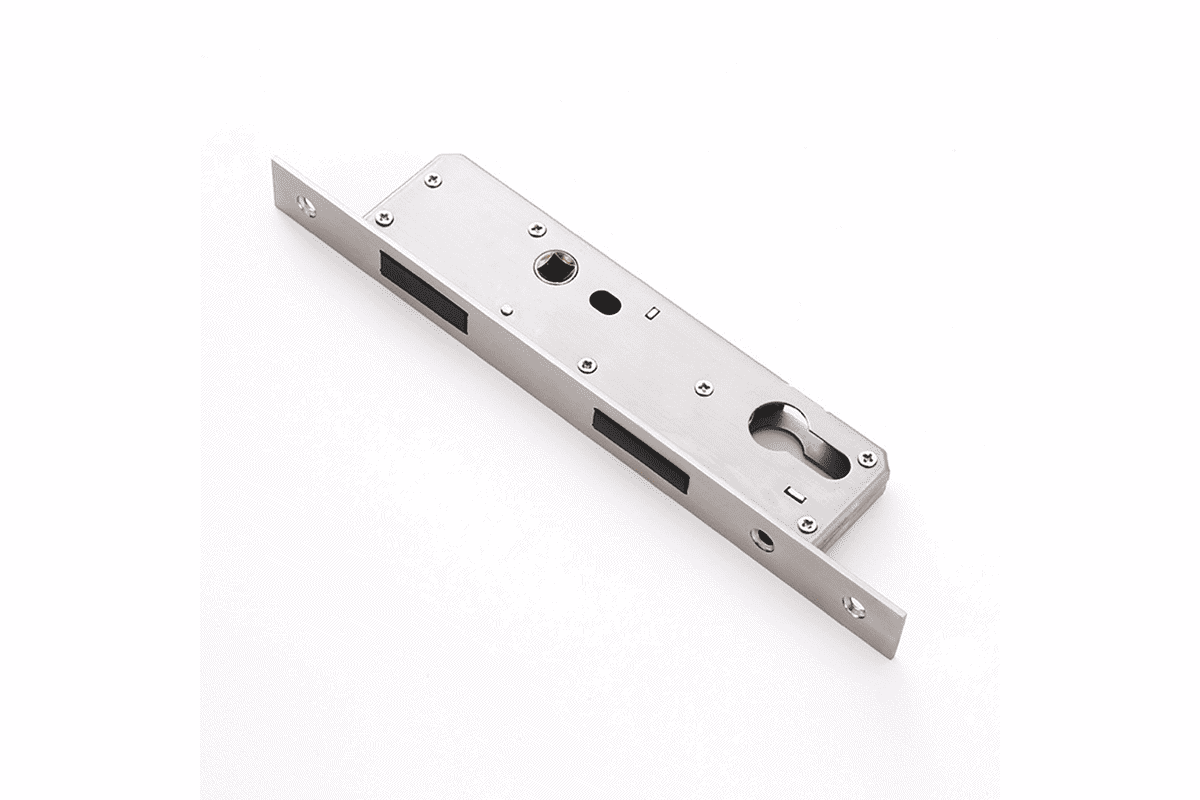
Many door factories already know the visible hardware style they want. However, the lock body works inside the aluminum profile, so invisible dimensions decide whether the product can be installed smoothly. I will explain the selection logic I use in factory-side communication with aluminum door manufacturers, wholesalers, and hardware brands.
How Should I Choose Mortise Lock Bodies for Aluminum Doors by Usage Scenario?
A lock body may fit on paper but still perform poorly if it does not match the door’s real use. This problem becomes worse in aluminum profile doors because the installation space is narrow. I always start with the scenario because the application decides the lock function before the drawing decides the size.
The best way to choose mortise lock bodies for aluminum doors is to identify the door scenario first. Indoor doors, bathroom doors, two-way opening doors, high-frequency doors, cold-region doors, and higher-security doors may need different lock structures, latch types, and locking points. Dimensions should be checked only after the function is clear.
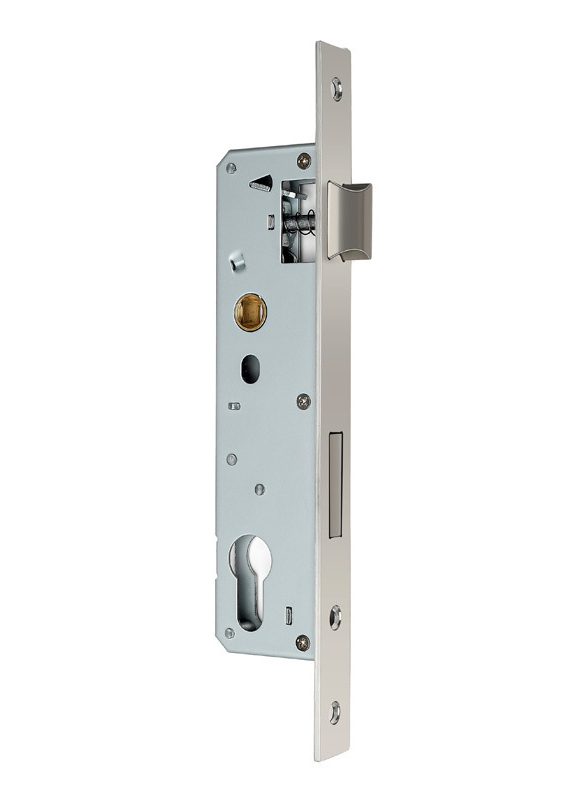
Why the usage scenario comes first
I usually ask buyers one simple question before I discuss backset or forend width:
“Where will this aluminum door be used, and how will people open and close it every day?”
This question saves time. A common lock body may work for a standard indoor aluminum profile door, but it may not work well for a bathroom door, a high-traffic office door, or a cold-region entrance door. If I skip the scenario, I may recommend a product that fits the profile but fails the user experience.
Common aluminum door scenarios
| Door scenario | Practical need | Suitable lock body direction | Main risk if chosen incorrectly |
|---|---|---|---|
| Indoor aluminum profile door | Normal daily use | Double-latch or double-bolt lock body, depending on project design | Over-specification or poor handle match |
| Two-way opening door | Smooth closing from both directions | Roller latch lock body | Friction, noise, difficult closing |
| High-frequency commercial door2 | Durable and smooth operation | Roller latch or structure designed for frequent use | Fast wear or poor closing feel |
| Bathroom aluminum door | Privacy and emergency access3 | Bathroom lock body | No emergency release or wrong privacy function |
| Cold-region door | Better sealing and stable locking | Narrow multi-point lock body, if profile supports it | Air leakage, weak engagement, poor sealing |
| Higher-security door | Anti-prying and locking stability | Narrow multi-point lock body or stronger lock structure | Low locking stability or weak security design |
Indoor aluminum profile doors
For many indoor aluminum profile doors, a double-latch or double-bolt lock body may be enough for normal use. This type is often selected when the door does not require special sealing, high anti-prying resistance, or complex privacy function.
However, I still avoid saying it is “standard for all indoor doors.” Aluminum systems vary. Some profiles have limited internal space. Some door factories use special handles, cylinders, or decorative trims. So I first confirm the function, then I ask for the profile section drawing.
Two-way opening and frequent-use doors
A roller latch lock body can be useful when the door needs smooth closing with less friction. I see this request often in applications where the door opens both ways or where users push and pull the door many times per day.
The roller helps reduce the hard impact that can happen with a standard latch. It can also improve the user experience in hotels, offices, showrooms, and commercial interiors. Still, the roller latch must match the door frame, strike plate, and closing force. A roller latch is not a magic upgrade. It is a scenario-based choice.
Bathroom aluminum doors
Bathroom doors need privacy, but they also need emergency access. I recommend choosing a bathroom lock body according to:
- The privacy turn design
- Emergency release requirement
- Handle and thumbturn compatibility
- Door thickness
- Local project standard
- User safety expectations
This selection is not only about locking. It is also about how a person can release the door from outside during an emergency.
Cold regions and higher-security doors
For cold regions or projects with higher security requirements, a narrow multi-point lock body4 may be a better choice. It can help improve sealing, locking stability, and anti-prying performance when it is correctly matched with the aluminum profile and frame system.
I treat this as a project decision, not a universal upgrade. Multi-point systems need more installation accuracy. They also need compatible keeps, rods, locking points, and profile space. If the door system cannot support the structure, the “upgrade” may create more problems than benefits.
Which Dimensions Matter Most When Selecting Mortise Lock Bodies for Aluminum Doors?
A buyer may confirm the visible lock size and still receive a lock body that cannot fit inside the aluminum profile. This is one of the most common mistakes I see in B2B inquiries. The door edge may look wide enough, but the inner cavity may be too small.
The most important dimensions for mortise lock bodies for aluminum doors are the internal profile cavity5, backset, total lock body width, lock body thickness, forend width, door thickness, and available installation depth. These parameters control fitting, hole position, handle alignment, cylinder compatibility, and rework risk.
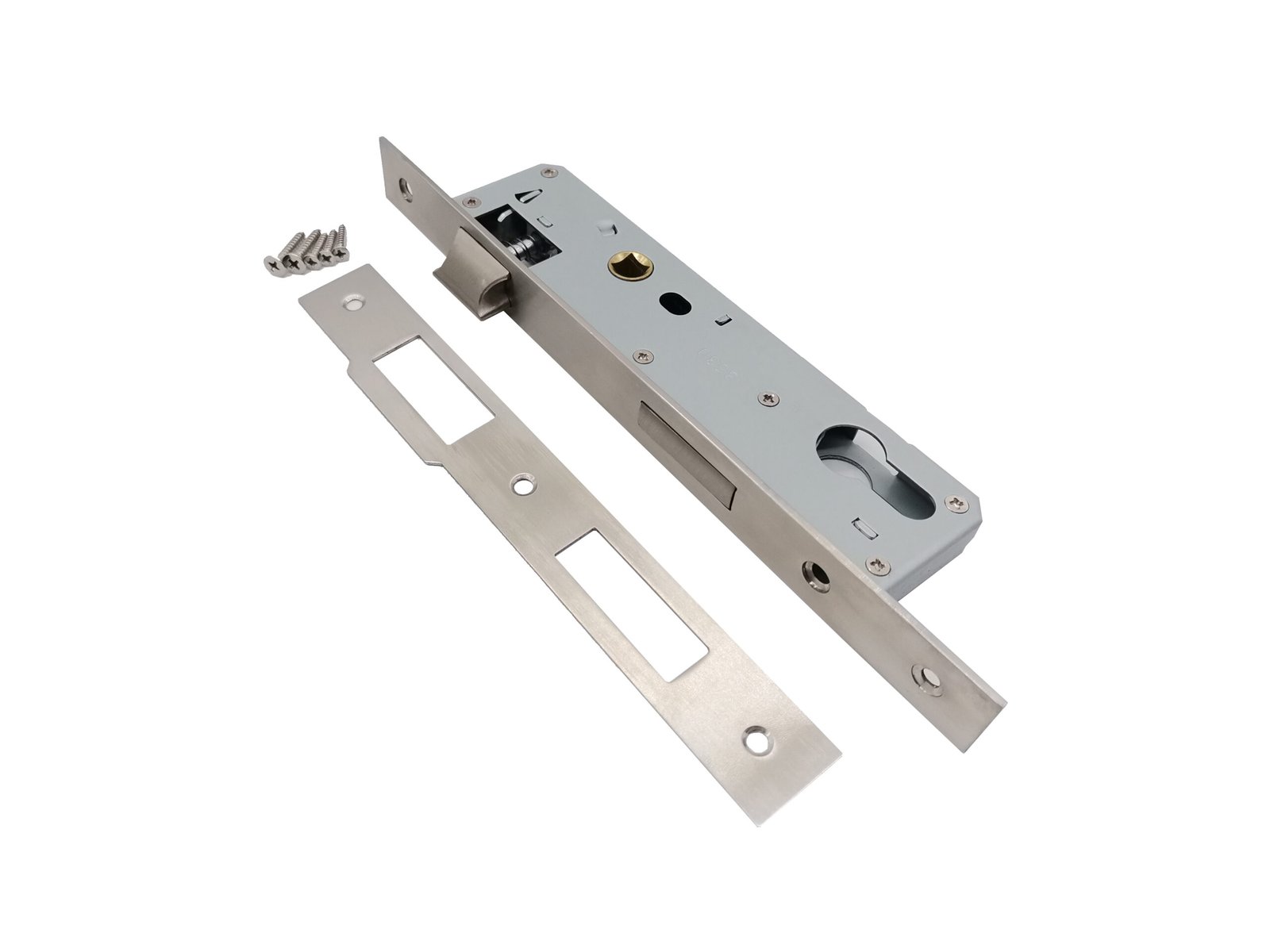
Start with the aluminum profile cavity
The lock body is installed inside the door profile, not on the catalog page. So I always ask for the aluminum profile cross-section drawing or at least the internal cavity size.
The internal space must accept:
- The lock body case width
- The lock body thickness
- The latch and bolt movement area
- The cylinder position
- The spindle position
- The screw fixing points
- Any reinforcing ribs inside the profile
If an internal rib blocks the lock body, the visible profile width will not matter. The installer may need to cut extra material, shift the lock position, or reject the hardware.
Backset is not just a catalog number
The backset is the distance from the front edge of the lock forend to the center of the handle spindle or cylinder, depending on the lock design. In aluminum doors, backset affects the drilling position and hardware alignment.
If the backset is wrong, the factory may face:
- Handle position too close to the door edge
- Cylinder not aligning with the escutcheon
- Lock body hitting the inner wall of the profile
- Pre-punched holes becoming unusable
- Door leaf needing rework before assembly
I have seen buyers treat backset as a small detail. In production, it is a major risk control point.
Lock body width and thickness
The total lock body width must be smaller than the usable internal cavity. The thickness must also match the profile’s available installation space. A lock body may be narrow in width but too thick for the profile.
This is especially important for aluminum profile doors because their internal structure is often more complex than wooden doors. A wooden door can sometimes be routed deeper. An aluminum profile door cannot always be modified without weakening the structure or damaging the finish.6
Door thickness and accessory compatibility
Door thickness affects the choice of:7
- Cylinder length
- Handle spindle length
- Screw length
- Escutcheon or rosette design
- Strike plate position
- Privacy turn spindle, if used
I usually ask for door thickness together with the profile drawing. These two pieces of information help prevent a common problem: the lock body fits, but the handle or cylinder accessories do not match.
Dimension checklist for procurement teams
| Parameter | What I check | Rework risk controlled |
|---|---|---|
| Internal cavity size | Space inside aluminum profile | Lock body cannot fit |
| Backset | Handle and cylinder center distance | Wrong drilling position |
| Total lock body width | Full case width | Collision with profile wall |
| Lock body thickness | Case depth and profile allowance | Installation interference |
| Forend width | Door edge/groove compatibility | Loose or uneven front plate |
| Door thickness | Accessory length | Handle/cylinder mismatch |
| Lock function | Latch, bolt, bathroom, roller, multi-point | Wrong user function |
Why I prefer drawings before samples
Samples are useful, but drawings reduce risk earlier. I usually prefer to check:
- Product drawing of the lock body
- Aluminum profile cross-section
- Door assembly drawing, if available
- Handle and cylinder drawing
- Required surface finish
- Project standard or market requirement
This process may feel slower at the beginning. However, it is faster than shipping samples that cannot be installed. For door factories and system companies, the best time to find a mismatch is before drilling, punching, or mass production.
How Do Backset, Lock Width, and Latch Type Affect Installation Risk?
Small parameter differences can become expensive when aluminum doors are already cut, drilled, or powder-coated. I have handled inquiries where the buyer only noticed the mismatch after trial assembly. At that stage, the issue was no longer a hardware issue. It became a production delay.
Backset, lock width, and latch type affect installation risk because they decide the hole position, internal fit, closing feel, and hardware compatibility. The wrong parameter can cause misaligned handles, poor latch engagement, profile interference, noisy closing, or rework on finished aluminum door leaves.
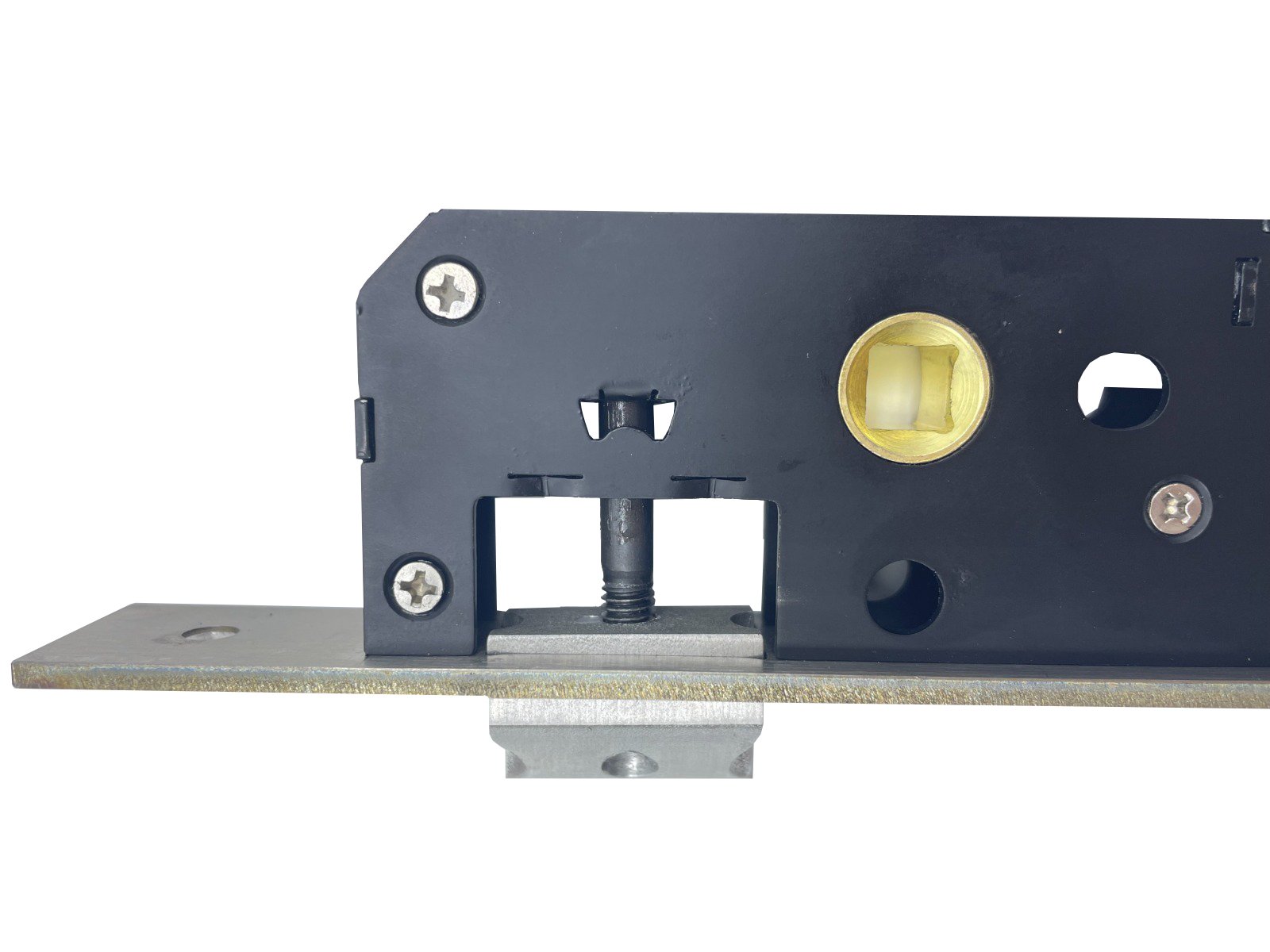
Backset controls the opening position
When a door factory confirms a mortise lock body, the backset must match the planned hole positions. This matters more when the factory uses CNC punching, fixed jigs, or batch processing8.
If the backset changes after production starts, the factory may need to:
- Adjust machining drawings
- Change punching molds or jigs
- Rework the door leaf
- Replace handle sets or cylinders
- Delay delivery
That is why I recommend locking the backset early in the project. It should not be changed casually after the profile and handle system are confirmed.
Lock body width controls internal fit
The lock body width is not only about whether the product looks narrow. It decides whether the case can sit inside the aluminum profile without hitting walls, ribs, or screw channels.
For example, one profile may accept a narrow case with a certain backset, while another similar-looking profile may not. A few millimeters can decide whether the lock fits. This is why I do not rely only on product photos. I prefer section drawings and actual installation dimensions.
Latch type controls closing feel
The latch type affects how the door closes9, how much friction users feel, and how the lock interacts with the frame.
Common options include:
- Standard latch: Common for normal single-direction closing.
- Roller latch: Useful for smoother closing and two-way opening scenarios.
- Bathroom latch/bolt structure: Designed for privacy and emergency release.
- Multi-point structure: Used where sealing, stability, or security needs are higher.
The latch should match the door closer, frame keep, strike plate, and usage frequency. If the latch is too aggressive or poorly aligned, users may feel resistance every time they close the door.
Parameter-to-risk comparison
| Parameter | If correct | If incorrect |
|---|---|---|
| Backset | Handle and cylinder align properly | Holes are misplaced |
| Lock width | Lock fits inside profile | Case hits internal profile wall |
| Lock thickness | Smooth insertion | Door edge cannot accept lock |
| Latch type | Good closing feel | Friction, noise, or poor engagement |
| Cylinder position | Smooth key operation | Cylinder or escutcheon mismatch |
| Strike alignment | Stable locking | Bolt fails to enter keep |
A practical example from inquiry handling
In one typical inquiry pattern, a buyer sends a photo of an existing lock body and asks for “the same type.” I can often identify the general style from the photo, but I still ask for the backset, forend width, case dimensions, and profile drawing. A photo can hide the most important fitting details.
I have learned to treat every parameter as a risk-control tool:
- Backset controls the machining location.
- Case width controls whether the product fits.
- Forend width controls the door edge finish.
- Latch type controls daily usability.
- Lock function controls whether the door meets the project requirement.
This mindset helps buyers avoid treating the lock body as a simple commodity. For aluminum door production, it is a precision-matched component.
What Front Forend Width Should I Use for Mortise Lock Bodies for Aluminum Doors?
The front forend looks like a small visible strip, but it affects installation, door edge appearance, and screw fixing. Many buyers ask whether 22 mm or 24 mm is better. I do not answer that directly because the aluminum profile groove decides the correct choice.
For mortise lock bodies for aluminum doors, common front forend widths include 22 mm and 24 mm. The right forend depends on the aluminum profile groove, door edge structure, and installation method. Buyers should also confirm whether they need a flat forend or U-groove forend before ordering.
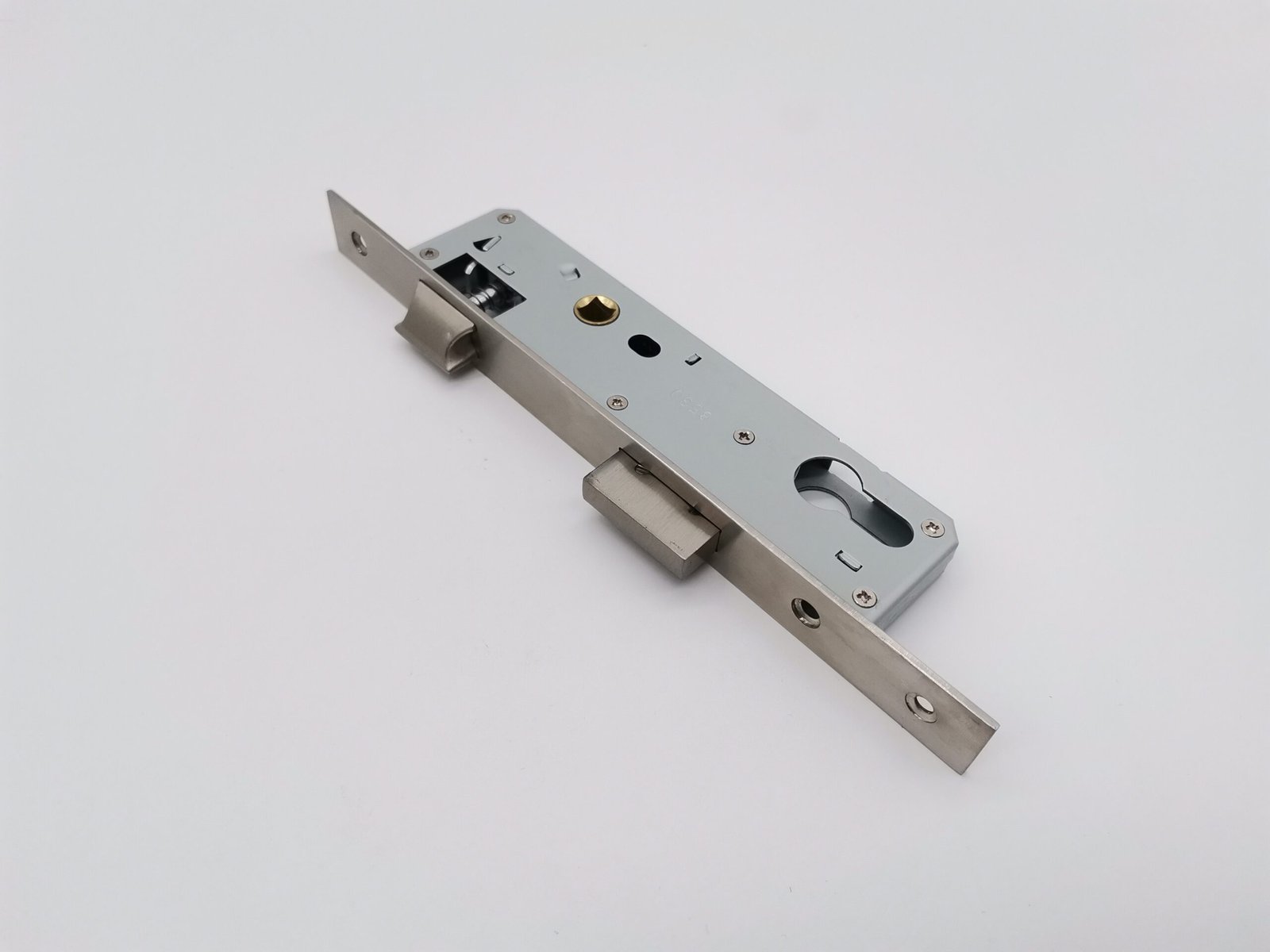
22 mm and 24 mm are common, not universal
In many aluminum door lock body projects, I see 22 mm and 24 mm front forend options. These sizes are common because they match many profile systems. However, I never present either size as universally correct.
The correct forend width depends on:
- The groove width on the door edge
- The shape of the aluminum profile
- The screw fixing position
- The depth of the lock installation channel
- The expected finished appearance
- The project’s hardware standard
A 24 mm forend may look stronger, but it may not sit correctly in a narrower groove. A 22 mm forend may fit better in some systems, but it may leave gaps in others.
Flat forend versus U-groove forend
Aluminum door mortise lock bodies can use different front forend forms. Two common directions are:
| Forend type | Typical use | What I check |
|---|---|---|
| Flat forend | Door edge has a flat mounting surface | Forend width, screw position, surface flushness |
| U-groove forend | Profile has a shaped groove or channel | Groove width, depth, side clearance, fixing method |
The flat forend is often easier to understand because it sits against a flat door edge. The U-groove forend needs closer profile matching because the shape must align with the aluminum groove.
Why forend mismatch causes rework
A wrong forend can create several problems:
- The front plate does not sit flush.
- Screws cannot bite correctly.
- The latch position shifts.
- The edge gap looks uneven.
- The installer grinds or modifies the profile on site.
- The finished door looks unprofessional.
In a door factory, this is not only an installation issue. It affects production speed, appearance quality, and customer acceptance.
What I ask before confirming forend details
Before confirming a front forend, I usually ask for:
- Door edge profile drawing
- Groove width and depth
- Required forend width, if already specified
- Flat or U-groove installation preference
- Screw hole requirements
- Surface finish requirement
- Sample door photo, if available
This information helps me recommend a lock body that fits both mechanically and visually.
Forend selection as part of quality control
For procurement teams, I suggest treating the front forend as a quality control item. It should be checked during sample approval and before bulk shipment.
A simple inspection process can include:
- Measure forend width with calipers.
- Check flatness and finish.
- Compare screw hole position to drawing.
- Test lock body insertion into the profile.
- Confirm latch movement after installation.
- Check the door edge appearance after fixing.
At SDH Hardware, I view these checks as part of practical manufacturing communication. A correct forend helps the installer finish the door cleanly. A wrong forend creates visible defects even if the lock mechanism itself is acceptable.
How Should Door Factories Evaluate Suppliers for Aluminum Door Lock Bodies?
A technically suitable lock body still needs a reliable supplier behind it. Door factories and hardware brands often need stable dimensions, consistent finishes, documentation, and communication support. If the supplier cannot control production details, even a correct sample may become a problem in bulk orders.
Door factories should evaluate suppliers by checking manufacturing capability, drawing support, sample accuracy, dimensional consistency, quality inspection process, customization ability, certificates when required, and communication quality. A good supplier helps verify the scenario, aluminum profile dimensions, lock function, and accessories before production.

What I believe a supplier should ask
A professional supplier should not only ask, “How many pieces do you need?” I believe the supplier should first ask practical technical questions.
For aluminum door lock body selection, I usually ask:
- What is the door application?
- Is the door indoor, bathroom, exterior, or commercial?
- Does the door need frequent opening and closing?
- Does it need two-way opening?
- Does the project require better sealing or higher security?
- What is the aluminum profile internal cavity?
- What are the backset and forend requirements?
- What handle, cylinder, or thumbturn will be used?
- Are CE, fire-rated, or other documents required for this project?
These questions do not slow down the order. They reduce wrong selection.
Manufacturing and quality checks
For B2B procurement, I recommend checking whether the supplier can support consistent production. Important areas include:
| Evaluation area | What to verify | Why it matters |
|---|---|---|
| Production capability | Factory operations, equipment, capacity | Stable supply for repeat orders |
| Drawing support | Product drawings after confirmation | Reduces misunderstanding |
| Sample process | Accurate samples before bulk order | Confirms real fitting |
| Dimensional inspection | Backset, case width, forend width | Prevents installation failure |
| Function testing | Latch, bolt, cylinder, handle operation | Ensures daily usability |
| Finish control | Surface treatment consistency | Supports brand appearance |
| Packaging | Custom packaging or export packaging | Reduces damage and supports resale |
| Documentation | CE, fire-rated, or test reports when required | Helps project compliance review |
Certification should be verified by project
Some projects ask for CE certification, fire-rated certification, or other performance documents. I recommend treating these as documents to verify, not slogans to accept.
A buyer should check:
- The certificate holder10
- Product model coverage
- Test standard
- Validity period
- Laboratory or issuing body
- Whether the tested configuration matches the ordered product
This is especially important for fire-rated door hardware. A certificate may apply to a specific door assembly, lock configuration, or test condition11. If a project has strict compliance needs, I recommend asking a qualified professional or project consultant to review the documents.
Why factory-direct communication helps
SDH Hardware is a China-based architectural door hardware manufacturer with direct experience producing and supplying mortise lock bodies for aluminum doors. In my daily work, factory-direct communication helps because technical questions can be answered earlier.
For example, when a buyer sends a profile drawing, I can help check whether a lock body direction appears suitable before the sample stage. When a buyer needs OEM or ODM adjustments, factory-side communication can also support:
- Surface treatment adjustment
- Front forend customization
- Logo stamping or laser marking
- Packaging design
- Accessory configuration
- Product inspection after order completion
I still recommend that buyers verify final suitability based on their own door system and project requirements. The supplier can guide selection, but the door factory should test the lock body in the actual aluminum profile before mass installation.
Frequently Asked Questions
What is the first thing I should check before choosing an aluminum door mortise lock body?
I recommend checking the door usage scenario first. The lock body for a bathroom door, indoor door, two-way opening door, or cold-region door may be different. After the function is clear, I check the aluminum profile’s internal space, backset, forend width, and accessory compatibility.
Are 22 mm and 24 mm forends both suitable for aluminum doors?
Yes, 22 mm and 24 mm front forends are common for aluminum door mortise lock bodies, but neither size is universal. The correct choice depends on the aluminum profile groove, door edge structure, screw position, and installation method. I always confirm the profile drawing before recommending one.
When should I choose a roller latch lock body?
I consider a roller latch lock body when the aluminum door needs smoother closing, two-way opening, or frequent opening and closing. The roller can reduce friction and improve usability. However, it still needs correct strike alignment, frame compatibility, and profile space verification.
Is a narrow multi-point lock body always better?
No. A narrow multi-point lock body can help with sealing, locking stability, and anti-prying performance in some cold-region or higher-security applications. However, it needs compatible aluminum profiles, keeps, locking points, and accurate installation. I treat it as a scenario-based choice, not a universal upgrade.
What documents should I ask from a lock body supplier?
I suggest asking for product drawings, material or finish information, sample confirmation details, inspection standards, and certificates if the project requires them. For CE or fire-rated claims, I recommend checking whether the document covers the exact model, configuration, and intended application.
Conclusion
Choosing mortise lock bodies for aluminum doors should not begin with the cheapest option or the most common catalog size. I first define the usage scenario, then verify the aluminum profile’s internal cavity, backset, lock body width, thickness, forend design, and accessory match. This process reduces wrong holes, poor closing feel, profile interference, and installation rework. If you need factory-side support for aluminum door lock body selection, sampling, OEM/ODM customization, or bulk sourcing, I welcome you to contact SDH Hardware with your profile drawings and project requirements.
"Door Handle Backset: What It Means & How to Measure", https://www.suffolklatchcompany.com/blogs/news/door-knobs-and-backset-explained?srsltid=AYCX9vJyq2foO3mEHAGWcYdpnZSKwC3FKcKUjeKHjZf4JEhzY4IOhH6p. Door-hardware glossaries define backset as the distance from the door edge or lock face to the centerline of a bore, spindle, or related operating element, supporting the article’s use of the term in installation planning. Evidence role: definition; source type: education. Supports: The technical definition of lock backset as a measured distance from the door edge or lock face to a lock operating centerline.. ↩
"A156.13 - 2022 Mortise Locks", https://buildershardware.com/ANSI-BHMA-Standards/Hardware-Highlights/A15613-2022-Mortise-Locks. ANSI/BHMA performance standards for mortise locks include durability and cycle-testing criteria, supporting the view that hardware for high-frequency doors should be selected with operating frequency and performance grade in mind. Evidence role: expert_consensus; source type: institution. Supports: Lock standards classify or test mortise locks using durability, strength, and operating-cycle criteria relevant to high-use applications.. Scope note: This supports the selection principle through recognized testing criteria, but it does not identify a specific lock body model for every commercial door. ↩
"Restroom Privacy Latches", https://www.thebuildingcodeforum.com/forum/threads/restroom-privacy-latches.37435/. Building-code and door-hardware guidance commonly treats privacy hardware as distinct from security locking, noting that privacy locks for bathrooms or similar rooms should permit emergency release from the outside. Evidence role: general_support; source type: institution. Supports: Privacy locksets for bathrooms or similar rooms are often expected or required to allow emergency release from outside.. Scope note: Requirements vary by jurisdiction, occupancy type, and adopted code edition, so the source would provide contextual support rather than a universal legal rule. ↩
"How Secure Is Your Front Door? A Guide to Locks, PAS 24 ...", https://browwindows.co.uk/blog/how-secure-is-your-front-door-a-guide-to-locks-pas-24-uk-standards/. Security and doorset-performance standards discuss locking engagement and tested doorset configurations, providing contextual support for the claim that multi-point locking can improve resistance to forced entry and perimeter engagement when the whole door assembly is designed for it. Evidence role: mechanism; source type: institution. Supports: Multi-point locking systems engage the door at multiple locations and are used in standards-based security or weather-sealing door assemblies.. Scope note: Such standards usually evaluate complete doorsets, so they do not prove that any standalone multi-point lock body will improve sealing or security in an incompatible aluminum profile. ↩
"Mortise Lock Door Prep", https://www.custommetalproductsnc.com/feeds/blog/mortise-prep-door. Door-hardware preparation standards specify mortise lock cutouts and related dimensions such as case size, faceplate, and backset, supporting the article’s claim that the available internal cavity is a primary installation constraint. Evidence role: general_support; source type: institution. Supports: Mortise lock installation depends on prepared case dimensions, faceplate/forend dimensions, backset, and related door-preparation details.. Scope note: General mortise preparation standards may not address every proprietary aluminum extrusion, so the support is strongest for the dimensional principle rather than a particular profile. ↩
"Study on the Influence of Surface Treatment Process on ... - PMC", https://pmc.ncbi.nlm.nih.gov/articles/PMC10488388/. Engineering guidance on aluminum extrusions explains that section geometry contributes to structural performance and that machining or cutting coated aluminum can alter local strength and expose or damage finished surfaces. Evidence role: mechanism; source type: education. Supports: Aluminum extrusions derive strength from their profile geometry, and post-fabrication cutting or machining can affect section properties and coated surfaces.. Scope note: This is contextual support from materials engineering; it does not quantify the risk for a specific door profile without structural analysis. ↩
"087100 – DOOR HARDWARE - Facilities and Campus Services", https://fcs.cornell.edu/087100-door-hardware. Architectural door-hardware specification guidance treats door thickness as a required scheduling parameter because it affects cylinder projection, spindle length, through-bolts, trim, and related hardware dimensions. Evidence role: general_support; source type: institution. Supports: Door thickness is a standard parameter in specifying locksets, cylinders, spindles, and fixing hardware.. Scope note: The source would support the general specification principle, while exact accessory dimensions still depend on the selected lock and trim system. ↩
"The impact of design rework on engineer-to-order lead- ...", https://www.sciencedirect.com/science/article/pii/S0925527325002488. Manufacturing research on engineering-change management shows that dimensional changes introduced after process planning can create rework, tooling or fixture revisions, and schedule impacts, supporting the article’s caution about changing backset after batch preparation. Evidence role: general_support; source type: paper. Supports: Late changes to dimensions or hole locations in manufacturing can require fixture, tooling, programming, or process changes that increase rework and delay risk.. Scope note: The evidence supports the manufacturing principle broadly and is not specific to aluminum door lock-body production. ↩
"Why a Commercial Door Won't Close or Latch", https://www.elwinsecurity.com/resources/commercial-door-hardware/why-commercial-door-wont-close-or-latch. Research and technical guidance on door operation identify latch engagement, strike alignment, and friction at contacting hardware surfaces as factors that affect closing force and user effort. Evidence role: mechanism; source type: research. Supports: Latch geometry, strike alignment, and contact/friction influence the force and feel of door closing.. Scope note: Such sources may address door operation generally rather than comparing every mortise latch type used in aluminum profile doors. ↩
"CE marking", https://en.wikipedia.org/wiki/CE_marking. European Commission guidance on CE marking states that technical documentation and the EU Declaration of Conformity identify the product, responsible economic operator, applicable requirements, and conformity assessment basis, supporting the need to verify certificate holder and model coverage. Evidence role: general_support; source type: government. Supports: CE documentation and declarations of conformity identify the manufacturer or responsible party, product, applicable legislation or standards, and conformity basis.. Scope note: CE guidance addresses EU conformity documentation generally; fire-rated certification may involve additional national or third-party listing requirements. ↩
"Fire Doors and NFPA 80 FAQs", https://www.nfpa.org/news-blogs-and-articles/blogs/2025/04/11/fire-doors-faqs. Fire-door standards and listing guidance state that fire doors, frames, and hardware must be installed and maintained in accordance with their listing and the tested assembly conditions, supporting the article’s warning that a certificate may not cover every lock configuration. Evidence role: expert_consensus; source type: institution. Supports: Fire-door ratings and hardware listings are tied to tested and listed assemblies, components, and installation conditions.. Scope note: The exact scope depends on the listing, test report, and local authority having jurisdiction. ↩
