
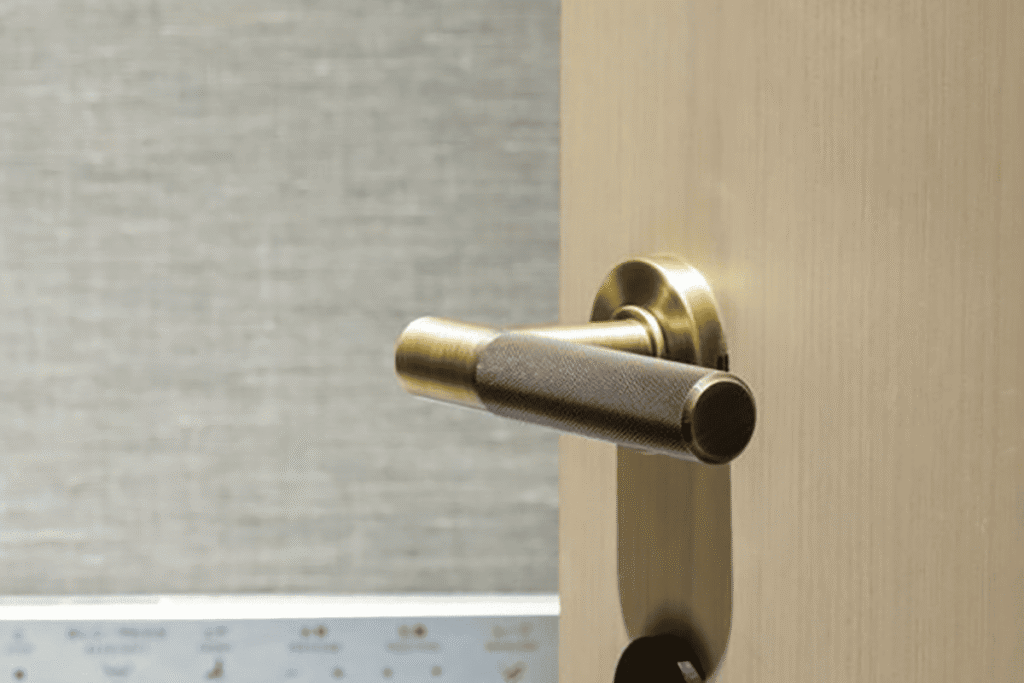
Why Choose Anodised Aluminium for Door Handles
Anodised aluminium door handles can solve a common procurement problem: buyers need attractive, corrosion-conscious hardware without pushing every project into stainless steel-level cost. If the wrong material is chosen, surface ageing, colour inconsistency, and after-sales complaints can increase. The practical solution is to evaluate anodised aluminium by project fit, not only by price.
Anodised aluminium door handles are worth choosing when a project needs a balanced mix of corrosion resistance, controlled cost, flexible design, and repeatable bulk supply. They are not the best choice for every environment, but they can be a strong option for door factories, hardware brands, and importers serving cost-sensitive and design-driven markets.
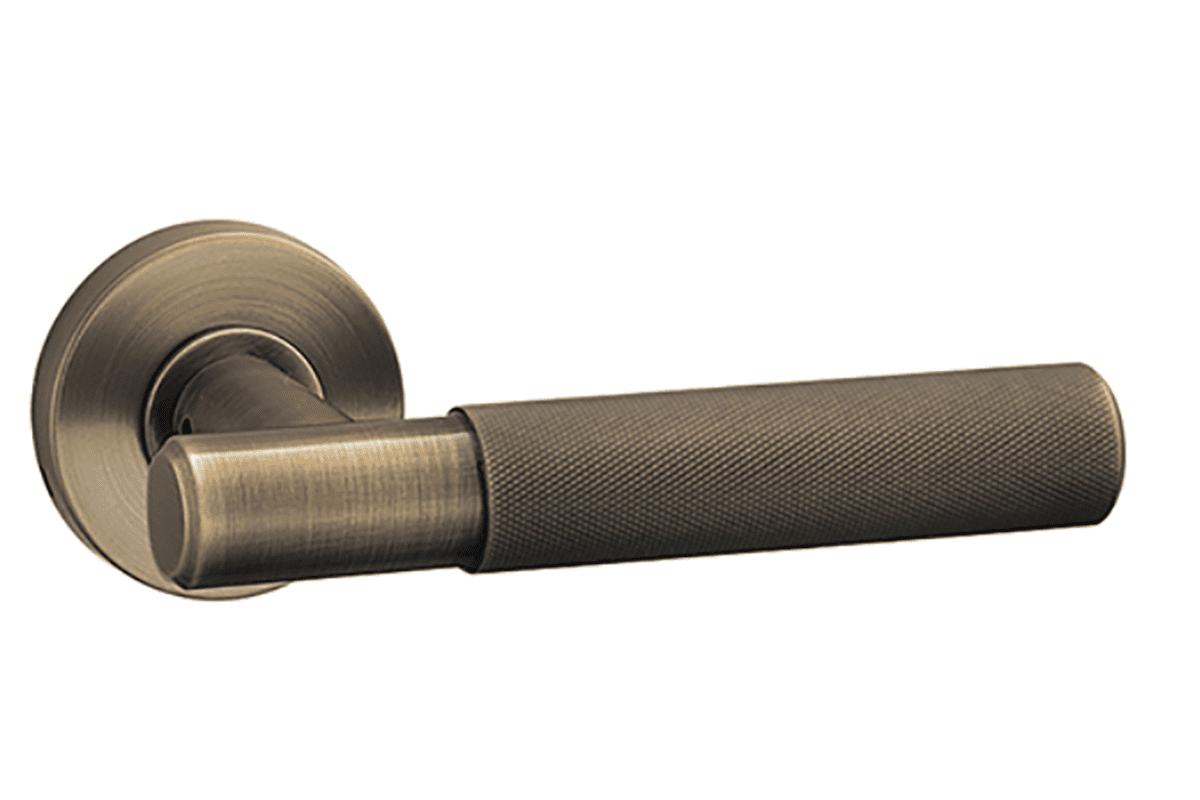
In my factory-side experience at SDH Hardware, buyers rarely choose a handle material for one reason only. They compare the surface finish, machining difficulty, target market, batch consistency, packaging needs, and after-sales risk. That is where anodised aluminium becomes a serious option.
Are anodised aluminium door handles a good balance of cost and performance?
Choosing a handle material often starts with budget pressure. However, a low unit price can become expensive if the product does not match the project environment. Buyers need a material that controls cost while still supporting reliable appearance, stable production, and acceptable long-term use.
Anodised aluminium door handles offer a practical balance because aluminium is generally easier to process1 and can be more cost-effective than stainless steel or zinc alloy in suitable applications. The anodised surface also helps improve appearance stability and corrosion resistance2 when the finish is properly specified and inspected.
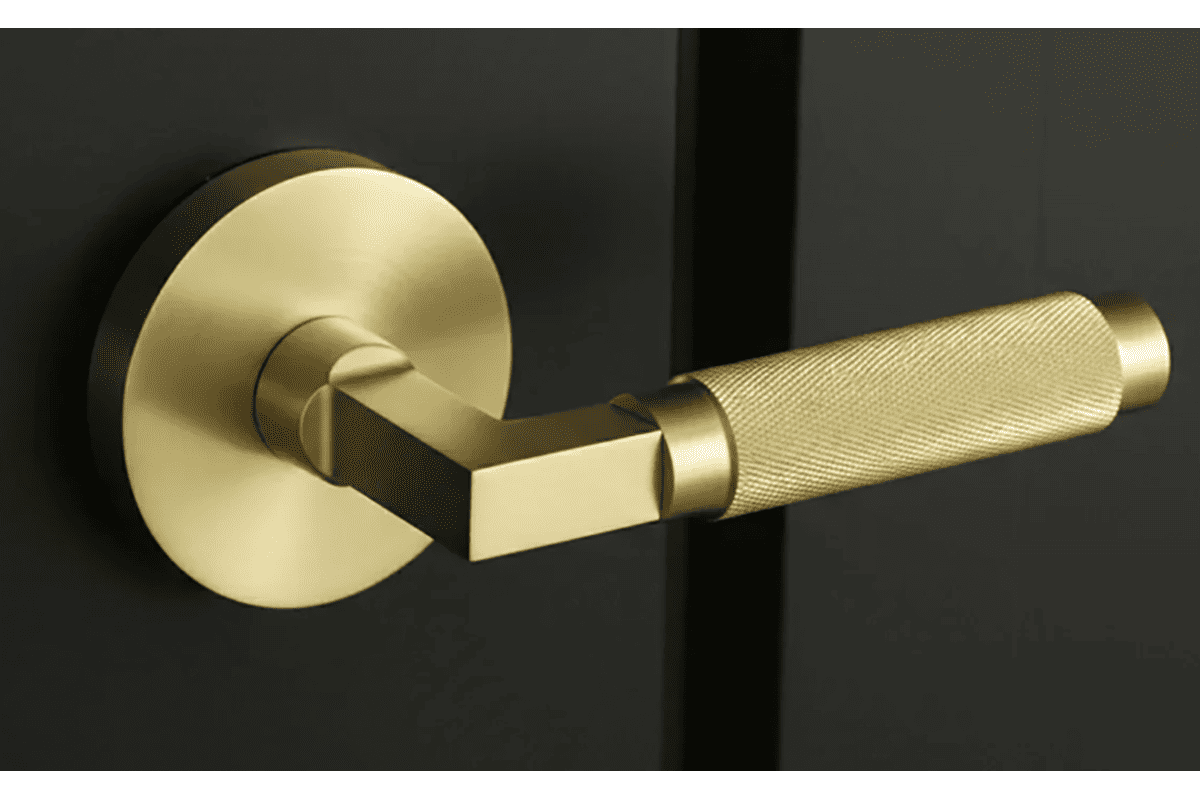
Cost should mean project value, not only low price
In B2B purchasing, I always try to separate cheap from cost-effective. A cheap handle may reduce the first invoice. A cost-effective handle supports the project’s total value. That value includes fewer finish complaints, predictable batch supply, and a product line that fits the customer’s market position.
For anodised aluminium door handles, the cost advantage often comes from several practical factors:
- Material efficiency: Aluminium is widely used and generally easier to source in many handle profiles.
- Processing efficiency: Aluminium is easier to cut, drill, mill, and shape than many harder materials.
- Weight advantage: Lower weight3 can help reduce handling and freight pressure in some bulk shipments.
- Finish flexibility: Anodising can support different colours and surface effects4 when production is controlled.
- Design adaptability: Extruded or machined aluminium profiles5 can support modern handle shapes.
However, buyers should avoid a simple “aluminium is cheaper” decision. Stainless steel may still be better for some high-traffic, harsh, or premium projects. Zinc alloy may suit certain decorative cast shapes. Brass may be required for specific luxury or traditional markets. The right question is not “Which material is best?” The better question is:
“Which material gives the best balance for this door type, project environment, price point, and expected after-sales risk?”
Basic comparison for procurement evaluation
| Material option | Typical strengths | Common procurement concerns | Best-fit buying logic |
|---|---|---|---|
| Anodised aluminium | Cost control, corrosion-conscious finish, light weight, easy processing | Finish consistency, surface specification, impact resistance, batch repeatability | Good for scalable product lines and design-flexible projects |
| Stainless steel | Strong corrosion resistance6 in many environments, premium feel, durability | Higher processing cost, limited colour options, higher unit price | Good for high-traffic or higher-spec projects |
| Zinc alloy | Good for casting complex decorative shapes7, solid feel | Plating quality, corrosion risk if finish is weak, weight | Good for decorative designs and mid-market ranges |
| Brass | Premium traditional value, good machining8, strong market perception | Higher material cost, surface maintenance, price fluctuation | Good for luxury or heritage projects |
When I discuss material choices with door manufacturers, I usually ask about the customer’s market before I discuss the handle shape. A Middle East wholesaler, a European brand, and a Southeast Asian door factory may all view the same handle differently. Each one has different price expectations, finish preferences, climate concerns, and packaging standards.
What buyers should request from suppliers
For bulk anodised aluminium door handles, I recommend requesting clear production and inspection details before confirming the order. Buyers should ask for:
- Material grade or specification used by the factory
- Surface finish sample with approved colour and texture
- Dimensional drawings after order confirmation
- Packaging method for avoiding scratches
- Inspection photos or reports after production
- Batch colour control process
- Any relevant certification documents, if required by the project
At SDH Hardware, we treat these points as normal B2B communication, not as special requests. In my view, the supplier’s willingness to discuss these details often tells the buyer more than the unit price does.
How do anodised aluminium door handles reduce corrosion and surface ageing concerns?
Surface failure can damage a project’s reputation quickly. A door handle is touched every day, so colour fading, staining, oxidation marks, or rough surface changes become visible to end users. Buyers need to reduce that risk before shipment, not after complaints begin.
Anodised aluminium door handles can help reduce corrosion and surface ageing concerns because anodising forms a controlled protective surface on aluminium. When the finish is suitable for the environment and the production process is stable, the handle can maintain a cleaner appearance and reduce common surface-related after-sales issues.
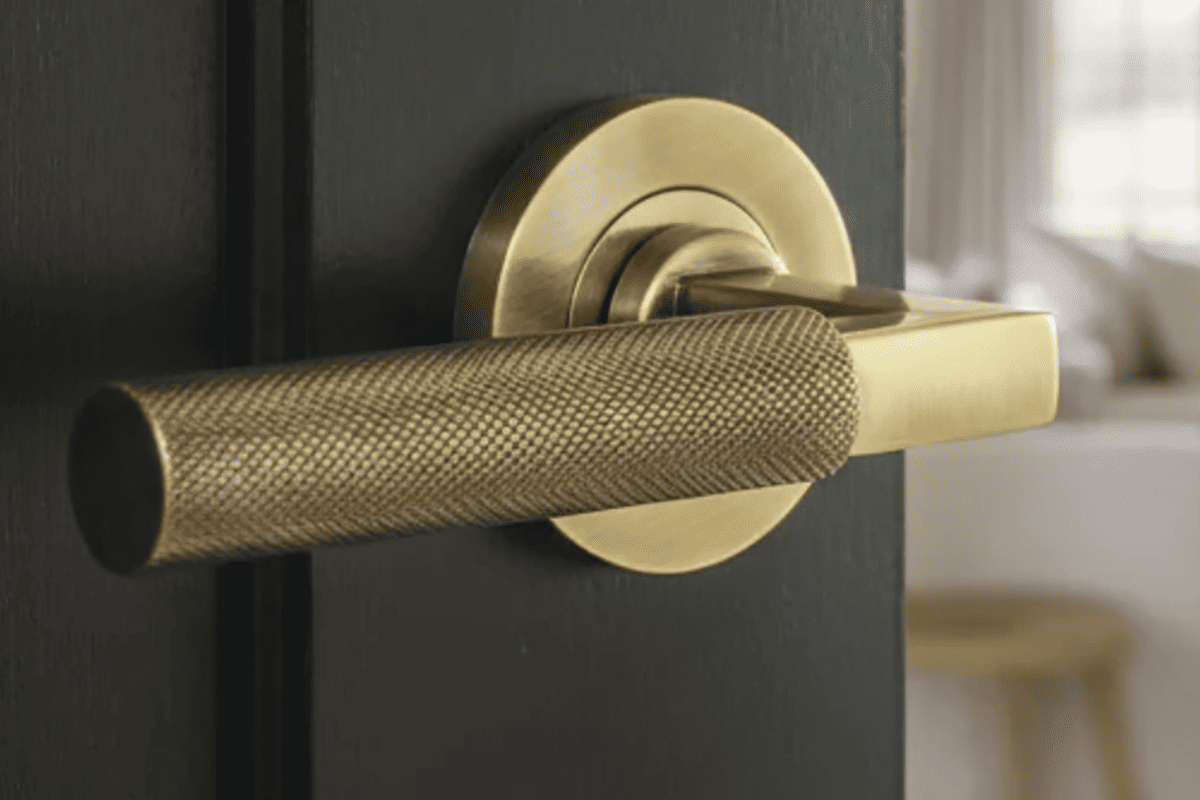
Corrosion resistance is a project-risk issue
For B2B buyers, corrosion resistance is not just a technical feature. It is a commercial risk control point. If a handle surface deteriorates too quickly, several problems can happen:
- The door factory may receive complaints from its customer.
- The hardware brand may lose confidence in the supplier.
- The wholesaler may face returns or discount pressure.
- The importer may need to replace stock or handle claims.
- The project manager may reject future use of the same product.
This is why I prefer to discuss anodised aluminium door handles in terms of risk reduction. The anodised layer can help protect9 the aluminium surface and improve appearance durability in many suitable indoor and selected protected outdoor applications10. However, the real performance depends on the anodising quality, surface thickness specification, sealing process, installation environment, and maintenance conditions.
I avoid making universal claims such as “anodised aluminium never corrodes.” That is not responsible. Coastal air, industrial pollution, harsh cleaning chemicals11, heavy abrasion, and poor installation can all affect surface performance. Buyers should always match the material and finish to the actual use environment.
What should buyers check before approval?
Before approving anodised aluminium door handles for a project or product line, I suggest checking these practical points:
| Evaluation point | Why it matters | Buyer action |
|---|---|---|
| Surface colour | Prevents mismatch across batches | Approve a physical reference sample |
| Texture and gloss | Affects brand perception | Compare samples under normal lighting |
| Edges and corners | Thin or uneven finish may show defects | Inspect handle ends, holes, and sharp transitions |
| Contact areas | High-touch zones wear faster | Review expected usage level |
| Packaging protection | Scratches can happen before installation | Confirm individual wrapping or separators |
| Cleaning environment | Chemicals may damage finish | Ask end customer about maintenance practices |
| Test or certification documents | Supports project compliance | Verify documents before relying on claims |
At SDH Hardware, our factory-side quality control usually focuses on what buyers can actually see and receive: surface consistency, machining accuracy, fitting compatibility, and final inspection. If a buyer needs specific salt spray results, coating thickness values, or project-standard testing, those requirements should be confirmed before mass production. The buyer should verify test reports and specifications rather than assuming every anodised finish is the same.
Where anodised aluminium works best
Anodised aluminium door handles are often a good fit for:
- Interior residential doors
- Office doors in moderate-use environments
- Hotel room doors where design and budget both matter
- Door factory standard product lines
- Hardware brand mid-range collections
- Wholesaler stock programs requiring stable styles and colours
They may need more careful evaluation for:
- Coastal projects
- Heavy public-use buildings
- Chemical cleaning environments
- Industrial facilities
- External doors exposed to severe weather
- Projects requiring a specific certified fire or performance system
In those cases, I would recommend professional evaluation and clear written specifications. A door handle is only one part of the complete door hardware system. The correct decision should consider the door material, installation location, lock body, spindle, rosette, fixing method, and expected traffic level.
Why does processing flexibility matter for anodised aluminium door handles?
Many buyers focus on surface finish first, but production flexibility can be just as important. A handle range may need different lengths, profiles, rosette designs, logo positions, and packaging styles. If the material is difficult to process, development time and cost can increase.
Anodised aluminium door handles are attractive for B2B product development because aluminium is relatively easy to machine, form, cut, and finish. This processing flexibility supports varied handle shapes, OEM/ODM customization, and repeatable production for door factories, hardware brands, and bulk wholesalers.
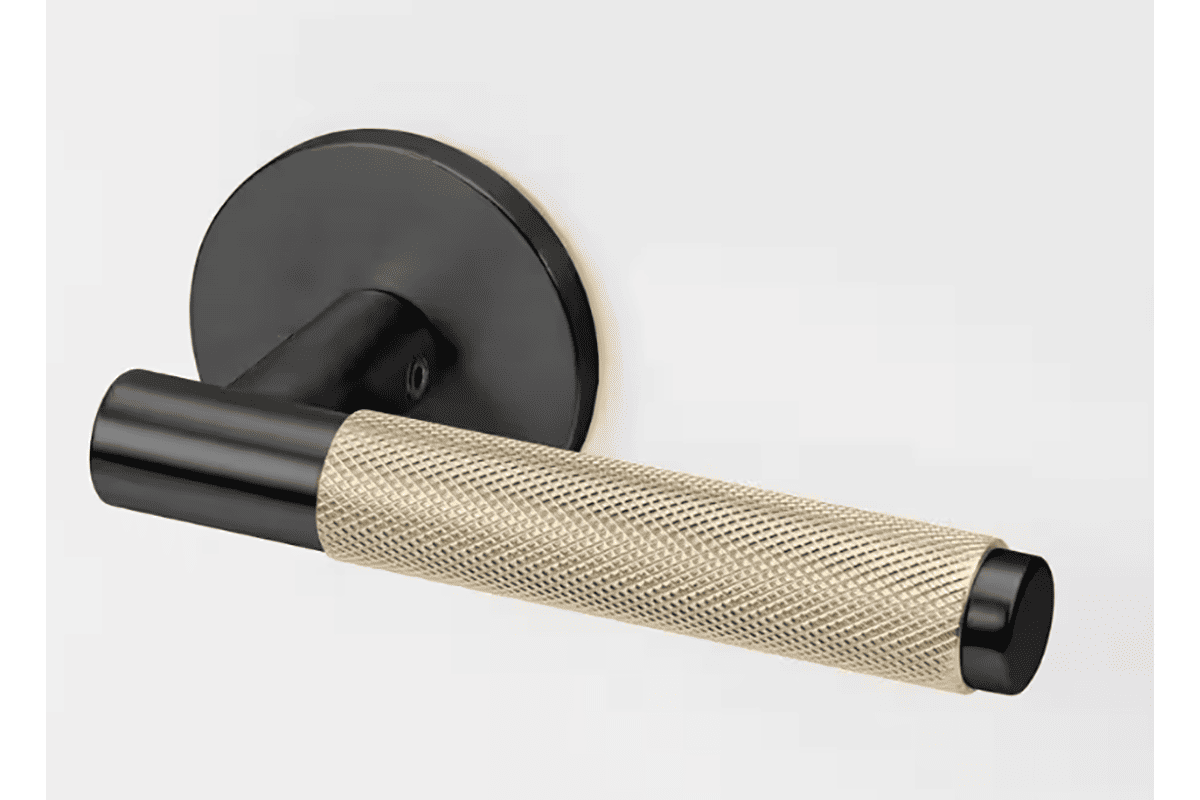
Flexible manufacturing supports product-line development
In my experience, buyers do not always come to the factory with a finished design. Some customers send a reference photo. Some send a drawing. Some send a target price and ask us to recommend a suitable structure. In these situations, aluminium can give both sides more room to adjust the design.
Aluminium is generally easier to work with than stainless steel in many machining processes. It can support clean profiles, modern straight-line shapes, curved edges, and slim handle bodies. This matters when a hardware brand wants a product series with a unified design language.
For example, a brand may need:
- A lever handle for interior wooden doors
- A matching pull handle for sliding doors
- A coordinated bathroom turn accessory
- A similar finish on hinges and door accessories
- A private logo on the handle or packaging
Anodised aluminium can help create this type of coordinated range when the supplier has stable production control.
Design points that buyers should clarify
Before opening moulds, approving drawings, or confirming samples, buyers should clarify these points:
Handle shape and grip comfort
The handle should look good, but it also needs a comfortable grip. Sharp corners may look modern in a drawing, but they may feel poor in daily use.Wall thickness and strength expectations
Slim designs can reduce weight and cost. However, the structure still needs to match the expected load and use level.Rosette or backplate design
Buyers should confirm whether the handle uses a round rose, square rose, long plate, or custom base.Spindle and fixing system
The handle must match the local lock body, door thickness, and installation habits.Logo requirements
Stamping, laser logo, or packaging branding should be confirmed early because each method affects production flow.Surface finish target
Buyers should confirm colour, gloss, texture, and acceptable tolerance before bulk production.
Processing flexibility and batch control
Flexibility should not mean uncontrolled variation. In bulk supply, every adjustment must be documented. A small difference in handle length, hole position, or colour tone can create installation problems or brand inconsistency.
At SDH Hardware, we usually view production control through a full-process lens:
- Raw material screening
- Standardized production supervision
- Machining and dimensional checking
- Surface treatment coordination
- Finished product inspection
- Packaging inspection before shipment
For anodised aluminium door handles, dimensional control is especially important because many customers order them as part of a complete door hardware set. If the handle does not match the lock body, spindle, or door thickness, the buyer may face installation delays.
A simple development workflow
| Step | Buyer focus | Supplier responsibility |
|---|---|---|
| Concept review | Target market, price range, design direction | Suggest feasible structure and material |
| Drawing confirmation | Dimensions, fixing method, compatible lock | Provide technical drawings for approval |
| Sample production | Look, grip, colour, installation | Make samples and adjust based on feedback |
| Pre-production approval | Final finish, packaging, logo | Confirm control sample and production plan |
| Mass production | Consistency and lead time | Control machining, finish, and inspection |
| Final inspection | Defects, quantity, packaging | Provide inspection support and shipment readiness |
This workflow is not complicated, but it prevents many problems. I have seen buyers save time by approving details early rather than correcting issues after mass production. For custom anodised aluminium door handles, early clarity is usually cheaper than late rework.
What should B2B buyers inspect before ordering anodised aluminium door handles in bulk?
Bulk purchasing creates a different level of risk. A sample may look good, but mass production must repeat that appearance across hundreds or thousands of sets. Buyers need to confirm whether the supplier can control finish, dimensions, accessories, packaging, and documentation consistently.
Before ordering anodised aluminium door handles in bulk, B2B buyers should inspect approved samples, colour consistency, machining accuracy, accessory fit, packaging protection, and supplier quality-control procedures. They should also verify any claimed certificates, test reports, and project compliance documents before shipment or project submission.
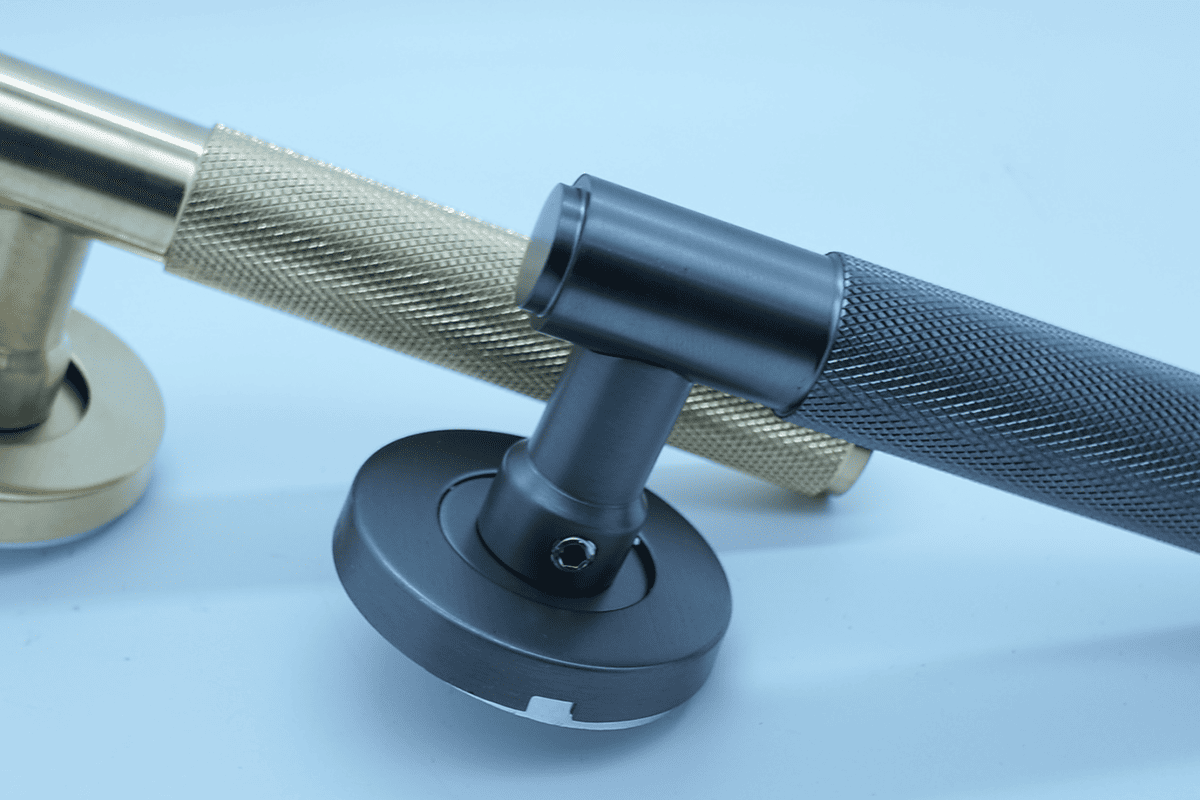
A good sample is only the starting point
Samples are useful, but they can create false confidence. A factory can sometimes make one excellent sample while still struggling with repeatability in production. For bulk orders, buyers should ask how the supplier controls the same finish and dimension across batches.
For anodised aluminium door handles, I suggest buyers keep one approved master sample. This sample becomes the reference for colour, surface texture, shape, and general workmanship. Both buyer and supplier should know which sample is the final approved version.
Key inspection points for bulk orders
Buyers should inspect or request inspection records for the following:
- Surface defects: scratches, stains, colour patches, dents, uneven texture
- Colour consistency: difference between pieces, cartons, or production batches
- Machining accuracy: hole position, handle length, edge finishing, spindle fit
- Assembly quality: spring action, fixing screws, rosette fit, lever return
- Accessory completeness: screws, spindle, Allen key, installation parts
- Packaging protection: individual bags, foam, carton strength, labels
- Logo and branding: correct position, clear mark, approved packaging artwork
- Quantity accuracy: sets per carton, total cartons, spare parts if agreed
A buyer does not need to inspect every piece personally, but the inspection method should match the order size and risk level. For important projects, third-party inspection or buyer-side inspection can be useful. For repeat orders with a trusted supplier, factory inspection records and random checks may be enough.
Finish consistency across batches
Finish consistency is one of the biggest concerns for anodised aluminium door handles. A small colour difference may be acceptable in some wholesale channels, but it may not be acceptable for a branded collection or project installation.
Buyers should discuss:
| Control issue | Why it matters | Recommended approach |
|---|---|---|
| Batch-to-batch colour | Reorders should match previous stock as closely as possible | Keep control samples and production records |
| Mixed cartons | Different batches may create visible variation | Avoid mixing batches unless approved |
| Lighting differences | Colour can look different under warm or cool light | Review samples under realistic conditions |
| Texture variation | Brushed, satin, or matte effects affect perceived quality | Define finish clearly before production |
| Handling marks | Aluminium surfaces can be damaged during packing | Confirm protective packaging |
In my factory conversations, I often remind buyers that “same colour name” does not always mean “same appearance.” Champagne, silver, black, and grey can vary by supplier and process. Physical samples are more reliable than catalogue descriptions.
Supplier selection matters
Anodised aluminium door handles depend not only on material choice but also on supplier discipline. Buyers should evaluate the supplier’s ability to support long-term cooperation, not only one shipment.
I recommend checking whether the supplier can provide:
- Stable production capacity
- Clear communication before order confirmation
- Drawing support for customized products
- OEM/ODM flexibility
- Finished product inspection
- Export packaging experience
- Consistent reorder support
- Documentation when project buyers require it
SDH Hardware operates as a factory-direct architectural door hardware manufacturer in China. We support door factories, hardware brands, and bulk wholesalers with standardized and customized hardware products, including lever handles, locks, hinges, cylinders, and accessories. From my perspective, one-stop supply is useful when buyers want a complete hardware series with coordinated finishes and fewer supplier-management problems.
Frequently Asked Questions
Are anodised aluminium door handles suitable for exterior doors?
Anodised aluminium door handles may suit some protected exterior applications, but buyers should evaluate exposure, climate, cleaning chemicals, and traffic level first. Coastal, industrial, or severe weather environments need more careful specification. I recommend verifying surface-treatment requirements and requesting professional evaluation for project-specific exterior use.
Are anodised aluminium handles cheaper than stainless steel handles?
Anodised aluminium handles are often more cost-effective than stainless steel handles, especially for scalable product lines and design-flexible projects. However, buyers should compare total project value, not only unit price. Stainless steel may still be preferred for high-traffic, premium, or harsh-use environments.
Can anodised aluminium door handles be customized?
Yes, anodised aluminium door handles can usually be customized in shape, size, surface finish, logo, and packaging, depending on the supplier’s production capability. Buyers should confirm drawings, samples, finish references, and accessory configurations before mass production to avoid rework or batch inconsistency.
What should I check in an anodised aluminium handle sample?
You should check colour, texture, grip comfort, dimensions, hole positions, rosette fit, spindle compatibility, surface defects, logo quality, and packaging. I also suggest keeping an approved master sample so the supplier and buyer can compare mass production against the same reference.
Do anodised aluminium door handles need certification?
Certification requirements depend on the project, market, and complete door hardware system. Buyers should not assume every handle has the same compliance status. If CE documents, fire-rated documents, or test reports12 are required, buyers should request and verify the relevant paperwork before order confirmation.
Conclusion
Anodised aluminium door handles are a strong option when buyers need a practical balance of corrosion-conscious performance, controlled cost, flexible processing, and repeatable bulk supply. They are not automatically better than stainless steel, zinc alloy, or brass, but they can fit many door factory, hardware brand, and wholesaler programs very well. If you are evaluating a new handle range, I recommend comparing samples, drawings, finishes, packaging, and inspection support before deciding. Contact SDH Hardware to discuss OEM/ODM anodised aluminium door handle options for your market.
"Stainless steel", https://en.wikipedia.org/wiki/Stainless_steel. Engineering summaries report that aluminum alloys often possess high machinability relative to steels, whereas stainless steels are generally more difficult to machine due to work hardening and tool wear, supporting the claim about aluminum’s relative processing ease. Evidence role: general_support; source type: encyclopedia. Supports: That many aluminum alloys are easier to machine than stainless steels, contributing to potential processing efficiency in suitable applications.. Scope note: Machinability varies by alloy, tooling, and process conditions, and processing ease does not directly determine total cost in every project. ↩
"Anodizing", https://en.wikipedia.org/wiki/Anodizing. Government specifications for anodic coatings on aluminum describe how controlled oxide layers and proper sealing improve corrosion resistance and surface durability, aligning with the claim that anodized finishes can stabilize appearance and resist corrosion when correctly specified. Evidence role: mechanism; source type: government. Supports: That anodizing creates a controlled oxide layer on aluminum which, when properly specified and sealed, enhances corrosion resistance and stabilizes appearance.. Scope note: Performance depends on coating type, thickness, sealing, and alloy; not all anodized finishes provide equivalent protection. ↩
"Aluminium", https://en.wikipedia.org/wiki/Aluminium. Reference data list aluminum’s density at roughly 2.7 g/cm³ versus about 8 g/cm³ for common stainless steels, indicating that like-for-like volumes of aluminum weigh significantly less, which can ease handling and transport mass. Evidence role: general_support; source type: encyclopedia. Supports: That aluminum has substantially lower density than stainless steel, which can reduce component weight for similar volumes.. Scope note: Actual shipping weights depend on part geometry, packaging, and accessory mix; density alone does not determine logistics cost. ↩
"Anodic aluminium oxide", https://en.wikipedia.org/wiki/Anodic_aluminium_oxide. Technical overviews explain that anodic oxide layers are porous prior to sealing and can be dyed or electrolytically colored to achieve a range of surface appearances, substantiating the claim about color and effect flexibility. Evidence role: mechanism; source type: encyclopedia. Supports: That the porous anodic oxide can be dyed or colored electrolytically and then sealed to produce various colors and textures.. Scope note: Color uniformity depends on alloy composition and process control; not all colors are achievable across all alloys and thicknesses. ↩
"ETEM", https://en.wikipedia.org/wiki/ETEM. Technical summaries describe aluminum extrusion as a process that produces complex, constant cross-section profiles widely used in architectural and consumer products, supporting the feasibility of creating modern handle shapes from extruded or machined sections. Evidence role: general_support; source type: encyclopedia. Supports: That aluminum extrusion enables production of varied, constant cross-section profiles commonly used in architectural and consumer components.. Scope note: Specific designs depend on die design, section thickness, and downstream machining capabilities. ↩
"Stainless steel", https://en.wikipedia.org/wiki/Stainless_steel. Authoritative summaries note that chromium in stainless steel forms a stable, self-healing passive oxide film, conferring corrosion resistance in many service conditions, consistent with the claim. Evidence role: mechanism; source type: encyclopedia. Supports: That stainless steel’s corrosion resistance is due to a chromium-rich passive oxide film that forms on the surface.. Scope note: Resistance varies by grade and environment; chloride or acidic conditions can still cause localized corrosion. ↩
"Die casting", https://en.wikipedia.org/wiki/Die_casting. Encyclopedic sources on zinc die casting (e.g., Zamak alloys) report high fluidity and dimensional accuracy that facilitate thin-walled and complex geometries, supporting their use for decorative cast forms. Evidence role: general_support; source type: encyclopedia. Supports: That zinc alloys used in die casting exhibit excellent castability enabling precise and intricate shapes.. Scope note: As-cast corrosion performance is modest and typically requires finishing to meet durability expectations. ↩
"Brass", https://en.wikipedia.org/wiki/Brass. Materials references indicate that brasses—especially free-cutting compositions—exhibit favorable machinability, substantiating the claim that brass machines well. Evidence role: general_support; source type: encyclopedia. Supports: That many brass alloys, particularly free-cutting grades, have high machinability.. Scope note: Certain brass compositions trade machinability for strength or regulatory compliance (e.g., low-lead requirements). ↩
"Anodizing", https://en.wikipedia.org/wiki/Anodizing. Technical summaries explain that anodizing grows a controlled aluminum oxide layer bonded to the substrate, providing improved hardness and corrosion resistance relative to bare aluminum, aligning with the claim of surface protection. Evidence role: mechanism; source type: encyclopedia. Supports: That anodizing produces a controlled aluminum oxide layer integral to the metal that enhances hardness and corrosion resistance compared to bare aluminum.. Scope note: Protection levels vary with coating type, thickness, sealing quality, and environmental exposure. ↩
"Technical Procedures (refreshed)", https://www.gsa.gov/real-estate/technical-procedures. Architectural specifications such as those defining anodic coating classes for aluminum distinguish thicker, more durable coatings for exterior use versus interior finishes, supporting the claim that properly specified anodized aluminum may be appropriate for protected outdoor conditions. Evidence role: general_support; source type: institution. Supports: That architectural standards distinguish anodic coating classes and thicknesses for interior versus exterior exposure, indicating conditional suitability outdoors.. Scope note: These standards address architectural aluminum generally rather than door handles specifically; actual suitability depends on coating class, environment, and maintenance. ↩
"Pitting corrosion", https://en.wikipedia.org/wiki/Pitting_corrosion. Reference discussions note that chlorides in marine/coastal atmospheres promote pitting corrosion of aluminum, and that alkaline cleaners can degrade anodic oxide layers, consistent with the caution about environmental effects on anodised surfaces. Evidence role: general_support; source type: encyclopedia. Supports: That chloride-rich environments promote pitting of aluminum and that alkaline or harsh chemicals can attack anodic coatings.. Scope note: Magnitude of degradation depends on coating class, sealing, alloy, and maintenance practices. ↩
"Regulation (EU) No. 305/2011", https://en.wikipedia.org/wiki/Regulation_(EU)_No._305/2011. European Commission guidance explains that CE marking and conformity assessment apply to construction products within the scope of harmonized standards, and separate standards (e.g., EN 1634 for fire resistance of door assemblies) define specific testing, supporting the point that required documents depend on product scope and project specifications. Evidence role: general_support; source type: institution. Supports: That CE marking under the Construction Products Regulation applies to covered products and that standards such as EN 1634 specify fire resistance testing for door assemblies, implying documentation needs vary by scope and project.. Scope note: Not all door hardware is covered by harmonized standards; local regulations and project specifications determine which certificates or tests apply. ↩
