Which Push Pull Door Handles Make Emergency Egress Faster and Safer in Office Buildings?
Push pull door handles are often chosen first for appearance, but office building buyers can miss the real egress risk. A handle may look strong and modern, yet still fail as part of an exit-door system. I usually advise buyers to evaluate the handle together with the lock, closer, hinges, door swing, and required certification documents.1
The best push pull door handles for office egress are usually durable, clearly shaped, and system-compatible. For many commercial projects, 304 stainless steel double-bent handles are a practical baseline because they are strong, corrosion-resistant, and intuitive to use. However, they only support safer egress when matched with compliant locks, latches, closers, hinges, fire-rated door requirements, and local codes.
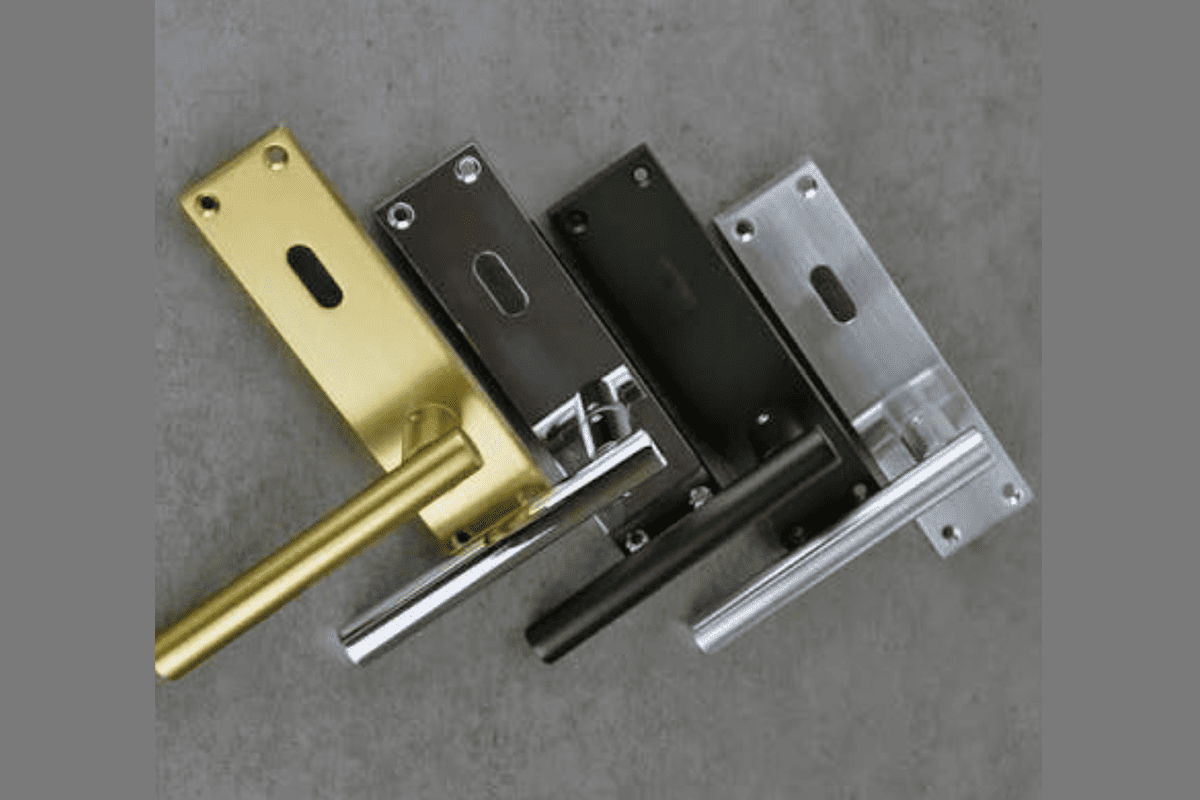
I have seen many buyers start with the same question: “Which handle looks right for this project?” That question matters, but it is not enough. The better question is whether the handle can work reliably inside a complete commercial door hardware system.
Why Are 304 Stainless Steel Push Pull Door Handles a Strong Baseline for Office Buildings?
Office entrances, corridors, meeting rooms, and shared facilities face constant use. A weak handle can loosen, stain, deform, or age badly. This becomes more serious on doors connected to escape routes, where users need fast, clear, and predictable operation.
For many office and commercial projects, 304 stainless steel push pull door handles are a strong baseline because they offer corrosion resistance, high mechanical strength, clean appearance, and stable performance under frequent use. They are not emergency exit devices by themselves, but they are often suitable for fire-rated door projects when matched with compliant hardware and verified documents.
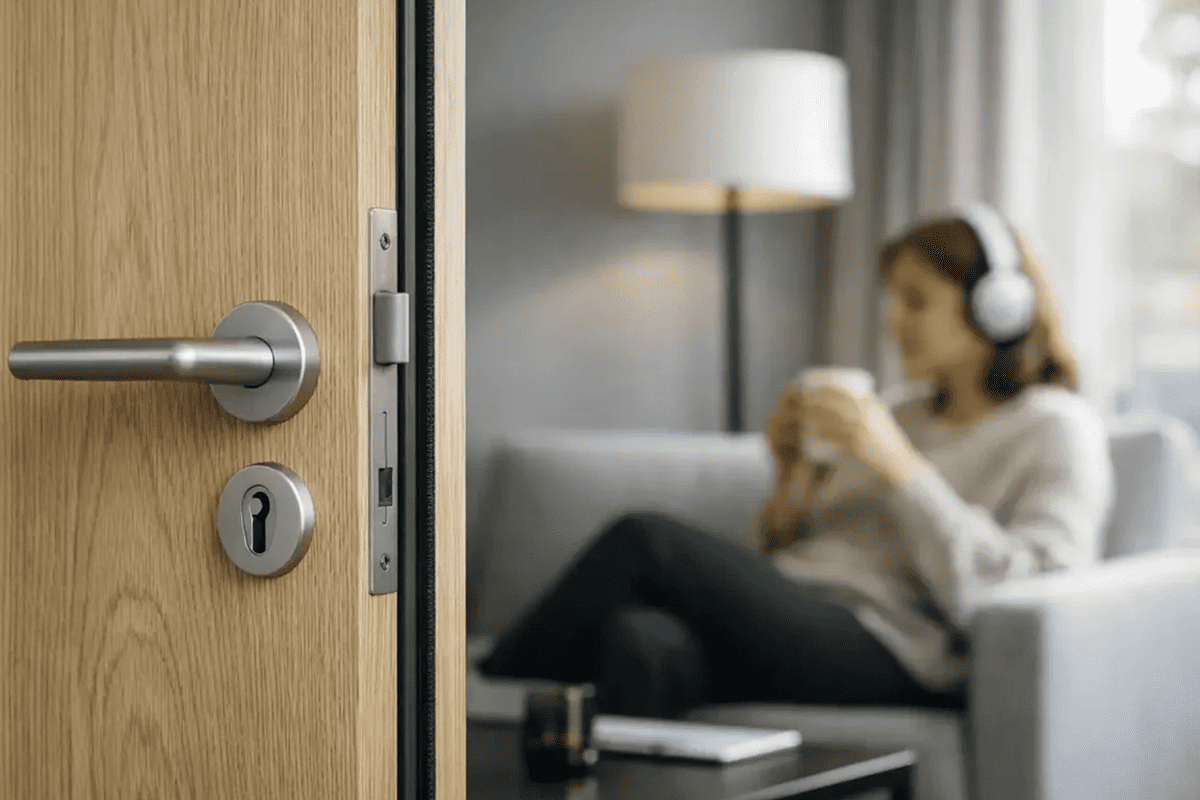
Why 304 stainless steel matters in commercial hardware
In my experience working with door manufacturers and hardware import customers, buyers often ask about finish first. They ask for satin stainless steel, polished stainless steel, black PVD, or custom colors. Finish is important, but the base material is more important.
304 stainless steel is widely used in architectural hardware because it balances strength, corrosion resistance, processability, and cost.2 For office buildings, this matters because handles are touched hundreds or thousands of times per week.
Compared with lower-grade materials, 304 stainless steel usually gives buyers a safer specification starting point:
| Material option | Common benefit | Common risk in office projects | Typical buyer note |
|---|---|---|---|
| 304 stainless steel | Strong corrosion resistance and durability | Higher cost than low-grade alternatives | Good baseline for commercial use |
| 201 stainless steel | Lower cost | Weaker corrosion resistance in humid or coastal markets | Verify market conditions carefully |
| Zinc alloy | Flexible decorative designs | May be less suitable for heavy-use doors | Better for selected interior applications |
| Aluminum | Lightweight and economical | Can dent or wear depending on design | Check wall thickness and fixing method |
| Brass | Premium appearance | Higher cost and finish maintenance | Often selected for luxury projects |
Why I avoid choosing only by appearance
A beautiful handle can still be a poor project choice. I have seen samples that looked good in photos but failed practical checks after closer inspection. The problems were simple:
- The tube wall was too thin.
- The fixing screws were weak.
- The rose or mounting plate had poor stability.
- The surface treatment looked uneven.
- The handle shape was decorative but uncomfortable.
- The supplier could not provide clear product drawings or test documents.
For procurement teams, these issues create more than aesthetic risk. They create installation delays, warranty disputes, and project acceptance problems.
What makes 304 stainless steel practical for office egress doors?
A 304 stainless steel handle is practical because it supports three buyer priorities at once:
Durability
Office doors are high-frequency products.3 The handle must resist repeated pulling and pushing without loosening quickly.Corrosion resistance
Office buildings may include humid entrance areas, cleaning chemicals, or coastal environments. 304 stainless steel performs well in many of these conditions.Clean design compatibility
Stainless steel fits glass doors, wooden doors, steel doors, and aluminum-framed doors. This makes it useful for one-stop hardware sourcing.
However, I always keep one boundary clear. Push pull door handles are not panic bars or certified emergency exit devices.4 If a door is part of a required escape route, the buyer must confirm the full system with project consultants, fire-door suppliers, and local authorities.
A strong handle supports reliable use. It does not replace compliant egress hardware.
For SDH Hardware projects, I usually recommend that buyers confirm the door type, opening direction, fire-rated requirement, lock function, closer grade, and certification needs before finalizing the handle model. This small step prevents many expensive mismatches.
How Do Double-Bent Push Pull Door Handles Support Intuitive Use?
A handle can slow users down if it is confusing, sharp, decorative, or difficult to grip. In normal office traffic, this creates annoyance. During urgent movement, poor hardware can create hesitation, especially for visitors who do not know the building.
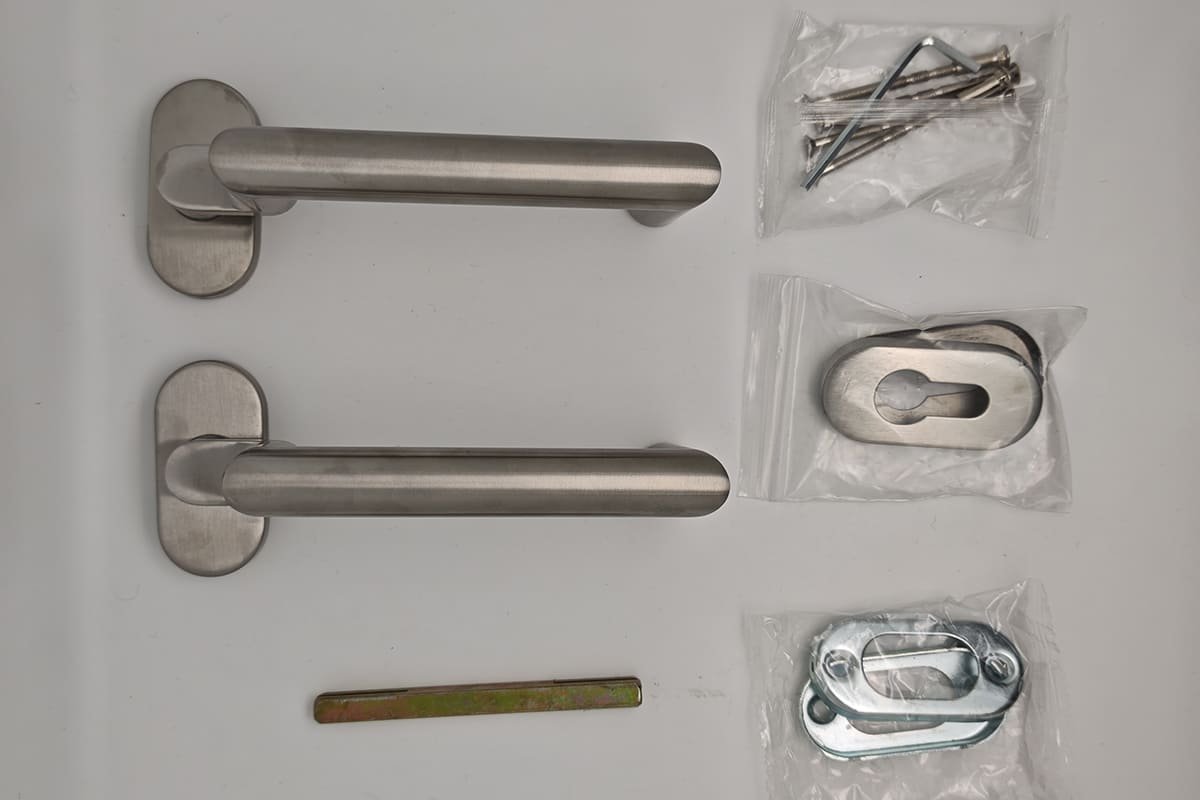
Double-bent push pull door handles support intuitive use because the curved return shape gives users a clear pulling point, a comfortable hand position, and fewer awkward edges.5 In commercial offices, this simple form is often easier to understand than highly decorative handles, but it must still be matched with the correct exit-door hardware system.
What “double-bent” means in practical terms
A double-bent handle usually has a bar or tube form with both ends returning toward the door surface. This design is common in commercial buildings because it is simple, strong, and familiar.
The shape matters more than some buyers expect. A user should know immediately where to place the hand and what action to take. In a busy office corridor, people do not want to study the door hardware. They want to move.
A double-bent form helps because it provides:
- A visible grip zone
- A comfortable pulling angle
- A less decorative and more functional shape
- Reduced risk of snagging compared with some protruding forms
- A clean match with stainless steel door accessories
Why intuitive design supports safer movement
Emergency egress is not only about hardware strength. It is also about human behavior. In stressful situations, people tend to use the most obvious action.6 If a door requires pulling, the pull handle should make that action clear. If a door requires pushing, the push side should also be clear, often with a push plate or suitable trim.
This is why I discourage overly artistic handles on many commercial office escape routes. Decorative handles may be acceptable in low-traffic interior areas, but they can create uncertainty when users need speed.
Here is a simple procurement comparison:
| Handle design | User clarity | Commercial durability | Egress-route suitability |
|---|---|---|---|
| 304 stainless steel double-bent handle | High | High when properly made | Good as part of a compliant system |
| Decorative sculptural handle | Medium to low | Depends on design | Needs careful review |
| Thin economy pull handle | Medium | Often lower | Risky for heavy-use doors |
| Flush pull | Low for fast pulling | Good in selected uses | Not ideal for many main exit doors |
| Panic bar / exit device | Very high for push egress | Project-specific | Required in many regulated exits, depending on code |
Important distinction: pull handle versus panic hardware
I want to be very direct here. A double-bent pull handle may help users pull a door naturally, but it is not the same as a panic bar or certified exit device.
In many commercial buildings, required exit doors may need specific hardware that allows quick opening from the egress side.7 This may include:
- Panic exit devices
- Emergency escape lock functions
- Fire-rated lock bodies
- Self-closing devices
- Certified latches and strikes
- Hardware tested with the door assembly
The handle is one visible part of the door set. It should not be treated as the complete safety solution.
Practical sizing and shape considerations
Buyers often ask me what size they should choose. There is no universal answer, but several points help:
- Longer handles can improve visibility and comfort on taller commercial doors.
- Tube diameter should feel stable without being bulky.
- Projection from the door must allow comfortable grip without creating obstruction.
- Fixing centers should match the door structure and reinforcement.
- Back-to-back fixing is often preferred for paired pull handles.
For office projects, I usually ask buyers to share door drawings before production confirmation. The drawing helps verify handle length, fixing hole distance, door thickness, and accessory compatibility. This is especially important for OEM or ODM orders, where small measurement errors can affect installation across hundreds or thousands of doors.
What Hardware Must Be Matched With Push Pull Door Handles for Emergency Egress?
The biggest procurement mistake is treating the handle as a separate item. A handle may pass visual inspection, but the door can still fail functional review. Emergency egress depends on the whole door opening, not one visible component.
Push pull door handles must be matched with the lock body, latch, cylinder function, door closer, hinges, strike plate, door swing, fire rating, and local egress rules. The handle can support clear operation, but faster and safer emergency movement requires a complete, compatible, and properly certified exit-door hardware system.
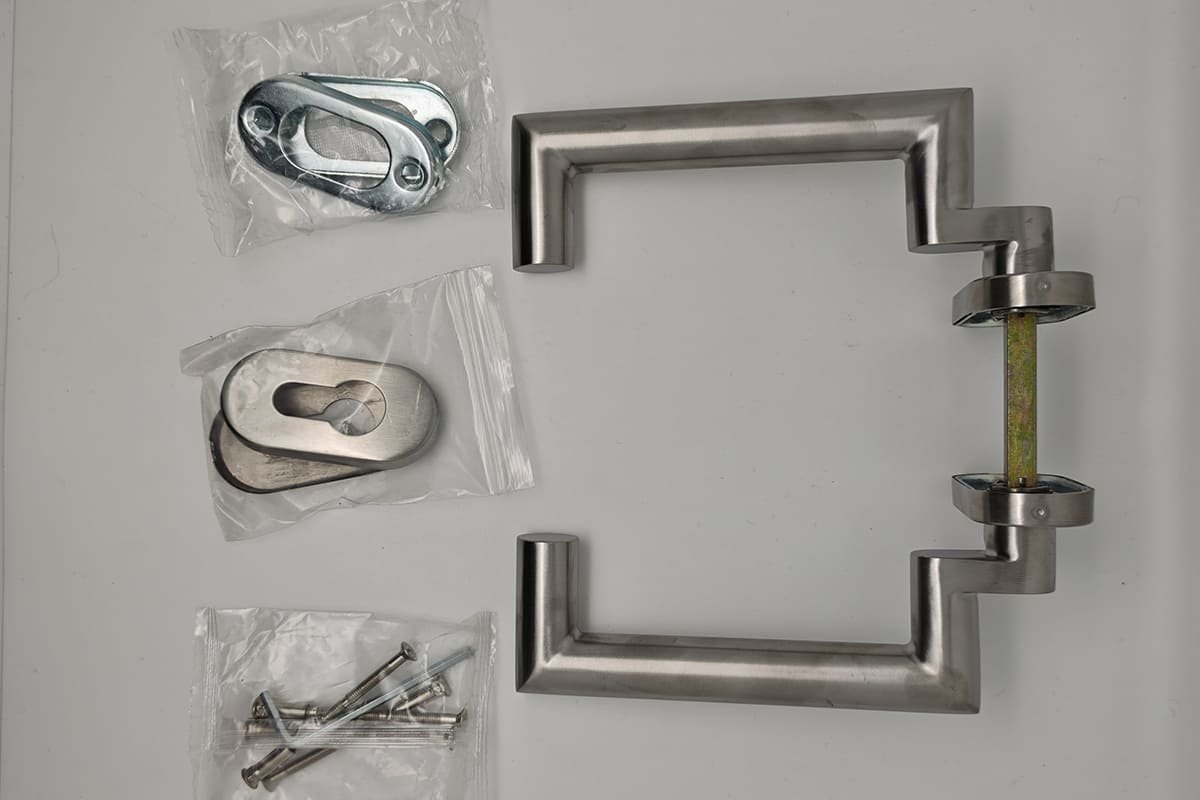
The handle is only one part of the door system
In office projects, buyers sometimes separate hardware into different purchase lines. One supplier provides handles. Another provides locks. Another provides closers. Another supplies the door leaf. This can work, but it increases compatibility risk.
A complete door opening includes many parts:
- Door leaf
- Frame
- Hinges or concealed hinges
- Lock body
- Cylinder
- Lever trim or pull handle
- Strike plate
- Door closer
- Door stopper or coordinator
- Fire seals, where required
- Signage, where required
- Panic or emergency exit device, where required
If one part is wrong, the whole opening can perform poorly.
What must be checked before buying?
I recommend that buyers create a hardware schedule before final procurement. This schedule should connect each door type with the required hardware set.
| Check item | Why it matters | Buyer action |
|---|---|---|
| Door swing direction | Egress doors often have specific opening requirements8 | Confirm with project drawings and local regulations |
| Lock function | Wrong function can block escape | Verify escape, classroom, passage, or privacy function as needed |
| Latch compatibility | Latch must work with closer and strike | Check lock body and strike drawings |
| Door closer strength | Door must close reliably after opening | Select by door width, weight, and usage |
| Hinge capacity | Sagging affects latch and closing | Match hinges to door weight and fire rating |
| Fire-rated requirement | Hardware may need tested documents | Verify certificates for the door assembly |
| User side operation | Push side and pull side may need different hardware | Confirm trim and signage |
| Local building code | Rules vary by country and project type | Ask qualified local professionals |
Fire-rated door project compatibility
Many buyers ask whether stainless steel handles are “fireproof.” I avoid that word because it can be misleading. A better way to say it is this:
304 stainless steel handles can be suitable for fire-rated door projects when they are matched with compliant door hardware and the required certification documents.9
For regulated projects, buyers should not rely on material alone. They should verify:
- CE documents where applicable
- Fire-rated certification documents
- Product drawings
- Test reports or declarations required by the target market
- Door assembly compatibility
- Installation instructions
- Factory inspection records, when required
At SDH Hardware, we work with CE and fire-rated standard requirements across our core product lines. Still, I always advise buyers to check the specific document scope. A certificate should match the product type, material, configuration, and intended application. A general statement is not enough for serious project procurement.
Why the closer and lock often decide real egress performance
A well-made handle feels good in the hand, but the lock and closer often decide whether the door opens and closes correctly.
For example:
- A wrong lock function can make the door difficult to open from the escape side.
- A weak closer may fail to close a fire-rated door after use.10
- An overly strong closer may make the door difficult for some users to open.11
- Poor hinge alignment can cause the latch to bind.
- Wrong strike positioning can make the door stick under pressure.
These problems may not appear during sample review. They often appear during site installation. That is why I prefer to review the complete door hardware set before mass production.
Procurement lesson from project work
I once reviewed a buyer inquiry where the customer focused heavily on the handle finish. They wanted a premium satin stainless steel look for an office building. The finish was easy. The real issue was that some doors were fire-rated corridor doors, and some were ordinary office room doors. They needed different hardware combinations.
That type of situation is common. A single handle design may be used across the building for visual consistency, but the hardware behind it must change by door function. This is where supplier experience becomes valuable.
How Should Buyers Evaluate Suppliers for Push Pull Door Handles?
A low price can look attractive during bidding, but poor supplier evaluation can create larger costs later. Buyers may face missing certificates, inconsistent finish, weak welding, incorrect drawings, or delayed replacement parts after installation.
Buyers should evaluate push pull door handles by reviewing material grade, wall thickness, fixing method, surface finish, drawings, certification documents, production capacity, inspection process, and system-matching support. A qualified supplier should help confirm whether the handle works with locks, closers, hinges, door types, and project requirements.

What I look for in a commercial handle supplier
For door manufacturers, hardware brands, and importers, the supplier is not just selling a handle. The supplier is part of the project risk chain. If the supplier lacks technical control, the buyer inherits the risk.
When I evaluate a supplier or help a customer prepare specifications, I focus on these points:
- Material traceability
- Stable stainless steel grade
- Consistent tube diameter and wall thickness
- Reliable welding and bending
- Strong fixing accessories
- Surface treatment consistency
- Accurate drawings
- Packing protection
- Inspection before shipment
- Document support for CE or fire-rated projects
At SDH Hardware, our factory-direct model helps us control these details more closely. We manufacture architectural door hardware with independent production operations, and our team supports standardized and customized orders. However, I still encourage buyers to inspect samples and verify documents before placing bulk orders.
Sample review checklist
A sample should be tested like a project component, not admired like a showroom item. Here is a practical checklist:
| Review point | What to check | Why it matters |
|---|---|---|
| Material | Confirm 304 stainless steel if specified | Prevents lower-grade substitution |
| Finish | Check color, brushing direction, and defects | Ensures batch consistency |
| Grip comfort | Hold and pull the handle repeatedly | Confirms intuitive use |
| Fixing strength | Review screws, bolts, and mounting plates | Reduces loosening risk |
| Dimensions | Confirm length, diameter, projection, hole centers | Prevents installation problems |
| Edge quality | Check corners, welds, and polishing | Improves safety and appearance |
| Packaging | Inspect protection method | Prevents transport damage |
| Documents | Review certificates and drawings | Supports project approval |
Questions buyers should ask before ordering
I suggest that importers and brand customers ask direct questions before confirming an order:
- Can you provide product drawings before production?
- Can the handle be supplied in 304 stainless steel?
- What surface treatments are available?
- Can you support custom logo stamping or laser marking?
- Can you match the handle with locks, hinges, cylinders, and door closers?
- Can you provide CE or fire-rated documents where applicable?
- What inspection process is used before shipment?
- Can you support OEM or ODM development if our market needs a specific size?
These questions make the supplier’s real ability visible. A supplier that only replies with price may not be the right partner for commercial building projects.
Why one-stop sourcing can reduce mismatch risk
Office projects often need many hardware categories. A buyer may need mortise locks, lever handles, butt hinges, concealed hinges, Euro cylinders, pull handles, door accessories, and custom packaging. If every item comes from a different source, the buyer must manage compatibility alone.
A one-stop hardware partner can help reduce that burden. At SDH Hardware, our product range covers more than 3,000 architectural hardware articles. This helps buyers align handle design with lock type, cylinder standard, hinge capacity, and finish series.
Still, one-stop sourcing should not replace professional project review. For application-specific decisions, buyers should involve qualified architects, fire consultants, door manufacturers, and local code professionals. The supplier can support selection and documentation, but local approval belongs to the project authority.
Red flags in supplier selection
I would be cautious if a supplier shows these signs:
- They cannot confirm the stainless steel grade.
- They use vague terms like “high quality steel” without details.
- They cannot provide drawings.
- They claim the handle alone makes a door fire-rated.
- They confuse pull handles with panic exit devices.
- They cannot explain fixing methods.
- They avoid sample inspection.
- They offer certificates that do not match the product.
- They cannot support batch consistency for color or finish.
For B2B buyers, these red flags matter because commercial hardware is not a one-time decorative purchase. It affects installation, brand reputation, after-sales service, and project compliance.
Frequently Asked Questions
Are push pull door handles the same as panic bars?
No. Push pull door handles are grip or push components used to operate doors, while panic bars are certified exit devices designed for emergency egress in specific applications. Some projects require panic hardware by local code, so buyers should verify requirements with qualified professionals.
Is 304 stainless steel better than 201 stainless steel for office door handles?
304 stainless steel generally offers better corrosion resistance than 201 stainless steel, especially in humid, coastal, or high-cleaning environments.12 For commercial office projects, I often treat 304 as a stronger baseline. Buyers should still confirm wall thickness, fixing strength, finish quality, and supplier documentation.
Can double-bent pull handles be used on fire-rated doors?
They can be suitable for fire-rated door projects when matched with compliant locks, hinges, closers, latches, and required certification documents. The handle material alone does not make the door fire-rated. Buyers should verify the complete door assembly and local fire requirements.
What size push pull door handle is best for an office building?
The best size depends on door height, width, material, traffic level, and design intent. Commercial office doors often use longer handles for better visibility and comfort. Buyers should confirm length, tube diameter, projection, fixing centers, and door thickness before production.
What documents should buyers request from a handle supplier?
Buyers should request product drawings, material specifications, finish details, inspection records, and applicable CE or fire-rated certification documents. For regulated projects, the documents should match the exact product and application. Local consultants should confirm whether the documents meet project approval requirements.
Conclusion
The right push pull door handles for office buildings are simple, durable, intuitive, and compatible with the full exit-door hardware system. In many commercial projects, I see 304 stainless steel double-bent handles as a practical baseline because they combine strength, corrosion resistance, and clean design. However, real emergency egress safety depends on the lock, closer, hinges, door swing, certification scope, and local regulations. If you are sourcing commercial door hardware for an office project, contact SDH Hardware to review your handle specifications, drawings, finishes, and matching hardware set before bulk production.
"Permissible Egress Door Locking Arrangements", https://www.nfpa.org/news-blogs-and-articles/blogs/2021/07/09/swinging-egress-door-operation-permissible-egress-door-locking-arrangements. Model egress and fire-door standards address doors as complete openings whose operation depends on compatible hardware, latching, closing, swing, and documentation requirements. Evidence role: expert_consensus; source type: institution. Supports: Model life-safety and fire-door standards treat door operation, latching, closing, swing direction, and listed or documented hardware as coordinated parts of the door opening.. Scope note: This would support the system-level principle, not prove that any specific handle model is compliant. ↩
"Stainless steel", https://en.wikipedia.org/wiki/Stainless_steel. Materials references describe Type 304 stainless steel as a widely used austenitic grade with good corrosion resistance and formability, supporting its use as a practical hardware material. Evidence role: general_support; source type: encyclopedia. Supports: Type 304 stainless steel is a common austenitic stainless steel grade known for corrosion resistance, formability, and broad commercial use.. Scope note: Such sources support general material properties, not the performance of a specific handle design. ↩
"087100 – DOOR HARDWARE - Facilities and Campus Services", https://fcs.cornell.edu/087100-door-hardware. ANSI/BHMA door-hardware standards use graded cycle testing to classify the durability of commercial hardware, supporting the premise that office door components are specified for repeated operation. Evidence role: general_support; source type: institution. Supports: Commercial hardware standards classify durability using cycle testing, reflecting the expectation of repeated operation in commercial settings.. Scope note: Cycle-test standards do not measure traffic volume in a particular office building. ↩
"Panic and Fire Exit Hardware", https://www.fairfaxcounty.gov/fire-ems/fire-marshal/panic-and-fire-exit-hardware. Exit-device standards and model building codes define panic hardware as listed hardware intended to unlatch a door for egress when actuated, distinguishing it from ordinary push-pull trim. Evidence role: definition; source type: institution. Supports: Panic hardware is a defined and tested exit-device category, distinct from ordinary pull handles or push plates.. ↩
"An analysis of handle designs for reducing manual effort", https://stacks.cdc.gov/view/cdc/204116. Human-factors research on affordances supports the view that visible and graspable controls can cue the intended user action, which provides contextual support for using clear pull-handle forms on doors. Evidence role: mechanism; source type: paper. Supports: Human-factors or affordance research showing that visible, graspable controls help users infer intended actions.. Scope note: This would be contextual support unless the source specifically tests double-bent door handles. ↩
"Modeling Human Behavior during Building Fires", https://tsapps.nist.gov/publication/get_pdf.cfm?pub_id=861621. Evacuation-behavior research indicates that under stress and time pressure, occupants rely heavily on salient environmental cues and familiar actions, supporting the need for clear door-operation cues. Evidence role: mechanism; source type: research. Supports: Evacuation and human-behavior research indicating that stress and time pressure increase reliance on clear cues and familiar actions.. Scope note: The evidence would support general user-behavior principles rather than quantify performance for this handle type. ↩
"Panic and Fire Exit Hardware", https://www.fairfaxcounty.gov/fire-ems/fire-marshal/panic-and-fire-exit-hardware. Model egress codes require doors in the means of egress to be openable from the egress side under prescribed conditions and require panic hardware for certain occupancies and occupant loads. Evidence role: general_support; source type: institution. Supports: Model building and life-safety codes require egress doors to be openable from the egress side and require panic hardware in specified occupancies or conditions.. Scope note: The exact trigger for panic hardware depends on the adopted local code, occupancy, and door location. ↩
"1910.36 - Design and construction requirements for exit ...", http://www.osha.gov/laws-regs/regulations/standardnumber/1910/1910.36. Public safety regulations and model codes specify swing and opening requirements for exit-route doors, including conditions in which doors must swing in the direction of exit travel. Evidence role: general_support; source type: government. Supports: Safety regulations or model codes specify conditions under which exit-route doors must be side-hinged and swing in the direction of egress travel.. Scope note: Requirements vary by jurisdiction, occupancy classification, occupant load, and door location. ↩
"Fire Doors and NFPA 80 FAQs", https://www.nfpa.org/news-blogs-and-articles/blogs/2025/04/11/fire-doors-faqs. Fire-door standards treat rated doors as assemblies and require compatible, documented, or listed hardware components, supporting the point that handle material alone does not establish fire-rated suitability. Evidence role: expert_consensus; source type: institution. Supports: Fire-door standards and listing practices treat fire doors as assemblies whose hardware must be compatible, listed, labeled, or documented for the rated application.. Scope note: This supports the certification principle, not the compliance of any specific 304 stainless steel handle. ↩
"Fire Doors and NFPA 80 FAQs", https://www.nfpa.org/news-blogs-and-articles/blogs/2025/04/11/fire-doors-faqs. Fire-door standards require fire doors to be self-closing or automatic-closing and to latch when closed, supporting the claim that an inadequate closer can compromise fire-door function. Evidence role: mechanism; source type: institution. Supports: Fire-door standards require rated doors to close and latch properly, making closer selection and adjustment relevant to fire-door function.. ↩
"Chapter 4: Entrances, Doors, and Gates", https://www.access-board.gov/ada/guides/chapter-4-entrances-doors-and-gates/. Accessibility standards address maximum opening force for certain doors, supporting the claim that excessive closer resistance can make door operation difficult for some users. Evidence role: general_support; source type: government. Supports: Accessibility standards limit or address door-opening force for certain doors, showing that excessive closer force can impede users.. Scope note: Opening-force limits differ by door type and jurisdiction, and some exterior or fire-door conditions may be treated differently. ↩
"Corrosion Behavior of Sensitized AISI 304 Stainless Steel in ...", https://pmc.ncbi.nlm.nih.gov/articles/PMC9740934/. Comparative materials literature reports higher general corrosion resistance for Type 304 stainless steel than for Type 201 in many service environments, including conditions where chloride exposure may be relevant. Evidence role: general_support; source type: paper. Supports: Comparative corrosion data or materials literature showing that 304 stainless steel generally outperforms 201 stainless steel in corrosion resistance.. Scope note: Actual corrosion performance still depends on surface finish, maintenance, exposure chemistry, and installation environment. ↩