
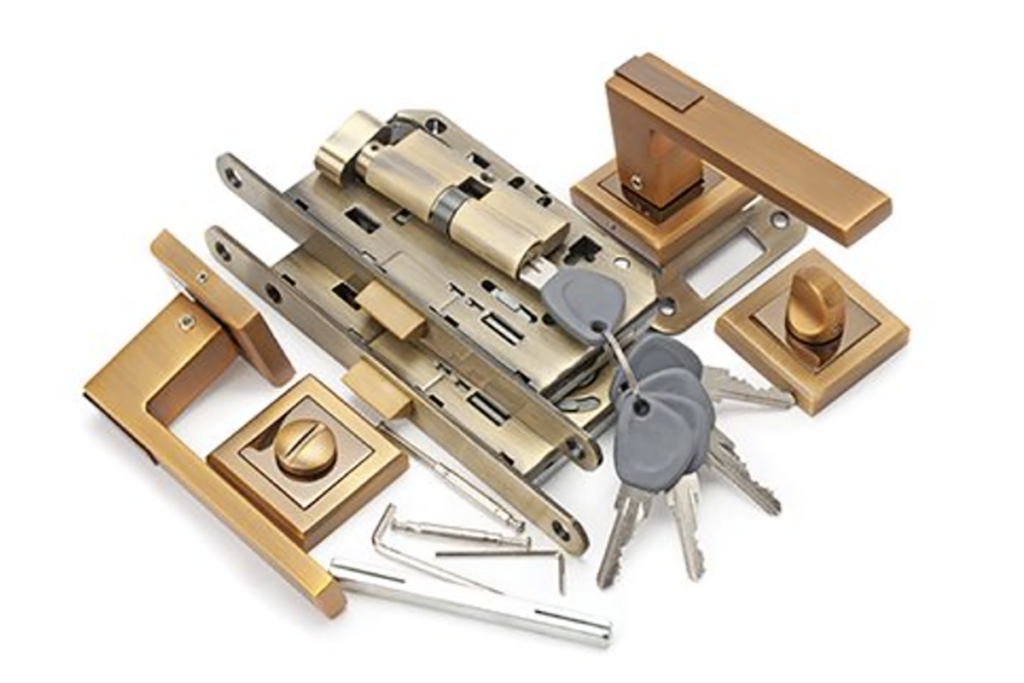
Commercial Storefront Doors Explained: Glass, Aluminum, Hardware, & System Design
Commercial storefront doors can look simple from the street, but a wrong hardware choice can cause early failure, poor locking performance, or expensive after-sales replacement. Buyers often compare only glass, aluminum, or price. I prefer to start with the full door system, because the right hardware match makes the entrance practical, durable, and easier to source.
Commercial storefront doors are entrance door systems used in shops, offices, showrooms, and public-facing commercial spaces.1 They usually fall into two groups: frameless glass storefront doors and aluminum profile storefront doors. The correct choice depends on door structure, glass thickness, profile size, traffic level, locking method, hardware compatibility, and local project requirements.
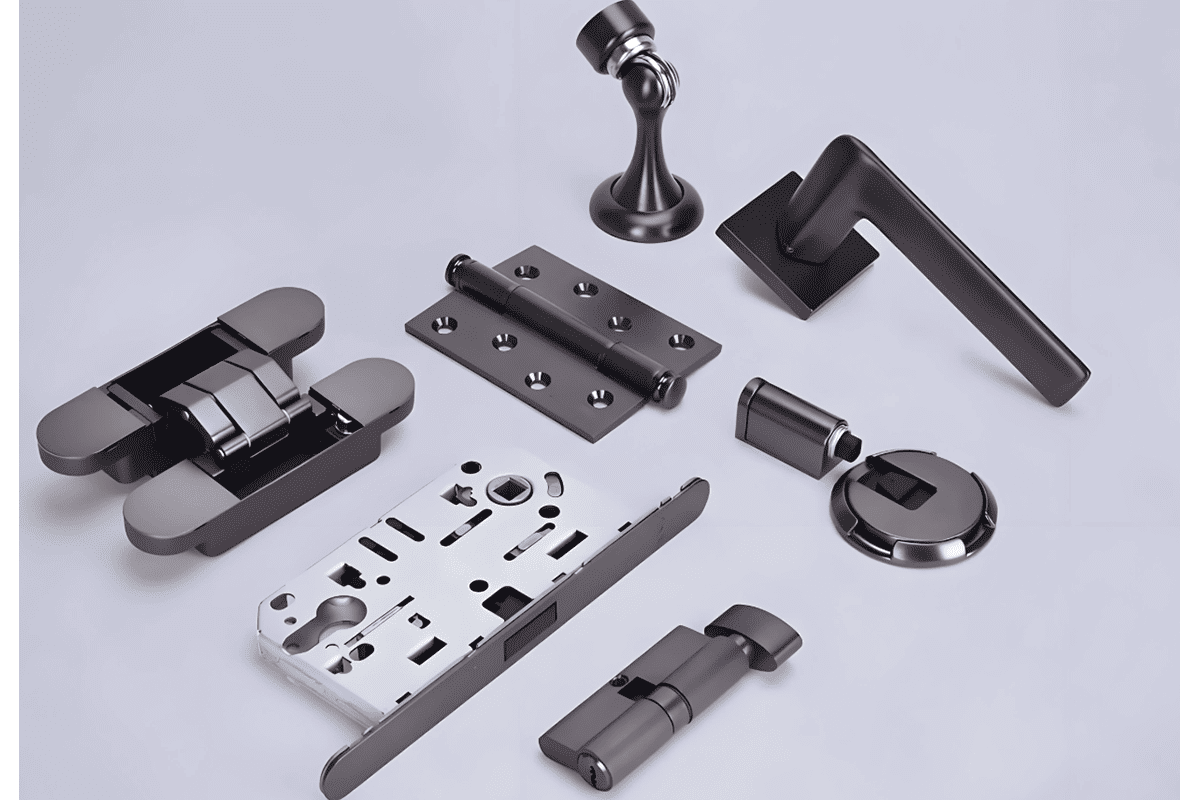
A storefront entrance is not only a visual element. It is also a moving mechanical system. When I review a hardware inquiry from a door factory or importer, I always look beyond appearance and ask how the door will open, close, lock, and survive daily use.
What Are Commercial Storefront Doors in a B2B Procurement Context?
Commercial storefront doors create the first physical contact between a business and its customers. The problem is that many buyers treat them as a single product category. That can lead to mismatched hardware, unclear specifications, and delayed purchasing decisions when bulk orders move into production.
Commercial storefront doors are complete entrance systems, not just door leaves.2 A practical specification should consider the door material, frame structure, opening method, door weight, usage frequency, locking requirement, and compatible hardware set. For procurement teams, this system-based view reduces sourcing mistakes and improves long-term performance.
Why I define the door as a system
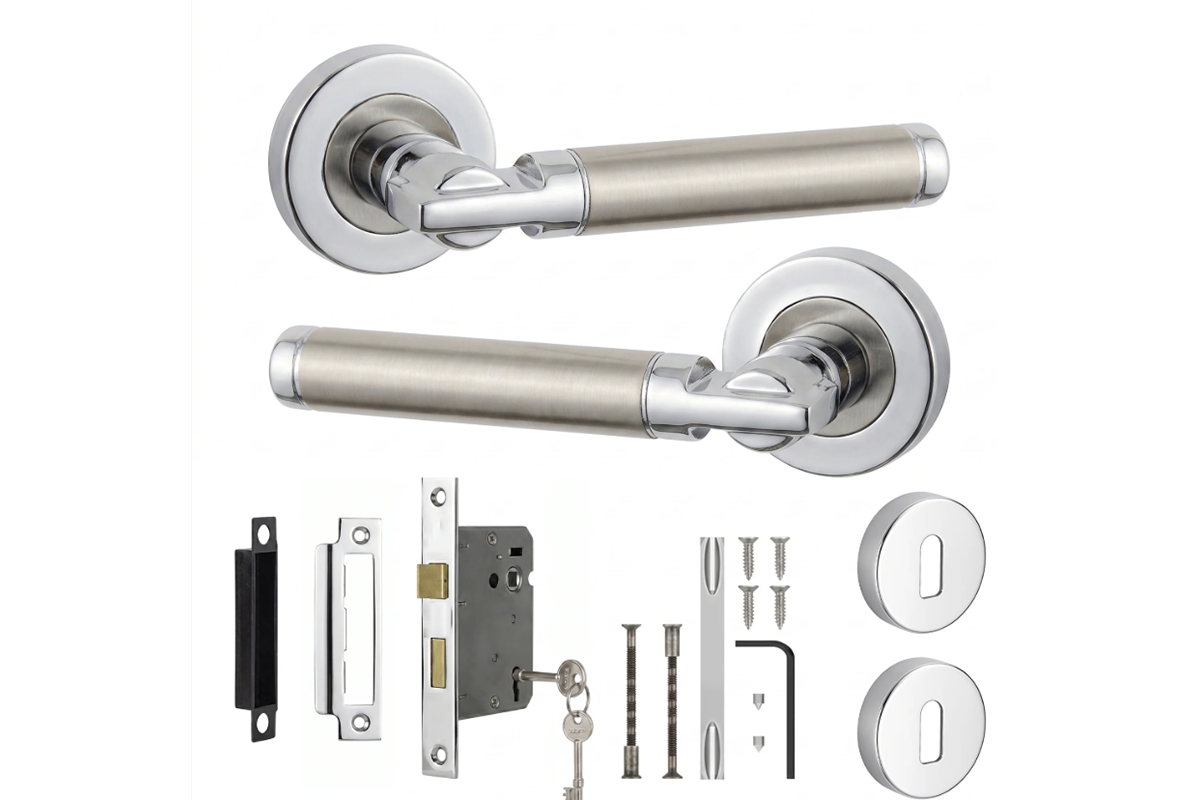
In my work with architectural door hardware buyers, I often see one recurring issue: the door is selected first, and the hardware is discussed too late. This creates risk because storefront hardware is not interchangeable across all door structures.3
A commercial entrance usually includes several connected parts:
- Door leaf: glass panel, aluminum profile door, or framed glass door
- Frame or supporting structure: floor, header, side frame, or aluminum profile frame
- Opening control: floor spring, door closer, pivot, or hinge
- Locking method: mechanical lock, cylinder, electromagnetic lock, or glass door lock
- Operating hardware: pull handles, lever handles, narrow handles, push bars, or accessories
- Finishes and accessories: screws, covers, strike plates, gaskets, and visible trim
If one part does not match, the whole system suffers. A heavy glass door may overload a floor spring.4 A narrow aluminum profile may not accept a standard mortise lock body. A handle may look correct but conflict with the profile depth. A lock may meet the buyer’s price target but fail under high-frequency commercial use.
The two common storefront door families
For procurement evaluation, I usually separate commercial storefront doors into two main types:
| Door type | Typical appearance | Common hardware logic | Main sourcing risk |
|---|---|---|---|
| Frameless glass storefront door | Large glass panel, minimal metal frame | Floor spring, glass clamps, patch fittings, pull handles, glass lock or electromagnetic lock | Glass thickness, door weight, clamp compatibility, locking method |
| Aluminum profile storefront door | Aluminum frame around glass panel | Profile hinges, narrow body lock, narrow handles, cylinder, door closer | Profile width, lock backset, handle fixing, frame structure |
This separation matters because hardware logic changes completely. A frameless glass door relies on glass-supporting fittings and pivot control. An aluminum profile door relies on the profile structure, hinge placement, and lock compatibility.
What buyers should document before sourcing
Before asking for quotations, I recommend that buyers prepare a simple specification sheet. It should include:
- Door type: frameless glass or aluminum profile
- Door size and weight: height, width, thickness, estimated kilograms
- Glass thickness: commonly 10 mm, 12 mm, or project-specific
- Opening direction: single swing, double swing, left/right hand, inward/outward
- Traffic level: light retail, busy shop, office lobby, mall entrance
- Locking requirement: key lock, cylinder lock, access control, magnetic lock
- Market requirement: finish, packaging, certification documents, local expectations
This approach keeps the discussion practical. It also helps suppliers like us at SDH Hardware recommend hardware within our scope: architectural door hardware manufacturing, customization, and B2B supply. Final project compliance, installation details, and local code requirements should still be verified by qualified professionals.
How Do Glass Commercial Storefront Doors Differ From Aluminum Profile Doors?
The difference between glass and aluminum commercial storefront doors is not only visual. The real problem appears when buyers use the same hardware assumptions for both. This can cause wrong lock selection, unstable closing performance, or accessories that cannot be installed correctly.
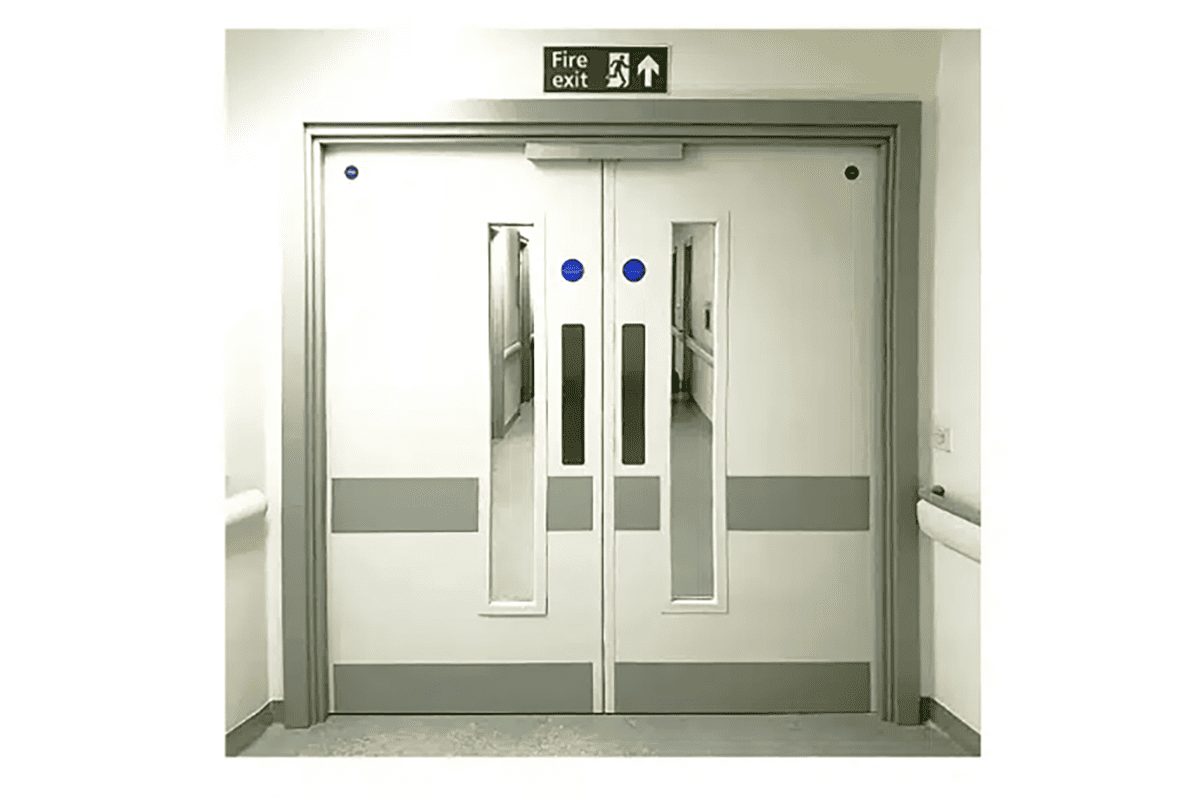
Glass commercial storefront doors usually depend on floor springs, glass clamps or patch fittings, pull handles, and glass-compatible locks.5 Aluminum profile storefront doors use profile hinges, narrow body locks, narrow handles, cylinders, and door closers. Each system needs hardware matched to its structure, weight, and traffic level.
Glass storefront doors: clean appearance, strict compatibility
Frameless glass doors are popular because they create a transparent and modern entrance. They are common in retail stores, showrooms, offices, and commercial interiors. However, the simple look hides several technical decisions.
A glass storefront door usually requires hardware that grips, supports, or controls the glass directly. That means buyers must check:
- Glass thickness
- Door panel weight
- Glass cutout requirements
- Clamp or patch fitting dimensions
- Floor spring capacity
- Locking method
- Opening angle and hold-open function
A floor spring, for example, must match the door width and weight.6 If the spring is undersized, the door may close too quickly, fail to return smoothly, or wear out early. If the glass clamp does not match the glass thickness, installation becomes unsafe or impossible.
Aluminum profile storefront doors: structured, flexible, and hardware-dependent
Aluminum profile storefront doors use a metal frame around the glass. This frame allows different hardware choices, but it also creates dimensional limits. Narrow aluminum stiles often require narrow body locks and matching narrow handles.7
The key measurements usually include:
| Specification | Why it matters |
|---|---|
| Profile width | Determines lock and handle compatibility |
| Profile depth | Affects lock body installation and screw fixing |
| Backset | Controls handle and cylinder position |
| Door weight | Determines hinge and closer selection |
| Frame design | Affects strike plate, closer arm, and seal placement |
I have seen buyers choose a lock body based only on catalogue photos. That creates trouble when the lock case is too wide for the aluminum profile. A few millimeters can decide whether the hardware fits or not.
Procurement comparison
For bulk sourcing, the two systems should be evaluated differently:
| Evaluation point | Glass storefront door | Aluminum profile storefront door |
|---|---|---|
| Main support hardware | Floor spring, patch fittings, clamps | Hinges, closer, profile structure |
| Main operation hardware | Pull handles | Narrow handles or pull handles |
| Common lock choice | Glass lock or electromagnetic lock | Narrow body lock with cylinder |
| Main compatibility risk | Glass thickness and door weight | Profile width and lock dimensions |
| Common buyer priority | Clean design, transparency | Durability, serviceability, profile matching |
Neither type is automatically better. A glass door may suit a premium retail environment. An aluminum profile door may suit higher-traffic entrances where serviceability and lock integration matter. The better question is not “Which door is cheaper?” The better question is: Which door system matches the usage scenario and procurement requirement?
Which Hardware Set Fits Glass Commercial Storefront Doors?
Glass commercial storefront doors create a clean entrance, but their hardware must carry the load without the support of a traditional door frame. The risk is clear. If the floor spring, fittings, handles, or lock do not match the glass, the door can become difficult to adjust and maintain.
A typical glass commercial storefront door hardware set includes a floor spring, glass door clamps or patch fittings, large pull handles, and either an electromagnetic lock or a glass door lock. Buyers should match these parts to glass thickness, door weight, opening frequency, and the required locking method.

Core hardware for frameless glass doors
A common glass storefront configuration includes:
Floor spring
The floor spring controls door closing and supports pivot movement. It should be selected according to door width, height, weight, and traffic frequency.Glass clamps or patch fittings
These fittings connect the glass panel to the pivot system. They must match the glass thickness and installation method.Large pull handles
Pull handles provide a comfortable grip for users. They are often stainless steel and may require specific hole spacing in the glass.Glass door lock or electromagnetic lock
A mechanical glass lock can provide key-based locking. An electromagnetic lock may suit access control systems, but it requires proper power supply and installation planning.Accessory parts
These can include strike boxes, top pivots, bottom pivots, fixing plates, seals, and cover caps.
Key compatibility questions
When I discuss glass door hardware with importers, I usually ask several basic questions before talking about finish or price:
- What is the glass thickness?
- What is the door size?
- What is the estimated door weight?
- Is the door single leaf or double leaf?
- Does the project need mechanical locking or access control?
- What is the expected daily opening frequency?
- Are there any glass cutout drawings already confirmed?
These questions prevent many sourcing errors. For example, a pull handle may require holes drilled in the glass before tempering. If the hole spacing is wrong, the handle cannot be adjusted on site. A patch fitting may require specific glass preparation. A floor spring box may need floor conditions that the installer must confirm.
Hardware selection table for glass storefront doors
| Component | Main purpose | Buyer should verify |
|---|---|---|
| Floor spring | Controls closing and pivot movement | Door weight, width, hold-open need, cycle expectation |
| Patch fitting | Connects glass to pivot system | Glass thickness, cutout, finish, load capacity |
| Glass clamp | Holds glass without full framing | Thickness range, fixing method, edge clearance |
| Pull handle | Allows easy operation | Hole spacing, tube diameter, finish, grip comfort |
| Glass lock | Provides mechanical locking | Glass preparation, key system, strike position |
| Electromagnetic lock | Supports access control | Holding force, voltage, bracket, release method |
Finish and brand consistency
For commercial projects, visible hardware should look consistent. Stainless steel pull handles, patch fittings, and lock covers should have coordinated finishes. Common finishes may include satin stainless steel, polished stainless steel, black, gold, or customized surface treatments.
At SDH Hardware, we often support B2B buyers with customized finishes, logo marking, packaging, and product drawings after order confirmation. However, I always remind buyers that finish matching should be checked with samples when the project has strict visual requirements. Different materials and production processes can create slight tone variation.
Quality control considerations
Glass door hardware should be checked for both appearance and function. In procurement evaluation, buyers can request information about:
- Raw material grade
- Surface treatment process
- Dimensional tolerance
- Load or cycle testing where available
- Packaging protection
- Inspection reports
- Certification documents when relevant
Suppliers may provide CE or fire-rated documents for specific product categories where applicable, but buyers should verify the exact document scope, model number, and project relevance. Storefront door compliance can depend on local rules, installation method, and full system design, so final approval should come from qualified project professionals.
Which Hardware Set Fits Aluminum Commercial Storefront Doors?
Aluminum commercial storefront doors are often more structured than frameless glass doors, but that does not make hardware selection automatic. The main problem is dimensional. A lock, handle, cylinder, hinge, or closer must fit the aluminum profile and still perform under real commercial traffic.
A typical aluminum commercial storefront door hardware set includes aluminum profile hinges, narrow body locks, narrow handles, cylinders, and door closers. Buyers should match the lock body and handle to the profile width, frame structure, backset, traffic level, and regional market expectations.
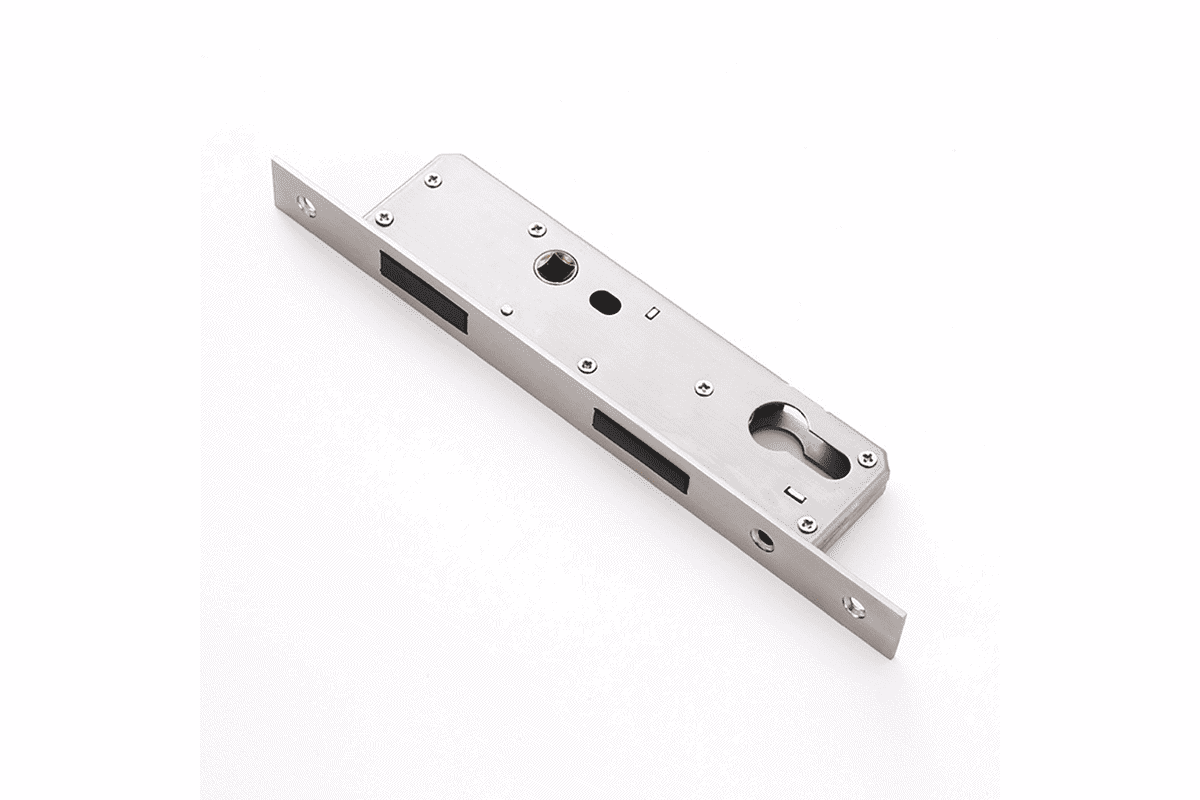
Common hardware for aluminum profile storefront doors
Aluminum profile doors usually use a framed structure. This allows more mechanical lock options than frameless glass doors, but it also creates space limits.
The common hardware set includes:
Aluminum profile hinges
Hinges support the door leaf and carry repeated movement. They must match door weight, profile shape, and fixing points.Narrow body lock
A narrow lock case fits into slim aluminum stiles. The backset, faceplate size, and case depth must match the profile.Narrow handle or lever handle
Handles must align with the lock spindle and fit the available stile width.Euro profile cylinder
The cylinder provides key operation. Length and security level should match the door thickness and buyer market.Door closer
The closer controls closing speed and helps protect the door, frame, and lock from impact.Strike plate and accessories
Strike plates, fixing screws, cover plates, and seals must match the frame design.
The lock body is often the critical point
For aluminum storefront doors, the lock is usually the part that creates the most procurement risk. The buyer may know the door size but not the profile dimensions. Without that information, the supplier cannot confirm whether the lock body will fit.
Key lock measurements include:
| Lock specification | Why buyers should check it |
|---|---|
| Backset | Determines distance from profile edge to handle center |
| Case depth | Must fit inside the profile cavity |
| Faceplate width | Must sit correctly on the profile edge |
| Spindle size | Must match the handle |
| Cylinder type | Must match market preference and keying system |
| Latch/deadbolt design | Must suit traffic and security expectations |
A narrow body lock may look similar across brands, but small differences matter. If the faceplate is too wide, it may overlap the profile. If the case depth is too deep, it may hit internal walls. If the backset is wrong, the handle position may look awkward or become unusable.
Door closer and hinge selection
The door closer should match door width, weight, wind exposure, and traffic level.8 In busy storefronts, a weak closer may lose control quickly. A closer with improper speed adjustment can also affect user comfort.
Hinges should be evaluated for:
- Load capacity
- Screw fixing strength
- Corrosion resistance
- Alignment with profile design
- Finish consistency
- Ease of replacement
For high-traffic commercial entrances, I prefer to discuss lifecycle cost rather than only unit price. A cheaper hinge or closer may save money at purchase, but it can increase service calls if the entrance is used hundreds of times per day.
Practical sourcing checklist
Before placing a bulk order for aluminum storefront door hardware, buyers should confirm:
- Profile drawings or actual profile samples
- Door leaf width, height, and weight
- Hinge quantity and fixing method
- Lock body backset and case depth
- Handle style and spindle size
- Cylinder length and keying requirement
- Door closer mounting method
- Finish and corrosion requirement
- Packaging and labeling requirements
- Inspection standards before shipment
At SDH Hardware, our role is to help buyers match architectural hardware to door types and procurement needs. We manufacture and supply items such as Euro mortise locks, stainless steel lever handles, hinges, cylinders, and door accessories. For aluminum storefront projects, we can discuss OEM/ODM specifications, surface treatments, branding, and inspection requirements. However, final installation and local compliance should be checked by the door system supplier, installer, or project consultant.
How Should Buyers Evaluate Commercial Storefront Doors and Hardware Suppliers?
Commercial storefront doors involve many purchasing decisions, and price pressure can easily dominate the discussion. The problem is that a low-cost hardware set may become expensive if it fails early, does not fit the door, or cannot be replaced consistently in later orders.
Buyers should evaluate commercial storefront doors by matching the hardware set to door structure, usage frequency, security needs, finish requirements, certification documents, and supplier capability. A reliable supplier should provide clear specifications, stable production, quality inspection, customization support, and documents that buyers can verify before bulk orders.
Start with the application, not the catalogue
A catalogue is useful, but it should not be the first decision tool. The application should guide the hardware selection.
I usually suggest this sequence:
Define the door type
Is it frameless glass or aluminum profile?Define the usage scenario
Is it a boutique, office, supermarket, mall entrance, or internal commercial door?Define the traffic level
Will the door open 50 times per day or 1,000 times per day?Define the locking method
Does the buyer need mechanical key locking, access control, or both?Define the hardware package
Which components must be supplied together for compatibility?Define inspection and documentation
What drawings, samples, test information, or certificates should be checked?
This sequence changes the conversation. It moves the buyer away from “Which hardware looks right?” and toward “Which hardware set matches this door structure and market requirement?”
Supplier evaluation criteria
For B2B procurement, buyers should evaluate suppliers on more than product photos. A stronger review includes manufacturing, quality control, customization, and after-sales repeatability.
| Evaluation area | What buyers should ask |
|---|---|
| Product range | Can the supplier support the full hardware set or only one item? |
| Manufacturing capacity | Does the supplier control production or only trade products? |
| Quality control | Are raw materials, production, and finished goods inspected? |
| Customization | Can finishes, logos, packaging, and specifications be adjusted? |
| Technical communication | Can the supplier discuss door type, profile size, and compatibility? |
| Documentation | Are drawings, certificates, and inspection documents available for review? |
| Supply stability | Can the supplier maintain consistent quality across repeat orders? |
SDH Hardware operates as a professional architectural door hardware manufacturer in China, with more than 10 years of specialized production experience and independent factory operations. Our product portfolio covers over 3,000 hardware articles, including Euro mortise locks, stainless steel lever handles, butt hinges, concealed hinges, Euro brass cylinders, and door accessories. This background helps us discuss hardware configuration with door manufacturers, hardware brands, and importers in a practical way.
Certification awareness without overclaiming
Commercial buyers often ask about CE certification, fire-rated documents, or other market documents. These are important, but they should be handled carefully.
Buyers should verify:
- The certificate holder
- Product model number
- Test standard
- Validity period
- Product scope
- Whether the certificate applies to the exact ordered item
- Whether the document satisfies the local project requirement
A hardware certificate does not automatically approve a full storefront door system.9 The complete installed entrance may include glass, frame, seals, hardware, electrical locks, access control, and site conditions. Local fire, safety, accessibility, and building requirements should be reviewed by qualified professionals.10
Conclusion
Commercial storefront doors should be evaluated as complete systems, not as separate glass panels, aluminum profiles, or hardware items. A glass storefront door needs hardware matched to glass thickness, weight, and locking method.11 An aluminum profile storefront door needs locks, handles, hinges, cylinders, and closers matched to the profile and traffic level. If you are sourcing storefront door hardware for bulk supply, I recommend starting with drawings, usage details, and compatibility checks. Contact SDH Hardware to discuss a practical hardware configuration for your next commercial storefront project.
"Storefront", https://en.wikipedia.org/wiki/Storefront. A building-design reference describes storefront systems as entrance and facade assemblies used in commercial buildings, supporting the article's use of the term for public-facing commercial entrances; the source provides a general definition rather than a procurement-specific classification. Evidence role: definition; source type: institution. Supports: A neutral building-design source should confirm that storefront systems form part of commercial building entrances and public-facing facades.. Scope note: Contextual support for terminology, not proof of suitability for any specific storefront door product. ↩
"CHAPTER 2 DEFINITIONS - ICC Digital Codes", https://codes.iccsafe.org/content/IBC2024P1/chapter-2-definitions. Building-code and door-assembly references define doors in relation to their associated frames, glazing, and hardware, supporting the article's system-level framing of storefront entrances; the source does not validate any particular hardware configuration. Evidence role: definition; source type: institution. Supports: A standards or code source should show that door performance is assessed at the assembly level, including leaves, frames, glazing, and hardware.. Scope note: Contextual support for system terminology rather than direct evidence about a specific procurement method. ↩
"SECTION 087111 - DOOR HARDWARE (SCHEDULED BY ...", https://fpm.usc.edu/wp-content/uploads/2021/11/087102-USC-HSC-door-hardware-Guide-Specification_1.pdf. Architectural hardware guidance treats hardware selection as dependent on the door assembly, frame, function, and use conditions, supporting the article's statement that storefront hardware is not universally interchangeable; the source gives general selection principles rather than evaluating every storefront type. Evidence role: general_support; source type: institution. Supports: An architectural hardware or standards source should support that hardware selection depends on door construction, frame conditions, and intended application.. Scope note: General support for compatibility principles, not a direct comparison of every hardware category mentioned in the article. ↩
"Door Closer and Floor Spring Guide", https://www.poolewaite.co.uk/door-closer-and-floor-spring-guide?srsltid=AYCX9vIuj0fW19diIsSLIs1x1a4g4-ID3Fuac5swtocnhb2Q0JSJkh_H. Door-control standards classify closers by door size and operating capacity, supporting the article's claim that a floor spring can be overloaded when used beyond the door weight or size for which it is rated; the standard establishes rating logic rather than documenting a specific failure case. Evidence role: mechanism; source type: institution. Supports: A door-control standard should support that closers and floor springs are rated by door size, mass, and operating conditions.. Scope note: Mechanistic support based on rating principles, not direct test evidence for the article's example. ↩
"Complete Patch Fitting and Floor Spring Configuration Guide", https://www.dndglasshardware.com/news/complete-patch-fitting-and-floor-spring-configuration-guide-405331.html. Architectural glazing references describe frameless glass doors as using specialized fittings such as patch fittings, pivots or floor springs, handles, and locks, supporting the article's overview of common glass-door hardware; the source is descriptive and does not establish that every storefront uses all listed components. Evidence role: general_support; source type: education. Supports: A technical glazing or architectural construction reference should identify common components used in frameless glass door assemblies.. Scope note: Contextual support for typical component categories, not a universal specification. ↩
"EN 1154", https://www.uniononline.co.uk/uk/en/help-support/standards-and-legislation/en-1154. Door-closer classification standards link closer power and application limits to door width and mass, supporting the article's statement that a floor spring must be matched to the door's width and weight; the standard offers classification criteria rather than installation approval for a specific project. Evidence role: mechanism; source type: institution. Supports: A door-closer or floor-spring standard should support that device sizing is linked to door width and mass.. Scope note: Directly supports sizing logic but not any individual manufacturer's floor-spring model. ↩
"SECTION 087111 - DOOR HARDWARE (SCHEDULED BY ...", https://fpm.usc.edu/wp-content/uploads/2021/11/087102-USC-HSC-door-hardware-Guide-Specification_1.pdf. Architectural hardware references distinguish narrow-stile aluminum-door locks from standard mortise hardware and relate their use to limited stile width and backset dimensions, supporting the article's compatibility claim; the source provides category-level support rather than validating any specific lock body. Evidence role: mechanism; source type: institution. Supports: A door-hardware reference should support that narrow-stile aluminum doors use locksets with narrow cases and backsets compatible with the stile dimensions.. Scope note: Contextual support for hardware categories and dimensional constraints. ↩
"Door Closer Size Chart: How to Choose the Right Size", https://doorsforpros.com/blog/post/door-closer-size-chart?srsltid=AYCX9vK66_gkIgXkHzI8xEb4oicXCQ5umRh9KRm7mF9vw_nyawCz39Q7. Door-closer standards and technical guidance classify closers by door size, mass, durability grade, and application conditions, supporting the article's statement that closer selection depends on width, weight, exposure, and traffic; such standards do not substitute for project-specific installation review. Evidence role: mechanism; source type: institution. Supports: A closer standard or technical guide should support selecting closer power and grade according to door dimensions, mass, duty cycle, and environmental exposure.. Scope note: Supports the selection factors generally, not the correct closer for any particular entrance. ↩
"QUESTIONS AND ANSWERS ITB 23-25 ...", https://www.mywaltonfl.gov/DocumentCenter/View/42187. Fire-door and building-code references treat doors, frames, glazing, and hardware as parts of an assembly whose approval depends on the applicable listing and installation conditions, supporting the article's caution that a hardware certificate alone does not approve a complete storefront system; the support is strongest for regulated assemblies such as fire-rated doors. Evidence role: expert_consensus; source type: institution. Supports: A code or certification source should support that certified components must be evaluated within the scope of the complete door assembly and its listing or code requirements.. Scope note: Contextual support, especially applicable to rated or code-regulated assemblies. ↩
"Chapter 4: Entrances, Doors, and Gates", https://www.access-board.gov/ada/guides/chapter-4-entrances-doors-and-gates/. Government accessibility standards and building-code materials regulate entrance and door features such as accessible routes, door operation, clearances, and safety provisions, supporting the article's statement that local requirements require qualified review; the source does not address every jurisdiction's storefront rules. Evidence role: general_support; source type: government. Supports: A government accessibility or building-safety source should show that entrances and doors are subject to regulated requirements such as clear width, hardware operation, closing force, egress, or fire safety.. Scope note: General regulatory support; local code details vary by jurisdiction and project. ↩
"Heavy Glass Door Design Manual", https://www.glass.org/sites/default/files/2023-09/Heavy%20Glass%20Door%20Design%20Manual_2021.pdf. Technical guidance for frameless glass-door fittings specifies compatibility by glass thickness, load capacity, and locking or fixing arrangement, supporting the article's conclusion that glass storefront hardware must match thickness, weight, and locking method; the source gives engineering context rather than certifying a specific product combination. Evidence role: mechanism; source type: research. Supports: A technical glass or architectural hardware source should support that glass fittings and locks are specified by glass thickness, load capacity, and installation method.. Scope note: Mechanistic support for compatibility factors, not direct approval of any particular storefront assembly. ↩
