

CE Mark Is Not Fire Rating: Common Mistakes When Sourcing Fire Door Hardware
Fire door hardware is often sourced under pressure, and a CE mark can look like enough proof at first glance. The problem starts when buyers treat CE compliance and fire performance as the same thing. That mistake can delay projects, create compliance risk, and damage trust. I prefer to separate the documents early and verify each requirement before confirming an order.
A CE mark is not the same as a fire rating. CE marking shows that a product meets applicable European regulatory requirements, while fire-rated certification shows that the product has been tested for performance in a fire door assembly.1 Buyers should verify both documents, plus test scope, door type, hardware model, and installation conditions.

When I speak with door factories and hardware wholesalers, this confusion appears more often than expected. The best sourcing decision is not simply to ask, “Do you have CE?” The better question is, “Which standard, which product model, which test report, and which door assembly does this document cover?”
Why Does CE Marking Not Prove Fire Door Hardware Is Fire-Rated?
CE marking can be useful, but it can also create false confidence. Buyers see a formal logo, assume full compliance, and move forward too quickly. The risk becomes serious when the project involves fire doors, because fire door hardware must support the tested door assembly under fire conditions.2
CE marking confirms conformity with applicable EU requirements for a product category. It does not automatically prove fire resistance. Fire-rated certification or fire test evidence must show that the specific hardware was assessed for use on fire doors, under defined standards, time ratings, configurations, and installation methods.
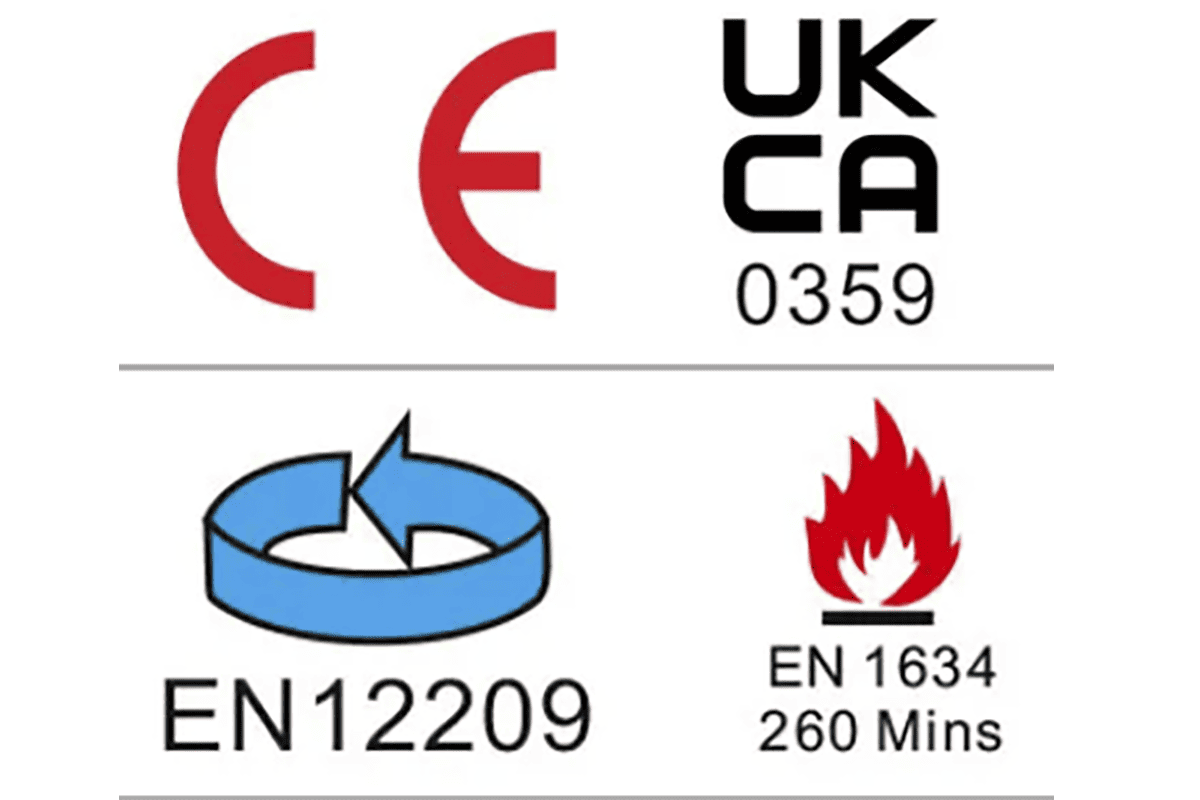
The Core Difference Buyers Must Understand
I usually explain the distinction in one simple sentence:
CE marking is about regulatory conformity; fire rating is about tested performance in fire conditions.
That difference sounds small, but it affects procurement, installation, and liability. For example, a stainless steel lever handle may carry a CE mark under a relevant product standard. That does not mean the same handle has been tested on a 60-minute or 90-minute fire door assembly. A mortise lock may meet dimensional and mechanical requirements, but the fire door system still needs evidence that the lock does not compromise the fire-resisting performance of the door leaf.
CE Marking Focuses on Product Conformity
Depending on the product type, CE documentation may relate to:
- Mechanical durability
- Corrosion resistance
- Load-bearing performance
- Factory production control
- Safety requirements under a harmonized standard
- Declared product characteristics in a Declaration of Performance3
These points matter. I do not dismiss CE documentation. At SDH Hardware, our core products are produced to EU standard specifications, and buyers can request CE-related documents where applicable. However, I always advise buyers to check whether the CE documents relate to the actual product, finish, size, and function they are sourcing.
Fire Rating Focuses on Fire Door Assembly Performance
Fire-rated testing is more specific. The hardware must be suitable for a fire door assembly, and the evidence should identify the tested conditions. Buyers should look for references to:
- Fire resistance duration, such as 30, 60, 90, or 120 minutes4
- Door material, such as timber, steel, or composite
- Door configuration, such as single leaf or double leaf
- Hardware position and installation method
- Applicable test standard and laboratory
- Product model, material, and dimensions
This is why fire door hardware procurement needs document review, not just logo checking.
| Item | CE Marking | Fire Rating |
|---|---|---|
| Main purpose | Regulatory conformity | Fire performance evidence |
| Applies to | Product category requirements | Fire door assembly conditions |
| Proves fire resistance? | Not by itself | Yes, if scope matches use |
| Key document | Declaration of Performance or CE certificate | Fire test report or fire-rated certificate |
| Buyer action | Verify standard and model | Verify scope, rating, and installation |
A Practical Example From Sourcing
I once reviewed a buyer’s specification for lever handles, mortise locks, hinges, and cylinders. The list only said “CE approved.” That phrase was too broad. The door package was for a commercial project where fire door compliance mattered. I suggested separating the requirement into two document groups:
- CE conformity documents for relevant hardware categories
- Fire-rated evidence for the hardware used on fire doors
This small change made the quotation clearer. It also helped the buyer compare suppliers fairly. One supplier had CE documents only. Another had fire-rated documents, but only for a different lock model. The buyer avoided a mismatch before production started.
What Fire Rating Documents Should Buyers Verify for Fire Door Hardware?
Fire rating documents can look technical and difficult to read. That creates a second common problem. Buyers ask for a certificate, receive a PDF, and file it without checking scope. If the document does not match the supplied fire door hardware, it may not support the project requirement.
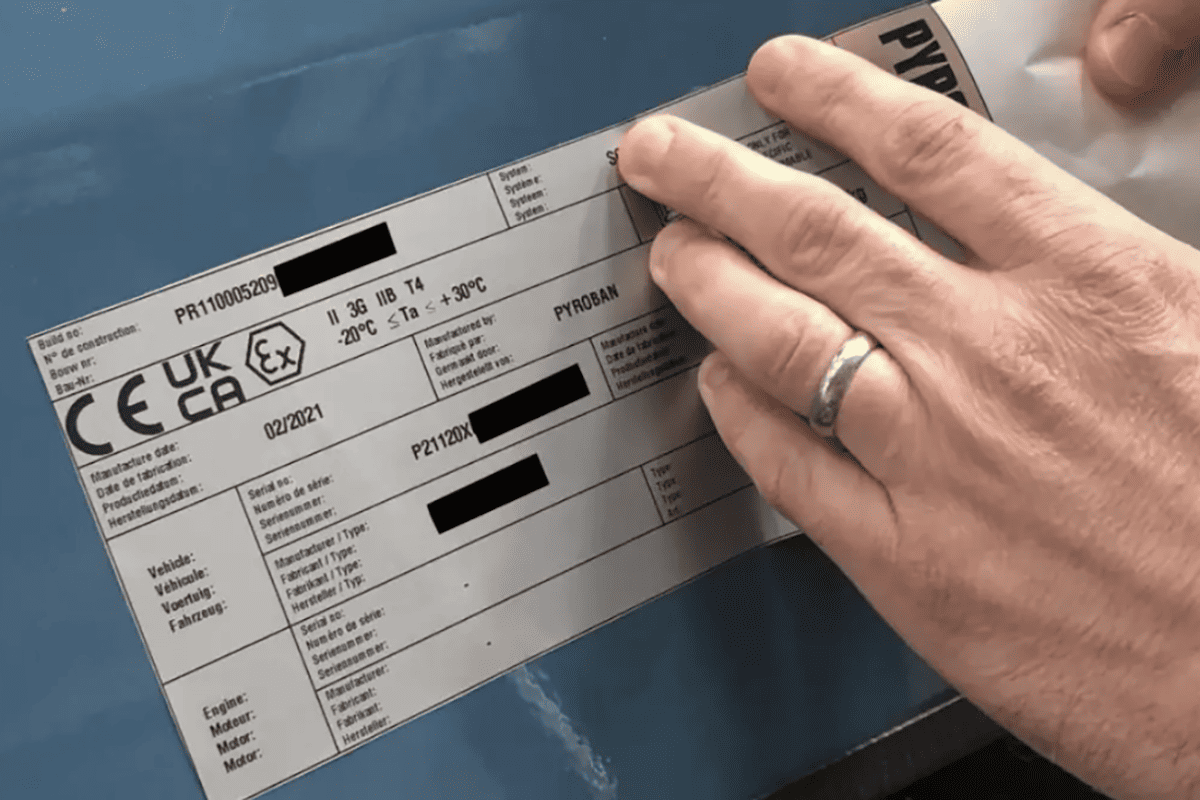
Buyers should verify the fire test report, certificate, standard, rating duration, product model, door type, installation method, and issuing laboratory. They should also confirm that the document covers the exact hardware being purchased, including material, size, finish, latch type, hinge type, and any accessories used in the door assembly.
Start With the Product Model
The first step is simple. The document must refer to the same product or approved product family. A fire-rated certificate for one mortise lock does not automatically cover all mortise locks from the same supplier. A hinge test for one thickness or bearing type may not cover another version.
For fire door hardware, buyers should compare:
- Model number
- Product drawing
- Material grade
- Dimensions
- Latch or bolt configuration
- Spindle size and follower details
- Hinge leaf thickness and size
- Cylinder type and length
- Accessories, such as strike plates, intumescent kits, and screws
At SDH Hardware, I like to align the quotation model number, product drawing, and certification reference before order confirmation. This habit reduces later disputes.
Check the Standard and Rating Duration
Fire performance is always tied to a standard and a time rating. Common project specifications may refer to European fire-resistance testing and classification systems. However, buyers should not rely on assumptions. The document should state what was tested and how performance was classified.
A buyer may ask for a 60-minute fire door package, but the submitted document may cover only 30 minutes. Another document may test the hardware on a steel door, while the project uses timber doors. These differences matter.
| Verification Point | What to Ask | Why It Matters |
|---|---|---|
| Standard | Which fire test or classification standard applies? | Different regions accept different standards5 |
| Rating duration | Is it 30, 60, 90, or 120 minutes? | The rating must match the project specification |
| Door material | Was the test on timber, steel, or another door type? | Hardware performance depends on the door assembly6 |
| Door configuration | Single leaf or double leaf? | Double doors may need additional evidence |
| Hardware model | Does the report list the exact model? | Similar products are not always interchangeable |
| Installation | Were intumescent pads or special screws required? | Incorrect installation can invalidate performance7 |
Verify the Issuer and Document Authenticity
A certificate is only useful if it comes from a credible body and remains valid for the intended use. Buyers should check the name of the test laboratory, certification body, report number, date, and revision status8. If a supplier provides only a cropped image or a document without traceable details, I consider that a warning sign.
I also recommend asking for documents in advance, not after production. If a factory cannot provide basic document references before deposit payment, the buyer may face delays later.
Match Documents to the Real Supply Package
Fire door hardware rarely includes only one item. A complete package may include:
- Euro mortise locks
- Stainless steel lever handles
- Butt hinges or concealed hinges
- Euro brass cylinders
- Door closers
- Flush bolts
- Panic exit devices
- Intumescent protection kits
- Strike plates and fixing screws
Every critical component can affect performance.9 If the project fire door assembly was tested with one hinge type, but the buyer substitutes another hinge to reduce cost, the compliance position may change10. A qualified professional or project authority should evaluate application-specific substitutions.
A Simple Buyer Review Process
I use this sequence when helping buyers prepare a sourcing checklist:
- Step 1: Confirm project fire rating requirement.
- Step 2: Identify which doors are fire doors.
- Step 3: List all required hardware per door type.
- Step 4: Request CE documents where applicable.
- Step 5: Request fire-rated evidence for fire door hardware.
- Step 6: Compare model numbers against the quotation.
- Step 7: Confirm installation accessories and instructions.
- Step 8: Keep documents with inspection and shipping records.
This process is not complicated, but it requires discipline. It also helps suppliers quote correctly. A reliable supplier should welcome clear documentation requirements because they reduce misunderstanding on both sides.
How Do Common Sourcing Mistakes Happen With Fire Door Hardware?
Mistakes happen when sourcing teams work from incomplete specifications. A buyer may focus on price, finish, or delivery time, while assuming certificates are interchangeable. That assumption becomes costly when the supplied fire door hardware does not match the project file, inspection requirement, or market regulation.
The most common mistakes are confusing CE with fire rating, accepting generic certificates, ignoring test scope, changing components after approval, and failing to review installation conditions. Buyers can avoid these errors by using a structured document checklist and confirming product details before mass production.
Mistake 1: Treating “CE Approved” as a Complete Answer
The phrase “CE approved” is too general.11 It does not tell the buyer which standard applies, which product is covered, or whether fire performance has been tested. I prefer to ask for the document title, standard reference, model number, and declared characteristics.
Better questions include:
- Which CE standard applies to this product?
- Is the Declaration of Performance available?
- Does the document list this exact product model?
- Is there separate fire-rated evidence?
- Does the fire-rated evidence match the project rating?
These questions keep the discussion factual.
Mistake 2: Accepting One Certificate for an Entire Product Range
A factory may produce hundreds or thousands of hardware items. At SDH Hardware, our portfolio covers more than 3,000 architectural hardware articles. That range is useful for one-stop sourcing, but it also means buyers must match documents carefully.
A certificate for one lock body does not automatically cover every backset, forend, latch, or function. A hinge certificate may not cover every size, bearing type, or screw pattern. Buyers should avoid broad assumptions.
Mistake 3: Changing Hardware After Approval
This problem is common in cost control. A buyer approves one item, then later asks for a cheaper substitute. The substitute may look similar, but it may not be included in the tested assembly. The same issue can happen with finishes, accessories, and fixings.
Examples of risky changes include:
- Reducing hinge thickness
- Changing from stainless steel to a lower-grade material
- Removing intumescent pads
- Changing the lock case size
- Using unapproved screws
- Selecting a different latchbolt or deadbolt design
- Switching from butt hinges to concealed door hinges without review
I always suggest documenting substitutions in writing and checking them with a qualified project professional.
Mistake 4: Ignoring Regional Market Requirements
A buyer in Europe may have different documentation needs from a buyer in the Middle East or Southeast Asia. Local authorities, consultants, and end clients may require specific standards, test bodies, or document formats. A certificate that satisfies one market may not satisfy another.
| Market Consideration | Procurement Question |
|---|---|
| Local code | Which fire standard does the project require? |
| Consultant review | Does the consultant accept this test body? |
| Door type | Is the hardware tested on the same door material? |
| Import requirement | Are CE documents needed for customs or market sale? |
| Project file | Does the contractor need full test reports or certificates only? |
Mistake 5: Separating Price From Compliance
Low price is attractive, especially for bulk wholesalers and door manufacturers. However, fire door hardware must be evaluated beyond unit cost. A cheaper product may become expensive if it causes approval rejection, rework, delayed shipment, or replacement.
A practical comparison should include:
- Unit price
- Certification scope
- Raw material quality
- Manufacturing consistency
- Lead time
- Packaging protection
- Inspection support
- Drawing availability
- Supplier response speed
- After-sales document support
I have seen buyers save a small amount on each lock, then lose more money due to document gaps. That experience shaped the way I discuss sourcing. Price matters, but verified suitability matters first.
How Should Buyers Evaluate a Fire Door Hardware Supplier?
Supplier selection can feel overwhelming when many factories claim the same certificates and similar products. The pressure grows when deadlines are tight. The safer approach is to evaluate the supplier’s manufacturing ability, quality control, documentation support, and willingness to match products to project requirements.
Buyers should evaluate a fire door hardware supplier by reviewing factory capability, product range, document traceability, testing support, quality inspection process, customization control, and export experience. A strong supplier should provide clear drawings, consistent production, verifiable certificates, and professional communication before and after order confirmation.
Factory Capability Matters
A trading company can be useful in some cases, but direct factory capability gives buyers better control over product details. For technical hardware, I prefer to know who controls the production line, inspection process, and packaging standard.
At SDH Hardware, our business context is factory-direct manufacturing. We operate with more than 10 years of specialized production experience and a team of 150 professional employees. Our focus includes R&D, precision manufacturing, and global sales for architectural door hardware. I mention this not as a blanket performance claim for every application, but as the type of capability buyers should investigate when selecting a supplier.
Useful questions include:
- Does the supplier have independent production lines?
- Can the supplier provide product drawings before production?
- Does the supplier inspect raw materials?
- Are finished products tested before shipment?
- Can the supplier support ODM or OEM requirements?
- Can the supplier keep model references consistent across documents, labels, and invoices?
Quality Control Should Be Visible
Quality control should not be a slogan. Buyers should ask how the factory checks products during each stage. For fire door hardware, consistent dimensions and material performance are especially important because small changes may affect installation and function.
A practical quality control process includes:
Raw material screening
The factory checks steel, brass, zinc alloy, or other materials before production.Process supervision
The factory monitors machining, casting, stamping, polishing, assembly, and surface treatment.Functional testing
The factory checks latch movement, handle return, hinge rotation, cylinder operation, and screw fitting.Final inspection
The factory verifies appearance, dimensions, quantity, packaging, labeling, and order specifications.Document review
The factory aligns product model numbers with certificates, drawings, and packing lists.
At SDH Hardware, we use specialized testing machines across different stages, from function research and frame detection to final product testing. Buyers should still verify product-specific certificates and application requirements before approval.
Product Range Can Reduce Coordination Risk
A complete door hardware package can involve multiple suppliers. That creates coordination risk. If one supplier provides locks, another provides hinges, and another provides handles, the buyer must manage compatibility. One-stop sourcing can simplify this process when the supplier has strong documentation and production control.
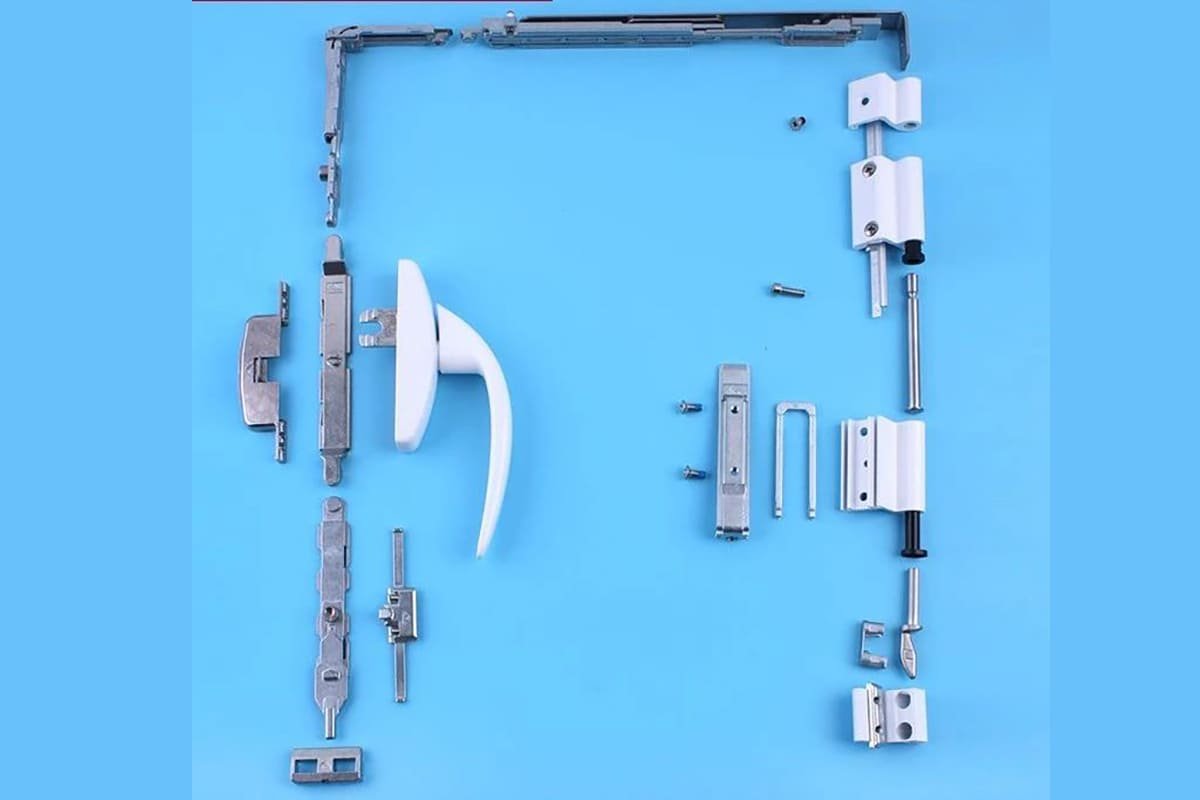
Our main products include:
- Euro mortise locks
- Stainless steel lever handles
- Butt hinges
- Concealed door hinges
- Euro brass cylinders
- Door accessories
For door factories and wholesalers, this range can reduce communication time. It can also support consistent finishes, packaging, logo branding, and accessory configuration. However, buyers should still verify each component’s suitability for the intended door assembly.
Customization Must Be Controlled
OEM and ODM customization is valuable, but it must not break compliance assumptions. If a buyer changes dimensions, surface treatment, component materials, or accessories, the original test evidence may no longer apply.
Controlled customization should include:
- Approved technical drawings
- Material confirmation
- Sample approval
- Certificate scope review
- Production tolerance control
- Final inspection records
- Packaging and labeling confirmation
| Customization Request | Compliance Risk | Buyer Action |
|---|---|---|
| Custom logo | Low if product is unchanged | Confirm marking position |
| Custom packaging | Low | Confirm labels and model numbers |
| Finish change | Medium | Check corrosion and document scope |
| Size change | Medium to high | Review drawings and certification |
| Material change | High | Require technical evaluation |
| Structure change | High | Check whether new testing is needed |
Export Experience Supports Smooth Procurement
B2B buyers often need more than products. They need cartons labeled correctly, documents organized, drawings approved, and shipments prepared on time. Export experience helps reduce friction, especially for customers in the Middle East, Europe, and Southeast Asia.
SDH Hardware has long-term partnerships with well-known industry names, including HAFELE, DORMAKABA, BKS, ECO, GEZE, and ASSA ABLOY. Buyers should treat such cooperation history as part of supplier evaluation, not as a replacement for project-specific document verification.
How Can Buyers Build a Practical Fire Door Hardware Sourcing Checklist?
A missing checklist creates inconsistent decisions. One buyer asks for CE. Another asks for fire rating. A third asks only for price. This fragmented process makes supplier comparison difficult. A clear checklist helps every team member evaluate fire door hardware with the same standard.
A practical sourcing checklist should include project requirements, product specifications, CE documents, fire-rated evidence, drawings, material details, finish requirements, samples, inspection criteria, packaging rules, and shipment documents. Buyers should complete the checklist before deposit payment and review it again before mass production and final inspection.

Checklist Part 1: Project and Compliance Requirements
Start with the project, not the product. I always want to know where the hardware will be used before recommending a specification. A hotel, hospital, apartment tower, office building, and school may have different requirements.
Confirm these points:
- Country or region of use
- Building type
- Fire door locations
- Required fire rating duration
- Door material
- Door thickness
- Single or double leaf configuration
- Required standards
- Consultant or authority approval process
- Required language for documents
This information helps prevent mismatched quotations.
Checklist Part 2: Product Specifications
Next, define each product clearly. Vague descriptions create quotation errors.
For a Euro mortise lock, specify:
- Backset
- Center distance
- Forend size
- Latch direction
- Deadbolt throw
- Material
- Finish
- Strike plate type
- Cylinder compatibility
- Fire-rated requirement
For hinges, specify:
- Hinge type
- Size
- Thickness
- Bearing type
- Material
- Screw type
- Door weight
- Door size
- Fire-rated requirement
For lever handles, specify:
- Material
- Rose or plate design
- Spindle size
- Spring mechanism
- Finish
- Door thickness range
- Fire-rated requirement where applicable
Checklist Part 3: Supplier Documents
A document checklist should be strict but practical. Buyers do not need to collect irrelevant papers, but they should collect the documents that prove suitability.
| Document | Purpose | When to Request |
|---|---|---|
| Product drawing | Confirms dimensions and design | Before sample or order |
| CE document | Supports regulatory conformity | Before order confirmation |
| Fire-rated certificate/report | Supports fire door use | Before order confirmation |
| Material specification | Confirms product composition | Before production |
| Finish sample approval | Confirms appearance | Before mass production |
| Inspection report | Confirms order quality | Before shipment |
| Packing list | Confirms shipment details | Before loading |
Checklist Part 4: Sample and Inspection Control
Samples are important, but they must match the final production. If the sample is made with better material or different components, it can mislead the buyer. I recommend labeling samples with model numbers and keeping sample approval records.
Final inspection should check:
- Quantity
- Model number
- Dimensions
- Finish
- Function
- Accessories
- Logo and branding
- Packaging
- Carton labels
- Document references
For bulk wholesalers, carton consistency matters. For door factories, dimensional accuracy matters. For hardware brands, finish and packaging matter. Fire door hardware sourcing must satisfy all three when the order serves multiple business needs.
Checklist Part 5: Professional Review
Some decisions require qualified professional evaluation. A supplier can provide documents, drawings, and production support, but project authorities or fire safety professionals should confirm application-specific acceptability. This is especially true when the buyer changes hardware from the tested assembly or uses the product in a special door construction.
Conclusion
Fire door hardware sourcing requires more than checking a CE logo. CE marking and fire rating answer different questions, and buyers should verify both when the project requires them. The safest process is to match documents to exact models, review test scope, confirm installation conditions, and evaluate supplier quality control. If you need factory-direct support for Euro mortise locks, lever handles, hinges, cylinders, and complete door hardware packages, I welcome you to contact SDH Hardware for drawings, document review, OEM/ODM options, and a practical quotation.
"Fire door", https://en.wikipedia.org/wiki/Fire_door. European Commission guidance describes CE marking as a manufacturer’s declaration of conformity with applicable EU harmonised legislation; this supports the distinction from fire-resistance testing, which must be evidenced separately for a relevant door assembly. Evidence role: definition; source type: government. Supports: CE marking indicates conformity with applicable EU legislation, while fire-rated evidence concerns tested fire performance of a door assembly.. Scope note: The CE-marking source directly defines CE conformity but does not itself prove requirements for every fire-door hardware category. ↩
"Important Tips for Specifying Fire Door Assemblies", https://steeldoor.org/tips-for-specifying-fire-door-assemblies/. Fire-door assembly guidance from recognized testing and fire-safety institutions treats doors, frames, hardware, and installation details as interacting components whose combined performance determines the rated assembly. Evidence role: mechanism; source type: institution. Supports: Fire door ratings are based on the performance of the door assembly, including compatible hardware and installation details.. Scope note: Institutional guidance may describe the principle generally rather than validating a particular hardware model. ↩
"Regulation (EU) No. 305/2011", https://en.wikipedia.org/wiki/Regulation_(EU)_No._305/2011. The EU Construction Products Regulation establishes the Declaration of Performance as the document in which a manufacturer states a construction product’s performance in relation to relevant essential characteristics. Evidence role: definition; source type: government. Supports: The EU Construction Products Regulation requires a Declaration of Performance for covered construction products, declaring performance in relation to essential characteristics.. ↩
"All You Need to Know for Fire Rated Door Assemblies", https://safti.com/articles/fire-rated-doors-standards-testing-and-glazing-requirements/. Fire-resistance classification systems express performance as a duration in minutes under standardized fire exposure, providing the basis for ratings such as 30, 60, 90, or 120 minutes. Evidence role: definition; source type: institution. Supports: Fire-resistance classifications are expressed in durations measured in minutes, including common ratings used for doors and building elements.. Scope note: Accepted rating intervals vary by jurisdiction and standard, so the source supports the general time-rating concept rather than every local requirement. ↩
"Building Codes - Guides at Texas State Law Library", https://guides.sll.texas.gov/building-codes/texas. Government building-control and fire-safety materials show that fire-safety requirements are implemented through jurisdiction-specific codes and approval processes, supporting the statement that accepted standards vary by region. Evidence role: historical_context; source type: government. Supports: Building and fire-safety requirements are set through jurisdictional codes and may recognize different standards or approval routes.. Scope note: The source supports jurisdictional variation generally and may not compare all markets named in the article. ↩
"Important Tips for Specifying Fire Door Assemblies", https://steeldoor.org/tips-for-specifying-fire-door-assemblies/. Fire-door assembly standards describe the door, frame, glazing, hardware, and installation as components of a rated system, supporting the view that hardware suitability depends on the assembly in which it is used. Evidence role: mechanism; source type: institution. Supports: Fire door hardware is evaluated in relation to the door, frame, and installation assembly rather than as an isolated decorative component.. Scope note: The source provides assembly-level context and does not establish equivalence for untested substitutions. ↩
"FIRE DOOR ACCESSORIES", https://www.ngp.com/ngp/cache/file/FD894D01-4B0D-4B0B-BAA3B24C7687E1CE.pdf. Fire-door installation standards require rated assemblies to be installed and maintained according to listing and manufacturer instructions, supporting the conclusion that omitted or incorrect installation details can undermine rated performance. Evidence role: mechanism; source type: institution. Supports: Fire-door ratings depend on installation in accordance with the tested or listed assembly, including required hardware protection and fixings.. Scope note: The source supports the installation principle; whether performance is legally invalidated depends on the governing authority and listing conditions. ↩
"ISO/IEC 17025:2017, Section 7.8 - Reporting of Results", https://www.nist.gov/document/sop-1-calibration-certificate-eval-app-b-c-20190506pdf. Conformity-assessment and laboratory-accreditation guidance emphasizes traceable test reports, including laboratory identity, report identification, dates, and controlled records, supporting verification of these document details. Evidence role: expert_consensus; source type: institution. Supports: Accredited testing and conformity-assessment documents rely on identifiable laboratories, report identification, dates, and controlled revisions for traceability.. Scope note: The source supports document traceability in general laboratory practice, not a single country’s fire-door approval process. ↩
"Fire Resistance of Structural Members and Assemblies", https://www.nist.gov/publications/fire-resistance-structural-members-and-assemblies. Fire-door assembly references identify hardware, seals, frames, and door leaves as components that contribute to the rated assembly, supporting the statement that critical component choices can affect performance. Evidence role: mechanism; source type: institution. Supports: Fire-door performance depends on the interaction of door leaves, frames, seals, hardware, and other components.. Scope note: The source supports the general assembly principle; the effect of any individual component requires product-specific test evidence. ↩
"Can Fire Door Hardware Be Replaced Without Affecting ...", https://www.dndhardware.com/can-fire-door-hardware-be-replaced-without-affecting-compliance.html. Fire-door assembly standards and listing guidance state that rated assemblies are controlled by tested or listed configurations, so component substitutions may require evaluation before the assembly can be treated as compliant. Evidence role: general_support; source type: institution. Supports: Changes to components in a rated fire-door assembly may require review because ratings are tied to tested or listed configurations.. Scope note: The source supports the need for evaluation; it does not determine the acceptability of a specific substitution. ↩
"CE Marking", https://www.trade.gov/ce-marking. Official CE-marking guidance explains that CE marking is a conformity indication used under applicable EU rules and is not a general quality or approval label, supporting the critique of the phrase “CE approved.” Evidence role: definition; source type: government. Supports: CE marking is a conformity marking placed under defined manufacturer responsibilities, not a vague all-purpose approval statement.. ↩
