
What Should I Know About Fire Door Hardware Regulations?
Fire door hardware regulations can feel confusing when you source locks, hinges, handles, cylinders, and accessories across different markets. A small mismatch can delay approvals, increase project risk, or cause failed inspections. I recommend treating regulations as a procurement checklist, then verifying every certificate, test report, and product specification before ordering.
Fire door hardware regulations define how door hardware must perform during fire, smoke, and emergency conditions. Buyers should check fire ratings, applicable standards, certified product combinations, installation requirements, labeling, and supplier documentation. The safest approach is to verify certificates, match hardware to the tested door assembly, and request project-specific technical review before bulk purchasing.
In my experience with architectural hardware sourcing, most problems do not come from one weak component. They come from unclear coordination between the door, frame, lock, hinge, closer, seal, and installation method. That is why I look at the full door assembly, not only the hardware item.
Why Do Fire Door Hardware Regulations Matter for Buyers?
Fire door hardware regulations matter because door hardware is not just decorative or functional during normal use. It must also support the rated fire door assembly during an emergency. If buyers ignore this, they may receive products that look acceptable but cannot pass inspection or meet project specifications.
Fire door hardware regulations help buyers confirm that locks, hinges, handles, cylinders, closers, panic devices, and accessories are suitable for fire-rated doors. They reduce procurement risk by connecting product performance, certified testing, installation details, and inspection requirements into one decision-making process.
The regulation is about the complete door set
A fire door is usually tested as a complete assembly1, not as a random collection of separate parts. This point is easy to miss. A fire-rated lock may not be accepted if it is installed on a door type or fire rating that does not match its certification scope.2
A complete fire door set may include:
- Door leaf
- Door frame
- Hinges or pivots
- Mortise lock or latch
- Lever handle or pull handle
- Cylinder or thumb turn
- Door closer
- Panic exit device, where required
- Intumescent seals
- Smoke seals
- Flush bolts or coordinators, for double doors
- Glazing system, if used
- Fasteners and installation accessories
When I review a project order, I do not treat these as separate shopping lines. I check how the hardware works together. That habit helps prevent a common problem: one certified product gets paired with another certified product, but the final assembly is not approved.
What procurement teams should verify first
A buyer should first confirm the required fire rating and the applicable standard. This may vary by country, building type, door position, and project authority.3 In Europe and many international projects, buyers often see references to EN standards and CE documentation.4 In other markets, local civil defense, building code, or fire authority requirements may apply.
Here is a simple evaluation table I use when talking with B2B customers:
| Evaluation Point | Why It Matters | What Buyers Should Request |
|---|---|---|
| Fire rating | Confirms required resistance time | 30, 60, 90, or 120-minute rating details |
| Applicable standard | Determines testing method | EN, BS, UL, local code, or project specification |
| Product scope | Confirms approved use | Certificate schedule or test report scope |
| Door material | Affects compatibility | Timber, steel, aluminum, or composite door approval |
| Hardware combination | Reduces assembly risk | Tested configuration or manufacturer declaration |
| Installation method | Affects actual performance | Fitting instructions and approved fasteners |
| Labels and traceability | Supports inspection | Product marking, batch records, packaging labels |
Why this matters for supplier selection
For bulk orders, I think supplier capability matters as much as product price. A buyer should ask whether the manufacturer can provide consistent production, stable materials, and repeatable quality control.
At SDH Hardware, our business context is factory-direct production for architectural door hardware, including Euro mortise locks, stainless steel lever handles, butt hinges, concealed door hinges, Euro brass cylinders, and door accessories. For fire-related applications, I always suggest that buyers verify CE and fire-rated documents against the exact item, finish, size, and application.
A certificate should not be treated as a marketing badge. It should be treated as a technical document that defines where and how the product may be used.
For procurement teams, fire door hardware regulations create a practical roadmap. They tell you what to ask, what to compare, and when to involve a qualified fire door consultant, architect, test laboratory, or local authority.
Which Standards Are Common in Fire Door Hardware Regulations?
Fire door hardware regulations usually refer to national or regional fire test standards, product performance standards, and building code requirements. Buyers need to identify which standard applies before comparing suppliers. Without this step, certificates from one market may not satisfy another market’s approval process.
Common fire door hardware regulations may involve EN, BS, UL, ANSI/BHMA, or local civil defense standards.5 For international procurement, buyers should request certificates, test reports, classification reports, and installation instructions that clearly match the target market, product type, and intended fire-rated door assembly.
Common standards buyers may encounter
Different markets use different frameworks. I try to avoid assuming that one certificate works everywhere. The project specification should lead the decision.
Here are examples that buyers often see:
| Region or Market | Common References | Typical Buyer Concern |
|---|---|---|
| Europe | EN 1634, EN 16034, EN 12209, EN 1935, EN 1906 | CE marking, classification, fire test scope |
| United Kingdom | BS 476, BS EN standards, Certifire schemes | Fire door assembly approval and third-party certification |
| United States | UL 10C, NFPA 80, ANSI/BHMA standards | Listed hardware and labeled fire door assemblies |
| Middle East | Civil Defense approvals, BS/EN/UL references | Project authority acceptance and documentation |
| Southeast Asia | Local fire code plus EN/BS/UL references | Imported product acceptance and inspection support |
These examples are not a substitute for local code review. They are a starting point for supplier discussions.
Hardware product standards also matter
Fire testing is only one part of the evaluation. Product performance standards also help buyers compare durability, corrosion resistance, mechanical strength, and operational safety.6
For example:
- Mortise locks may be evaluated under EN 12209 in European-style specifications.
- Single-axis hinges may be evaluated under EN 1935.
- Lever handles may be evaluated under EN 1906.
- Emergency exit devices may be evaluated under EN 179.
- Panic exit devices may be evaluated under EN 1125.
- Door closers may be evaluated under EN 1154.
- Cylinders may be evaluated under EN 1303.
These standards do not automatically prove that a product is acceptable for every fire door.7 They help define product performance. Fire door hardware regulations then connect that performance to a tested fire door application.
What documents should buyers request?
I usually recommend that buyers request a complete document pack before confirming large orders. This is especially important for door factories, hardware brand enterprises, and bulk wholesalers that resell into regulated markets.
A basic document pack may include:
Fire test report
This shows the test method, tested assembly, result, and limitations.Classification report
This may summarize the fire resistance classification in a format used by authorities.Certificate or approval document
This may show third-party certification, listing, or market-specific approval.Declaration of Performance or CE-related documents
This may be needed for relevant products in European supply chains.Product drawings
These help confirm dimensions, fixing points, materials, and compatibility.Installation instructions
These are critical because incorrect installation can invalidate performance8.Quality inspection records
These support consistency between the tested product and the supplied product.
At SDH Hardware, our business context includes product drawings upon order confirmation and inspection service after order completion. For regulated projects, I would still encourage buyers to verify every document with their project consultant or approving authority.
Why “similar” is not always acceptable
A small product change can affect approval.9 A different faceplate size, spindle position, latch material, screw type, hinge thickness, or finish process may matter. Sometimes the change is acceptable. Sometimes it is not. The test scope should answer that question.
For example, a mortise lock tested with a certain steel fire door may not automatically apply to a timber fire door10. A hinge certified for one door weight may not be correct for a heavier fire-rated assembly.11 A lever handle may meet durability requirements but still need compatibility confirmation with the latch and lockcase.
This is why fire door hardware regulations should be treated as a technical boundary, not a simple yes-or-no label.
How Should I Evaluate Products Under Fire Door Hardware Regulations?
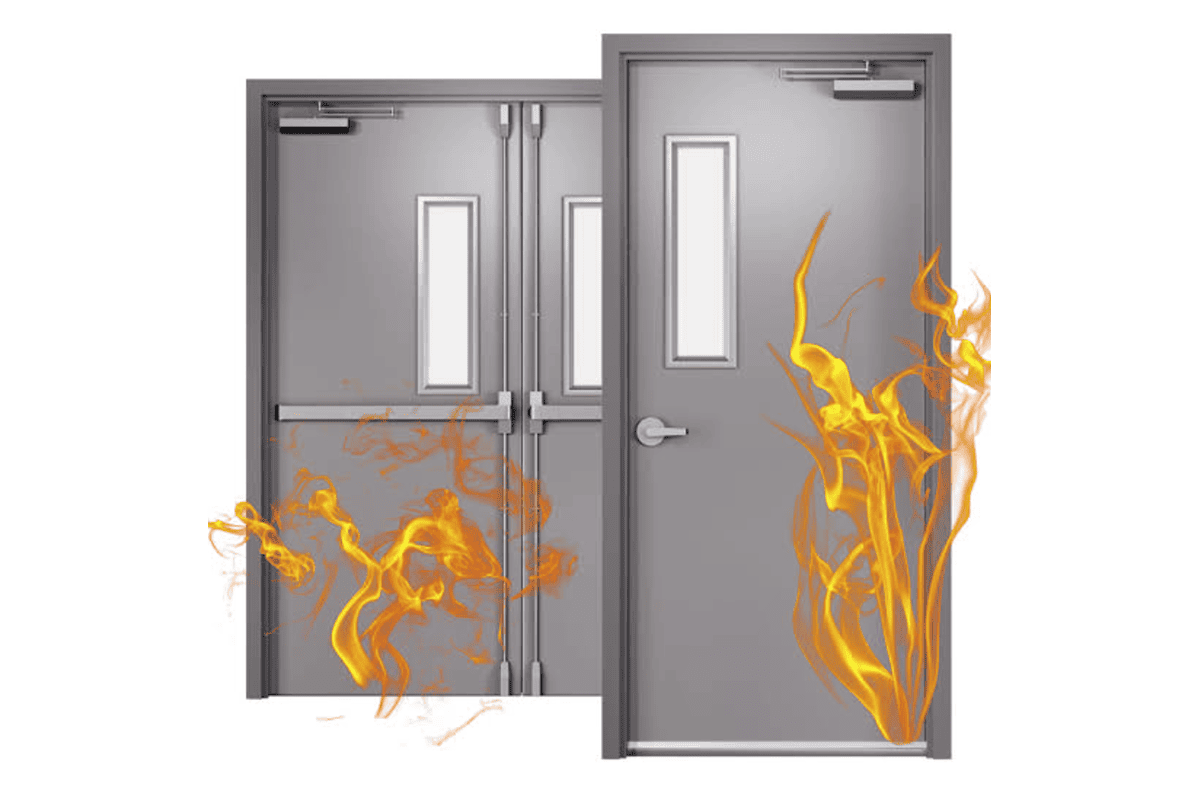
Fire door hardware regulations should be evaluated through product compatibility, certification scope, manufacturing quality, and installation requirements. Buyers should not select hardware only by price, finish, or catalog description. A compliant-looking product may still fail if it does not match the tested fire door assembly.
To evaluate products under fire door hardware regulations, buyers should confirm the required rating, check product standards, compare certificates with exact models, review material and dimensional specifications, inspect quality control capacity, and verify installation instructions. For complex projects, buyers should ask a qualified fire door professional to review the final hardware schedule.
Start with the hardware schedule
A clear hardware schedule helps prevent mistakes. It should define each door opening and each hardware component. I like this approach because it forces the buyer, door manufacturer, and hardware supplier to work from the same document.
A strong schedule usually includes:
- Door number or location
- Door type and material
- Fire rating requirement
- Door size and thickness
- Single or double leaf configuration
- Handing and swing direction
- Lock type and function
- Handle type and finish
- Hinge size, grade, and quantity
- Cylinder type and keying requirement
- Door closer type
- Panic or emergency exit requirement
- Accessories, seals, bolts, and coordinators
- Applicable standard or approval requirement
This document becomes the basis for quotation, technical review, production, and inspection.
Evaluate each major hardware category
Fire door hardware regulations apply differently depending on the product. A buyer should know what to check for each category.
| Hardware Product | Key Evaluation Points | Common Risk |
|---|---|---|
| Mortise locks | Fire rating scope, latch material, lockcase dimensions, function | Lock is certified but not for the required door type |
| Hinges | Load capacity, fire rating, material, bearing type, quantity | Door sag or incorrect hinge grade |
| Lever handles | Spindle compatibility, durability grade, material, return spring | Handle set does not match lock function |
| Cylinders | Fire compatibility, security grade, key system | Cylinder projection or thumb turn conflicts with project rules |
| Door closers | Power size, fire door suitability, hold-open restrictions | Incorrect closer force or non-compliant hold-open function |
| Panic devices | Exit standard, door width, outside trim compatibility | Wrong device for public escape route |
| Seals | Intumescent type, smoke control, groove size | Seal not matching tested assembly |
Look beyond the certificate
Certificates are important, but they do not replace manufacturing control. If a factory cannot produce the same quality repeatedly, the certificate loses practical value.
For B2B procurement, I review these supplier factors:
- Material control: The supplier should define stainless steel grade, brass composition, zinc alloy use, or steel treatment clearly.
- Dimensional consistency: Locks, hinges, and cylinders must fit door preparation accurately.
- Surface treatment stability: Finishes should resist corrosion and match project samples.
- Mechanical testing: The supplier should test cycles, strength, and function.
- Batch inspection: The supplier should inspect before shipment, not only after complaints.
- Traceability: The supplier should connect production batches to purchase orders and inspection records.
In our business context, SDH Hardware has independent factory operations, complete production lines, and a quality process from raw material screening to finished product inspection. I present that as a supplier capability, not as a substitute for buyer verification. A serious buyer should still request samples, test documentation, and inspection records.
Use samples before bulk orders
Samples are not just for appearance. They help buyers check fit, function, and documentation before production.
For example, I often suggest that buyers review:
- Sample hardware dimensions against drawings.
- Operation feel after installation on the actual door.
- Finish color under project lighting.
- Screw and accessory quality in the package.
- Marking and labeling required for inspection.
- Packaging strength for international shipment.
For door factories, this step can prevent assembly-line delays. For wholesalers, it reduces after-sales claims. For hardware brands, it protects reputation.
When to involve a professional
Fire-rated openings are safety-critical. I recommend professional review when the project includes:
- Hospitals, hotels, schools, airports, or public buildings
- Escape routes or stairwell doors
- High-occupancy spaces
- Cross-border certification questions
- Customized hardware designs
- Non-standard door sizes or materials
- Fire and smoke control requirements together
A qualified architect, fire consultant, door inspector, or local authority can confirm what the procurement team should not guess. That extra review may feel slow, but it is usually faster than fixing a rejected installation.
What Supplier Documents Are Needed for Fire Door Hardware Regulations?
Fire door hardware regulations require buyers to collect more than a product catalog. The supplier should provide evidence that the hardware is suitable, traceable, and manufactured consistently. Without documents, buyers may struggle during project approval, customs review, site inspection, or after-sales claims.
For fire door hardware regulations, buyers should request certificates, test reports, classification reports, product drawings, installation instructions, quality inspection reports, material specifications, and packaging labels. The documents should match the exact model, size, finish, fire rating, standard, and target market before the buyer approves mass production.

The document pack should match the purchase order
I have seen buyers collect certificates after choosing products. That sequence creates risk. The better method is to check the document pack before finalizing the order.
A useful document pack should answer these questions:
- Does this exact product model appear in the certificate or approval scope?
- Does the document show the applicable test standard?
- Does the document state the tested door type?
- Does the document define the fire resistance time?
- Does the document include limitations or installation conditions?
- Does the supplier drawing match the product being quoted?
- Does the packaging label support project traceability?
- Does the inspection report match the production batch?
If the answer is unclear, the buyer should ask for clarification in writing.
Recommended document checklist
| Document | Purpose | Buyer Action |
|---|---|---|
| Product certificate | Shows certification or approval status | Verify issuer, validity, scope, and model |
| Fire test report | Shows tested assembly and result | Check door type, rating, and hardware details |
| Classification report | Summarizes fire performance class | Match to project requirement |
| CE-related document | Supports EU market compliance where applicable | Confirm relevance to product category |
| Product drawing | Confirms dimensions and configuration | Compare with door preparation |
| Installation guide | Defines approved fitting method | Share with installer or door factory |
| Material specification | Confirms base material and finish | Check durability and corrosion needs |
| QC inspection report | Shows batch-level inspection | Request before shipment |
| Packaging label | Supports identification and traceability | Confirm required markings |
| Warranty or after-sales terms | Defines commercial responsibility | Review before contract signing |
How to verify documents
Document verification does not need to be complicated, but it should be disciplined.
Buyers can take these steps:
Check the issuing body
The certificate should come from a recognized laboratory, certification body, or authority.12Check the validity date
Expired documents may not support a new project.Check the model number
The quoted product should match the documented product.Check the standard version
Some projects specify a particular standard or revision.Check the approved application
The hardware may be approved only for certain door materials or ratings.Check the installation conditions
Fire performance can depend on fasteners, intumescent kits, and positioning.Check with the project authority
The final approval usually depends on the local authority, consultant, or inspector.
Why traceability helps wholesalers and brands
Bulk wholesalers and hardware brand enterprises often sell products into multiple projects. Traceability helps them respond quickly when customers ask for supporting documents.
Useful traceability items include:
- Purchase order number
- Batch number
- Production date
- Product model code
- Finish code
- Carton label
- Inspection record
- Certificate reference
For OEM and ODM orders, traceability becomes even more important because private labels can separate the product from the original factory identity. At SDH Hardware, the business model includes customer stamping, laser logos, custom packaging, and OEM/ODM production. For regulated hardware, I would advise buyers to keep both brand-facing documents and factory-level technical records.
Be careful with customization
Customization is useful. It helps buyers fit regional standards, project designs, and brand positioning. However, custom changes can affect fire door hardware regulations.
Examples include:
- Changing the lockcase size
- Changing the latch material
- Modifying the lever shape
- Increasing hinge leaf thickness
- Changing screw positions
- Adding a logo by deep stamping
- Altering cylinder length
- Changing finish thickness or plating process
- Replacing standard accessories
Some changes may be harmless. Others may require engineering review or new testing. The buyer should ask the supplier to confirm whether the customization stays within the approved scope.
How Do Installation and Inspection Affect Fire Door Hardware Regulations?
Fire door hardware regulations do not stop at purchasing. Installation and inspection are just as important because a certified product can fail in the field if it is fitted incorrectly. Poor alignment, missing screws, wrong seals, or unapproved modifications can compromise the full fire door assembly.
Installation and inspection affect fire door hardware regulations because hardware must be fitted according to approved instructions and maintained in working condition. Buyers should provide installers with drawings, fixing details, and certification limits, then inspect operation, clearances, labels, seals, and closing performance before accepting the project.

Installation quality is part of compliance
A fire door is a system. The installed result matters more than the product box. I always remind buyers that site teams need the same technical information as purchasing teams.
Common installation issues include:
- Incorrect lock mortise cutout
- Missing intumescent protection
- Oversized gaps around the door leaf
- Wrong hinge screw length
- Door closer adjusted too weak
- Latch not engaging fully
- Smoke seal damaged during installation
- Panic device installed at the wrong height
- Hold-open function used where it is not allowed
- Door wedges or floor stops preventing closure
Conclusion
Fire door hardware regulations help buyers evaluate safety, compliance, and supplier reliability before committing to a project order. I recommend starting with the fire rating, applicable standard, and complete door assembly, then checking every certificate, drawing, sample, and inspection record against the actual project. If you need factory-direct architectural door hardware with ODM/OEM support, SDH Hardware can help you review product options, prepare documentation, and support your next bulk sourcing plan.
"Fire Doors and NFPA 80 FAQs", https://www.nfpa.org/news-blogs-and-articles/blogs/2025/04/11/fire-doors-faqs. Authoritative fire-door standards define fire doors as assemblies whose performance depends on the door, frame, hardware, glazing, seals, and installation, rather than on isolated components alone. Evidence role: definition; source type: institution. Supports: Fire door requirements are applied to the complete door assembly, including the door, frame, hardware, and installation conditions.. ↩
"Doors, Windows and Related Hardware Application Guide", https://www.ul.com/thecodeauthority/knowledge/ul-fire-rated-doors-guide. Fire-door inspection and listing guidance generally requires hardware to be installed and used in accordance with its listing or approval conditions, which can limit use by door type, rating, and assembly configuration. Evidence role: general_support; source type: institution. Supports: Listed or certified fire-door hardware must be used within the conditions of its listing, approval, or test evidence.. Scope note: This supports the principle of scope-limited approval; acceptance of a particular lock still depends on the exact certificate and local authority. ↩
"CHAPTER 7 FIRE AND SMOKE PROTECTION FEATURES", https://codes.iccsafe.org/content/IBC2021P2/chapter-7-fire-and-smoke-protection-features. Building-code provisions commonly determine fire-door ratings by the occupancy, wall or barrier rating, opening location, and authority having jurisdiction, showing why procurement requirements can differ between projects and markets. Evidence role: general_support; source type: government. Supports: Fire-door requirements are determined by building-code provisions such as occupancy, fire separation, opening location, and authority having jurisdiction.. Scope note: The support is contextual because specific requirements must be checked in the code adopted for the project location. ↩
"EN 16034", https://en.wikipedia.org/wiki/EN_16034. EU construction-product guidance and harmonized standards for fire-resisting doorsets link relevant EN standards with CE marking and declarations of performance for covered products. Evidence role: historical_context; source type: government. Supports: EU construction-product rules and harmonized standards connect fire-resisting doorsets with CE marking and declarations of performance where applicable.. Scope note: This does not prove that every hardware item requires CE marking; applicability depends on the product category and harmonized standard. ↩
"Fire-Rated Doors Require Special, Certified Hardware", https://www.danddhardware.com/fire-rated-doors-require-special-certified-hardware.html. Standards and code references for fire-door hardware commonly draw on regional frameworks such as EN and BS standards, UL listings, ANSI/BHMA hardware standards, and jurisdiction-specific approval systems. Evidence role: general_support; source type: institution. Supports: Major fire-door and builders-hardware frameworks include European, British, UL, ANSI/BHMA, and local approval systems.. Scope note: This supports the existence of common frameworks, not the acceptance of any one standard in a particular project. ↩
"Understanding BS EN 1935:2002 single-axis hinge grades", https://uk.sfs.com/resources/article/understanding-bs-en-1935. Builders-hardware standards classify products by measurable performance characteristics such as durability, strength, corrosion resistance, and safety, allowing comparison beyond catalog descriptions. Evidence role: general_support; source type: institution. Supports: Builders-hardware standards specify performance attributes including durability, strength, corrosion resistance, and safety classifications.. Scope note: This supports the general role of performance standards; exact criteria vary by the specific standard and product type. ↩
"Means of Egress (EXIT) Hardware Requirements", https://www.brightonny.gov/DocumentCenter/View/4580/Means-of-Egress-EXIT-Hardware-Requirements. Fire-door standards distinguish between general hardware performance requirements and the need for hardware to be suitable for the rated fire-door assembly in which it is installed. Evidence role: general_support; source type: institution. Supports: Product performance standards and fire-door assembly approvals serve different compliance functions.. Scope note: This is contextual support; whether a particular product is acceptable depends on its listing, test evidence, and local approval process. ↩
"Fire Doors and NFPA 80 FAQs", https://www.nfpa.org/news-blogs-and-articles/blogs/2025/04/11/fire-doors-faqs. Fire-door standards require installation and maintenance consistent with listing and manufacturer instructions because deviations in hardware, fasteners, clearances, or seals can affect the assembly's fire-resistance performance. Evidence role: mechanism; source type: institution. Supports: Fire-door performance depends on installation in accordance with tested details and manufacturer instructions.. ↩
"Fire Door Inspections and Field Labeling", https://www.intertek.com/blog/2026/10-09-Fire-Door-Inspections-and-Field-Labeling/. Fire-door listing and field-modification guidance treats changes to components or preparations as potentially significant because the rated performance is tied to the tested or approved configuration. Evidence role: mechanism; source type: institution. Supports: Changes outside the tested or listed configuration may require evaluation or approval before use on a fire-door assembly.. Scope note: This supports the need for review; it does not establish that every minor change automatically requires retesting. ↩
"Fire Door Mortice Lock for Timber vs Steel Doors: How Test ...", https://sdhhardware.com/2026/10/30/fire-door-mortice-lock-for-timber-vs-steel-doors-how-test-evidence-differs/. Fire-resistance test and certification documentation commonly defines the door construction and assembly tested, so evidence obtained on one door type, such as steel, may not automatically extend to another, such as timber. Evidence role: case_reference; source type: institution. Supports: Fire-door hardware evidence is commonly limited by the door construction and assembly tested.. Scope note: This is contextual support; some certification schemes allow extensions of application where formally assessed. ↩
"Understanding BS EN 1935:2002 single-axis hinge grades", https://uk.sfs.com/resources/article/understanding-bs-en-1935. Hinge classification standards include criteria for door mass, durability, and fire-door suitability, indicating that a hinge rated for one load condition may not be appropriate for a heavier rated assembly. Evidence role: general_support; source type: institution. Supports: Hinge standards classify hinges by factors including door mass, usage, durability, and fire-door suitability.. Scope note: This supports the engineering principle; the exact suitability of a hinge depends on its classification, quantity, installation, and the door manufacturer’s evidence. ↩
"Key Facts: ISO Accreditation", http://www.fsis.usda.gov/science-data/laboratories-procedures/accredited-laboratory-program/key-facts-iso-accreditation. International conformity-assessment standards define competence requirements for testing laboratories and product certification bodies, supporting the use of recognized or accredited organizations for fire-door documentation. Evidence role: expert_consensus; source type: institution. Supports: Accredited testing laboratories and product certification bodies provide recognized conformity-assessment evidence.. Scope note: This supports document credibility in general; project authorities may still specify particular accepted bodies. ↩
