
Concealed Hinge Load Rating Guide: 40kg, 60kg, 80kg – Avoid Overloading Risks
Concealed hinge load rating is one of the easiest specifications to misunderstand in door hardware purchasing. Buyers see 40kg, 60kg, or 80kg and assume the number equals the door weight. That shortcut can cause sagging, rubbing, after-sales complaints, and rework. The safer approach is to evaluate the full door system before choosing the hinge.
A concealed hinge load rating should be treated as a system-matching guide, not a simple door weight label. Buyers should check door weight, size, material, hinge quantity, frame strength, installation accuracy, and opening frequency before selecting 40kg, 60kg, or 80kg concealed hinges. This reduces overload risk and improves long-term door performance.
In my work with door manufacturers and OEM hardware buyers, I often see the same problem. A customer sends only one number: “The door is 45kg. Which hinge should I buy?” That number matters, but it is only the starting point. The real question is: what door system is the hinge supporting?
Why Should Concealed Hinge Load Rating Not Be Treated as Door Weight Only?
A concealed hinge load rating looks simple on a catalog page. However, real doors are not simple. Door height, width, thickness, core material, frame rigidity, screw holding strength, and installation precision all affect hinge performance.1 If buyers ignore these factors, the same rated hinge can perform well in one project and fail early in another.
A concealed hinge load rating is not only a door weight limit. It is a selection reference that must be matched with the complete door assembly. Buyers should consider the door’s actual weight, dimensions, material, number of hinges, frame structure, installation quality, and usage frequency before confirming the hinge model.
The Rating Is Only One Part of the Decision
When I review hinge inquiries, I usually ask more questions before recommending a model. Many buyers want a quick answer, but a careful recommendation protects both sides. A concealed hinge may carry static weight during basic testing, yet the real project has dynamic forces.2
A door is opened, closed, pushed, pulled, slammed, adjusted, and sometimes installed slightly out of square. These conditions increase stress on the hinge body, screws, frame, and door edge.
For B2B procurement, I suggest evaluating these factors together:
Actual door weight
The weight should include the door leaf and any factory-fitted accessories when possible.Door dimensions
A taller or wider door creates more leverage on the hinge side, even if the weight is moderate.3Door material
Hollow-core, solid wood, MDF, metal, and aluminum-profile doors hold screws differently and behave differently over time.4Door thickness
A 45mm interior door and a thicker heavy-duty door may need different hinge body structures.Number of hinges
Two, three, or more hinges distribute load differently, but quantity alone does not solve poor alignment.Frame strength
A strong hinge installed into a weak frame can still sag.5Installation precision
Incorrect mortising depth, misaligned hinge pockets, or poor screw tightening can create stress from day one.Usage frequency
A hotel room door, office door, and apartment interior door may have very different opening cycles.6
A Practical Selection View
| Factor | Why It Matters | Buyer Checkpoint |
|---|---|---|
| Door weight | Sets the basic load requirement | Confirm actual weight, not estimate only |
| Door height and width | Creates leverage and side stress | Check full door size |
| Door material | Affects screw holding and long-term stability | Ask for core and edge material |
| Frame type | Supports the hinge fixing points | Verify wood, steel, aluminum, or composite frame |
| Hinge quantity | Distributes load | Confirm two, three, or more hinges |
| Installation accuracy | Prevents binding and uneven stress | Use drawings and proper machining |
| Usage frequency | Impacts fatigue risk | Define residential, commercial, or public use |
From a factory and quality-control viewpoint, the hinge itself must have stable material, precise machining, and smooth adjustment. However, even a well-made concealed hinge cannot compensate for every weak door system. That is why I prefer to treat hinge selection as a door-set engineering decision, not a catalog-number decision.
My practical rule: I never choose a concealed hinge only from the kg number. I first check how the door, frame, screws, and installation method work together.
How Do 40kg Concealed Hinge Load Rating Options Fit Standard Interior Doors?
A 40kg concealed hinge load rating often appears in standard interior door projects. The risk is that buyers may assume every 40kg door is safe with any 40kg hinge. That is not always true. A normal interior door may work well, but only when size, frame strength, hinge quantity, and installation accuracy are suitable.
A 40kg concealed hinge load rating can suit many standard interior door applications, especially doors around 2100 × 900mm and about 45mm thick that weigh close to 40kg. However, buyers should still verify the door material, frame quality, hinge quantity, and installation conditions before confirming the hinge specification.
A Common Interior Door Example
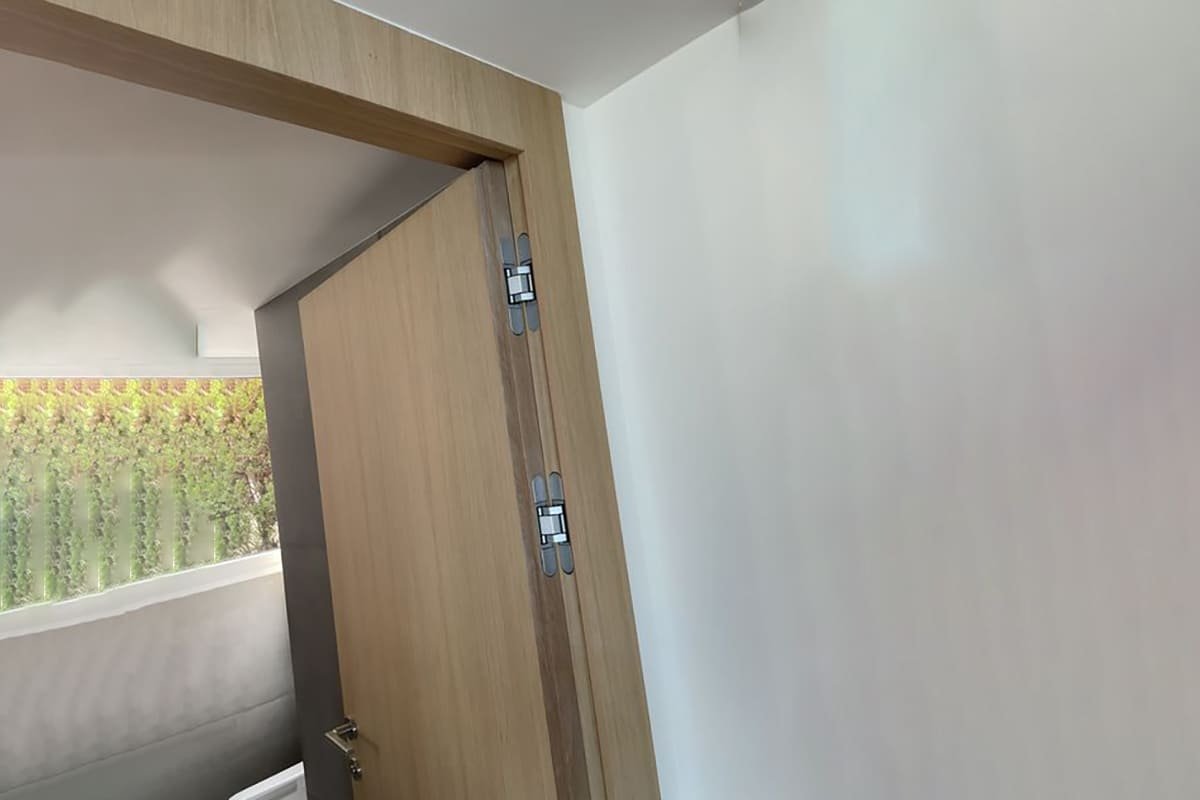
In real project discussions, a standard 45mm-thick interior door around 2100 × 900mm may weigh about 40kg, depending on its core and surface material. In this situation, two suitable 40kg concealed hinges may meet normal requirements when the frame is strong and the installation is accurate.
However, I would not make this recommendation blindly. I would still ask:
- Is the door hollow-core, solid-core, MDF, or engineered wood?
- Is the frame solid wood, MDF, steel, or aluminum?
- Will the project use two hinges or three hinges?
- Is the hinge pocket machined by CNC or manually routed?
- Is the door used in a low-traffic bedroom, an office, or a public corridor?
- Does the buyer need 3D adjustment for fine alignment?
Why “40kg Door” Does Not Always Equal “40kg Hinge”
The phrase “40kg door” sounds clear, but it hides many details. A short, narrow 40kg door places less stress on the hinge side than a tall, wide 40kg door. A solid frame holds screws better than a weak composite frame. A well-machined hinge pocket supports the hinge body better than a loose or oversized cutout.
Here is a simple comparison:
| Door Condition | Same Door Weight? | Risk Level With 40kg Rating |
|---|---|---|
| 2100 × 900mm interior door, stable frame, accurate machining | Yes | Lower risk |
| Tall door with same weight but larger leverage | Yes | Higher risk |
| Weak frame or poor screw holding | Yes | Higher risk |
| High-frequency commercial use | Yes | Higher risk |
| Misaligned hinge pockets | Yes | Higher risk |
Procurement Notes for 40kg Applications
For door factories and OEM buyers, I recommend treating 40kg concealed hinges as a controlled solution for standard projects, not as a universal answer. The buyer should request product drawings and confirm dimensions before mass production. Small differences in hinge cup depth, body size, opening angle, and adjustment range can affect door machining.
A stable purchasing process may include:
Confirm door specification
- Size
- Thickness
- Weight
- Core material
- Edge material
Confirm installation method
- CNC routing or manual routing
- Screw type
- Frame preparation
- Required adjustment range
Request samples
- Fit the hinge into the actual door and frame.
- Test opening and closing after installation.
- Check gaps after adjustment.
Review after sample approval
- Confirm final drawings.
- Confirm surface finish.
- Confirm packaging and labeling.
- Confirm inspection criteria.
At SDH Hardware, I have seen buyers reduce problems simply by testing the hinge with the real door sample before ordering full quantities. This step is not complicated, but it prevents many complaints later. A 40kg rating can be appropriate, but the door system must support that choice.
When Should Buyers Move From 60kg to 80kg Concealed Hinge Load Rating?
The move from 60kg to 80kg concealed hinge load rating is usually about safety margin and project reality. Some doors sit in a grey zone. They are not extremely heavy, but they are too important or too demanding for a marginal specification. If the buyer chooses too low, the first visible issue is often sagging or rubbing.
Buyers should consider an 80kg concealed hinge load rating when the door is heavier, wider, made from dense solid wood, used frequently, or installed in a project where rework would be costly. A high-quality hardwood door around 70kg is a typical case where moving up to an 80kg-rated hinge is often more prudent.
The 70kg Hardwood Door Example
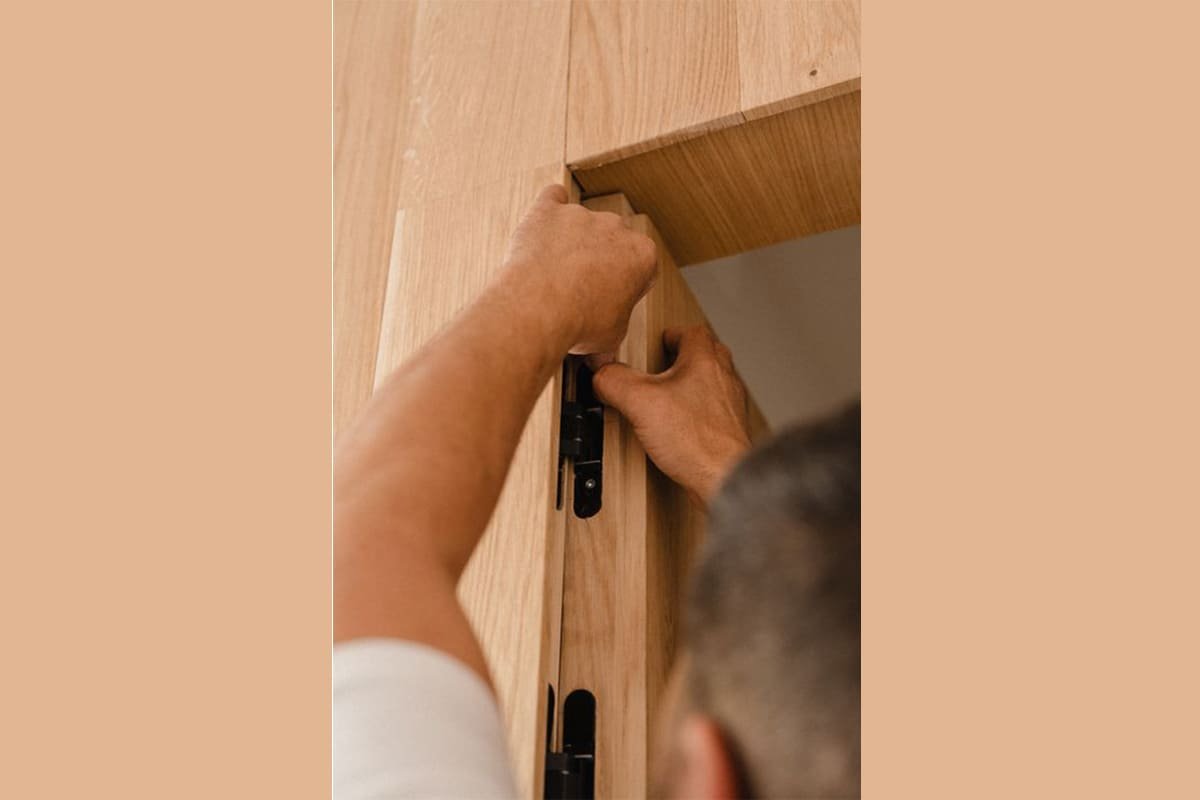
A high-quality hardwood door may weigh around 70kg, especially when the door is solid, thick, or oversized.7 In this case, forcing a lower-rated hinge into the application can create risk. I would usually guide the buyer toward an 80kg concealed hinge or another suitable heavy-duty option, depending on the full door system.
However, I also avoid saying, “Choose 80kg and everything is solved.” A higher kg rating does not fix:
- Weak frame construction
- Poor screw holding
- Incorrect hinge pocket depth
- Uneven load distribution
- Bad alignment between door and frame
- Excessive door width
- Very high opening frequency
60kg vs. 80kg: What Changes in Evaluation?
The difference between 60kg and 80kg is not only the printed number. Buyers should compare the hinge’s structure, material, adjustment function, and installation requirements.
| Selection Point | 60kg Concealed Hinge | 80kg Concealed Hinge |
|---|---|---|
| Typical use case | Medium-weight interior doors | Heavier solid wood or larger doors |
| Safety margin | Moderate | Higher for suitable systems |
| Door machining | Often standard concealed hinge routing | May require larger or deeper routing |
| Frame requirement | Stable frame needed | Strong frame more critical |
| Adjustment need | Useful | Often very important |
| Cost level | Usually lower | Usually higher |
| Risk if under-specified | Sagging, rubbing, complaints | Lower if correctly matched |
Why Marginal Selection Creates Business Risk
In B2B supply, the hinge is a small part of the total door cost, but it can create a large after-sales problem. If the door sags after installation, the end customer rarely blames the calculation. They blame the door supplier or hardware brand.
Wrong selection may lead to:
- Door sagging
- Frame rubbing
- Poor opening and closing
- Uneven gaps
- Noise during movement
- Customer complaints
- After-sales disputes
- Project delays
- Replacement cost
- Damage to brand reputation
This is why I prefer a conservative evaluation when the door is close to the limit. If a 70kg solid wood door will be installed in a project where service access is difficult, the buyer should avoid a marginal hinge decision. The cost difference between hinge grades is usually easier to manage than the cost of site replacement.
What I Ask Before Recommending 80kg
For heavier wood doors, I normally ask for:
- Exact door weight
- Door size and thickness
- Wood species or core density
- Frame material and section size
- Number of hinges per door
- Expected opening frequency
- Opening angle requirement
- Need for 3D adjustment
- Project market and standard requirements
- Any fire-rated or certification documentation required by the buyer
Certifications and fire-rated documents should always be verified against the actual product, test scope, and project requirements. I treat them as procurement documents to review, not as vague marketing words.
Is Concealed Hinge Load Rating Enough for Metal or Aluminum-Profile Doors Above 100kg?
Heavy doors above 100kg create a different problem. Standard 40kg, 60kg, or 80kg concealed hinge options may not be enough, especially for metal doors or aluminum-profile framed doors. If buyers apply standard interior-door thinking to heavy-duty systems, overload problems can appear quickly and become expensive to correct.
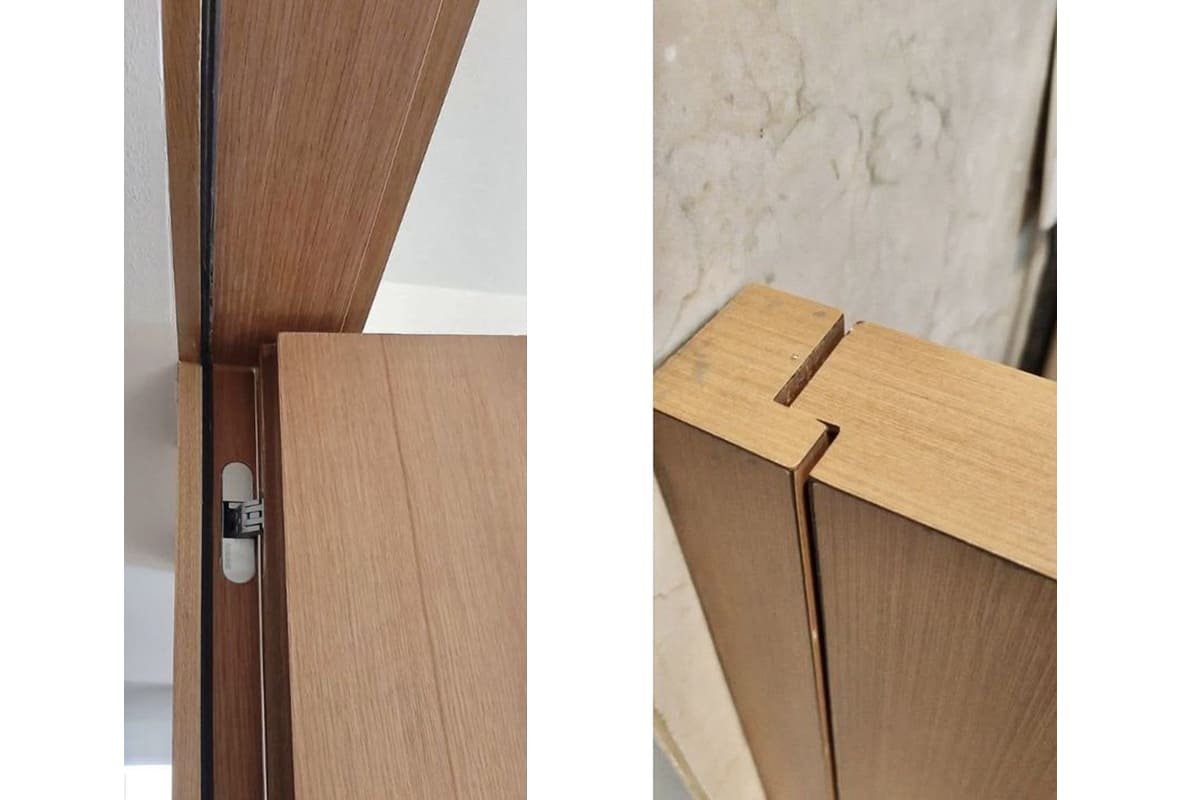
For doors above 100kg, buyers should not rely only on standard concealed hinge load rating categories. Heavy metal doors, aluminum-profile framed doors, and other demanding systems usually need heavy-duty hinges, such as stainless steel 3D adjustable hinges rated above 100kg, subject to professional evaluation and verified project requirements.8
Why 100kg+ Doors Need Different Thinking
A door above 100kg is not simply a heavier version of a bedroom door. It may involve different frame construction, fixing methods, wall conditions, opening frequency, safety requirements, and compliance documents. A heavy metal door can place high stress on the hinge knuckle, fixing plates, fasteners, and frame.9
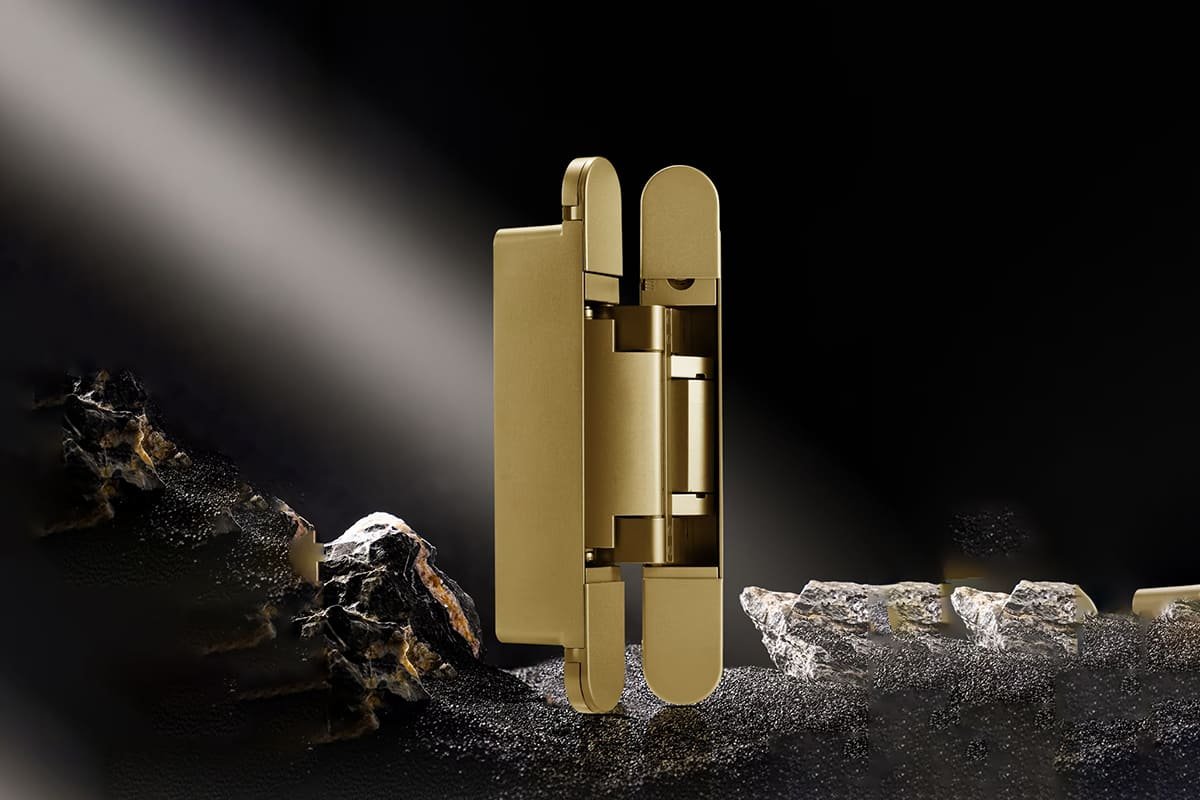
In these cases, buyers should look beyond standard concealed hinge categories and review heavy-duty options. Stainless steel 3D adjustable hinges rated above 100kg may be more suitable, depending on design and test documentation. The final choice should be reviewed by qualified professionals when structural safety, public use, fire rating, or special compliance is involved.
Standard Concealed Hinges vs. Heavy-Duty Hinges
| Door Type | Common Risk | Better Evaluation Direction |
|---|---|---|
| Standard interior wood door | Sagging from poor fit or weak frame | 40kg, 60kg, or 80kg concealed hinge based on system |
| Heavy solid wood door | Marginal load selection | Higher-rated concealed hinge with strong frame |
| Metal door above 100kg | High stress on fixing points | Heavy-duty stainless steel 3D adjustable hinge |
| Aluminum-profile framed door | Profile deformation or fixing weakness | Confirm profile structure and hinge fixing method |
| Public-use heavy door | Frequent cycles and abuse | Professional review and verified test documents |
The Role of 3D Adjustment
For heavy doors, 3D adjustment can be very valuable. It allows installers to fine-tune the door position after installation. This helps correct small deviations in height, side gap, and compression. However, adjustment is not a cure for wrong selection. The hinge must still be suitable for the load, frame, and usage.
3D adjustment usually supports:
- Vertical adjustment
- Horizontal adjustment
- Depth or compression adjustment
- Gap correction
- Better final alignment
When I discuss heavy-duty hinges with OEM buyers, I also remind them to check the installation team’s capability. A strong hinge installed badly can still fail. Heavy doors require accurate routing, strong fasteners, correct torque, and careful alignment.
Supplier Questions for Heavy Doors
If your door is above 100kg, I would not recommend buying from a catalog photo alone. I would ask the supplier for:
- Product drawings with dimensions
- Material description
- Load rating documentation, if available
- Recommended door size and thickness range
- Recommended screw or fixing method
- Adjustment range
- Surface treatment information
- Inspection process
- Sample testing support
- Relevant certificates or reports for buyer verification
At SDH Hardware, our role as a manufacturer is to help buyers narrow the hardware selection based on practical production and application information. We are not a substitute for a structural engineer or project authority. For special heavy-duty or regulated doors, the buyer should involve qualified professionals and verify test reports against the exact application.
How Should OEM Buyers Evaluate Concealed Hinge Load Rating Before Bulk Orders?
Bulk purchasing creates pressure to decide quickly. However, a concealed hinge load rating mistake becomes much more expensive after mass production starts. If the hinge pocket has already been machined into thousands of doors, changing the hinge may require rework, repacking, or even scrapping door leaves.
OEM buyers should evaluate concealed hinge load rating through a structured process before bulk orders. The process should include door data collection, supplier technical review, sample fitting, installation testing, quality inspection planning, and document verification. This reduces overload risk and helps avoid disputes after shipment or project installation.
Step 1: Collect Complete Door Information
The first step is simple but often skipped. Buyers should prepare a complete door profile before asking for hinge recommendations. This saves time and reduces misunderstanding.
I suggest sending suppliers the following details:
- Door weight
- Door height and width
- Door thickness
- Door material
- Door edge construction
- Frame material
- Frame thickness or profile drawing
- Number of hinges planned
- Opening angle requirement
- Market or project type
- Expected usage frequency
- Surface finish requirement
- Fire-rated or CE documentation requirement, if applicable
This information helps the supplier recommend more responsibly. It also creates a written basis for later confirmation.
Step 2: Review Drawings Before Machining
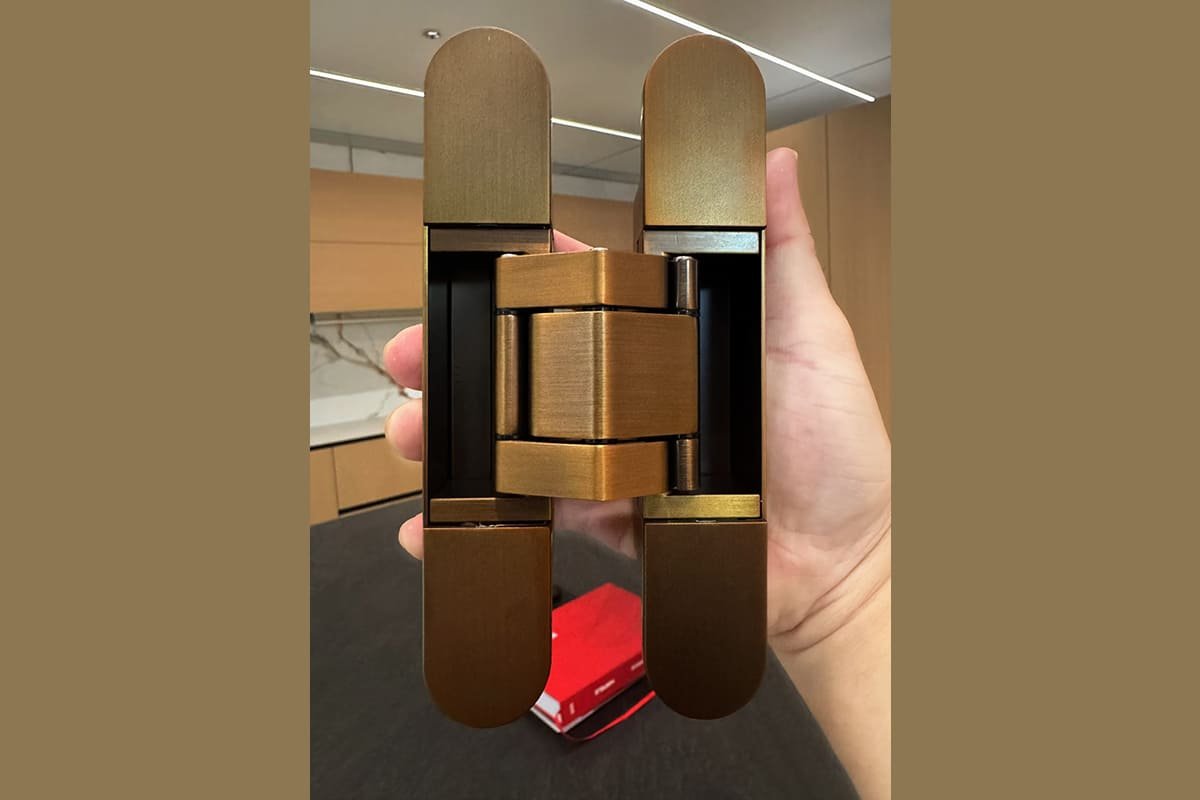
Concealed hinges require accurate cutouts. A small dimensional mismatch can cause installation stress.10 Before bulk door production, buyers should confirm drawings and routing dimensions.
Important drawing points include:
- Hinge body length
- Hinge body width
- Mortise depth
- Screw hole position
- Opening clearance
- Adjustment access
- Minimum door thickness
- Minimum frame section
- Required gap around the door
- Cover plate or visible edge details
A product can be strong enough in rating but still unsuitable if the door factory cannot machine the pocket correctly. I have seen cases where the hinge was blamed, but the root cause was inaccurate routing or inconsistent frame preparation.
Step 3: Test Samples in the Real Door System
A sample test should not only check appearance. It should check performance inside the real door and frame. The buyer should install the hinge on a real sample door, adjust the door, and operate it under realistic conditions.
A practical sample test includes:
- Checking hinge fit in the routed pocket
- Verifying screw holding strength
- Checking opening and closing smoothness
- Confirming gap consistency
- Testing adjustment range
- Checking whether the door rubs the frame
- Observing sagging after repeated operation
- Reviewing installer feedback
For large projects, this sample step is one of the best ways to reduce risk. It gives the buyer, factory, and supplier a shared reference before mass production.
Step 4: Define Inspection Criteria
B2B buyers should also define quality inspection points before shipment. For concealed hinges, inspection may include:
| Inspection Item | Why It Matters |
|---|---|
| Material and component check | Supports consistency |
| Machining precision | Affects installation fit |
| Surface finish | Affects appearance and corrosion resistance |
| Opening movement | Confirms smooth function |
| Adjustment function | Confirms installer usability |
| Screw and accessory set | Prevents site delays |
| Packaging | Reduces transport damage |
| Labeling | Supports warehouse and project control |
At SDH Hardware, our production workflow includes raw material screening, production supervision, and finished product inspection. For OEM projects, buyers can also request inspection support after order completion. Still, the buyer should define project-specific acceptance criteria in advance, especially when door weight, fire rating, or market standards are involved.
What Overloading Risks Should Buyers Watch After Installation?
Overloading does not always show up immediately. A door may look acceptable on the first day and then begin to sag after repeated use.11 This delayed failure is frustrating because the project may already be handed over. Buyers should know the early warning signs before the problem becomes a larger claim.
Buyers should watch for uneven door gaps, hinge-side movement, rubbing at the frame, poor latching, scraping sounds, loose screws, and difficult opening or closing. These signs may indicate overload, weak frame support, inaccurate installation, or a hinge selection mismatch that needs prompt inspection.
Common Early Warning Signs
Overload problems often appear in small ways first. Installers and after-sales teams should pay attention to these signs:
- The top gap becomes smaller on the lock side.
- The door rubs the frame or floor.
- The latch no longer aligns with the strike plate.
- The door feels heavy or uneven when opening.
- Screws loosen around the hinge body.
- The hinge adjustment cannot hold position.
- The door makes scraping or clicking sounds.
- The frame shows movement or deformation.
These issues do not always mean the hinge itself is defective. They can also come from frame weakness, poor installation, unsuitable fasteners, incorrect routing, or excessive use conditions.
How to Diagnose the Problem
A simple site diagnosis should separate hinge issues from door-system issues. I usually suggest checking in this order:
Door weight
- Confirm the real weight if possible.
- Compare it with the selected hinge rating and quantity.
Door gap
- Check top, bottom, lock side, and hinge side gaps.
- Look for diagonal sagging.
Hinge fixing
- Check screw tightness.
- Inspect whether screw holes are stripped.
Frame stability
- Check whether the frame moves under load.
- Confirm frame fixing to the wall.
Hinge pocket
- Check whether the hinge is sitting flat.
- Look for oversized or uneven mortising.
Adjustment setting
- Confirm whether 3D adjustment has been overused to compensate for poor installation.
Usage condition
- Ask whether the door is used more frequently than expected.
- Check for slamming or misuse.
How to Reduce Future Claims
The best time to prevent overload is before shipment. However, buyers can still reduce future claims by improving documentation and installation control.
Helpful actions include:
- Provide installation drawings with each batch.
- Train installers on concealed hinge adjustment.
- Use recommended screws and fixing methods.
- Avoid substituting frames without review.
- Check sample doors before project rollout.
- Record door weight and hinge model in project files.
- Keep certificates and test documents organized for buyer verification.
- Use heavier-duty hinges when the application is clearly outside standard interior door conditions.
Conclusion
A concealed hinge load rating is useful, but it should never be treated as a simple door weight label. A safe choice depends on door weight, dimensions, material, hinge quantity, frame strength, installation precision, and usage frequency. For standard interior doors, 40kg options may fit suitable systems. For heavier hardwood doors, 80kg may be wiser. For 100kg+ metal or aluminum-profile doors, heavy-duty solutions need careful review. If you need OEM concealed hinge selection support, I can help you evaluate your door specifications, drawings, and project requirements before bulk production.
"Everything you need to know about Commercial Door Hinges", https://www.mckinneyhinge.com/en/resource-library/knowledge-center/blog/blog-post.aehdynamic-everything-you-need-to-know-about-commercial-door-hinges-top-10-commercial-contractors-hinge-installation-questions-633f18001fa7df003d7c229b_mckinney.html. Door-hardware standards classify hinge suitability by variables such as door mass, dimensions, durability cycles, fixings, and installation conditions, supporting the treatment of hinge rating as a system-level specification rather than a simple weight label. Evidence role: expert_consensus; source type: institution. Supports: A door-hardware standard or institutional guide should support that hinge selection and durability are evaluated using door mass, dimensions, usage class, fixings, and installation conditions rather than weight alone.. Scope note: Standards may define test categories and selection factors but may not address the specific concealed hinge models discussed in the article. ↩
"Experimental data collected during quasi-static cyclic ...", https://www.sciencedirect.com/science/article/pii/S2352340926001113. Engineering studies of door hardware and cyclic loading distinguish static load capacity from repeated operational and impact forces, supporting the claim that in-service hinge stress can exceed what is implied by a simple static weight figure. Evidence role: mechanism; source type: paper. Supports: A mechanical engineering or building-hardware source should explain that hinges experience cyclic and impact loads during opening, closing, and slamming, which differ from static load conditions.. Scope note: Such sources may describe the loading mechanism generally rather than testing the exact concealed hinge products referenced in the article. ↩
"28.18 -- Open door to demonstration preparation area", https://web.physics.ucsb.edu/~lecturedemonstrations/Composer/Pages/28.18.html. Engineering mechanics defines moment as the product of force and perpendicular distance from the pivot, which supports considering door width and geometry when estimating hinge-side loading. Evidence role: mechanism; source type: education. Supports: A university engineering mechanics reference should support that torque or moment increases with force and distance from the pivot, explaining why wider or taller doors can increase hinge stress.. Scope note: This provides a general mechanical basis and does not by itself determine a rated load for any specific hinge. ↩
"Performance of fasteners in wood flour-thermoplastic ...", https://research.fs.usda.gov/treesearch/5724. Studies of screw withdrawal resistance in solid wood and wood-based panels show that fastener holding capacity varies by substrate density, structure, and panel type, supporting the claim that door material affects hinge fixing performance. Evidence role: general_support; source type: paper. Supports: Research on screw withdrawal strength in wood, MDF, particleboard, and related materials should support that substrate type affects fastener holding capacity.. Scope note: Most material studies test standardized specimens rather than complete door assemblies with concealed hinges. ↩
"Wood Handbook, Chapter 08: Fastenings", https://research.fs.usda.gov/download/treesearch/37424.pdf. Research on fastener withdrawal and frame connection strength supports the principle that a hinge assembly can fail or deflect when the supporting frame or fixing points are weaker than the hinge hardware. Evidence role: mechanism; source type: research. Supports: A fastening or structural test source should show that hinge performance depends on the strength and stiffness of the frame and the fastener connection.. Scope note: The evidence is likely to support the fastening mechanism generally rather than quantify sag for the exact frame and hinge combinations in the article. ↩
"A156.1 - 2025 Butts and Hinges", https://buildershardware.com/ANSI-BHMA-Standards/Hardware-Highlights/A1561-2025-Butts-and-Hinges. Building-hardware standards classify hinges by durability and cycle testing, supporting the use of expected opening frequency as a hinge-selection variable. Evidence role: expert_consensus; source type: institution. Supports: A building-hardware standard should support that hinges are durability-tested and classified by operating cycles, implying that doors in different use environments require different duty assumptions.. Scope note: Cycle standards classify hardware durability but may not provide direct comparative cycle counts for hotels, offices, and apartments. ↩
"Wood Handbook, Wood as an Engineering Material", https://research.fs.usda.gov/download/treesearch/37440.pdf. Government wood-property data show that many hardwood species have densities high enough for a solid, thick, or oversized door leaf to approach or exceed 70 kg when calculated by volume. Evidence role: statistic; source type: government. Supports: A government wood-properties source should provide hardwood density ranges that support the plausibility of a 70 kg solid or oversized hardwood door.. Scope note: The support is based on density calculation and species ranges, not on a universal weight for all hardwood doors. ↩
"Understanding BS EN 1935:2002 single-axis hinge grades", https://uk.sfs.com/resources/article/understanding-bs-en-1935. Hinge classification standards include door-mass and durability categories for heavier applications, supporting the need to move beyond ordinary interior-door hinge assumptions for doors exceeding about 100 kg. Evidence role: expert_consensus; source type: institution. Supports: A hinge standard or institutional building-hardware reference should support that heavy doors are assigned higher hinge mass and durability classes and may require verified hardware specifications.. Scope note: Such standards support heavy-duty classification generally but do not specifically endorse stainless steel or 3D-adjustable hinges for every heavy metal or aluminum-profile door. ↩
"design, fabrication, and testing of mechanical hinges with ...", https://digitalcommons.calpoly.edu/cgi/viewcontent.cgi?params=/context/theses/article/4047/&path_info=Design__Fabrication__and_Testing_of_Mechanical_Hinges_with_Snap_Fit_Locking_Mechanisms_in_Rigid_Origami_Structures.pdf. Mechanical analyses of hinged door assemblies show that door weight and operating loads are transferred through the hinge barrel, leaves or plates, fasteners, and frame, creating localized stresses in these components. Evidence role: mechanism; source type: paper. Supports: An engineering analysis should support that door weight and operational loading are transferred through hinge knuckles, plates, fasteners, and the frame, producing concentrated stresses.. Scope note: The source may model representative hinged assemblies rather than the exact concealed or stainless steel hinge geometry discussed in the article. ↩
"Avoid Common Door Hinge Installation Mistakes", https://www.tdchinges.com/blogs/news/avoid-common-door-hinge-installation-mistakes-a-practical-guide?srsltid=AYCX9vKTyfNIFStOgZ-OWDonZYTCtUg_1oUUCwbbhb_NYW8hGLC_nFgg. Technical installation references for hinged doors describe accurate mortising and alignment as necessary to avoid binding and uneven load transfer, supporting the claim that dimensional mismatch can create installation stress. Evidence role: mechanism; source type: education. Supports: A technical construction or engineering source should explain that inaccurate mortising or hinge alignment can introduce binding, uneven load, and installation stress.. Scope note: General installation references may discuss mortised hinges broadly and may not be limited to concealed hinges. ↩
"A Comprehensive Review on the Fatigue of Wood and ... - PMC", https://pmc.ncbi.nlm.nih.gov/articles/PMC12654187/. Research on cyclic loading, creep, and fastener retention shows that repeated service loads can produce progressive deformation or loosening over time, supporting the possibility of delayed door sag after initial installation. Evidence role: mechanism; source type: paper. Supports: A fatigue, creep, or cyclic-fastening study should support that repeated loading can gradually increase deformation, loosen fixings, or produce sag in door assemblies.. Scope note: The evidence supports the general mechanism of progressive deformation and may not isolate concealed hinges as the sole cause of sag. ↩
