Floor Spring vs. Door Closer: What's the Difference?
Floor Spring vs. Door Closer is a common sourcing question because both products make a door close automatically. The problem starts when buyers compare only the self-closing function. That can lead to wrong hardware selection, poor installation fit, and unhappy end users. I usually solve this by first checking the door structure, opening direction, and project application.
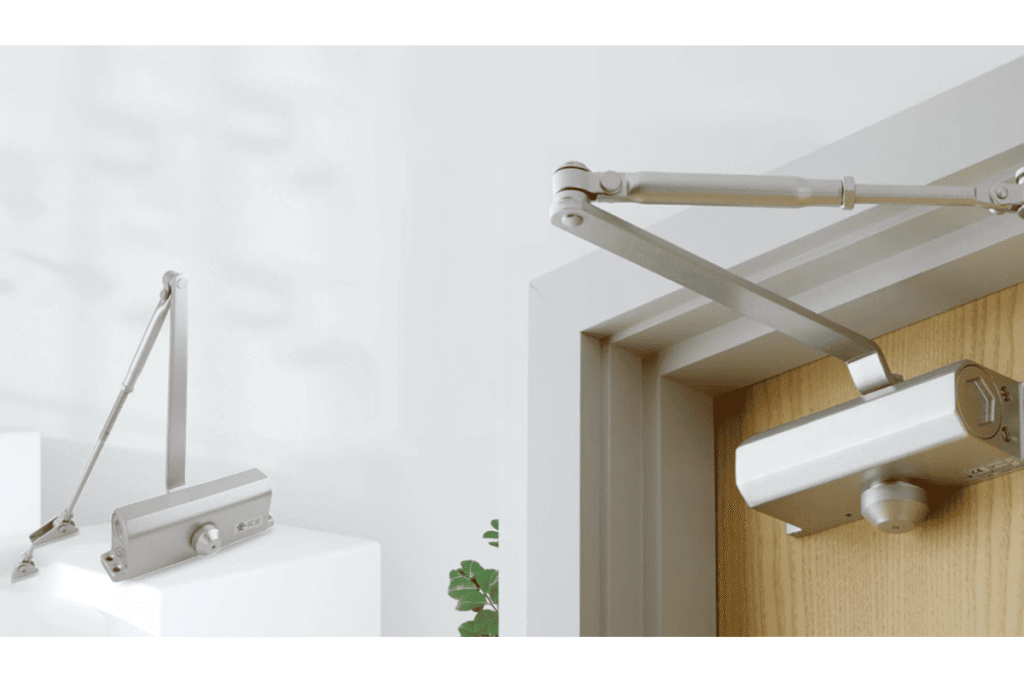
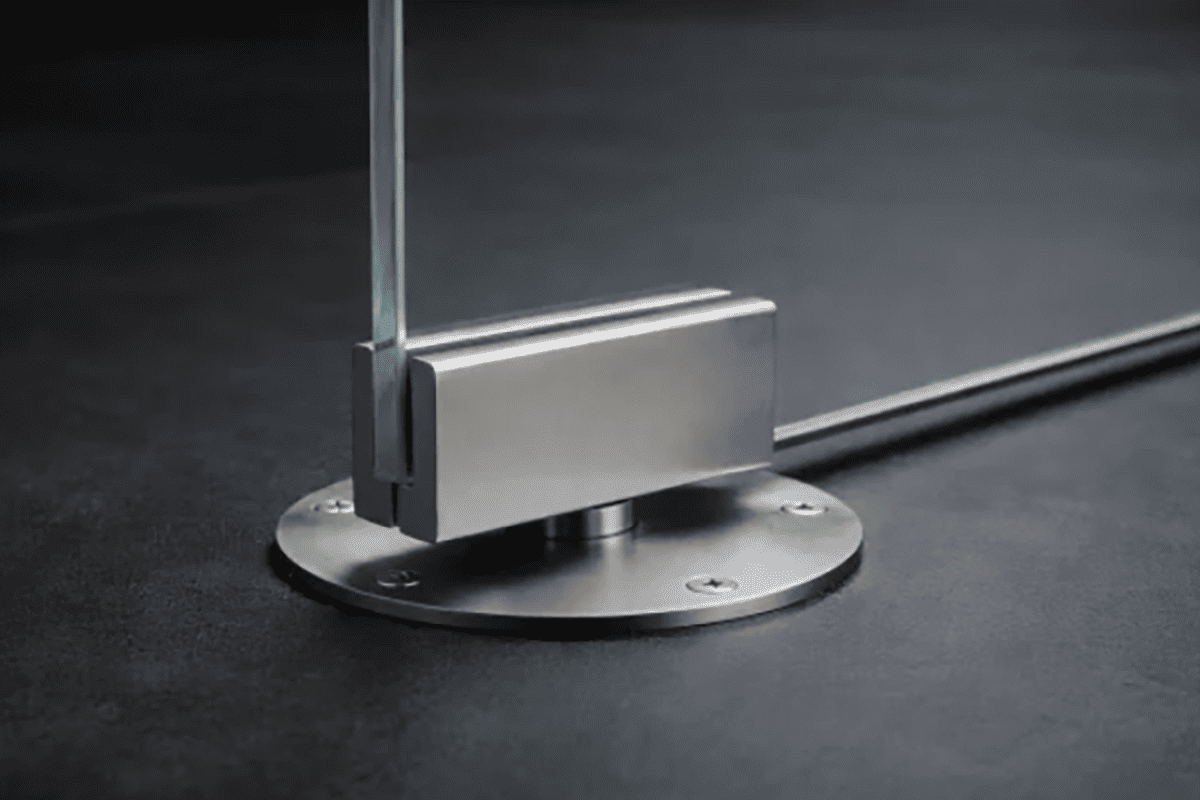
A floor spring is a concealed door control device that also works as a pivot/hinge component1, often for double-action glass or commercial entrance doors. A door closer is an added closing device for doors that already use hinges2, such as fire doors, steel doors, wooden doors, and aluminum profile doors. The key difference is not only position, but door structure and opening direction.
I have seen many buyers ask this question after receiving different requests from architects, door factories, and project contractors. The answer becomes much clearer when we stop asking, “Which one closes better?” and start asking, “Which mechanism fits this door?”
Why Does Floor Spring vs. Door Closer Confuse Buyers?
Floor Spring vs. Door Closer often confuses buyers because both devices control closing speed and help return a door to the closed position3. The problem is that this surface-level similarity hides a bigger difference. If I select only by function, I may ignore how the door is built and how people use it.
The confusion happens because both products provide controlled self-closing, but they belong to different door systems. A floor spring is part of the pivoting structure, while a door closer is mounted onto a hinged door. The correct choice depends on door type, opening direction, weight, width, and usage scenario.4
The shared function creates the misunderstanding
Both a floor spring and a door closer can help a door close automatically. This shared function is useful in many buildings, including offices, hotels, schools, hospitals, malls, and public facilities. However, I always remind buyers that same result does not mean same mechanism.
A simplified comparison looks like this:
| Item | Floor Spring | Door Closer |
|---|---|---|
| Main purpose | Controls closing and supports pivoting | Controls closing on hinged doors |
| Typical door type | Glass doors, commercial entrance doors | Fire doors, steel doors, wooden doors, aluminum doors |
| Opening direction | Often double-action | Usually one-way |
| Installation position | Concealed in floor | Surface-mounted or concealed in door/frame |
| Door structure | Pivot-based | Hinge-based |
| Visual appearance | Cleaner, more hidden | More visible unless concealed type |
The real decision is structural
In supplier communication, I often hear buyers say, “We need a closer for a glass door.” Sometimes they mean a normal overhead closer. Other times they actually need a floor spring because the door is a frameless glass entrance that opens both inward and outward.
That is why I do not define the difference only by installation position. Yes, a floor spring is normally installed in the floor, and a door closer is often mounted at the top of the door. But the deeper question is this:
Does the door need a pivot-based double-action structure, or does it already have hinges for one-way opening?
This question usually reveals the correct product category.
Why this matters in B2B sourcing
For door factories, hardware brands, and wholesalers, wrong selection can create several downstream problems:
- Wrong project quotation, because the product type does not match the door design.
- Installation conflict, because the prepared door or frame does not accept the selected hardware.
- End-user dissatisfaction, because the door may not open in the expected direction.
- Compliance risk, especially when fire doors or public-building doors require verified hardware documents.
- Inventory mismatch, because the warehouse stocks a product that cannot be used for the customer’s door structure.
From my experience, the best way to avoid these issues is to ask project questions before discussing price. I usually ask:
- What is the door material?
- Is the door frameless glass, framed glass, steel, wood, or aluminum?
- Does the door open one way or both ways?
- Does the door already have hinges?
- What are the door width and weight?
- Is the project a fire-rated area or a general entrance?
These questions help turn Floor Spring vs. Door Closer from a vague product comparison into a practical selection process.
How Does Floor Spring vs. Door Closer Differ by Door Structure?
Floor Spring vs. Door Closer becomes much easier to understand when I look at the door structure first. A wrong assumption can cause problems before installation even begins. If the door is designed around pivots, it needs one kind of control. If the door is designed around hinges, it needs another.
A floor spring supports and controls a pivot-style door, often allowing double-action opening. A door closer controls a door that already swings on hinges. Therefore, the structural difference is central: floor springs combine pivot and closing control, while door closers add closing control to an existing hinged system.
Floor spring: closing device plus pivot function
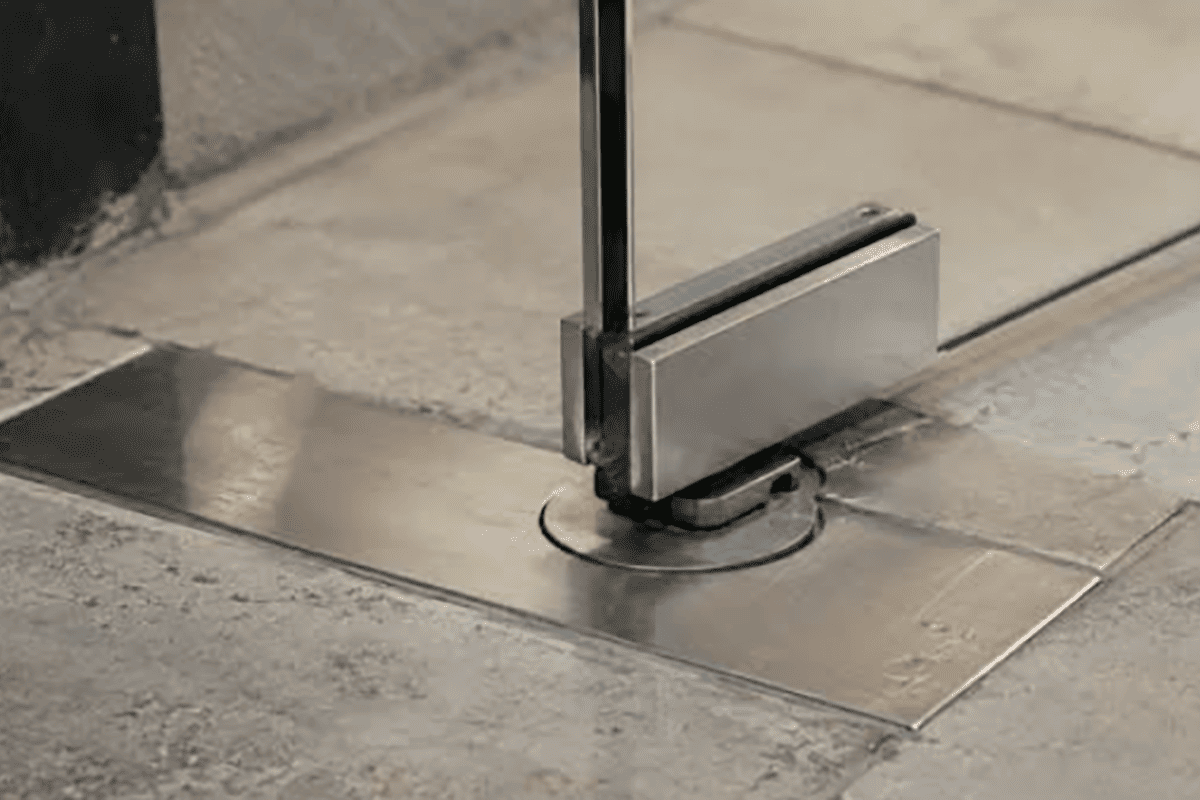
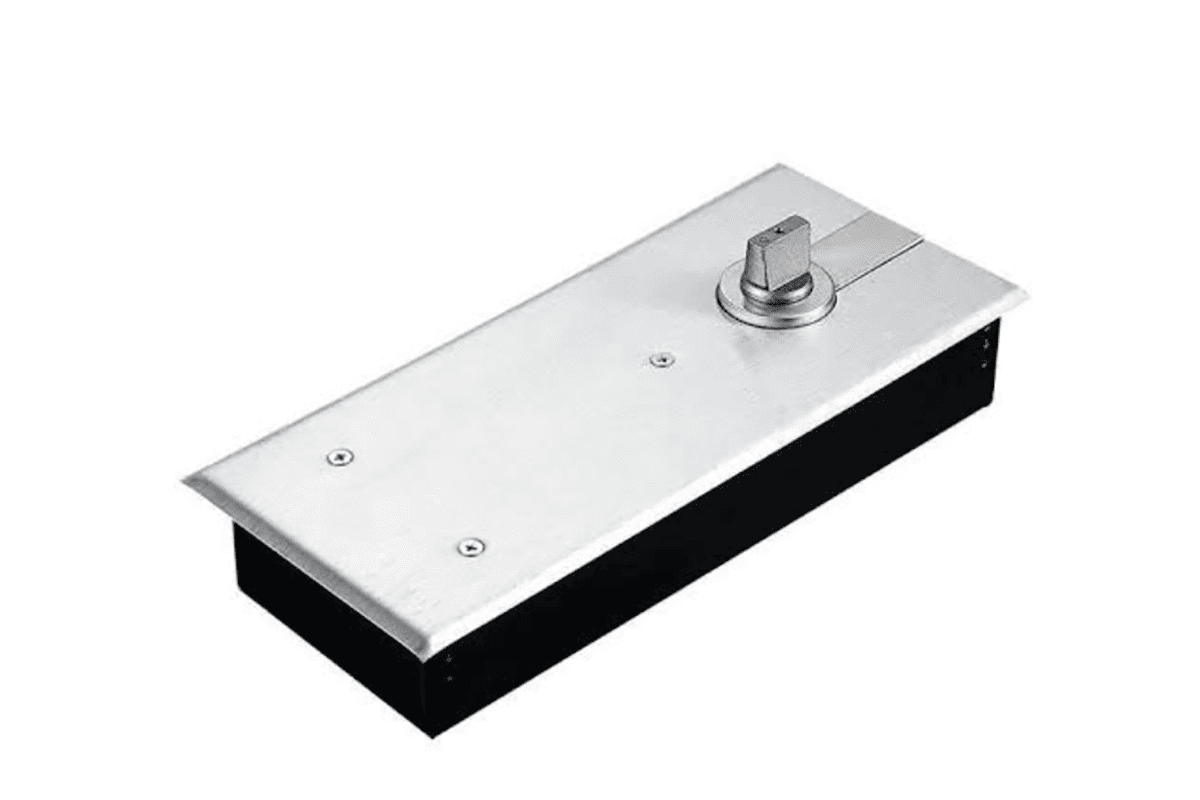
A floor spring is installed in the floor and works with top and bottom pivot fittings.5 It is common on frameless glass doors, commercial entrances, office lobbies, hotel doors, and retail storefronts. It provides controlled closing, but it also forms part of the door’s support and rotation system.
In practical terms, a floor spring is not just “a closer hidden in the floor.” It is tied to the way the door swings.
Common floor spring applications include:
- Frameless glass entrance doors
- Glass doors in shopping malls
- Hotel lobby doors
- Office building entrance doors
- Commercial doors requiring a cleaner appearance
- Double-action doors that open inward and outward6
A floor spring can often hold the door open at certain angles, depending on the model.7 Some project buyers ask for hold-open functions for commercial entrances where traffic is frequent. However, I always recommend checking the product datasheet and project requirements before confirming this function.
Door closer: added control for hinged doors
A door closer is usually installed on a door leaf or frame. It controls the closing movement after someone opens the door. The door itself is normally supported by hinges, such as butt hinges, ball bearing hinges, or other architectural hinge systems.
Typical door closer applications include:
- Fire doors
- Steel doors
- Wooden doors
- Aluminum profile doors
- Apartment entrance doors
- Office room doors
- School and hospital corridor doors
- Public-building service doors
In these applications, the door closer does not replace the hinge. It only controls the closing action. That distinction matters because the closer is not normally designed to make a standard hinged door become a double-action door.
One-way opening vs. double-action opening
Opening direction is one of the most important differences. Many floor-spring doors can open in both directions, depending on the pivot system and project design. This double-action feature is especially useful for commercial entrances where people approach from both sides.
A standard door closer, by contrast, is usually used on a one-way hinged door.8 The door opens in one direction and returns to the closed position. This makes it suitable for fire doors, corridor doors, and many public-building doors where controlled one-way closing is required.
Here is a practical comparison:
| Opening requirement | Recommended direction |
|---|---|
| Door must open both inward and outward | Consider a floor spring system |
| Door opens only inward or outward on hinges | Consider a door closer |
| Frameless glass door at commercial entrance | Usually floor spring |
| Fire-rated steel or wooden door | Usually door closer, subject to verified certification |
| Existing hinged aluminum door | Usually door closer |
| Clean appearance with concealed bottom control | Often floor spring |
Why structure comes before price
I sometimes receive requests that start with, “Please quote your best floor spring and door closer.” That is understandable, but price comparison only makes sense after the structure is confirmed. A low-cost product that does not fit the door system is not economical. It creates rework.
For procurement teams, I suggest this order:
- Confirm door structure: pivot or hinge.
- Confirm opening direction: one-way or double-action.
- Confirm door material: glass, steel, wood, or aluminum.
- Confirm dimensions: width, height, thickness, and weight.
- Confirm usage frequency: residential, commercial, or heavy public use.
- Confirm document needs: CE documents, fire-rated certification, test reports, or project approvals where applicable.
At SDH Hardware, we manufacture and supply architectural door hardware for different door systems. From a supplier-side view, I prefer to clarify these details early. It protects both sides from an incorrect order and helps downstream customers understand why one product is suitable and the other is not.
When Should I Choose a Floor Spring vs. Door Closer for Commercial Projects?
Floor Spring vs. Door Closer selection in commercial projects can feel difficult because buildings often use many door types at the same time. One project may include glass entrances, fire stair doors, office wooden doors, and aluminum profile doors. If I apply one solution everywhere, the result is usually wrong.
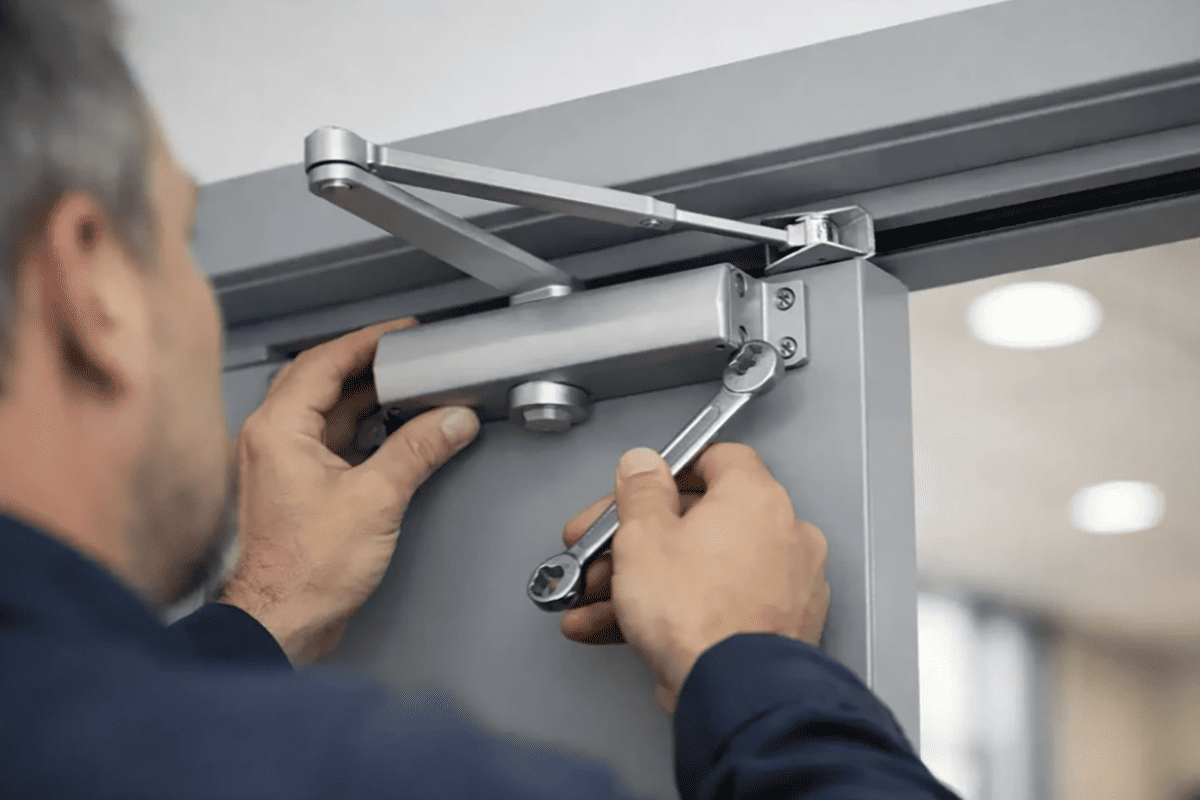
Choose a floor spring for pivot-style glass or commercial entrance doors, especially when double-action opening and a clean appearance are required. Choose a door closer for hinged doors such as fire doors, steel doors, wooden doors, and aluminum doors where controlled one-way closing is needed.
Best-fit scenarios for floor springs
A floor spring is often the better match when the door is part of a glass entrance system. These doors are common in high-traffic commercial spaces because they offer a clean look and easy two-way movement.
I usually consider a floor spring when the project includes:
- Frameless glass doors
- Double-action entrance doors
- Commercial lobby doors
- Retail storefront doors
- Hotel or office entrance doors
- Doors where visible overhead hardware is not preferred
The appearance benefit is real, but I avoid saying floor springs are always more premium. They are simply the correct product for certain door structures. A well-selected door closer on a fire door is just as professional as a floor spring on a glass entrance.
Best-fit scenarios for door closers
A door closer is usually the practical choice for hinged doors. Many public buildings require doors to close reliably after use. Door closers help control speed, reduce slamming, and support building operation requirements.9
Common use cases include:
- Fire doors
- Steel security doors
- Wooden office doors
- Aluminum profile doors
- Apartment corridor doors
- School classroom doors
- Hospital passage doors
- Hotel guestroom or service doors
For fire doors, buyers should not rely only on a product name.10 They should verify relevant certifications, test reports, and project requirements with qualified professionals. As a manufacturer and supplier, I can provide available documents for our products, but project-specific approval should be checked by the responsible authority, consultant, or fire-safety professional.
Project-by-project selection logic
The easiest way to choose is to match the hardware to the door category first.
| Project door type | Likely hardware choice | Reason |
|---|---|---|
| Frameless glass entrance door | Floor spring | Pivot support and double-action opening |
| Fire-rated steel door | Door closer | Hinged one-way closing, subject to verified documents |
| Wooden office door | Door closer | Door already uses hinges |
| Aluminum profile shop door | Door closer or floor spring, depending on structure | Framed design may vary |
| Hotel lobby glass door | Floor spring | Clean look and high traffic suitability |
| Stairwell fire door | Door closer | Controlled closing on hinged fire door |
| Retail glass storefront | Floor spring | Often requires two-way movement |
| Back-of-house service door | Door closer | Functional one-way closing |
A practical example from buyer communication
A buyer once asked me whether a door closer could replace a floor spring because both items “pull the door back.” The door was a frameless glass entrance for a shop. My answer was simple: the door did not have conventional hinges, and the customer wanted people to push it from both sides. In that case, a standard door closer was not the right solution.
This type of case is very common. The buyer’s question is reasonable because they are thinking about the closing result. But the correct answer must consider the full door system.
Important performance factors
After the product category is clear, I check the technical parameters. These factors help avoid under-specification:
Door weight
The device must support or control the actual door weight. Glass doors can be heavy, and oversized wooden or steel doors also need suitable closer power.Door width
Wider doors create more leverage. The closing device must match the door width range stated by the manufacturer.11Traffic frequency
A shopping mall entrance needs different durability expectations than a small office room. Buyers should ask for product grade and test documentation where needed.Opening angle
Some projects need a specific opening range or hold-open angle. This should be confirmed before ordering.Environmental conditions
Humidity, dust, coastal air, and temperature can affect finish and long-term performance.12 Surface treatment and material selection matter.Certification documents
CE certification and fire-rated documents should be verified, especially for regulated projects. I always treat these as documents buyers should review, not assumptions.
For B2B procurement, this approach is more reliable than asking which product is “better.” The right product is the one that fits the door structure and the building requirement.
What Procurement Checks Matter in Floor Spring vs. Door Closer Selection?
Floor Spring vs. Door Closer procurement can go wrong when buyers focus only on unit price. The risk is not only buying an expensive or cheap product. The bigger risk is buying a technically unsuitable product. I prefer a checklist that connects product specification, supplier capability, and quality control.
Important procurement checks include door type, opening direction, door weight, door width, usage frequency, installation structure, finish, certification documents, and supplier production capacity. Buyers should also verify drawings, packaging, logo requirements, inspection process, and after-order quality control before placing bulk orders.
Product specification checklist
Before I quote or recommend products, I like to collect complete door information. In B2B trade, this reduces sample mistakes and bulk-order disputes.
A useful checklist includes:
- Door material: glass, steel, wood, aluminum, or composite
- Door type: frameless, framed, hinged, or pivoted
- Door weight
- Door width and height
- Door thickness
- Opening direction
- Required opening angle
- Usage frequency
- Indoor or outdoor location
- Project market or regional standard
- Finish requirement
- Logo or branding requirement
- Packaging requirement
- Document requirement, such as CE or fire-rated certification
This checklist helps identify whether a floor spring, surface door closer, concealed closer, hinge, or accessory is needed.
Supplier capability checklist
The product is only one part of procurement. The supplier’s manufacturing and service capability also matters, especially for hardware brands and bulk wholesalers.
At SDH Hardware, our business model is built around factory-direct architectural hardware supply. We support ODM and OEM orders, one-stop sourcing, customized specifications, surface treatments, logo marking, custom packaging, drawings after order confirmation, and product inspection service after production.
For any supplier evaluation, I suggest checking:
| Procurement factor | Why it matters |
|---|---|
| Factory experience | Mature production reduces avoidable quality issues |
| Product range | One-stop sourcing can simplify door hardware matching |
| Customization ability | Projects may need special finishes, sizes, or packaging |
| Quality control process | Raw material, production, and finished inspection all matter |
| Testing equipment | Functional testing supports more stable product supply |
| Documentation | CE and fire-rated documents should be available where applicable |
| Export experience | Market familiarity helps reduce communication problems |
| Brand cooperation history | Long-term partnerships can indicate process reliability |
SDH Hardware has more than 10 years of specialized production experience, independent factory operations, and a team of 150 professional employees. Our product portfolio covers more than 3,000 architectural hardware articles, including Euro mortise locks, stainless steel lever handles, butt hinges, concealed door hinges, Euro brass cylinders, and door accessories. I mention this not as a substitute for project verification, but as context for how we support B2B buyers.
Quality control points for buyers
For floor springs and door closers, quality control should not be limited to appearance. A shiny finish cannot prove reliable performance. Buyers should ask how the supplier checks function, dimensions, assembly, and packaging.
Important quality control points include:
Raw material screening
Buyers should confirm the material grade and key component quality where relevant.Dimensional inspection
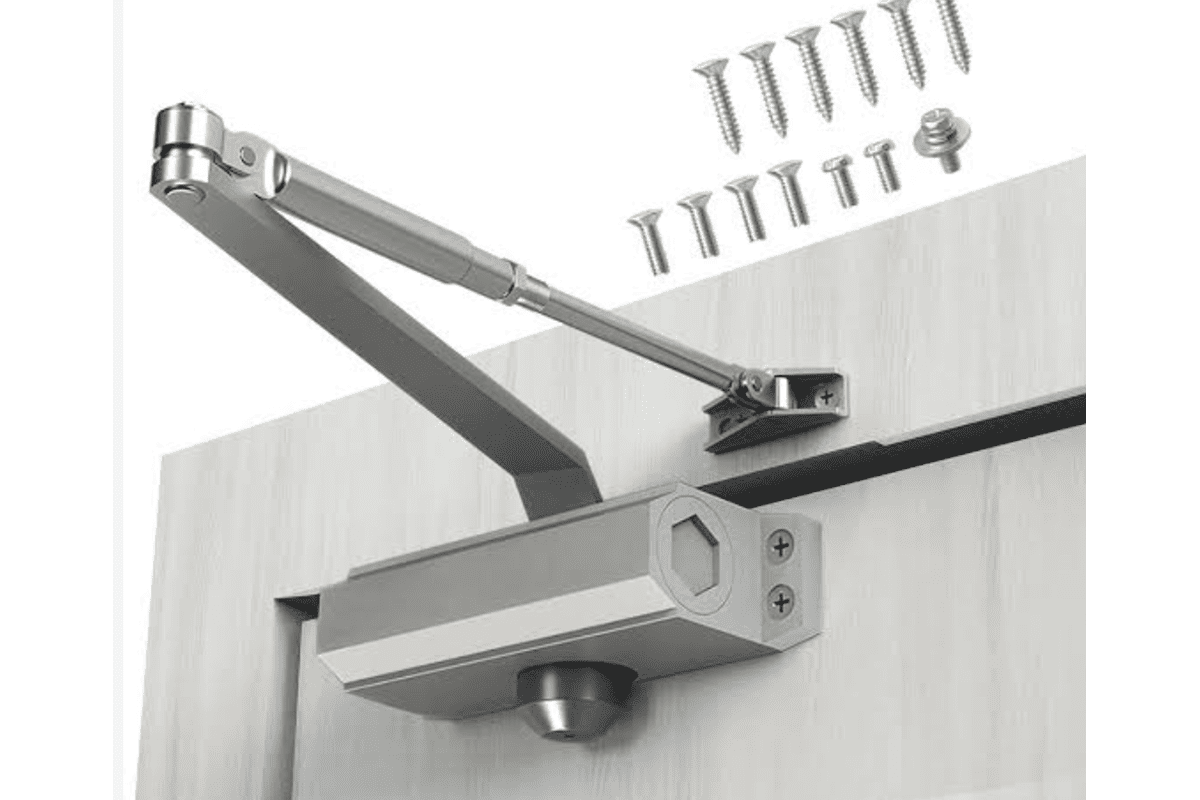
Floor spring boxes, cover plates, spindle dimensions, closer arms, and mounting holes must match installation requirements.Functional inspection
The closing speed, latching action, adjustment function, and movement smoothness should be checked.Surface finish inspection
Finish consistency matters for brand image and project acceptance.Packaging inspection
Export cartons should protect heavy hardware during transport.Document verification
Certifications should be reviewed as actual documents. Buyers should check whether they apply to the exact product model and intended use.
Avoiding common sourcing mistakes
I often see these mistakes in Floor Spring vs. Door Closer purchasing:
- Choosing by price before confirming door structure
- Assuming all self-closing devices are interchangeable
- Using a standard door closer for a double-action requirement
- Ignoring door weight and width
- Forgetting to ask for installation drawings
- Treating certification claims as enough without reviewing documents
- Ordering a sample without confirming finish and accessories
- Mixing products from different suppliers without checking compatibility
The better approach is simple. Buyers should confirm the application first, then request a matching product recommendation, then review specifications and documents. This process is slower at the beginning, but it is faster than solving problems after shipment.
Recommended buying sequence
For door factories and hardware brands, I suggest this sequence:
- Send door drawings or photos.
- Confirm door structure and opening direction.
- Share door weight, width, thickness, and usage scenario.
- Confirm required standards and documents.
- Select the floor spring or door closer model.
- Confirm finish, logo, packaging, and accessories.
- Approve sample or technical drawing.
- Start bulk production with agreed inspection steps.
- Review final inspection before shipment.
This is the same thinking I use when helping customers compare architectural hardware. It keeps the discussion professional and reduces uncertainty for both sides.
Frequently Asked Questions
Is a floor spring the same as a door closer?
No. Both can make a door self-close, but they are not the same. A floor spring usually works with a pivot structure and can support double-action glass doors. A door closer is usually added to an already hinged door for controlled one-way closing.
Can I use a door closer instead of a floor spring?
You should not assume that a door closer can replace a floor spring. If the door is a frameless glass pivot door or needs double-action opening, a floor spring is usually the correct mechanism. A standard door closer is normally for hinged one-way doors.
Which is better for glass doors, floor spring or door closer?
A floor spring is commonly used for frameless glass entrance doors, especially in commercial buildings. However, some framed glass or aluminum profile doors may use door closers. The correct choice depends on the door structure, weight, width, and opening direction.
Are door closers suitable for fire doors?
Door closers are commonly used on fire doors because fire doors are usually hinged and need controlled closing. However, buyers should verify certification documents, model suitability, and local project requirements with qualified professionals before confirming use in fire-rated applications.
What information should I send before ordering?
You should send door material, door width, height, weight, thickness, opening direction, usage scenario, finish request, and document requirements. Photos or drawings are also helpful. This information allows the supplier to recommend the correct floor spring or door closer model.
Conclusion
Floor Spring vs. Door Closer is not a question of which self-closing product is better. It is a question of which door control mechanism fits the door structure, opening direction, and building use case. A floor spring suits many pivot-style glass and commercial entrance doors, especially double-action doors. A door closer suits hinged fire, steel, wooden, and aluminum doors. If you need factory-direct architectural hardware support, I can help you review the application details and match the right product for your project or wholesale program.
"Sprung floor", https://en.wikipedia.org/wiki/Sprung_floor. A general reference on door closers describes floor-spring or floor-closer arrangements as concealed closing devices installed in the floor, supporting the article’s distinction between floor-mounted pivot-related control and surface-mounted closing hardware. Evidence role: definition; source type: encyclopedia. Supports: A neutral source should define floor springs or floor closers as concealed floor-mounted closing devices associated with pivoted doors.. Scope note: This source would support the general category distinction, but it may not verify every floor-spring model or installation configuration. ↩
"Door closer", https://en.wikipedia.org/wiki/Door_closer. A general reference defines a door closer as a mechanical device that closes a door after opening, providing support for the article’s description of a closer as an added control device on a hinged door assembly. Evidence role: definition; source type: encyclopedia. Supports: A neutral source should state that a door closer is a mechanical device that closes a door after it has been opened, typically on a hinged door assembly.. Scope note: The source would establish the general definition, not the suitability of any specific closer for a particular project. ↩
"Door closer", https://en.wikipedia.org/wiki/Door_closer. Standards for controlled door-closing devices describe such hardware in terms of controlled closing performance, including return to the closed position and closing action characteristics, supporting the article’s explanation of the shared function of floor springs and door closers. Evidence role: mechanism; source type: institution. Supports: A standards or institutional source should explain that controlled door closing devices regulate closing action and return doors to a closed position.. Scope note: The source would support the mechanism at a category level and may not address every commercial product marketed as a floor spring or closer. ↩
"How to Choose a Door Closer: Specifications + Applications", https://doorsforpros.com/blog/post/how-to-choose-a-door-closer?srsltid=AYCX9vJqJxAEm7YIXNewXKIPxyTlBmTyNInF6fShWjOKgAZE0QFoXWlt. Door-control standards and architectural hardware guidance classify closers by performance characteristics such as closing force, door size, and use conditions, supporting the article’s claim that selection depends on door type, opening direction, dimensions, weight, and application. Evidence role: expert_consensus; source type: institution. Supports: A standards body or trade institution should show that door closer selection is tied to door size, mass, use conditions, and installation requirements.. Scope note: Such sources provide general selection principles; final product choice still depends on the certified model, local code, and project conditions. ↩
"Floor Spring Pivot Accessories Top Bottom Set for Wooden ...", https://bhoomihardware.com/products/floor-spring-pivot-accessories-top-bottom-set-for-wooden-and-aluminium-frame-doors-5-years-warrenty-3054?srsltid=AYCX9vIcf7_fC3o-SkWrE6V3n-PwSgRNJDrZD0xrq4sLQT8WCAidtVSb. Technical descriptions of floor-spring door assemblies identify the floor-mounted spring body and associated top and bottom pivots as parts of the door’s rotation and control system, supporting the article’s explanation of floor-spring installation. Evidence role: mechanism; source type: education. Supports: A technical or educational source should explain that floor springs are installed in the floor and operate with pivot fittings to control a pivoting door.. Scope note: The evidence would describe typical floor-spring assemblies and may not cover specialty systems with nonstandard pivot hardware. ↩
": 𝘿𝙤𝙪𝙗𝙡𝙚 𝘼𝙘𝙩𝙞𝙣𝙜 𝙃𝙞𝙣𝙜𝙚𝙨 >> "𝘞𝘦 𝘶𝘴𝘶𝘢𝘭𝘭𝘺 𝘩𝘢𝘷𝘦 ...", https://www.instagram.com/reel/Co6vpqNMgTi/?hl=en. References on door types define double-action doors as doors able to swing in both directions, providing contextual support for the article’s discussion of inward-and-outward opening floor-spring applications. Evidence role: definition; source type: encyclopedia. Supports: A neutral source should define double-action doors as doors that can swing in both directions and identify compatible pivoting or spring hardware arrangements.. Scope note: This supports the door-motion concept, but it does not prove that all double-action doors use floor springs. ↩
"Door Hold Open Devices - Facilities and Operations", https://fo.umich.edu/docs/door-hold-open-devices/. Door-control standards and technical guidance distinguish closing devices from hold-open functions and indicate that hold-open capability is a specified device feature, supporting the article’s statement that floor-spring hold-open angles depend on the model. Evidence role: general_support; source type: institution. Supports: A standards or technical source should show that hold-open features exist in door-control hardware and are specified by device type or model.. Scope note: This is contextual support for the feature category; a specific floor spring’s hold-open angle must be verified from its own tested datasheet. ↩
"Commercial Door Closer | No Arm, No Bracket", https://closerhinge.com/collections/commercial-door-closer?srsltid=AYCX9vKtRvs5uXiQPAuGNR0e8NyzXtqLI0qBpL2FKuOJ7tzspr0OEr9_. Educational architectural-hardware materials commonly describe standard door closers as devices mounted on hinged swing doors to control closing after opening, supporting the article’s contrast with double-action pivot-based floor-spring systems. Evidence role: general_support; source type: education. Supports: A technical source should explain that conventional door closers are fitted to hinged swinging doors to control one-direction opening and closing.. Scope note: The source would describe common practice; specialty closers and center-hung pivot applications may require separate evaluation. ↩
"Door closer", https://en.wikipedia.org/wiki/Door_closer. Architectural hardware guidance explains that door closers regulate sweep and latch speed to provide controlled closing, which supports the article’s claim that closers can reduce slamming and assist building operation. Evidence role: mechanism; source type: institution. Supports: A neutral institutional source should describe closer adjustments such as sweep and latch speed and their role in controlled closing and reduced slamming.. Scope note: The evidence supports the mechanism in general; actual slamming reduction depends on correct selection, installation, adjustment, and door condition. ↩
"Self-Closing Doors - HPD", https://www.nyc.gov/site/hpd/services-and-information/self-closing-doors.page. Fire-safety guidance requires fire doors and associated closing hardware to comply with applicable listings, inspections, and code requirements, supporting the article’s warning that a product name alone is insufficient for fire-rated use. Evidence role: expert_consensus; source type: government. Supports: An authoritative fire-safety source should state that fire doors and their hardware must meet applicable listing, certification, inspection, or code requirements.. Scope note: Requirements vary by jurisdiction and building type, so the cited source would need to be applied alongside local code and project approvals. ↩
"Door Closer Sizing for Reliable Door Closing", https://www.monthard.com/blogs/news/door-closer-sizing. Door-closer standards classify closing devices by power size and associated door-width applications, supporting the article’s statement that wider doors impose greater operating demands and require a closer matched to the rated width range. Evidence role: mechanism; source type: institution. Supports: A standards source should connect door width or moment arm effects with closer power sizing and manufacturer-rated application ranges.. Scope note: The source supports the sizing principle; wind pressure, seal resistance, hinge friction, and accessibility requirements can also affect closer selection. ↩
"Atmospheric Exposure – Corrosion", https://public.ksc.nasa.gov/corrosion/atmospheric-exposure/. Research on atmospheric corrosion shows that humidity, salt deposition, airborne contaminants, and temperature influence corrosion rates and surface degradation, supporting the article’s claim that environmental exposure can affect door-hardware finish and long-term performance. Evidence role: mechanism; source type: research. Supports: A research or government source should explain how moisture, salts, pollutants, and temperature influence corrosion and material degradation.. Scope note: The source would support the environmental mechanism generally; durability of a specific hardware item depends on its material, coating system, maintenance, and exposure level. ↩