
Door Handle Inserts: Which Material Is Best — Brass, Stainless Steel, Iron, or Aluminum?
Door handle inserts look small, but they can decide whether a lever handle feels solid, assembles smoothly, and survives long-term use. When buyers choose the wrong insert material, they often face rust, loose fixing, higher rework, or unstable batch quality. I usually recommend evaluating material, fixing method, surface treatment, and supplier control together.
Stainless steel is generally the best material for door handle inserts in modern production because it balances corrosion resistance, sufficient strength, cost efficiency, weldability1, and suitability for higher-reliability handle designs. Brass remains workable but costly. Iron is cheaper but rust-prone. Aluminum is easy to process but weaker for demanding applications.

The best choice is not only about the metal itself. In my factory experience, the bigger question is how the insert connects to the handle body. A strong material with a weak fixing method can still create a poor product. Let’s compare the materials from a manufacturing and procurement point of view.
Why are stainless steel door handle inserts usually the best current choice?
Many buyers focus first on material price. That is understandable, because handle programs often involve thousands of sets. However, a cheaper insert can become expensive if it increases rust complaints, assembly defects, or fixing failure. Stainless steel solves many of these problems when the grade, welding, and production control are properly managed.
Stainless steel door handle inserts are usually the best current choice because they provide strong corrosion resistance, enough mechanical strength for most architectural lever handles, and better structural integration through welding. They also cost less than brass in many procurement scenarios and can support more stable batch production when the supplier controls processing quality.

Why stainless steel performs well in handle production
In modern architectural door hardware, stainless steel has become a preferred material because it supports both product performance and production efficiency. I have seen this change clearly in manufacturing. Years ago, many factories used brass inserts because brass was easy to machine and had good corrosion resistance. As stainless steel processing improved, the balance changed.
The most important advantage is that stainless steel can often be welded directly2 to compatible handle structures. This reduces the need for pin fixation in many designs. A welded structure can improve consistency because the fixing point becomes more integrated with the handle body.
In procurement terms, stainless steel is not just a “material upgrade.” It can also be a process upgrade.
Key advantages for B2B buyers
| Evaluation factor | Stainless steel performance | Why it matters for buyers |
|---|---|---|
| Corrosion resistance | High, depending on grade and finish | Reduces complaints in humid markets |
| Strength | Sufficient for most handle insert designs | Supports long service life |
| Cost | Usually lower than brass | Helps control OEM and wholesale pricing |
| Fixing method | Can support welding in suitable designs | Reduces pin-related complexity |
| Batch stability | Good with proper tooling and inspection | Improves repeat order consistency |
| Fire-rated applications | Suitable in tested configurations | Buyers must verify certificates |
Grade and processing still matter
I do not treat “stainless steel” as one single answer. Buyers should confirm the grade, forming process, welding quality, and surface treatment. For example, stainless steel used in a dry indoor market may not need the same specification as hardware used near coastal air or heavy humidity3.
A buyer should ask:
- Which stainless steel grade is used for the insert?
- Is the insert welded, pinned, or fixed by another structure?
- How is welding strength inspected?
- Is the insert compatible with the lever handle material?
- Are corrosion tests or salt spray reports available?
- Are CE or fire-rated documents tied to the actual product configuration4?
This last point is important. I never recommend treating a material alone as “fire-rated.” Fire-rated performance belongs to a tested door hardware assembly or certified product configuration5, not only to one insert. If a project requires fire-rated handles, buyers should request valid documentation and confirm that the supplied handle matches the tested construction.
For door factories, hardware brands, and wholesalers, stainless steel usually gives the best balance. It is not perfect in every environment, but it is the strongest general recommendation when buyers need reliability, competitive cost, and scalable production.
How do brass door handle inserts compare in modern production?
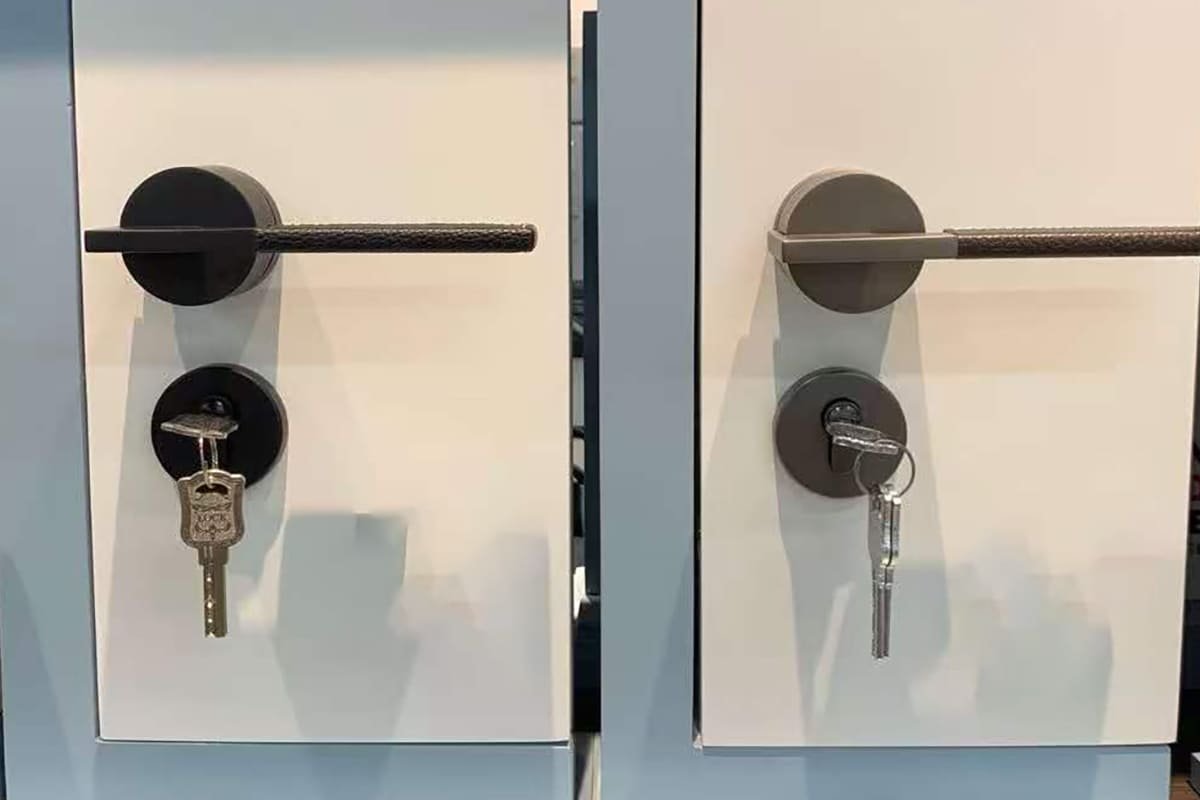
Brass has a strong reputation in door hardware, and that reputation is not accidental. Brass machines cleanly, resists corrosion well6, and has been used for many years. The problem is that modern buyers also need cost control, structural efficiency, and high-volume consistency. Brass can work, but it often carries extra trade-offs.
Brass door handle inserts remain a workable option where machining convenience and corrosion resistance are priorities. However, brass is usually more expensive than stainless steel7, and when the insert and handle body are different materials, pin fixation is often required. This adds process steps, inspection points, and potential consistency risks.
Why brass became common historically
Brass has been widely used because it is easy to cut, drill, tap, and machine. This matters in insert production because the insert often needs accurate dimensions, screw holes, or connection features. Brass also has natural corrosion resistance, especially compared with untreated iron.
In older handle designs, brass was often seen as a premium and practical choice. When production volumes were lower or labor costs were less sensitive, the additional processing steps were easier to accept.
However, I now see more B2B buyers asking a different question:
“Can this insert material reduce total production risk, not only pass the initial sample test?”
This is where stainless steel often becomes more competitive.
Brass advantages and limitations
| Factor | Brass insert | Procurement impact |
|---|---|---|
| Machining | Very good | Easier precision processing |
| Corrosion resistance | Good | Useful for many indoor applications |
| Material cost | Higher | Increases product cost |
| Fixing method | Often needs pins with other handle materials | Adds labor and inspection |
| Structural integration | Less efficient than welding in many designs | May affect production speed |
| Market perception | Often seen as traditional or premium | Useful for certain product lines |
The fixing method is the hidden cost
The key issue with brass is not only its price. The bigger issue is often the fixing structure. When a brass insert is used with a handle made from another metal, direct welding may not be practical or preferred8. In many cases, factories rely on pin fixation.
Pin fixation can work if the design is good and the production process is controlled. However, it introduces more variables:
- The pin hole must be accurately positioned.
- The pin must fit tightly without damaging the part.
- The insert must stay aligned during assembly.
- Workers must control insertion force.
- Final inspection must check looseness and rotation.
Each step creates a chance for variation. In a small batch, this may be manageable. In a large OEM order, the risk becomes more important.
When brass still makes sense
I would not reject brass automatically. Brass may still be suitable when:
- The customer wants a traditional specification.
- The design requires easier machining.
- The project has a higher material budget.
- The handle structure is already designed around brass.
- The market expects brass components for positioning reasons.
Still, for many modern B2B handle programs, brass is less competitive than stainless steel. It can deliver good corrosion resistance, but the combination of higher cost and more complex fixing requirements makes it harder to justify unless the product design specifically benefits from it.
Are iron and aluminum door handle inserts worth considering?
Cost pressure is real in the door hardware market. I understand why buyers ask about iron and aluminum. These materials can reduce initial material cost, and they are easy to source in many supply chains. However, the lowest unit price does not always create the lowest total cost after coating, inspection, warranty risk, and customer complaints.
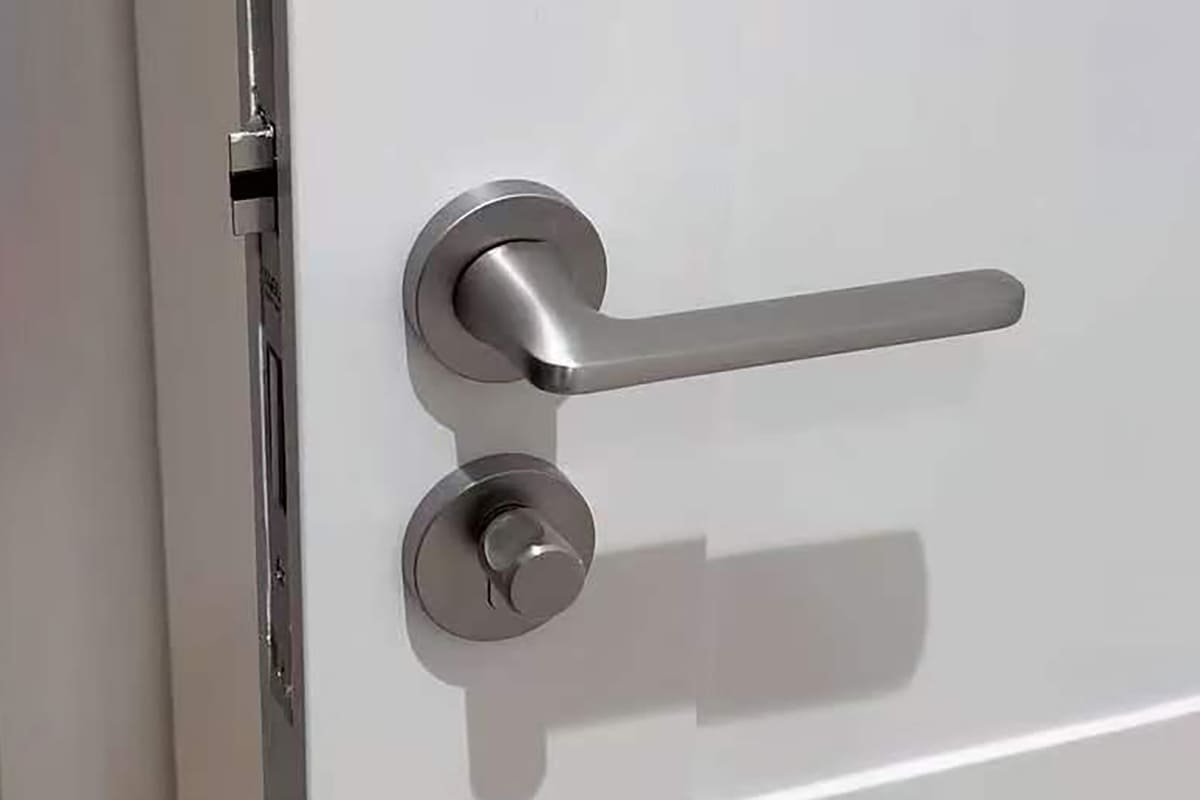
Iron and aluminum door handle inserts can be considered for cost-sensitive products, but they have clearer risks. Iron is strong and inexpensive, but it can rust9 if anti-corrosion treatment is weak. Aluminum is light and easy to process, but its lower strength limits its use in handles that require stronger insert performance.
Iron inserts: low cost, higher rust control burden
Iron is attractive because it is economical and mechanically strong. For some low-cost handle programs, it may look like a practical choice. However, iron brings a serious concern: rust risk.
In production, iron usually needs plating, coating, oiling, or another anti-corrosion treatment. If that treatment is inconsistent, corrosion can appear during storage, transport, or after installation10. This matters especially for export buyers because products may spend weeks in containers, warehouses, or humid markets before installation.
Common iron insert risks include:
- Rust during sea transport11
- Coating damage during assembly
- Corrosion around holes or cut edges
- Customer complaints in humid climates
- Extra inspection burden before shipment
Iron can be acceptable when the buyer has a strict cost target and the supplier has strong anti-rust control. However, I would treat it as a controlled-risk option, not a default choice for reliable architectural hardware.
Aluminum inserts: easy processing, lower strength
Aluminum is light, economical, and easy to machine. It is also easier to process than many harder metals. This makes it attractive for some handle designs, especially where weight reduction matters.
The limitation is strength. Aluminum generally does not provide the same mechanical performance as stainless steel or iron.12 In a door handle insert, strength matters because the part may transfer force between the lever, spindle, rose, or internal fixing structure. If the insert is too soft or weak for the design, it may deform, loosen, or wear faster.
Aluminum may work for:
- Light-duty interior handles
- Decorative handles with lower force requirements
- Cost-sensitive product lines
- Designs with large contact areas and lower stress concentration
Aluminum is less suitable for:
- Heavy-use commercial doors
- High-cycle projects
- Fire-rated handle assemblies unless tested and certified
- Handles requiring strong fixing around small contact points
- Markets where buyers expect long service life under rough use
Quick comparison for procurement teams
| Material | Main advantage | Main risk | Best-fit use case |
|---|---|---|---|
| Stainless steel | Balanced corrosion resistance, strength, weldability, cost | Needs correct grade and welding control | Modern reliable handle programs |
| Brass | Easy machining, good corrosion resistance | Higher cost and often pin fixation | Traditional or premium specifications |
| Iron | Low cost and good strength | Rust risk if treatment is weak | Budget programs with strict coating control |
| Aluminum | Light and easy to process | Lower strength | Light-duty or decorative handles |
When I evaluate iron and aluminum, I do not only ask, “Can this part be made?” I ask, “Can this part stay stable through production, shipping, installation, and use?” That question changes the decision. For many OEM and wholesale programs, the answer pushes buyers back toward stainless steel.
How should buyers evaluate door handle inserts before choosing a supplier?
A material comparison is useful, but it is not enough. I have seen samples that looked good but failed to represent mass production quality. Buyers need a clear evaluation system. Without it, they may approve a sample based on appearance, then discover problems in welding, fitting, corrosion resistance, or assembly consistency during bulk production.
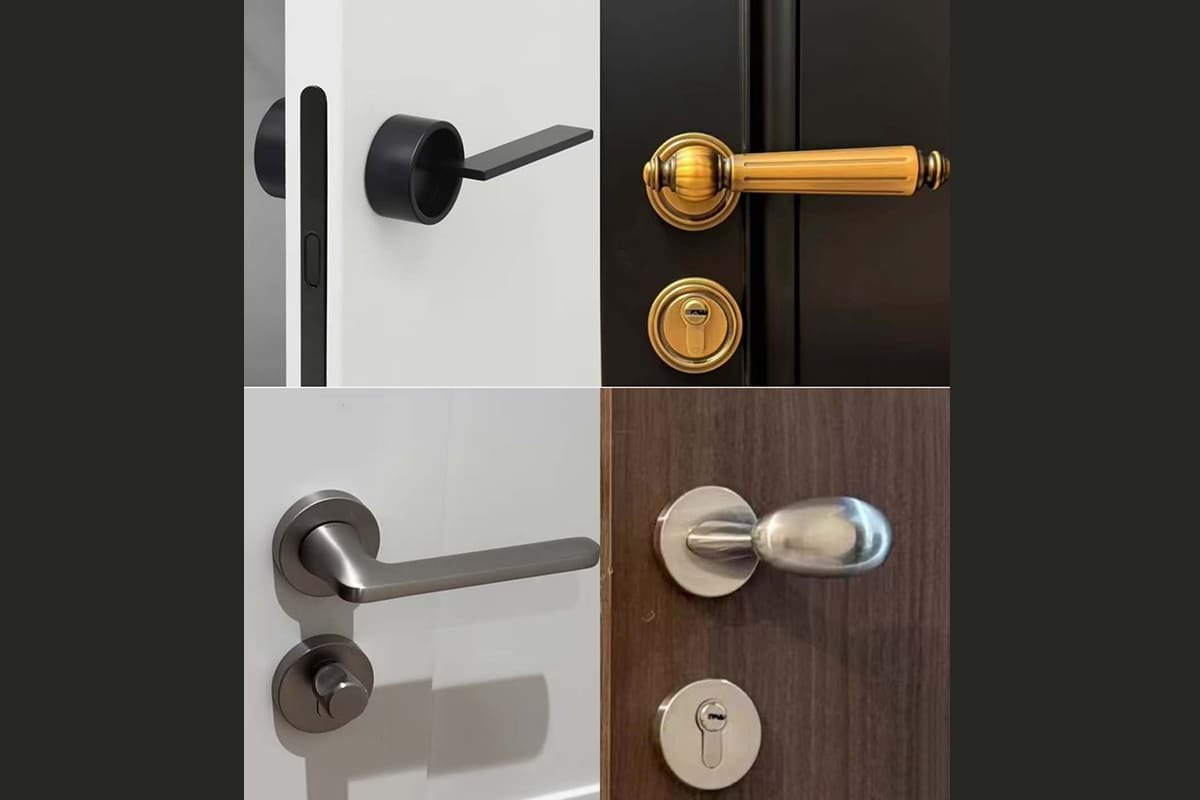
Buyers should evaluate door handle inserts by checking material grade, fixing method, dimensional accuracy, corrosion protection, welding or pin strength, compatibility with the handle body, and inspection records. They should also verify certificates for CE or fire-rated claims and confirm that documents match the exact supplied product configuration.
Start with the real application
The best insert depends on the handle’s use environment. A residential bedroom handle does not face the same requirements as a commercial building handle. A hotel project does not have the same abuse level as a light-duty private apartment.
I usually ask buyers to define:
- Door type: interior, entrance, fire-rated, commercial, hotel, or residential.
- Use frequency: low, medium, or high cycle.
- Market climate: dry indoor, humid, coastal, or mixed.
- Handle material: stainless steel, zinc alloy, aluminum, brass, or iron.
- Fixing structure: welded, pinned, screwed, pressed, or combined.
- Certification needs: CE, fire-rated, or project-specific documents.
- Target price level: budget, standard, or premium.
This makes supplier discussions more accurate. It also prevents a common mistake: choosing a material based only on unit price.
Evaluate the fixing structure carefully
For door handle inserts, the connection method can be as important as the metal. A strong insert with poor fixation can still fail. A moderate material with excellent structural design may perform better than expected.
Here is a practical comparison:
| Fixing method | Typical use | Advantage | Risk to check |
|---|---|---|---|
| Welding | Stainless steel or compatible designs | Strong integration, fewer parts | Weld penetration, heat effect, consistency |
| Pin fixation | Brass or mixed-material designs | Flexible and traditional | Hole accuracy, looseness, extra labor |
| Screw fixing | Some modular designs | Serviceable and adjustable | Thread strength and vibration loosening |
| Press fit | Cost-sensitive designs | Fast assembly | Tolerance control and pull-out strength |
| Combined fixing | Higher-reliability products | Redundant security | Higher process complexity |
In my factory work, I pay close attention to whether the insert can rotate, loosen, or shift after assembly. I also check whether workers can repeat the same result across a full batch. A clever sample structure is not enough if it is hard to control during mass production.
Ask suppliers for process evidence
A professional supplier should be able to explain the insert material and fixing method clearly. They should also provide production and inspection details, not only a catalog page.
Useful documents and checks include:
- Material specification or internal material control record
- Product drawing after order confirmation
- Welding inspection method, if welding is used
- Pull-out or torque testing method, if applicable
- Surface treatment specification
- Finished product inspection report
- CE certification documents, where relevant
- Fire-rated certification documents for tested product configurations
- Packaging method for export transport protection
At SDH Hardware, our own production approach is based on full-process control: raw material screening, standardized production supervision, and finished product inspection. I mention this not as a universal claim, but as the type of supplier system buyers should look for. Door factories and hardware brands need repeatability more than promises.
Sample approval should not stop at appearance
Many handle samples look good on a desk. That does not prove that the insert will perform well. I recommend checking the following before approving a sample:
- Does the lever feel solid under hand force?
- Is there any movement between the insert and handle body?
- Are welded areas clean and consistent?
- Are pin holes or pins visible, loose, or misaligned?
- Does the surface finish hide or expose processing marks?
- Does the insert match the drawing dimensions?
- Has the supplier explained how bulk production will be inspected?
If the project is technical, high-volume, or fire-rated, buyers should involve qualified professional evaluators and verify application-specific requirements. A good manufacturer can support the decision, but final suitability depends on the full door set, market regulation, and project specification.
Frequently Asked Questions
What are door handle inserts used for?
Door handle inserts are internal components that help connect, reinforce, or stabilize the lever handle structure. They may support fixing to the spindle, rose, or handle body. Their material and fixing method affect strength, durability, production consistency, and long-term user feel.
Are stainless steel door handle inserts always better than brass?
Stainless steel is generally better for many modern B2B handle programs because it balances corrosion resistance, strength, cost, and weldability. However, brass can still be suitable for specific designs, premium specifications, or machining-focused applications. Buyers should compare the full structure, not only the material.
Can iron inserts be used in export door handles?
Iron inserts can be used, but buyers should control rust risk carefully. The supplier should provide reliable anti-corrosion treatment, proper packaging, and inspection. Iron may fit budget products, but it is riskier than stainless steel in humid storage, shipping, or installation environments.
Are aluminum inserts strong enough for architectural door handles?
Aluminum inserts can work for light-duty or decorative handles, but they are usually weaker than stainless steel, brass, or iron. Buyers should check the handle design, force requirements, and usage environment. Aluminum is less suitable for heavy-use commercial projects unless the design is properly validated.
Do fire-rated handles require stainless steel inserts?
Fire-rated performance depends on the tested and certified handle assembly, not only the insert material. Stainless steel is often suitable for higher-reliability configurations, but buyers should verify the exact CE or fire-rated documentation for the supplied product. They should not assume compliance from material choice alone.
Conclusion
Door handle inserts should be chosen by looking at material, fixing method, corrosion resistance, strength, cost, and production control together. Based on my manufacturing experience, stainless steel is generally the best current choice because it offers a strong balance of performance, weldability, and cost efficiency. Brass, iron, and aluminum can still fit specific needs, but each has clearer trade-offs. If you are developing an OEM or ODM handle program, I recommend sharing your drawings, target market, and certification needs with SDH Hardware so we can help evaluate the most suitable insert structure.
"Investigation of distinct welding parameters on mechanical ...", https://pmc.ncbi.nlm.nih.gov/articles/PMC10450606/. Materials references describe stainless steels as iron-based alloys selected for passive-film corrosion resistance, useful mechanical strength, and established fabrication and welding routes; this supports the article’s material-balance rationale for inserts. Evidence role: general_support; source type: research. Supports: A materials reference should support that stainless steels are commonly selected for corrosion resistance, mechanical strength, and weldability in fabricated products.. Scope note: The source would support the underlying material properties, not prove that stainless steel is always the best choice for every door-handle insert design. ↩
"Stainless Steels", https://www.nrc.gov/docs/ML1215/ML12157A615.pdf. Welding-engineering sources describe many stainless steel grades as weldable using established processes when grade compatibility, filler selection, and heat control are addressed, supporting the feasibility of direct welding in suitable handle designs. Evidence role: mechanism; source type: education. Supports: A welding or materials-engineering source should support that many stainless steels are weldable when appropriate procedures and compatible materials are used.. Scope note: The source would not validate any specific door-handle weld; weld strength still depends on design, procedure, and inspection. ↩
"Atmospheric Corrosion of Different Steel Types in Urban and ...", https://pmc.ncbi.nlm.nih.gov/articles/PMC11679332/. Atmospheric-corrosion standards and guidance identify relative humidity and chloride deposition in marine or coastal environments as major drivers of corrosion severity, supporting the need to match stainless steel grade and finish to exposure conditions. Evidence role: mechanism; source type: institution. Supports: A corrosion standard or institutional source should explain that humidity and chloride exposure increase atmospheric corrosion risk and influence material selection.. Scope note: This is contextual support for grade selection; it does not specify one universal grade for all door-handle inserts. ↩
"A guide to EU standards and conformity assessment", https://www.govinfo.gov/content/pkg/GOVPUB-C13-07a06d81c863b5241d6249891a51fb90/pdf/GOVPUB-C13-07a06d81c863b5241d6249891a51fb90.pdf. Official CE-marking guidance requires manufacturers to maintain technical documentation demonstrating conformity of the product placed on the market, and fire-rated hardware guidance similarly ties ratings to tested configurations, supporting the need to match documents to the supplied handle construction. Evidence role: general_support; source type: government. Supports: An official CE-marking or construction-products source should support that conformity documentation applies to the specific product placed on the market, while fire certification applies to tested configurations.. Scope note: This is compliance-context support; applicable rules vary by jurisdiction, product category, and harmonized standard. ↩
"NFPA 80 Fire Door Requirements: Code Guide", https://www.cdfdistributors.com/blog/post/nfpa-80-fire-door-requirements?srsltid=AYCX9vJ1IDLbgqmNU9-ZRyDpivWPalE0XpXHxGQJbu_g4XzIvlVY9tiR. Fire-door standards and certification guidance treat rated performance as a property of listed or labeled door assemblies and their approved hardware configurations, supporting the article’s distinction between material choice and certified fire-rated performance. Evidence role: expert_consensus; source type: institution. Supports: A fire-code or certification source should state that fire-door performance is evaluated through listed or labeled assemblies and compatible hardware configurations.. Scope note: This supports the certification principle, not the rating of any specific handle or insert. ↩
"Brass Alloys: Comprehensive Analysis Of Composition ...", https://eureka.patsnap.com/materials/brass-alloys-composition. Engineering materials references commonly identify brasses as copper-zinc alloys with good machinability and useful corrosion resistance in many service environments, supporting their historical use in precision hardware components. Evidence role: general_support; source type: research. Supports: A materials source should support brass’s recognized machinability and corrosion resistance relative to many ferrous materials.. Scope note: The support is general to brass alloys; actual corrosion performance depends on alloy composition and exposure conditions. ↩
"Statistical Compendium | U.S. Geological Survey", https://www.usgs.gov/centers/national-minerals-information-center/statistical-compendium. Commodity-price data from public sources show copper prices substantially above bulk ferrous inputs used in steels, providing contextual support for the higher material-cost position of brass relative to many stainless steel insert applications. Evidence role: statistic; source type: government. Supports: A government or commodity-price source should show that copper, the principal component of brass, is typically priced far above bulk steel inputs, helping explain why brass parts often cost more.. Scope note: This is indirect cost support; finished insert price also depends on alloy grade, machining yield, labor, order volume, and regional supply. ↩
"Dissimilar Metal Welding and its Allowance in the American ...", https://inldigitallibrary.inl.gov/content/uploads/50/2026/04/Sort_93246.pdf. Research on dissimilar-metal joining reports that copper-alloy-to-steel welds can present challenges such as differing melting behavior, thermal properties, metallurgical compatibility, and defect control, supporting why manufacturers may prefer mechanical fixation in some mixed-material designs. Evidence role: mechanism; source type: paper. Supports: A welding research source should explain that joining copper alloys such as brass to steels can involve metallurgical and process challenges compared with welding compatible steels.. Scope note: The source would explain technical difficulty in general; it would not rule out specialized joining methods for all brass-to-steel handle designs. ↩
"Rust", https://en.wikipedia.org/wiki/Rust. Materials-science sources explain that iron and carbon steels are widely used for strength and economy but form iron oxides, commonly called rust, when exposed to oxygen and moisture, supporting the article’s risk framing for iron inserts. Evidence role: mechanism; source type: education. Supports: An educational or materials-science source should explain that iron corrodes to rust in the presence of oxygen and moisture and that steels are widely used for strength and economy.. Scope note: The source supports the general mechanism; actual insert corrosion depends on coating quality, alloy, storage, and service environment. ↩
"TEMPERATURE AND HUMIDITY EFFECTS ON THE ...", https://www.osti.gov/etdeweb/servlets/purl/20468663. Corrosion literature shows that defects or discontinuities in protective coatings can expose ferrous substrates to moisture and oxygen, allowing atmospheric corrosion to develop during storage, shipment, or later service. Evidence role: mechanism; source type: paper. Supports: A corrosion paper should support that protective coatings and storage humidity strongly affect corrosion onset on steel or iron parts.. Scope note: This supports the corrosion pathway generally; it does not quantify failure rates for door-handle inserts specifically. ↩
"Marine Atmospheric Corrosion of Carbon Steel: A Review - PMC", https://pmc.ncbi.nlm.nih.gov/articles/PMC5506973/. Studies of marine transportation and container environments identify high humidity, condensation, and chloride exposure as factors that can accelerate corrosion of ferrous materials, supporting rust risk during sea shipment. Evidence role: general_support; source type: paper. Supports: A logistics or corrosion source should support that ocean transport can expose metal goods to humidity, condensation, and chloride-laden environments that increase corrosion risk.. Scope note: The support is environmental and not product-specific; packaging, desiccants, coatings, and voyage conditions can substantially change the risk. ↩
"EML2322L -- Materials and material selection", https://web.mae.ufl.edu/designlab/Class%20Projects/Background%20Information/Materials%20and%20material%20selection.htm. Standard materials-property data show aluminum alloys have an elastic modulus of roughly one-third that of steels, while strength depends heavily on alloy and temper, supporting caution when substituting aluminum for steel in load-bearing insert designs. Evidence role: statistic; source type: education. Supports: A materials-property source should show typical differences such as aluminum’s lower elastic modulus than steels and variable alloy strength.. Scope note: The comparison is general; some engineered aluminum alloys or larger-section designs may meet particular handle requirements. ↩