
What Happens If The Spindle Is Too Long Or Too Short?
A spindle that is too long or too short creates a real compatibility problem for door handle sets. The problem may look small at first, but it can turn into loose roses, handles that cannot be fitted, rework, shipment delays, or customer complaints. The solution is to match the spindle with the full door hardware configuration before ordering.
If the spindle is too long, the handle cover or rose may not sit tightly against the door. If the spindle is too short, the opposite handle may not engage securely or may not install at all. The correct spindle length depends on door thickness, rose depth, lock body design, and required insertion depth.1
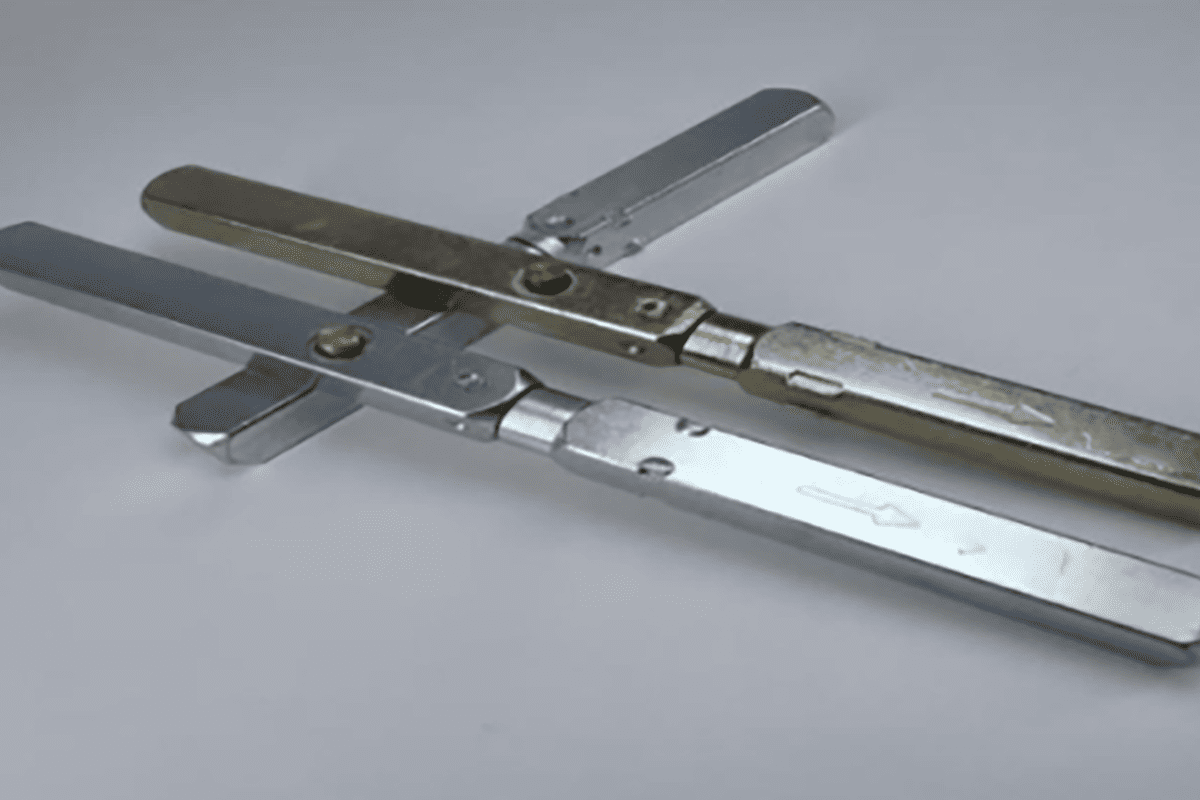
I see this issue most often when buyers check only the visible door thickness. That is not enough. A reliable spindle specification must include the handle structure, lock body, and engagement depth on both sides of the door.
What happens when the spindle is too long?
A spindle that is too long usually creates a seating problem. The handle may look assembled, but the cover, escutcheon, or rose may not press firmly against the door surface. This creates movement, gaps, and an installation result that does not meet project expectations.
A spindle is too long when it prevents the handle set from closing tightly against the door. The usual signs are a loose handle, a raised rose, visible gaps, or screws that cannot pull the assembly into position. The lock may still operate, but the finished hardware may feel unstable or poorly fitted.
Why a long spindle creates a loose handle assembly
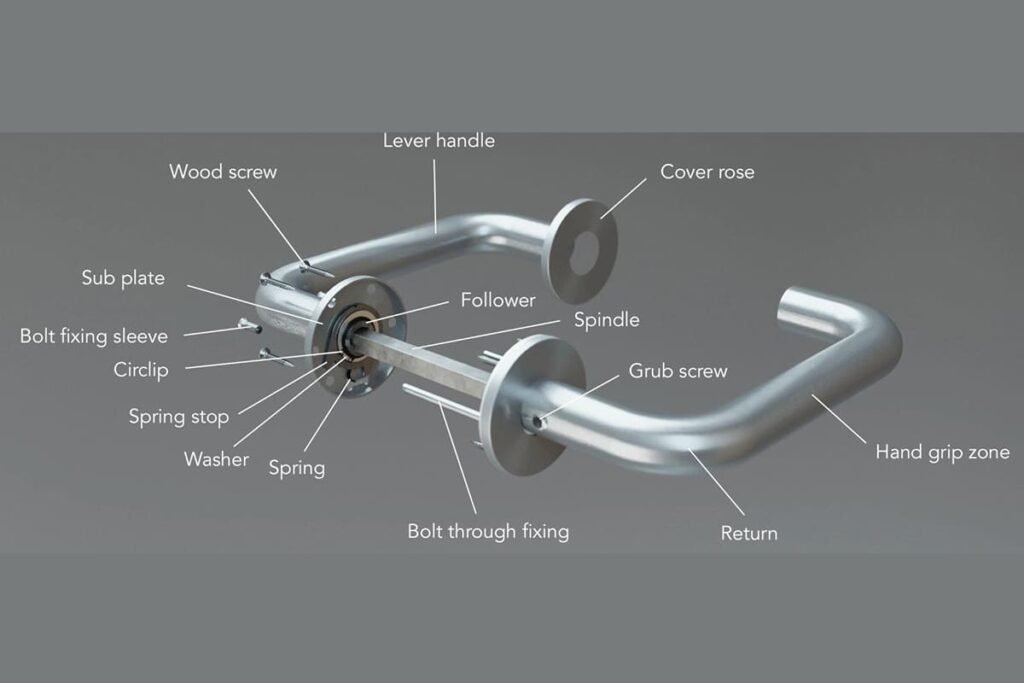
In a lever handle set, the spindle transfers rotation from the handle to the lock body.2 It must pass through the follower of the lock and engage with both handles. However, it also has to leave enough room for the handle roses, covers, fixing plates, spring cassettes, and other trim components to sit flush.
When the spindle is too long, it can act like a spacer.3 Instead of allowing the two handle sides to clamp properly against the door, it may bottom out inside the handle hub or push against the internal fixing structure. As a result, the external parts cannot fully close.
I usually explain it like this to customers: the visible door thickness is only one part of the total working stack. The complete stack may include:
- Door thickness
- Lock body follower position
- Handle rose or backplate depth
- Internal spring mechanism
- Fixing plate thickness
- Required insertion depth into each handle
- Screw and grub screw position
- Tolerance allowance for production and installation
If one part of this stack is ignored, the spindle may become effectively too long even when it looks acceptable on paper.
Common symptoms of a spindle that is too long
| Symptom | What the buyer may notice | Likely cause |
|---|---|---|
| Rose does not sit flush | A visible gap remains around the cover | Spindle bottoms out before the trim closes |
| Lever feels loose | Handle moves even after tightening | Assembly cannot clamp correctly |
| Fixing screws do not align well | Installer struggles to tighten the set | Internal parts are under pressure |
| Handle sits proud | Cover or backplate lifts from door surface | Spindle length exceeds available space |
| Complaint after delivery | Customer reports poor fit | Matching was not checked before shipment |
This does not mean the lock will always be damaged. I avoid making that assumption. In many cases, the lock body can still turn normally. The issue is more often mechanical fit and finished appearance. For door factories and hardware brands, that is still serious because the buyer expects a clean, stable installation.
Why “a little longer” is not always safe
Some buyers assume a longer spindle gives more flexibility. I understand the logic. A longer part can sometimes be cut down on site. But in B2B supply, that creates risk.
For example, if a door factory receives 2,000 handle sets and each spindle needs adjustment, the problem becomes a production bottleneck. Cutting, deburring, checking, and sorting parts adds labor. It also creates inconsistency. One installer may cut slightly more than another. The final result may vary across a project.
For bulk orders, I prefer to confirm the spindle specification before production or shipment. This is especially important when the order includes:
- Different door thicknesses
- Several handle rose designs
- Mortise locks from different series
- OEM packaging with fixed accessories
- Export projects with tight delivery schedules
A spindle that is too long is not just a small accessory problem. It is a configuration problem. It shows that the handle, lock body, door, and trim were not checked as one complete system.
What happens when the spindle is too short?
A spindle that is too short creates an engagement problem. The handle on one side may not install correctly, or it may install but lack enough contact area to work safely. The issue may appear during assembly, or it may appear later as slipping or weak handle operation.
A spindle is too short when it does not reach far enough into both handle hubs while passing through the lock body follower.4 The result may be an unfit opposite handle, weak grip, slipping under use, or unstable lever movement. The correct length must allow secure insertion on both sides.
Why short engagement is a major compatibility risk
A spindle has to do more than simply pass through the lock. It must also engage deeply enough with the handle mechanism. If the insertion depth is insufficient, the handle may rely on a very small contact area. That can reduce stability, especially in commercial doors where use frequency is high.5
I often see this risk when buyers move from one handle model to another but keep the old spindle length. The door thickness may be unchanged, but the handle rose structure may be different. One lever may have a deeper hub. Another may have a spring cassette or internal adapter. These small structural changes can require a different spindle length.6
A short spindle can lead to several practical problems:
- The second handle cannot be mounted.
- The grub screw cannot clamp the spindle correctly.
- The lever feels weak or unstable.
- The spindle may slip out of the handle hub.
- The handle may rotate without consistent lock operation.
- The supplier may need to send replacement spindle bars.
Again, I do not describe this as automatic lock damage. That would be exaggerated. The more accurate risk is insufficient engagement. The hardware may not meet the buyer’s functional expectation.
Where the missing length usually goes
Many buyers calculate spindle length by starting with door thickness only. That misses the parts on both faces of the door. The spindle must serve the full assembly.
A more practical view looks like this:
| Component | Why it matters |
|---|---|
| Door thickness | It defines the main span the spindle must cross |
| Lock body follower | The spindle must pass through the square hub correctly |
| Rose or cover depth | Thick roses need additional working length |
| Handle hub depth | Each lever may require a minimum insertion depth |
| Fixing plate design | Some plates add spacing between handle and door |
| Required clamping zone | Grub screws need enough contact area |
| Tolerance allowance | Small variation exists in doors and hardware parts |
When a buyer ignores these details, the spindle may be short even if it matches the nominal door thickness. This is why I prefer to review drawings or sample configurations before confirming bulk accessories.
Example: why the same door thickness may need different spindle bars
Let’s say two doors both have the same thickness. One uses a slim rose with a simple handle hub. The other uses a thicker concealed fixing rose with a stronger spring structure. The visible door thickness is identical, but the required spindle length may not be identical.
Here is a simplified comparison:
| Item | Handle Set A | Handle Set B |
|---|---|---|
| Door thickness | Same | Same |
| Rose structure | Slim rose | Thick rose with concealed fixing |
| Handle hub depth | Standard | Deeper hub |
| Lock body | Same series | Same series |
| Required spindle length | Shorter | Longer |
This is why I avoid giving one universal spindle length in procurement discussions. The correct answer depends on the total hardware stack. A supplier should confirm the specification based on the actual product combination, not only a general category like “interior door handle.”
For door factories and import customers, the safest approach is to treat the spindle as a configured component. It should be matched to the lock body, handle model, and door thickness range before mass production.
How do I choose the correct spindle length before ordering?
Choosing the correct spindle length starts with a full configuration check. I never recommend using door thickness alone. The buyer should confirm the door thickness, handle rose depth, lock body specification, and required insertion depth into both handles before approving a bulk order.
The correct spindle length is selected by checking the complete working stack: door thickness, handle cover or rose structure, lock body follower, and minimum insertion depth on both sides. Buyers should confirm drawings, samples, or supplier specifications before mass production, especially for OEM, ODM, or project-based orders.
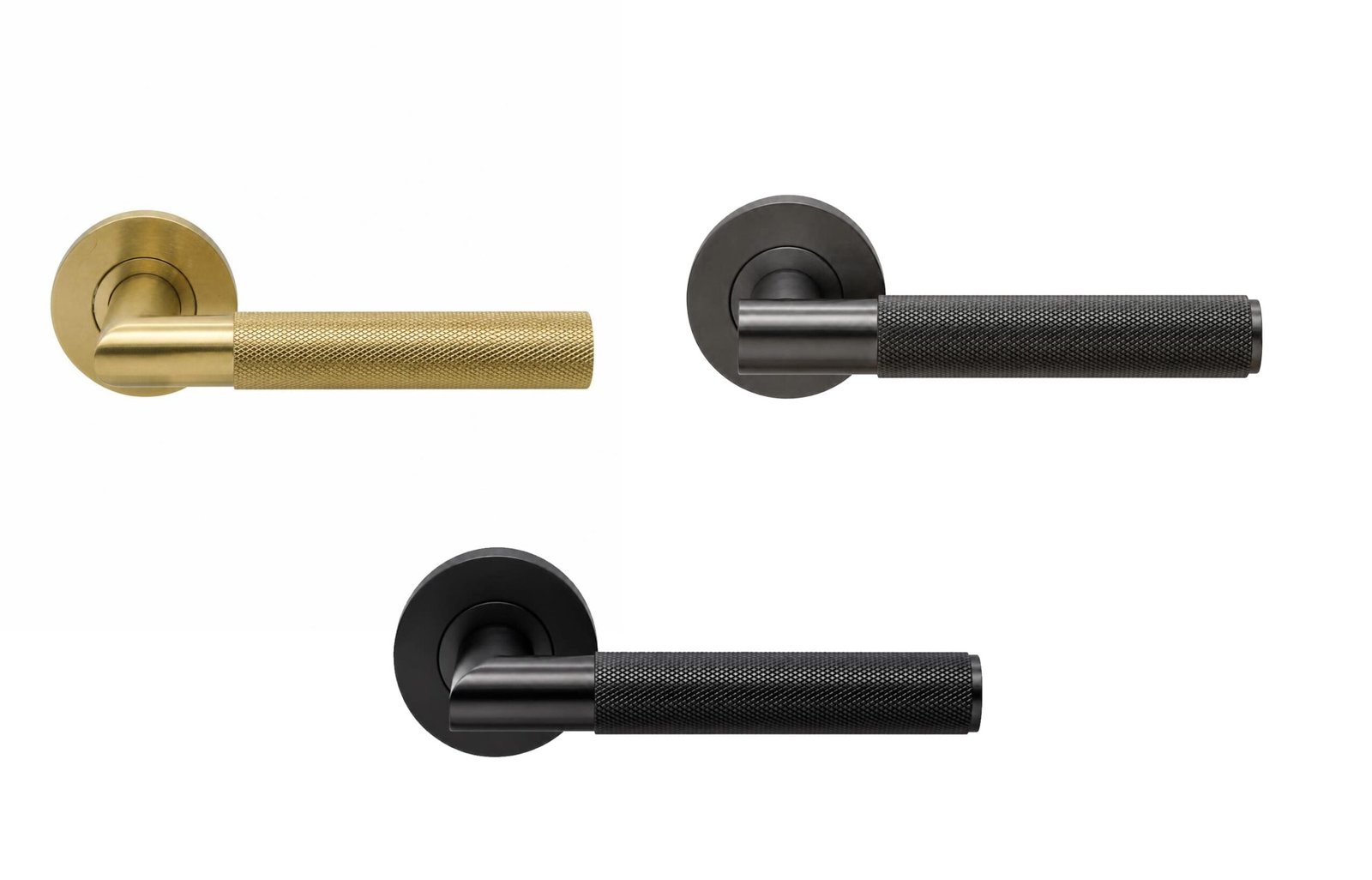
The four checks I use before confirming a spindle
From a manufacturer’s configuration point of view, I look at four key areas before confirming a spindle bar for a customer order.
1. Door thickness
Door thickness is the starting point. Common door thicknesses vary by region and application.7 Residential interior doors, apartment entrance doors, hotel doors, and fire-rated doors may all use different thickness ranges.
However, door thickness is not the final answer. It only tells me the distance between the two door faces.
2. Handle rose or backplate structure
The handle cover may be slim, thick, round, square, concealed-fixing, spring-assisted, or integrated with other parts. A deeper cover may require more working length. A shallow rose may require less.
This is one reason I ask customers to confirm the actual handle model, not just the finish or design style.
3. Lock body specification
The lock body determines the follower position and the way the spindle transfers movement.8 Euro mortise locks, bathroom locks, passage locks, and project-specific lock bodies may use different internal structures.
For technical projects, the lock body should be checked with its drawing or supplier specification. If a buyer uses a third-party lock body with our handles, I prefer to verify compatibility before production.
4. Required insertion depth
The spindle must enter each handle hub deeply enough to create reliable engagement. The minimum insertion depth depends on the handle structure and fixing method. Some handles rely on grub screws. Some use split spindle systems. Some use spring cassette designs.
This step is often missed, but it is central to the decision.
A practical pre-order checklist
I recommend that buyers prepare the following information before confirming a spindle specification:
Door thickness range
- Minimum and maximum thickness
- Actual measured thickness if doors are already produced
Handle model
- Rose or backplate type
- Cover depth
- Internal fixing structure
Lock body model
- Follower size
- Lock case type
- Relevant drawing or sample
Spindle type
- Solid or hollow
- One-piece or split
- Square size, such as 8 mm or project-specific size
Required insertion
- Minimum depth into each handle
- Grub screw location
- Any anti-pull or security requirement
Packaging and replacement plan
- Whether spindle bars are packed per set
- Whether spare lengths are needed for different door groups
- Whether the buyer requires labeling by door thickness
How I think about tolerance
In factory production, small tolerances exist. Doors may vary slightly. Handle components may have normal production variation. Surface treatments may add tiny dimensional changes.9 These details are usually manageable, but they must be considered.
I do not suggest leaving large uncontrolled extra length. I also do not suggest reducing length too aggressively. The better approach is to define an acceptable range based on the real assembly.
For bulk procurement, I suggest confirming samples before full shipment. A buyer can test the handle, lock body, and door thickness combination. If the sample assembly is stable, the approved configuration can be used for production.
The best spindle specification is not the longest one or the shortest one. It is the one that gives correct engagement and allows the trim to sit properly against the door.
This practical logic reduces mistakes. It also helps buyers communicate clearly with suppliers. When everyone works from the same configuration data, the accessory list becomes much more reliable.
Why does spindle mismatch matter in bulk procurement?
A spindle mismatch matters because one small accessory can affect an entire door hardware package. In a single installation, the problem may seem easy to correct. In a bulk order, the same mismatch can create rework, repacking, replacement shipments, and customer complaints.
Spindle mismatch matters in procurement because it affects fit, assembly time, product consistency, and after-sales risk. A small length error can multiply across hundreds or thousands of handle sets. Buyers should confirm the spindle with the door thickness, rose structure, lock body, and insertion depth before shipment.
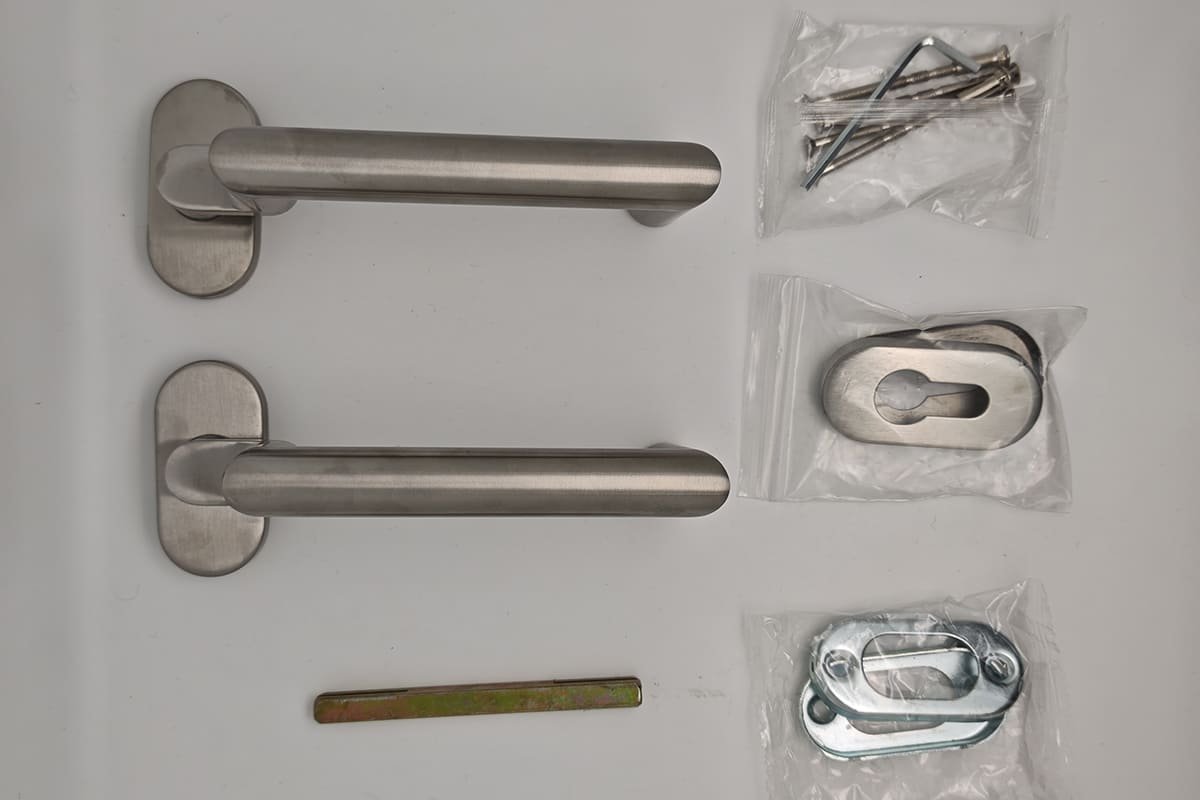
Why small errors become expensive in volume
In architectural hardware supply, small parts can create large operational issues. A spindle bar is inexpensive compared with a full lockset, but the cost of mismatch is rarely limited to the part itself.10
The real cost may include:
- Sorting stock in the warehouse
- Reopening cartons
- Sending replacement accessories
- Delaying door assembly
- Paying additional labor
- Managing customer complaints
- Rechecking other related specifications
- Damaging confidence in the supplier
I have seen buyers focus heavily on the handle finish, lock certification documents, packaging artwork, and carton markings. Those are important. But small accessory matching deserves the same discipline because it directly affects installation readiness.
Procurement impact by order type
| Order type | Spindle risk | Recommended control |
|---|---|---|
| Door factory production | Assembly line delay | Confirm full hardware stack before production |
| Hardware brand OEM order | Customer complaints under brand name | Approve samples and packaging accessory list |
| Wholesale mixed stock | Wrong length for some door types | Label spindle length and application range clearly |
| Project supply | Site delay and replacement cost | Match spindle to project door schedule |
| Customized handle series | Rose and hub variation | Review drawings before mass production |
Why supplier selection matters
A reliable supplier should not treat the spindle as a random accessory. For door hardware packages, the supplier should understand how the lock body, handle, and door thickness work together.
When I review an order at SDH Hardware, I prefer to confirm the configuration before production or shipment. That includes lock bodies, lever handles, spindle bars, and matching accessories. This is not a field repair process. It is a procurement and manufacturing quality control process.
For buyers, supplier evaluation should include questions such as:
- Can the supplier provide drawings or specifications for the handle and lock body?
- Can the supplier confirm the required spindle length for a given door thickness range?
- Can the supplier pack different spindle lengths separately if needed?
- Can the supplier support OEM or ODM accessory configurations?
- Can the supplier inspect the final product package before shipment?
- Can the supplier provide relevant CE or fire-rated certification documents for products where applicable?
Buyers should verify certification documents directly and confirm whether they apply to the exact product model and project use.11 Certification should not be assumed from a general catalog statement.
How to reduce after-sales risk
A good pre-shipment process can prevent many spindle-related complaints. I suggest buyers build a basic control plan before bulk production.
A simple control plan may include:
Sample assembly approval
- Test the actual handle, lock body, spindle, and door thickness combination.
Accessory list confirmation
- Confirm the spindle size, length, quantity, and packaging method.
Drawing review
- Use product drawings for customized or unfamiliar configurations.
Door schedule matching
- Match different hardware sets to different door thickness groups.
Final inspection
- Check that packed accessories match the approved specification.
Clear labeling
- Mark cartons or inner boxes when different spindle lengths are included.
This process does not need to be complicated. It just needs to be consistent. For B2B buyers, consistency is often more valuable than a quick guess.
The main lesson for buyers
The main mistake is assuming that “a little longer or shorter is fine.” That idea may work in a small one-off case, but it is risky in production and export supply.
A spindle should be selected as part of a complete door hardware system. It must match:
- Door thickness
- Handle cover or rose depth
- Lock body specification
- Required insertion depth
- Fixing structure
- Packaging and project requirements
When these points are checked early, the order becomes easier to produce, inspect, ship, and install. That is the practical value of correct hardware configuration.
Frequently Asked Questions
Can I use one spindle length for all door thicknesses?
I do not recommend using one spindle length for all door thicknesses unless the full hardware system has been tested and approved for that range. Door thickness, rose depth, lock body design, and handle insertion depth all affect the correct specification.
Is a longer spindle better because it can be cut on site?
A longer spindle may seem flexible, but it can create extra labor, inconsistent cutting, and poor fit in bulk projects. For door factories and hardware brands, it is usually better to confirm the correct length before production or shipment.
What information should I send to a supplier before confirming spindle length?
You should send the door thickness range, handle model, rose or backplate structure, lock body specification, spindle square size, and required insertion depth if known. Drawings or samples are especially useful for OEM, ODM, or customized orders.
Will the wrong spindle length damage the lock body?
The wrong spindle length does not always damage the lock body. A long spindle may stop the rose from sitting tightly, while a short spindle may reduce handle engagement. The main issue is usually fit, stability, and reliable operation.
Should spindle length be checked during quality inspection?
Yes. Spindle length should be part of the accessory and configuration check before shipment.12 In bulk orders, inspectors should confirm that the packed spindle matches the approved handle, lock body, and door thickness specification.
Conclusion
A spindle that is too long or too short is not just a minor accessory issue. It is a compatibility issue between the door thickness, handle rose structure, lock body, and required insertion depth. A long spindle can leave the handle loose or raised. A short spindle can prevent proper engagement. Before bulk purchasing, I recommend confirming drawings, samples, and accessory lists with a qualified supplier. If you need factory-direct support for lock bodies, lever handles, spindle bars, and matched door hardware sets, contact SDH Hardware for configuration review before production.
"087100 – DOOR HARDWARE - Facilities and Campus Services", https://fcs.cornell.edu/087100-door-hardware. Architectural-hardware standards and installation specifications treat lever-handle spindle fit as part of the complete lockset configuration, including door thickness, trim geometry, lock case or follower design, and engagement requirements; this supports the claim at a system level rather than proving every proprietary handle design. Evidence role: general_support; source type: institution. Supports: A standards or architectural-hardware source should support that lockset and lever-handle compatibility is specified using door thickness, trim dimensions, lock body or follower configuration, and spindle engagement.. Scope note: Contextual support; product-specific spindle dimensions still require the manufacturer's drawings or samples. ↩
"Door handle", https://en.wikipedia.org/wiki/Door_handle. Neutral descriptions of door-handle and lock mechanisms identify the spindle as the shaft linking the handles to the latch or lock follower, supporting the statement that lever rotation is transmitted through the spindle. Evidence role: definition; source type: encyclopedia. Supports: An encyclopedia or neutral technical reference should define the spindle as the shaft that connects handles and operates the latch or lock follower.. ↩
"Tolerance Stack Analysis Methods", https://faculty.washington.edu/fscholz/Reports/isstech-95-030.pdf. Engineering treatments of tolerance stack-up explain that excessive length or accumulated dimensional variation can create interference between assembled parts, supporting the mechanism by which an overlong spindle may prevent trim from seating flush; the source is general mechanical evidence rather than a door-hardware test. Evidence role: mechanism; source type: education. Supports: An engineering source should explain how tolerance stack-up or excessive component length can cause interference and prevent assemblies from seating correctly.. Scope note: Contextual support; it explains the mechanical principle, not a specific spindle model. ↩
"What is a Spindle and what kind do I need? - Our Blog", https://www.morehandles.co.uk/blog/more-handles-technical-guides-what-is-spindle-and-how-do-i-know-what-kind-i-need/. Institutional hardware guidance commonly describes lever sets as requiring the spindle to pass through the lock follower and engage the handle hubs, supporting the definition of a too-short spindle as one that lacks adequate engagement on both sides. Evidence role: definition; source type: institution. Supports: A standards body or institutional technical guide should support that lever-handle spindles must pass through the lock follower and engage the handle hubs sufficiently.. Scope note: Contextual support; exact minimum engagement depth is usually product-specific. ↩
"Set-Screw Gear Mounting Torque Limits and Design Checks", https://www.pairgears.com/f761262/How-much-torque-can-a-set-screw-gear-mounting-transmit.htm. Mechanical studies of shaft-hub and set-screw connections show that engagement length and contact conditions affect torque transfer and resistance to slipping, supporting the concern that shallow spindle insertion can reduce stability under repeated use; the evidence is mechanical rather than a direct test of this door-handle assembly. Evidence role: mechanism; source type: paper. Supports: A mechanical engineering paper or standard should support that reduced shaft-hub engagement or contact area can reduce torque transfer reliability or stability under repeated operation.. Scope note: Contextual support; the source may not test commercial door levers specifically. ↩
"Design for tolerance of electro-mechanical assemblies", https://nvlpubs.nist.gov/nistpubs/Legacy/IR/nistir6223.pdf. Research and teaching materials on assembly tolerance stack-up explain that dimensional changes in individual components alter the required fit of mating parts, supporting the claim that different rose or hub structures may require different spindle lengths even for the same door thickness. Evidence role: general_support; source type: research. Supports: A manufacturing or engineering source should support that changes in component dimensions within an assembly can change the required length or fit of mating parts.. Scope note: Contextual support; it supports the design principle rather than a specific hardware catalogue dimension. ↩
"08 20 00 Wood Doors - DOCUMENT TITLE - Yale University", https://facilities.yale.edu/sites/default/files/files/Design%20Standards/08%2020%2000_Wood%20Doors_12_12_23.pdf. Building-code and door-industry standards identify different nominal door thicknesses for different applications and ratings, supporting the statement that common door thicknesses vary by region and use; the source may not cover every national market mentioned by buyers. Evidence role: general_support; source type: institution. Supports: A building-code, standards, or door-manufacturing association source should show that standard door thicknesses differ by construction type, fire rating, or market practice.. Scope note: Contextual support; regional practices may require additional local standards. ↩
"Mortise lock", https://en.wikipedia.org/wiki/Mortise_lock. Lockset standards and technical references describe the follower as the lock component driven by the spindle, supporting the claim that the lock body’s follower position and geometry affect how spindle movement is transferred. Evidence role: mechanism; source type: institution. Supports: A lock standard or institutional technical source should explain that the spindle engages the follower in the lock body and that follower geometry governs operation.. Scope note: Contextual support; detailed follower dimensions remain model-specific. ↩
"the impact of tightening tolerances in the U.S. discrete-part ...", https://nvlpubs.nist.gov/nistpubs/Legacy/IR/nistir4757.pdf. Metrology and manufacturing references explain that parts are produced within dimensional tolerances and that coatings or surface treatments add measurable thickness, supporting the need to account for small variations in hardware assemblies. Evidence role: mechanism; source type: government. Supports: A metrology or manufacturing source should support that manufactured parts have dimensional tolerances and that coatings or surface treatments can change final dimensions.. ↩
"The Costs and Benefits of Advanced Maintenance in ...", https://nvlpubs.nist.gov/nistpubs/ams/NIST.AMS.100-18.pdf. Quality-management literature on the cost of poor quality classifies rework, inspection, warranty handling, and customer complaints as defect-related costs, supporting the claim that a spindle mismatch can cost more than the spindle itself. Evidence role: general_support; source type: institution. Supports: A quality-management source should support that defects create costs beyond the defective part, including rework, inspection, warranty, and customer-related costs.. Scope note: Contextual support; it supports the cost mechanism generally rather than quantifying spindle-specific losses. ↩
"CE marking", https://en.wikipedia.org/wiki/CE_marking. Official conformity-assessment guidance states that product markings, declarations, and listings apply to specified products and intended uses, supporting the need to verify that certification documents match the exact hardware model and project application. Evidence role: general_support; source type: government. Supports: An official conformity-assessment source should support that declarations, markings, or listings apply to defined products and intended uses, not to broad catalog categories.. ↩
"ISO 9001 and 9002 Requirements by Section", https://faculty-web.msoe.edu/tritt/be4xx/iso9000sum.html. Quality-management standards require verification that released products conform to specified requirements, supporting the inclusion of spindle length and packed accessories in a pre-shipment configuration check. Evidence role: general_support; source type: institution. Supports: A quality-management or inspection standard should support verifying product conformity against specifications before release or shipment.. Scope note: Contextual support; ISO-style quality standards state the control principle but do not name door-handle spindles specifically. ↩
