
Why Is the Lock Case Thickness Important in Mortise Lock Design?
Lock case thickness matters because a mortise lock can be well-made and still fail if it does not fit the prepared door pocket. Buyers often focus on strength, but the bigger risk is installation mismatch. I see this often in product development: the right thickness protects fitting, replacement, mechanism layout, and batch assembly.
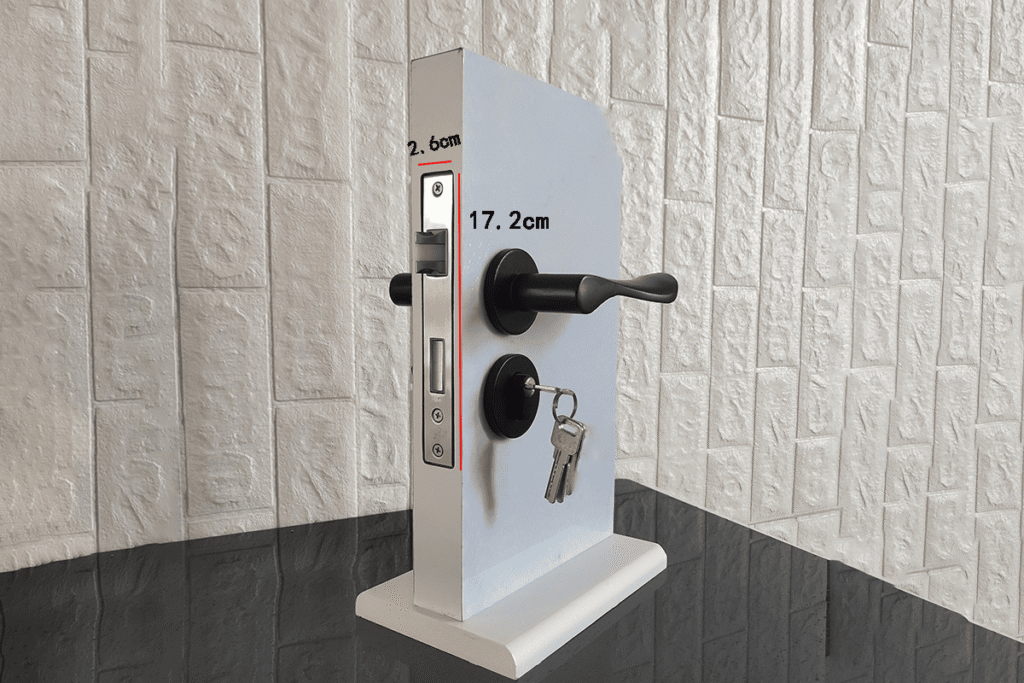
Lock case thickness is important because it controls whether a mortise lock fits standardized door preparation, supports the internal mechanism, and remains replaceable during future maintenance. For DIN-type mortise locks, buyers should usually confirm that the case stays within practical fitting limits, such as below 15.5 mm for compatibility with common 16 mm milled door slots1.
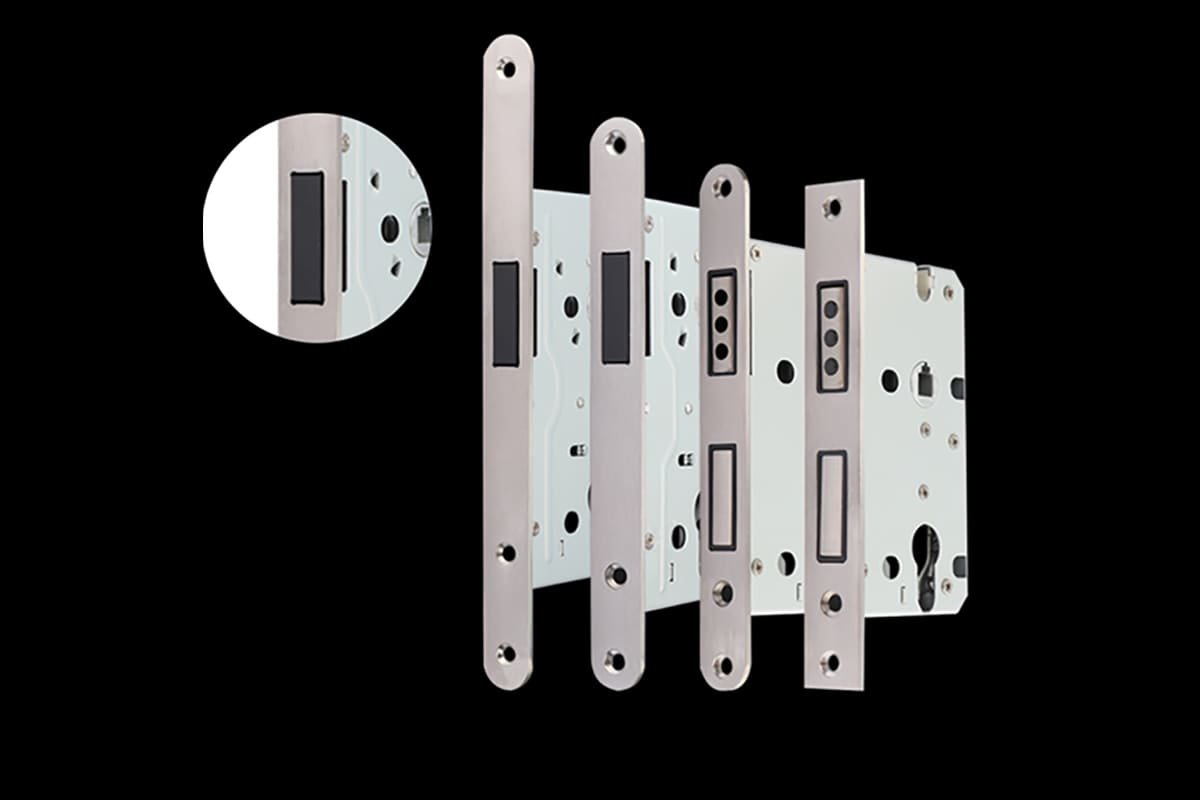
In our factory work, I treat this dimension as both a design parameter and a procurement checkpoint. A small error can affect door machining, lock assembly, packaging batches, and after-sales replacement. So I always ask one simple question first: will this lock case fit the door standard it is meant for?
How Does Lock Case Thickness Affect Mortise Lock Installation?
A mortise lock may look correct on a drawing, but installation reveals the truth. If the lock case thickness exceeds the milled pocket, the installer faces resistance, forced fitting, or complete failure.2 This creates pressure on the door factory, the hardware supplier, and the project schedule.
Lock case thickness affects installation because it must match the door’s prepared mortise slot. Many door factories use a 16 mm milling cutter for DIN-type lock pockets3, so the lock body should stay below that practical limit, often around 15.5 mm, to allow smooth insertion and replacement.
Why “thicker” is not always better
I often hear buyers ask, “Is a thicker lock case stronger?” That question is understandable, but it is incomplete. In mortise lock design, the better question is:
Will this lock case thickness match the door’s prepared mortise slot and the market standard I need?
A lock case can be strong, neatly riveted, and visually premium. However, if it cannot enter the door pocket, the product fails at the first practical step. For door factories, this is not a small issue. It can stop a production line, require extra routing, or force workers to sort locks manually.
Practical DIN-type fitting logic
For DIN-type mortise locks, the case thickness should stay within the dimensional logic of standardized door preparation4. In practical production, I usually treat below 15.5 mm as an important fitting reference for compatibility with a 16 mm milled slot.
This does not mean every market uses the same dimension. It means procurement teams should confirm:
- The target market standard
- The door preparation drawing
- The milling cutter size used by the door factory
- The actual lock case thickness after surface treatment
- The tolerance range agreed with the supplier
If a specific DIN clause is referenced in a technical file, I recommend that buyers verify the exact standard number and clause before publication or tender submission. A supplier can provide drawings and declarations, but the buyer should still check project documents, local requirements, and door manufacturer specifications.
Installation risks caused by wrong thickness
Incorrect lock case thickness can create several practical problems:
The lock cannot enter the pocket
The case may be only slightly oversized, but even a small excess can block installation.The door needs secondary machining
Extra routing adds labor cost and can damage painted, veneered, or laminated doors.The lock sits under pressure
A tight pocket can squeeze the case and affect latch or deadbolt movement.5Replacement becomes difficult
A future maintenance team may not find a compatible lock if the size is non-standard.Batch assembly slows down
Workers lose time checking, forcing, or rejecting locks during production.
What I check during sampling
In our R&D and sampling process, I do not look at the outer thickness number alone. I check how that number behaves in a real door slot. I also compare the lock against the drawing, the case forming process, and the final surface finish.
A practical inspection list includes:
| Checkpoint | Why it matters |
|---|---|
| Case thickness before finishing | Shows forming and stamping accuracy |
| Case thickness after plating or coating | Confirms final fitting size |
| Case flatness | Prevents side pressure inside the door pocket |
| Rivet or screw head protrusion | Avoids hidden interference during installation |
| Lock insertion trial | Confirms real compatibility with prepared slots |
| Latch and deadbolt movement after insertion | Checks whether fitting pressure affects function |
In procurement, this is where a small drawing detail becomes a real production issue. I always prefer that buyers request a confirmed technical drawing and a pre-shipment inspection report when ordering DIN-type mortise locks in quantity.
Why Is Lock Case Thickness Important for Internal Mechanism Layout?
A thin case may fit the door pocket, but it still needs enough internal space for the lock mechanism. If the internal layout is too crowded, parts can rub, springs can lose movement, and the follower or cylinder interaction may become unstable. This is where design balance becomes critical.
Lock case thickness is important for internal mechanism layout because the lock body must house the latch bolt, deadbolt, follower, springs, levers, screws, and cylinder interface6. The case must remain slim enough for standardized installation while still giving each moving part reliable operating clearance.
The lock case is a controlled space
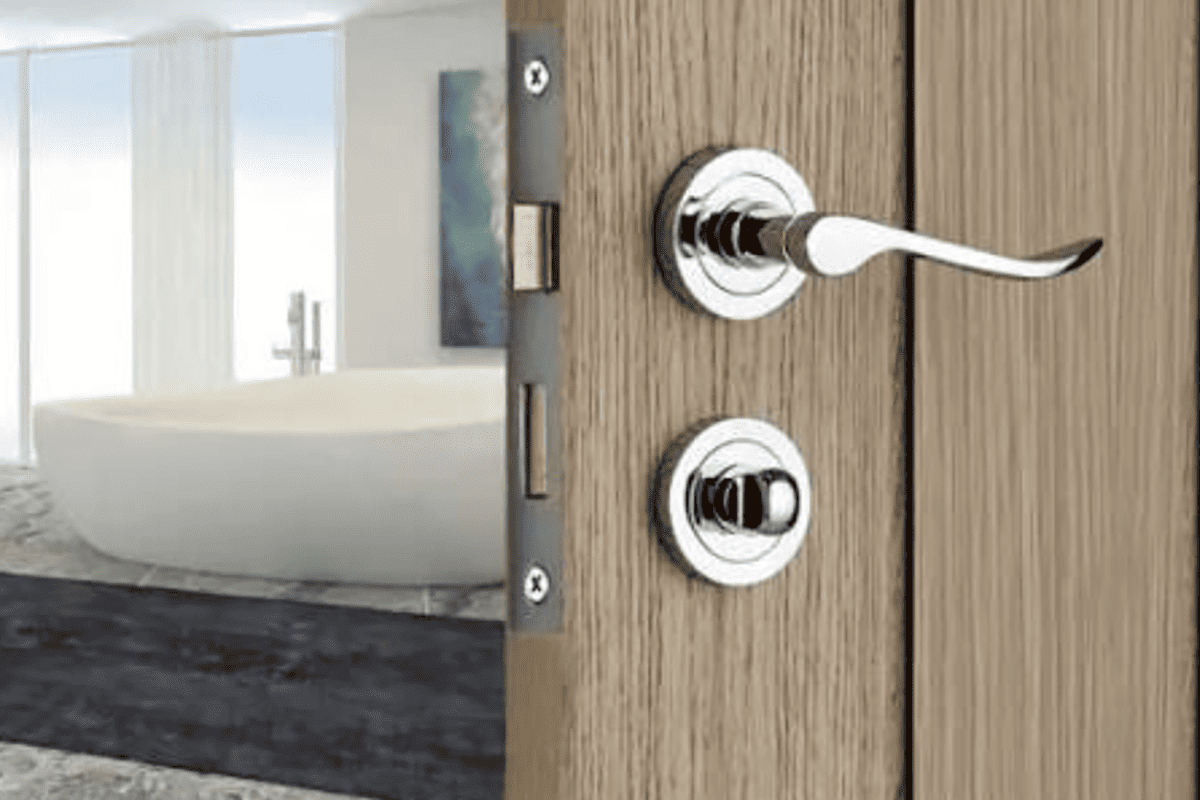
When I review a mortise lock design, I see the lock case as a controlled mechanical space. Every internal part competes for room. The latch bolt needs stable guidance. The deadbolt needs alignment. The follower must rotate smoothly. Springs must compress without rubbing. The cylinder cam must interact correctly with the lock mechanism.
So the design challenge is not simply making the case thicker. The real challenge is:
- Keeping the external thickness compatible with the door slot
- Maintaining enough internal clearance for moving parts
- Controlling stamped part accuracy
- Preventing interference after assembly
- Supporting long-term repeatability in mass production
A DIN-type mortise lock often needs to respect standardized dimensions for backset, center distance, faceplate size, follower position, cylinder hole position, and case height7. Lock case thickness is one more critical dimension in this system.
Key internal parts affected by thickness
The following table shows how thickness relates to internal design:
| Internal component | Thickness-related concern | Procurement evaluation point |
|---|---|---|
| Latch bolt | Needs guided movement without side friction | Check smooth retraction and return |
| Deadbolt | Needs straight travel and stable locking position | Test full throw and withdrawal |
| Follower | Needs rotation clearance and handle force stability | Check handle operation with spindle |
| Springs | Need compression space and stable seating | Check repeated latch action |
| Cylinder cam area | Needs accurate interaction with cylinder | Test with specified Euro profile cylinder |
| Cover plate and case body | Need rigidity without excess protrusion | Measure final assembled thickness |
Why small clearances matter
In a drawing, the difference between a good design and a risky design may look tiny. In production, that small clearance can decide whether the lock feels smooth or rough. It can also affect how well the lock performs after surface treatment, riveting, and assembly.
For example, if the lock case thickness is reduced too much without adjusting the internal structure, the follower may sit too close to the cover plate. The handle action may feel heavy. If the spring position is compressed, the latch return can feel weak or inconsistent. If the deadbolt pathway is too narrow, the bolt may scrape during operation.
However, if the case is made too thick, the lock may no longer fit the prepared pocket. That is why I treat this dimension as a balance between mechanism space and external fitting limit.
What buyers should ask suppliers
A buyer does not need to redesign the lock. However, a buyer should ask the right technical questions before confirming an order:
- What is the final assembled lock case thickness?
- What tolerance range is applied?
- Is the thickness measured before or after surface finishing?
- Is the lock designed for DIN-type door preparation?
- Has the sample been fitted into a 16 mm milled pocket?
- Can the supplier provide a drawing with key dimensions?
- Can the supplier test the lock with the buyer’s specified cylinder and handle?
At SDH Hardware, I prefer discussing these points before tooling or bulk production. It saves time for both sides. It also helps hardware brands keep their product line consistent across replacement orders.
How Does Lock Case Thickness Influence Standardization and Replacement?
A lock is not installed only once in its lifetime. It may need repair, replacement, or project extension years later. If the original lock case thickness is outside normal market expectations, the buyer may face difficulty sourcing a compatible replacement.
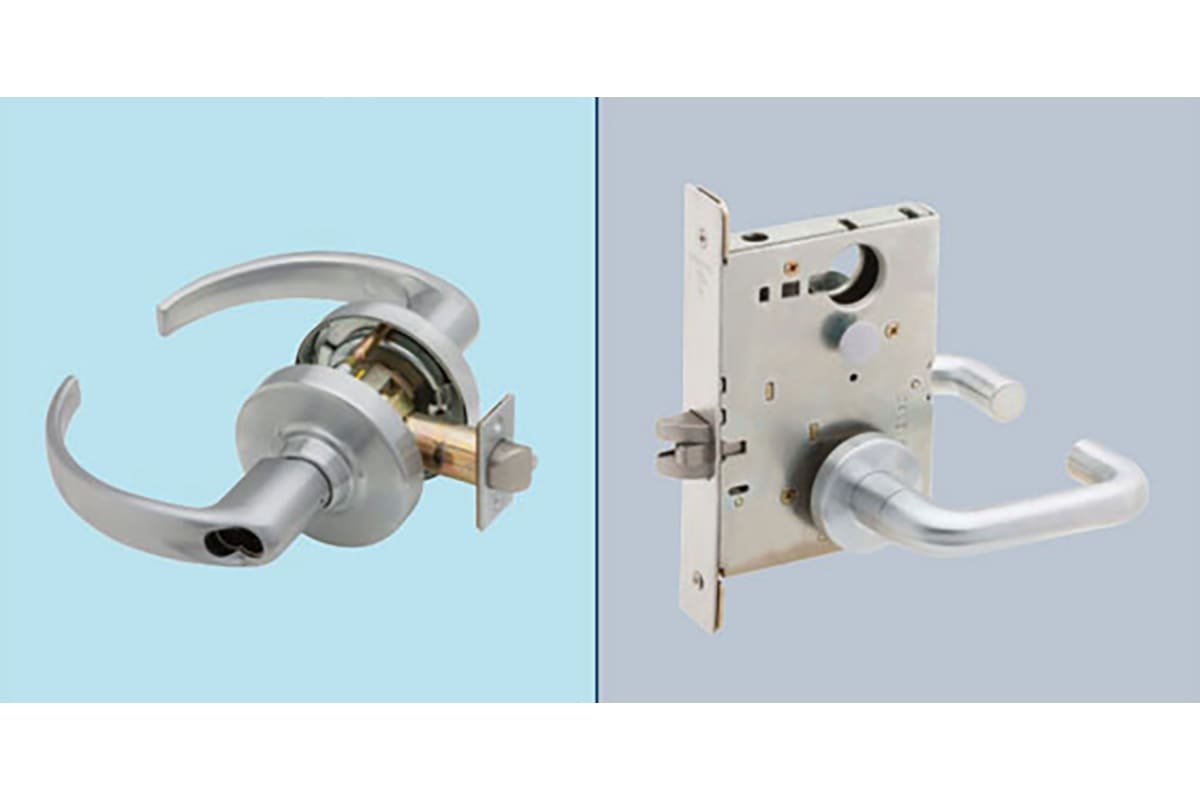
Lock case thickness influences standardization and replacement because it determines whether a mortise lock can match existing door preparation and future interchangeable products. A standardized thickness helps door factories, wholesalers, and maintenance teams replace locks without re-machining the door or changing the full hardware set.8
Standardization protects future maintenance
In B2B supply, I always think beyond the first order. A door factory may produce thousands of doors for one project. A wholesaler may sell the same lock for years. A hardware brand may need a stable product platform across multiple markets.
If the lock case thickness changes without control, future replacement becomes harder. A lock that fits today must also be reasonably replaceable tomorrow. This is especially important for:
- Apartment doors
- Hotel room doors
- Office doors
- School and hospital doors
- Commercial interior doors
- Fire-rated door assemblies, where verified compatibility is especially important9
I do not claim that thickness alone determines fire rating, CE compliance, or security grade. It does not. Those requirements depend on tested product configurations, applicable standards, documented certification scope, and project-specific evaluation.10 Buyers should always verify certificates, reports, and scope documents. However, dimensional compatibility is still a practical foundation for replacement and maintenance.
The cost of non-standard thickness
A non-standard lock case can create hidden costs. These costs may not appear during sample review if the sample is checked only on a desk. They appear during door assembly or after-sales service.
Common procurement risks include:
| Risk | What happens | Business impact |
|---|---|---|
| Installation failure | Lock does not fit the milled slot | Production delay |
| Extra machining | Door pocket must be widened | Higher labor and tooling cost |
| Surface damage | Finished door is reworked | Quality complaints |
| Replacement mismatch | Maintenance lock does not fit old slot | After-sales pressure |
| Stock confusion | Similar locks have different case thickness | Warehouse and picking errors |
| Brand inconsistency | Product line loses dimensional uniformity | Market complaints |
Replacement is a design promise
When I help develop a mortise lock series, I consider replaceability part of the product promise. A buyer may not say this directly, but they expect it. If a lock is sold as DIN-type, the product should respect the dimensional expectations of that category.
This is why I recommend that buyers standardize their technical purchasing documents. A good specification sheet should include:
- Lock case height
- Lock case depth
- Lock case thickness
- Faceplate size
- Backset
- Center distance
- Follower size
- Cylinder type
- Latch direction or reversibility
- Finish
- Certification documents to be verified
- Packaging and labeling requirements
For hardware brands, I also suggest keeping a master drawing for each SKU. This avoids accidental changes when factories improve tooling or adjust cover plates. A supplier may think a small thickness change is harmless. However, the buyer may know that the product must match thousands of existing doors in the market.
Why wholesalers should care
Bulk wholesalers sometimes focus more on price, finish, and packaging. These points matter, but lock case thickness also affects return rates and customer satisfaction. If a contractor buys a batch and discovers that the locks do not fit common door preparation, the wholesaler may face returns even if the lock itself is mechanically sound.
That is why I believe dimensional control is part of commercial reliability. A lock does not need to be overbuilt to be reliable. It needs to be correctly built for the door system it serves.
What Should Buyers Check About Lock Case Thickness Before Ordering?
Procurement teams often receive samples that look acceptable, but bulk production can still create fitting issues if the technical requirements are not fixed. Without clear drawings, tolerances, and inspection steps, a small dimensional difference can become a costly batch problem.
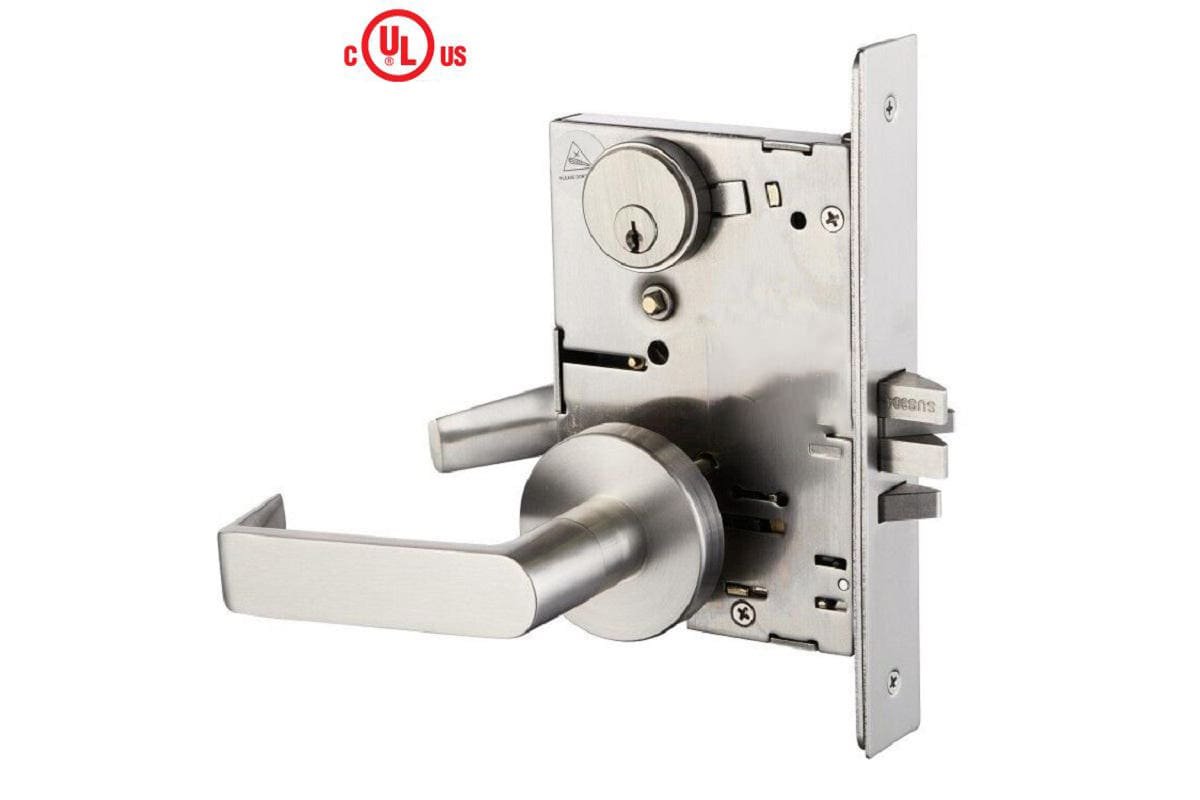
Buyers should check the final lock case thickness, tolerance, door pocket size, milling cutter standard, market requirement, and replacement compatibility before ordering. For DIN-type mortise locks, I recommend confirming practical compatibility with a 16 mm milled slot and keeping the lock body below the agreed fitting limit.
Start with the door, not the lock
I like to start procurement evaluation from the door preparation. The lock is only one part of the door hardware system. If the door factory already uses a specific CNC program or milling cutter, the lock must match that preparation.
A basic buyer checklist should include:
Door slot width
Confirm the actual pocket size, not only the nominal size.Milling cutter diameter
Many factories use a 16 mm cutter for this application, but the buyer should verify the actual process.Required lock type
Confirm whether the lock is DIN-type or another regional design.Final case thickness
Measure the complete assembled lock, including any protruding cover features.Tolerance range
Define acceptable upper and lower limits.Surface treatment impact
Plating, coating, and painting can slightly affect final dimensions.11Future replacement requirement
Confirm whether the lock must match an existing product line.
Sample approval should include fitting
A sample should not be approved only by appearance. I recommend a physical fitting test. The lock should be inserted into a representative door pocket or a test fixture with the same width as the planned mortise slot.
A practical sample approval process may look like this:
| Step | Action | Result to confirm |
|---|---|---|
| 1 | Review technical drawing | Dimensions match purchase requirement |
| 2 | Measure sample thickness | Final size is within tolerance |
| 3 | Insert into test slot | Lock fits without forcing |
| 4 | Operate latch and deadbolt | Mechanism moves smoothly after insertion |
| 5 | Test with handle and cylinder | Full hardware set works together |
| 6 | Record inspection data | Buyer and supplier share the same baseline |
In our production work, I prefer to keep golden samples and confirmed drawings for repeat orders. This helps prevent misunderstandings when a buyer reorders after several months or requests a new finish.
Production inspection matters
Even if the sample is correct, bulk production still needs control. Lock case thickness can be affected by stamping, bending, riveting, welding, assembly pressure, and surface finishing.12 A strong supplier should have inspection points through the process.
At SDH Hardware, our general quality control logic includes:
- Raw material screening
- Stamping and forming inspection
- Component dimension checks
- Mechanism assembly inspection
- Finished product function testing
- Final product inspection before shipment
For B2B buyers, I recommend requesting inspection standards in advance. The buyer can ask the supplier to include lock case thickness in the inspection report, especially for ODM or OEM projects where the product will carry the buyer’s brand.
Do not confuse thickness with certification
A thicker or thinner case does not automatically prove CE compliance, fire rating, or security grade. Those claims must be supported by relevant documentation, test reports, and certificate scope. Buyers should verify:
- Certificate holder
- Product model coverage
- Standard referenced
- Validity date
- Test configuration
- Fire door compatibility scope, if applicable
- Any required local approval
For application-specific decisions, especially for fire-rated doors, security doors, or regulated public projects, I recommend consulting qualified professionals and checking the complete door assembly requirements. The mortise lock must be evaluated as part of the hardware and door system, not as an isolated dimension.
How Can a Supplier Control Lock Case Thickness in Manufacturing?
A supplier may design the correct thickness, but manufacturing must repeat it consistently. If the factory lacks process control, different batches may feel different during installation. Buyers should evaluate not only the drawing but also the supplier’s production and inspection capability.
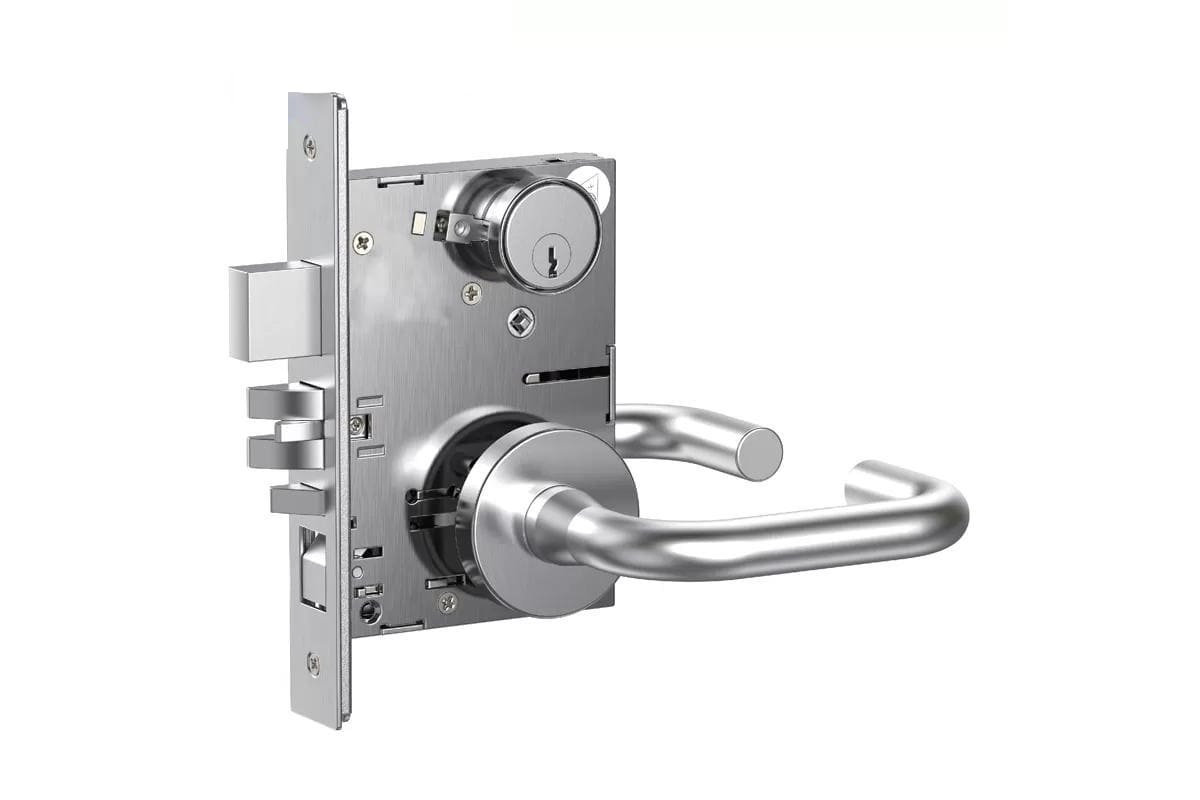
A supplier controls lock case thickness through accurate tooling, stable material selection, forming control, assembly inspection, finishing control, and final dimensional checks. For OEM and ODM orders, the supplier should confirm drawings, tolerances, samples, and inspection records before mass production.
Thickness control begins before assembly
In a mortise lock factory, the final lock case thickness is the result of several steps. It is not controlled only at the end. Material thickness, stamping accuracy, bending angle, case cover flatness, riveting pressure, and surface treatment all contribute to the final dimension.
When I walk through a production line, I pay attention to simple but important details:
- Are the case bodies formed consistently?
- Are cover plates flat before assembly?
- Are rivets or screws causing local protrusion?
- Are parts stacked correctly inside the case?
- Does the lock still operate smoothly after final assembly?
- Does the finished lock fit the test slot?
These checks may sound basic, but they prevent many practical problems.
Factory-side control points
A mature supplier should control lock case thickness through a repeatable process. Buyers can use the table below during supplier evaluation:
| Manufacturing stage | Control point | Buyer question |
|---|---|---|
| Material incoming | Sheet thickness and material consistency | Is material inspection recorded? |
| Stamping | Case shape and hole accuracy | Are critical dimensions checked? |
| Bending/forming | Side wall position and case width | Is tooling maintained regularly? |
| Assembly | Internal part stacking and cover fit | Is function tested after assembly? |
| Riveting/screwing | Protrusion and deformation | Are local high points measured? |
| Finishing | Coating or plating effect | Is final size checked after finishing? |
| Final inspection | Overall case thickness and fitting | Is a test slot or gauge used? |
Why OEM and ODM projects need extra clarity
For customized projects, the risk increases because the buyer may request special functions, finishes, packaging, or branding. These changes can indirectly affect thickness or fitting.
For example:
- A thicker decorative finish may affect the final dimension.
- A changed internal spring may need more clearance.
- A new latch structure may alter internal layout.
- A different cover plate design may create local protrusions.
- A branding mark or stamping position may affect flatness if poorly placed.
This is why I prefer confirming detailed product drawings after order confirmation and before mass production. For customized orders, I also suggest confirming pre-production samples.
How I evaluate a reliable supplier
A reliable mortise lock supplier should be able to discuss lock case thickness in practical terms, not only quote a number. I would expect the supplier to understand:
- Door slot compatibility
- DIN-type dimensional expectations
- 16 mm milling preparation realities
- Internal mechanism clearance
- Batch inspection methods
- Replacement compatibility
- Certification document verification
At SDH Hardware, we manufacture Euro mortise locks, stainless steel lever handles, hinges, Euro brass cylinders, and related door accessories for door factories, hardware brands, and bulk wholesalers. I mention this because our product-development discussions often connect the lock with the full door hardware set. A lock case dimension can affect handle operation, cylinder matching, door machining, and after-sales service.
For buyers, this is the value of factory-direct communication. The procurement team can discuss drawings, samples, tolerances, finish options, packaging, logo marking, and inspection requirements with the manufacturing team before problems reach the installation site.
Conclusion
Lock case thickness is important because it connects design, installation, standardization, replacement, and procurement risk. I do not treat it as a simple “thicker is better” parameter. I treat it as a controlled dimension that must match the door’s prepared mortise slot while supporting reliable internal mechanism layout. If you are sourcing DIN-type mortise locks for door production, brand supply, or wholesale distribution, contact SDH Hardware to review drawings, samples, finishes, and inspection requirements before bulk ordering.
"Monolock 55/92 Single Point Mortise Lock (SPL)", https://www.allaboutdoors.com/Monolock-55-92-Single-Point-Mortise-Lock-SPL-Stainless-Steel?srsltid=AYCX9vLQ-m54-4vwU7pyIOmsk8ticQJqmzAVuRoSrzWWerEBAhX9Erkt. Institutional lock-dimension standards and technical fitting guides support the use of defined case and pocket dimensions for DIN-type mortise locks; where the source does not state the 15.5 mm value directly, it should be cited only as contextual support for dimensional compatibility with nominal 16 mm preparations. Evidence role: general_support; source type: institution. Supports: A standards or technical institution source should support the dimensional relationship between DIN-type mortise locks and prepared door pockets, ideally including case width or pocket-width tolerances.. Scope note: The source may confirm standardized dimensional control without proving that 15.5 mm is universal across all DIN-type products or markets. ↩
"Mortise Lock Door Prep", https://www.custommetalproductsnc.com/feeds/blog/mortise-prep-door. Technical installation guidance for mortise locks supports that the lock body must correspond to the prepared mortise pocket and that inadequate clearance can obstruct insertion or require reworking of the door. Evidence role: mechanism; source type: education. Supports: A technical installation source should support that the lock body must fit within the mortised pocket with appropriate clearance and that insufficient clearance can prevent proper installation.. ↩
"Mortise", https://www.pro-lok.com/product-category/pro-lok/pro-lok-installation/pro-lok-installation-mortise/?srsltid=AYCX9vKqdTsEirFyXUpZYn3kAfZxygBrL9-Do1FFwJNEOkacUiyaUdQ1. Door-manufacturing and joinery references document that mortise lock pockets are produced with specified routing or milling tools, including nominal cutter sizes; if a source describes 16 mm as an example rather than a surveyed norm, it should be used as contextual support rather than evidence of industry-wide prevalence. Evidence role: general_support; source type: education. Supports: A technical education or manufacturing source should show that 16 mm routing or milling is a recognized practice for lock-pocket preparation.. Scope note: This would not establish that most factories globally use a 16 mm cutter. ↩
"DIN 18251: The German Standard for Mortise Locks", https://umaylocks.com/din-18251/. Mortise-lock standards such as DIN or EN specifications define dimensional categories and test or classification requirements that provide the framework for standardized door preparation; the citation supports the general need for dimensional conformity rather than a single universal case-thickness value. Evidence role: definition; source type: institution. Supports: A standards-body or institutional source should define the dimensional framework for mortise locks and related door preparation.. Scope note: Specific thickness tolerances may vary by lock type, national standard, and manufacturer drawing. ↩
"Pocket Door Locks", https://www.emtek.com/all-products/door-hardware/sliding-door-hardware/pocket-door-locks/. Technical lock-installation references support that improper fit or misalignment can cause binding of latch and bolt mechanisms; where the source discusses binding generally, it should be cited as contextual support for the specific case-pressure mechanism. Evidence role: mechanism; source type: education. Supports: A lock-installation or mechanical-design source should explain that binding, misalignment, or pressure on the lock body can impair moving components.. Scope note: The source may not test case compression directly for the specific lock model described. ↩
"Mortise lock", https://en.wikipedia.org/wiki/Mortise_lock. Reference descriptions of mortise locks identify the lock case as the housing for internal operating parts such as the latch, bolt, lever or follower mechanism, springs, and cylinder interface. Evidence role: definition; source type: encyclopedia. Supports: A neutral reference should define mortise lock construction and identify common internal components.. ↩
"Understanding Mortise Lock Body Dimensions - Keyman Lock", https://www.keymanlock.com/mortise-lock-body-dimensions.html. Institutional standards for mortise locks define dimensional parameters such as backset, follower position, cylinder position, faceplate dimensions, and related case measurements; this supports the article’s treatment of thickness as one dimension within a broader standardized system. Evidence role: definition; source type: institution. Supports: A standards source should identify the dimensional parameters used to specify DIN-type or European mortise locks.. ↩
"087100 – DOOR HARDWARE - Facilities and Campus Services", https://fcs.cornell.edu/087100-door-hardware. Standards and maintenance literature support that dimensional standardization promotes interchangeability of hardware and reduces modification during replacement; the citation should be read as support for the general principle, not proof of outcomes for every lock series. Evidence role: general_support; source type: institution. Supports: A standards or maintenance source should support the general principle that standardized dimensions enable interchangeability and easier replacement.. Scope note: Actual replaceability also depends on other dimensions, certification scope, handing, hardware set compatibility, and local practice. ↩
"Fire Doors and NFPA 80 FAQs", https://www.nfpa.org/news-blogs-and-articles/blogs/2025/04/11/fire-doors-faqs. Fire-safety codes and listing practices treat fire doors as rated assemblies and require hardware to be appropriate for the listed configuration, supporting the need to verify compatibility rather than relying on dimensional fit alone. Evidence role: expert_consensus; source type: government. Supports: A code authority or fire-safety source should support that hardware used on fire-rated doors must be suitable for the rated assembly and verified within the applicable listing or approval.. ↩
"EN 12209: Building Hardware - Mechanically operated ...", https://www.intertek.com/building/standards/en-12209/. Certification and standards documentation for door hardware ties compliance claims to defined test methods, product models, configurations, and scopes of approval, supporting the article’s distinction between dimensional compatibility and certified performance. Evidence role: definition; source type: institution. Supports: A standards or certification source should explain that lock performance classifications and compliance claims are tied to specified tests, standards, and product configurations.. ↩
"How Powder Coating Thickness Affects Tolerances - MaidaTech", https://maidatechenclosure.com/how-powder-coating-thickness-affects-tolerances/. Engineering references on coatings and electroplating show that surface finishes add measurable layer thickness and therefore can affect final dimensions when tolerances are tight. Evidence role: mechanism; source type: education. Supports: An engineering or materials source should explain that applied coatings have measurable thickness and can affect dimensional tolerances.. ↩
"State-Space Modeling of Sheet Metal Assembly for ...", https://jhjin.engin.umich.edu/wp-content/uploads/sites/248/2016/01/P58_State-Space-Modeling-of-Sheet-Metal-Assembly.pdf. Manufacturing engineering literature identifies forming, joining, assembly, and finishing as contributors to dimensional variation in sheet-metal products, supporting the need to control lock-case thickness throughout production. Evidence role: mechanism; source type: education. Supports: A manufacturing engineering source should support that sheet-metal forming, joining, assembly, and finishing processes contribute to dimensional variation.. ↩
