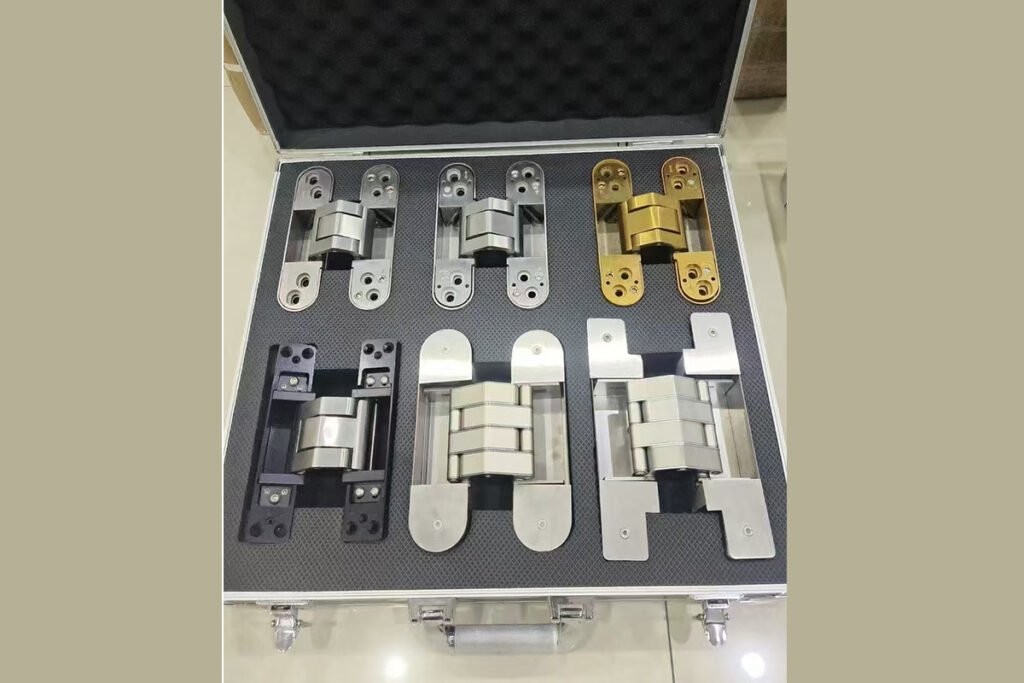
How to choose concealed hinges for aluminium doors
Choosing concealed hinges for aluminium doors can become expensive when the hinge looks strong on paper but does not fit the aluminium profile1. Buyers may face poor installation, door sagging, frame friction, or rejected samples. I usually solve this by checking the door system first, then matching the hinge to the real structure.
To choose concealed hinges for aluminium doors, confirm four details before selecting a model: door weight, aluminium profile groove structure, door thickness, and door-to-frame clearance2. Then match the hinge body, fixing method, load rating, opening angle, and adjustment range to those conditions. Load capacity matters, but structural compatibility decides whether the hinge will actually work.
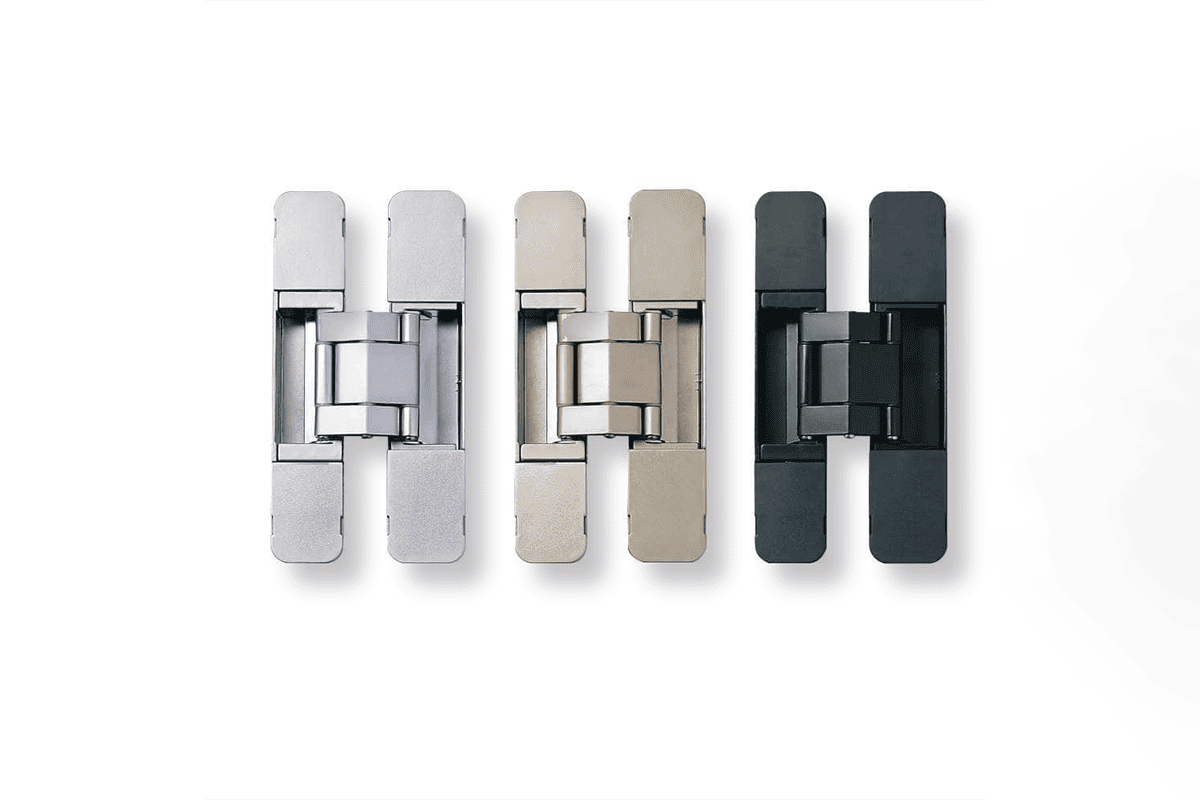
Many purchasing teams first ask me, “How many kilograms can this hinge carry?” I understand why. Load rating is easy to compare. But with aluminium doors, the profile design often decides success or failure3 before the load test even begins.
What information should I confirm before choosing concealed hinges for aluminium doors?
A concealed hinge mistake usually starts with missing information. A buyer may send only a door height and expected load, but the hinge must also enter the profile, fix securely, and leave enough movement space. Without these details, even a high-quality hinge can be the wrong hinge.
The key information includes door weight, door size, aluminium profile groove type, door thickness, frame structure, door-to-frame gap, opening direction, and required opening angle. For B2B orders, I also ask about surface finish, packaging, certification needs, sample testing plans, and whether the hinge will be used for residential, commercial, or project doors.
Start with the door, not the hinge
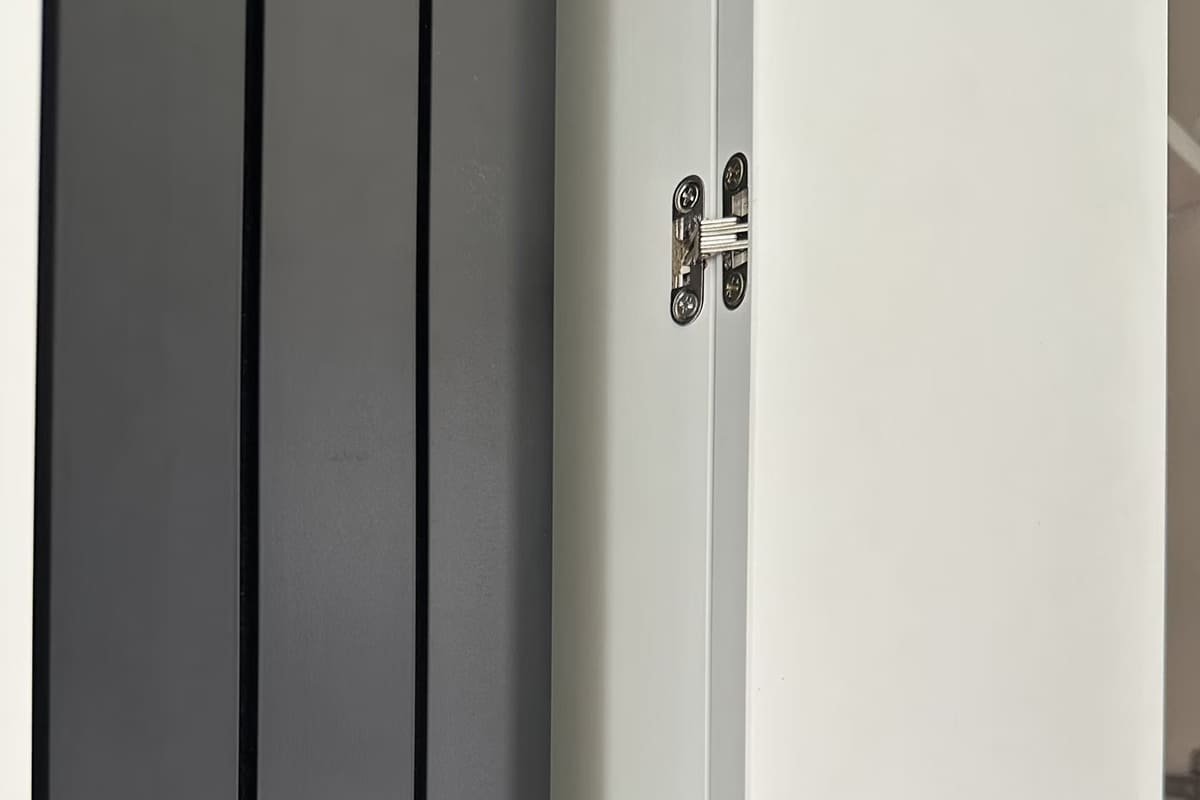
When I help customers select concealed hinges for aluminium doors, I try not to begin with the catalogue page. I begin with the door drawing. This is especially important for aluminium systems because the door profile is not a flat timber slab. It has internal cavities, grooves, walls, ribs, screw channels, and sometimes thermal break structures4.
A concealed hinge must hide inside this geometry. So the available space matters as much as the hinge strength.
Here is the basic information I prefer to confirm before recommending a sample:
| Selection variable | Why it matters | What buyers should provide |
|---|---|---|
| Door weight | Determines minimum load capacity and number of hinges | Finished door weight, including glass and accessories |
| Door height and width | Affects leverage, sagging risk, and hinge quantity | Full door size drawing |
| Aluminium profile groove | Determines whether the hinge body can fit | Cross-section drawing or sample profile |
| Door thickness | Limits hinge depth and fixing position | Exact thickness in mm |
| Door-frame gap | Affects opening, closing, and rubbing risk | Clearance after installation |
| Opening angle | Changes hinge movement path | 90°, 105°, 120°, 180°, etc. |
| Fixing method | Affects installation strength | Screw type, plate type, clamp type, or custom fixing |
| Adjustment demand | Helps with alignment after installation | 2D or 3D adjustment requirement |
Why this information reduces procurement risk
In a factory-direct supply process, wrong information can multiply into a bulk problem. A hinge that does not fit the groove may look acceptable during quotation, but it can fail during sample assembly. If the issue appears after mass purchase, the cost is much higher.
Common risks include:
- The hinge body is too large for the aluminium profile cavity.
- The screw position conflicts with the profile wall or reinforcement.
- The door cannot close cleanly because the clearance is too small.
- The hinge cannot adjust enough to correct site tolerance.
- The finish or packaging does not match the buyer’s brand requirement.
- The certification document does not match the project requirement.
At SDH Hardware, we manufacture and supply architectural door hardware for B2B customers, so I see this issue often in sample development. A customer may request a hinge for a “60 kg aluminium door,” but after checking the drawing, the profile groove may only accept a narrower hinge body. In that case, the right recommendation is not simply “choose a stronger hinge.” The right recommendation is to match the hinge to the profile or adjust the profile/hardware design together.
In aluminium door hardware selection, the hinge must fit the system. The load rating is only one part of that system.
Why is load capacity not enough when selecting concealed hinges for aluminium doors?
Load capacity is important, but it can be misleading when used alone. A concealed hinge may be rated for 80 kg or 100 kg, yet still be unsuitable if the hinge body cannot enter the aluminium groove, the fixing points are weak, or the door clearance is insufficient.
The correct approach is to use load capacity as a safety requirement, then verify profile compatibility, fixing strength, adjustment range, and movement clearance. For aluminium doors, the hinge must carry weight and work within the profile structure at the same time.
Load rating is tested under specific conditions
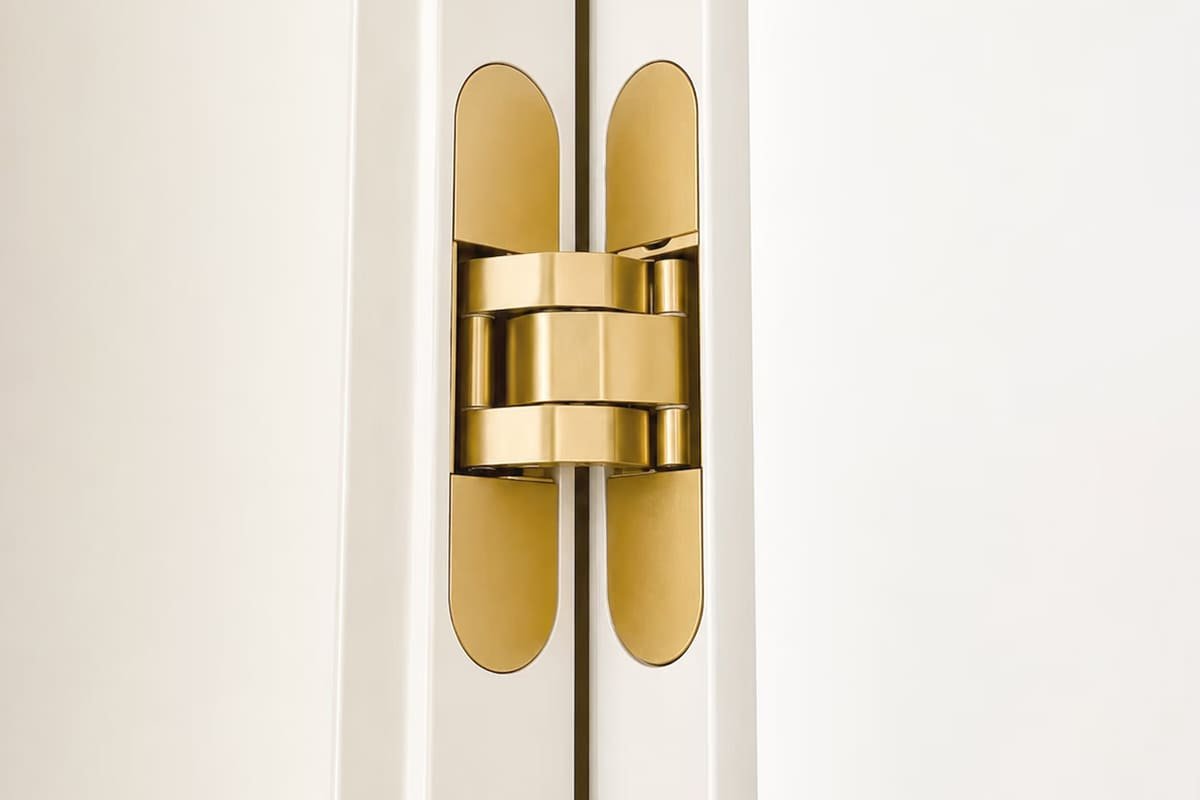
When buyers compare concealed hinges for aluminium doors, the rated load often becomes the headline number. However, that number usually depends on test conditions5. It may assume a certain door size, hinge quantity, installation method, screw strength, and frame material.
For example, a hinge rated for 80 kg may perform well when:
- The door height is within a reasonable range.
- The hinge is installed with the recommended number of screws.
- The aluminium profile has enough wall thickness.
- The frame fixing points are stable.
- The door has the correct gap after closing.
- The hinge is installed according to the drawing.
If one of these conditions changes, the real performance can change too.
Door geometry changes hinge stress
A tall aluminium door creates more leverage than a short door of the same weight.6 A wide door also increases the bending moment on the hinge side. This is why I prefer to ask for door height and width, not only total weight.
A simplified comparison helps:
| Door condition | Same hinge load rating? | Real selection concern |
|---|---|---|
| 50 kg narrow door | Yes | Usually lower leverage |
| 50 kg wide door | Yes | Higher sagging risk |
| 70 kg standard door | Yes | Check hinge quantity and fixing |
| 70 kg glass aluminium door | Yes | Check dynamic load and frame stability |
| 70 kg tall door | Yes | Check top hinge stress and adjustment |
Aluminium fixing points can be the weak link
A hinge can be strong, but the aluminium profile may not provide enough secure fixing area.7 This is one of the most common points that gets ignored in early purchasing discussions.
For example:
- A thin profile wall may not hold screws well.
- A hollow cavity may require a fixing plate or reinforcement.
- A thermal break profile may limit screw placement.8
- A narrow groove may require a slimmer hinge body.
- A decorative profile may restrict visible or accessible fixing points.
This is why experienced suppliers do not answer only with “this hinge carries X kg.” I normally ask for the profile section, because the hinge and aluminium profile must work together.
Use load capacity as a filter, not the final answer
A practical process looks like this:
- Calculate or confirm finished door weight.
- Choose a hinge load class with safety margin.
- Check whether the hinge body fits the groove.
- Verify screw or clamp fixing positions.
- Confirm door thickness and clearance.
- Test samples before bulk order.
This process protects both the buyer and the supplier. It also makes sample approval faster because both sides evaluate the same technical conditions.
How do aluminium profile grooves affect concealed hinge compatibility?
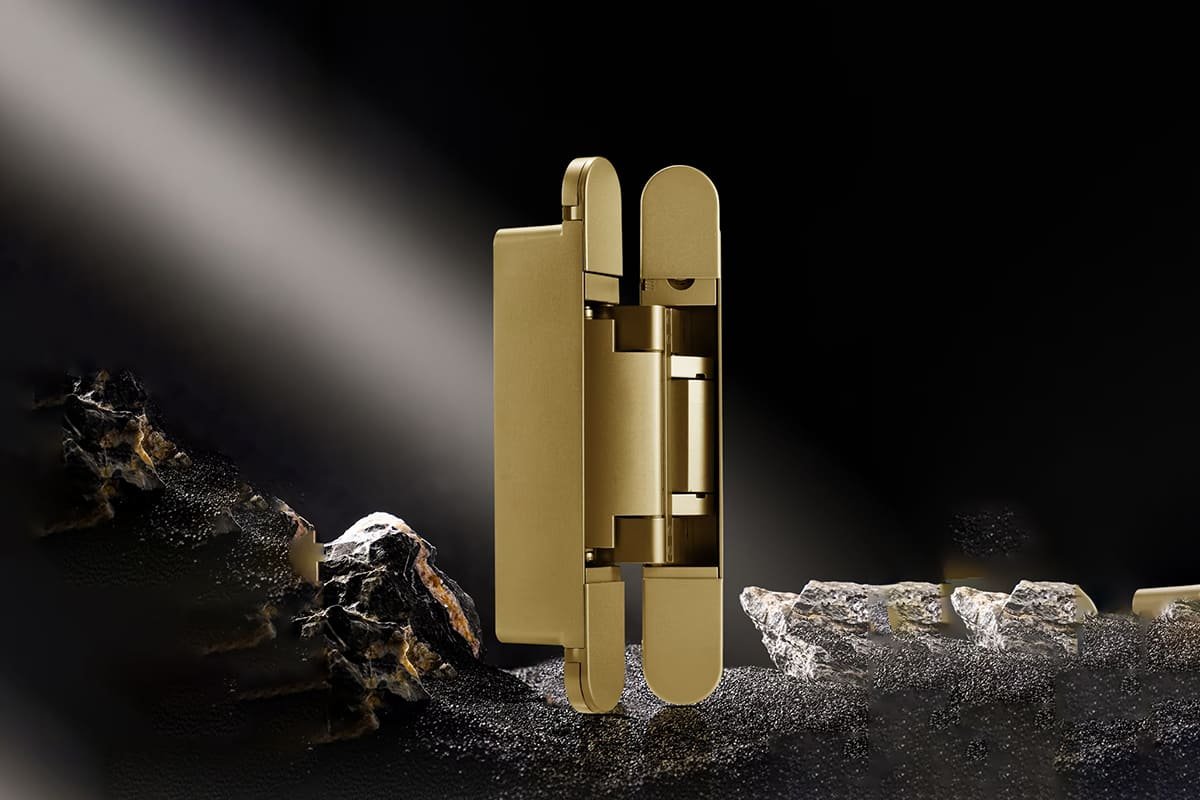
Aluminium profile grooves are often the deciding factor for concealed hinge compatibility. The hinge body must fit inside the frame or sash space, align with the fixing points, and move without hitting internal ribs.9 If the groove structure is wrong, the hinge cannot be installed correctly.
Buyers should provide a profile cross-section drawing or physical sample before confirming concealed hinges for aluminium doors. The drawing should show groove width, depth, wall thickness, screw channels, reinforcement positions, and the relationship between the door sash and frame.
Aluminium doors depend on profile systems
Unlike some wooden doors, aluminium doors are built around profile systems. The hinge is not simply mounted on a flat surface. It must integrate with the shape of the door and frame.
I have seen cases where two aluminium doors had the same thickness and weight, but they required different concealed hinges because the profile groove was different. One profile had a deep, open cavity. The other had internal ribs that blocked the hinge body. On paper, the hinge capacity matched both doors. In production, it only fit one.
Important groove dimensions to check
When evaluating concealed hinge compatibility, I look closely at these dimensions:
- Groove width: The hinge body must enter without forced machining.
- Groove depth: The hinge must sit deep enough for proper concealment.
- Profile wall thickness: Screws need material to grip.
- Internal rib position: Ribs can block the hinge arm or body.
- Screw channel location: Fixing holes must align with usable metal.
- Frame rebate shape: The hinge movement path must clear the frame.
- Thermal break area: The hinge should not damage insulation structure.
- Corner joint structure: Fixing must not interfere with corner assembly.
Profile groove and hinge fixing methods
Different hinge designs require different fixing methods. Buyers should not assume that one method fits every aluminium profile.
| Fixing method | Typical feature | Main evaluation point |
|---|---|---|
| Direct screw fixing | Screws enter aluminium wall | Wall thickness and screw holding strength |
| Fixing plate | Plate distributes force | Space for plate and screw alignment |
| Clamp fixing | Hinge clamps inside groove | Groove shape and tightening access |
| Custom bracket | Designed for special profile | Drawing accuracy and MOQ planning |
For ODM or OEM orders, a custom fixing solution may be possible. However, custom development should be based on accurate drawings, sample profiles, and realistic order quantity. It should also include sample testing before mass production.
Why buyers should share drawings early
Some buyers hesitate to share profile drawings at the enquiry stage. I understand that drawings can be sensitive. However, without enough profile data, hinge selection becomes guesswork.
A good compromise is to share:
- A simplified cross-section with key dimensions.
- Photos of the hinge area.
- A short video showing the profile groove.
- A physical profile sample for final confirmation.
- A non-disclosure agreement if needed.
For bulk wholesalers and hardware brands, this step is especially important. If you plan to sell the hinge into different aluminium door systems, you may need more than one model. A single concealed hinge may not cover all profile grooves in your market.
How should door thickness and door-to-frame clearance guide hinge selection?
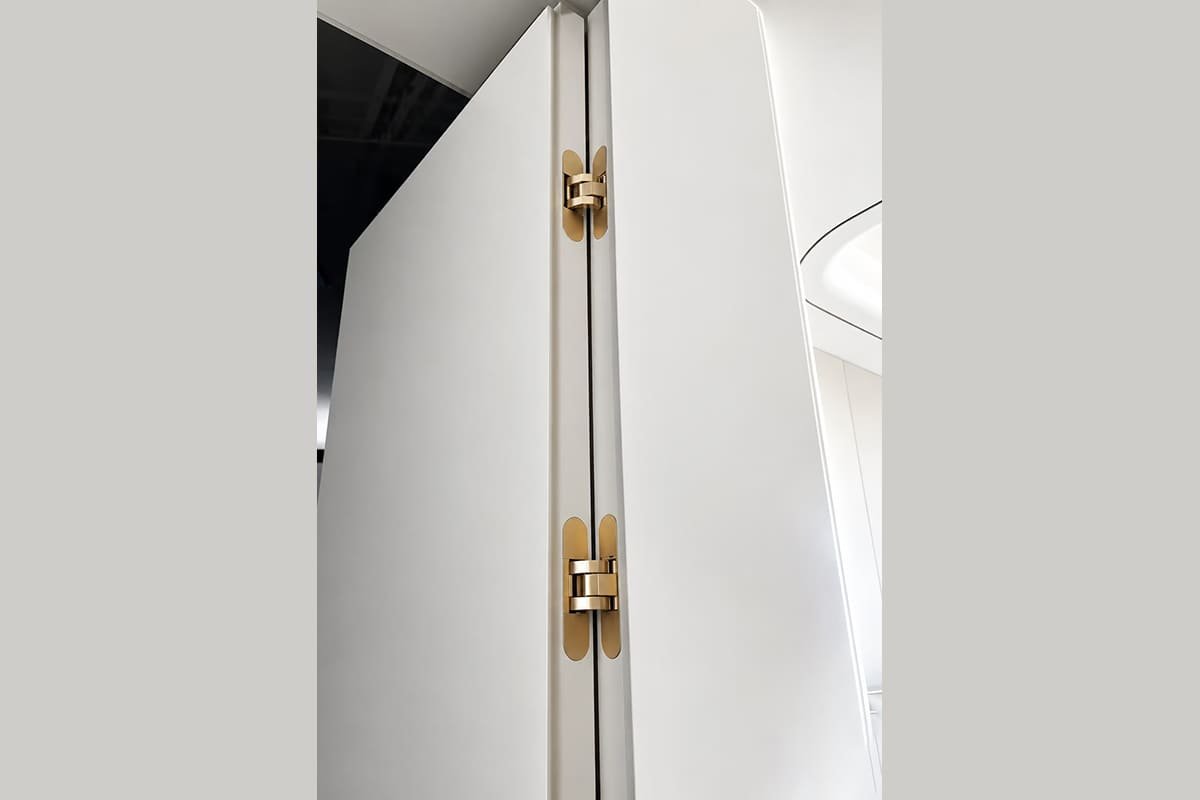
Door thickness and door-to-frame clearance guide the final hinge geometry. If the hinge is too deep, too wide, or has the wrong movement path, the door may rub the frame or fail to close properly. Small clearance errors can become serious after production.
Buyers should compare hinge drawings with the actual aluminium door section. The hinge must match the available thickness, maintain the designed gap, allow the required opening angle, and provide enough adjustment to correct normal manufacturing tolerances.
Door thickness controls installation depth
Door thickness is not only a catalogue number. It controls where the hinge can sit and how much material remains around it.
For aluminium doors, common selection questions include:
- Can the hinge body fit inside the sash?
- Does the hinge require milling or special machining?
- Will the installation weaken the profile wall?
- Does the hinge position conflict with glass, lock body, or sealing strip?
- Can the installer access the screws during assembly?
- Is there enough space for adjustment after installation?
A door thickness of 45 mm, 50 mm, or 60 mm can lead to different hinge choices, especially when the profile has internal chambers. The visible thickness may not equal the usable hinge space.
Door-to-frame clearance affects movement
The gap between the door and frame is a critical detail for concealed hinges for aluminium doors. Concealed hinges move through a hidden pivot path. If the clearance is too small, the door edge may scrape the frame during opening or closing.10
Typical clearance considerations include:
| Clearance factor | Why it matters |
|---|---|
| Side gap | Prevents rubbing on the hinge side |
| Top and bottom gap | Allows smooth movement and avoids floor contact |
| Rebate clearance | Prevents collision inside the frame |
| Seal compression | Affects closing force and final alignment |
| Opening angle clearance | Ensures the door does not hit frame or wall |
Adjustment range helps, but it is not a cure-all
Many concealed hinges offer 2D or 3D adjustment. This can help correct small tolerance differences after installation.
Common adjustments include:
- Height adjustment
- Side adjustment
- Depth or compression adjustment
However, adjustment cannot fix a completely wrong hinge selection11. If the hinge body does not fit the groove or the movement path collides with the frame, adjustment will not solve the problem.
I often describe adjustment as a fine-tuning tool, not a rescue tool. It helps the door factory improve alignment, but it cannot replace correct product matching.
Check the full door hardware system
The hinge does not work alone. It must coordinate with the full hardware set.
For example:
- A mortise lock may require a certain door thickness.
- A lever handle may need stable lock positioning.
- Door seals may change closing pressure.
- Glass weight may increase hinge stress.
- Door closers may add force during operation.
- Fire-rated requirements may restrict hardware choices.
For project doors, buyers should also verify whether the hinge model has relevant certificates or test reports required by the market or project. As a supplier, I can provide documents available for our products, but buyers should always verify certification scope, product model, test standard, and validity for their own application.
How can B2B buyers reduce risk before bulk ordering concealed hinges for aluminium doors?
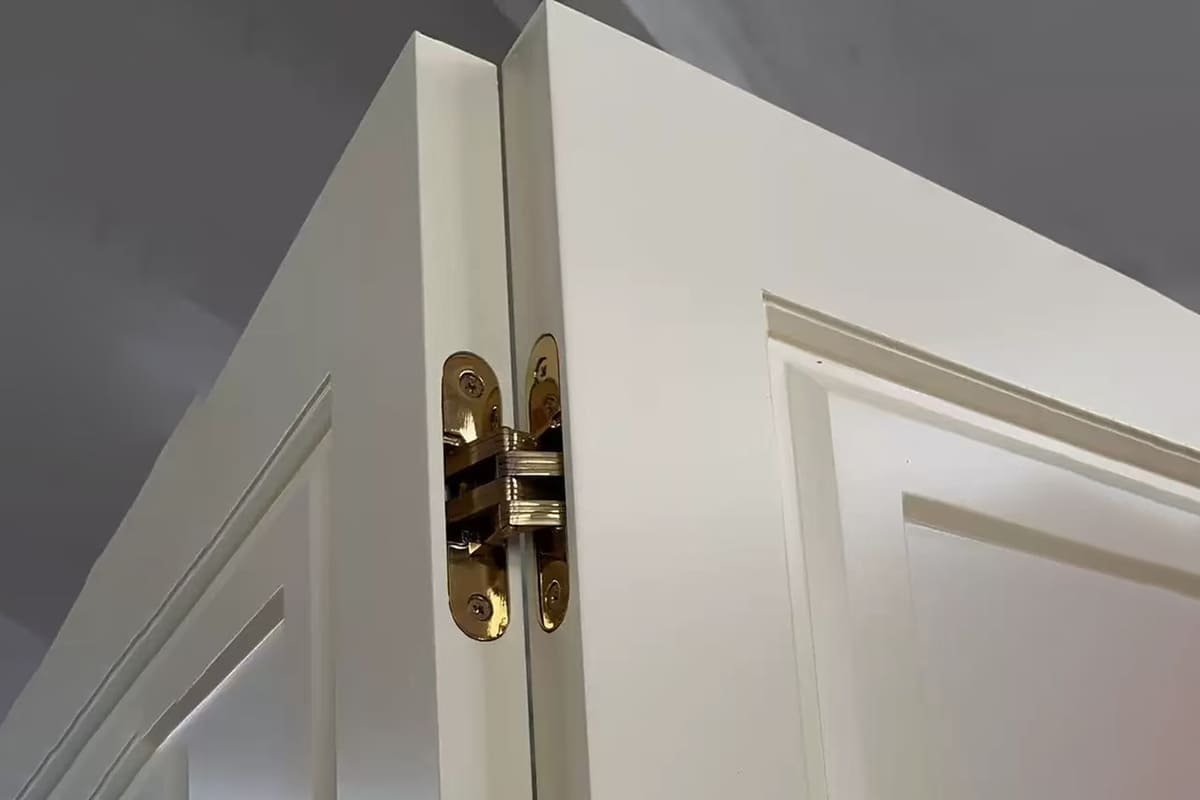
Bulk purchasing risk increases when buyers skip sample testing and rely only on catalogue specifications.12 A hinge may look suitable during quotation, but the real test happens when it meets the aluminium profile, door weight, clearance, and production process.
B2B buyers can reduce risk by using drawings, samples, installation trials, inspection criteria, and supplier communication before mass orders. For concealed hinges for aluminium doors, I recommend approving both the hinge model and the complete installation result before confirming bulk quantity.
Use a structured sample approval process
A structured sample process is the safest way to avoid costly replacement after bulk purchase. It does not need to be complicated, but it should be clear.
I usually suggest this workflow:
- Initial technical enquiry
- Share door weight, size, thickness, profile drawing, and clearance.
- Supplier recommendation
- Review compatible hinge models and installation drawings.
- Sample order
- Test the hinge on the real aluminium profile.
- Assembly feedback
- Check fit, screw strength, adjustment, gap, and opening movement.
- Revision if needed
- Change hinge model, fixing method, or accessory configuration.
- Bulk order confirmation
- Confirm finish, packaging, logo, inspection standard, and delivery plan.
- Final inspection
- Check dimensions, surface, function, accessories, and packing.
Create clear inspection points
For importers, hardware brands, and door factories, inspection criteria should be written before production. This makes quality control more objective.
Useful inspection points include:
| Inspection item | What to check |
|---|---|
| Hinge dimensions | Body size, hole position, arm movement |
| Surface finish | Color, coating consistency, scratches |
| Function | Smooth opening, no abnormal friction |
| Adjustment | Range and screw operation |
| Accessories | Screws, plates, covers, Allen keys |
| Packaging | Label, barcode, logo, box strength |
| Documents | Drawing, test report, certificate copy if required |
At SDH Hardware, we support factory-direct B2B supply, ODM/OEM orders, custom surface treatments, customer logos, and inspection after production. Still, the buyer should define application-specific acceptance standards early, especially for project doors or brand distribution.
Ask supplier questions that reveal real experience
A professional supplier should be able to discuss more than load rating. When I speak with experienced door manufacturers, the conversation usually becomes technical very quickly.
Good questions include:
- Which aluminium profile groove dimensions does this hinge require?
- What door thickness range is suitable?
- What clearance should we keep between door and frame?
- How many hinges do you recommend for this door size and weight?
- Can you provide a hinge installation drawing?
- What adjustment directions are available?
- What screws or fixing plates are included?
- Can the finish match our handle and lock series?
- What certification documents are available for this exact model?
- Can we test samples before confirming bulk order?
Avoid the “one hinge fits all” assumption
For B2B distribution, it is tempting to stock one universal model. This may work for a narrow market segment, but it is risky across different aluminium door systems.
A better strategy is to build a small range:
- A hinge for light aluminium doors
- A hinge for medium commercial doors
- A hinge for heavier glass aluminium doors
- A hinge for narrow profiles
- A hinge for wider or deeper profiles
- A hinge with higher adjustment flexibility
This gives sales teams better coverage and reduces mismatch complaints from customers.
Frequently Asked Questions
How many concealed hinges should I use on an aluminium door?
Most aluminium doors use two or three concealed hinges, depending on door weight, height, width, and hinge rating. Heavy, tall, or glass-filled doors may need three or more. Buyers should confirm with hinge drawings, supplier recommendations, and sample testing before bulk production.
Can I choose concealed hinges only by door weight?
No. Door weight is only one selection factor. You should also confirm aluminium profile groove structure, door thickness, fixing method, door-to-frame clearance, and opening angle. A hinge with enough load capacity can still fail if it does not fit the profile.
Are concealed hinges suitable for all aluminium doors?
Concealed hinges are not suitable for every aluminium door system. The aluminium profile must provide enough internal space, fixing strength, and movement clearance. Some narrow or complex profiles may require a different hinge model or a custom fixing solution.
What drawings should I send to a hinge supplier?
You should send the door section drawing, frame section drawing, hinge-side profile detail, door thickness, door size, finished door weight, and required clearance. Photos or physical profile samples also help the supplier check compatibility before sample production.
Do concealed hinges for aluminium doors need certification?
Certification depends on the market, project, and application. For fire-rated or regulated projects, buyers should verify CE, fire-rated, or other documents for the exact hinge model and intended use. A qualified professional should confirm application-specific requirements.
Conclusion
Choosing concealed hinges for aluminium doors is not about selecting the highest load rating in a catalogue. It is about matching the hinge to the door weight, aluminium profile groove, door thickness, fixing method, and door-to-frame clearance. When these details are confirmed early, sample testing becomes smoother and bulk purchasing risk drops. If you need help evaluating a hinge for your aluminium door system, share your door drawing and order requirements with us, and I can help recommend a suitable factory-direct solution.
"How to Select Hinges for Heavy Aluminium Doors", https://cmech.com/blog/how-to-select-hinges-for-heavy-aluminium-doors/. A technical installation source for concealed door hinges explains that hinge bodies, fixing points, and movement clearances must correspond to the door and frame construction, supporting the claim that an otherwise strong hinge can be unsuitable when it does not fit the aluminium profile. Evidence role: general_support; source type: institution. Supports: A technical source should support that concealed hinge performance depends on compatibility with the door and frame profile, not only nominal hinge strength.. Scope note: This would provide contextual support for the compatibility principle, not direct evidence for every failure mode listed in the article. ↩
"DOOR HARDWARE (SCHEDULED BY DESCRIBING PRODUCTS)", https://fpm.usc.edu/wp-content/uploads/2021/11/087102-USC-HSC-door-hardware-Guide-Specification_1.pdf. Architectural hardware guidance treats hinge selection as a function of door mass, door and frame construction, dimensional fit, and required clearances, supporting the use of these variables as preliminary selection criteria. Evidence role: expert_consensus; source type: institution. Supports: A neutral architectural-hardware or standards-based source should identify load, door dimensions, frame construction, and clearance as relevant hinge selection variables.. Scope note: The source may discuss door hinges generally rather than concealed hinges specifically for aluminium systems. ↩
"A hidden multi link hinge keeps the hardware inside the profile groove ...", https://www.facebook.com/61563645576936/videos/a-hidden-multi-link-hinge-keeps-the-hardware-inside-the-profile-groove-while-sup/1105761092033217/. Technical material on aluminium door and window profile systems describes extruded profiles as shaped sections with grooves, cavities, and fixing features, supporting the mechanism by which profile design can govern hinge compatibility. Evidence role: mechanism; source type: education. Supports: A source should explain that aluminium doors are built from profiled extrusions with cavities, grooves, webs, and fixing channels that constrain hardware placement.. Scope note: This supports the structural reasoning and may not directly compare profile design against load rating in concealed hinge selection. ↩
"Thermal Break Aluminum Profiles China", https://www.mtflying.com/thermal-break-aluminum-profiles/. Educational material on aluminium framing describes door and window profiles as extruded sections that may contain chambers, webs, grooves, and polymer thermal breaks, supporting the description of the profile features that can constrain hinge installation. Evidence role: definition; source type: education. Supports: A source should define or illustrate aluminium door profile construction, including hollow chambers, grooves, structural webs, and thermal breaks.. Scope note: The source would substantiate the profile construction context rather than prove that each feature affects every hinge model. ↩
"Understanding BS EN 1935:2002 single-axis hinge grades - SFS", https://uk.sfs.com/resources/article/understanding-bs-en-1935. Door-hinge standards such as EN 1935 and ANSI/BHMA A156.1 classify hinges using defined test procedures, including mass or grade categories and durability testing, supporting the point that published hinge ratings are conditional on specified test conditions. Evidence role: expert_consensus; source type: institution. Supports: A hinge standard should show that hinge grades or ratings are defined using specified tests, door mass classes, cycle counts, and installation assumptions.. Scope note: Some standards focus on single-axis hinges or general builders’ hardware and may not cover every concealed aluminium-door hinge design. ↩
"optimization of hinge configuration of furniture doors using finite element ...", https://bioresources.cnr.ncsu.edu/BioRes_07/BioRes_07_Unsecured/BioRes_07_4_5809_Zhou_HHYJ_Hinge_Config_Doors_FiniteElement_3335.pdf. Engineering mechanics sources define moment as the product of force and perpendicular distance from a pivot, supporting the explanation that door geometry can change hinge stresses even when the door weight is the same. Evidence role: mechanism; source type: education. Supports: An engineering mechanics source should support that moments and leverage depend on force and distance from the pivot or support.. Scope note: This supports the underlying physics; a door-specific engineering source would be needed to quantify the effect for a particular hinge and aluminium profile. ↩
"Mechanical Joining Methods in Aluminum Sheets", https://rave.ohiolink.edu/etdc/view?acc_num=toledo1574853232358122. Research on mechanically fastened aluminium joints shows that fastener resistance is affected by material thickness, thread engagement, and local joint geometry, supporting the claim that the profile can become the limiting element even when the hinge itself is strong. Evidence role: mechanism; source type: paper. Supports: A research or engineering source should show that fastener holding strength in aluminium depends on material thickness, thread engagement, and local geometry.. Scope note: The evidence would support the fastening mechanism generally and may not test the exact concealed hinge or profile described in the article. ↩
"Why I feel sorry for thermally broken aluminium windows in Australia.", https://afrclab.com.au/insight-thermally-broken-aluminium-windows. Technical descriptions of thermally broken aluminium frames explain that insulating barriers separate inner and outer aluminium sections, supporting the point that these profiles can constrain screw placement and load transfer for attached hardware. Evidence role: mechanism; source type: research. Supports: A technical source should explain that thermal breaks separate aluminium sections with insulating material, which can affect load paths and available fixing positions.. Scope note: This is contextual support; actual permissible screw locations depend on the specific profile supplier’s engineering data. ↩
"Cabinet Hinge Adjustment Diagram: 3D Screw Guide", https://bertastore.com/blogs/hub/cabinet-hinge-adjustment-diagram?srsltid=AYCX9vK8mIVkinrLpLenRIIjBr3Gc1W6XsDHB0q6Lng7z_Gu91Z7cyyW. Concealed-hinge installation guidance specifies body recess dimensions, fixing-hole positions, and movement clearances, supporting the claim that the hinge must fit the sash or frame space and move without obstruction. Evidence role: mechanism; source type: institution. Supports: A neutral technical or standards-oriented source should show that concealed hinge installation depends on body dimensions, fixing locations, and clearance for the hinge’s motion path.. Scope note: Many installation guides are model-specific, so the source would support the general principle rather than all concealed hinges. ↩
"Accessibility Details for Doors, Maneuvering Spaces & Routes", https://dbs.lacity.gov/sites/default/files/efs/forms/pc17/doors-maneuvering-spaces-accessibility-details.pdf. Door-installation guidance identifies perimeter clearances as necessary for proper operation and to prevent binding or rubbing between the leaf and frame, supporting the claim that too little clearance can cause scraping during movement. Evidence role: general_support; source type: government. Supports: A building or door-installation source should confirm that proper clearances are required to prevent binding, rubbing, or impaired operation.. Scope note: The source may address doors generally rather than concealed hinges specifically. ↩
"DOOR HARDWARE (SCHEDULED BY DESCRIBING PRODUCTS)", https://fpm.usc.edu/wp-content/uploads/2021/11/087102-USC-HSC-door-hardware-Guide-Specification_1.pdf. Technical guidance for adjustable concealed hinges describes finite height, lateral, and compression adjustment ranges, supporting the view that adjustment is intended for tolerance correction rather than for overcoming fundamental incompatibility of hinge geometry or fixing. Evidence role: expert_consensus; source type: institution. Supports: A technical source should show that hinge adjustments have finite ranges and are intended for alignment within installation tolerances.. Scope note: The support is inferential unless the source explicitly states that adjustment cannot remedy incorrect hinge selection. ↩
"First article inspection", https://en.wikipedia.org/wiki/First_article_inspection. Quality-management guidance on supplier verification and first-article or sample approval treats preproduction inspection as a method for confirming conformance before full production, supporting the claim that relying only on catalogue specifications increases bulk-order risk. Evidence role: expert_consensus; source type: institution. Supports: A quality-management source should support that verification, sample approval, or first-article inspection reduces the risk of nonconforming bulk production.. Scope note: The source would support the general quality-control principle, not a measured failure rate for concealed hinges. ↩