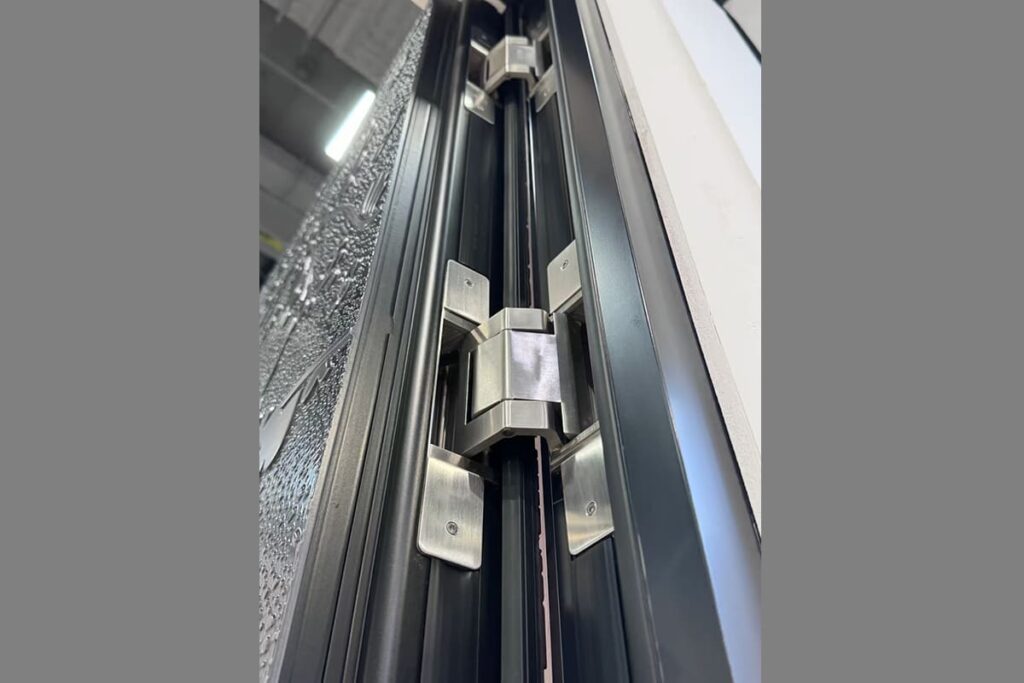
Explore Heavy Duty Hinges for Industrial Gates & Doors?
Heavy doors create hidden risk. A wrong hinge can sag, rub, leak oil, or fail early. I always start with the real door scene.
Heavy-duty hinges should be chosen by door type, weight, appearance needs, adjustment needs, and maintenance needs.1 I usually separate them into 3D adjustable concealed hinges for high-end doors and heavy-duty adjustable oil-free hinges for steel doors and industrial projects.
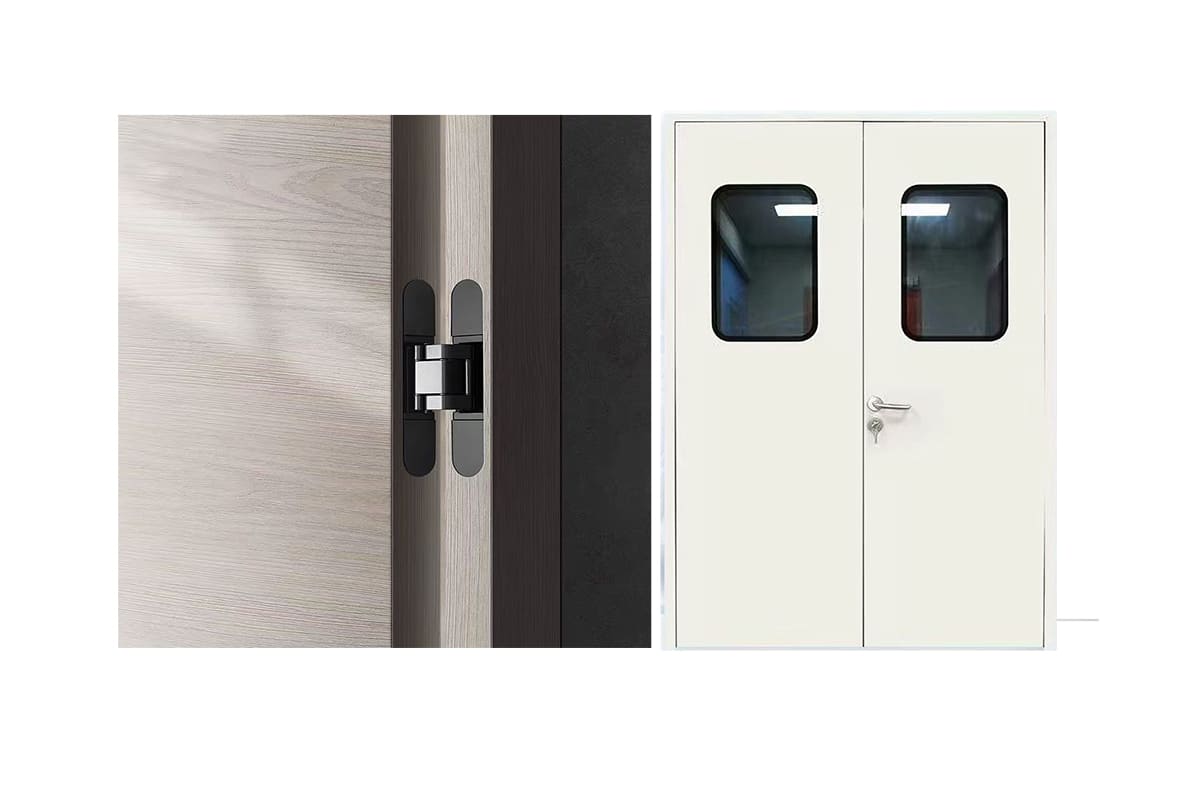
I have seen many buyers start with one question: “How many kilograms can this hinge carry?” I understand that question. Load is important. But I do not stop there. In my factory work, I have learned that the better question is this: “What kind of door is this hinge supporting, and what problem must it solve after installation?” That one question changes the whole selection path.
What Are The Two Heavy Duty Hinge Types I Separate First?
A heavy door makes every small hinge mistake larger.2 If I choose only by weight, I may miss appearance, adjustment, and maintenance problems.
Heavy-duty door hinges can be separated into two practical types: 3D adjustable concealed hinges and heavy-duty adjustable oil-free hinges. I use concealed hinges when appearance and fine adjustment matter. I use oil-free hinges when heavy steel doors, industrial use, and low maintenance matter more.
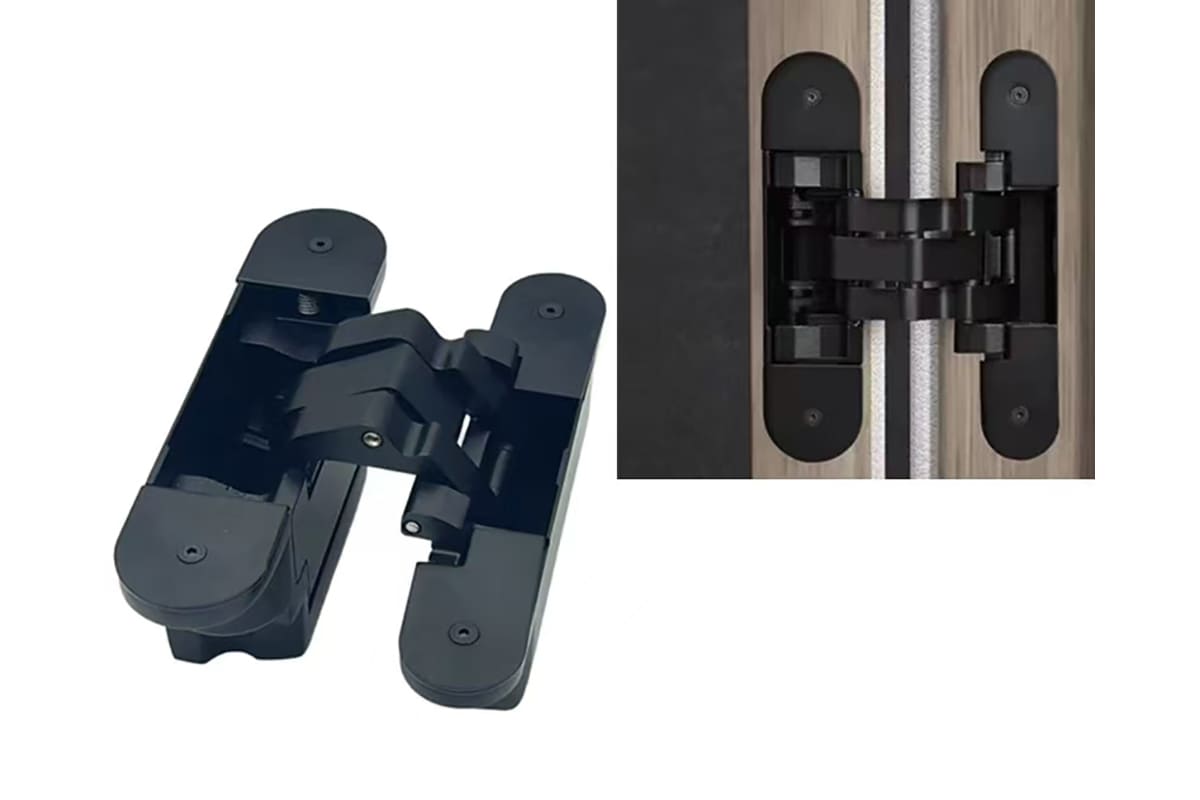
I usually divide heavy-duty hinges into two groups before I talk about price or finish. This first step saves time for both me and the buyer. It also helps me avoid giving the wrong product for the wrong door.
My basic split
| Hinge type | Main use | Main value | Common door type |
|---|---|---|---|
| 3D adjustable concealed hinge | Indoor doors, public buildings, high-end doors | Hidden look and adjustment | Wood doors, metal frame doors, premium doors |
| Heavy-duty adjustable oil-free hinge | Industrial doors, heavy steel doors, project doors | Strength, low maintenance, stable use | Steel doors, fire door projects, industrial doors |
I do not treat these two products as the same item with different names. They solve different problems. A 3D adjustable concealed hinge hides inside the door and frame.3 It gives a clean look. It also allows position correction after installation. A heavy-duty adjustable oil-free hinge is more direct. It is built for strong support, easy adjustment, and low service demand. It often works with a matching adjustment box.
In my daily production work, I first ask about the door material, door size, door weight, opening frequency, installation method, and site condition. I also ask whether the user cares more about the look or long-term service. These answers tell me which hinge family is more suitable.
When Should I Use 3D Adjustable Concealed Hinges For Doors Over 100 Kg?
A high-end door can lose value if the hinge looks rough. A heavy door can also sag. I use concealed adjustment to protect both function and look.
I use 3D adjustable concealed hinges for doors over 100 kg when the project needs a clean appearance, hidden hardware, and correction after installation. These hinges are common in public buildings, offices, hotels, and higher-end interior doors.

I often recommend 3D adjustable concealed hinges when the door is heavy, but the project still wants a neat visual result. These hinges stay hidden when the door is closed. This is important for office doors, hotel doors, apartment doors, and public building doors where hardware should not break the design line.
What I check before I suggest this hinge
| Check point | Why I check it |
|---|---|
| Door weight | I need to know whether the hinge model is in the right load range |
| Door thickness | I need enough space for the hinge body |
| Frame material | I need to confirm the fixing strength |
| Adjustment demand | I need to know if post-installation correction is important |
| Appearance demand | I need to confirm whether the hidden look has real value |
For doors over 100 kg, the hinge structure must be stronger than a normal concealed hinge. Some models use aviation aluminum alloy arms. Some use full stainless steel construction. I pay attention to the arm strength, body thickness, pin structure, and fixing screws. I also care about how smoothly the adjustment works.
The key value is not only that the hinge can hold the door. The key value is that I can adjust the door in three directions after installation.4 I can correct small problems with height, gap, and side position. This matters because a heavy door can settle after hanging.5 If I cannot adjust it, the door may rub the frame or show uneven gaps. I do not use this hinge for every industrial gate. I use it when the door needs strength, a clean look, and accurate alignment.
When Should I Use Heavy Duty Adjustable Oil-Free Hinges?
Industrial doors punish weak hardware fast. Oil leakage also creates dirt and service calls. I use oil-free hinges when practical reliability matters most.
I use heavy-duty adjustable oil-free hinges for heavy steel doors, industrial projects, and doors where low maintenance is more important than a hidden look. These hinges often support heavier loads, commonly above 160 kg, when matched with the correct structure and installation.6
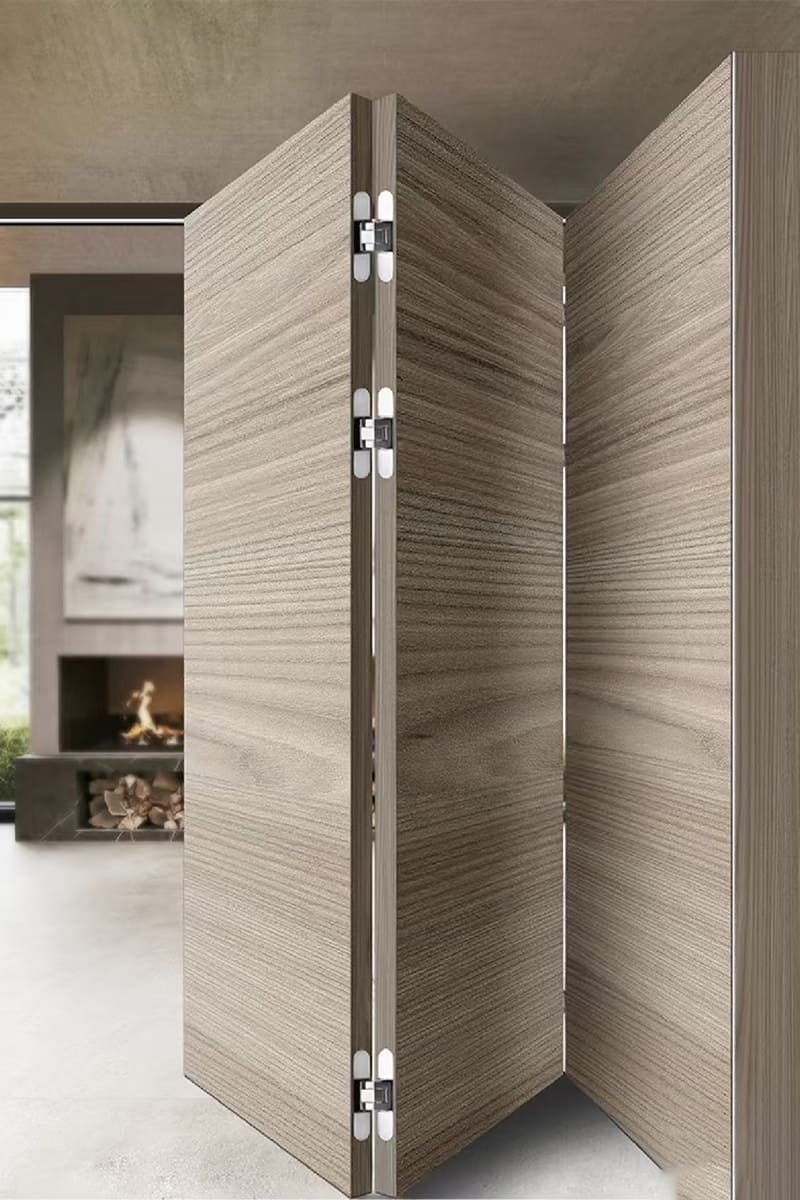
I see heavy-duty adjustable oil-free hinges as a different system, not just another hinge shape. These hinges are often made from stainless steel and used with matching adjustment boxes. This structure makes them suitable for heavy steel doors and project doors that need stable use in tougher spaces.
What makes this hinge practical
| Feature | Practical meaning |
|---|---|
| Stainless steel hinge body | I get better strength and surface stability in many project scenes |
| Matching adjustment box | I can adjust the door position after installation |
| Oil-free design | I reduce the need for lubrication7 |
| Sealed hinge shaft | I reduce the risk of shaft movement |
| Laser welding | I help lock the shaft and keep the structure closed |
The oil-free design is very important in industrial use. A hinge that needs oil may create later work. If oil leaks, it can stain the door, floor, or wall.8 It can also create a poor impression for the end user. An oil-free hinge reduces this issue. I do not need to promise zero service forever. But I can say the design reduces the regular need for adding oil.
I also pay close attention to the hinge shaft. In a stronger oil-free hinge, laser welding can seal the shaft area.9 This helps prevent the shaft from falling out. This detail is easy to miss in a catalog photo. But in production and inspection, I look at it as a key point. A heavy steel door does not forgive weak shaft design. The hinge must handle weight, movement, and long-term opening cycles with a stable structure.
How Do I Compare Structure, Installation, And Maintenance?
A hinge may look strong in a photo. But the real test starts during fitting and daily use. I compare the inside details first.
I compare heavy-duty hinges by structure, adjustment method, installation space, and maintenance demand. Concealed hinges focus on hidden appearance and 3D correction. Oil-free hinges focus on stronger exposed support, matching adjustment boxes, sealed shafts, and reduced service work.
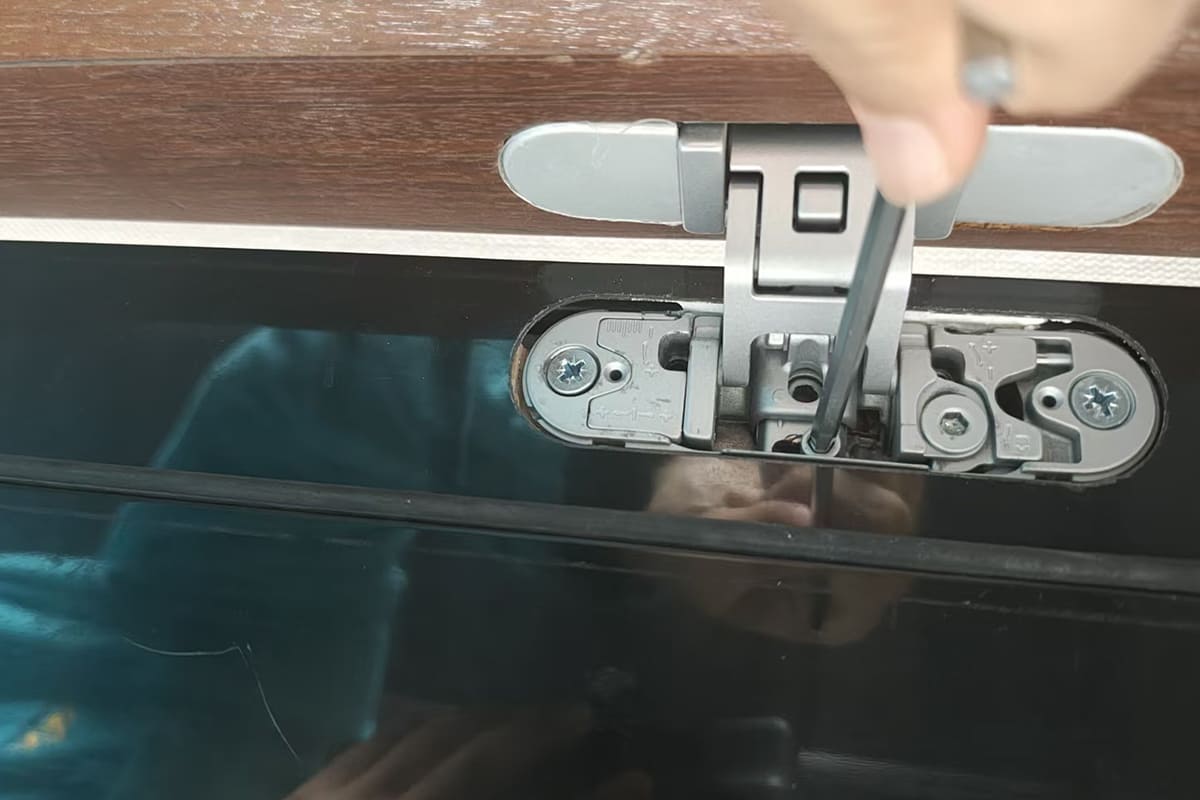
When I compare these two hinge systems, I do not only read the load number. I place the hinge in the real door scene. I ask how the installer will mount it. I ask how the buyer will solve door sagging. I ask who will handle maintenance after the project is finished.
My working comparison
| Item | 3D adjustable concealed hinge | Heavy-duty adjustable oil-free hinge |
|---|---|---|
| Appearance | Hidden after closing | Usually visible or semi-visible |
| Main structure | Concealed body with arms | Stainless steel hinge plus adjustment box |
| Adjustment | Usually 3D adjustment | Adjustable through hinge and box design |
| Typical value | Clean look and gap correction | Heavy support and low maintenance |
| Maintenance | Normal inspection, no hidden abuse | No oil lubrication need in oil-free design |
| Best scene | Public buildings, premium interior doors | Steel doors, industrial doors, heavy projects |
The installation logic is also different. A concealed hinge needs accurate routing or machining in the door and frame.10 If the pocket is not accurate, the hinge may not sit well. This can affect the door gap and movement. I always remind buyers that a good concealed hinge still needs good machining.
An oil-free hinge system needs solid fixing and correct alignment with the adjustment box. The door and frame must support the hinge force. If the steel plate is too weak, even a strong hinge cannot save the door.11 I have seen this issue in project discussions. The hinge was blamed first, but the real issue was a weak mounting area.
Maintenance is another difference. Concealed hinges are protected inside the door line, but they still need correct use and periodic checking. Oil-free hinges reduce the work linked to lubrication. Their sealed shaft and laser welded structure also help control some common risks. For industrial doors, this simple service advantage can matter more than a hidden appearance.
How Do I Choose Between Appearance And Industrial Durability?
A project can fail when I choose the nicer hinge for the harsher door. It can also fail when I choose an industrial hinge for a design door.
I choose 3D adjustable concealed hinges when appearance, hidden hardware, and precise gap correction are the main needs. I choose heavy-duty adjustable oil-free hinges when the door is heavier, the setting is industrial, and durability with lower maintenance is the main need.
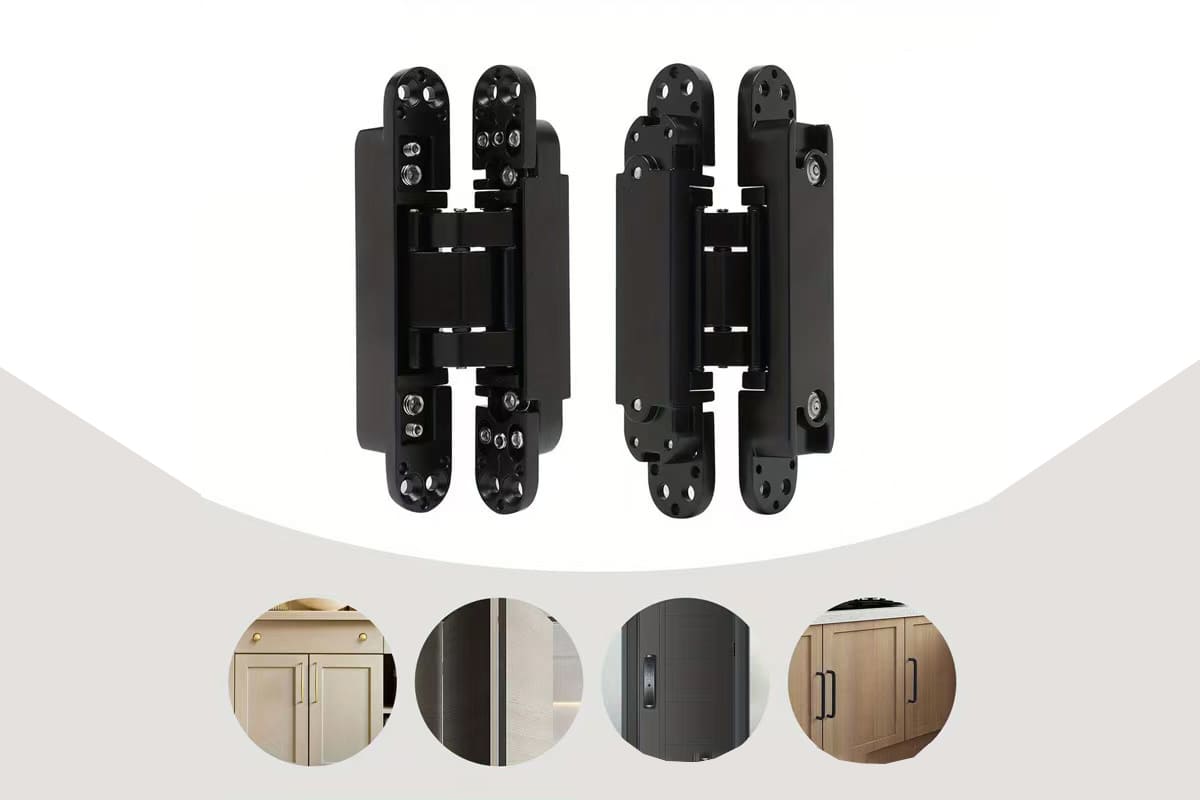
I use a simple decision path in my own work. I do not ask, “Which hinge is better?” I ask, “Which hinge is better for this door?” This small change makes the choice much clearer.
My selection guide
| Project need | My usual choice | My reason |
|---|---|---|
| Clean hidden look | 3D adjustable concealed hinge | The hinge is not seen when closed |
| Door above 100 kg with design need | 3D adjustable concealed hinge | It gives strength and adjustment |
| Heavy steel door | Heavy-duty oil-free hinge | It gives practical support |
| Industrial project | Heavy-duty oil-free hinge | It lowers maintenance pressure |
| High opening frequency | Depends on test and door design | I need more details before I decide |
| Strict visual design | 3D adjustable concealed hinge | The look is part of the value |
I do not claim that all concealed hinges are suitable for every public building. I also do not claim that all oil-free hinges are suitable for every industrial gate. The project detail decides the answer. Door weight, door width, frame strength, installation method, open angle, finish needs, and use environment all matter.
For a hotel corridor door, I may choose a 3D adjustable concealed hinge because the door gap and clean look are important. For a factory steel door, I may choose a heavy-duty adjustable oil-free hinge because the user cares more about strength, simple maintenance, and stable daily use.
I also consider the supply side. If a buyer needs bulk orders, I check whether the factory can keep the surface finish stable. I check whether the dimensions are consistent. I check whether the matching screws, boxes, and accessories are supplied together. A hinge is not only one metal part. It is part of a full door hardware system.
How Do I Reduce Procurement Risk Before A Bulk Order?
A low price can hide high later cost. If the hinge finish, size, or structure changes between batches, the buyer carries the problem.
I reduce procurement risk by confirming drawings, material, load range, adjustment method, surface finish, matching accessories, sample testing, and inspection standards before bulk production. I also ask for certification documents when the project or market requires them.

When I work with door factories, hardware brands, or wholesalers, I always try to move the discussion from “price only” to “complete order control.” Heavy-duty hinges have more risk than small decorative hardware. A small mismatch can create installation delay, rework, or complaint.
My pre-order checklist
| Check item | What I confirm |
|---|---|
| Drawing and size | I confirm hinge body size, hole position, and door fit |
| Material | I confirm stainless steel, alloy, or other required material |
| Load range | I confirm the door weight and number of hinges |
| Adjustment method | I confirm how the installer will correct the door |
| Finish | I confirm color, brushing, polishing, or coating standard |
| Accessories | I confirm screws, adjustment boxes, and covers |
| Sample | I confirm function before bulk order |
| Inspection | I confirm appearance, size, movement, and packing |
| Documents | I confirm CE or fire-rated documents if the market needs them12 |
I prefer to check samples before a large order. A sample shows more than a catalog. I can feel the hinge movement. I can see the surface finish. I can check whether the adjustment parts move smoothly. I can also see whether the welding is clean and whether the shaft area looks well controlled.
For heavy-duty adjustable oil-free hinges, I pay special attention to the shaft, welding, and box matching. For 3D adjustable concealed hinges, I pay more attention to the arm structure, body machining, screw strength, and adjustment range. These details are not decoration. They affect installation and long-term use.
I also tell buyers to check packing and batch consistency. Heavy hinges can damage each other during transport if packing is weak. Surface scratches can create complaints even when the hinge function is correct. For export orders, stable packing is part of product quality. I see this as normal factory work, not an extra service.
Conclusion
I choose heavy-duty hinges by door scene first, then load, structure, adjustment, installation, and maintenance. This method reduces risk and improves project fit.
"A156.1 - 2025 Butts and Hinges", https://buildershardware.com/ANSI-BHMA-Standards/Hardware-Highlights/A1561-2021-Butts-and-Hinges. Architectural-hardware standards such as ANSI/BHMA A156.1 or EN 1935 classify hinges by factors including door mass, durability, and application conditions, supporting the article’s broader selection approach; these standards provide contextual criteria rather than endorsing the article’s specific two-category product split. Evidence role: expert_consensus; source type: institution. Supports: A standards or architectural-hardware source should support that hinge selection is based on door characteristics, expected use, durability, and installation conditions rather than weight alone.. Scope note: Contextual support only; the source may not address appearance needs or the exact product categories used in the article. ↩
"Hinge: How It Works, Diagram & Examples - Firgelli Automations", https://www.firgelliauto.com/blogs/mechanisms/hinge?srsltid=AfmBOopqhT9MDOC8dlzQZ0Rp3en-HCX-hODbr3QWCSTANqzY2ZwZxfhn. Engineering treatments of hinged doors describe how door weight and width create bending moments at the hinge line, which can increase stress on hinges, screws, and frames; this supports the general mechanism behind the claim, although it does not quantify every installation error described in the article. Evidence role: mechanism; source type: education. Supports: An engineering or building-science source should explain that heavier doors impose larger forces and moments on hinges and fasteners, making misalignment or weak attachment more likely to cause sagging or rubbing.. Scope note: The support is mechanical and general, not a direct test of the specific hinges discussed. ↩
"Concealed hinge jig - Wikipedia", https://en.wikipedia.org/wiki/Concealed_hinge_jig. Reference definitions of concealed hinges describe them as hinges mounted so that they are not visible when the door or panel is closed, supporting the article’s description of their visual function. Evidence role: definition; source type: encyclopedia. Supports: A neutral definition should confirm that concealed hinges are designed to be hidden from view when the door or panel is closed.. ↩
"3-way adjustable concealed hinge - YouTube",
. Technical descriptions of three-dimensional adjustable hinges commonly identify vertical, lateral, and depth adjustments, supporting the article’s statement that such hinges can correct door position after hanging; this does not establish that every model marketed as a 3D hinge has the same adjustment range or load rating. Evidence role: mechanism; source type: other. Supports: A patent, technical manual, or standards-adjacent source should describe concealed hinges with vertical, lateral, and depth adjustment after installation.. Scope note: The source may describe a class of hinge mechanisms rather than the exact products in the article. ↩"Maintenance says door sag is un-fixable… : r/DIY - Reddit", https://www.reddit.com/r/DIY/comments/1c6f3ea/maintenance_says_door_sag_is_unfixable/. Building-maintenance sources commonly identify hinge wear, loose fasteners, and frame movement as causes of door sag, providing contextual support for the article’s claim that heavy doors may need post-installation adjustment. Evidence role: general_support; source type: education. Supports: A maintenance or building-construction source should document that doors can sag or settle after installation because of hinge wear, fastener loosening, frame movement, or load.. Scope note: The source would support the general sagging mechanism, not a specific probability for doors over 100 kg. ↩
"Understanding BS EN 1935:2002 single-axis hinge grades", https://uk.sfs.com/resources/article/understanding-bs-en-1935. EN 1935 classifies single-axis hinges by service factors including door mass and durability, with high-mass categories used for heavy doors; this supports the plausibility of 160 kg-class hinge applications but does not verify the rating of any particular oil-free hinge model. Evidence role: general_support; source type: institution. Supports: A hinge standard such as EN 1935 should show that hinge classifications include high door-mass categories around 160 kg, supporting the plausibility of such load ratings.. Scope note: Contextual standard support only; actual capacity depends on tested model, number of hinges, door geometry, fixings, and frame strength. ↩
"[PDF] The Tribological Performance of Self-Lubricating Bearings Following ...", https://docs.lib.purdue.edu/cgi/viewcontent.cgi?article=2888&context=icec. Tribology literature on self-lubricating bearings reports that solid lubricants or low-friction bearing liners can reduce or eliminate the need for external lubricant in suitable applications, supporting the maintenance rationale for oil-free hinge designs. Evidence role: mechanism; source type: paper. Supports: A tribology paper should explain that self-lubricating or dry-running bearing materials can operate with reduced external lubrication compared with conventional lubricated joints.. Scope note: The source would support the mechanism generally, not prove maintenance intervals for the specific hinge design. ↩
"[PDF] Slips Trips Falls Hand out for Safety Committee Meetings - OSHA", https://www.osha.gov/sites/default/files/2018-12/fy16_sh-29672-sh6_SlipsTripsFallsHandoutforSafetyCommitteeMeetings.pdf. Occupational-safety guidance identifies oil and grease on walking surfaces as contamination that should be controlled because it can create slip hazards, supporting the article’s broader point that lubricant leakage can create unwanted surface contamination. Evidence role: general_support; source type: government. Supports: A safety or facilities source should support that oil or grease leakage can contaminate floors and surfaces, creating housekeeping or slip concerns.. Scope note: The source supports contamination and safety concerns more directly than aesthetic staining of doors or walls. ↩
"Laser Welding Systems For Hermetic Sealing - ADS - NASA ADS", https://ui.adsabs.harvard.edu/abs/1986SPIE..668..310B/abstract. Manufacturing literature describes laser welding as a localized joining process capable of producing precise sealed joints in metal components, supporting the article’s explanation of how welding may close a hinge shaft area. Evidence role: mechanism; source type: paper. Supports: A welding paper or manufacturing review should support that laser welding can create precise, localized, sealed joints in metal assemblies.. Scope note: The source would establish the welding capability generally, not demonstrate shaft-retention performance for the article’s hinge design. ↩
"[DOC] 123213", https://online2.ogs.ny.gov/dnc/masterspec24/docs/Division12Furnishings/123213.0ManufacturedWoodVeneerFacedCasework.docx. Architectural woodwork and hardware-installation guidance treats hinge mortising and alignment as precision operations affecting fit and door operation, supporting the article’s claim that concealed hinges require accurate machining. Evidence role: general_support; source type: institution. Supports: An architectural woodwork or hardware installation source should support that concealed hinges require accurately machined pockets or mortises in the door and frame.. Scope note: The source may address installation tolerances generally rather than the exact concealed hinge models discussed. ↩
"6320. Structural Steel Connections, Joints and Details", https://www.nrc.gov/docs/ML1214/ML12146A141.pdf. Structural-connection principles state that load capacity is limited by the connected members, fasteners, and local bearing or tear-out strength, supporting the article’s point that a strong hinge cannot compensate for an inadequate mounting plate. Evidence role: mechanism; source type: education. Supports: An engineering or construction source should explain that connection capacity depends on the strength of all connected parts, including the substrate and fasteners.. Scope note: The source provides general structural support, not a specific calculation for steel door hinge plates. ↩
"EN 16034 - Wikipedia", https://en.wikipedia.org/wiki/EN_16034. Official EU construction-product guidance and fire-door standards link market access and declared performance to CE marking and fire-resistance documentation for covered products, supporting the article’s statement that such documents may be required in some markets. Evidence role: historical_context; source type: government. Supports: An official EU or standards source should support that construction products and fire-resisting door assemblies may require CE marking or fire-performance documentation when placed on certain markets.. Scope note: Requirements depend on jurisdiction, product scope, and whether the hinge is sold as part of a tested fire-door assembly. ↩