Hidden Door Hinges Outswing: How Should I Choose the Right Hinge for an Outswing Door?
I often see buyers choose hidden hinges only for appearance. The problem starts when the door rubs, leaks, or needs costly adjustment after installation.
I choose hidden door hinges for outswing doors by checking the door structure, hinge groove, frame clearance, 3D adjustment, gasket continuity, door weight, and batch installation needs. I do not treat invisibility as the only value. I treat fit, sealing, adjustment, and after-sales risk as the main points.
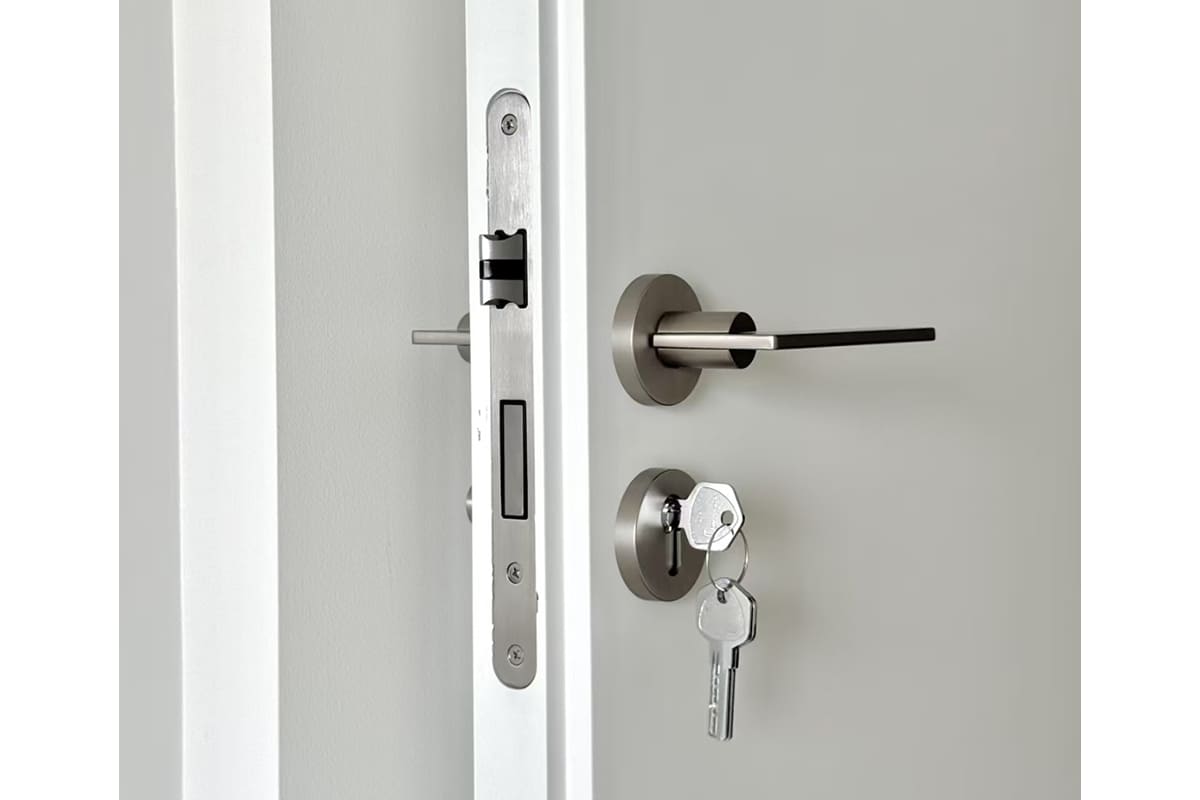
I work with door factories, hardware brands, and wholesalers that ask many practical questions before they confirm samples. Most questions are not about whether the hinge looks hidden. They are about whether the hinge can be installed cleanly, adjusted fast, and used with stable sealing. An outswing door creates special pressure on the hinge area, the gasket area, and the installation team. So I see hidden door hinges for outswing doors as a system choice, not as a single hardware choice.
What Is an Outswing Hidden Door Hinge?
I see confusion when buyers use the word “hidden” too freely. A wrong hinge type can make a clean door design hard to produce.
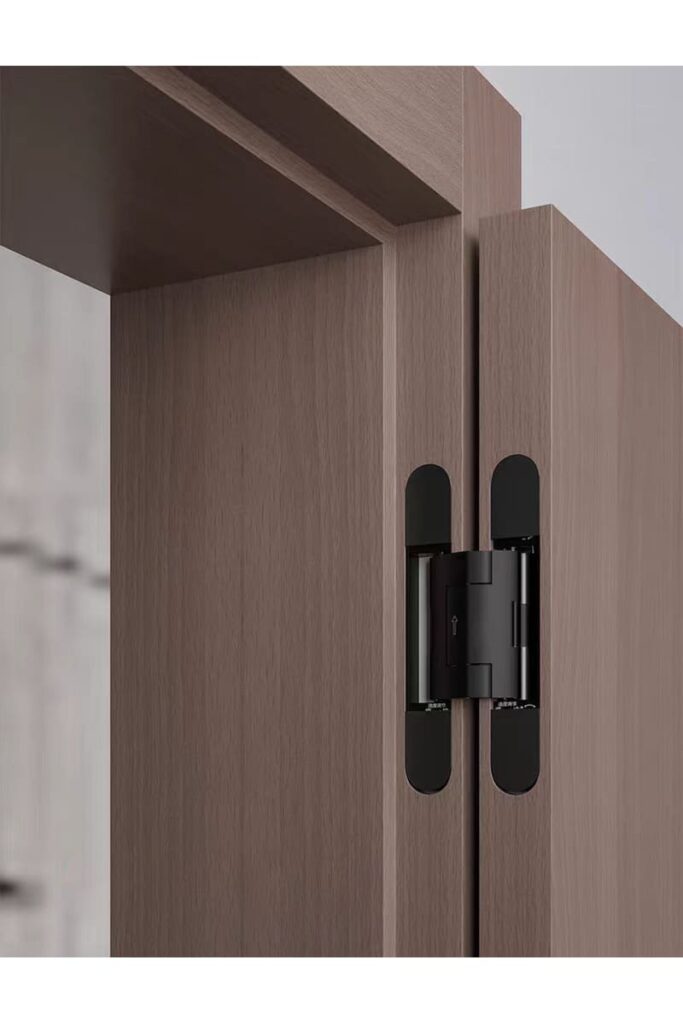
I define an outswing hidden door hinge as a concealed hinge mortised into the door leaf and frame area1, so the hinge is not visible from the outside when the outswing door is closed.
How I Explain the Basic Structure
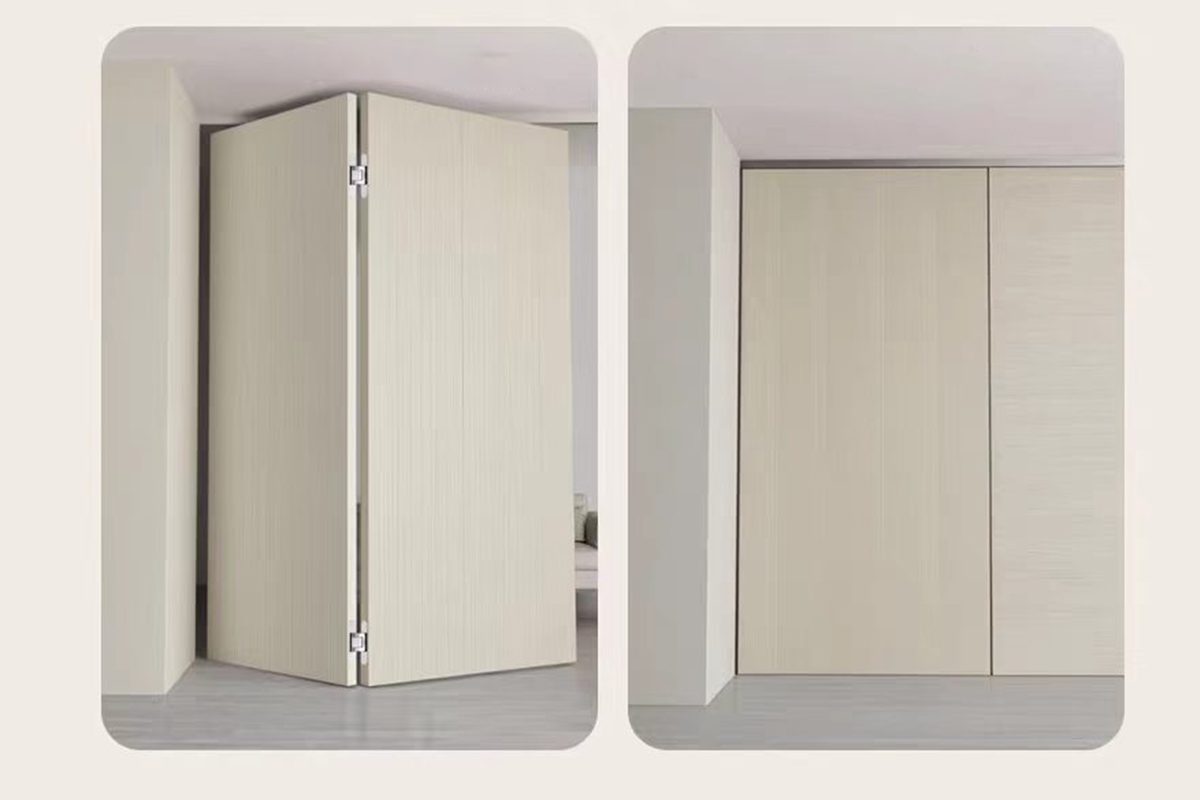
In my daily pre-sales work, I explain the hinge position first. An outswing concealed hinge is usually installed after grooving or milling the door leaf and the frame. The hinge body sits inside the pocket. When the door closes, the visible surface stays clean. This is useful for door brands that want a simple modern style. It also reduces exposed hardware on the outside face.
But I do not stop at appearance. The hinge pocket must match the hinge body. The frame must allow enough clearance. The door leaf must have enough material strength around the groove.2 If these points are ignored, the hinge may look correct in a catalog but fail during installation.
| What I Check | Why I Check It | Risk If I Ignore It |
|---|---|---|
| Door opening direction | I need to confirm outswing use | Wrong hinge choice |
| Door leaf thickness | I need enough material for mortising | Weak fixing area |
| Frame shape | I need space for hinge movement | Door cannot open cleanly |
| Hinge pocket size | I need stable installation | Loose hinge or poor alignment |
Why I Do Not Start With Looks Only
I have seen buyers send a photo and ask for “the same hidden hinge.” I always ask for drawings, door size, frame section, and expected opening angle. A concealed hinge works inside a fixed space. That space must be checked before sample confirmation. This is why I treat hidden door hinges for outswing doors as an application-fit decision.
Why Does Door Structure Matter Before I Select the Hinge?
I often see the same hinge perform well on one door and poorly on another. The difference is usually the door structure, not only the hinge.
I check the door leaf, frame profile, groove position, door weight, door height, and fixing material before I recommend an outswing concealed hinge. These points decide whether the hinge can be installed, adjusted, and used safely.
What I Need From the Buyer
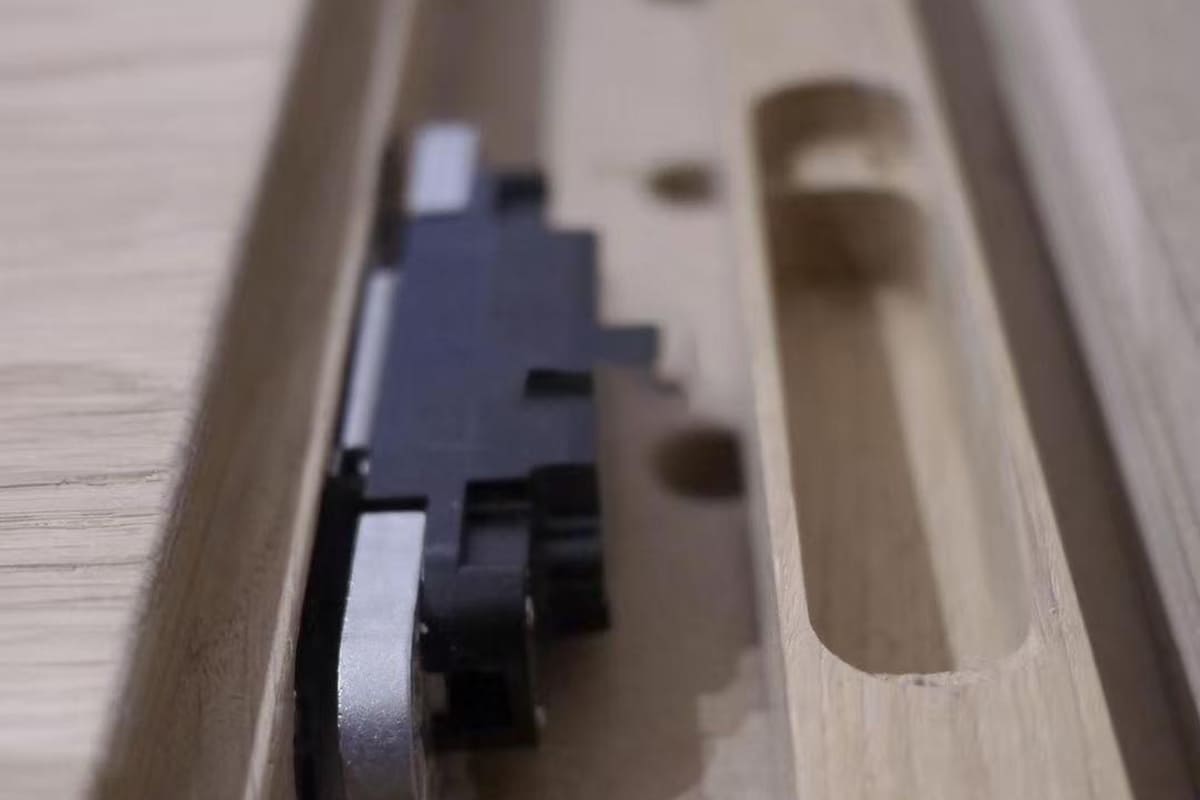
When a door factory asks me for a sample, I usually ask for basic door information first. I do this because a concealed hinge is not like a simple exposed butt hinge. The hidden hinge needs a pocket. The pocket needs accurate cutting. The fixing screws need strong base material. The door and frame must also leave enough movement space when the door swings outward.
| Information I Ask For | What It Helps Me Confirm |
|---|---|
| Door width and height | I estimate hinge number and load demand3 |
| Door weight | I avoid weak hinge selection |
| Door thickness | I check mortise depth and screw area |
| Frame drawing | I check hidden movement space |
| Opening angle | I check if the hinge can support the design |
| Surface finish | I match bulk order appearance |
Why Groove Position Is Not a Small Detail
The groove position can decide the whole installation result. If the groove is too shallow, the hinge may sit proud. If the groove is too deep, the gap may change. If the hinge pocket is offset, the door may rub the frame or show uneven gaps. These are not small problems in batch production. One wrong cutting setup can affect many doors.
I also ask whether the customer uses wood doors, steel doors, aluminum doors, or composite doors. Each structure has different fixing strength and processing limits. I do not say one concealed hinge can fit all structures. I prefer to match the hinge with the real door system. This makes the sample test more useful. It also reduces after-sales questions after bulk delivery.
How Does 3D Adjustment Reduce Installation Risk?
I hear many buyers worry about uneven gaps after installation. This problem becomes expensive when many doors are already packed or installed.
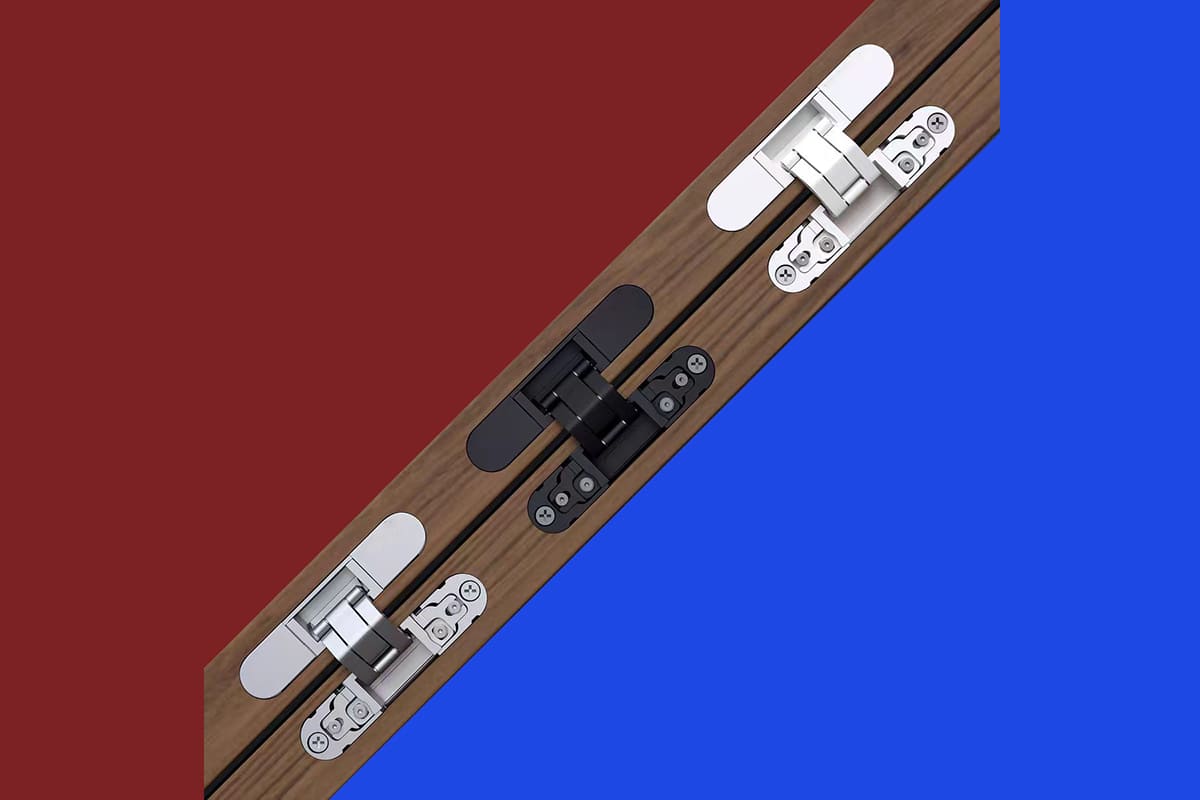
I value 3D adjustable concealed hinges because they let installers adjust up and down, left and right, and front and back4. This helps improve alignment and reduce rubbing, uneven gaps, and difficult closing.5
What 3D Adjustment Means in Real Installation
In my factory communication with buyers, I always explain 3D adjustment in practical words. The installer can adjust the door height. The installer can move the door sideways. The installer can also change the door depth against the frame. These three directions help correct small errors from machining, assembly, or site installation.
| Adjustment Direction | Simple Meaning | Common Use |
|---|---|---|
| Up and down | I raise or lower the door leaf | I correct floor or frame gap |
| Left and right | I move the door toward or away from the side frame | I correct side gap |
| Front and back | I move the door depth | I correct flushness and sealing pressure |
Why This Matters in Batch Production
A single sample door can be adjusted slowly. A batch order cannot. Door factories need repeatable installation. Wholesalers need fewer complaints. Hardware brands need stable customer feedback. A 3D adjustable hinge gives the installer a practical correction range. It does not replace accurate machining, but it gives a useful safety margin.
I do not claim adjustment can solve every wrong door structure. If the groove is badly cut, or if the frame design blocks movement, adjustment will not fully fix the issue. But when the door system is basically correct, 3D adjustment can save time. It can also reduce the risk of scraping, hard closing, and visible gap differences. This is one reason I often recommend adjustable concealed hinges for outswing doors used in projects and repeat orders.
Can Hidden Hinges Help Outswing Door Sealing?
I see many buyers focus on the hinge body but forget the rubber gasket. This is a mistake, especially for outswing doors exposed to wind and rain.
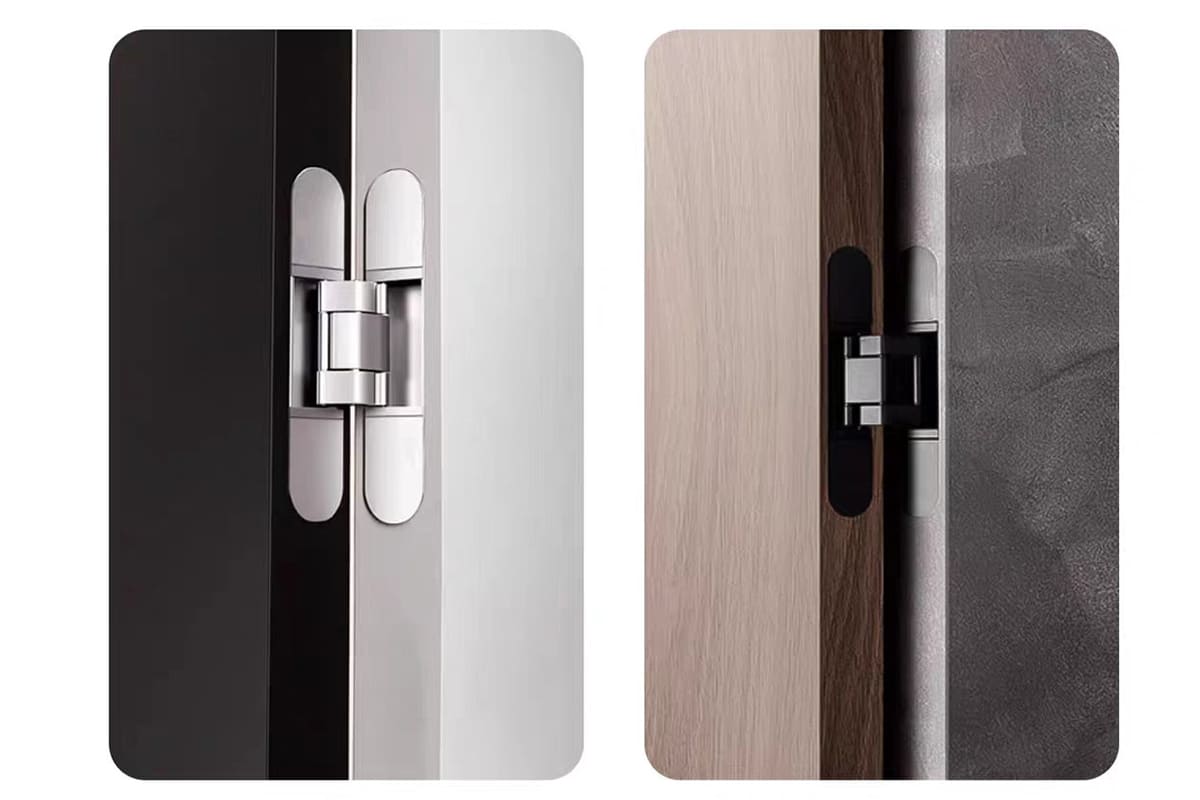
I like concealed hinges for sealed outswing doors because they can avoid cutting through the rubber gasket. When the door and gasket design match, the sealing strip can stay continuous around the door.6
Why Gasket Continuity Is a Real Advantage
For many outswing doors, sealing is not only a selling point. It is part of the product function. A normal exposed hinge may interrupt the rubber gasket area. The installer may need to cut the sealing strip around the hinge. This can create weak points. Air, water, dust, or noise may pass more easily through these points.7
A concealed hinge can be placed in a way that does not cut through the gasket line. This allows the sealing strip to continue around the door. I do not call this a universal waterproof result. I say it supports better sealing design when the door system, gasket shape, compression, and installation are correct.
| Sealing Point I Check | Why It Matters |
|---|---|
| Gasket path | I confirm whether the seal stays continuous |
| Hinge pocket location | I avoid conflict with the gasket |
| Door compression | I check whether the door presses the gasket evenly |
| Frame tolerance | I reduce uneven sealing pressure |
| Adjustment range | I help installers tune the final contact |
Why I Keep My Claims Careful
I have worked with buyers from the Middle East, Europe, and Southeast Asia. Their door systems and weather demands are not the same. Some projects care more about wind resistance. Some care more about rain exposure. Some care more about indoor acoustic comfort. I always tell buyers that a hidden hinge can support sealing continuity, but the full result depends on the complete door design.8
This careful approach protects both sides. The buyer does not overpromise to the market. I do not present a hinge as a full door test report. If a customer needs a certified performance claim, I ask for the exact test standard, door sample, gasket design, and test scope. This is the right way to handle B2B procurement risk.
Do Concealed Bearings and Damping Improve Door Comfort?
I see some buyers ask for “silent hinges.” I understand the need, but I avoid broad promises without test conditions.
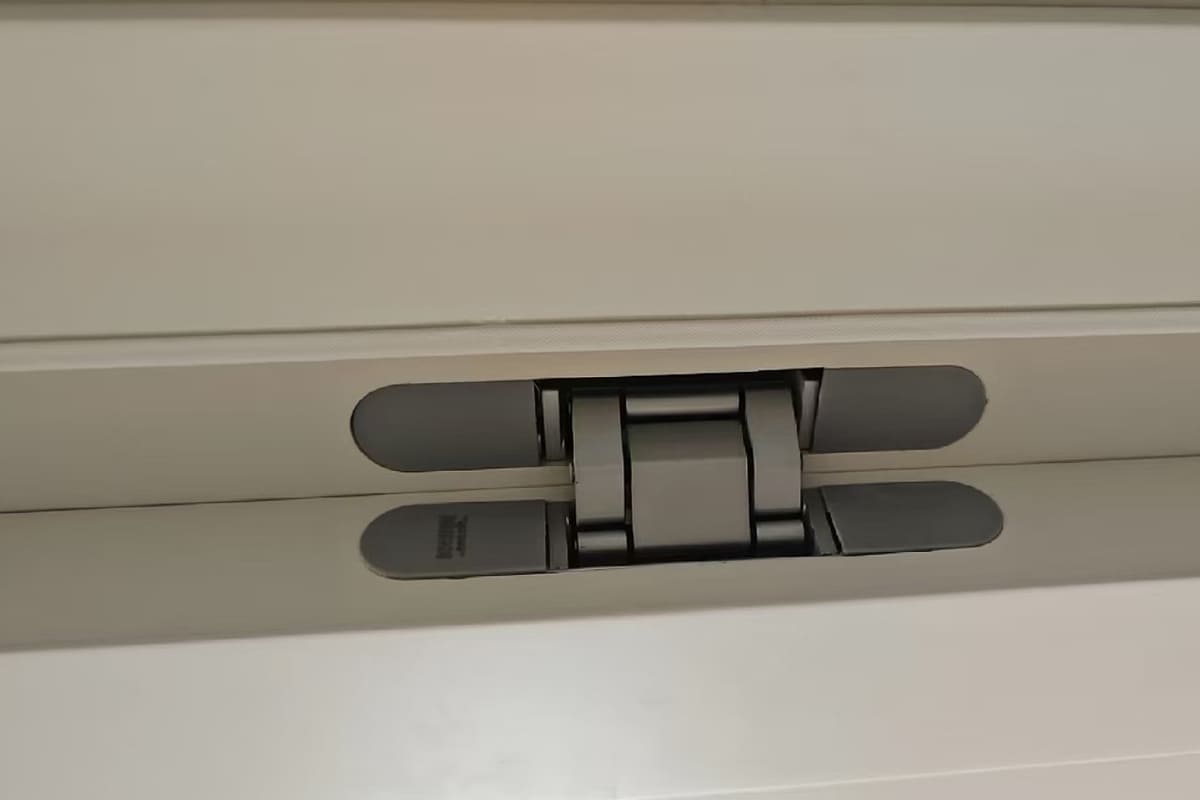
I consider concealed bearing structure and damping useful for outswing doors because they can support smoother movement and lower closing noise under the right conditions. I do not treat them as guaranteed silent performance.
What I Look For Inside the Hinge
A concealed hinge is not only a hidden metal part. Its internal structure decides how it moves and how it carries the door. A stable bearing design can reduce rough movement.9 A protected bearing position also avoids direct exposure on the outside face. This can be useful for appearance and for long-term use.
Damping can also improve the user feeling during closing.10 It may reduce harsh impact and help the door close in a smoother way. But the real sound level depends on door weight, gasket hardness, closer force, lock latch, frame accuracy, and installation quality.11 So I explain damping as one part of comfort, not as a magic answer.
| Feature I Review | Practical Value | Point I Do Not Overpromise |
|---|---|---|
| Concealed bearing | I support smooth swing | I do not claim no wear forever |
| Damping action | I help soften closing feel | I do not claim total silence |
| Stable hinge body | I support door alignment | I do not ignore door weight |
| Accurate adjustment | I reduce rubbing noise | I do not fix bad machining alone |
Why Comfort Still Matters in B2B Supply
Door factories and wholesalers sometimes treat comfort as a retail detail. I see it as a business detail. If the door closes harshly, the end user complains. If the hinge squeaks or rubs, the installer blames the hardware. If the door feels unstable, the brand image suffers.
This is why I ask buyers to test samples on their real door, not only on a display board. A display board is useful for first checking. A real door test shows the real movement, closing force, gasket pressure, and lock contact. I prefer this method because it gives better feedback before mass production. It also helps both sides decide whether damping and bearing structure match the target market.
What Should I Confirm Before Bulk Procurement?
I know buyers need price, lead time, and finish. But I also know that missing technical details can cost more than the hinge price difference.
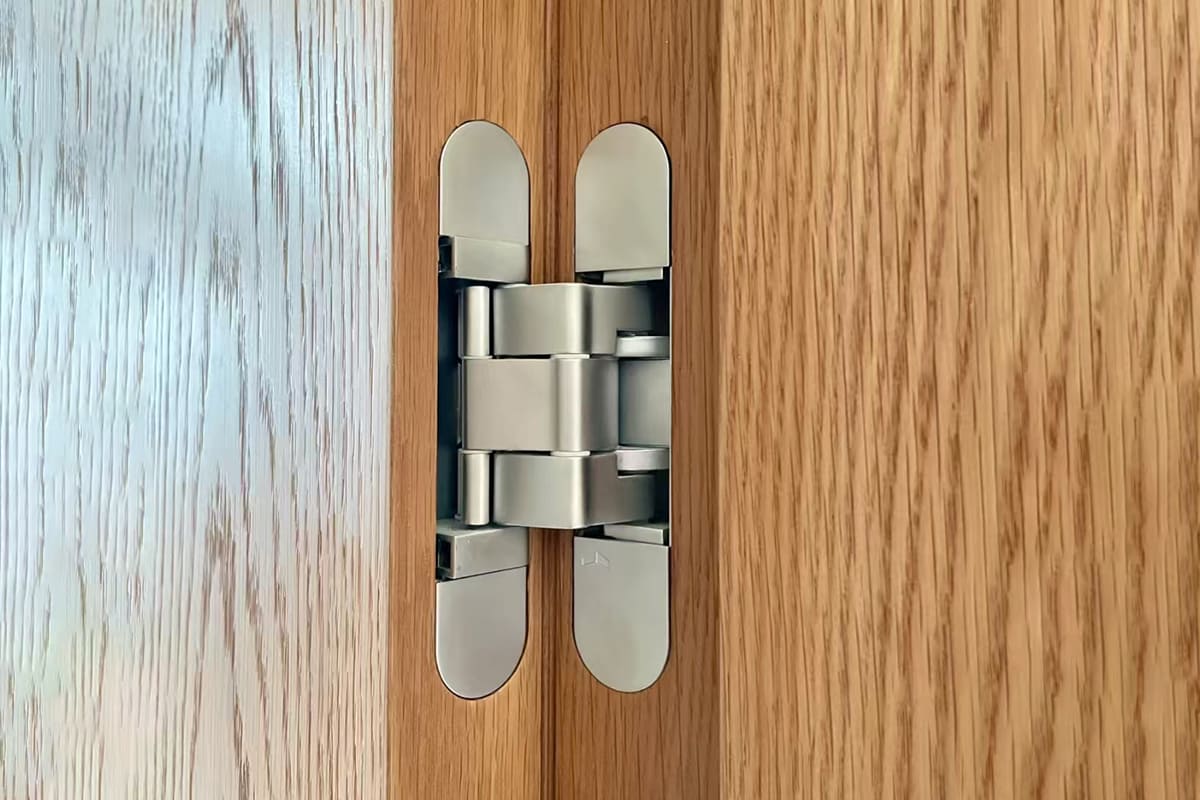
I confirm door direction, frame drawing, hinge groove, door weight, adjustment needs, gasket design, finish standard, certificates, packaging, and batch tolerance before I suggest bulk procurement of outswing hidden hinges.
My Practical Pre-Sales Checklist
Before I support a bulk order, I try to move the buyer from a product inquiry to a project confirmation. This protects the buyer and my production team. A concealed hinge needs stable dimensions and stable process control. It also needs clear agreement on finish, screws, accessories, and packaging. If the order is for a hardware brand, the finish consistency matters a lot. If the order is for a door factory, installation speed and machining accuracy matter more.
| Confirmation Item | My Reason |
|---|---|
| Door opening direction | I avoid wrong hinge hand or wrong application |
| Door and frame drawing | I check real fit |
| Door size and weight | I select suitable hinge capacity range |
| Hinge quantity per door | I support stable load distribution |
| 3D adjustment need | I reduce installation risk |
| Gasket design | I protect sealing continuity |
| Surface finish | I keep batch appearance consistent |
| Certification request | I confirm CE or fire-rated needs by scope |
| Sample test plan | I collect real feedback before mass order |
| Packaging method | I reduce shipping and storage damage |
How I Reduce Procurement Risk
I often suggest a sample confirmation process before a large order. The buyer can test installation, opening, closing, adjustment, sealing contact, and appearance. If the customer has a fire-rated or CE-related requirement, I ask for the exact product scope and certificate need. I do this because certificates are not just words on a quotation. They must match the product, use, and market requirement.12
I also discuss production tolerance with door factories. A hinge may be precise, but the door machining must also be stable. If the groove varies from door to door, installers will spend more time correcting gaps. In large projects, this time becomes money. So I prefer clear drawings, confirmed samples, and stable batch standards. This approach may take more work at the start, but it reduces complaints later.
Conclusion
I choose hidden hinges for outswing doors by matching structure, adjustment, sealing, comfort, and procurement risk, not by judging appearance alone.
"Concealed hinge jig - Wikipedia", https://en.wikipedia.org/wiki/Concealed_hinge_jig. A neutral architectural-hardware reference defines concealed hinges as hinge mechanisms recessed into the door and frame, supporting the article’s description of mortised hidden hinge construction. Evidence role: definition; source type: encyclopedia. Supports: A concealed or hidden hinge is typically recessed into the door and frame so that the hinge is not visible in the closed position.. ↩
"Wood Handbook, Chapter 08: Fastenings", https://research.fs.usda.gov/download/treesearch/37424.pdf. Government wood-engineering guidance on fastener withdrawal and material strength supports the point that hinge mortising must leave sufficient substrate for secure screw holding. Evidence role: mechanism; source type: government. Supports: Material strength and fastener withdrawal resistance affect whether a mortised hinge can be securely fixed to a door leaf.. Scope note: Such sources directly support wood or wood-based doors; application to steel, aluminum, or composite doors is contextual and should be supplemented by material-specific data where available. ↩
"A156.1 - 2025 Butts and Hinges", https://buildershardware.com/ANSI-BHMA-Standards/Hardware-Highlights/A1561-2021-Butts-and-Hinges. Architectural-hardware standards and guidance identify door dimensions and weight as relevant factors in hinge quantity and load-capacity selection. Evidence role: expert_consensus; source type: institution. Supports: Hinge selection commonly considers door height, width, weight, and expected service conditions when determining hinge number and capacity.. ↩
"3-way adjustable concealed hinge - YouTube",
. Technical descriptions of three-dimensional concealed-hinge adjustment support the article’s explanation that installers can adjust height, lateral position, and depth. Evidence role: definition; source type: other. Supports: The term 3D adjustment in concealed hinges refers to adjustment along three axes, commonly height, side, and depth.. Scope note: Most available sources for this specific feature are technical manuals or product documentation, so they support terminology and mechanism rather than independent performance outcomes. ↩"Fix ANY Door Problems With These 7 Magic Tricks",
. Door-installation guidance explains that hinge adjustment affects door alignment and clearances, supporting the claim that adjustable hinges can reduce rubbing and uneven gaps. Evidence role: mechanism; source type: education. Supports: Adjusting hinge position can change door alignment relative to the frame and help address rubbing, reveal gaps, and closing interference.. Scope note: This support is contextual because successful correction also depends on the door frame, mortise accuracy, and whether the assembly is within adjustment range. ↩"Weatherstripping | Department of Energy", https://www.energy.gov/energysaver/weatherstripping. Government energy-efficiency guidance on door weatherstripping supports the principle that continuous sealing around a door perimeter helps reduce air leakage. Evidence role: mechanism; source type: government. Supports: Continuous weatherstripping or gasket contact is important for limiting air leakage around doors.. Scope note: The source would support the importance of continuous sealing generally, not prove that every concealed hinge design preserves gasket continuity. ↩
"Air Sealing Doors Adjacent to Unconditioned Space", https://basc.pnnl.gov/resource-guides/air-sealing-doors-adjacent-unconditioned-space. Building-science and acoustics references describe door-perimeter gaps as leakage paths for air and sound, supporting the article’s claim that interrupted seals can become weak points. Evidence role: mechanism; source type: research. Supports: Gaps and discontinuities at door perimeters are pathways for air leakage, water intrusion, particulate movement, and sound transmission.. Scope note: Dust and water performance may depend on exposure conditions and test standards, so the support is strongest for the general leakage mechanism. ↩
"[PDF] Reducing Water Intrusion Through Windows and Doors - FEMA", https://www.fema.gov/sites/default/files/documents/fema_mat-hurricane-ian-recovery-advisory-3.pdf. Door-assembly testing standards evaluate the combined door, frame, seal, hardware, and installation configuration, supporting the article’s statement that final performance depends on the complete design. Evidence role: expert_consensus; source type: institution. Supports: Door performance for air leakage, water penetration, and related functions is evaluated at the assembly level, including frame, seals, hardware, and installation.. ↩
"Rolling-element bearing - Wikipedia", https://en.wikipedia.org/wiki/Rolling-element_bearing. Mechanical-engineering references describe bearings as devices that support load and reduce friction, supporting the claim that bearing design can contribute to smoother hinge movement. Evidence role: mechanism; source type: education. Supports: Bearings are mechanical elements used to support loads while reducing friction between moving parts.. Scope note: This supports the general mechanical principle, not the measured smoothness of a specific concealed hinge model. ↩
"Development of a vibration-damping, sound-insulating, and heat ...", https://pmc.ncbi.nlm.nih.gov/articles/PMC11639707/. Mechanical-engineering sources explain that damping dissipates energy in moving systems, supporting the article’s claim that damping can soften the closing feel. Evidence role: mechanism; source type: education. Supports: Damping dissipates mechanical energy and can reduce abrupt motion, vibration, or impact during closing.. Scope note: The source supports the mechanism generally; perceived comfort for a door also depends on door mass, latch force, seals, and installation. ↩
"Influence of seal installation to predict sound insulation of double ...", https://www.sciencedirect.com/science/article/abs/pii/S0360132309003059. Research on door acoustics and perimeter sealing supports the article’s statement that sound outcomes depend on the full door assembly rather than hinge design alone. Evidence role: general_support; source type: research. Supports: Door acoustics and closing sound are affected by assembly variables such as mass, seals, gaps, hardware contact, and installation quality.. Scope note: Published acoustic sources may address sound transmission more directly than closing-impact noise, so the support may be contextual for latch and closer effects. ↩
"EU Legislation and CE Marking - International Trade Administration", https://www.trade.gov/country-commercial-guides/eu-eu-legislation-and-ce-marking. Official CE-marking and fire-door guidance state that compliance documentation is tied to specified product scope and intended use, supporting the article’s warning that certificates must match the actual product and market. Evidence role: general_support; source type: government. Supports: Regulatory markings and fire-performance certifications apply within defined product scopes, intended uses, and market requirements.. ↩