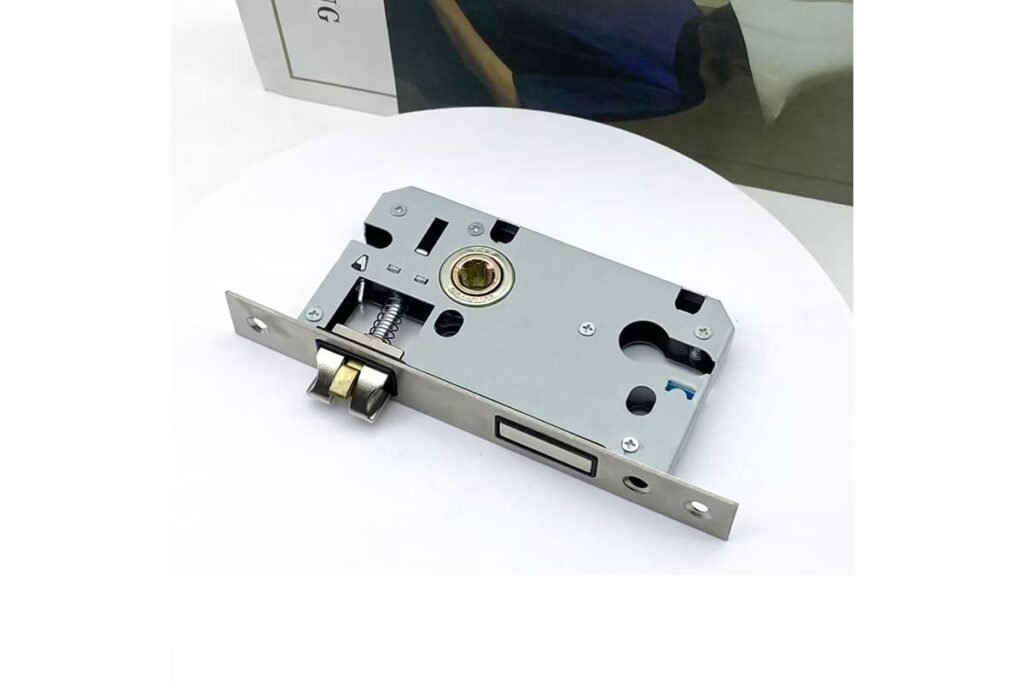
Mortise Locks: Everything You Need to Know
We see buyers lose time when one hidden lock body fails to match the door. One wrong size can stop a full shipment.
We define a mortise lock as a lock body installed inside a door cut-out.1 For sourcing, we check its structure, function, center distance, backset, material, cylinder, handle, fire rating, and market standard as one complete configuration.
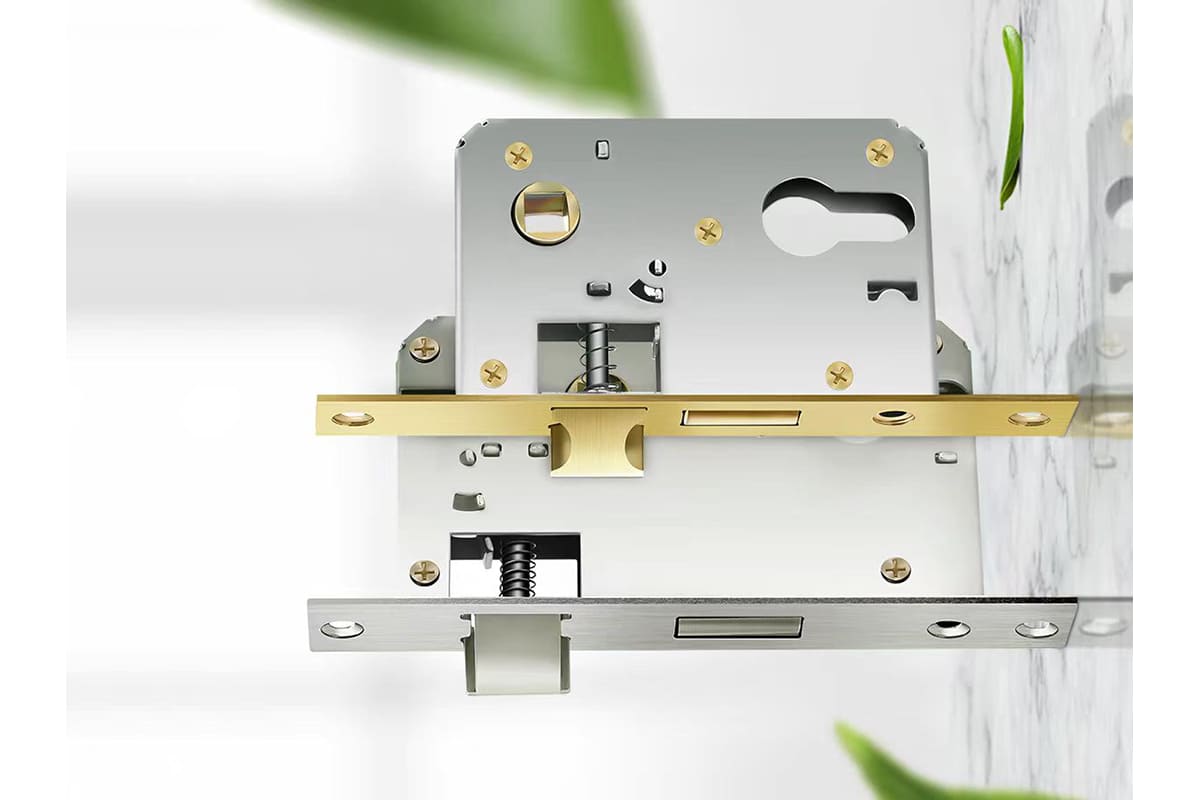
We have supplied Euro-standard mortise locks for many overseas buyers. I have learned one clear thing from these orders. A mortise lock is simple only after every detail is confirmed. Before an order, I always ask one practical question. Does this lock match the door, the handle, the cylinder, the opening direction, the fire requirement, and the target market?
What Is Inside a Euro-Standard Mortise Lock?
We often see buyers focus only on the lock name. That creates risk, because each small part affects closing, fitting, noise, and long-term use.
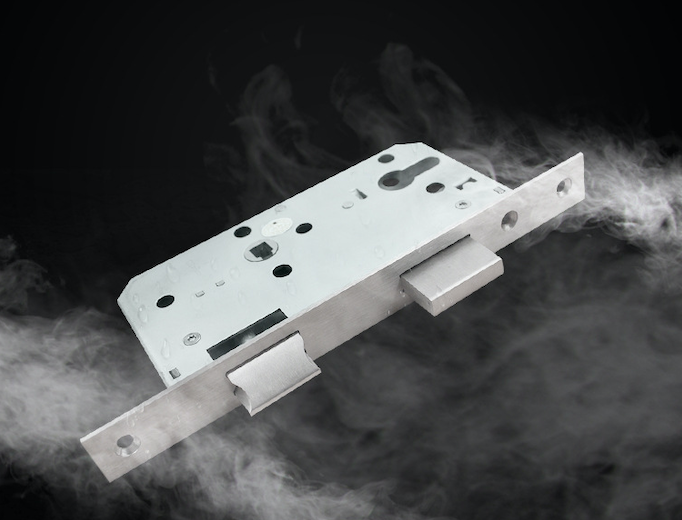
A Euro-standard mortise lock usually includes a lock body, latch bolt, deadbolt, faceplate, strike plate, strike box, spindle follower, cylinder hole, and fixing holes. Each part must match the door system, handle set, cylinder type, and installation position.
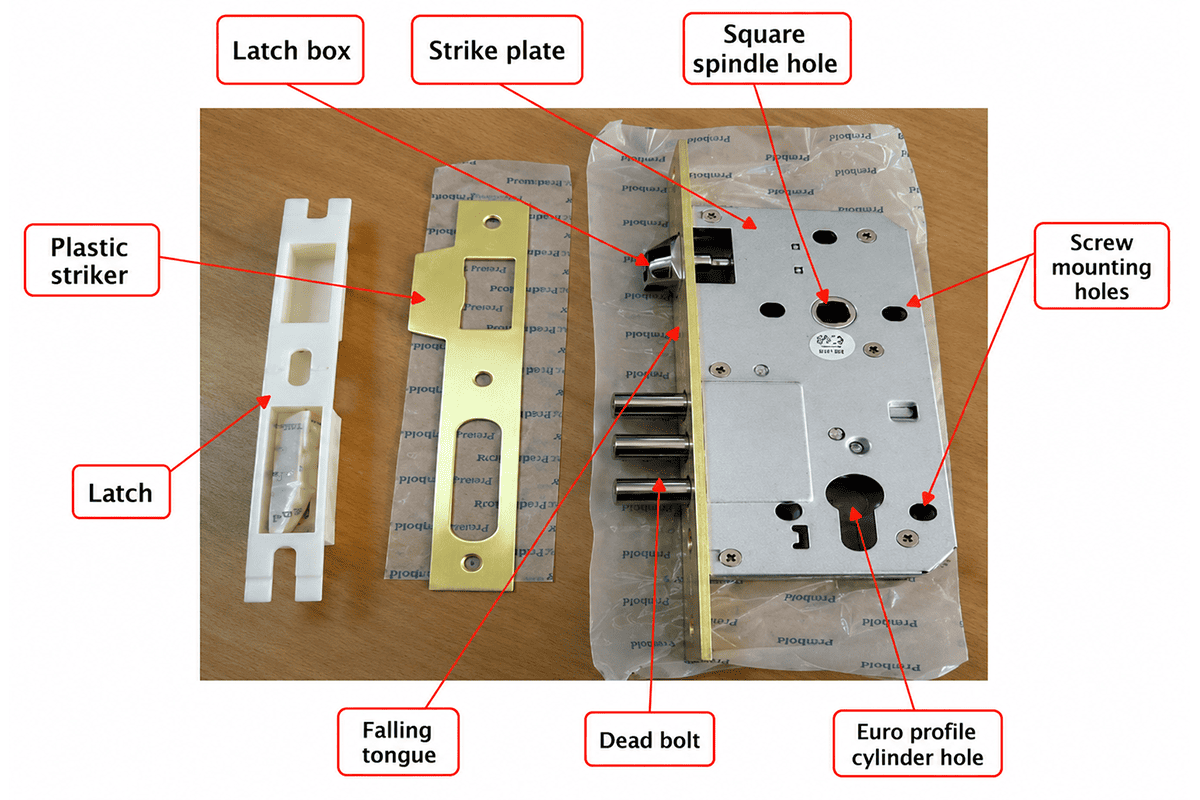
The lock body is the base of the whole system
We treat the lock body as the center of the full door hardware set.2 The lock body sits inside the door. It holds the latch, deadbolt, spring parts, follower, and cylinder area. If the lock body is weak or inaccurate, the whole door set feels poor.
| Part | What we check | Buyer concern |
|---|---|---|
| Lock body | Case strength and inner movement | Long service life |
| Latch bolt | Smooth return and stable projection | Quiet closing |
| Deadbolt | Extension, strength, and alignment | Security and locking feel |
| Faceplate | Size, finish, and screw position | Door edge appearance |
| Strike plate | Position and thickness | Closing accuracy |
| Plastic strike box | Fit inside frame pocket | Noise reduction |
| Spindle follower | Handle spindle size and movement | Handle compatibility |
| Cylinder hole | Euro profile position | Cylinder compatibility |
| Fixing holes | Screw position and thread quality | Easy installation |
We check these parts before mass production because small mistakes become large costs in bulk supply.3 A latch that is too tight can make the door hard to close. A faceplate finish that is not stable can make one project look uneven. A strike plate that does not match the lock position can delay installation at the job site. I prefer to confirm drawings, samples, door thickness, and accessory matching before the buyer places the full order.
Which Mortise Lock Type Should You Choose for Each Door?
We see many buyers ask for “one mortise lock.” That request is too broad. The wrong function can reduce security, comfort, or market fit.
We choose mortise locks by door use. Entrance doors need stronger locking and cylinder use. Interior doors may need passage, privacy, or simple latch functions. Smart lock doors often still need a compatible mortise lock body inside.
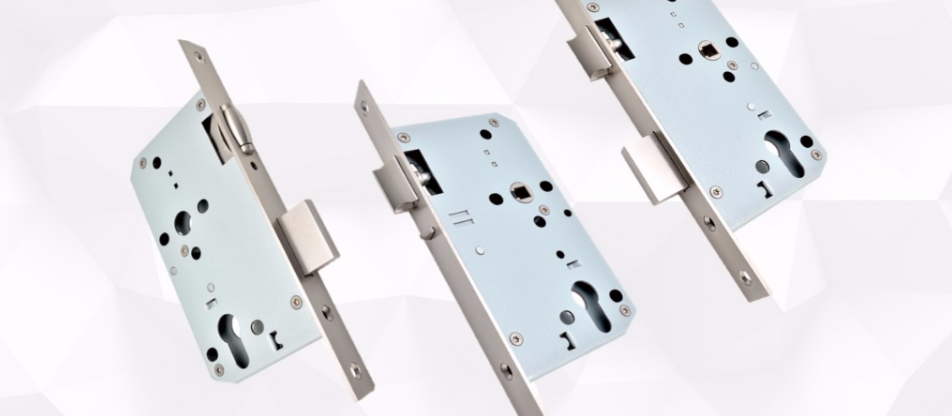
The door function decides the lock function
We do not classify a mortise lock only by product name. We first ask how the door will be used. An exterior apartment door may need a deadbolt, a Euro cylinder, and a stronger faceplate. An office interior door may need a latch and lever handle only. A hotel or apartment smart lock may need a special lock case that works with electronic control parts.
| Door scenario | Common lock function | Main buying point |
|---|---|---|
| Entrance door | Latch plus deadbolt plus cylinder | Security and durability |
| Exterior steel door | Stronger lock case and tested set | Fire rating and strength |
| Interior wooden door | Latch or simple lock function | Smooth use and cost control |
| Passage door | Latch without key locking | Easy daily movement |
| Privacy door | Thumb turn or simple locking | Bedroom or bathroom use |
| Smart lock door | Mechanical lock body for smart system | Compatibility with smart hardware |
We also ask about traffic frequency. A project door in a public building may be opened many times each day. A residential interior door may have lower traffic. We check this because spring quality, latch movement, follower strength, and deadbolt movement affect long-term performance.4 If cycle-life data is required, we use only documented product-specific test data. For some SDH mortise lock models, latch bolt cycle data such as 200,000 cycles and deadbolt data such as 50,000 cycles may be available when supported by documents.5 I always advise buyers to verify the exact model report before using these numbers in a project file.
Why Are Center Distance and Backset Serious Sourcing Risks?
We see many losses come from dimensions, not from the lock material. A few millimeters can make the handle, cylinder, or door cut-out useless.
Center distance and backset define how the lock fits the door. Common center distances include 85 mm, 72 mm, and 70 mm. Common backsets include 30, 35, 45, 55, 60, and 65 mm.6

The drawing must match the real door
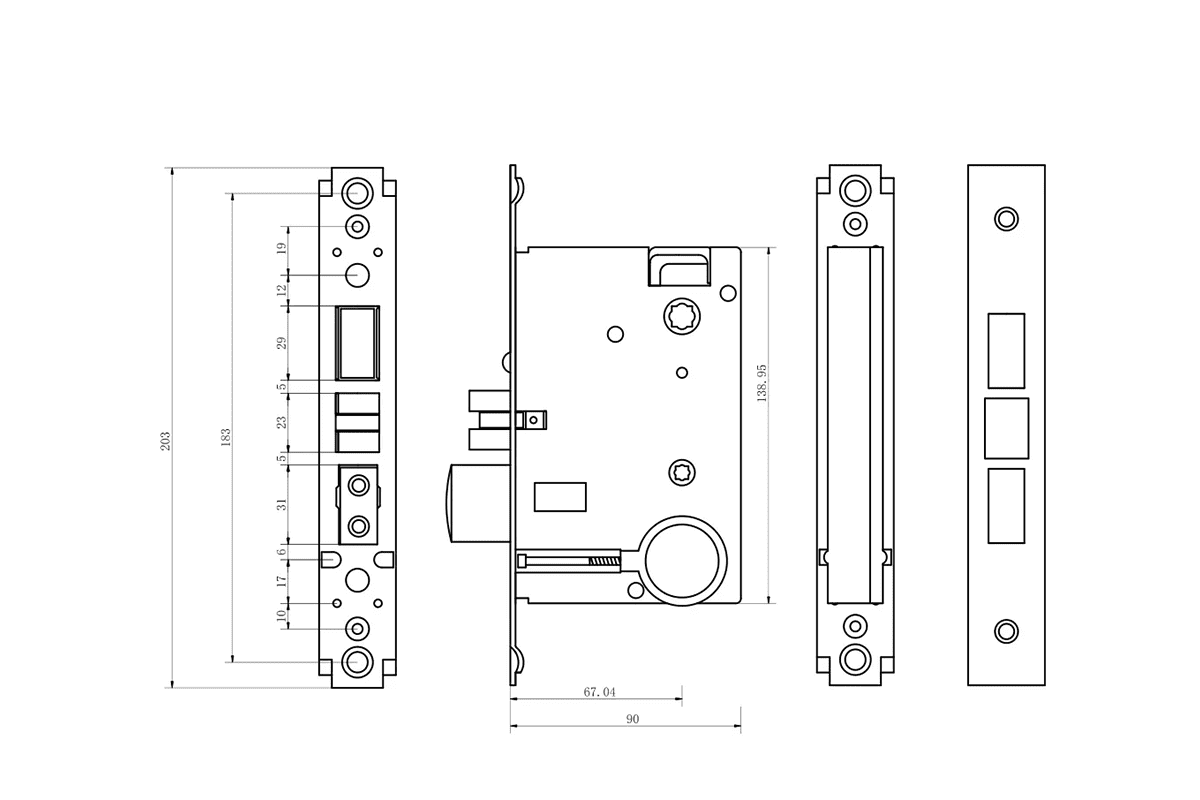
We always ask for drawings or confirmed market standards before production. Center distance means the distance between the handle spindle center and the cylinder center. Backset means the distance from the door edge to the handle spindle center or key center area, based on the lock design. These two numbers affect the door cut-out, handle position, cylinder position, and final installation.
| Dimension | Common examples | Why it matters |
|---|---|---|
| Center distance | 85 mm, 72 mm, 70 mm | It must match handle and cylinder layout |
| Backset | 30, 35, 45, 55, 60, 65 mm | It must match door stile width and lock position |
| Faceplate width | Varies by model | It must match the door edge cut |
| Lock case depth | Varies by backset | It must fit inside the door |
| Spindle size | Often market-based | It must match lever handle spindle |
We often see 45 mm used as a common standard backset in many Euro mortise lock applications. We also see backsets below 45 mm used for narrow-body locks, often for aluminum or uPVC doors. Market references also matter. Russia and Italy often use 85 mm center distance in many projects. Germany often uses 72 mm. France often uses 70 mm.7 These are only market references. I still ask the buyer to verify local door systems, customer habits, and project drawings before ordering.
Why Do Many Buyers Still Prefer Mortise Locks?
We see buyers compare mortise locks with surface locks or simple tubular locks. If they compare only the unit price, they may miss the practical value.8
We use mortise locks because they provide a hidden and strong locking structure, wide door compatibility, Euro cylinder matching, lever handle matching, and stable support for many mechanical and smart lock systems.
The value comes from a complete door hardware system
We explain mortise lock value in simple project terms. A mortise lock is built into the door. This design gives the door edge a clean appearance. It also allows the lock to work with a lever handle, Euro profile cylinder, thumb turn, escutcheon, or smart lock trim. This makes it useful for wooden doors, steel doors, aluminum doors, and some uPVC door systems when the correct lock body is selected.9
| Practical value | What it means for buyers |
|---|---|
| Hidden lock body | The door looks cleaner and more complete |
| Stronger structure | The lock body sits inside the door material |
| Broad use range | One product family can serve many door types |
| Euro cylinder use | Buyers can match different cylinder grades |
| Lever handle use | Buyers can build full hardware sets |
| Smart lock support | Many smart locks still need a mortise lock body |
| Standardized design | Bulk buyers can manage SKUs more easily |
We also see mortise locks help wholesalers build product lines. A buyer can offer 72 mm, 85 mm, different backsets, different faceplates, and different finishes under one series. This helps channel sales. It also helps door factories keep a more stable assembly process.10 The key is not to force one lock into every door. The key is to build a clear configuration table for each market and door type.
How Should Buyers Check Material, Finish, and Fire-Rated Use?
We see buyers ask for stainless steel or fire rating as short words. Those words are not enough for a safe sourcing decision.
We check material grade, faceplate finish, lock model, tested door type, certificate scope, and installation condition. Fire performance depends on the tested door set, not only on the lock body itself.11

The certificate must match the real project
We supply Euro-standard mortise locks with material options, including stainless steel options such as 304 and optional 316 for suitable models and requirements. We also work with fire-rated combinations where the documented scope may state performance such as 240 minutes for steel doors and 120 minutes for wooden doors. I must be clear here. These figures are not universal promises for every lock, every door, or every installation. Fire performance depends on the tested door set, lock model, certificate scope, and installation condition.
| Item to verify | What we ask the buyer to confirm |
|---|---|
| Material | Is 201, 304, 316, or another grade required? |
| Finish | Does the finish match handle, hinge, and cylinder trim? |
| Door type | Is the door wooden, steel, aluminum, or uPVC? |
| Fire report | Does the report include the exact lock model? |
| Time rating | Does the stated time match the project requirement? |
| Installation | Does the installer follow tested or approved conditions? |
| Accessories | Do strike plates, screws, cylinders, and handles fit the scope? |
We also check corrosion needs. A coastal market may need better corrosion resistance than an indoor dry market. A public project may need a more stable surface finish across many batches. I prefer to confirm finish samples under the same production process before bulk orders. This reduces disputes about color, brushing direction, plating tone, or stainless steel surface marks.
How Do We Choose a Reliable Mortise Lock Supplier?
We see many buyers start with price. Price matters, but the cheapest lock can become expensive when returns, delays, and mismatched accessories appear.12
We choose a supplier by checking drawings, material, function, center distance, backset, certificates, cycle data, finish consistency, batch stability, and support for handles, cylinders, hinges, and door systems.
The supplier should control the whole configuration
We work as a China-based architectural door hardware manufacturer, so I look at mortise lock sourcing from the factory side. A good supplier should not only quote a lock body. The supplier should help confirm the full door hardware matching. This includes door thickness, opening direction, handle spindle, cylinder length, escutcheon shape, strike plate position, faceplate radius, screw size, and package needs.
| Check point | Why we check it |
|---|---|
| Brand reliability | Stable cooperation lowers supply risk |
| Production capacity | Bulk orders need repeatable output |
| Material control | Raw material affects strength and finish |
| Dimension control | Door factories need accurate assembly |
| Function matching | Wrong function creates market complaints |
| Certificate scope | Project buyers need valid documents |
| Cycle-life data | Heavy-use doors need tested durability |
| Finish consistency | Bulk hardware must look uniform |
| Accessory matching | Handles, cylinders, and locks must work together |
| After-sales support | Buyers need quick answers when problems appear |
We also ask buyers to prepare a clear sourcing file. This file should include target market, door material, door thickness, center distance, backset, faceplate size, finish, cylinder type, handle type, lock function, fire requirement, and expected order quantity. When we receive this information, we can recommend a more accurate Euro-standard mortise lock solution. This also helps us control cost without reducing the parts that matter. I have seen many successful orders start with a simple but complete drawing confirmation.
Conclusion
We choose mortise locks by full configuration, not by name alone. The right lock must fit the door, market, certificate, and hardware set.
"Mortise lock - Wikipedia", https://en.wikipedia.org/wiki/Mortise_lock. This source provides a common definition of a mortise lock as a lock body installed within a door's cut-out. Evidence role: definition; source type: encyclopedia. Supports: the standard industry definition of a mortise lock. ↩
"Mortise lock - Wikipedia", https://en.wikipedia.org/wiki/Mortise_lock. This source emphasizes the lock body as a critical, central component around which other door hardware elements are integrated and function. Evidence role: expert_consensus; source type: encyclopedia. Supports: the foundational role of the lock body within a comprehensive door hardware system. ↩
"What Are the Various Risks in Supply Chain Management?", https://www.apu.apus.edu/area-of-study/business-and-management/resources/what-are-the-various-risks-in-supply-chain-management/. This source discusses the financial implications of quality control failures in mass production, illustrating how small mistakes can lead to disproportionately large costs in bulk supply chains. Evidence role: general_support; source type: research. Supports: the principle that minor errors in early stages of bulk manufacturing can escalate into substantial costs due to rework, delays, or recalls. ↩
"The upper frequency limit for the use of phase locking to code ... - PMC", https://pmc.ncbi.nlm.nih.gov/articles/PMC6524635/. This source explains how the mechanical integrity of internal mortise lock components, such as spring quality and latch mechanism, directly influences the lock's longevity and reliability under different usage frequencies. Evidence role: mechanism; source type: research. Supports: the direct correlation between the quality and durability of internal lock components (springs, latch, follower, deadbolt) and the lock's long-term performance, particularly in high-traffic environments. ↩
"A156.13 - 2022 Mortise Locks", https://buildershardware.com/ANSI-BHMA-Standards/Hardware-Highlights/A15613-2022-Mortise-Locks. This source outlines common cycle testing standards for mortise locks, indicating that figures such as 200,000 cycles for latch bolts and 50,000 cycles for deadbolts are relevant performance metrics in the industry. Evidence role: expert_consensus; source type: research. Supports: the typical cycle life requirements or benchmarks for mortise lock components like latch bolts and deadbolts. ↩
"How to Measure a Mortise Lock - Prodillo", https://prodillo.com/blogs/prodillo-smart-lock-articles/how-to-measure-a-mortise-lock. This source confirms the prevalence of 85 mm, 72 mm, and 70 mm as common center distances and 30, 35, 45, 55, 60, and 65 mm as common backsets in mortise lock specifications. Evidence role: expert_consensus; source type: research. Supports: the commonality of specific center distances and backsets in mortise lock applications. ↩
"How to measure and choose the right mortise lock size - BlueID", https://www.blue-id.com/en/blog/mortise-lock-mass. This source indicates that 85 mm center distance is frequently used in Russia and Italy, 72 mm in Germany, and 70 mm in France for mortise lock applications. Evidence role: expert_consensus; source type: research. Supports: the regional preferences for specific mortise lock center distances. ↩
"Mortise lock - Wikipedia", https://en.wikipedia.org/wiki/Mortise_lock. This source discusses the functional and security benefits of mortise locks, suggesting that their integrated design and robust mechanism offer practical value beyond initial cost comparisons with other lock types. Evidence role: general_support; source type: research. Supports: the distinct practical advantages and value proposition of mortise locks compared to simpler lock types like tubular or surface-mounted locks. ↩
"Mortise lock - Wikipedia", https://en.wikipedia.org/wiki/Mortise_lock. This source details the benefits of mortise locks, highlighting their discreet installation, broad compatibility with diverse door hardware, and suitability for a range of door types including wood, steel, and aluminum. Evidence role: general_support; source type: encyclopedia. Supports: the practical advantages of mortise locks, including their aesthetic integration, versatility with various hardware, and adaptability to different door materials. ↩
"Technical standardization and total factor productivity in innovation ...", https://pmc.ncbi.nlm.nih.gov/articles/PMC10553243/. This source discusses how standardized and modular product designs, such as those found in mortise locks, can streamline product offerings for wholesalers and improve manufacturing consistency for door factories. Evidence role: general_support; source type: research. Supports: the strategic advantages of mortise lock standardization and modularity for wholesalers in product line development and for door factories in maintaining efficient assembly processes. ↩
"A Specifier's Guide to Fire Door Hardware", https://go.dormakaba.com/en/articles/a-specifiers-guide-to-fire-door-hardware. This source confirms that the fire rating of a lock is intrinsically linked to the performance of the entire door set it is installed within, rather than being an inherent property of the lock body alone. Evidence role: expert_consensus; source type: government. Supports: the principle that fire performance ratings for door hardware are assigned to the complete door assembly, not individual components in isolation. ↩
"Total cost of ownership - Wikipedia", https://en.wikipedia.org/wiki/Total_cost_of_ownership. This source illustrates how the total cost of ownership for components can exceed initial purchase price, particularly when low-cost options lead to increased returns, delays, and compatibility problems. Evidence role: general_support; source type: research. Supports: the economic principle that initial cost savings on components can be offset by subsequent expenses related to quality issues, returns, and project disruptions. ↩