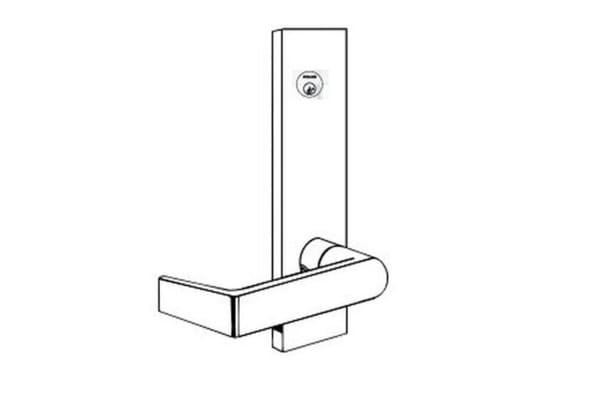
What Is a Mortise Lock Escutcheon Plate?
I see many buyers lose time because one small visible plate is named wrong, measured wrong, or matched with the wrong lock set.
I define a mortise lock escutcheon plate as the visible trim plate on the door surface around the keyhole, cylinder, or handle area1. I use it to cover cut edges, gaps, and screw holes, and I match it with the lock body, cylinder, handle, door thickness, and finish.
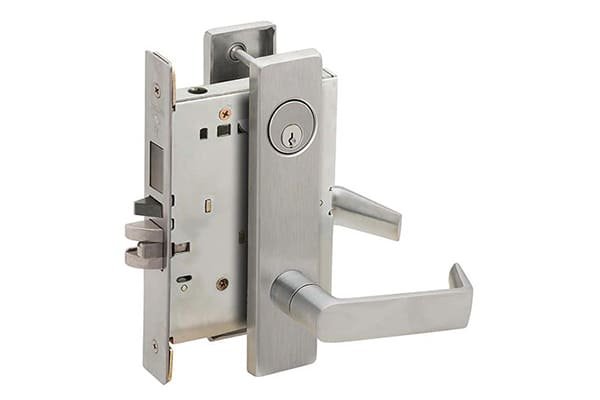
I often receive overseas inquiries with only one photo and one short sentence: “Please quote this lock plate.” I then need to ask if the buyer means the cylinder escutcheon, the keyhole cover, the handle rose, the long backplate, the mortise lock faceplate, or even the strike plate. This small naming problem can become a real procurement problem when the order is 5,000 sets. A plate may look simple, but it must sit in the right place, cover the right opening, match the right finish, and work with the right handle and cylinder. I treat it as a specification part, not only a decoration part.
How Do I Identify a Mortise Lock Escutcheon Plate on a Door?
I see confusion start when buyers look at the finished door, not the separated hardware parts.
I identify the escutcheon plate as the visible cover on the door face around the keyhole, cylinder, or handle area. I do not identify it as the lock body faceplate, strike plate, or internal mortise lock case.
I first look at where the plate is installed
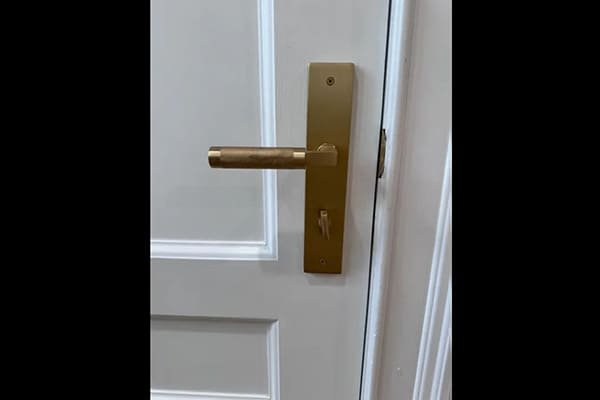
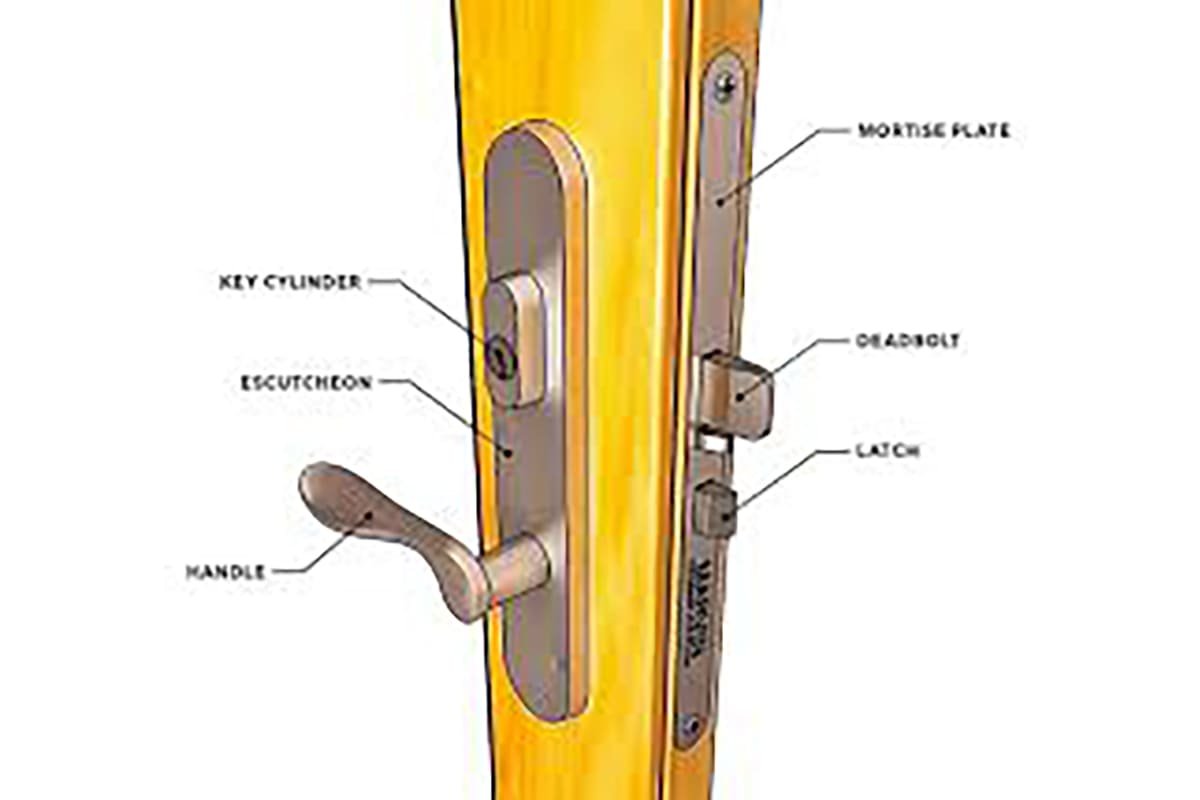
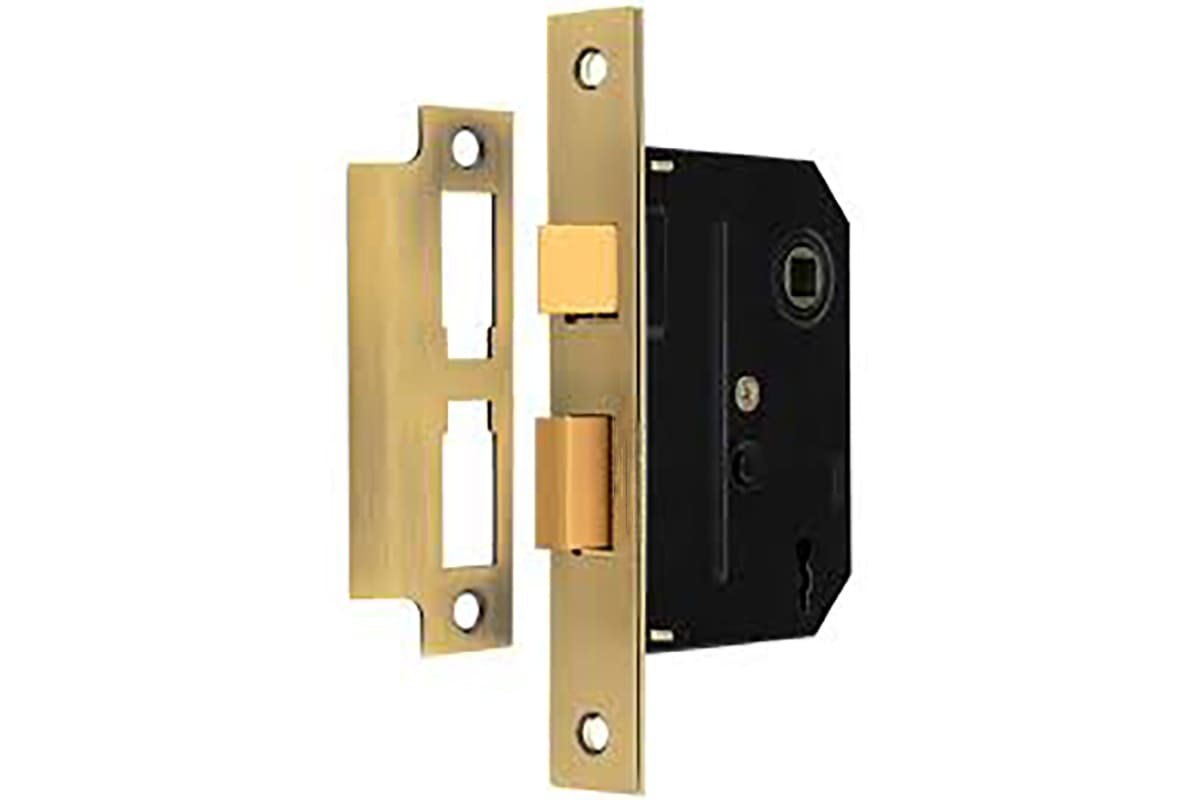
I always start with location. A mortise lock body sits inside the door edge.2 The lock body faceplate is the metal plate on the door edge, where the latch and deadbolt come out. The strike plate sits on the frame, where the latch enters.3 The escutcheon plate sits on the door surface.4 It is visible from the room side or corridor side. It usually surrounds the cylinder hole, keyhole, lever handle spindle hole, or a combination of these areas.
| Part name I check | Usual position | Main visual clue | Common buyer mistake |
|---|---|---|---|
| Escutcheon plate | Door surface | Around keyhole, cylinder, or handle | Buyer calls it faceplate |
| Lock body faceplate | Door edge | Latch and bolt pass through it | Buyer calls it escutcheon |
| Strike plate | Door frame | Receives latch or bolt | Buyer sends it as lock plate |
| Handle rose | Door surface | Round or square trim under handle | Buyer calls it escutcheon sometimes |
I ask for a front photo, side photo, and a simple drawing when the name is not clear. I also ask for the hole center distance, cylinder type, handle type, and screw position. I do this because a plate that looks close in a photo may fail during installation. I have seen projects delayed because the buyer ordered a cylinder escutcheon for a profile cylinder, but the door was prepared for a keyhole type lock. The plate could not cover the old cutout. The finish matched, but the function did not.
What Does a Mortise Lock Escutcheon Plate Actually Do?
I avoid saying that every escutcheon plate gives privacy, sealing, or strength.
I use a mortise lock escutcheon plate to improve appearance, cover rough openings, protect the door surface near the lock, and complete the visible hardware set. Some designs may reduce dust, drafts, insects, or keyhole visibility, but this depends on the design.
I separate basic functions from design-specific functions
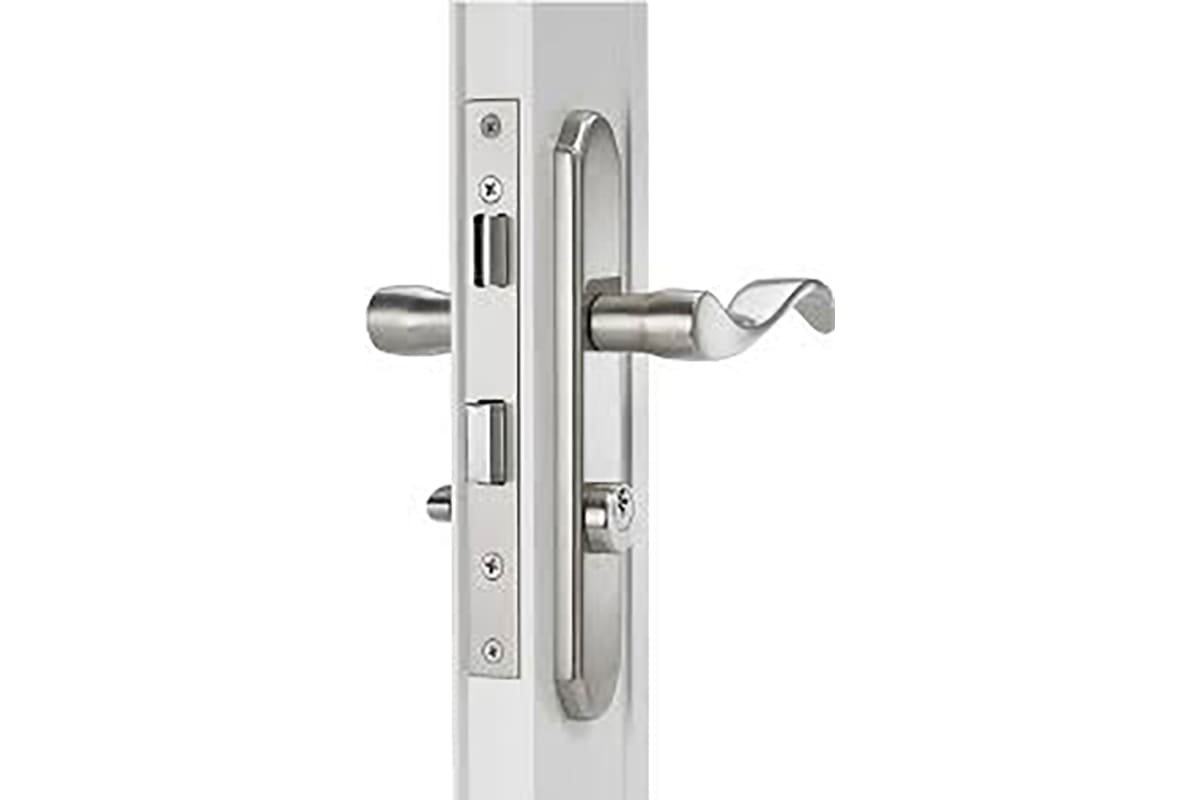
I explain the function carefully because buyers may expect too much from a small part. The basic function is visual and protective.5 The plate covers drilling marks, chipping, screw holes, and small gaps around the lock opening.6 It also protects the door surface from scratches around the key or cylinder area. This is useful on wood doors, steel doors, and painted doors. It also helps the full lock set look complete.
Some escutcheon plates have extra design features. A covered keyhole escutcheon may reduce direct visibility through a keyhole.7 A closer-fitting cylinder escutcheon may help reduce dust around the cylinder opening. Some long plates may hide old installation holes during replacement work. I still do not call these universal sealing or privacy functions. The result depends on the plate shape, door preparation, screw fixing method, lock type, and gap size.
| Function I consider | Usually true? | What I check before I confirm it |
|---|---|---|
| Covers rough cut edges | Yes | Plate size and opening size |
| Improves door appearance | Yes | Finish and design match |
| Protects surface near lock | Usually | Material thickness and edge shape |
| Reduces dust or insects | Sometimes | Fit, overlap, and door gap |
| Reduces keyhole visibility | Sometimes | Covered keyhole design |
| Fixes the whole lock body | Not universal | Through screws and lock set design |
I tell buyers to avoid choosing the plate only by style. I ask them to confirm the cutout, spindle hole, cylinder hole, screw hole, and door thickness. A beautiful plate can still be wrong if it blocks the cylinder, touches the lever handle, or leaves part of the drilled hole exposed.
What Types of Mortise Lock Escutcheon Plates Do I Usually See?
I see buyers use one word for many different visible trims.
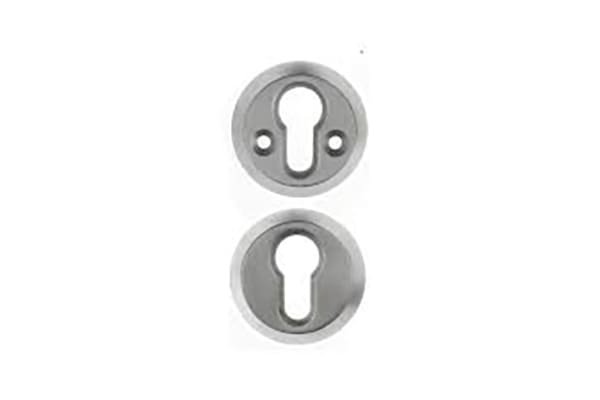
I usually separate mortise lock escutcheon plates into keyhole escutcheons, cylinder escutcheons, handle escutcheons or roses, and long backplate-style escutcheons. I confirm the correct type by photo, drawing, and lock set configuration.
I classify the plate by the hardware it surrounds
I do not rely on the product name alone because markets use different names. In some countries, the buyer says “escutcheon” only for a cylinder cover. In other markets, the buyer says “escutcheon” for the handle rose. Some buyers call a long handle backplate an escutcheon plate. I accept these naming habits, but I still need the drawing.
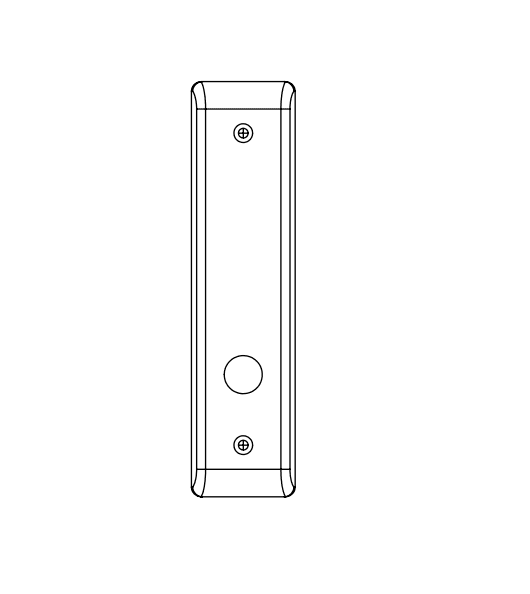
A keyhole escutcheon is usually used for a traditional keyhole. It may be open, covered, round, oval, or shaped. A cylinder escutcheon is used around a cylinder, often a euro profile cylinder. It can be round, oval, square, or rectangular. A handle escutcheon or rose sits behind the lever handle. It can be a separate small plate. A long backplate-style escutcheon combines the handle area and key or cylinder area into one long visible plate.8
| Type I see | What it covers | Common shape | Main matching point |
|---|---|---|---|
| Keyhole escutcheon | Keyhole opening | Round, oval, shaped | Keyhole size and position |
| Cylinder escutcheon | Cylinder opening | Round, oval, square | Cylinder profile and projection |
| Handle rose | Lever handle base | Round or square | Spindle, spring, and screw fixing |
| Long backplate | Handle plus key/cylinder area | Long rectangle or curved plate | Center distance and hole layout |
I also remind buyers that the mortise lock faceplate is not the same part. The faceplate is on the door edge. The escutcheon is on the door face. I also remind buyers that the strike plate is on the frame. This distinction matters when the order includes full sets. If the packing list uses wrong names, the warehouse may count the wrong part. If the buyer sends only one sample, I mark each visible trim before I quote.
Which Materials and Finishes Should I Check Before Ordering?
I see many bulk orders fail not because the plate is weak, but because the finish looks different from the handle.
I check stainless steel, zinc alloy, brass, and aluminum options. I also check brushed nickel, matte black, polished brass, PVD, and other finishes. For bulk orders, I focus on finish consistency and matching with handles, cylinders, hinges, and lock bodies.
I treat material and finish as procurement risks
I choose material based on market level, door type, finish demand, and budget. Stainless steel is common for modern projects because it has good surface stability and a clean look.9 Zinc alloy is common for shaped plates and handle roses because it is easy to form.10 Brass is often used when buyers need a higher-end feel, a brass profile cylinder match, or a polished brass look. Aluminum can be used for some light-duty or design-specific parts.
The finish name alone is not enough. One supplier’s brushed nickel may look cooler or warmer than another supplier’s brushed nickel. Matte black can also vary in gloss level. PVD coating may look very stable, but the base material and polishing quality still matter.11 I often ask buyers to approve finish samples before bulk production. I also ask them to place the handle, escutcheon, cylinder, hinge, and lock faceplate together under the same light.
| Material I discuss | Common advantage | What I still need to check |
|---|---|---|
| Stainless steel | Stable look and good durability | Grade, thickness, brushing direction |
| Zinc alloy | Flexible shapes and common handle match | Plating quality and surface control |
| Brass | Premium feel and classic finish options | Cost and tarnish control |
| Aluminum | Light weight and easy processing | Strength and finish resistance |
I once worked on an order where the buyer approved the lever handle finish from one batch and the cylinder escutcheon from another batch. Both were called satin nickel. The door factory later found that the visible tone was not the same. The parts were usable, but the project owner complained. Since then, I always suggest that buyers confirm finish standards by sample, not by finish name only. I also record the approved finish code for repeat orders.
How Do I Match an Escutcheon Plate With the Mortise Lock Set?
I know one escutcheon plate cannot fit every mortise lock, even when the front view looks similar.
I match the escutcheon plate with the mortise lock body, cylinder, lever handle, spindle, screw positions, door thickness, center distance, and finish. I do not treat it as a universal trim part unless the full dimensions prove it.
I check the full set before I confirm the plate
I start with the mortise lock body drawing. I check the backset, center distance, follower size, cylinder hole position, and faceplate length. I then check the lever handle. I check the spindle size, rose or backplate size, spring structure, and screw fixing method. I then check the cylinder. I check whether it is a euro profile cylinder, oval cylinder, round cylinder, or keyhole design. I also check the cylinder length because a cylinder that projects too much or too little can look wrong with the escutcheon.
Door thickness is another key point. A plate may be fixed with surface screws, through screws, or hidden fixing parts. The fixing method must match the door thickness and handle set.12 I do not claim that the escutcheon plate structurally fixes the whole lock body unless that specific lock set uses through fixing or related hardware. In many cases, the lock body is fixed by the faceplate screws on the door edge, while the visible plate only covers and supports its own area.
| Matching item I check | Why I check it | Risk if I ignore it |
|---|---|---|
| Center distance | Aligns handle and cylinder/keyhole | Holes do not line up |
| Screw position | Fits existing drilling | Plate cannot be installed |
| Door thickness | Fits fixing method | Screws are too short or too long |
| Cylinder profile | Fits opening shape | Cylinder cannot pass through |
| Plate size | Covers cutout | Old holes remain visible |
| Finish | Matches visible hardware | Door set looks mixed |
I ask for a technical drawing when the order is large. I prefer one approved sample set before mass production. I also suggest a trial installation on the buyer’s door sample. This small step saves many problems. A lock set is a system. The plate is only one part, but it touches almost every visible part of that system.
What Information Should I Send to a Supplier Before Bulk Ordering?
I have learned that a complete inquiry saves more time than a low first price.
I send photos, drawings, door thickness, lock body model, cylinder type, handle type, screw positions, finish sample, quantity, certification needs, and packing requirements before I ask for bulk quotation. This helps the supplier confirm compatibility before price discussion.
I prepare the inquiry like a small technical file
I suggest that buyers avoid sending only a catalog picture. A catalog picture can show the style, but it cannot show all hidden dimensions. I need the plate length, width, thickness, hole diameter, keyhole shape, cylinder cutout, screw hole distance, and edge radius. I also need to know whether the plate is for a new door project or a replacement project. Replacement projects often need a larger plate to cover old holes or damaged surfaces.
I also ask for the door material. A solid wood door, steel door, fire-rated door, and aluminum door may require different fixing ideas. If the project needs CE or fire-rated documentation, I need to confirm whether the complete lock set and related hardware have the correct certificates. I do not promise that one small trim plate makes a full door set certified. Certification depends on the tested product scope and the full hardware set.
| Inquiry detail I send | Simple reason |
|---|---|
| Clear front and side photos | I help the supplier identify the part |
| Dimension drawing | I reduce guessing |
| Lock body model | I confirm hole positions |
| Cylinder type and length | I confirm opening and projection |
| Handle or rose type | I avoid handle interference |
| Door thickness | I confirm screw and fixing length |
| Finish sample or code | I control color difference |
| Quantity and packing | I calculate production and cost |
| Certificate needs | I check compliance early |
I also tell buyers to state the market destination. Middle East, Europe, and Southeast Asia buyers may have different finish trends, cylinder standards, and packaging habits. A wholesaler may need neutral packing. A hardware brand may need logo marking and color box packing. A door factory may need bulk packing by project floor or door number. These details do not change the definition of the escutcheon plate, but they affect whether the order runs smoothly.
Conclusion
I treat a mortise lock escutcheon plate as a matching part, not just decoration, because the right plate protects, covers, matches, and installs correctly.
"Escutcheon (furniture) - Wikipedia", https://en.wikipedia.org/wiki/Escutcheon_(furniture). The source defines an escutcheon in door hardware as a protective or decorative plate associated with a keyhole, lock cylinder, or similar door opening. Evidence role: definition; source type: encyclopedia. Supports: A neutral source should define an escutcheon as a protective or decorative plate around a keyhole, cylinder, or lock opening on a door.. ↩
"Mortise lock - Wikipedia", https://en.wikipedia.org/wiki/Mortise_lock. The source describes a mortise lock as a lock case fitted into a mortise cut in the edge of the door, supporting the article's distinction between the internal lock body and surface trim. Evidence role: definition; source type: encyclopedia. Supports: A source should explain that a mortise lock fits into a mortise or pocket cut into the edge of a door.. ↩
"Electric strike - Wikipedia", https://en.wikipedia.org/wiki/Electric_strike. The source defines a strike plate as the metal plate fixed to the door frame that receives the latch or bolt, supporting the article's distinction between strike plates and door-face escutcheons. Evidence role: definition; source type: encyclopedia. Supports: A source should define a strike plate as the frame-mounted plate into which a latch or bolt engages.. ↩
"AAT Hierarchy Display (Getty Research) - Getty Museum", https://www.getty.edu/vow/AATHierarchy?find=bima&logic=AND¬e=&page=1&subjectid=300045309. The source identifies escutcheon plates as door-face trim around lock or handle openings, supporting the article's placement distinction from edge-mounted faceplates and frame-mounted strike plates. Evidence role: definition; source type: institution. Supports: A source should identify escutcheons as visible trim mounted on the face of the door around lock or handle openings.. Scope note: The source may describe general door hardware terminology rather than mortise-lock-specific variants. ↩
"Escutcheon (furniture) - Wikipedia", https://en.wikipedia.org/wiki/Escutcheon_(furniture). The source characterizes escutcheons as protective or decorative trim around lock-related openings, supporting the article's statement that their basic role is visual and protective. Evidence role: general_support; source type: institution. Supports: A source should state that escutcheons serve as decorative or protective trim around lock, keyhole, or handle openings.. Scope note: The source may support the general purpose of escutcheons, not every specific product design. ↩
"Stainless Steel Door Hole Cover Escutcheon Plate Deadbolt Removal", https://www.ebay.com/itm/197807709208. The source explains that escutcheon or cover plates are used around lock openings to cover exposed cutouts or holes, supporting the article's claim that they can conceal drilling marks and small gaps. Evidence role: mechanism; source type: institution. Supports: A source should explain that escutcheon or cover plates are used to cover openings, gaps, or hardware cutouts around door locks.. Scope note: The source should be read as support for the general cover-plate function; actual coverage depends on plate dimensions and the prepared opening. ↩
"What Is an Escutcheon? Our Complete Guide - Suffolk Latch Company", https://www.suffolklatchcompany.com/blogs/news/what-is-an-escutcheon?srsltid=AfmBOopQ2Sxecc-Y7jlANR-WTxRD_2SFX7dXPCDYeaYqvzOfptkMw5IY. The source describes covered keyhole escutcheons as plates that cover or obscure the keyhole opening, supporting the article's limited claim that such designs may reduce direct visibility through the keyhole. Evidence role: mechanism; source type: institution. Supports: A source should describe covered keyhole escutcheons or keyhole covers as devices that obscure or cover the keyhole opening.. Scope note: This supports the mechanism of obscuring the opening, not a measured privacy or security performance level. ↩
"Exterior Door Knob Backplates - Etsy", https://www.etsy.com/market/exterior_door_knob_backplates. The source describes a door backplate as a single elongated trim plate associated with the handle and keyhole or cylinder area, supporting the article's classification of long backplate-style escutcheons. Evidence role: definition; source type: institution. Supports: A source should define or illustrate a door backplate as a long plate that carries or surrounds the lever handle and keyhole or cylinder opening.. Scope note: Terminology varies by market, so the source may use 'backplate' rather than 'escutcheon plate.' ↩
"INFLUENCE OF H2S ON THE LOCALISED CORROSION OF 316L ...", https://www.nist.gov/publications/influence-h2s-localised-corrosion-316l-stainless-steel-part-1-coupon-testing. The source explains that stainless steels are valued in architectural applications for corrosion resistance and stable surface appearance, supporting the article's rationale for using stainless steel in visible door hardware. Evidence role: general_support; source type: research. Supports: A source should support the material properties of stainless steel, especially corrosion resistance and suitability for visible architectural applications.. Scope note: The source supports material suitability generally and does not prove that stainless steel is the most common choice in all markets. ↩
"[PDF] DIE CASTING RESEARCH D. - UNT Digital Library", https://digital.library.unt.edu/ark:/67531/metadc670370/m2/1/high_res_d/189099.pdf. The source notes that zinc alloys are readily die-cast into complex shapes with good dimensional detail, supporting the article's explanation for their use in shaped plates and handle roses. Evidence role: mechanism; source type: education. Supports: A source should explain that zinc alloys have good castability or formability for producing detailed or complex shapes.. Scope note: The source supports the manufacturing rationale, not the frequency of use in every door-hardware supply chain. ↩
"PVD for Decorative Applications: A Review - PMC - NIH", https://pmc.ncbi.nlm.nih.gov/articles/PMC10381906/. The source reports that PVD coating performance and appearance are influenced by substrate characteristics and surface preparation, supporting the article's caution that the base material and polishing quality remain important. Evidence role: mechanism; source type: paper. Supports: A source should show that PVD coating adhesion, appearance, or durability is affected by substrate material and surface preparation.. Scope note: The source may address PVD coatings generally rather than door-hardware escutcheon plates specifically. ↩
"[PDF] DOOR HARDWARE (SCHEDULED BY DESCRIBING PRODUCTS)", https://fpm.usc.edu/wp-content/uploads/2021/11/087102-USC-HSC-door-hardware-Guide-Specification_1.pdf. The source explains that door thickness is a required installation parameter for locksets and handle hardware, supporting the article's statement that fixing methods must match both the door thickness and handle set. Evidence role: mechanism; source type: institution. Supports: A source should explain that door thickness affects lockset or handle installation, including spindle, screw, and fixing requirements.. Scope note: The source may discuss complete locksets rather than escutcheon plates alone. ↩