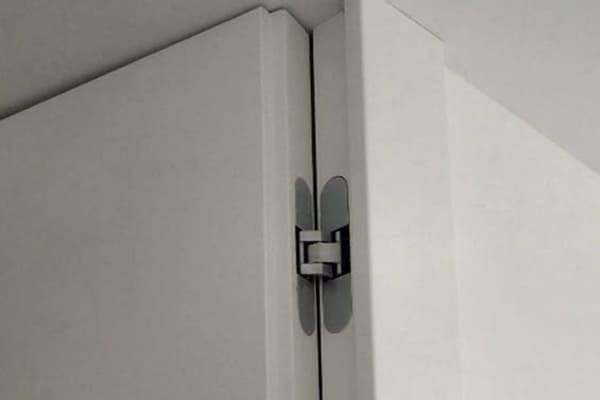
What size are concealed hinges?
Are you struggling to find the right concealed hinge size for your door project? Many manufacturers face a hidden challenge in matching hinge dimensions to their precise needs, causing costly delays and rework. Let's uncover the secrets to successful hinge sizing.
Concealed hinges do not have one standard, legally unified size.1 Their dimensions are shaped by load capacity, door thickness, frame structure, mortise requirements, and multi-axis mechanism designs2, often referencing common market sizes rather than strict universal standards.

From my experience working with door manufacturers and hardware buyers, I've learned that the question "What size are concealed hinges?" often means, "Can this hinge fit my existing door system and production process?" It is never a simple answer. We must look at the bigger picture.
Are Concealed Hinge Sizes Standardized Like Butt Hinges?
Do you assume all hinges follow a fixed size chart, just like traditional butt hinges? This common misconception can lead to big problems when selecting concealed hardware for modern doors.
Concealed hinges are not standardized in the same way as traditional butt hinges.3 Their dimensions are unique to each manufacturer's design and patented structure. This is different from butt hinges, which have very old and established size conventions.

From my factory's perspective, I often hear product managers asking if our concealed hinges are "the same size" as another brand. The truth is, concealed door hinges are a much newer technology, developed mostly in the past few decades. Butt hinges have been around for centuries.4 Their simple structure allowed for common dimensional agreements across door factories and frame makers. Concealed hinges, however, are complex multi-axis systems.5 They can have 4-axis, 5-axis, or even 7-axis designs. Each manufacturer develops its own unique movement path and internal mechanism. This design directly impacts the overall body size, the routing shape required for installation, and how the hinge opens and adjusts. These individual designs are often protected by patents. Because of this, there is no single "standard" length, width, or depth that all concealed hinges must follow. What works for one door thickness or frame type might not work for another. This means a buyer must consider the specific hinge's mechanical structure, not just a general size. We focus on providing precise technical drawings because there isn't a universal standard to fall back on. My factory helps customers understand these differences so they can choose the right hinge for their specific door and production line, avoiding costly mistakes from incompatible sizes.
Does EN 1935 Dictate Concealed Hinge Dimensions?
Are you relying on EN 1935 to guarantee a specific hinge size? This is a critical misunderstanding that can lead to misaligned doors and costly production errors.
No, EN 1935 does not define concealed hinge dimensions. This standard covers performance classifications like load capacity, durability, and test cycles, not specific measurements such as hinge length, body size, or mortise size.
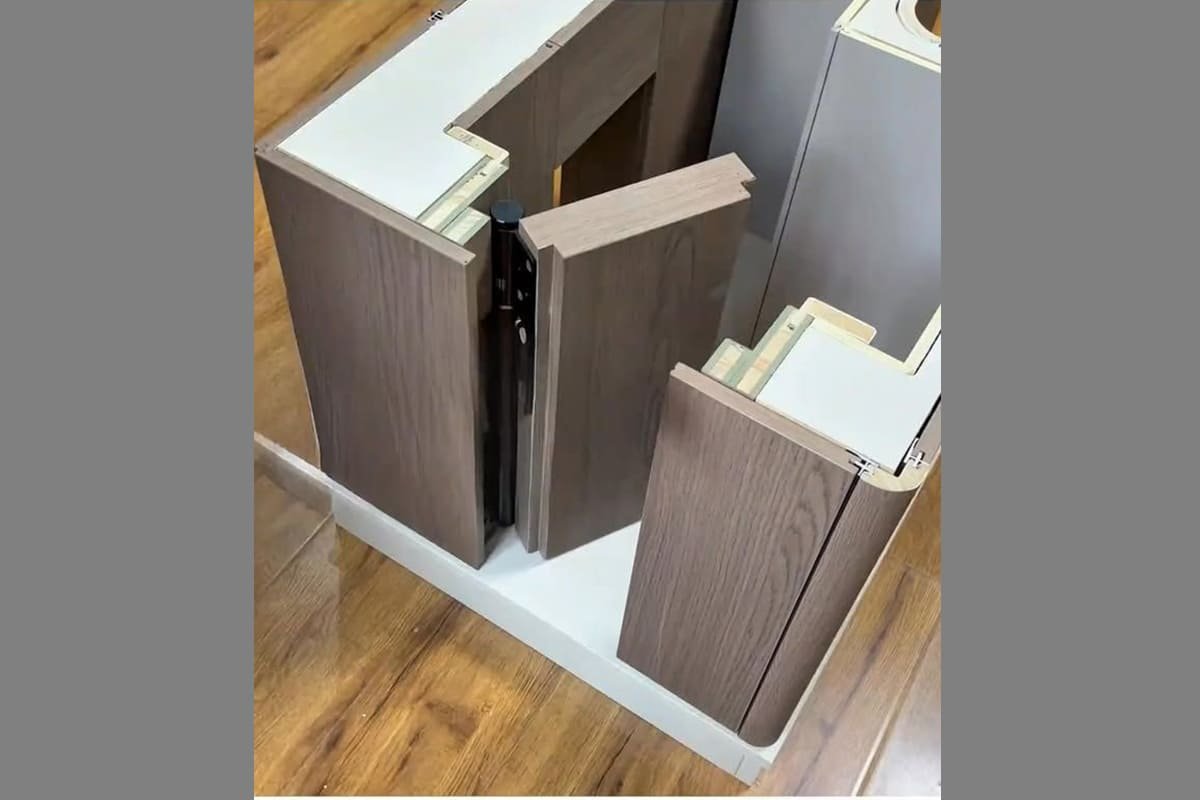
In my work, I often explain that EN 1935 is a very important standard, but its purpose is often misunderstood. Many buyers think that if a hinge is EN 1935 compliant, it must fit a certain slot or have a certain length. This is not correct. EN 1935 is about performance. It tells you how much weight a hinge can hold (its load capacity), how many times it can open and close without failing (its durability cycles), and how well it performs in specific tests. For example, it classifies hinges by usage category, test cycles (up to 200,000 cycles for severe duty6), door mass (up to 160 kg)7, and corrosion resistance. It ensures that a hinge will function reliably under defined conditions. It does not, however, specify the physical shape or size of the hinge body.8 You can have two different concealed hinges, from two different brands, both compliant with EN 1935 for a 60 kg door. But their physical dimensions, their mortise requirements, and their exact length could be completely different. This distinction is crucial for product managers. When they review specifications, they need to check EN 1935 for performance assurance. But for dimensional fit, they must review detailed technical drawings for each specific hinge model. My factory prioritizes providing these precise technical drawings alongside our EN 1935 certifications. This helps buyers understand what they are getting for both performance and fit.
What Are the Common Market Reference Sizes for Concealed Hinges?
Do you hear about "standard" sizes like 110mm or 135mm for concealed hinges and wonder if they are universally guaranteed? This expectation can cause big problems if you assume they are always interchangeable.
While there are no universal standards, some market reference sizes exist for concealed hinges. Many adjustable concealed hinges are often seen around 110 mm for 40 kg, 135 mm for 60 kg, and 160 mm for 80 kg load classes.
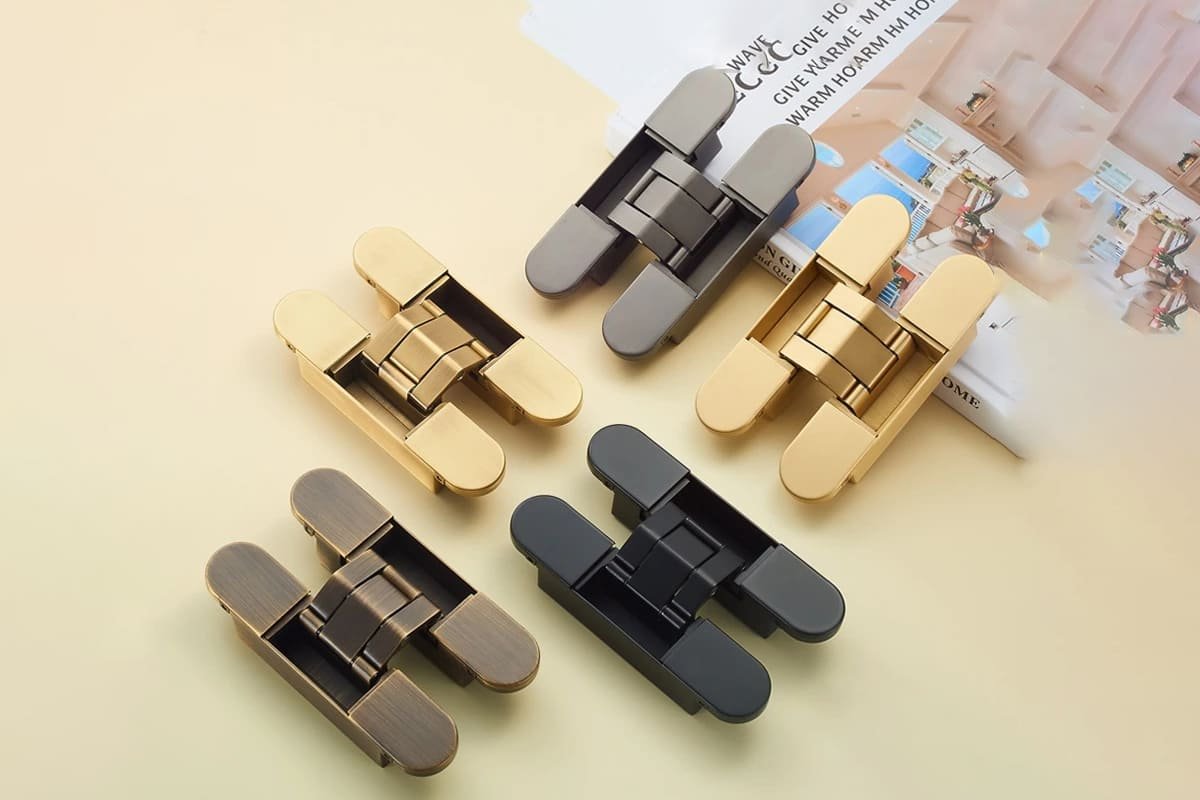
From our factory's perspective, I see these numbers – 110 mm, 135 mm, 160 mm – come up very often in discussions with our clients. These are not absolute rules or mandatory standards. They are common reference points that have emerged in the market, particularly in Europe. This convergence is driven largely by the efficiency needs of door factories. For example, many interior doors in Europe are about 40–45 mm thick9. Door factories want to reduce the complexity of their production lines. This means fewer tool changes, fewer CNC program adjustments, less inventory variation10, and better cross-brand compatibility. Because of this, newer hinge brands, like ours, often design their hinges with similar size logic to major established European brands such as Simonswerk, Otlav, Koblenz, AGB, and Anselmi. However, it is vital to understand that similar external dimensions do not mean the hinges are structurally identical or fully interchangeable. The internal mechanisms, adjustment methods, and exact routing shapes can still differ significantly. When a customer asks us about a specific length, we always provide the full technical drawing. We confirm the load class and the full mortise dimensions. This ensures that even when our hinges share a similar length reference, the buyer has all the necessary information to confirm compatibility with their door system. Relying solely on a length number can lead to incorrect orders.
Why Does Concealed Hinge Size Depend on the Entire Door System?
Do you think simply choosing a hinge based on its length is enough? This oversight can lead to severe compatibility issues and compromise your door's function and longevity.
The correct hinge size depends on the entire door system, not just the hinge's length. Factors like door weight, door thickness, frame type, available mortise space, opening trajectory, and the specific mechanism design all dictate the required size and type.
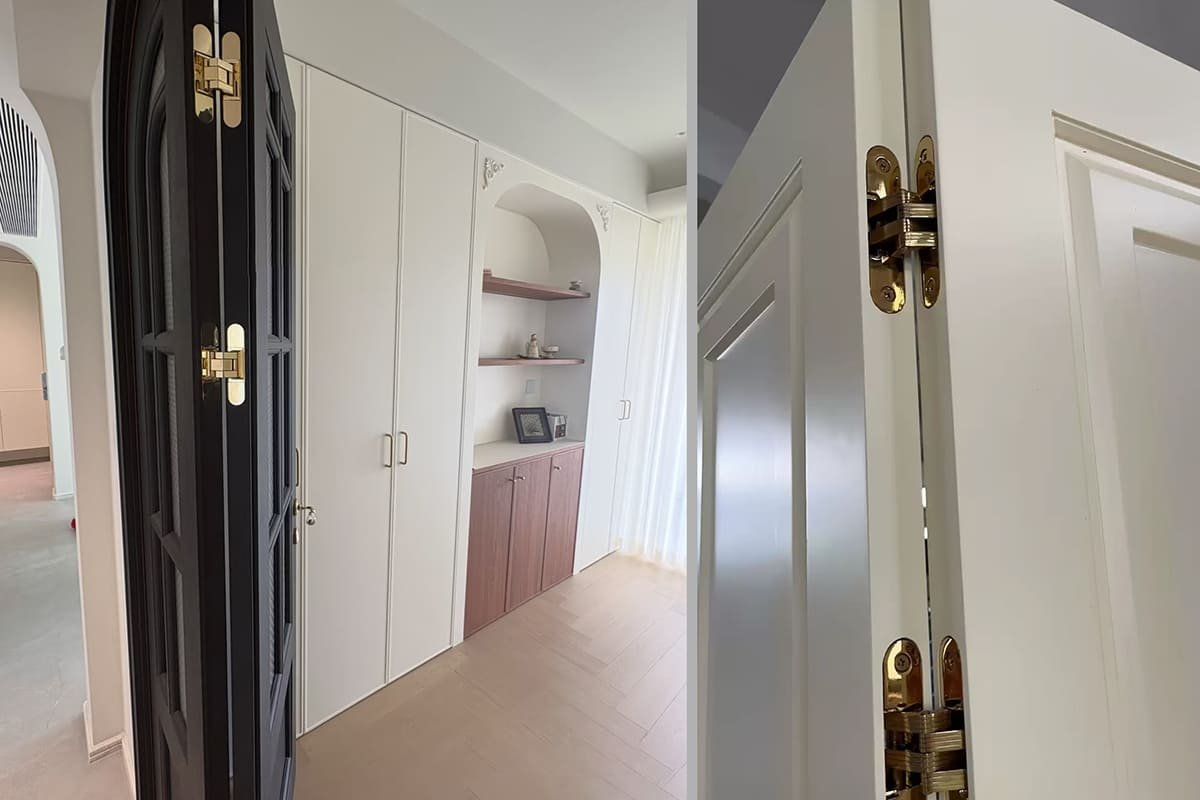
In my discussions with product managers, I always stress that selecting a concealed hinge is a holistic decision. It is not just about the hinge itself. It is about how the hinge integrates with the entire door system. The door's weight directly impacts the required load capacity of the hinge11, which in turn influences its physical size and internal structure. A heavier door needs a larger, more robust hinge. The door's thickness is another critical factor. The hinge body must fit within this thickness. My factory frequently provides custom solutions for specific door thicknesses because a standard-sized hinge might not work. The frame type also plays a big role. Different frame materials and designs have different space allowances for mortising. If there is wall paneling near the door, it can affect the hinge's opening trajectory and require a hinge that allows for a wider swing radius. For flush doors, the hinge must allow the door to sit perfectly flat with the frame, which places specific demands on the hinge's design and adjustability. Even the number of hinges per door can influence the optimal individual hinge size.12 My factory understands these complex interactions. We work with clients to match our flexible hinge specifications, surface treatments, and accessory configurations to their exact project needs and regional market standards. This ensures that the chosen hinge integrates perfectly, both functionally and aesthetically, with their specific door system.
| Factor | Impact on Hinge Size & Selection |
|---|---|
| Door Weight | Determines load capacity needed; heavier doors need larger hinges. |
| Door Thickness | Affects hinge body depth and overall dimensions for flush fit. |
| Frame Type | Dictates available mortise space; impacts hinge width and length. |
| Mortise Space | Limited by door and frame structure; hinge must fit existing cut-outs. |
| Opening Trajectory | Influenced by wall panels or tight spaces; hinge must allow full swing. |
| Mechanism Design | Multi-axis systems vary; affects internal size, routing, adjustment. |
| Flush Door Needs | Requires precise hinge geometry for perfect alignment with frame. |
Conclusion
Concealed hinge size is not uniform or universally standardized. It is a complex interplay of design, performance, and specific door system requirements. Always verify dimensions against detailed drawings, not just common reference numbers.
"[PDF] BS EN 1935:2002 Single-axis hinges - Acorn Ironmongery Ltd", https://www.acornironmongery.com/2022Standards/GAI-Guide-to-standards-2-BSEN1935-22-final.pdf. Relevant building-hardware standards describe classifications and performance requirements for hinges, but they do not establish a single universal body size for all concealed hinge designs. Evidence role: general_support; source type: institution. Supports: A standards source should show that hinge standards generally classify performance or product categories rather than imposing one universal concealed-hinge size.. Scope note: This supports the absence of a universal size indirectly by reference to the scope of hinge standards rather than by proving that no jurisdiction has any local dimensional rule. ↩
"Architectural Door Accessories Product Lines - McKinney Hinge", https://www.mckinneyhinge.com/en/resource-library/knowledge-center/hinge-101. Architectural hardware guidance treats hinge selection as a function of door mass, door and frame geometry, and installation clearances, which provides context for why concealed-hinge dimensions vary by application. Evidence role: mechanism; source type: education. Supports: A technical guide should explain that hinge selection is based on door mass, geometry, frame construction, and installation clearances.. Scope note: Such guidance may discuss hinges generally and may not provide a direct dimensional rule for every concealed hinge model. ↩
"A Complete Hinge Size Guide (Get Hinge Size Chart Inside)", https://www.dkhardware.com/blog/hinge-size-guide-and-chart/?srsltid=AfmBOopQc_BBhXGSrsesvVPXKlbAX9BL2U4y5sqLPqau3e3DA0sWg5_c. Architectural hardware references commonly specify butt hinges by conventional height, width, and gauge, whereas concealed hinges are typically documented through model-specific routing and installation drawings. Evidence role: general_support; source type: institution. Supports: A source should establish that butt hinges are commonly described by conventional height, width, and gauge formats, while concealed hinge installation dimensions are usually model-specific.. Scope note: This is contextual support for relative standardization, not proof that every butt hinge is interchangeable or that every concealed hinge is unique. ↩
"Geared continuous hinge", https://en.wikipedia.org/wiki/Geared_continuous_hinge. Historical accounts of hinges describe leaf-type hinge mechanisms as long-established architectural hardware, supporting the statement that butt hinges have centuries of use. Evidence role: historical_context; source type: encyclopedia. Supports: A historical source should show that hinge mechanisms, including simple leaf or butt-type hinges, have been used for many centuries.. Scope note: The source may document hinge history broadly rather than tracing the exact modern term 'butt hinge' through every period. ↩
"Kinematics of Invisible Hinge (Invisible Hinge with 7 Axes)", https://discourse.mcneel.com/t/kinematics-of-invisible-hinge-invisible-hinge-with-7-axes/150946. Mechanical descriptions of concealed hinges show that they may use linked pivot arms and multiple rotational axes to generate the door-opening trajectory while keeping the hinge body hidden. Evidence role: mechanism; source type: paper. Supports: A mechanical or patent-analysis source should show that concealed hinges can use linked pivots or multiple rotational axes to produce an opening path while remaining hidden.. Scope note: This supports the mechanism type generally; individual commercial hinges may use different numbers and arrangements of axes. ↩
"Understanding BS EN 1935:2002 single-axis hinge grades", https://uk.sfs.com/resources/article/understanding-bs-en-1935. EN 1935 classification materials identify durability grades that include a 200,000-cycle test level, supporting the article's reference to severe-duty cycle testing. Evidence role: statistic; source type: institution. Supports: A source should confirm the EN 1935 durability grading and the 200,000-cycle level for high or severe duty hinge testing.. Scope note: The citation verifies the classification value; it does not demonstrate that any specific concealed hinge model has passed that test. ↩
"Understanding BS EN 1935:2002 single-axis hinge grades", https://uk.sfs.com/resources/article/understanding-bs-en-1935. EN 1935 classification tables include door-mass grading up to 160 kg, supporting the statement that the standard evaluates hinges by load class. Evidence role: statistic; source type: institution. Supports: A source should confirm that EN 1935 includes hinge classifications by test door mass, including a 160 kg category.. Scope note: The value refers to a standardized classification category and does not by itself specify the capacity of a particular hinge installation. ↩
"Understanding BS EN 1935:2002 single-axis hinge grades", https://uk.sfs.com/resources/article/understanding-bs-en-1935. EN 1935 is described as a standard for requirements, test methods, and classification of single-axis hinges, supporting the point that its scope is performance classification rather than universal hinge-body dimensions. Evidence role: definition; source type: institution. Supports: A standards source should define EN 1935 as a performance, requirements, test-method, and classification standard rather than a dimensional specification for hinge bodies.. Scope note: Public summaries of EN 1935 may not reproduce the full standard text, so the citation supports the standard's scope rather than every clause. ↩
"Standard Door Sizes: The Complete Guide", https://www.jbkind.com/info-centre/useful-door-information/standard-door-sizes. European door-product references commonly describe interior door leaves in the approximately 40 mm range, providing context for the article's 40–45 mm design assumption. Evidence role: general_support; source type: institution. Supports: A building-product or standards source should show that common interior door leaves in European markets are often around 40 mm thick, with variants near 45 mm.. Scope note: Door thickness varies by country, fire rating, acoustic rating, and manufacturer, so the citation would support a common range rather than a universal European rule. ↩
"Systematic Configurator for Complexity Management in ... - PMC - NIH", https://pmc.ncbi.nlm.nih.gov/articles/PMC11605224/. Manufacturing research on product variety and standardization indicates that reducing component variation can lower setup requirements and inventory complexity, supporting the article's explanation of why door factories prefer common hinge-size references. Evidence role: mechanism; source type: paper. Supports: A manufacturing research source should explain that standardization and variety reduction can reduce setup changes, programming variation, and inventory complexity.. Scope note: The evidence is likely general manufacturing evidence rather than a door-hinge-specific production study. ↩
"Ultimate Guide to Choosing the Best Door Hinge for Your Needs", http://swdsi.org/blog/guide-to-choosing-the-best-door-hinge/. Architectural hardware selection guidance links hinge specification to door weight and service conditions, supporting the claim that door mass directly affects the required hinge load capacity. Evidence role: mechanism; source type: institution. Supports: A hardware-selection source should state that hinge grade, size, or number is selected according to door weight and use conditions.. Scope note: The source may provide selection rules for hinge categories generally rather than concealed hinges exclusively. ↩
"SECTION 087111 - DOOR HARDWARE (SCHEDULED BY ...", https://fpm.usc.edu/wp-content/uploads/2021/11/087102-USC-HSC-door-hardware-Guide-Specification_1.pdf. Door-hardware guidance specifies hinge quantity in relation to door height, weight, and expected duty, supporting the statement that the number of hinges can influence the appropriate capacity and size of each hinge. Evidence role: mechanism; source type: institution. Supports: A technical source should explain that hinge quantity is selected based on door height, weight, and duty, and that load is distributed across the installed hinges.. Scope note: Actual load sharing may be affected by installation tolerances and alignment, so hinge count alone does not determine the final specification. ↩