How can I adjust a door so it doesn't swing on its own?
Problem: Is your door annoyingly swinging open or closed without an obvious reason? It can be truly frustrating. This constant movement disrupts privacy and can even be a safety issue. I know how disruptive this is for my customers.
Adjusting a self-swinging door requires finding the real problem first, not just tightening screws. I always tell my customers to check for door balance, frame plumbness, hinge alignment, and hardware condition to make sure they get a lasting fix.

My experience working with door manufacturers and hardware buyers has shown me that a swinging door often has a simple root cause. Understanding these causes helps you fix it right the first time. I will show you how to diagnose and adjust your door properly.
What makes a door swing by itself, or not stay closed?
Problem: Are you annoyed by a door that just won't behave? This can be confusing. Many people think all moving doors have the same problem.
It's important to know if the door swings open or closed on its own or just fails to latch. Each symptom points to different problems. Diagnosing correctly means you fix the right issue.
When my customers call me about a door problem, the first thing I ask is for them to describe exactly what the door is doing. Is it actively moving on its own? Or does it just refuse to stay shut when you try to close it? These two situations need different fixes. A door that truly swings by itself often means there is an imbalance. This can come from the door itself or its frame. The frame might not be perfectly vertical, a condition we call "out of plumb." If the frame leans even a little, gravity will make the door want to swing.1 The hinges also play a big part. If hinges are not aligned perfectly, they can cause tension.2 This tension can make the door move. Sometimes, loose screws in the hinges allow for tiny shifts. These shifts can start the door swinging. Also, a slight bend or "warp" in the door itself can make it unbalanced.3 Even a very small warp can cause a heavy door to start moving. On the other hand, if a door just will not stay closed, this is usually about the latch. The latch is the small metal part that comes out of the door edge.4 It needs to fit perfectly into the strike plate on the door frame.5 If the strike plate is not in the right spot, the latch cannot engage. Or, the hole in the strike plate might be too small. This stops the door from catching. Sometimes, the gap between the door and the frame is too wide. This means the latch cannot reach the strike plate properly. I often see customers confuse these two problems. They try to fix a latching issue by tightening hinges. This usually does not help. My advice is always to identify the exact symptom first. This saves time and effort.
Symptoms and Their Common Causes
| Symptom | Possible Primary Causes |
|---|---|
| Door swings by itself | Frame out of plumb, Hinge misalignment, Loose hinge screws, Door leaf deformation/warp, Air pressure/drafts |
| Door will not stay closed | Misaligned strike plate, Latch not engaging, Door gap too wide, Latch bolt bent or sticky |
Can loose hinges or an improper strike plate cause a door to swing?
Problem: Is your door moving freely, or is it just not catching correctly? It can be hard to tell what the real issue is.
Loose hinges can certainly cause a door to swing. They allow for movement that gravity can then exploit.6 An improper strike plate usually prevents the door from latching securely.7 It does not typically cause the door to swing freely.
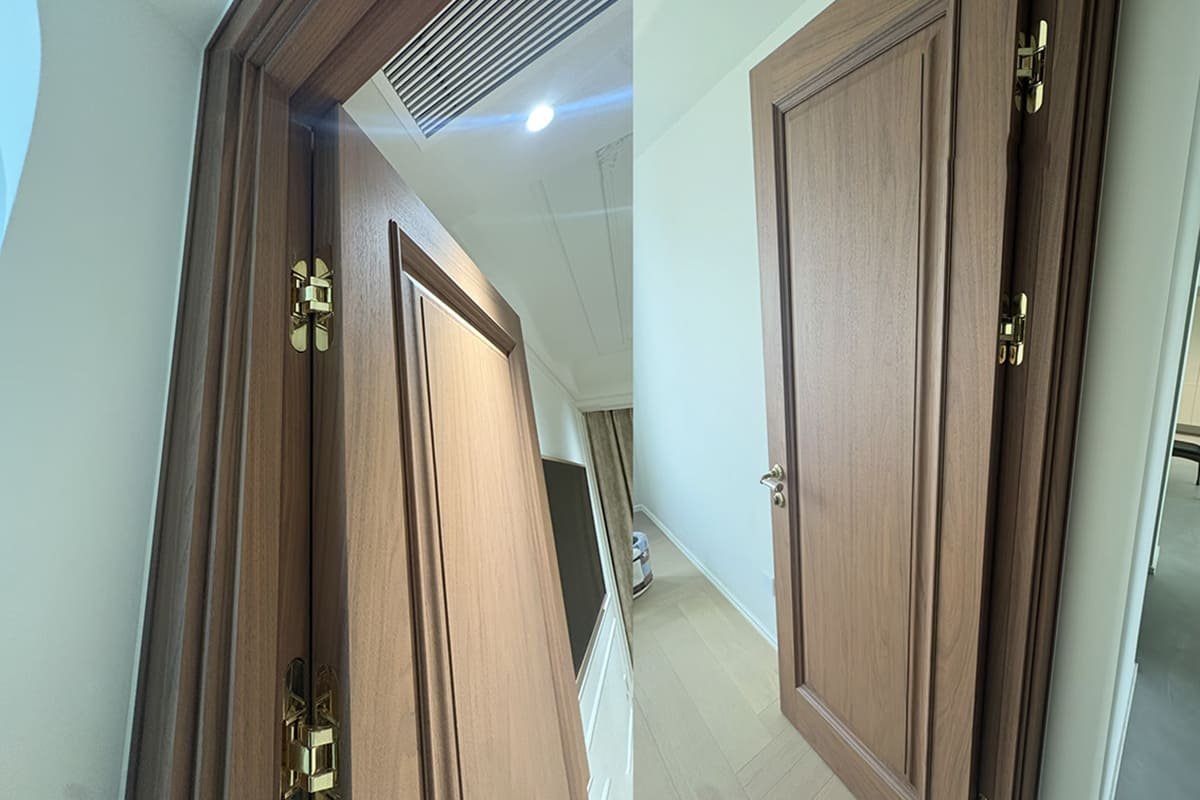
From my experience in manufacturing and supplying door hardware, I often get calls about doors that don't behave. Loose hinges are a very common cause of a door swinging on its own. When the screws holding the hinges to the door frame or the door itself are not tight, the hinge plates can shift. This small shift makes the door hang unevenly. Gravity then pulls on the door. It makes it swing open or closed. I always recommend checking all hinge screws first. This is a simple step, but it fixes many issues. Sometimes, the screw holes can become stripped. This means the screws cannot get tight. In these cases, you might need longer screws. Or you can use wood filler and then re-drill the holes.
An improper strike plate, however, works differently. Its job is to hold the door firmly shut. If the door closes but then pops open, the strike plate is likely the problem. This means the latch bolt on the door is not catching inside the strike plate. It might be hitting the edge of the plate. Or the hole might not be deep enough. This leads to a door that will not stay closed. It does not usually make the door swing by itself. When you adjust a strike plate, you are fixing how the door latches. You are not fixing a door that is already swinging. To adjust a strike plate, you can loosen its screws. Then you can shift the plate slightly in the direction needed. Sometimes, you might need to bend the small tab inside the strike plate a bit. This helps the latch catch better. If the latch still does not go in, you might carefully enlarge the hole. Use a file or a chisel for this. Always test after each small change. I have seen customers use bumper strips to fill gaps. This is a temporary fix. It only makes the door close tighter. It does not fix the strike plate alignment itself. It is important to know the difference.
Hinge Screw Tightening Steps
| Step | Action | Purpose |
|---|---|---|
| 1 | Use a screwdriver to tighten all visible hinge screws. | Secures hinge plates to door and frame, reducing play. |
| 2 | Check for stripped screw holes. | Identifies if screws cannot hold tight. |
| 3 | If stripped, use longer screws or wood filler. | Provides new secure purchase for screws. |
| 4 | Test door movement after tightening. | Confirms if tightening resolved the swing issue. |
How do you properly adjust door hinges to stop unwanted movement?
Problem: Is your door swinging freely, and you want it to stay exactly where you leave it? It is time for a proper adjustment.
Proper hinge adjustment starts with tightening all screws. Then, check for plumb and level. You can use shims for minor corrections or an Allen key for 3D adjustable hinges. This makes sure the door hangs correctly.
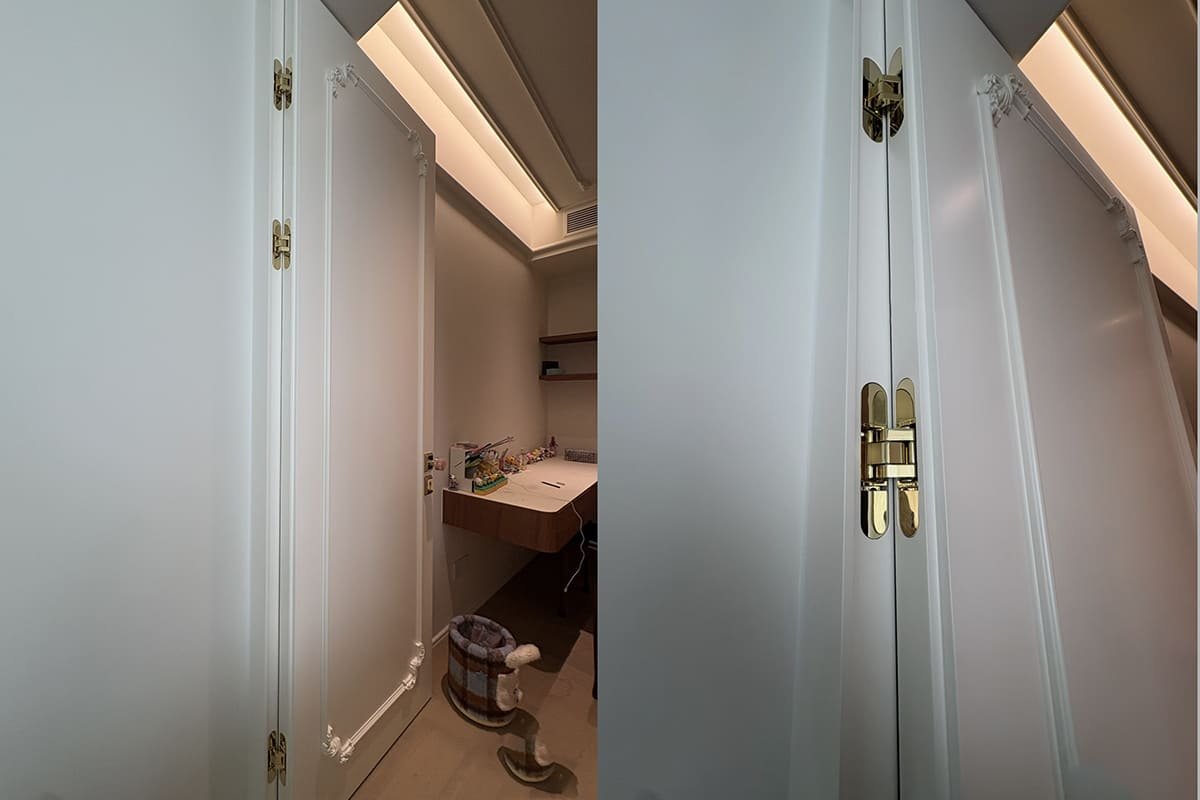
When a door starts to move on its own, I always tell people to look at the hinges first. My team constantly works with hinge designs. We know how crucial proper installation and adjustment are. The most basic and often most effective step is to simply tighten all the screws. Check every screw on all hinges, both on the door side and the frame side. Sometimes, during daily use, screws can loosen. This allows the door to shift a little. Even a small shift can cause an imbalance. This imbalance makes the door swing. I have seen many cases where just tightening screws solves the problem completely.
If tightening screws does not help, or if the door still sags, you might need to use shims. Shims are thin pieces of material. You can use hard cardboard or plastic shims. To use a shim, you first remove one of the hinge leaves from the frame. Then, you place a shim behind the hinge leaf. This pushes the hinge slightly out from the frame. This can correct a door that is sagging or leaning. However, I must stress that shimming with cardboard is a temporary fix for minor issues, especially for lighter doors. It is not a professional, long-term solution for heavy doors or project doors. For heavier doors, particularly those we supply to large projects, proper frame and hinge selection prevents these issues.
For advanced adjustment, some modern hinges have a 3D adjustment feature. Many of our concealed hinges, for example, have this. These hinges have screws that you can turn with an Allen key. These screws allow you to move the door in three directions: up and down, left and right, and in and out (closer or further from the frame).8 This type of hinge offers very precise control over door alignment. If your door has 3D adjustable hinges, use the Allen key to make small adjustments. Move the door closer to the frame if there is too much gap. Adjust it up or down to fix sagging. Move it left or right to align it perfectly with the frame. Always make small turns and test the door after each adjustment. For very heavy or fire-rated doors, a professional installer should do any major adjustment.9 These doors need to meet strict safety standards.
3D Hinge Adjustment Parameters
| Adjustment Axis | Effect on Door Position | Common Tool |
|---|---|---|
| Height | Moves door up or down | Allen Key |
| Lateral | Moves door left or right (towards/away from jamb) | Allen Key |
| Depth | Moves door in or out (closer/further from frame) | Allen Key |
When is it time to replace hinges instead of just adjusting them?
Problem: Is your door still moving after adjustments? You might wonder if the hinges are just too far gone.
It is time to replace hinges if they are bent, worn out, rusted, undersized for the door's weight, or can no longer hold the door in proper alignment. Adjustment will not fix these deeper problems.
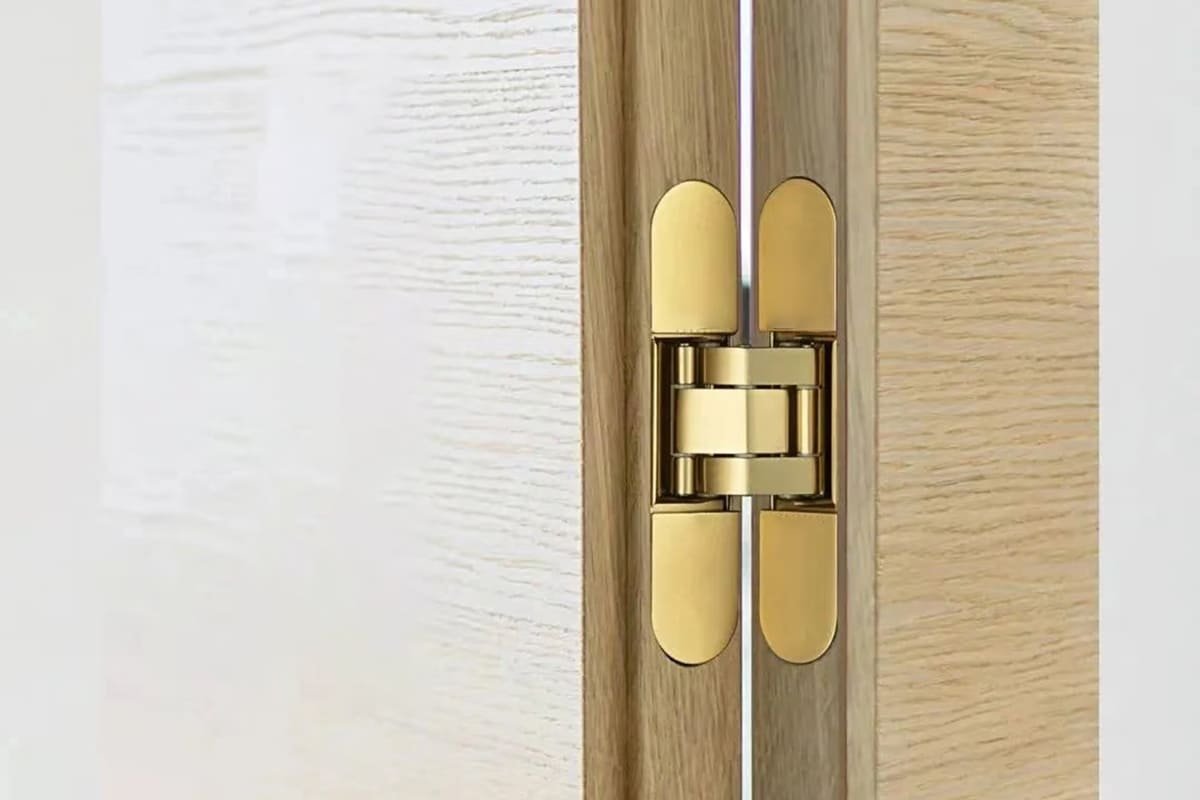
I often tell customers that there comes a point when adjustment is no longer enough. My company supplies thousands of hinges every year. We understand their lifespan and limits. If hinges are old and clearly showing signs of wear, replacing them is the best option. Common signs include hinges that are bent. You can often see this by looking at them directly. The metal might be deformed. Worn-out knuckles are another sign. The knuckles are the parts that interlock. If they are ground down, the hinge will have too much play. This means the door will sag or wobble. Rust is also a big problem. Rust weakens the metal.10 It can make the hinge pins seize up or break. If your hinges squeak loudly even after lubrication, it could be a sign of internal wear.
Another critical reason for replacement is if the hinges are simply undersized. This means they are not strong enough for the door's weight. We regularly advise customers on hinge load capacity. A heavy door needs robust hinges.11 If lighter hinges are used, they will quickly wear out. They will fail to hold the door correctly. This leads to constant sagging and swinging. Adjustment will not fix an undersized hinge. It will just keep failing. Also, the material of the hinge matters. For example, standard steel hinges in a high-humidity area will rust fast. Stainless steel hinges would be a better choice. When hinges can no longer keep the door in a stable, aligned position, they need to go. Trying to adjust badly worn or undersized hinges is a waste of time. It can even damage the door or frame further.
When considering replacement, think about the door's weight, its usage, and the environment. Choose hinges with the correct weight capacity. Select a material suitable for the location. For example, solid brass or stainless steel for damp areas. Also, ensure you use the right number of hinges. A heavy door usually needs three or more hinges. Sometimes, we even recommend four. This distributes the weight better. Always use hinges that comply with relevant standards. For fire-rated doors, using certified fire-rated hinges is non-negotiable.12 Trying to save money on hinges for a project door often leads to more costly problems later.
Adjust vs. Replace Scenarios
| Condition of Hinges | Recommended Action | Reason |
|---|---|---|
| Screws are loose | Adjust | Simple tightening often resolves minor shifts. |
| Slight sagging/misalignment | Adjust | Shimming or 3D adjustment can correct minor position issues. |
| Bent or visibly deformed | Replace | Metal fatigue or damage cannot be reliably adjusted. |
| Worn knuckles/pins | Replace | Loss of structural integrity; constant play in door. |
| Severe rust or corrosion | Replace | Weakens hinge, affects function and appearance. |
| Undersized for door weight | Replace | Will continuously fail to support door properly. |
Are temporary fixes like door stops real solutions for a swinging door?
Problem: That door just won't stay still! You might be looking for a quick and easy way to control its movement.
Temporary fixes like door stops or magnetic holders can prevent a door from unwanted movement in the short term. However, they do not address the underlying cause of the problem. They are not real adjustment solutions.
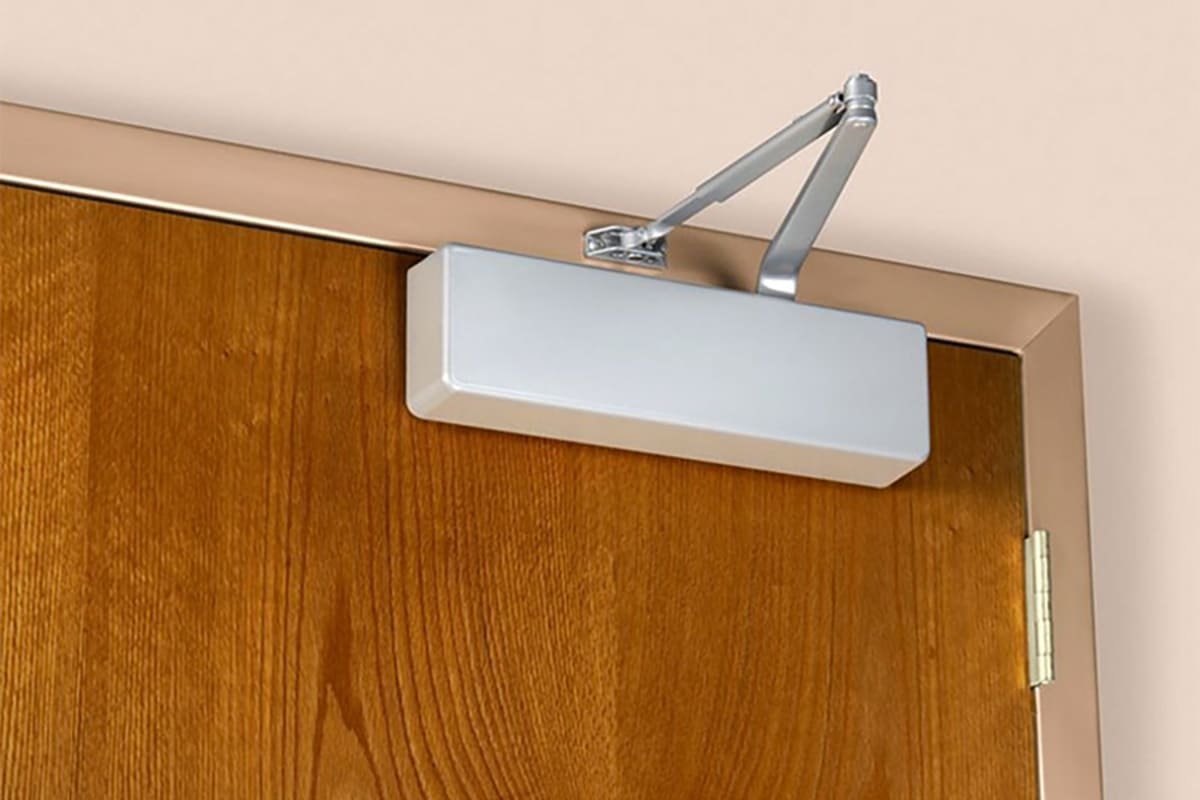
In my work, I often see people use temporary solutions for a swinging door. Door stops are a good example. There are many types. You can have floor-mounted stops, wall-mounted stops, or even hinge-pin stops. Magnetic door holders are another common option. These devices serve a purpose. They are great for holding a door open. They can prevent a door from hitting a wall. Or they can simply keep a door in one position for a short time. My team and I understand their usefulness for convenience.
However, it is crucial to understand that these are not solutions to the problem of a swinging door. A door stop simply blocks the door's movement. A magnetic holder actively holds it in place. Neither of these addresses why the door wants to swing in the first place. The door still has an underlying issue. This could be misalignment, loose hardware, or a warped door leaf. When my customers use these devices, the root cause is still there. Over time, the problem often gets worse. The door might put stress on the stop. Or the magnetic holder might fail. The door will still try to move.
For instance, if a door swings because the frame is out of plumb, a door stop just keeps it from moving past a certain point. It does not fix the crooked frame. The door is still fighting against gravity. This can cause wear on the hinges or even the door itself over time. For critical doors, like fire-rated doors in a building project, relying on a door stop is dangerous. These doors must close and latch correctly on their own to perform their safety function. I always advise my clients to find and fix the real problem. Temporary fixes are for convenience. They are not for solving deep-seated door issues. Addressing the root cause ensures long-term safety and performance. This is especially true for the high-quality hardware we supply.
Conclusion
Diagnosing why your door swings is key. Check for alignment, hardware issues, or warpage. Adjust carefully by tightening screws, shimming, or using 3D hinges. Replace hinges if they are worn out. Do not rely on temporary fixes.
"How to adjust out of plumb door so it doesn't swing open? ...", https://www.reddit.com/r/Carpentry/comments/yly0uh/how_to_adjust_out_of_plumb_door_so_it_doesnt/. A building or carpentry reference explains that an out-of-plumb door frame or hinge line can allow gravity to move the door leaf, supporting the article's explanation of why a door may swing by itself. Evidence role: mechanism; source type: education. Supports: A source should explain that a door installed out of plumb can swing under the influence of gravity.. Scope note: This would support the general mechanism, not prove that plumbness is the cause in any individual installation. ↩
"Hinge Adjustment for a Door's Final Fit", https://www.finehomebuilding.com/project-guides/windows-doors/hinge-adjustment-for-a-doors-final-fit. Architectural hardware guidance describes misaligned hinges as a cause of binding or abnormal door movement, which supports the article's claim that hinge alignment affects door behavior. Evidence role: mechanism; source type: institution. Supports: A source should support that hinge misalignment can create binding or stress and interfere with smooth door operation.. Scope note: The support is contextual because hinge tension is one of several possible causes of unwanted door movement. ↩
"Division 06 - Interior Architectural Woodwork", https://fdo.wwu.edu/division-06-interior-architectural-woodwork. Door and architectural woodwork references identify warpage as a defect that can interfere with door alignment and operation, supporting the article's discussion of warped doors as a possible cause. Evidence role: general_support; source type: institution. Supports: A source should explain that door warping or deformation can interfere with alignment, closing, or smooth operation.. Scope note: Such sources typically support operational problems from warpage generally, rather than specifically proving that minor warpage causes self-swinging in all cases. ↩
"Electric strike", https://en.wikipedia.org/wiki/Electric_strike. A neutral hardware glossary defines the latch bolt as the component projecting from the door edge to engage the strike, supporting the article's terminology. Evidence role: definition; source type: encyclopedia. Supports: A source should define a latch or latch bolt as the door-edge component that engages a strike or strike plate.. ↩
"Door Won't Latch on Striker Plate - YouTube",
. Door hardware references describe the strike plate as the frame-mounted component that receives the latch bolt, supporting the article's explanation that proper latch engagement is required for a door to stay closed. Evidence role: mechanism; source type: institution. Supports: A source should explain that the strike plate receives the latch bolt and that proper engagement is needed for the door to remain latched.. Scope note: This supports the hardware mechanism rather than diagnosing a specific latching failure. ↩"Door has shifted down on right side so far that the latch ...", https://www.reddit.com/r/howto/comments/wb4m7w/door_has_shifted_down_on_right_side_so_far_that/. Residential repair guidance notes that loose hinge fasteners can let a door sag or shift in the opening, supporting the article's claim that hinge looseness can contribute to unwanted door movement. Evidence role: mechanism; source type: education. Supports: A source should support that loose hinge screws or hinge plates can allow a door to sag or shift and affect its movement.. Scope note: The source would support a common mechanism, not establish that loose hinges are the cause in every self-swinging door. ↩
"Door knob doesn't line up with strike plate on frame : r/DIY", https://www.reddit.com/r/DIY/comments/18pi4iq/door_knob_doesnt_line_up_with_strike_plate_on/. Home repair and building maintenance references identify a misaligned strike plate as a common reason a latch bolt fails to engage, supporting the article's distinction between latching failure and free swinging. Evidence role: mechanism; source type: education. Supports: A source should support that strike plate misalignment can prevent the latch bolt from catching securely.. Scope note: This supports a likely cause of latching failure but does not exclude other causes such as door sag, latch wear, or frame movement. ↩
"How to Adjust in 3D - Tectus Hinges", https://www.tectushinges.com/how-to-adjust-in-3d. Technical descriptions of three-dimensional adjustable hinges state that they permit adjustment of the door leaf in height, lateral position, and depth, supporting the article's explanation of the adjustment axes. Evidence role: definition; source type: institution. Supports: A source should define or describe 3D adjustable hinges as hinges that permit adjustment along height, lateral, and depth axes.. Scope note: The support applies to hinges designed with 3D adjustment features and not to conventional butt hinges. ↩
"Frequently Asked Questions - Office of the Illinois State Fire Marshal", https://sfm.illinois.gov/about/divisions/fire-prevention-and-building-safety/frequently-asked-questions.html. Fire-door inspection and maintenance standards emphasize that fire doors must be maintained and adjusted so they operate as designed, supporting the article's caution that major work on fire-rated doors requires qualified handling. Evidence role: expert_consensus; source type: institution. Supports: A source should support that fire doors require proper inspection, maintenance, and adjustment by qualified persons to maintain their safety function.. Scope note: This supports the safety rationale for professional involvement, although specific legal requirements vary by jurisdiction and building type. ↩
"Analysis of Pipeline Steel Corrosion Data From NBS (NIST ...", https://www.nist.gov/publications/analysis-pipeline-steel-corrosion-data-nbs-nist-studies-conducted-between-1922-1940-and. Materials research shows that corrosion can reduce the effective section and mechanical performance of metal components, supporting the article's statement that rust can weaken hinges. Evidence role: mechanism; source type: research. Supports: A source should support that corrosion of steel or other metals can reduce cross-section, strength, or mechanical integrity.. Scope note: The evidence supports the general materials mechanism; the severity for a particular hinge depends on alloy, corrosion depth, loading, and environment. ↩
"A156.1 - 2025 Butts and Hinges", https://buildershardware.com/ANSI-BHMA-Standards/Hardware-Highlights/A1561-2021-Butts-and-Hinges. Architectural hardware standards and guidance specify hinge selection according to factors such as door weight, size, and use, supporting the article's claim that heavier doors require appropriately rated hinges. Evidence role: expert_consensus; source type: institution. Supports: A source should support that hinges are selected according to door size, weight, frequency of use, and rated load capacity.. Scope note: The source would provide selection principles rather than a specific hinge specification for every door. ↩
"Decoded: NFPA 80 Requirements for Hinges, Pivots, and ...", https://idighardware.com/2016/07/decoded-nfpa-80-requirements-for-hinges/. Fire-door standards require rated door assemblies to use listed or approved components, including appropriate hinges, supporting the article's statement that fire-rated doors need certified fire-rated hardware. Evidence role: expert_consensus; source type: institution. Supports: A source should support that fire door assemblies must use listed or approved hardware compatible with the fire rating.. Scope note: The exact certification and labeling requirements depend on the applicable code, standard edition, and jurisdiction. ↩