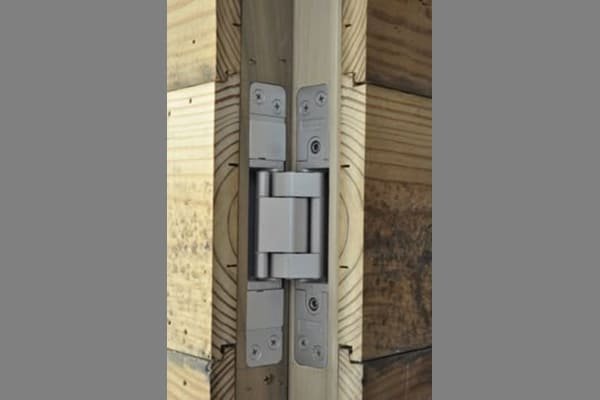
What is the best metal for door hinges?
The best metal for door hinges is a common question because the wrong choice can create rust, door sagging, noise, and costly after-sales claims. I see buyers compare material names first, but that often misses the real issue. The better solution is to match hinge material with door weight, environment, service life, and budget.
If you want one broadly reliable choice, 304 stainless steel is usually the best metal for door hinges because it balances strength, corrosion resistance, load-bearing ability, and long-term durability.1 However, zinc alloy, aluminum alloy, or composite concealed hinge structures may be better for dry interiors, lightweight doors, design-focused projects, or cost-sensitive bulk orders.
I usually treat this question as a procurement decision, not a simple material ranking. A hinge works inside a full door system. So I look at door weight, opening frequency, humidity exposure, installation method, surface finish, and target price before I recommend a material.
How do I choose the best metal for door hinges by door weight and environment?
Many buyers start with price or appearance, but hinge failures often start with a mismatch between material and application. A light bedroom door and a heavy entrance door do not ask the same thing from a hinge. If I ignore the door conditions, I increase the risk of rust, deformation, or noisy operation.
The best metal for door hinges should be selected by matching five factors: door weight, opening frequency, indoor or outdoor exposure, humidity level, and expected service life2. Heavy or humid applications usually need stainless steel. Dry interior doors may accept zinc alloy. Lightweight, low-load doors may use aluminum alloy where weight reduction matters.

Start with the door, not the metal
In factory-side discussions, I often ask buyers one simple question first: “Where will this hinge work?” That question usually gives a better answer than asking which material sounds strongest.
A hinge for a bathroom door faces moisture. A hinge for a hotel room door faces repeated opening. A hinge for a heavy solid wood door faces constant load. A hinge for a concealed door system may need a more complex structure with several materials working together.
Here is the basic selection logic I use:
| Selection Factor | Why It Matters | Typical Material Direction |
|---|---|---|
| Door weight | Heavy doors increase hinge stress and sagging risk3 | 304 stainless steel or reinforced composite structure |
| Humidity | Moisture increases corrosion risk4 | 304 stainless steel |
| Opening frequency | High traffic increases wear5 | Stainless steel or stronger concealed hinge structure |
| Budget | Bulk projects need cost control | Zinc alloy or composite structure where suitable |
| Design requirement | Concealed or slim profiles may need special structure | Zinc alloy body with stainless steel/aluminum arms |
| Expected service life | Longer use requires better material stability | 304 stainless steel or verified high-grade structure |
Why hinge material affects after-sales risk
The wrong hinge material can cause problems that are expensive for buyers, distributors, and door factories. I have seen purchasing teams focus on saving a small amount per set, only to face higher replacement costs later. In bulk supply, even a small failure rate can become a serious issue.
Common risks include:
- Rust marks around the hinge and screw holes
- Door sagging when the hinge body or arm lacks strength
- Surface finish inconsistency across batch orders
- Noise or friction after repeated use
- Deformation under continuous load
- Customer complaints that reduce brand trust
I do not treat hinge material as a cosmetic choice. I treat it as a long-term performance decision.
A practical buyer checklist
Before I recommend the best metal for door hinges, I prefer to confirm:
- Door type: interior, entrance, bathroom, kitchen, fire-rated, glass, or concealed door
- Door weight: approximate weight per leaf
- Door size: height, width, and thickness
- Environment: dry indoor, humid indoor, coastal, outdoor, or semi-outdoor
- Usage frequency: residential, hotel, office, commercial, or public area
- Finish requirement: satin, polished, black, PVD, powder coating, or custom finish
- Compliance needs: CE documents, fire-rated documents, or market-specific standards to verify
- Target price level: economy, mid-range, or premium
This approach keeps the decision practical. It also helps buyers avoid overpaying for unnecessary specifications or under-specifying a hinge for a demanding project.
Is 304 stainless steel the best metal for door hinges for most projects?
Some buyers want one safe answer because they manage many SKUs and many door types. That is understandable. But if I give one universal answer without limits, I may create false confidence. The safest general answer must still include environment, load, and quality control.
For most buyers, 304 stainless steel is the best metal for door hinges when durability, corrosion resistance, load-bearing ability, and service life are the main priorities. It is especially suitable for humid areas, heavier doors, kitchens, bathrooms, and higher-value projects. Buyers should still verify grade, thickness, structure, finish, and supplier inspection records.
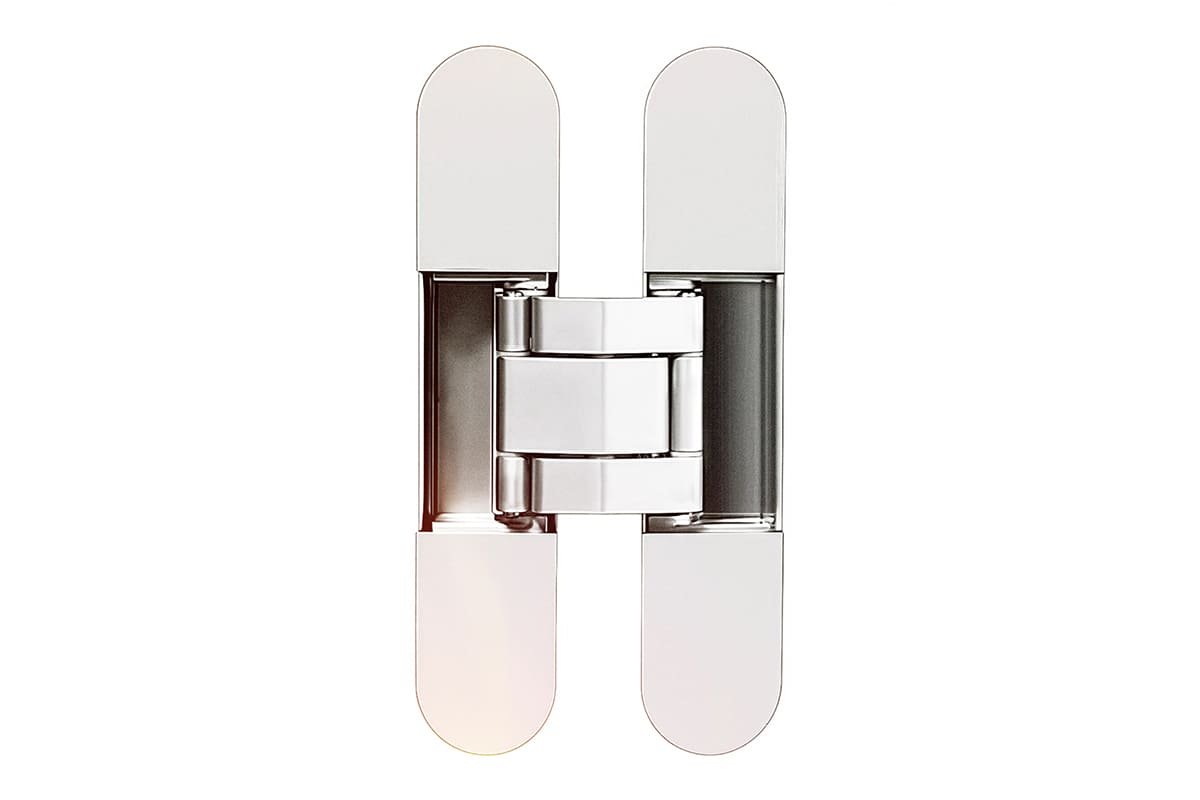
Why 304 stainless steel is often the safest overall choice
304 stainless steel is widely used in architectural hardware because it offers a strong balance of mechanical strength and corrosion resistance.6 It is not magic, and it does not mean “never rust under any condition.”7 However, it performs well in many door hardware applications when the material grade and production process are properly controlled.
I usually recommend 304 stainless steel when the buyer needs:
- Better anti-rust performance than ordinary steel or lower-grade materials
- Stable strength for medium to heavy doors
- Longer service life in humid environments
- More reliable surface appearance over time
- Lower after-sales replacement risk for branded hardware lines
For procurement teams, 304 stainless steel is attractive because it reduces uncertainty. A buyer may not know every final installation environment. In that case, choosing a more corrosion-resistant and durable hinge material can protect the product line.
Where 304 stainless steel makes the most sense
| Application | Why 304 Stainless Steel Fits |
|---|---|
| Bathroom doors | Handles moisture better than zinc alloy in many conditions |
| Kitchen doors | Resists humidity and cleaning exposure better |
| Entrance doors | Supports stronger, longer-service hinge requirements |
| Hotel doors | Helps reduce maintenance in higher-frequency use |
| Coastal or humid regions | Offers stronger corrosion resistance than many lower-cost materials |
| Premium door hardware lines | Supports brand positioning and lower complaint risk |
What buyers should verify
Material name alone is not enough. I have learned that buyers should ask for details, not just catalog descriptions.
Important checks include:
Material declaration
Buyers should ask whether the hinge leaf, pin, bearing, arm, or body is actually 304 stainless steel. Some products use mixed materials.Thickness and structure
A better material with poor thickness may still underperform. Door weight and hinge size must match.Pin and bearing quality
The hinge pin and bearing structure affect smooth operation and noise.Surface finish consistency
Bulk buyers should verify finish samples before mass production.Salt spray or corrosion test reports, if applicable
Buyers should treat reports as documents to review, not as marketing slogans.Certification documents
For projects requiring CE or fire-rated compliance, buyers should verify valid certificates and confirm that the tested configuration matches the purchased product.
Limits of 304 stainless steel
I also explain the limits clearly. 304 stainless steel may not be the lowest-cost option. It may not be necessary for every dry interior door. It may also require careful processing to achieve the desired finish. In high-chloride or harsh chemical environments, buyers may need professional engineering evaluation and possibly different material specifications.
So, is 304 stainless steel the best metal for door hinges? For many professional buyers, yes, it is the safest overall starting point. But it should still be selected through application review, not by habit.
When are zinc alloy or aluminum alloy hinges a better choice?
A strong material is not always the most suitable material. Some projects need attractive appearance, controlled cost, or lower product weight more than maximum durability. If I specify stainless steel for every door, I may increase cost without giving the buyer real value.
Zinc alloy hinges can be a good choice for cost-effective interior doors in dry environments, especially where design and finish matter. Aluminum alloy hinges can work for lightweight, low-load doors where weight reduction and appearance are important. Neither should be overstated for heavy-duty or highly humid applications without proper evaluation.
Zinc alloy: practical for dry interiors and design flexibility
Zinc alloy is often used in door hardware because it supports complex shapes, smooth surface finishing, and competitive pricing.8 In concealed hinge systems, zinc alloy bodies can provide a clean appearance and efficient production cost.
I usually consider zinc alloy when the project has these conditions:
- The door is interior and located in a dry environment
- The door weight is moderate or light
- The buyer needs cost control for bulk orders
- The design requires clean casting forms
- The application does not demand maximum corrosion resistance
Zinc alloy can work well for standard interior door hardware, but it should not be treated as equal to 304 stainless steel in humid or corrosive environments.9 A bathroom, coastal apartment, or semi-outdoor space may expose zinc alloy to more risk, especially if the coating is damaged.
Aluminum alloy: useful for lightweight and low-load applications
Aluminum alloy has a different advantage. It is lightweight, easy to process, and can support modern design requirements.10 It is not my first recommendation for heavy doors or high-stress commercial use. However, it can be suitable for lightweight panels, cabinet-style doors, or low-load architectural applications.
I usually position aluminum alloy as:
- A choice for lightweight doors
- A choice where low product weight matters
- A choice for design-focused hardware
- A choice for lower load requirements
- A possible component in composite hinge structures
The important point is restraint. Aluminum alloy should not be sold as a heavy-duty replacement for stainless steel without verified structure, load data, and application review.
Zinc alloy vs. aluminum alloy vs. 304 stainless steel
| Material | Best Use Case | Main Advantage | Main Limitation |
|---|---|---|---|
| 304 stainless steel | Humid areas, heavier doors, long service life | Strength and corrosion resistance balance | Higher cost than many alternatives |
| Zinc alloy | Dry interior doors, cost-sensitive projects | Good shape flexibility and pricing | Lower corrosion resistance in wet environments |
| Aluminum alloy | Lightweight, low-load doors | Low weight and clean appearance | Not ideal for heavy-duty load without engineering review |
Cost is not only purchase price
Many buyers compare hinge materials by unit price. I understand that because bulk procurement must protect margin. However, the real cost includes more than the invoice.
A lower-cost hinge can become expensive if it causes:
- Replacement labor
- Warranty claims
- Distributor complaints
- Project delays
- Brand reputation damage
- Extra inspection costs
- Rework at the door factory
For this reason, I suggest using zinc alloy and aluminum alloy where their advantages fit the application. I do not suggest using them only because they are cheaper. In my experience, the best purchasing decision is the one that protects both the project budget and the after-sales result.
Are composite concealed hinge structures the best metal for door hinges alternative?
Concealed hinges create a different challenge because the buyer is not always choosing one metal. The hinge may combine several materials to balance strength, corrosion resistance, cost, and appearance. If I only compare single metals, I may miss a very practical B2B solution.
Composite concealed hinge structures can be an excellent alternative when buyers need a balance of load-bearing performance, appearance, corrosion resistance, and cost control. For example, a zinc alloy body with stainless steel or aluminum alloy arms may be suitable when the structure is well designed and matched to the door weight.
Why concealed hinges often use mixed materials
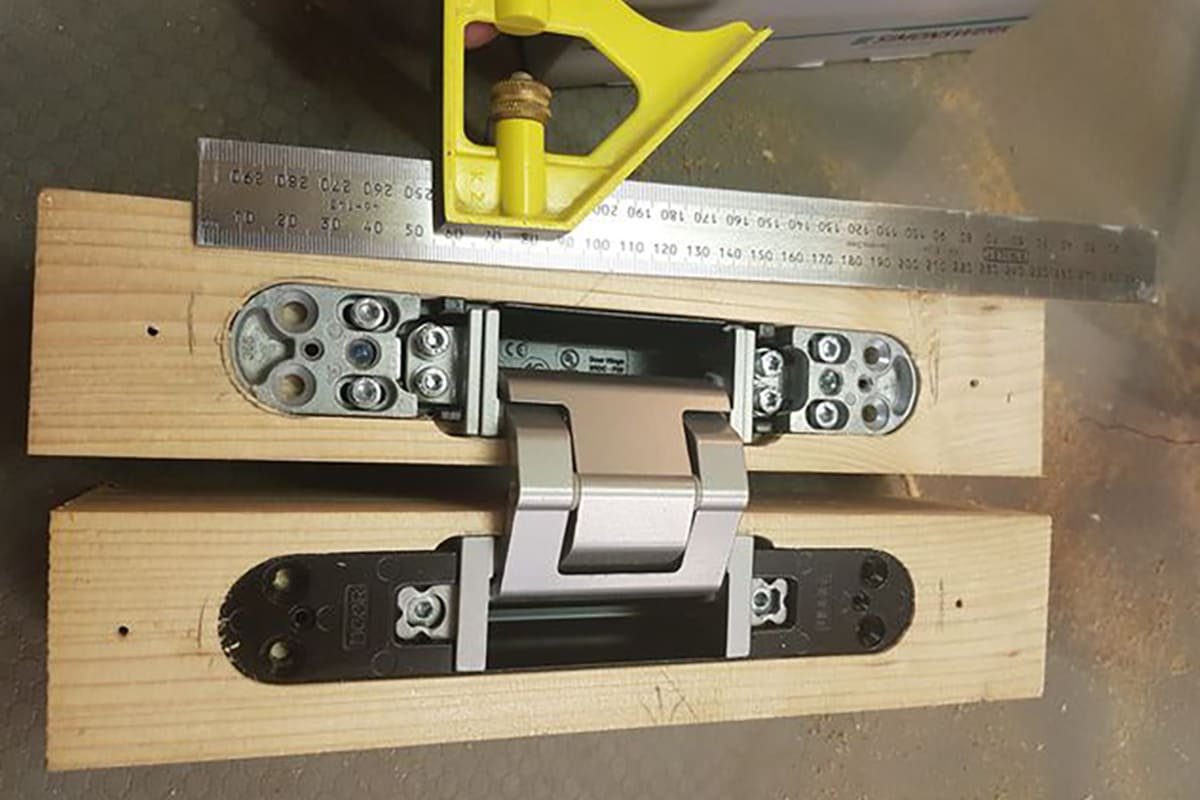
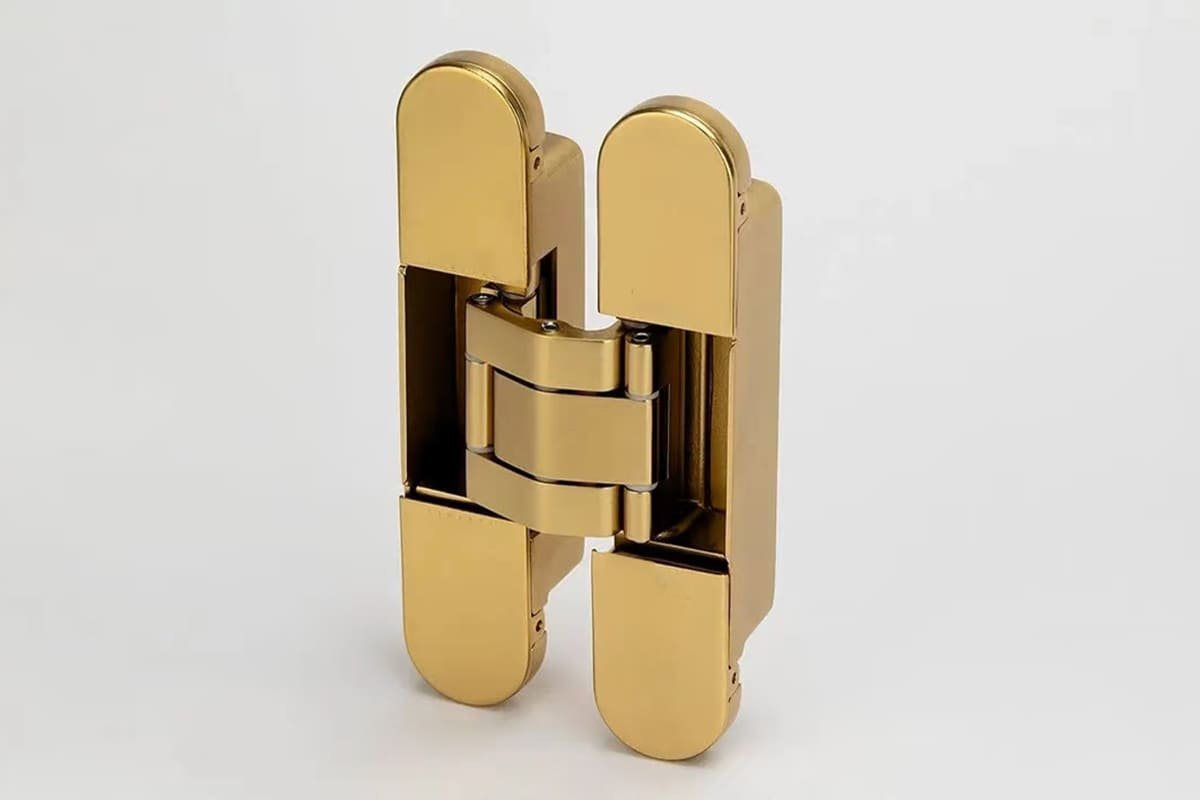
A concealed hinge works differently from a simple butt hinge. It may include a body, arms, pins, adjustment screws, bearings, covers, and fixing plates. Each part has a different job. So it can make sense to use different materials in different parts.
For example:
- The body may use zinc alloy for casting shape and appearance.
- The arms may use stainless steel or aluminum alloy depending on load and design.
- The pins may use stronger steel or stainless steel.
- The screws may need corrosion resistance and stable fixing strength.
- The covers may focus on appearance and finish matching.
This is why I do not always ask, “What is the best metal for door hinges?” when evaluating concealed hinges. I ask, “Which material is used in which component, and why?”
A practical composite structure example
A common B2B approach is a zinc alloy body with stainless steel arms or a zinc alloy body with aluminum alloy arms, depending on the hinge design and target application. This can help balance multiple requirements.
| Component | Possible Material | Buyer Benefit |
|---|---|---|
| Hinge body | Zinc alloy | Good casting shape, clean design, cost control |
| Load arms | Stainless steel | Better strength and corrosion resistance |
| Lightweight arms | Aluminum alloy | Lower weight for lighter applications |
| Pins/screws | Stainless steel or treated steel | Better stability and fixing performance |
| Covers | Zinc alloy or aluminum alloy | Better decorative finish options |
What buyers should check in concealed hinge sourcing
Concealed hinges require more careful evaluation than standard butt hinges because small design changes can affect installation and performance. I suggest buyers confirm the following before placing bulk orders:
Door weight range
The supplier should state the recommended door weight and size range. Buyers should avoid vague claims.Adjustment function
Many concealed hinges offer 3D adjustment.11 Buyers should confirm adjustment range and installation tolerance.Opening angle
A 90°, 120°, or 180° opening requirement can change the hinge design.Material of each component
Buyers should not accept “zinc alloy hinge” or “stainless hinge” as the full answer. Each critical part matters.Screw and fixing plate quality
A strong hinge body cannot solve weak fixing.Finish consistency
Concealed hinges often serve design-focused doors. Batch finish control matters.Certification documents
For fire-rated or CE-related project requirements, buyers should verify the actual certificate scope and tested product configuration.
Why composite hinges can reduce procurement conflict
Product managers often face a conflict. Sales teams want a beautiful concealed hinge. Buyers want a competitive price. Engineers want stable load performance. Distributors want fewer complaints. Composite structures can help balance these demands when the design is appropriate.
However, I still recommend application-specific evaluation. A composite concealed hinge is not automatically better than a stainless steel butt hinge. It depends on door weight, installation precision, fixing material, cycle expectations, and environment.
In SDH Hardware’s manufacturing context, we often treat concealed hinge selection as a structure decision, not just a material decision. This approach helps buyers avoid both overengineering and underengineering the product.
What supplier checks help confirm the best metal for door hinges?
A good material choice can still fail if the supplier cannot control production. Buyers often receive a nice sample, but the real challenge is stable bulk quality. If I only check the material name, I may miss finish variation, dimensional problems, weak pins, or inconsistent assembly.
To confirm the best metal for door hinges, buyers should check the supplier’s material verification, production process, finish consistency, dimensional tolerance, load suitability, inspection records, and certification documents. For bulk orders, the factory’s quality control system matters as much as the metal itself.12
Material verification
The first check is simple: confirm what the hinge is actually made from. For stainless steel hinges, buyers should verify whether the supplier uses 304 stainless steel or another grade. For zinc alloy and aluminum alloy hinges, buyers should confirm the alloy type and coating process when relevant.
Useful documents may include:
- Material declaration
- Material test report, if available
- Production batch records
- Finish specification sheet
- Drawing with material callouts
- Sample approval record
I recommend treating documents as verification tools. Buyers should not rely only on catalog language.
Production capability
A supplier with stable production lines can usually control consistency better. In architectural door hardware, consistency matters because door factories need smooth assembly and distributors need uniform appearance.
Important factory capability checks include:
| Supplier Area | What Buyers Should Review |
|---|---|
| Raw material control | Incoming inspection and supplier traceability |
| Stamping/casting/machining | Process stability and dimensional control |
| Polishing and finishing | Surface consistency across batches |
| Assembly | Pin, bearing, screw, and movement quality |
| Final inspection | Appearance, size, movement, and packing checks |
| Customization | Ability to adjust size, finish, and accessory configuration |
As a manufacturer, I place high value on process control because a hinge is a small product with many failure points. A small tolerance issue can create installation problems on the door factory line.
Finish consistency
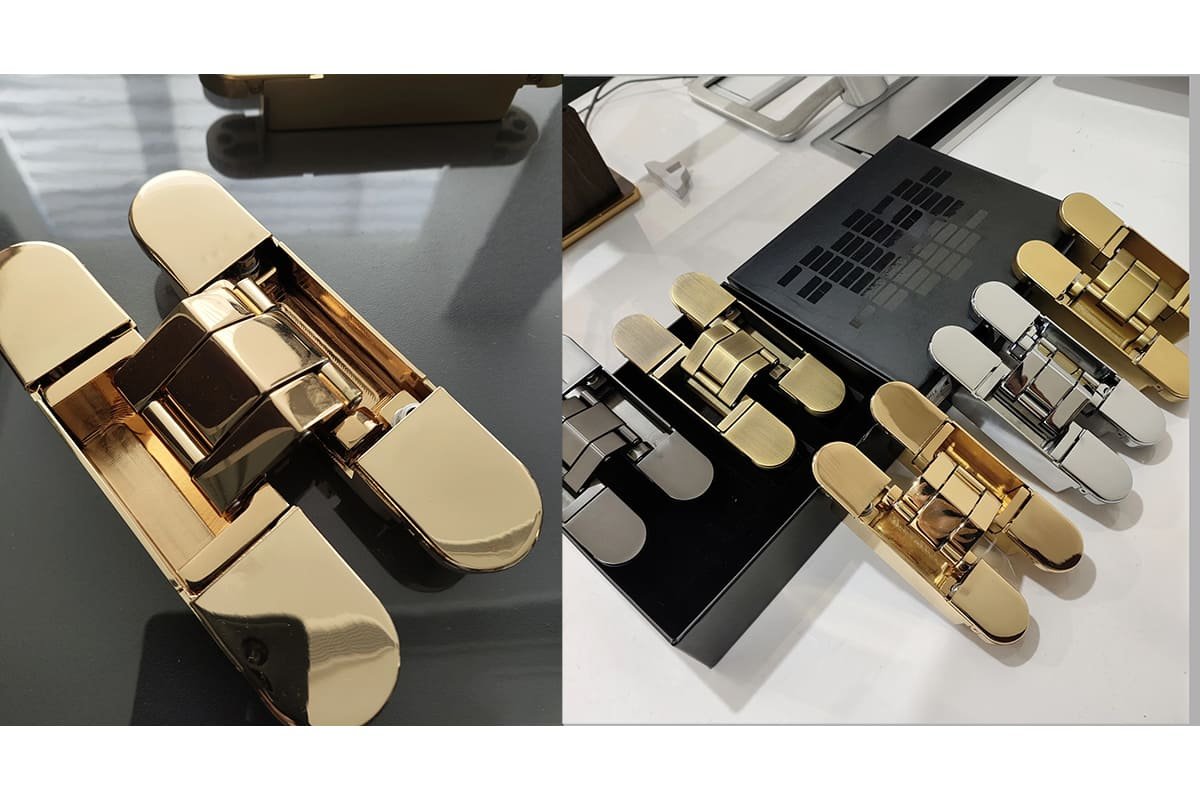
Finish is not only about beauty. It also affects brand perception and customer acceptance. For bulk orders, I suggest buyers approve a physical color sample before production.
Common finish points to verify include:
- Color tone
- Gloss level
- Brushing direction
- Coating thickness, if specified
- Scratch resistance expectations
- Packaging protection
A buyer should also define acceptable tolerance. Words like “same color” are too vague for industrial purchasing. A confirmed sample board or reference sample can reduce disputes.
Load and application suitability
Buyers should ask suppliers to recommend hinge models based on door size and weight. However, buyers should also do their own project review. If the product is used in a special application, I recommend getting qualified professional evaluation. This is especially important for fire-rated doors, public buildings, heavy entrance doors, and high-frequency commercial doors.
A practical inquiry form should include:
- Door material
- Door width and height
- Door thickness
- Door weight
- Number of hinges per door
- Opening angle
- Indoor or outdoor use
- Humidity exposure
- Fire-rated or CE-related requirement
- Target finish and packaging
Certification and compliance checks
If a project requires CE certification or fire-rated documentation, buyers should verify the documents carefully. The certificate should match the product type, configuration, and intended market requirement. I avoid making blanket claims because certification value depends on scope, validity, and product consistency.
For importers and brand operators, this step protects market access and reduces compliance risk. It also helps avoid delays during project approval or customs-related review.
Why supplier selection matters
The best metal for door hinges is not only a material decision. It is also a supplier decision. A strong supplier should help buyers connect material, structure, finish, compliance, and cost. That is the difference between buying a hinge and building a stable hardware supply chain.
Frequently Asked Questions
Is stainless steel always the best metal for door hinges?
Stainless steel, especially 304 stainless steel, is often the safest overall choice for strength and corrosion resistance. However, it is not always necessary. Dry interior doors, lightweight doors, or cost-sensitive product lines may use zinc alloy, aluminum alloy, or composite structures when the application is suitable.
Can zinc alloy door hinges be used in bathrooms?
I usually do not recommend zinc alloy as the first choice for bathrooms unless the coating, structure, and environment have been carefully evaluated. Bathrooms expose hinges to moisture, which increases corrosion risk. 304 stainless steel is generally a more reliable choice for humid areas.
Are aluminum alloy hinges strong enough for heavy doors?
Aluminum alloy hinges are usually better for lightweight or low-load applications. I would not position aluminum alloy as the default choice for heavy doors without verified engineering data, hinge structure review, and supplier guidance. Heavy doors normally need stronger materials or reinforced hinge structures.
What should I ask a hinge supplier before bulk ordering?
You should ask about material grade, door weight suitability, finish process, dimensional tolerance, inspection procedures, packing method, production capacity, and certification documents. You should also provide door size, weight, environment, opening frequency, and target market requirements before final selection.
Do concealed hinges need the same metal as butt hinges?
Not always. Concealed hinges often use composite structures because different parts perform different functions. A concealed hinge may use a zinc alloy body with stainless steel or aluminum alloy arms. Buyers should check the material and function of each component, not only the product name.
Conclusion
The best metal for door hinges is usually 304 stainless steel when buyers need a broadly reliable balance of strength, corrosion resistance, load-bearing ability, and service life. Still, zinc alloy, aluminum alloy, and composite concealed hinge structures can be better choices in specific indoor, lightweight, design-focused, or budget-sensitive projects. I recommend starting with door weight, environment, usage frequency, and compliance needs, then matching the material to the real application. If you are sourcing hinges in bulk, SDH Hardware can help review your project requirements and recommend suitable door hinge solutions for your market.
"SAE 304 stainless steel", https://en.wikipedia.org/wiki/SAE_304_stainless_steel. A materials reference describes AISI 304 stainless steel as an austenitic stainless steel with good corrosion resistance and practical mechanical properties; this supports its use as a robust general hinge material, although it does not prove that 304 is superior for every hinge design, load rating, or installation environment. Evidence role: general_support; source type: encyclopedia. Supports: A neutral materials reference should support that 304 stainless steel has good corrosion resistance and useful mechanical properties for general hardware applications.. Scope note: The source would support material properties generally, not a specific door-hinge product or procurement decision. ↩
"A156.1 - 2025 Butts and Hinges", https://buildershardware.com/ANSI-BHMA-Standards/Hardware-Highlights/A1561-2025-Butts-and-Hinges. Architectural hardware guidance commonly specifies hinges by door size or weight, frequency of use, and installation exposure; this supports using door-system conditions rather than material name alone as the basis for hinge selection, although such guidance may address hinge specification broadly rather than metal choice specifically. Evidence role: expert_consensus; source type: institution. Supports: An architectural hardware standard or professional guide should support that hinge selection depends on door size or weight, frequency of use, and environmental exposure.. Scope note: The support is contextual because standards may classify hinge grade and application more directly than raw material selection. ↩
"PEER-REVIEW ARTICLE", https://bioresources.cnr.ncsu.edu/wp-content/uploads/2016/06/BioRes_07_4_5809_Zhou_HHYJ_Hinge_Config_Doors_FiniteElement_3335.pdf. Engineering mechanics texts explain that increasing the supported load increases forces and moments at the support points; this supports the claim that heavier doors impose greater stress on hinges and can contribute to sagging when the hinge or fixing system is insufficient. Evidence role: mechanism; source type: education. Supports: An engineering mechanics source should support that increased load increases bending moment, shear, and deflection risk in supported structures such as doors on hinges.. Scope note: The source would explain the general mechanical mechanism rather than test a specific hinge model. ↩
"Corrosion as an Electrochemical Process", http://hyperphysics.phy-astr.gsu.edu/hbase/Chemical/corrosion.html. Corrosion science references describe moisture as an electrolyte that enables electrochemical reactions between metals and their environment; this directly supports the statement that humid or wet conditions increase corrosion risk for metal hinges. Evidence role: mechanism; source type: education. Supports: A corrosion science source should support that moisture enables electrochemical corrosion processes in metals.. ↩
"Studies on tribology - PMC", https://pmc.ncbi.nlm.nih.gov/articles/PMC3722018/. Tribology research shows that repeated contact and relative motion between metal surfaces can produce wear through frictional, abrasive, or fatigue mechanisms; this supports the claim that high-frequency door use increases hinge wear. Evidence role: mechanism; source type: paper. Supports: A tribology paper should support that repeated sliding or rotating contact produces wear through friction, abrasion, or fatigue mechanisms.. Scope note: The evidence would describe general wear mechanisms and may not measure residential or commercial door hinges specifically. ↩
"Understanding The Corrosion Resistance of Stainless Steel: 304 vs ...", https://www.tbkmetal.com/the-corrosion-resistance-of-stainless-steel/. Institutional stainless steel guidance identifies 304 stainless steel as a common grade for architectural and building applications because it combines corrosion resistance with adequate mechanical properties; this supports the article’s statement, although it does not establish performance for every hinge thickness, finish, or installation condition. Evidence role: general_support; source type: institution. Supports: An institutional stainless steel or architectural materials source should support the common use of 304 stainless steel in building applications and its balance of corrosion resistance and strength.. Scope note: The source would support architectural material use generally rather than door hinges alone. ↩
"Corrosion Behavior of Sensitized AISI 304 Stainless Steel in Acid Chloride ...", https://pmc.ncbi.nlm.nih.gov/articles/PMC9740934/. Corrosion studies report that 304 stainless steel can undergo localized corrosion, including pitting, in chloride-rich or otherwise aggressive environments; this supports the qualification that stainless steel is corrosion resistant but not immune to rust or corrosion under all conditions. Evidence role: mechanism; source type: paper. Supports: A corrosion paper should support that 304 stainless steel is susceptible to localized corrosion such as pitting in chloride-containing or aggressive environments.. Scope note: The source would address corrosion susceptibility under specified laboratory or environmental conditions, not the probability of failure in every door-hinge installation. ↩
"Zinc Alloy Die Casting Parts - USA Manufacturing - Deco Products", https://decoprod.com/zinc-die-casting-parts/. Technical guidance on zinc die casting notes that zinc alloys can be cast into complex shapes with good dimensional accuracy and surface finish; this supports their use in decorative or form-intensive hardware, although the claim about competitive pricing depends on market conditions, tooling volume, and supplier costs. Evidence role: general_support; source type: institution. Supports: A zinc or die-casting industry institution should support that zinc alloys are suitable for die casting complex shapes with good surface finish and efficient production.. Scope note: The manufacturability evidence is direct, but the pricing component is contextual and market-dependent. ↩
"Atmospheric Corrosion of Different Steel Types in Urban and Marine ...", https://pmc.ncbi.nlm.nih.gov/articles/PMC11679332/. Materials research and corrosion references distinguish the corrosion behavior of zinc alloys from that of 304 stainless steel, with stainless steel generally relying on a chromium-rich passive film for improved resistance; this supports treating zinc alloy more cautiously in humid or corrosive settings, although coatings and specific alloy composition can materially change performance. Evidence role: general_support; source type: research. Supports: A materials comparison source should support that zinc alloys and 304 stainless steel differ significantly in corrosion behavior, especially in moist or corrosive environments.. Scope note: The source would support general comparative corrosion behavior, not all coated zinc-alloy hinge products. ↩
"Printable aluminum alloy sets strength records, may enable lighter aircraft ...", https://news.mit.edu/2025/printable-aluminum-alloy-sets-strength-records-may-enable-lighter-aircraft-parts-1007. Materials engineering references describe aluminum alloys as low-density metals with favorable formability and machinability; this supports their use where reduced component weight and design flexibility matter, although it does not establish that a given aluminum hinge is suitable for heavy doors. Evidence role: definition; source type: education. Supports: An educational materials source should support that aluminum alloys have relatively low density and are commonly valued for formability or machinability.. Scope note: The source supports general aluminum-alloy properties, not hinge load capacity. ↩
"A kind of concealed three-dimensional adjustable hinge device", https://patents.google.com/patent/CN209195202U/en. Technical patent literature describes concealed hinge mechanisms with multi-axis or three-dimensional adjustment for aligning a door after installation; this supports the existence of 3D adjustment in concealed hinge designs, although patent examples do not prove that most commercial concealed hinges include the feature. Evidence role: case_reference; source type: other. Supports: Patent or technical documentation should show that concealed hinges can include adjustment mechanisms along multiple axes.. Scope note: The evidence would document the mechanism as a case reference rather than establish market prevalence. ↩
"ISO 9001:2015 - Quality management systems — Requirements", https://www.iso.org/standard/62085.html. ISO quality-management guidance states that controlled processes, documented procedures, and continual monitoring help organizations provide products that consistently meet requirements; this supports the article’s emphasis on factory quality control in bulk hinge sourcing, although it does not show that quality systems are literally equal in importance to material choice in every project. Evidence role: expert_consensus; source type: institution. Supports: A quality-management institution should support that documented quality-control systems help ensure consistent manufacturing output and conformity to requirements.. Scope note: The source supports the general role of quality systems in manufacturing consistency, not a quantified comparison with hinge material selection. ↩