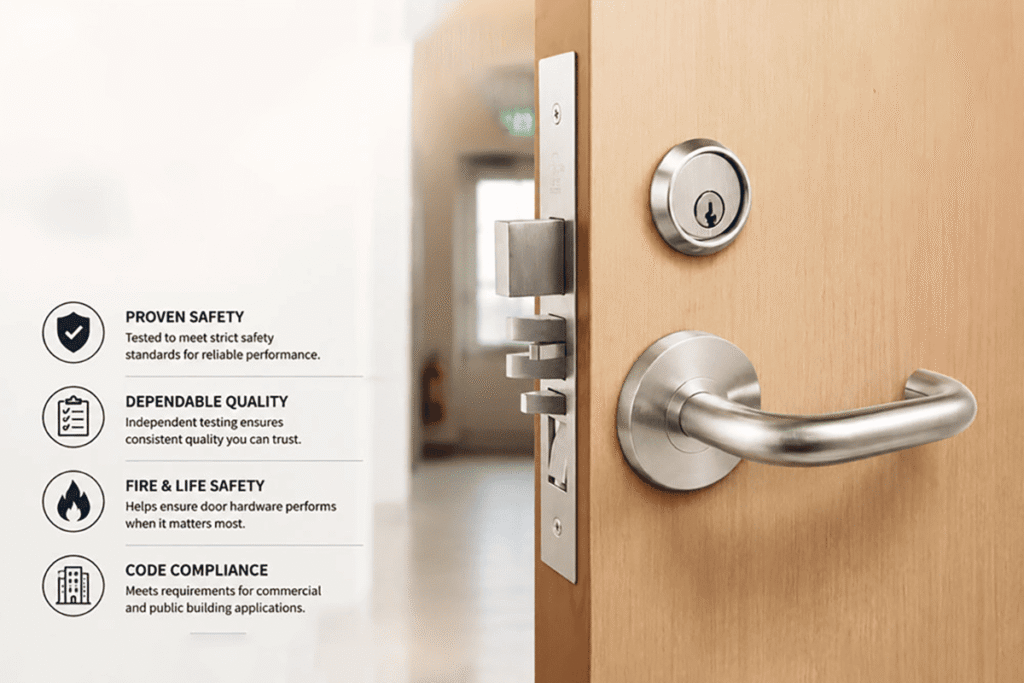
Why CE-certified Door Hardware Is Essential for Your Project?
CE-certified door hardware is essential when I help overseas door manufacturers and project buyers reduce compliance risk before bulk purchasing. The problem is simple: many buyers ask only, “Does the supplier have CE?” That shortcut can create confusion, rejected documents, delayed approvals, and costly rework. The safer solution is product-level verification.
CE-certified door hardware matters because CE is not a general quality badge or company-level certificate1. I treat it as product-level compliance evidence for applicable European requirements. Buyers should confirm that the exact hinge, lock, handle, cylinder, model, standard, and project use match the right CE documents and supporting test evidence.
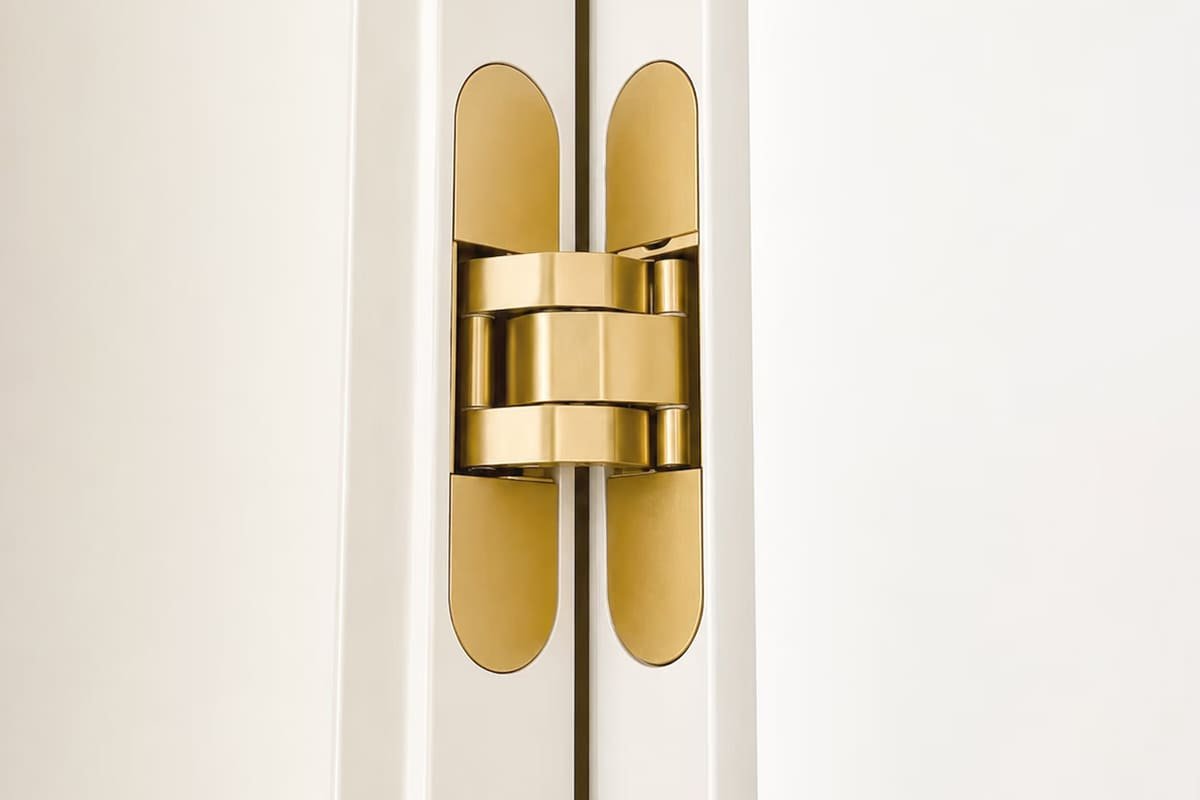
I have seen many procurement discussions become difficult only after samples, quotations, or even production schedules are already confirmed. So, I prefer to check CE documents early, before price negotiation becomes the only focus. The sections below explain how I evaluate compliance in a practical sourcing process.
What does CE-certified door hardware actually mean for buyers?
Many buyers feel safe when a supplier says, “We have CE.” I understand why. The phrase sounds simple, fast, and reassuring. But if the buyer does not check the exact product coverage, that reassurance can become a procurement risk.
CE-certified door hardware means the specific product is supported by CE documentation for applicable European compliance requirements. I do not treat CE as a universal quality certificate. I check whether the certificate, declaration, test report, standard reference, model number, and product application match the hardware being purchased2.

CE is product-level, not supplier-level
In my communication with overseas project buyers, one common misunderstanding is the idea of a “CE-certified factory.” A factory may have many certificates, strong production capacity, and stable quality control. However, CE marking is normally checked at the product level where applicable3, not simply by the supplier name.
For example, a door hardware manufacturer may produce:
- Butt hinges
- Concealed hinges
- Euro standard mortise locks
- Lever handles
- Lock cylinders
- Door accessories
Each category may involve different performance expectations, test methods, and documentation. A CE document for one hinge series should not be assumed to cover a different hinge design, a mortise lock, or a lock cylinder. I always ask a more specific question:
“Can this exact product type, model, standard, finish, and intended application be supported by the correct CE documentation?”
That question is more useful than asking, “Do you have CE?”
What buyers should understand before comparing suppliers
CE-certified door hardware helps buyers with market access and project acceptance where CE requirements apply. However, I do not present it as a complete guarantee of long-term product quality. A buyer still needs to evaluate:
| Evaluation point | Why I check it |
|---|---|
| Product category | Hinges, locks, handles, and cylinders may follow different standards |
| Model coverage | One certificate may not cover every model in a supplier’s catalog |
| Intended use | Interior doors, exterior doors, fire doors, and project doors may require different evidence |
| Test report details | Test evidence should match the certificate and product specification |
| Factory quality control | Batch consistency still depends on production management |
| Certificate validity | Buyers should verify current documents before shipment or project submission |
At SDH Hardware, I often see buyers request CE documents together with finish samples, drawings, and packing details. That is a good practice. Compliance cannot be separated from product identification. A certificate that cannot be clearly connected to the ordered item gives limited practical protection.
My practical view
I treat CE-certified door hardware as one part of a complete procurement file. The file should include drawings, material details, model references, finish codes, test evidence, declarations, and project requirements. When those items match, buyers can make decisions with more confidence. When they do not match, the lowest price may become the most expensive choice later.
How should you verify CE-certified door hardware documents before ordering?
A buyer can lose time when document checking happens after the purchase order. I have seen this create pressure for both supplier and buyer. The better method is to verify documents before sample approval, before bulk production, and before project submission.
To verify CE-certified door hardware, I check whether the document names the correct product category, model or series, applicable standard, test evidence, issuing body, validity, and intended application. I also compare the certificate details with drawings, labels, packaging, and the final purchase order.

A simple document matching checklist
I recommend that buyers use a written checklist. It does not need to be complicated. It only needs to force the team to compare the certificate with the exact product being purchased.
Here is the checklist I usually follow:
Check the product name
- Does the certificate refer to hinges, mortise locks, handles, cylinders, or another category?
- Is the category the same as the ordered product?
Check the model or series
- Does the model number appear clearly?
- If only a series is listed, does the supplier explain which models are included?
Check the applicable standard
- Does the document mention a relevant European standard?
- Does the standard make sense for the product type?
Check test reports
- Does the test report support the certificate?
- Do the tested samples match the ordered specification?
Check application limits
- Is the product used on ordinary doors, project doors, exterior doors, or fire-rated doors?
- Does the document clearly support that use?
Check document age and validity
- Is the document current?
- Can the buyer verify the issuing organization if needed?
Check consistency with the purchase order
- Do material, size, finish, accessories, and packaging match the approved version?
Why matching matters more than collecting files
Some suppliers send many documents quickly. That can look professional. However, I have learned that a large document package does not automatically mean low risk. The key question is whether each document matches the actual order.
For example, a buyer may order a concealed hinge in satin nickel finish for a European door system. The supplier may send a CE document for another hinge size or a different hinge series. The file exists, but the connection is weak. A project reviewer may reject the submission, or the importer may ask for clarification before release.
The same logic applies to locks and handles. If a mortise lock is sold under one model, but the document refers to a different lock case, backset, or function, the buyer should pause. I prefer to resolve that issue before production because document correction after shipment is much harder.
Document review table for procurement teams
| Document item | Good sign | Warning sign |
|---|---|---|
| Product name | Same category as the order | Generic “door hardware” wording only |
| Model number | Exact model or clear covered series | No model reference |
| Standard reference | Product-specific standard listed | Standard looks unrelated or unclear |
| Test evidence | Report matches certificate | Report and certificate describe different items |
| Application | Ordinary or fire-rated use is stated where relevant | Application is assumed but not documented |
| Supplier explanation | Clear and written | Only verbal confirmation |
My buyer-side habit
When I work through a quotation, I like to place product photos, drawings, and certificate references in the same comparison sheet. This small habit reduces misunderstanding. It also helps product managers explain the decision internally, especially when the certified option costs slightly more than an uncertified alternative.
Which standards may apply to door hardware products?
Door hardware looks simple from the outside. A hinge opens. A lock secures. A handle operates. But once I enter a project review, I see that each product has different test logic. That is where many sourcing mistakes start.
Different architectural hardware products may follow different European standards. For example, hinges may be checked against EN 19354, while mechanically operated locks may involve EN 122095. Buyers should verify the correct product-specific standard before ordering, because one standard does not cover every hardware category.
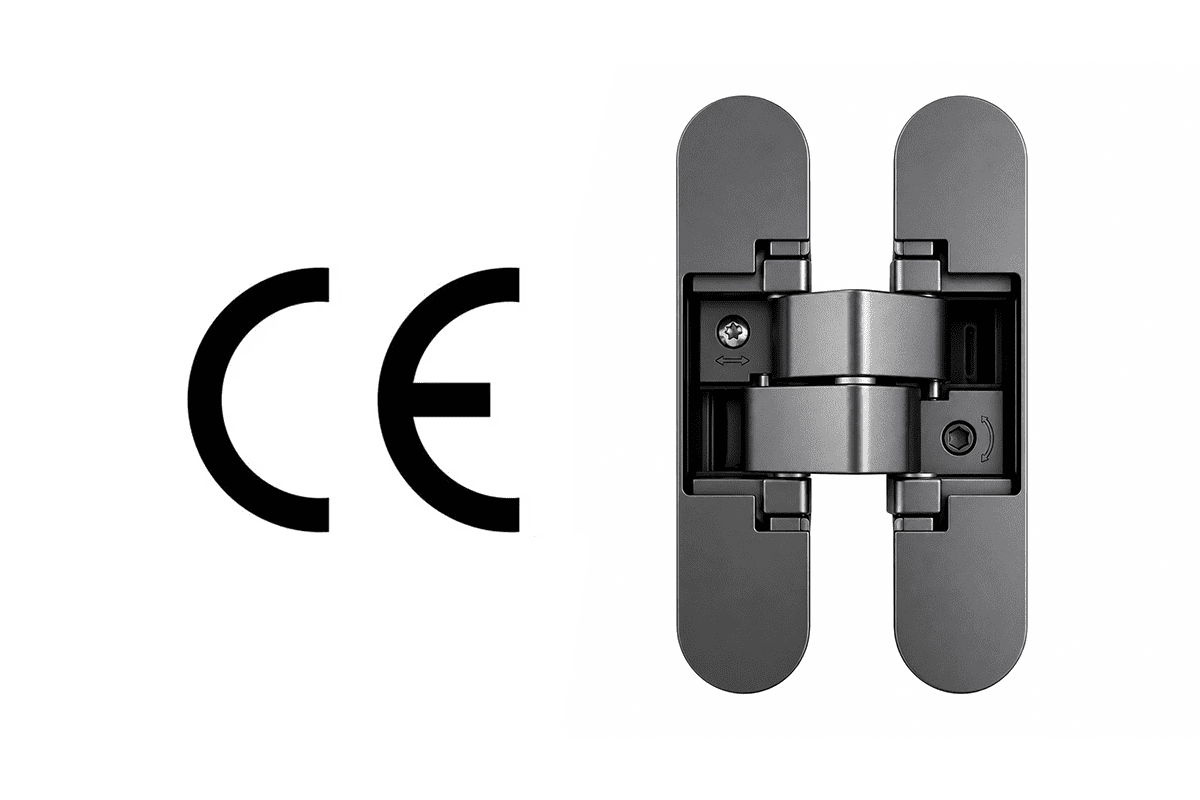
Product categories are not interchangeable
I always remind buyers that door hardware is a system, but compliance is often checked by component. A project may need hinges, a mortise lock, a lever handle, and a cylinder. These parts work together on the door, but they do not necessarily share the same test standard.
Here are practical examples buyers may see during document review:
| Product type | Example standard reference buyers may encounter | What buyers should verify |
|---|---|---|
| Single-axis hinges | EN 1935 | Grade, load, durability, corrosion resistance, fire/smoke suitability where relevant |
| Mechanically operated locks and latches | EN 12209 | Lock function, durability, door mass, corrosion, security grade, fire door relevance where applicable |
| Lever handles | EN 1906 may be relevant in many cases6 | Durability, category of use, corrosion resistance, spring performance |
| Cylinders | EN 1303 may be relevant in many cases7 | Key security, attack resistance, durability, corrosion performance |
| Panic or emergency exit hardware | EN 1125 or EN 179 may be relevant depending on use8 | Project application, exit function, door type, legal/project requirements |
I use the word “may” deliberately. This article is not a legal guide or laboratory instruction. Buyers should confirm applicable standards with their project consultant, importer, certification partner, or qualified technical professional.
Common test concerns behind the documents
A certificate is only a summary. The practical question is what product performance it supports. In door hardware procurement, I usually pay attention to these test categories:
Durability
- How many operating cycles were tested?
- Does the grade fit the project traffic level?
Mechanical strength
- Can the hinge, lock, or handle handle the intended load?
- Does the product suit the door weight and size?
Corrosion or environmental resistance
- Is the product suitable for humid, coastal, or exterior environments?
- Is the finish stable enough for the market?
Security performance
- Does the lock or cylinder meet the required protection level?
- Is the security grade suitable for the project type?
Fire or smoke performance
- Is the product intended for fire-rated doors?
- Is there additional fire-rated evidence where required?
Why standards affect supplier selection
When a supplier understands product-specific standards, communication becomes faster. The supplier can explain which models are supported by which documents. The supplier can also recommend a better option if the buyer’s selected item does not match the project requirement.
For example, SDH Hardware manufactures several architectural hardware categories, including concealed hinges, mortise locks, butt hinges, lever handles, and lock cylinders. In my view, a professional supplier should not send one generic document for all categories. The supplier should separate documents by product line, model, and application.
A practical example
Suppose a European door manufacturer is sourcing a Euro mortise lock. The buyer asks for CE-certified door hardware and receives a hinge certificate. That document does not solve the lock compliance question. The buyer should ask for lock-related documents, model matching, and test evidence. If the supplier cannot provide clear answers, the buyer should treat it as a risk signal.
This is why I encourage buyers to define the product first, then review the standard, and only then compare price. Price comparison without document matching is incomplete.
Why is CE-certified door hardware critical for customs, approvals, and delivery risk?
Project teams often focus on unit cost because budgets are visible. I understand that pressure. But when compliance documents do not match the shipped goods, the hidden costs can be much larger than the small savings from a lower quotation.
CE-certified door hardware can reduce risk in EU or EU-standard projects because buyers may need product-matched documents for customs clearance, market access, project review, sales channels, and final acceptance9. Missing or mismatched documents can lead to clarification requests, rejected batches, rework, delays, or penalties where requirements apply10.
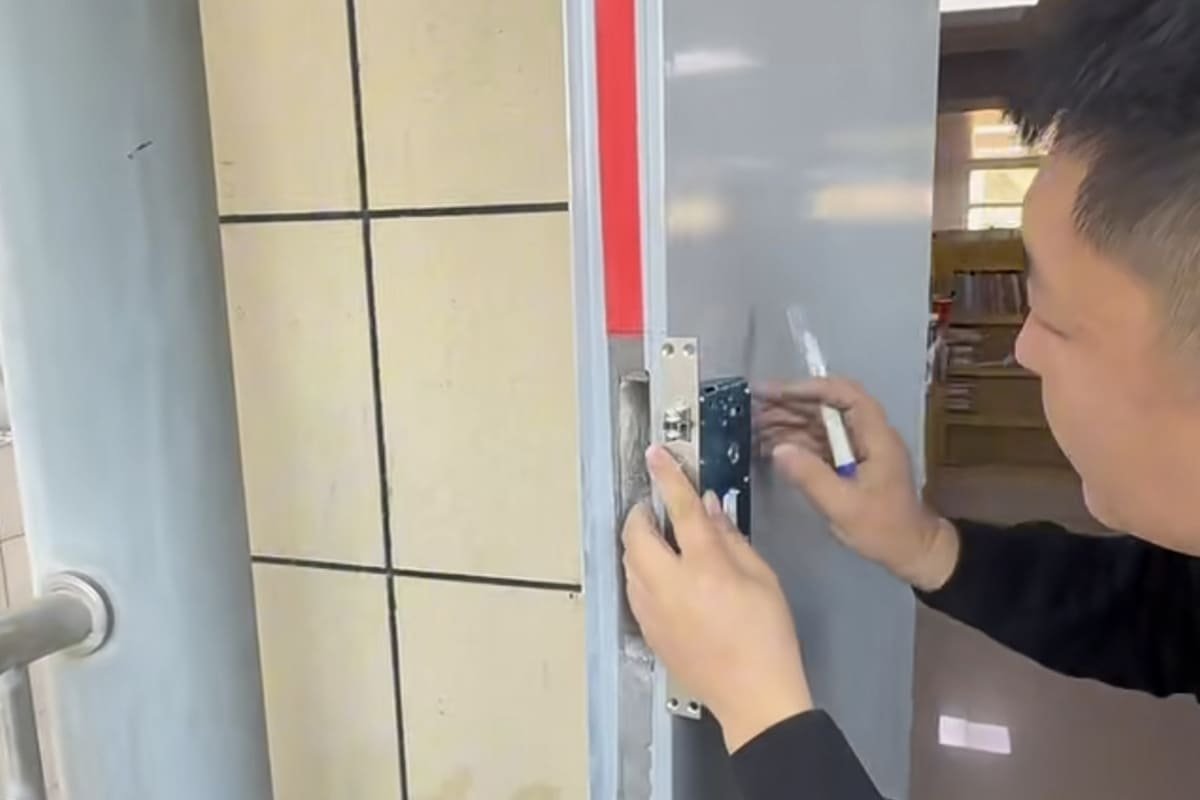
Where risks usually appear
I have seen compliance questions appear at different stages of the order. They do not always appear at the beginning. That is why early verification matters.
Common risk points include:
Import or customs review
- Authorities, importers, or logistics partners may request product compliance documents.
Distributor listing
- Hardware brands and wholesalers may need documentation before adding products to their catalog.
Project submission
- Contractors and door system suppliers may need certificates for consultant review.
Fire door package approval
- Fire-related applications may require additional evidence.
Final acceptance
- Site inspectors or project owners may compare delivered products with approved documents.
After-sales disputes
- If a batch fails review, buyers may face replacement, rework, or delayed payment.
Cost comparison: cheap product vs. compliant procurement
A lower unit price is attractive. However, buyers should compare total procurement risk, not only FOB or EXW price.
| Cost factor | Low-price product without clear documents | Product-matched CE-certified door hardware |
|---|---|---|
| Initial unit price | Often lower | May be slightly higher |
| Document review | Uncertain | Easier to prepare |
| Project approval | Higher risk of rejection | Lower risk when documents match |
| Delivery schedule | Can be delayed by clarifications | More predictable |
| Rework risk | Higher | Lower |
| Brand reputation | Can be damaged by compliance issues | Better protected |
| Long-term supplier value | Unstable | Easier to build repeat orders |
Why certificate mismatch creates real delays
A mismatch may look small on paper. For example, the hinge size may differ, the lock function may not match, or the model code may be missing. But project reviewers usually need traceability. They want to see a clear link between:
- The approved drawing
- The ordered product
- The tested sample
- The certificate or declaration
- The delivered batch
If one link is weak, the buyer may need to request additional explanation from the supplier. That can take days or weeks. If production has already started, a change may require new samples, new packaging labels, or even a different product model.
My procurement advice
I advise buyers to include CE document requirements in the request for quotation. The RFQ should not simply say “CE required.” It should state:
- Product category
- Model or drawing
- Door type
- Market or project region
- Required standards if known
- Fire-rated requirement if applicable
- Finish and material
- Quantity and delivery schedule
- Required document package
This approach helps the supplier quote correctly. It also prevents a common problem: the buyer compares a compliant product from one supplier with a non-matching product from another supplier. That comparison is not fair, and it can lead to the wrong purchasing decision.
Does CE-certified door hardware automatically work for fire-rated doors?
Fire door projects create extra pressure because safety, approval, and liability concerns are higher. I often see buyers assume that ordinary CE documents are enough for all doors. That assumption can be risky, especially when the hardware is installed on fire-rated door assemblies.
CE-certified door hardware does not automatically prove suitability for fire-rated doors. Fire door applications may require additional fire-resistance or fire-rated test evidence11. I always ask buyers to verify whether the exact hinge, lock, handle, or cylinder is approved for the fire-rated door type and project requirement.

Fire-rated use is application-specific
A fire-rated door is not just a normal door with stronger hardware. It is usually evaluated as a complete door assembly or system, depending on the project and market requirements. The hardware can affect fire performance because it creates openings, fixing points, and operating functions in the door leaf12.
That is why I separate two questions:
- Does this product have CE documentation for its category?
- Does this exact product have fire-rated evidence for this fire door application?
Both questions matter. The first question concerns product compliance where applicable. The second question concerns fire-rated suitability. A buyer should not use the answer to one question as proof for the other.
Hardware items that need extra caution
Fire-rated projects may involve several hardware components:
- Hinges
- Mortise locks
- Lever handles
- Cylinders
- Door closers
- Panic exit devices
- Intumescent kits or accessories
- Strike plates and fixing parts
Even small changes can matter. A different screw, backset, material, latch design, or finish may affect whether the product matches the tested configuration. I recommend that buyers keep fire-rated project documentation very strict.
Practical fire door document checklist
| Item to verify | Why it matters |
|---|---|
| Fire-rated certificate or test report | It supports the fire application, not only ordinary use |
| Tested door type | Timber, steel, or composite doors may differ |
| Tested hardware model | The ordered model should match the tested model |
| Fire rating duration | 30, 60, 90, or 120 minutes may be project-specific |
| Installation method | Fixing position and accessories may affect approval |
| Door handing and configuration | Single or double leaf doors may require different evidence |
| Project authority requirements | Local approval rules may differ |
How I discuss fire-rated hardware with buyers
When a buyer asks me for fire-rated hinges or locks, I do not answer only with a price. I first ask about the door type, project market, fire rating duration, and required document format. That conversation can feel slower at the start, but it prevents bigger delays later.
At SDH Hardware, fire-rated certification is part of the document discussion for applicable products and projects. However, I still recommend that buyers verify all certificates, model coverage, and project suitability with qualified professionals before final approval. That is the safest way to protect the procurement team and the end project.
How should you choose a reliable CE-certified door hardware supplier?
A supplier may offer good prices, fast replies, and attractive samples. I value all of that. But if the supplier cannot explain product-level compliance clearly, the buyer may face risk after the order is placed. Supplier selection should include document discipline.
I choose a CE-certified door hardware supplier by checking product-matched documents, stable manufacturing capacity, quality control procedures, customization ability, finish consistency, delivery reliability, and experience with EU or EU-standard projects. I also prefer suppliers who answer compliance questions clearly instead of sending generic certificates.
Supplier evaluation criteria
I use a balanced supplier scorecard. It helps me avoid choosing only by price.
| Evaluation area | What I look for | Why it matters |
|---|---|---|
| Document matching | Certificate and test report match product model | Reduces approval risk |
| Product range | Hinges, locks, handles, cylinders, and accessories | Supports one-stop sourcing |
| Factory control | In-house production and inspection process | Improves batch stability |
| Material control | Stainless steel, zinc alloy, brass, and finish checks | Supports consistent quality |
| Customization | ODM capability for size, finish, and configuration | Fits regional market needs |
| Delivery management | Clear lead time and production planning | Protects project schedule |
| Market experience | EU, Middle East, and Southeast Asia export experience | Improves communication efficiency |
Why factory capability still matters
CE documents are important, but they are not the only concern. A buyer also needs stable batch quality. If the first batch looks good but the second batch has finish differences, dimensional issues, or missing accessories, the project still suffers.
I pay attention to:
- Raw material screening
- Production line stability
- Surface finish control
- Standardized inspection
- Packaging consistency
- Labeling accuracy
- Pre-shipment inspection
- After-sales response
SDH Hardware operates as an architectural door hardware manufacturer with more than 20 years of production experience and an independent factory team. In my view, that matters because compliance documents must be supported by real manufacturing discipline. A certificate cannot compensate for unstable production.
Questions I ask before cooperation
Before I recommend long-term cooperation, I like to ask suppliers these questions:
- Which exact models have CE documentation?
- Which standards are referenced for each product category?
- Can you provide test reports or supporting evidence for review?
- Are fire-rated documents available for the specific model if needed?
- Can you keep the same finish across bulk orders?
- Can you customize packaging, accessories, and specifications?
- What is the normal production lead time for repeat orders?
- How do you handle inspection before shipment?
The answers show whether the supplier is prepared for professional procurement. A reliable supplier does not need to exaggerate. A reliable supplier gives clear boundaries and supports buyer verification.
Conclusion
CE-certified door hardware is essential because professional buyers are not only buying hinges, locks, handles, and cylinders. They are also buying compliance confidence, project traceability, and lower procurement risk. I recommend checking every document by product type, model, standard, and application before bulk ordering. If you need product-matched architectural door hardware for EU or EU-standard projects, contact SDH Hardware to discuss your drawings, specifications, certifications, and customized procurement requirements.
"CE marking", https://en.wikipedia.org/wiki/CE_marking. European Commission guidance describes CE marking as a manufacturer’s indication that a product complies with applicable EU legislation, rather than as a general quality mark or company-level approval. Evidence role: definition; source type: institution. Supports: CE marking indicates that a product complies with applicable EU requirements and is not a general quality endorsement of a supplier.. ↩
"EU Standards", https://www.trade.gov/eu-standards. EU guidance on declarations of conformity requires product identification and references to applicable requirements, supporting the practice of matching certificates, declarations, test reports, standards, and model information to the purchased item. Evidence role: general_support; source type: institution. Supports: EU conformity documentation normally identifies the product, applicable legislation or standards, and responsible parties, making document-to-product matching important.. Scope note: The source supports the documentation principle generally and may not address every door-hardware category specifically. ↩
"EU - EU Legislation and CE Marking", https://www.trade.gov/country-commercial-guides/eu-eu-legislation-and-ce-marking. EU conformity-assessment guidance links CE marking to covered products and their applicable legal requirements, supporting the view that buyers should verify product-specific compliance rather than relying on a supplier’s general certificate. Evidence role: general_support; source type: institution. Supports: CE marking is linked to a product’s conformity assessment and must be affixed to products covered by relevant EU legislation.. ↩
"BS EN 1935:2002 Single-axis hinges", https://www.acornironmongery.com/2022Standards/GAI-Guide-to-standards-2-BSEN1935-22-final.pdf. EN 1935 is identified by standards bodies as the European standard for single-axis hinges in building hardware, providing classifications for performance characteristics such as use category, durability, mass, corrosion resistance, and fire or smoke door suitability where applicable. Evidence role: definition; source type: institution. Supports: EN 1935 is a European standard for single-axis hinges used in building hardware and includes classification criteria such as durability and corrosion resistance.. Scope note: Access to the full standard may require purchase; public pages usually confirm scope and classification categories rather than all test details. ↩
"EN 12209: Building Hardware - Mechanically operated locks and ...", https://www.intertek.com/building/standards/en-12209/. Standards-body summaries describe EN 12209 as the European standard for mechanically operated locks and latches, including classifications for durability, door mass, corrosion resistance, security, and fire or smoke door suitability where relevant. Evidence role: definition; source type: institution. Supports: EN 12209 covers mechanically operated locks and latches and classifies performance attributes relevant to door hardware.. Scope note: Public summaries confirm the standard’s scope; detailed test methods generally require access to the full standard. ↩
"BS EN 1906 – Lever Handle and Knob Furniture", https://www.hoppe.com/gb-en/contacts-service/standards/bs-en-1906/. Standards-body descriptions identify EN 1906 as the European standard for lever handles and lever knobs, with classifications covering use category, durability, fire resistance, safety, corrosion resistance, security, and type of operation. Evidence role: definition; source type: institution. Supports: EN 1906 applies to lever handles and lever knobs for building hardware and includes performance classifications.. Scope note: The standard’s detailed requirements are typically not available in full without purchasing the document. ↩
"EN 1303:2026 - Cylinders and Master-Key-Systems for ...", https://standards.iteh.ai/catalog/standards/cen/bff2e636-92e6-474b-a6e0-fa3f5c0ce3ec/en-1303-2026?srsltid. Standards-body summaries describe EN 1303 as the European standard for cylinders for locks, classifying characteristics including durability, key-related security, attack resistance, and corrosion resistance. Evidence role: definition; source type: institution. Supports: EN 1303 is the European standard for cylinders for locks and includes classifications such as durability, key security, attack resistance, and corrosion resistance.. Scope note: Public standard summaries support the scope and classification categories but usually do not provide the full testing protocol. ↩
"Ekin - What Is a Panic Bar (US) vs EN 1125/EN 179 (EU)", https://www.ekinpanicbar.com/knowledge/what-is-a-panic-bar-us-vs-en-1125en-179-eu. Standards guidance distinguishes EN 1125 for panic exit devices from EN 179 for emergency exit devices, supporting the article’s statement that the applicable standard depends on the intended exit function and use context. Evidence role: definition; source type: institution. Supports: EN 1125 concerns panic exit devices, while EN 179 concerns emergency exit devices, with application depending on the expected users and exit conditions.. Scope note: Public guidance generally explains the distinction but may not replace project-specific code review. ↩
"EU Legislation and CE Marking - International Trade Administration", https://www.trade.gov/country-commercial-guides/eu-eu-legislation-and-ce-marking. European Commission guidance on CE marking and technical documentation explains that covered products require conformity documentation and may be examined by market-surveillance authorities, supporting the need for product-matched documentation in EU market-access and approval contexts. Evidence role: general_support; source type: institution. Supports: CE-marked products covered by EU legislation require conformity documentation and may be subject to market-surveillance checks, making product-matched documents relevant to market access and approvals.. Scope note: The source supports EU compliance and market-surveillance requirements generally; specific customs or project-review practices may vary by product, country, and contract. ↩
"Market surveillance", https://single-market-economy.ec.europa.eu/single-market/goods/building-blocks/market-surveillance_en. EU market-surveillance rules provide for corrective actions and restrictions on products that do not meet applicable requirements, supporting the article’s warning that missing or inconsistent compliance documentation can lead to delays, rejection, or enforcement consequences. Evidence role: general_support; source type: government. Supports: EU market-surveillance rules allow authorities to require corrective action and restrict or withdraw non-compliant products, which can create delays and penalties.. Scope note: The source supports regulatory consequences for non-compliance generally; it does not quantify the frequency or cost of such delays for door hardware specifically. ↩
"All You Need to Know for Fire Rated Door Assemblies", https://safti.com/articles/fire-rated-doors-standards-testing-and-glazing-requirements/. Fire-resistance testing guidance for doorsets and openable windows explains that fire performance is assessed in tested configurations, supporting the need for fire-rated evidence when specific hardware is used on fire-rated doors. Evidence role: mechanism; source type: institution. Supports: Fire-door performance is assessed through fire-resistance testing of doorsets or assemblies, and hardware can be part of the tested configuration.. Scope note: The source supports the general testing principle; the exact evidence required depends on the door type, jurisdiction, and applicable approval route. ↩
"Suppl 2 to "Evaluation of Selected Fire Door & Door Frame Assemblies," ...", https://www.nrc.gov/docs/ml1714/ML17146B009.pdf. Technical fire-door guidance and research on doorset performance indicate that installed hardware, penetrations, and fixing arrangements form part of the tested assembly and can affect fire resistance, supporting the article’s caution about hardware changes on fire-rated doors. Evidence role: mechanism; source type: research. Supports: Fire-door assemblies rely on tested configurations, and hardware penetrations or substituted components can affect integrity, insulation, or operability during fire exposure.. Scope note: The support is contextual unless the source tests the exact hinge, lock, handle, or cylinder model discussed in a specific project. ↩