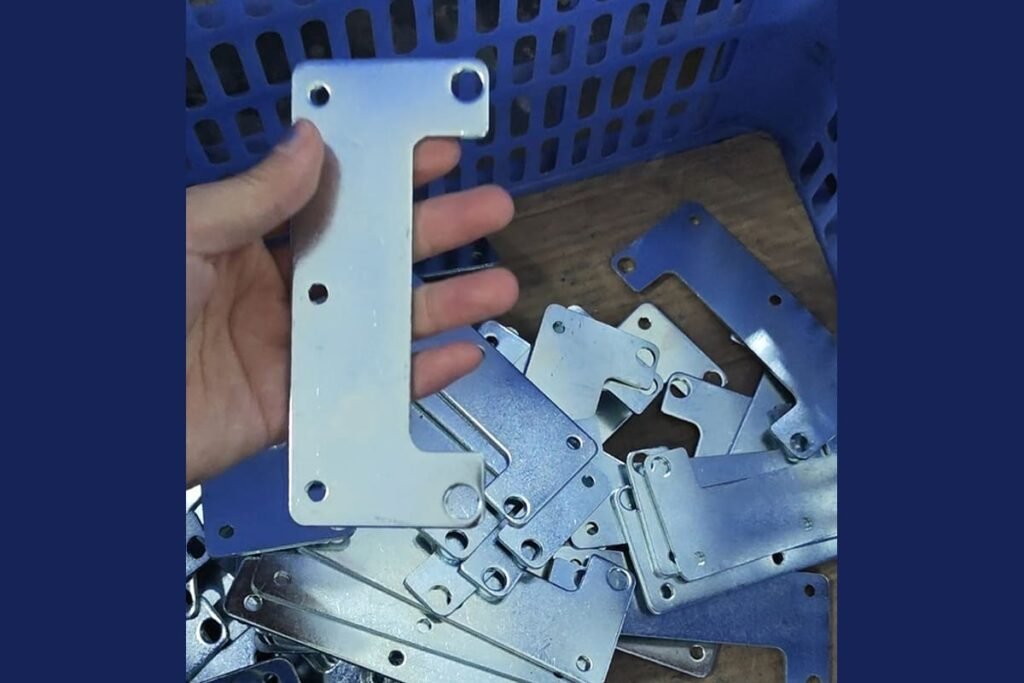
Steel Hinge Reinforcement Plate for Heavy Doors?
A steel hinge reinforcement plate can look like a small detail in a heavy door specification, but weak hinge fixing points often become expensive after-sales problems. When screws loosen, doors sag and frames deform. The practical solution is to design enough threaded support behind the hinge before production begins.
A steel hinge reinforcement plate for heavy doors is an embedded steel backing plate, usually 3–6 mm thick1, with holes matched to the hinge screw pattern. It is fixed inside the steel door leaf or frame so hinge screws can bite into stronger, deeper threads and resist loosening, stripping, and hinge-side deformation.
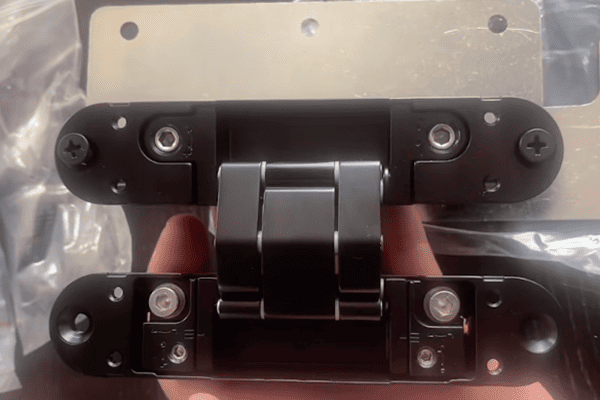
In my factory work with door hardware buyers, I often see that the hinge itself gets most of the attention. However, the structure behind the hinge is just as important. A heavy hinge mounted onto weak sheet steel can still fail. That is why reinforcement design deserves a closer look.
What Is a Steel Hinge Reinforcement Plate for Heavy Doors?
A steel hinge reinforcement plate may sound simple, but misunderstanding it can lead to wrong purchasing decisions. Some buyers treat it as a general backing plate. Others think a thicker hinge alone solves the problem. In real door production, the plate must match the hinge, screw positions, and door structure.
A steel hinge reinforcement plate is a rectangular steel insert placed inside the door leaf or frame at the hinge mounting area. It usually has pre-drilled or tapped threaded holes aligned with the hinge. Its role is to give hinge screws stronger thread engagement and better load distribution2.
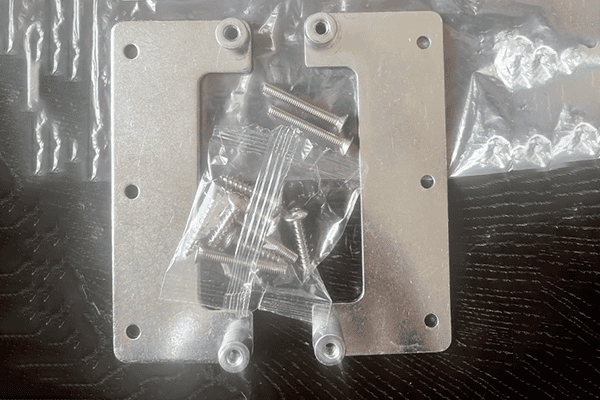
A practical definition from production
In steel door manufacturing, I define the plate in a practical way:
A steel hinge reinforcement plate is not a decorative hinge accessory. It is an internal structural support designed to strengthen the hinge fixing area.
Most reinforcement plates are:
- Rectangular steel plates
- Matched to the hinge length and width
- Commonly around 3–6 mm thick
- Pre-drilled or tapped according to the hinge screw pattern
- Spot-welded, welded, riveted, or otherwise fixed inside the door leaf or frame
- Hidden after door assembly, with only exterior hinge screw holes visible
The plate works because the hinge screws are not relying only on thin sheet steel. Instead, they fasten into a thicker steel support behind the visible surface.
Common plate features buyers should confirm
Different factories may describe this part using different names. I have seen buyers call it a hinge backing plate, hinge support plate, threaded hinge plate, or embedded reinforcement plate. The name is less important than the function.
| Evaluation Point | What Buyers Should Check | Why It Matters |
|---|---|---|
| Plate thickness | Commonly 3–6 mm, depending on door design | Affects thread depth and strength |
| Hole pattern | Must match hinge screw positions | Prevents assembly mismatch |
| Thread type | Tapped holes or screw-forming design | Affects screw retention |
| Steel grade | Should match project and factory requirements | Influences durability and machining |
| Installation method | Spot-welded or fixed inside door/frame | Prevents movement during assembly |
| Surface treatment | Usually depends on internal corrosion requirements | Supports long-term stability |
Why “matched” matters more than “thick”
A thicker plate is not always the better plate. If the holes do not match the hinge, the production team may enlarge holes, force screws, or adjust alignment manually. Those small adjustments can create future problems.
For example, if a hinge has a 4-hole pattern and the reinforcement plate is drilled with a 1 mm offset, workers may still complete assembly. However, the screw may enter at a slight angle. Over time, repeated opening and closing can increase stress at the fixing point.
I usually advise buyers to confirm these details before bulk production:
- Hinge model and size
- Screw diameter and length
- Hole center distance
- Door leaf or frame steel thickness
- Plate thickness
- Left-hand or right-hand door design
- Production tolerance for hole alignment
This is especially important for door manufacturers, hardware brands, and importers who purchase hinges and reinforcement plates from different suppliers. A hinge may meet the drawing, and a plate may also meet its drawing, but the complete assembly may still fail if the drawings are not coordinated.
Why Does a Steel Hinge Reinforcement Plate Prevent Screw Loosening?
Hinge screw loosening is a common heavy-door problem, but the cause is often hidden inside the door. Buyers may blame the hinge, the screw, or the installer. In many cases, the real issue is that the screw has too little thread engagement in thin steel.
A steel hinge reinforcement plate helps prevent screw loosening by increasing the steel thickness available for threads, spreading hinge load across a larger fixing area, and reducing local deformation around screw holes3. This gives heavy steel doors better long-term screw retention than thin sheet steel alone.
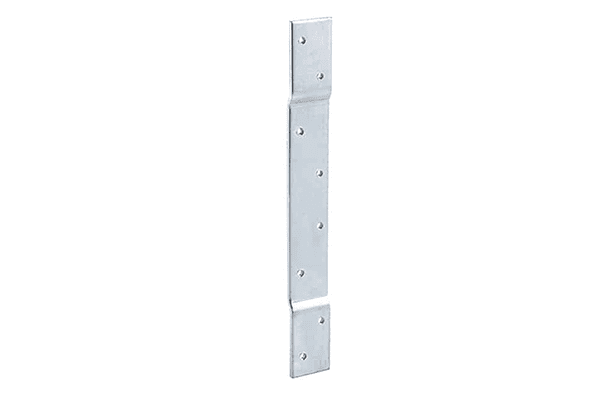
The real problem: thin steel does not hold heavy hinge screws well
Heavy doors create forces that light doors do not. A steel fire door, security door, acoustic door, or oversized entrance door may weigh more than 80 kg4, depending on its structure and hardware. The hinge side must carry the door weight every day.
The problem is not only vertical weight. The hinge fixing area also faces:
- Pulling force when the door opens and closes
- Torque from the door width and weight
- Impact load when users slam the door
- Vibration from repeated cycles
- Side load from poor installation or frame movement
If hinge screws are fixed directly into a thin steel door leaf or frame, several failures can appear:
- Screws loosen gradually5
- Threads strip inside the thin steel
- Holes become enlarged
- Steel around the hinge deforms
- The hinge side drops
- The door rubs against the frame or floor
- After-sales service costs increase
In my experience, these problems often appear after shipment, not during factory inspection. A door may look correct when it leaves production. The gap may be even, and the hinge may feel firm. But after repeated use on site, weak fixing points begin to show.
How reinforcement changes the load path
A reinforcement plate changes how the hinge load transfers into the door structure. Without the plate, the screw depends mainly on the thickness of the visible steel sheet. With the plate, the screw can engage more steel and transfer force to a wider internal area.
Here is the simple logic:
| Without Reinforcement | With Reinforcement Plate |
|---|---|
| Screw bites into thin sheet steel | Screw bites into thicker embedded steel |
| Limited thread engagement | Deeper thread engagement |
| Higher risk of stripped holes | Better resistance to thread failure |
| Local stress around screw hole | Load spread across plate area |
| More chance of hinge-side deformation | Stronger hinge fixing zone |
Thread engagement is the key detail
Thread engagement means how much screw thread is actually held by steel. A thin steel skin may only give limited contact. When the door is heavy, that limited contact may not be enough.
A plate with tapped holes gives the screw a deeper threaded path. This does not mean every plate thickness is suitable for every door. It means the designer or door manufacturer has more control over the fixing strength.
For procurement teams, I recommend asking suppliers these questions:
- Are the reinforcement plate holes tapped or only drilled?
- What screw specification is used with the hinge?
- What is the total thread engagement depth?
- Is the plate fixed securely before door finishing?
- Is the hinge hole pattern controlled by drawing or sample?
- Are the hinge, screw, and plate tested together during sample approval?
These questions are more useful than simply asking, “Is the hinge heavy duty?” A heavy-duty hinge mounted into weak steel can still loosen. The hinge and the hidden fixing structure must work as a system.
How Is a Steel Hinge Reinforcement Plate Installed in Door Production?
A reinforcement plate can only work properly if it is installed in the correct position before the door is finished. If the plate shifts, the screw holes will not align. If the plate is missing, the problem may only become visible during final assembly or after installation on site.
A steel hinge reinforcement plate is normally placed inside the steel door leaf or frame at the hinge position during manufacturing. The factory fixes it by spot welding or another internal method, aligns it with the hinge hole pattern, and later installs the hinge from the outside using screws that fasten into the embedded plate.
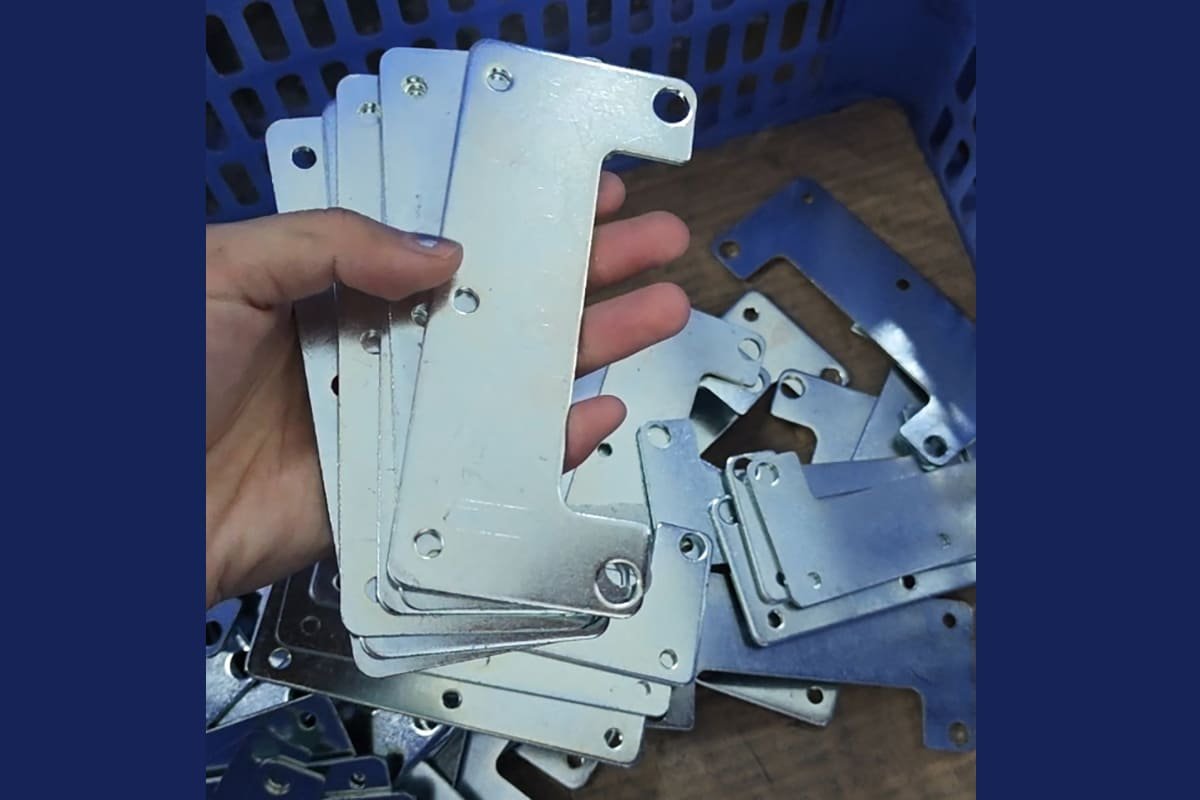
Typical factory installation process
The exact process depends on the door design, but the general logic is similar across many steel door factories.
A common production flow may look like this:
- Confirm hinge model and drawing
- Prepare reinforcement plate size and hole pattern
- Drill or tap plate holes
- Position the plate inside the door leaf or frame
- Spot-weld or fix the plate at the hinge location6
- Form, weld, or assemble the door structure
- Apply surface treatment or painting
- Install hinge screws into the embedded plate
- Check door gap, swing, and hinge alignment
After production, the buyer usually cannot see the plate. This is why documentation and quality inspection are important. Only the exterior screw holes and hinge body remain visible.
Door leaf reinforcement vs frame reinforcement
The reinforcement plate may be used in the door leaf, the frame, or both. The decision depends on the hinge type and door structure.
| Reinforcement Location | Common Purpose | Buyer’s Inspection Focus |
|---|---|---|
| Door leaf hinge area | Holds hinge leaf on the door side | Door leaf hole alignment and screw grip |
| Frame hinge area | Holds hinge leaf on the frame side | Frame strength and vertical positioning |
| Both sides | Supports heavier or higher-use doors | Full hinge set alignment and gap control |
For many heavy steel doors, reinforcing only one side may not solve the full problem. If the door leaf is strong but the frame fixing area is weak, the frame side may still deform. If the frame is strong but the door leaf is weak, the door side may still loosen.
Production tolerances matter
I have seen projects where the reinforcement concept was correct, but the execution caused trouble. The plate was strong enough. The hinge was also correct. However, the plate position varied between batches. Workers had to adjust during assembly, and the buyer later reported inconsistent hinge gaps.
For bulk orders, buyers should control:
- Hole center tolerance
- Vertical plate position
- Distance from door edge
- Flatness of hinge mounting surface
- Welding stability
- Thread cleanliness after painting
- Screw insertion torque
Small deviations can create large problems because hinges are alignment-sensitive parts. If three hinges are installed on one heavy door, all three hinge axes must line up7. A reinforcement plate that is only slightly misplaced can create stress in the hinge system.
Why installation planning should happen before purchasing
Some buyers contact us after the door structure is already finalized. At that stage, adding reinforcement can be difficult. The door leaf may not have enough internal space. The frame profile may not allow proper plate placement. The finish may already be completed.
It is better to include the plate in the design stage. Buyers should provide:
- Door drawing
- Door weight estimate
- Hinge drawing
- Screw specification
- Frame profile drawing
- Required surface finish
- Production volume
- Market or project standards to verify
I always treat certifications and performance documents as items buyers should verify for their own market and project. A reinforcement plate can support better mechanical fixing, but it should not be presented as proof of fire rating, door performance, or load capacity unless the full door assembly has been properly evaluated by qualified professionals or relevant testing bodies.
How Should Buyers Specify a Steel Hinge Reinforcement Plate?
Many procurement problems begin with vague specifications. A buyer may write “heavy-duty hinge with plate” in a purchase order. That phrase is not enough. The supplier may not know the required thickness, hole pattern, thread type, or installation position.
A steel hinge reinforcement plate should be specified by material, thickness range, plate dimensions, hole pattern, thread requirements, hinge compatibility, installation position, and inspection method. Buyers should match the plate to the hinge and door structure instead of treating it as a universal part.
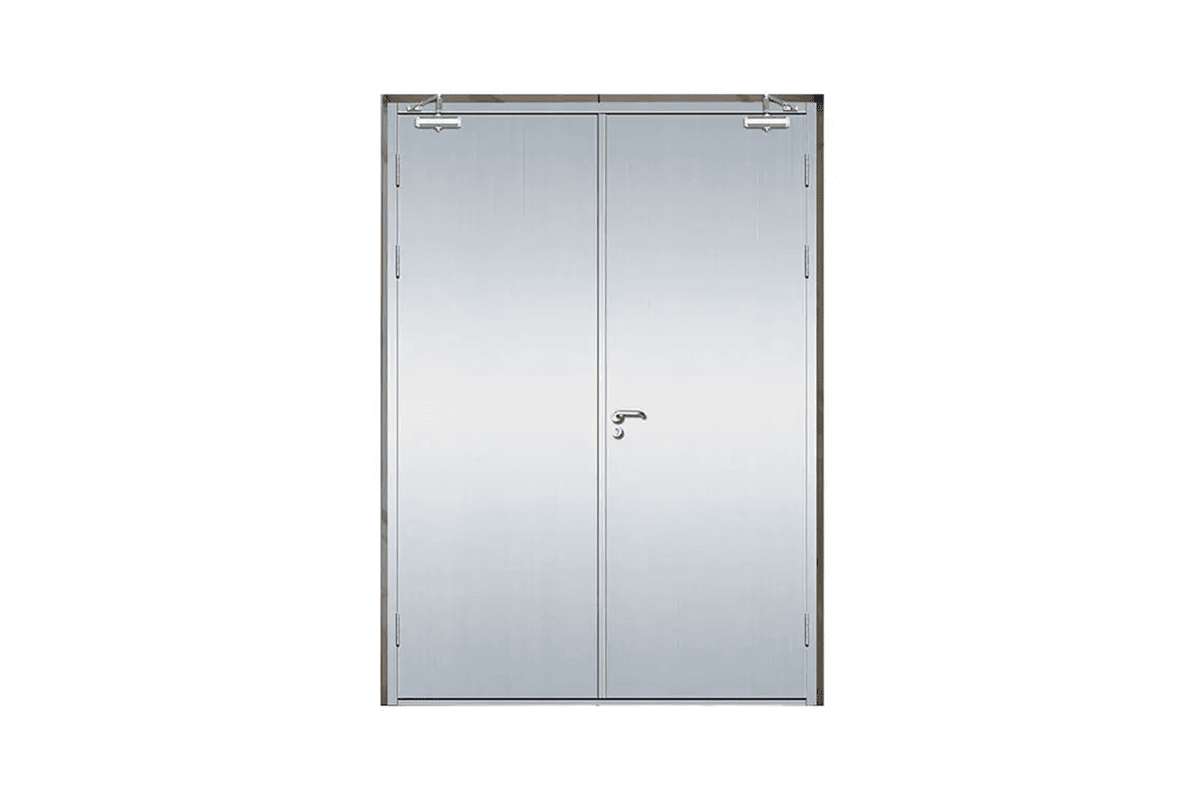
Practical specification checklist
A clear purchase specification reduces communication errors. It also helps suppliers quote accurately and control production.
I recommend including the following points:
| Specification Item | Example Information to Provide |
|---|---|
| Door type | Steel fire door, security door, heavy entrance door, industrial steel door |
| Door weight range | For example, above about 80 kg, if applicable |
| Hinge size | Length, width, thickness, knuckle size |
| Hinge quantity | 2, 3, 4, or more hinges per door |
| Screw type | Diameter, length, head type, material |
| Plate thickness | Common range may be 3–6 mm, based on design |
| Plate length and width | Matched to hinge leaf and fixing area |
| Hole pattern | Center distances and tolerance |
| Thread requirement | Tapped holes or drilling only |
| Installation side | Door leaf, frame, or both |
| Fixing method | Spot welding, welding, riveting, or other approved method |
| Finish requirement | Internal anti-rust need, if required |
| Inspection method | Drawing check, sample check, screw fitting test |
Do not rely on hinge size alone
A larger hinge can improve load capacity only when the fixing structure supports it.8 If the hinge is larger but the screws still bite into weak sheet steel, the door may still sag or loosen.
I explain this to customers with a simple example. Imagine using a strong handle on a weak cabinet panel. The handle itself may not break, but the panel may tear around the screws. The same logic applies to heavy steel door hinges.
A complete hinge fixing system includes:
- Hinge leaf strength
- Screw strength
- Thread engagement
- Door leaf or frame structure
- Reinforcement plate design
- Installation accuracy
- Door weight and usage frequency
If one part is weak, the system may fail at that point.
Sample approval before batch production
For importers and hardware brands, I strongly recommend sample approval before large orders. A sample can reveal issues that drawings do not show clearly.9
During sample approval, buyers can check:
- Does the hinge sit flat?
- Do all screws enter smoothly?
- Do screws tighten firmly without spinning?
- Are the holes aligned with the hinge?
- Is the plate fixed securely inside?
- Is there any interference with lock parts, door core, or frame profile?
- Does the finished door swing without hinge stress?
For door factories, I also suggest checking assembly with actual production screws, not temporary screws. Screw diameter, thread profile, and length all affect the result.10
Supplier selection questions
When selecting a supplier for hinge reinforcement plates or complete door hardware sets, buyers should ask more than price. A low-cost plate can become expensive if it causes assembly delays or after-sales claims.
Useful supplier evaluation questions include:
- Does the supplier produce hinges and plates in-house or outsource them?
- Can the supplier match the plate to the hinge drawing?
- Can the supplier provide consistent hole position in batch production?
- Can the supplier support ODM customization?
- Does the supplier understand EU standard hardware requirements where relevant?
- Can the supplier provide CE or fire-rated documents for applicable hardware products for buyer verification?
- Does the supplier have a defined inspection process?
At SDH Hardware, we manufacture and supply architectural door hardware for door manufacturers, hardware brands, and wholesalers. In my work, I prefer to review the hinge, screw, and plate together because buyers need a working assembly, not separate parts that only look correct on paper.
When Is a Steel Hinge Reinforcement Plate Worth Adding?
Cost pressure is real in door manufacturing. Buyers often ask whether every door needs a reinforcement plate. The honest answer is no. A light internal door may not need the same structure as a heavy steel entrance door. The decision should follow door weight, usage, frame design, and after-sales risk.
A steel hinge reinforcement plate is worth adding when the door is heavy, the steel leaf or frame is relatively thin, the door will face frequent use, or the buyer wants to reduce risks such as screw stripping, hinge loosening, frame deformation, and door sagging.
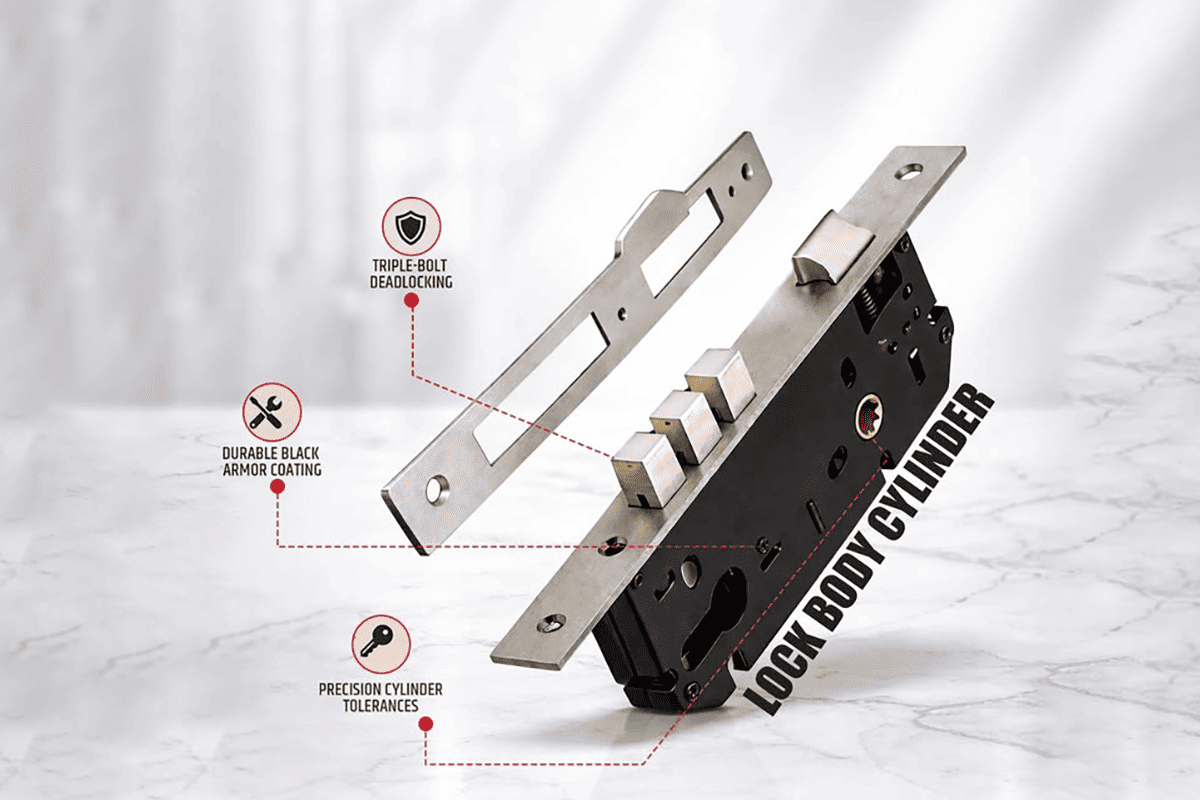
Common heavy-door situations
Buyers should consider hinge reinforcement plates for:
- Steel fire doors
- Security doors
- Metal entrance doors
- Apartment building doors
- Commercial steel doors
- Industrial room doors
- Doors with heavy cores
- Doors with high-use cycles
- Oversized steel door leaves
- Doors above about 80 kg, depending on design
This does not mean a plate alone qualifies the door for any fire or safety rating. Fire-rated performance depends on the complete tested door assembly, including leaf, frame, core, seals, hinges, locks, closer, and installation.11 Buyers should verify all certification documents and use qualified professional evaluation for project-specific requirements.
Cost versus after-sales risk
A reinforcement plate adds material, processing, and installation steps. However, after-sales repair can cost much more. When a heavy door sags, the buyer may face:
- Site repair labor
- Replacement screws or hinges
- Door adjustment costs
- Customer complaints
- Delayed project acceptance
- Brand reputation damage
- Distributor claims
For bulk wholesalers and door brands, consistency matters. One failed door can affect a customer relationship. A small hidden component can protect the perceived quality of the whole door set.
Decision table for procurement teams
| Door Condition | Reinforcement Plate Recommendation |
|---|---|
| Light interior steel door with low use | May not be necessary; evaluate structure |
| Medium-weight door with thin frame steel | Often worth considering |
| Heavy steel door above about 80 kg | Strongly worth evaluating |
| Security door with frequent use | Usually recommended |
| Fire door project | Evaluate as part of certified door assembly |
| Oversized door leaf | Usually recommended with hinge system review |
| Door with previous screw-loosening complaints | Strongly recommended to redesign fixing area |
A buyer’s practical risk test
I sometimes ask buyers one simple question:
If the hinge screws loosen after six months, who pays for the repair?
If the answer is the door brand, importer, or manufacturer, then reinforcement deserves serious consideration. The buyer should not only compare part cost. The buyer should compare total ownership risk.
A steel hinge reinforcement plate is not a luxury component. It is a risk-control part. It protects the fixing point that carries the door every time someone opens and closes it.
Frequently Asked Questions
Is a steel hinge reinforcement plate visible after installation?
No. A steel hinge reinforcement plate is usually embedded inside the steel door leaf or frame at the hinge mounting position. After the door is finished, the buyer normally sees only the hinge and exterior screw holes. The screws fasten into the hidden plate behind the surface.
What thickness should a steel hinge reinforcement plate be?
A common range is about 3–6 mm, but no single thickness fits all heavy doors. The correct thickness depends on door weight, frame profile, hinge size, screw specification, thread depth, and project requirements. Buyers should confirm the design with the door manufacturer or a qualified engineer.
Can a larger hinge replace the need for a reinforcement plate?
Not always. A larger hinge may help, but it cannot solve weak screw fixing by itself. If the door leaf or frame steel is too thin, screws may still loosen or strip. The hinge, screws, reinforcement plate, and door structure should be evaluated as one system.
Should the reinforcement plate be used on the door leaf or the frame?
It can be used on the door leaf, the frame, or both. The correct location depends on where the hinge screws need stronger support. For heavy steel doors, buyers often evaluate both sides because failure can happen on either the leaf side or the frame side.
Does a reinforcement plate make a door fire-rated?
No. A reinforcement plate alone does not make a door fire-rated. Fire-rated performance depends on the complete tested door assembly and valid certification documents. Buyers should verify certificates, test reports, and local market requirements before making project or compliance decisions.
Conclusion
A steel hinge reinforcement plate is a small hidden part, but it plays a major role in heavy steel door reliability. It improves screw retention, increases thread engagement, spreads hinge load, and reduces the risk of loosening, stripping, sagging, and frame deformation. For door manufacturers, hardware brands, and importers, I recommend specifying the plate together with the hinge, screws, and door structure. If you need matched hinges, reinforcement plates, mortise locks, or complete door hardware sourcing, SDH Hardware can support factory-direct production and ODM customization for your market requirements.
"STANDARD STEEL DOORS AND FRAMES", https://www.plu.edu/construction/wp-content/uploads/sites/128/2014/10/div-008.pdf. A hollow-metal-door standard or technical manual supports that hinge locations are commonly backed by internal steel reinforcements and specifies typical reinforcement gauges or thicknesses; this contextualizes the stated 3–6 mm range rather than proving it is universal. Evidence role: general_support; source type: institution. Supports: A neutral door-industry standard or technical manual should support typical minimum gauges or thicknesses used for hinge hardware reinforcements in steel doors or frames.. Scope note: Thickness requirements vary by door standard, duty level, hinge type, and jurisdiction. ↩
"Fastener Design Manual", https://ntrs.nasa.gov/citations/19900009424. A fastener-design reference supports that greater engaged thread length increases the load-bearing thread area and that distributing load over a larger support region reduces local stress concentration; this supports the stated mechanism for a reinforcement plate. Evidence role: mechanism; source type: research. Supports: A fastener-design source should explain that increased engaged thread length increases available load-bearing thread area and that larger bearing/support areas can reduce local stress.. Scope note: The source would support the general fastening mechanism, not the performance of a specific hinge plate design. ↩
"Bearing Design of Thin Sheet Steel Screwed Connections", https://scholarsmine.mst.edu/cgi/viewcontent.cgi?article=1545&context=isccss. Studies of bolted or screwed sheet-metal joints show that local bearing deformation and hole enlargement are influenced by sheet thickness, bearing area, and reinforcement, supporting the claim that a backing plate can reduce deformation around screw holes. Evidence role: mechanism; source type: paper. Supports: A structural or mechanical engineering source should show that increasing thickness or adding backing reinforcement reduces bearing stress and deformation around fastener holes.. Scope note: The evidence would be based on general sheet-metal joint behavior, not necessarily on full-scale door assemblies. ↩
"How Much Do Hollow Metal Doors Weigh?", https://www.doorclosersusa.com/How-Much-Does-A-Hollow-Metal-Door-Weigh-s/34749.htm?srsltid. Technical specifications for steel fire, acoustic, or heavy-duty entrance doors document that door-leaf weights can reach or exceed approximately 80 kg in some configurations, supporting the article’s use of 80 kg as a plausible heavy-door reference point. Evidence role: statistic; source type: institution. Supports: A neutral technical specification or institutional guide should show that certain steel fire, acoustic, security, or oversized doors can weigh around or above 80 kg.. Scope note: Door weight varies substantially with dimensions, core material, glazing, hardware, and fire or acoustic rating. ↩
"(PDF) Loosening Evaluation of Bolt-Nut Fastener Under ...", https://www.academia.edu/80416765/Loosening_Evaluation_of_Bolt_Nut_Fastener_Under_Transverse_Cyclic_Loading. Research on threaded-fastener self-loosening shows that vibration and repeated transverse or cyclic loads can reduce clamp force and cause progressive loosening, supporting the article’s description of gradual screw loosening in repeated door use. Evidence role: mechanism; source type: paper. Supports: A peer-reviewed or technical paper should support that threaded fasteners may self-loosen under vibration or repeated transverse/cyclic loading.. Scope note: Fastener-loosening studies are generally not door-specific, so they support the mechanism rather than the exact field failure rate. ↩
"STANDARD STEEL DOORS AND FRAMES", https://ipf.msu.edu/sites/default/files/2018-08/CS_TEC_2004_081113_HOLLOW_METAL_DOORS_AND_FRAMES.PDF. A hollow-metal-door technical standard supports that hinge hardware locations are provided with internal steel reinforcements that are secured to the door or frame structure, including by welding or equivalent attachment methods. Evidence role: general_support; source type: institution. Supports: A hollow-metal-door standard or technical manual should describe internal hardware reinforcements at hinge locations and the use of welding or secure attachment methods.. Scope note: Specific attachment methods depend on the door construction, manufacturing process, and applicable standard. ↩
"How to Align Cabinet Doors Evenly: A Guide to Measuring, ...", https://www.cabinetdoors.com/blog/cabinet-doors-101-how-to-measure-openings-install-hinges-hang-cabinet-doors-and-align-the-doors/?srsltid. Door-installation guidance supports that hinges must be aligned so their pivot axes are consistent; misalignment can cause binding, uneven clearances, and additional stress on hinge fasteners. Evidence role: general_support; source type: institution. Supports: A door installation or troubleshooting guide should support that misaligned hinges can cause binding, uneven gaps, or stress in the hinge system.. Scope note: Most installation guides discuss practical alignment effects rather than quantifying stress for a specific heavy-door design. ↩
"Pull-Out Progressive Damage and Failure Analysis of ... - PMC", https://pmc.ncbi.nlm.nih.gov/articles/PMC11642270/. Engineering references on fastened joints support that connection capacity is governed by the load path as a whole, including fasteners, thread engagement, bearing strength, and substrate thickness; this supports the statement that a larger hinge alone cannot compensate for weak fixing structure. Evidence role: mechanism; source type: education. Supports: An engineering source should explain that connection capacity depends on all elements of the load path, including fastener strength, thread engagement, bearing strength, and substrate thickness.. Scope note: The evidence would support the general design principle rather than a specific hinge model or door product. ↩
"ISO 9001 and 9002 Requirements by Section", https://faculty-web.msoe.edu/tritt/be4xx/iso9000sum.html. Quality-management and first-article inspection guidance supports using initial samples to verify dimensional conformity, fit, and production process capability before batch production, contextualizing the article’s claim that samples can reveal issues not obvious from drawings. Evidence role: general_support; source type: institution. Supports: A quality-management or first-article inspection standard should support the use of samples to verify that production parts meet drawings and assembly requirements before full production.. Scope note: Such standards apply broadly to manufacturing quality control and are not specific to hinge reinforcement plates. ↩
"The Effect of Pitch Variation and Diameter ...", https://pubmed.ncbi.nlm.nih.gov/30073846/. Fastener research supports that screw diameter, thread geometry, and engaged length materially affect pull-out resistance, stripping behavior, and joint strength, supporting the article’s claim that production screws must be evaluated with the hinge and plate. Evidence role: mechanism; source type: paper. Supports: A fastener study should support that screw diameter, thread form or pitch, and engaged length affect pull-out resistance, stripping torque, and joint strength.. Scope note: The source would establish general fastener behavior; actual performance still depends on the steel grade, hole preparation, installation torque, and door assembly. ↩
"Important Tips for Specifying Fire Door Assemblies", https://steeldoor.org/tips-for-specifying-fire-door-assemblies/. Fire-door standards and listing guidance support that fire resistance is determined for a tested and listed door assembly, including the leaf, frame, hardware, seals, and installation conditions, rather than by any single reinforcement component alone. Evidence role: expert_consensus; source type: institution. Supports: A fire-door standard or certification body should support that fire-door ratings are based on tested and listed assemblies, including door leaf, frame, hardware, seals, and installation.. ↩