What Is a Door Hardware Kit and How Does It Work?
A door hardware kit can look simple at first, but the wrong set can create serious procurement problems. A door may not swing correctly, lock securely, close smoothly, or meet project requirements. The solution is to treat the kit as a coordinated door system, not just a box of metal parts.
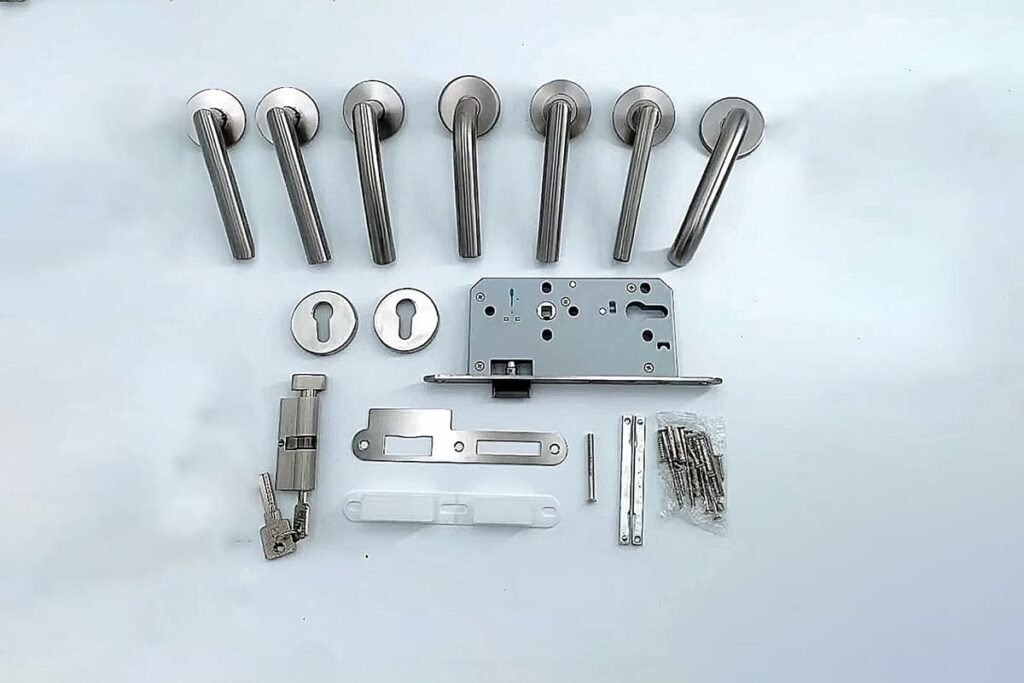
A door hardware kit is a complete set of matched accessories used to install and operate one door1. It may include hinges, handles, a lock body, cylinder, strike plate, screws, spindle, bolts, and optional control parts such as closers or stops. Each component works together so the door can hang, swing, open, close, lock, and fit its application.2
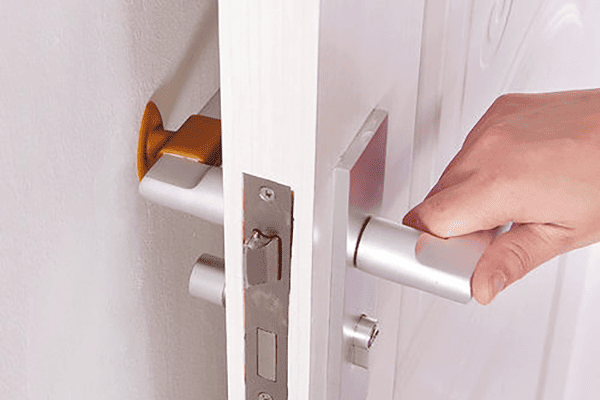
In factory production, I often see buyers focus on price per piece first. That is understandable. But in bulk door manufacturing, compatibility matters just as much as cost. A small mismatch in lock size, hinge load, spindle length, or finish can affect the whole door package.
What Does a Door Hardware Kit Include?
A door hardware kit can become confusing when every supplier uses different item names. Buyers may receive a quotation that looks complete, but important installation parts may be missing. A clear component structure helps prevent incomplete orders, assembly delays, and avoidable rework.
A door hardware kit usually includes the metal accessories needed to connect, operate, lock, control, and install one door. Common parts include hinges, lever handles, lock bodies, cylinders, strike plates, screws, spindles, and fixing accessories.3 Optional parts depend on the door type, project requirement, and local market standard.
The main component groups
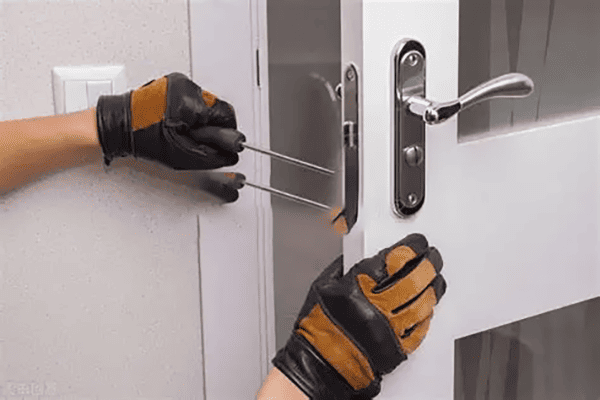
From a manufacturing point of view, I usually divide a door hardware kit into four practical groups. This makes it easier for buyers and product managers to check whether the set is complete.
| Component group | Common parts | Main function |
|---|---|---|
| Connection parts | Butt hinges, concealed hinges, pivot hinges | Support the door leaf and allow movement |
| Operating and locking parts | Lever handle, lock body, cylinder, latch, deadbolt, strike plate | Open, close, latch, lock, and unlock the door |
| Control and auxiliary parts | Door closer, door stop, flush bolt, dust socket, door viewer, seals | Control movement or add special functions |
| Installation accessories | Screws, spindle, fixing bolts, rosettes, escutcheons, templates | Support correct assembly and stable installation |
This classification helps buyers avoid a common mistake: assuming that one kit always contains every possible part. It does not.
For example, an interior passage door may only need hinges, a tubular latch, lever handles, spindle, strike plate, and screws. A fire-rated entrance door may require a very different set, including a certified mortise lock, suitable hinges, closer, fire-rated accessories, and documents4 that must be verified by project and market.
Common parts in a standard door hardware set
A typical door hardware kit may include:
- Hinges to carry the door weight and create the swing axis
- Lever handles to operate the latch or lock body
- Lock body or latch body to hold the door closed
- Cylinder to control keyed locking and unlocking
- Strike plate to receive the latch or deadbolt
- Spindle to connect both handles through the lock body
- Screws and fixing accessories to secure components
- Escutcheons or rosettes to cover installation holes
- Door stop or closer, when the application requires movement control
In our factory-side discussions with door manufacturers, I often ask one simple question before preparing a quotation: “What does the door need to do after installation?” That answer decides the real kit composition.
Optional does not mean unimportant
Some parts are optional, but they can still be critical for certain projects. A door closer is not universal. A floor spring is not universal. A door viewer is not universal. A concealed hinge is not universal. However, when the door design or building requirement needs these parts, they become essential.
Here is a practical example:
| Door application | Possible hardware combination |
|---|---|
| Interior bedroom door | Lever handle, latch, butt hinges, strike plate, screws |
| Apartment entrance door | Lever handle, mortise lock, cylinder, hinges, viewer, security accessories |
| Fire-rated door | Fire-rated lock, suitable hinges, closer, fire-rated seals, verified certificates |
| Concealed door | Concealed hinges, magnetic lock/latch, flush handle, special fixing accessories |
| Double door | Main lock set, flush bolts, dust socket, hinges, strike plates |
The main point is simple: a door hardware kit should be defined by the door structure, not by a generic catalog picture.
How Does a Door Hardware Kit Work as a System?
A door hardware kit fails when parts are selected separately without understanding how they work together. The hinge may support the door, but the lock must align with the strike. The handle must operate the latch. The cylinder must match the lock body. One mismatch can affect the entire door.
A door hardware kit works by coordinating support, movement, operation, locking, and control. Hinges carry the door and allow rotation. Handles retract the latch. The lock body and cylinder manage locking. Closers, stops, bolts, and fixing accessories support safe daily use and correct installation.
Hinges support the door and create movement
Hinges are the foundation of the system. They connect the door leaf to the frame. They also carry the door’s weight every day.5 If the hinge is too small, too weak, or incorrectly matched to door thickness, the door may sag or rub against the frame.
For bulk door production, I usually ask buyers to confirm:
- Door material
- Door weight
- Door thickness
- Door height and width
- Frame material
- Opening frequency
- Required finish
- Visible hinge or concealed hinge design
A light interior timber door and a heavy steel entrance door should not use the same hinge specification.6 A concealed door may require a concealed hinge with 3D adjustment. A commercial door with frequent use may need a stronger hinge structure and better screw holding performance.
Handles operate the latch
The lever handle is the part users touch most often. But its job is not only appearance. When the handle is pressed down, it rotates the spindle. The spindle passes through the lock body and retracts the latch.7 This allows the door to open.
If the spindle size, handle spring, lock follower, or backset does not match, the handle can feel loose, stiff, or unstable. In procurement, the handle must be checked with the lock body instead of being selected only by design.
Important handle checks include:
- Spindle size and length
- Rosette or plate dimensions
- Door thickness range
- Handle return spring strength
- Surface finish consistency
- Material, such as stainless steel or zinc alloy
- Salt spray or corrosion test requirement, if requested by buyer
Lock body and cylinder control security function
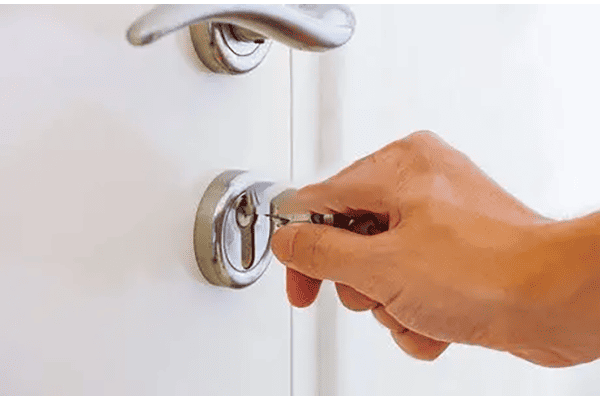
The lock body is the mechanical center of many door sets. It holds the latch and, when applicable, the deadbolt. The cylinder controls locking and unlocking by key. In a euro standard mortise lock system, the cylinder profile, lock center distance, backset, and faceplate size must match the door preparation8.
A common mistake is to buy a lock body and cylinder from separate sources without checking compatibility. The cylinder may fit the profile opening but still be the wrong length for the door thickness and escutcheon design.
Here is a simple matching table:
| Matching point | Why it matters |
|---|---|
| Backset | Determines distance from door edge to handle/cylinder center |
| Center distance | Must match handle plate or escutcheon layout |
| Faceplate size | Must fit the door edge machining |
| Cylinder length | Must match door thickness and trim design |
| Latch direction | Must suit left-hand or right-hand opening |
| Strike plate position | Must align with latch and deadbolt |
Closers, stops, and bolts control daily operation
A closer returns the door to a closed position.9 It is often used in commercial, entrance, and fire-rated applications, but it is not a standard requirement for every kit. A door stop protects the wall, handle, or hinge from impact. Flush bolts are common on inactive leaves of double doors.
These supporting parts can reduce after-sales complaints when selected correctly. However, they should be chosen by application. For example, a hotel corridor door, a warehouse fire door, and a residential bedroom door have different movement and control requirements.
I see the best results when buyers treat the hardware as one operating system. The door must hang, swing, latch, lock, and close with all parts working in the same direction.
How Should Buyers Match a Door Hardware Kit to Door Type?
A door hardware kit should never be chosen as a universal set for every door. Different doors carry different risks. An entrance door may need better locking performance. A fire door may need verified rated components. A concealed door may need special hinges and hidden installation dimensions.
Buyers should match a door hardware kit by confirming door type, door material, thickness, opening direction, installation dimensions, security level, fire-rating needs, design style, surface finish, and special functions. The right kit depends on the specific door structure and project requirement.
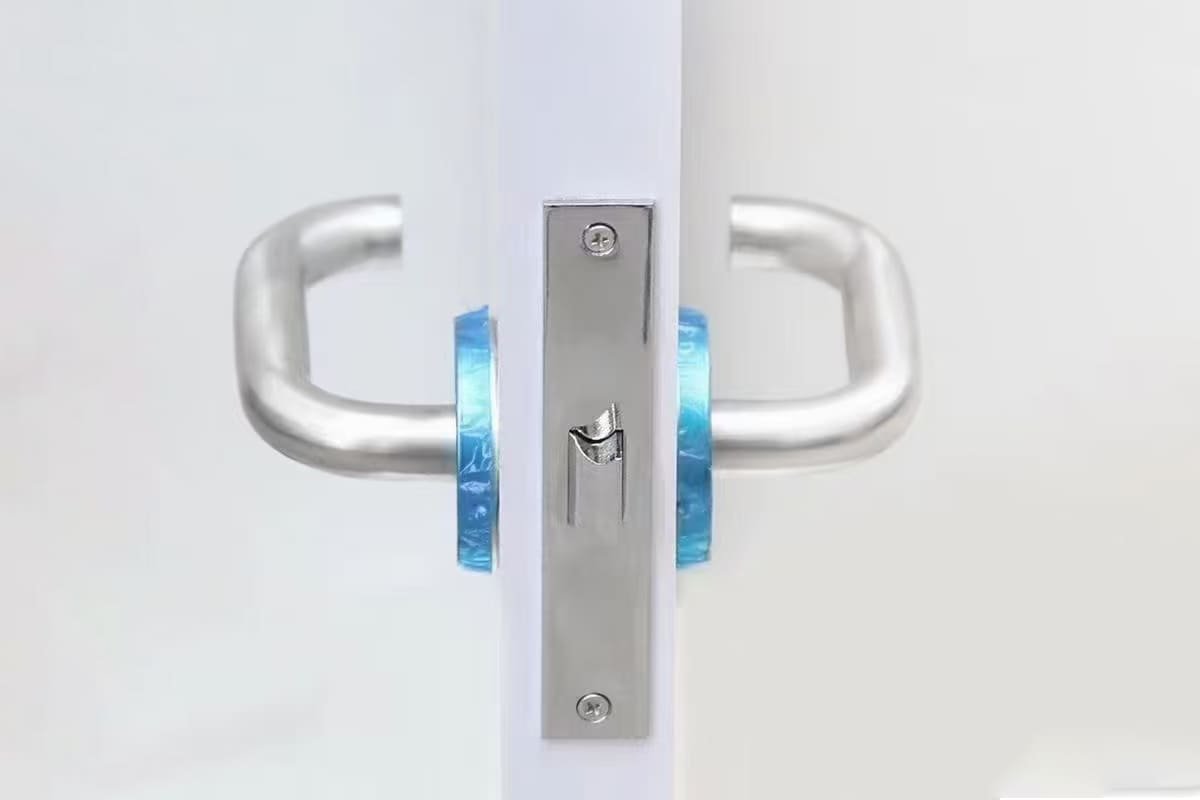
Entrance doors
Entrance doors usually need stronger operating and locking components than interior doors. A typical entrance door set may include:
- Mortise lock body
- Euro profile cylinder
- Lever handle or pull handle
- Strong butt hinges or concealed hinges
- Strike plate
- Door viewer, if required
- Door closer, if required
- Screws and fixing accessories
For entrance doors, buyers usually pay more attention to security function, material strength, corrosion resistance, finish consistency, and cylinder compatibility. If the project requires a certain security grade or certification, the buyer should verify it by product model, valid document, and target market regulation.
Interior doors
Interior doors often focus on smooth operation, design consistency, and cost efficiency. Many interior kits use simpler latches instead of heavy mortise lock systems. However, “simple” does not mean careless.
In large door factory production, interior door hardware must still match:
- Door thickness
- Handle spindle length
- Latch backset
- Strike plate size
- Hinge quantity
- Finish color
- Packaging method
A small finish difference between batches can create a serious complaint for wholesalers. I have seen buyers spend extra time sorting handles because one order used two slightly different satin finishes. Since then, I always recommend confirming the finish sample before mass production.
Fire doors
Fire doors need more caution. The hardware may need to support the door’s fire-rated function10, but requirements vary by market, project, door construction, and certification system. A supplier should not simply claim that every part is suitable for every fire door.
For fire door procurement, buyers should verify:
- Valid fire-rated certificate
- Product model covered by the certificate
- Door type and test configuration
- Required fire duration
- Market or project acceptance rules
- Installation method
- Compatibility with the complete door assembly
At SDH Hardware, we can provide CE and fire-rated documentation for relevant product lines where applicable, but buyers should always check certificate scope and project acceptance with qualified professionals or local authorities.
Passage doors
Passage doors usually need easy opening and closing rather than high security. A passage door set may use a latch and lever handle without keyed locking. In commercial settings, passage doors may still need stronger hinges or a closer because of frequent use.
Here is a simple door-type comparison:
| Door type | Main hardware focus | Possible kit parts |
|---|---|---|
| Entrance door | Locking, durability, finish | Mortise lock, cylinder, handle, hinges |
| Interior door | Cost, appearance, smooth use | Latch, handle, hinges, strike |
| Fire door | Verified compliance, closure | Rated lock, hinges, closer, seals |
| Passage door | Easy access, frequent use | Latch, lever handle, hinges |
| Concealed door | Hidden design, alignment | Concealed hinge, magnetic latch, flush trim |
Concealed doors
Concealed doors require special attention to installation dimensions. The hinge is usually hidden inside the door and frame. This design looks clean, but it reduces tolerance for machining errors.
A concealed door hardware kit may include:
- Concealed hinges
- Magnetic lock or concealed latch
- Flush handle or minimalist lever
- Special screws and fixing plates
- Adjustment accessories
For concealed doors, the buyer should confirm hinge opening angle, load capacity, door thickness range, frame structure, and adjustment method. A good concealed hinge can help installers adjust the door in three directions, but the door and frame still need accurate preparation.
What Procurement Risks Should You Check Before Ordering a Door Hardware Kit?
A door hardware kit can pass a basic price comparison and still fail in real production. Buyers often face risk from missing parts, incompatible dimensions, inconsistent finish, weak packaging, unclear certificates, or unstable lead times. These issues become expensive when orders are large.
Before ordering a door hardware kit, buyers should check door specifications, component compatibility, material and finish standards, certification documents, packaging, spare parts, production capacity, inspection process, and supplier experience. The goal is to reduce assembly problems, compliance risk, and after-sales cost.
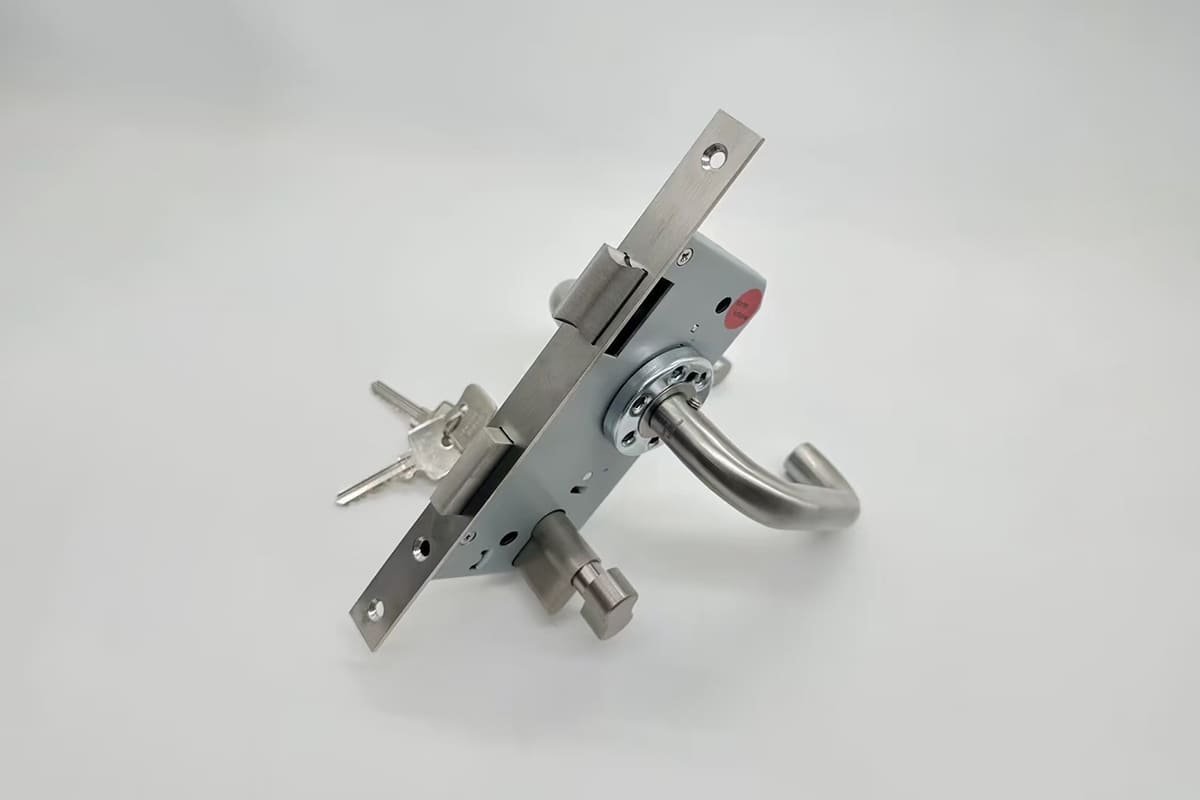
Risk 1: Incomplete kit definition
The first risk is simple: the buyer and supplier may not mean the same thing by “complete kit.” One supplier may include screws. Another may quote without screws. One supplier may include cylinder. Another may quote lock body only.
I recommend creating a line-by-line checklist before confirming the purchase order:
- Hinges: quantity, size, material, finish
- Lock body: model, backset, center distance, faceplate
- Cylinder: profile, length, key type, finish
- Handle: material, plate/rosette type, spindle size
- Strike plate: size and finish
- Screws: type, length, finish, quantity
- Accessories: spindle, fixing bolts, escutcheons
- Optional items: closer, stop, flush bolt, viewer, seals
This checklist helps both sides avoid assumptions.
Risk 2: Dimension mismatch
Dimension mismatch is one of the most common problems in bulk door hardware supply. It can happen even when all parts look correct in photos.
Buyers should confirm:
| Dimension | Why it matters |
|---|---|
| Door thickness | Affects cylinder, spindle, screw, and handle fitting |
| Backset | Affects lock machining and handle position |
| Center distance | Affects handle plate and cylinder alignment |
| Hinge size | Affects door load and frame preparation |
| Faceplate width | Affects door edge routing |
| Strike plate size | Affects frame preparation |
| Opening direction | Affects latch direction and handle orientation |
For OEM and ODM projects, I prefer to work with drawings, physical samples, or confirmed technical sheets. Photos alone are not enough for precision matching.
Risk 3: Finish inconsistency
Finish matters more than many people expect. A satin stainless steel handle, hinge, and lock faceplate should look coordinated when installed on the same door. If parts come from different production batches or suppliers, visible color differences may appear.
Common finishes include:
- Satin stainless steel
- Polished stainless steel
- PVD finishes
- Powder coating
- Antique bronze
- Black finish
- Nickel or chrome plating
For wholesalers and brand operators, consistent finish helps protect market reputation. For door factories, it also reduces sorting time during assembly. At our factory, finish control is part of the inspection process, but I still encourage buyers to approve finish samples before mass orders.
Risk 4: Certification misunderstanding
Certification is important, but buyers should read certificates carefully. A certificate may apply only to a specific product model, test condition, or hardware configuration.11 It may not cover every size, finish, or customized version.
For CE, fire-rated, or other compliance documents, buyers should verify:
- Product model number
- Certificate validity period
- Testing standard
- Rated scope
- Applicable door type
- Issuing organization
- Market acceptance requirement
A supplier can provide documents, but project-specific compliance should be reviewed by qualified professionals, consultants, or local authorities when required.
Risk 5: Supplier capability
A good supplier does more than ship parts. The supplier should understand how the hardware works on the door. This is especially important when the buyer needs complete matching for multiple door types.
Supplier evaluation points include:
- Factory production experience
- Product category coverage
- Customization ability
- Quality inspection process
- Stable material sourcing
- Packaging control
- Delivery capacity
- Export market experience
- Technical communication speed
SDH Hardware has more than 20 years of manufacturing experience in architectural door hardware. We produce and support categories such as concealed hinges, euro standard mortise locks, butt hinges, lever handles, and lock cylinders. Still, I believe every buyer should evaluate each supplier based on real product samples, documents, inspection results, and long-term supply performance.
Frequently Asked Questions
Is a door hardware kit the same for every door?
No. A door hardware kit changes by door type, thickness, opening direction, security requirement, fire-rating need, and design style. Entrance doors, interior doors, passage doors, fire doors, and concealed doors often require different hardware combinations.
Does every door hardware kit include a door closer?
No. A door closer is optional unless the application or project requires controlled closing. Fire doors, commercial doors, and high-traffic doors may need closers, but many interior or passage doors do not use them.
What information should I provide before requesting a quotation?
You should provide door type, door material, door thickness, door size, opening direction, lock dimensions, hinge requirement, finish, quantity, certification need, packaging requirement, and target market. Drawings or samples help improve accuracy.
Can one supplier provide a complete door hardware kit for bulk orders?
Yes, a qualified supplier can provide matched hardware sets for bulk production. Buyers should still confirm item lists, dimensions, finishes, certificates, inspection standards, and packaging details before placing a mass order.
How do I check if a fire door hardware kit is suitable?
You should verify the product model, certificate scope, testing standard, fire rating duration, door type, and project requirements. Fire-door compliance should be confirmed with valid documents and qualified professional review for the specific market or project.12
Conclusion
A door hardware kit is not just a group of separate metal parts. It is a coordinated system that helps a door hang, swing, open, close, lock, and meet the needs of a specific application. Buyers should match the kit to door type, dimensions, function, finish, and compliance requirements before ordering. If you need factory-side support for complete door hardware matching, SDH Hardware can help you evaluate suitable solutions for bulk production, wholesale supply, and customized project needs.
"Door handle - Wikipedia", https://en.wikipedia.org/wiki/Door_handle. An encyclopedic source on door furniture defines door-mounted hardware as including operating and securing fittings such as handles, locks, hinges, and accessories, supporting the article’s description of a door hardware kit as an assembled set of related components. Evidence role: definition; source type: encyclopedia. Supports: Door hardware or door furniture commonly includes attached operating and securing items such as handles, locks, hinges, and related fittings.. Scope note: This supports the general definition of door hardware, not the exact contents of every commercial kit. ↩
"087100 – DOOR HARDWARE - Facilities and Campus Services", https://fcs.cornell.edu/087100-door-hardware. A building-design reference describes doors as assemblies whose hardware components provide support, movement, latching, locking, and closing functions, supporting the article’s treatment of the kit as an integrated operating system. Evidence role: mechanism; source type: government. Supports: Door assemblies rely on coordinated hardware such as hinges, locks, latches, and closers to provide movement, latching, security, and closing functions.. Scope note: The source would provide general building-assembly context rather than validating any specific kit configuration. ↩
"Lockset - Wikipedia", https://en.wikipedia.org/wiki/lockset. A general reference on door furniture and locksets identifies hinges, handles, locks or latches, cylinders, strike plates, and related fittings as common door-mounted hardware, supporting the article’s component list. Evidence role: general_support; source type: encyclopedia. Supports: Door hardware commonly includes hinges, handles or knobs, locks or latches, cylinders, strike plates, and related fittings.. Scope note: The source supports common component categories, not whether all listed items are included in every supplier’s kit. ↩
"Fire Doors and NFPA 80 FAQs", https://www.nfpa.org/news-blogs-and-articles/blogs/2025/04/11/fire-doors-faqs. NFPA and product-listing guidance treat fire doors as rated assemblies in which hardware such as hinges, latches, locks, and closing devices must be compatible with the tested or listed configuration, supporting the article’s caution that fire-rated doors may require certified hardware and documentation. Evidence role: expert_consensus; source type: institution. Supports: Fire-door assemblies are regulated systems whose hardware, such as hinges, locks, latches, and closers, may need to be listed, labeled, or verified as part of the rated assembly.. Scope note: The exact hardware required depends on the applicable code, listing, door construction, and jurisdiction. ↩
"Hinge", https://en.wikipedia.org/wiki/Hinge. A general reference on hinges describes them as mechanical bearings that connect two objects and permit rotation, which supports the article’s statement that door hinges connect the door leaf to the frame and support its movement. Evidence role: mechanism; source type: encyclopedia. Supports: A hinge is a mechanical bearing connecting two objects and permitting rotation, and door hinges connect the door to the frame while supporting the door leaf.. Scope note: The source explains the basic mechanism and does not specify load ratings for particular hinge models. ↩
"A156.1 - 2025 Butts and Hinges", https://buildershardware.com/ANSI-BHMA-Standards/Hardware-Highlights/A1561-2025-Butts-and-Hinges. ANSI/BHMA hinge standards and hardware-selection guidance classify hinges by performance factors such as door size, weight, and frequency of use, supporting the article’s claim that light interior doors and heavy entrance doors should not be assigned identical hinge specifications. Evidence role: expert_consensus; source type: institution. Supports: Hinge standards and selection guidance classify or specify hinges according to factors such as door size, weight, frequency of use, and application.. Scope note: The source would support the selection principle, not determine the correct hinge for a specific door without project dimensions and test data. ↩
"Door handle", https://en.wikipedia.org/wiki/Door_handle. A technical or encyclopedic description of door-handle mechanisms explains that a lever rotates a spindle that actuates the latch, supporting the article’s account of how the handle and lock body interact. Evidence role: mechanism; source type: encyclopedia. Supports: Lever handles commonly rotate a spindle, which actuates the latch mechanism in a lockset or latch body.. Scope note: The mechanism varies by lockset design, so the source supports the common lever-latch arrangement rather than every lock type. ↩
"How to measure and choose the right mortise lock size", https://www.blue-id.com/en/blog/mortise-lock-mass. European lock standards and architectural-hardware references specify mortise locks by dimensional features including backset, centers, faceplate dimensions, and cylinder profile, supporting the article’s statement that these dimensions must match the prepared door and hardware layout. Evidence role: general_support; source type: institution. Supports: Mortise locks are specified using dimensions such as backset, centers, faceplate size, and cylinder profile, which must correspond to the door preparation and trim.. Scope note: The citation supports the dimensional matching requirement in general; exact tolerances depend on the applicable product standard and manufacturer drawings. ↩
"Door closer - Wikipedia", https://en.wikipedia.org/wiki/Door_closer. An encyclopedic definition describes a door closer as a mechanical device that closes a door after opening, supporting the article’s statement that a closer returns the door to a closed position. Evidence role: definition; source type: encyclopedia. Supports: A door closer is a mechanical device that closes a door after it has been opened.. ↩
"Fire-Rated Solutions - Allegion US", https://us.allegion.com/en/solutions/by-requirement/fire-rated-solutions.html. Building-code and fire-safety guidance treats fire doors as complete rated assemblies whose hardware can be integral to fire resistance and smoke-control performance, supporting the article’s caution that fire-door hardware must be selected carefully. Evidence role: expert_consensus; source type: government. Supports: Fire-door performance is assessed at the assembly level, and hardware such as latches, hinges, seals, and closing devices can be part of the rated or code-compliant configuration.. Scope note: The source gives code and safety context; it does not prove that any particular hardware item is suitable for a specific fire-door certificate. ↩
"Frequently Asked Questions - UKAS", https://www.ukas.com/faqs/. Accreditation and product-certification guidance describes certificates and listings as documents with defined scopes covering specified products, standards, and conditions, supporting the article’s warning that a certificate may not apply to every model, size, finish, or configuration. Evidence role: general_support; source type: institution. Supports: Product certifications and listings are issued within defined scopes, which may identify specific models, configurations, standards, and conditions of use.. Scope note: The source supports the general principle of certification scope; the scope of a particular certificate must be read from that certificate itself. ↩
"Fire Doors and NFPA 80 FAQs", https://www.nfpa.org/news-blogs-and-articles/blogs/2025/04/11/fire-doors-faqs. NFPA fire-door inspection guidance requires documented inspection of fire-door assemblies by qualified persons and recognizes the role of jurisdictional acceptance, supporting the article’s statement that fire-door compliance should be confirmed through valid documents and qualified review for the specific project or market. Evidence role: expert_consensus; source type: institution. Supports: Fire-door assemblies are subject to inspection, documentation, and jurisdiction-specific acceptance, often involving qualified persons or the authority having jurisdiction.. Scope note: The citation supports the need for qualified verification; requirements still vary by jurisdiction, occupancy, and adopted code edition. ↩