What Are the Advantages of Security Door Hinges?
Security door hinges can look like a small detail in a door set, but weak hinge selection can create a serious anti-removal risk.1 If a buyer only compares size and price, the door may lose stability under attack or long-term use. I see security hinges as a practical way to improve protection, durability, and product confidence.
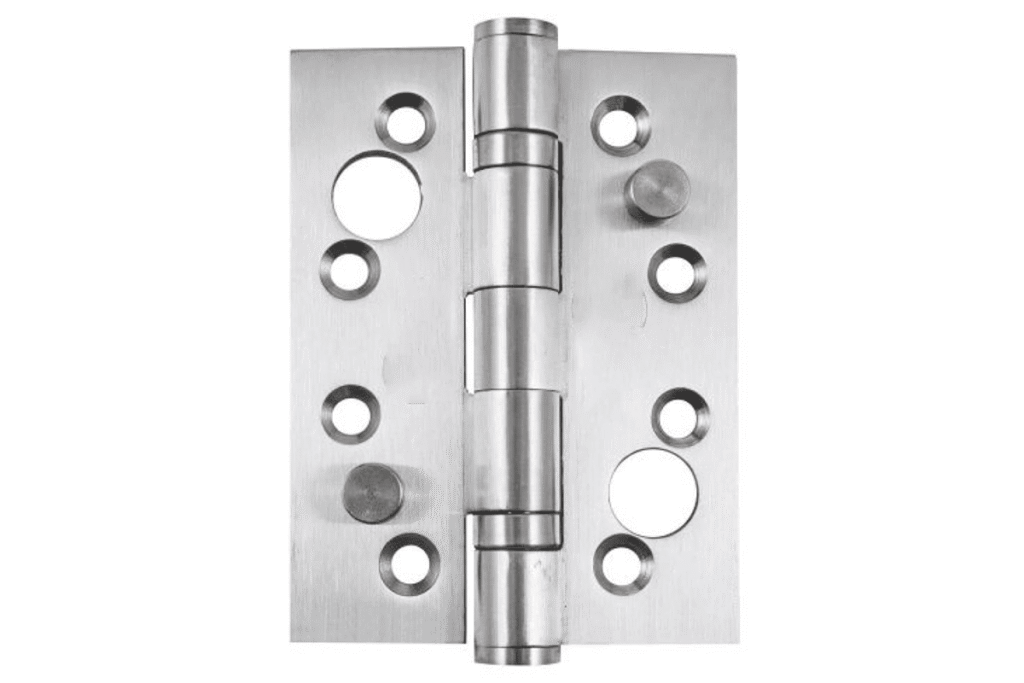
The main advantages of security door hinges are anti-theft protection, anti-removal performance, improved pry resistance, stronger load support, and longer door stability. A good security hinge may use a non-removable pin, anti-removal studs, reinforced leaves, security screws, and bearing structures to reduce tampering risks and support heavier security doors.
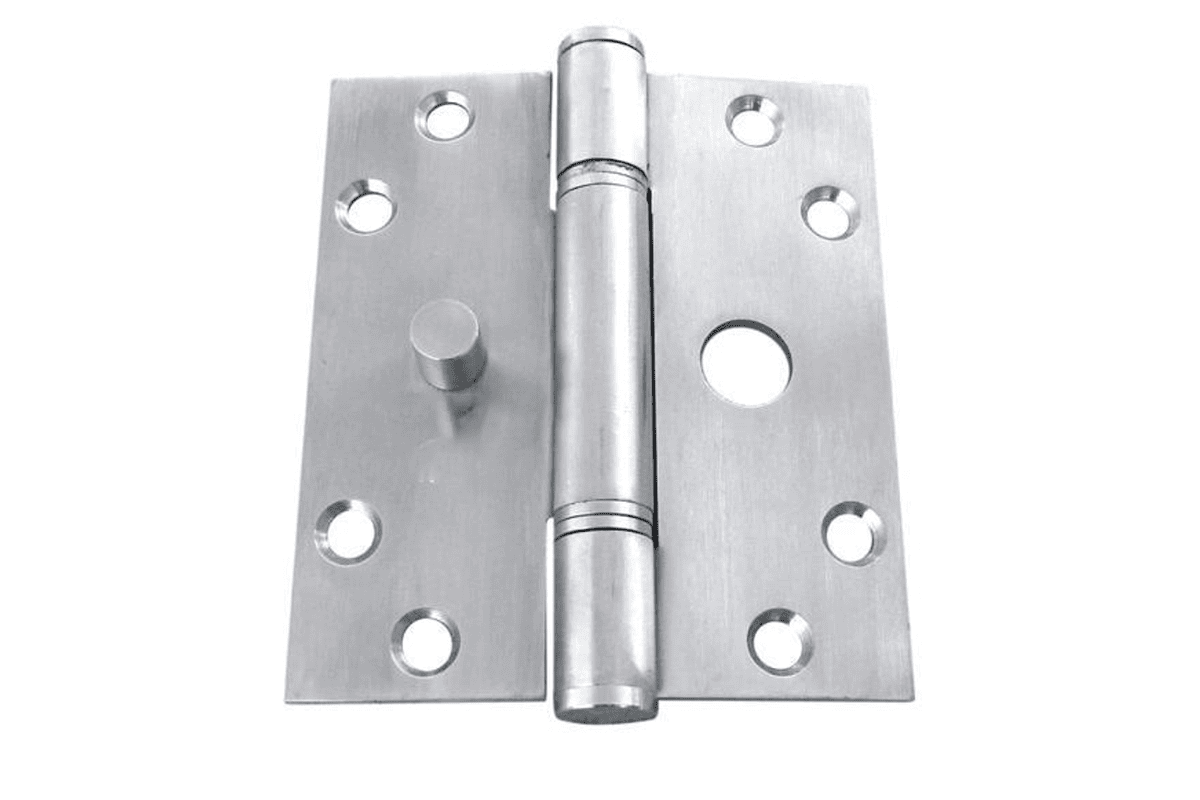
Security hinges should not be treated as “stronger normal hinges.” I prefer to evaluate them as one part of the complete door security system. The hinge design, screw fixing, door frame strength, and installation accuracy all affect the final performance.
How Do Security Door Hinges Improve Anti-Theft Protection?
A standard hinge can become a weak point when the hinge pin is exposed and removable.2 This problem becomes more serious on outward-opening security doors.3 If attackers can access the pin, they may try to knock it out. Security door hinges reduce this risk with anti-removal pin structures.
Security door hinges improve anti-theft protection by making hinge-pin removal much harder when the door is closed. Many designs use a non-removable pin or fixed pin structure, so outsiders cannot simply drive the pin out from below and separate the door leaf from the frame.
Why the hinge pin matters
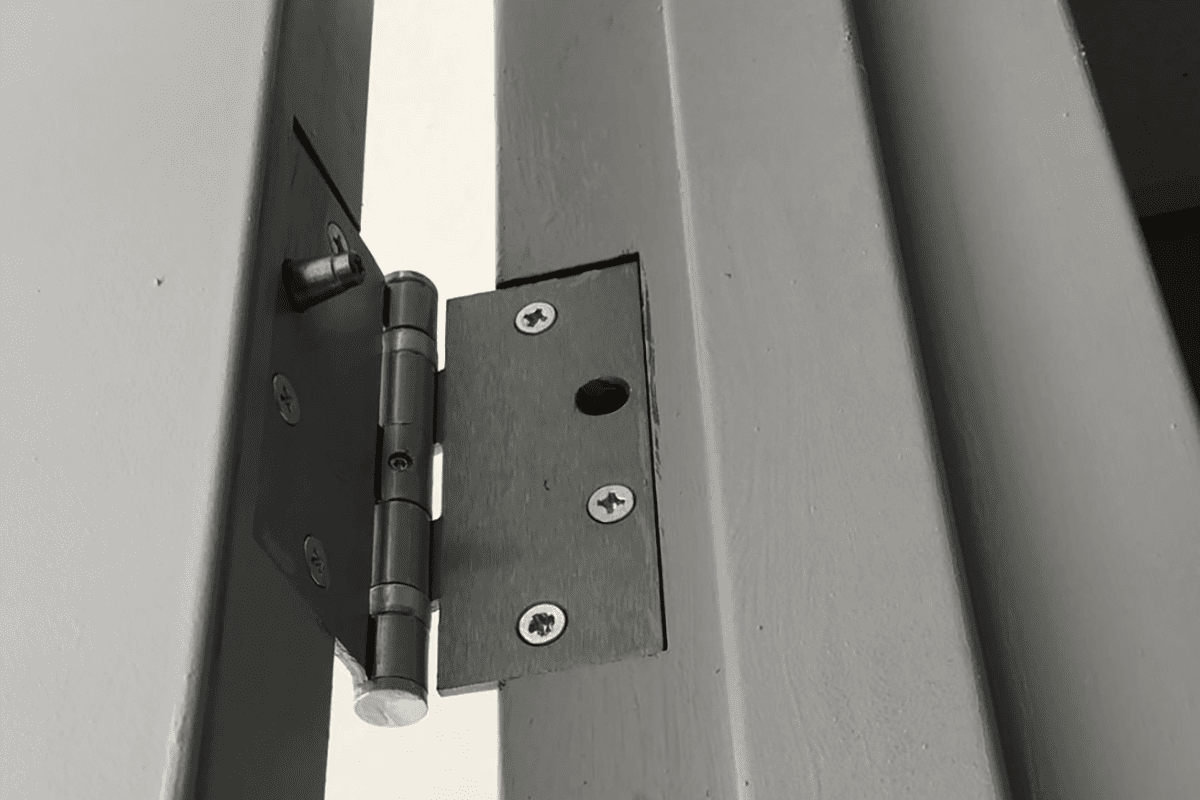
In many door systems, the hinge pin is the central connection between the two hinge leaves. One leaf fixes to the door frame. The other leaf fixes to the door slab. The pin allows rotation. If the pin is accessible and removable, the hinge may become a potential attack point.
From a factory and supply perspective, I always ask one basic question first:
“Can the hinge pin be removed from the outside when the door is closed?”
If the answer is yes, the hinge may not be suitable for higher-security applications, especially for outward-opening metal doors, apartment entry doors, warehouse doors, and commercial service doors.
Common anti-pin-removal structures
Security door hinges may use several structures to reduce pin tampering:
- Non-removable pin: The pin is fixed, spun, welded, capped, or mechanically blocked.
- Crimped pin end: The pin end is deformed to prevent easy extraction.
- Welded or sealed end: The pin cannot be driven out without damaging the hinge.
- Concealed pin design: The pin is not directly accessible after installation.
- Ball bearing with retained pin: The bearing structure supports smooth operation while retaining the pin.
Different factories use different designs. The buyer should not only read the product name. I recommend checking the actual sample, drawing, and pin structure.
Where this advantage is most important
The anti-theft value of security door hinges is especially useful in these cases:
| Door Application | Hinge Risk | Recommended Hinge Feature |
|---|---|---|
| Outward-opening security door | Exposed hinge pin | Non-removable pin |
| Apartment entrance door | Forced disassembly attempt | Fixed pin + anti-removal studs |
| Steel door for warehouse | Heavy door and tampering risk | Reinforced leaf + bearing |
| Commercial exterior door | Frequent use and abuse | Bearing hinge + security screws |
| Utility room door | Screw tampering | Security screw fixing |
What I would verify before buying
When I help buyers evaluate hinge samples, I do not rely on appearance only. A hinge can look heavy but still have a removable pin. I usually suggest checking:
Pin retention method
The buyer should confirm whether the pin is truly non-removable after installation.Pin diameter and material
A larger pin may improve strength, but the whole structure must match the door weight.Hinge leaf thickness
Thickened leaves can improve deformation resistance.Knuckle fit
Loose hinge knuckles may cause sagging, noise, or unstable operation.Installation direction
The hinge must match inward-opening or outward-opening door design.
Security door hinges do not make a door fully burglar-proof by themselves. However, a non-removable pin removes one common hinge-side weakness.4 For door factories and hardware brands, this feature can help improve the perceived and practical security level of the complete door set.
Why Do Anti-Removal Studs Matter in Security Door Hinges?
A non-removable pin is important, but one protective structure may not be enough for every door. If a hinge is attacked, buyers need a second mechanical barrier. Security door hinges with anti-removal studs add this extra layer by locking the hinge leaves against separation when the door is closed.5
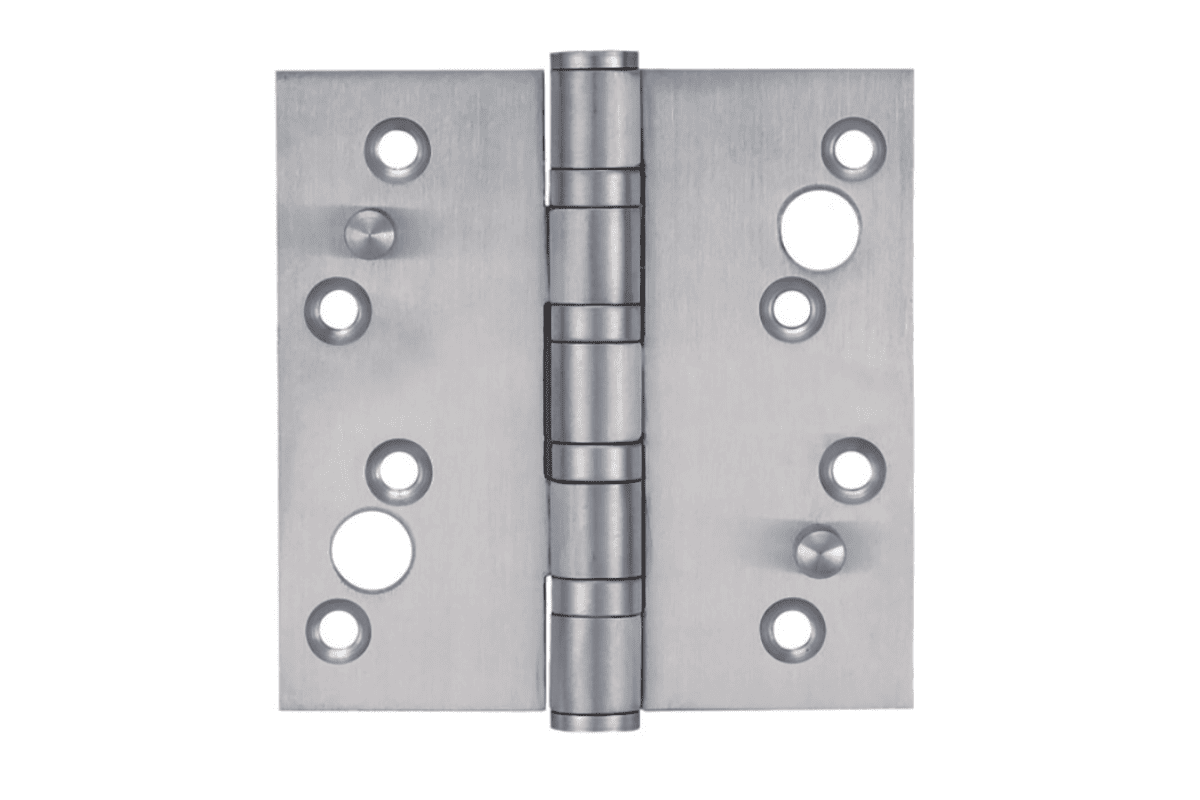
Anti-removal studs matter because they help keep the door leaf engaged with the frame even if the hinge pin is damaged or compromised. When the door closes, the stud projects into a matching hole on the opposite hinge leaf or frame-side plate, reducing the chance of forced hinge separation.
How anti-removal studs work
Anti-removal studs are also called security tabs, dog bolts, or anti-lift pins in some markets. The exact name may change by region, but the function is similar.
The structure is simple:
- One hinge leaf has a solid projecting stud.
- The opposite leaf or frame area has a matching hole.
- When the door closes, the stud enters the hole.
- The closed door gains an additional mechanical interlock.
- Even if hinge rotation points are attacked, the door remains harder to remove.
This is a practical design. It does not require electronic access control. It does not require complicated maintenance. It adds passive protection every time the door closes.
Why this is useful for outward-opening doors
Outward-opening security doors often expose the hinge side to the outside. This is common in some markets and project types. The exposed hinge side may face attacks such as:
- Pin knocking
- Screw tampering
- Crowbar prying
- Hinge leaf deformation
- Forced lifting
A non-removable pin reduces pin extraction risk. Anti-removal studs reduce separation risk. Together, they create a more secure hinge-side connection.
Buyer checklist for anti-removal studs
I recommend buyers check these points before placing bulk orders:
| Inspection Point | What to Check | Why It Matters |
|---|---|---|
| Stud diameter | Measure actual diameter | Thin studs may bend more easily |
| Stud length | Confirm full engagement depth | Short studs may not lock deeply |
| Hole alignment | Test with door closing | Poor alignment causes rubbing |
| Material strength | Ask for material specification | Weak material may deform |
| Quantity per hinge | Check one or more studs | More points may improve engagement |
| Finish coverage | Inspect coating around stud | Poor finish may rust at stress points |
Installation accuracy is critical
Anti-removal studs only work well when the hinge is installed accurately. If the stud and hole do not align, the installer may enlarge the hole, grind the stud, or leave the door with closing resistance. These field modifications can reduce the advantage.
For door factories, I suggest making an installation jig or drilling template for repeated production. This helps keep the hinge position consistent across batches.
Important installation checks include:
- The door gap should remain consistent.
- The stud should enter the hole without impact.
- The hinge leaf should sit flat on the door and frame.
- The screw holes should not be oversized.
- The door should close without forcing the hinge sideways.
A practical factory perspective
In our type of production work, I have seen buyers focus heavily on surface finish, especially for visible hardware. Finish consistency is important for brand image. However, for security door hinges, the hidden structural details matter just as much.
A satin stainless steel finish may look premium, but the buyer should also verify whether the hinge has:
- Non-removable pin
- Anti-removal studs
- Thick hinge leaf
- Correct screw design
- Suitable bearing type
- Proper tolerance control
Anti-removal studs are not a marketing decoration. They are a mechanical backup. When they are designed and installed correctly, they strengthen the hinge-side connection and support the security function of the whole door system.
How Do Reinforced Leaves, Security Screws, and Bearings Improve Security Door Hinges?
A hinge can fail through more than pin removal. Attackers may pry the door edge, tamper with screws, or deform weak hinge leaves. Daily use can also cause sagging.6 Security door hinges use reinforced leaves, better screw fixing, and bearing structures to improve resistance and long-term stability.
Reinforced leaves, security screws, and bearings improve security door hinges by strengthening the load path between the door and frame. Thick leaves resist deformation, tamper-resistant screws reduce easy removal, and bearings support smoother movement and higher load capacity for heavier or frequently used security doors.
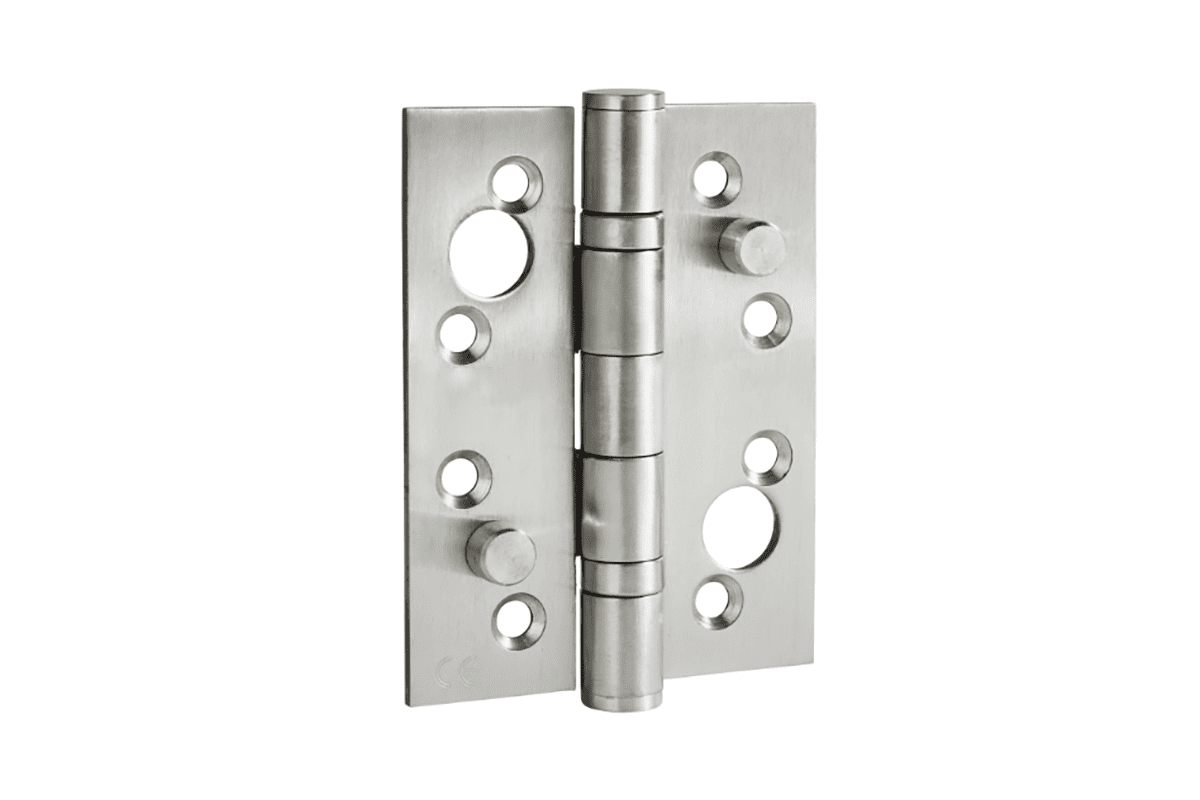
Reinforced hinge leaves
The hinge leaf is the flat plate fixed to the door and frame. If the leaf is too thin, it may bend under load or forced pressure.7 A reinforced hinge leaf can improve structural stability.
Typical leaf thickness varies by product type and market. For many security door applications, buyers may compare options such as:
| Hinge Type | Typical Leaf Thickness Range | Common Use |
|---|---|---|
| Light residential hinge | 1.5–2.0 mm | Interior or light doors |
| Standard exterior hinge | 2.0–3.0 mm | Entry doors |
| Heavy-duty security hinge | 3.0 mm or above | Steel or security doors |
These numbers are general references. The right specification depends on door weight, door size, frame material, opening frequency, and project requirements.
Security screws and fixing quality
Security screws can reduce simple screwdriver removal. Some designs use special drive heads. Others use longer screws or fixing into reinforced plates.
However, I always remind buyers that screws only work as well as the material they fix into. A strong screw in a weak frame may still fail. The door manufacturer should check:
- Screw diameter
- Screw length
- Screw head type
- Screw material
- Thread engagement
- Reinforcement plate thickness
- Frame fixing condition
For steel security doors, the screw may fix into a steel reinforcement plate or welded nut plate. For timber or composite frames, the buyer should check pull-out resistance and long-term holding strength.
Bearing structure and durability
Bearing hinges are often selected for heavier doors or frequent-use doors.8 The bearing reduces friction between hinge knuckles. This helps the door swing more smoothly and reduces wear over time.
Common bearing structures include:
- Ball bearing hinge: Smooth operation and good load support.
- Washer bearing hinge: Basic friction reduction.
- Concealed bearing structure: Cleaner appearance and reduced exposure.
- Heavy-duty bearing hinge: Better for large or metal doors.
Bearing quality affects long-term performance. If the bearing material is poor or the tolerance is loose, the hinge may still become noisy or unstable.
Load capacity should be matched to the door
Security door hinges must support static and dynamic loads. Static load is the weight of the door. Dynamic load includes opening force, closing impact, wind pressure, and daily abuse.
For example, a heavy steel door may weigh 60–100 kg or more depending on size, panel structure, glass inserts, and reinforcement. A project door may also open hundreds of times per day. In that case, the buyer should not select the cheapest hinge only by size.
A better evaluation includes:
- Door weight
- Door width and height
- Number of hinges per door
- Opening frequency
- Door closer force
- Frame rigidity
- Installation screw strength
- Environmental conditions
Pry resistance should be described carefully
Reinforced hinges can improve resistance against prying. However, I avoid absolute words such as “pry-proof.” A crowbar attack stresses the hinge, frame, lock side, door leaf, and screws at the same time. The hinge is only one part of the door system.
A more accurate statement is:
“Properly selected security door hinges can improve hinge-side resistance against forced disassembly and deformation, especially when combined with a strong door frame, accurate installation, and suitable locking hardware.”
This wording is important for B2B buyers. It keeps the claim realistic and helps avoid unsupported promises.
How Should Buyers Evaluate Security Door Hinges for Bulk Procurement?
Bulk buyers face a different problem from retail buyers. One good sample is not enough. The real challenge is stable quality across repeat orders. Security door hinges must meet size, finish, function, packaging, and delivery requirements without creating assembly problems or after-sales claims.
Buyers should evaluate security door hinges by checking anti-removal structure, material, leaf thickness, bearing type, screw system, finish consistency, production tolerance, packaging, and supplier quality control. They should also verify any certification documents or test reports before using them for project approval or market claims.
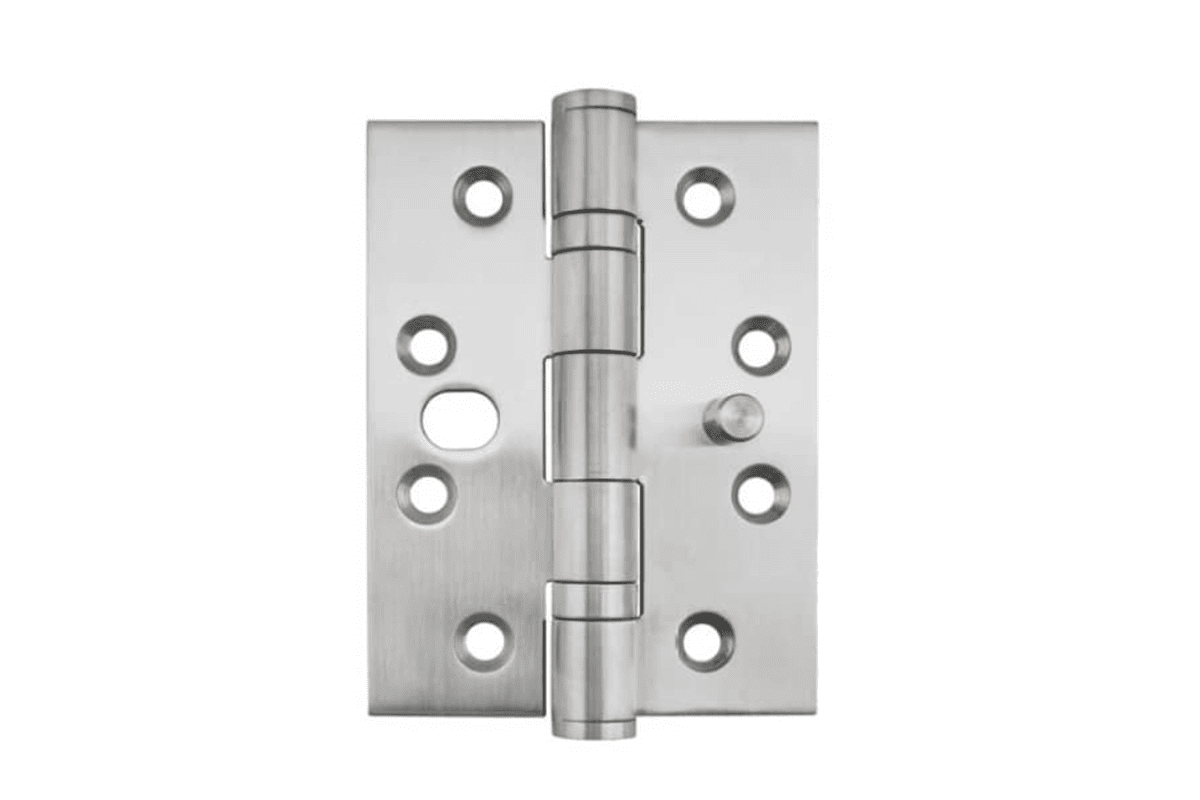
Start with the door application
Before comparing prices, I suggest buyers define the door application clearly. A hinge for a light apartment entrance door may not be enough for a heavy commercial steel door.
A clear purchasing brief should include:
- Door type: steel, timber, composite, aluminum
- Door opening direction: inward or outward
- Door weight range
- Door thickness
- Frame material
- Required finish
- Number of hinges per door
- Target market
- Packaging requirement
- Certification or project document requirement
This information helps the supplier recommend the correct hinge structure. It also reduces misunderstandings during sample approval.
Sample approval checklist
For security door hinges, the sample approval process should be more detailed than normal decorative hinges.
| Category | Buyer Should Check | Practical Method |
|---|---|---|
| Anti-theft structure | Non-removable pin | Try to identify pin retention method |
| Anti-removal feature | Studs or tabs | Close door sample and check engagement |
| Strength | Leaf thickness and knuckle fit | Measure with caliper |
| Load support | Bearing type | Test swing under door weight |
| Fixing | Screw type and hole size | Check screw engagement |
| Finish | Color and coating uniformity | Compare multiple pieces |
| Tolerance | Hole position and leaf flatness | Use jig or drawing |
| Packaging | Protection from scratches | Drop and transport simulation if needed |
Factory quality control points
From the SDH Hardware manufacturing perspective, consistent quality depends on full-process control. For buyers, this means the supplier should have clear inspection steps, not only final packing inspection.
Important quality control steps include:
Raw material screening
The factory should check material thickness, grade, and surface condition.Stamping or machining control
The hinge leaf, screw holes, and knuckles must stay within tolerance.Pin and bearing assembly inspection
The hinge should rotate smoothly without excessive looseness.Surface treatment control
Finish color should remain stable across batches.Function testing
The hinge should open and close smoothly after assembly.Finished product inspection
The factory should inspect appearance, dimensions, quantity, and packaging.
Supplier selection for long-term business
Security door hinges are not only a product. They are also a supply chain item. A reliable supplier should support stable production, repeatable finishing, flexible customization, and clear communication.
For overseas buyers, I would look at:
- Independent factory capability
- Experience with door hardware categories
- ODM customization ability
- Stable export packaging
- Batch consistency
- Clear drawings and specifications
- Responsive after-sales support
- Ability to match regional standards
- Willingness to provide samples before bulk order
As a China-based architectural door hardware manufacturer, SDH Hardware supplies hinges, mortise locks, lever handles, lock cylinders, and complete door hardware solutions for door factories, hardware brands, and wholesalers. In my view, this one-stop sourcing approach can help buyers reduce coordination cost, especially when they need matching finishes across multiple hardware categories.
Still, each buyer should test samples in the actual door structure before mass production. The best hinge is the one that fits the door system, the market requirement, and the buyer’s quality standard.
Frequently Asked Questions
Are security door hinges burglar-proof?
Security door hinges are not burglar-proof by themselves. They can improve anti-removal, anti-tamper, and pry-resistance performance on the hinge side. However, the full door system also depends on the lock, door leaf, frame, screws, installation accuracy, and verified testing if a certified security rating is required.
What is the most important feature of security door hinges?
The most important feature is usually the non-removable pin, especially for outward-opening doors. This structure helps prevent outsiders from knocking out the hinge pin when the door is closed. Anti-removal studs, reinforced leaves, and security screws add further protection.
Do all security door hinges need ball bearings?
Not all security door hinges need ball bearings, but bearing hinges are better for heavier doors or frequent-use doors. Bearings reduce friction, improve smooth operation, and support longer service life. Buyers should match the bearing structure to door weight, usage frequency, and project requirements.
How many security door hinges should a door use?
Most standard doors use two or three hinges, while heavier security doors may need three or more.9 The correct number depends on door weight, height, width, material, and usage frequency. Buyers should confirm load capacity with the supplier and test the complete door assembly.
Should buyers ask for certificates for security door hinges?
Buyers should ask for certificates when the target market or project requires them. They should verify whether the certificate covers the exact hinge model and intended application. For fire-rated or certified security doors, professional evaluation of the complete door system is recommended.
Conclusion
The advantages of security door hinges come from their anti-removal design, not only from thicker metal. A strong option should include a non-removable pin, anti-removal studs, reinforced leaves, suitable screws, and a bearing structure matched to the door weight. Buyers should also consider the frame, installation quality, and verified documents before making project claims. If you need security door hinges for bulk procurement, SDH Hardware can support sample evaluation, customization, and stable factory-direct supply for your door hardware program.
"Security Stud for Door Hinges", https://www.hardwaresource.com/products/security-stud-for-door-hinges. Supports the claim that inadequate hinge selection can lead to significant security vulnerabilities, particularly concerning door removal. Evidence role: general_support; source type: research. Supports: the claim that inadequate hinge selection can lead to significant security vulnerabilities, particularly concerning door removal. ↩
"Common Problems of Removable Pin Hinges and How to ...", https://watersonusa.com/solutions/removable-pin-hinges. Supports the assertion that exposed and removable hinge pins on standard hinges represent a common security vulnerability in door systems. Evidence role: mechanism; source type: encyclopedia. Supports: the assertion that exposed and removable hinge pins on standard hinges represent a common security vulnerability in door systems. ↩
"Outswing Door with Exterior Hinges: Security Concerns ...", https://www.facebook.com/groups/381439932945871/posts/1338204227269432/. Supports the claim that the security risk associated with exposed hinge pins is exacerbated in outward-opening door installations. Evidence role: expert_consensus; source type: research. Supports: the claim that the security risk associated with exposed hinge pins is exacerbated in outward-opening door installations. ↩
"Stainless Steel Hinges - Security Hinge with Non Removable ...",
. Supports the effectiveness of non-removable hinge pins in mitigating a prevalent security vulnerability on the hinge side of a door. Evidence role: mechanism; source type: research. Supports: the effectiveness of non-removable hinge pins in mitigating a prevalent security vulnerability on the hinge side of a door. ↩"That's a tiny piece of metal doing a huge job The video explains one of ...", https://www.facebook.com/Homeloveconstruction/videos/thats-a-tiny-piece-of-metal-doing-a-huge-job-the-video-explains-one-of-the-built/1311187470555143/. Supports the explanation of how anti-removal studs enhance door security by mechanically interlocking hinge leaves to prevent separation when the door is closed. Evidence role: mechanism; source type: research. Supports: the explanation of how anti-removal studs enhance door security by mechanically interlocking hinge leaves to prevent separation when the door is closed. ↩
"Easy Fix For Sagging Doors",
. Supports the claim that regular, daily use of doors can contribute to issues like door sagging over time due to hinge wear or structural stress. Evidence role: general_support; source type: research. Supports: the claim that regular, daily use of doors can contribute to issues like door sagging over time due to hinge wear or structural stress. ↩"Industrial Hinge Selection Guide: Leaf Thickness, Load ...", https://hingesmanufacturers.com/blog/industrial-hinge-selection-guide-leaf-thickness-load-durability/. Supports the principle that the thickness of a hinge leaf directly impacts its resistance to bending or deformation when subjected to load or forced pressure. Evidence role: mechanism; source type: education. Supports: the principle that the thickness of a hinge leaf directly impacts its resistance to bending or deformation when subjected to load or forced pressure. ↩
"Heavy Duty Hinges - HingeOutlet", https://www.hingeoutlet.com/collections/heavy-duty-hinges/commercial-ball-bearing-hinges?srsltid=AfmBOoqyfw63sSaHBNejS48qcUilBEWZWk8PpyS-oQDNGk7zzuWhOZ5o. Supports the common industry practice of selecting bearing hinges for doors that are either heavy or subject to frequent use, due to their enhanced durability and smooth operation. Evidence role: expert_consensus; source type: institution. Supports: the common industry practice of selecting bearing hinges for doors that are either heavy or subject to frequent use, due to their enhanced durability and smooth operation. ↩
"Do I need 2 or 3 Hinges?", https://www.hingeoutlet.com/blogs/news/do-i-need-2-or-3-hinges-1?srsltid=AfmBOoqtDUUfbVFwaoFgJVDo4zXsCl-QzgxwG4ZY8YeKOINapK0e8SuB. Supports the general guideline for the number of hinges required per door, noting that standard doors typically use two or three, while heavier security doors may necessitate three or more for adequate support. Evidence role: expert_consensus; source type: institution. Supports: the general guideline for the number of hinges required per door, noting that standard doors typically use two or three, while heavier security doors may necessitate three or more for adequate support. ↩